
15 Raw Linen and Rattan Living Room Ideas for Organic Warmth
Linen and rattan are two of the most forgiving natural materials to decorate with. Both are built to look slightly imperfect on purpose — a linen sofa with a bit of wrinkle or a rattan chair with visible weave variation reads as authentic rather than worn out, which is the opposite of how most other materials age. The style leans on texture instead of color to do the visual work, which means it tends to stay looking current far longer than a strong paint trend does.
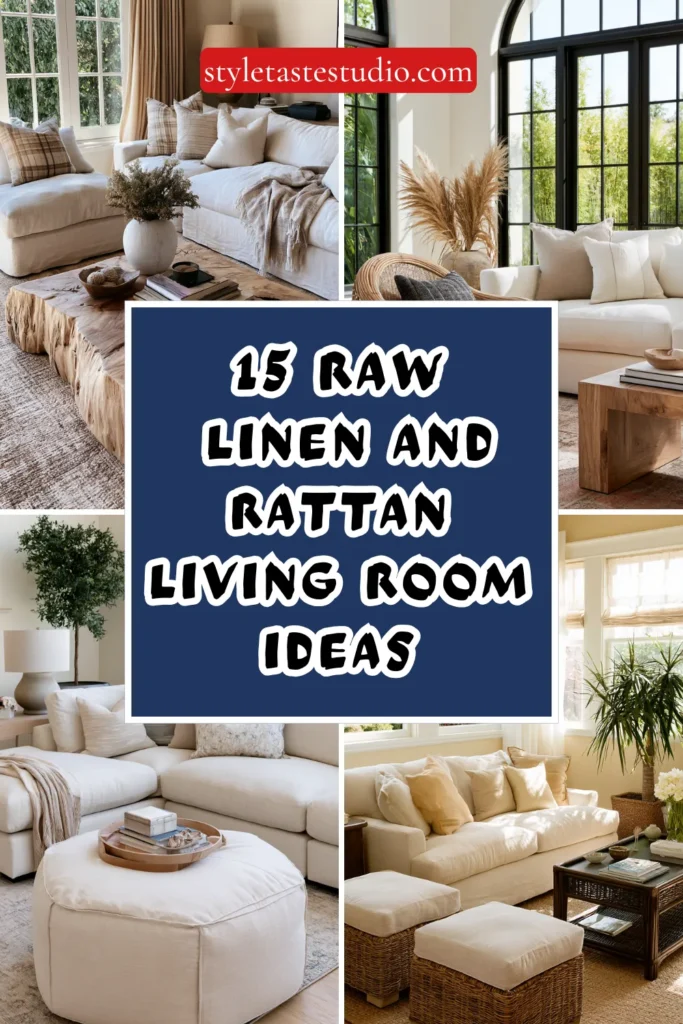
Here’s how to build the look in layers, from the furniture you’ll use daily to the details that finish a room off.
1. Raw Linen Upholstery as the Foundation
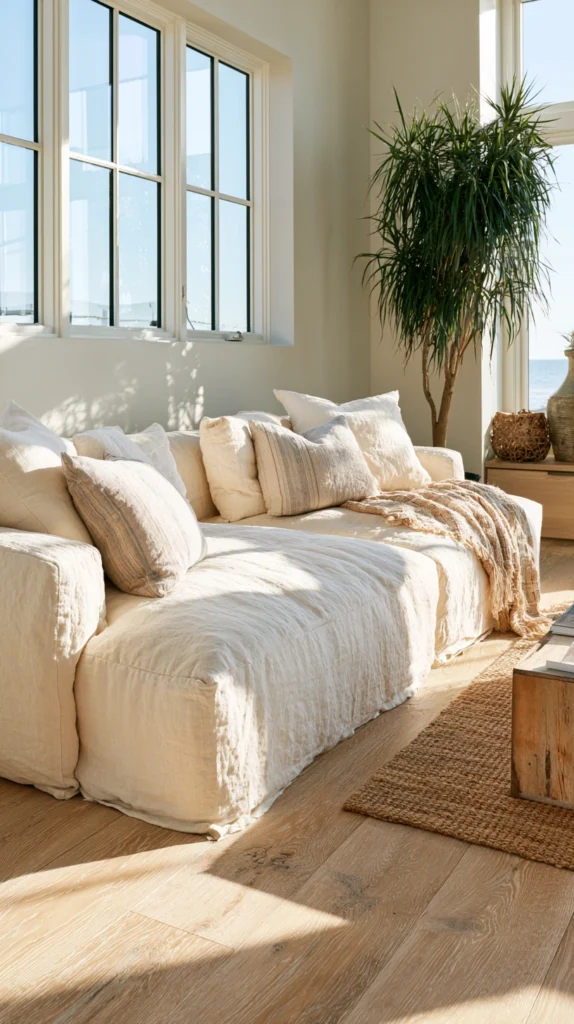
Start with your main seating. Raw or “slubby” linen — the kind with visible texture and slight irregularity in the weave — reads as intentional in a way that smooth, tightly-woven linen doesn’t.
What to look for:
- Neutral tones only: oatmeal, natural, warm white. A strong color here competes with the texture instead of letting it lead.
- A linen-cotton or linen-poly blend if this is a high-traffic family room — pure linen wrinkles and shows watermarks more than blended fabric.
- A removable, washable cover if you have kids or pets.
| Fabric option | Durability | Approx. cost (3-seat sofa) |
|---|---|---|
| Pure raw linen | Lower — shows marks easily | $900–1,800 |
| Linen-cotton blend | Medium | $700–1,400 |
| Performance linen-look fabric | Higher — stain resistant | $600–1,200 |
2. A Rattan Accent Chair
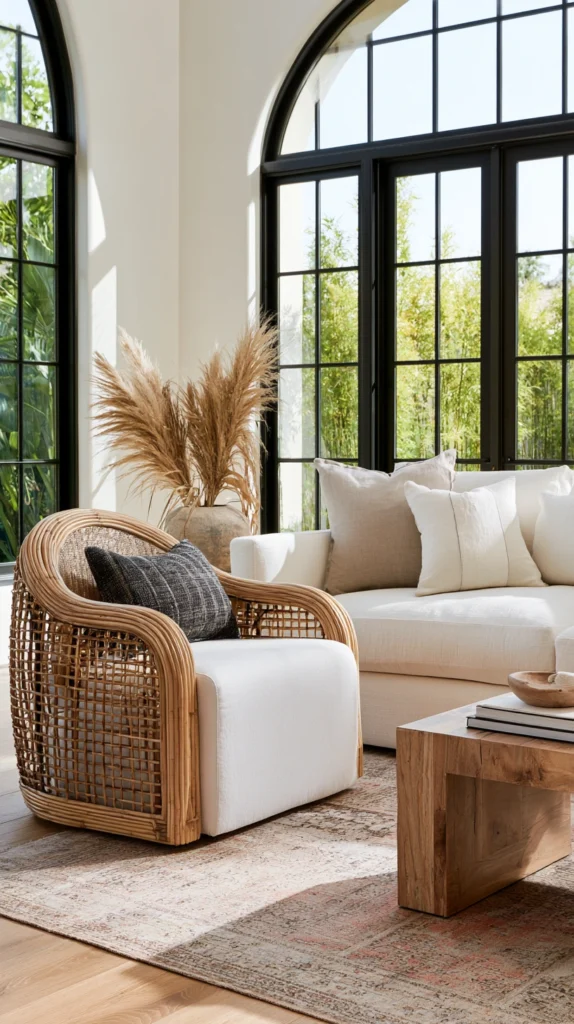
One well-made rattan chair does more for this style than several smaller rattan accessories combined.
Checking quality before you buy:
- Look for tight, even weaving on a solid wood frame.
- Press gently on the seat — loosely woven, budget pieces tend to sag and fray within a season or two of regular use.
- Vintage rattan chairs, when you can find them secondhand, are often better built than new budget versions, and they’re usually cheaper too.
3. Layered Linen Textiles
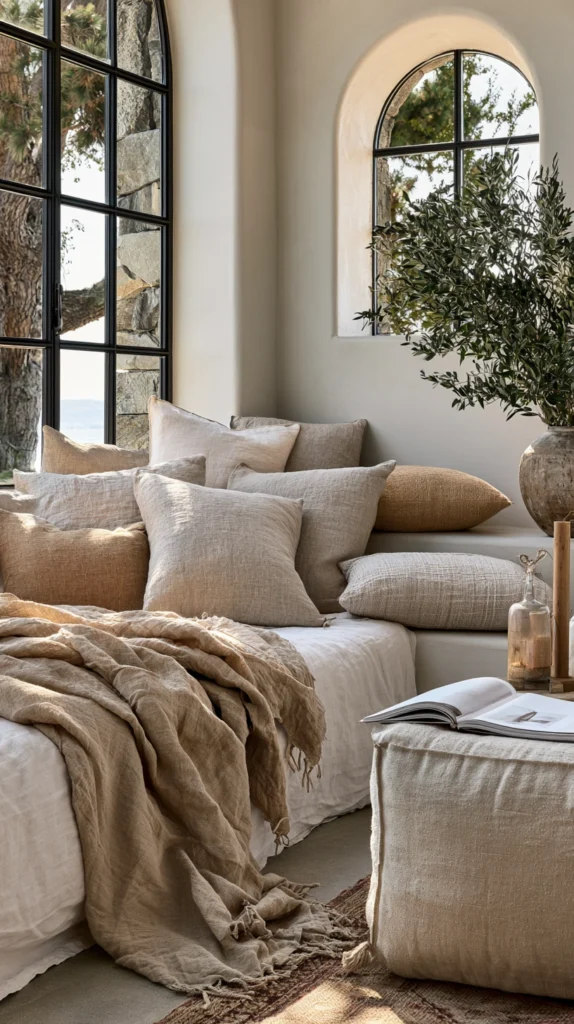
Throws and cushions in complementary — not matching — linen tones add depth without adding color.
Layering tips:
- Mix at least two weights: a heavier linen throw against a lighter linen cushion cover.
- Vary tone slightly rather than buying one shade in bulk — oatmeal next to warm white next to natural reads as curated.
- Budget roughly $15–40 per cushion cover for a mid-range option, more for a designer linen brand.
4. A Rattan Wall Hanging
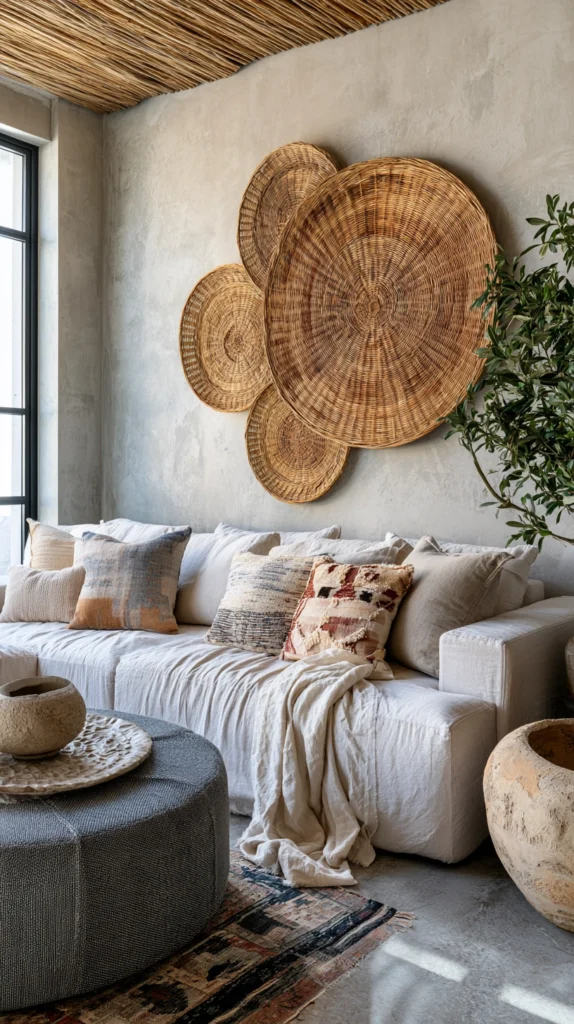
A woven rattan panel or macramé-style hanging gives you texture on a wall without committing to paint or wallpaper.
- Position it at eye level from the main seating area, not above head height where it’s hard to actually appreciate.
- These are one of the easier DIY projects in this style if you’re comfortable with a basic weaving kit — plenty of beginner tutorials exist online.
- Pair with a simple, thin frame or none at all — a heavy frame undercuts the raw, handmade look.
5. A Natural Wood Coffee Table
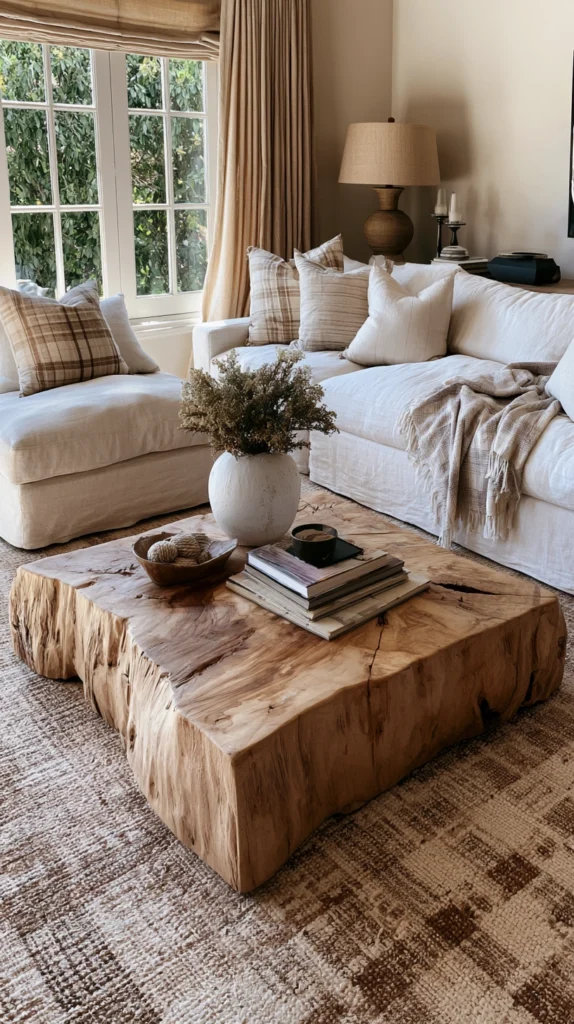
Light to medium wood tones ground the room without competing with the linen and rattan textures already doing visual work.
Good wood choices:
- Oak — durable, widely available, affordable
- Ash — similar tone to oak, slightly more distinctive grain
- Light teak — naturally water-resistant, higher cost
Finish matters: avoid heavily lacquered or glossy tables. A matte or oiled finish keeps the “raw, natural” feeling consistent across every material in the room.
6. Linen Curtains for Softness
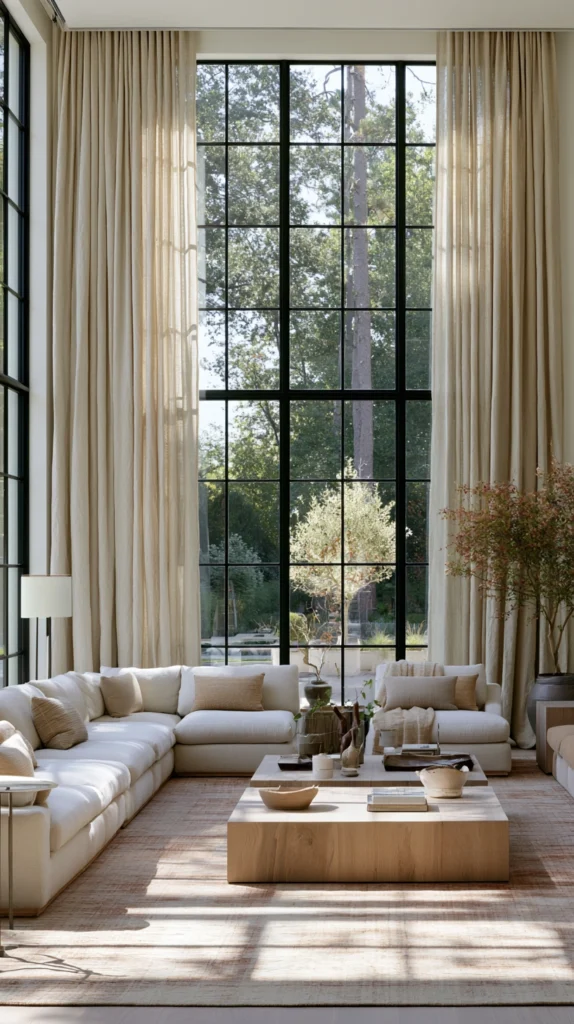
Full-length linen curtains in a natural or warm white tone filter light beautifully — a genuine functional advantage, not just a look.
- Sheer to medium-weight linen lets in soft, diffused daylight rather than blocking it entirely.
- Mount the rod close to the ceiling to make the window (and room) read taller.
- If you need more privacy or light-blocking at night, add a simple blackout liner behind the linen panel rather than switching to a heavier fabric that would change the whole look.
7. Rattan Shelving for Display
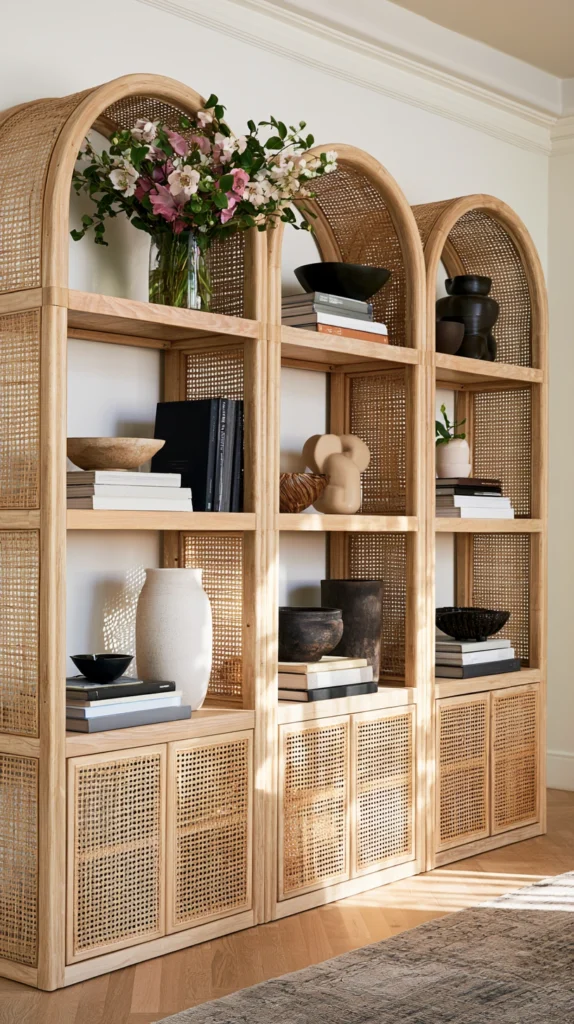
Open rattan shelving gives you storage and display in one — but only if what’s on the shelves is curated.
Styling the shelves:
- A few books, a plant, a ceramic piece, with visible negative space between groupings.
- Avoid filling every inch — rattan already has a lot of visual texture on its own, so an overfilled shelf reads as cluttered fast.
- Group items in odd numbers (3s work well) rather than lining them up evenly.
8. A Natural Fiber Area Rug
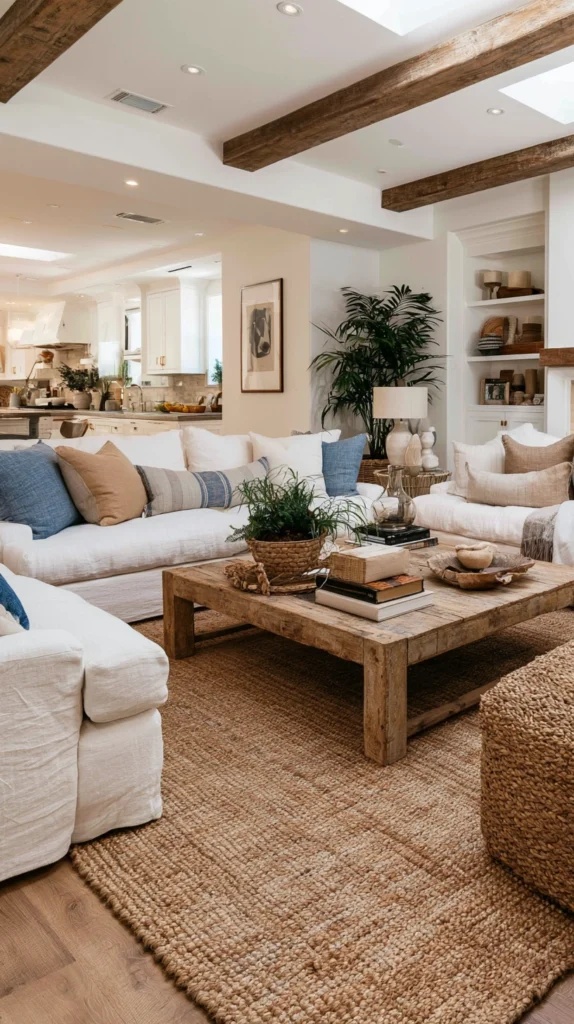
Jute or sisal rugs complete the “everything is a natural material” foundation of this style.
| Rug material | Feel underfoot | Durability | Approx. cost (8×10) |
|---|---|---|---|
| Jute | Soft-rough | Good | $150–350 |
| Sisal | Rough | Very good | $200–450 |
| Jute + wool blend | Softer | Good | $250–500 |
Practical fix: if you want the natural-fiber look but softer footing, layer a smaller, softer rug on top of a larger jute or sisal base.
9. A Linen Ottoman for Flexibility
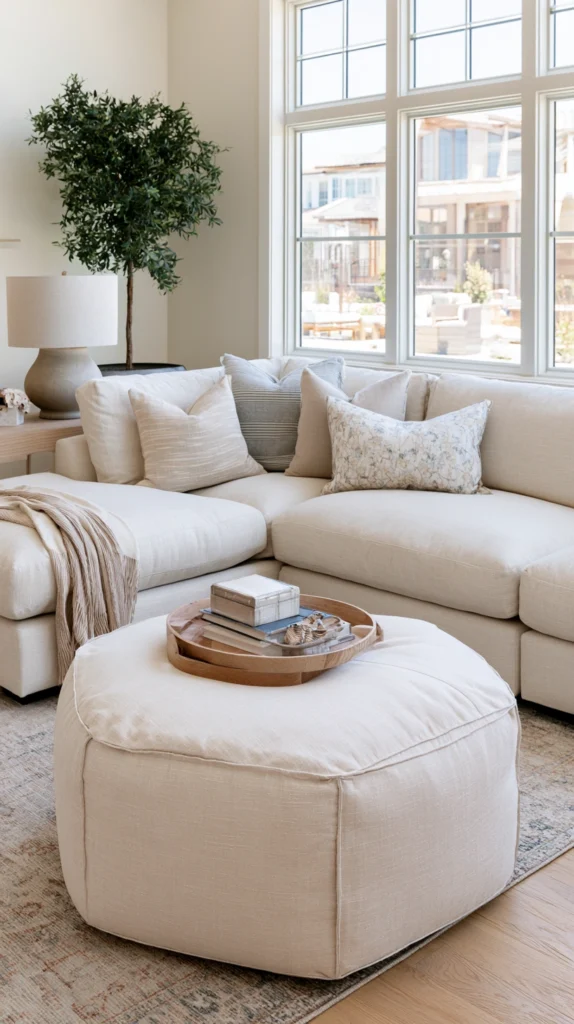
An upholstered linen ottoman works as extra seating, a footrest, or a coffee table with a tray on top.
- Genuinely useful in smaller living rooms where furniture needs to do more than one job.
- Choose one with a removable, washable slipcover if you have kids or pets — raw linen shows stains more readily than performance fabric.
- A round ottoman softens a room full of straight-edged rattan and wood furniture.
10. A Rattan Basket Collection
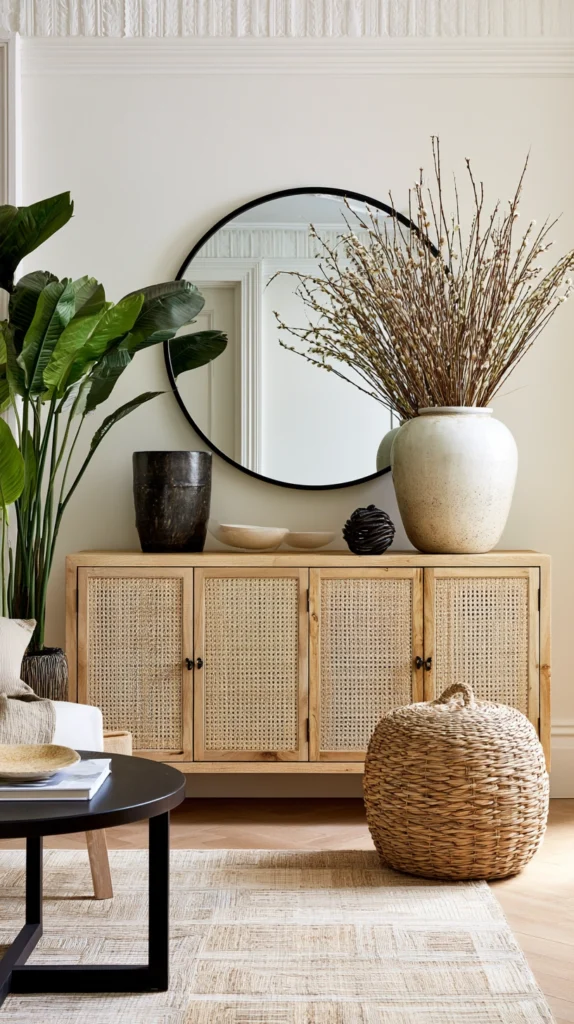
Baskets in graduated sizes solve real storage problems — blankets, magazines, kids’ toys — while adding to the material palette rather than looking like plain storage bins.
- Buy in a genuinely graduated set (three sizes, nesting or stacking) rather than mismatched pieces.
- The graduation itself is what reads as styled rather than purely functional.
- Use the largest basket for blankets near the sofa, medium for magazines or remotes, small for smaller odds and ends.
11. Linen Lampshades for Warm Light
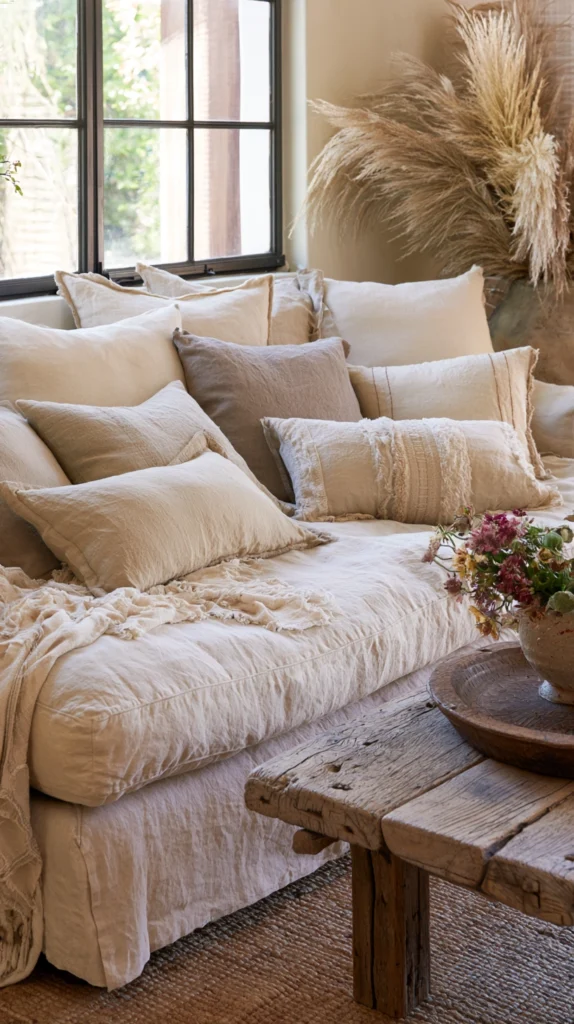
Linen diffuses light beautifully, giving off a warm, soft glow rather than the harsher light a plastic or glass shade produces.
- Pair with warm 2700K bulbs specifically — a cool-toned bulb undercuts the softness this style is built around, in every fixture it’s used in.
- A linen shade over a simple wood or ceramic base keeps the material story consistent from lamp to lamp.
- Dimmable fixtures let you shift from daytime brightness to evening ambiance without changing the shade itself.
12. A Rattan Side Table
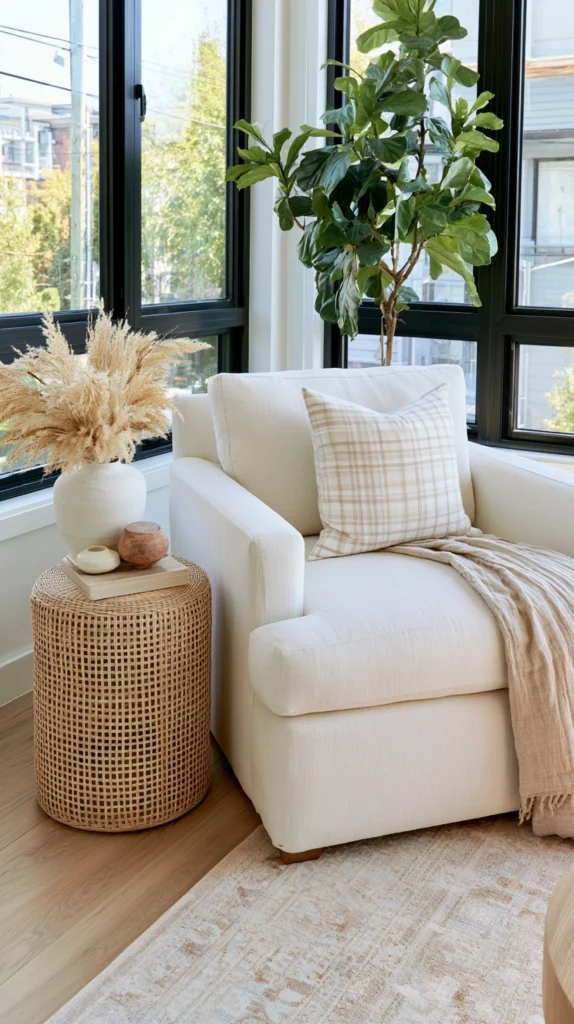
A small rattan side table adds texture at a lower, more intimate scale than a chair or shelving unit.
- Useful next to an armchair for a drink or a book.
- Widely available secondhand, and a good entry point if you want to test the material before committing to a bigger piece.
- Look for a nesting pair if your space is tight — two small tables often work better than one larger one in a compact room.
13. Natural, Layered Lighting
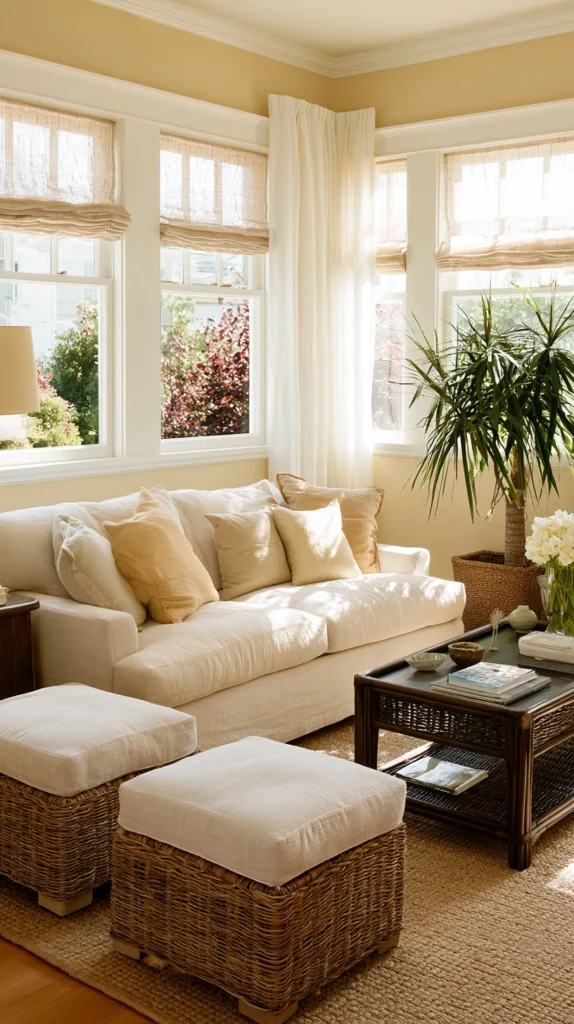
Skip a single bright overhead source.
A simple three-layer lighting plan:
- A linen-shaded floor lamp for general ambient light
- A smaller table lamp for task lighting near seating
- Optional: a dimmer on any overhead fixture already installed
Layered lighting lets you adjust brightness by time of day rather than having one all-or-nothing switch — genuinely more comfortable for a room meant to feel relaxed rather than functional-office-bright.
14. Living Plants for Life
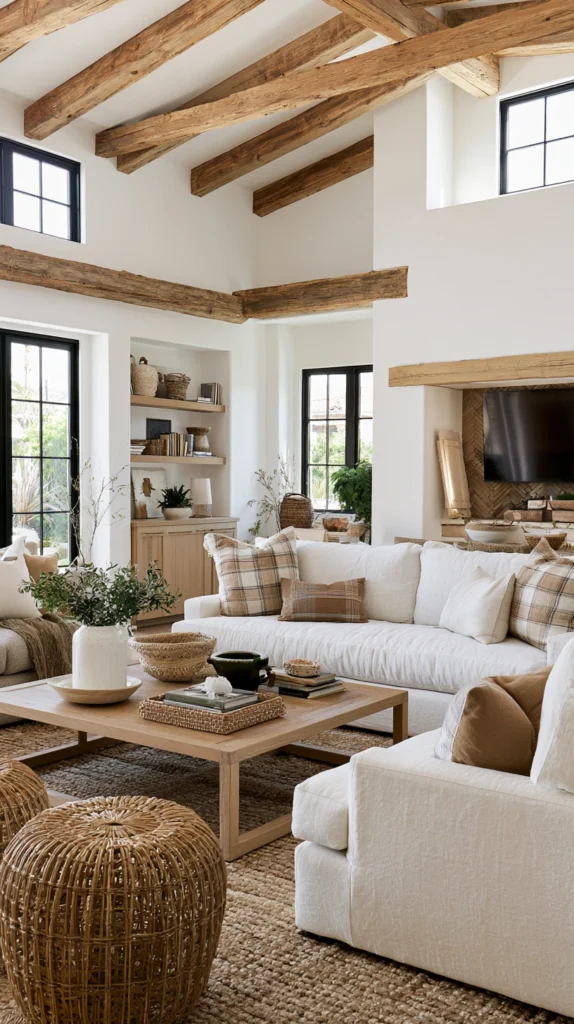
Plants are close to essential in this style — they’re the one element that keeps a room built entirely from neutral, textured materials from feeling static.
Best plant choices:
- Monstera — bold, sculptural leaves contrast nicely against rattan’s woven texture
- Rubber plant — similarly bold foliage, low maintenance
- Fiddle leaf fig — larger statement option for corners with good light
Pot choice matters too: a plain terracotta or woven rattan planter keeps the material story consistent; a glossy ceramic pot in a bright color will stand out more than intended.
15. Bringing the Materials Together
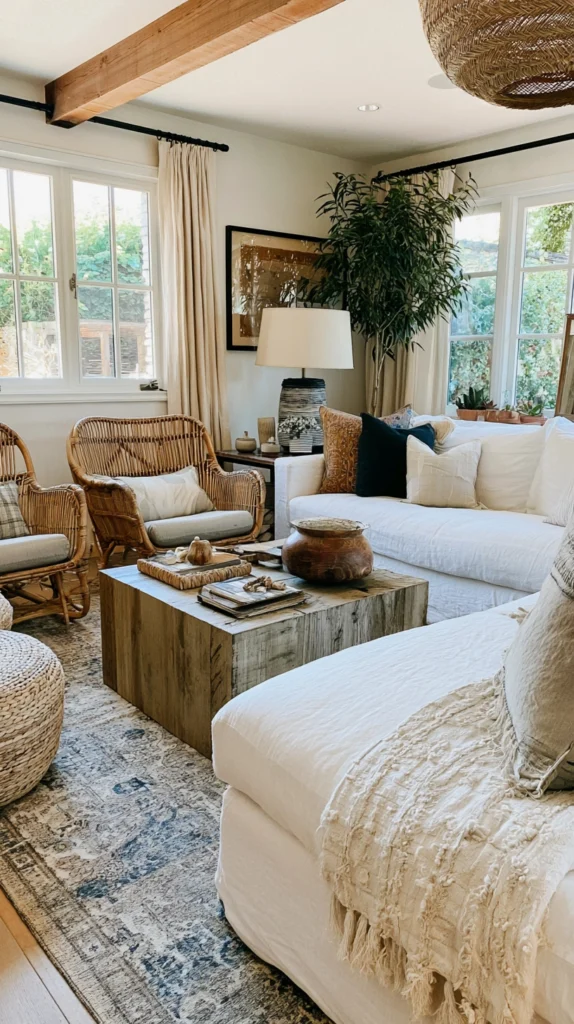
The rooms that do this style well treat linen and rattan as a conversation, not a checklist.
- A linen sofa needs a rattan chair or shelf nearby to balance it — not five rattan objects scattered evenly around the room.
- Keep roughly 70–80% of the room in this neutral, textured palette.
- Let one or two contrasting elements — a dark wood table, a single patterned cushion — keep it from feeling flat.
Start with furniture you’ll actually use daily — the sofa and a chair — before moving to purely decorative rattan pieces. That way the room earns its comfort first and its aesthetic second, which is what keeps this style from feeling like a showroom rather than a home.
Common Mistakes to Avoid
- Matching every piece of rattan exactly. Slightly different weave patterns and tones across pieces look more collected over time; identical pieces bought as a set can look showroom-staged.
- Choosing pure linen for a household with young kids or pets without a plan for cleaning. Consider blends or removable slipcovers instead of ruling the whole look out.
- Overcrowding rattan shelving or baskets. The material already carries visual texture — pack it too full and the room reads cluttered rather than curated.
- Using cool-toned lighting. Anything above 3000K will make linen look grey and rattan look dull rather than warm.
- Skipping plants entirely. Without greenery, an all-neutral linen-and-rattan room can start to feel flat and static rather than organic.
Maintenance Notes
- Linen upholstery: spot-clean spills immediately with a damp cloth; avoid rubbing, which can push stains deeper into the weave.
- Rattan furniture: keep out of direct, prolonged sun exposure where possible — it can dry out and become brittle over years. A light misting of water every few months in dry climates helps keep the fibers flexible.
- Jute and sisal rugs: vacuum on a low-suction setting; a beater-bar vacuum head can fray natural fibers over time.
- Wood furniture: an occasional light coat of furniture oil (every 6–12 months) keeps a matte or oiled finish from drying out.
Frequently Asked Questions
Is raw linen too fragile for a family living room? Not if you choose a linen-cotton or performance-linen blend rather than 100% pure linen, and opt for removable, washable covers on major seating pieces. The texture and look stay nearly identical; the maintenance burden drops significantly.
Does rattan furniture work in a humid climate? Yes, generally better than many alternatives — natural rattan tolerates humidity reasonably well, though extreme, sustained damp conditions can eventually warp or weaken the fibers. Keep pieces away from direct exposure to standing moisture and ensure decent airflow in the room.
What colors work as accents against linen and rattan’s neutral palette? Sage green, terracotta, and soft indigo all add contrast without overwhelming the natural, textured base. Keep accent colors to one or two pieces (a cushion, a piece of art) rather than spreading them across multiple items, so the neutral palette still leads.
How do I keep an all-neutral room from feeling boring rather than calm? Texture variety is the key difference between “calm” and “flat” in a neutral room. Make sure you have at least three distinct textures represented — something woven (rattan), something soft (linen), and something smooth or hard (wood, ceramic, or glass). A room that’s neutral in color but varied in texture reads as intentional and layered; a room that’s neutral in both color and texture reads as unfinished.
Budget Snapshot by Commitment Level
| Commitment level | Examples | Approx. total cost |
|---|---|---|
| Low (test the look) | Cushions, a small rattan side table, one plant | $60–150 |
| Medium (partial commitment) | Accent chair, rug, basket set, lampshades | $300–700 |
| High (full transformation) | Sofa reupholstery or replacement, curtains, shelving, coffee table | $1,800+ |
As with any style built around natural materials, it’s worth starting small and living with a few pieces before committing to the bigger-ticket items like a new sofa or full flooring change. Natural materials photograph consistently well, but how a room actually feels day to day — the way linen softens with use, the way rattan catches afternoon light — is something you’ll only really know once you’re living with it.