
Why Your Ceiling Height Matters More Than You Think in Small Rooms
Most small room advice focuses entirely on the floor: furniture size, rug placement, paint color on the walls.
The ceiling barely gets mentioned, yet it shapes how a small room actually feels more than almost anything happening at eye level.
A low ceiling can make an otherwise well-designed room feel cramped no matter what’s on the floor.
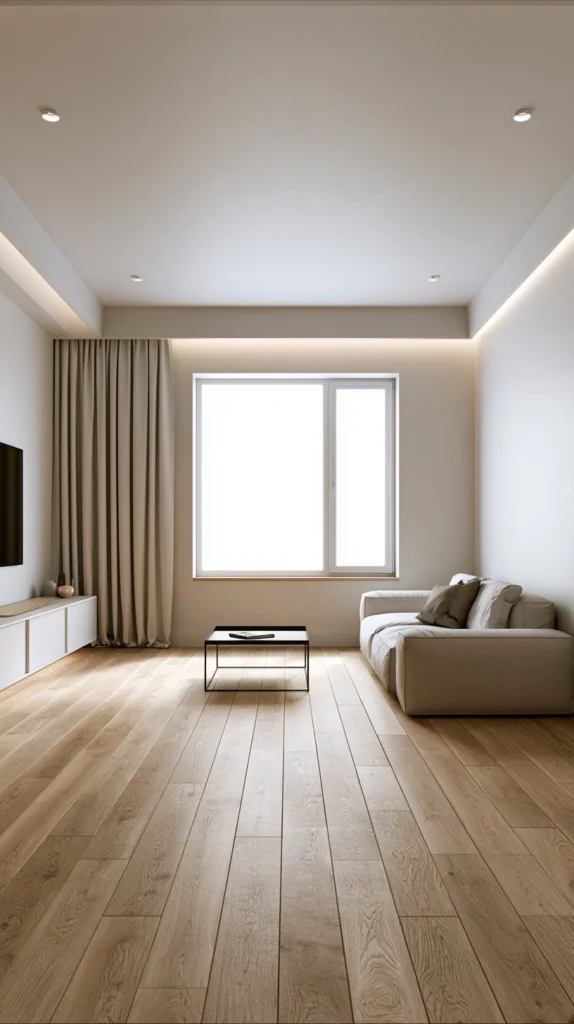
A properly handled ceiling, even a genuinely low one, can make the same square footage feel considerably more open.
Here’s why ceiling height matters so much specifically in small rooms, and what actually helps when you can’t change the height itself.
Standard Ceiling Heights and What They Actually Mean
Most homes fall into a fairly predictable range, though older and newer construction differ noticeably.
| Ceiling Height | How It Typically Reads | Common In |
| Under 8 feet | Noticeably low, cozy or cramped depending on treatment | Older homes, basements, attic conversions |
| 8 feet | Standard, unremarkable | Most mid-century and older suburban homes |
| 9 feet | Comfortably open | Many newer suburban builds |
| 10 feet or more | Genuinely spacious | Custom homes, older urban rowhouses, lofts |
A single foot of height makes a bigger perceived difference than most people expect, since it changes the room’s actual proportions, not just its raw square footage.
Why Low Ceilings Feel Worse in Small Rooms Specifically
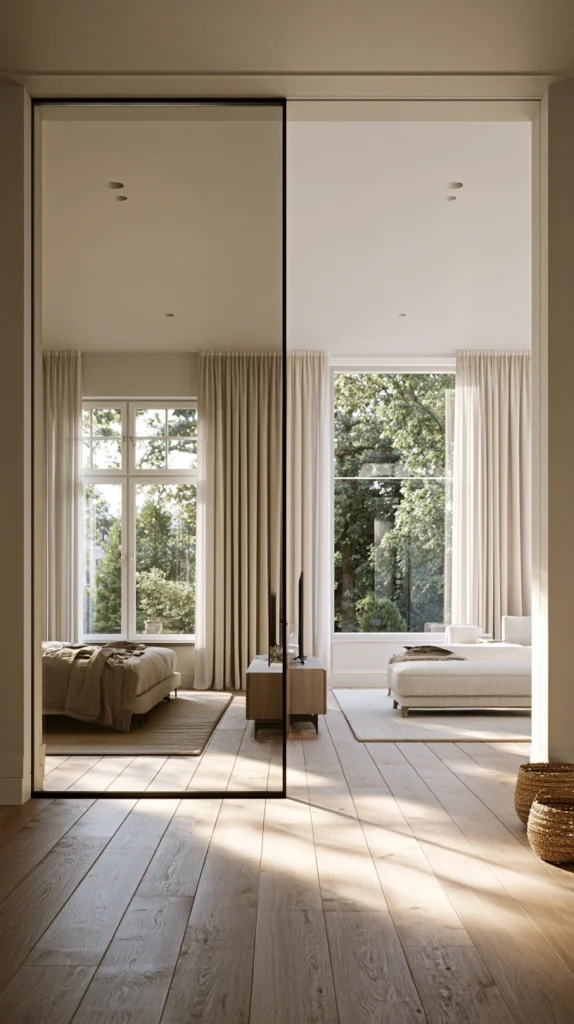
A low ceiling in a large room often goes unnoticed, while the same height in a small room feels immediately oppressive.
- Small rooms already have limited floor space, and a low ceiling compounds that sense of confinement rather than offsetting it
- The ratio between floor area and ceiling height matters more than either measurement alone
- A small room with a low ceiling reads as a box, while a small room with a taller ceiling reads as a cozy nook
I have two small rooms in my own house, nearly identical in square footage, but the one with a taller ceiling feels considerably more livable than the other.
The floor-to-ceiling ratio is really the underlying issue, not the raw ceiling height by itself, which is why the same low ceiling reads so differently in a large versus small room.
This explains why a walk-in closet with an 8-foot ceiling feels perfectly normal, while a small home office with the exact same height can feel noticeably tight.
The closet’s tiny floor footprint keeps the ratio balanced, while the office’s larger floor area throws it off.
How Paint Color Changes Perceived Height
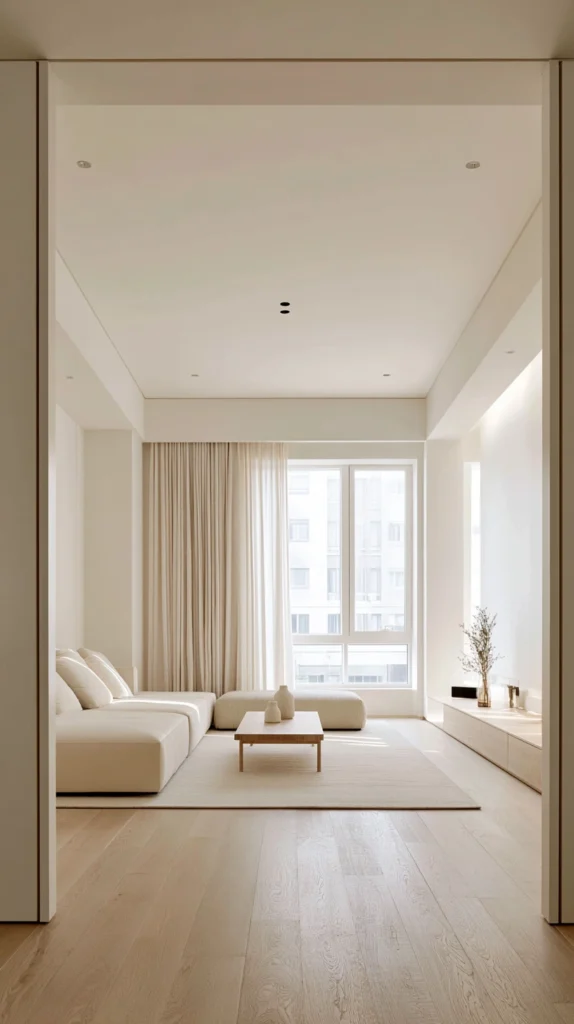
Color is one of the most effective, least expensive tools for adjusting how tall a ceiling feels.
- A ceiling painted the same color as the walls, rather than the standard white, blurs the line between wall and ceiling, making the room feel taller
- A ceiling painted darker than the walls can paradoxically make a room feel more enveloping and intentional, rather than simply lower
- Glossy ceiling paint reflects more light upward, subtly increasing the sense of height
- A stark white ceiling against darker walls actually emphasizes the boundary, making a low ceiling more obvious rather than less
I painted my low-ceilinged reading nook the same warm white as the walls, and the room genuinely reads as taller than it measures.
Budget tip: This is one of the cheapest fixes on this entire list, since it requires nothing beyond paint you may need to buy anyway.
A few things worth knowing:
- Test a small section before committing to a full ceiling, since color shifts more than expected once applied overhead
- A satin or eggshell finish balances glare control with enough reflectivity to help the effect
- This trick works in both directions, so choose deliberately based on whether you want the room to feel taller or simply cozier
A semi-gloss ceiling paint pushes the effect further than a fully flat finish.
The added sheen catches ambient light and subtly reflects it back into the room, reinforcing the sense of extra height.
Vertical Lines and Their Effect on the Eye
Vertical elements draw the eye upward, which makes a room feel taller even though nothing about the actual structure has changed.
- Floor-to-ceiling curtains, hung above the window frame itself, pull the eye upward toward the ceiling line
- Vertical stripe wallpaper or paneling creates the same optical effect at a smaller scale
- Tall, narrow furniture pieces, like a slim bookshelf, reinforce the room’s vertical lines rather than its horizontal ones
- Artwork hung slightly higher than standard eye level draws attention upward as well
I hung curtains just below my crown molding rather than at the actual window frame, and the change alone made my low-ceilinged living room feel noticeably taller.
Style tip: Combine two or three vertical elements together, rather than relying on just one, since the cumulative effect reads more convincingly than a single isolated trick.
A few things worth knowing:
- Avoid horizontal elements at eye level in a low-ceilinged room, like a wide, low bookshelf or a horizontally striped rug, since these reinforce the room’s width rather than its height
- Tall furniture doesn’t need to be oversized, just genuinely vertical in its proportions
- This approach costs very little if you’re simply rehanging existing curtains or rearranging existing furniture
Mirrors add a second layer to this same principle.
A tall, narrow mirror leaned against a wall or hung vertically reflects the ceiling line and reinforces the room’s height rather than its width.
Lighting Choices That Help or Hurt
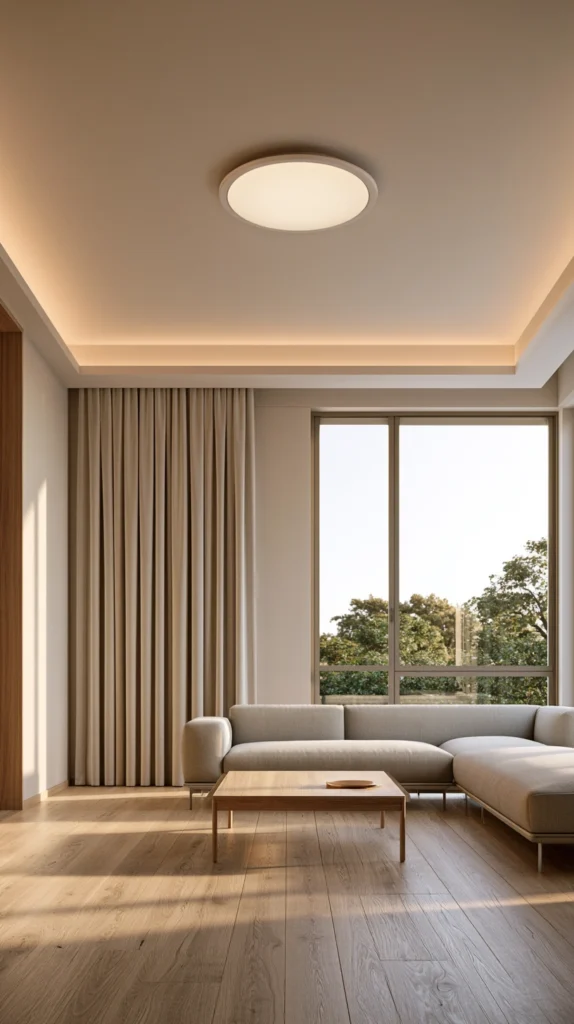
Light fixture placement affects a low ceiling’s impact more than most people realize before actually living with the wrong choice.
- A flush-mount fixture sits closest to the ceiling, minimizing how much it visually lowers the room
- A hanging pendant or chandelier, even a small one, eats into a low ceiling’s already limited vertical space
- Uplighting, aimed at the ceiling itself, bounces light across the surface and can make it feel higher than it is
- Recessed lighting removes the fixture from the equation entirely, keeping the ceiling plane visually uninterrupted
I switched my low-ceilinged hallway from a hanging fixture to a simple flush mount, and the change alone opened up several inches of usable visual height.
Budget tip: A flush-mount fixture swap is one of the more affordable lighting changes available, and it directly addresses a low ceiling’s most common lighting mistake.
A few things worth knowing:
- Reserve pendant or chandelier fixtures for rooms with genuinely adequate ceiling height, generally 8 feet or more
- Uplighting works particularly well combined with a ceiling painted to match the walls
- Recessed lighting requires more installation work but delivers the cleanest result for a genuinely low ceiling
A semi-flush mount is a reasonable middle ground if a fully flush fixture feels too plain for the room’s style.
It hangs just an inch or two below the ceiling rather than a full pendant drop, keeping most of the height-saving benefit intact.
Furniture Scale Matters More Than People Expect
Oversized furniture in a low-ceilinged room exaggerates the height problem rather than distracting from it.
- A tall headboard or armoire in a low-ceilinged bedroom can make the gap between furniture top and ceiling look uncomfortably tight
- Lower-profile furniture leaves more visible negative space above it, which reads as more breathing room overall
- A room with furniture scaled appropriately to its actual ceiling height feels considerably more proportionate, even without any other changes
I swapped a tall dresser for a lower, wider one in my low-ceilinged bedroom, and the extra visible wall space above it made a genuine difference.
Style tip: Leave at least a foot of visible wall space between your tallest furniture piece and the ceiling wherever the room’s height allows.
A few things worth knowing:
- This matters most in bedrooms and living rooms, where furniture height varies the most between pieces
- A low-profile bed frame, rather than one with a tall headboard, suits a genuinely low-ceilinged bedroom better
- Open shelving reads as lighter than a solid, tall bookshelf, helping preserve a sense of openness overhead
Legs matter here too, more than most people expect.
Furniture raised on visible legs, rather than sitting flush to the floor, lets sightlines pass underneath it, which reads as more open than the same piece sitting directly on the ground.
Trim, Molding, and Architectural Details
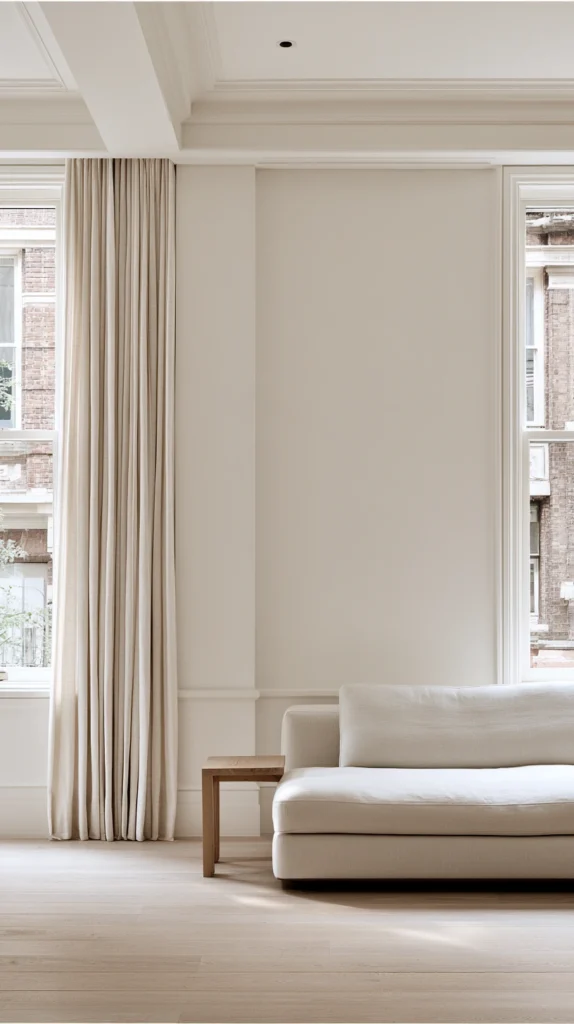
Crown molding and other ceiling trim details can either help or hurt, depending on how they’re handled.
- Skipping crown molding entirely in a low-ceilinged room keeps the wall-to-ceiling transition simple and unbroken
- A very deep, ornate crown molding visually eats into a low ceiling’s already limited height
- A thin, simple molding profile, or none at all, tends to suit a genuinely low ceiling better than an elaborate one
- Picture rail molding, positioned lower on the wall rather than at the ceiling line, can redirect visual attention away from a low ceiling entirely
I removed an overly deep crown molding from my lowest-ceilinged room, and the simplified transition made a genuinely noticeable difference.
Budget tip: Removing existing molding costs relatively little and can be done in an afternoon, making this one of the more accessible fixes on this list.
A few things worth knowing:
- If keeping molding, choose the thinnest profile that still looks intentional, rather than an ornate, deep option
- Painting molding the same color as the ceiling, rather than a contrasting trim white, minimizes its visual impact
- This detail matters more in older homes, where deep, elaborate molding was often standard
Baseboard height is worth a similar second look.
An unusually tall baseboard can visually shrink the wall space between it and the ceiling, subtly reinforcing a room’s already limited height in a way most people never trace back to this specific detail.
When Structural Changes Are Worth Considering
Some situations genuinely call for a bigger intervention than paint or furniture rearranging can solve.
- Removing a dropped ceiling, common in older basements or renovated spaces, can recover genuine height that was covered over rather than actually absent
- Vaulting or opening up a ceiling into unused attic space is a larger renovation, but delivers real structural change rather than an optical trick
- Skylights or additional windows near the ceiling line bring in more natural light, which can make a low ceiling feel less oppressive even without changing its actual height
I discovered my low kitchen ceiling was actually a dropped ceiling covering several extra feet of original height, and removing it was more affordable than expected.
Budget tip: Check whether a low ceiling is original or a later addition before assuming a full renovation is the only option, since some “low” ceilings are actually hiding genuine height underneath.
A few things worth knowing:
- A contractor or home inspector can typically tell fairly quickly whether a ceiling has been dropped from its original height
- Vaulting a ceiling is a genuinely significant structural project, generally requiring professional engineering assessment first
- Even a partial height recovery, a few extra inches, can make a meaningful difference in how a small room feels
Flooring Choices That Reinforce the Effect
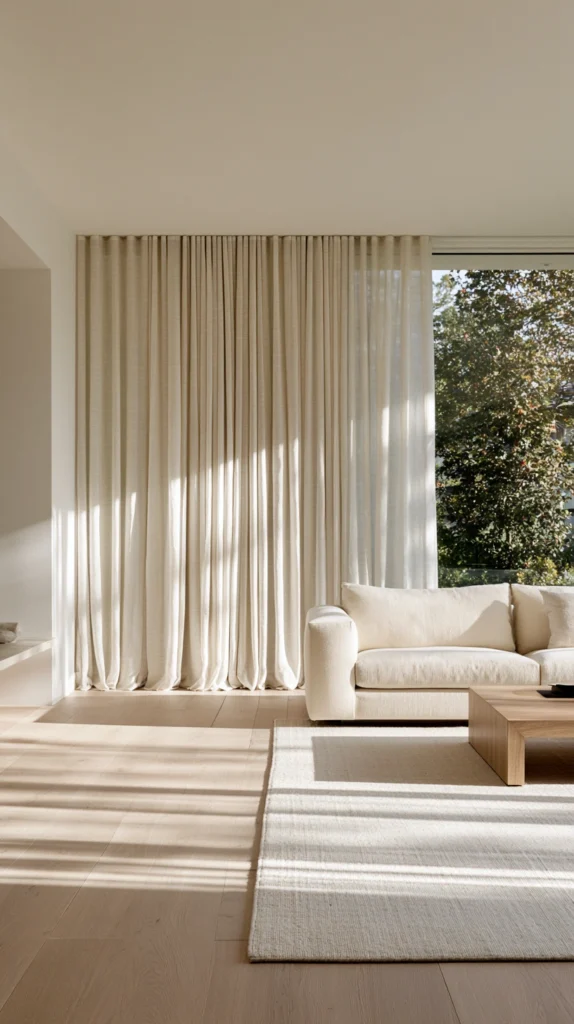
Flooring might seem unrelated to ceiling height, but the direction and pattern of flooring materials affects the same vertical illusion.
- Flooring laid in a diagonal pattern can make a room feel larger overall, indirectly softening how noticeable a low ceiling feels
- Vertically oriented plank flooring, running toward the room’s longest sightline, reinforces a sense of length that complements the vertical tricks used elsewhere
- Large-format flooring tiles, with fewer visible grout lines, create a cleaner, less busy floor plane that doesn’t compete visually with efforts to draw the eye upward
- A busy, high-contrast floor pattern pulls attention downward, working against any of the upward-focused tricks used on walls or ceiling
I switched my low-ceilinged den from a busy patterned rug to a simple, low-contrast one, and the floor no longer competes for attention the way it used to.
Style tip: Keep flooring and rugs relatively calm and low-contrast in a low-ceilinged room, reserving bold pattern and color for vertical elements instead.
A few things worth knowing:
- This matters most in open rooms where flooring covers a large visible area
- A rug that’s too busy can undo the benefit of an otherwise well-executed vertical lighting or curtain trick
- Light-colored flooring generally reflects more ambient light than dark flooring, contributing modestly to the same sense of openness a lighter ceiling provides
A Few Mistakes That Make a Low Ceiling Feel Worse
- Painting the ceiling a stark white against colored walls, emphasizing rather than softening the height boundary
- Choosing a hanging pendant light in a room where a flush mount would serve the space better
- Using deep, ornate crown molding that eats into already limited vertical space
- Filling the room with tall, bulky furniture that leaves little visible breathing room overhead
- Choosing a busy, high-contrast rug or floor pattern that pulls the eye downward instead of up
- Skipping a quick check of whether a low ceiling is original or simply a dropped ceiling covering more height underneath
The Single Change Worth Trying First
Painting the ceiling the same color as the walls costs the least and delivers one of the most noticeable results, making it the first thing worth testing before any furniture or lighting changes.
Why This Detail Gets Overlooked So Often
Most people plan a room from the floor up, choosing furniture and rugs first and treating the ceiling as an afterthought painted whatever standard white came with the house. Flipping that order, considering ceiling height and treatment as an early decision rather than a last one, is often the difference between a small room that feels genuinely comfortable and one that just feels small no matter what’s arranged below it.
Before buying new furniture or choosing a wall color for a small room, it’s worth standing in the space and looking up first. That single habit, checking the ceiling before anything else, tends to catch a problem most people don’t notice until the room is already fully furnished and still somehow feels wrong.