15 Dreamy Garden Inspirations for a Beautiful Outdoor Space
A dreamy garden is not defined by its size, its budget, or the number of professional interventions it has received. It is defined by the quality of intention behind every decision — the plants chosen with genuine care, the spaces created with genuine sensitivity to how people actually live and move through an outdoor environment, and the accumulated effect of small, beautiful details that make a garden feel genuinely extraordinary rather than simply well-maintained.
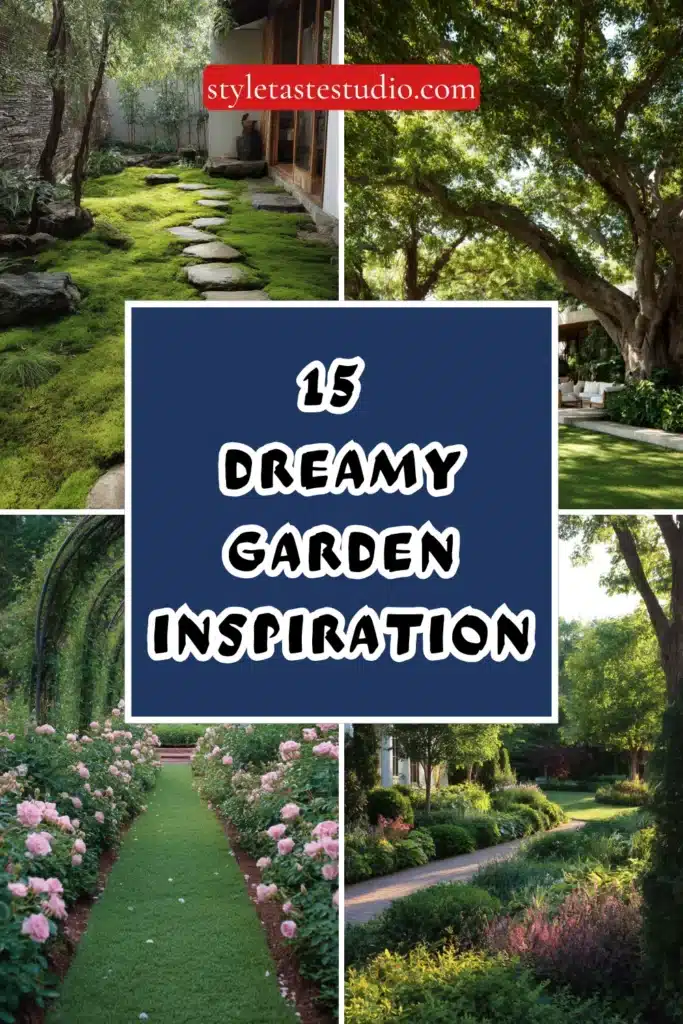
The most dreamy gardens in the world are almost never the most expensive ones. They are the ones where every element has been chosen and placed with genuine love and genuine attention — where the garden feels like an expression of a genuinely held personal vision rather than a professionally executed landscape plan.
Here are 15 dreamy garden inspirations that create a genuinely beautiful and genuinely personal outdoor space.
1. A Garden Entirely Enclosed by Hedging
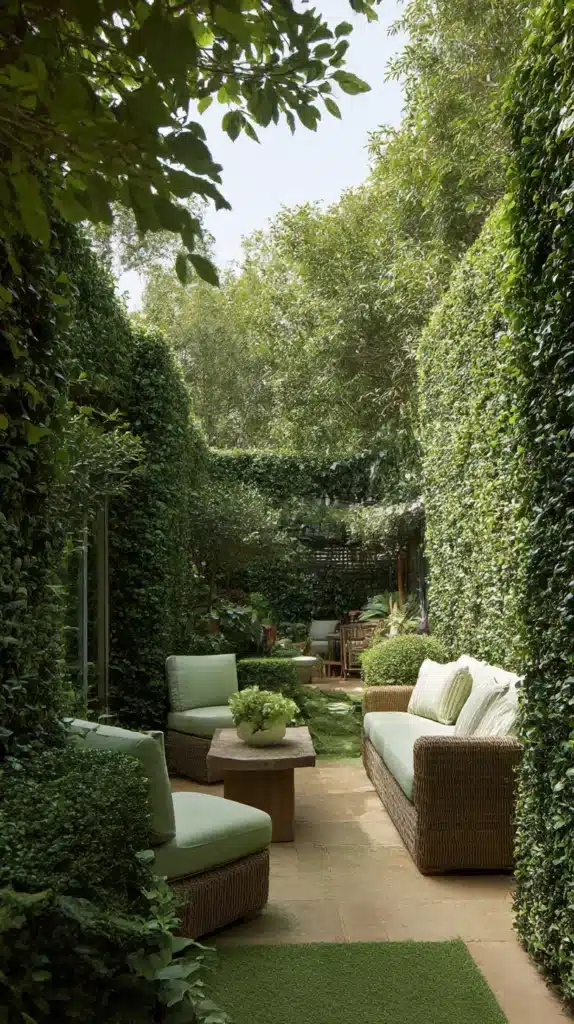
A garden enclosed on all sides by generous, mature hedging — yew, hornbeam, beech, or box in generous widths creating a continuous green wall of living botanical privacy — creates an outdoor space of extraordinary enclosed calm and genuine garden-room quality.
The hedged garden is simultaneously the most private, the most sheltered, and the most specifically beautiful garden enclosure available — the living green walls creating a contained world of complete botanical immersion that hard fencing and masonry walls cannot replicate.
Pro Tip: Plant hedging species that provide genuine visual interest beyond simple green density — hornbeam retaining its amber dried leaves through winter, copper beech providing extraordinary bronze foliage, and yew offering the deep, almost black-green of its dense evergreen texture. A hedged garden enclosure of genuine seasonal variety creates a garden boundary that is genuinely beautiful in every month of the year.
2. Romantic Rose Garden
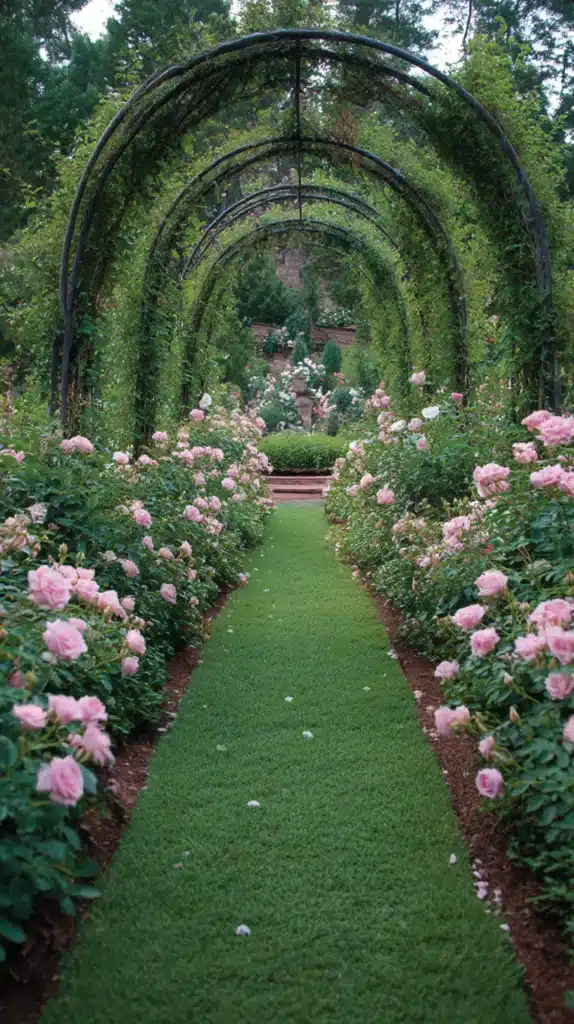
A garden given over generously to roses — climbing roses on timber obelisks, standard roses flanking a central path, shrub roses in generous drifts alongside perennial companions — creates a garden of extraordinary romantic beauty and genuine olfactory richness.
The rose garden at its most abundant and most beautifully planted is one of the most emotionally powerful garden experiences available — the combination of extraordinary flower beauty, intoxicating fragrance, and the particular quality of generosity and abundance that a well-planted rose garden creates in early summer.
Pro Tip: Choose repeat-flowering rose varieties rather than once-flowering alternatives for a rose garden of extended seasonal beauty — the garden flowering generously in early summer and again in late summer rather than producing a single spectacular flush followed by months of foliage alone. Repeat-flowering roses including David Austin English rose varieties create the most beautiful and the most continuously rewarding rose garden planting available.
3. Wildflower Meadow
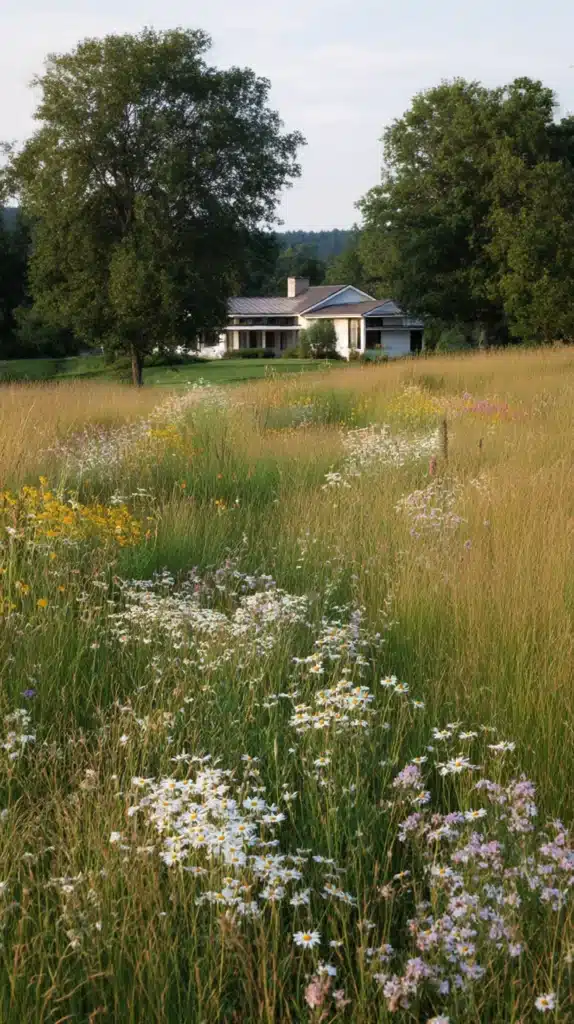
A wildflower meadow — an area of lawn or garden converted to a naturalistic planting of native and naturalized wildflowers that self-seed, intermingle, and develop the complex layered beauty of a natural plant community — creates a garden of extraordinary seasonal beauty and remarkable ecological richness.
The wildflower meadow in full summer bloom is one of the most genuinely breathtaking garden moments available — the combination of color, movement, fragrance, and the buzzing activity of bees and butterflies creating an outdoor experience of complete natural sensory richness.
Pro Tip: Mow the wildflower meadow only once annually — in late September or October after all seed has set and dispersed — for a meadow that self-renews naturally and develops progressively greater plant diversity and progressively greater beauty with every passing season. A regularly mown meadow loses its accumulated plant community. An annually mown meadow develops into a genuinely extraordinary botanical ecosystem of lasting beauty.
4. Sunken Garden
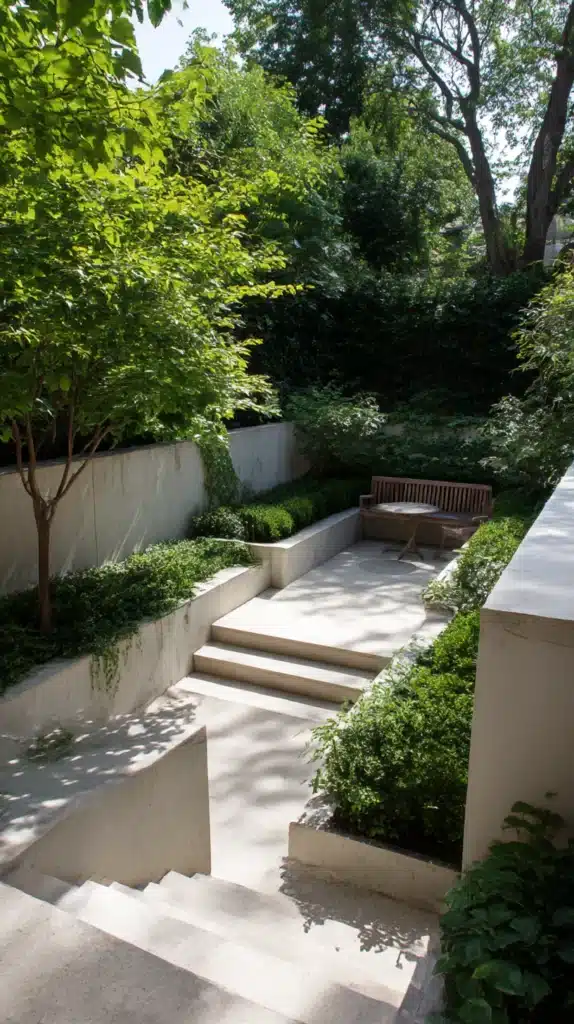
A sunken garden — a lower level of the garden accessed by steps descending below the surrounding grade, creating an enclosed, sheltered, intimate garden room below the level of the wider outdoor space — creates a garden feature of extraordinary spatial drama and complete, cocooning botanical shelter.
The sunken garden is simultaneously the most private and the most dramatically enclosed garden feature available — the retaining walls, the descending steps, and the planted edges creating a garden destination of genuine spatial magic and complete, sheltered garden beauty.
Pro Tip: Plant the retaining walls of a sunken garden generously with trailing and cascading plants — aubrieta, trailing rosemary, creeping thyme, and cascading roses — that soften the structural edges of the walls and create the impression that the planting is spilling naturally from the upper garden level into the sunken space below. Planting that softens the structural edges creates a sunken garden of genuinely organic, naturally beautiful enclosed quality.
5. Walled Kitchen Garden
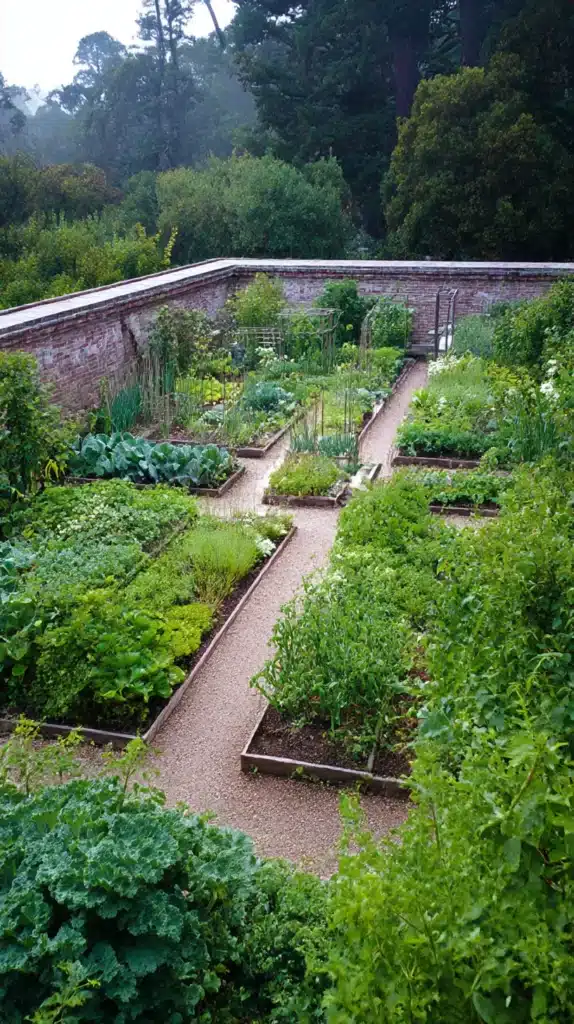
A walled kitchen garden — a formal or informal garden enclosed by brick, stone, or rendered walls and planted with an abundant combination of vegetables, fruits, herbs, and cutting flowers — creates the most romantically beautiful and the most genuinely productive garden space available.
The walled kitchen garden is the garden of genuine plenty — the warm walls creating the ideal microclimate for the most productive growing conditions available in any outdoor space, and the combination of edible and ornamental planting creating a garden of complete, generous, living abundance.
Pro Tip: Train fruit trees as espaliers or fans against the warm walls of the kitchen garden for the most productive, the most space-efficient, and the most genuinely beautiful fruit growing available in any enclosed garden space. Espalier-trained pears, apples, and plums against a warm wall produce fruit of exceptional quality while creating a two-dimensional plant form of extraordinary formal beauty that contributes to the romantic character of the walled kitchen garden.
6. Garden With a Central Focal Point
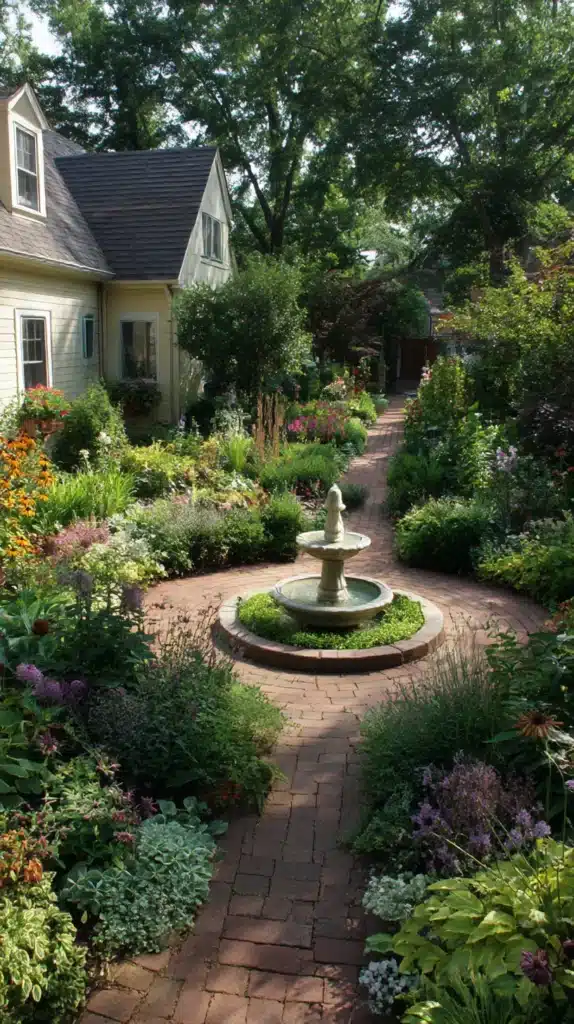
A garden designed around a single, powerful central focal point — a specimen tree, a formal pool, a sculptural topiary, a stone urn, or an ancient sundial — creates a garden of complete compositional clarity and genuine design confidence. The central focal point provides the visual anchor around which all other garden elements organize themselves — the paths leading to it, the planting framing it, and the seating positioned to face it creating a complete garden composition of genuine, considered spatial coherence.
Pro Tip: Choose a focal point of genuine permanence and genuine material quality — a lead urn, a carved stone ball, a beautifully maintained standard topiary, or a genuinely architectural water feature — rather than a temporary or lightweight alternative for a garden focal point that earns its central position through genuine physical presence and genuine material beauty. A focal point of insufficient weight and material quality appears lost rather than anchoring in its central garden position.
7. Japanese Moss Garden
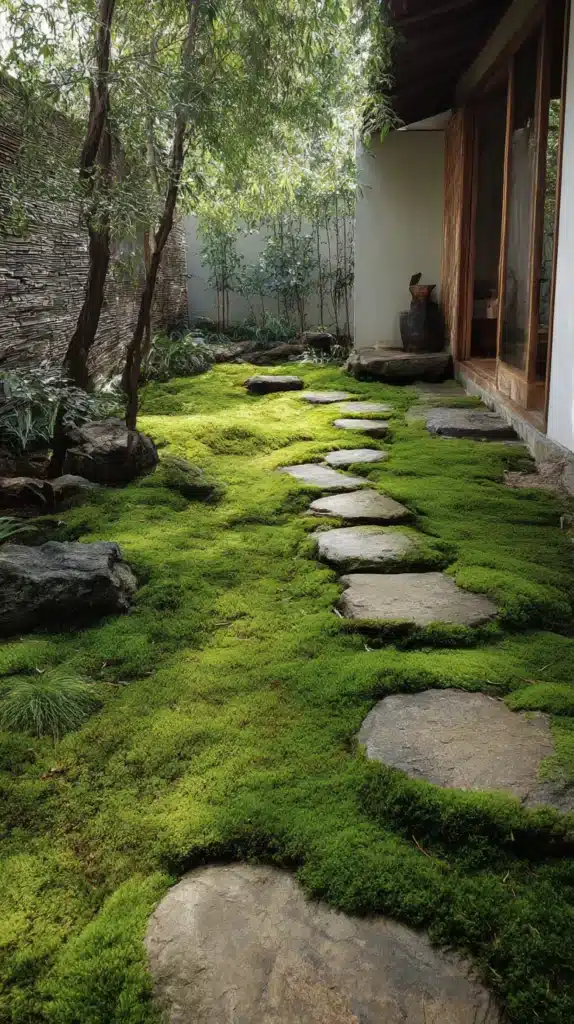
A Japanese moss garden — a continuous carpet of living moss across a shaded garden floor, with carefully positioned stone stepping stones, a single specimen tree, and the complete quiet of a space designed for contemplation rather than activity — creates a garden of extraordinary meditative calm and genuine natural beauty.
Moss has a quality of ancient, settled, completely unhurried botanical presence that no other garden groundcover can replicate — the deep, even, velvet-smooth green creating a garden floor of extraordinary organic warmth.
Pro Tip: Establish the moss garden in the most consistently shaded and most consistently moist area of the garden — the conditions of deep shade and consistent moisture creating the most rapid and most complete moss establishment available.
Moss in the wrong conditions — dry, sunny, or disturbed — fails quickly. Moss in genuinely appropriate conditions — cool, moist, shaded — establishes within a single growing season and develops into a genuinely beautiful garden carpet of extraordinary lasting quality.
8. Cottage Garden in Full Bloom
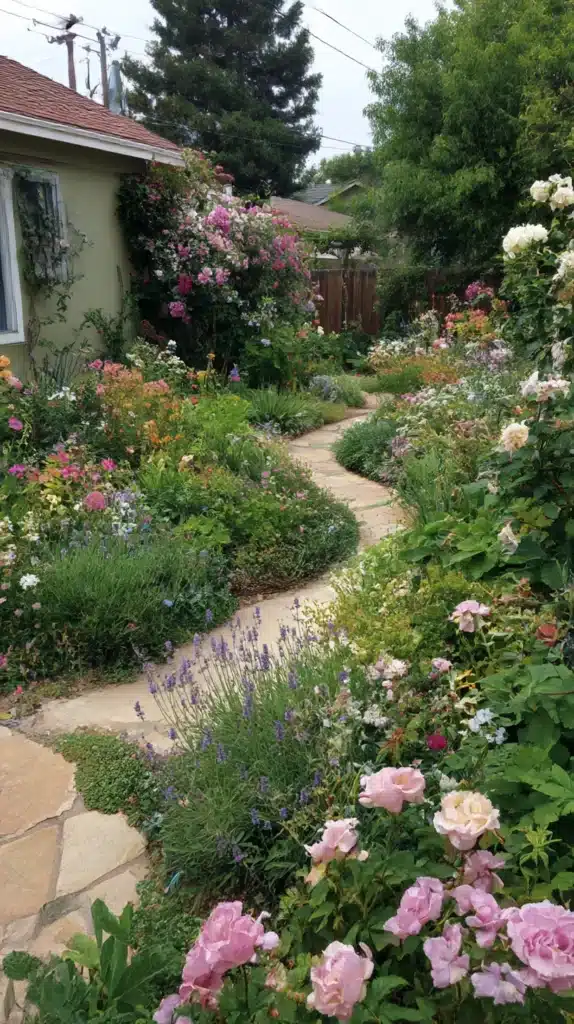
A cottage garden — generously planted with a completely informal abundance of roses, foxgloves, delphiniums, sweet peas, lavender, and self-seeding annuals all growing together in cheerful, slightly overflowing, completely unpretentious botanical abundance — is one of the most universally loved and most genuinely beautiful garden styles available.
The cottage garden in its peak June bloom is one of the most emotionally moving garden experiences available — the generosity, the fragrance, the color, and the particular quality of unpretentious natural beauty creating a garden of complete, joyful botanical perfection.
Pro Tip: Resist the urge to remove self-seeded plants from unexpected positions in the cottage garden — foxgloves appearing at the base of roses, aquilegias emerging through lavender, verbascums rising from unexpected gaps — as these accidental botanical combinations create the most genuinely beautiful and the most specifically cottage garden moments available. The best cottage garden effects are always the ones that were not planned.
9. Water Garden with Lily Pond
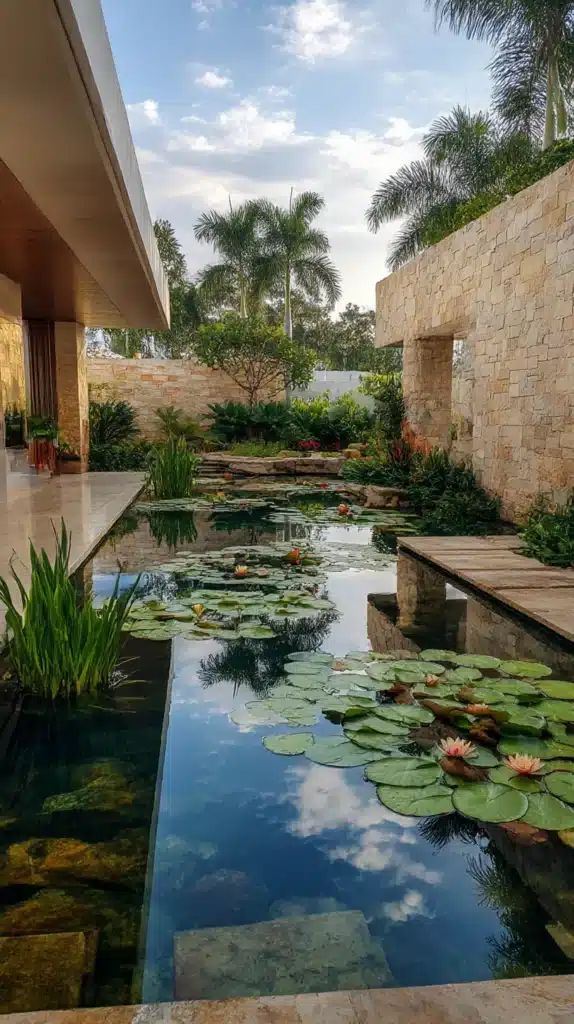
A garden with a generously sized lily pond — the still water surface covered in water lily pads and lily flowers in white, pink, and yellow, the edges planted with iris, rushes, and marginal plants, and the water alive with the reflections of sky and surrounding planting — creates a garden of extraordinary beauty and complete natural magic.
Still water in a garden creates a quality of doubled landscape — the reflection of the sky, the surrounding planting, and the passing light creating a surface of constantly changing, genuinely extraordinary natural beauty.
Pro Tip: Allow the water surface of the lily pond to be covered by water lily pads to approximately two-thirds of its total area for the most beautiful and the most ecologically appropriate lily pond planting.
A pond surface entirely covered by lily pads loses the quality of still water reflection that makes a garden pond so genuinely beautiful. A pond surface with two-thirds lily coverage and one-third open reflective water creates the most beautiful balance of botanical abundance and reflective water surface available.
10. Cloud-Pruned Topiary Garden
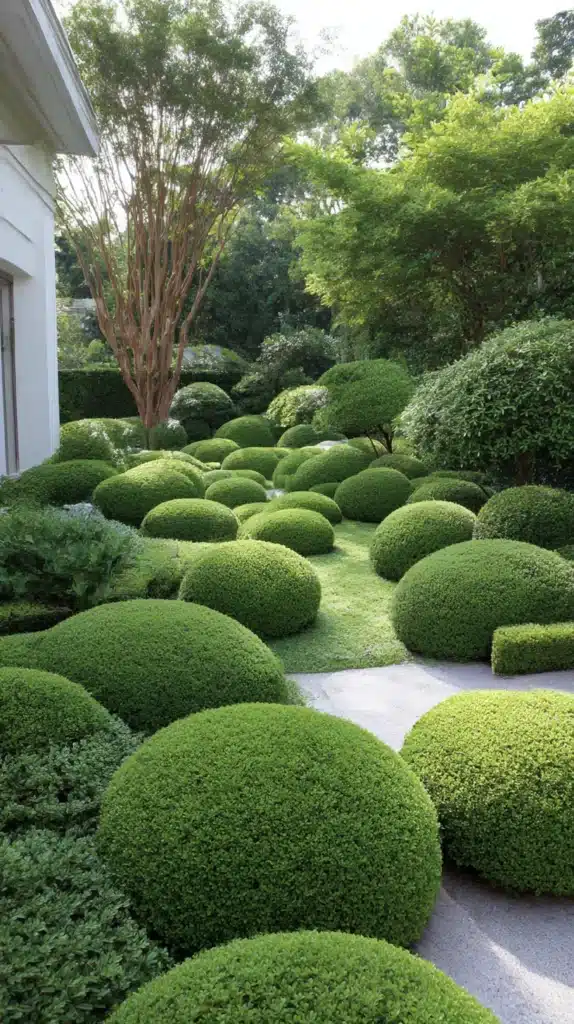
A garden incorporating cloud-pruned topiary — evergreen shrubs of yew, box, or Ilex crenata trained and pruned into organic, rounded, cloud-like forms — creates a garden of extraordinary sculptural beauty and genuine botanical artistry.
Cloud-pruned topiary references the Japanese tradition of niwaki garden tree pruning and creates garden plant forms of extraordinary, almost surreal organic beauty — the pruned plants appearing simultaneously natural and completely designed, simultaneously ancient and completely contemporary.
Pro Tip: Begin cloud pruning young, well-established plants of box, yew, or Japanese holly — allowing each plant to develop its basic cloud structure over three to five growing seasons of patient, deliberate pruning rather than attempting to create the finished cloud form immediately.
Cloud pruning is a practice of extraordinary patience and genuine horticultural skill — the most beautiful cloud-pruned gardens represent years of thoughtful, consistent pruning attention rather than a single season of enthusiastic shaping.
11. Secret Garden Room
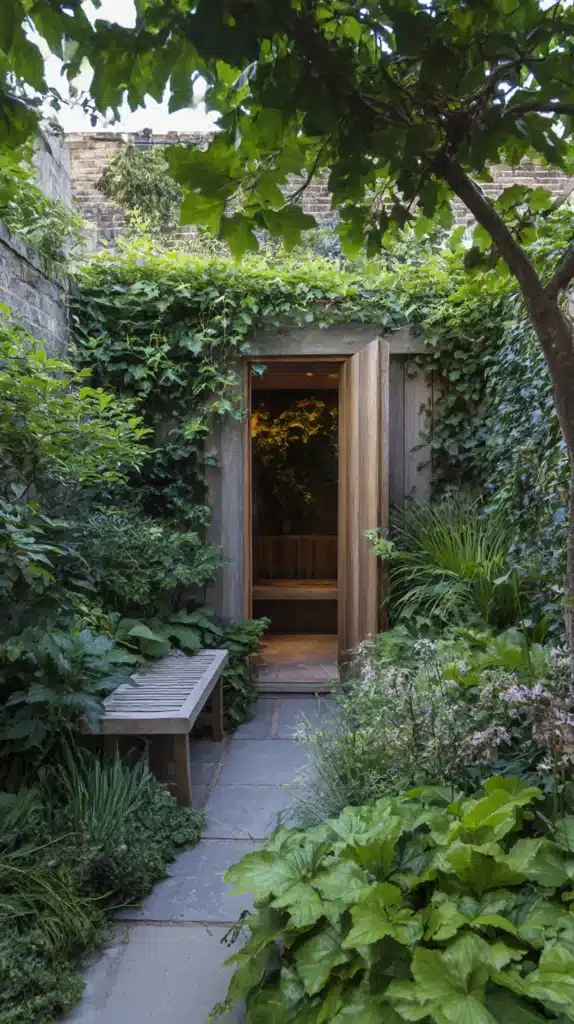
A secret garden room — an enclosed planting area accessed through a hidden gate, a gap in the hedging, or a door in a garden wall — creates a garden feature of extraordinary mystery and complete, magical botanical discovery.
The secret garden room is the most specifically dreamy of all garden features — the combination of concealment, discovery, and the intimate, enclosed quality of the space within creating a garden moment of genuinely extraordinary emotional impact and complete personal botanical magic.
Pro Tip: Plant the secret garden room with the most fragrant plants available — roses, jasmine, nicotiana, lavender, and stocks — for a hidden space that rewards discovery not just with visual beauty but with the extraordinary olfactory richness of multiple fragrant plants concentrated within an enclosed space. A secret garden room that smells as extraordinary as it looks creates the most completely magical garden discovery experience available.
12. Garden With Ancient Trees
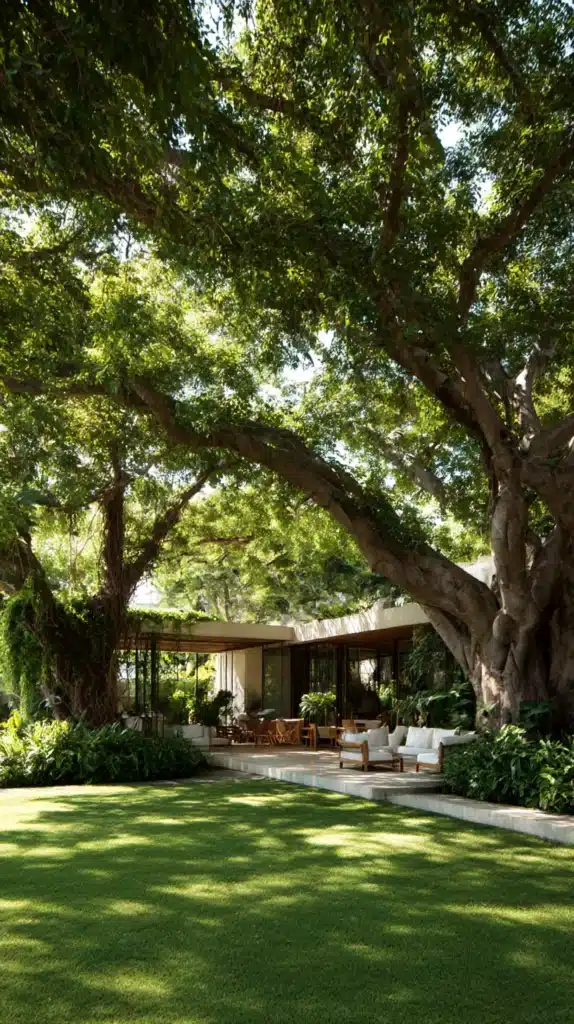
A garden containing ancient or mature trees — trees of genuine size and genuine age that predate the current garden design by decades or centuries — creates an outdoor space of extraordinary temporal depth and genuine natural magnificence.
Ancient trees create a quality of permanent, humbling natural presence that no designed garden feature can replicate — the scale, the age, and the particular quality of a living organism that has witnessed generations of human life creating a garden of genuine, profound natural beauty.
Pro Tip: Design the garden around the ancient trees rather than imposing a design upon them — allowing the existing trees to determine the siting of paths, seating, and planting rather than treating them as obstacles to be worked around. A garden designed in respectful response to existing ancient trees creates a landscape of complete coherence and genuine, authentic belonging within its natural setting.
13. Kitchen Herb Garden
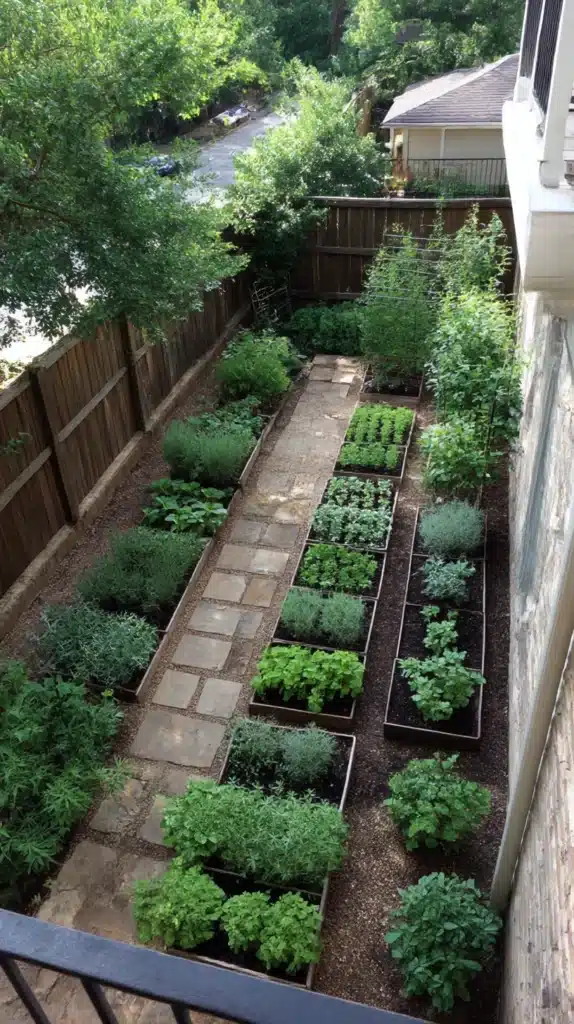
A generously planted kitchen herb garden — a dedicated area close to the house planted with an abundant selection of culinary and medicinal herbs in terracotta pots, raised timber beds, or a formal knot garden pattern — creates a garden feature of extraordinary sensory richness and genuine daily practical value.
The kitchen herb garden is simultaneously the most fragrant and the most practically useful of all garden features — the herbs releasing their extraordinary aromatic qualities in the warm summer air and providing genuinely fresh, genuinely superior flavor to every meal prepared from them.
Pro Tip: Position the kitchen herb garden as close to the kitchen door as the garden layout allows — the proximity creating the conditions for the most spontaneous and the most genuinely frequent herb harvesting available.
A herb garden at the kitchen door is used daily, instinctively, and with genuine pleasure. A herb garden positioned at the far end of the garden is used occasionally, deliberately, and with considerably less of the joyful spontaneity that makes kitchen herb growing such a specifically and genuinely rewarding garden practice.
14. Nightscented Garden
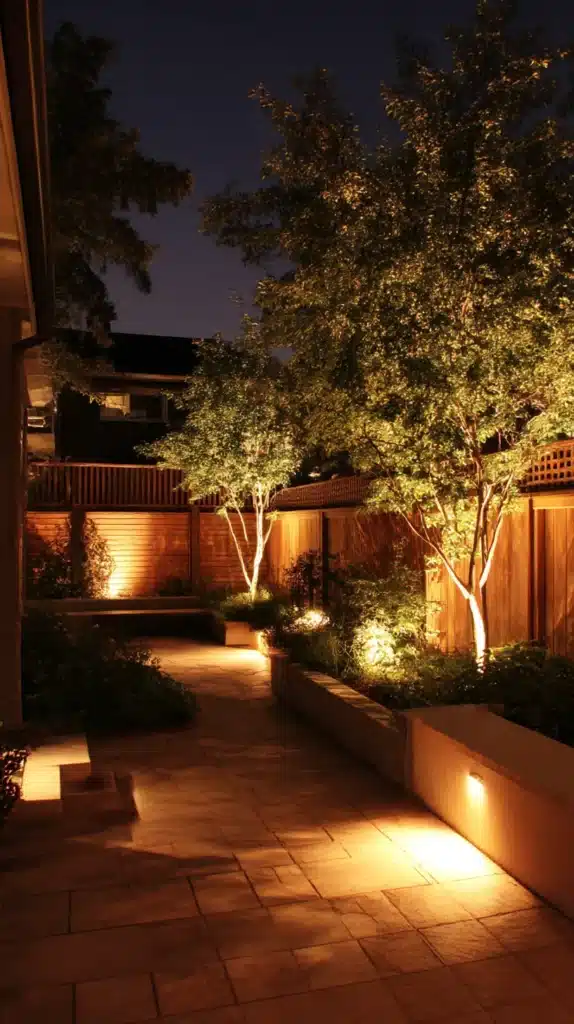
A garden designed specifically for evening and nighttime beauty — planted with white and pale-flowered plants that glow in low light, nightscented plants that release their fragrance after dark, and lit with warm, low candle lanterns and fairy lights — creates the most romantic and most specifically extraordinary garden experience available in the evening hours of the summer season.
The nightscented garden is the garden’s evening transformation — the flowers that appear modest in daylight glowing luminously in the dusk, the fragrance that is absent in the afternoon filling the cool evening air with extraordinary olfactory beauty.
Pro Tip: Plant the most powerful night-fragrant species — Nicotiana sylvestris, Hesperis matronalis, evening primrose, and Matthiola longipetala — in generous drifts close to the outdoor seating area where their extraordinary evening fragrance is most accessible and most powerfully experienced. Night fragrance experienced from a distance is pleasant. Night fragrance experienced from within the planted drift, while seated in the warm summer evening, is one of the most genuinely extraordinary sensory experiences available in any domestic garden.
15. Four-Season Garden
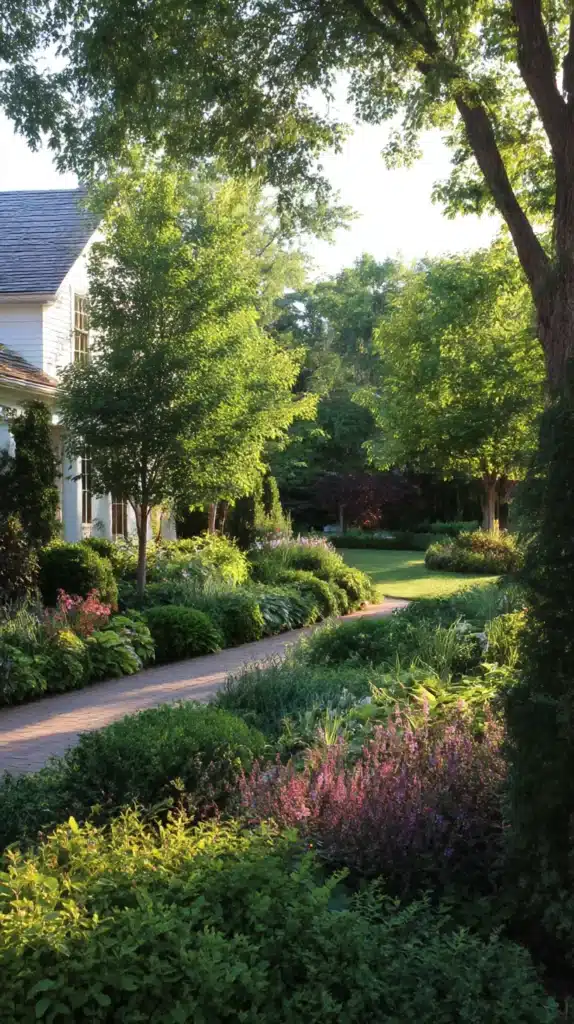
A garden designed with genuine attention to beauty and interest in every month of the year — spring bulbs followed by summer perennials followed by autumn color and fruit followed by winter structure and bark — creates the most mature, the most sophisticated, and the most genuinely complete garden design available.
The four-season garden rewards genuine horticultural knowledge, genuine long-term thinking, and genuine investment in the plants that contribute to the garden’s beauty in the months that most gardens simply write off as beyond redemption.
Pro Tip: Include at least one genuinely spectacular element for each of the four seasons — a dramatic spring magnolia, a spectacular summer rose, an extraordinary autumn Japanese maple, and a beautifully structural winter birch or dogwood — for a garden that has a genuine seasonal highlight to anticipate in every quarter of the year. A garden with four genuine seasonal highlights creates a year-round relationship between its occupant and the natural world that no single-season garden can provide.
The Dreamy Garden Is Already Within Reach
The most dreamy gardens are not the ones with the largest budgets or the most professional interventions — they are the ones tended with the most genuine care, the most genuine attention, and the most genuine personal investment in the specific beauty that the specific garden, in the specific place, in the specific season, is genuinely capable of providing.
Plant with genuine love. Tend with genuine patience. And discover that the dreamy garden you have always imagined is always closer, always more achievable, and always more completely extraordinary than it appears from the other side of the garden gate.