15 Perennials for a Low Maintenance Garden
A low maintenance garden built on a foundation of well-chosen perennials is one of the most intelligent and most genuinely rewarding investments a gardener can make in the long-term beauty and the long-term ease of any outdoor space.
The perennial — the plant that returns each year from the same root system, that establishes itself with increasing confidence and increasing visual presence over successive growing seasons, and that asks of its gardener not the annual cycle of sowing, growing, planting, and replacing that bedding plants demand, but simply the patience to allow it to reach its full and frequently extraordinary potential — is the foundation of every garden that manages to be simultaneously beautiful and genuinely, sustainably manageable.
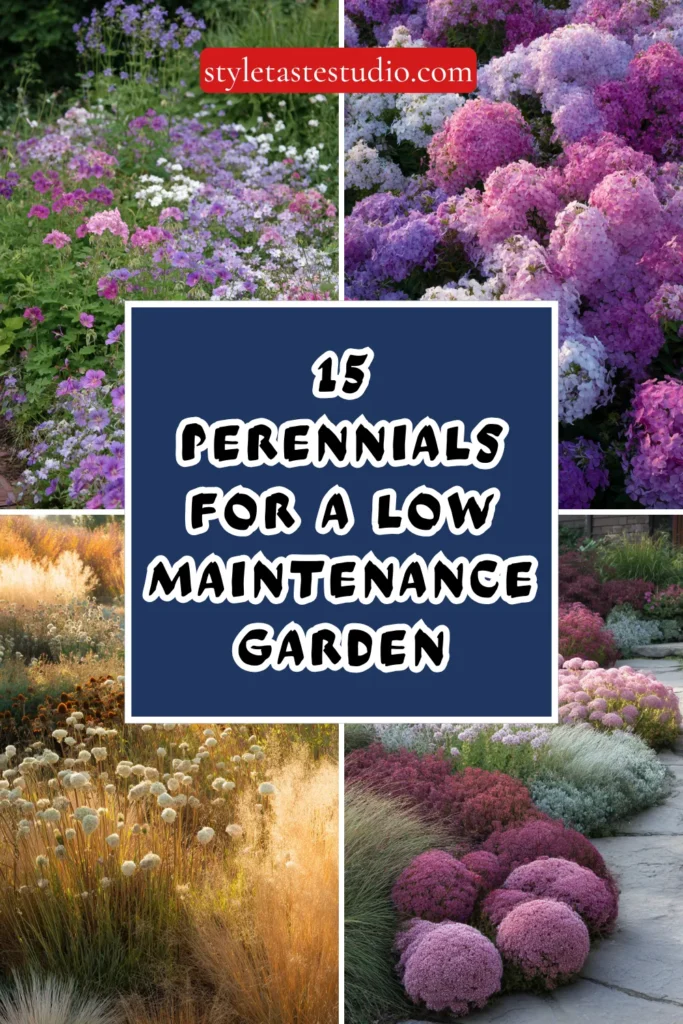
Here are 15 perennials for a low maintenance garden that will deliver years of extraordinary beauty with a minimum of intervention and a maximum of genuine horticultural reward.
1. Echinacea (Coneflower)
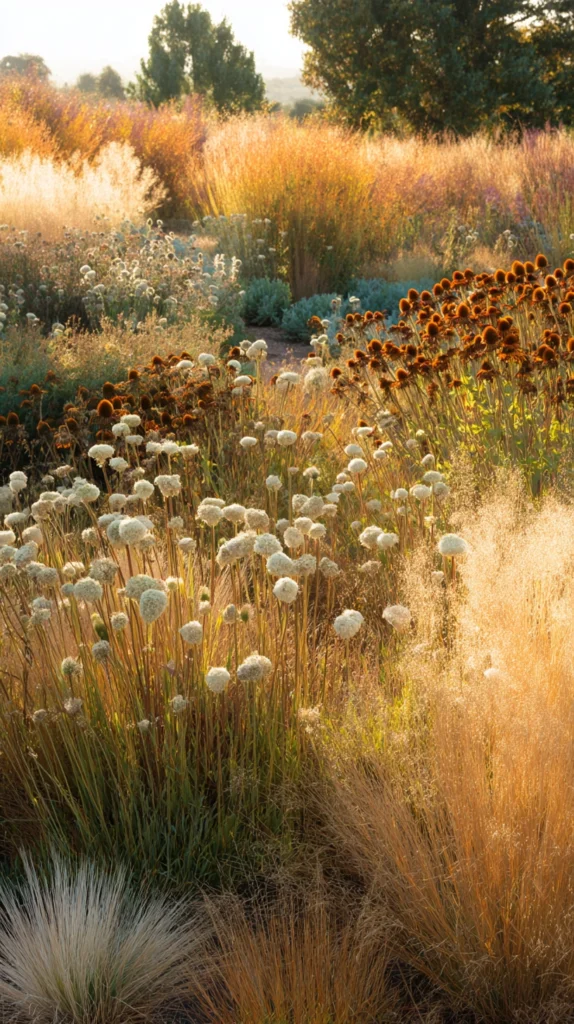
Echinacea is the low maintenance perennial of most complete and most reliably delivered ornamental value — a plant of extraordinary drought tolerance, extraordinary insect appeal, and extraordinary visual presence that flowers generously from midsummer through to the first frosts of autumn and then continues to provide interest through the winter months in the form of architectural seed heads that feed the birds and give the dormant garden a quality of structural beauty that most spent herbaceous plants cannot offer.
Grow echinacea in a sunny, well-drained position and deadhead selectively — removing some spent flowers to encourage continued blooming while leaving others to self-seed and gradually expand the planting — for a perennial that increases in beauty and in abundance with each successive season.
2. Salvia nemorosa
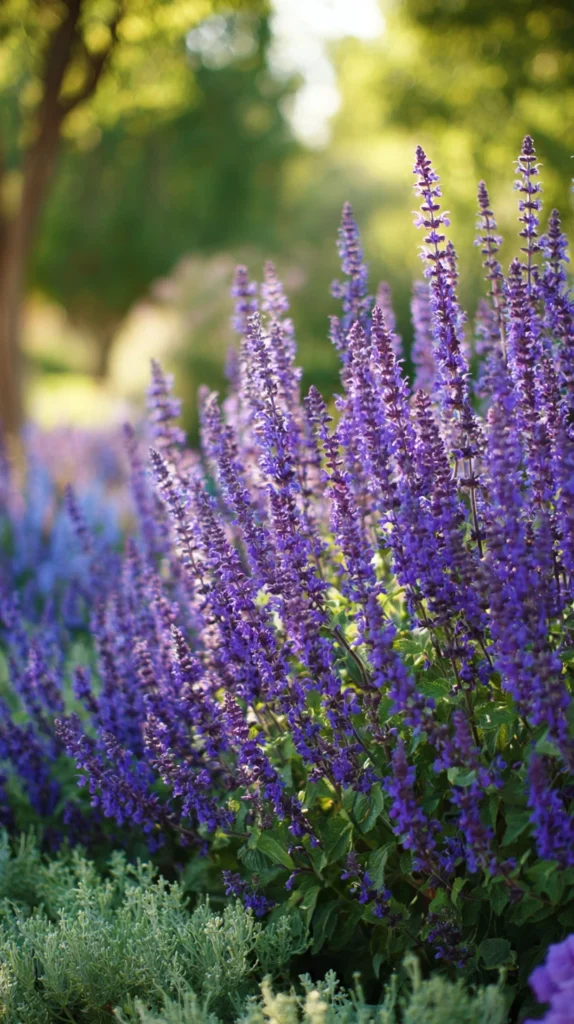
Salvia nemorosa — the ornamental sage of compact, upright habit and extraordinary flowering generosity — is the low maintenance perennial that most reliably earns its space in any garden border through the sheer duration and the sheer abundance of its flowering season.
The dense spikes of violet-blue, deep purple, or warm pink flowers produced from late spring through early summer, and again from late summer through autumn if the plant is cut back hard after the first flush, create a border display of extraordinary color intensity and extraordinary bee-attracting value that requires nothing from its gardener beyond the twice-yearly trim that rewards it with the second flowering.
Plant it in full sun in any well-drained soil and allow it to establish — it improves dramatically in its second and third seasons.
3. Rudbeckia (Black-Eyed Susan)
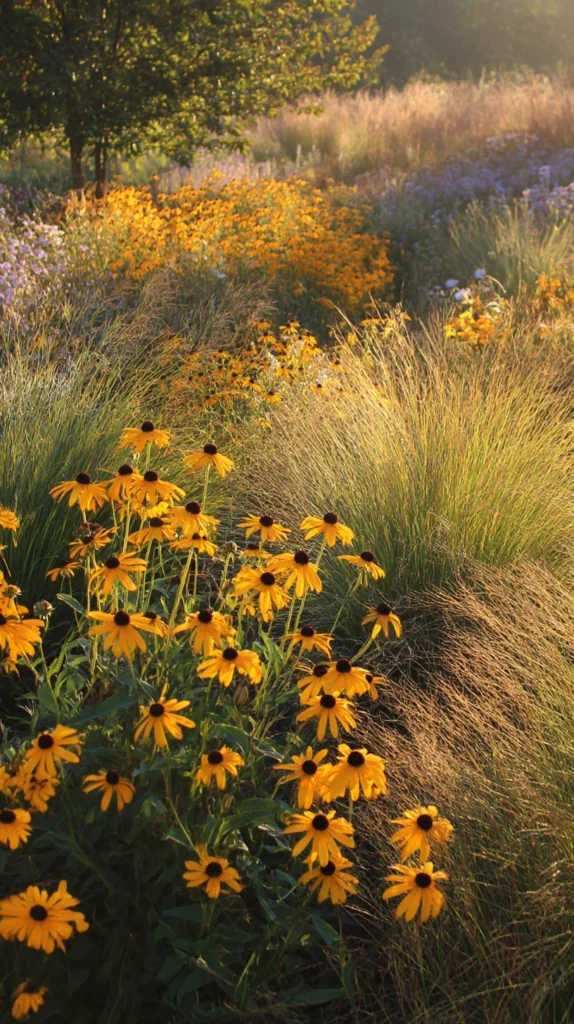
Rudbeckia is the perennial of late summer and autumn border glory — the plant whose warm gold and amber daisy flowers, each centered with the distinctive dark cone that gives the plant its common name, transforms the late-season border from a space of fading interest into one of the most vibrant and most genuinely joyful plantings available in any temperate garden.
Rudbeckia is extraordinarily tolerant of difficult conditions — of clay soils, of temporary drought, and of the kind of benign neglect that genuinely low maintenance gardening inevitably involves — and rewards that tolerance with an increasing generosity of flower production that makes the established clump, in its third or fourth season, one of the most spectacularly flowering plants in any late summer border.
4. Geranium (Hardy Cranesbill)
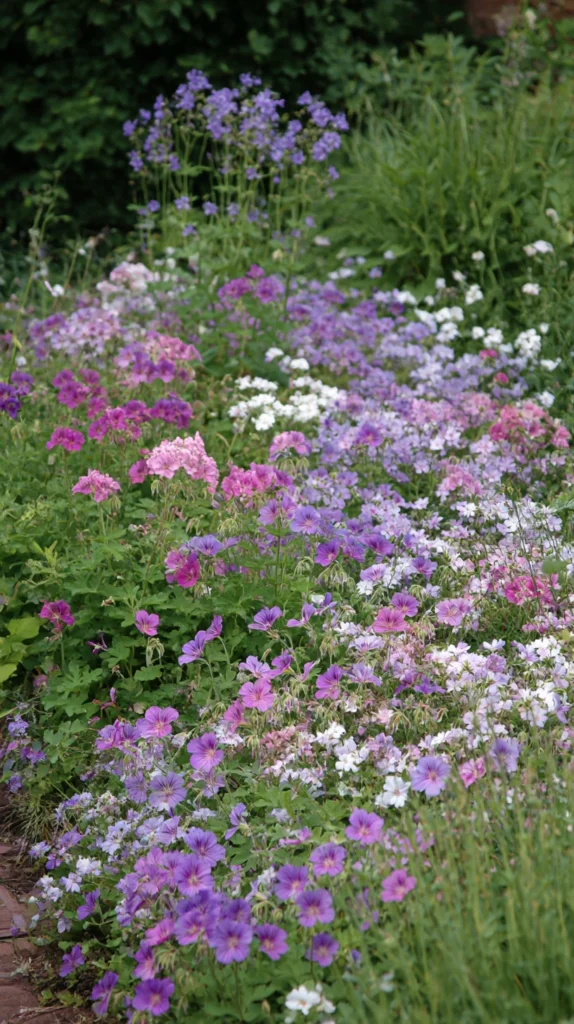
The hardy geranium — not the tender pelargonium of the summer bedding tradition, but the genuinely hardy, genuinely perennial cranesbill that returns each year with increasing vigour and increasing ornamental value — is the low maintenance gardener’s most versatile and most completely reliable ground-covering perennial.
Hardy geraniums suppress weeds with a thoroughness that saves hours of border maintenance throughout the growing season, flower with generosity and with beauty in a range of colors from the deepest violet-magenta through soft lilac to pure white, and tolerate shade, drought, and difficult soil conditions with a cheerful resilience that no more demanding perennial can match.
Cut them back hard after the first flowering flush and they produce a fresh mound of attractive foliage and often a second flowering of genuine ornamental value.
5. Achillea (Yarrow)
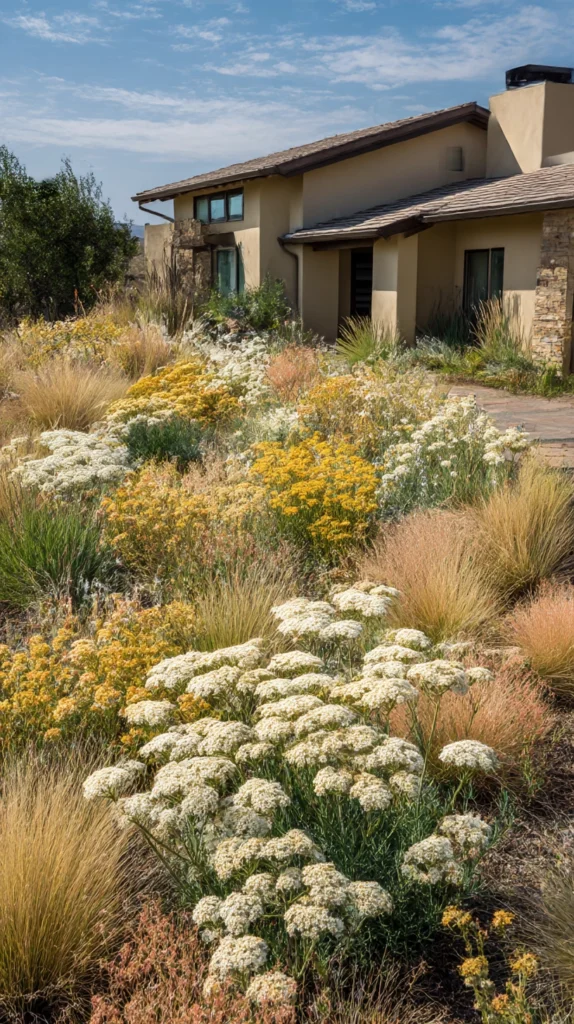
Achillea is the perennial of the naturalistic, prairie-inspired garden border — its flat-topped flower heads in warm shades of yellow, terracotta, dusty pink, and cream held on sturdy, upright stems of considerable structural presence above finely divided, aromatic, grey-green foliage of genuine ornamental quality even when the plant is not in flower.
Achillea is extraordinarily drought tolerant once established, thrives in poor, well-drained soils where more demanding perennials would struggle, and provides a landing platform for pollinators of every description throughout its generous flowering season from early to late summer. The dried flower heads retain their color for months, extending the plant’s ornamental season well beyond the end of the growing year.
6. Nepeta (Catmint)
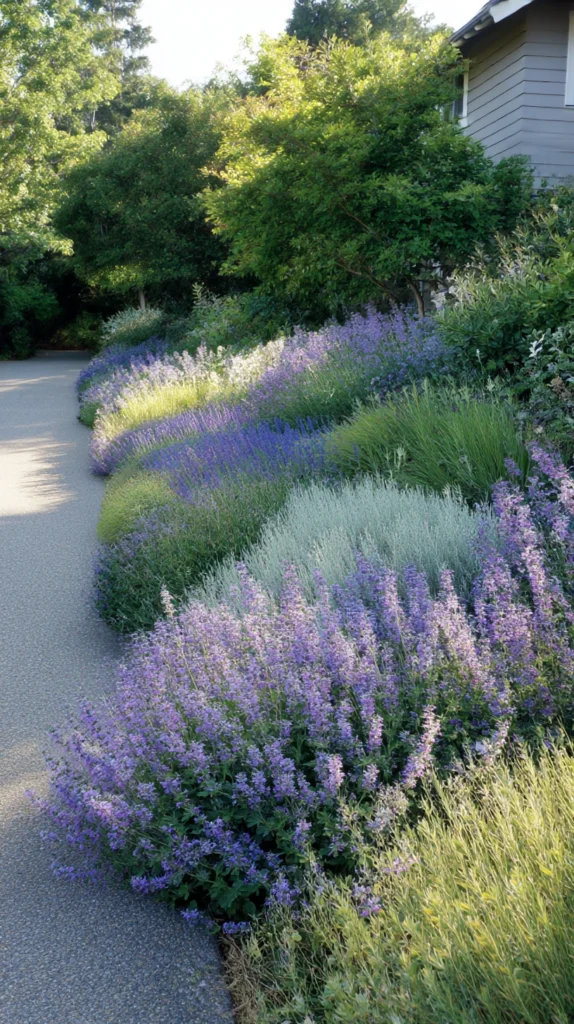
Nepeta is the low maintenance perennial of the border edge — the plant whose soft, grey-green mound of aromatic foliage and whose long, lavender-blue flowering spikes create the most beautiful and the most bee-attractive of all border margins, softening the transition between the planted border and the path or lawn beyond it with a natural, flowing, completely unstudied grace.
Cut catmint back by half immediately after the first flush of flowering in early summer and it produces a second, equally generous flowering from late summer through to the first frosts — making it one of the longest-flowering and most continuously ornamental of all low maintenance perennials available to the temperate garden.
7. Hemerocallis (Daylily)
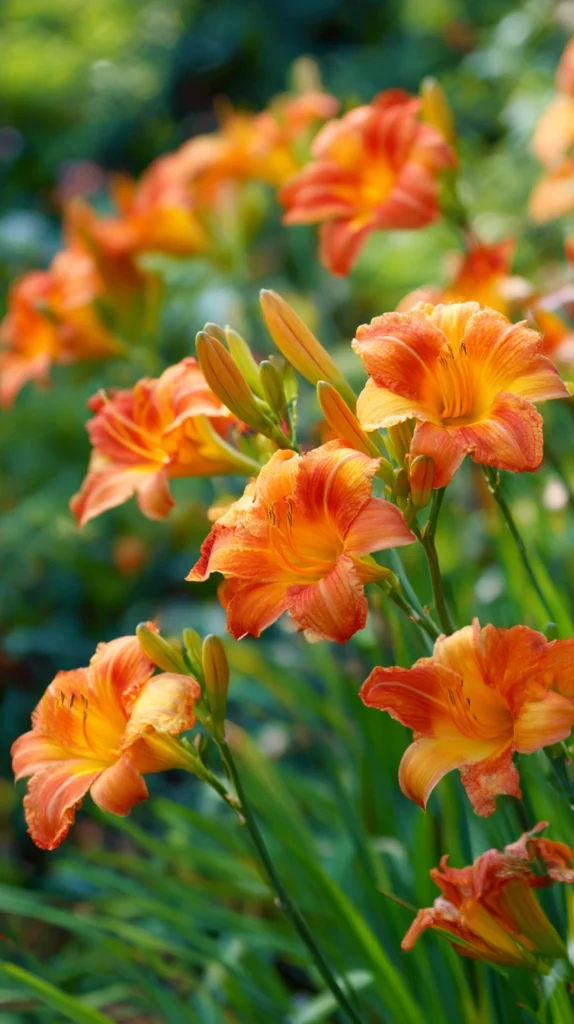
The daylily is one of the most accommodating and most generously flowering of all low maintenance perennials — a plant of extraordinary cultural tolerance that thrives in almost any soil, in full sun or partial shade, in drought or in moisture, and that asks of its gardener nothing beyond the removal of spent flower stems and the occasional division of the clump every four or five years when it becomes congested.
Each individual flower lasts a single day, but the succession of blooms produced by an established daylily clump extends the flowering season over several weeks of genuine border magnificence — the warm golds, oranges, and apricots of the traditional varieties joined, in the most extensive modern range of any herbaceous perennial, by colors from the palest cream through the deepest purple to the most extraordinary bicolored patterns imaginable.
8. Penstemon
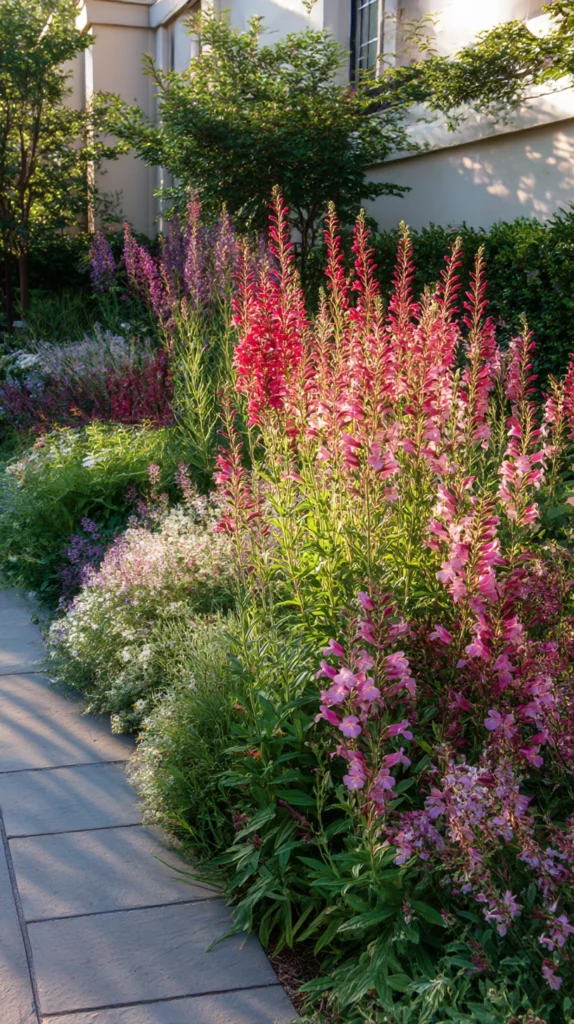
Penstemon is the low maintenance perennial of the long border season — a plant that begins flowering in early summer and, if deadheaded regularly, continues producing its tubular, foxglove-like flowers in shades of pink, purple, red, and white through to the first frosts of autumn with a sustained generosity that few other flowering perennials can match over a comparable period.
Penstemon is relatively short-lived compared to some perennials, typically performing magnificently for three to four seasons before requiring replacement, but it compensates for this relative brevity of individual life with a flowering season of such extraordinary length and such extraordinary color intensity that the effort of occasional replacement is entirely and enthusiastically justified.
9. Agapanthus
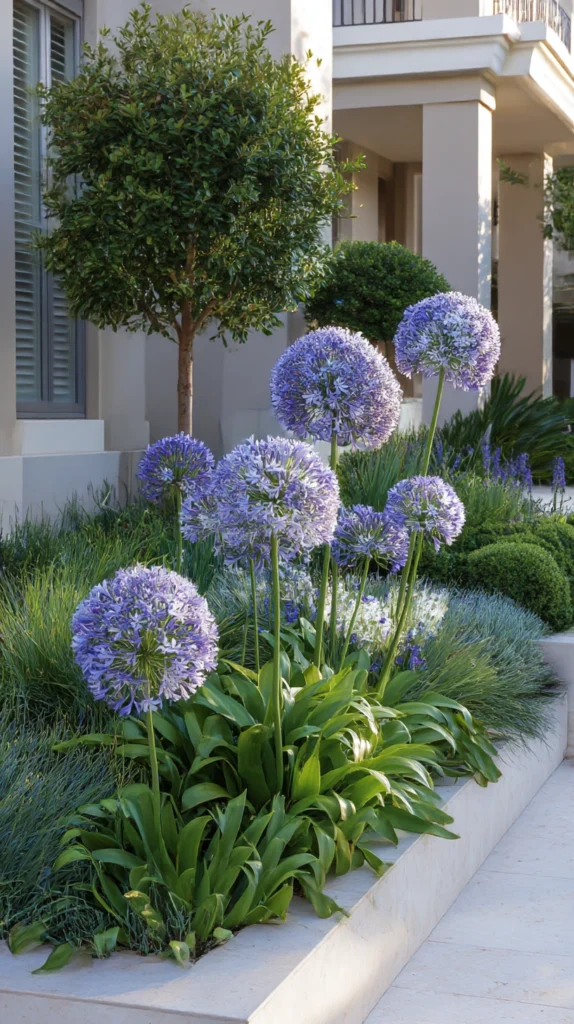
Agapanthus — the African lily of architectural form and extraordinary ornamental presence — is the low maintenance perennial of most dramatic and most instantly recognisable summer impact, its spherical heads of blue, violet, or white tubular flowers held on tall, elegant stems above strap-like mounds of deep green foliage that remain attractive throughout the growing season.
Plant agapanthus in a warm, sunny position in well-drained soil, protect the crowns with a dry mulch in the coldest winter climates, and allow it the three or four seasons it requires to establish fully before expecting the maximum flower production that a mature, undivided clump reliably delivers. The spent flower heads dry beautifully on the stem for extended winter garden interest.
10. Sedum (Stonecrop)
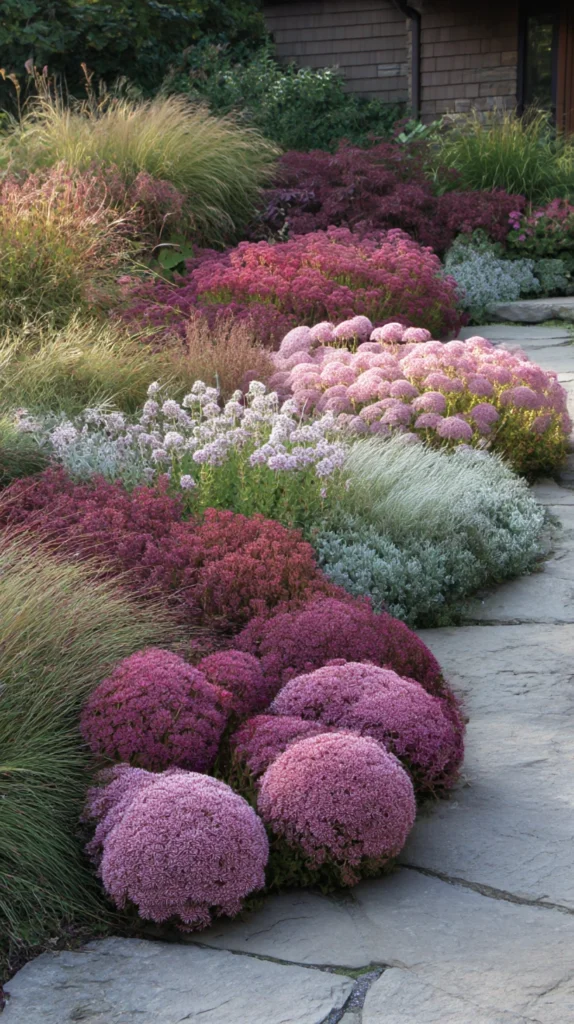
The taller sedums — particularly the varieties of Sedum spectabile and the Hylotelephium genus that have largely replaced them in modern planting — are the low maintenance perennial of late summer and autumn border structure, their flat, plate-like flower heads in warm tones of pink, dusty rose, and deep burgundy providing both a landing platform for late-season pollinators and the most architecturally distinctive seed head display of any herbaceous perennial available in the temperate garden.
Leave the seed heads standing through the winter rather than cutting the plant back at the season’s end — they catch the frost, hold the snow, and provide food for seed-eating birds through the coldest months of the year with a generosity that is as practically valuable as it is visually beautiful.
11. Verbena bonariensis
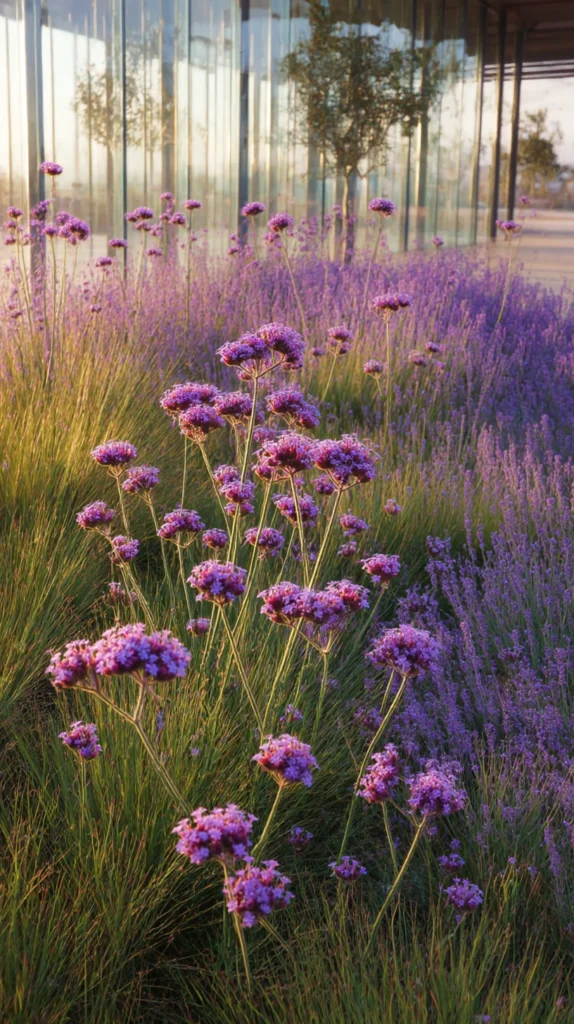
Verbena bonariensis is the low maintenance perennial of see-through garden architecture — the tall, airy, branching plant whose tiny clusters of vivid purple flowers, held on transparent stems of such slender delicacy that the plants behind them remain fully visible through and around them, creates the specific quality of layered, aerial, apparently weightless garden beauty that is the defining visual characteristic of the modern naturalistic planting style.
It self-seeds prolifically and moves through the garden with an improvisational freedom that places it, over successive seasons, in positions no gardener would have chosen and that invariably turn out to be exactly right — which is the specific, extraordinary, completely unearned pleasure that self-seeding plants uniquely provide.
12. Astrantia (Masterwort)
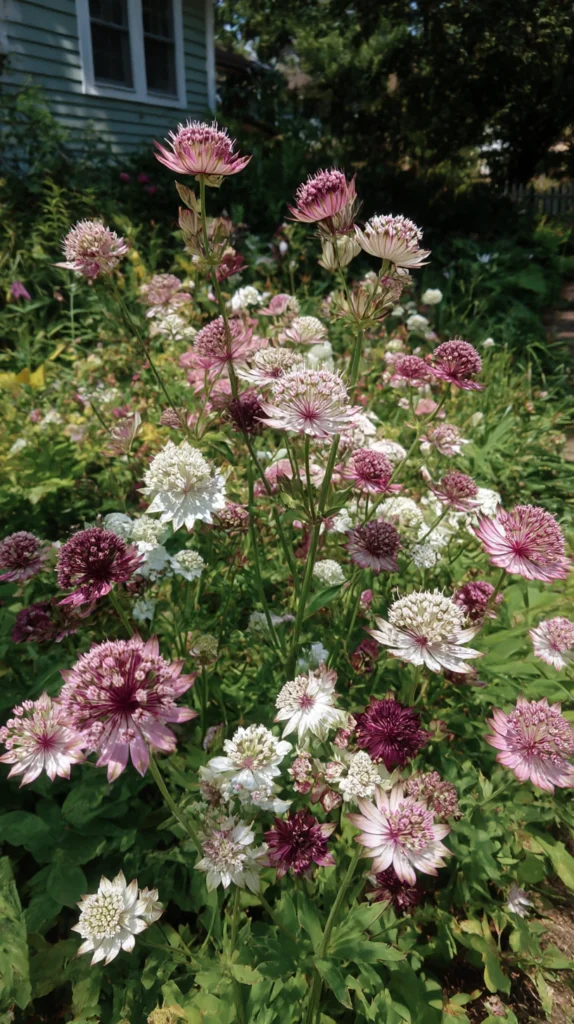
Astrantia is the low maintenance perennial of the shade garden and the damp border — a plant of extraordinary delicacy and extraordinary ornamental charm whose intricate, star-shaped flower heads in shades of white, pink, and deep burgundy-red, each one surrounded by a ruff of papery bracts of considerable structural complexity, create a planting of such refined botanical beauty that it rewards close examination as generously as it rewards the long view.
Astrantia is extraordinarily tolerant of heavy shade and of consistently moist soils — conditions that eliminate many more demanding perennials from consideration — and produces its distinctive flowers from late spring through to late summer with a reliability and a generosity that makes it one of the most valuable and most consistently beautiful of all low maintenance shade perennials.
13. Phlox paniculata
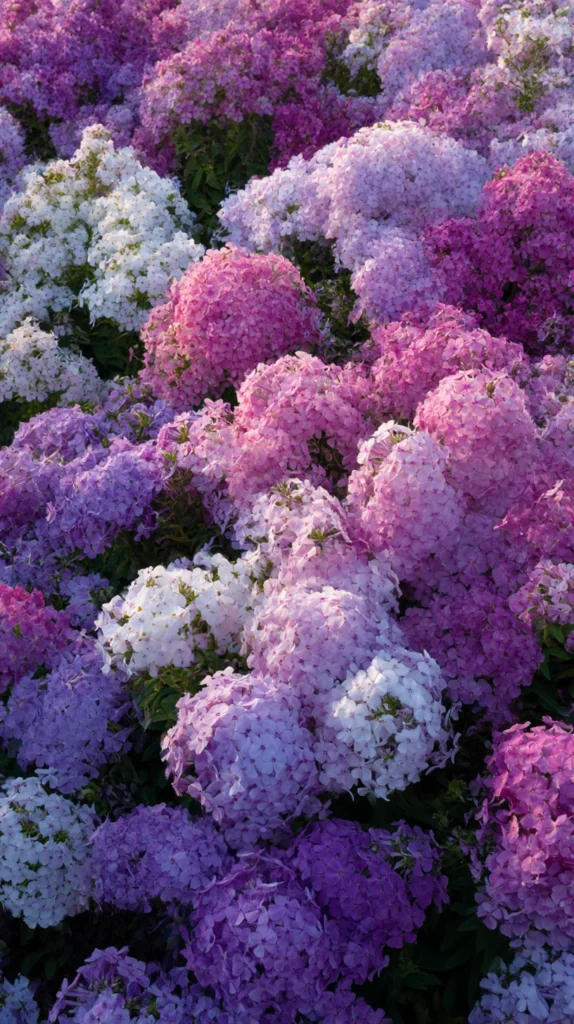
Border phlox is the perennial of high summer fragrance and high summer color — a plant whose large, domed flower heads in shades of white, pink, lavender, and deep magenta fill the midsummer garden with a fragrance of extraordinary intensity and extraordinary sweetness that carries on the evening air with a reach and a persistence that few other garden fragrances can match. Choose mildew-resistant varieties — the range of which has expanded considerably in recent years — for a plant of genuine low maintenance credentials as well as extraordinary ornamental value.
Divide every three to four years to maintain vigor and to share the increasing abundance of an established planting with other parts of the garden that could benefit from its extraordinary color and its extraordinary perfume.
14. Alchemilla mollis (Lady’s Mantle)
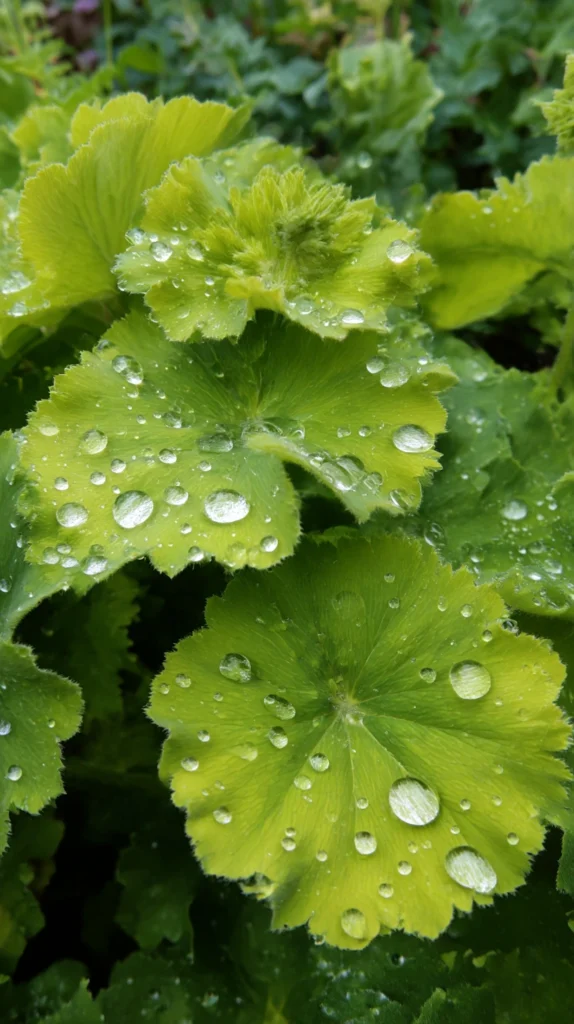
Alchemilla mollis is perhaps the single most reliable and most universally beloved of all low maintenance garden perennials — the plant whose pleated, velvety, blue-green leaves collect rainwater and morning dew into perfect silver spheres of extraordinary mathematical beauty, and whose frothy masses of tiny lime-green flowers create the most effective and the most visually versatile border edge available in any temperate garden.
Alchemilla suppresses weeds, softens hard path edges, and combines with every other plant it grows beside with a botanical generosity and a chromatic versatility that makes it the indispensable background performer of the low maintenance garden — the plant that makes every other plant in the border look more beautiful simply by growing beside it.
15. Epimedium (Barrenwort)
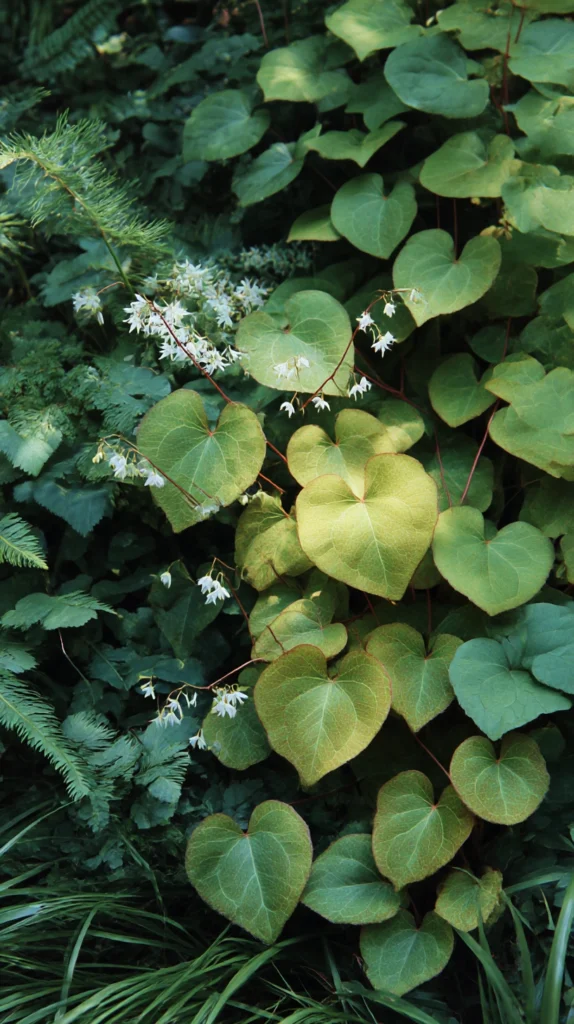
Epimedium is the low maintenance gardener’s most valuable and most frequently underestimated resource for the dry, shaded conditions beneath established trees and shrubs — conditions that eliminate most other perennials from practical consideration and that epimedium inhabits with a resilience, a persistence, and a gradually expanding ornamental generosity that makes it, over the years of its quiet, determined establishment, one of the most rewarding and most genuinely extraordinary of all ground-covering perennials.
Its heart-shaped leaves emerge in spring often tinged with bronze or red, the small but exquisitely formed flowers in yellow, white, pink, and purple appearing simultaneously in a display of refined botanical delicacy, and the foliage remaining semi-evergreen through winter to provide continuous ground cover and continuous weed suppression throughout the year.
A low maintenance garden planted with a generous selection of well-chosen perennials is a garden that improves with every season, that rewards patience and genuine horticultural understanding with increasing beauty and increasing ease, and that provides its gardener with the specific, deeply pleasurable satisfaction of a planting that gives back far more than was ever invested in it.
Choose these perennials with genuine knowledge of your garden’s specific conditions, plant them with genuine care, and allow them the seasons they need to reach their full and frequently breathtaking potential — and the low maintenance garden you create will be, year after year, one of the most beautiful and most genuinely rewarding outdoor spaces you have ever had the pleasure of inhabiting.