14 Rock Wall Garden Ideas for a Stunning Natural Landscape
A rock wall garden is one of the most structurally beautiful and most ecologically rich garden features available in any outdoor space. It is simultaneously a practical landscape engineering solution — retaining slopes, creating level terraces, and managing the natural topography of a garden — and a genuinely extraordinary decorative feature of permanent, geological beauty that improves with every passing season as plants establish within the wall, weather softens the stone, and the wall settles into the landscape with the quiet authority of something that has always been precisely where it is.
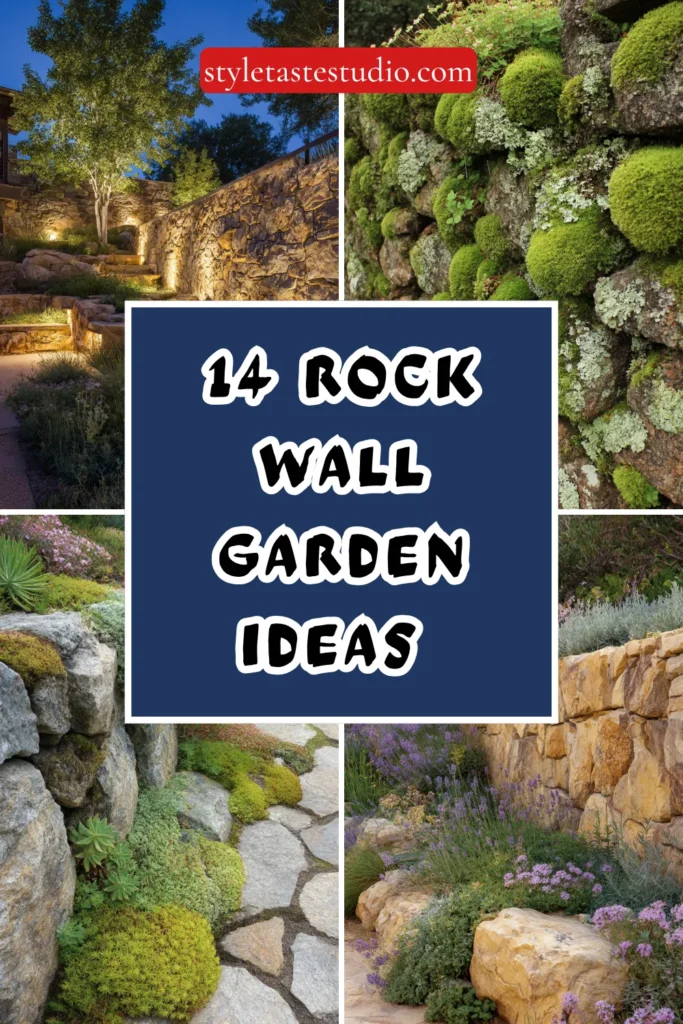
The rock wall garden succeeds because it works entirely with natural materials and natural processes — the stone, the mortar or the dry joints, the planting within the wall face, and the plants cascading over the top all developing together into a composition of genuine organic completeness that no manufactured garden feature can replicate or approach. A mature, well-planted rock wall garden has a quality of belonging to its landscape rather than being placed within it — the defining quality of the most genuinely beautiful outdoor design features available.
Here are 14 rock wall garden ideas for a stunning natural landscape.
1. Dry Stone Retaining Wall with Alpines
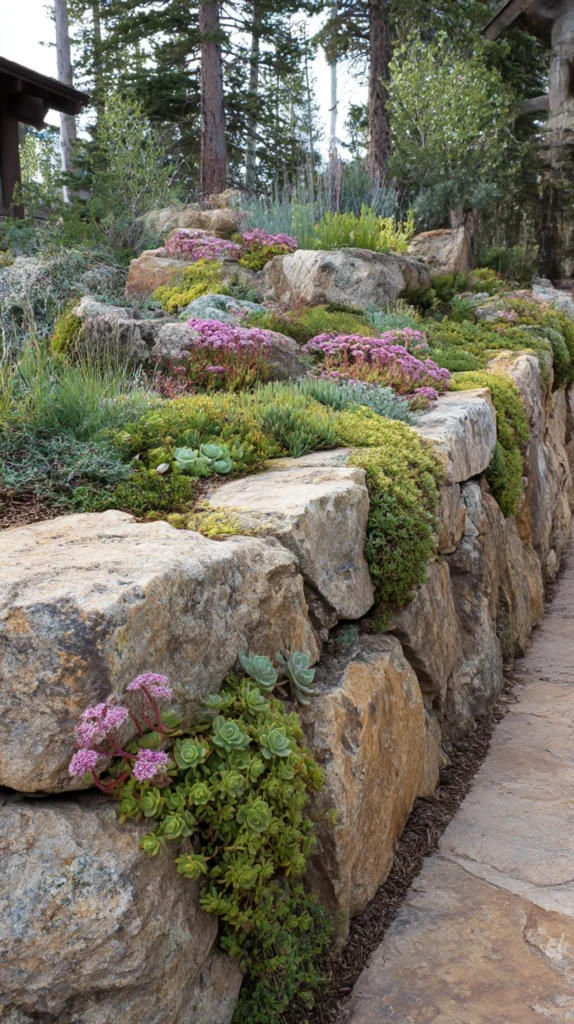
A dry stone retaining wall — stones laid without mortar in the traditional walling technique, each stone selected and positioned for maximum structural interlocking and maximum stability — planted with alpine plants in the joints between the stones creates the most authentic, most ecologically rich, and most genuinely beautiful of all rock wall garden formats.
The alpine plants — sempervivums, sedums, saxifrages, and small creeping thymes — establish in the dry, free-draining conditions of the stone joints and create a wall face of extraordinary botanical variety and seasonal colour change throughout the year.
Pro Tip: Pack the joints between dry stone wall courses with a mixture of gritty soil and fine gravel before planting — providing the alpine plants with a rooting medium that replicates their natural mountain scree habitat. Alpine plants in a dry stone wall planted in standard garden soil develop root rot from moisture retention. Alpine plants in a gritty, sharply draining joint medium establish vigorously and flower prolifically — creating the beautiful planted wall face of genuine alpine garden character.
2. Limestone Rock Wall with Ferns and Shade Plants
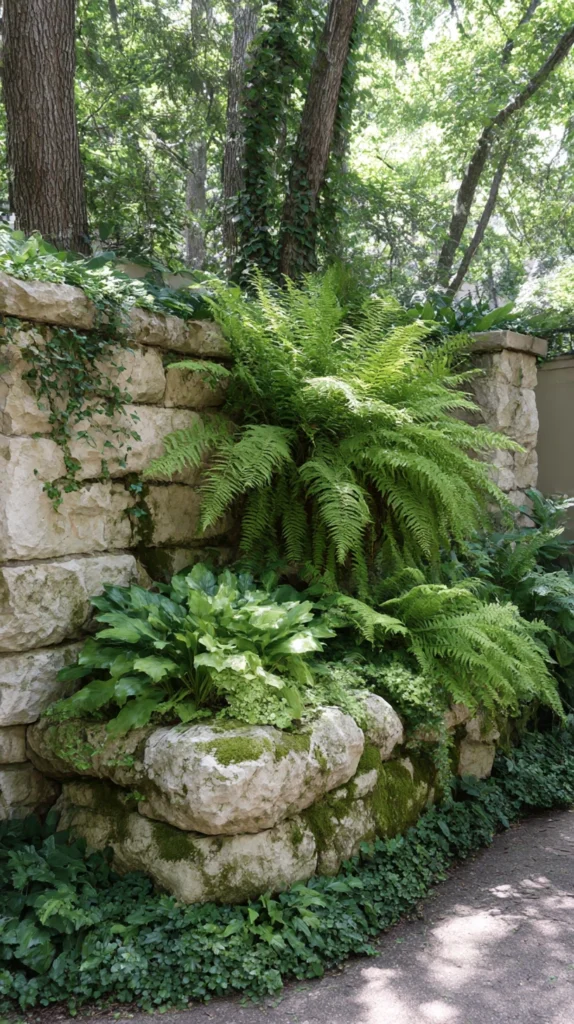
A limestone rock wall — the warm honey and cream tones of cut or collected limestone creating a wall of genuine geological warmth and classical beauty — planted with ferns, hellebores, and shade-loving mosses in the joints and at the wall base creates a garden feature of extraordinary lush, green, permanently beautiful character. Limestone has a particular affinity with ferns and shade-loving plants — the alkaline nature of the stone creating the slightly calcareous conditions that many of the most beautiful fern and woodland plant species actively prefer.
Pro Tip: Position a limestone rock wall garden on the shaded north or east-facing side of the garden for the most successful and most genuinely beautiful fern and shade plant establishment. Limestone walls in full sun create hot, dry conditions suitable only for drought-tolerant species. Limestone walls in shade maintain the cool, moist conditions that ferns, mosses, and woodland plants require for the lush, green, genuinely beautiful growth that makes a shade-planted rock wall garden so specifically and completely stunning.
3. Granite Boulder Wall
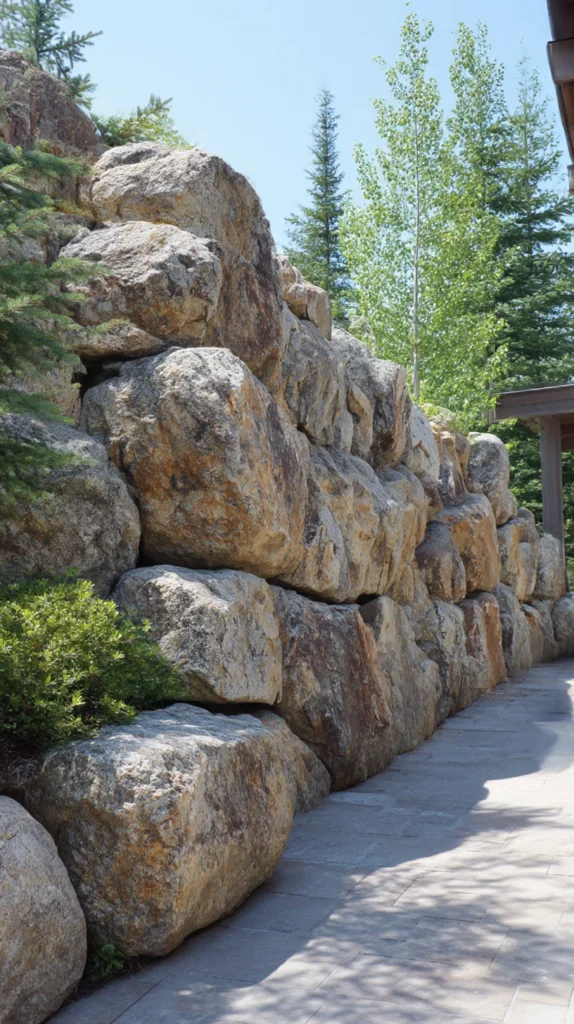
A granite boulder wall — large, rough, irregular granite boulders stacked and positioned to create a powerful, muscular retaining wall of considerable geological presence — creates a rock wall garden of extraordinary natural authority and genuine landscape drama. Granite has a quality of permanent, geological confidence that smaller, more uniform stone wall materials lack — the scale and the weight of the individual boulders creating a wall that reads as a genuine landscape feature rather than a constructed garden wall.
Pro Tip: Position granite boulders with their most interesting natural face outward — selecting the most beautiful surface of each boulder during placement and orienting it toward the primary viewing direction. Every granite boulder has a most interesting face — the surface with the most character, the most colour variation, and the most textural interest. Placing the most interesting face outward creates a granite boulder wall of maximum natural beauty from the primary garden viewing position.
4. Terraced Rock Wall Garden
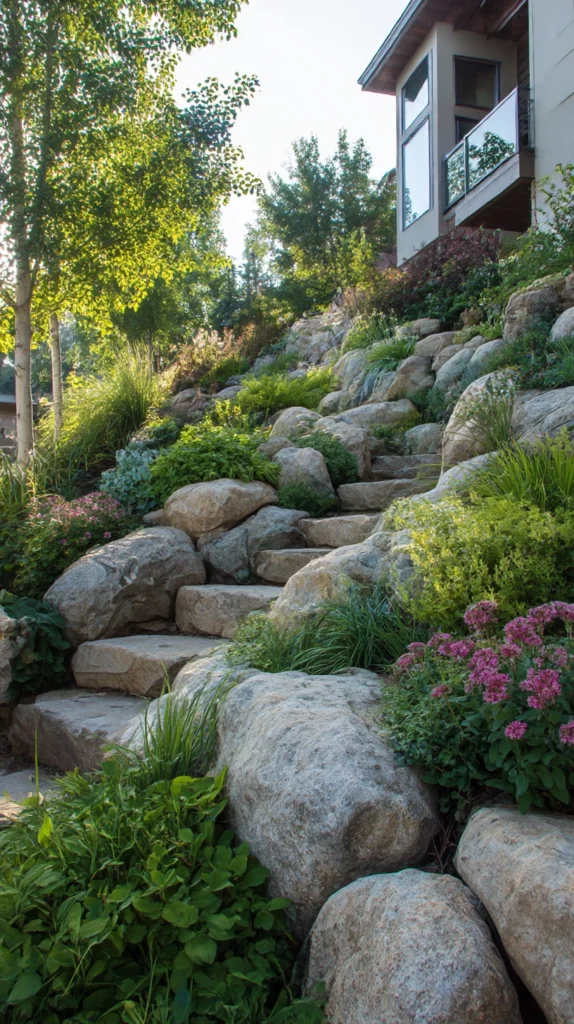
A series of terraced rock walls — multiple levels of stone retaining walls creating a sequence of level planting terraces on a sloped garden site — creates a rock wall garden of extraordinary landscape drama and genuine practical garden value.
The terraced rock wall garden transforms a steeply sloped, difficult-to-plant garden site into a beautifully organized sequence of productive planting terraces, each level accessible, each level fully plantable, and the whole composition creating a garden of genuine architectural interest and complete landscape coherence.
Pro Tip: Plant each terrace level with a different planting palette — drought-tolerant Mediterranean plants on the highest, hottest, most exposed terrace; mixed perennials and shrubs on the middle terraces; moisture-loving plants at the base where water naturally collects — for a terraced rock wall garden of complete ecological appropriateness and genuine planting diversity.
A terraced garden where each level is planted according to its specific microclimate creates the most beautiful, most low-maintenance, and most genuinely successful planted terrace landscape available.
5. Moss and Lichen Rock Wall
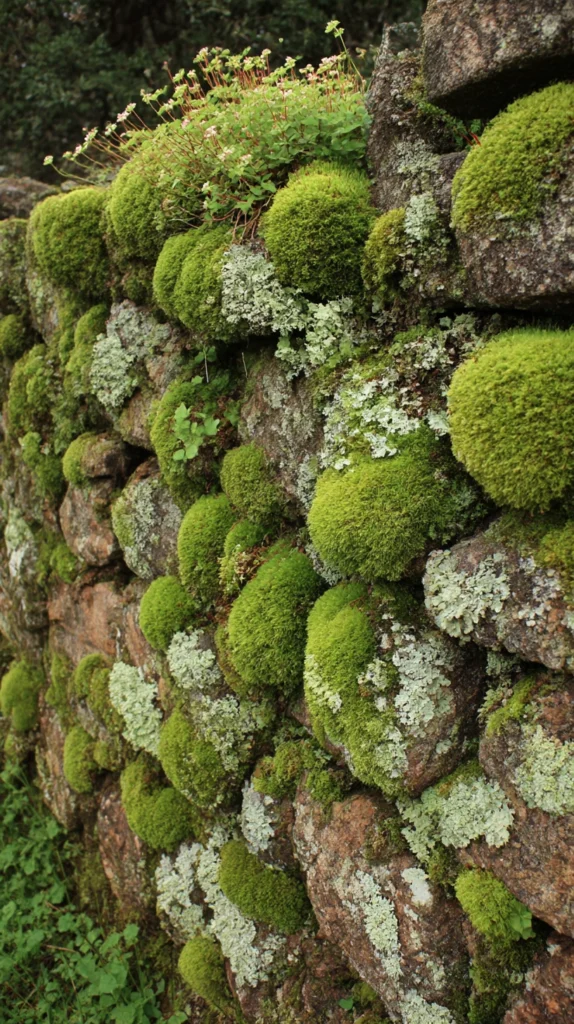
A rock wall intentionally planted and encouraged with mosses and lichens — the green, gold, and silver-grey botanical organisms that transform bare stone into a living, textured, ancient-looking surface of genuine natural beauty — creates a garden feature of extraordinary organic warmth and complete natural authenticity.
A moss and lichen covered rock wall has a quality of age, permanence, and genuine natural belonging that no new stone construction possesses — the biological colonization of the stone surface communicating a history of time and weather that creates the most genuinely beautiful and most genuinely natural rock wall garden surface available.
Pro Tip: Accelerate moss establishment on a new rock wall by applying a thin slurry of natural yogurt mixed with collected garden moss to the stone surface in autumn — the acidic dairy medium providing ideal germination conditions for moss spores. Apply the moss slurry generously to all stone surfaces in the most shaded areas of the wall first — the moisture-retentive conditions of the shaded wall face providing the best establishment conditions for rapid and complete moss colonization of the new stone surface.
6. Stacked Slate Rock Wall
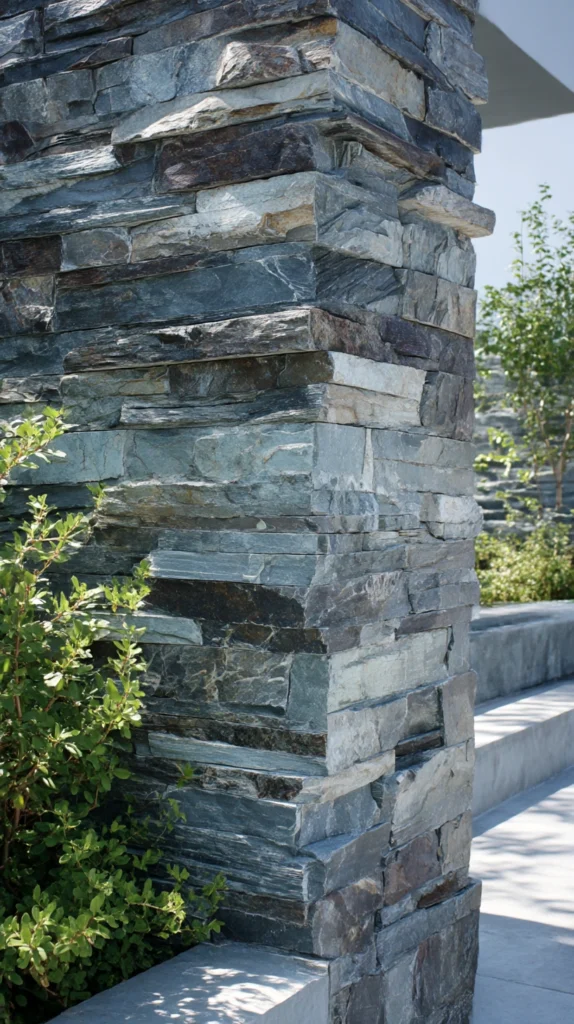
A stacked slate wall — thin, flat slate pieces laid in precise horizontal courses to create a wall of strong geometric character and distinctive dark blue-grey material beauty — creates a rock wall garden of considerable contemporary design confidence and genuine geological drama. The characteristic layered cleavage planes of natural slate create a wall surface of extraordinary textural complexity — each slate piece revealing its natural stratification in a wall of genuine, deep, geological visual richness.
Pro Tip: Plant stacked slate walls with plants that complement the cool blue-grey of the stone — white and pale yellow flowering plants, silver-leaved species, and blue-grey ornamental grasses — for a planted rock wall garden of complete tonal harmony and genuine colour consideration. Warm-coloured flowers in vivid orange and red can clash visually with the cool blue-grey of slate. White, pale yellow, and silver-toned plants alongside slate create a rock wall planting of genuine, resolved colour beauty.
7. Sandstone Rock Wall with Mediterranean Planting
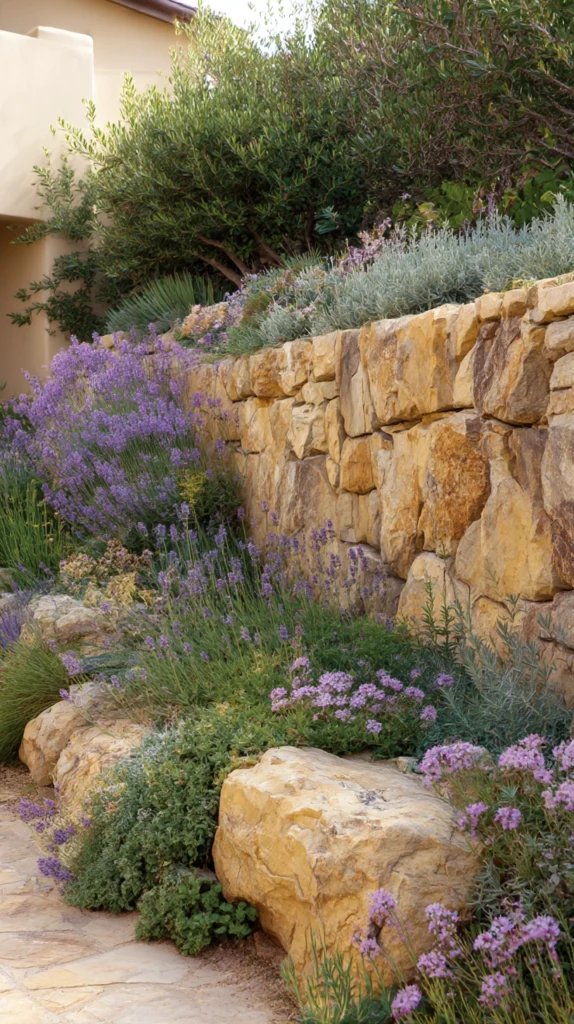
A warm sandstone rock wall — the buff, honey, and terracotta tones of natural sandstone creating a wall of extraordinary warmth and genuine sun-baked beauty — planted with lavender, rosemary, thyme, and other Mediterranean drought-tolerant species creates a rock wall garden of complete sensory richness and genuine landscape character.
The warm tones of sandstone and the silver-grey and blue-green foliage of Mediterranean plants create a colour combination of extraordinary natural harmony — the colours of ancient Mediterranean landscapes translated into a domestic garden of genuine, authentic beauty.
Pro Tip: Incorporate a seating niche within the sandstone rock wall — a naturally formed alcove created during the wall construction by leaving a section of wall at a lower height and widening the wall depth — for a rock wall garden feature of genuine practical value and considerable outdoor living appeal. A seating alcove within a warm sandstone wall creates a sheltered, sun-warmed garden seat of extraordinary comfort and genuine landscape integration — the warm stone radiating accumulated solar heat throughout the evening and creating a seating position of genuine outdoor pleasure.
8. Fieldstone Wall with Cottage Garden Planting
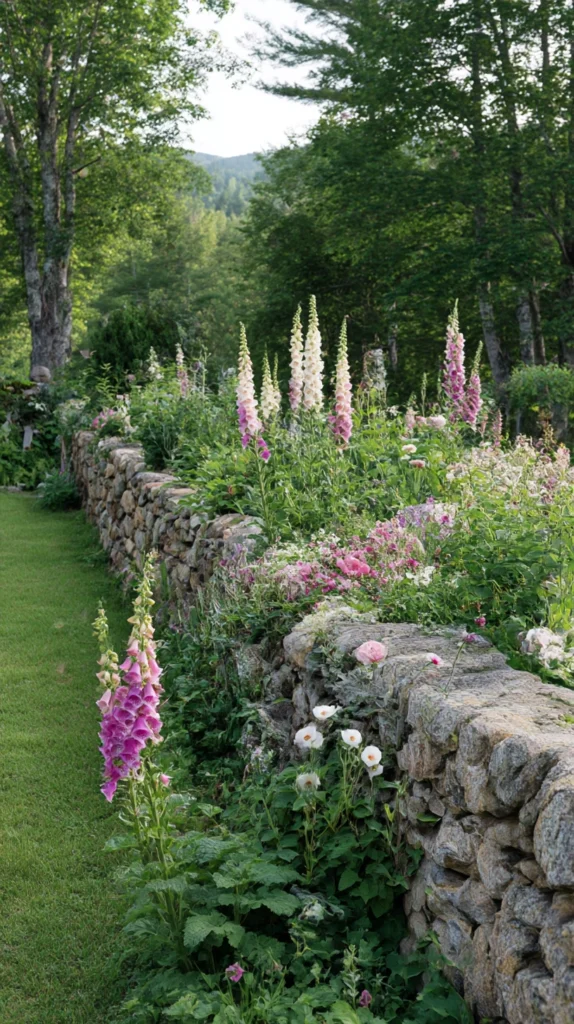
A fieldstone wall — rough, irregular stones gathered from local fields and hedgerows and laid in a random rubble pattern with wide mortar joints — planted with traditional cottage garden plants creates a garden boundary of extraordinary rustic warmth and genuine country garden beauty. Fieldstone walls have a quality of belonging to their local landscape — the same stones as the surrounding fields and countryside creating a garden boundary of genuine geological continuity with the wider landscape.
Pro Tip: Allow cottage garden self-seeders — foxgloves, red valerian, Welsh poppies, and ivy-leaved toadflax — to establish spontaneously in the mortar joints and at the base of the fieldstone wall for the most genuinely beautiful and most authentically cottage garden planted wall face. Self-seeded plants in fieldstone wall joints establish with a naturalness and an organic beauty that deliberately planted alternatives cannot replicate — the plants appearing to grow from the wall as a genuinely natural expression of the wall’s own ecology.
9. Boulder Stepping Stone Wall Garden
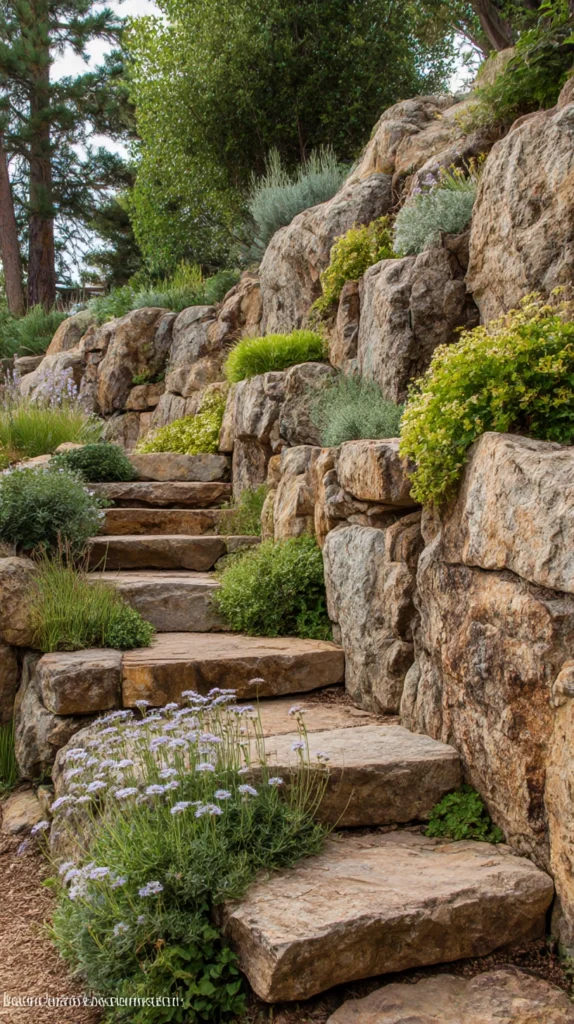
A rock wall garden incorporating large flat boulder stepping stones — stones projecting from the wall face at regular intervals to create a stepped planting access system within the wall itself — creates a garden feature of considerable practical intelligence and genuine visual drama.
The projecting stepping stones allow the planted wall face to be accessed, maintained, and replanted without disturbing the surrounding planting or the wall structure — creating a planted rock wall garden of genuine long-term maintainability and complete practical usefulness.
Pro Tip: Position projecting stepping stones within the rock wall at a consistent vertical interval of 400 millimetres and a consistent horizontal offset pattern — alternating left and right projections at each level for a stepping stone system of comfortable, safe, ergonomic access. Stepping stones at inconsistent heights create an irregular, uncomfortable access pattern that discourages use and creates trip hazards. Consistent 400 millimetre vertical intervals create a natural, comfortable stepping rhythm.
10. River Rock Garden Wall
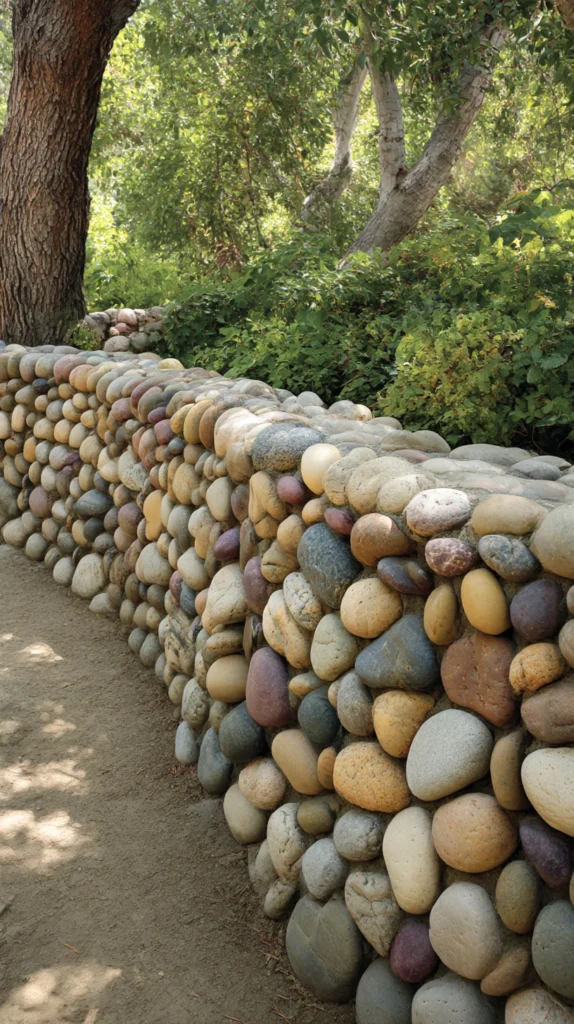
A garden wall constructed from smooth, rounded river rocks — the naturally water-worn stones in warm earth tones of tan, brown, rust, and grey — creates a rock wall garden of extraordinary tactile beauty and genuine natural warmth. River rock walls have a quality of smooth, organic, water-shaped completeness that angular quarried stone lacks — each individual stone a perfectly formed natural object of considerable individual beauty, the accumulated composition of hundreds of river rocks creating a wall of extraordinary collective natural richness.
Pro Tip: Vary the size of river rocks throughout the wall construction — mixing large statement rocks at the base with progressively smaller rocks toward the top for a wall that appears to follow the natural principle of heavier, larger material at the base and lighter material above. A river rock wall built from rocks of consistent size throughout looks assembled. A wall with larger rocks at the base and smaller rocks above looks genuinely natural — following the logic of geological deposition that natural rock formations always display.
11. Raised Rock Wall Herb Garden
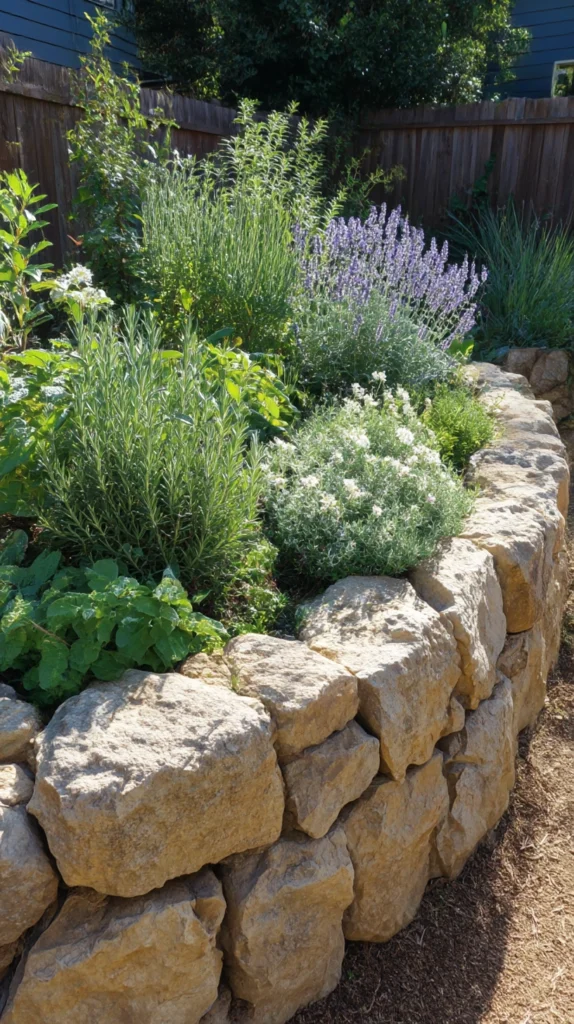
A raised rock wall garden specifically designed for culinary herb cultivation — a series of low dry stone or mortared rock walls creating raised planting beds at a comfortable harvesting height and filled with the sharp-draining, sun-warmed conditions that culinary herbs require for their most vigorous and most aromatic growth — creates a kitchen garden feature of extraordinary practical value and considerable natural beauty. The combination of warm stone, sharp drainage, and full sun creates the ideal growing conditions for lavender, rosemary, thyme, sage, oregano, and all the Mediterranean culinary herbs.
Pro Tip: Orient the raised rock wall herb garden on a south-facing aspect with the rock walls absorbing and radiating solar heat for the warmest possible growing microclimate. The thermal mass of the stone walls absorbs heat during the day and radiates it back to the surrounding plants through the cooler evening hours — creating a growing environment several degrees warmer than the surrounding garden and extending the productive growing season of warm-climate herbs significantly beyond what open ground cultivation achieves in the same garden.
12. Crevice Rock Garden Wall
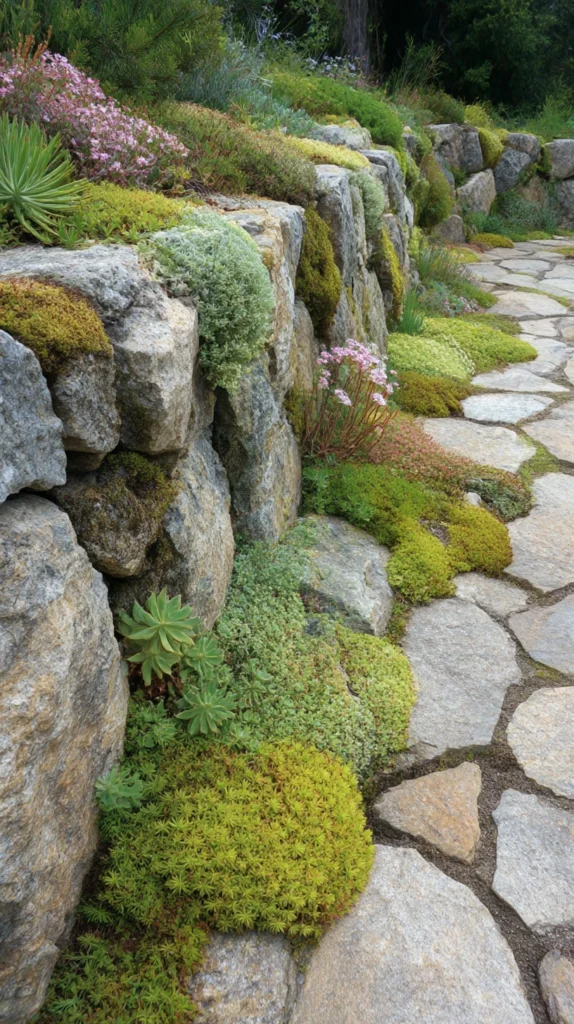
A crevice garden wall — a rock wall specifically designed with generous crevice planting pockets throughout the wall face, each pocket filled with a specialist alpine or crevice-dwelling plant species — creates a rock wall garden of extraordinary botanical interest and genuine horticultural sophistication.
The crevice garden wall is the most botanically specialized of all rock wall garden formats — each planting pocket home to a carefully chosen species specifically suited to the particular combination of drainage, light, and root space that the crevice position provides.
Pro Tip: Plant crevice rock wall pockets with a single specimen plant per crevice rather than mixing multiple species in the same pocket — allowing each individual plant to develop its natural form without competition and creating a wall face of clearly defined individual botanical specimens of genuine visual impact.
Multiple species competing in a single crevice pocket creates a tangled, indistinct planting of minimal botanical clarity. Single specimens in well-spaced individual pockets creates a wall of genuine botanical gallery quality.
13. Flint Wall with Wild Planting
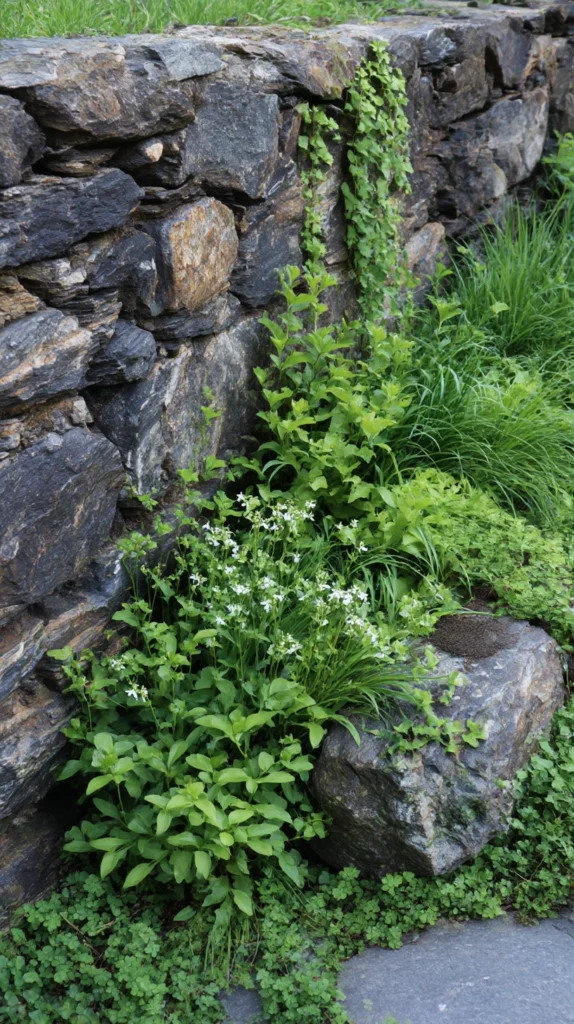
A flint rock wall — the characteristic knobbly, dark grey-black flint of chalk country landscapes laid in traditional courses — planted with wild native species creates a rock wall garden of extraordinary regional character and genuine ecological authenticity.
Flint walls have a quality of deep landscape specificity — belonging to the particular chalk and flint landscapes of their geological origin with a completeness of material authenticity that transported stone cannot replicate.
Pro Tip: Source flint for a flint rock wall garden from local suppliers within the same geological region for a wall of genuine landscape authenticity and genuine material coherence with the surrounding countryside.
Flint sourced from within the local chalk landscape creates a garden wall that appears to grow from the same geological substrate as the wider landscape. Flint sourced from a distant region creates a visually similar wall with none of the genuine landscape belonging that makes a flint wall so specifically and regionally beautiful.
14. Night-Lit Rock Wall Garden
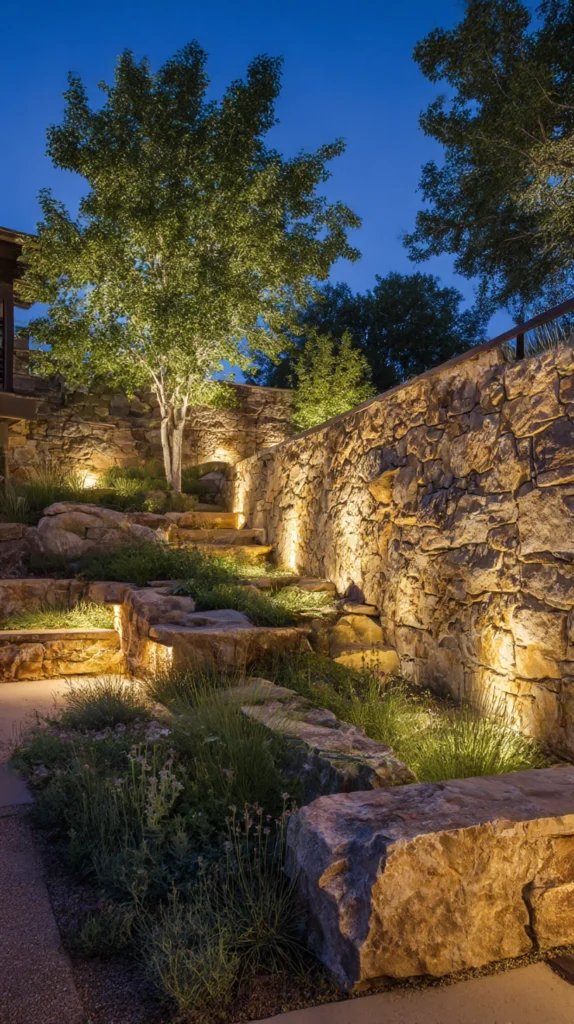
A rock wall garden with integrated low-level lighting — warm white LED lights installed within the wall joints, uplighters positioned at the wall base, and candle lanterns placed on flat stone ledges within the wall — creates a rock wall garden of extraordinary evening beauty and genuinely magical nighttime atmosphere.
The combination of the textured stone surface, the warm directed light from within the wall joints, and the dancing candlelight on the lantern ledges creates an evening garden feature of complete sensory drama and genuine considered beauty.
Pro Tip: Use warm white LED lights of 2700K color temperature or lower for integrated rock wall garden lighting — the warmest available LED color temperature creating the most beautiful and most natural-looking illumination of the stone surface.
Cool white LED lights on a rock wall create a harsh, slightly clinical illumination that emphasizes the colour of the stone while removing its warmth. Warm white lights create a honeyed, glowing illumination that reveals the full natural beauty of the stone surface and creates the most genuinely beautiful evening rock wall garden atmosphere available.
Stone Endures and Improves
A rock wall garden built with genuine care, genuine material quality, and genuine planting intelligence becomes, over time, one of the most beautiful and most permanent features of any garden landscape. The stone weathers, the plants establish and mature, the moss colonizes the joints, and the wall settles into the landscape with an authority and a beauty that only time and natural process can create. Build it once and build it properly.
Plant it generously and with genuine botanical consideration. And discover that a mature, beautifully planted rock wall garden is one of the most genuinely extraordinary and most permanently satisfying landscape investments available in any outdoor space.