
14 Lemon-Themed Kitchen Decor Ideas Everyone Is Loving
Lemons have always belonged in the kitchen — as an ingredient, as a colour, and as a mood. The particular combination of bright yellow against white or cream, the graphic quality of a lemon slice or a citrus branch rendered in ceramic or print, and the association of lemon with freshness, warmth, and good food makes this one of the most naturally kitchen-appropriate themes in decorating. Done well it feels genuinely joyful. Done badly it tips into novelty.
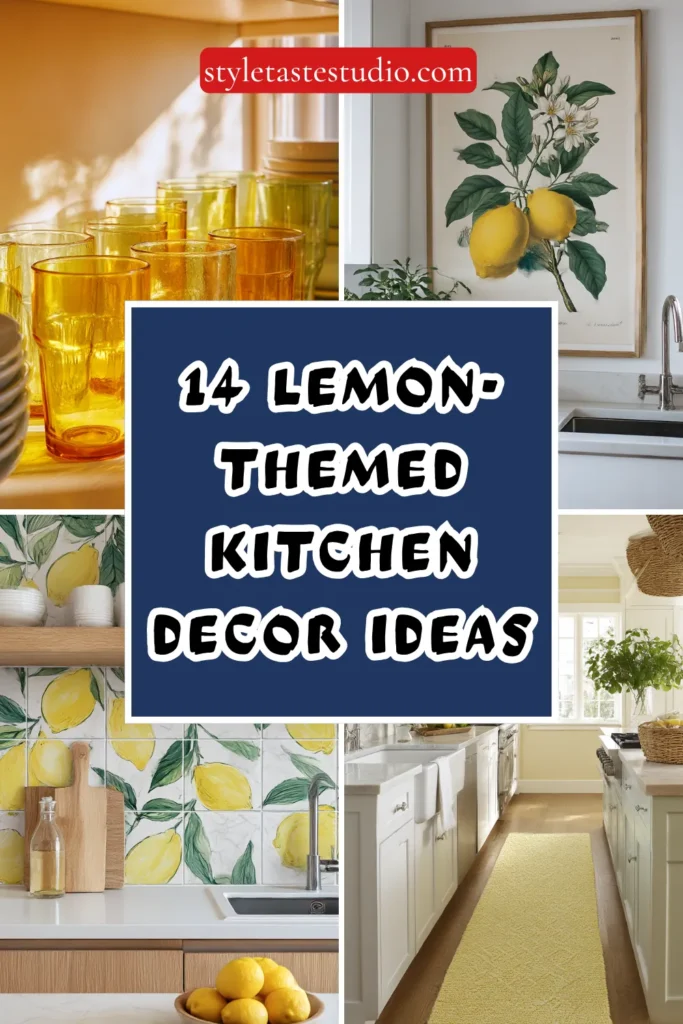
The fourteen ideas below stay firmly on the right side of that line — each one brings lemon into the kitchen as a considered, stylish detail rather than an overwhelming statement. They work individually as small seasonal additions or together as a cohesive lemon-themed kitchen scheme. Costs and a styling tip are included throughout.
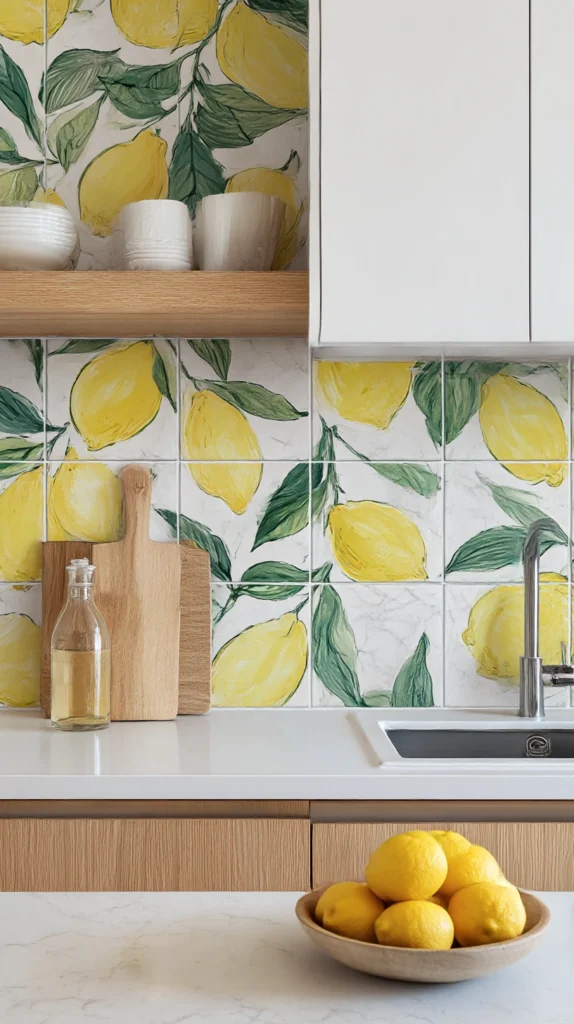
1. A Lemon Print Splashback Tile
Budget: $40 – $200
Hand-painted or printed ceramic tiles featuring lemon motifs used as a kitchen splashback bring the warmth and character of the lemon theme to the most prominent kitchen surface without requiring any other lemon element in the room to support them.
Individual hand-painted lemon tiles cost $5–$20 each from artisan ceramic makers on Etsy. A splashback of 20–30 tiles costs $100–$400 in tiles plus installation. For a lower-cost alternative, peel-and-stick lemon-print tile stickers cost $20–$60 for a standard splashback area and are suitable for renters.
Style tip: Use lemon tiles on one surface only — the splashback — and keep every other kitchen surface completely plain. A lemon splashback against white tiles, white walls, and natural wood surfaces looks editorial. The same lemon tiles surrounded by other patterned or coloured surfaces look busy and compete with themselves.
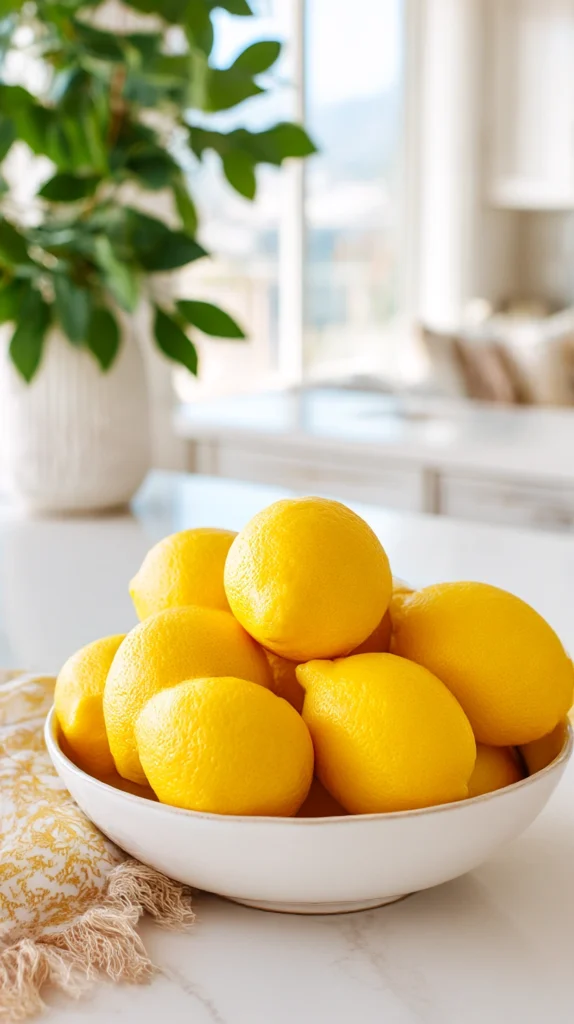
2. A Bowl of Fresh Lemons as Year-Round Decoration
Budget: $5 – $25
A wide, shallow bowl of unwaxed lemons on the kitchen counter or table is the simplest, most cost-effective, and most genuinely beautiful lemon kitchen detail available. The colour, the smell, and the suggestion of good food being prepared all come together in a single object that costs less than a bunch of flowers and lasts considerably longer.
Unwaxed lemons cost $1–$3 per kilogram from grocers and markets. A simple ceramic fruit bowl in white, cream, or pale yellow costs $15–$35. Replace lemons weekly or as they are used in cooking — the bowl should always look full and fresh rather than depleted and forgotten.
Style tip: Use a wide, shallow bowl that allows the lemons to sit as a single visible layer rather than a deep bowl where they pile on top of each other. A shallow arrangement of seven lemons looks styled. The same lemons tumbling out of a deep bowl look like fruit storage rather than a considered kitchen moment.
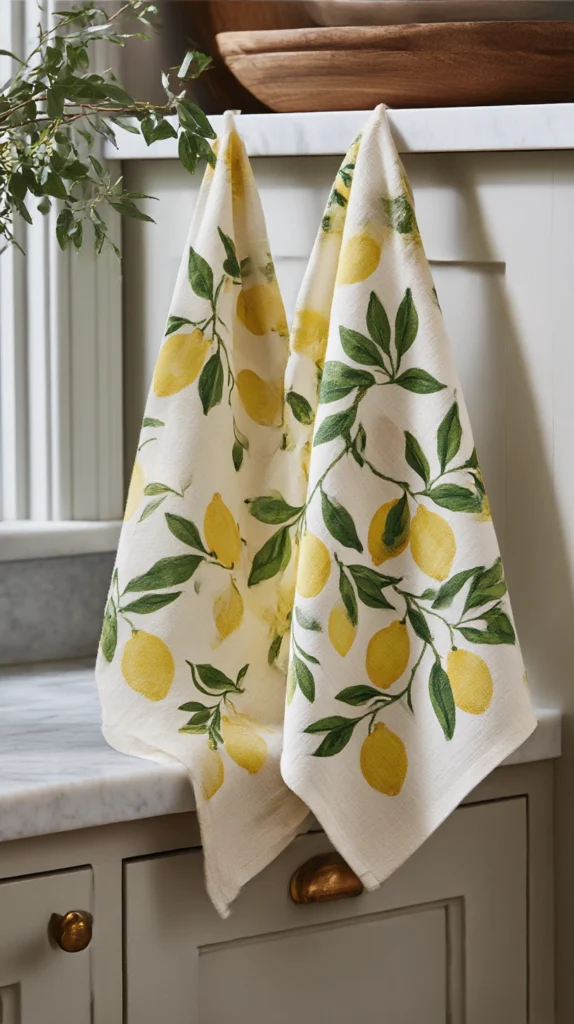
3. Lemon-Print Tea Towels
Budget: $15 – $50
A set of linen or cotton tea towels printed with lemon botanicals — illustrated lemons, lemon slices, or simple citrus branch prints — is one of the most affordable and most immediately effective lemon kitchen additions available. Hung from the oven handle or folded over a rail, they register as a deliberate seasonal detail without requiring any structural change to the kitchen.
Quality linen lemon-print tea towels cost $8–$20 each from independent print makers and homewares retailers. Two or three hanging in the same kitchen is enough — more than three starts to feel like a collection rather than a considered styling choice. Pair with plain white or cream tea towels to balance the pattern.
Style tip: Choose a lemon print with a botanical or hand-illustrated quality rather than a graphic or cartoon style. A realistically drawn lemon botanical reads as kitchen art. A stylised cartoon lemon reads as novelty — the distinction is in the drawing style and it determines whether the tea towel looks like something you chose carefully or something from a gift shop impulse buy.
4. Yellow Accents in Small Kitchen Objects
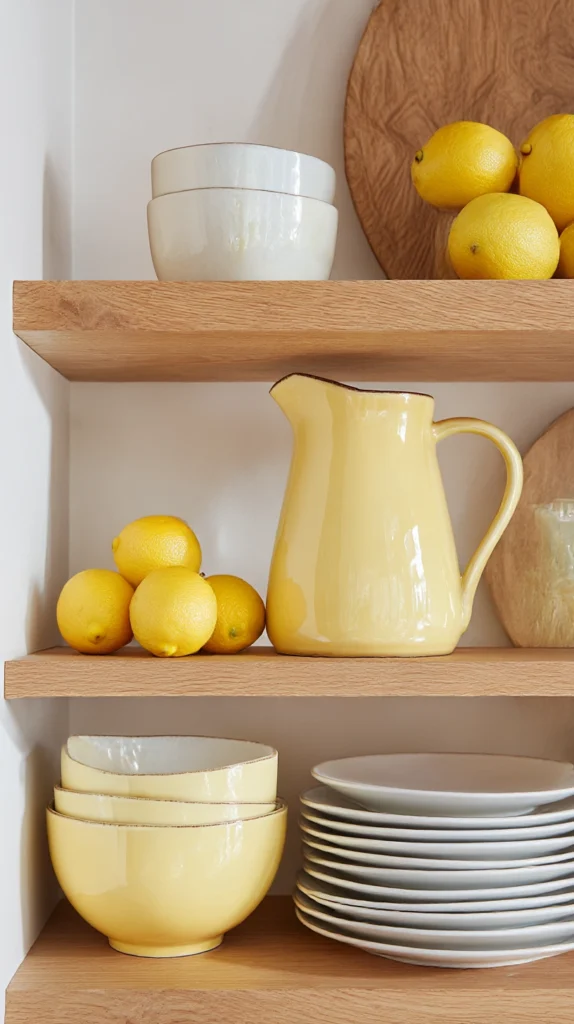
Budget: $20 – $80
Introducing the yellow of a lemon through small functional kitchen objects — a yellow ceramic mug, a pale yellow mixing bowl, a lemon-yellow jug on the open shelf — creates the colour warmth of a lemon theme without a single piece of lemon-printed merchandise in the room.
A set of four yellow ceramic mugs costs $20–$50. A yellow stoneware mixing bowl runs $15–$40. A pale yellow ceramic jug costs $12–$30. Choose a warm, slightly muted yellow — closer to the colour of the inside of a lemon rather than the outside — which sits more easily alongside white, cream, and natural materials than a saturated bright yellow does.
Style tip: Limit yellow objects to three or four across the whole kitchen and use them on open shelving or the counter where they are visible. Yellow objects hidden in closed cupboards contribute nothing to the scheme. Distributed across two or three surfaces, the same three or four pieces create a colour thread that runs through the room and gives it cohesion without saturation.
5. A Lemon Botanical Art Print
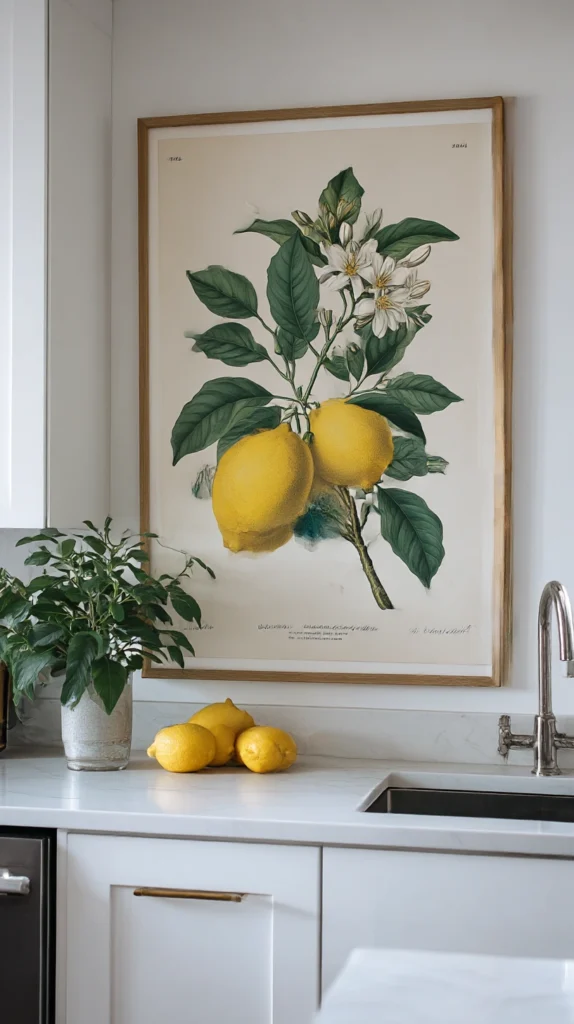
Budget: $10 – $60
A large lemon botanical print — rendered in the style of a Victorian horticultural illustration, showing the whole fruit, cross-section, leaves, and blossom in careful detail — framed simply and hung on the kitchen wall is one of the most considered and most enduringly stylish ways to bring the lemon theme into the kitchen.
Digital lemon botanical prints from independent designers on Etsy cost $5–$20 unframed and can be printed at A2 or A1 scale at a local print shop for $5–$15. A simple white or natural timber frame adds $15–$35. The print looks best on a plain white wall with nothing beside it — the space around a botanical print is part of the composition.
Style tip: Print at A1 or A2 scale rather than A4. A botanical illustration at A4 scale looks like a page from a book that has been framed. At A2 or A1 it reads as proper wall art with the visual presence to contribute meaningfully to the character of a kitchen rather than decorating its margins.
6. Lemon-Yellow Seat Cushions on Kitchen Chairs
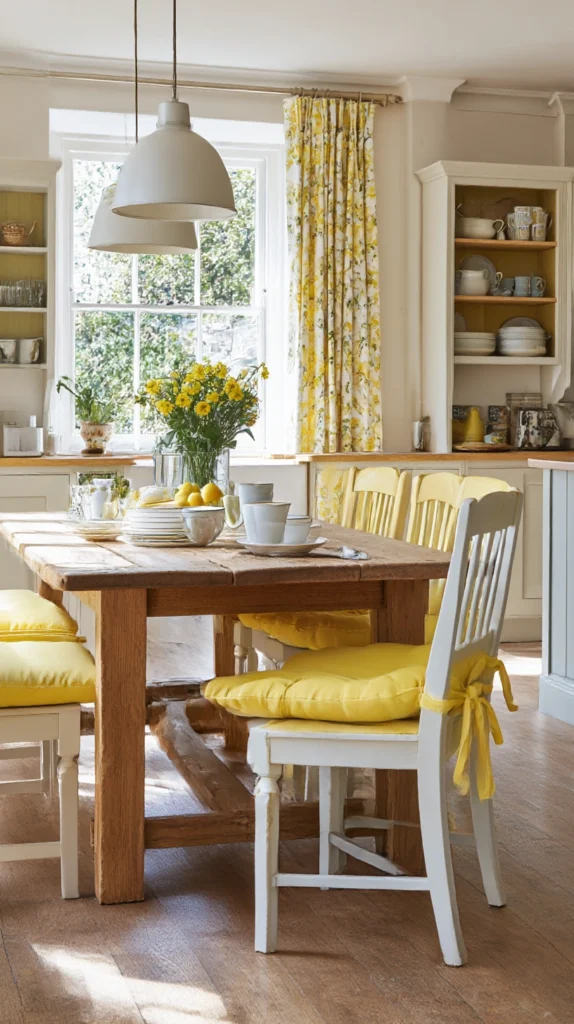
Budget: $30 – $120
Adding lemon-yellow seat pads or tie-on cushions to plain wooden kitchen chairs brings the warmth of the colour into the room at seating height — the level at which the kitchen is experienced from the table — without affecting any fixed surface or structural element of the room.
Tie-on seat cushions in yellow cotton or linen cost $10–$30 each. A set of four for a kitchen table runs $40–$120. Choose a plain yellow rather than a printed one — solid yellow cushions on plain chairs look elegant and considered. Printed lemon cushions on the same chairs look themed, which is a different and less versatile quality in a kitchen used daily.
Style tip: Wash yellow seat cushions regularly — pale yellow fabric shows kitchen splashes and use marks more readily than darker colours and the freshness of the cushion is central to its contribution to the clean, bright quality the lemon kitchen theme is working toward. A stained yellow cushion undermines the whole scheme more effectively than any other single element.
7. Lemon-Scented Candles and Reed Diffusers
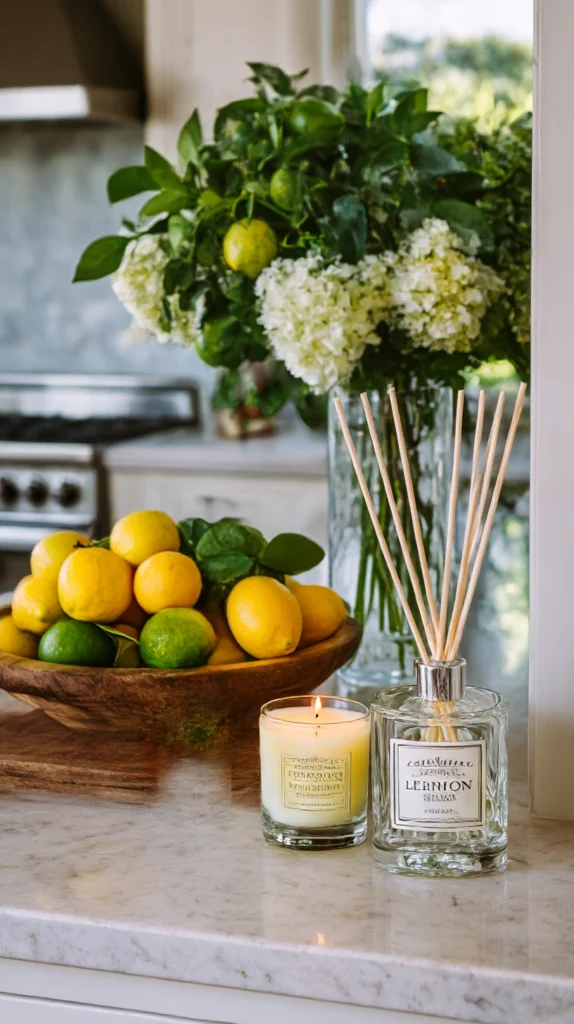
Budget: $15 – $60
Lemon-scented candles and reed diffusers bring the theme into the olfactory dimension of the kitchen — the one that guests experience before they see anything — and reinforce the clean, fresh, citrusy quality of the lemon aesthetic through scent as well as sight. A kitchen that smells of lemon feels cleaner and more welcoming than one that does not, regardless of what it looks like.
A quality lemon or lemon verbena soy candle costs $10–$30. A lemon reed diffuser runs $12–$25 and lasts four to six weeks. Position the diffuser near the kitchen entrance where the scent is encountered on arrival rather than in a corner where it disperses before reaching the threshold. Replace the candle monthly during summer for a consistent freshness through the season.
Style tip: Choose a lemon scent described as clean and zesty rather than sweet or dessert-like. A sharp, fresh lemon fragrance suits a kitchen and reinforces the clean, bright quality of the decor theme. A sweet, heavy lemon scent reads as artificial and works against the naturally fresh atmosphere the kitchen is intended to create.
8. A Lemon-Print Apron
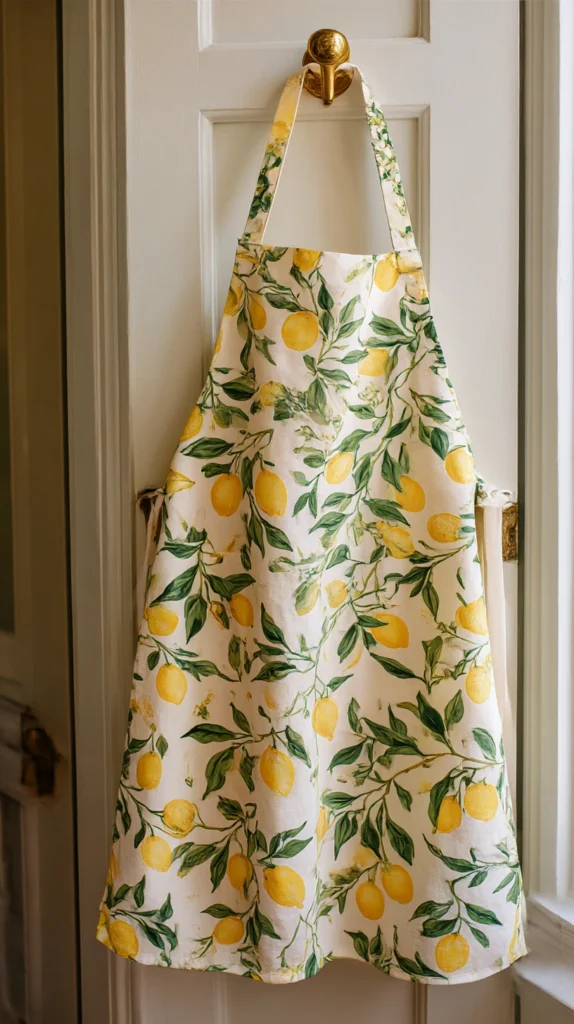
Budget: $15 – $50
A well-made cotton or linen apron printed with a lemon botanical or a simple lemon motif — hung from a hook on the kitchen wall or the back of the pantry door when not in use — functions simultaneously as a useful kitchen item and as a piece of kitchen wall decor that contributes to the lemon scheme every day.
Quality cotton aprons with lemon prints cost $15–$40 from independent makers on Etsy and from kitchen homewares brands. A linen version with a screen-printed lemon branch runs $25–$50. Choose an apron designed to be displayed as well as worn — a generous shape, a quality fabric, and a print that looks good hung flat on a hook as well as worn during cooking.
Style tip: Hang the apron on a simple brass or black iron hook rather than a plastic or chrome one. The hook is visible as part of the displayed apron and a quality hook finish makes the whole arrangement look considered. A cheap hook draws attention to itself in the wrong way and diminishes the appearance of even a beautifully made apron hung from it.
9. Lemon-Yellow Glassware or Tumblers
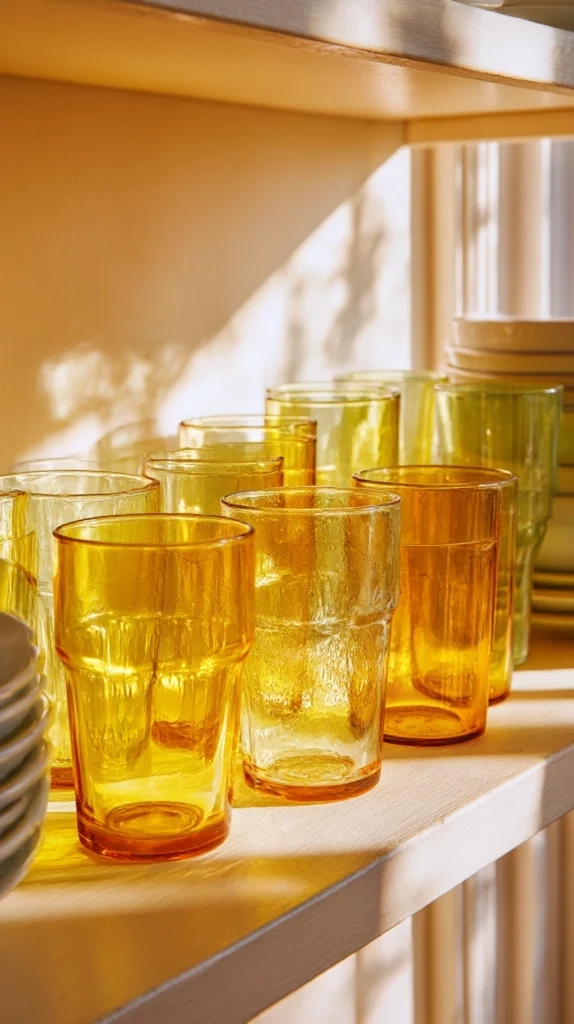
Budget: $20 – $70
A set of pale yellow tinted glasses or tumblers on an open kitchen shelf brings the lemon colour palette into the drinkware in a way that is genuinely useful through summer — cold drinks poured into yellow glasses look summery and considered in a way that plain clear glass does not manage on its own.
Tinted yellow glassware sets of four cost $20–$50 from homewares retailers and online marketplaces. Murano-style hand-blown yellow tumblers run $12–$20 each for a more artisan quality at the higher end. Display on an open shelf where the light passes through the coloured glass — yellow glass in direct or indirect natural light has a warmth and glow that is entirely lost inside a closed cupboard.
Style tip: Mix yellow glassware with clear glass on the same shelf rather than displaying all yellow pieces together. Yellow glass surrounded by clear glass is lit by the transparency of the pieces beside it. An entire shelf of yellow glass loses the contrast that makes each individual piece of coloured glass visually interesting.
10. A Potted Lemon Tree
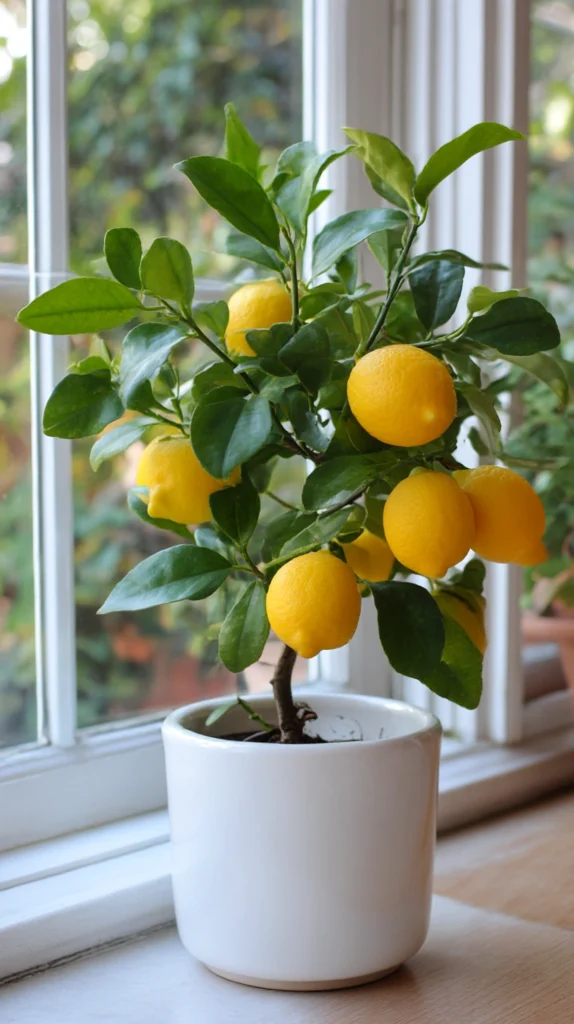
Budget: $25 – $100
A small container-grown lemon tree on the kitchen windowsill or beside a south-facing window is the most living and most aromatic version of lemon kitchen decor available — it brings glossy dark green leaves, white blossom fragrance in spring, and the occasional developing fruit into the kitchen as a genuinely growing, productive presence rather than a represented or illustrated one.
A young lemon tree (Citrus limon) in a 15–19 cm pot costs $25–$60 from garden centres. A more established specimen in a 25 cm pot runs $50–$100. Place in the brightest available position — a south-facing windowsill in full sun — and water when the top 2 cm of compost is dry. Feed with a specialist citrus fertiliser monthly through spring and summer to encourage healthy leaf production and eventual fruiting.
Style tip: Display the lemon tree in a simple white ceramic or terracotta pot rather than leaving it in its plastic nursery container. The pot is as visible as the tree itself on a kitchen windowsill, and the right pot makes the whole display look considered rather than like a plant that was bought and placed without thought given to how it would look in its position.
11. Lemon-Illustrated Ceramic Storage Jars
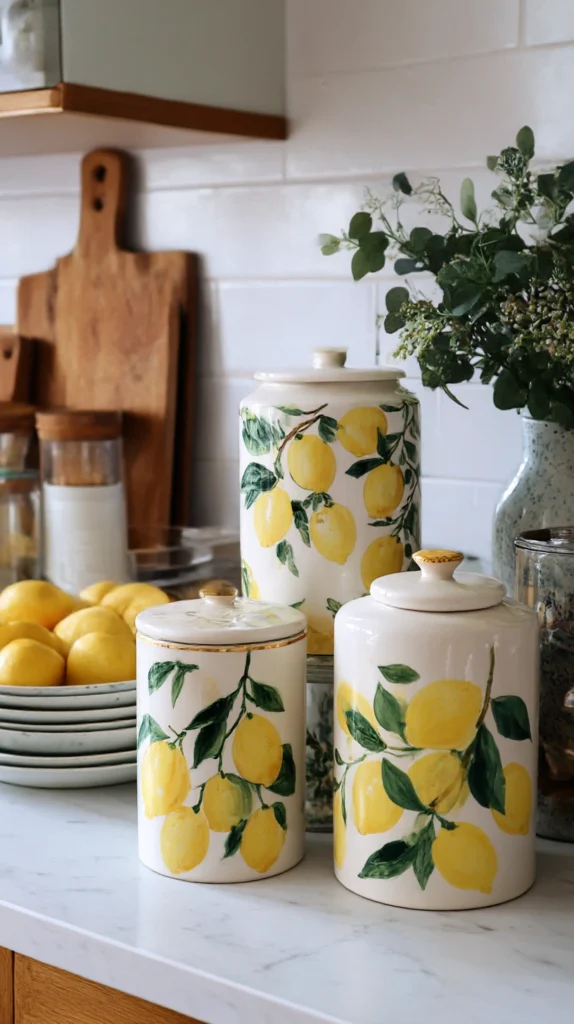
Budget: $30 – $100
A set of ceramic storage jars with hand-painted or transfer-printed lemon illustrations — used for tea, coffee, sugar, and flour on the counter or open shelf — brings the lemon theme into the functional objects of daily kitchen use in a way that feels genuinely integrated rather than decorative.
Lemon-print ceramic storage canisters in sets of three or four cost $30–$80 from kitchen homewares retailers and independent ceramicists. Individual jars in larger sizes for pasta and grains run $15–$30 each. Choose jars where the lemon illustration has a hand-painted or artisanal quality rather than a mass-produced printed label — the making quality is visible from across the room and determines whether the jars read as characterful or merely branded.
Style tip: Fill the jars and use them daily rather than displaying them empty. A set of ceramic storage jars used for their intended purpose has a full, lived-in quality that empty display jars never achieve. The contents visible through any clear-lidded versions also contribute to the visual warmth of the arrangement on the shelf or counter.
12. A Lemon-Yellow Kitchen Runner Rug
Budget: $30 – $120
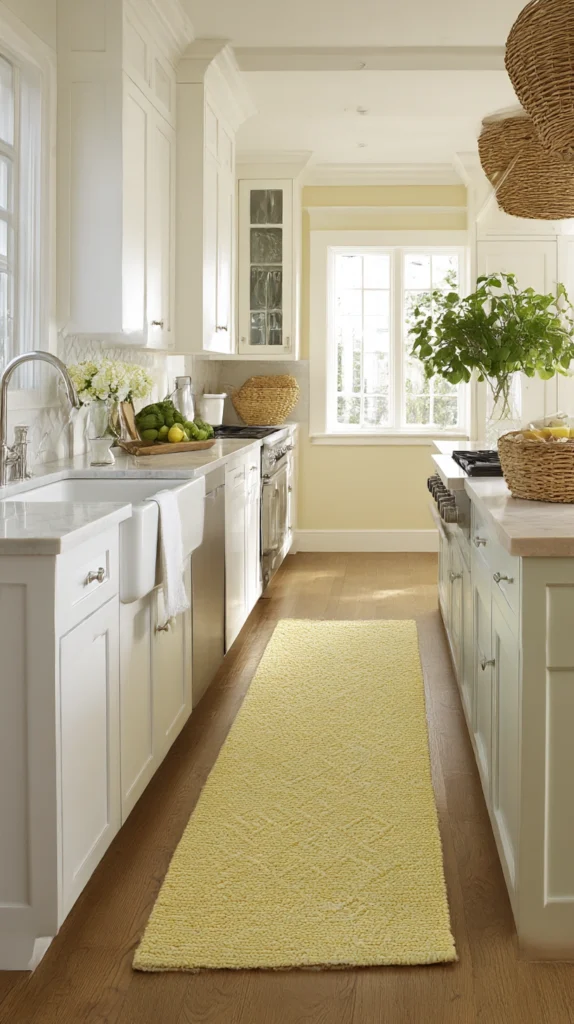
A runner rug in pale lemon yellow or a white and yellow stripe laid in front of the kitchen sink or along the main kitchen work run brings the lemon colour into the floor level of the kitchen — the surface that occupies the most visual space when the kitchen is viewed from the doorway — without affecting any fixed element of the room.
A cotton kitchen runner in a yellow stripe or solid pale yellow costs $30–$80 for a standard 50×150 cm size. A larger runner up to 60×240 cm runs $60–$120. Choose a washable cotton or cotton-blend fabric — kitchen runners need laundering regularly and a dry-clean-only version is impractical in a working kitchen regardless of how good it looks when clean.
Style tip: Use a non-slip rug pad beneath the kitchen runner — available for $8–$15 cut to size — to prevent movement on hard flooring. A runner that slides underfoot is both a safety issue and a visual one: a rug that has shifted from its intended position looks untidy immediately and no amount of styling recovers the arrangement until it is physically repositioned.
13. Lemon-Scented Dish Soap and Hand Wash on Display
Budget: $10 – $40
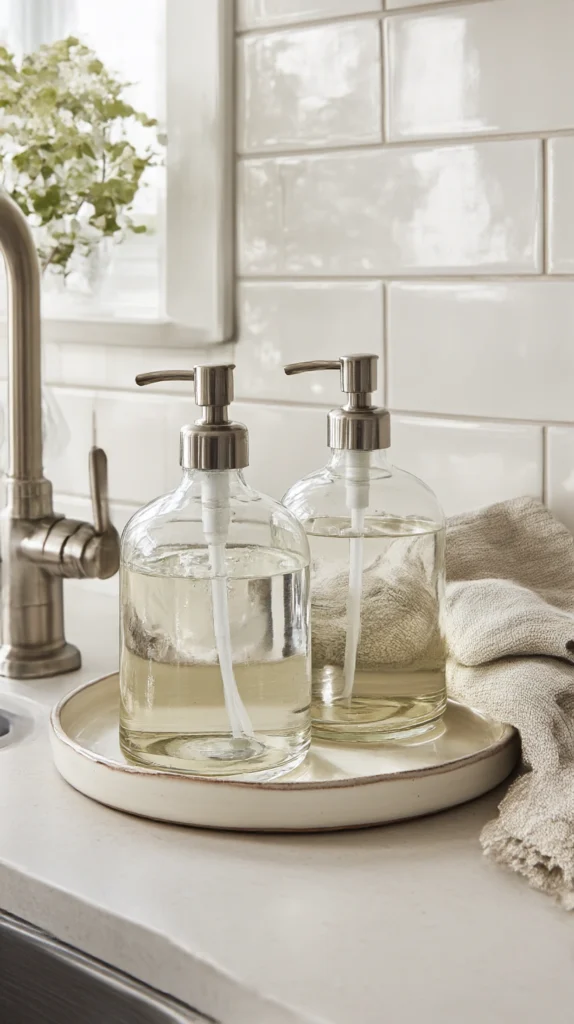
Decanting dish soap and hand wash into matching glass or ceramic dispensers with a lemon fragrance — displayed beside the kitchen sink rather than stored beneath it — turns a purely functional sink area into a styled kitchen moment that smells as good as it looks and is used every day.
A pair of matching glass soap dispensers with brass pump tops costs $15–$35. Quality lemon-scented dish soap and hand wash to fill them costs $8–$20 per bottle. The dispensers should be refillable — a beautiful dispenser that cannot be refilled is a disposable object, and the decanting and refilling practice is itself part of the daily kitchen ritual that the styled sink area is built around.
Style tip: Add a small ceramic dish beside the dispensers for a hand soap bar, a sponge, or a single sprig of fresh herbs. The dish at sink level completes the arrangement and provides a surface for the functional objects that would otherwise sit without a defined home. A tray or small dish beside a soap dispenser takes ten seconds to add and significantly improves the coherence of the sink styling.
14. A Lemon-Print Tablecloth or Placemats
Budget: $20 – $80
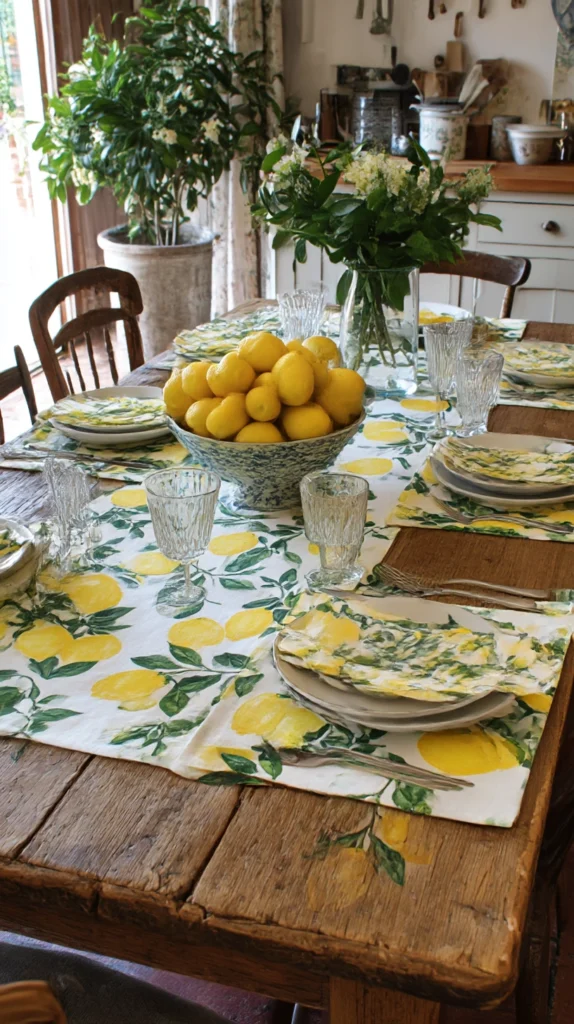
A cotton or linen tablecloth printed with a lemon botanical pattern — or a set of lemon-print placemats in the same fabric weight — brings the theme to the kitchen table in a way that is changed seasonally, laundered easily, and transforms the table from a bare surface to a styled one in thirty seconds of effort.
A lemon-print cotton tablecloth in a dining table length costs $25–$60. A set of four matching placemats runs $20–$50. Choose a print where the lemons are drawn at actual scale or close to it — oversized stylised lemons read as graphic and trend-led. Proportionally accurate lemon illustrations read as botanical and timeless, which suits a kitchen that is used every day rather than styled for a single occasion.
Style tip: Wash and use the tablecloth before its first display rather than laying it straight from the packaging. A freshly washed linen or cotton tablecloth with gentle natural creasing looks warm and genuinely used. A tablecloth straight from its plastic packaging has the fold lines of the factory and the stiffness of a new purchase — neither of which contributes to the relaxed, inhabited quality the lemon kitchen theme is working toward.
The lemon kitchen theme works because it is rooted in something genuinely real — lemons belong in kitchens, the colour yellow belongs in summer, and the association between freshness, citrus, and a well-used kitchen is one that requires no explanation or justification. The ideas on this list keep that naturalness at the centre rather than pushing the theme into novelty.
Start with the bowl of fresh lemons on the counter and the lemon-print tea towels — two changes that together cost under $30 and immediately communicate the theme with complete clarity. Add the botanical print, the yellow accents, and the lemon tree as the season develops and the budget allows. The kitchen that ends up looking most like the lemon aesthetic done well is always the one that arrived there gradually rather than all at once.