
15 Summer Kitchen Decor Ideas That Feel Fresh and Clean
A kitchen that feels fresh in summer is not necessarily a kitchen that has been redesigned — it is one where a few considered seasonal changes have shifted the atmosphere from the heavier, more enclosed quality of winter toward something lighter, more open, and more directly connected to the warmth and colour happening outside. Small adjustments to textiles, surfaces, and what sits on the counter make a disproportionate difference to how the kitchen feels through the warmest months.

The fifteen ideas below are all achievable without renovation or significant outlay. Each one contributes to the clean, airy, genuinely summery kitchen that is equally enjoyable to cook in and to spend time in. Costs and a practical tip are included throughout.
1. Clear the Counters Completely
Budget: $0
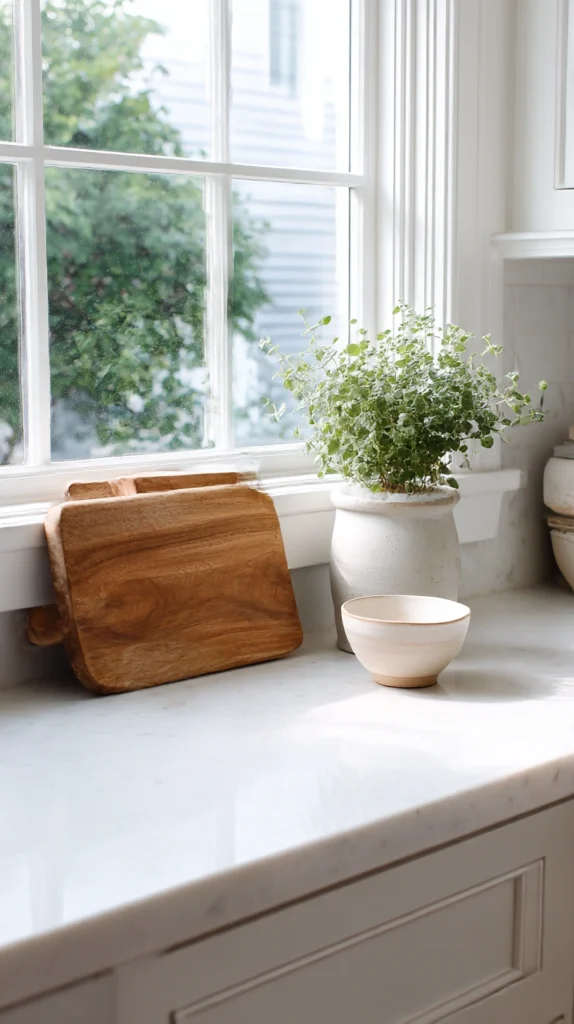
The single most effective summer kitchen refresh costs nothing. Removing everything from the counter that does not earn its place through daily use — the appliances used monthly, the decorative objects that have simply accumulated — immediately makes the kitchen feel larger, lighter, and more intentional.
Store infrequently used appliances in a cupboard and return only what is genuinely used every day to the counter surface. A clear kitchen counter reflects more light, is easier to clean, and creates the uncluttered, airy quality that a summer kitchen requires as its foundation before anything else is added.
Style tip: Keep three objects maximum on any single run of counter — one functional, one plant or fresh ingredient, one decorative. More than three and the surface begins to read as a shelf rather than a working kitchen surface with considered styling on it.
2. Fresh Herbs in Simple Pots on the Windowsill
Budget: $15 – $40
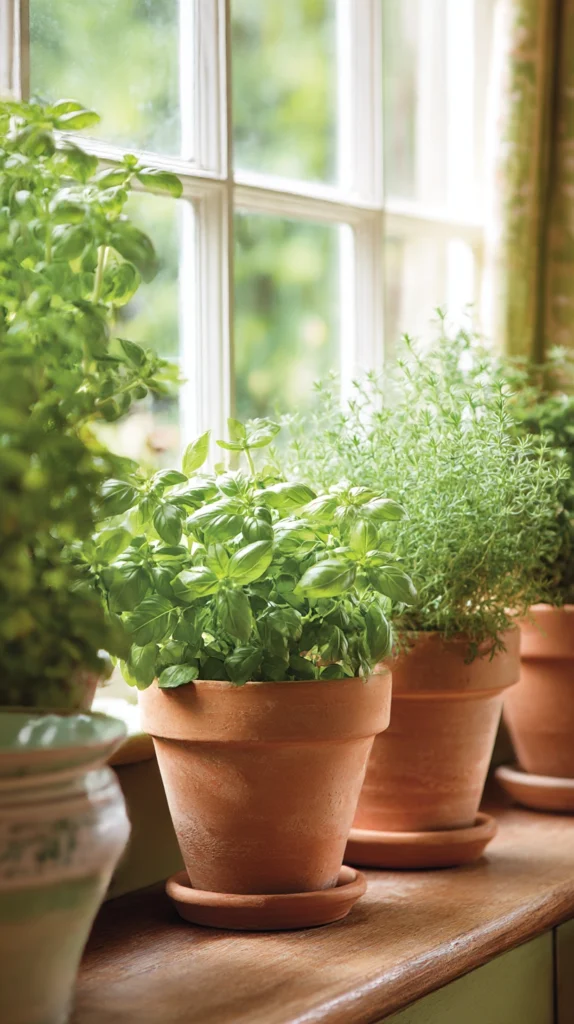
A row of herb pots on the kitchen windowsill is simultaneously the most useful and most visually effective summer kitchen detail available. Basil, chives, flat-leaf parsley, and mint in small terracotta or white ceramic pots bring greenery, fragrance, and a connection to the garden into the kitchen at minimal cost.
Herb plants cost $2–$5 each from garden centres. Group in a tight cluster at one end of the windowsill rather than spacing evenly — a grouped arrangement reads as intentional kitchen styling rather than a collection of pots that have been placed wherever there was room.
Style tip: Use matching pots throughout — all terracotta or all simple white ceramic — rather than a mix of different pot styles. Consistent pot material makes even a casual herb collection look considered, and the matching aesthetic costs nothing beyond the decision to keep it consistent from the first pot purchased.
3. Linen Tea Towels in Seasonal Colours
Budget: $15 – $50
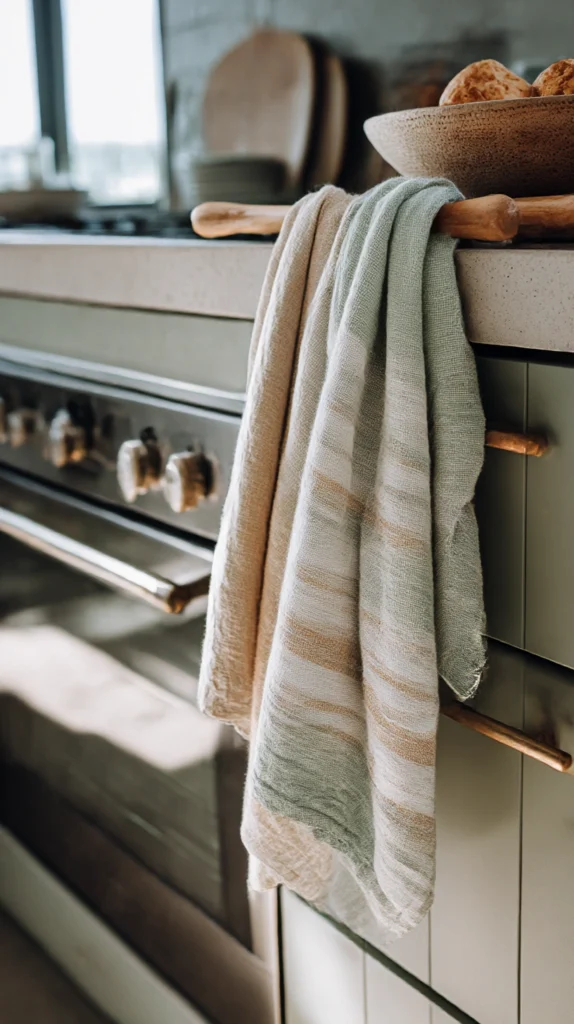
Swapping winter-weight kitchen textiles for summer linen tea towels in fresh stripes, pale botanicals, or clean solid colours is one of the quickest and most affordable seasonal refreshes a kitchen can have. The lightness of linen in summer is both practical and aesthetic — it dries faster and looks considerably less heavy than cotton terry cloth hanging from an oven handle.
Quality linen tea towels cost $8–$20 each. Two or three hung from the oven handle or folded over a rail in coordinating colours is enough to register as a considered seasonal touch. Choose tones from a narrow palette — all sage green, or all stripe in one colour — rather than a mix of different patterns.
Style tip: Fold tea towels in thirds lengthwise before hanging them from the oven handle rather than draping them loosely over it. A neatly folded tea towel hanging from the handle reads as a deliberate styling detail. The same tea towel draped haphazardly reads as something that was put down in a hurry and never properly arranged.
4. A Bowl of Seasonal Fruit as a Centrepiece
Budget: $5 – $20
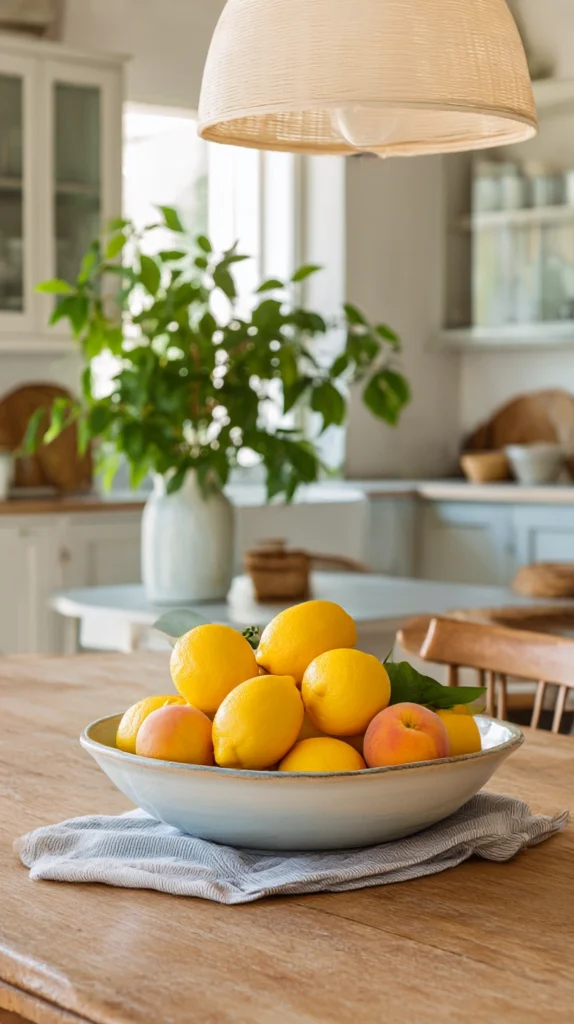
A wide, shallow bowl of seasonal summer fruit — lemons and limes, a pile of peaches, a mound of figs, or a mix of stone fruits — on the kitchen table or counter is one of the oldest and most reliably effective kitchen decor ideas available. It is functional, it smells good, and it changes with the season automatically.
A simple ceramic or wooden fruit bowl costs $15–$35. The fruit inside it costs whatever it costs at the market that week. Choose a bowl that is wide and shallow enough for the fruit to be displayed as a single visible layer rather than piled deep — the arrangement reads as composed rather than simply full.
Style tip: Stick to one or two fruit varieties rather than filling the bowl with everything available. A bowl of seven lemons looks designed. A bowl of seven different fruits in different colours looks like a grocery delivery that has not been put away yet. Restraint in the fruit bowl is the same principle that applies to every other surface in a summer kitchen.
5. White or Cream Roman Blinds at the Window
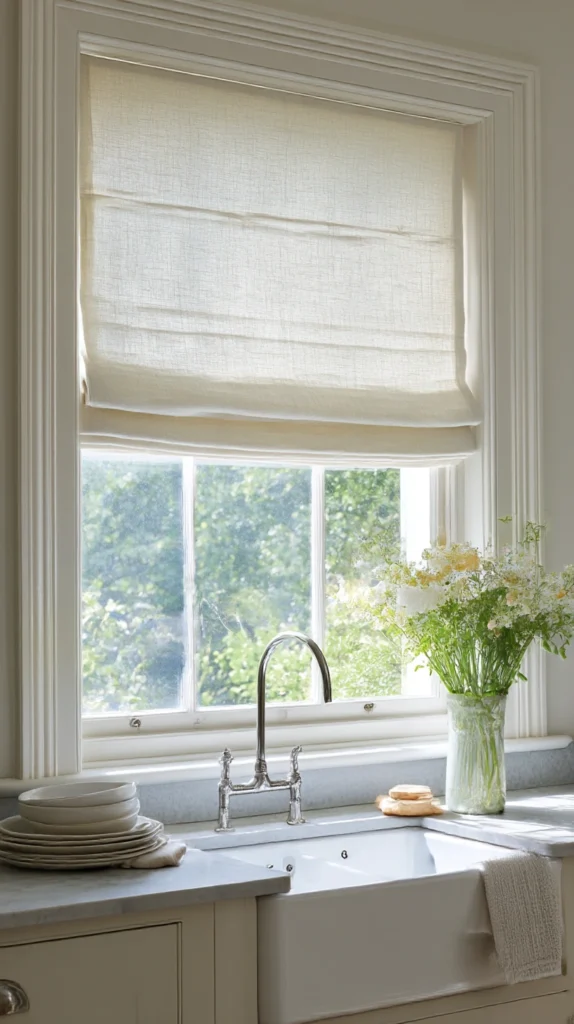
Budget: $40 – $150
Replacing heavy curtains or dark kitchen blinds with white or cream Roman blinds lets summer light into the kitchen in a way that nothing else matches at the equivalent cost. The clean, flat surface of a Roman blind in a natural fabric reads as architectural rather than decorative and suits the practical, uncluttered quality a kitchen window requires.
Ready-made white cotton or linen Roman blinds in standard sizes cost $40–$100. Custom sizes run $80–$150. The blind should sit inside the window recess rather than outside it — an inside-fitted blind takes up no wall space around the window and creates a much cleaner line than an outside-fitted equivalent at the same price point.
Style tip: Raise the blind to exactly two thirds of the window height during the day rather than fully up or fully down. The two-thirds position lets maximum light into the lower half of the kitchen where the counter and sink benefit most from natural light while maintaining the clean, considered appearance of the partially lowered blind from outside the window.
6. Open Shelving With Edited White Dishware
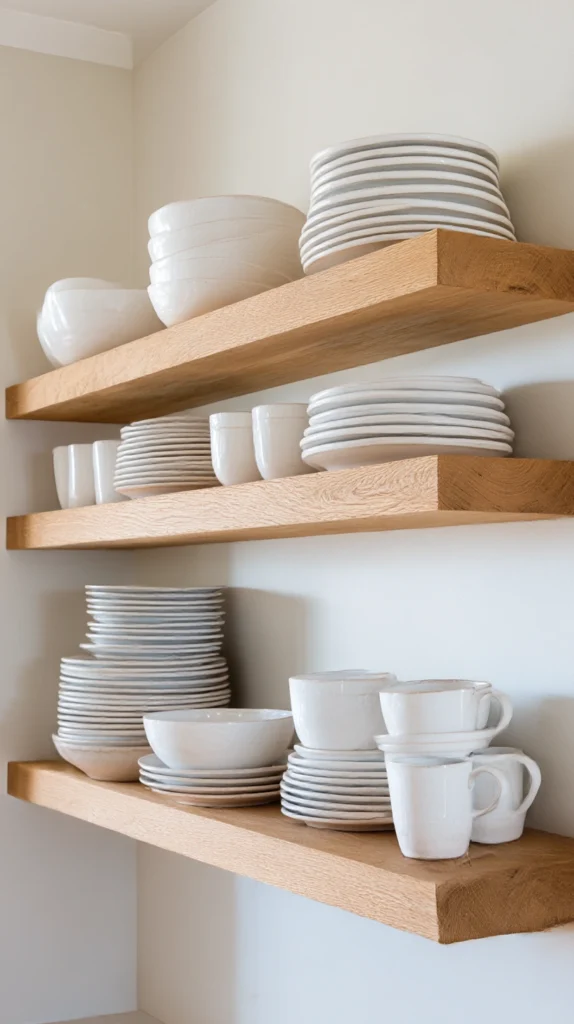
Budget: $60 – $200
A run of open shelving displaying a consistent set of simple white or cream dishware — plates stacked, bowls nested, mugs in a row — creates the most specifically summer-kitchen visual of any storage approach. White dishware against a white or pale wall reads as clean, deliberate, and airy in a way that closed cupboards never communicate from the outside.
Floating timber shelves cost $20–$50 each to buy and install. A simple set of white ceramic dinnerware for four costs $40–$100. The arrangement works only if the dishware is consistent — mixed patterns and colours on open shelving read as disorganised rather than curated. Simplicity is non-negotiable for this to look right.
Style tip: Leave one shelf significantly emptier than the others — only two or three objects on it, with generous space either side. The empty shelf is the visual rest that allows the busier shelves around it to be read clearly and prevents the overall arrangement from looking like storage rather than a considered display.
7. A Single Bunch of Garden Flowers in a Simple Vase

Budget: $0 – $15
A bunch of whatever is flowering in the garden — cosmos, sweet peas, lavender, or a handful of herb flowers — in a single simple vase on the kitchen table or windowsill brings more life and colour into the kitchen than any purchased decorative object of equivalent cost. It takes five minutes, lasts a week, and costs nothing if the garden provides it.
A simple glass or ceramic vase costs $8–$20 and suits every flower arrangement without competing with it. Change the water every two days and recut the stems at an angle each time — these two habits alone extend the life of a cut flower arrangement by four to five days beyond what neglect produces.
Style tip: Use fewer stems than feels instinctive — five well-spaced stems in a narrow-necked vase look more considered than fifteen stems crammed into a wide one. The individual character of each flower is visible at lower stem counts, which is always more interesting in a kitchen context than a dense bunch that reads as a single block of colour.
8. Swap Cabinet Hardware for Brushed Brass or Matte Black
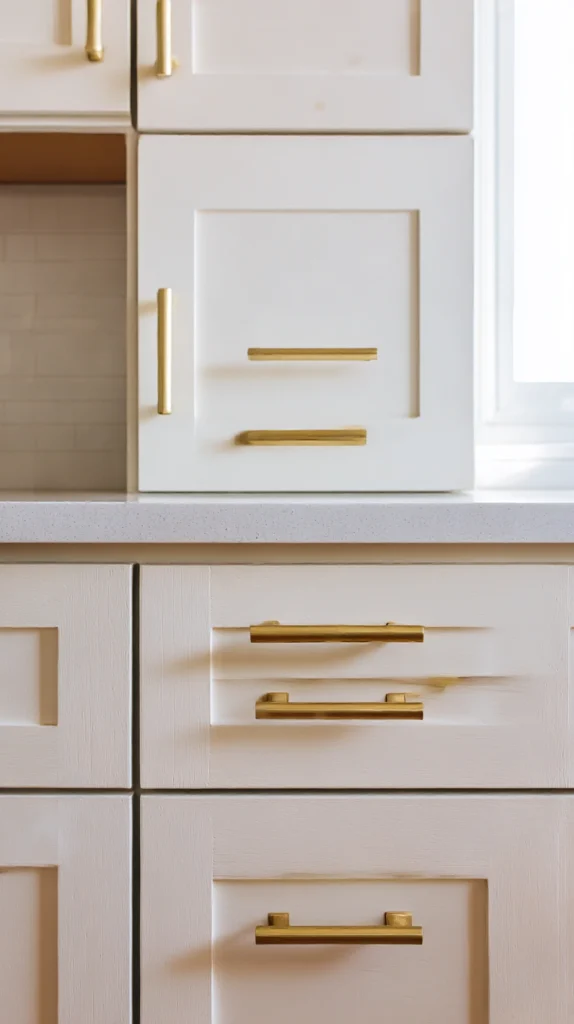
Budget: $40 – $150
Replacing dated chrome or plastic cabinet handles and drawer pulls with brushed brass or matte black hardware is the lowest-cost structural kitchen update available and the one that makes the most immediate visual difference to the character of the space. New hardware can be fitted with a screwdriver in an afternoon and transforms the kitchen without touching a single surface or cabinet door.
Brushed brass bar pulls cost $3–$8 each. Matte black knobs run $2–$6 each. A standard kitchen of ten to fifteen cabinet doors and drawers costs $30–$120 to rehardware completely. Measure the existing drill hole spacing before ordering — most standard pulls come in 64 mm, 96 mm, and 128 mm hole spacing and the correct size can be fitted without drilling new holes.
Style tip: Choose one hardware finish and use it consistently across every door and drawer rather than mixing brushed brass and matte black across the same kitchen. Mixed hardware finishes work in specific, very considered schemes — in most kitchens they simply look like a decision that was not made all the way through rather than a deliberate design choice.
9. A Wooden Chopping Board as a Styled Surface
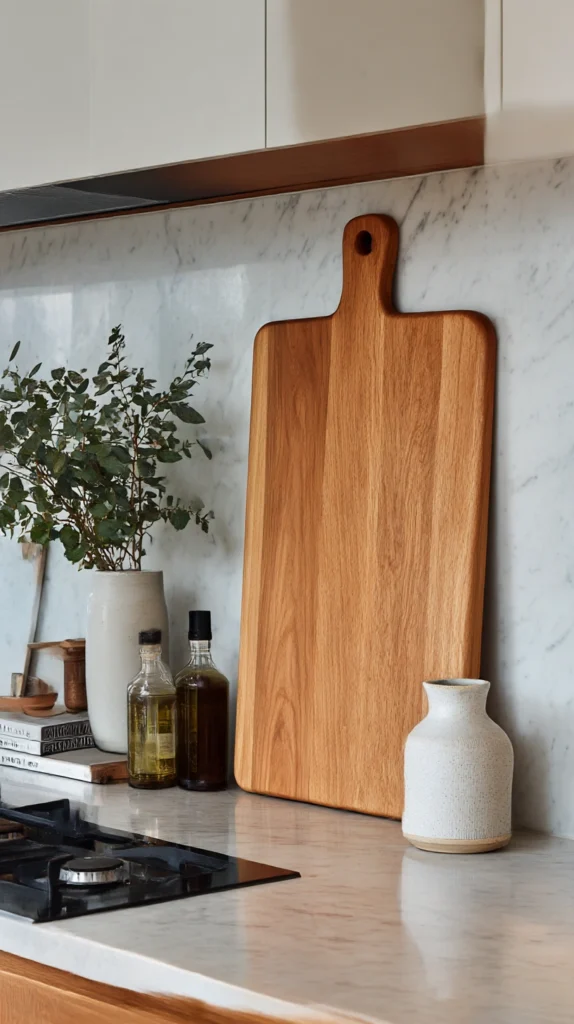
Budget: $20 – $80
A large, well-oiled wooden chopping board leaned against the kitchen splashback or propped beside the hob — whether in use or simply displayed — is one of the most naturally warm and most kitchen-appropriate styling objects available. It adds the texture and colour of natural wood to a surface that is often dominated by hard, uniform materials.
A large solid timber chopping board in walnut, oak, or acacia costs $25–$80. Oil monthly with food-safe mineral oil or butcher’s block oil to maintain the warm tone and prevent cracking — an oiled board looks considerably better than a dry, pale one and lasts many years longer with this minimal care.
Style tip: Use one large board displayed prominently rather than several smaller boards grouped together. A single generous board has the visual weight and material presence to read as a feature on a kitchen surface. The same surface area in three small boards reads as a set of objects rather than a single considered element.
10. Decant Dry Goods Into Matching Glass Jars
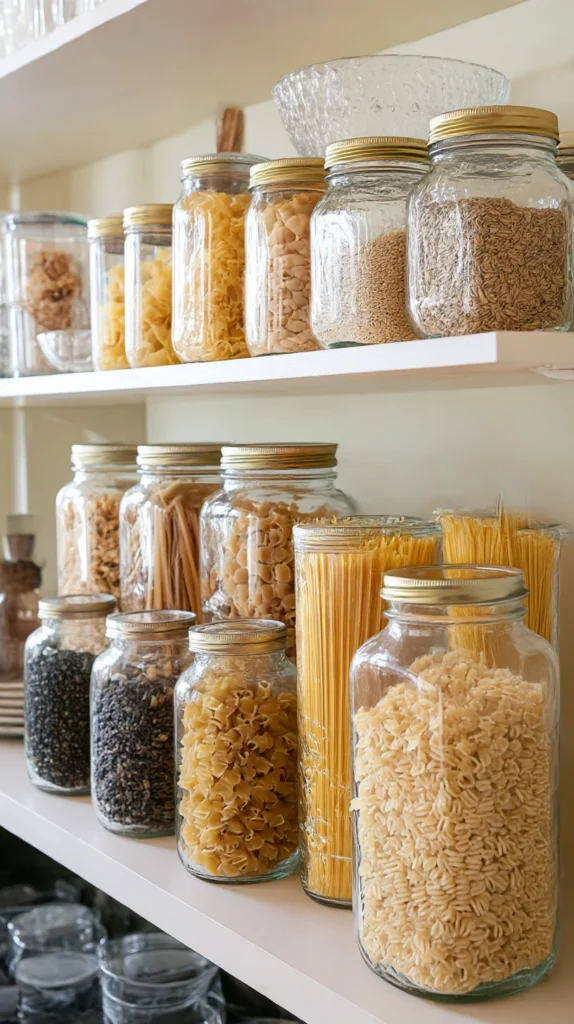
Budget: $20 – $60
Transferring pasta, rice, grains, and pulses from their original packaging into a set of matching glass or ceramic storage jars is both a practical organisation tool and one of the most effective visual transformations available for a kitchen counter or open shelf. The consistent containers immediately replace visual chaos with visual calm.
A set of six matching glass storage jars with airtight lids costs $20–$50. Label each jar with a simple chalk label or a small ceramic tag for a detail that takes two minutes to add and significantly improves the readability and finish of the arrangement on the shelf. Keep the jar sizes consistent within each shelf level for the cleanest result.
Style tip: Fill jars only to about three quarters of their capacity rather than to the brim. A jar filled to the very top looks stuffed and difficult to use. One filled to three quarters looks abundant but accessible — a subtle distinction that makes a shelf of storage jars look genuinely considered rather than simply organised.
11. A Ceramic Utensil Holder on the Counter
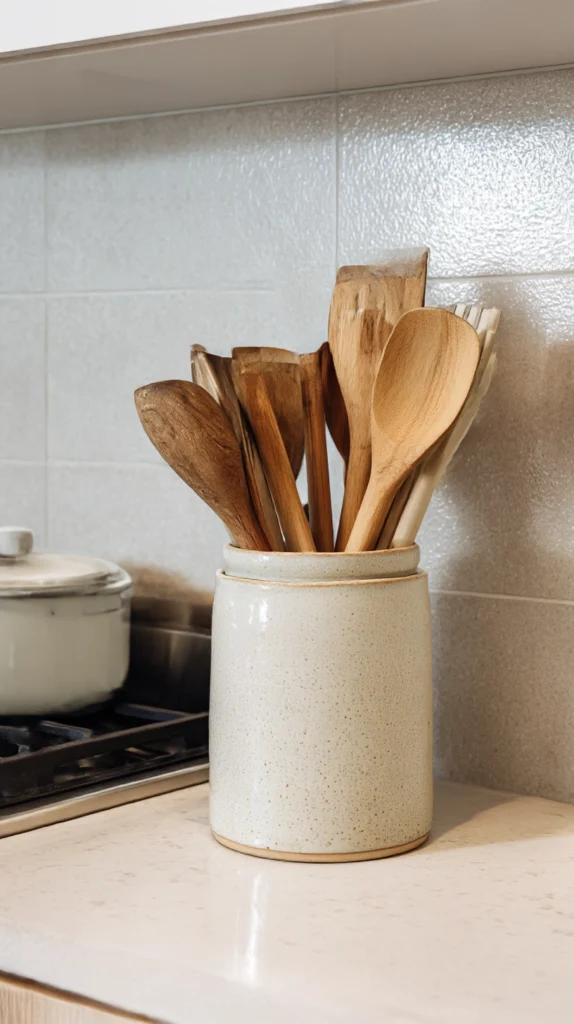
Budget: $15 – $50
A simple ceramic, stoneware, or terracotta pot used to hold wooden spoons, spatulas, and kitchen tools replaces the plastic utensil holder that lives beside most hobs with something that has genuine warmth and material quality — for a cost difference of $10 to $30 at most. It is the smallest possible kitchen upgrade and one of the most consistently effective.
A hand-thrown stoneware utensil crock costs $20–$50. A simple terracotta pot works equally well at $3–$8. Use one container rather than two — a single generous utensil holder is tidier and more visually coherent than a pair of smaller containers holding different categories of tool beside each other.
Style tip: Edit the contents of the utensil holder down to the six or seven tools used every day and store the rest in a drawer. A utensil holder with twelve handles jutting from it at different angles looks cluttered. One with six well-spaced handles looks curated — and the tools you use daily are easier to find when they are not buried behind the ones you rarely reach for.
12. A Linen or Cotton Table Runner
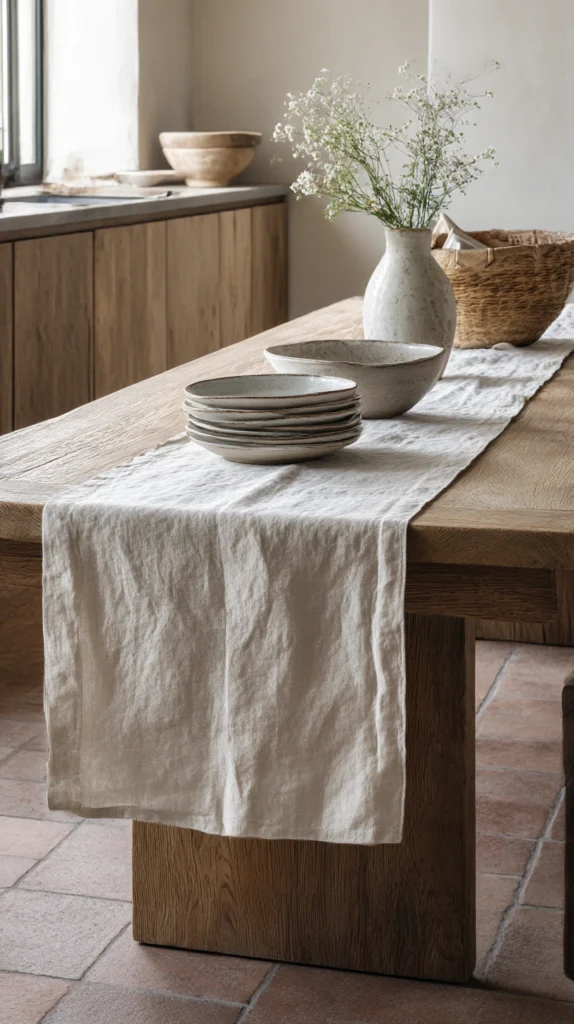
Budget: $15 – $45
A simple linen or cotton runner laid along the centre of a kitchen table shifts the surface from a purely functional eating and working space to one that has been considered and dressed for summer. It requires nothing else around it to look complete — the runner alone does the seasonal work.
A natural linen table runner in oatmeal, white, or a pale stripe costs $15–$40 from most homewares retailers. Choose a length that overhangs the table by 20–30 cm at each end — a runner cut exactly to table length looks like a placemat rather than a proper table runner and loses the relaxed, generous quality the piece is intended to provide.
Style tip: Wash the runner before using it for the first time and do not iron it completely flat. A slightly relaxed linen runner with gentle creasing from the wash has the lived-in quality that suits a summer kitchen. An immaculately pressed runner has the quality of something that has just been unpacked — which is the wrong starting point for a kitchen that is meant to feel genuinely inhabited.
13. Swap Mugs and Glasses for Summer Versions
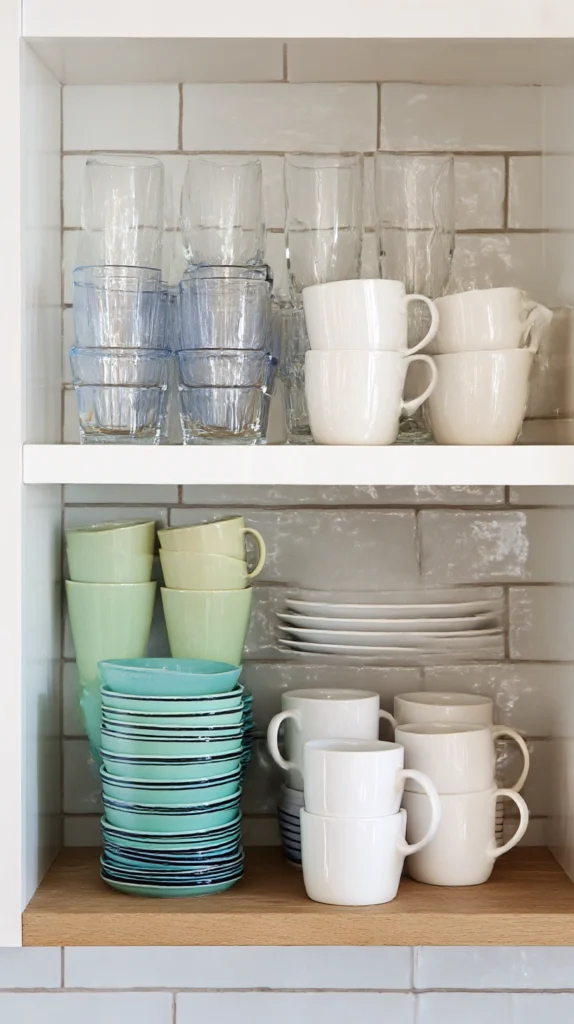
Budget: $20 – $80
Putting away the heavy ceramic winter mugs and replacing them with lighter glassware, clear glass tumblers, and simple white porcelain cups makes the kitchen feel lighter and more summery in a way that is immediate and intuitive even though the change is small. What sits on the open shelf or in the glass-fronted cupboard is part of the kitchen’s visual palette through every season.
A set of four clear glass tumblers costs $10–$25. Simple white porcelain espresso and coffee cups run $15–$40 for a set of four. The heavy ceramic mugs go into a cupboard for autumn and the lighter pieces take their place on the shelf — the exchange costs almost nothing and shifts the visual character of the kitchen noticeably toward summer.
Style tip: Store the switched-out mugs together in a clearly labelled box rather than redistributing them across various cupboards. A dedicated seasonal storage box makes the bi-annual switch effortless — which is the only way a seasonal kitchen refresh actually gets done consistently rather than being started and then abandoned halfway through when individual items cannot be located.
14. Add a Small Indoor Plant to the Kitchen
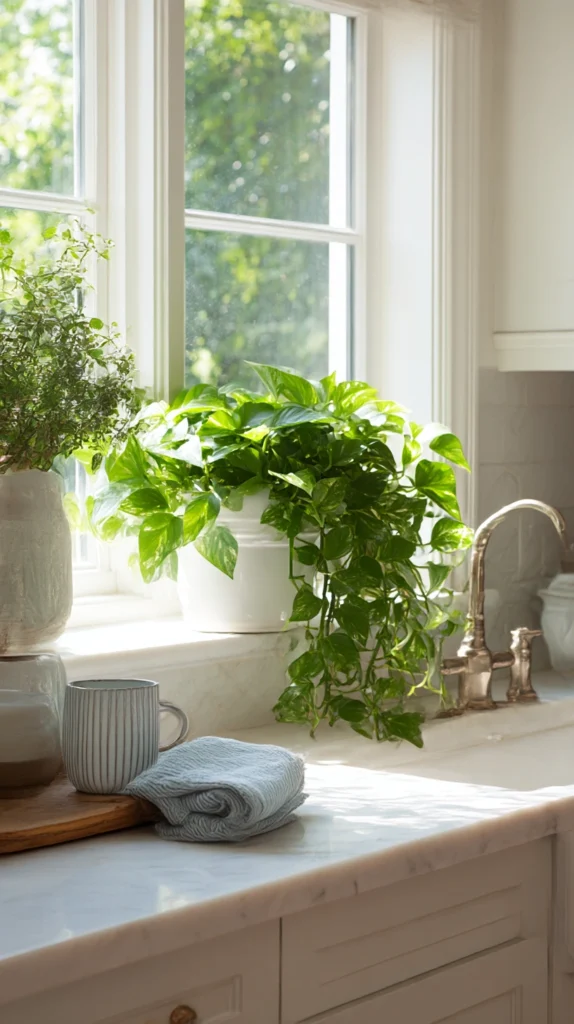
Budget: $8 – $30
A single well-chosen houseplant in the kitchen — a small pothos on a shelf, a snake plant in a corner, or a trailing string of pearls beside the window — adds the living, organic quality to the room that no decorative object can replicate. Plants make kitchens feel inhabited and cared for in a way that is difficult to articulate and immediately obvious.
A small pothos in a 9 cm pot costs $5–$12. A compact snake plant runs $8–$20. Choose a variety suited to the available light — most kitchens have one very bright spot and several dimmer ones, and matching the plant to the light it will actually receive is the only meaningful variable in kitchen plant success.
Style tip: Place the kitchen plant at a height where it is visible while cooking rather than tucked into an out-of-the-way corner where it is never seen or interacted with. A plant on the counter beside the hob, on the windowsill above the sink, or on a shelf at eye level during cooking is noticed and tended — a plant placed out of the sightline during daily kitchen use tends to be forgotten and neglected within a few weeks.
15. A Fresh Coat of White Paint on the Walls
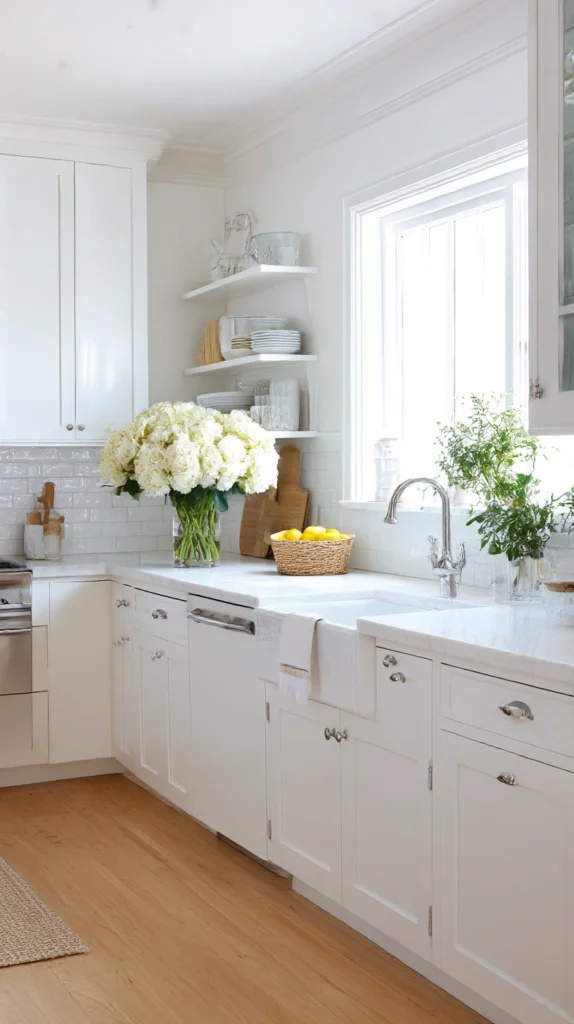
Budget: $30 – $120
If one update on this list does more for the fresh, clean summer kitchen feeling than all others combined, it is a fresh coat of white or warm off-white paint on the walls. Kitchens accumulate grease and steam on their wall surfaces more quickly than any other room, and walls that looked white when first painted are often considerably warmer and duller than they appear after two or three years of daily cooking.
A litre of quality kitchen-grade washable white paint costs $15–$30 and covers approximately 12 square metres. A full kitchen refresh with two coats costs $30–$80 in paint for most average-sized kitchens. Use a washable finish — eggshell or satin rather than matt — which cleans easily and holds its fresh appearance considerably longer than a flat matt emulsion on a kitchen wall.
Style tip: Paint the ceiling the same white as the walls rather than a separate brilliant white. A ceiling painted in the same tone as the walls creates a seamlessly bright, airy room that feels larger than it is. A stark brilliant white ceiling against warmer wall tones introduces a visible colour break at the top of the room that works against the unified, fresh quality a summer kitchen aims for.
A summer kitchen that feels fresh and clean is not the result of a single dramatic gesture — it is the accumulation of small, right decisions made consistently across every surface and every corner. Clear counters, natural materials, seasonal ingredients on display, and enough light to see all of it clearly are the four principles that underpin every idea on this list.
Start with whichever idea addresses the most obvious friction point in your kitchen right now — whether that is clutter, heavy textiles, dated hardware, or walls that have lost their freshness — and work outward from there. A kitchen that functions well and looks well through summer is one of the most genuinely daily pleasures a home can offer, and it rarely requires as much effort or expenditure to achieve as most people assume before they start.