
14 Kitchen Island Ideas with Seating That Make Hosting Easier
The kitchen island with seating is the single furniture configuration that has done more to transform the experience of domestic hospitality than any other design development of the past three decades — the element that dissolved the wall between the cook and the guests, that turned the act of preparing food from a solitary, separated task into a shared social experience, and that made the kitchen the genuinely central room of the modern home rather than the functional space adjacent to the room where life actually happened.
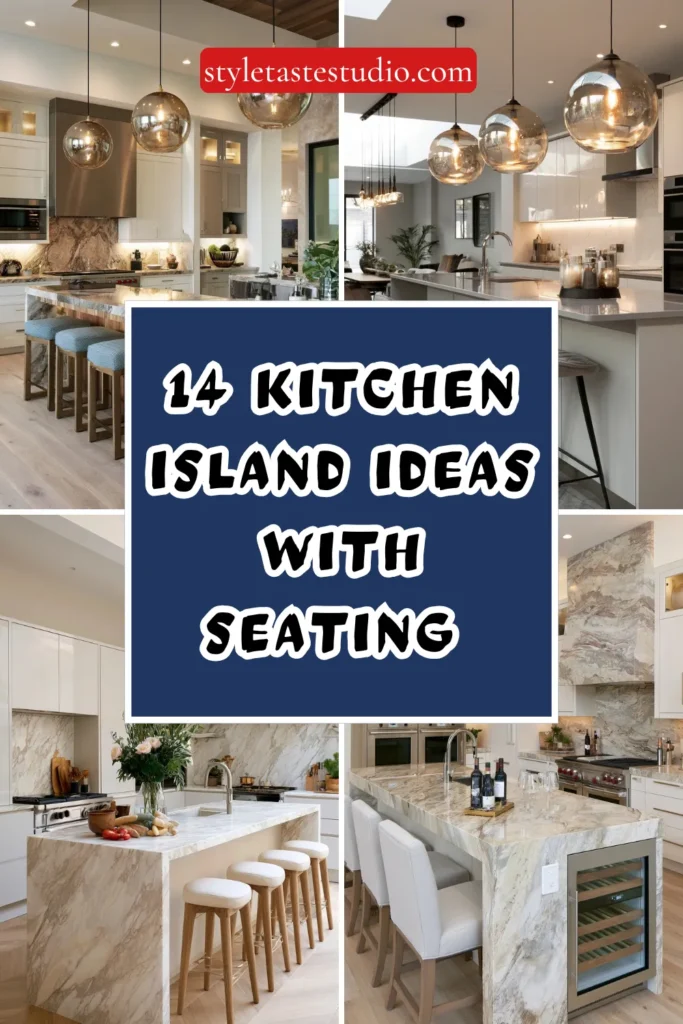
When a kitchen island is designed well — at the right height, in the right material, with the right seating configuration and the right surrounding space — it changes not just how a kitchen looks but how a household lives, how guests feel when they arrive, and how the host experiences the act of feeding people.
These fourteen ideas demonstrate how to design and specify a kitchen island with seating that genuinely makes hosting easier — not through decorative ambition but through intelligent decisions about proportion, material, height, and configuration.
1. Size the Island for the Life Actually Being Lived
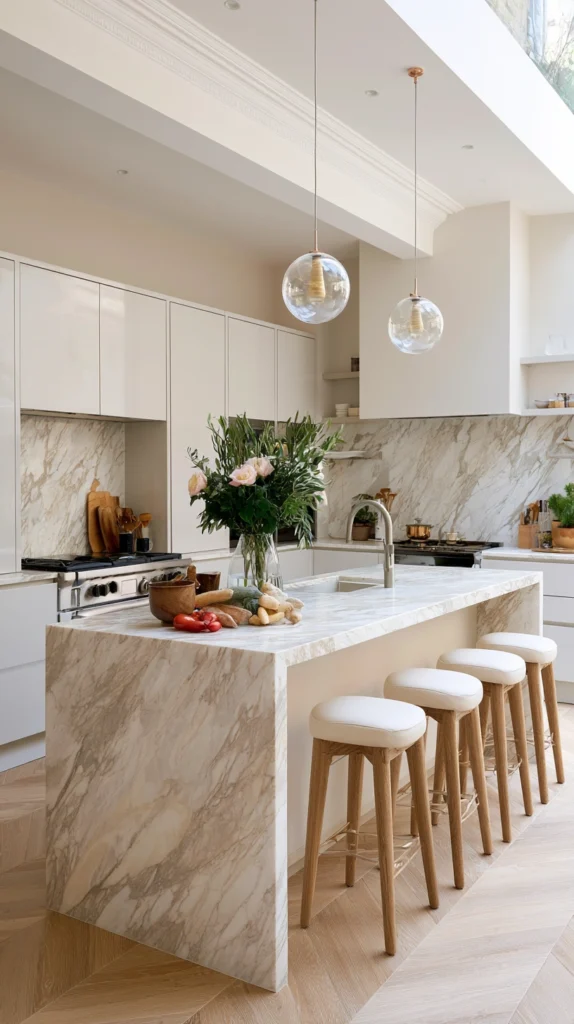
The most consequential island decision — more important than the material, the colour, or the seating style — is the size, and the size should be determined by honest assessment of the kitchen’s actual dimensions and the household’s actual entertaining patterns rather than by aspiration toward the generous islands seen in magazine kitchens that exist in spaces three times the size of most residential ones.
A minimum of 90 centimetres of clearance on every side of the island between its edge and the nearest wall, cabinet, or appliance is the non-negotiable functional requirement — less than this, and the kitchen becomes genuinely difficult to navigate during cooking and serving.
Within those clearance constraints, maximise the island’s length rather than its width — a longer, narrower island seats more people, creates more preparation surface, and maintains better sightlines and social connection between the cook and the seated guests than a shorter, wider configuration.
2. Choose a Waterfall Edge for Material Drama
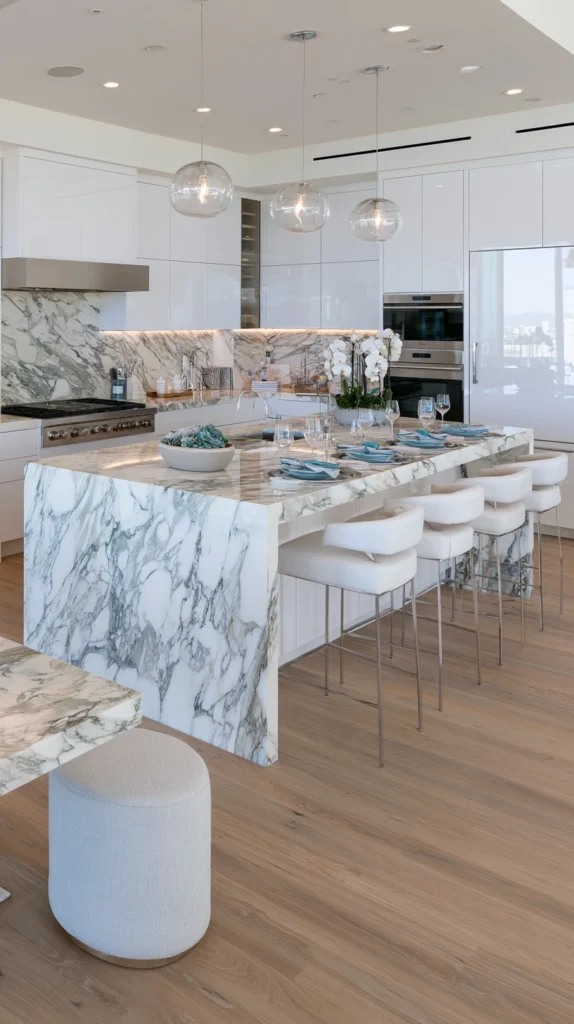
A waterfall island — its countertop material continuing vertically down one or both end faces of the island base to the floor, creating a continuous surface that wraps around the island’s end in an uninterrupted material statement.
It is the single specification decision that most completely elevates an island from a functional piece of kitchen furniture to a designed architectural feature of genuine visual presence. In marble, quartzite, or a quality large-format porcelain, the waterfall edge displays the material’s full character — veining patterns that run continuously from horizontal to vertical, colour variation that reads across the full surface — in a way that a standard overhang edge entirely prevents.
The waterfall end should face the primary seating and the primary room sightline so the material is fully visible from the positions where it will be most frequently and most directly appreciated — the bar stool, the adjacent living room, and the entrance to the kitchen.
3. Install a Prep Sink in the Island
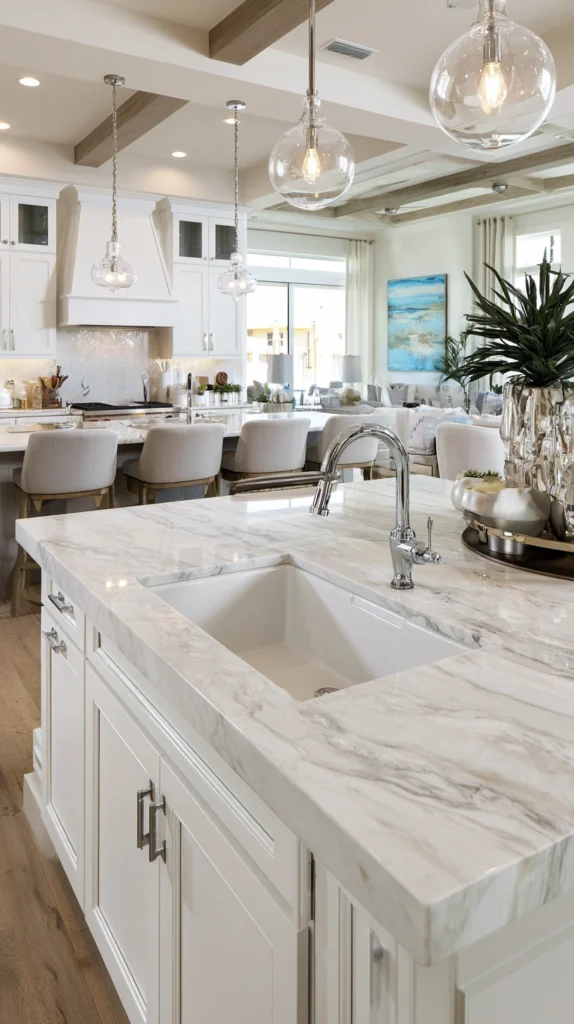
A prep sink integrated into the island — distinct from the primary cleaning sink at the perimeter, sized for rinsing vegetables, filling drink jugs, and the light water tasks of active cooking and serving — keeps the cook within the island’s social zone during the preparation stages of a meal rather than requiring repeated trips to the perimeter sink that interrupt the flow of conversation and the quality of engagement with guests seated at the island.
The prep sink in the island is the hosting infrastructure detail that makes the difference between a cook who is genuinely present with their guests through the preparation process and one who is repeatedly turning away from the gathering to manage the water tasks of cooking at the room’s edge. Specify a sink of modest size — 30 to 40 centimetres in its longest dimension — so it consumes minimal counter surface while delivering the full range of functions it is installed to provide.
4. Use Two Counter Heights for Dual Function
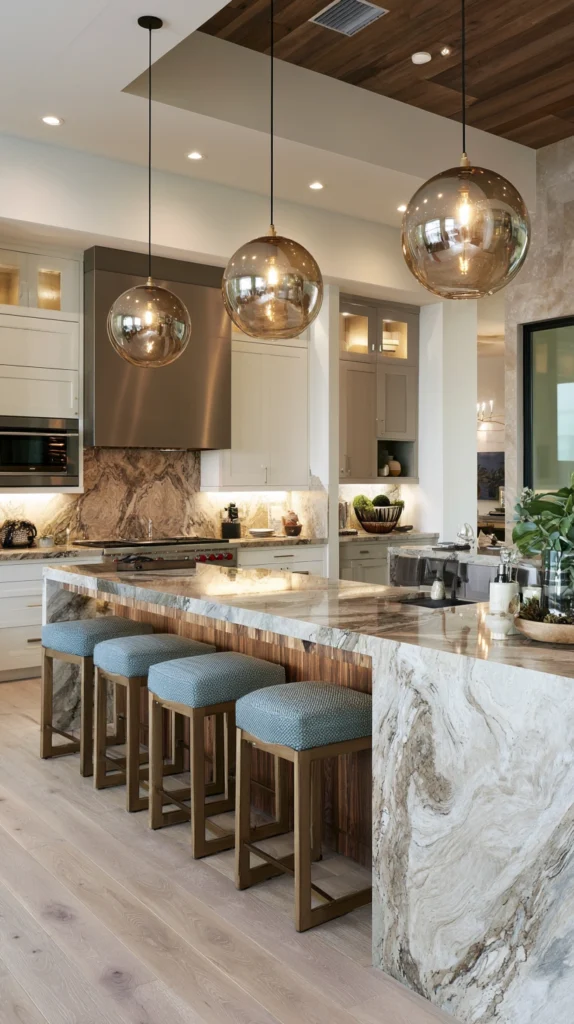
A kitchen island with two distinct counter heights — a standard preparation height of 90 centimetres on the cooking side and a bar height of 105 to 110 centimetres on the seating side, the transition between them creating a natural visual and functional boundary between the working zone and the social zone.
It is the most functionally intelligent island configuration for serious entertaining, separating the cooking and preparation work from the guest seating without creating the physical or social barrier that a full wall or a full-height partition would produce.
The lower preparation surface is the correct ergonomic height for extended standing work. The raised bar surface on the seating side elevates the guests’ eyeline slightly above the preparation zone, which manages the visual clutter of active cooking without obscuring the cook from the gathering — the social connection is maintained while the working surface’s contents are partially screened by the counter height difference.
5. Specify Bar Stools That Are Genuinely Comfortable
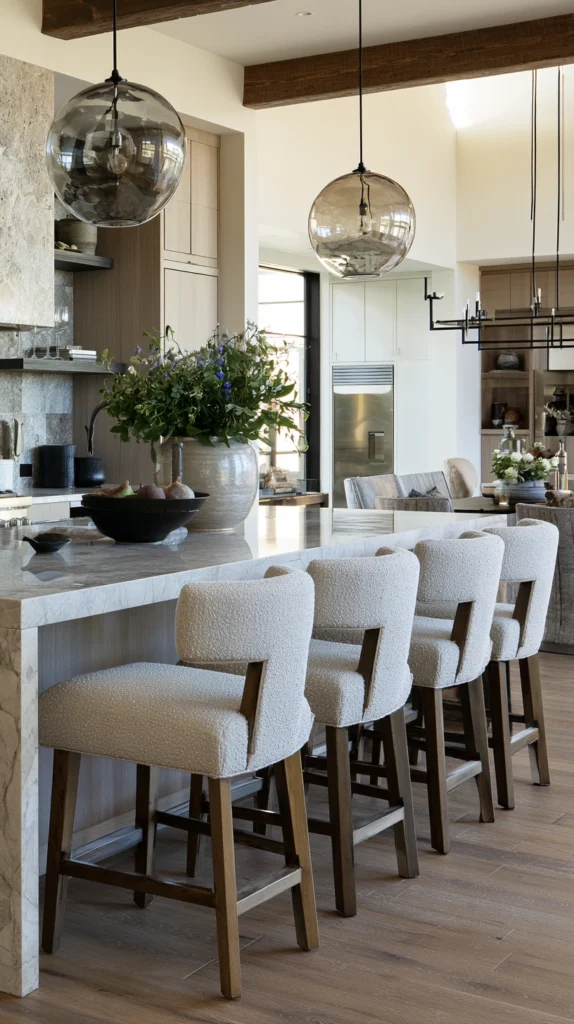
Bar stools at a kitchen island are among the most frequently purchased and most consistently disappointing pieces of furniture in the modern home — chosen for their visual compatibility with the island and the kitchen aesthetic, specified at the correct seat height for the counter, and then found, within the first week of use, to be profoundly uncomfortable for extended sitting.
The bar stool for a hosting kitchen requires a back — backless stools are appropriate for occasional brief seating and genuinely inadequate for the two to three hours of seated conversation that a well-hosted kitchen gathering typically involves — a seat depth of at least 38 centimetres, a footrest at the correct height for comfortable leg support, and a seat material that does not become uncomfortable under the body heat of extended sitting.
Specify stools with genuine attention to their ergonomic quality and test them in person before purchasing — the most beautiful bar stool that cannot be sat in comfortably for ninety minutes is a hosting liability regardless of its visual contribution to the kitchen.
6. Build in Charging Points for Practical Daily Use
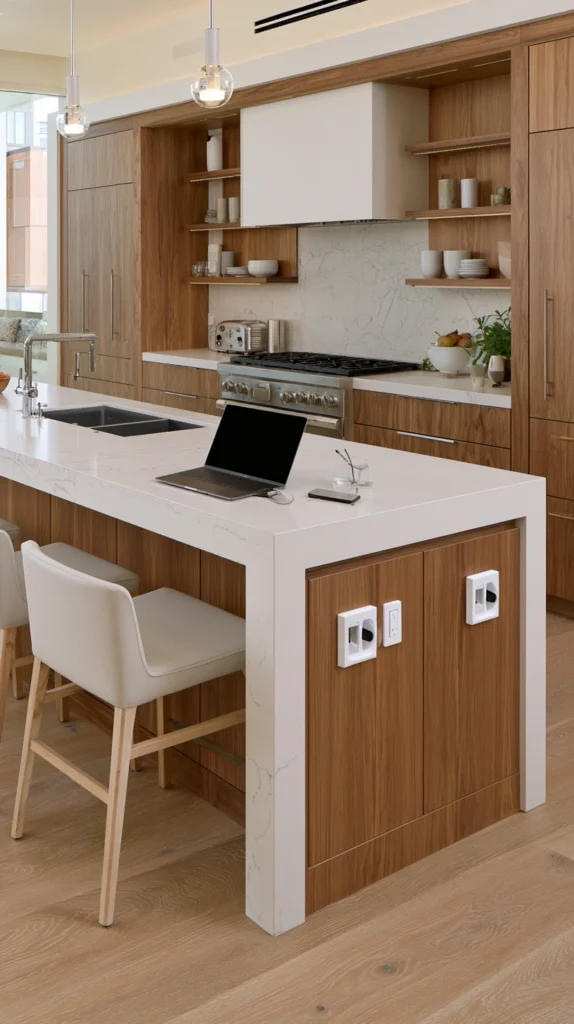
An island with integrated USB charging points and standard power outlets recessed into the countertop surface or built into the island’s end face — their placement carefully considered to be accessible without cluttering the primary preparation surface — is the island specification that most directly acknowledges the reality of how the kitchen island is actually used in daily life.
Guests seated at the island in the morning before work, children doing homework at the counter after school, adults checking recipes, managing music, or managing the household’s calendar while the cooking happens around them: all of these activities require power access, and an island without it generates the frustration of cables stretched from distant wall outlets across the counter surface and floor.
Specify flush-mounted outlet panels that retract below the counter surface when not in use for the cleanest visual result, or install outlets in the island’s end face or base panel where they are accessible but not visible from the room’s primary sightlines.
7. Use the Island Base for Generous Hidden Storage
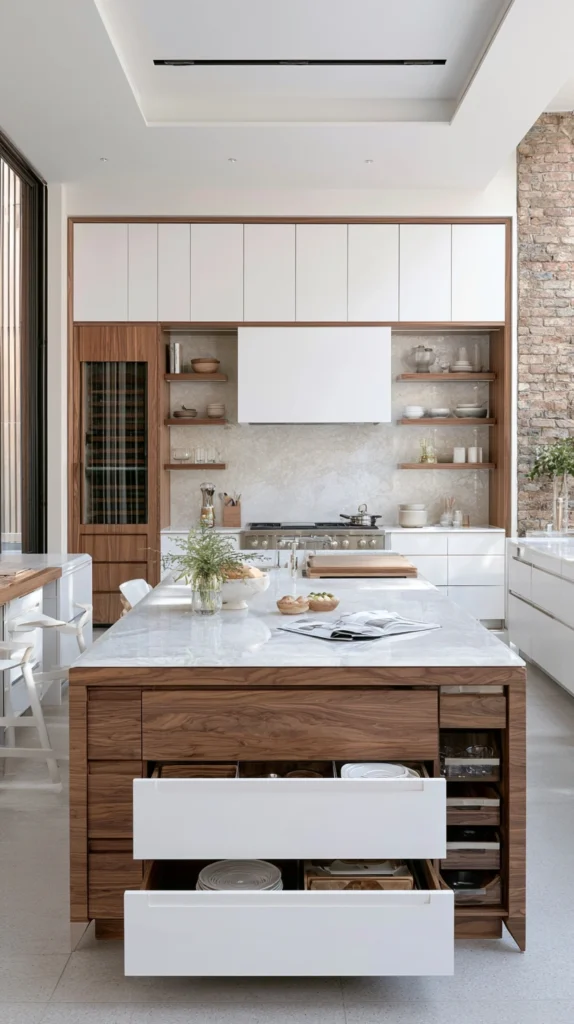
The island base — the cabinet structure beneath the countertop on the non-seating side — is the kitchen’s most efficient storage location because it provides deep, wide, full-height cabinet space at the room’s primary working position, and an island designed with this storage function taken seriously rather than treated as an afterthought can house the majority of the cooking equipment, serving ware, and kitchen miscellany that would otherwise occupy wall cabinet space at the room’s perimeter.
Deep drawers rather than doors for the majority of the base storage — drawers allow every item stored within them to be visible and accessible without requiring items at the back to be removed to reach items behind them, which is the operational frustration that door-and-shelf cabinet storage creates, regardless of its organisation. Specify drawer boxes of genuine quality — soft-close mechanism, full-extension slides, solid timber or high-quality plywood construction — because the drawers in the island are the most frequently operated storage in the kitchen.
8. Choose a Contrasting Island Colour to the Perimeter Cabinetry
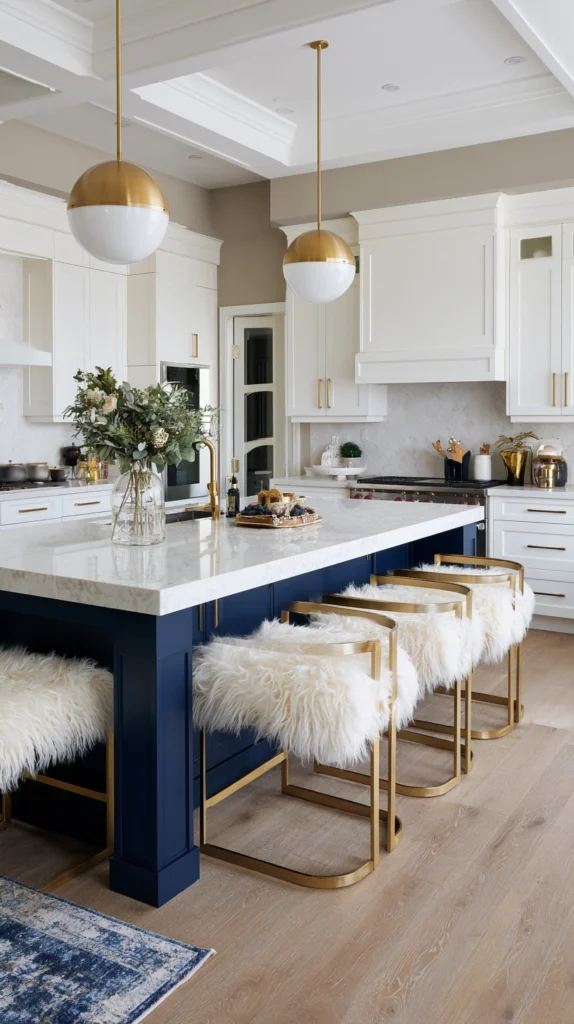
A kitchen island specified in a colour distinct from the perimeter cabinetry — a deep navy island in a kitchen with white perimeter cabinets, a forest green island against cream cabinetry, a warm charcoal island beside natural timber wall units — creates the visual definition and the spatial emphasis that makes the island read as the kitchen’s primary design feature and social centrepiece rather than a continuation of the surrounding cabinetry.
The colour contrast communicates to every person who enters the kitchen that the island is a different kind of surface — a destination, a gathering point, the kitchen’s social heart — rather than simply more storage that happens to be freestanding in the room’s centre.
Pair the contrasting island colour with a countertop in a material that bridges both palette tones — a warm-veined marble that contains both the island colour and the cabinet colour in its pattern, for example, for the compositional coherence that prevents the colour contrast from reading as a clash.
9. Add Pendant Lights That Define the Social Zone
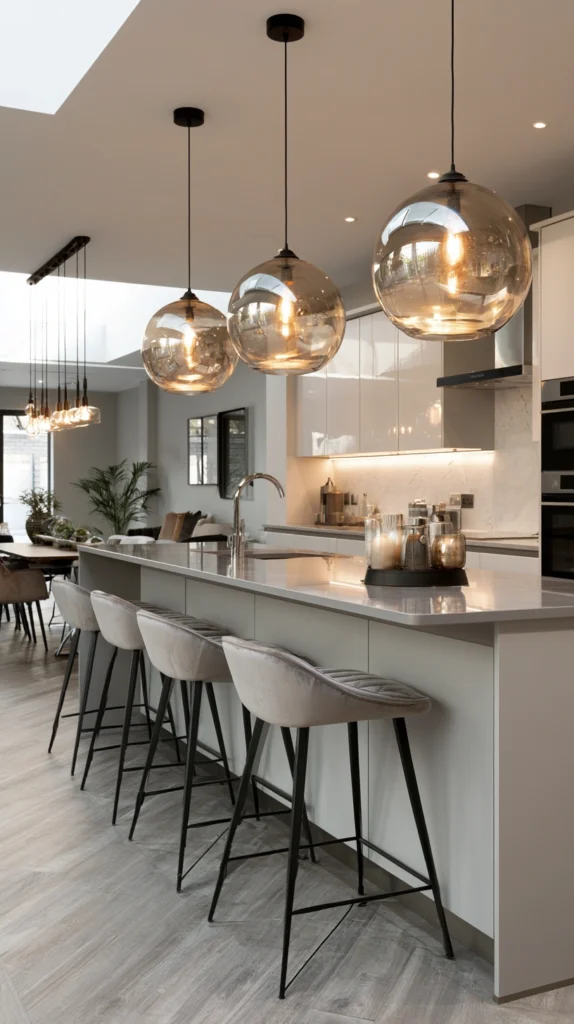
Pendant lights hung above the island — their height positioned so the shade base sits at approximately 75 to 80 centimetres above the countertop surface, their spacing distributed evenly across the island’s length with one pendant for every 60 to 90 centimetres of counter length .
Are the lighting and decorative decision that most completely defines the island as the kitchen’s social centre, creating a pool of warm, directed illumination above the seating zone that makes the space beneath the pendants feel intimate, welcoming, and distinct from the functional lighting of the surrounding kitchen.
Choose pendants in a finish that connects to the island’s hardware — the same unlacquered brass, the same matte black, the same brushed nickel — for the material coherence that makes the island feel designed as a unified whole. The pendant light’s contribution to the hosting experience is both atmospheric — the warm pool of light above the seating makes the island the room’s most inviting position — and practical, providing genuine task illumination at the counter surface for preparation and service.
10. Design the Seating Side With Knee Space
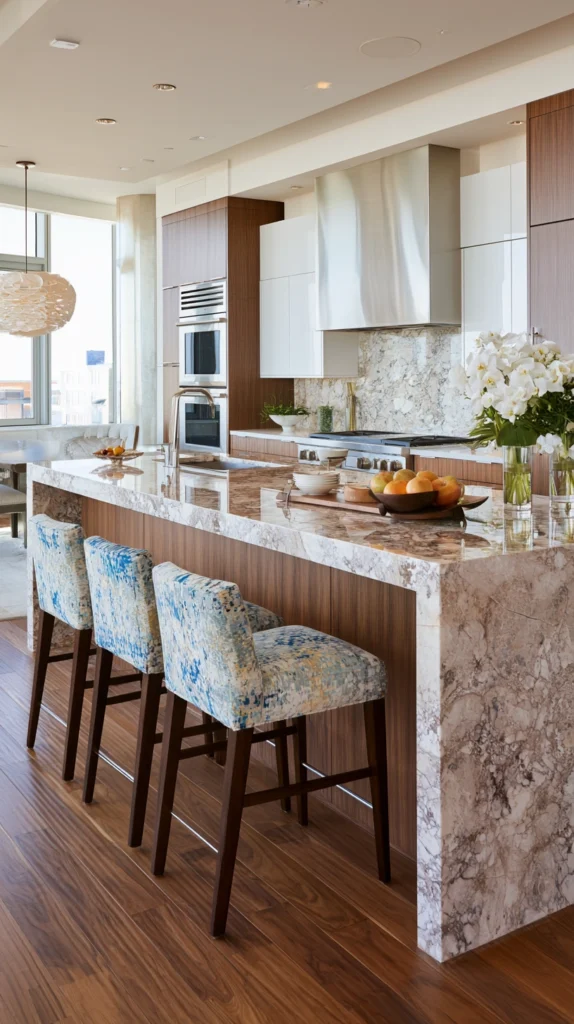
The island seating side — the face of the island base against which the bar stools are positioned — requires a specific knee clearance detail that is frequently overlooked in standard island design and that makes the difference between bar stool seating that is genuinely comfortable for extended periods and seating that requires guests to sit at an awkward distance from the counter because the cabinet base below prevents them from positioning their legs and body close enough to the surface.
A recessed toe kick of standard 10 centimetres depth is insufficient for comfortable bar stool seating — the knee clearance required for a seated person to sit comfortably at a bar-height counter requires a recessed panel of at least 20 to 25 centimetres, allowing the stool to be pulled close to the counter and the seated guest’s knees and lower legs to occupy the space beneath the overhang without contact with the cabinet face. Build this recessed detail into the island design from the outset rather than attempting to retrofit it after the cabinet is constructed.
11. Incorporate a Wine or Drinks Refrigerator
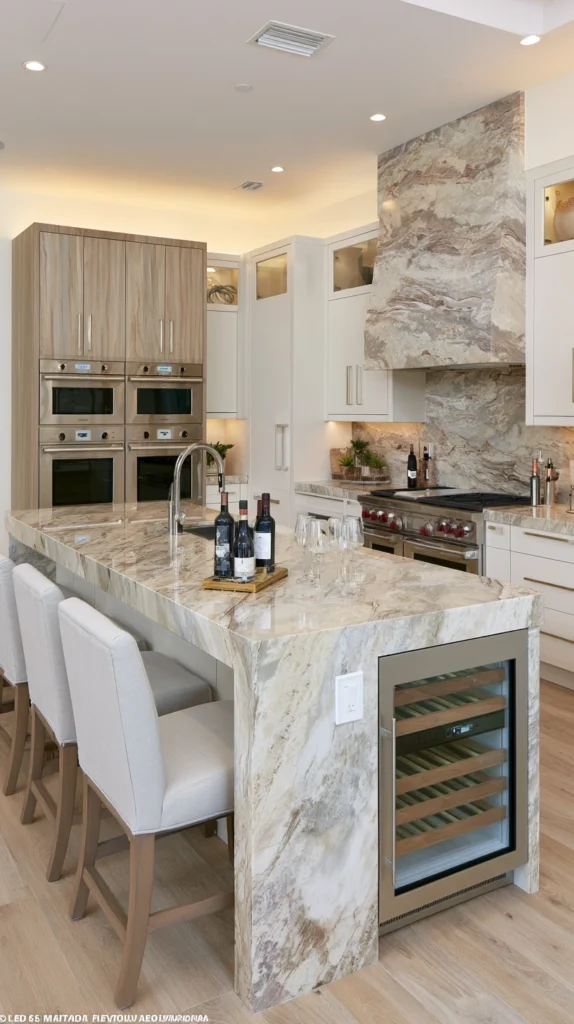
A wine or drinks refrigerator integrated into the island base — accessible from the seating side so guests can reach their own drinks without requiring the host’s assistance, its door opening toward the gathering rather than toward the cooking zone — is the hosting infrastructure addition that most directly embodies the effortless hosting principle within the island itself.
A 30 to 45 centimetre wide under-counter wine refrigerator holds sufficient bottles for any dinner party, keeps them at the correct serving temperature without requiring advance planning, and positions them at the point in the kitchen where they will be served and consumed rather than at the perimeter where they must be retrieved and carried.
The drinks refrigerator accessible from the seating side of the island is the detail that genuinely allows the host to focus on cooking rather than serving — guests serve themselves, refill their own glasses, and the host’s attention remains on the food.
12. Use Durable, Forgiving Countertop Materials
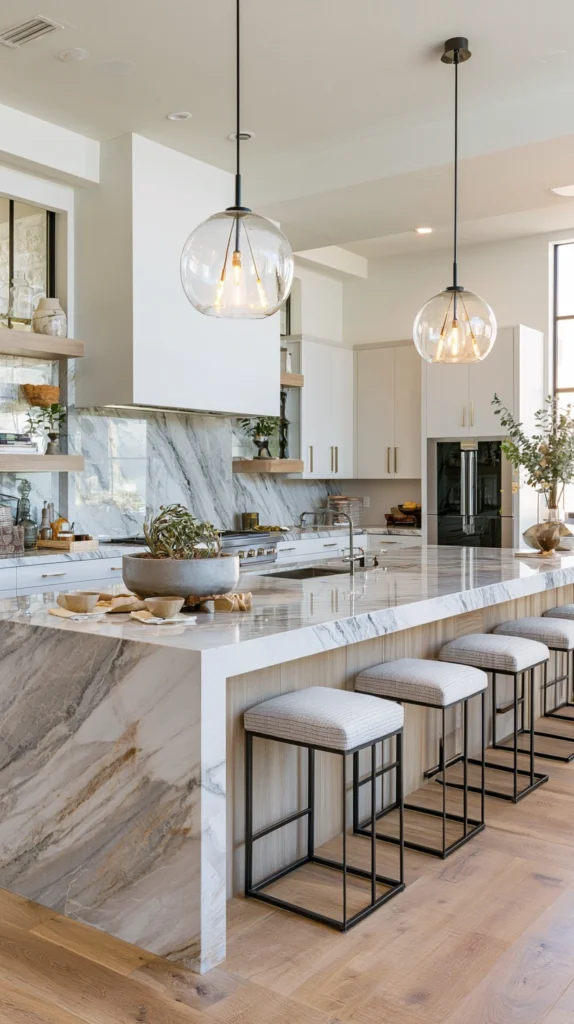
The kitchen island countertop is the most physically demanding surface in the home — it receives hot pans, knife cuts, acidic spills, impact from heavy equipment, and the full daily burden of serious cooking and casual social use simultaneously — and the material specified for it should be chosen for its genuine durability and its ability to develop character with use rather than for its pristine appearance in a showroom or a photograph.
Honed quartzite, concrete, thick solid timber, or the porcelain slabs that replicate natural stone with superior stain and impact resistance: each of these materials handles the physical demands of the hosting kitchen island better than polished marble, which marks, etches, and stains in ways that require either constant preventive management or the acceptance of a surface that deteriorates rather than patinas. The island countertop that the host cannot relax around because of anxiety about its surface is the island countertop that makes hosting less effortless rather than more.
13. Plan the Island’s Relationship to the Dining Table
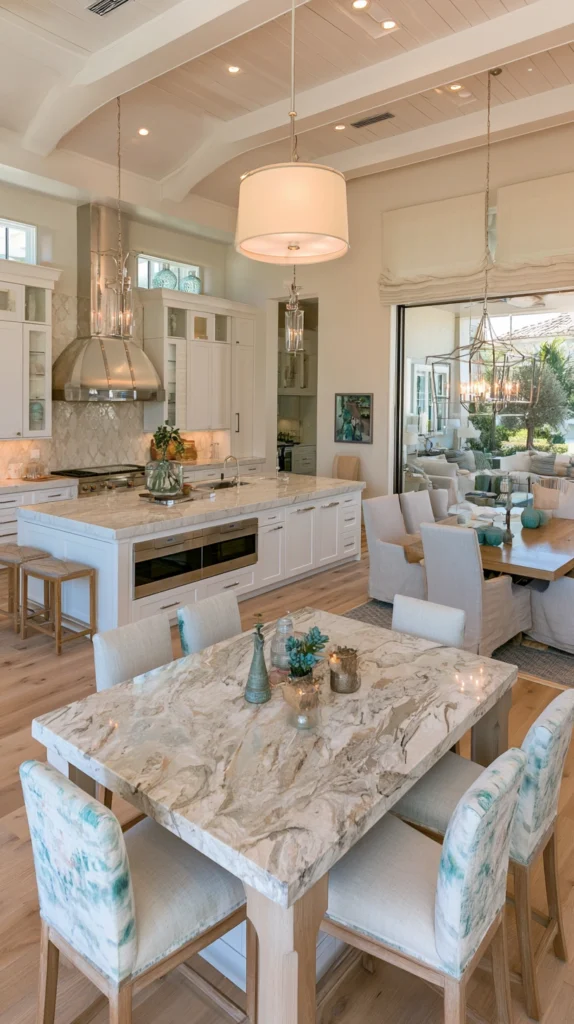
The kitchen island with seating functions most effectively as a hosting surface when its relationship to the adjacent dining table has been designed rather than left to the spatial residue of the kitchen layout .
When the island’s seating serves a genuinely distinct social function from the dining table rather than simply duplicating it in the same room at a different height. The island seating is for the casual, immediate social engagement of the gathering’s first phase — the drinks, the conversation, while cooking happens, the grazing before the formal meal begins.
The dining table is for the structured social engagement of the meal itself. The transition between these two zones — the movement from island to table that marks the shift from informal gathering to formal meal — should feel natural and well-spaced, with sufficient distance between the two pieces of furniture to allow free movement and to give each zone its own spatial identity within the open-plan kitchen and dining environment.
14. Keep the Island Surface Clear for Its Best Performance
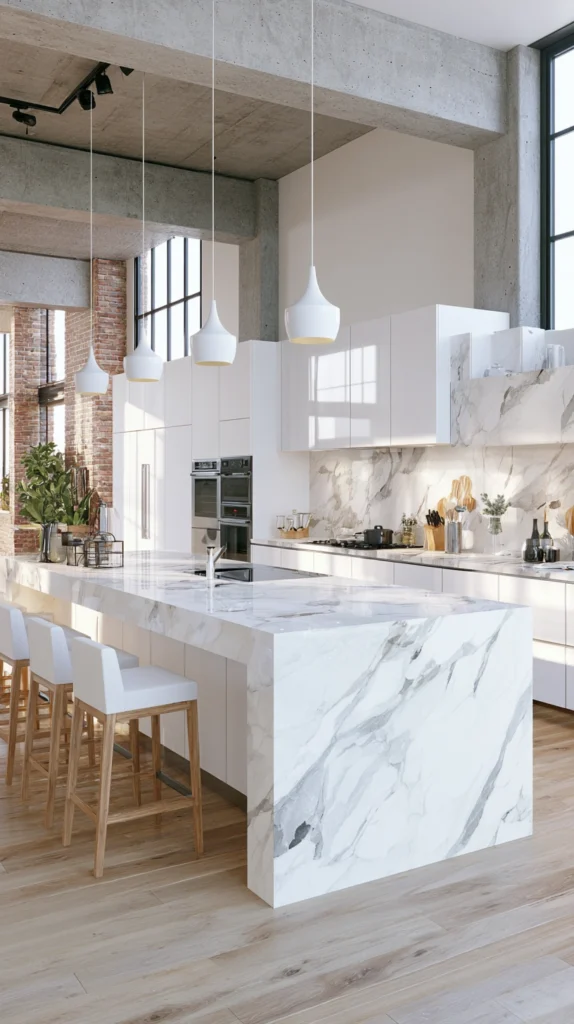
The kitchen island that is covered in appliances, accumulated mail, charging devices, fruit bowls, and the miscellaneous objects of daily household life is an island that cannot perform its hosting function — because the surface that should be available for preparation, for service, and for the social experience of gathering around food is occupied by objects that belong elsewhere, and the hosting experience they diminish is the most important function the island was designed to provide.
Establish a rule for the island surface: only the objects that are used daily and that have no better storage location remain on the counter; everything else finds its designated home in the island’s drawers, the perimeter cabinets, or a dedicated storage location elsewhere in the house.
The island surface kept consistently clear — its countertop material visible, its preparation and social functions unimpeded — is the island that makes hosting genuinely easier every time it is used.
Final Thoughts: Designing an Island That Works as Hard as the Host
The kitchen island with seating that genuinely makes hosting easier is not the most beautiful one or the most expensively specified one — it is the one designed around an honest understanding of how the host actually cooks, how guests actually gather, and what the specific friction points of the specific household’s entertaining experience actually are.
Measure carefully, specify the seating for comfort over style, build in the storage and the practical infrastructure that the hosting kitchen requires, and maintain the surface with the discipline that allows it to perform its primary function. The island that works well makes every gathering easier — and the host who is genuinely at ease, genuinely present, and genuinely enjoying the experience of feeding people is the most important design outcome any kitchen island can deliver.