
14 Fireplace Makeover Ideas
The fireplace is the living room’s most architecturally significant element and its most consistently neglected renovation opportunity — a structure that most homeowners live with in whatever condition it arrived in at purchase or rental, accepting its dated surround, its awkward proportions, its incorrect mantel height, or its uninspired finish as permanent features of the room rather than as the entirely changeable design variables they actually are.

The fireplace makeover is one of the highest-impact and most cost-effective improvements available to any living room — a change that affects the room’s primary focal point, its most prominent architectural feature, and the element that every eye in the room gravitates toward instinctively and repeatedly through every hour of occupation.
These fourteen ideas demonstrate exactly how to transform a fireplace from the room’s most dated element to its most beautiful one.
1. Limewash the Brick for Instant Warmth
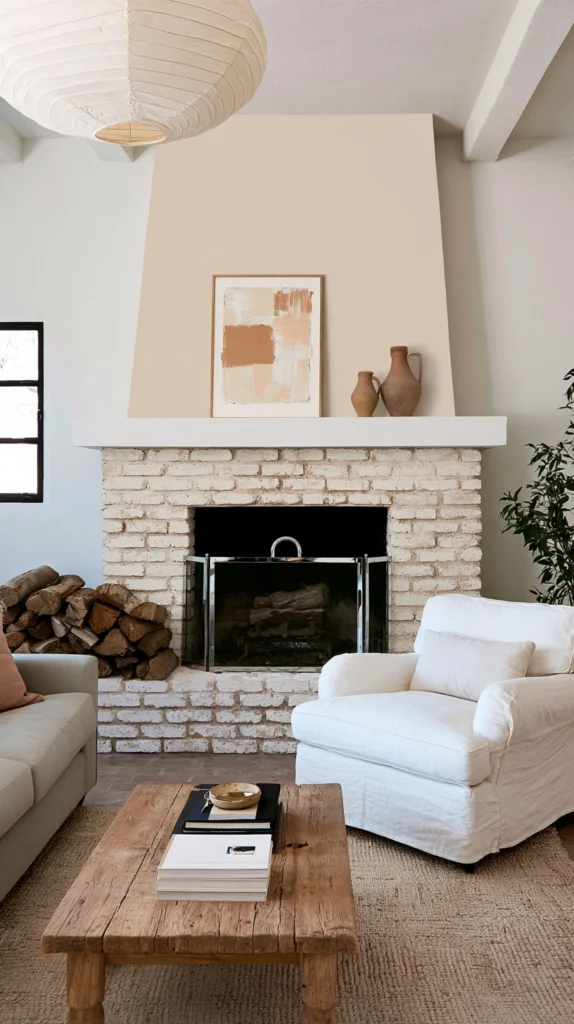
A brick fireplace limewashed in a warm white or the palest warm grey — its characteristic semi-transparent finish allowing the brick’s texture and the mortar joint pattern to remain visible through the white coating rather than being completely obscured by paint — creates the fireplace transformation of greatest warmth and greatest material authenticity available to a dated brick surround.
The limewash finish reads as genuinely aged and genuinely beautiful in a way that standard opaque paint on brick does not — its translucency preserving the architectural character of the brick construction while its colour modernises the overall appearance completely.
Apply with a brush rather than a roller for the characteristic slightly uneven coverage that gives limewash its distinctive quality, allowing some of the brick’s original colour to show through at varying intensities across the surface, and the brick fireplace becomes one of the room’s most beautiful and most characterful elements.
2. Install a Plaster or Render Surround
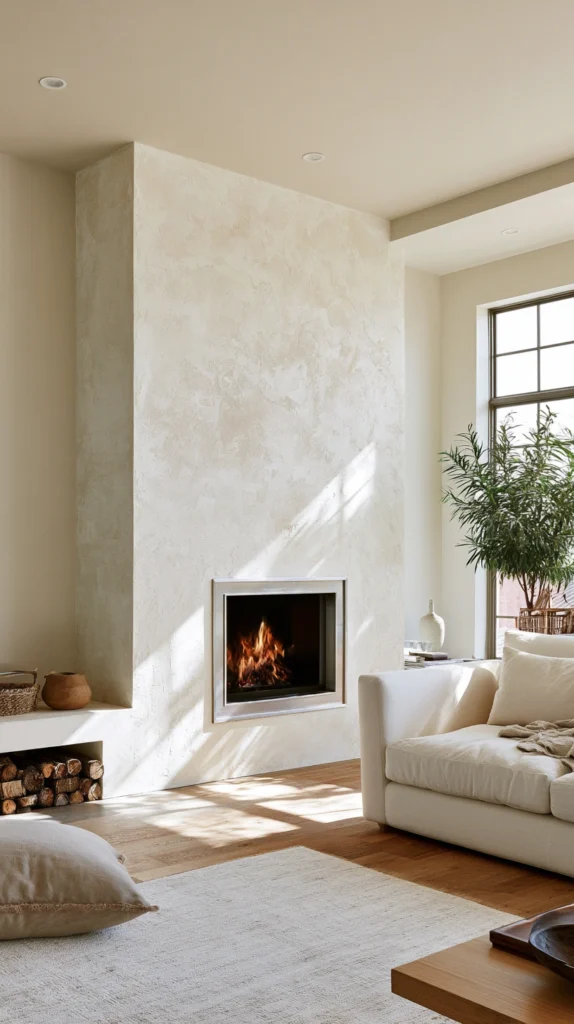
A hand-trowelled plaster or lime render surround — applied directly over an existing brick or painted surround, its slightly textured, slightly irregular surface creating the organic warmth and the material sophistication of a hand-crafted finish.
It is the fireplace makeover that most completely transforms the architectural character of the existing structure without requiring its demolition or replacement. The plaster surround creates the fireplace that reads as part of the room’s architecture rather than as a manufactured object placed within it.
It’s a continuous surface wrapping around the opening without the joints, the edges, and the material changes of a conventional surround, creating the impression of a fireplace that was formed from the wall itself rather than applied to it. Finish in a warm white or the palest dusty terracotta for the Californian and Mediterranean fireplace character that this treatment most naturally and most beautifully references.
3. Replace the Mantel With a Solid Timber Beam
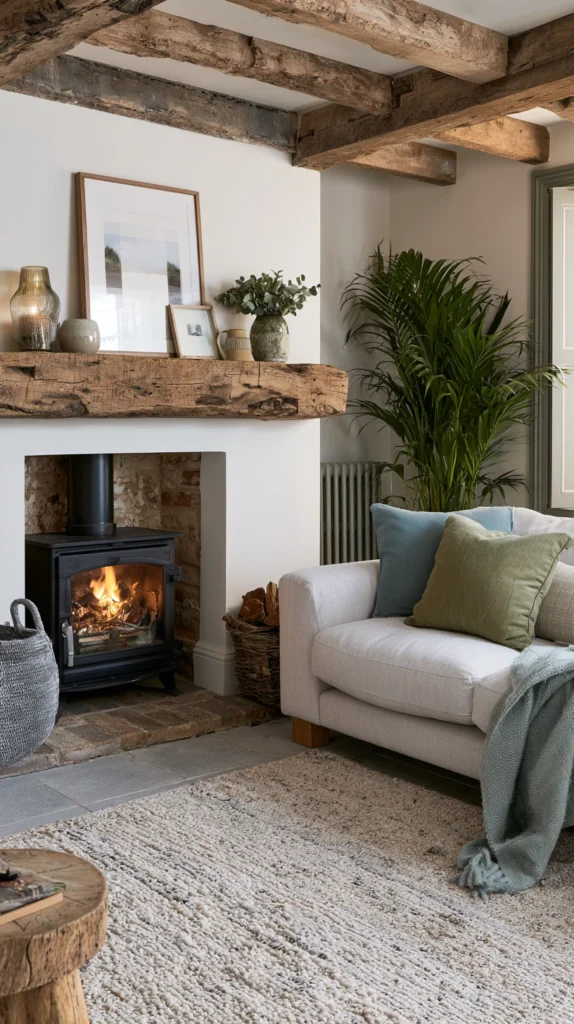
Removing the existing decorative mantel and replacing it with a single large section of solid timber — a rough-hewn oak beam, a section of reclaimed pine, or a simply finished piece of walnut or ash — creates the fireplace transformation of greatest material warmth and greatest honest craft character, converting a conventional decorative surround into a genuinely beautiful piece of natural timber of considerable presence and considerable visual authority.
The timber beam mantel works across a wide range of fireplace aesthetics — from the rustic farmhouse to the contemporary minimalist — because its visual simplicity and its material honesty connect to both traditions equally naturally.
Choose a timber section whose width and depth are proportionally generous relative to the fireplace opening — a beam that is too slim reads as a shelf rather than a mantel, while one of generous depth and substantial profile reads as a genuine architectural element of real visual weight.
4. Tile the Surround in Zellige or Handmade Ceramic
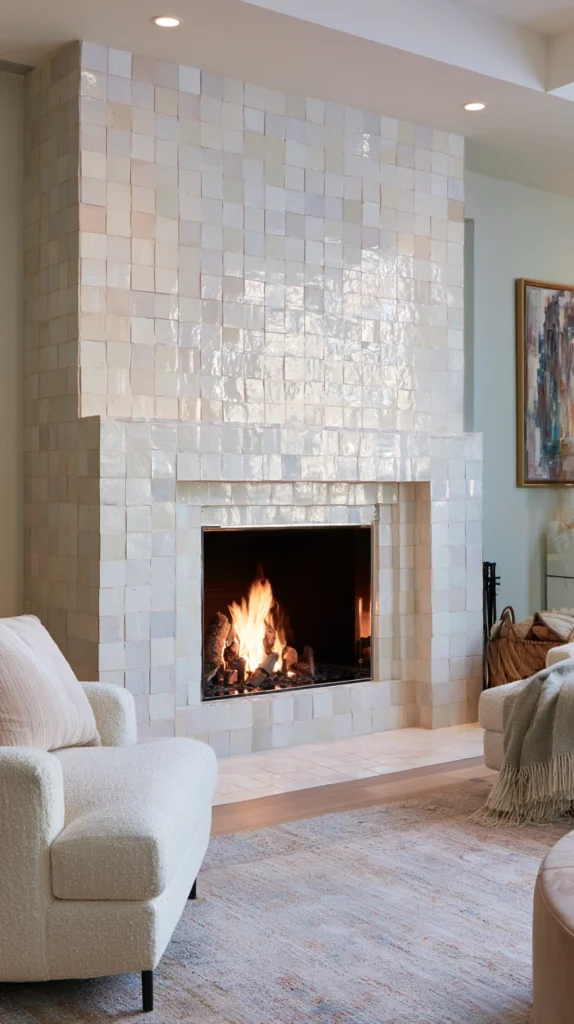
A fireplace surround retiled in zellige, handmade ceramic, or encaustic cement tile — its new surface replacing the existing tile or the painted surround with a material of genuine craft quality and genuine visual richness — is the fireplace makeover that introduces the most complete change in material character and design personality for the most manageable installation complexity.
The zellige tile surround in warm white, dusty terracotta, or sage green creates the fireplace of greatest contemporary craft quality — its hand-applied glaze surface catching the firelight with a luminous, shifting quality that mass-produced tiles entirely lack.
Encaustic cement tile in a geometric pattern on the hearth and the inner surround creates a fireplace of considerable decorative ambition — its pattern framing the opening as a composed, gallery-like border of real visual complexity and real historical reference.
5. Paint the Entire Fireplace in One Bold Colour
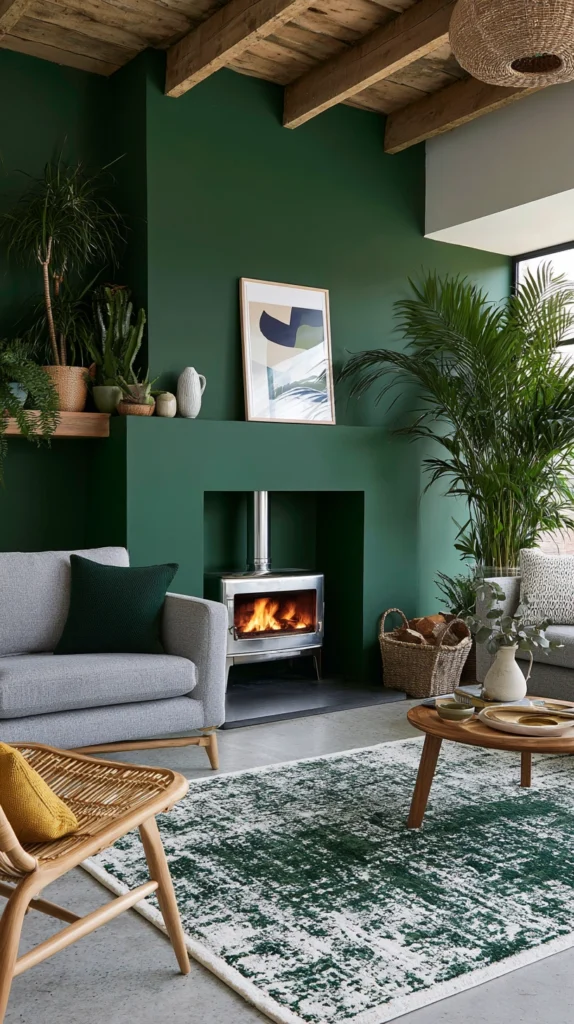
Painting the fireplace surround, the mantel, and the breast wall above it in a single deep, saturated colour — applying the same tone to every surface of the fireplace structure in a continuous colour envelope — creates the most dramatically beautiful and most immediately impactful fireplace transformation available without any structural or material change.
Forest green, deep terracotta, midnight navy, warm charcoal: any of these colours applied to the entire fireplace structure creates a composed, architectural colour moment of genuine presence that makes the fireplace read as the room’s primary design feature rather than its most dated element.
The single colour across all surfaces of the fireplace eliminates the visual complexity of multiple materials and multiple finishes, creating a simplicity and a boldness of statement that draws the eye with the authority of a genuinely designed focal point.
6. Add a Statement Mirror Above the Mantel
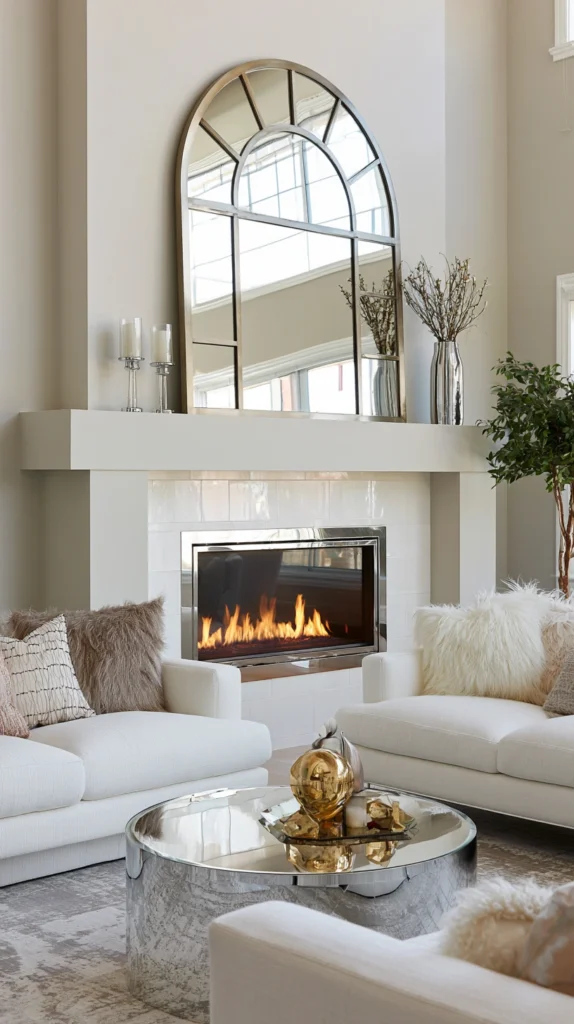
A genuinely large, genuinely beautiful mirror — arched, circular, sunburst-framed, or in a simple substantial rectangular frame — positioned above the mantel as the fireplace’s primary decorative element creates the fireplace display of greatest spatial impact and greatest immediate visual transformation, the mirror reflecting the room’s light and the opposite wall’s contents in a way that makes the fireplace zone feel significantly more generous and significantly more dynamic than the same mantel styled with artwork or decorative objects.
The mirror above the mantel is also the most practical fireplace styling decision — it contributes natural light, spatial depth, and a quality of luminosity to the room’s primary focal point that no artwork or decorative arrangement can replicate with the same consistency across different light conditions and different times of day.
7. Create a Stacked Stone Surround
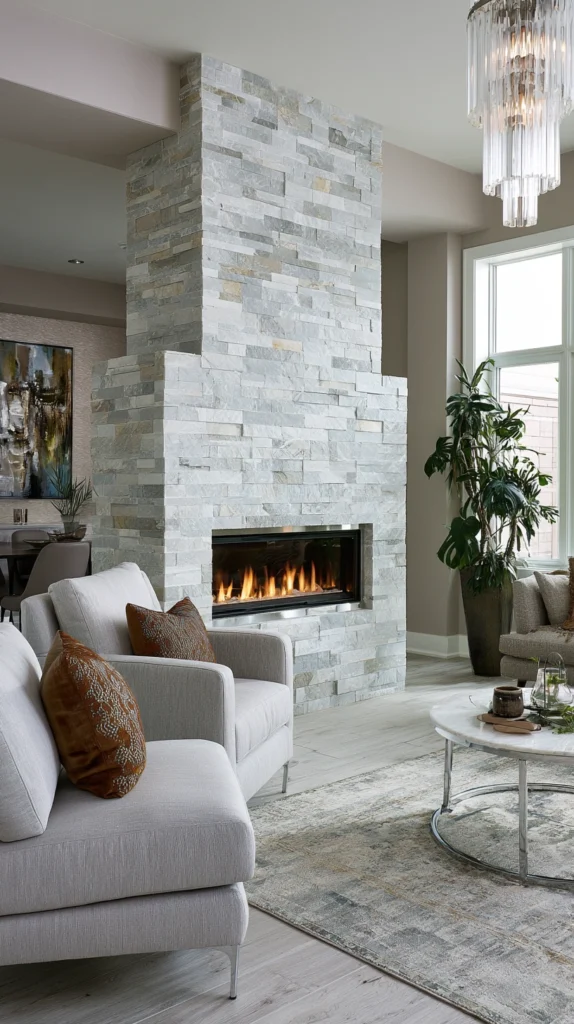
A surround of stacked natural stone — thin ledger panels of quartzite, slate, or sandstone applied to the existing surround structure, their horizontal layering creating the impression of a dry stone face of genuine geological character.
It creates the fireplace transformation of greatest natural drama and greatest material authenticity, converting a flat, featureless surround into a surface of extraordinary texture and considerable visual depth that changes in character as the light changes through the day.
The stacked stone surround is the fireplace material most activated by the firelight itself — the shadows cast by the stone’s relief surface shifting and deepening as the fire moves, creating a living interaction between the fire and its surround that flat, smooth surfaces never achieve with the same quality of dynamic, animated beauty.
8. Install a Sleek Concrete Surround
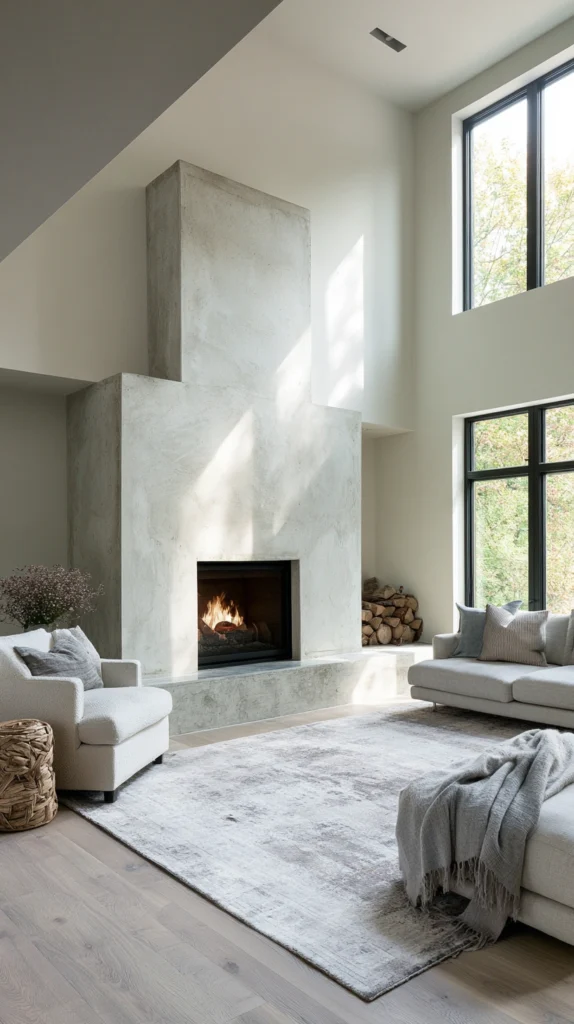
A poured or cast concrete surround — its smooth or lightly textured surface in a warm grey or the palest warm white, its geometric precision and honest industrial character connecting the fireplace to the contemporary and modernist design vocabularies.
It is the fireplace makeover for the room that values material honesty, clean lines, and the specific quality of raw material beauty that concrete delivers with a directness and a confidence that no other surround material quite matches.
The concrete surround works most beautifully in a room with warm complementary materials — natural timber floors, linen upholstery, aged brass hardware — whose warmth prevents the concrete’s cool precision from reading as cold or clinical, rather than genuinely refined and genuinely contemporary.
9. Use Marble for Maximum Luxury
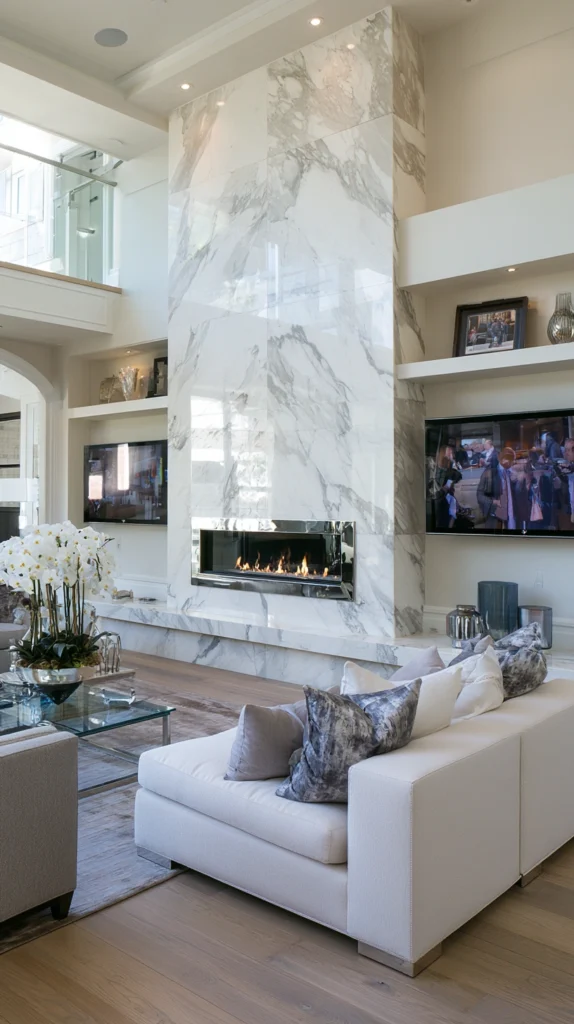
A marble surround — Calacatta, Carrara, or a warm-veined quartzite in a simple profile that allows the stone’s natural beauty to be the entire design — is the fireplace makeover of greatest material luxury and greatest enduring beauty, its combination of geological character, warm veining, and the particular authority of genuine stone making it the surround material that most completely and most permanently elevates the room’s material quality in a single installation.
Choose a profile of genuine simplicity — the marble’s beauty is sufficient design and requires no ornamental detail to support it — and extend the marble to the hearth below as a continuous surface for the most complete and most architecturally resolved material statement available to the fireplace makeover.
10. Build a Floor-to-Ceiling Fireplace Breast
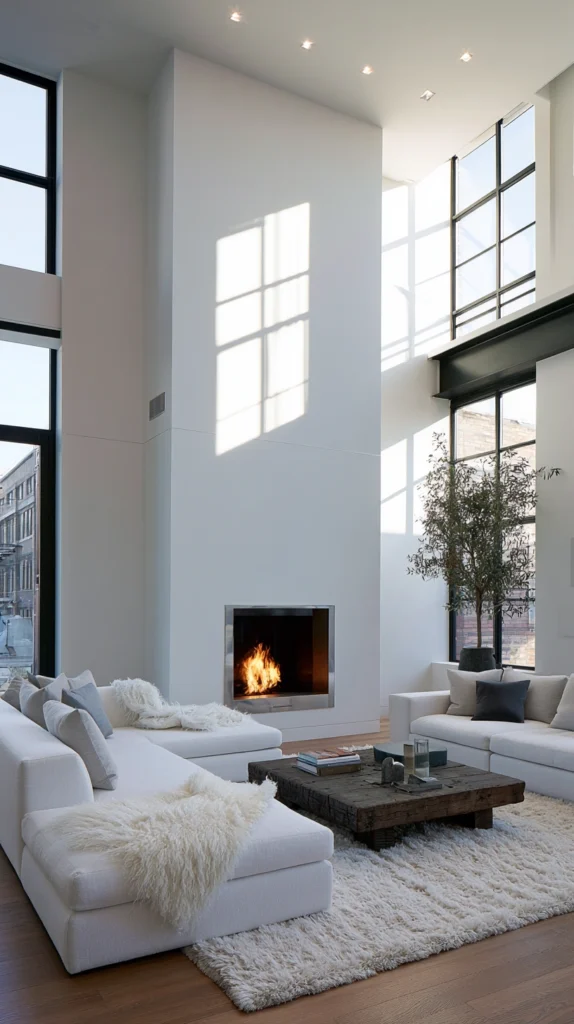
Extending the fireplace’s visual presence from the existing surround to a full floor-to-ceiling treatment — the fireplace breast clad in a single material from the hearth to the ceiling, creating a continuous architectural surface of considerable scale and considerable visual authority.
It is the fireplace makeover of greatest architectural ambition and greatest spatial impact, transforming the room’s primary wall from a wall-with-a-fireplace into a genuinely designed, genuinely composed architectural moment of real presence.
Whether the floor-to-ceiling treatment is in painted plaster, natural timber, stacked stone, or a combination of materials, its scale creates the quality of monumental simplicity that individual surround makeovers, however beautiful, cannot achieve with the same sense of spatial completeness.
11. Add Built-In Shelving on Either Side
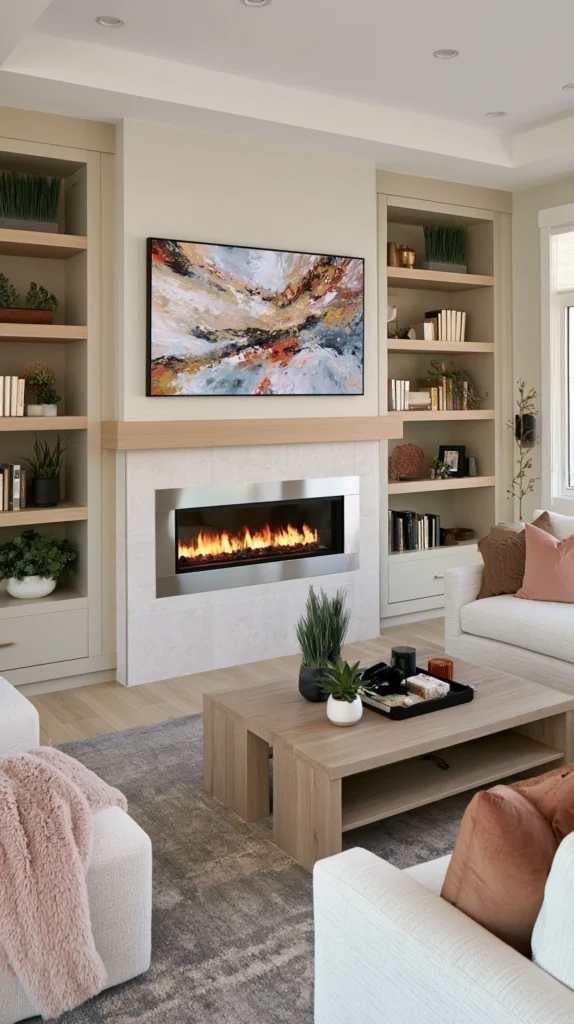
Building shelving into the alcoves on either side of the chimney breast — their design coordinated with the fireplace surround’s material and colour, their depth and their specification creating the impression of a single, designed composition across the entire chimney breast wall.
It is the fireplace makeover that most completely transforms not just the fireplace itself but the entire primary wall of the living room, converting a chimney breast with two flanking alcoves into a unified, architecturally composed wall treatment of genuine beauty and genuine storage utility.
The built-in shelving creates the library wall fireplace that is one of the most universally loved and most consistently aspirational interior design configurations — the combination of books, objects, and a lit fire beneath creates the quality of warmth and intellectual comfort that no other living room arrangement achieves with the same completeness.
12. Convert to a Gas or Electric Insert for Modern Convenience
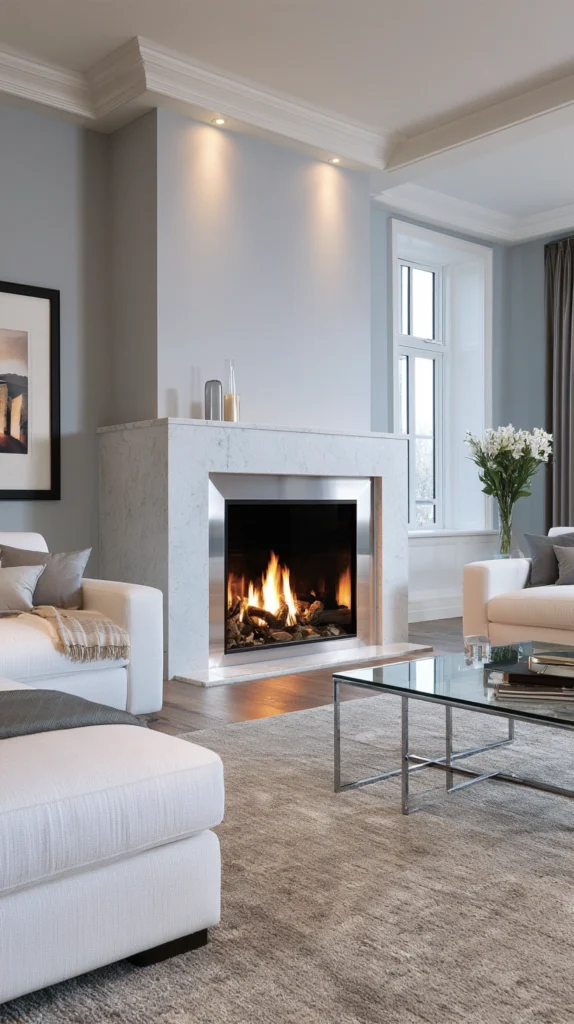
Replacing a non-functioning or inconvenient solid fuel fireplace with a quality gas or electric insert — its flame is realistic and its operation immediate, its heat output controllable and its maintenance minimal — is the fireplace makeover that most directly improves the fireplace’s daily use rather than simply its visual quality.
A quality gas insert with a realistic log or pebble display, or a contemporary electric fire with a genuine flame effect, converts the unused architectural feature into a genuine, daily-use source of warmth and the specific quality of living atmosphere that a real fire creates in any room.
Combine the functional upgrade with a simultaneous surround makeover — the new insert and the new surround specified together as a unified design — for the most complete and most visually resolved fireplace transformation.
13. Style the Mantel as a Composed Still Life
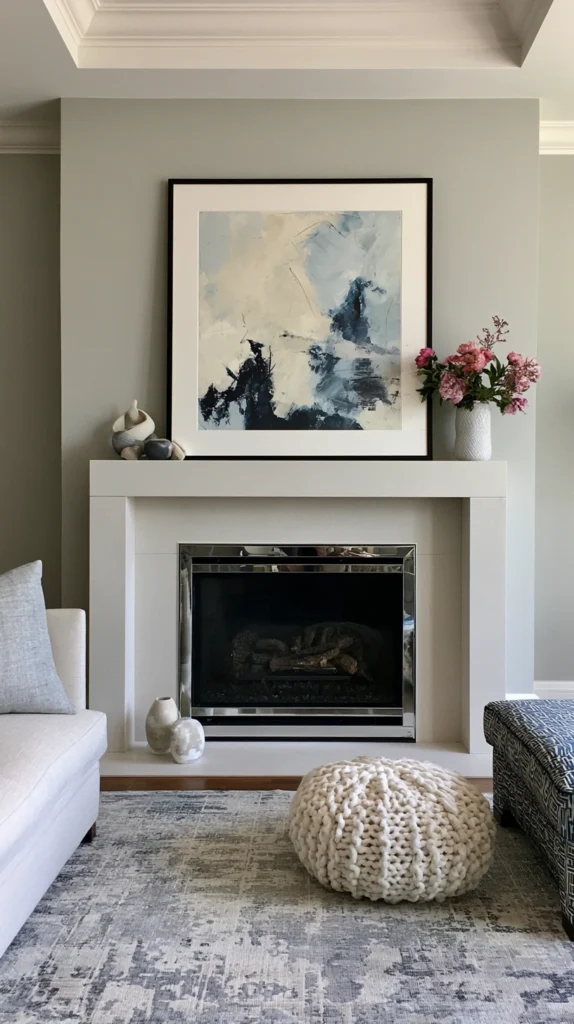
A fireplace makeover that requires no construction, no tiling, and no structural change — but that transforms the fireplace’s visual presence in the room completely through the quality and the composition of the objects arranged on the mantel surface.
It is the most immediately achievable and most frequently underestimated transformation on this list. A single large artwork leaned against the wall above the mantel rather than being hung. Three ceramic objects of varying height in a tonal composition.
One significant plant. Two candles of genuine quality. The mantel styled to this degree of restraint and this quality of selection reads as the room’s most composed and most beautiful surface — not because of the individual objects but because of the quality of the editing that chose exactly these objects and exactly this arrangement and nothing more.
14. Paint the Interior of the Firebox
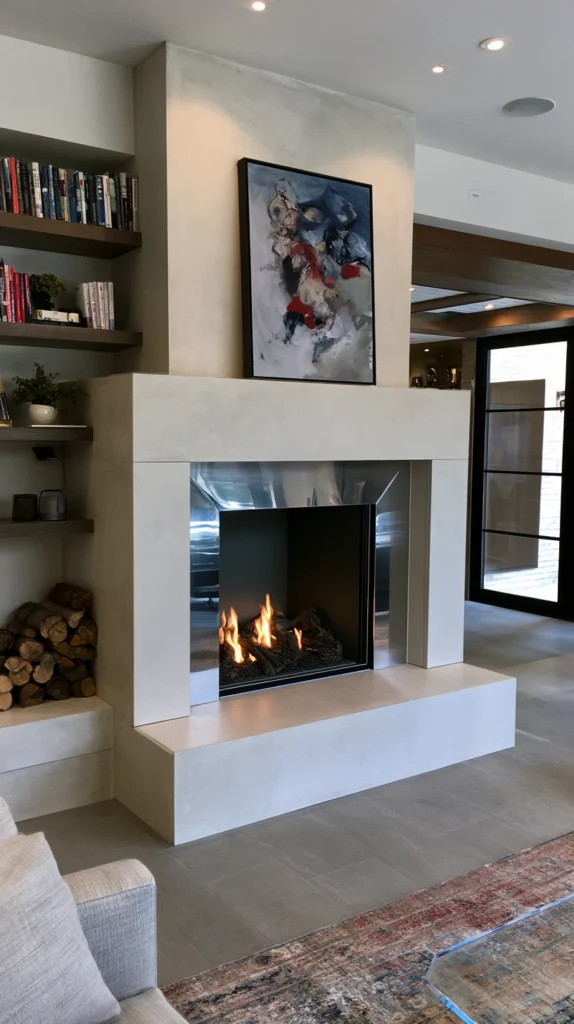
The interior of the firebox — the chamber visible within the fireplace opening that most people leave in its existing sooty black or painted state, regardless of its contribution to the overall visual quality of the fireplace — painted in a high-temperature paint in a colour that creates a deliberate contrast with the surrounding surround is the fireplace makeover detail of least cost, least complexity, and most immediate visual surprise. A firebox interior painted in a deep terracotta inside a white painted surround.
A firebox in warm copper metal inside a dark green surround. A firebox in bright white inside a dark, stacked stone surround — each of these creates a composed colour relationship between the surround and the firebox interior that reads as genuinely designed rather than simply functional, converting the firebox from an afterthought to the focal point within the focal point.
Final Thoughts: Choosing the Fireplace Makeover That Transforms the Room
The fireplace makeover that most completely transforms a room is not necessarily the most expensive or the most structurally ambitious — it is the one that most honestly addresses the existing fireplace’s specific problems and most directly delivers the specific quality of architectural beauty and material character that the room requires from its primary focal point.
Assess the existing fireplace honestly — its proportion, its material, its relationship to the room’s overall palette and design language — and choose the makeover approach that corrects what is actually wrong rather than the one that is most popular or most recently seen in a design publication. The fireplace done right is the room done right — and the room with a genuinely beautiful fireplace at its centre is always the room that feels most completely and most warmly designed.