
13 Sage Green and Pink Bedroom Ideas
Sage green and pink is the colour combination that feels simultaneously inevitable and surprising every time it is executed well — inevitable because both colours share the same essential quality of organic warmth, botanical softness, and the particular gentleness of tones that are drawn from the natural world rather than manufactured from pure colour theory, and surprising because the specific quality of their relationship.

The cool, slightly grey-toned quiet of sage beside the warm, slightly golden or dusty quality of a well-chosen pink — creates a harmony of such genuine beauty and such immediate emotional warmth that the room it occupies feels genuinely different from any room built on a single colour or a more conventionally contrasting palette.
It is the bedroom palette that most consistently makes people feel genuinely comfortable upon entering — not just visually pleased but physically at ease, the combination of the two colours working on the nervous system with the specific quality of calm and warmth that botanical environments produce in the human body at a level beneath conscious aesthetic appreciation. These thirteen ideas demonstrate exactly how to build a bedroom around this combination with intelligence, confidence, and genuine practical clarity.
1. Use Sage on the Walls and Dusty Pink in the Bedding
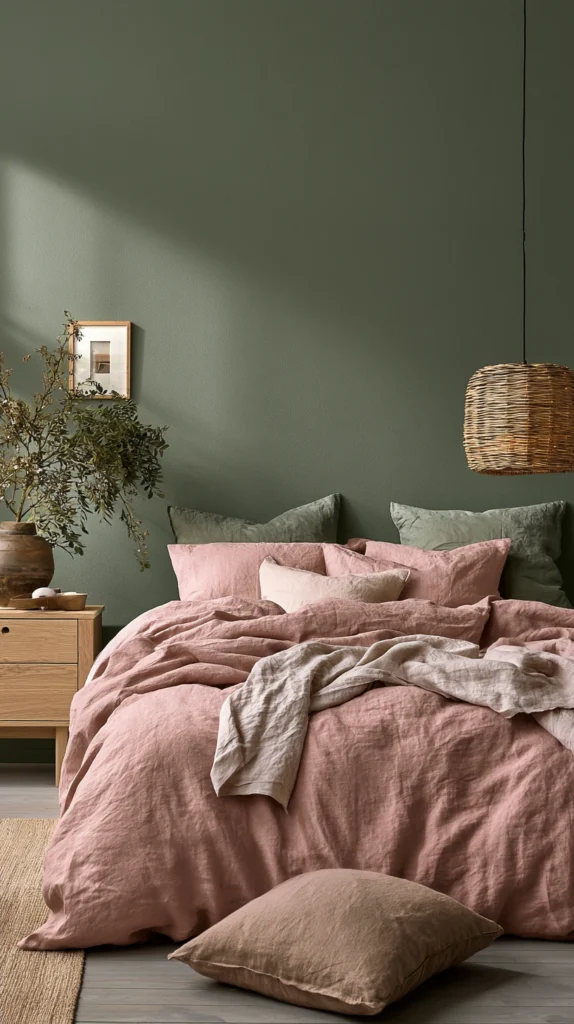
The most complete and most classically beautiful expression of the sage and pink bedroom palette is the one where the sage occupies the room’s largest surfaces — the walls, painted in a muted, slightly grey-toned sage that provides the room’s quiet botanical backdrop — and the pink is introduced in the bedding, where its warmth and its softness are most directly experienced by the person occupying the room.
Choose a dusty pink rather than a bright or baby pink — the specific tone that sits between rose and terracotta, slightly faded in quality, warm rather than cool in its undertone — and the contrast with the sage wall creates a colour relationship of genuine botanical beauty that references the specific quality of a garden rose against grey-green foliage in the particular way that makes this combination so immediately and so powerfully appealing.
Layer the pink bedding in linen and cotton at varying tonal depths — the palest blush fitted sheet, the slightly warmer dusty rose duvet cover, the deeper warm pink of a single throw — for the tonal richness that a single-tone pink reading cannot achieve.
2. Try Pink Walls With Sage Green Accents
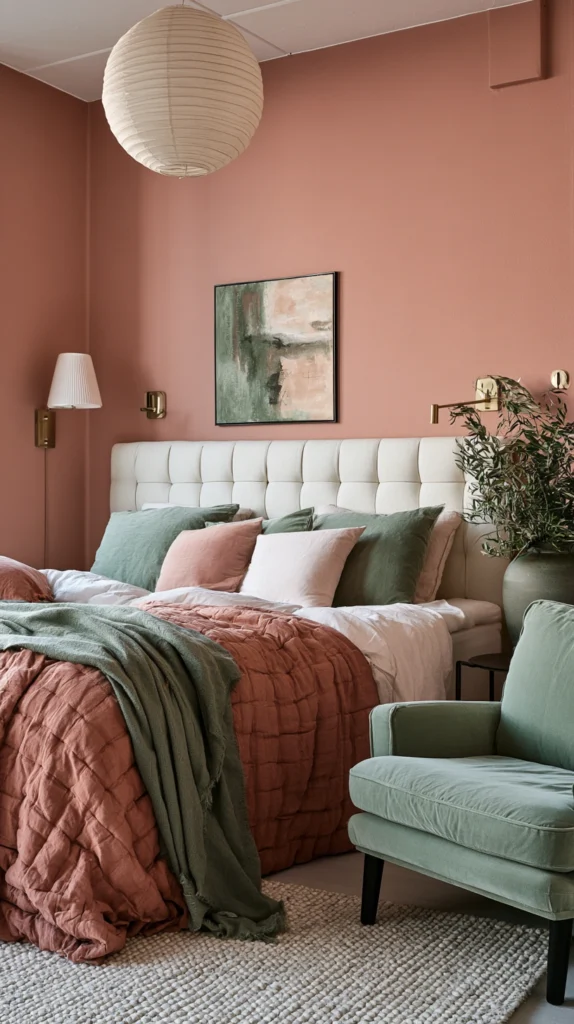
Reversing the conventional palette assignment — placing the pink on the walls and the sage in the accents — creates the sage and pink bedroom of greatest warmth and greatest immediate colour presence, its pink-walled envelope creating the specific quality of enveloping, rosy warmth that makes a bedroom feel genuinely intimate and genuinely beautiful at every hour of the day and every quality of light. Choose a pink for the walls that is sufficiently muted and sufficiently warm to be comfortable as a wall colour for an extended period.
The dusty rose, the aged terracotta-pink, or the particular warm blush that sits between pink and cream — and introduce the sage in the textile accents, the ceramic objects, and the single painted piece of furniture that anchors the sage-as-accent reading in the pink-dominant room. The sage green accent in a pink-walled bedroom reads with the same quality of botanical freshness that a living plant brings to a warm-toned interior — cool, organic, and genuinely vital against the enveloping warmth of the pink surround.
3. Create a Tonal Palette of Multiple Sages and Pinks
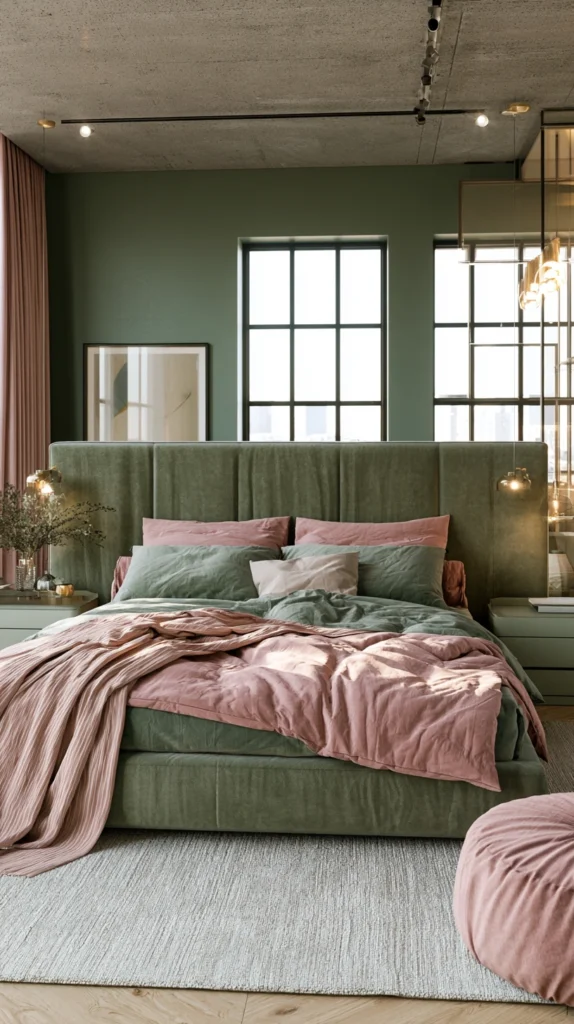
A sage and pink bedroom that introduces multiple versions of each colour — walls in pale sage, a headboard in a slightly deeper dusty green, cushions in a barely-there mint, beside a bedding palette that moves from the palest blush through dusty rose to a slightly deeper warm pink in the throw .
It creates the tonal richness and the genuine depth of colour of a room designed with attention to the full tonal range of its palette rather than simply combining one sage and one pink and considering the palette established.
The multi-tonal approach creates the specific quality of evolved, layered colour that makes the best bedroom palettes feel genuinely complex and genuinely beautiful rather than simply two-toned — the sense that the colour in the room has depth rather than simply coverage, that there is always another tone to discover at a different surface or a different scale.
4. Use Botanical Wallpaper to Combine Both Colours
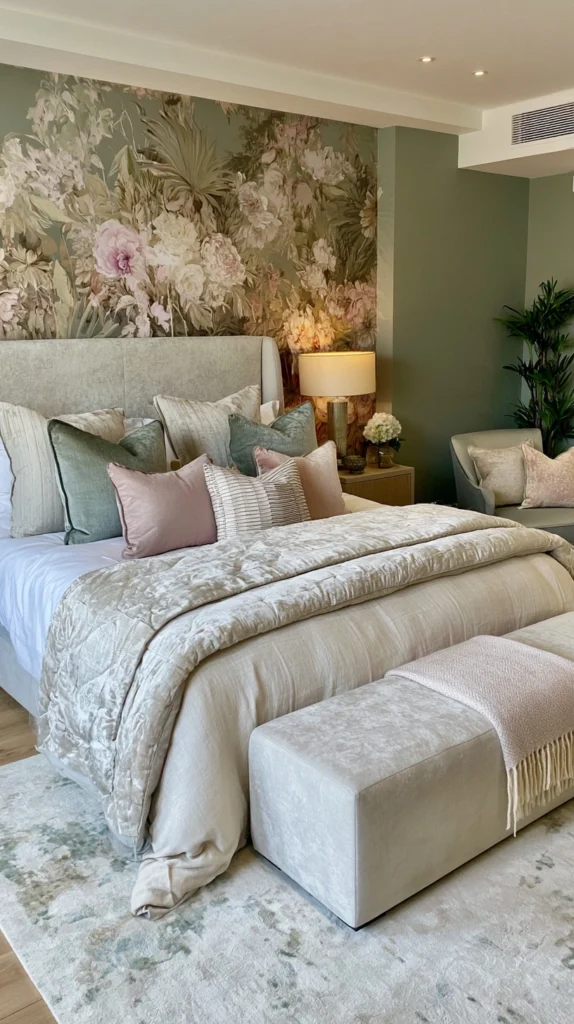
A botanical wallpaper — its leaf and branch forms in the specific sage green of the palette, its flowers in the specific dusty pink, its ground in a warm white or pale cream that allows both colours to read clearly against a light background .
Applied to the bedroom’s primary wall creates the sage and pink combination in its most literal and most beautiful botanical reference, its plant imagery connecting the colour relationship to the garden source from which both colours are drawn with a directness and a visual richness that painted surfaces alone cannot achieve.
The botanical wallpaper behind the bed — its composition of leaf and flower creating the living, layered, genuinely garden-connected quality that makes the sage and pink palette so appealing — works most beautifully when the remaining three walls are painted in the wallpaper’s ground colour or in the sage green drawn directly from the wallpaper’s leaf tone, creating a room that reads as completely coherent in its botanical palette from every position.
5. Introduce Both Colours Through Textiles Alone
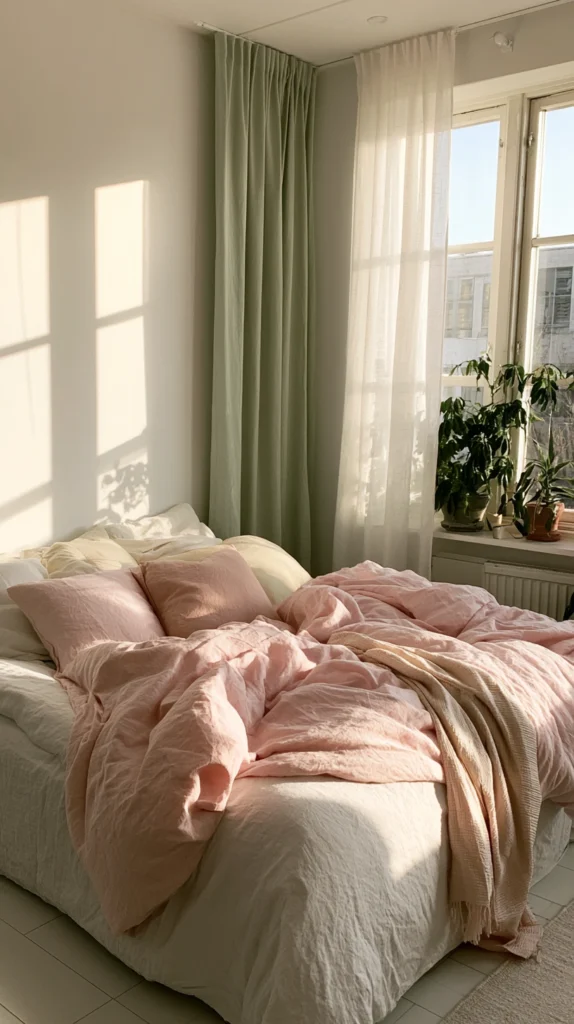
A sage and pink bedroom that keeps its walls in a quiet warm white or a pale neutral and introduces both palette colours entirely through textiles — the sage in the curtains and a single upholstered chair, the pink in the bedding and the cushions .
It creates the most flexible and the most immediately achievable version of the palette, one that requires no painting and no permanent installation to establish and that can be updated, adjusted, or entirely replaced without any structural change to the room’s surfaces.
The all-textile introduction of the sage and pink palette also creates the room’s softest and most tactilely generous version of the colour combination — the curtain linen in sage moving gently in the breeze, the duvet cover in dusty pink warm and welcoming against the neutral wall, the combination experienced as a quality of textile warmth and colour softness rather than as a painted palette applied to architectural surfaces.
6. Add Warm Timber and Brass as Connecting Materials
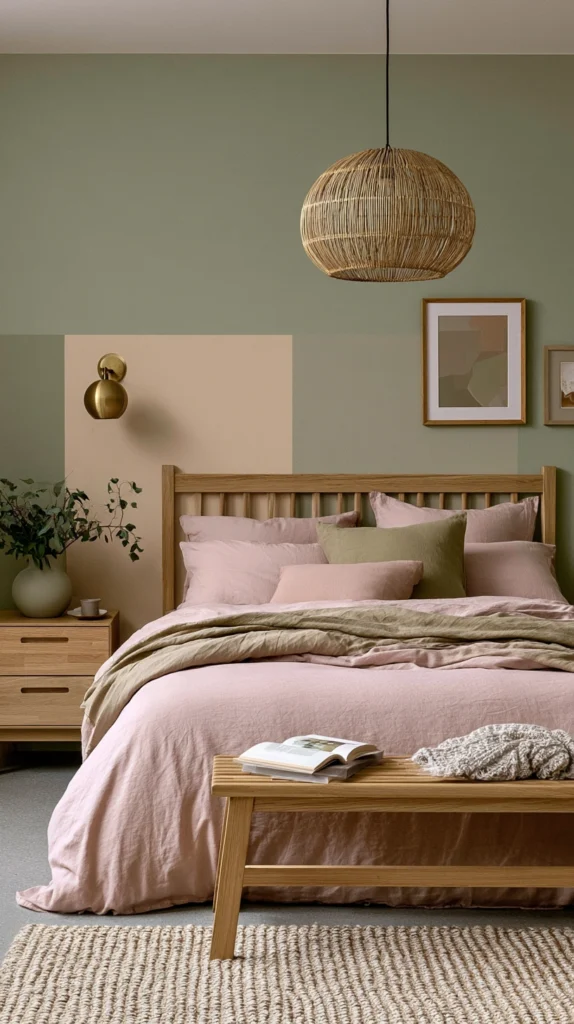
The sage and pink bedroom that introduces warm timber furniture and aged brass hardware as its primary material elements creates the most complete and most internally coherent version of the palette — the warmth of the aged brass connecting to the pink’s warm undertone, the natural grain and honey tone of the timber sitting in the tonal zone between the sage’s cool grey-green and the pink’s warm rose in a position of perfect material mediation between the two palette colours. Aged brass in the bedside lamp bases, the picture frames, and the small hardware details.
Natural oak or walnut in the bedside tables, the dresser, and the bed frame if the palette’s overall warmth supports a timber frame rather than a painted or upholstered one. These material decisions — individually modest, collectively significant — are what transform a sage and pink palette into a genuinely warm, genuinely complete bedroom environment rather than simply a room of two pleasant colours applied to various surfaces.
7. Use a Sage and Pink Patterned Rug as the Palette Foundation
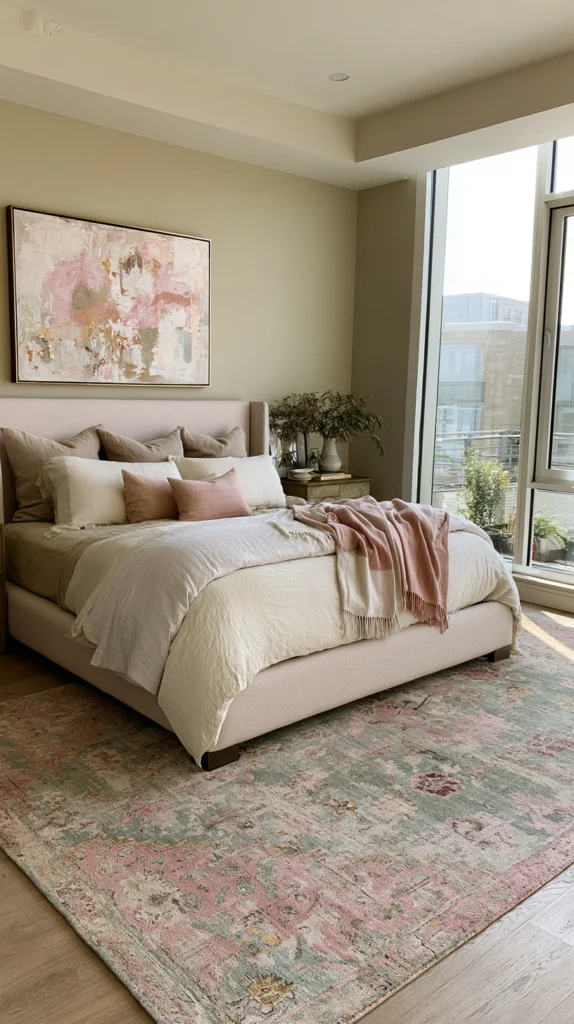
A rug whose pattern combines sage and pink in a composition of genuine visual quality — a vintage Persian or Turkish piece with warm rose and dusty green in its traditional geometric pattern, a contemporary abstract combining sage and dusty pink in loose, painterly forms, or a simple flat-weave in a stripe of alternating sage and blush.
Placed at the centre of the bedroom establishes the palette’s specific tones and their proportional relationship from the floor upward, creating the most coherent and most naturally harmonious sage and pink bedroom by allowing a single well-chosen textile to make the palette’s foundational decisions.
Pull the rug’s specific sage onto the walls or the curtains, its specific pink into the bedding and the cushions, and allow the rug’s pattern and colour balance to act as the room’s visual anchor and colour reference throughout the design process.
8. Create a Reading Corner in Both Palette Colours
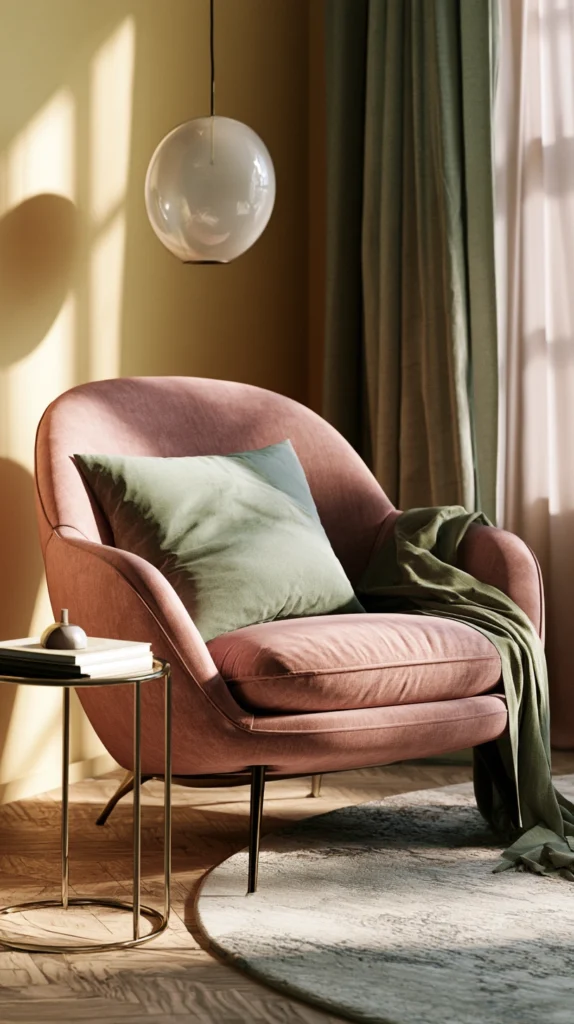
A reading corner in the sage and pink bedroom — a rattan or timber armchair upholstered in the palette’s dusty pink, positioned in the corner beside the window where the best natural light falls, with a sage green cushion in the chair’s back and a simple side table carrying a ceramic lamp in a warm neutral tone — creates the secondary comfort zone that demonstrates the palette’s full potential as a composed, considered colour relationship rather than simply a wall-and-bedding combination.
The reading corner vignette — its pink chair, its sage cushion, its warm brass lamp — is the bedroom detail that most clearly shows the palette working in three dimensions and at a human scale, and it is consistently the detail that makes the sage and pink bedroom feel genuinely designed rather than simply coloured.
9. Keep One Wall in White to Prevent Saturation
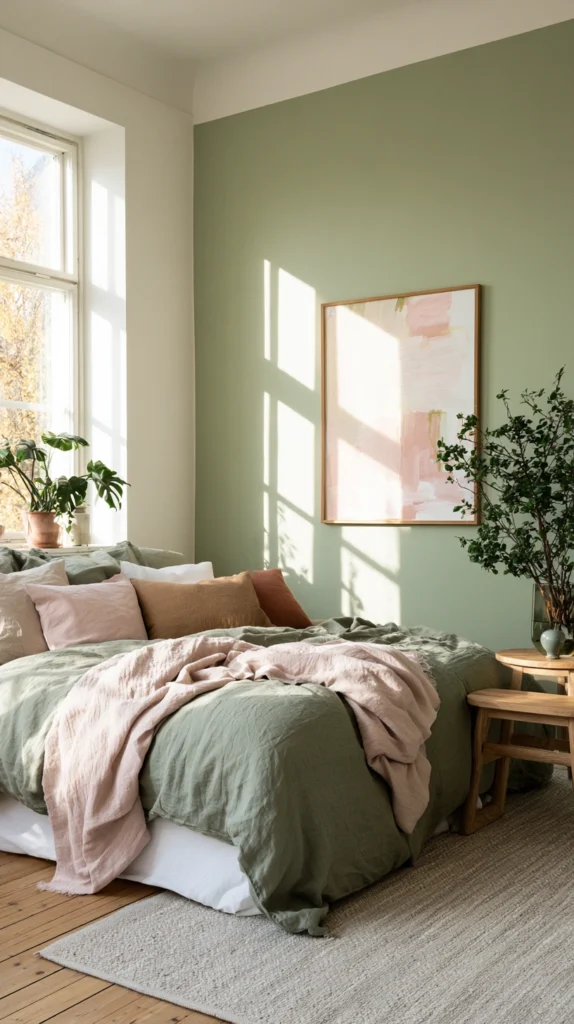
The sage and pink bedroom that applies both palette colours simultaneously to all four walls risks the quality of slight visual saturation that a two-colour bedroom creates when neither colour is given the breathing room of a quiet, neutral contrast surface — and the single white wall, positioned on the wall that receives the most direct natural light, provides that breathing room while simultaneously amplifying the room’s luminosity and making both the sage and the pink read at their most beautiful clarity against its neutral backdrop.
The white wall in a sage and pink bedroom is not the absence of design intention but its most sophisticated expression — the understanding that both colours look most beautiful when they have a genuinely quiet surface against which their warmth and their botanical character can be fully appreciated rather than read as competing elements in a room of continuous colour.
10. Choose Handmade Ceramics in Both Palette Tones
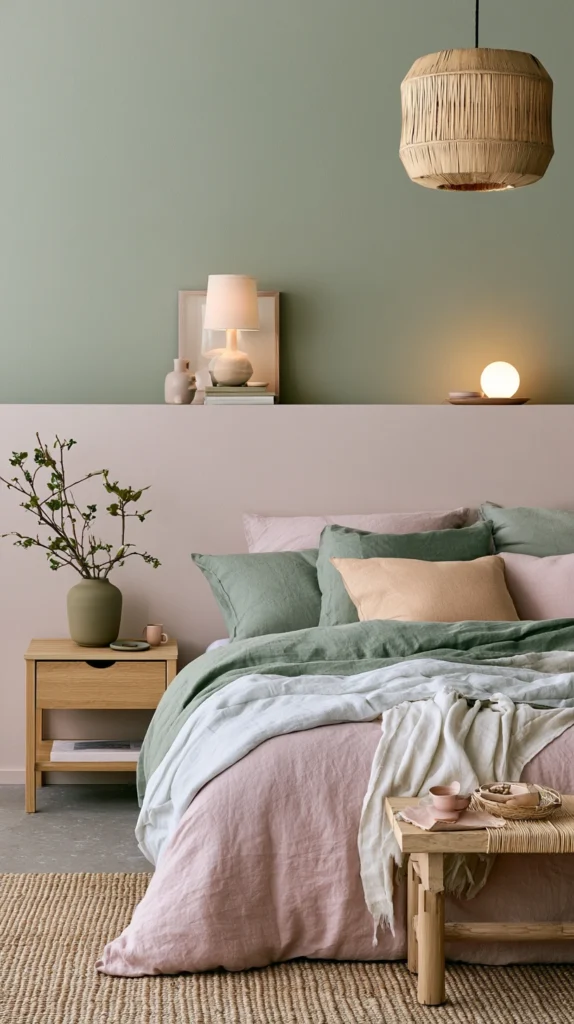
Handmade ceramic objects in sage green and dusty pink — small vessels, lamp bases, decorative dishes, and other beautifully made ceramic pieces that the contemporary craft market produces in these specific tones with such consistent quality and such genuine material beauty.
Are the sage and pink bedrooms’ most important and most characterful accessory category, bringing the warmth of genuine handcraft, the specific material quality of fired clay, and the particular organic imperfection of hand-made objects into a bedroom palette that rewards these qualities with complete naturalness and complete visual harmony. A sage green ceramic lamp base beside a dusty pink bud vase.
A hand-thrown dusty rose bowl on the dresser beside a sage ceramic candle holder. Three ceramic pieces in complementary tones on the windowsill, their glaze variation and their slightly irregular forms creating the most alive and most authentically beautiful display surface in the room.
11. Design for the Specific Quality of Morning Light
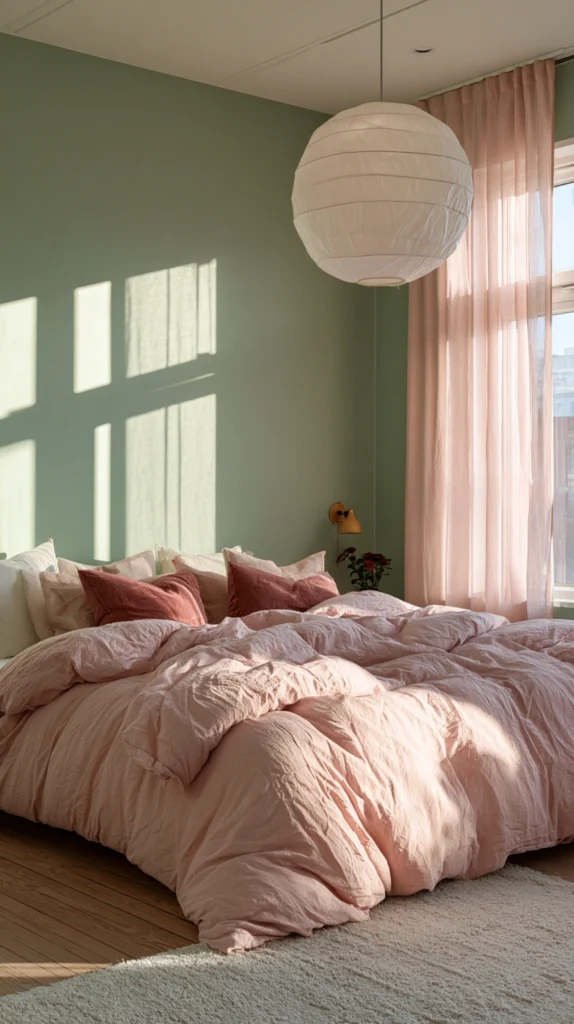
The sage and pink bedroom performs most beautifully in the specific quality of warm morning light — the east or south-east facing bedroom whose first light of the day enters in the warm, slightly golden quality that turns sage walls to a warm grey-green of extraordinary beauty and dusty pink bedding to a warm, honeyed rose of genuine luminosity.
Design the bedroom to receive and amplify this morning light — pale flooring that reflects it upward, sheer curtains that filter rather than block it, the bedding positioned to receive it directly across the pink duvet cover’s surface — and the sage and pink bedroom becomes the morning room of greatest daily pleasure available to any bedroom palette, its two colours transformed by the quality of morning illumination into something more beautiful than either achieves in the flat light of midday.
12. Layer Natural Materials Throughout
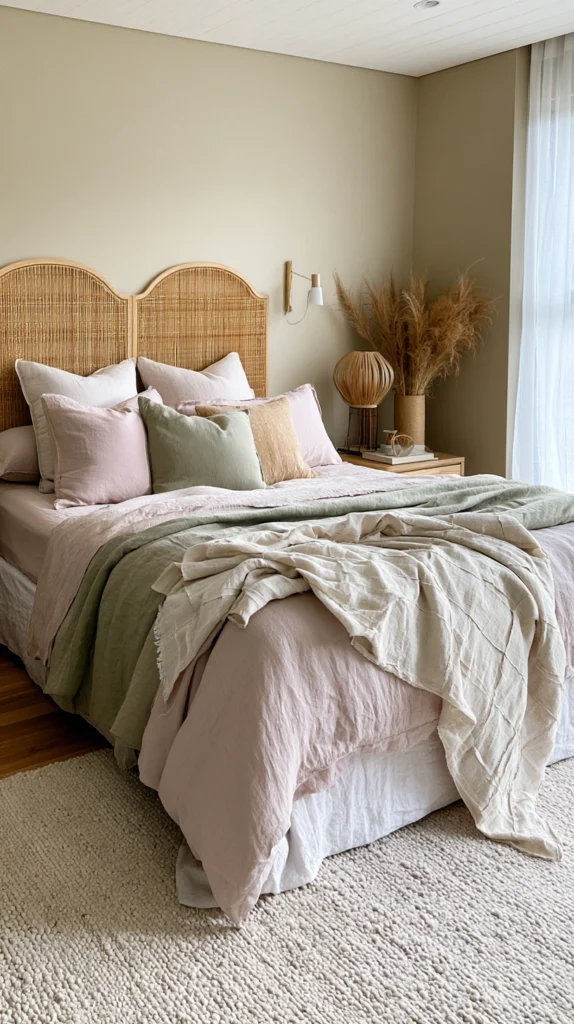
The sage and pink bedroom benefits from the grounding quality of natural materials — linen, cotton, rattan, timber, jute, terracotta — that connect both palette colours to the organic, botanical world they reference and prevent the combination from reading as simply decorative rather than genuinely materially warm and genuinely connected to the natural environment from which both colours draw their essential character.
Natural linen in the curtains and the bedding. A jute or sisal rug on the pale timber floor. A rattan pendant light above the bedside table. Simple timber furniture in a pale, naturally finished species. These material choices create the room’s organic warmth — the quality that makes the sage and pink palette feel genuinely botanical rather than simply pretty, genuinely natural rather than simply soft.
13. Edit to the Palette’s Most Essential Expression
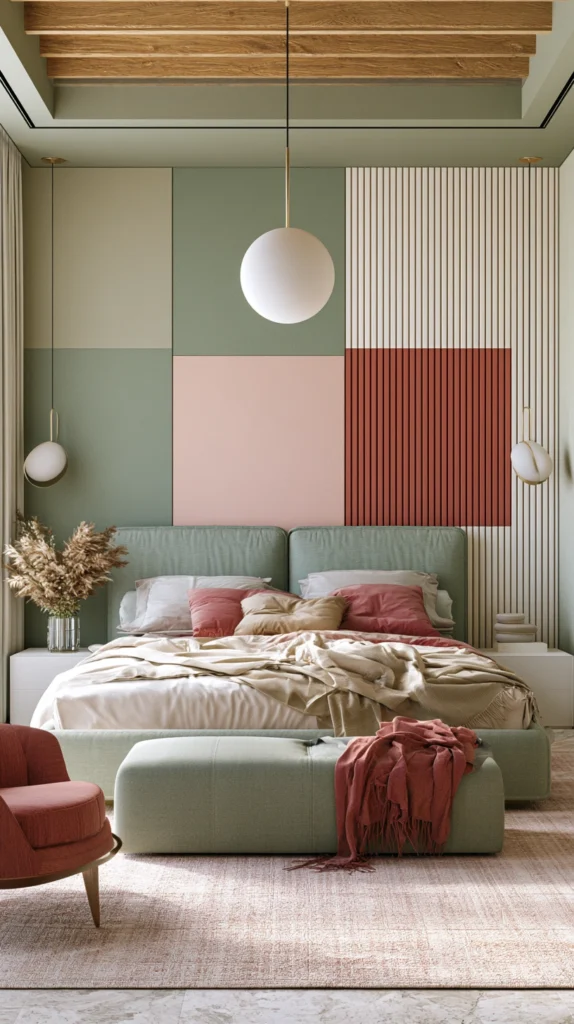
The sage and pink bedroom that achieves its fullest beauty is the one edited to the palette’s most essential expression — the version of the room where every surface, every textile, and every object either belongs to the sage and pink palette or belongs to the warm neutral zone that supports it, and where nothing that falls outside these categories has been allowed to remain on the grounds that it is merely neutral or merely unobtrusive.
The sage and pink palette is sufficiently gentle and sufficiently warm to make the editing process feel genuinely manageable — there are no jarring contrasts to eliminate, no aggressive colours to remove.
But the discipline of keeping every element within the palette’s warm, botanical family is what creates the room’s final quality of complete, coherent, genuinely beautiful colour harmony. A bedroom edited to this standard is the sage and pink bedroom at its most completely realised — warm, calm, botanically beautiful, and genuinely, deeply pleasant to wake up in every morning.
Final Thoughts: Building the Sage and Pink Bedroom With Confidence
The sage and pink bedroom that achieves its full potential is built from genuine confidence in the palette’s essential character — the willingness to commit to both colours at sufficient scale and sufficient quality to allow their relationship to be fully expressed rather than tentatively suggested.
Choose the specific sage and the specific pink with genuine care — testing paint samples and fabric swatches together in the actual room light before committing to either — and build every subsequent decision in honest relationship to those two foundational choices.
The sage and pink bedroom done with confidence and executed with quality is the bedroom that makes everyone who enters it feel immediately, genuinely, and completely at ease — which is, ultimately, the only quality that any bedroom palette truly needs to deliver.