14 Wedding Decor Style Ideas
The wedding is the single occasion in most people’s lives where the decision to create a genuinely beautiful, genuinely considered environment — to surround the people they love with a space that reflects something true about who they are and what they value — is treated as not just acceptable but expected.
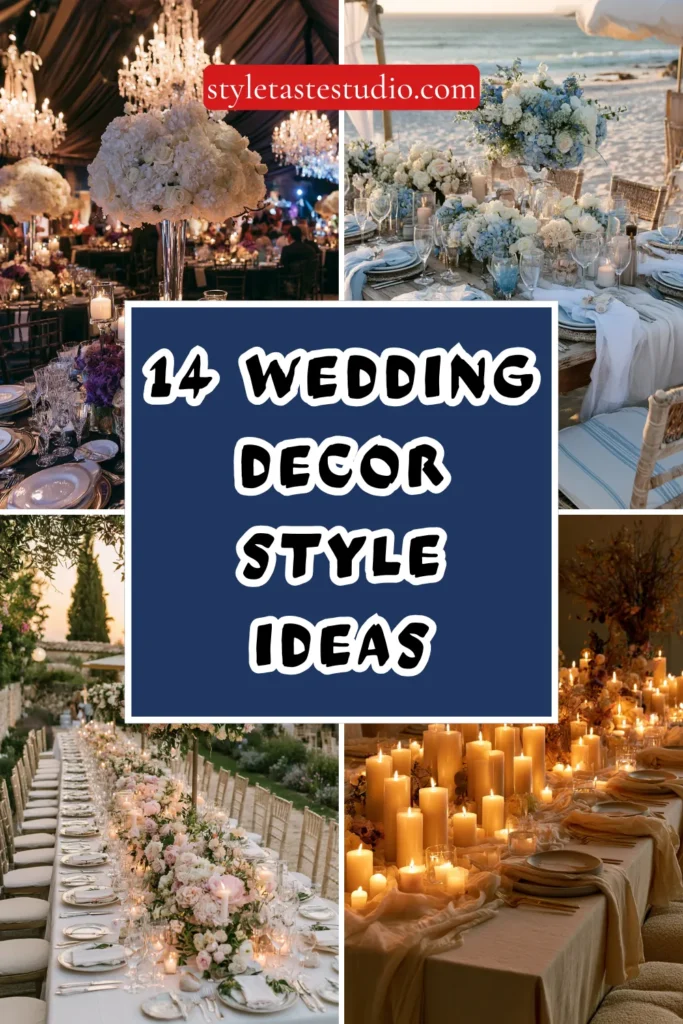
It is the day when decoration becomes genuinely important, when the quality of the environment contributes directly and measurably to the quality of the experience, and when the specific choices made about colour, material, light, and spatial arrangement communicate something essential about the couple at the centre of it all.
The wedding decor style that works is not the most expensive one or the most elaborate one — it is the one that is genuinely coherent, genuinely personal, and genuinely executed with sufficient commitment to make the environment feel completely intentional rather than assembled from the available options without a governing aesthetic idea. These fourteen ideas demonstrate the full range of what that intentional environment can look like.
1. The Romantic Garden Party
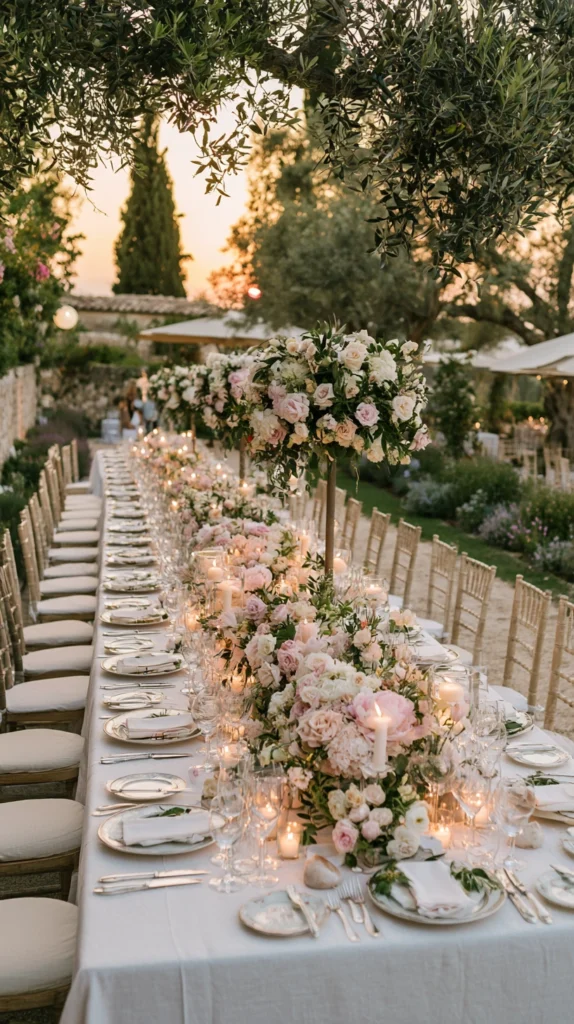
The romantic garden party wedding is the most enduringly beautiful and most consistently beloved wedding aesthetic — its combination of abundant fresh florals, soft natural light, and the particular quality of an outdoor English or European garden setting creates a visual environment of extraordinary warmth and genuine romance that no purely interior setting quite replicates with the same completeness.
Long trestle tables set directly on the lawn, their surfaces carrying abundant arrangements of garden roses, sweet peas, and ranunculus in soft blush, cream, and warm white. Simple white linen tablecloths with trailing greenery and loose, gathered flower arrangements rather than the rigid, structured centrepieces of a more formal wedding.
Mismatched vintage china, silver candlesticks of varying heights, and the particular quality of dappled afternoon garden light filtering through the foliage overhead. The romantic garden party wedding succeeds entirely through its commitment to genuine botanical abundance and genuine outdoor character — the tent sides left open, the grass allowed to show at the table legs, the imperfection of genuine outdoor nature embraced rather than managed.
2. The Minimalist Modern Wedding
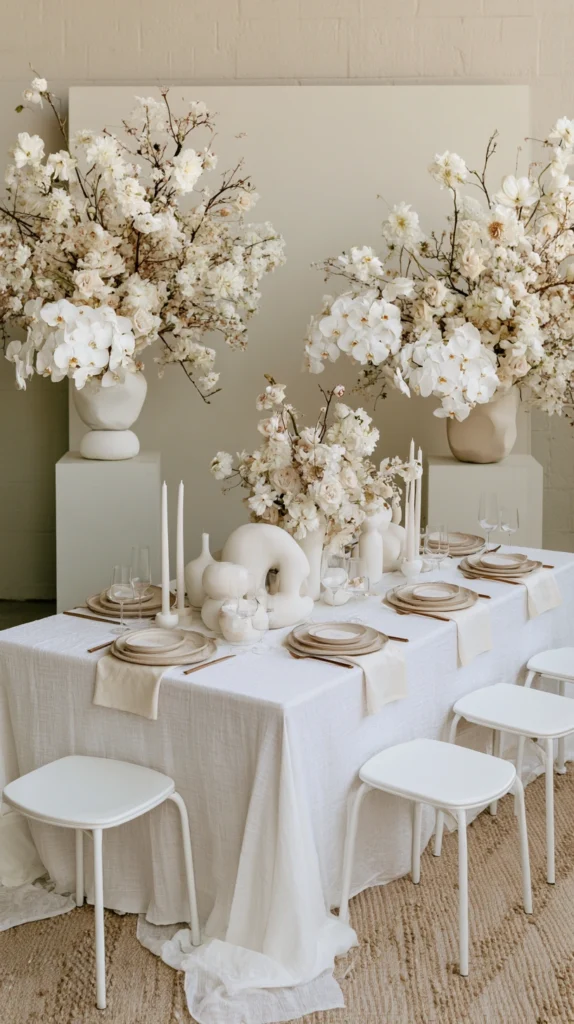
The minimalist modern wedding rejects the conventional wedding aesthetic’s tendency toward abundance and elaboration in favour of the specific quality of calm, considered, genuinely sophisticated simplicity that makes a space feel genuinely extraordinary rather than conventionally decorated.
A single flower variety used throughout in one uncompromising colour — all white anemones, all terracotta ranunculus, all deep burgundy dahlias — rather than the mixed abundance of a traditional wedding arrangement. Architectural vessels in concrete, ceramic, or simple clear glass rather than elaborate decorative containers.
Clean white tablecloths with no additional fabric decoration, the table’s simplicity allowing the quality of the tableware — genuinely beautiful plates, quality glassware, quality cutlery — to be the room’s decorative statement. The minimalist modern wedding succeeds through the courage of its editing — the willingness to leave surfaces bare, to allow negative space, and to trust that genuine quality in the few things chosen is more powerful than quantity in many things assembled.
3. The Maximalist Floral Extravaganza
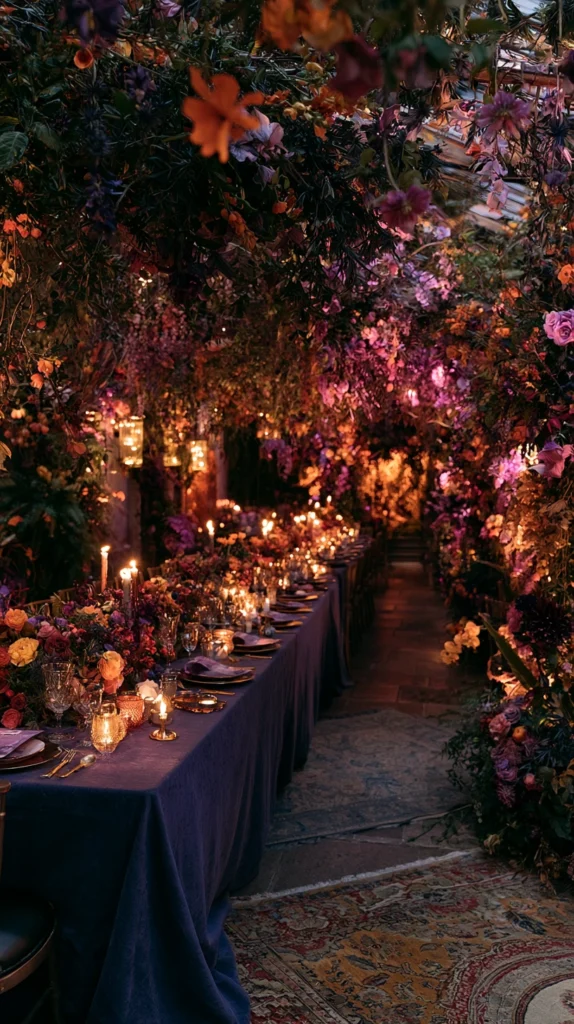
The maximalist floral wedding is the opposite commitment executed with equal conviction — the aesthetic that treats floral abundance as the medium of genuine artistic expression and that achieves its extraordinary effect through the sheer generosity and the genuine artistic quality of the flower installation.
Ceiling installations of hanging florals that transform the venue’s overhead space into a living garden canopy of extraordinary botanical richness. Table arrangements that extend the full length of the table in a continuous river of bloom, stem, and foliage that guests reach across and around rather than looking over. Floral arches, floral walls, floral chandeliers, and the specific quality of botanical immersion that only a genuinely committed maximalist floral scheme can create.
The maximalist floral wedding requires a genuinely skilled florist whose work treats the wedding as an artistic commission rather than a service, and it requires a budget proportional to that ambition — but the result, when genuinely committed to, is an environment of such extraordinary beauty that it transcends the category of wedding decoration and becomes something genuinely memorable as a work of botanical art.
4. The Rustic Barn Wedding
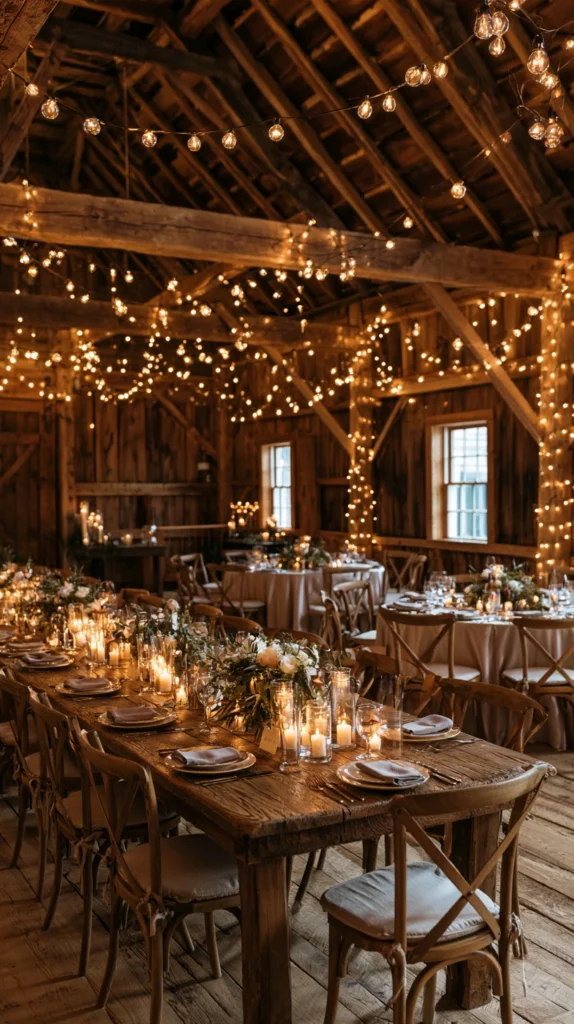
The rustic barn wedding at its best is not a themed recreation of agricultural aesthetics but a genuine engagement with the specific material character and spatial quality of a beautiful historic barn — its exposed timber structure, its honest material construction, and the particular quality of filtered light through old timber boards that makes barn wedding photography so consistently and so powerfully beautiful.
Edison bulb string lights hung between the barn’s structural beams create the warm overhead ambient lighting that transforms the barn’s industrial volume into something genuinely intimate.
Long tables in natural timber, their surfaces unclothed to show the wood’s grain and character, carrying simple wildflower arrangements in simple vessels — glass bottles, ceramic crocks, simple galvanised buckets — that reference the agricultural setting without caricaturing it. The rustic barn wedding succeeds when the decor serves the barn’s inherent character rather than imposing upon it — when the space feels enhanced rather than covered.
5. The Black Tie Glamour Wedding
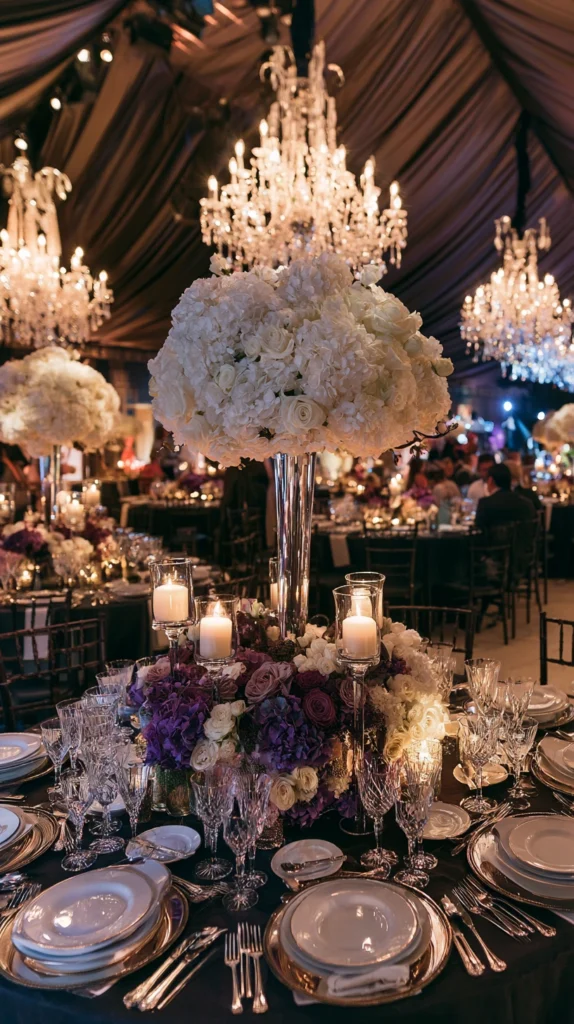
The black tie glamour wedding is the aesthetic of genuine, unashamed luxury — the commitment to the most formal and the most materially sophisticated version of the wedding environment, where every surface is specified to the highest standard available and every detail contributes to the overall quality of an evening that feels genuinely extraordinary rather than simply well-organised.
Crystal chandeliers above tables set with genuine silver, crystal glassware, and china of real quality. Deep, saturated colour — midnight navy, forest green, deep burgundy — used in the linen, the florals, and the candle arrangements against the warm gold of the candlelight and the silver of the flatware.
Tall, dramatic centrepieces of deep-toned florals and dramatic foliage that draw the eye upward and create the sense of a genuinely composed, genuinely theatrical environment. The black tie wedding succeeds through its total commitment to formality — the consistency of the material quality, the precision of the table setting, and the quality of every element chosen in relationship to every other.
6. The Bohemian Wedding
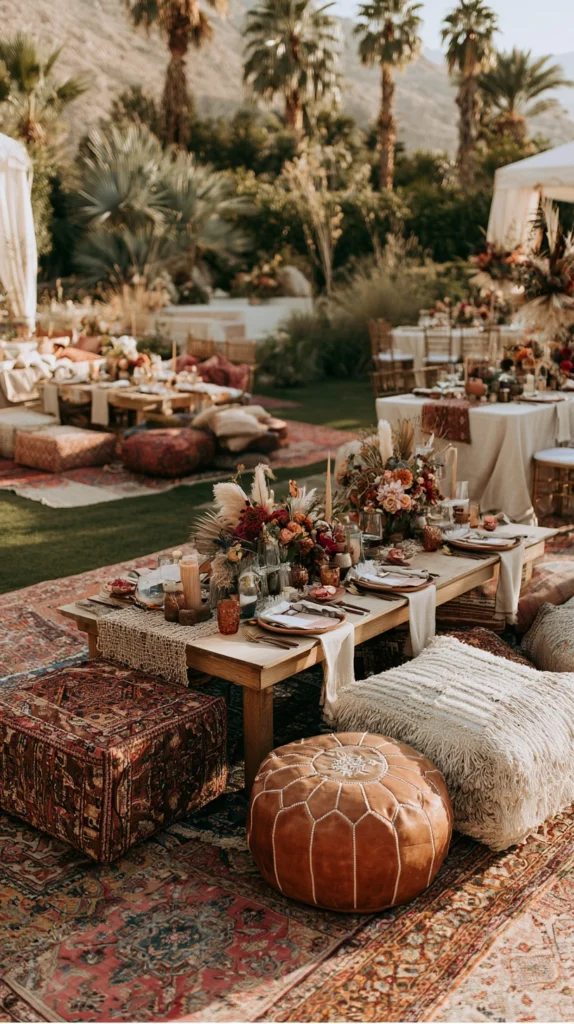
The bohemian wedding is the aesthetic of collected, layered, personally meaningful decoration — the style that treats the wedding environment as an expression of genuine creative personality rather than a performance of conventional wedding beauty.
Persian rugs lay directly on the ground beneath low tables set with mismatched vintage glassware, hammered brass vessels, and the abundant dried florals and pampas grass arrangements that define the bohemian wedding’s distinctive botanical aesthetic. Macramé hanging installations and woven textile backdrops.
Eclectic mix of candles — taper, pillar, and tea light — at varying heights, creating the warm, layered candlelight that the bohemian wedding uses as its primary atmospheric tool. The bohemian wedding succeeds when it feels genuinely personal rather than generically bohemian — when the collected objects and the layered textiles reflect the specific tastes and the specific creative identity of the couple rather than the current aesthetic trend.
7. The Coastal Wedding
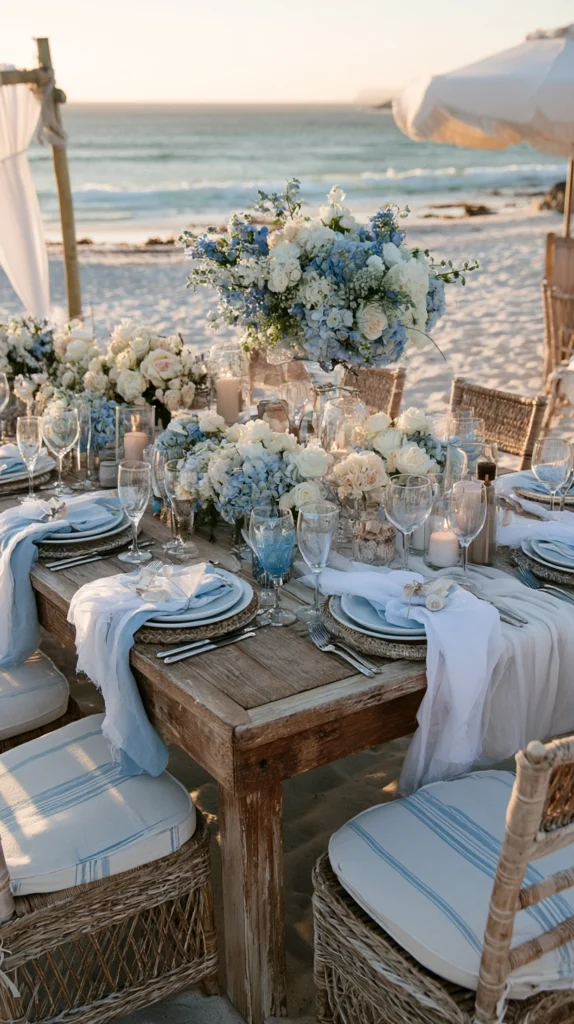
A coastal wedding — its palette drawn from the specific colour vocabulary of the sea and the shore, its material language referencing the natural objects of a beach environment, and its atmosphere one of relaxed, sun-warmed, genuinely outdoors summer ease.
Creates the wedding environment of greatest seasonal joy and greatest immediate visual connection to the specific beauty of a coastal setting. Bleached timber, natural rope, sea glass collected from a meaningful beach, and the simple ceramic vessels of a coastal aesthetic. A palette of warm whites, sandy neutrals, soft blues, and the warm terracotta of sun-baked coastal stone.
Simple, abundant greenery in salt-tolerant coastal plants — sea holly, agapanthus, grasses, and the occasional weathered branch — arranged without fussiness in large, simple vessels that reference the abundance of a coastal landscape. The coastal wedding succeeds through its material and botanical honesty — its decoration drawn from the specific landscape it inhabits rather than imported from a generic wedding aesthetic.
8. The Celestial and Stargazing Wedding
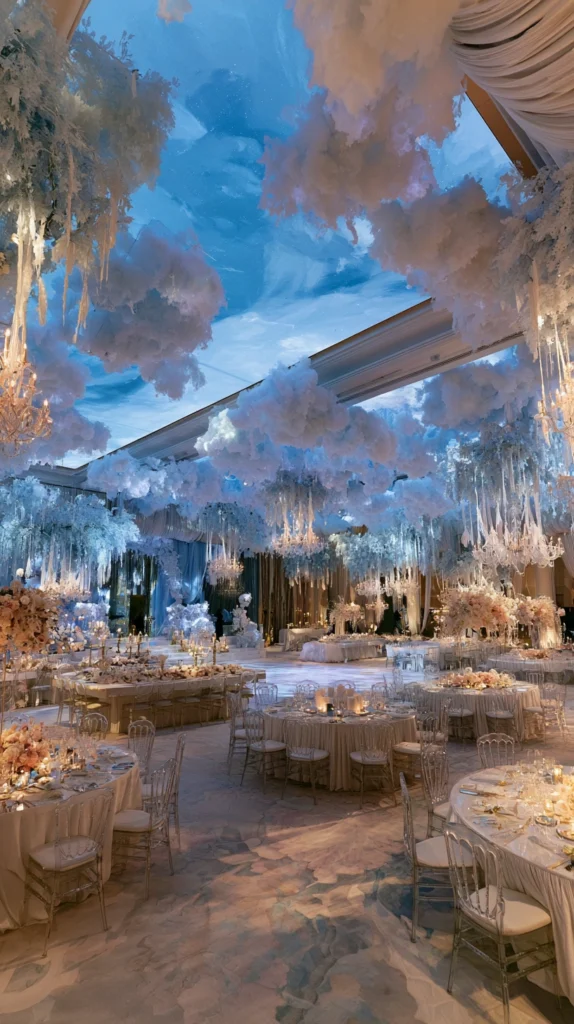
A celestial wedding — its decoration referencing the night sky, the constellations, and the particular quality of wonder and romance that darkness, stars, and the specific quality of astronomical beauty inspire — creates a wedding environment of genuine visual poetry and genuine emotional resonance that most wedding aesthetics cannot approach with the same quality of transported, otherworldly atmosphere.
Deep midnight blue and deep navy as the primary colour throughout, accented with gold and warm silver in the tableware, the candle vessels, and the floral touches of gold-leafed stems and silver-grey foliage. Celestial motifs — crescent moons, star constellations, planets — are incorporated into the stationery, the table names, and the small detail objects rather than plastered across every surface in a way that tips the aesthetic from poetic to literal. The celestial wedding succeeds through restraint — the night sky references creating atmosphere rather than theme.
9. The Tropical Wedding
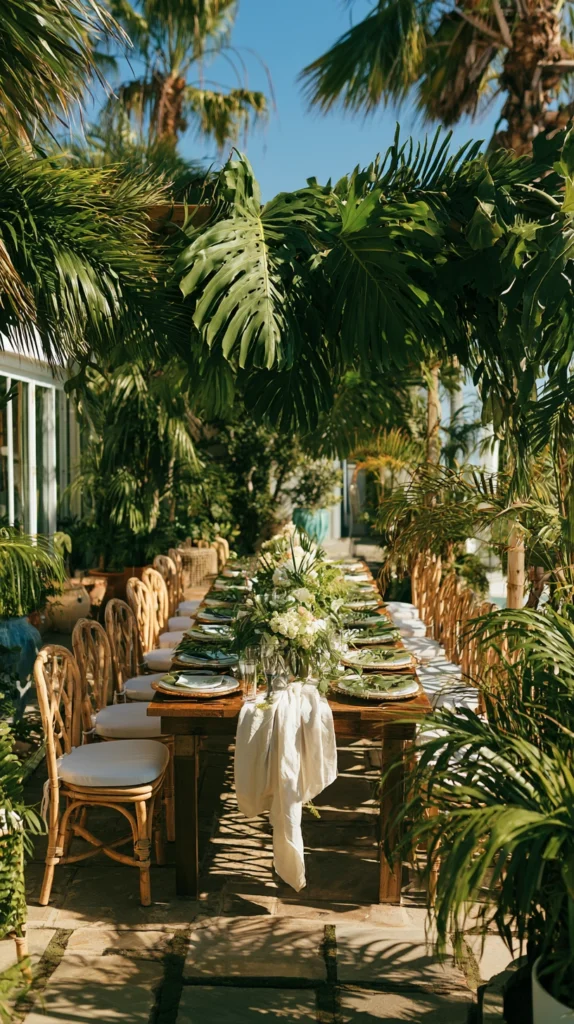
A tropical wedding — its colour bold, its botanical references lush and dramatically large-scaled, and its overall aesthetic one of generous, sun-drenched outdoor abundance — is the wedding environment of greatest immediate visual impact and greatest seasonal joy in warm climate settings where the tropical landscape provides the backdrop that makes the aesthetic completely genuine rather than artificially created.
Large-leafed tropical plants — monstera, bird of paradise, heliconia, banana — are used at a genuine architectural scale as the primary botanical decoration rather than as an accent. Bold colour in the florals — deep coral, vivid orange, tropical pink, and the particular warm yellow of tropical blooms in full summer sun — used in quantities generous enough to create genuine tropical abundance rather than a tropical suggestion.
The tropical wedding succeeds through scale and genuine botanical commitment — the plants are large enough, the colour bold enough, and the overall abundance generous enough to create the sense of a genuinely tropical environment rather than a conventionally decorated venue with tropical accents.
10. The Heritage and Antique Wedding
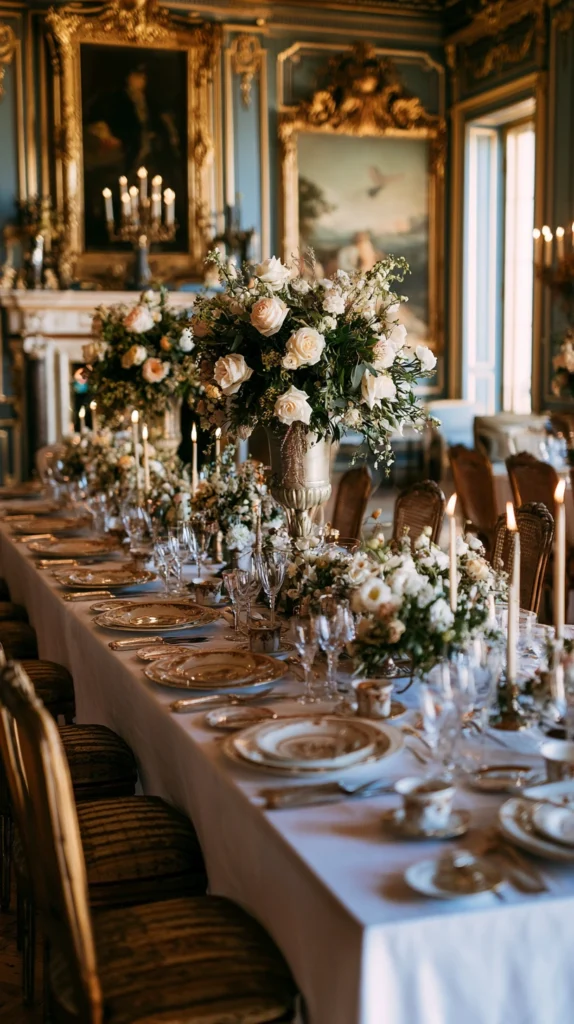
The heritage and antique wedding treats the historical material culture of a specific period — the William Morris Arts and Crafts tradition, the 1920s Art Deco elegance, the pastoral English Edwardian garden party, and the mid-century modernism of a specific decade.
As the governing aesthetic idea for a wedding environment of extraordinary historical richness and genuine period character. Genuine antique objects — sourced from auction houses, antique dealers, and the family collections of the couple themselves — are used as the primary decorative vocabulary rather than reproduction pieces that simulate period character without genuine material authenticity.
A consistently applied historical aesthetic in the stationery, the tableware, the floral style, and the decorative objects that creates a genuinely immersive period environment rather than a collection of historically referenced individual elements. The heritage wedding succeeds through genuine historical knowledge and genuine material commitment — the antique dealer’s eye rather than the party decorator’s catalogue.
11. The Forest and Woodland Wedding
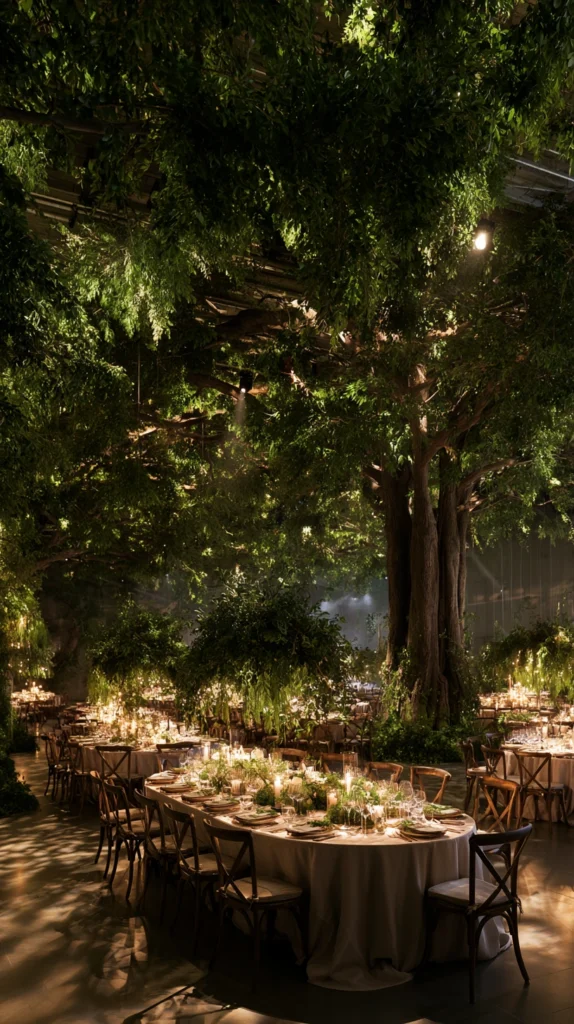
A woodland wedding — its setting beneath a genuine forest canopy or its decoration referencing the specific botanical and material character of a forest environment, with sufficient commitment to create a genuine woodland atmosphere indoors.
It creates a wedding environment of extraordinary organic beauty and genuine ecological connection that no purely floral or purely architectural aesthetic can replicate with the same quality of living, breathing, genuinely natural character.
Moss-covered surfaces, the specific grey and green of lichen on bark, the particular quality of filtered forest light through a canopy of leaves overhead, were recreated in indoor settings through a combination of overhead greenery installations and warm, dappled artificial lighting.
Simple woodland botanical arrangements — ferns, mosses, branches, the subtle florals of the forest floor — in vessels of natural timber, stone, or simple ceramic. The woodland wedding succeeds through its botanical honesty — its decoration drawn from the specific plants and materials of the forest rather than the generic greenery of a conventionally decorated wedding.
12. The Intimate Candlelit Dinner Wedding
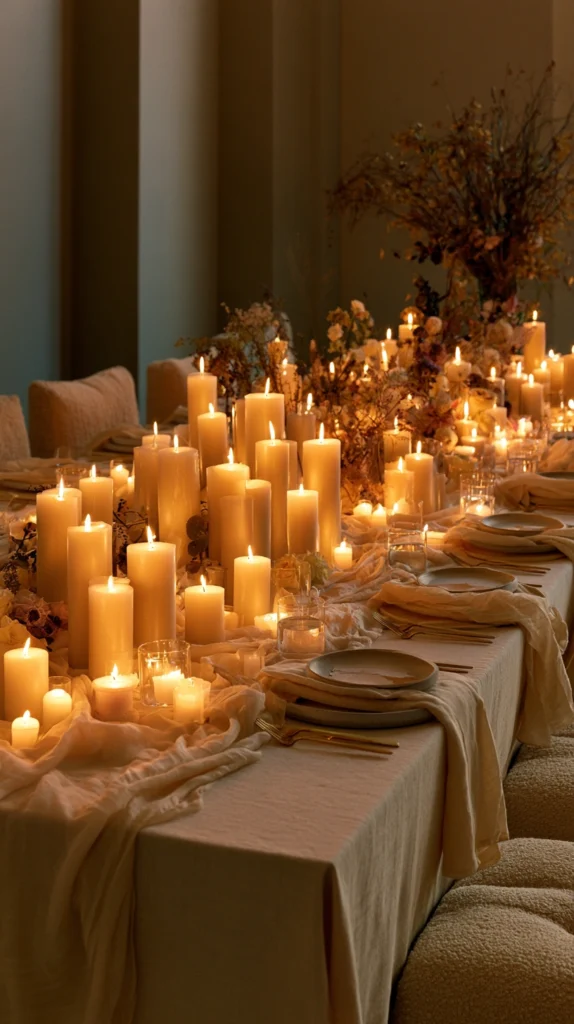
The wedding that is, in its essential conception, a dinner party — a small gathering of the most important people in the couple’s lives, seated at a single long table in a room lit entirely by candles, served a genuinely extraordinary meal in an environment of intimate, warm, genuinely personal beauty.
It is the wedding aesthetic that requires the fewest decorative elements and creates the most powerful and memorable wedding environment available. A single long table set for thirty or forty guests. Every surface lit exclusively by candlelight — pillar candles, taper candles in silver holders, tea lights in glass vessels — creates the warm, amber, deeply intimate quality of light that makes every face beautiful and every conversation feel genuinely private.
Simple, abundant flowers in the colours of the season. The intimate candlelit dinner wedding succeeds through its commitment to genuine intimacy — the size was kept small enough for the candles to be sufficient, the table long enough for everyone to feel gathered at a single shared experience.
13. The Art Exhibition Wedding
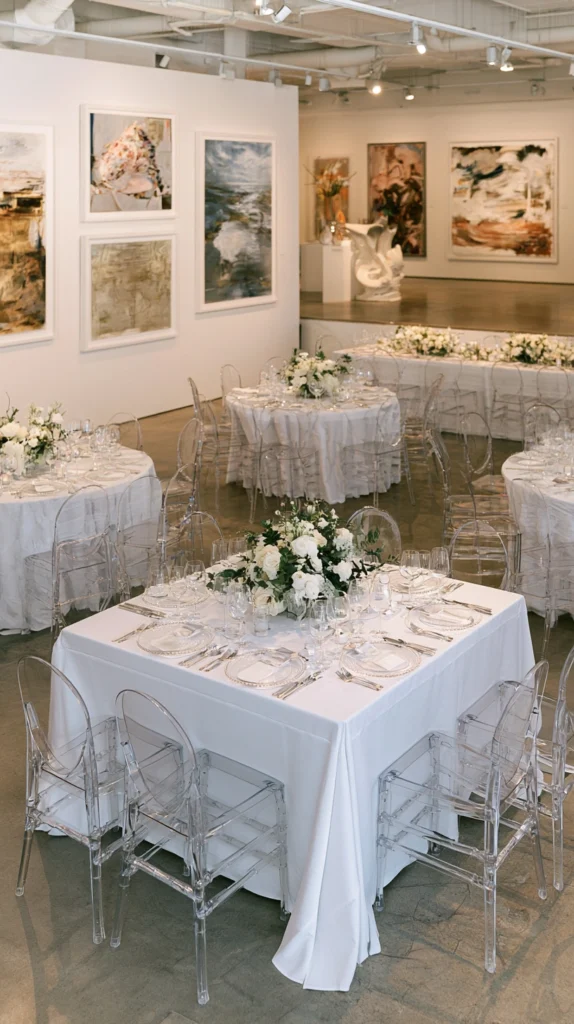
The wedding is designed around a significant collection of art — the couple’s own collection displayed in the venue, or a venue whose gallery walls and architectural character make the art its primary decorative vocabulary.
Treats the wedding environment as a cultural experience as much as a celebratory one, creating a space where the quality of the art and the quality of the celebration are mutually enhancing rather than existing in parallel. Artwork in genuinely beautiful frames at genuinely considered heights on the venue’s walls.
Tableware and florals chosen to complement the collection’s colour palette and aesthetic vocabulary. A programme that incorporates the art into the couple’s narrative — works chosen for their personal significance rather than their decorative function. The art exhibition wedding succeeds when the collection is genuine — when the art belongs to the couple’s real lives and reflects their real aesthetic engagement rather than being borrowed for the occasion as generic cultural decoration.
14. The Colour Story Wedding
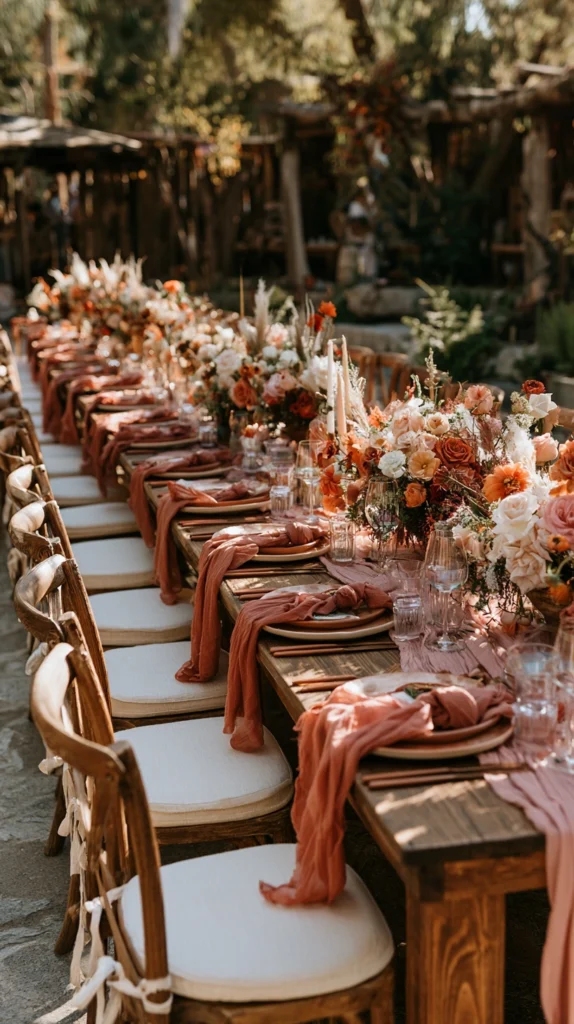
A wedding organised entirely around a single, deeply considered colour story — the specific combination of two or three colours used with such consistency, such quality, and such compositional intelligence across every surface, every textile, and every decorative element that the overall environment reads as a single composed, unified aesthetic statement of considerable beauty and considerable emotional resonance.
IIt is the wedding decor approach that most clearly demonstrates the power of design commitment over design complexity. Terracotta, warm ivory, and dusty sage used across the linen, the florals, the stationery, the candle vessels, and the tableware in a composition of complete tonal coherence.
Deep burgundy and warm gold and forest green creating the richest and most dramatically beautiful of all wedding colour combinations when applied with genuine consistency across a complete wedding environment. The colour story wedding succeeds when the commitment to the palette is absolute — when every element has been assessed against the colour story and every element that does not belong has been replaced with one that does, regardless of its individual beauty in isolation.
Final Thoughts: Choosing the Wedding Decor Style That Is Genuinely Yours
The wedding decor style that creates the most genuinely beautiful and most genuinely memorable wedding environment is never the most popular style of the current season or the style most seen in the wedding publications of the moment — it is the style that is most genuinely connected to the specific aesthetic identity, the specific values, and the specific quality of beauty that the couple at the centre of the occasion genuinely loves and genuinely lives with in their ordinary daily life.
Choose the style that reflects who you actually are rather than who you aspire to appear to be on a single important day. Execute it with complete commitment rather than hedging toward convention.
And trust that the wedding environment built from genuine personal aesthetic conviction — however unconventional, however restrained, however maximalist, however specific — is always more beautiful, more memorable, and more genuinely moving than the one assembled from the available options without a governing idea at its centre.