15 Concrete Walkway Ideas for a Simple, Elegant Outdoor Look
Concrete walkways often suffer from undeserved reputations as utilitarian necessities rather than legitimate design opportunities, yet this versatile material creates pathways ranging from minimalist sophistication to decorative architectural statements.
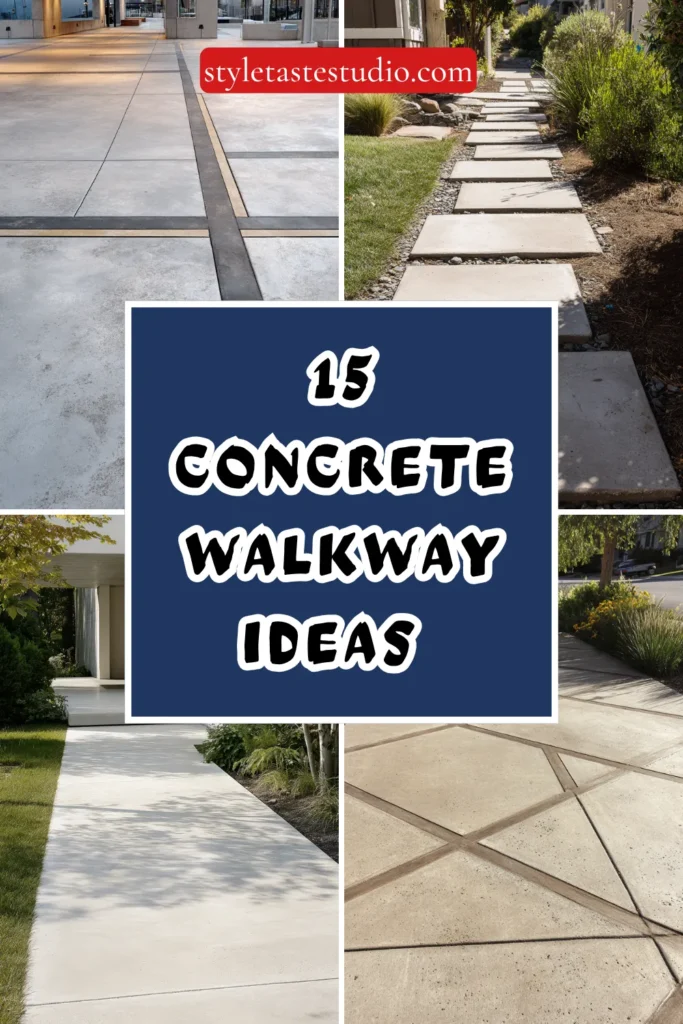
Modern concrete applications extend far beyond basic gray sidewalks, incorporating colors, textures, patterns, and finishes that rival natural stone aesthetically while offering superior durability and lower maintenance requirements. Strategic design choices—stamped patterns, exposed aggregate, integrated borders, or smooth troweled finishes—transform ordinary concrete into elegant hardscaping that complements diverse architectural styles and landscape aesthetics.
Understanding concrete’s design potential allows homeowners to create beautiful permanent pathways that enhance properties substantially while remaining budget-conscious compared to premium natural stone alternatives. These fifteen concrete walkway ideas demonstrate how thoughtful application of this humble material creates elegant outdoor circulation that proves concrete deserves consideration beyond purely functional applications.
1. Smooth Modern Minimalism
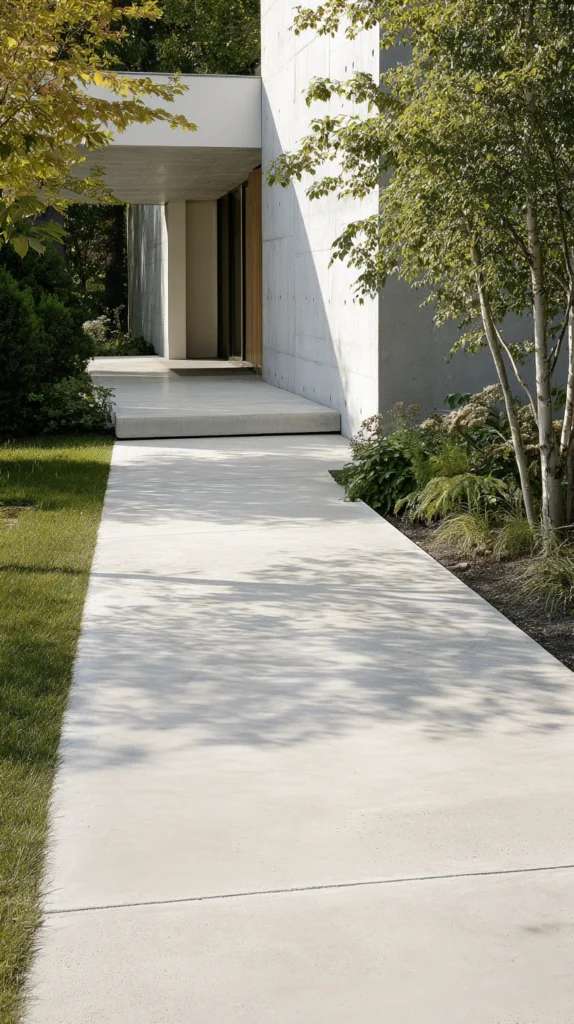
Create contemporary sophistication through smooth troweled concrete finished to silky perfection then sealed for subtle sheen creating clean minimalist pathways suited to modern architecture. Pour concrete in geometric forms with crisp edges and precise dimensions, trowel surfaces to glass-smooth finishes eliminating texture and imperfection, and seal with penetrating sealers enhancing subtle natural color variations.
The minimalist approach allows concrete’s inherent beauty to shine through restraint rather than decoration. Add control joints in deliberate patterns creating intentional linear designs rather than random cracking prevention, or use integral color creating subtle tonal variation beyond standard gray.
2. Stamped Stone Pattern
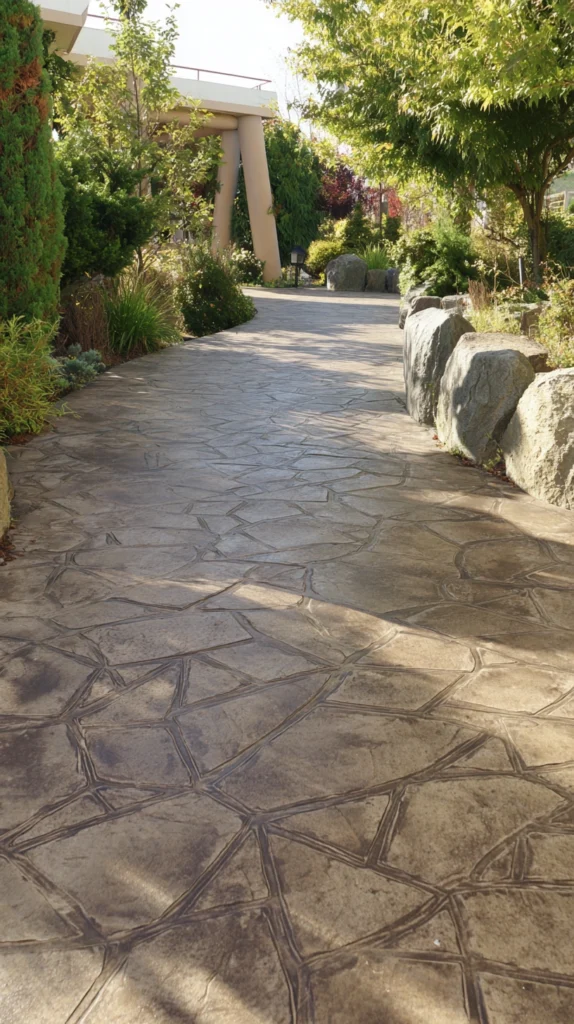
Employ stamping techniques creating realistic impressions mimicking natural flagstone, slate, cobblestone, or ashlar patterns delivering stone aesthetics at concrete prices. Apply color hardeners before stamping creating variegated tones resembling natural stone variation, press stamping mats into fresh concrete creating three-dimensional surface textures, and apply antiquing releases highlighting recesses enhancing dimensional realism.
The stamped patterns provide natural stone appearance and texture while concrete’s durability and crack-resistance surpass many natural alternatives. Choose patterns appropriate to architectural styles—formal geometric patterns for traditional homes, irregular flagstone for cottage aesthetics, or linear designs for contemporary buildings.
3. Exposed Aggregate Finish
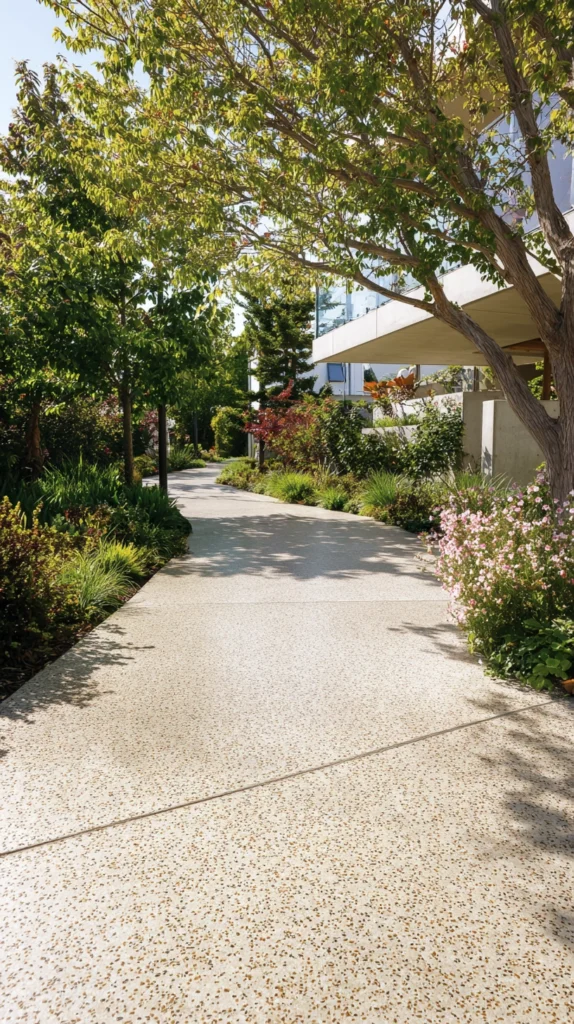
Reveal decorative aggregate within concrete mixes creating textured surfaces with natural stone appearance and excellent slip-resistance for safe all-weather navigation. Select aggregate in colors and sizes coordinating with landscape palettes—warm river rock, cool gray gravel, or multicolored pebbles—incorporating them into concrete mixes.
After initial set, spray surfaces with retarders then pressure-wash revealing embedded stones while concrete matrix remains intact. The exposed aggregate provides texture, visual interest, and practical slip-resistance while the natural stone components create organic appearances softening concrete’s manufactured origins.
4. Geometric Paver Pattern
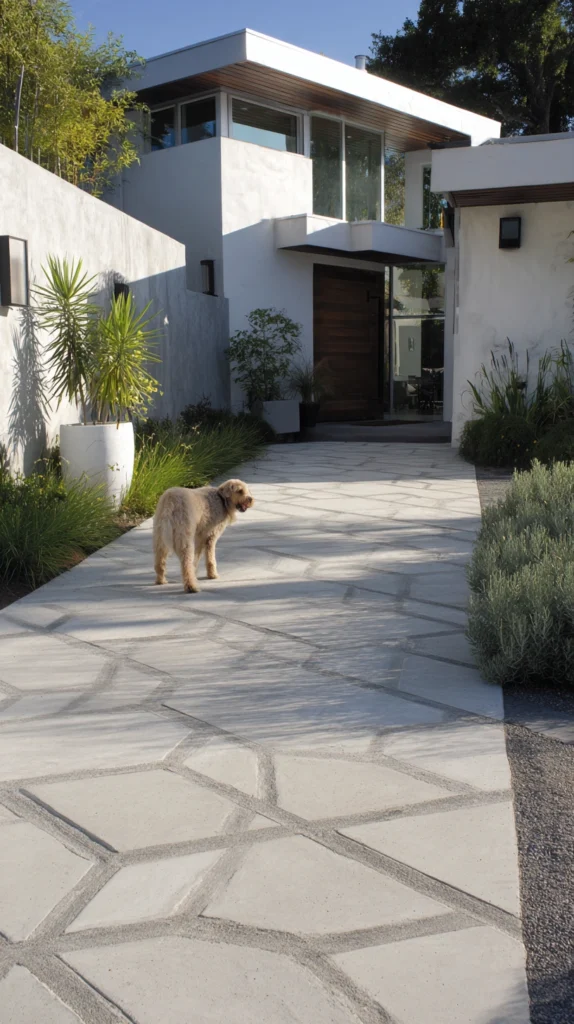
Pour concrete in modular geometric forms—squares, rectangles, hexagons—creating paver-like appearances through intentional joints and dimensional variation rather than monolithic slabs. Design patterns using alternating sizes creating visual rhythm, incorporate contrasting colors between adjacent pavers creating checkerboard or geometric designs, or vary surface finishes—smooth alternating with exposed aggregate—creating textural patterns.
The segmented approach allows controlled cracking at intentional joints rather than random locations while the geometric patterns add visual interest and contemporary design sensibility.
5. Integrated Border Accents
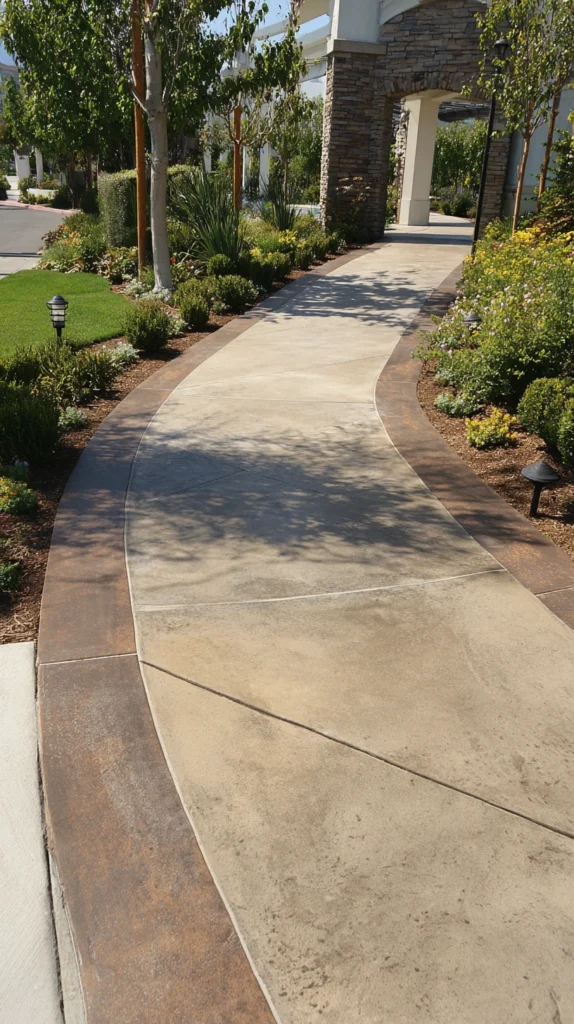
Frame concrete pathways with contrasting borders using brick, natural stone, or colored concrete creating defined edges and decorative interest elevating plain concrete beyond basic applications. Install brick soldier courses along pathway edges, position natural stone borders creating permanent edging and visual frames, or pour contrasting colored concrete borders before main pathway sections.
The borders create visual definition and architectural detail while their contrasting materials or colors prevent pathways from appearing as undifferentiated concrete expanses. Choose border materials coordinating with home exteriors and existing hardscaping creating cohesive material palettes.
6. Colored Concrete Application
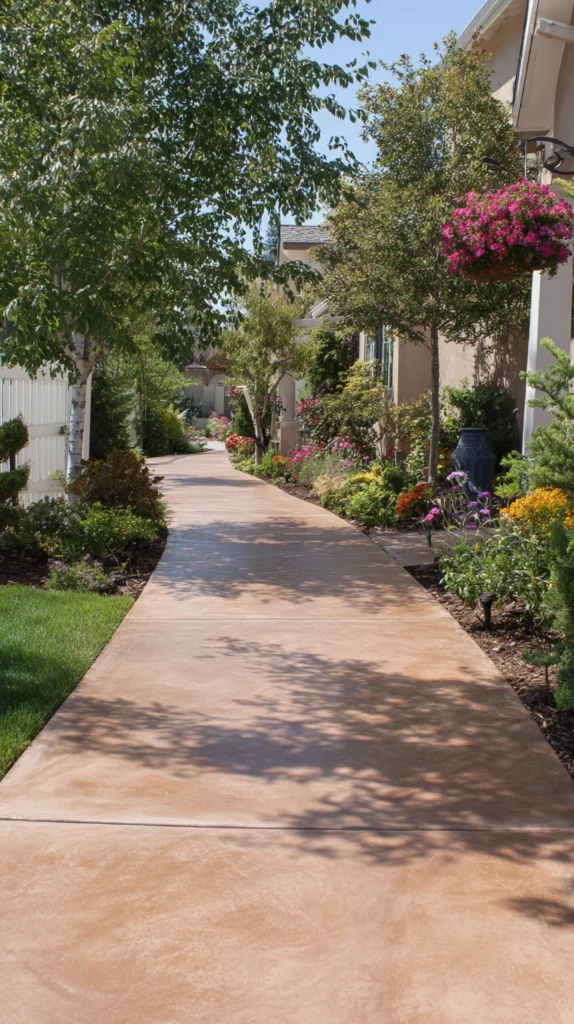
Incorporate integral color additives or apply topical stains creating concrete in hues beyond standard gray ranging from earth tones to bold contemporary colors. Add color during mixing ensuring consistent throughout concrete thickness preventing wear revealing gray beneath, or apply acid stains after curing creating variegated organic color patterns.
Choose colors coordinating with architectural elements and landscape palettes—warm terra cotta complementing Mediterranean styles, cool grays suiting contemporary buildings, or subtle earth tones working universally. The color transforms concrete’s aesthetic dramatically while maintaining its practical benefits.
7. Stepping Stone Configuration
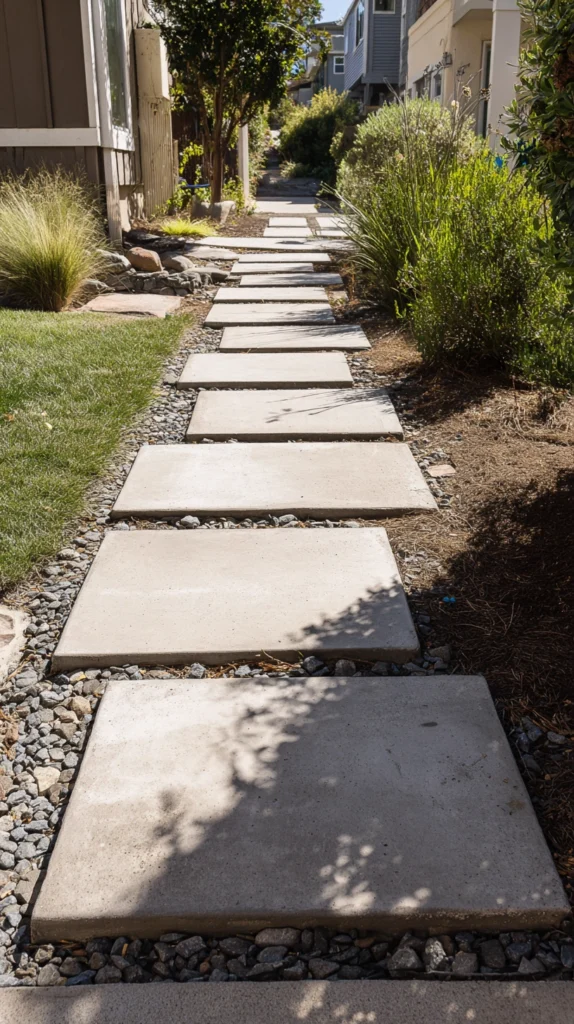
Pour individual concrete pads creating stepping stone pathways through lawns or planted areas rather than continuous walkways allowing grass or groundcovers to flow between pavers. Design pads in consistent shapes and sizes creating rhythmic patterns, vary dimensions creating organic irregular spacing, or use custom forms creating unique shapes.
Space pads at comfortable walking intervals—typically 18-24 inches center to center—ensuring natural gait accommodation. The stepping stone approach reduces concrete quantities and associated costs while creating more organic integrated appearances than solid pathways cutting through lawns.
8. Curved Flowing Lines
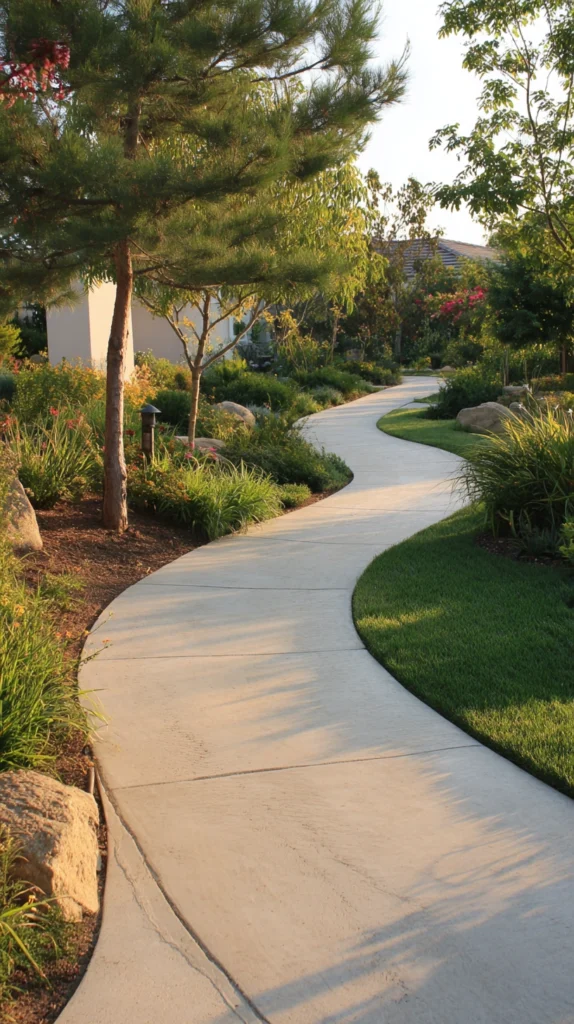
Design pathways following gentle curves rather than straight lines creating organic flowing circulation that appears naturally evolved and guides movement gracefully through landscapes. Establish curves using flexible forms or careful hand-shaping creating smooth transitions without abrupt direction changes.
The curved pathways create more interesting spatial experiences and visual movement compared to rigid straight alternatives. Position curves purposefully directing traffic around obstacles, creating accessible routes following natural terrain, or establishing deliberate meandering encouraging slower contemplative garden movement rather than direct utilitarian transit.
9. Textured Broom Finish
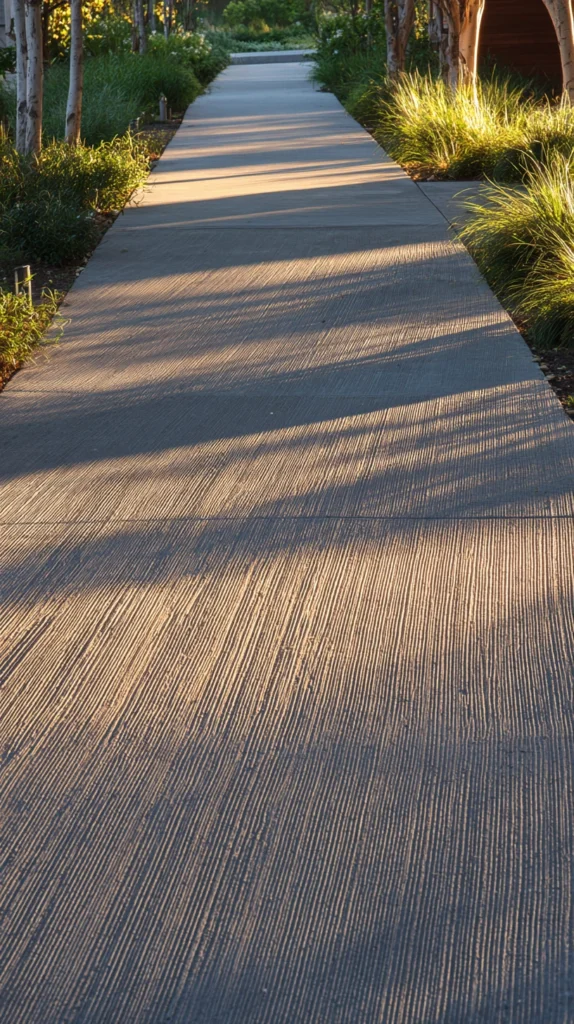
Apply classic broom finishing creating subtle linear texture providing slip-resistance while maintaining clean simple appearance suited to both traditional and contemporary settings. Draw stiff-bristled brooms across fresh concrete creating fine parallel grooves, vary direction creating patterns—perpendicular to pathway direction, diagonal, or curved following pathway shapes. The texture provides practical slip-resistance during wet conditions while the linear pattern adds subtle visual interest and disguises minor surface imperfections better than smooth finishes. This traditional technique remains popular because it balances aesthetics, safety, and ease of application.
10. Scored Geometric Patterns
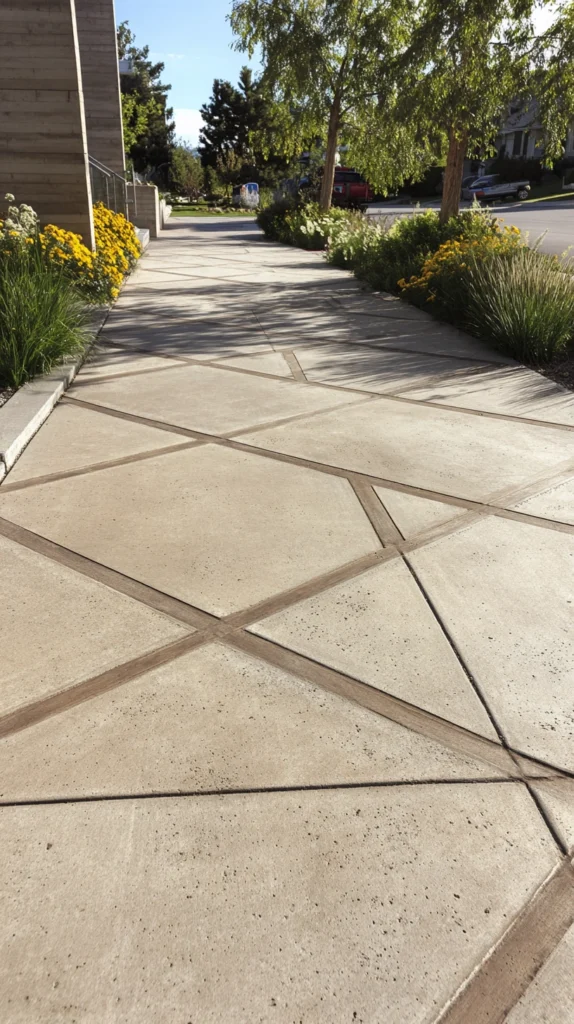
Cut decorative patterns into cured concrete using concrete saws creating custom geometric designs, faux grout lines, or artistic compositions transforming plain surfaces into designed elements. Score grid patterns mimicking tile or pavers, create diagonal designs adding visual movement, or cut custom patterns reflecting personal aesthetics or architectural details.
Fill scored lines with contrasting colored grout, sand, or leave unsealed creating tonal variation. The scoring technique allows customization of existing concrete or adds design interest to new installations through relatively simple cutting processes creating permanent decorative patterns.
11. Mixed Material Inlays
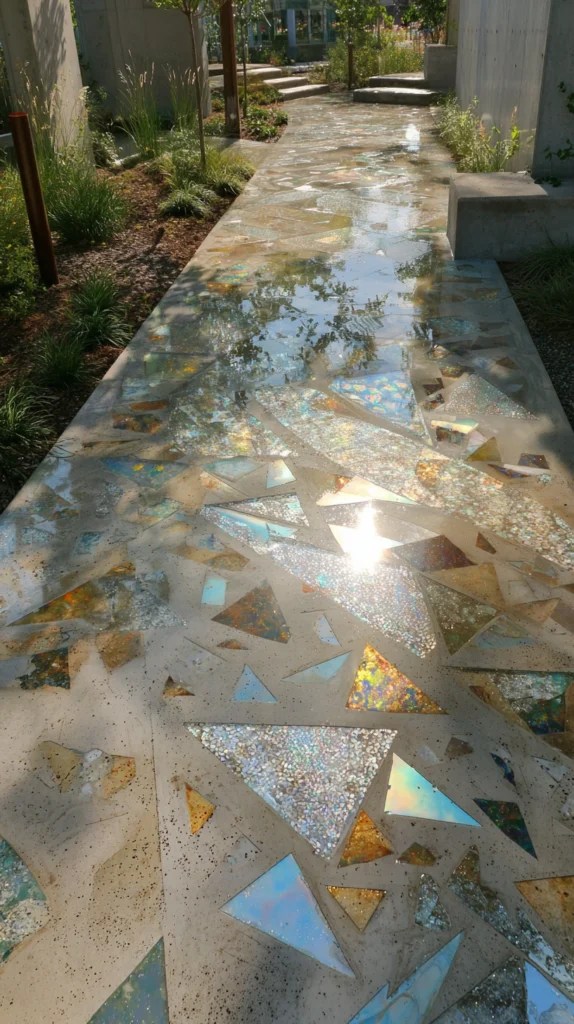
Embed decorative elements—river rocks, glass pieces, tile fragments, or metal accents—directly into fresh concrete creating custom artistic pathways with personalized character. Press materials into surface while concrete remains workable, position deliberately creating patterns or allow organic random placement, and ensure adequate embedding preventing future loosening.
Create bands of inlaid material crossing pathways, incorporate materials spelling words or forming images, or scatter decoratively throughout surfaces. The mixed materials add texture, color, and personalized artistic expression transforming utilitarian concrete into unique custom creations.
12. Polished Concrete Finish
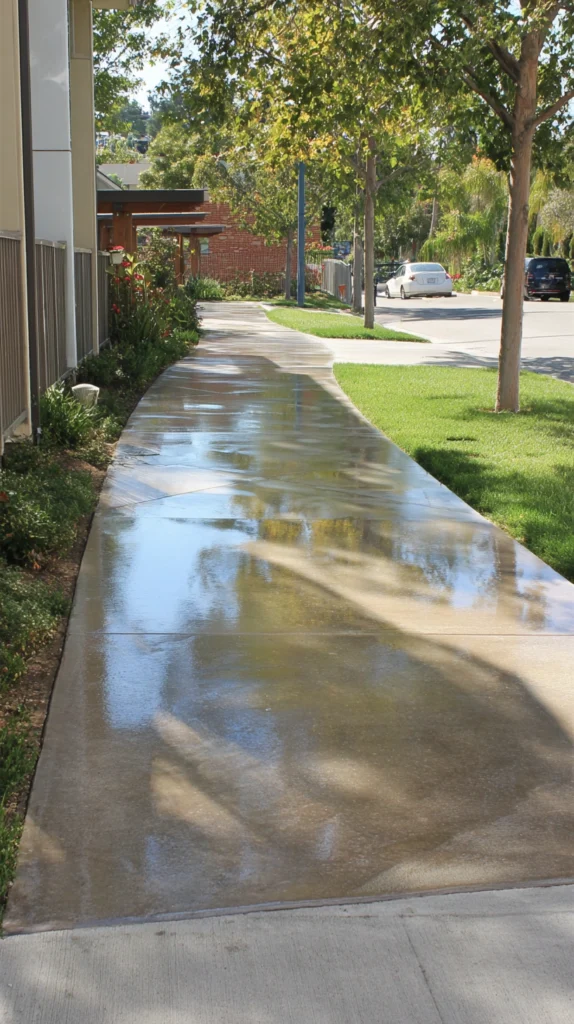
Grind and polish cured concrete creating glossy refined surfaces with sophisticated appearance suited to contemporary landscapes and modern architectural settings. Use progressively finer grinding pads smoothing surfaces and exposing aggregate if desired, apply chemical densifiers hardening concrete and enabling higher polish levels, and finish with fine polishing creating glass-like sheens.
The polished finish creates upscale appearance while the densified surface resists staining and requires minimal maintenance. This technique works particularly well for covered walkways or areas receiving limited weather exposure where polished surfaces remain practical.
13. Contrasting Joint Fillers
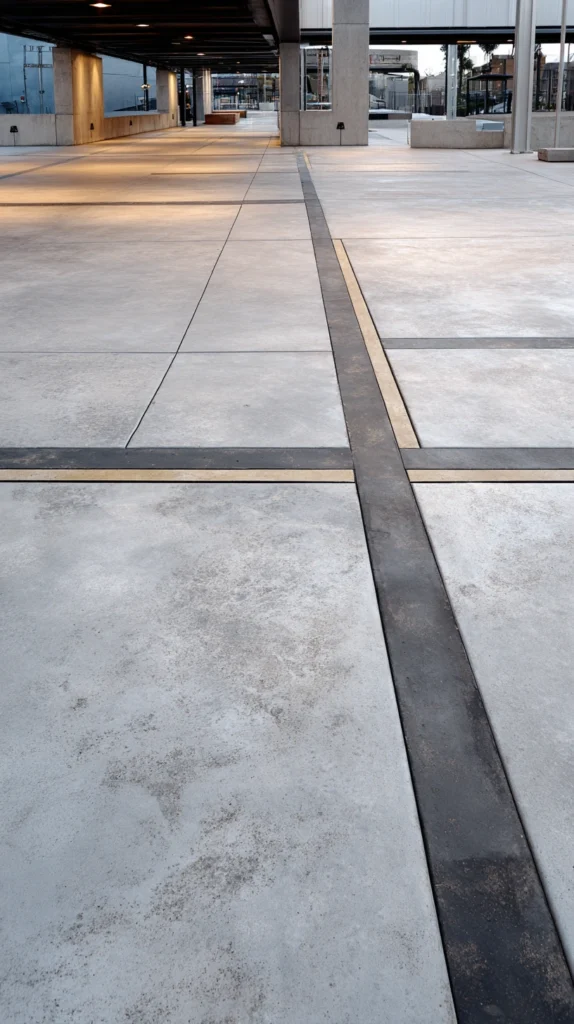
Emphasize control joints and expansion gaps using contrasting colored joint fillers creating intentional linear design elements rather than attempting to hide necessary joints. Fill joints with black, white, or colored sand creating graphic linear patterns, use contrasting grout colors creating grid designs, or install metal or composite strips creating permanent decorative joints.
The emphasized joints transform functional necessity into deliberate design feature while ensuring proper joint function preventing random cracking. Choose filler colors creating either subtle tonal variation or bold graphic contrast depending on desired aesthetic impact.
14. Stenciled Surface Patterns
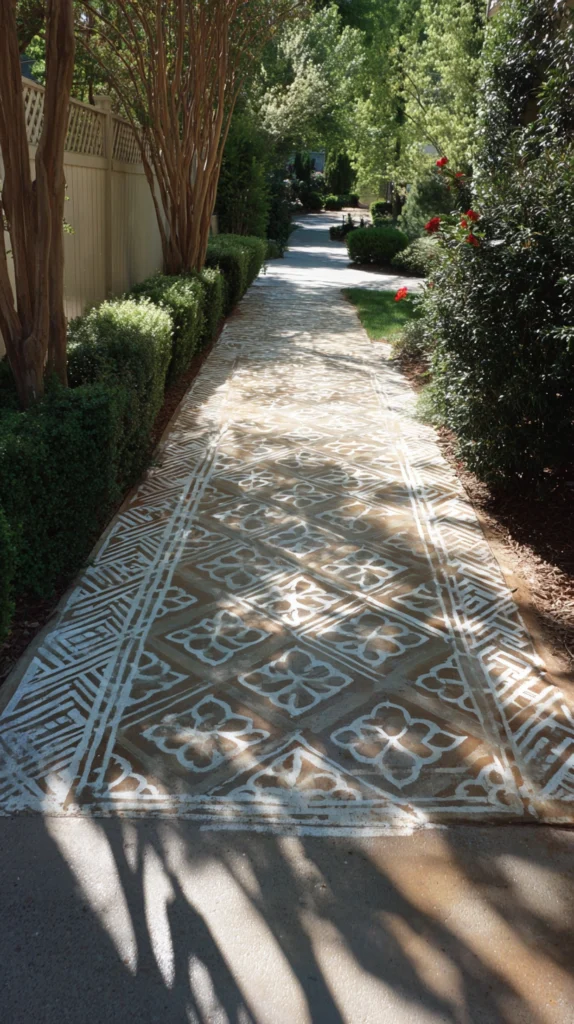
Apply stencils before concrete curing creating custom patterns, borders, or medallions adding decorative interest and personalized design to otherwise plain surfaces. Position stencils on fresh concrete, apply contrasting colored concrete or specialized stencil materials, remove stencils revealing patterns, and seal protecting designs.
Create border patterns along pathway edges, position central medallions at intersections or entries, or repeat patterns throughout lengths creating rhythmic decorative elements. The stenciling technique allows remarkable customization through diverse available patterns or custom-created designs reflecting personal aesthetics.
15. Grass Joint Integration
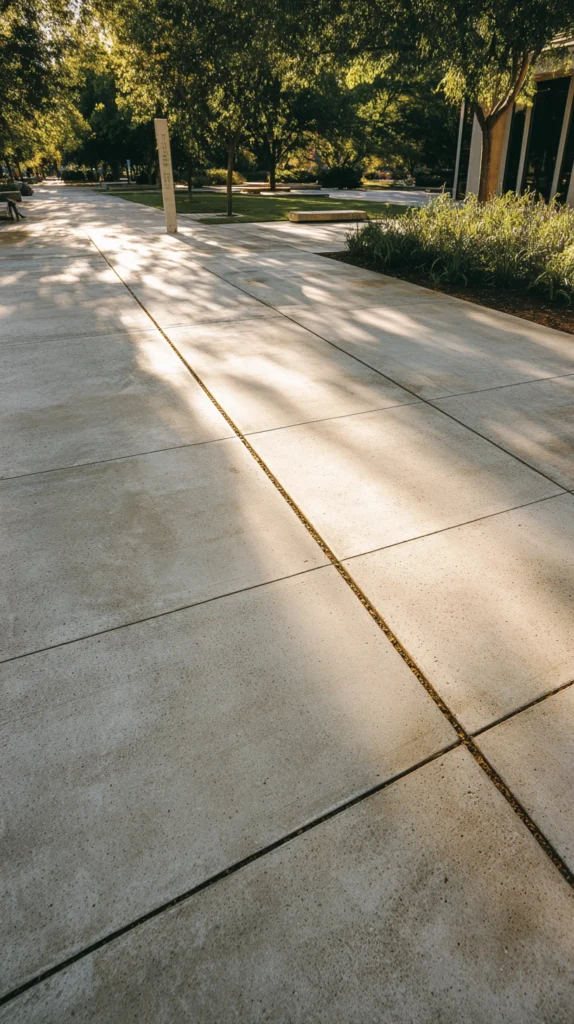
Pour concrete in strips leaving intentional gaps planted with grass or low groundcovers creating pathways that blend into surrounding lawns rather than contrasting sharply against them. Space concrete strips allowing comfortable walking while grass fills gaps softening hard edges and reducing heat island effects.
The integrated approach creates more organic appearances than solid concrete while the grass joints provide drainage preventing standing water. Maintain grass joints through regular mowing and edging ensuring they remain neat and intentional rather than appearing neglected or overgrown.
Successfully implementing concrete walkways requires proper base preparation including compacted gravel foundations ensuring stability and preventing settling, adequate reinforcement using rebar or wire mesh preventing cracking, and proper curing allowing concrete to achieve full strength before use. Install control joints at appropriate intervals managing inevitable cracking at predetermined locations rather than random surface cracks. Seal concrete protecting surfaces from moisture penetration, staining, and freeze-thaw damage while enhancing color and easing maintenance.
Most importantly, recognize that concrete walkways represent permanent landscape investments deserving thoughtful design consideration rather than afterthought installations. Well-designed concrete pathways provide decades of maintenance-free service while enhancing property aesthetics and value, proving this versatile material creates elegant sophisticated results when approached with design intention and quality installation practices that honor concrete’s remarkable potential beyond purely utilitarian applications.