15 Indoor Pebble Garden Ideas
Indoor pebble gardens bring natural texture and organic elements into interiors through decorative stone applications that require zero watering, never need repotting, and maintain their appearance indefinitely unlike living plants demanding ongoing care.
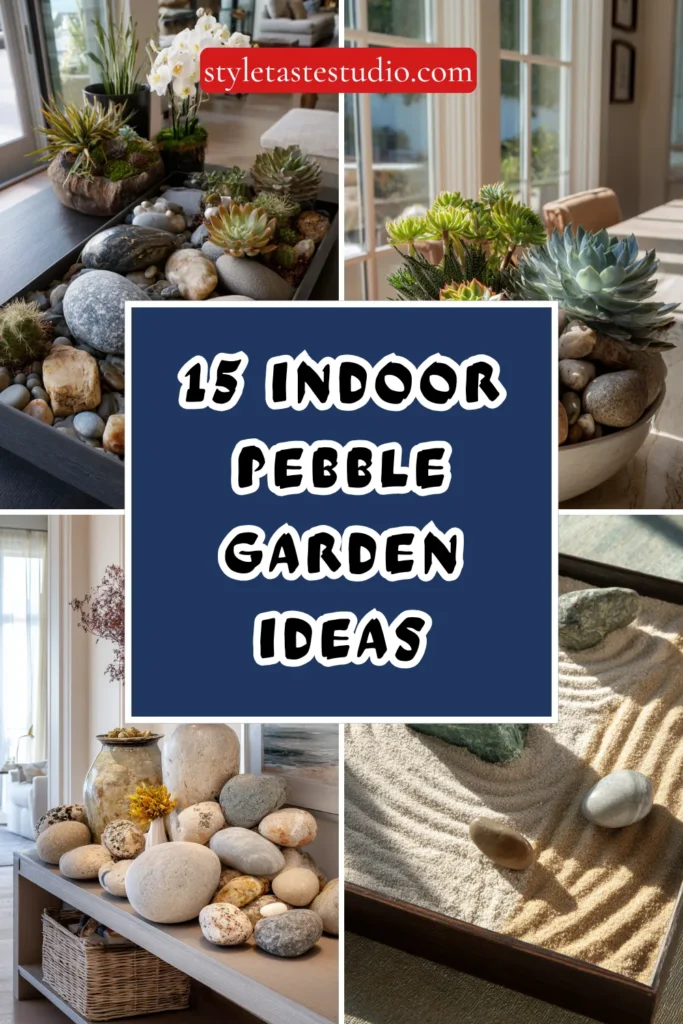
These versatile mineral gardens create visual interest through varied stone sizes, colors, and arrangements while providing meditative maintenance including raking patterns into surfaces or simply appreciating their permanent natural beauty.
The appeal lies in pebble gardens’ flexibility working within any decorating style from zen minimalism to contemporary sophistication, occupying spaces ranging from small tabletop dishes to substantial floor installations.
Strategic pebble garden design incorporating appropriate containers, complementary stone selections, and thoughtful positioning transforms simple rocks into sophisticated design elements that add natural texture and calming presence to indoor environments.
These fifteen indoor pebble garden ideas demonstrate diverse approaches from traditional Japanese-inspired arrangements to modern interpretations, each proving that decorative stone creates substantial atmospheric impact through minimal maintenance and timeless organic beauty.
1. Desktop Zen Garden
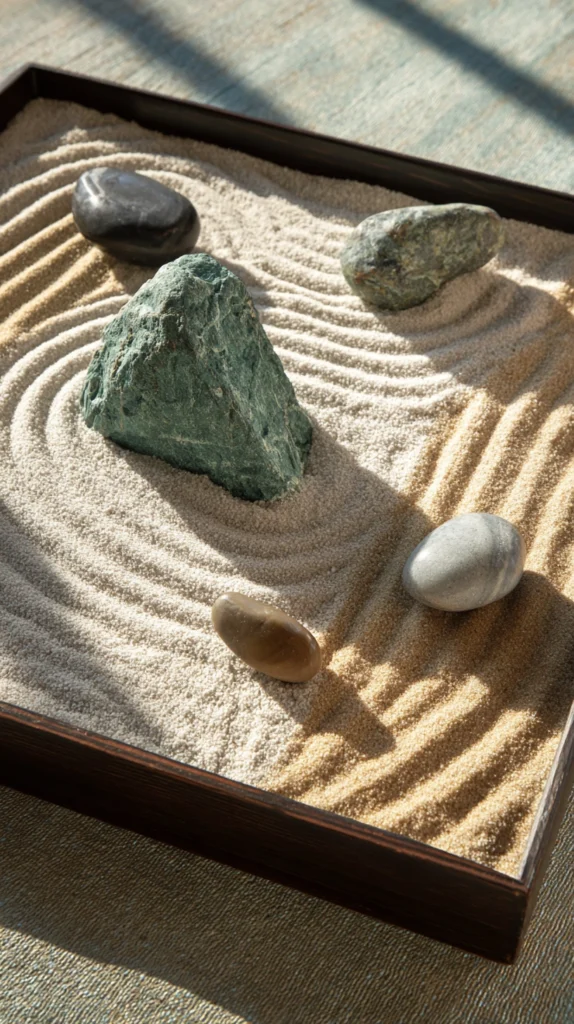
Create miniature contemplative landscapes using shallow trays filled with fine sand or small pebbles that can be raked into meditative patterns providing stress relief and visual interest on desks or side tables. Choose wooden or ceramic trays measuring 8-12 inches providing adequate surface for pattern creation, fill with white sand or light-colored fine gravel creating neutral backgrounds, and include small rakes specifically designed for zen garden use.
Add single larger stones, small Buddha statues, or miniature plants like air plants or succulents creating focal points within raked patterns. The desktop scale makes these gardens accessible and practical while the raking activity provides mindful breaks during work days. Position where they’re easily accessible encouraging regular interaction and pattern refreshing.
2. Glass Vessel Layered Display
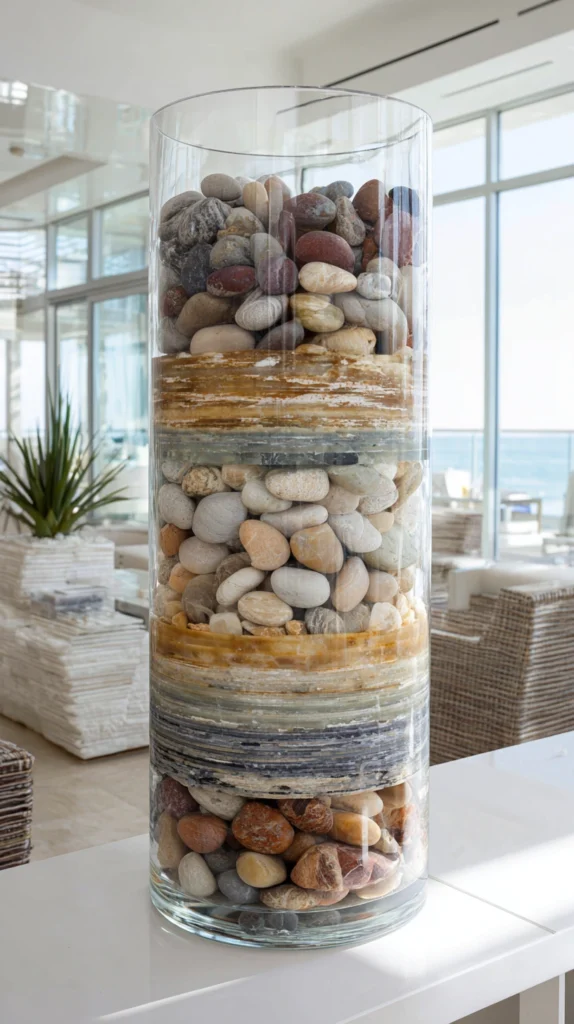
Design transparent containers showcasing decorative layers using varied pebble colors, sizes, and textures creating dimensional displays where the layering itself becomes the primary visual interest. Choose clear glass cylinders, bowls, or geometric terrariums allowing full layer visibility, create stripes using different colored stones, design ombre effects transitioning from dark to light, or alternate pebble sizes creating textural variation. Include single sculptural branches, air plants, or small succulents emerging from stone surfaces adding living elements.
The transparent vessels make layering visible from all angles while the varied stones create the kind of dimensional interest that transforms simple pebbles into designed compositions worthy of prominent display positions.
3. Tabletop River Rock Landscape
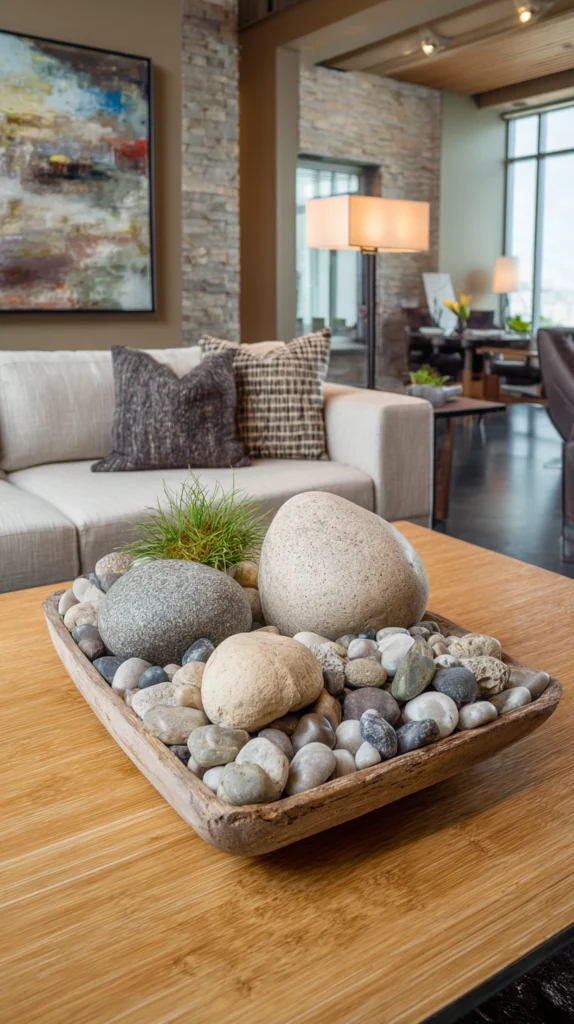
Arrange larger smooth river rocks in shallow decorative bowls or trays creating organic stone compositions suggesting natural riverbeds or mountain landscapes in miniature form. Choose rocks in similar color families creating cohesive presentations or embrace varied tones for naturalistic diversity, position larger specimens as focal points with smaller stones surrounding, and perhaps add tiny figurines, bridges, or miniature structures creating narrative elements.
The larger stone scale creates substantial presence while the organic forms and smooth surfaces provide tactile appeal. Position on coffee tables, console tables, or dining surfaces where the arrangements can be appreciated and occasionally rearranged creating new compositions.
4. Monochromatic White Stone Garden
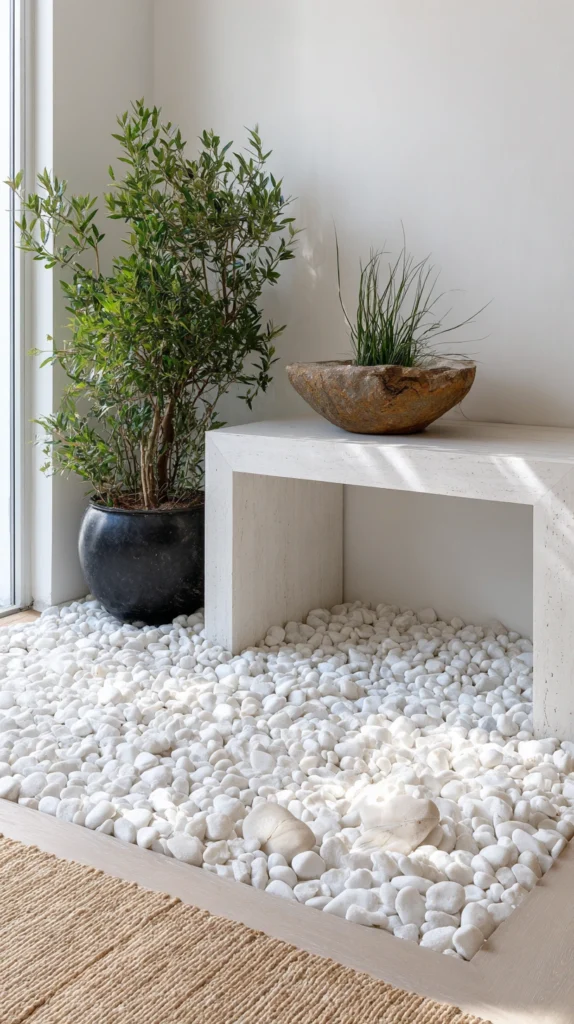
Create serene minimalist displays using exclusively white or cream stones establishing clean sophisticated aesthetics that suit contemporary interiors and provide visual calm. Fill modern containers with white marble chips, cream river rocks, or pale limestone pebbles maintaining the monochromatic discipline, add white candles creating cohesive color stories, or include bleached driftwood or white coral pieces reinforcing the pale palette.
The white stone creates brightness and visual lightness while the single color creates the kind of restrained sophistication that defines successful minimalist design. Position where the pale stones catch natural light creating subtle shadows and highlighting their varied textures despite uniform coloring.
5. Succulent and Stone Combination
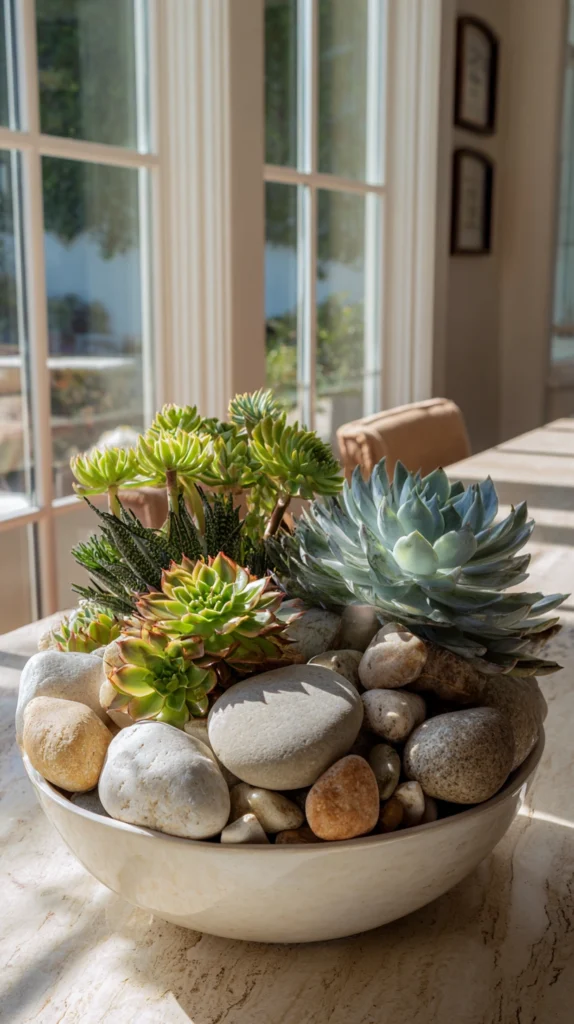
Combine living succulents with decorative pebble ground covers creating low-maintenance indoor gardens where stone mulch prevents soil exposure while providing attractive textural contrast against plant forms. Choose shallow wide containers providing adequate drainage, plant drought-tolerant succulents in well-draining soil, and top dress with small decorative pebbles creating finished professional appearances. Select stone colors complementing succulent tones whether that’s dark stones contrasting with pale plants or coordinating earth tones creating harmonious natural palettes. The stone mulch reduces watering frequency by minimizing evaporation while its decorative quality elevates simple succulent plantings into designed compositions.
6. Candle and Stone Centerpiece
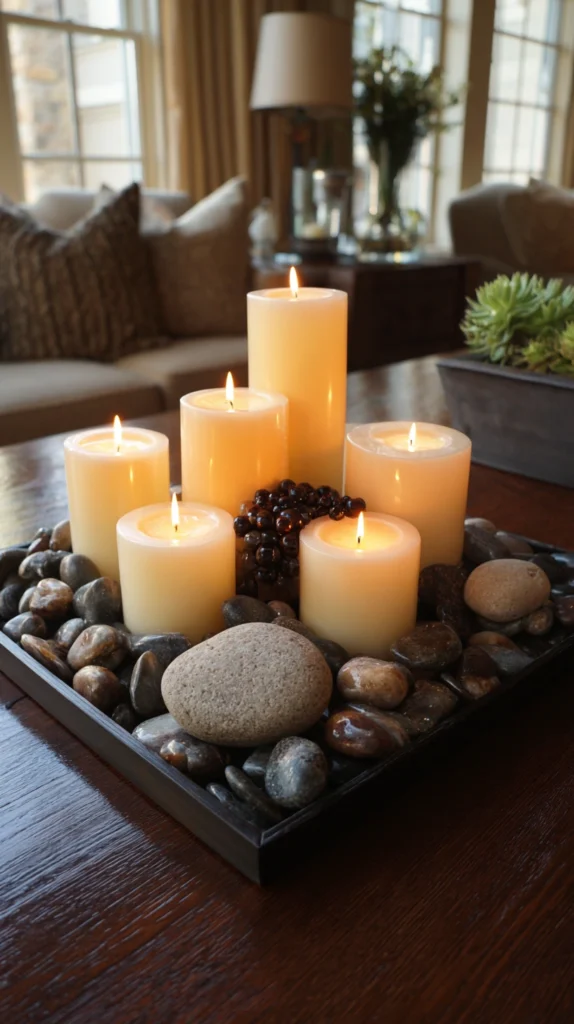
Design elegant table centerpieces combining pillar candles with surrounding pebble arrangements creating sophisticated displays for dining tables or coffee tables suitable for everyday or special occasions. Arrange pillar candles in varied heights on decorative trays or shallow bowls, surround with small smooth pebbles creating the impression of candles emerging from stone landscapes, and perhaps add small mirror tiles beneath reflecting candlelight.
Choose stone colors coordinating with table settings and room décor, vary candle colors from classic white to metallics or deep jewel tones, and refresh arrangements seasonally maintaining current relevant presentations. The combination provides both functional candlelight and decorative interest while the pebbles add natural texture softening the manufactured candles.
7. Bathroom Spa Aesthetic
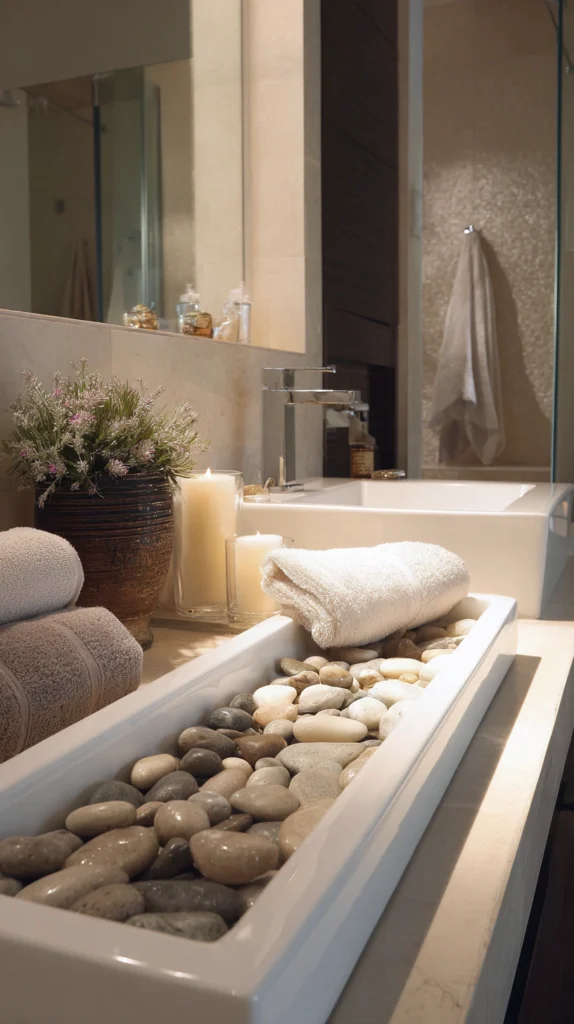
Create resort-inspired bathroom environments using pebble accents in soap dishes, vanity trays, or decorative bowls establishing calming spa atmospheres through natural stone elements. Fill shallow trays with smooth river rocks positioning bar soaps atop the stones allowing proper drainage and airflow, create pebble-filled vanity organizers holding toiletries attractively, or position decorative bowls filled with beautiful stones adding organic texture.
Choose stones in colors coordinating with bathroom palettes whether that’s white marble chips for bright modern spaces or dark river rocks for sophisticated dramatic bathrooms. The natural materials create the kind of organic luxury that defines spa environments while the zero-maintenance nature suits busy bathrooms where living plants might struggle.
8. Geometric Modern Containers
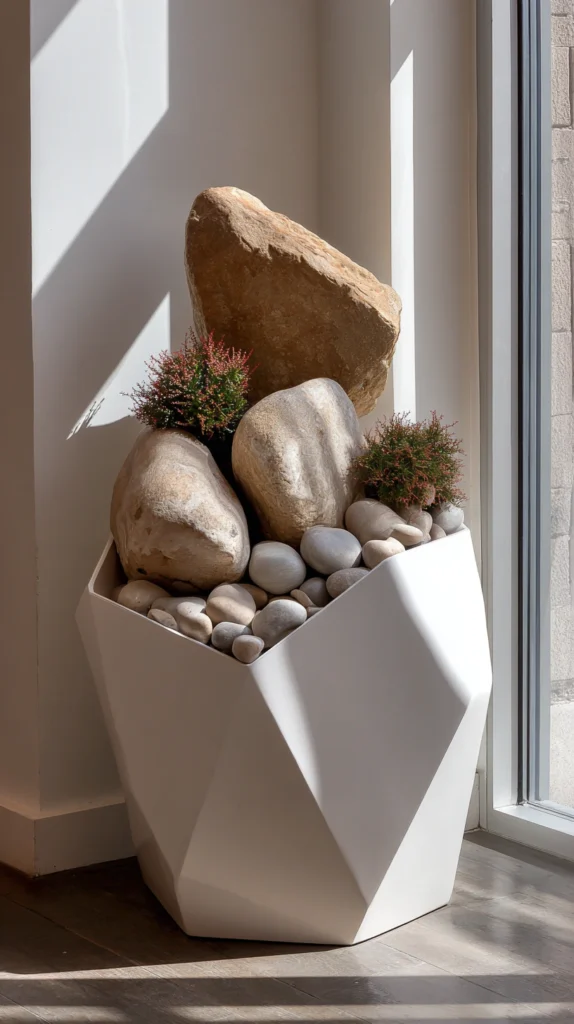
Use contemporary geometric planters including hexagonal, triangular, or faceted designs filled with contrasting smooth organic pebbles creating interesting tension between angular containers and natural rounded stones. Choose containers in materials like concrete, metal, or ceramic in minimalist forms without excessive decoration, fill with pebbles in colors providing either subtle coordination or deliberate contrast, and position where the geometric forms receive proper appreciation.
The modern containers update traditional pebble garden concepts creating contemporary interpretations suitable for current design aesthetics. Group multiple geometric containers in varied sizes creating collections or feature individually as sculptural design elements.
9. Terrarium Pebble Foundation
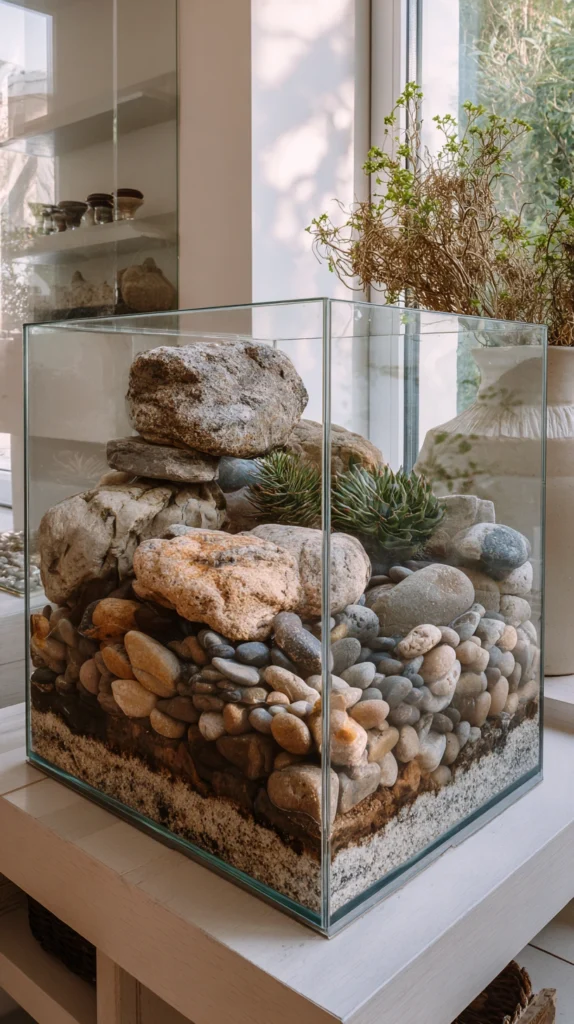
Incorporate pebbles as essential drainage and decorative base layers in glass terrariums whether planted with living specimens or designed as purely decorative stone landscapes. Create bottom drainage layers using larger pebbles preventing water accumulation, add intermediate layers of smaller stones creating textural variation, and top with fine gravel or sand creating finished surfaces. Plant with appropriate terrarium specimens if desired or design stone-only landscapes including larger feature rocks, small figurines, or miniature accessories.
The transparent glass allows appreciation of layered stone foundations that typically remain hidden while the contained environments showcase pebbles as integral design elements rather than mere functional materials.
10. Water Feature Pebble Base
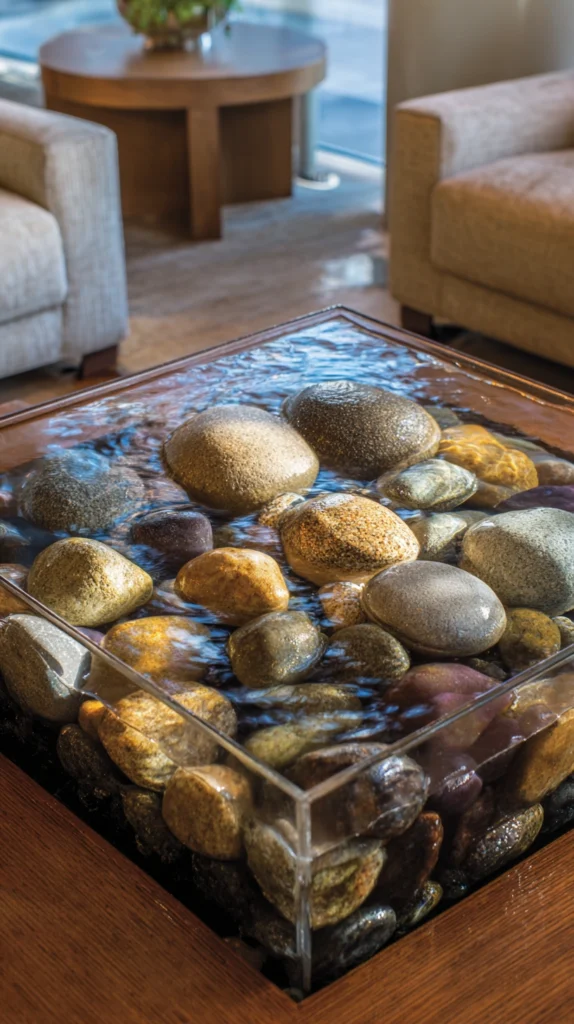
Line indoor water features including tabletop fountains or decorative water bowls with attractive pebbles creating naturalistic bases while concealing pumps and mechanical elements beneath decorative stones. Choose smooth river rocks, polished stones, or colorful glass pebbles creating finished appearances, position larger stones strategically hiding fountain pumps and tubing, and refresh periodically maintaining clean attractive presentations.
The pebble bases create the kind of natural aesthetic that makes water features feel organic rather than obviously manufactured while the stone variety allows customization matching specific décor preferences. Select stones that won’t deteriorate in constant water exposure ensuring long-term beauty without requiring frequent replacement.
11. Seasonal Pebble Arrangements
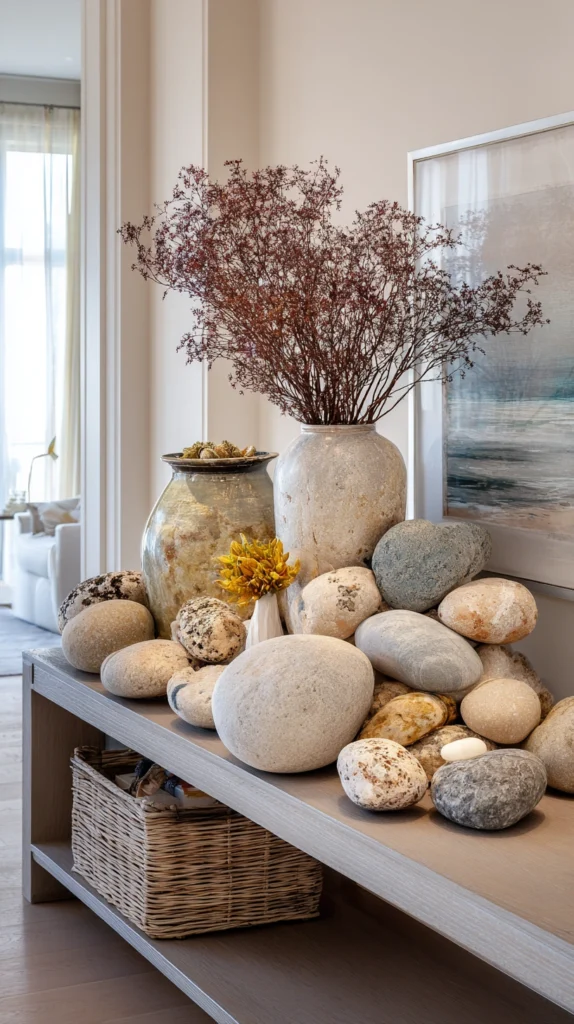
Create rotating displays changing stone selections, arrangements, or accompanying elements seasonally maintaining fresh relevant presentations throughout the year. Incorporate white stones with evergreen branches during winter, add pastel pebbles with spring flowers, use neutral river rocks with summer shells, or include warm-toned stones with autumn leaves.
The seasonal rotation keeps displays feeling current and considered while the regular changes provide opportunities to refresh containers, clean stones, and create new compositions. Store off-season stones in labeled containers ensuring they remain clean and ready for future use while the rotation prevents any single arrangement from becoming invisible through excessive familiarity.
12. Bookshelf Pebble Styling
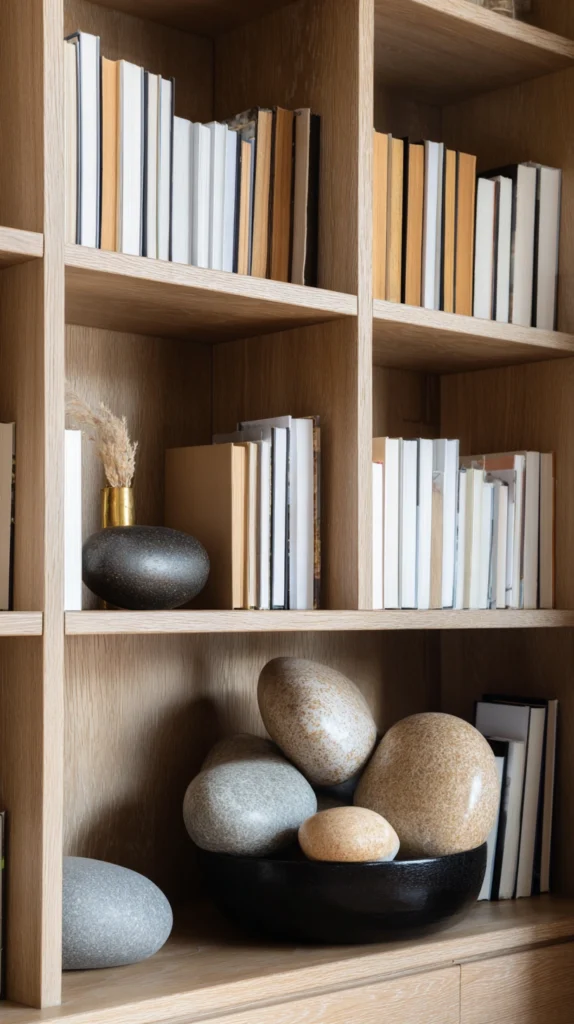
Incorporate small pebble-filled vessels on bookshelves adding textural variety and natural elements among books and decorative objects creating more dynamic visually interesting shelf styling. Use small bowls, decorative boxes, or simple glass containers filled with attractive stones positioned throughout shelving breaking up linear book spines and providing organic textural contrast.
Choose stones in colors coordinating with book collections and shelf styling creating cohesive presentations rather than introducing competing elements. The natural materials add warmth softening hard architectural shelving while the pebbles’ permanent nature requires no maintenance beyond occasional dusting making them ideal for high shelving where plant care would be impractical.
13. Black Stone Dramatic Contrast
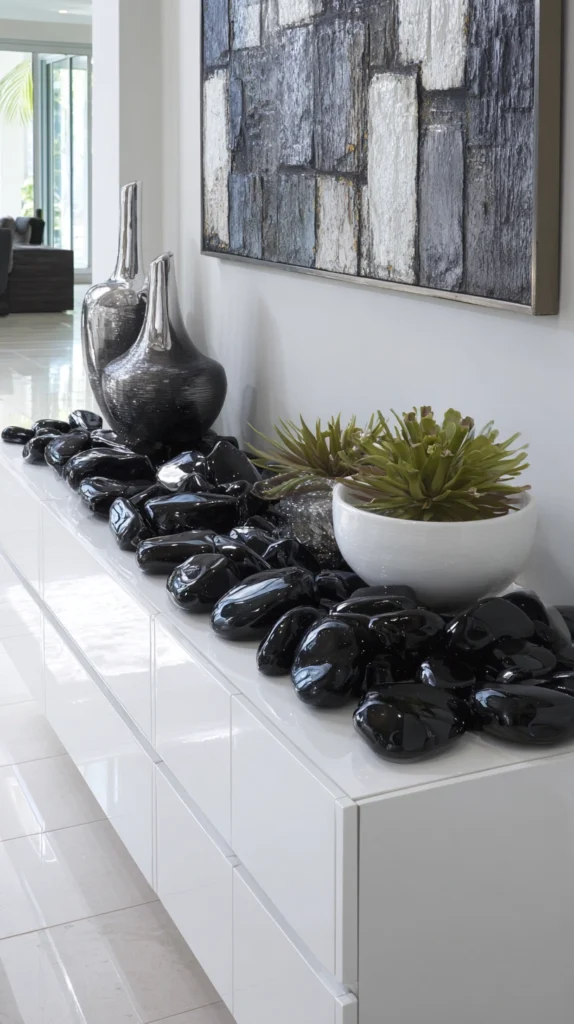
Create bold sophisticated displays using exclusively black polished stones providing dramatic contrast in light-colored modern interiors and establishing strong graphic impact. Fill white or light-colored containers with glossy black river rocks creating stark high-contrast presentations, use matte black lava rock for more organic natural aesthetics, or combine varied black stone finishes creating subtle textural variation within the monochromatic palette.
Position where the dark stones create deliberate contrast against surrounding light surfaces making them genuine focal points. The dramatic stones suit contemporary interiors while their bold presence ensures they function as designed elements rather than mere background decoration.
14. Mixed Size Textural Variation
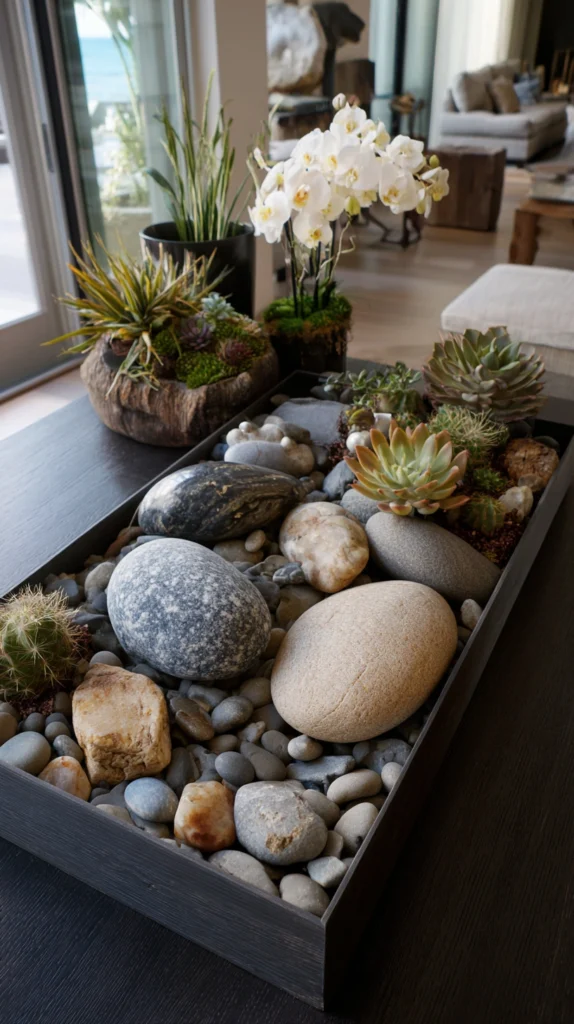
Combine pebbles in deliberately varied sizes within single containers creating textural richness and dimensional interest through size diversity rather than relying solely on color variation. Layer larger river rocks at container bottoms creating bases, add medium-sized pebbles filling middle zones, and top with fine gravel or small stones creating textured surfaces.
The size variation creates visual complexity and dimensional depth while the layering provides structure preventing mixed sizes from appearing randomly combined. Choose stones in coordinating color families ensuring the size variation provides primary interest rather than competing with color diversity that can feel chaotic.
15. Floating Shelf Pebble Display
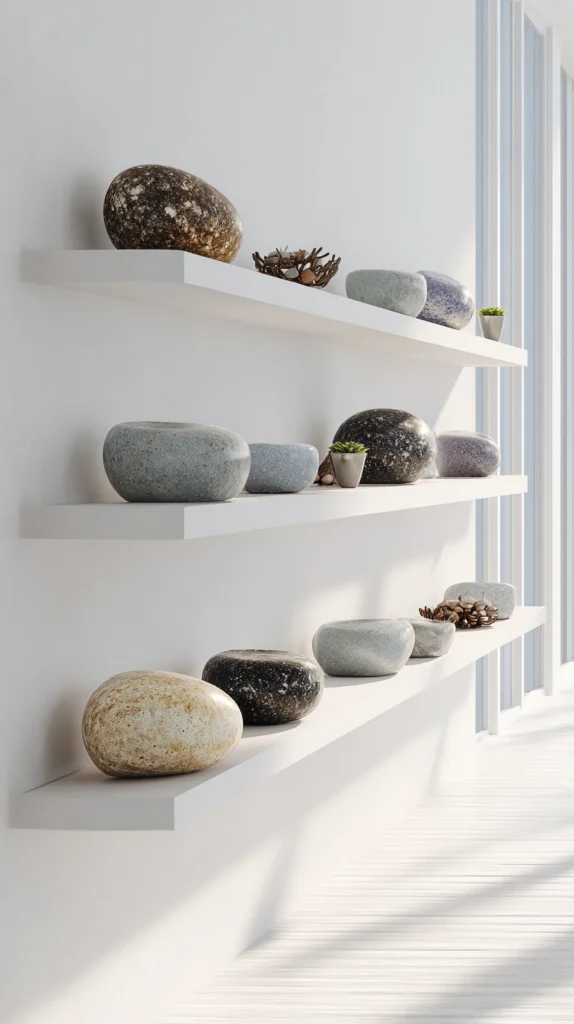
Design dedicated floating shelves specifically for pebble garden displays creating gallery-like presentations elevating decorative stones to featured design elements worthy of prominent exhibition. Install simple floating shelves in materials coordinating with room décor, arrange multiple pebble-filled containers in varied sizes creating curated collections, and perhaps include small candles, simple sculptures, or minimal greenery complementing stone displays.
The dedicated shelving signals that pebble gardens represent intentional design elements rather than random decorative additions while the elevation ensures they receive proper viewing and appreciation. Limit shelf contents maintaining generous negative space allowing individual containers proper visual breathing room.
Successfully creating indoor pebble gardens requires selecting appropriate containers providing adequate depth and proper proportions for intended stone sizes, choosing high-quality attractive stones rather than basic landscaping gravel ensuring displays appear designed and considered, and positioning where they enhance room aesthetics rather than occupying spaces merely because containers fit. Clean stones periodically removing dust accumulation maintaining their natural beauty while refreshing arrangements prevents them from becoming stale or invisible through overfamiliarity.
Consider stone sourcing purchasing from garden centers, craft suppliers, or specialty stone vendors offering curated selections in consistent sizes and colors rather than gathering random stones from outdoor sources that may introduce dirt, pests, or inconsistent appearances. Invest in quality containers worthy of prominent display rather than using temporary vessels that undermine the sophisticated presentations decorative pebbles deserve.
Most importantly, approach pebble gardens as legitimate design elements deserving the same thoughtful consideration given to artwork, accessories, or furnishings rather than treating them as trivial crafts or temporary decorations. Well-designed pebble gardens add natural texture, organic beauty, and calming presence to interiors while their permanent low-maintenance nature makes them valuable alternatives or complements to living plants in spaces where greenery struggles or maintenance capacity is limited.