15 Minimal Indoor Jungle Decor Ideas
Indoor jungle aesthetics typically conjure images of overstuffed spaces where plants compete for every available surface, creating lush but potentially overwhelming environments that sacrifice clean lines and visual calm. However, minimal indoor jungle design represents a more refined approach where carefully selected plants create substantial green presence without descending into chaotic abundance, proving that dramatic botanical impact and sophisticated restraint can coexist harmoniously.
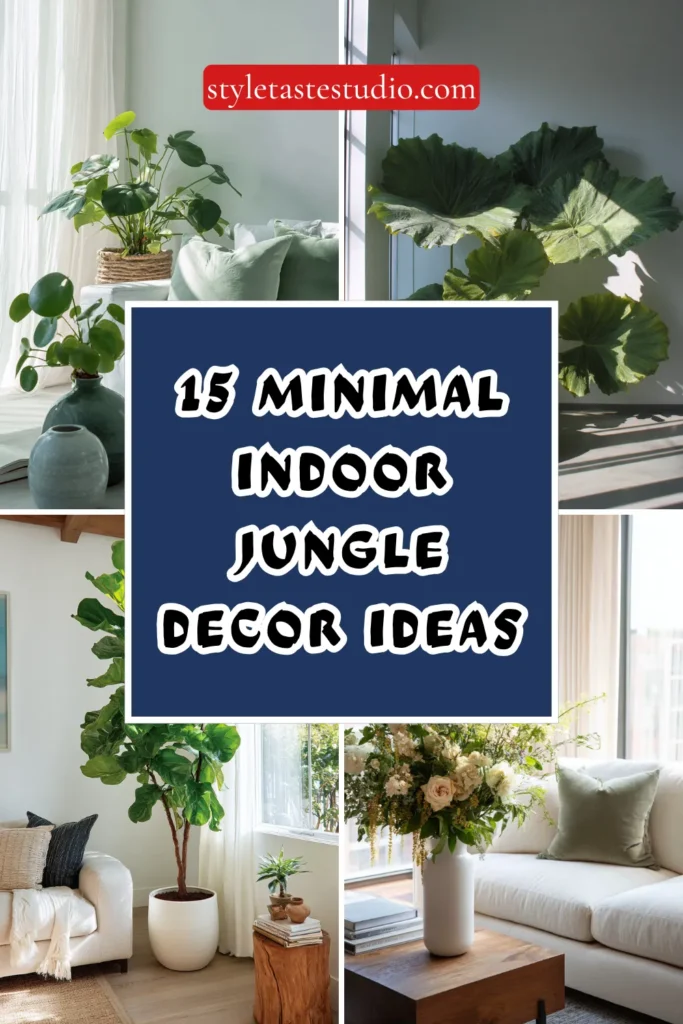
This disciplined interpretation embraces plants as essential design elements rather than mere decorative additions, incorporating greenery through intentional placement, edited collections, and architectural presentation that honors both the plants themselves and the spaces they inhabit.
The appeal lies in achieving maximum visual and atmospheric impact through minimum quantity, strategic positioning, and quality over quantity philosophy. These fifteen minimal indoor jungle ideas demonstrate how to create plant-filled interiors that feel refreshingly green and alive while maintaining the clean uncluttered aesthetics that define minimalist design principles.
1. Statement Plant Focal Points
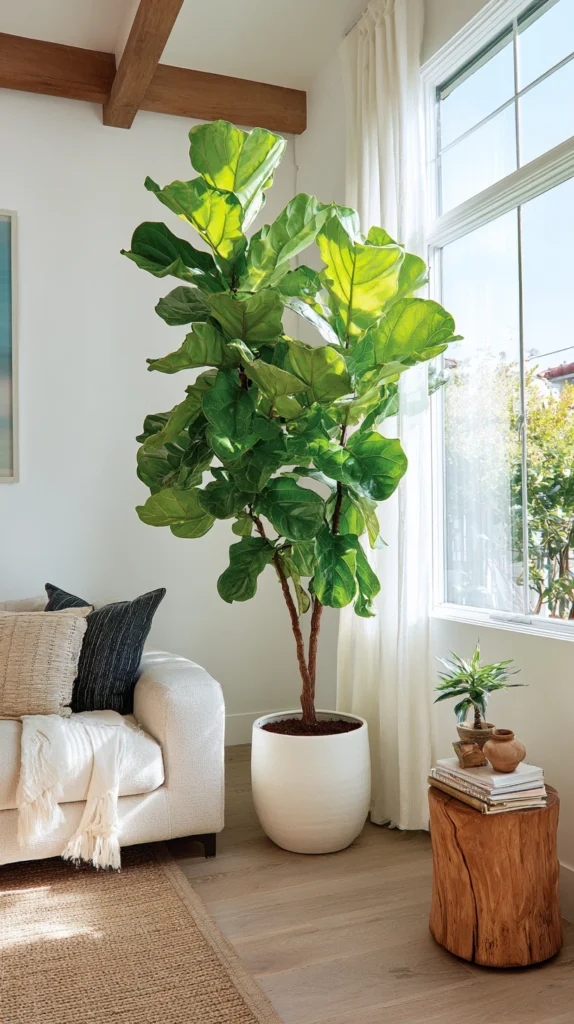
Create dramatic impact through single substantial specimens positioned as deliberate focal points rather than scattering numerous small plants throughout spaces creating visual fragmentation. Choose architecturally significant plants including fiddle leaf figs, large monstera deliciosa, dramatic bird of paradise, or sculptural snake plants in substantial sizes making genuine statements. Position specimens where they receive proper light for their specific requirements while their dramatic forms anchor seating areas, fill empty corners, or create living sculpture moments.
Use simple matching planters in neutral colors allowing plants themselves to provide all necessary visual interest while the restraint prevents decorative containers from competing for attention. The single-plant approach delivers substantial green presence through impressive scale rather than overwhelming quantity.
2. Uniform Container Simplicity
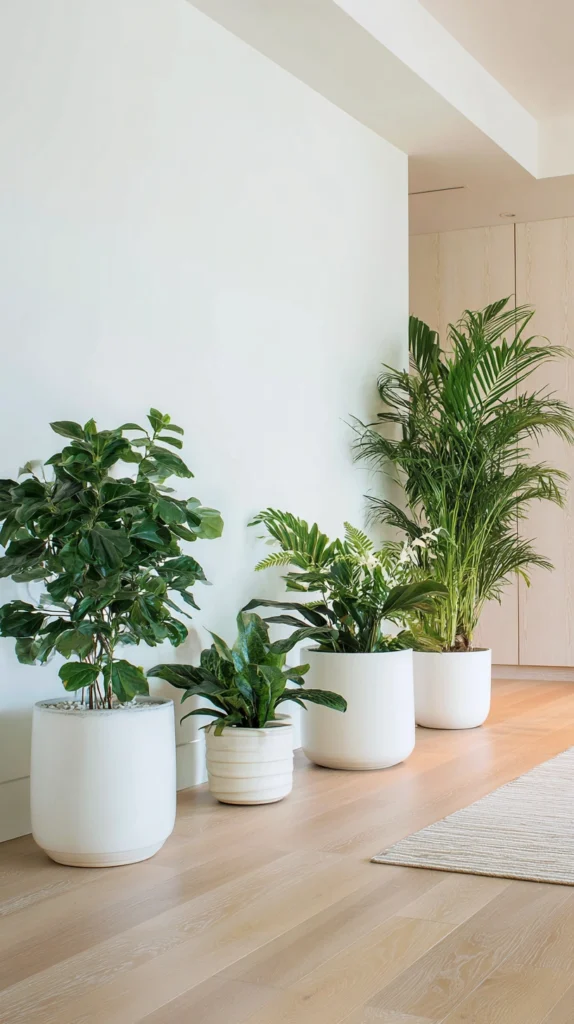
Establish visual cohesion through identical or closely coordinating planters creating order and intentionality despite diverse plant varieties and sizes within collections. Choose planters in single materials—all terracotta, all white ceramic, all concrete, or all woven baskets—maintaining consistent aesthetic throughout spaces. Select simple forms without excessive decoration allowing plants to provide visual interest while containers remain supportive backgrounds.
Use varied sizes of identical planter styles accommodating different plant scales while the matching aesthetic creates the kind of deliberate curation that defines successful minimalist approaches. The uniform containers prevent the chaotic collected-over-time appearance that undermines minimal aesthetics while the simplicity keeps focus appropriately on plants rather than decorative pots.
3. Vertical Wall Gardens
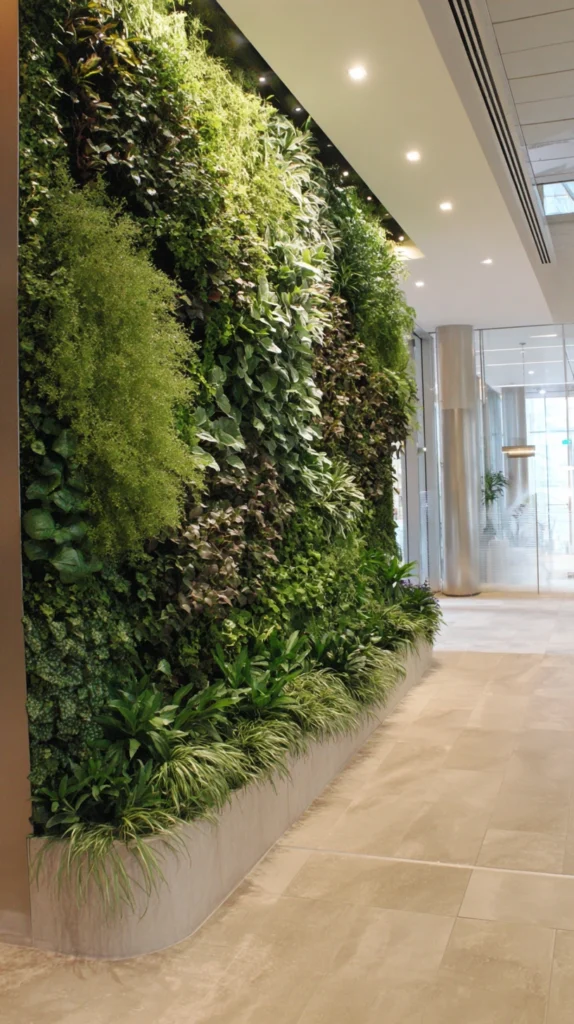
Maximize green impact without consuming floor space through vertical installations including mounted planters, living walls, or hanging systems creating lush plant displays along previously unused wall surfaces. Install modular wall-mounted planting systems filled with trailing plants, ferns, or small specimens creating living tapestries, hang multiple plants at varied heights along single walls creating vertical gardens, or use floating shelves dedicated exclusively to plant displays creating green focal walls.
The vertical approach provides substantial plant presence while maintaining open floor plans essential to minimal aesthetics. Choose wall colors providing neutral backgrounds allowing green plants to stand out, ensure adequate lighting for plant health, and install securely supporting expected weights safely.
4. Monochromatic Green Palette
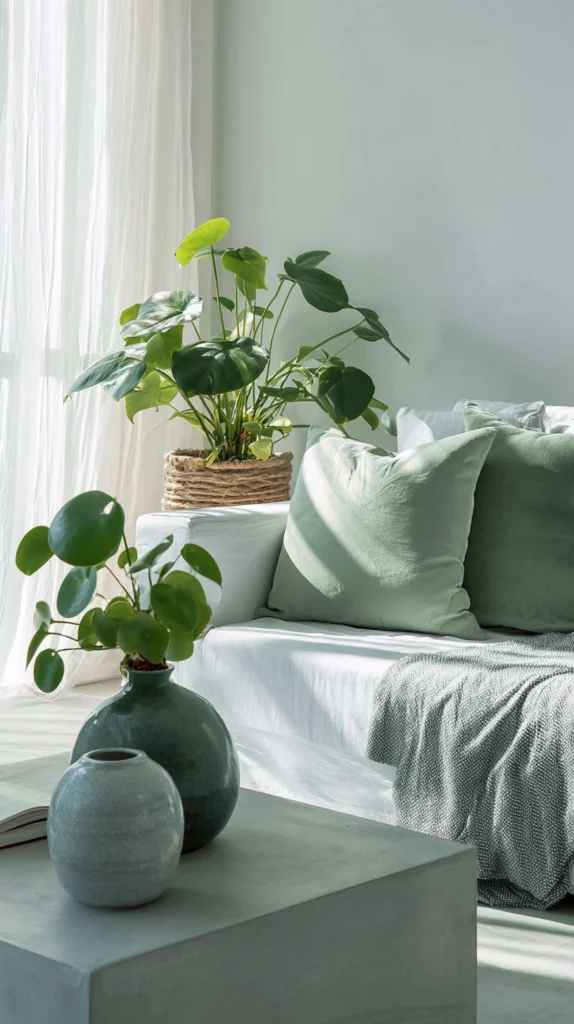
Embrace exclusively green plants avoiding flowering varieties or colored foliage creating sophisticated monochromatic living sculptures where form and texture provide all necessary visual interest. Select plants in varied green tones from deep forest to bright lime creating subtle tonal variation within the green spectrum, incorporate different leaf shapes and sizes adding textural diversity, and vary growth habits from upright to trailing creating dimensional interest.
The green-only approach feels cohesive and restrained compared to collections including flowering plants in multiple colors that can feel busy or chaotic. The monochromatic discipline creates calm sophisticated spaces while the varied greens prevent monotony through subtle tonal diversity.
5. Sculptural Plant Stands
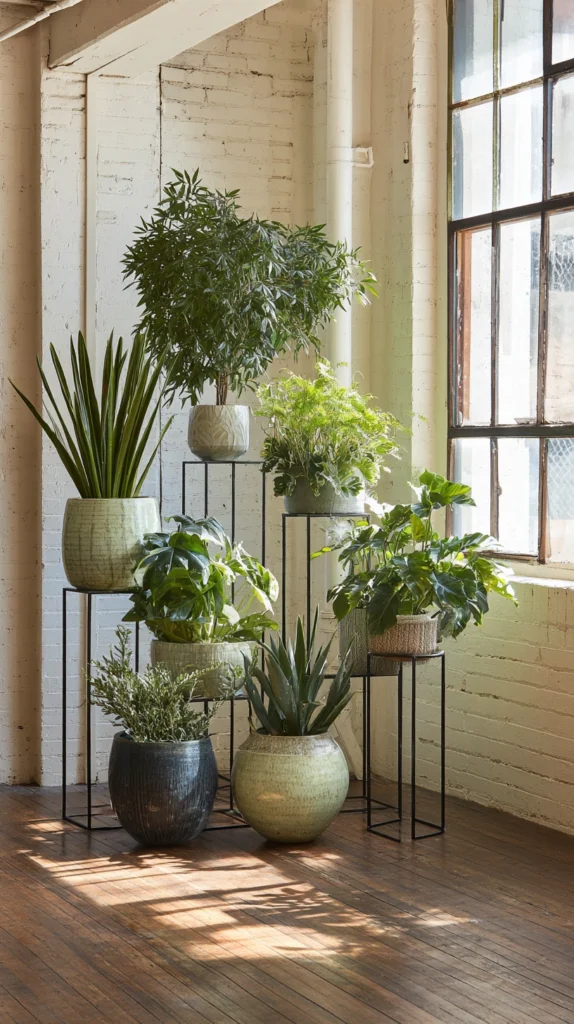
Display plants on minimal stands and pedestals elevating specimens to eye level, creating varied heights, and establishing plants as exhibited art worthy of proper presentation rather than simply positioned on available surfaces. Choose stands in materials coordinating with existing furnishings including natural wood, matte black metal, or white-painted designs maintaining minimal aesthetics.
Vary stand heights creating dimensional variety while ensuring adequate light reaches all displayed plants. Position stands strategically creating plant groupings at varied elevations without requiring numerous individual plant purchases. The elevated display creates gallery-like presentations honoring plants as design elements deserving thoughtful exhibition while the stands themselves contribute minimalist sculptural interest.
6. Strategic Empty Space
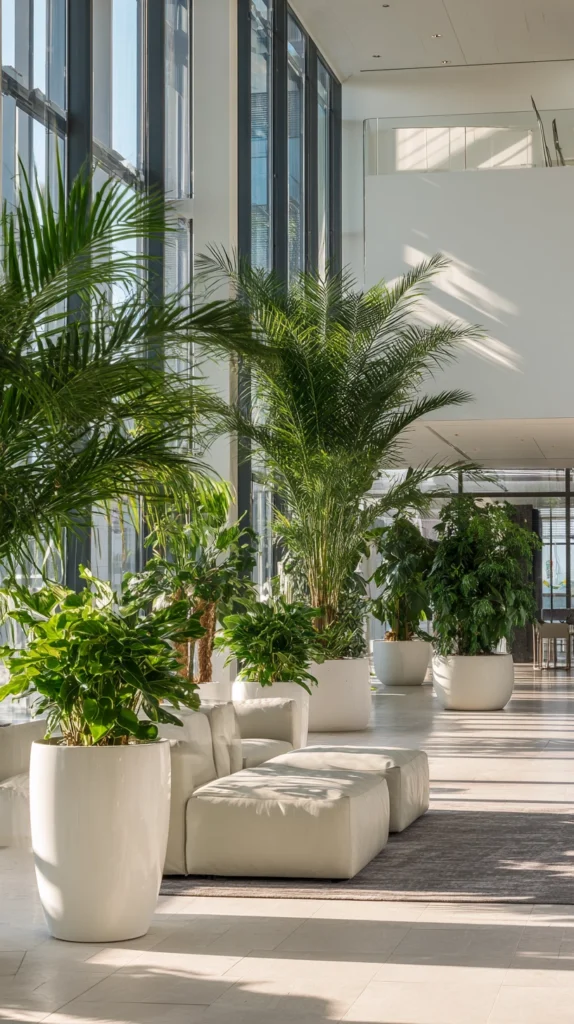
Resist filling every available surface with plants maintaining generous negative space allowing both plants and surrounding environments adequate breathing room essential to minimal aesthetics. Position plants deliberately with significant space between specimens allowing each individual plant proper appreciation rather than crowding multiple plants together creating visual density. Leave surfaces, shelves, and corners completely bare resisting the impulse to add plants everywhere possible.
The restraint allows displayed plants genuine impact while the empty space provides visual rest preventing the overwhelming sensation abundant plants can create. Accept that minimal jungle design requires disciplined editing continually resisting the temptation to acquire more plants beyond your carefully curated essential collection.
7. Large-Scale Leaf Drama
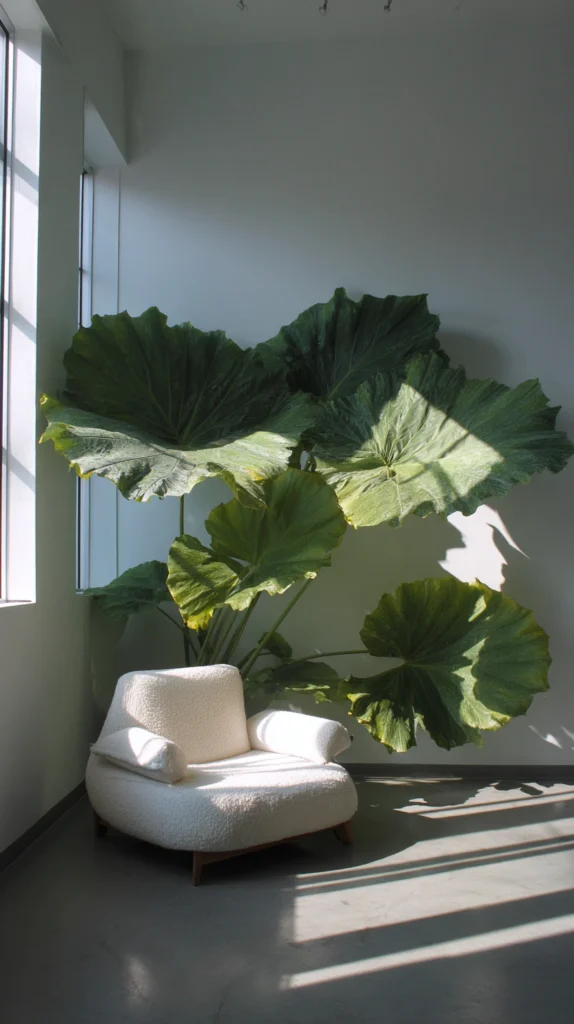
Choose plants featuring substantial leaves creating dramatic visual impact through impressive individual leaves rather than requiring numerous small-leaved specimens achieving similar presence. Incorporate monstera deliciosa with its distinctive split leaves, add elephant ears providing huge tropical foliage, include bird of paradise offering large paddle-shaped leaves, or use fiddle leaf figs with their substantial violin-shaped foliage.
The large-scale leaves create immediate visual drama and tropical sophistication while the individual leaf size means fewer plants are needed to achieve substantial green presence. Position large-leaved specimens where their dramatic forms receive proper appreciation and adequate growing conditions ensuring they thrive and maintain the impressive proportions making them valuable minimal jungle specimens.
8. Corner Plant Clustering
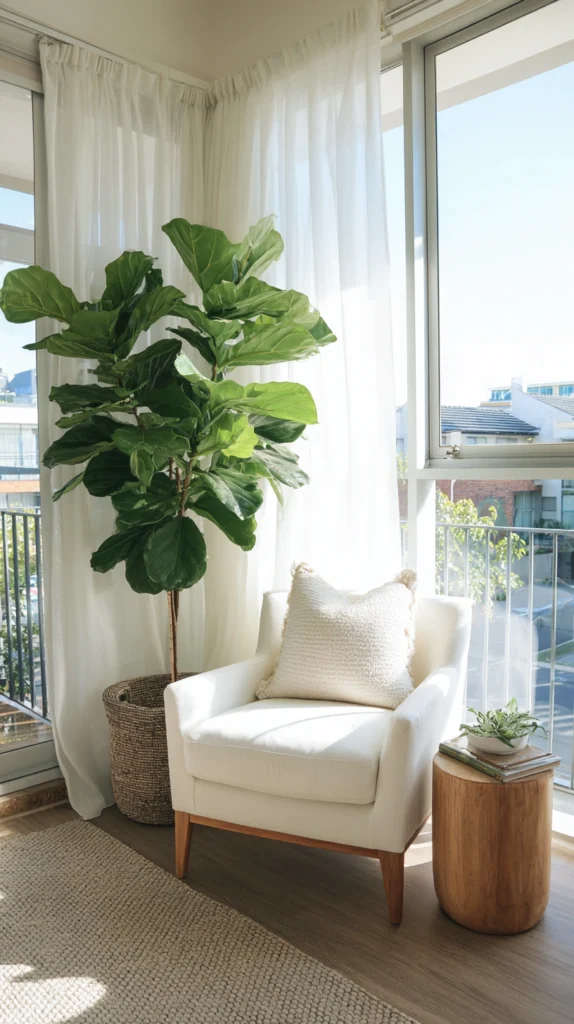
Concentrate plants in deliberately designed corner groupings creating contained jungle moments rather than distributing plants evenly throughout spaces preventing any single area from achieving substantial green density. Position multiple plants in varying heights clustered in single corners creating lush green focal points while remaining rooms stay relatively plant-free maintaining minimal aesthetics. Use plant stands, floor placement, and hanging specimens creating varied elevations within corner clusters adding dimensional interest.
The concentrated approach allows genuine jungle density in specific locations while the restraint elsewhere maintains the clean open feeling essential to minimalist interiors. Choose corners with adequate natural light ensuring clustered plants receive necessary illumination for healthy growth.
9. Hanging Plant Simplicity
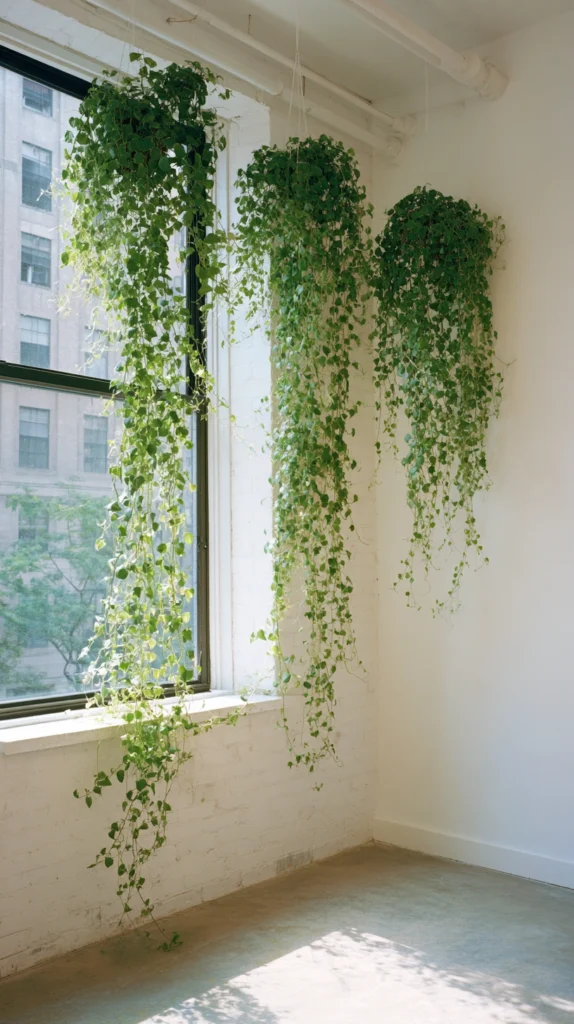
Incorporate suspended plants utilizing overhead space without consuming valuable floor or surface area while trailing growth habits create dynamic living elements. Choose simple hanging planters in materials matching other containers maintaining aesthetic consistency, select trailing plants including pothos, string of pearls, or philodendron creating cascading green elements, and position at varied heights adding dimensional interest.
Limit hanging plants to one or two specimens per room preventing the overwhelming busy feeling multiple suspended plants can create. Ensure secure installation supporting plant weight safely while adequate light reaches hanging specimens promoting healthy growth and maintaining the lush trailing forms making suspended plants valuable minimal jungle additions.
10. Floor Plant Anchors
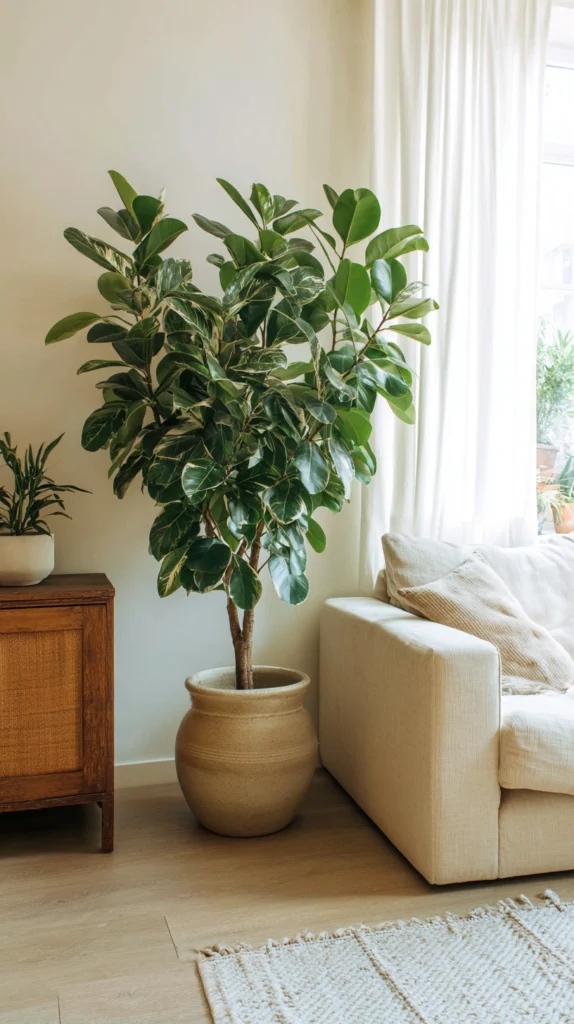
Ground spaces with substantial floor plants positioned strategically creating anchoring green elements while their significant scale delivers impact without requiring numerous small specimens. Choose plants achieving substantial heights including large snake plants, floor-dwelling palms like kentia or parlor palms, or tall dracaena varieties providing vertical green presence. Position floor plants filling empty corners, flanking furniture creating living bookends, or defining space transitions.
The floor placement maintains surfaces clear supporting minimal aesthetics while the plants’ substantial scale creates presence rivaling furniture in visual weight. Use simple large planters sized appropriately for mature specimens ensuring plants appear intentionally placed rather than awkwardly small in oversized containers or cramped in inadequate vessels.
11. Windowsill Linear Gardens
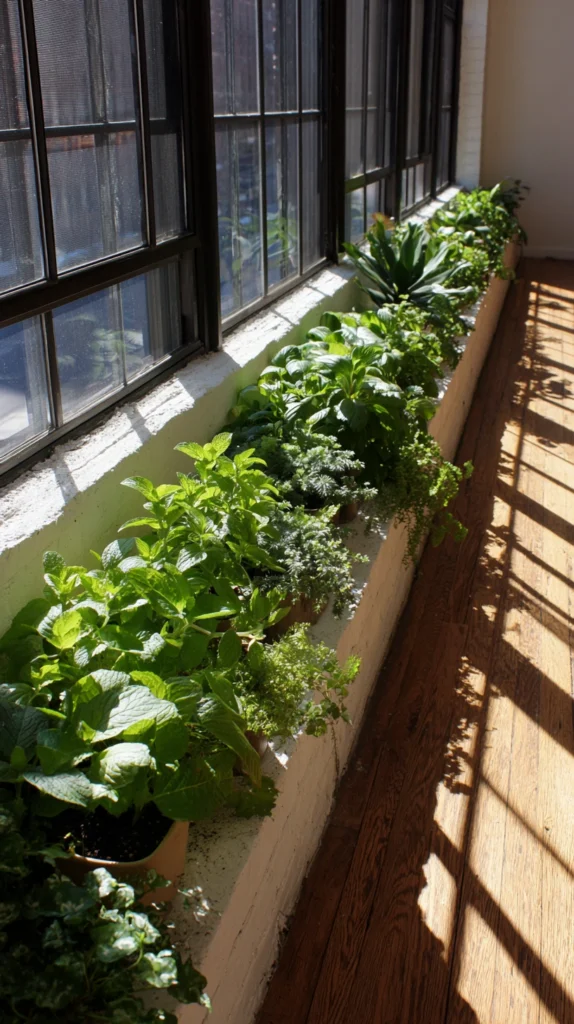
Create organized plant displays along windowsills arranging specimens in tidy rows taking advantage of natural light while the linear organization maintains the order essential to minimal design. Choose plants with similar care requirements allowing uniform watering and maintenance, use identical small planters creating visual cohesion, and arrange by height creating pleasing gradients or maintain uniform heights for strict minimalism. Limit windowsill collections to single window treatments rather than filling every available sill preventing plant overload.
The linear arrangement appears intentional and organized rather than haphazard while the window placement ensures adequate light. Rotate plants periodically ensuring even sun exposure prevents lopsided growth while the regular maintenance provides opportunities to edit collections removing struggling specimens.
12. Single Plant Type Collections
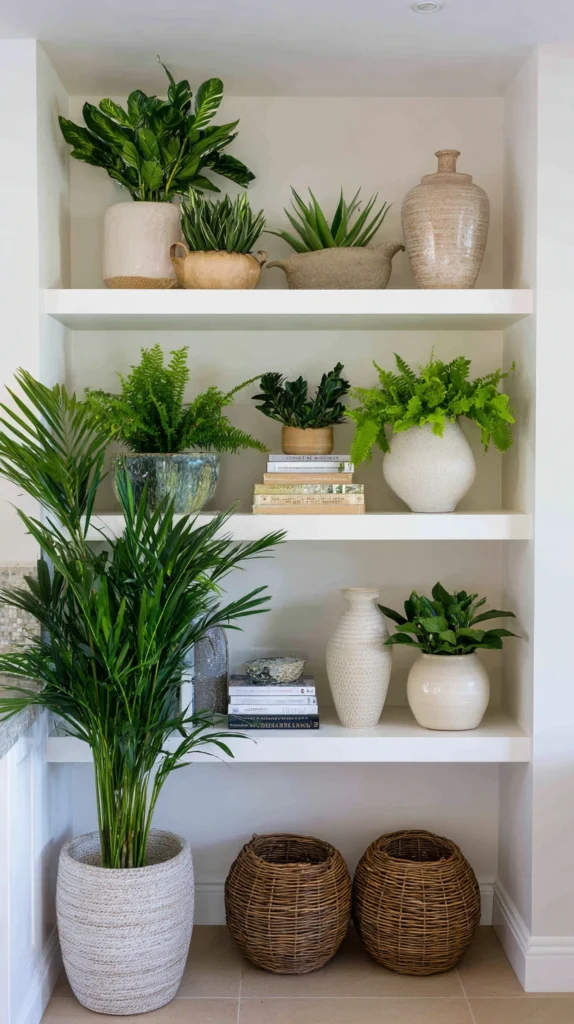
Develop focused collections featuring variations within single plant families—multiple pothos varieties, different snake plant cultivars, or varied fern species—creating cohesive themed displays demonstrating botanical knowledge and curatorial restraint. The focused approach appears intentional and educated rather than randomly accumulated while the variations within single families provide subtle diversity preventing complete uniformity.
Display collections together creating impact through repetition while the relatedness maintains visual harmony. Choose plant families offering adequate variety within their ranks ensuring collections remain interesting despite the focused scope. The collection approach satisfies plant enthusiasm while the discipline prevents the anything-goes accumulation that undermines minimal aesthetics.
13. Architectural Plant Forms
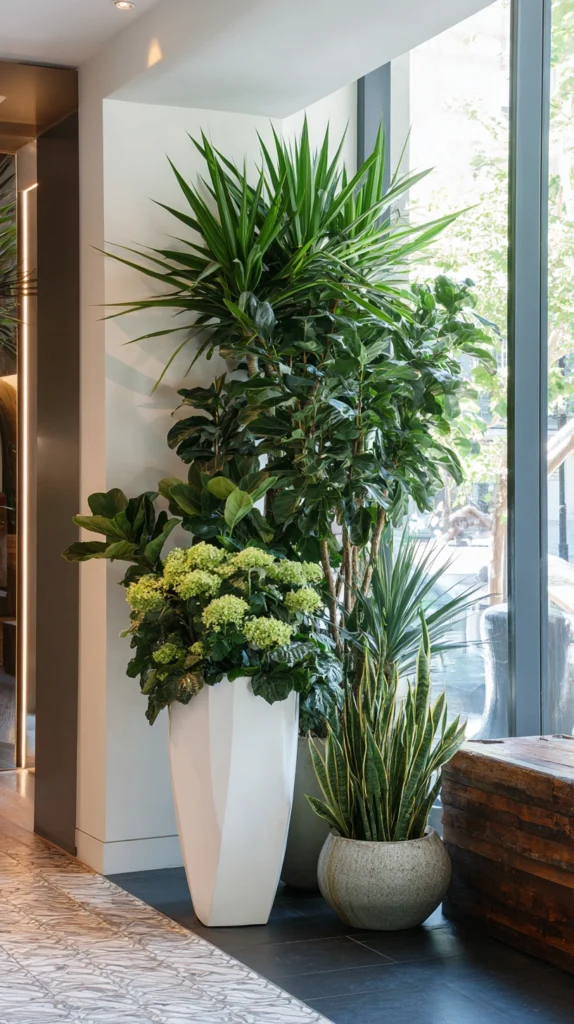
Select plants based on sculptural architectural qualities rather than purely decorative appeal choosing specimens with striking silhouettes, interesting growth patterns, or dramatic structural presence. Incorporate snake plants with their rigid vertical sword-like leaves, add ZZ plants offering glossy upright stems and uniform leaflet patterns, include structural cacti or sculptural succulents providing geometric forms, or use bamboo creating vertical linear elements.
The architectural plants function as living sculpture contributing to room design through form and structure rather than merely adding generic greenery. Position where their distinctive shapes receive proper appreciation and adequate light maintaining the structural integrity making them valuable design elements beyond their role as living plants.
14. Restrained Color Accents
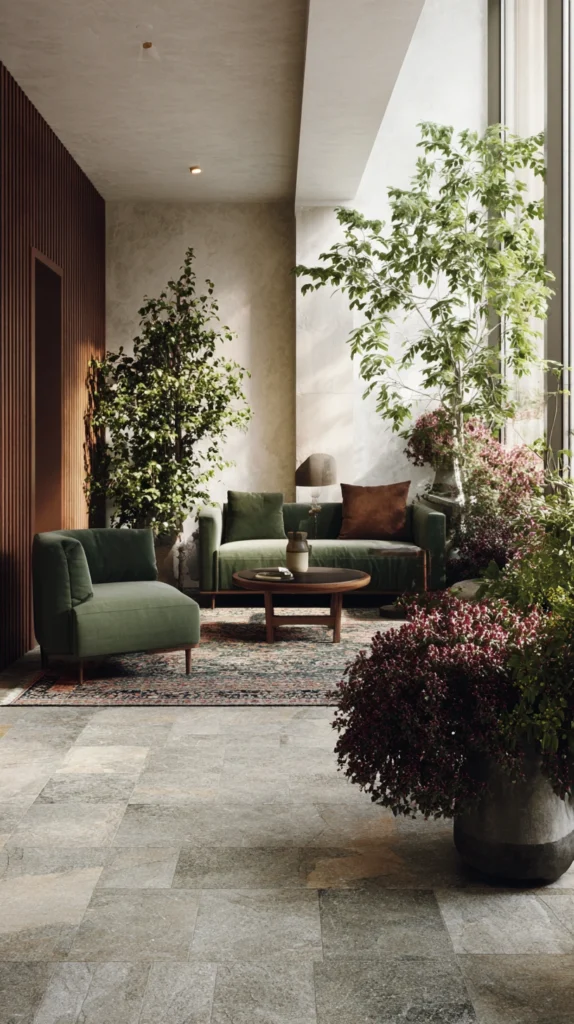
Introduce subtle variation through plants offering colored foliage in muted tones rather than bright flowers maintaining the restrained palette minimal aesthetics require while preventing complete green uniformity. Choose plants with burgundy, deep purple, or bronze foliage including certain rubber plant varieties, burgundy rubber trees, or purple oxalis providing dark tonal contrast against standard greens.
Select plants with silvery or blue-green foliage like certain succulents or eucalyptus adding cool tones. Avoid bright flowering plants or variegated varieties with white or yellow markings that can feel busy or chaotic. The subtle color variation adds sophisticated interest while the muted palette maintains minimal restraint preventing the rainbow effect abundant color creates.
15. Seasonal Rotation Approach
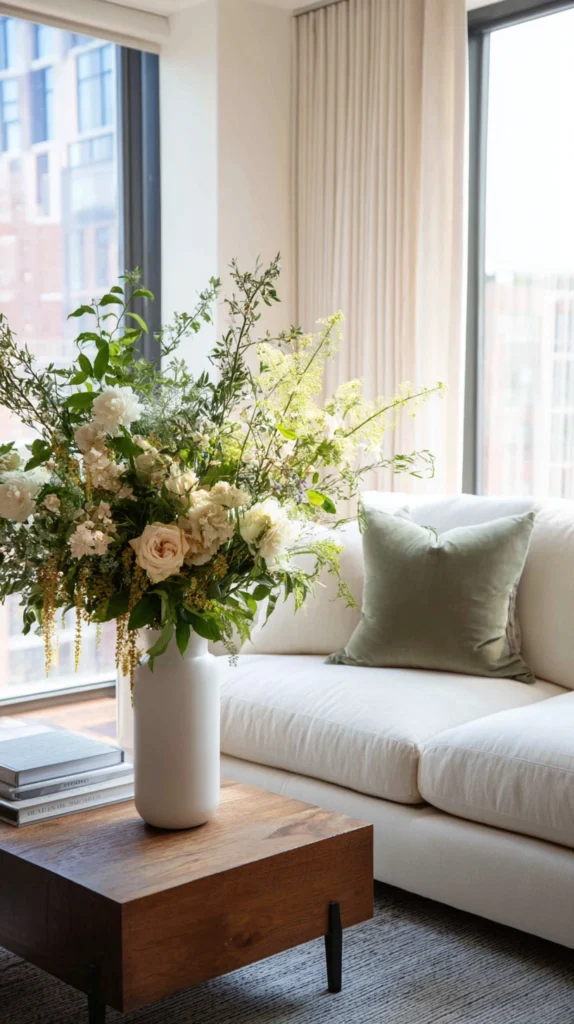
Maintain fresh dynamic plant displays through seasonal rotation moving struggling plants out of prime display positions, introducing seasonal specimens temporarily, and regularly editing collections preventing stagnant unchanged presentations.
Rotate plants between high-visibility display locations and recovery areas where struggling specimens receive rehabilitation without compromising main living space aesthetics. Introduce seasonal additions like amaryllis during winter or unique specimens discovered at nurseries displaying them temporarily before deciding whether they earn permanent collection positions.
The rotation keeps displays feeling current and considered while the regular evaluation provides opportunities to remove plants no longer serving aesthetic or thriving adequately. Accept that minimal jungle maintenance requires active curation and willingness to edit ruthlessly maintaining only specimens truly earning their positions.
Successfully creating minimal indoor jungle spaces requires discipline resisting the common plant enthusiast tendency toward acquisition and accumulation that quickly overwhelms minimal aesthetics. Establish collection limits based on available appropriate growing locations ensuring every plant receives adequate light, water, and care rather than struggling in unsuitable placements.
Choose quality specimens over quantity investing in substantial healthy plants rather than numerous small struggling examples. Research care requirements before acquiring new plants ensuring they match your available conditions and maintenance capacity preventing the neglected appearance dying or declining plants create.
Maintain plants meticulously through proper watering, adequate fertilization, regular cleaning removing dust from leaves, and prompt pest management ensuring displayed specimens remain healthy and attractive worthy of their prominent positions.
Prune regularly maintaining desired shapes and sizes preventing plants from outgrowing their spaces or designated roles within minimal compositions. Repot as needed providing adequate root space while choosing appropriately sized containers preventing the awkward appearance of small plants in oversized pots or root-bound specimens in inadequate containers.
Edit continuously removing plants no longer serving aesthetically, those requiring more maintenance than you can provide, or specimens struggling despite proper care. Resist guilt-based plant retention recognizing that maintaining struggling plants undermines overall aesthetic goals while finding appropriate new homes for removed plants through gifting or selling ensures they receive better suited conditions elsewhere.
Accept that successful minimal indoor jungle design requires saying no to most potential plant acquisitions maintaining disciplined collections rather than accumulating every appealing specimen encountered.
Consider scale relationships ensuring plant sizes remain appropriate for room dimensions and furniture scale preventing awkward proportion mismatches where tiny plants disappear in large spaces or oversized specimens overwhelm modest rooms.
Position plants where they enhance rather than obstruct daily living ensuring their placement doesn’t interfere with circulation, furniture use, or practical room functions. Use plants supporting lifestyle rather than complicating it choosing lower-maintenance varieties if time is limited or embracing higher-maintenance specimens only if their care brings genuine joy rather than resentful obligation.
Coordinate plant aesthetics with existing interior design styles ensuring botanical additions enhance rather than conflict with established décor. Choose plants and containers complementing color palettes, matching material preferences, and honoring design periods whether that’s mid-century modern, Scandinavian minimalism, contemporary industrial, or other specific aesthetics. The integration creates cohesive interiors where plants appear as essential design elements rather than unrelated additions awkwardly coexisting with surrounding furnishings and architecture.
Understand light requirements matching plant selections to available natural light rather than forcing shade-lovers into sunny exposures or sun-worshippers into dim corners where they’ll inevitably struggle. Assess actual light conditions in your spaces using light meters or smartphone apps providing objective measurements rather than subjective guesses.
Research specific plant light needs ensuring selections match available conditions or be prepared to supplement with grow lights maintaining plant health in inadequate natural light situations.
Develop consistent care routines establishing regular watering, fertilizing, and maintenance schedules preventing the neglect that occurs when plant care depends on remembering rather than systematic routines. Use calendar reminders, establish weekly plant care sessions, or create maintenance checklists ensuring all specimens receive appropriate attention. Monitor plants regularly checking for pest issues, disease symptoms, or declining health allowing early intervention before problems become severe requiring difficult recovery efforts or plant loss.
Recognize that minimal indoor jungle design represents philosophy and discipline rather than specific plant quantities or rigid rules. The approach succeeds through thoughtful curation, quality over quantity priorities, and willingness to edit maintaining only plants truly earning their positions through aesthetic contribution and healthy thriving growth.
Some minimal jungle spaces might include fifteen carefully chosen specimens while others achieve equivalent impact through five substantial plants thoughtfully positioned and impeccably maintained.
Accept that this design approach isn’t about deprivation or arbitrary limits but rather about intentionality and curation creating spaces where plants receive proper appreciation as valuable design elements rather than being taken for granted as generic green additions.
Each plant should justify its presence through either substantial visual impact, unique sculptural qualities, successful thriving demonstrating good care and appropriate placement, or meaningful personal significance beyond pure decoration.
Most importantly, remember that minimal indoor jungle design celebrates plants while honoring the spaces they inhabit, proving that abundant green presence and clean minimalist aesthetics aren’t mutually exclusive but rather complementary goals achieved through disciplined selection, thoughtful positioning, excellent care, and the kind of editing restraint that distinguishes curated collections from accumulated clutter.
The result creates homes feeling refreshingly alive with natural beauty while maintaining the visual calm, intentional simplicity, and breathing room that defines successful minimalist interiors where every element including living plants serves deliberate purposes and receives the attention and appreciation it deserves.