14 Japanese Zen Garden Ideas for a Peaceful, Clutter-Free Backyard
A Japanese Zen garden is the most deliberately and most completely peaceful outdoor space available in any domestic setting. It is a garden designed not for productivity, not for food, and not for the display of horticultural achievement — but for the singular purpose of creating the conditions in which the mind naturally settles, the body naturally releases its accumulated tension, and the particular quality of present, unhurried awareness that Zen philosophy values above all other mental qualities becomes genuinely, daily available.
The Zen garden achieves this extraordinary effect through radical simplicity. Every element is chosen with genuine intention. Every surface is maintained with genuine care. Every object earns its presence through genuine functional and aesthetic contribution to the complete composition. The result is a garden that does more for the daily quality of life with a gravel rake, a few stones, and a single carefully chosen plant than the most elaborate conventional garden can achieve with unlimited budget and unlimited complexity.
Here are 14 Japanese Zen garden ideas for a genuinely peaceful and clutter-free backyard.
1. Raked Gravel or Sand Sea
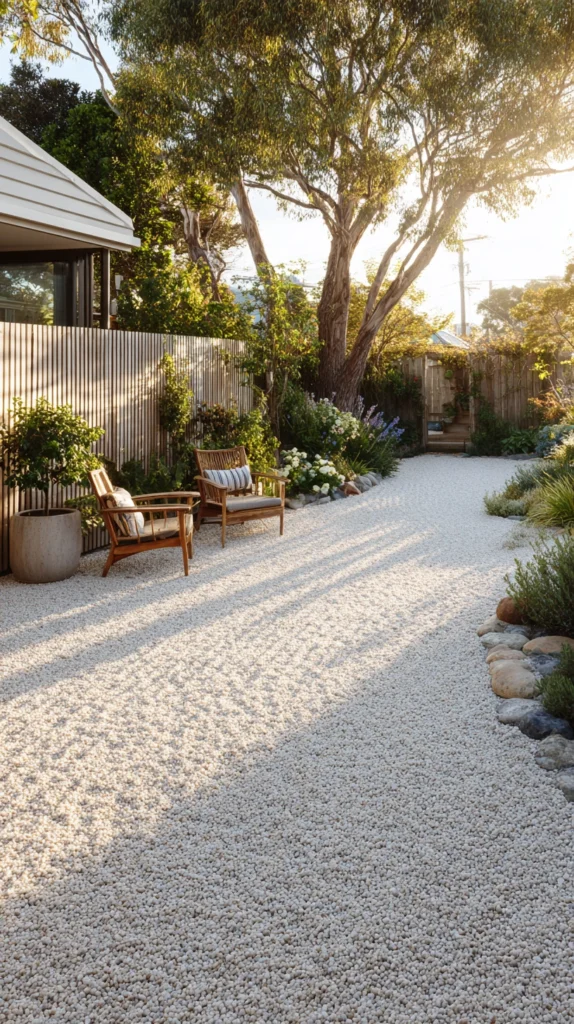
A raked gravel or sand sea — a generous expanse of fine white or pale grey gravel raked into precise parallel lines or concentric circular patterns around carefully positioned stones — is the defining and most specifically Zen garden element available. The raked gravel sea represents water — the lines of the rake suggesting the movement of ocean waves, river currents, or the surface ripples of a still pool — creating a meditative visual landscape of extraordinary calm and genuine symbolic depth within the physical boundary of the backyard.
Pro Tip: Use a purpose-made wooden Zen garden rake with teeth spaced at 4 to 5 centimetres for the most beautiful and most precisely defined gravel raking pattern. A rake with wider or narrower tooth spacing creates patterns of insufficient definition or excessive fineness — neither achieving the beautiful, clearly readable pattern quality that makes a raked Zen gravel garden so specifically and genuinely beautiful when viewed from the primary garden observation position.
2. Carefully Positioned Stone Groupings
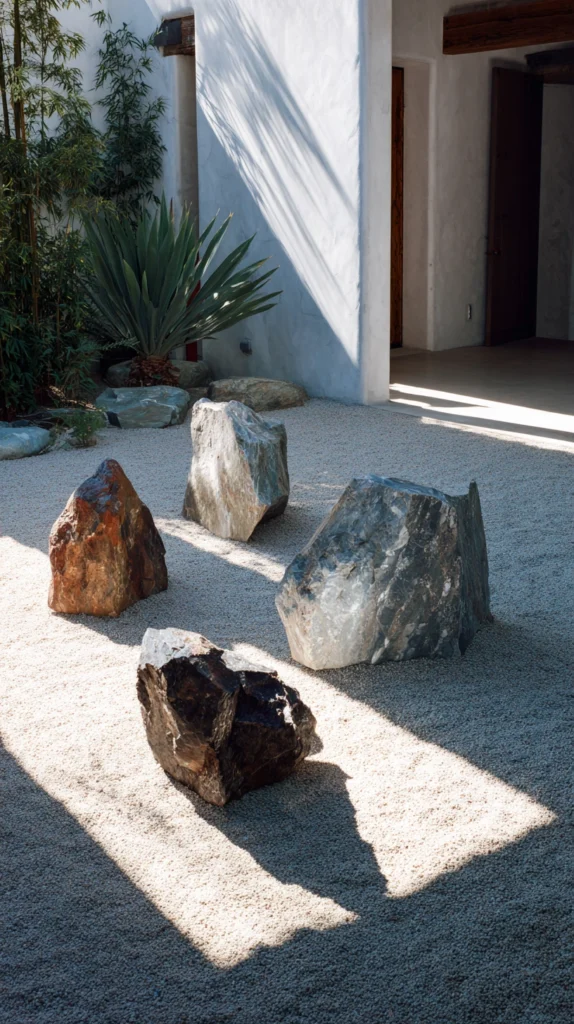
Natural stones positioned in deliberate groupings — the classic Zen garden arrangement of an odd number of stones of varying sizes placed in compositionally considered relationships — creates the primary sculptural language of the Japanese Zen garden.
Stones in a Zen garden are never decorative in the conventional sense — they are compositional anchors that create visual balance, represent mountains or islands within the gravel sea, and provide the strong, permanent, geological presence that grounds the complete garden composition.
Pro Tip: Position Zen garden stones so that their most interesting natural face — the surface with the most character, texture, and visual complexity — faces the primary garden viewing position. Every stone has a front and a back — a most beautiful face and a less beautiful one.
Identifying and orienting the most beautiful face of each stone toward the primary viewing direction creates a stone arrangement of maximum visual richness and genuine compositional quality from the position from which the garden is most frequently and most attentively experienced.
3. Bamboo Water Feature
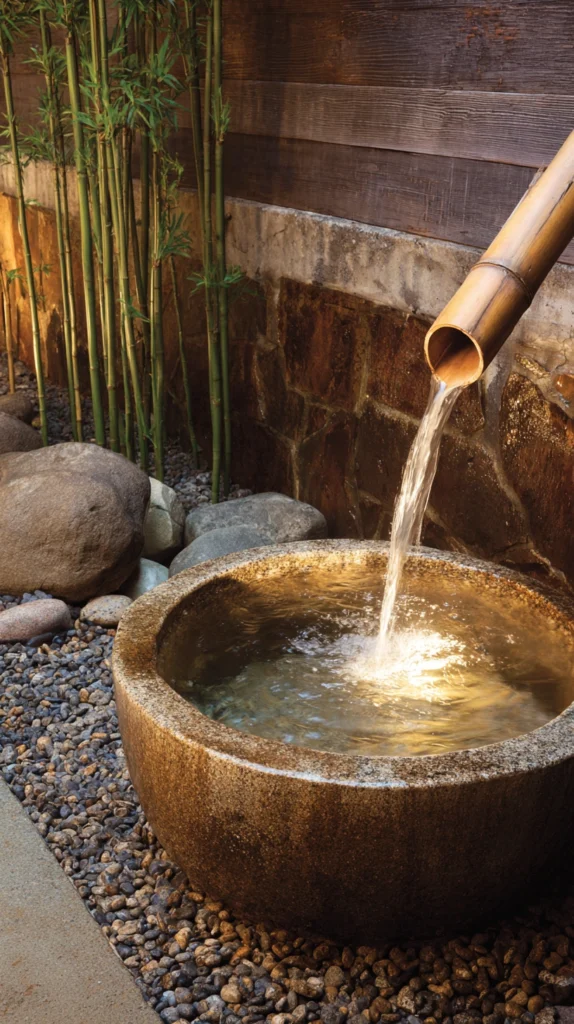
A bamboo shishi-odoshi water feature — the traditional Japanese deer scarer, a bamboo pipe that fills with water, tips to release it into a stone basin below, and returns to its upright position with a gentle knock against a stone — creates a Zen garden sound element of extraordinary meditative quality and complete cultural authenticity.
The shishi-odoshi introduces sound, movement, and the particular acoustic quality of bamboo against stone into the garden — creating a sensory dimension of living, rhythmic calm that purely visual garden elements cannot provide.
Pro Tip: Position the bamboo shishi-odoshi water feature where its sound is audible from the primary garden sitting position but where its mechanical components are partially concealed by surrounding planting — the sound present and beautiful, the mechanism suggested rather than fully exposed.
A water feature whose complete mechanical workings are fully visible loses something of the meditative mystery that makes the gentle rhythmic knock of the shishi-odoshi so specifically and genuinely calming as a Zen garden sound element.
4. Moss Garden Groundcover
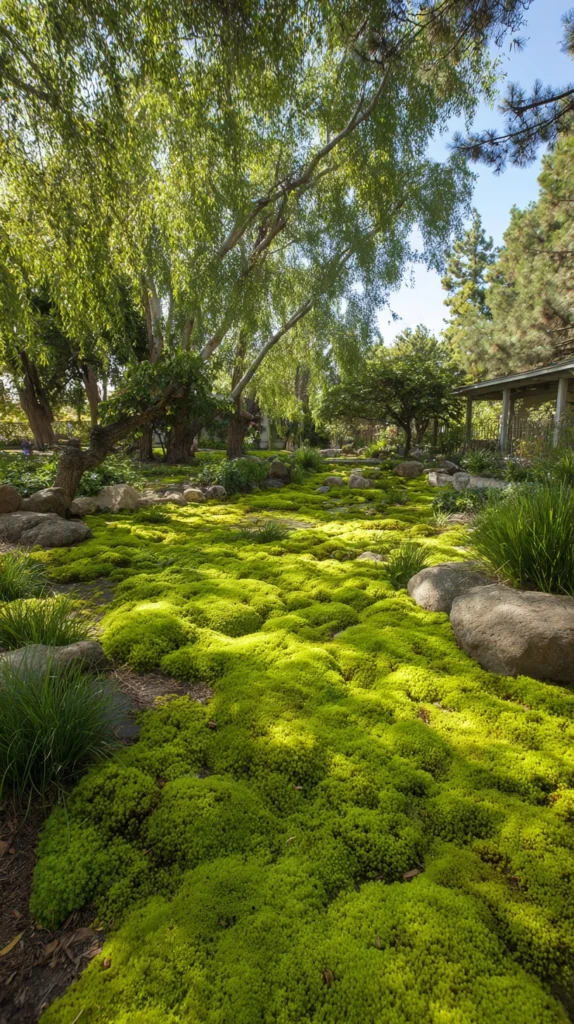
A moss garden — a continuous, soft carpet of living moss replacing conventional lawn or hard surface groundcover throughout the Zen garden — creates a surface of extraordinary organic warmth and genuine natural beauty. Moss has a quality of ancient, settled calm — its deep, uniform green, its perfectly even texture, and its silent, living presence creating a garden groundcover of genuine Zen aesthetic appropriateness and complete sensory delight. Walking barefoot on moss in a summer morning is one of the most specifically and genuinely pleasurable sensory experiences available in any domestic garden.
Pro Tip: Establish moss groundcover in the Zen garden by transplanting existing garden moss in flat sections onto prepared, shaded, consistently moist soil — pressing each section firmly into contact with the soil and maintaining consistent moisture for the first three to four weeks of establishment. Moss transplanted in autumn establishes most reliably — the cooler moist conditions of the autumn season providing the ideal establishment environment for rapid, complete moss coverage of the prepared garden ground surface.
5. Japanese Maple as the Focal Point Tree
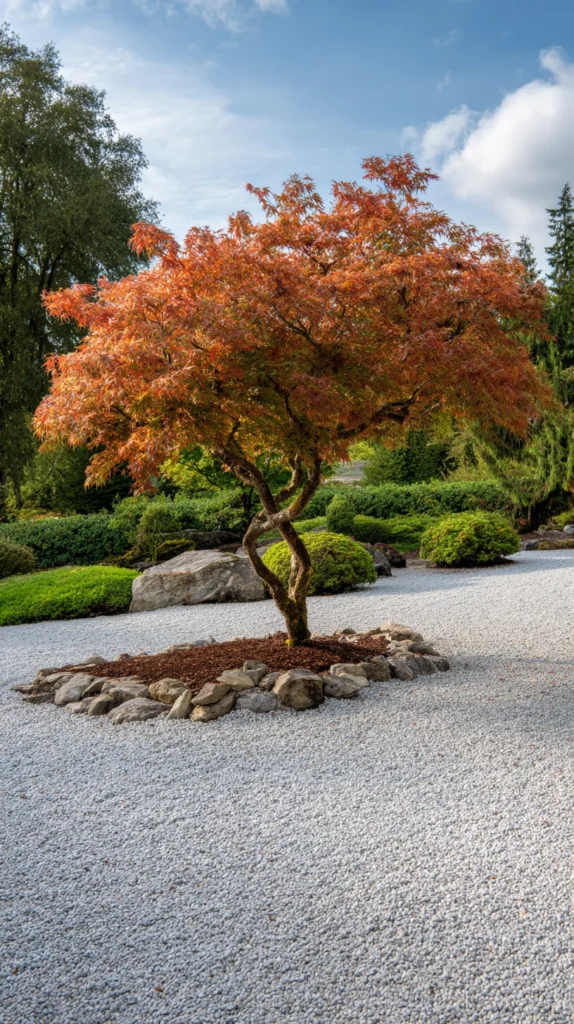
A Japanese maple — Acer palmatum — positioned as the single focal point tree of the Zen garden creates a plant of extraordinary seasonal beauty and genuine Zen aesthetic appropriateness. The Japanese maple provides seasonal interest in every month of the year — the delicate emerging foliage of spring, the full canopy of summer, the extraordinary red and orange autumn color, and the elegant bare branch structure of winter — making it the most seasonally complete and most genuinely beautiful single tree available for the Zen garden focal position.
Pro Tip: Choose a Japanese maple variety with a naturally weeping or mounding growth habit — varieties like Acer palmatum Dissectum or Acer palmatum Crimson Queen — for a Zen garden tree of complete, graceful natural form that requires minimal pruning intervention to maintain its beautiful shape. A Japanese maple with a natural weeping habit develops its beautiful form through its own growth process — the Zen garden principle of working with natural form rather than imposing an artificial one expressed directly in the tree’s own undirected, organic beauty.
6. Simple Stone Lantern
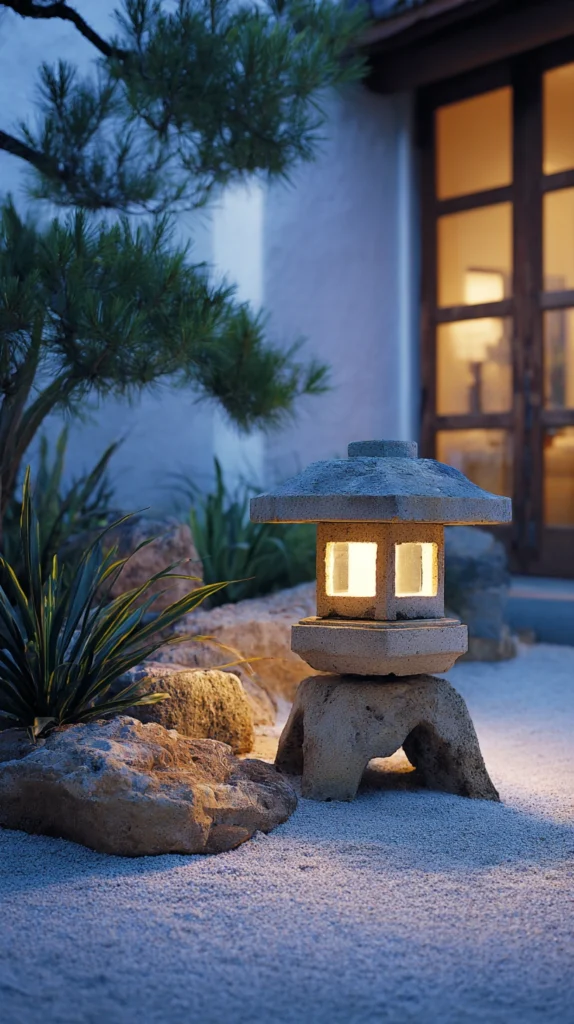
A traditional Japanese stone lantern — a carved granite or natural stone lantern of simple, authentic form positioned at the garden edge, beside the water feature, or as a path marker — creates a Zen garden feature of genuine historical authenticity and considerable material beauty. The stone lantern is one of the oldest and most specifically Japanese garden elements — its presence in the Zen garden creating an immediate and complete connection to the centuries-old tradition of Japanese garden design and Japanese garden philosophy.
Pro Tip: Choose a stone lantern in a genuinely weathered, naturally aged stone rather than a freshly carved, unnaturally bright alternative for a Zen garden feature of genuine material authenticity and complete visual coherence with the surrounding natural garden materials.
A weathered stone lantern with its natural moss and lichen colonization reads as a genuinely ancient and genuinely beautiful garden object. A fresh, bright stone lantern reads as a recently purchased garden ornament — the material newness working against the quality of ancient settled calm that the Zen garden requires of every element it contains.
7. Stepping Stone Path Through the Garden
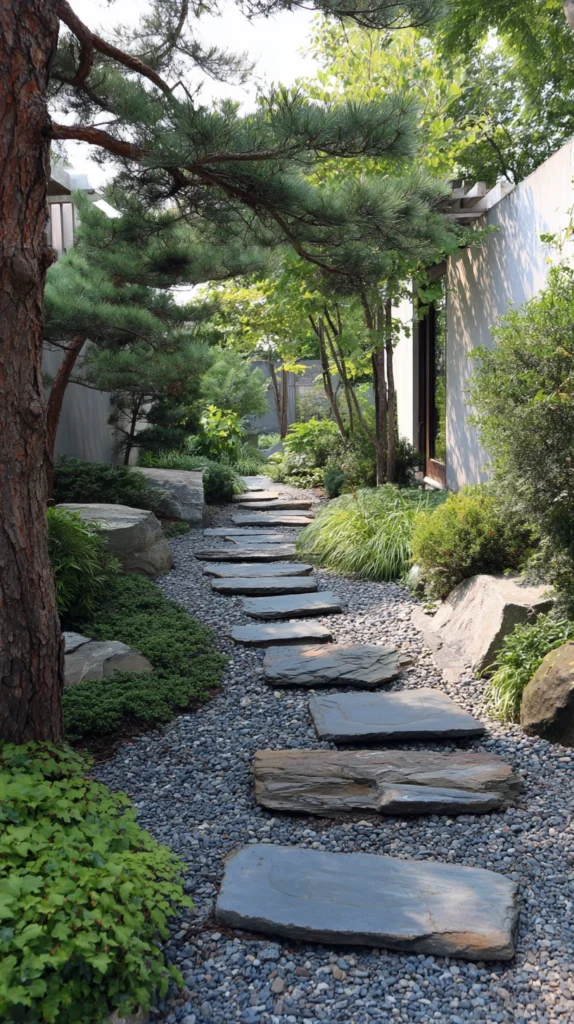
A stepping stone path — large, flat natural stones set at a comfortable walking stride distance through the moss, the gravel, or the garden planting — creates the primary circulation element of the Zen garden and the most important single design decision for the garden’s spatial experience.
The stepping stone path in a Zen garden is not simply a practical walking surface — it is a designed sequence of spatial experiences, each stone positioned to direct attention, slow the pace, and create the quality of present, attentive movement that the Zen garden is designed to cultivate.
Pro Tip: Set stepping stones in the Zen garden at a slightly shorter stride distance than natural — requiring the garden visitor to take slightly smaller, slightly more deliberate steps than habitual walking pace. The slightly shortened stride creates a subtle but genuinely effective physical slowing — the body adjusting its pace to the stone spacing and the mind following the body into the quality of unhurried, present attention that the Zen garden at its most genuine and most effective design consistently creates.
8. Bamboo Fence or Screen
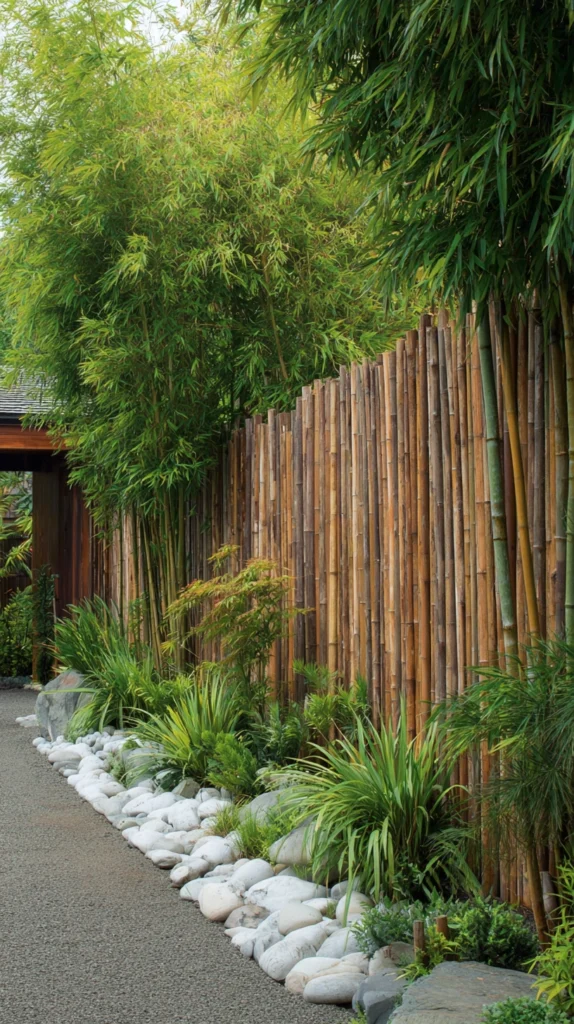
A bamboo fence or screen — natural bamboo poles bound together in a traditional Japanese fence format, creating a garden boundary of genuine natural warmth and complete cultural authenticity — creates the Zen garden enclosure that defines the garden as a separate, protected world of calm within the wider domestic landscape. The bamboo fence creates the visual privacy, the wind shelter, and the sense of contained, dedicated space that allows the Zen garden to function as a genuine sanctuary rather than simply an aesthetically considered section of an open backyard.
Pro Tip: Choose clump-forming bamboo species for any bamboo used as living screening plants within or around the Zen garden — Fargesia or Thamnocalamus varieties that remain contained within their planted footprint. Running bamboo species used as Zen garden screening create an invasive rhizome network that rapidly colonizes the gravel sea, the moss garden, and the surrounding landscape — destroying the precise, carefully maintained simplicity that the Zen garden requires for its complete and genuine effectiveness as a meditative outdoor space.
9. Single Specimen Plant with Negative Space
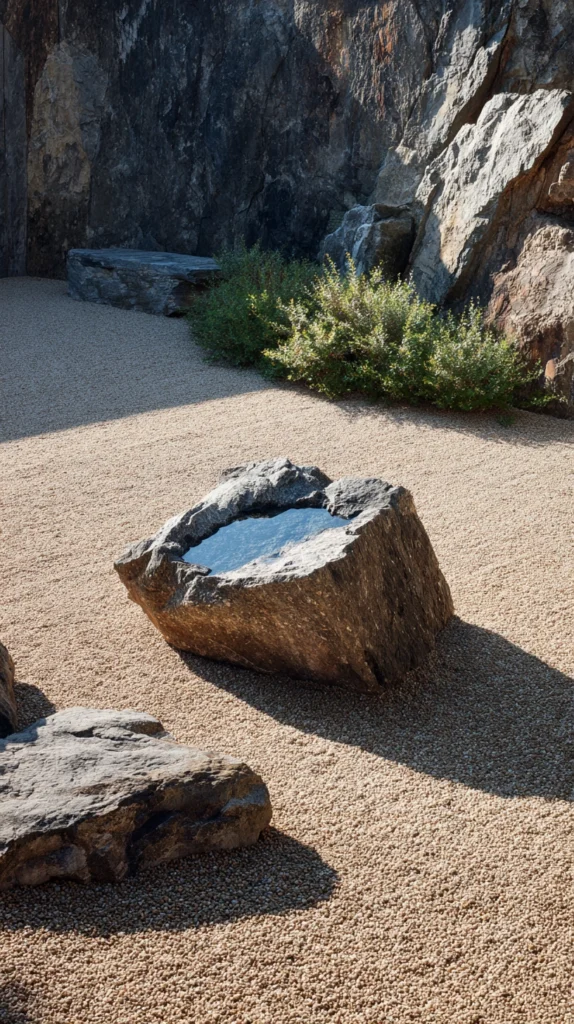
A single beautifully chosen specimen plant — a cloud-pruned box ball, a carefully trained pine, or a single ornamental grass of elegant natural form — positioned within a generous expanse of empty gravel or moss creates a Zen garden planting of extraordinary minimalist beauty and complete compositional confidence.
The single specimen plant against a background of generous empty space is the most specifically and most completely Zen garden planting approach — the negative space around the plant making the plant itself more visible, more present, and more genuinely beautiful than any amount of surrounding planting could achieve.
Pro Tip: Maintain the single specimen plant with regular, careful pruning that enhances and reveals its natural form rather than imposing an artificial shape upon it. The Zen garden principle of working with the natural character of each plant — enhancing what is already there rather than creating something that was not — applies directly to the maintenance of the single specimen focal plant. A well-maintained single specimen plant of beautiful natural form is the most genuinely Zen garden element available in any domestic planting situation.
10. Dry Riverbed Feature
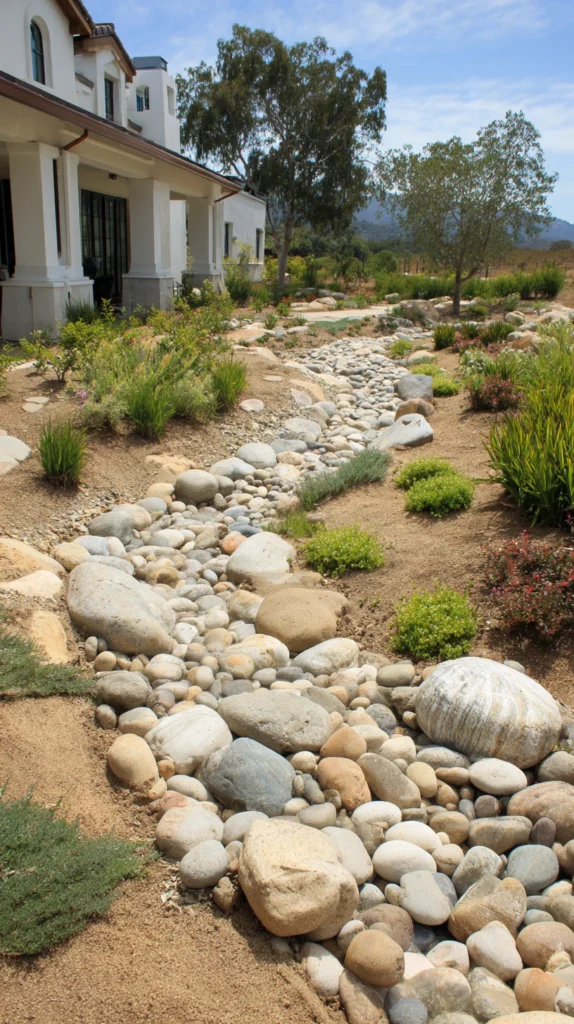
A dry riverbed — a curving channel of smooth river pebbles of varying sizes arranged to suggest the course of a natural stream through the garden — creates a Zen garden water element of complete visual beauty and genuine symbolic depth without the practical complexity of an actual water installation.
The dry riverbed creates the suggestion of water — the smooth, water-worn pebbles carrying the visual memory of the water that shaped them — in a garden element of complete permanence, zero maintenance, and genuine natural beauty.
Pro Tip: Vary the pebble size throughout the dry riverbed — larger, rougher stones at the outer edges suggesting slower, shallower water, and smaller, smoother stones at the center suggesting the faster, deeper channel of the stream — for a dry riverbed of genuine natural hydrological logic and complete visual authenticity. A dry riverbed with consistent pebble size throughout looks arranged rather than natural. A riverbed with varied pebble sizes following the logic of natural water movement looks genuinely like a dried streambed of complete natural beauty.
11. Wabi-Sabi Stone Basin
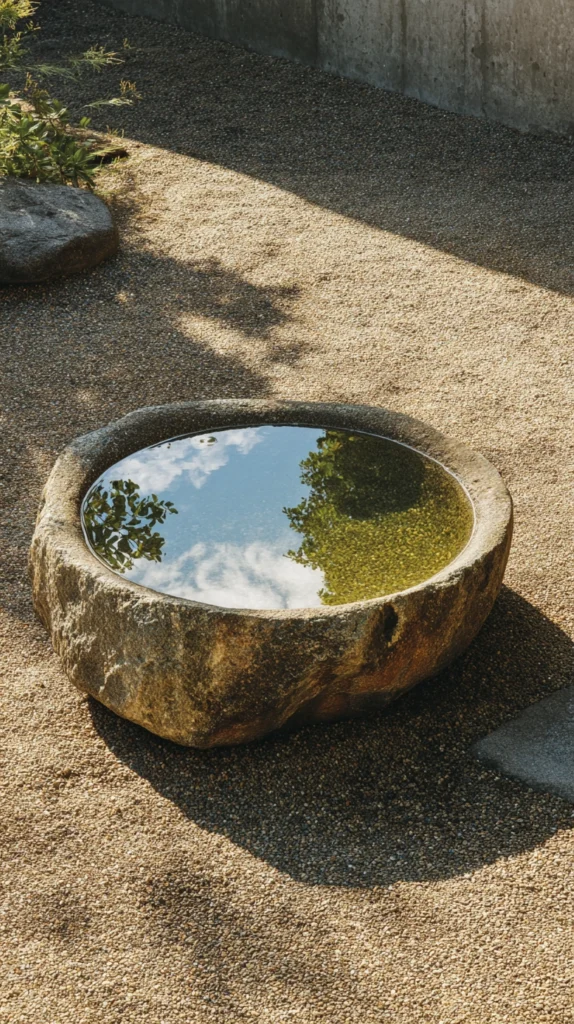
A stone water basin — a simple, slightly irregular natural stone carved or found with a natural hollow, filled with clean water — creates a Zen garden element of extraordinary material simplicity and genuine wabi-sabi beauty. The stone basin, or tsukubai, is a traditional Japanese garden element associated with the tea ceremony — the act of washing hands before entering the tea house translated into a garden feature of genuine ritual meaning and beautiful, simple material presence. A natural stone basin filled with still water reflects the sky, the surrounding garden, and the changing light of every passing hour.
Pro Tip: Position a small piece of activated charcoal in the water of the stone basin to maintain water clarity and prevent the algae growth that quickly clouds small, still water features in direct summer sunlight. Activated charcoal absorbs the organic compounds that feed algae growth — maintaining the extraordinary mirror-quality of a still, clear stone basin water surface without any chemical treatment or mechanical filtration.
12. Roji Garden Path
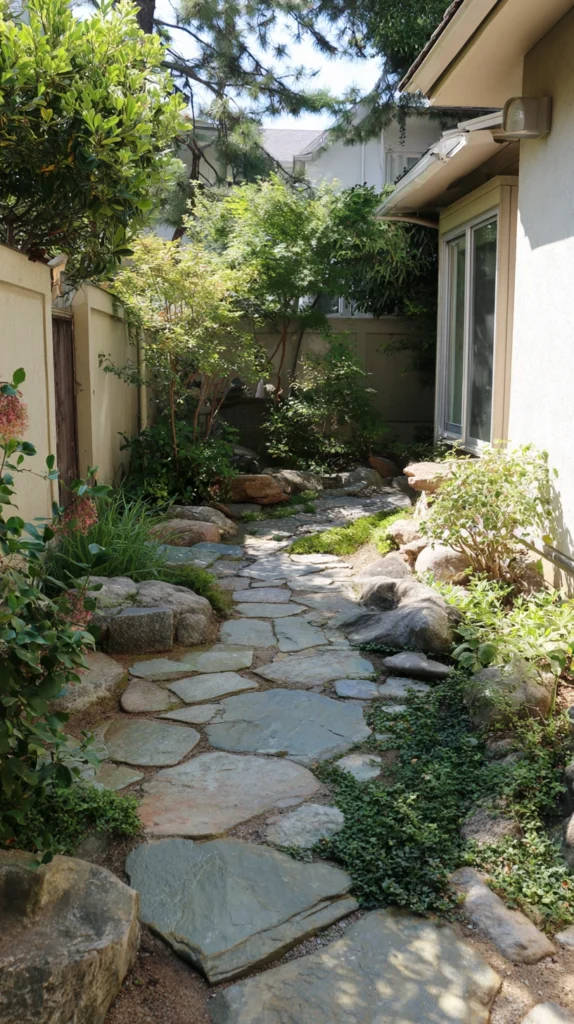
A roji — the traditional Japanese dewy path, a garden path of carefully placed stepping stones through moss, gravel, and naturalistic planting that leads from the outer garden world to the inner garden sanctuary — creates a Zen garden approach of extraordinary deliberate beauty and genuine meditative function.
The roji is not simply a path — it is a transitional experience, deliberately designed to slow the pace, shift the attention, and prepare the mind for the quality of present, settled awareness that the Zen garden requires of everyone who enters it with genuine intention.
Pro Tip: Plant the edges of the roji path with low, shade-tolerant plants of simple, clean natural form — moss, low ferns, and small-leaved ground covers — that create a soft, organic path edge without the visual complexity of elaborate mixed planting. The roji path edge should frame the stepping stones with simple natural beauty — drawing the eye downward to the stones and inward to the present moment rather than outward to the complexity of surrounding plants and planting combinations.
13. Contemplation Bench or Viewing Platform
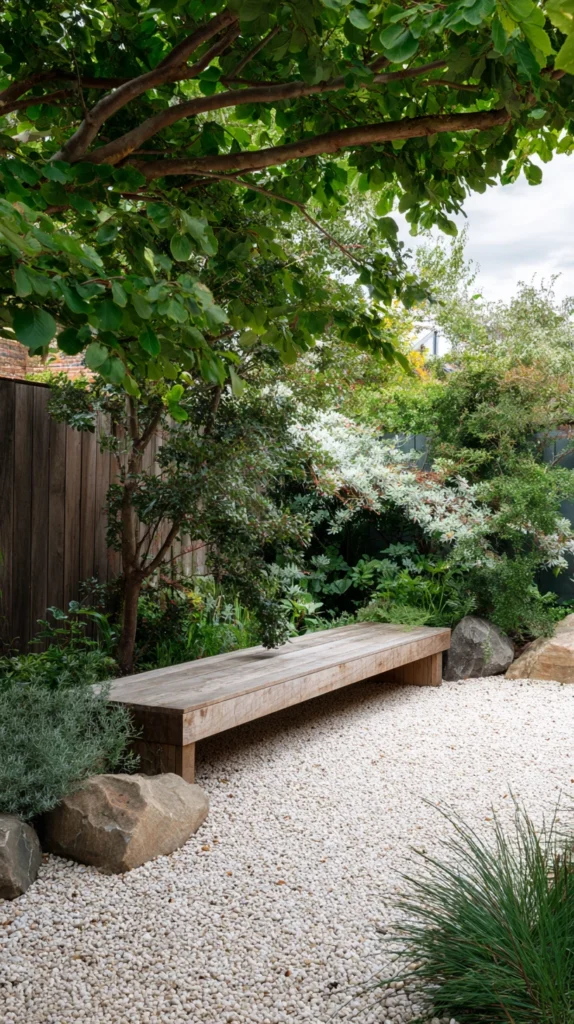
A simple timber bench — a single slab of natural timber on two stone or timber supports, positioned to face the most beautiful view of the complete Zen garden — creates a dedicated garden observation position of genuine daily value and complete functional simplicity.
The Zen garden bench is not a seating feature — it is a contemplation instrument, a positioned observation point from which the complete garden composition can be seen, appreciated, and experienced with the quality of present, unhurried attention that the garden has been designed to support and sustain.
Pro Tip: Position the Zen garden contemplation bench so that the complete garden composition — the raked gravel sea, the stone groupings, the specimen tree, the bamboo fence, and the stone lantern — is visible from the seated position in a single, complete view. A bench positioned to see only part of the garden creates a partial contemplative experience.
A bench positioned to see the complete garden composition creates the most genuinely and most completely satisfying Zen garden contemplation experience available — the complete composition visible, appreciable, and genuinely beautiful from the single designed observation position.
14. Night Lighting for Evening Contemplation
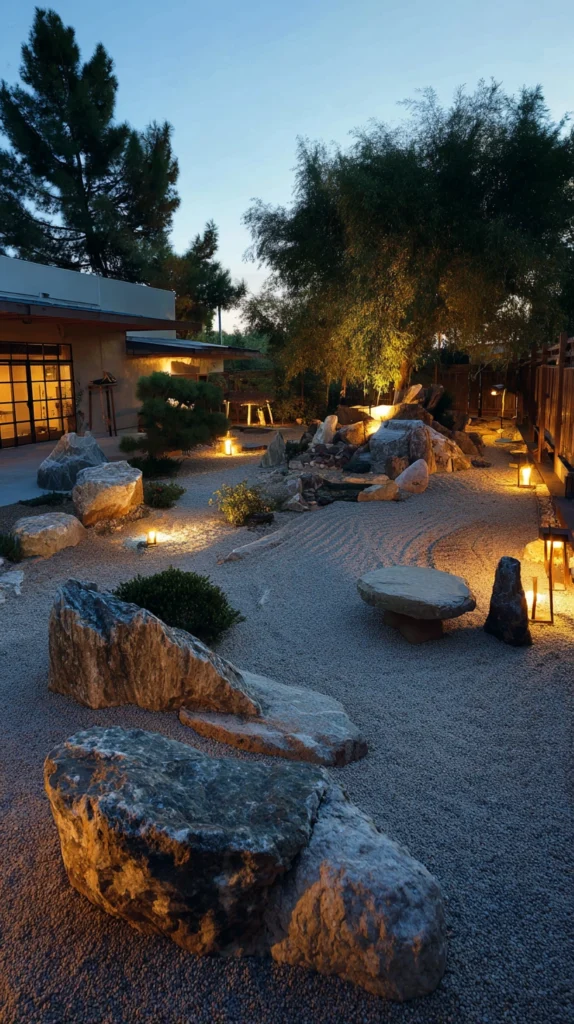
Warm, low-level garden lighting — simple stone lanterns with real candles or LED candle inserts, low-voltage path lights beside the stepping stones, and uplighters positioned at the base of the specimen tree — creates a Zen garden of extraordinary evening beauty and genuine nocturnal meditative atmosphere.
The Zen garden at night, lit only by the warm amber glow of stone lanterns and low path lights, is one of the most genuinely extraordinary and most completely peaceful domestic outdoor experiences available — the darkness simplifying the garden to its essential elements and the warm candlelight creating an atmosphere of complete, enveloping contemplative calm.
Pro Tip: Use warm amber LED candle inserts in stone lanterns rather than real candles for a Zen garden night lighting installation that maintains its beautiful warm glow consistently throughout the evening without any maintenance intervention or fire safety concern. High-quality LED candle inserts create a warm, slightly flickering amber light of genuine candlelight quality — maintaining the authentic stone lantern appearance while providing the practical reliability of a permanent, weather-resistant electrical light source.
Simplicity Is the Most Difficult Achievement
A Japanese Zen garden of genuine quality and genuine effectiveness is not simple to create — it is the result of genuinely considered design decisions, genuinely careful material selection, and the ongoing practice of maintenance and editing that keeps the garden in the condition of deliberate simplicity that makes it genuinely and completely effective as a meditative outdoor space.
Create it with genuine patience. Maintain it with genuine care and genuine daily attention. And discover that the most peaceful, the most genuinely restorative, and the most consistently beautiful outdoor space available in any domestic backyard is always the one that contains the least — and means the most.