
14 Nursery Corner in Parents’ Room Ideas That Work for Everyone
Sharing bedroom space with a newborn represents practical reality for many families facing space constraints, seeking nighttime feeding convenience, or following safe sleep guidelines recommending room-sharing during infancy’s earliest months.
Creating functional nursery corners within master bedrooms requires strategic planning balancing infant care necessities with adult sleep environment preservation, ensuring both parents and babies have their needs met within shared quarters.
Thoughtful design incorporating space-efficient furniture, visual separation between adult and infant zones, and aesthetic cohesion maintaining bedroom tranquility transforms potential challenges into workable arrangements.
The key lies in establishing dedicated baby areas that remain accessible and functional without overwhelming entire bedrooms or creating institutional nursery atmospheres in spaces adults inhabit equally. These fourteen nursery corner ideas demonstrate diverse approaches from minimalist bassinet setups to comprehensive care stations, each proving that room-sharing arrangements can succeed through intelligent design and strategic organization.
1. Defined Corner Zone
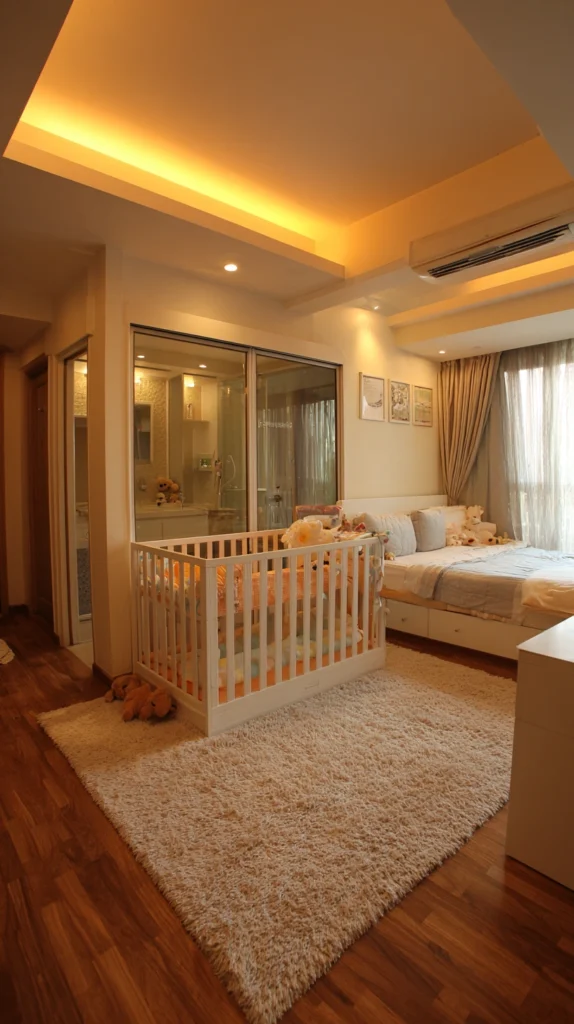
Establish clear nursery territories by positioning all baby furniture and supplies in single dedicated corners creating physical and visual separation between infant and adult zones. Place bassinets or cribs in corners furthest from bedroom doors minimizing hallway noise and light intrusion, position changing tables or dressers adjacent creating complete care stations, and confine baby items to designated areas preventing nursery sprawl throughout entire rooms.
Use area rugs defining baby zones visually, position furniture creating subtle barriers between zones, or arrange to maximize parents’ ability to monitor babies while maintaining some spatial separation. The defined zoning creates organizational clarity while ensuring both occupants have designated territories within shared spaces.
2. Multi-Functional Furniture
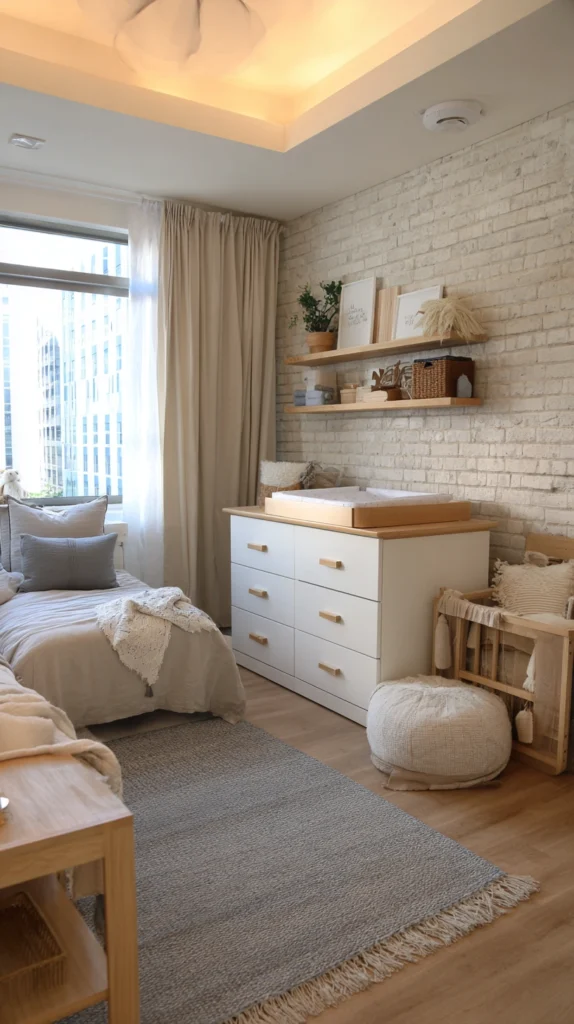
Incorporate dual-purpose pieces serving both nursery and bedroom functions maximizing space efficiency while reducing furniture quantities in already crowded shared rooms.
Choose dressers with changing pad tops functioning as both baby changing stations and adult clothing storage, select nightstands with shelving accommodating both parents’ bedside necessities and baby supplies, or use storage ottomans holding baby blankets while providing adult seating.
The multi-functional approach reduces overall furniture footprint while ensuring adequate storage and functionality for all occupants. Select pieces in coordinating finishes creating cohesive bedroom aesthetics rather than introducing mismatched nursery furniture disrupting established décor.
3. Bedside Bassinet Setup
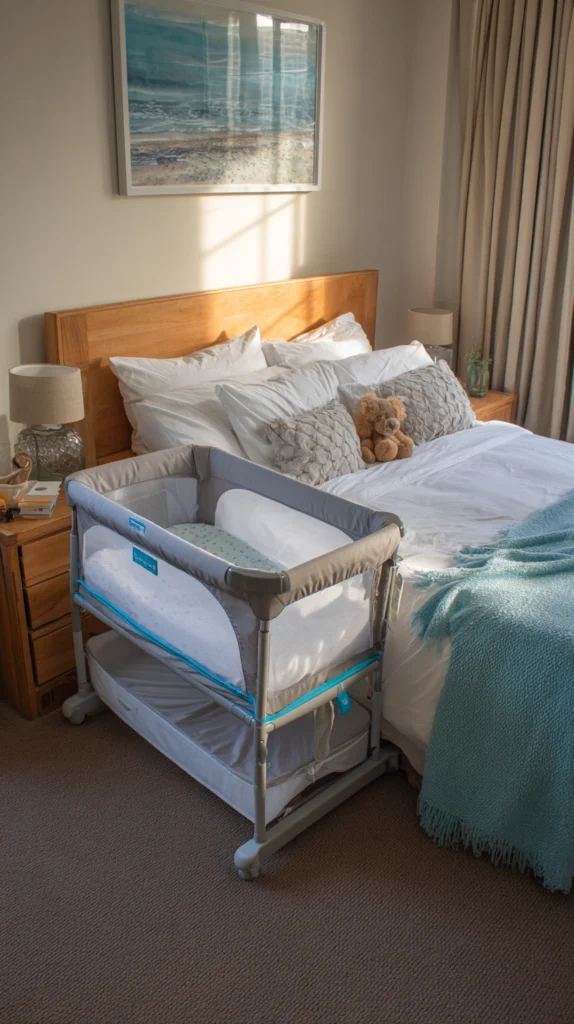
Position bassinet or bedside sleeper directly adjacent to the maternal sleeping side creating maximum nighttime feeding convenience while maintaining the smallest possible nursery footprint. Choose bassinet models specifically designed for bedside placement including those with drop-down sides allowing easy infant access without leaving bed, or select compact designs fitting into tight spaces between beds and walls.
The immediate proximity facilitates responsive nighttime care while the minimal footprint prevents overwhelming bedroom spaces. Ensure adequate clearance for safe bassinet access while positioning close enough for convenient nighttime tending without requiring full room traversal during exhausting overnight feedings.
4. Closet Conversion Station
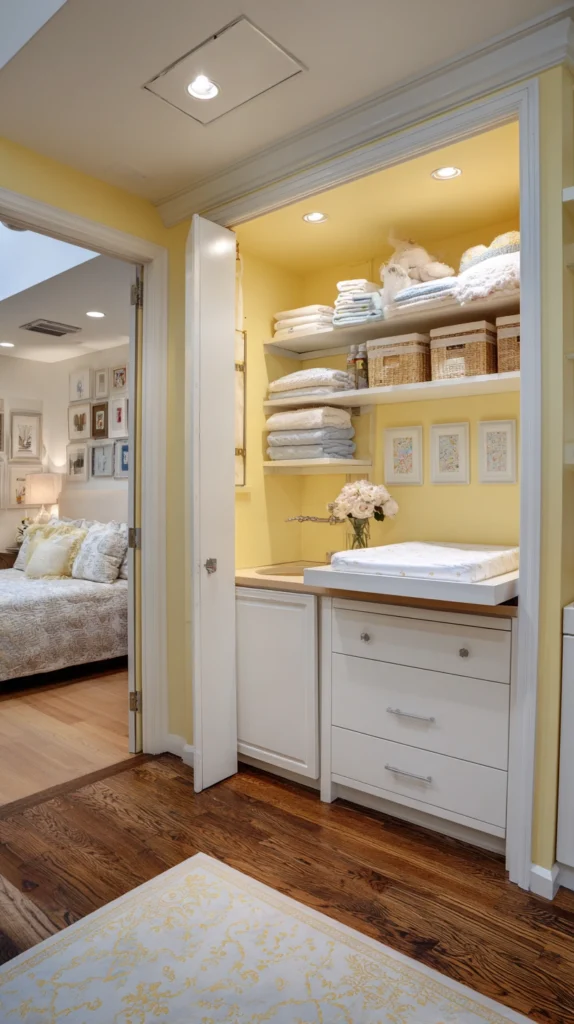
Transform underutilized closet space into comprehensive nursery stations housing changing areas, clothing storage, and supply organization within compact footprints leaving bedroom floor space maximized for other functions. Remove closet doors improving access and creating open alcoves, install changing pads on custom platforms or existing shelving creating elevated changing surfaces, add organizing systems including baskets, bins, and hanging storage maximizing vertical closet space.
Include adequate lighting ensuring proper visibility during nighttime changes, position frequently used supplies at convenient heights preventing excessive bending or reaching, and maintain some closet space for adult storage if possible. The closet conversion creates complete functional nursery zones without consuming valuable bedroom real estate.
5. Minimalist Bassinet Only
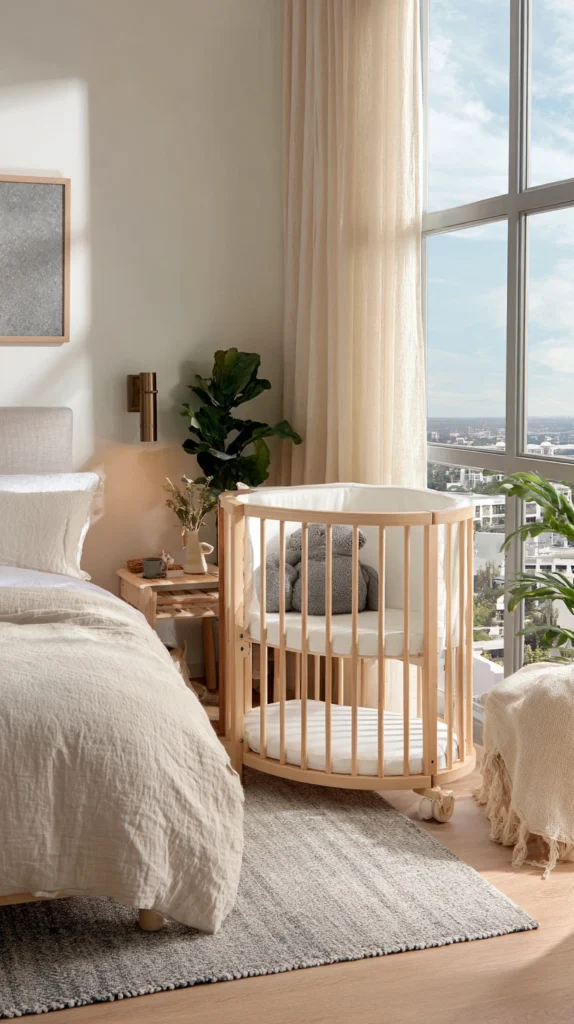
Embrace radical simplicity using only bassinets for sleeping with all other baby supplies stored elsewhere creating the smallest possible nursery footprints for families prioritizing uncluttered bedrooms. Position compact bassinets in bedroom corners, keep single caddies with overnight essentials bedside, and maintain diaper changing supplies in bathrooms or other rooms rather than establishing complete bedroom changing stations.
The minimalist approach works particularly well in small bedrooms where comprehensive nursery setups would overwhelm available space, or for families philosophically committed to simplified living and minimal baby gear accumulation. Accept that this approach requires retrieving supplies from other rooms trading convenience for bedroom tranquility.
6. Visual Separation Screens
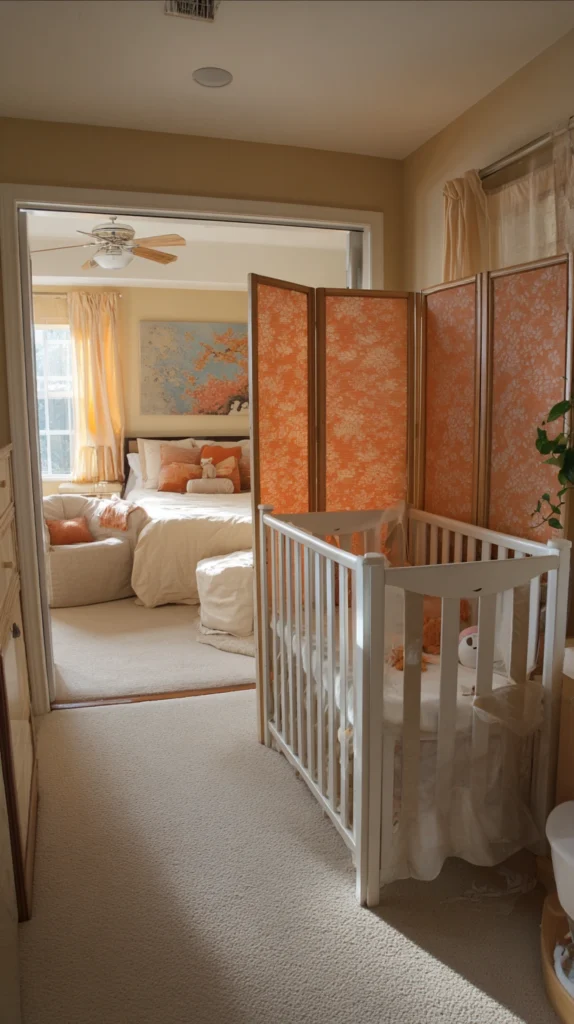
Create psychological and visual division between nursery and sleeping zones using decorative screens, curtains, or room dividers establishing separate areas within single rooms without permanent architectural modifications. Install ceiling-mounted curtain tracks allowing fabric panels to close separating zones or open integrating spaces, position folding screens creating flexible barriers, or use tall bookcases as semi-permanent dividers providing separation plus storage. The visual barriers create privacy for parents, reduce light and sound transfer between zones during different sleep schedules, and establish clear territorial boundaries making shared spaces feel less chaotic. Choose screens in styles coordinating with bedroom aesthetics maintaining design cohesion.
7. Coordinated Aesthetic Integration
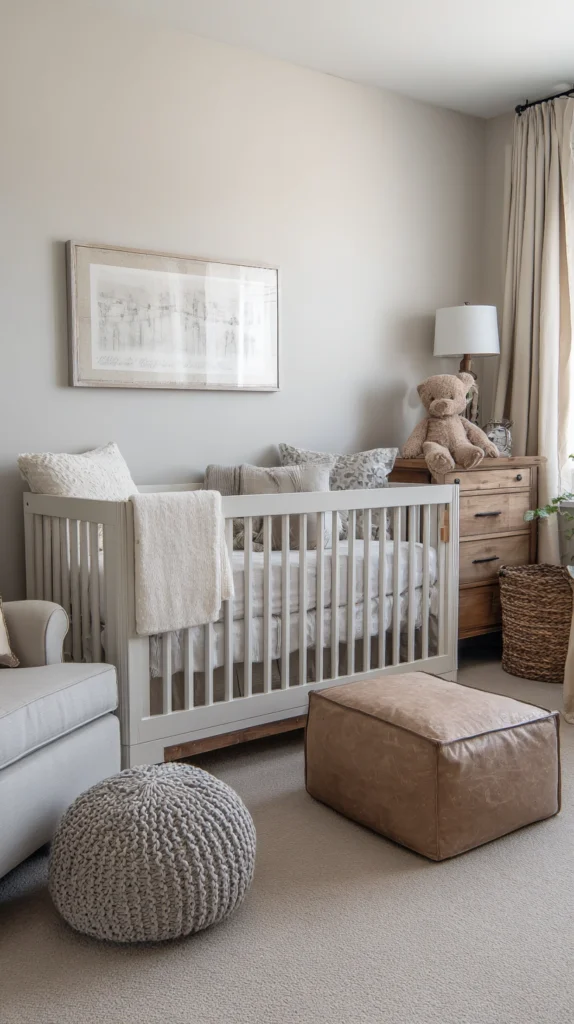
Select nursery furniture and accessories in finishes and styles matching existing bedroom décor creating cohesive unified spaces rather than visually jarring nursery insertions into adult bedrooms. Choose baby furniture in wood tones matching bedroom sets, select neutral bassinet fabrics coordinating with bedding colors, and avoid obviously juvenile nursery themes maintaining sophisticated adult bedroom atmospheres.
Store baby supplies in attractive containers matching bedroom storage systems, display minimal baby items keeping surfaces relatively clear, and edit baby gear ruthlessly keeping only essentials in shared bedrooms. The coordinated approach ensures rooms remain restful adult sanctuaries despite accommodating infant occupants.
8. Vertical Storage Maximization
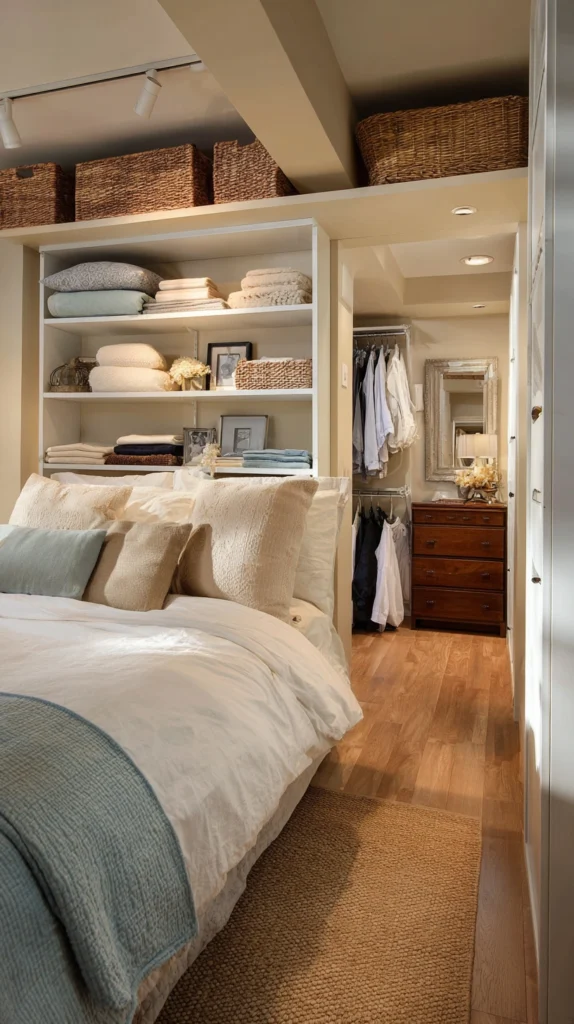
Utilize wall space and vertical dimensions through mounted shelving, hanging organizers, and tall narrow furniture maximizing storage capacity without consuming precious floor space in compact shared rooms. Install floating shelves above changing areas holding frequently used supplies, use over-door organizers storing baby items, add wall-mounted diaper caddies keeping essentials accessible, or choose tall narrow dressers providing substantial storage within minimal footprints.
The vertical approach leaves floor space open maintaining visual spaciousness and physical circulation while providing adequate storage for baby necessities. Ensure all mounted storage is securely installed supporting expected weights without safety concerns.
9. Rolling Cart Mobility
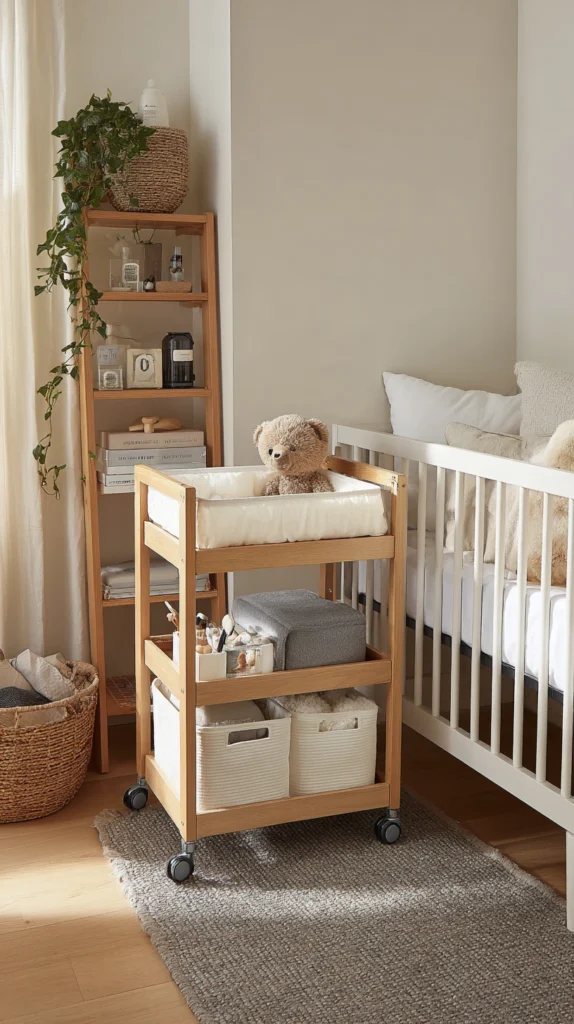
Incorporate wheeled storage carts containing essential baby supplies that roll between bedroom corners and bathrooms creating flexible mobile nursery stations adapting to changing needs and limited permanent space. Load carts with diapers, wipes, clothing, feeding supplies, and other frequently needed items, position conveniently during active use periods, and roll into closets or corners when not needed clearing floor space.
The mobility allows comprehensive supply access without permanent furniture installations while the ability to relocate carts prevents them from perpetually occupying valuable bedroom real estate. Choose carts in finishes coordinating with bedroom décor maintaining aesthetic cohesion.
10. Lighting Layer Approach
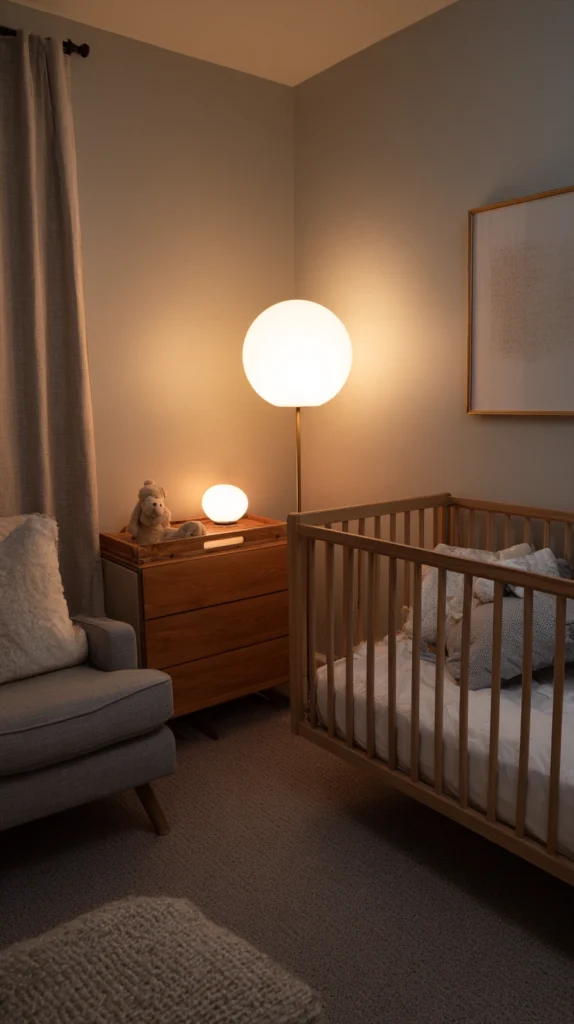
Install multiple lighting options including bright task lighting for safe nighttime changes, dimmable ambient lighting for feeding sessions, and gentle nightlights for checking babies without full illumination creating functional lighting supporting various nighttime scenarios.
Add clip-on reading lights above changing areas providing focused illumination, install dimmer switches on overhead fixtures allowing ambient adjustment, position nightlights near bassinets enabling baby checks without disturbing sleeping partners, and perhaps include smart bulbs allowing color temperature and intensity control via smartphone apps. The layered lighting addresses diverse nighttime needs while allowing appropriate illumination for each specific activity preventing harsh overhead lights disturbing sleeping occupants unnecessarily.
11. Compact Changing Solution
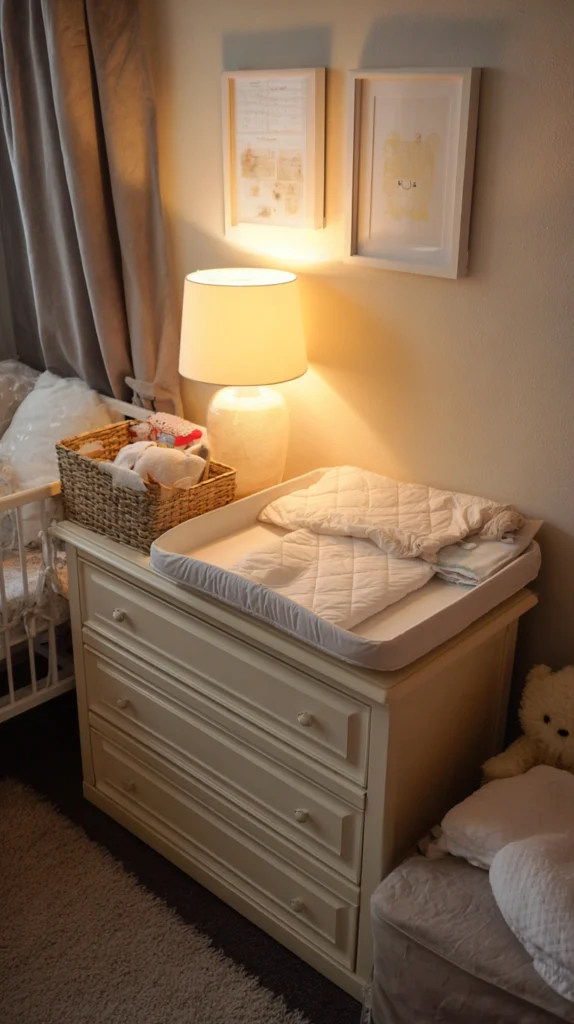
Establish space-efficient changing areas using portable changing pads on dresser tops, fold-down wall-mounted changing tables, or compact dedicated changing furniture minimizing footprint while maintaining functionality.
Choose furniture-top changing pads that store away when not needed, install wall-mounted fold-down tables appearing as decorative wall elements when closed, or select the smallest functional changing tables available ensuring adequate safety while conserving space.
Position changing areas near adequate storage ensuring supplies remain conveniently accessible without requiring excessive reaching or movement during changes. Include proper lighting ensuring visibility and safety during nighttime diaper changes when exhaustion and darkness create challenging conditions.
12. Neutral Color Continuity
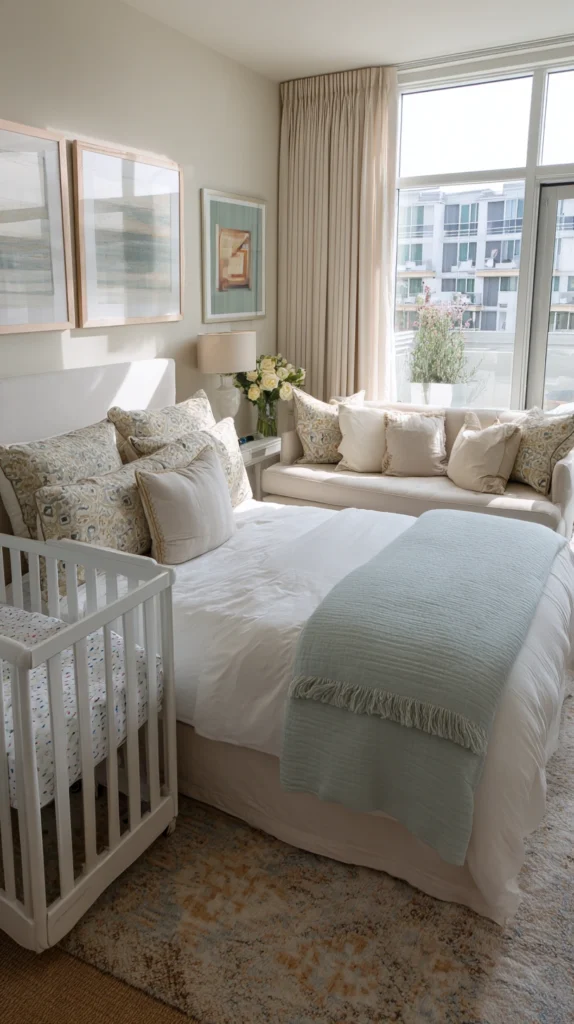
Maintain bedroom color schemes throughout nursery corners using neutral palettes rather than introducing bright juvenile colors disrupting established adult bedroom aesthetics and potentially interfering with restful sleep environments.
Choose baby furniture, bedding, and accessories in whites, grays, taupes, or other sophisticated neutrals matching bedroom palettes, avoid primary colors or obvious baby themes, and select artwork and décor maintaining bedroom’s overall aesthetic integrity.
The neutral approach ensures spaces remain calming for adults while providing perfectly adequate environments for infants who don’t require stimulating colorful surroundings in sleeping spaces. Reserve brighter colors for daytime play areas in other rooms if desired.
13. Sound Management Strategies
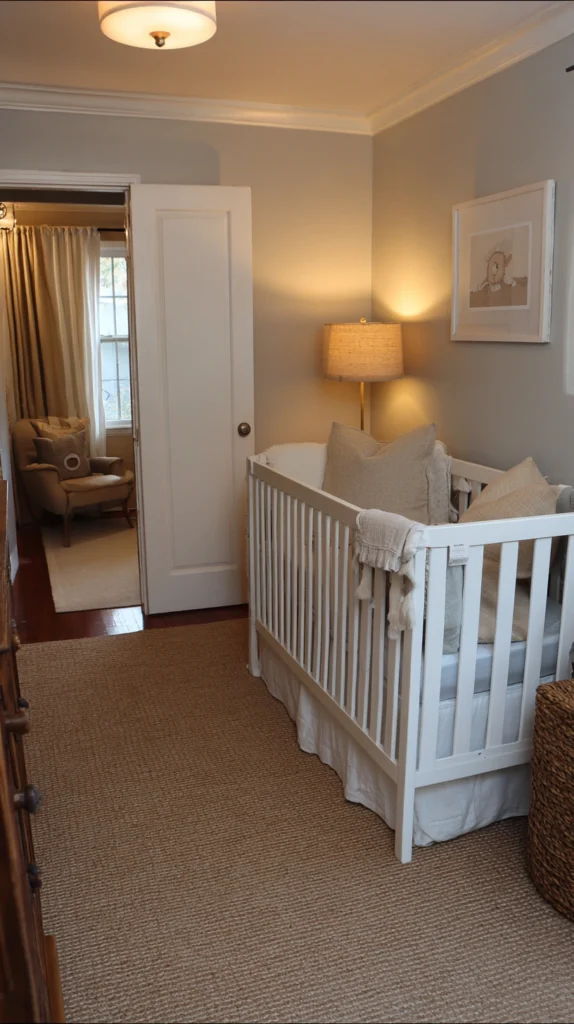
Address competing sleep schedules and noise concerns through white noise machines, sound-absorbing materials, and strategic furniture placement minimizing sound transfer between zones allowing some independent sleep despite room sharing.
Position white noise machines near bassinets creating consistent ambient sound masking household noises that might wake sleeping babies, add soft furnishings including curtains, rugs, and upholstered furniture absorbing sound rather than reflecting it, and position cribs away from shared bedroom walls minimizing sound transfer to adjacent rooms. The sound management helps everyone sleep better despite shared quarters while white noise often soothes babies creating positive sleep associations.
14. Temporary Mindset Approach
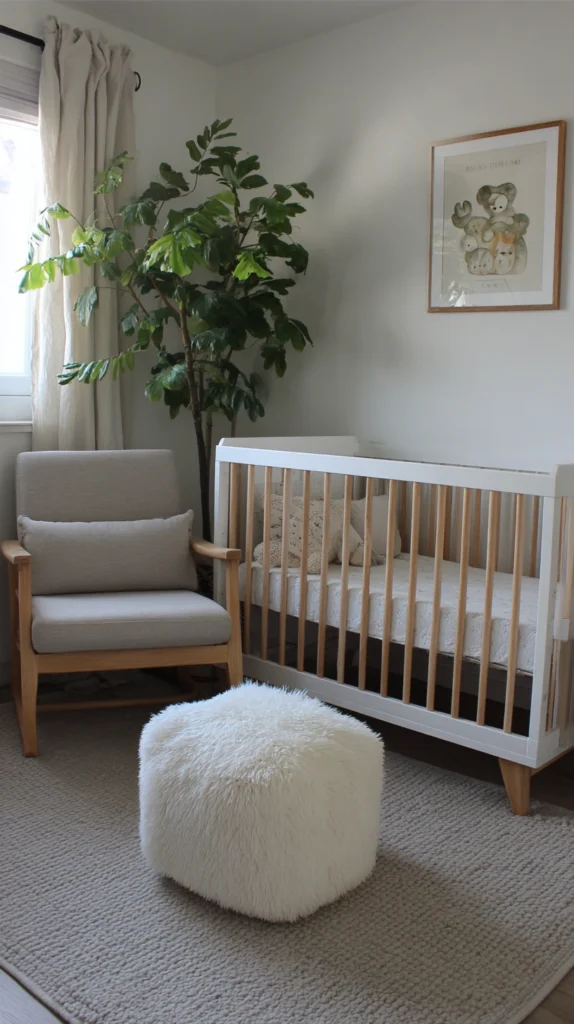
Design nursery corners as explicitly temporary installations acknowledging that room-sharing represents transitional arrangements eventually ending when babies transition to separate rooms or circumstances change. Avoid permanent modifications including built-ins or painted murals, choose furniture with post-nursery utility ensuring continued use after babies move out, and resist over-investing in comprehensive nursery setups knowing the arrangement is temporary.
The temporary perspective prevents excessive investment in short-term solutions while reducing pressure to create perfect nursery environments in spaces serving dual purposes. Accept imperfection and prioritize function over aesthetics knowing the arrangement serves important immediate needs despite not representing ideal long-term sleeping situations.
Successfully establishing nursery corners in parents’ rooms requires realistic expectations accepting that shared sleeping arrangements involve compromises for all occupants while providing important benefits including nighttime feeding convenience, reduced infant SIDS risk through recommended room-sharing, and practical solutions for space-constrained families. Maintain flexibility adapting arrangements as babies’ needs evolve and parents discover what works best for their specific situations.
Communicate openly with partners ensuring both adults’ sleep needs receive consideration despite infant care demands. Most importantly, remember that room-sharing represents temporary phases in children’s lives—challenging moments pass quickly, and thoughtful design makes transitional arrangements significantly more manageable while families navigate early parenthood’s demanding but fleeting seasons.