
Modern Sage Green Living Room Ideas
Sage green has become the defining interior colour of the decade for reasons that are not difficult to understand. It is simultaneously warm and cool, natural and sophisticated, quiet enough to recede when the room is busy and present enough to carry a space when the room is minimal. In a living room it creates the particular quality of calm that is genuinely restful without being cold, and it pairs with more other colours and materials than almost any other wall or upholstery tone available.
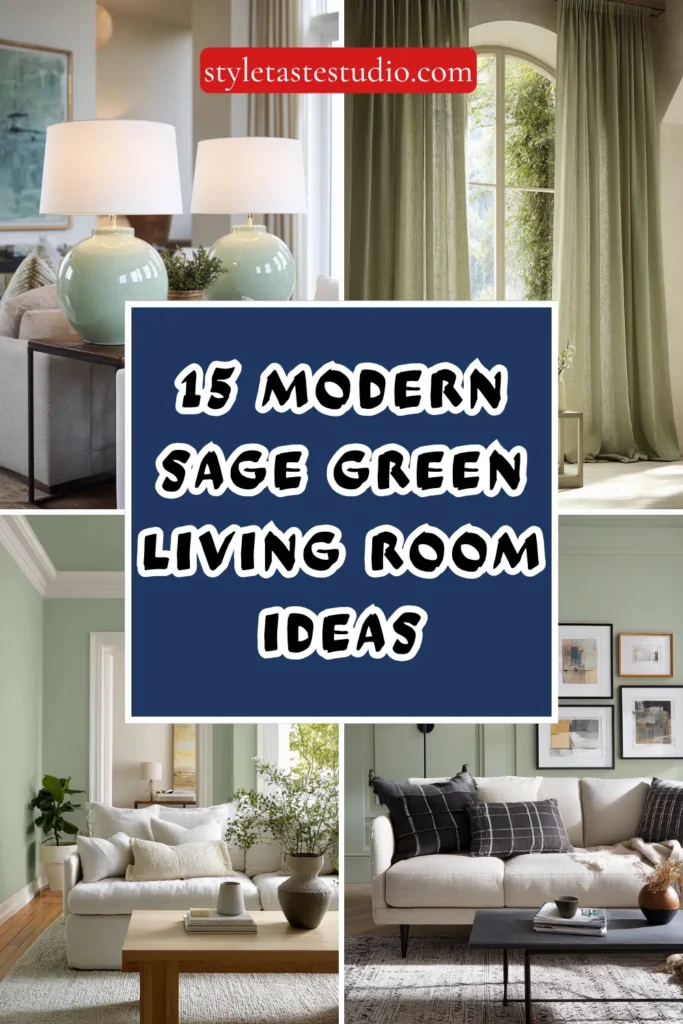
The fifteen ideas below cover every way of introducing sage green into a modern living room — from a single painted wall to a fully upholstered sofa, from a ceramic lamp base to a complete room scheme. Each one includes what it costs and a practical tip to help you get the tone and the application right before you buy or paint.
1. Sage Green on All Four Walls
Budget: $60 – $200
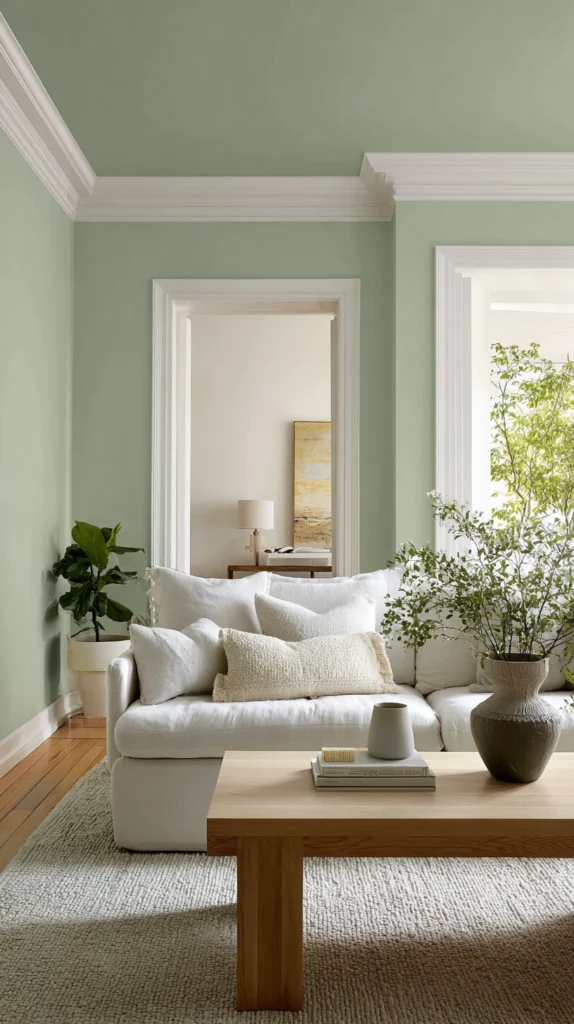
Painting all four walls in a single consistent sage green — with white or off-white trim, ceiling, and architrave — creates the most immersive and most resolved sage green living room available. The colour surrounds rather than accents and the room feels completely considered from the first moment of entering it.
A litre of quality sage green paint in an eggshell finish costs $15–$35. A standard living room requires five to six litres for two full coats on all four walls. Shades that consistently deliver in a modern living room include Farrow and Ball’s Mizzle, Sage, and Mist; Little Greene’s Pale Lupin; and Mylands Sage Green — all sit in the cool-grey-green range rather than the warm yellow-green that reads as more traditional than modern.
Style tip: Paint the ceiling in the same sage green as the walls if the room has good natural light and generous ceiling height. An all-over sage room — walls and ceiling in the same tone — creates an enveloping, forest-like quality that accent walls cannot approach. In lower-ceilinged or darker rooms, keep the ceiling white to maintain brightness and reserve the sage for the walls only.
2. A Sage Green Feature Wall Behind the Sofa
Budget: $20 – $80
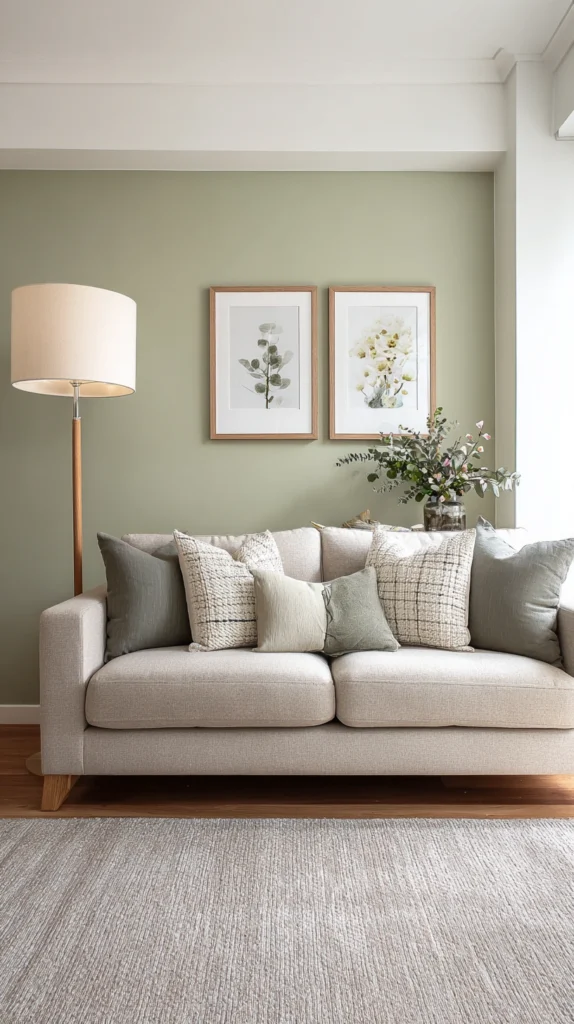
A single sage green wall behind the main sofa, with the remaining three walls in white or a warm off-white, is the most accessible and most reversible way to introduce the colour into a living room without committing to a full repaint. The sofa wall anchors the seating area visually and gives the room a clear focus.
A litre of sage paint covers a standard sofa wall in two coats — most walls require 1.5–2 litres at $15–$35 per litre. The feature wall approach works best when the sofa itself and the objects around it are relatively simple — a sage wall behind an already-busy arrangement of furniture and art can feel congested rather than considered.
Style tip: Extend the feature wall colour 30–40 cm around each corner onto the adjacent walls rather than stopping it at a sharp edge. The returned colour softens the junction between the painted and unpainted walls and makes the feature wall feel more architectural and less applied. A paint colour stopped at a hard corner always looks like a decision made with a ruler rather than an eye.
3. A Sage Green Velvet Sofa
Budget: $400 – $1,800
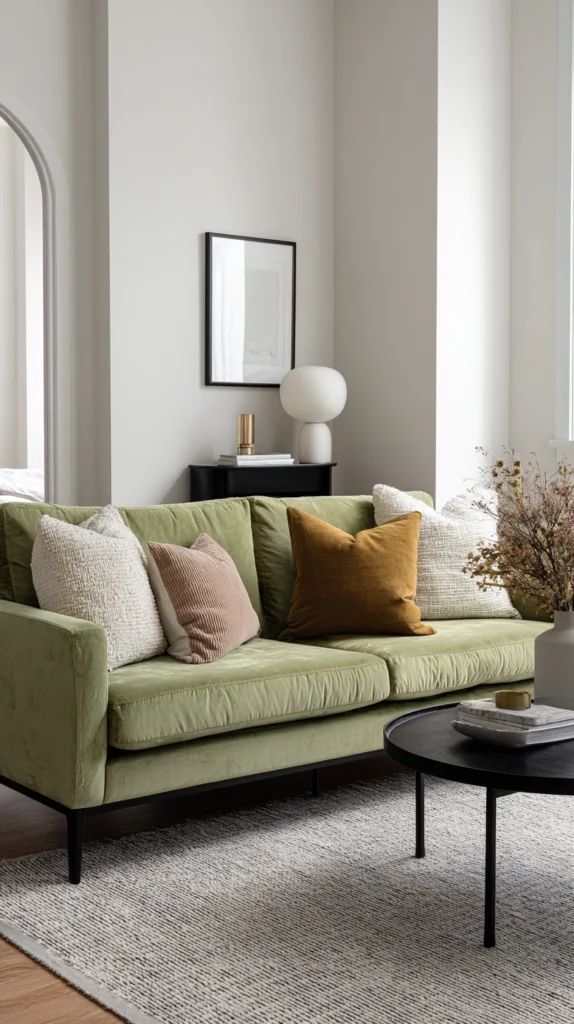
A sage green velvet sofa is the single piece of furniture that most completely establishes the aesthetic of a modern sage green living room — and on white or off-white walls it needs very little else around it to look entirely resolved. The velvet adds a depth and richness to the sage tone that painted walls cannot replicate, shifting in apparent colour as it catches the light from different directions.
A quality sage green velvet two-seater costs $400–$900. A three-seater runs $600–$1,800. The shade of sage in velvet tends to read warmer and richer than the same colour in paint — choose a slightly cooler, greyer sage for the sofa than you would instinctively select from a swatch, as velvet darkens and enriches every tone it is applied to in the finished piece.
Style tip: Pair a sage green velvet sofa with cushions in warm neutral tones — terracotta, warm cream, and dusty rose — rather than in cooler blues or greys that can make the combination feel studied. The contrast between the cool sage and a single warm accent tone creates the most visually interesting and most liveable colour tension available within this palette.
4. Sage Green Linen Curtains
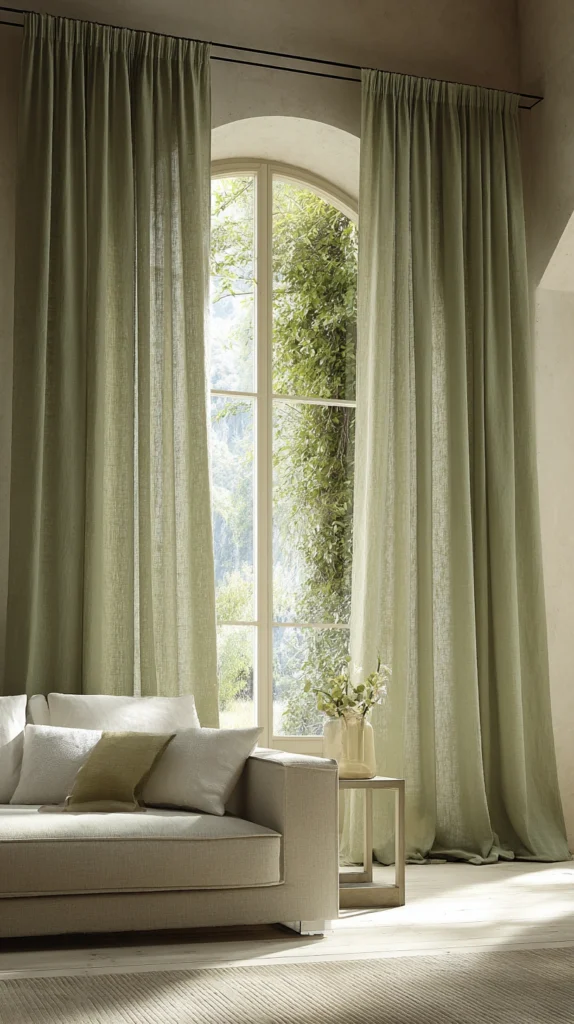
Budget: $60 – $250
Sage green linen curtains — hung at ceiling height and pooling very slightly on the floor — are the most atmospheric way to bring the colour into a living room through a textile rather than a paint or upholstery decision. They filter natural light as a warm, slightly green-tinted quality that shifts the colour temperature of the whole room toward the natural, organic quality that sage green is best at creating.
Sage green linen curtain panels in a 240 cm drop cost $30–$80 each. A standard window needs two panels. Hang on a simple iron or timber pole at ceiling height — the ceiling-height installation is the most important technical decision in curtain hanging and makes a proportionally larger difference to the elegance of the finished result than any other single variable including fabric quality or colour.
Style tip: Choose an unlined linen for daytime rooms where light quality matters and the curtains are primarily decorative rather than light-blocking. Unlined sage linen transmits a beautiful green-tinted light when the sun is behind it and falls with a more natural, relaxed drape than a lined panel of the same fabric. Add a separate blackout roller blind inside the recess if light control is also required.
5. Sage Green Painted Built-In Shelving
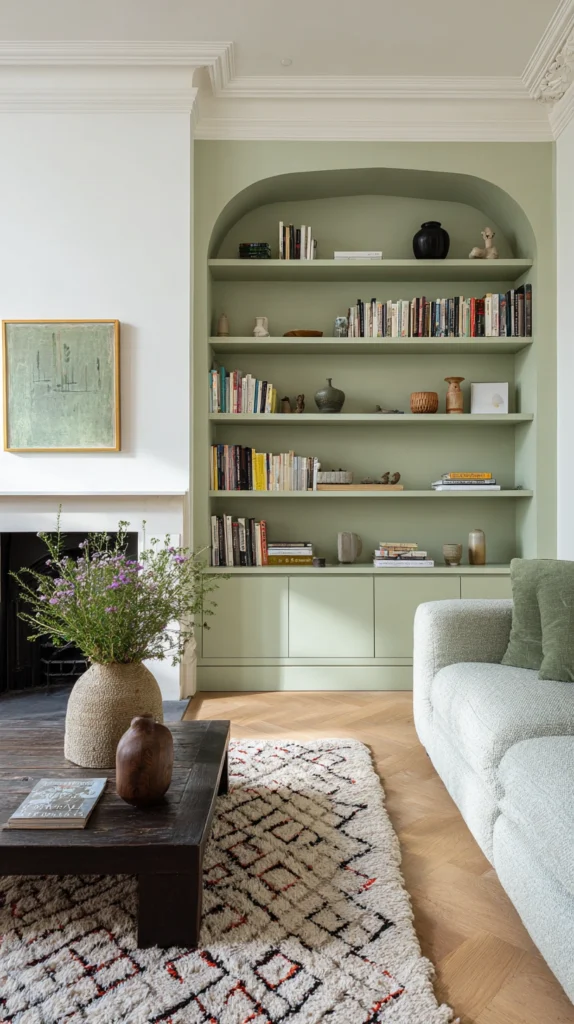
Budget: $80 – $600
Built-in shelving alcoves painted in sage green — while the rest of the room remains white — create one of the most sophisticated and most specifically modern applications of the colour in a living room. The sage recedes within the alcove and makes the objects displayed on the shelves — books, ceramics, plants — appear to float against a coloured background rather than sitting on a shelf in front of a white wall.
Painting existing built-in shelving in a sage eggshell costs $20–$50 in paint and a half-day of preparation and application. New fitted alcove shelving built and painted by a joiner costs $300–$600 per alcove. The inside of the alcove — back wall, side walls, and shelf surfaces — should all be painted in the same sage tone for the most complete, considered result.
Style tip: Style the sage alcove shelves with objects that provide colour contrast against the green background — white ceramics, terracotta pots, natural timber objects, and books with cream or white spines. Dark objects against the sage background disappear into the colour. Pale and warm-toned objects stand forward from it and make the alcove arrangement look curated and intentional from across the room.
6. Sage Green Walls With Natural Wood and Linen
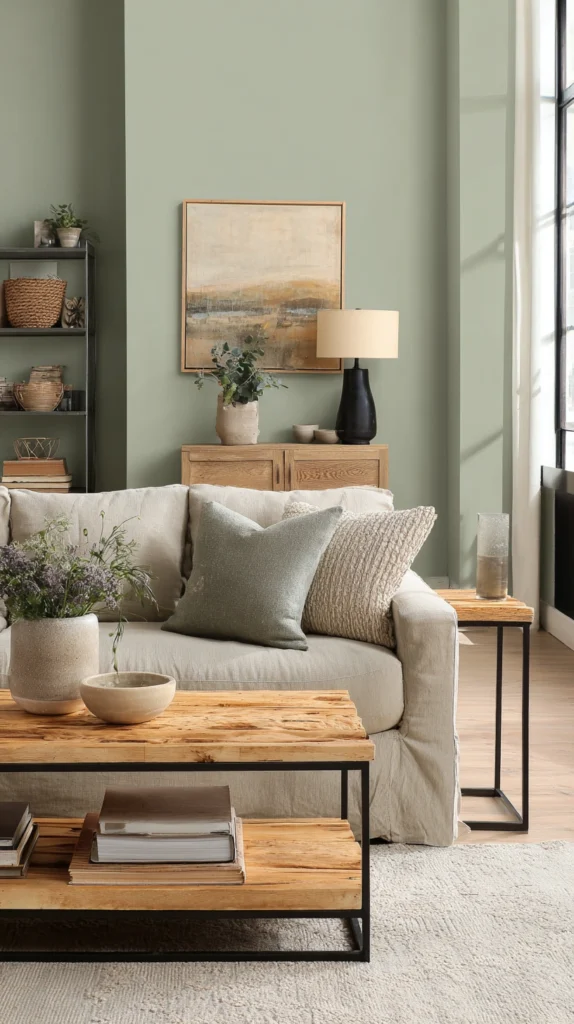
Budget: $200 – $800 for the complete material palette
Sage green walls combined with natural, undyed linen upholstery, pale oak or ash wood furniture, and jute or seagrass floor rugs creates the most naturalistic and most consistently beautiful modern sage green living room palette. Every material in the room references the same organic, earthy, botanical quality as the sage on the walls.
A natural linen sofa costs $600–$1,500. Pale oak side tables run $80–$200 each. A seagrass rug in a generous size costs $60–$150. The combination of sage, linen, and pale wood together costs considerably less than a designed interior scheme of equivalent quality and creates a room that photographs beautifully in natural light and is as comfortable to live in as it is to look at.
Style tip: Avoid mixing too many wood tones in a sage and natural material living room — choose one wood species for the furniture and use it consistently throughout the room. A room that mixes blonde oak, dark walnut, and pine simultaneously loses the material cohesion that makes the sage-and-natural palette so effective. One wood, used consistently, always reads more resolved than a variety of species assembled without a connecting logic.
7. A Sage Green Accent Chair
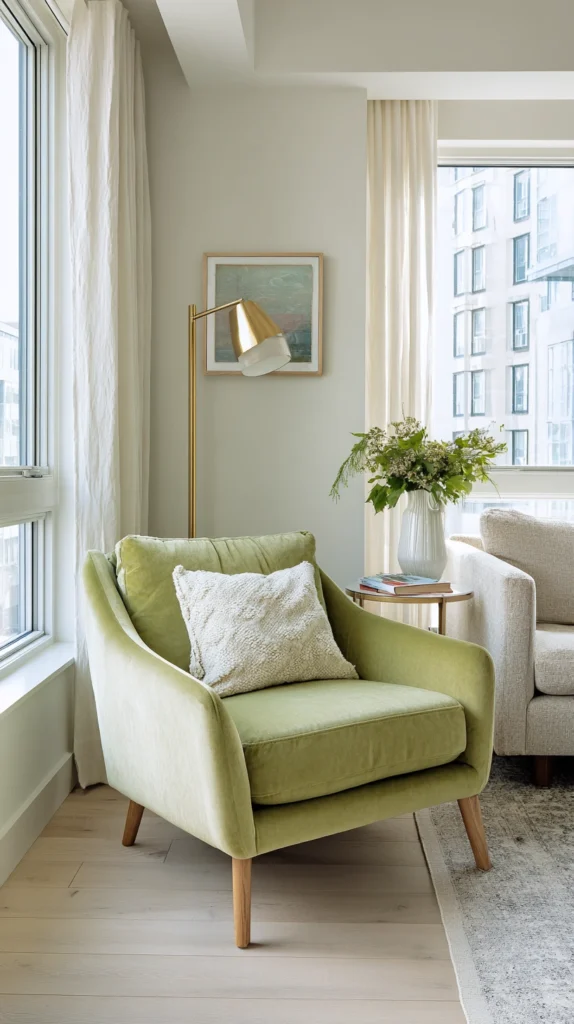
Budget: $150 – $600
A single sage green accent chair in a neutral living room — placed beside a floor lamp, angled slightly toward the main sofa — brings the colour into the room as a considered accent rather than a dominant decision. It introduces sage without committing the whole room to it and provides a clear, deliberate colour relationship between the chair and whatever other sage tones appear in the room.
A sage green upholstered armchair in a contemporary profile costs $150–$400. A tub chair or barrel chair in sage velvet runs $200–$600. The chair should be simple in outline — a straight arm, a clean leg, a minimal profile — so the colour reads as the feature rather than the shape. A visually complicated chair shape in sage green creates two competing design statements that neither resolves clearly.
Style tip: Place the sage accent chair on a rug rather than directly on bare flooring if the main sofa is on the same rug. Two pieces of seating on the same rug create a defined, room-like seating area. A chair placed off the rug beside a sofa on the rug looks like furniture that has been pushed to the side rather than positioned as part of the arrangement.
8. Sage Green Ceramic Lamp Bases
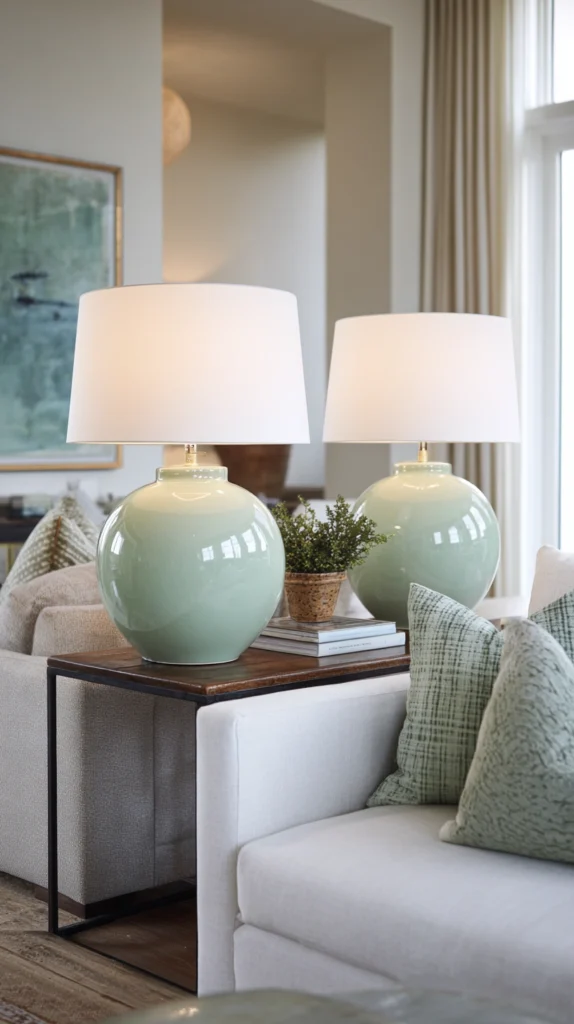
Budget: $40 – $180
A pair of sage green ceramic lamp bases on side tables or console surfaces introduces the colour at the most atmospheric level — below eye height, casting warm light upward from a surface that the eye naturally rests on during an evening in the room. It is the smallest and least committed sage green addition on this list and one of the most consistently effective.
Ceramic lamp bases in sage green cost $40–$100 each. A pair for matching side tables runs $80–$200. Add a simple white or natural linen shade ($20–$50 per shade) — the shade colour is as important as the base, and a cream shade introduces warmth that works against the cool sage quality while a white or natural linen shade sits within it correctly.
Style tip: Use lamp bases of the same height on matching side tables for a formal, balanced arrangement, or deliberately different heights if the side tables themselves are at different positions in the room. Identical lamps at different heights look like a mistake. Deliberately different lamps at different heights look like a considered design choice — the intention is visible in the variety itself.
9. Sage Green Kitchen-to-Living Room Flow
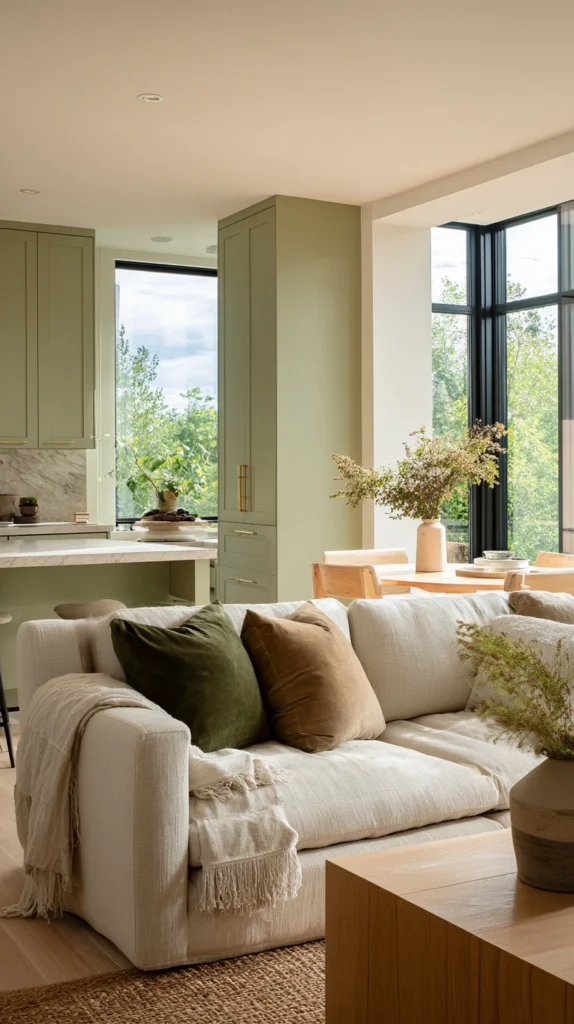
Budget: $100 – $400
In open-plan spaces where the kitchen and living room are visible from each other, running the sage green through both spaces — on living room walls and on kitchen cabinet fronts — creates a visual thread that connects the two zones and makes the combined space feel designed as a whole rather than decorated in separate rooms that happen to share a floor.
Painting existing kitchen cabinet fronts in sage green chalk paint costs $30–$80 in materials and an afternoon of preparation. A professional kitchen respray in sage costs $400–$1,200 for a full kitchen. Even a partial sage green connection — only the upper cabinets in sage, or only the island — creates enough of a colour relationship between the two rooms to establish the visual continuity without requiring a full kitchen repaint.
Style tip: Use the same sage green paint reference in both the living room and kitchen rather than choosing two slightly different greens for each space. Two shades of sage that look similar on individual swatches read as a failed attempt at matching when viewed simultaneously from an open-plan space. One consistent reference ensures the colour flows correctly between both zones.
10. Sage Green With Terracotta and Warm Earthy Accents
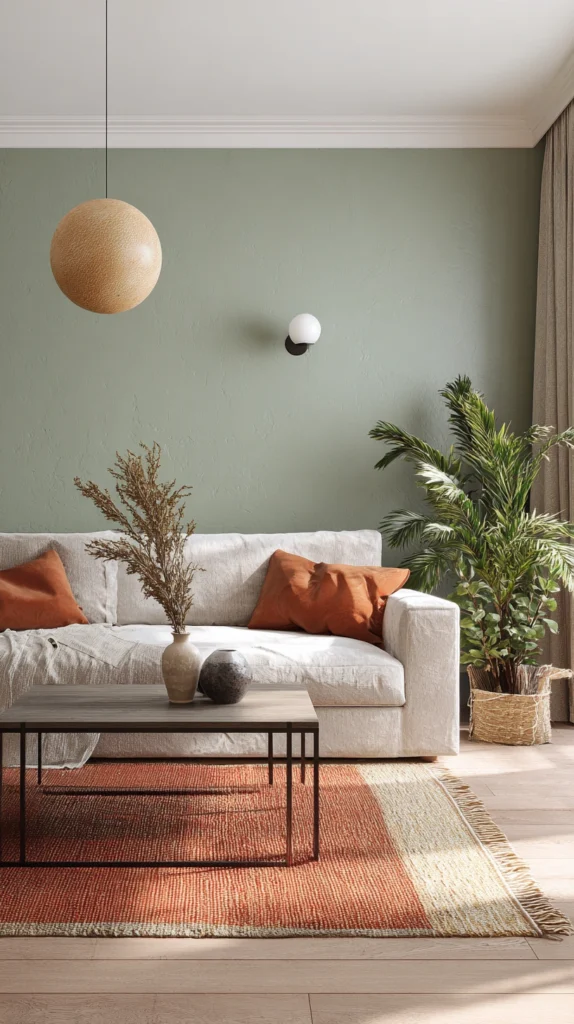
Budget: $50 – $300
The sage green and terracotta pairing is one of the most successful and most reliably beautiful colour combinations in modern interior design. The cool botanical green and the warm earthen orange sit on opposite ends of the warm-cool spectrum and create a tension that makes both colours more interesting than either would be paired with a neutral.
Terracotta cushion covers cost $15–$35 each. A terracotta ceramic vase runs $15–$50. A terracotta-toned rug in a living room with sage walls costs $60–$200. Two or three terracotta accents in a sage green room is the right quantity — enough to establish the colour relationship clearly without the warm tone overwhelming the cool sage that is the room’s primary character.
Style tip: Keep terracotta accents in a sage room in ceramic, clay, and earthy textile form rather than in paint or large upholstered pieces. A terracotta cushion or ceramic object beside a sage sofa reads as a considered accent. A large terracotta upholstered piece beside a sage wall reads as two competing wall colours. The scale of the terracotta element determines whether it reads as accent or competition.
11. Sage Green With Warm Brass Hardware and Fixtures
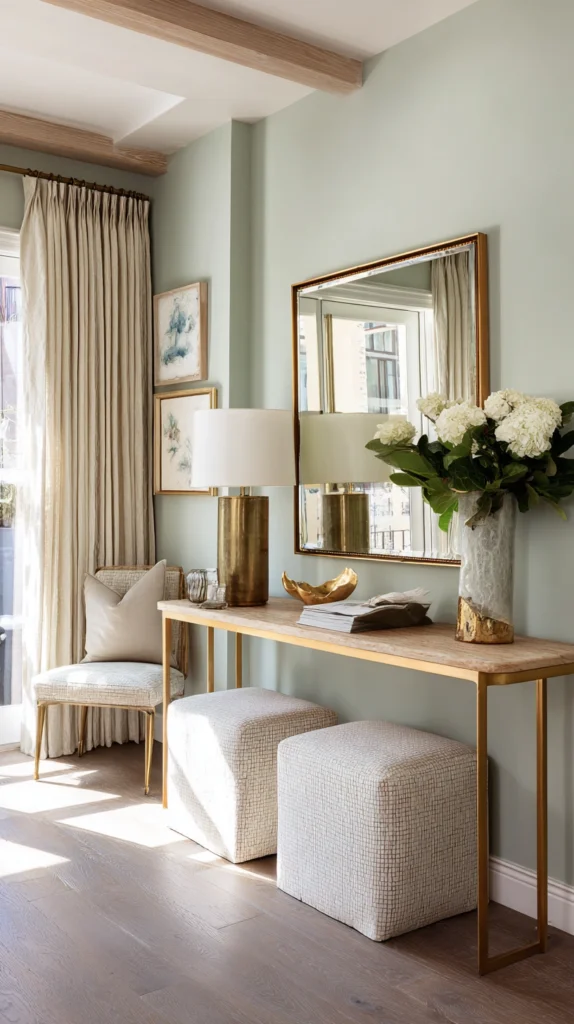
Budget: $30 – $200
Brass or aged brass hardware — picture hooks, light switch plates, curtain poles, and mirror frames — against sage green walls creates one of the most specifically modern and most enduringly satisfying material combinations available in a living room. The warmth of brass against the cool botanicality of sage is the colour-material equivalent of the sage and terracotta palette — each making the other more effective by contrast.
Brass picture hooks and fixtures cost $5–$20 per pack. A brass curtain pole costs $30–$80. A brass or gold-toned mirror frame runs $40–$150. A pair of wall-mounted brass picture lights costs $80–$200. Even a small number of brass details in a sage room — a light switch plate, two picture hooks, a curtain pole — creates enough of the warm-against-cool contrast to give the room a sophistication that sage alone does not produce.
Style tip: Choose brushed or antique brass rather than highly polished gold-tone brass for a modern living room with sage walls. Highly polished brass reads as glamorous and slightly formal. Brushed or aged brass reads as warm and considered — the quality that suits the organic, grounded character of sage green in a contemporary interior.
12. Sage Green With Black Accents and Graphic Lines
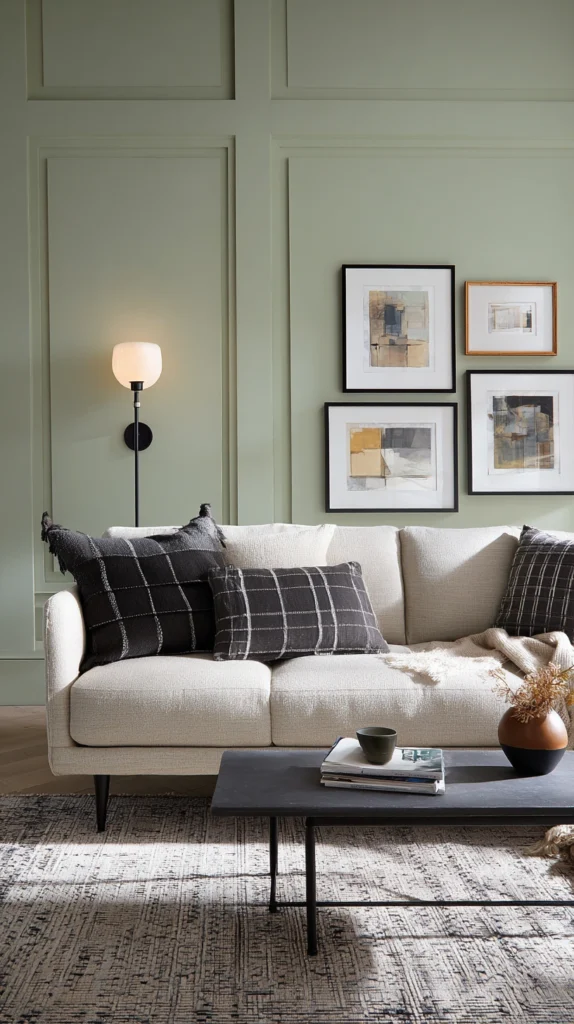
Budget: $40 – $250
The combination of sage green and black — in picture frames, furniture legs, light fittings, and architectural details — creates the most contemporary and most graphic version of the sage green living room. The black sharpens the softness of the sage and gives the room a crispness and definition that sage alone, in its inherent quietness, does not always produce.
Black picture frames cost $10–$30 each. Black powder-coated furniture legs on a pale sofa or coffee table run $15–$50 to have retrofitted. A black metal pendant light above the coffee table costs $40–$120. Black window trim in a sage green room is a more committed architectural decision but one of the most visually dramatic available — the contrast between black trim and sage walls is the defining feature of one of the most widely photographed modern living room aesthetics in current interior design.
Style tip: Use matte black rather than gloss black for accents in a sage green living room. Gloss black reads as high contrast and somewhat aggressive against the botanical quietness of sage. Matte black reads as graphic without being harsh — the soft finish shares the low-sheen, considered quality of a sage eggshell wall and the two sit together with a ease that gloss and sage never achieve.
13. A Sage Green Statement Ceiling
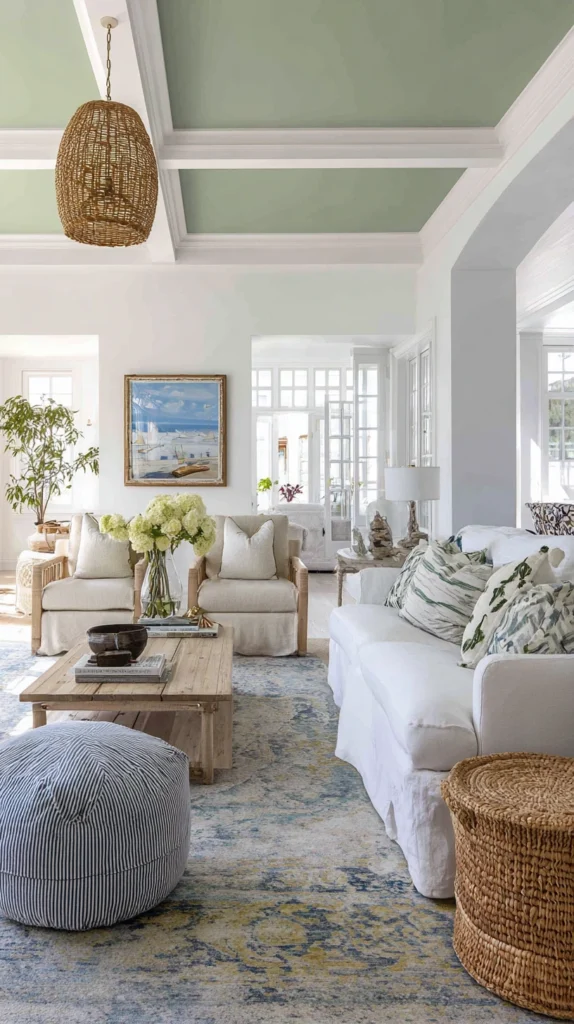
Budget: $30 – $120
Painting only the ceiling in sage green — with all four walls remaining white — creates an unexpected, modern, and deeply atmospheric living room that most people have not seen before and that produces an almost immediate positive reaction from guests who enter it. The coloured ceiling lowers the apparent height of the room in a way that feels intimate rather than oppressive and creates a canopy-like quality that is uniquely restful.
A sage ceiling requires 2–3 litres of ceiling-grade paint at $15–$35 per litre — ceiling paint has a flatter finish than wall eggshell and the difference in sheen is important. Paint the ceiling with a long-handled roller and cut in at the cornice with a brush. The junction between the sage ceiling and the white walls should be precisely clean — use tape along the cornice if the existing line is not perfectly straight.
Style tip: Continue the sage from the ceiling down the cornice and picture rail if they are present — painting the architectural mouldings in the same sage as the ceiling and wall makes the colour feel considered rather than simply applied to the flat ceiling surface. A sage ceiling with a white cornice below it creates a slightly awkward transition. Sage continued to the top of the wall makes the ceiling colour feel integral to the room’s architecture.
14. Sage Green Wallpaper With a Botanical Print
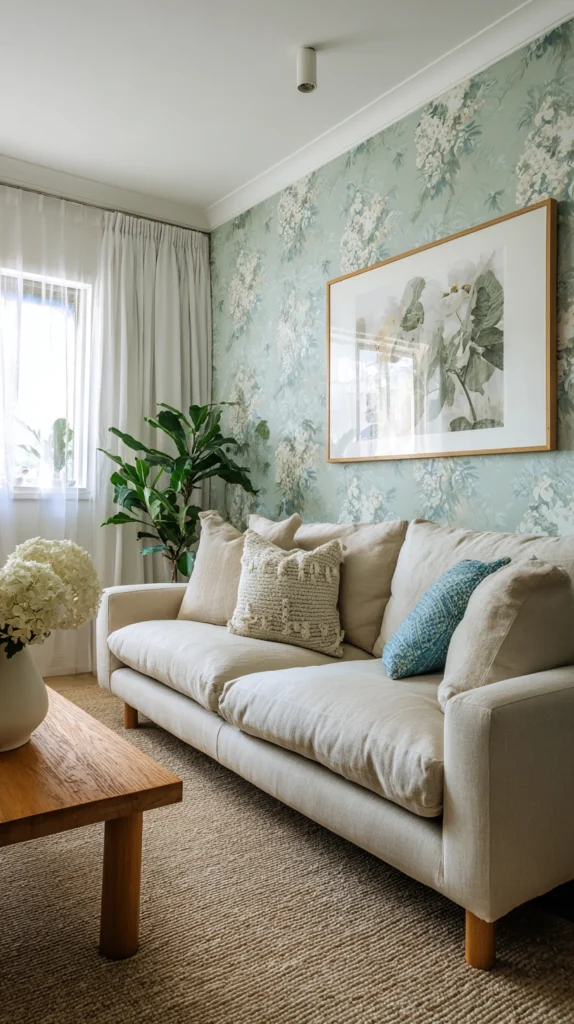
Budget: $60 – $300
A sage green botanical wallpaper — large-leafed ferns, delicate botanical illustrations, or a tone-on-tone leaf print — used on one or all four walls creates the richest and most layered version of the sage green living room, adding pattern and depth to the colour that paint alone cannot achieve. On a single feature wall it provides sufficient botanical richness to anchor the whole room without overwhelming it.
Sage green botanical wallpaper from independent designers on Etsy costs $20–$60 per roll. Mid-range retailers including Graham and Brown, Sanderson, and Harlequin offer sage botanical prints at $40–$100 per roll. A standard feature wall requires three to four rolls. Choose a print with a white or very pale background rather than a dark one — dark background botanical wallpapers belong to a different, more dramatic aesthetic that works against the serene, natural quality of the modern sage living room.
Style tip: Match the dominant sage green of the wallpaper as closely as possible to any painted sage used elsewhere in the room — on woodwork, in upholstery, or on adjacent walls. A mismatched sage wallpaper and sage paint in the same room look like an error rather than a tonal variation. Take a large sample of the wallpaper to the paint shop and mix paint to match it if a standard paint reference does not coordinate closely enough.
15. A Complete Modern Sage Green Living Room Scheme
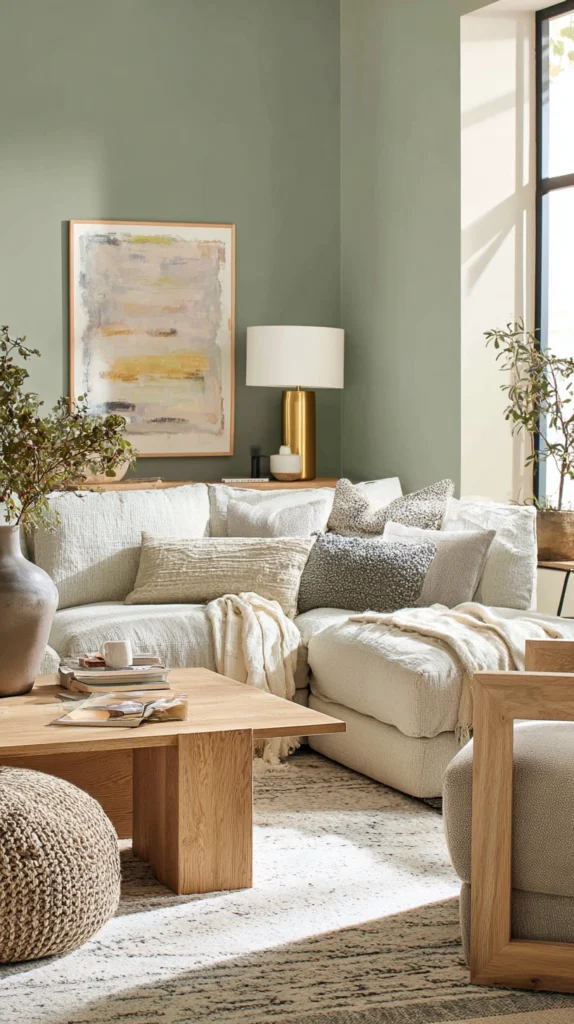
Budget: $600 – $3,000
A fully realised modern sage green living room — sage on all four walls in eggshell, natural linen upholstery, pale oak furniture, a seagrass rug, sage green curtains at ceiling height, brass accents, botanical prints, and houseplants — creates a room of complete material and colour coherence that is immediately recognisable in its aesthetic and genuinely restful to spend time in every day of the year.
The scheme works because every element reinforces the same botanical, natural, organic quality without competing with any other element in the room. The sage walls, linen sofa, oak coffee table, seagrass rug, and plant collection all belong to the same family of materials and tones — and that internal consistency is the quality that makes a complete decorating scheme feel inevitable rather than assembled.
Style tip: Complete the scheme gradually rather than all at once — paint the walls first and live with the colour for four to six weeks before buying furniture and textiles against it. The sage on the wall in your specific room’s light conditions tells you more accurately which linen tone, which wood, and which rug work with it than any mood board assembled from samples and swatches in artificial or different light ever will.
Sage green works in living rooms because it sits at the precise intersection of natural and sophisticated — it references foliage and garden without being literally botanical, and it creates calm without being bland. The key in every application on this list is choosing the right sage — cool and grey-green rather than warm and yellow-green — and then executing it with enough confidence to let the colour do its work without undermining it with too many competing accents or tones.
Start with the walls or the sofa — whichever is the larger commitment — and allow the rest of the room to develop around that first right decision. Sage green rewards the room that gives it room to breathe. The best modern sage living rooms are always the ones where the colour is present enough to be felt and edited enough to be restful — and that balance is always achievable with the right starting point and enough patience to let the room tell you what it needs next.