15 Pergola Decorating Ideas for a Shaded Summer Retreat
A pergola is one of the most versatile structures a garden can have — part architecture, part garden feature, part outdoor room. The frame alone defines the space beneath it and signals that the area has been designed for living in rather than simply walking through. But it is what you do with that frame — the plants trained over it, the lights hung from it, the textiles draped beneath it — that determines whether the pergola becomes the best place in the garden or just a structure that casts a shadow.
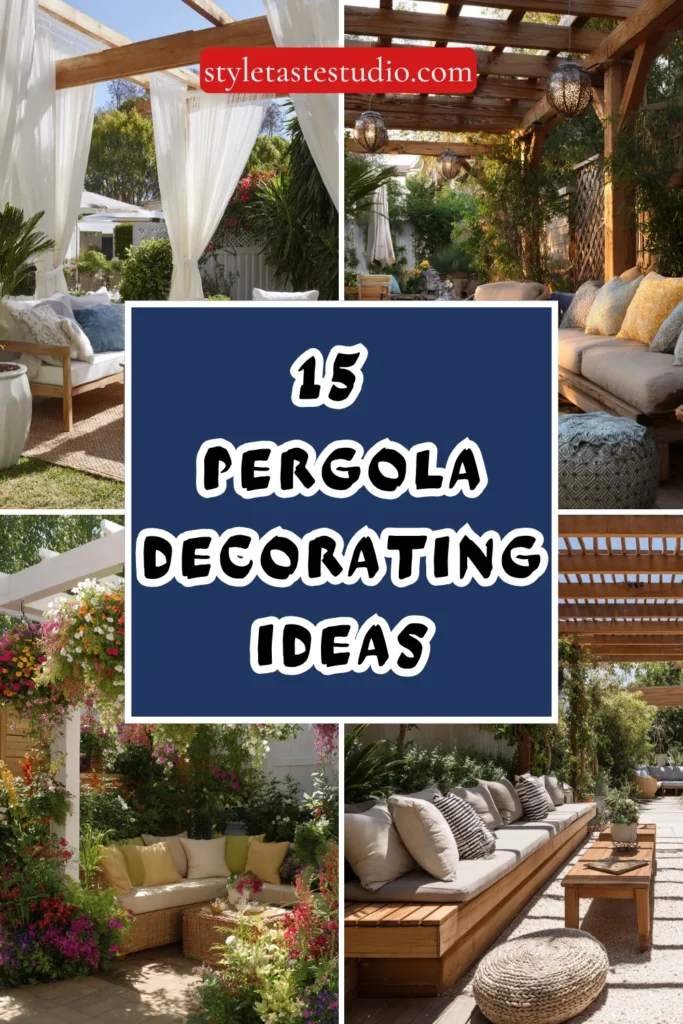
The fifteen ideas below cover every aspect of pergola decoration, from the climbers that create genuine living shade to the lighting, furniture, and finishing details that turn a shaded frame into a summer retreat worth spending long evenings in. Budgets and practical tips are included throughout so you can choose the right ideas for your pergola, your garden, and the time you want to spend in it.
1. Wisteria for Dramatic Overhead Cover
Budget: $20 – $80 per plant
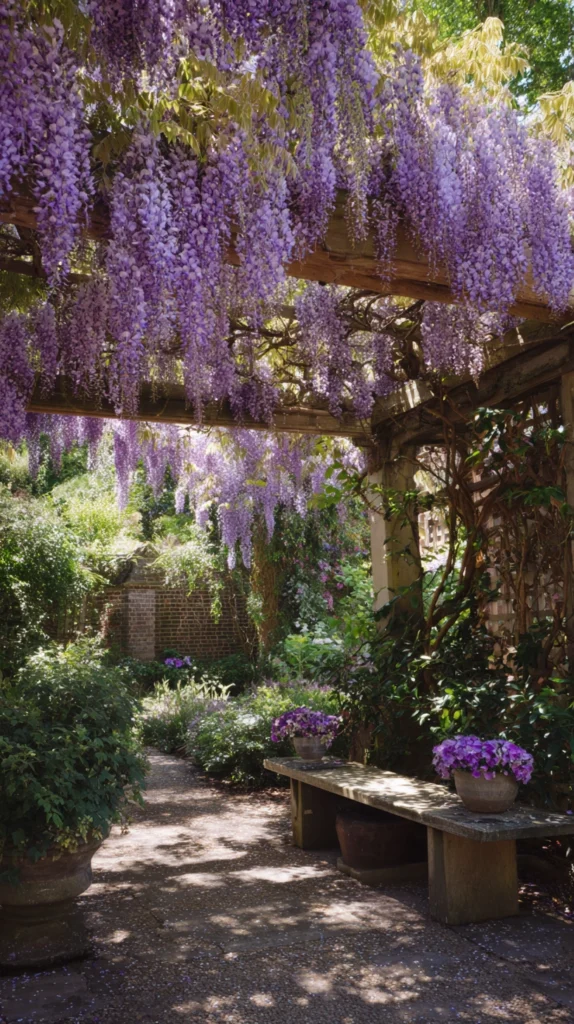
Wisteria trained over a pergola is one of the most spectacular garden sights available in late spring and early summer — the cascading racemes of fragrant blue, purple, or white flowers hanging through the pergola roof create an overhead canopy of extraordinary beauty that no artificial covering can replicate. After flowering, the dense foliage provides genuine shade through the hottest summer months, and the twisted, architectural stems become an attractive feature in their own right through winter when the leaves have fallen.
Wisteria sinensis and Wisteria floribunda are the two most widely grown species. Grafted plants flower years sooner than seed-grown specimens and cost $20–$50 in smaller pots or $40–$80 for more established plants. Train the main stem along the pergola uprights and along the horizontal beams, tying in new growth regularly in the first three years. Prune twice yearly — in August, cutting back the current season’s long whippy shoots to five or six leaves, and again in February, cutting those same shoots back further to two or three buds. This double-pruning regime is the single most important factor in producing the maximum number of flowering spurs each season.
Decorating tip: Allow wisteria to drape slightly below the pergola beam level rather than training all growth flat to the roof. The hanging flower racemes and subsequent foliage that fall below beam height create the enclosed, canopy-like atmosphere that makes a wisteria pergola feel like a separate world from the garden around it.
2. String Lights Along Every Beam
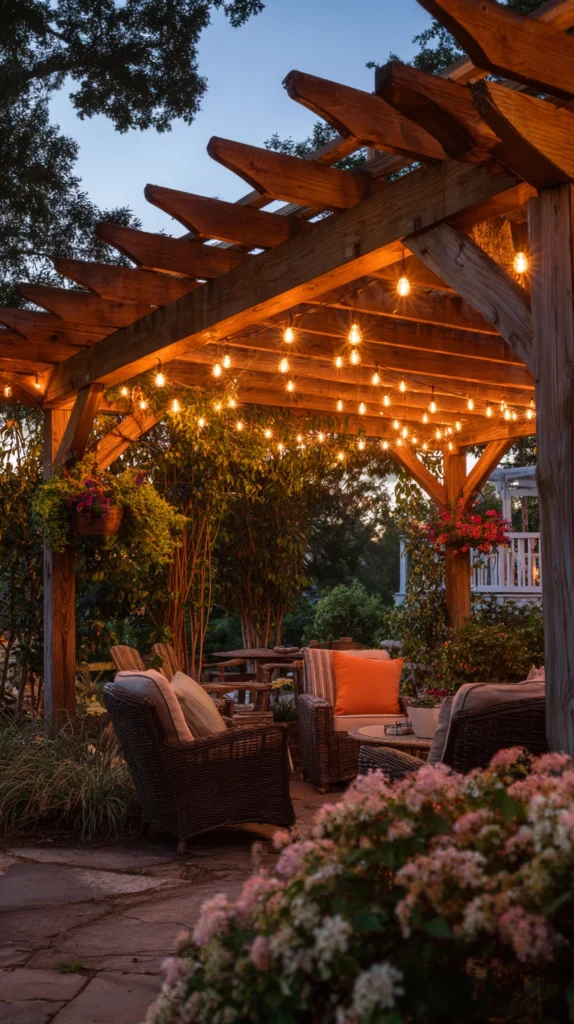
Budget: $30 – $150
String lights woven along the beams and rafters of a pergola transform it after dark from a daytime shade structure into the atmospheric focal point of the entire garden. The warm glow at dusk signals that the space has been designed for evening use as much as afternoon shade, and it extends the usable hours of the pergola by two to three hours on every summer evening. A pergola with well-placed string lights is used more than one without — it is that simple and that significant a difference.
Outdoor-rated string lights with warm white Edison bulbs (2700K colour temperature) cost $30–$80 for a 10–15 metre run suitable for a medium-sized pergola. Weave them along each horizontal rafter and drop one or two strands diagonally across the interior for depth. Solar-powered versions at $25–$60 eliminate the need for an electrical connection and perform well through summer when daylight hours are longest. Hang lights at two slightly different heights along adjacent beams — the variation in height prevents the display from looking flat and creates a more layered, atmospheric effect than a single uniform height across the whole structure.
Decorating tip: Use S14 Edison bulb string lights rather than small fairy lights for a more considered, restaurant-terrace aesthetic. The larger bulbs produce more light per metre, look striking even in daylight when the pergola is in full use, and create the warm amber glow that smaller fairy lights produce only in the darkest conditions.
3. A Climbing Rose for Fragrance and Colour
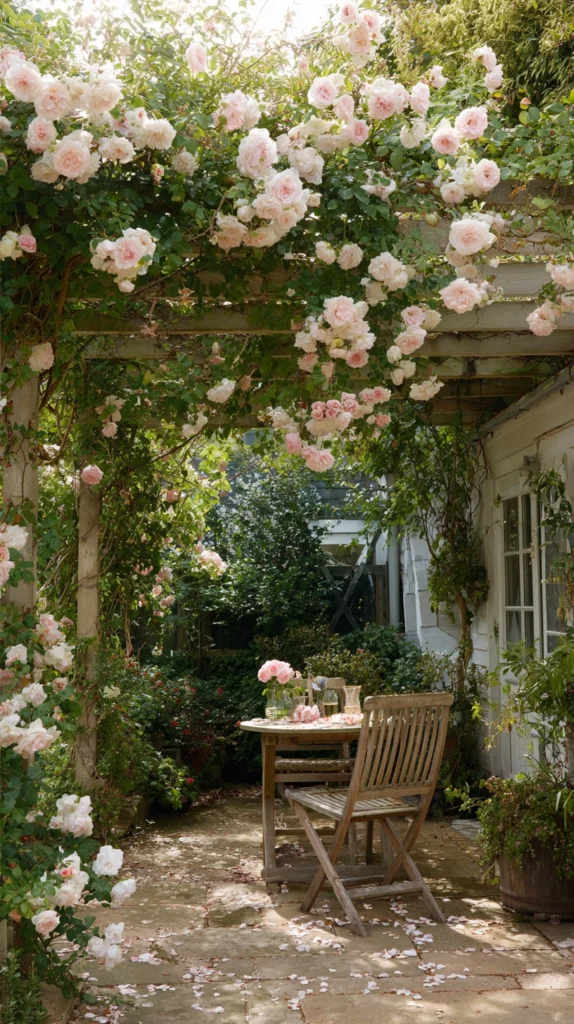
Budget: $15 – $50 per plant
A climbing rose trained over a pergola provides three things simultaneously: colour through the flowering season, fragrance that fills the space beneath the structure on warm still evenings, and increasing coverage year by year as the plant matures and its canes spread across the roof. A single well-chosen climbing rose on a pergola eventually becomes the defining feature of the garden — an established plant in full flower is one of the most beautiful sights in any summer garden.
Choose a repeat-flowering variety for the longest season of colour — varieties such as New Dawn, Compassion, Zephirine Drouhin, and Climbing Iceberg all perform reliably on pergolas and produce their first and heaviest flush of flowers in June with repeat blooms through to autumn. Bare-root roses cost $15–$30 and are planted in winter or early spring. Container-grown plants are available through the growing season for $20–$50. Tie all new canes horizontally to the pergola beams rather than allowing them to grow vertically — horizontal training produces far more flowering sideshoots than vertical growth and is the key to a pergola rose that flowers prolifically rather than concentrating all its blooms at the unreachable top of the structure.
Decorating tip: Combine a climbing rose with a late-flowering clematis trained through the same space — the clematis flowers after the rose’s main flush and fills the colour gap through late summer and early autumn. Varieties of Clematis viticella are the most reliable companions, flowering from July to September in shades of purple, pink, and deep red that complement most rose colours effectively.
4. Outdoor Curtains for Privacy and Softness
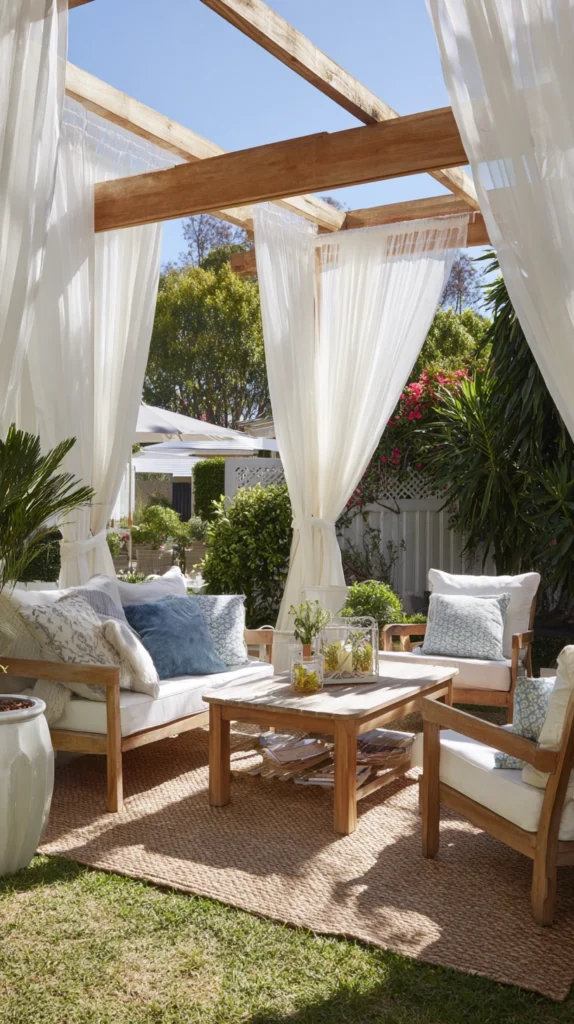
Budget: $40 – $200
Outdoor curtains hung from the sides of a pergola add softness, privacy, and a sense of enclosure that transforms the structure from an open frame into something that genuinely feels like a room. They filter rather than block the light, move gently in a breeze in a way that is immediately pleasant, and create a visual boundary between the pergola space and the rest of the garden without requiring any solid construction. Pulled back during the day and closed in the evening, they change the character of the space completely between uses.
Weather-resistant outdoor curtain panels in polyester or acrylic fabric cost $20–$60 per panel. A pergola with two open sides needs four to six panels for adequate coverage. White or cream panels read as the most architectural and blend with the widest range of garden styles. A simple curtain wire or tension rod fixed between pergola uprights provides the hanging point at $10–$25 per run. Choose a fabric weight heavy enough to hang well rather than billowing uncontrollably in a moderate breeze — lightweight voile is better suited to interiors than outdoor use in anything other than the most sheltered positions.
Decorating tip: Hang curtain panels slightly wider than the opening they cover and use tie-backs to pull them to the uprights during the day. Curtains that stack neatly at the sides when not in use look designed and intentional. Curtains that bunch awkwardly across the opening because they are the wrong width look improvised regardless of their quality or colour.
5. A Grapevine for Living Shade
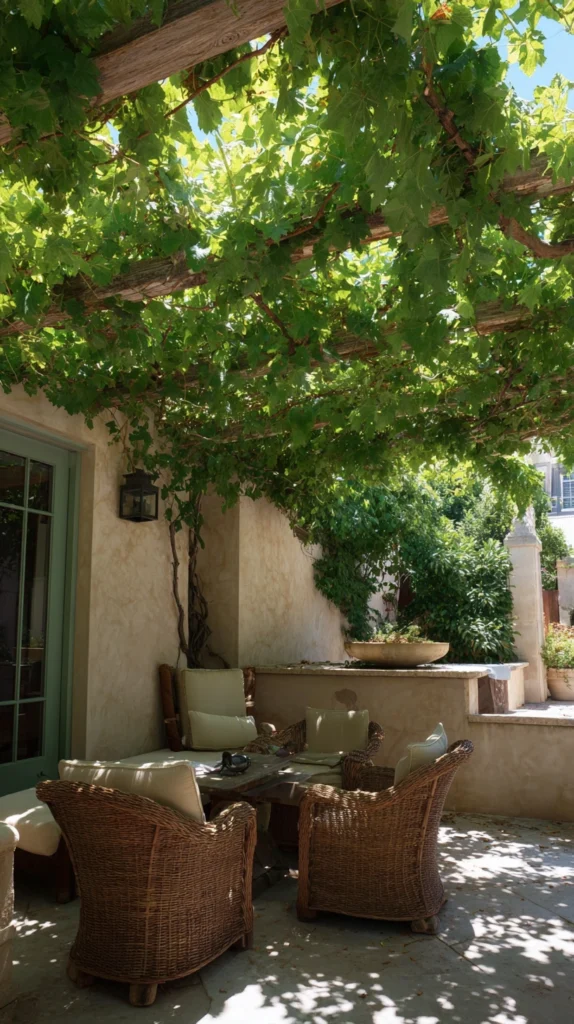
Budget: $12 – $40 per vine
A grapevine trained across a pergola roof creates the most beautiful and genuinely functional living shade available for an outdoor structure. The large, lobed leaves develop a dense canopy through summer that filters direct sunlight into the dappled, shifting light pattern that makes the space beneath it so pleasant to spend time in. The hanging clusters of ripening grapes from late summer add an almost Mediterranean character to the garden, and the autumn colour of the leaves — turning gold, amber, and deep red before they fall — provides a final seasonal flourish before winter.
Bare-root grapevines from specialist fruit nurseries cost $12–$25 and are planted in winter or early spring. Container-grown vines are available through the growing season for $20–$40. Dessert varieties including Black Hamburg, Muscat of Alexandria, and Boskoop Glory produce both shade and edible fruit. Train the main stem up a pergola upright and spread the lateral arms along the horizontal beams, tying in new growth through the growing season. Prune back to two buds on each spur in late winter — this annual pruning is what keeps the vine productive and manageable rather than becoming a dense, uncontrolled mass within three to four seasons.
Decorating tip: Plant the grapevine at the sunniest end of the pergola where it receives maximum light for fruit development while still providing shade to the seating area beneath. A vine planted in the shadiest position on the structure grows vigorously but fruits poorly — sun is the primary determinant of grape quality in a temperate climate and the vine’s position on the pergola matters considerably for anyone who wants to harvest edible fruit as well as enjoy the shade.
6. A Hanging Daybed or Swing Seat
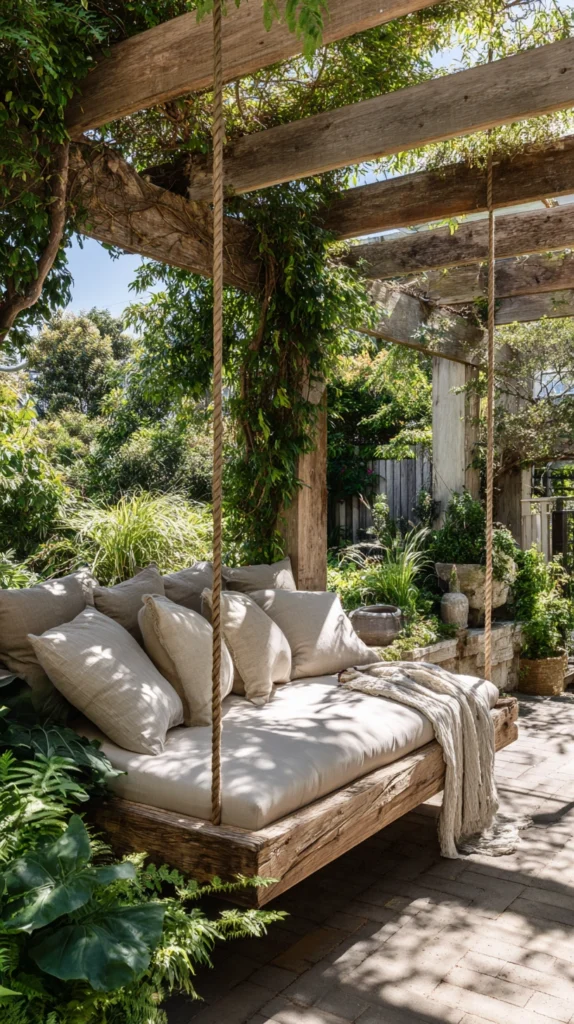
Budget: $150 – $600
A hanging daybed or swing seat suspended from the structural beams of a pergola turns the shaded space beneath it into a destination rather than simply a transitional area. The gentle movement of a suspended seat is one of the most relaxing experiences an outdoor space can offer, and the visual weight of a hanging daybed — with its cushions and throws — anchors the pergola as a genuinely furnished room rather than an empty shade structure with furniture placed underneath it as an afterthought.
A hanging rope daybed suitable for two people costs $150–$300. A freestanding swing seat with a frame costs $200–$400 and requires no structural pergola attachment. A suspended egg chair — hung from a single strong beam — costs $120–$300 and suits a pergola with a clearly defined central point. Ensure any hanging suspension point is rated for at least three times the weight it will carry — a loaded swing seat in use exerts significantly more dynamic force on the fixing point than the static weight of the furniture and occupants alone. Use stainless steel hardware rated for outdoor use at every fixing point.
Decorating tip: Position the hanging seat at one end of the pergola rather than centrally. A swing or daybed at the end of the structure creates a clear focal point when viewed from the garden and preserves the central space for a dining or seating arrangement that serves a different purpose. A pergola with both a dining area and a hanging seat at opposite ends functions as two distinct zones within the same structure.
7. Climbing Jasmine for Evening Fragrance
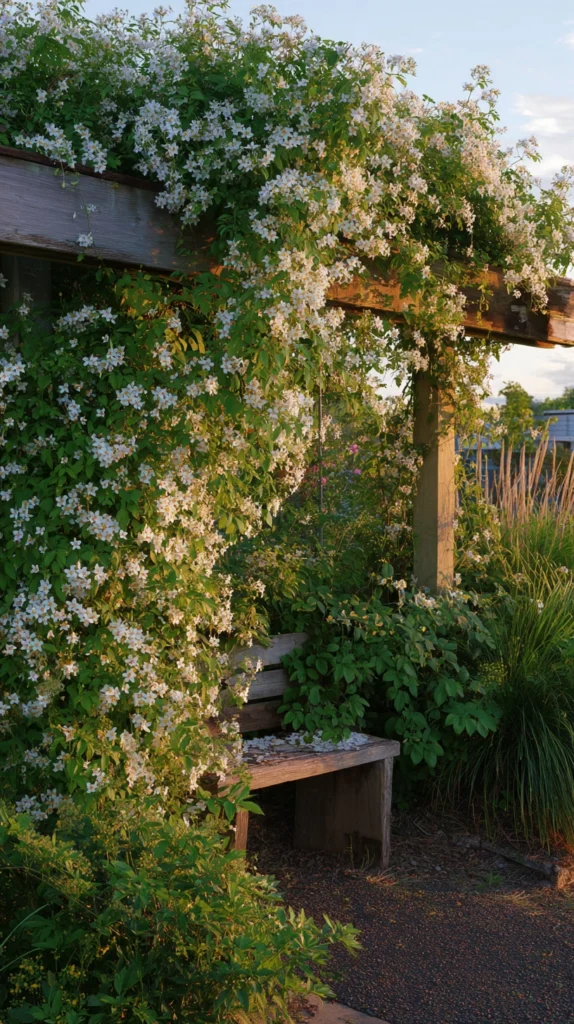
Budget: $10 – $25 per plant
Common jasmine trained over a pergola provides an overhead layer of fragrance on warm summer evenings that no other garden plant produces quite as generously. The small white star-shaped flowers appear through June and July and release their scent most intensely after sunset — when the heat of the day eases and the still evening air holds fragrance in a way that the breezy daytime hours do not. A jasmine pergola on a calm summer evening is one of the most sensory and genuinely pleasurable outdoor spaces a garden can offer.
Jasminum officinale — common jasmine — costs $10–$20 per plant and grows vigorously enough to cover a medium-sized pergola in two to three seasons. Pink jasmine (Jasminum polyanthum) is more tender but even more fragrant and suits sheltered, warmer garden positions. Plant at the base of a pergola upright and tie in the twining stems as they grow — jasmine climbs by twisting and needs something to wrap around rather than a flat surface to lean against. Prune lightly after flowering each year to remove older flowered stems and encourage the fresh growth on which next year’s flowers will appear.
Decorating tip: Train jasmine primarily across the windward side of the pergola — the side from which the prevailing breeze approaches. Fragrance carried toward the seating area on the natural air movement through the garden is far more effective than fragrance that drifts away from the space. A small adjustment in training direction makes a significant difference to how much of the jasmine’s scent actually reaches the people sitting beneath it.
8. Outdoor Lanterns and Candle Clusters
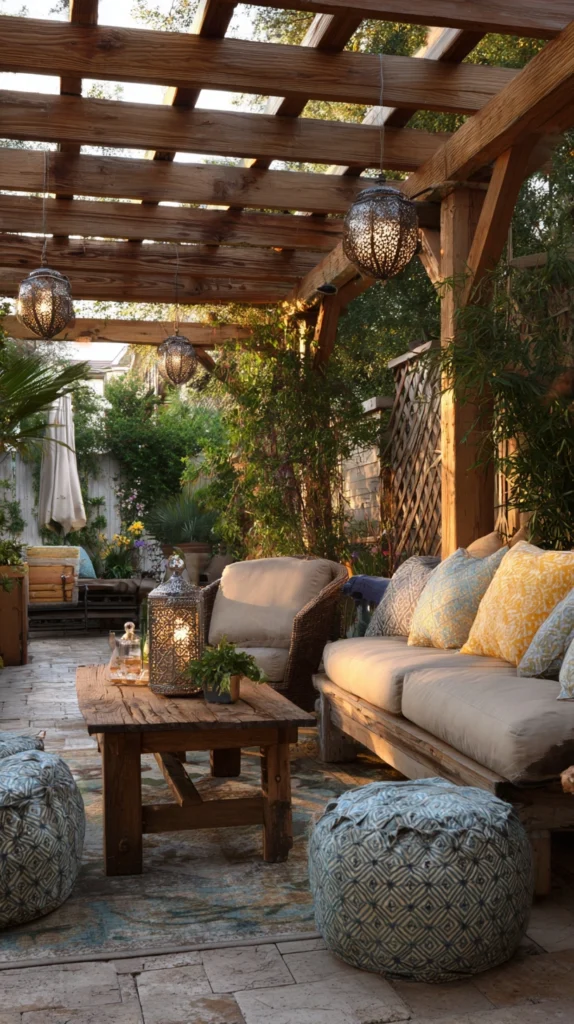
Budget: $30 – $150
Lanterns and candles bring a quality of light to a pergola that electric bulbs, however warm their colour, cannot replicate — the movement of a flame in the slightest air movement creates a living quality to the illumination that makes the space feel genuinely different from any electrically lit outdoor area. A cluster of lanterns on the dining table, a row of floor lanterns along the pergola edge, and a few pillar candles on a side surface together create a layered, atmospheric lighting arrangement that suits long summer evenings better than any single overhead light source.
Moroccan-style punched metal lanterns cost $15–$40 each. Large glass hurricane lanterns run $20–$50. Weatherproof rechargeable LED lanterns that flicker like candles cost $20–$50 each and eliminate the need for replacement candles or the fire risk of open flames near climbing plants and dry timber. A set of three to five lanterns in complementary styles costs $60–$150 and provides enough varied light to fill a medium-sized pergola with warm, ambient illumination through the evening hours without an electrical connection.
Decorating tip: Place lanterns at three different heights within the pergola — one on the dining table, one at bench or seat height on a side surface, and one at floor level beside a chair or along the edge of the space. Lighting at multiple heights creates depth and atmosphere that a single-level arrangement on a table surface alone never achieves, and the floor-level light in particular gives the pergola a genuinely intimate feel after dark.
9. A Shade Cloth or Woven Roof Panel
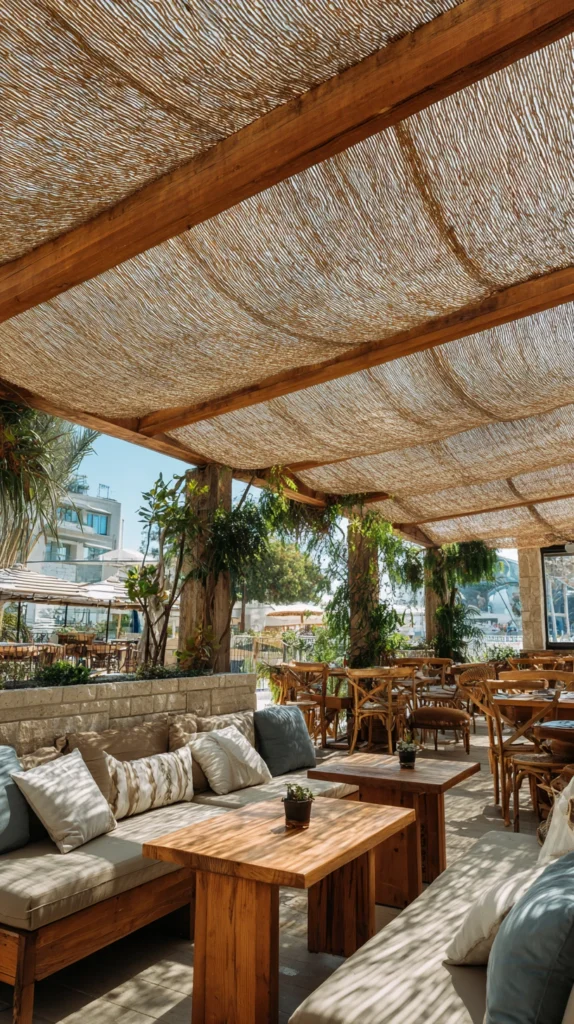
Budget: $40 – $200
A pergola without climbing plants yet established — or one where additional shade is needed before the plants have had time to cover the roof — benefits enormously from a shade cloth or woven reed and bamboo roof panel laid across the overhead beams. These provide immediate, practical shade from the moment they are installed, require no growing season, and can be removed and stored at the end of summer if desired. Woven bamboo and reed panels also add an attractive texture to the pergola overhead that a bare timber frame lacks.
UV-stabilised shade cloth in green, charcoal, or natural tan costs $1–$3 per square metre from garden retailers and hardware stores. A 3×3 metre pergola requires roughly 10–12 square metres of cloth allowing for fixing overlap. Woven bamboo or reed screening panels cost $20–$50 per panel and are available in standard widths from most garden centres. Fix with cable ties, wire, or wooden battens along the beam edges. A combination of shade cloth and string lights woven through it simultaneously provides daytime shade and evening atmosphere from the same installation.
Decorating tip: Choose a shade cloth colour that complements the pergola timber rather than contrasting with it strongly. Natural tan or warm grey reads as an extension of the timber structure. Bright green or blue reads as an addition to it — a distinction that determines whether the roof covering looks integrated or installed as an afterthought. The most considered pergola decorating always works with the existing material palette rather than against it.
10. Hanging Planters and Trailing Flowers
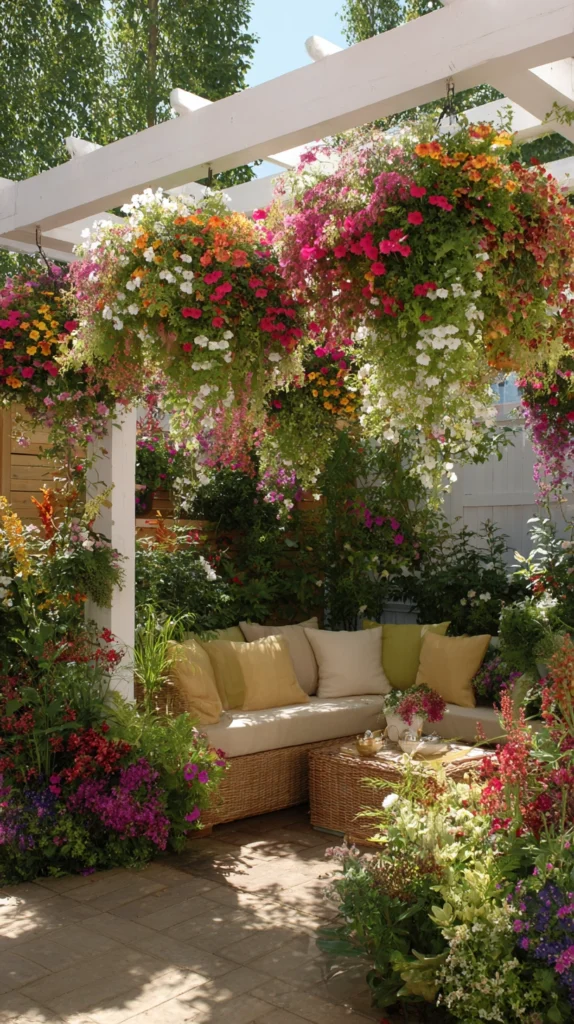
Budget: $40 – $150
Hanging planters suspended from the pergola beams bring colour into the overhead zone of the structure — the visual field that is most directly in view when sitting or dining beneath the pergola. Trailing petunias, lobelia, bacopa, and million bells planted in generous hanging baskets create cascades of colour that soften the timber framework and animate the space with movement whenever there is any air movement through the garden. They also fill the space between the structural beams and any climbing plants with immediate seasonal colour while longer-term climbers are still establishing.
Standard 35 cm hanging baskets cost $5–$15 each. Self-watering baskets with built-in reservoirs run $15–$35 and reduce watering frequency significantly — hanging baskets in a sunny pergola position dry out faster than any other container format and self-watering versions are worth the additional cost for the reduction in daily maintenance through the hottest weeks. Plant with trailing varieties specifically chosen for sun or shade depending on the light level the basket will receive. Feed every week with a liquid fertiliser through the growing season to maintain the continuous flowering that makes hanging baskets worth their maintenance commitment.
Decorating tip: Hang baskets at the same height on alternating beams rather than varying the heights randomly. A consistent hanging height along the pergola produces a ordered, gallery-like arrangement that looks designed. Baskets hung at random heights on the same beam look cluttered regardless of how good the planting is. Consistency of height is the detail that separates a considered decorating scheme from an accumulation of nice individual elements.
11. An Outdoor Rug to Define the Space
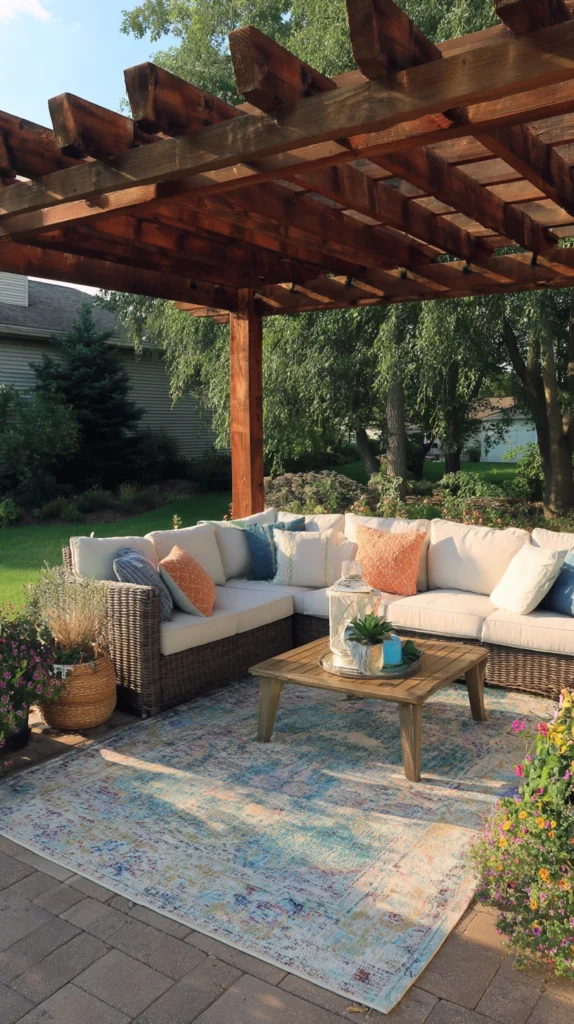
Budget: $50 – $250
An outdoor rug beneath the furniture in a pergola is the single decorating decision that most clearly signals that the space has been designed as a room rather than simply furnished as an outdoor area. It anchors the furniture arrangement, defines the boundary of the living zone within the larger pergola footprint, and softens the hard paving or decking surface underfoot in a way that transforms the comfort and feel of the space. A pergola with a rug reads as a room. The same pergola without one reads as furniture on a hard surface.
Weather-resistant polypropylene outdoor rugs cost $50–$120 for a 180×270 cm size suitable for a dining or seating area. Larger sizes run $100–$250. Choose a rug large enough for all four legs of every piece of furniture to sit comfortably on it — a rug that is too small makes the furniture look stranded and draws attention to the proportional mismatch. Bold stripes, geometric patterns, and warm natural tones in terracotta, ochre, and navy all work well beneath a pergola and hold their colour through repeated UV and weather exposure better than pale or pastel alternatives.
Decorating tip: Lift the rug and allow it to dry completely after rain before replacing it beneath the furniture. Water trapped between an outdoor rug and a paved or decked surface breeds mould within days in warm weather and can permanently stain both the rug and the surface beneath it. A quick lift and a day of drying every week or after significant rainfall extends the life of the rug by several seasons.
12. A Ceiling Fan for Hot Days
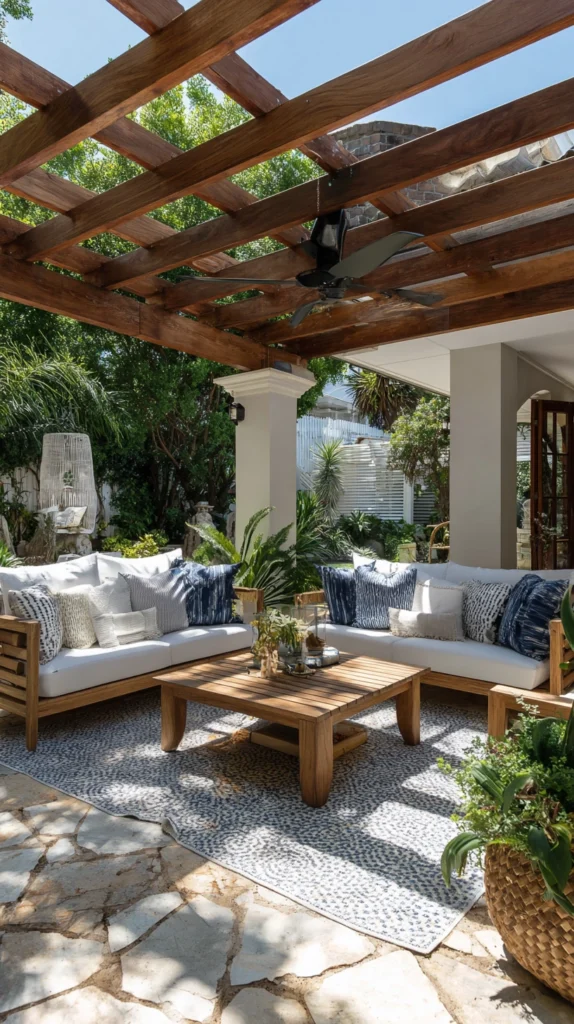
Budget: $80 – $300
A ceiling fan mounted to the central beam of a pergola is the upgrade that makes the shaded space genuinely comfortable through the hottest part of a summer day rather than simply less hot than the open garden. Moving air significantly reduces the felt temperature in an outdoor space — even a gentle breeze from a fan turns an uncomfortably hot afternoon into something manageable, extends the hours the pergola is used through the peak of summer, and keeps insects away from the dining table with a consistency that no citronella candle achieves.
Outdoor-rated ceiling fans with weatherproof motors and UV-resistant blades cost $80–$200 for a standard size suitable for a medium pergola. Larger, more powerful models run $150–$300. Hardwired installation by an electrician adds $80–$200 to the cost. Choose a fan with a DC motor rather than an AC motor — DC fans are significantly quieter, use less electricity, and are more suitable for an outdoor space where the noise of the motor competes with conversation and garden sound rather than being absorbed by the walls and furnishings of an interior room.
Decorating tip: Position the fan at the end of the pergola closest to the seating or dining area rather than at the geometric centre of the structure. The most effective cooling happens directly beneath the fan, and a fan positioned over empty pergola space rather than over the furniture arrangement provides less cooling to the people actually using the space than one positioned directly overhead.
13. Potted Plants Along the Perimeter
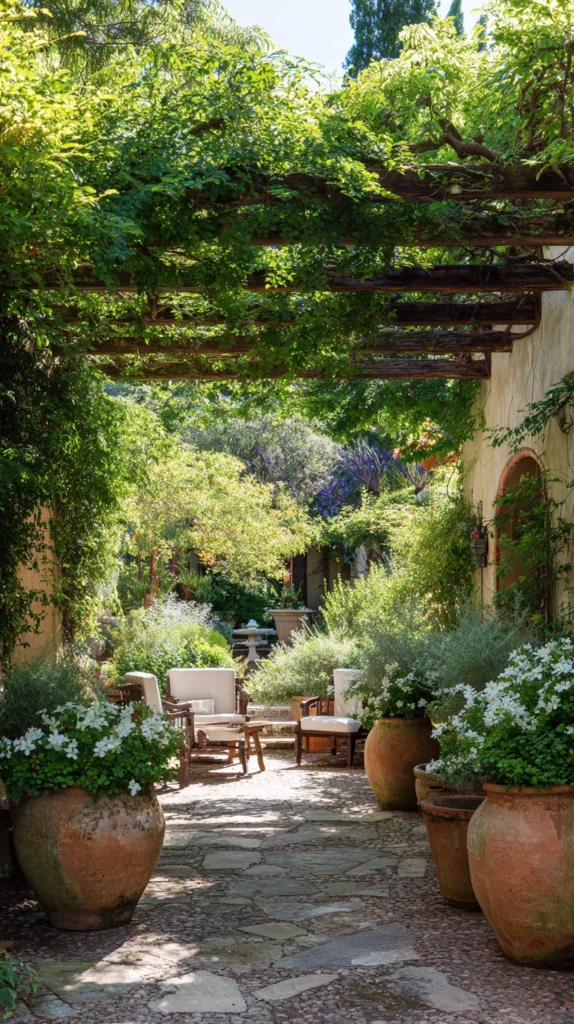
Budget: $60 – $250
A row of large potted plants along the open sides of a pergola creates a soft, planted boundary that defines the space without enclosing it entirely. Tall architectural plants — olive trees, standard bay trees, large agapanthus, or tall ornamental grasses — provide vertical definition at pergola scale and give the structure the feeling of being embedded within the garden rather than sitting apart from it on a bare paved surface. The pots also allow the planting scheme to be changed season by season in a way that fixed ground planting does not.
Standard bay trees in 30–40 cm pots cost $30–$80. Olive trees in similar containers run $25–$60. Large agapanthus in 25–30 cm pots cost $15–$30 each. Tall ornamental grasses in 20–25 cm containers run $12–$25 each. A row of four to six matched pots in a consistent material — terracotta, glazed ceramic, or powder-coated metal — along one or two sides of the pergola costs $120–$300 in pots and plants together. Use a matching pot style and a consistent plant type for a formal, structured effect, or vary the plant species within the same pot style for a more relaxed but still cohesive arrangement.
Decorating tip: Use the largest pots you can practically manage and fill them with the largest plants the budget allows. Pergola structures are substantial in scale and small pots with small plants look incongruously modest beside them. A single large pot with a well-grown tree or shrub beside each upright makes a stronger visual statement than six small pots clustered together at the same location and is easier to water and maintain through the summer months.
14. A Built-In Bench Along One Side
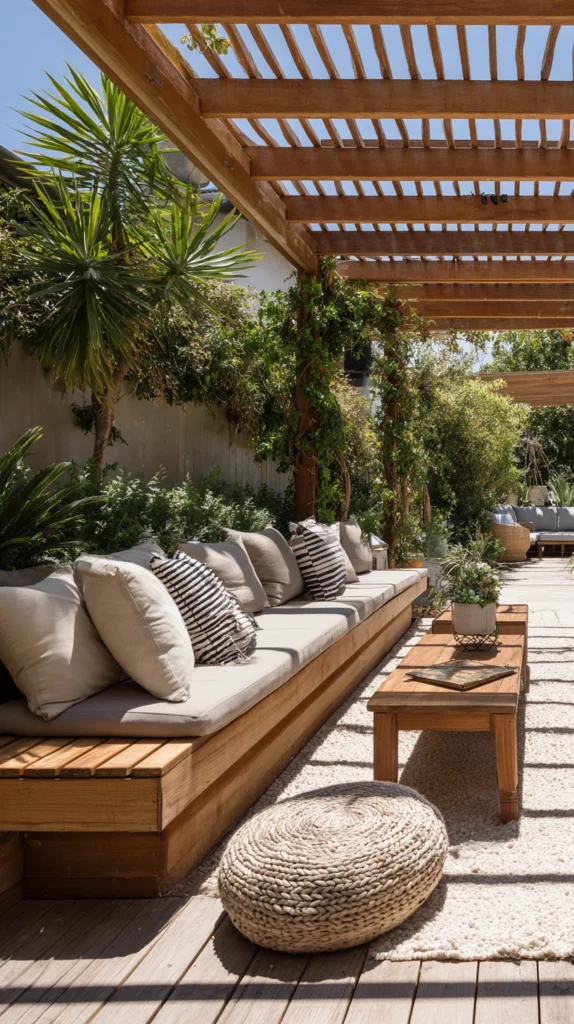
Budget: $100 – $500
A built-in bench running along one side of a pergola — constructed from the same timber as the structure itself or from complementary materials — increases the seating capacity of the space, creates a sense of permanence and intentionality, and frees the pergola floor from the visual clutter of multiple freestanding chairs. A built-in bench with deep seat cushions and a row of throw pillows becomes one of the most comfortable and most-used pieces of furniture in the garden through summer, particularly for relaxed gatherings where flexibility of seating position matters more than formal arrangement.
A simple built-in timber bench constructed by a carpenter costs $200–$500 depending on size and finish. A DIY version built from decking boards and standard timber sections costs $100–$200 in materials for a typical 2–3 metre run. Add a custom-cut foam seat pad covered in outdoor fabric at $30–$80 and a collection of outdoor cushions and throws at $20–$60 to complete the arrangement. The built-in bench need only run along one side — the other sides can accommodate freestanding chairs that can be moved and rearranged as numbers and occasions demand.
Decorating tip: Build a simple storage box into the bench base with a hinged lid that doubles as the seat surface. Outdoor cushions, throws, and table accessories stored directly within the pergola space in a waterproof box are used far more consistently than the same items stored in a shed or garage that requires a separate trip to retrieve them. Proximity and accessibility determine how often these comfort elements actually get used through the season.
15. Clematis for Late Summer and Autumn Colour
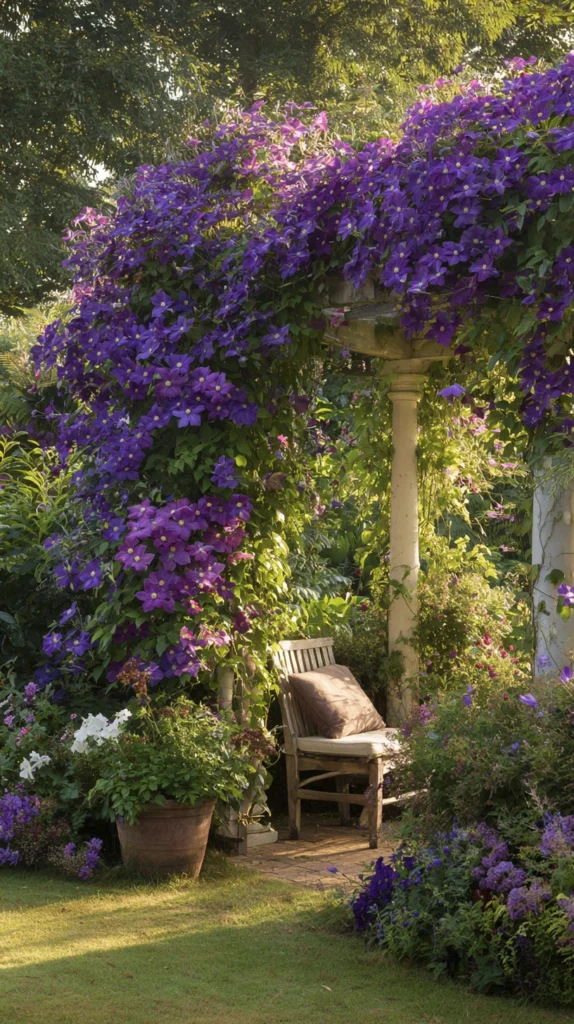
Budget: $10 – $30 per plant
While wisteria and roses provide the spring and early summer display on a pergola, clematis varieties from the viticella and texensis groups extend the flowering season through late summer and early autumn when other climbers have already peaked. The smaller, nodding flowers in shades of deep purple, wine red, pale pink, and white appear from July through to September or October depending on variety — filling the gap between the rose’s main flush and the first autumn frosts with sustained colour that keeps the pergola looking alive and interesting through the entire summer season.
Clematis viticella varieties — including Purpurea Plena Elegans, Polish Spirit, and Madame Julia Correvon — are among the most reliable, disease-resistant, and prolific late-summer climbers available. Plants cost $10–$25 each from garden centres and specialist nurseries. Train through the existing framework of a climbing rose or wisteria for a layered planting that extends the season with almost no additional structural support. Prune viticella clematis back hard to 30 cm above the ground in late winter — this group flowers on the current season’s growth and hard pruning is what produces the strong new stems that carry the best flowers.
Decorating tip: Plant clematis at least 45 cm away from the base of any existing climber it will grow through, rather than directly alongside it. The lateral space allows the clematis to establish its own root system without competing with the established plant directly at the root zone — and once established, the clematis will naturally find its way into the existing framework above without any additional guidance or tying in.
A well-decorated pergola earns its place in the garden through every hour of the day and every week of summer. The shade structure that feels uninviting at noon without a fan becomes the most comfortable spot in the garden. The bare frame that looked unfinished in May becomes a fragrant, flowering canopy by July. The space that seemed too open in the evening becomes an intimate retreat the moment the string lights come on at dusk. Every idea on this list works in that same direction — toward a space that you actually want to spend time in rather than one you simply pass through.
Start with the two or three ideas that address the most obvious gap in your current pergola setup — shade if it is too bright, light if it is too dark after dusk, comfort if the furniture arrangement does not invite staying. Get those right first. The decorating ideas that follow them will find their own place naturally once the fundamentals are in place.