
12 Coastal Grandmother Summer Decor Ideas That Are Totally Trending
The coastal grandmother aesthetic is having a moment — and it is easy to understand why. It is warm, unhurried, and entirely free of the anxiety that drives most trend-led decorating.
Think sun-bleached linen, a bowl of shells on the sideboard, wicker furniture that has been in the family for thirty years, the smell of something good coming from a well-used kitchen, and light that seems to come from everywhere at once. It is the aesthetic of a person who has worked out exactly what they love and surrounded themselves with it without needing anyone else’s approval.
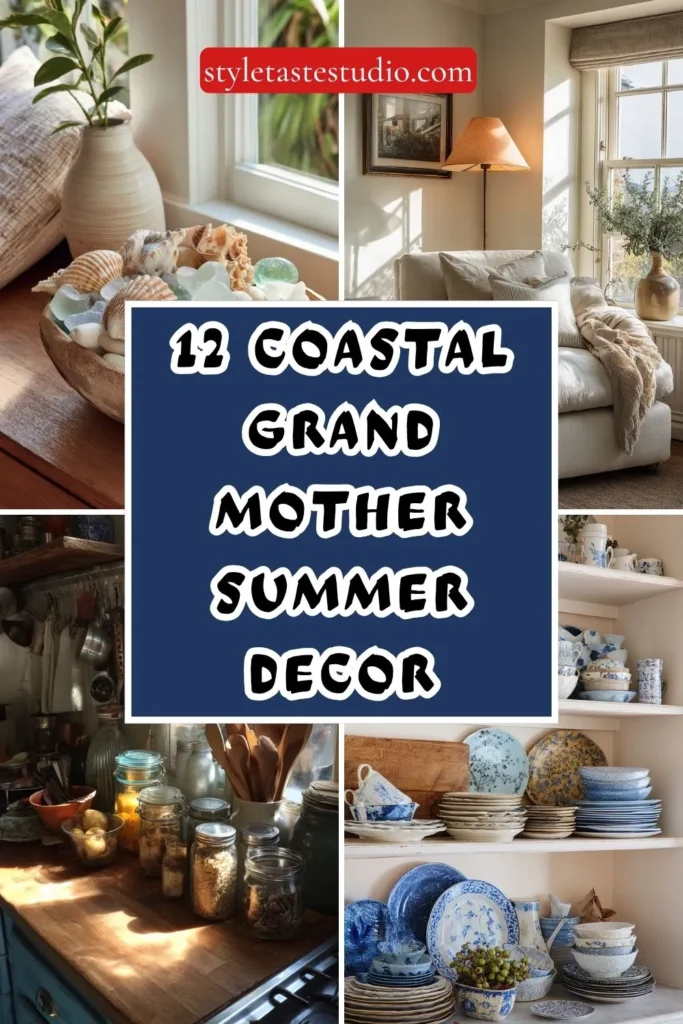
The twelve ideas below bring this aesthetic into the home through specific, achievable decor choices that work individually as seasonal updates or together as a coherent summer scheme. Each one is grounded in the core qualities of the style — natural materials, soft colours, the sea as a reference point rather than a theme, and the particular ease that comes from things being chosen for comfort and longevity rather than for appearances. Costs and a styling tip are included with each.
1. Sun-Bleached Linen in Every Room
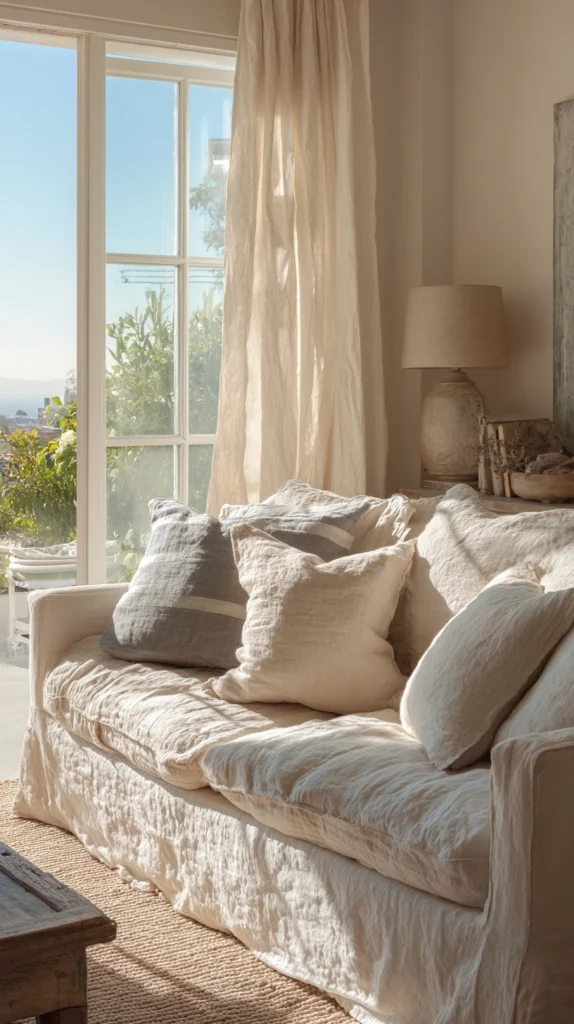
Budget: $60 – $250
Linen is the foundational textile of the coastal grandmother home. Not crisp, bright white linen but the kind that has been washed many times and carries a slight unevenness — the colour of sea fog or of sand that has dried in the afternoon sun. This is the linen that is used daily and laundered weekly, that softens further with each wash, and that makes a sofa or a bed feel genuinely comfortable to sink into rather than carefully arranged for effect. In summer it is breathable and cool, which adds a practical quality to its considerable aesthetic one.
Stone-washed linen duvet covers cost $80–$180 for a quality set. Linen sofa throw covers run $60–$150. Linen cushion covers in natural, oatmeal, or pale grey tones cost $15–$35 each. Source from independent textile makers and smaller linen brands where the stone-washing process is done properly rather than simulated — the difference between genuine stone-washed linen and fabric that has simply been pre-wrinkled at the factory is immediately apparent in feel and in the way the material moves and drapes. The investment in real linen is repaid across many summers rather than a single season.
Style tip: Wash new linen at least twice before putting it on a bed or sofa for the first time. Each wash softens the fibres further and brings the colour closer to the lived-in, sun-bleached tone that is the target quality for this aesthetic. Linen that has been washed repeatedly is indistinguishable from vintage linen in feel — and feel is everything in a coastal grandmother interior.
2. A Collection of Shells and Sea Glass on Display
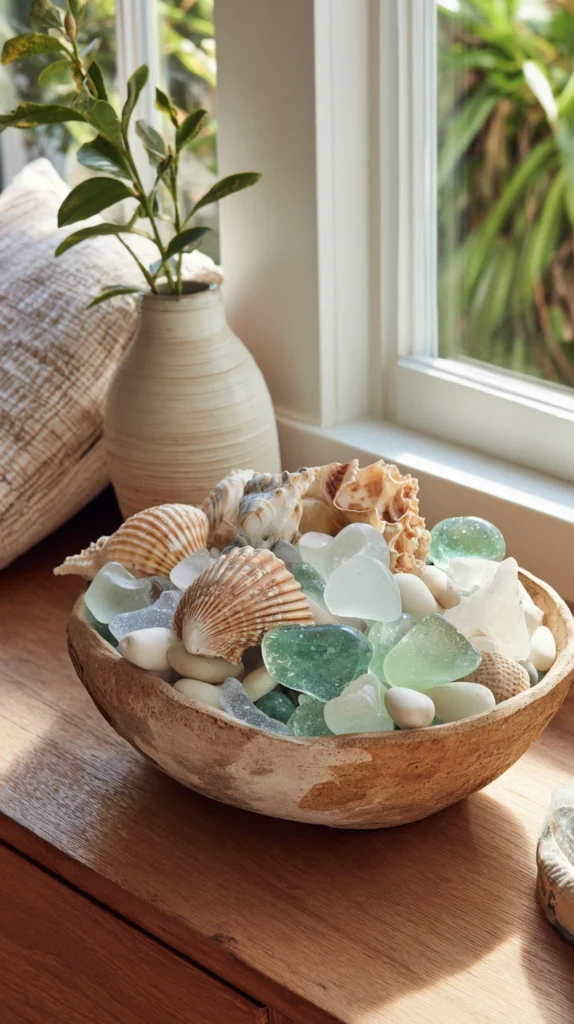
Budget: $0 – $40
No decor element is more directly coastal grandmother than a considered display of shells, sea glass, and smooth stones gathered over years of beach walks. The collection is not a themed display purchased from a gift shop — it is a personal accumulation of objects from specific places and specific days, arranged in a shallow ceramic bowl or a glass apothecary jar on a windowsill or sideboard. The objects have no monetary value and considerable personal significance, which is precisely the quality that makes them worth displaying.
Gathered shells and sea glass cost nothing beyond the walks that produced them. A shallow ceramic bowl for display costs $10–$25 from a pottery or homeware retailer. A large glass apothecary jar or a wide-mouth glass vase costs $8–$20. If your shell collection is thin, supplementing with a small bag of natural, unbleached shells from a craft supplier costs $5–$15. Arrange the collection without overthinking the placement — the organic, unstudied quality of shells tipped gently into a bowl is more in keeping with the aesthetic than any carefully posed arrangement would be.
Style tip: Resist the urge to clean and bleach collected shells to a uniform white. The natural variation in colour, the slight weathering, and the occasional imperfection of a shell gathered from a real beach is more interesting and more authentic than the uniform appearance of commercially bleached shells. The patina of a genuinely found object is the quality that matters most in a coastal grandmother display.
3. Wicker and Rattan Furniture With Age and Character
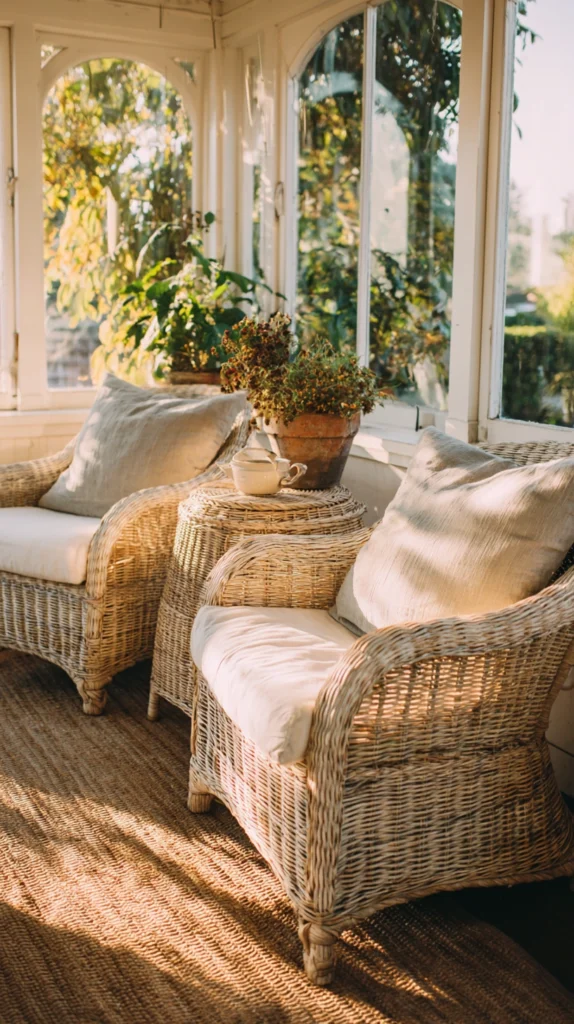
Budget: $40 – $400
The coastal grandmother does not buy new rattan furniture in a matching set from a contemporary homewares retailer. She has a wicker chair that belonged to someone before her, a rattan side table that has been repaired once and painted twice, and a woven magazine basket that has softened and faded to exactly the right shade over fifteen years of use. This is the quality of wicker furniture that suits the coastal grandmother aesthetic — not the perfect, factory-fresh version but the version that carries the evidence of actual time spent in actual rooms.
New wicker and rattan furniture can be made to feel right with time, but the best starting point is second-hand — charity shops, estate sales, and online resale platforms regularly offer genuine vintage rattan pieces at $20–$80 for chairs and $15–$40 for side tables and smaller items. A coat of white, cream, or driftwood grey paint on an older rattan piece refreshes it without removing the patina of age from its structure and weave. New rattan from a homewares retailer costs $80–$400 for larger pieces and softens appropriately within a season or two of regular use in a sunny room.
Style tip: Add a simple cushion in a faded stripe or a plain linen fabric to a wicker chair rather than leaving the seat surface bare. The cushion increases the comfort significantly and allows the chair to be used for extended periods — which is the point of all coastal grandmother furniture. Comfort is never sacrificed for appearance in this aesthetic, and a cushionless wicker chair, however beautiful, tends to encourage shorter visits than a well-padded one.
4. Blue and White China on Open Display
Budget: $20 – $150
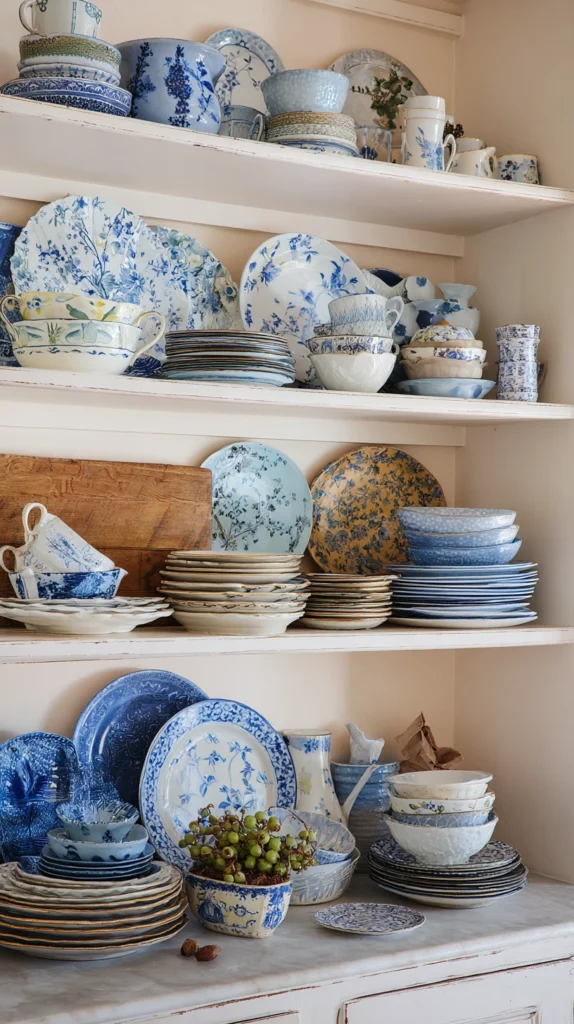
A collection of blue and white china — plates, jugs, serving bowls, and teacups in various patterns that complement rather than match each other — displayed on open kitchen shelving, a Welsh dresser, or along a plate rail is one of the most enduring and most specifically coastal grandmother decor signatures. The blue and white palette references the sea without requiring any further nautical elaboration. The mix of patterns reflects a collection assembled over time from different sources. The display signals that beautiful things are used and seen rather than stored and preserved.
Vintage blue and white china from charity shops, car boot sales, and online resale platforms costs $2–$15 per piece for plates, cups, and small serving pieces. Larger platters and serving bowls run $10–$40 at similar sources. A Welsh dresser or open shelving unit to display the collection costs $100–$400 for a good second-hand piece. The collection grows gradually and the gradual growth is part of its appeal — a coastal grandmother china collection assembled over fifteen years from meaningful sources is always more interesting than one purchased as a coordinated set in a single afternoon.
Style tip: Use the china rather than displaying it exclusively. Coastal grandmother decor is built on the principle that beautiful and meaningful objects are for daily use rather than preservation behind glass or on shelves that are never disturbed. A blue and white plate used for toast on a Tuesday morning and returned to the shelf afterward is living the aesthetic. The same plate never touched for fear of damage is missing the point of having it.
5. Oversized Linen Throw on Every Upholstered Surface
Budget: $30 – $120
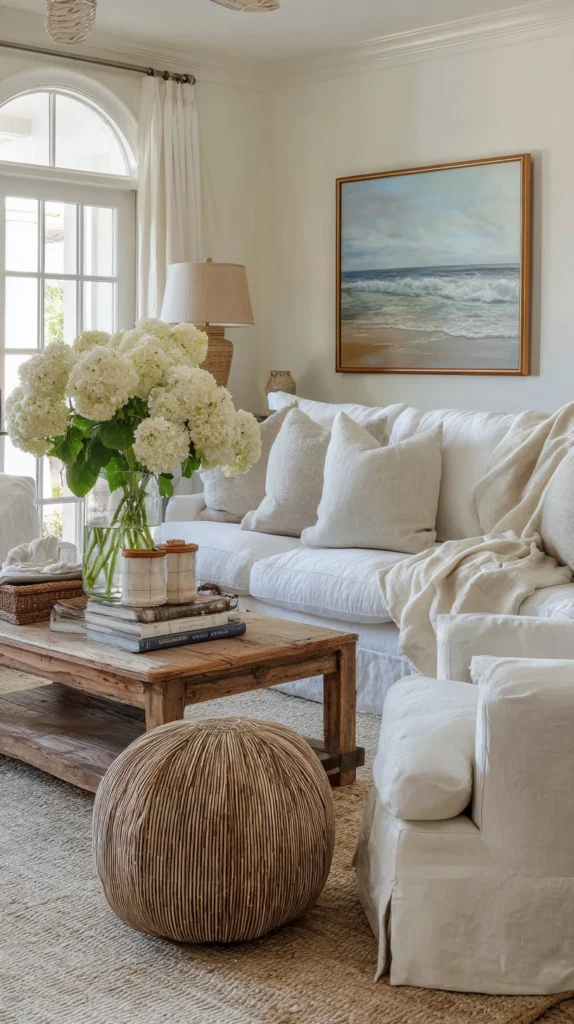
An oversized linen or cotton throw draped loosely over the back and arm of a sofa or armchair is one of the simplest and most effective coastal grandmother decor moves available. It adds texture, warmth, and the suggestion of comfortable habitation — of a person who might pick it up and wrap themselves in it at any moment — in a way that a cushion arrangement or a styled surface cannot. It also covers upholstery that is not quite right for the aesthetic, which makes it one of the most practical as well as most atmospheric additions to a coastal summer interior.
A quality linen or cotton-linen throw in a generous size — 130×180 cm or larger — costs $30–$80 from textile and homewares retailers. Vintage blankets and throws from charity shops cost $5–$20 and often have exactly the right faded, softened quality that new throws take years to develop. Striped cotton throws in navy and white or sand and cream run $25–$60 and suit the coastal palette particularly well. Drape the throw with deliberate casualness — pulled to one side, slightly rumpled, as if it has just been set down — rather than folded precisely over the sofa back where it looks more like a store display than something that belongs to anyone.
Style tip: Keep a throw on every upholstered seat in the room rather than just the main sofa. A coastal grandmother living room has a throw within reach of every person sitting in it — the generosity of the gesture is as important as the individual piece. It signals that the room is set up for the comfort of the people in it rather than for the appearance it creates when empty.
6. Watercolour Prints of Coastal Landscapes
Budget: $15 – $100
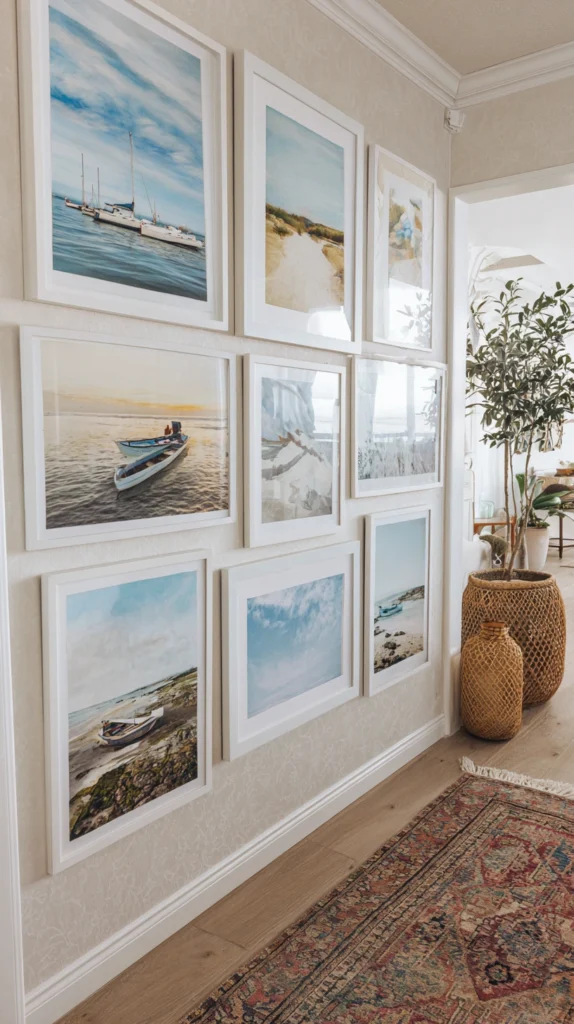
Watercolour prints of coastlines, harbours, boats, birds, and botanicals on the walls of a coastal grandmother home occupy a specific middle ground between decoration and personal document. They are not gallery-quality art purchased for investment. They are prints of places that matter, painted in a medium whose softness and slight unpredictability suits the gentle, unhurried quality of the coastal grandmother aesthetic better than photography or more graphic illustration styles. The blurred edges and washed-out tones of a watercolour coastal scene look exactly right in a room full of sun-bleached linen and aged wicker.
Original watercolour prints from independent artists on Etsy and at craft markets cost $15–$60 for a small to medium piece. A set of three related prints — a harbour, a seabird, and a coastal botanical — framed simply in white or natural wood frames ($10–$25 each) creates a wall arrangement for $60–$150 in total. Look for prints with a restrained palette — blues, greens, sandy neutrals, and white — rather than brightly coloured seascape illustrations that suit a different, more cheerful coastal style. The watercolour coastal grandmother palette is always quiet rather than vivid.
Style tip: Hang watercolour prints in simple white frames with a generous white mount inside the frame. The white mount creates visual breathing space around the image and makes even a small print read at a scale appropriate to a wall display. A small print in a tight frame disappears on a wall. The same print with a 5–8 cm white mount around it becomes a considered piece of displayed art.
7. A Well-Used Kitchen That Smells of Something Good
Budget: $20 – $100
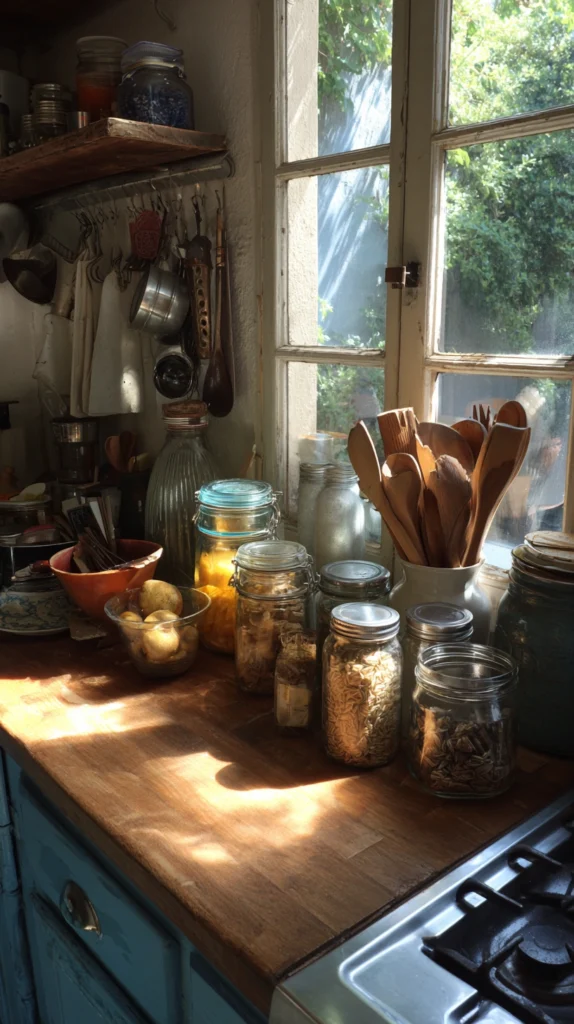
The coastal grandmother kitchen is not a showroom. It is a kitchen that is used seriously and daily — one where the surfaces show the marks of regular cooking, where the herbs are actually picked from the pots on the windowsill, where a pot of something is usually on the stove, and where the smell of the room is always more welcoming than the appearance of it. The decor of this kitchen is almost entirely composed of the objects of its use: a stoneware jug of wooden spoons, a bowl of lemons and limes, a bunch of fresh herbs in a glass of water, a handwritten recipe card propped against the splashback.
A stoneware utensil holder costs $15–$35. A simple ceramic fruit bowl costs $20–$50. A bunch of fresh herbs in a glass jar costs nothing from the garden and $3–$5 from a market. A handwritten recipe card displayed in a small wooden frame costs the price of the frame — $5–$15. The combined effect of these objects in a working kitchen costs under $100 and creates the kitchen character that no amount of purchased decor can substitute for. The coastal grandmother kitchen is staged by cooking in it, not by styling it.
Style tip: Keep the kitchen surfaces significantly cleaner and clearer than feels instinctive. The objects that remain on the counter should be the ones in daily use — a kettle, the stoneware utensil holder, the fruit bowl, the herb jar. Everything else lives in a cupboard. The edited surface makes the objects that remain on it look considered and allows the room to breathe in the way that a coastal grandmother kitchen always does.
8. Faded Stripe Textiles Throughout
Budget: $30 – $150
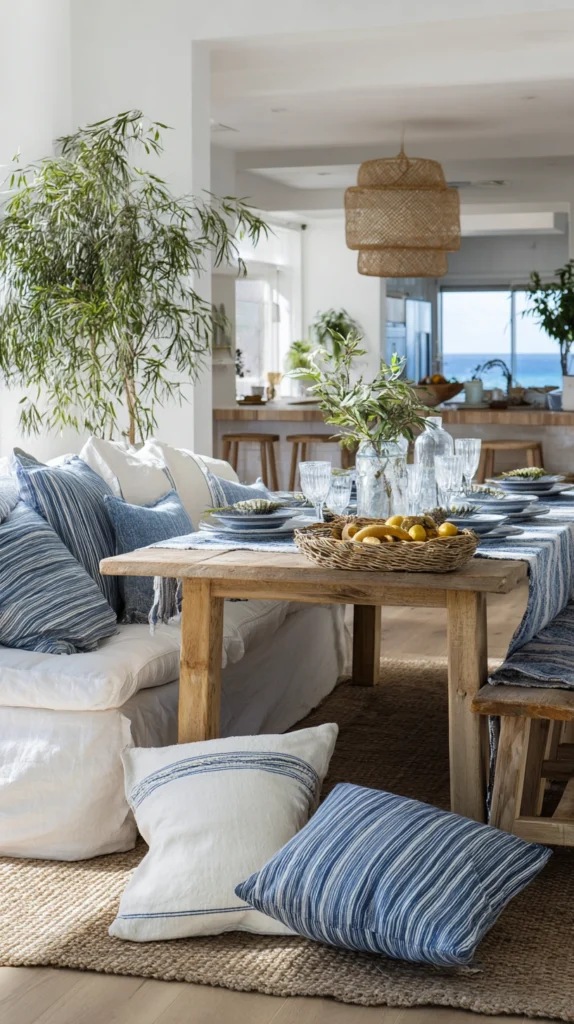
The faded stripe is one of the most versatile and most coastal of all textile patterns — it works as a sofa throw, a set of kitchen towels, a cushion cover, a tablecloth, a beach bag, and a set of napkins simultaneously, and it transitions between indoor and outdoor use with equal ease. The coastal grandmother version is always faded rather than vivid — navy that has washed to a dusty indigo, red that has softened to a warm brick, green that has greyed toward sage. The stripe itself should be simple rather than complex: two or three colours in a straightforward alternating pattern rather than a multi-tone engineered design.
Striped linen kitchen towels cost $8–$20 each. Striped cotton cushion covers run $15–$30. A striped tablecloth in cotton or linen costs $25–$60 for a dining table length. A set of four striped cotton napkins costs $20–$40. Buy all striped pieces within the same colour family — all navy and white, or all terracotta and cream, or all sage and natural — rather than mixing stripe colours across a room. Consistent colour within the stripe pattern is what makes multiple striped pieces work together without competing, which is the distinction between a coastal grandmother interior and one that simply looks busy.
Style tip: Wash all striped textiles at 60 degrees for the first two or three washes to accelerate the fading process and soften the fabric before it is put into regular use. The hot wash removes excess dye and begins the softening that makes a new striped textile feel like one that has been in the house for years rather than weeks — an important quality in an aesthetic that values the appearance of genuine accumulation over recent acquisition.
9. Large Green Houseplants in Simple Pots
Budget: $30 – $150
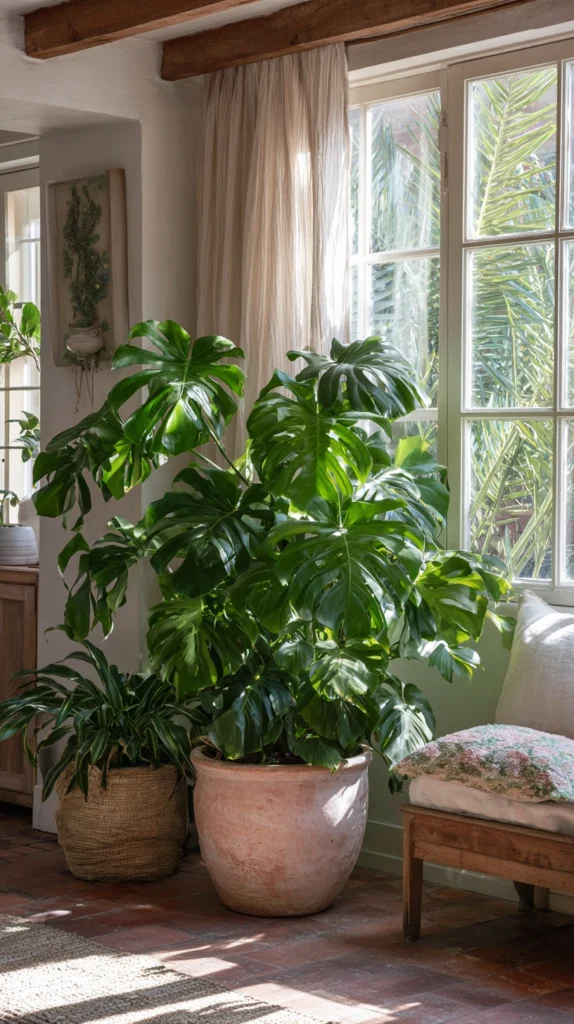
The coastal grandmother does not have a curated indoor plant collection organised by species and Instagram trend. She has several large, healthy, green plants that have been in the same corners for years, repotted when they needed it and otherwise left largely alone to do what plants do. A large pothos trailing from a shelf, a monstera that has grown to fill its corner over three summers, a fiddle leaf fig that drops a leaf occasionally and produces two new ones in its place — these are the plants of a coastal grandmother interior, and their quality comes from genuine longevity rather than recent purchase.
A medium monstera deliciosa in a 17–19 cm pot costs $20–$40. A large pothos in a hanging pot costs $12–$25. A fiddle leaf fig in a 21 cm pot runs $25–$60. Simple white or terracotta ceramic pots cost $8–$25 depending on size. The plants are placed where they will genuinely thrive — near natural light, away from heating and air conditioning vents — rather than where they look best for a photograph. A plant that is doing well looks better than a healthy plant placed in the wrong position for the sake of a styled corner, which is a distinction the coastal grandmother intuitively understands.
Style tip: Keep the plant collection green rather than variegated or colourful. The coastal grandmother plant palette is all foliage — dark green, mid-green, and pale green — without the pink, purple, or yellow-leaved varieties that suit other interior aesthetics. The green plants reference the garden and the natural world outside in a way that colourful varieties do not, and they sit more quietly against the neutral, bleached palette of the rest of the room.
10. A Reading Corner With Good Light and a Comfortable Chair
Budget: $100 – $500
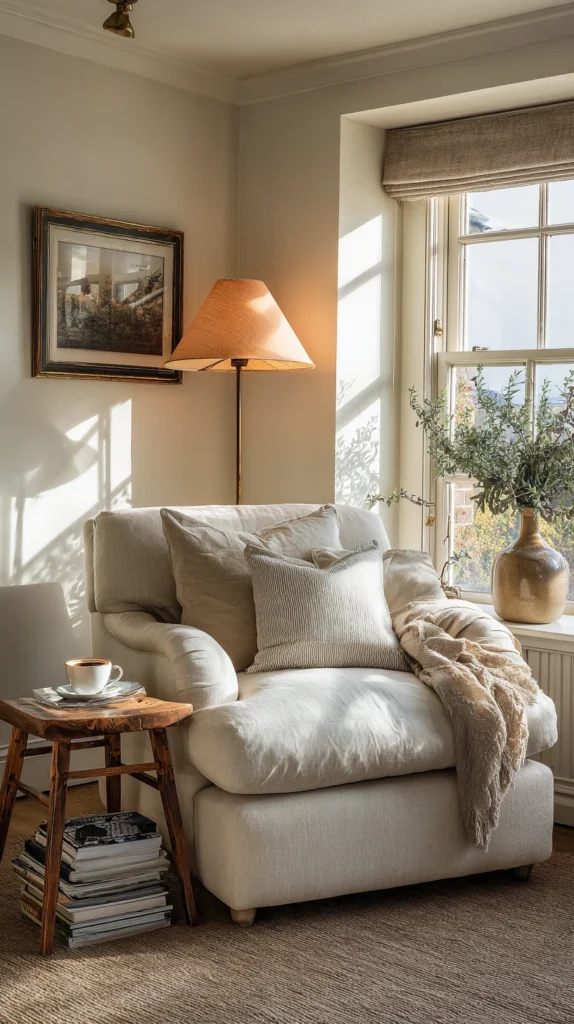
The coastal grandmother reads. The reading corner in her home is not a styled moment for social media but a genuinely functional arrangement — the best chair in the room positioned beside the best window in the room, with a side table for a glass of water and a cup of tea, a good lamp for the evenings, and a stack of books that reflects an actual reading life rather than books chosen for their spines. The corner is used every day and looks exactly as a space that is used every day looks — slightly worn, slightly lived in, and entirely welcoming.
A good armchair — comfortable enough to sit in for two hours without discomfort — costs $150–$400 new or $40–$150 second-hand in good condition. A simple wooden side table runs $30–$80. A reading lamp with a warm bulb costs $30–$80. A linen or cotton slipcover for the chair in a neutral tone costs $60–$150 if the chair’s original upholstery is not quite right. The total investment in a genuinely functional reading corner sits between $200 and $500 for a new setup — less if second-hand furniture and existing lamps are incorporated into the arrangement.
Style tip: Position the reading chair so that natural light falls over the left shoulder for right-handed readers and the right shoulder for left-handed readers. This is the orientation that produces the best natural reading light without the shadow of the reader’s own head falling across the page. The detail is entirely practical and entirely in keeping with an aesthetic built on the idea that function and comfort always take precedence over arrangement.
11. Driftwood and Natural Found Objects as Sculpture
Budget: $0 – $30
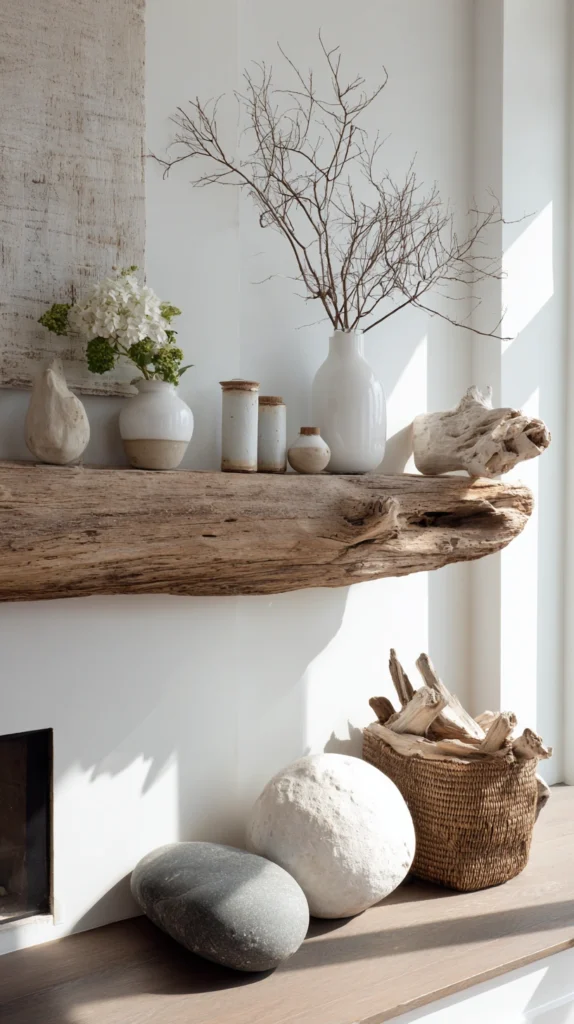
A piece of driftwood on a mantelpiece, a smooth grey stone used as a paperweight, a section of weathered rope coiled in a bowl, a dried seed pod from a coastal walk — the coastal grandmother uses objects found rather than purchased as the primary sculptural elements of her home. These are not decorative objects in the conventional sense. They are material evidence of a life lived in proximity to the natural world, brought inside because they were beautiful in themselves and because they carry the memory of where they were found.
The cost of found natural objects is zero beyond the time and attention required to find them. Driftwood suitable for display — smooth, pale, interesting in form — is found on beaches and riverbanks. Smooth stones come from the same places. Dried seed pods, grasses, and branches are found in hedgerows and open countryside. Supplement the collection with a simple wooden or stone base ($5–$15) if a found object needs a display surface to sit on securely. The arrangement of found objects on a mantelpiece or shelf should look like a collection gathered over time — because it is.
Style tip: Limit the found object display to five or six pieces maximum and replace one or two each season as new finds displace older ones. A rotating collection of found objects stays alive and connected to the current season in a way that a static arrangement of the same pieces never does — and the act of choosing what stays and what goes is itself a form of engagement with the home that the coastal grandmother style encourages.
12. The Summer Table Set for Gathering
Budget: $40 – $180
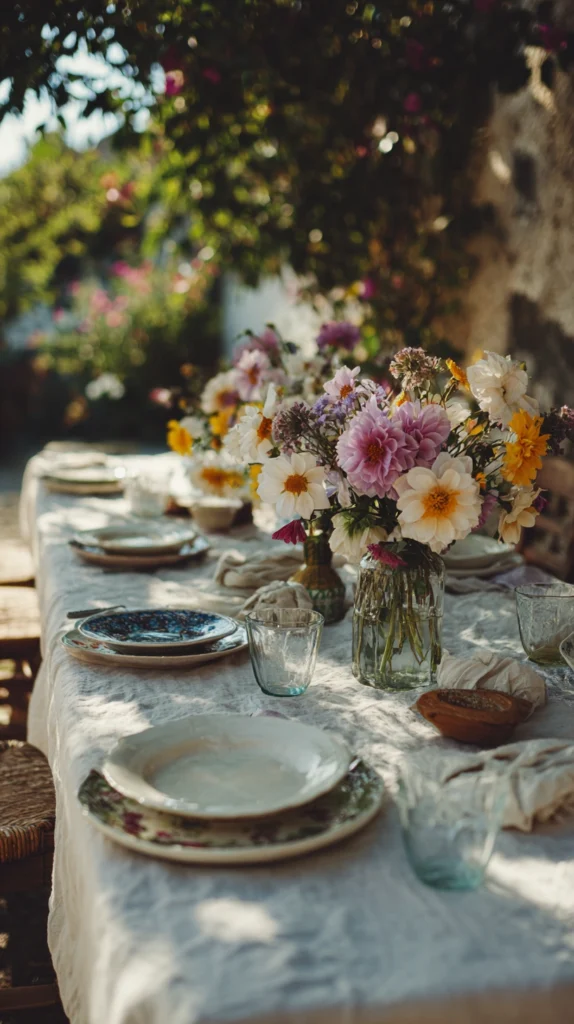
The coastal grandmother’s summer table is set for people — not for photographs. The tablecloth is linen and slightly wrinkled. The napkins are cotton and mismatched. The flowers are from the garden in whatever is blooming that week. The glasses are plain and generous. The dishes are the blue and white china that has been in the cupboard since before anyone can remember. Everything on the table is there because it is useful or because it is loved, and the two categories overlap considerably. The table set this way is always ready to have someone added to it and never requires advance warning to look right.
A linen or cotton tablecloth costs $25–$60. Mismatched cotton napkins from charity shops cost $1–$3 each. A simple floral arrangement from the garden costs nothing. A wooden board for bread and cheese costs $15–$30. Plain water glasses in a generous size run $3–$8 each. The complete table setting for six people assembled from a combination of existing pieces, charity shop finds, and two or three new purchases costs $40–$100. The coastal grandmother table is never expensive and always looks as though it has been laid by someone who knows exactly what they are doing — because after years of practice, they do.
Style tip: Set the table the morning of a gathering rather than the hour before. A table that has been sitting set for several hours has a settled, anticipated quality that a table arranged at the last minute does not — the linen has relaxed into its folds, the flowers have opened slightly further, and the room has had time to take on the character of a space that is ready for something pleasant to happen in it. The coastal grandmother always has time for this kind of preparation, even when she is busy.
The coastal grandmother aesthetic is not something that can be purchased in an afternoon or assembled from a single retailer’s collection. It is accumulated over time, from sources that matter, in a home that is genuinely lived in rather than periodically staged. The quality that makes it so appealing — the ease, the warmth, the sense of unhurried permanence — is produced by exactly that accumulation rather than by any single design decision made at once.
Take one idea from this list and apply it with patience rather than speed. Choose the linen carefully, find the shells on an actual beach, buy the china piece by piece from places that feel right. The style rewards the slow approach more than any other aesthetic in current circulation — and the home it eventually produces is one that feels genuinely yours rather than borrowed from someone else’s vision of what a beautiful summer interior should look like.