15 Garden Pathway Ideas To Elevate Your Landscaping
Garden pathways serve essential dual purposes providing practical circulation through landscapes while establishing visual structure that guides both physical movement and aesthetic experience throughout outdoor spaces.
Well-designed paths transform ordinary yards into cohesive gardens where deliberate routes create narrative journeys, establish spatial organization, and demonstrate the kind of intentional design that distinguishes thoughtfully planned landscapes from haphazard collections of disconnected elements.
Strategic pathway development incorporating appropriate materials, proper scale, graceful routing, and integration with surrounding plantings elevates functional necessity into genuine design opportunity where circulation becomes architectural feature rather than afterthought accommodation.
Understanding which materials suit specific garden styles, how to create inviting curves versus efficient straight lines, and what constitutes appropriate pathway width for comfortable navigation ensures these hardscape elements enhance rather than merely serve gardens.
These fifteen garden pathway ideas demonstrate diverse approaches from natural stepping stones to formal brick walks, each proving that thoughtful path design fundamentally transforms landscape quality creating the kind of elevated garden character that makes properties memorable and genuinely enjoyable to experience.
1. Natural Flagstone Irregularity
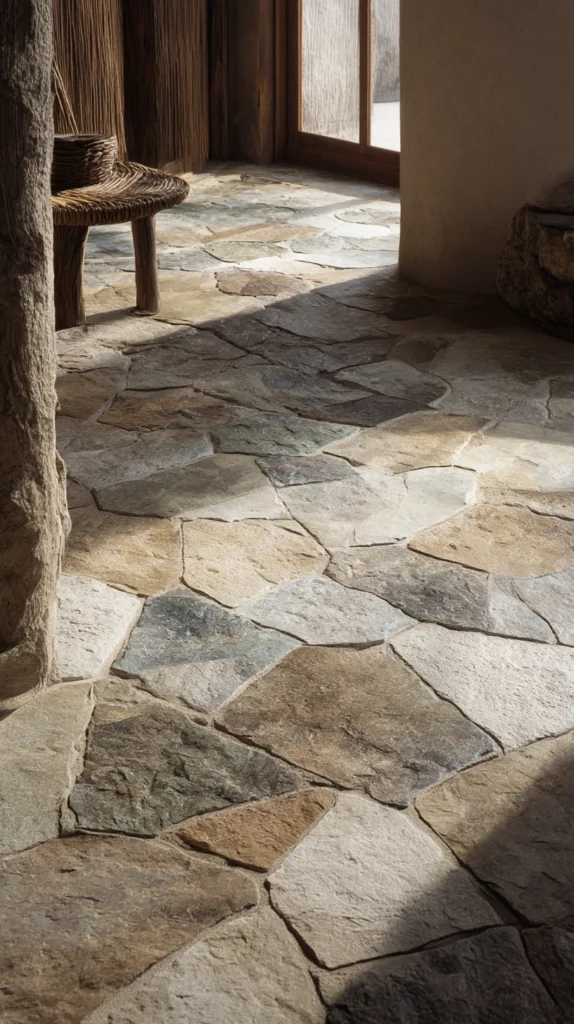
Create organic pathways using irregular flagstone pieces fitted together like puzzles establishing naturalistic circulation with authentic stone beauty and the kind of informal character that suits cottage and woodland gardens. Choose flagstones in varied sizes and shapes creating organic rather than geometric patterns, fit pieces closely minimizing visible gaps, and fill joints with either fine gravel, moss, or low-growing groundcovers like creeping thyme.
The irregular stones create authentic natural appearances while their substantial presence provides permanent beautiful pathways. Install over proper base materials ensuring stability preventing settling or shifting that creates uneven walking surfaces over time.
2. Formal Brick Herringbone Pattern
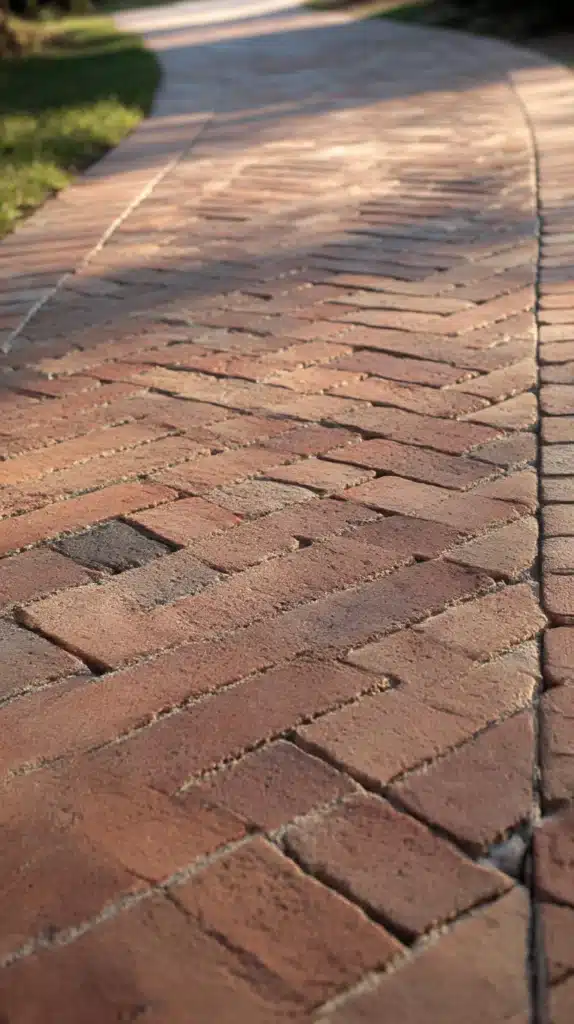
Establish traditional elegance through brick pathways laid in classic herringbone patterns creating the kind of timeless formal beauty that suits traditional gardens and historic properties. Install bricks in alternating diagonal patterns creating distinctive herringbone appearance, use consistent brick quality ensuring uniform color, and edge pathways with soldier course borders creating defined finished edges.
The traditional pattern adds visual interest and movement while the brick material provides warm color and authentic character. Set in sand allowing adjustment and good drainage or mortar permanently for maintenance-free installation requiring no resetting.
3. Gravel Path Simplicity
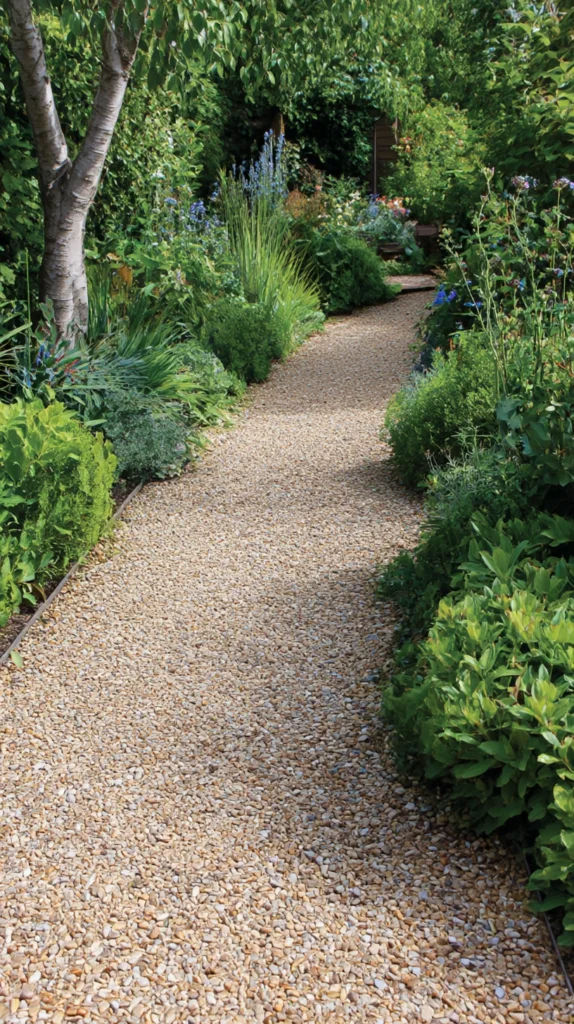
Design economical attractive pathways using decomposed granite or fine gravel creating permeable surfaces, soft crunching sounds underfoot, and the kind of informal character that suits diverse garden styles from contemporary to cottage.
Edge gravel paths with metal strips, stone borders, or brick maintaining clean boundaries preventing gravel migration into adjacent beds, install landscape fabric beneath preventing weed growth, and add 2-3 inches of gravel creating adequate coverage. The gravel paths cost considerably less than hardscape alternatives while their permeable nature handles drainage effectively. Refresh periodically adding new gravel maintaining proper depth and appearance.
4. Stepping Stone Casual Route
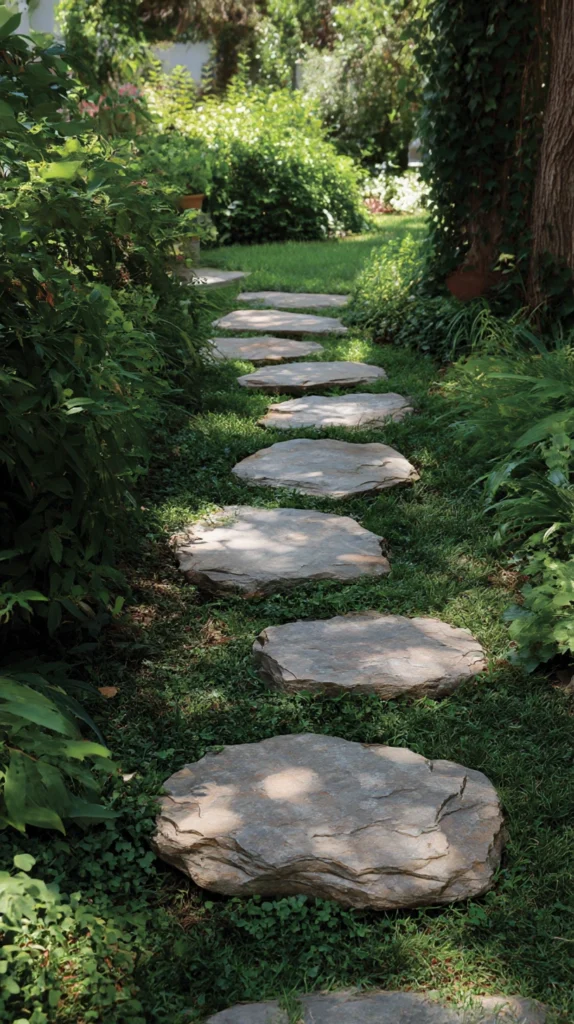
Establish informal circulation through individual stepping stones set in lawns or groundcover creating relaxed pathways that maintain green visual continuity while providing dry footing through garden areas.
Space stones at comfortable walking intervals typically 18-24 inches center to center, set flush with surrounding grade preventing mowing obstacles, and choose stones sized adequately for stable footing typically 12-18 inches in diameter. The stepping stone approach reduces hardscape quantity and associated costs while creating more organic integrated appearances than continuous pathways. Plant low groundcovers between stones creating living pathways.
5. Mulched Natural Wood Chip
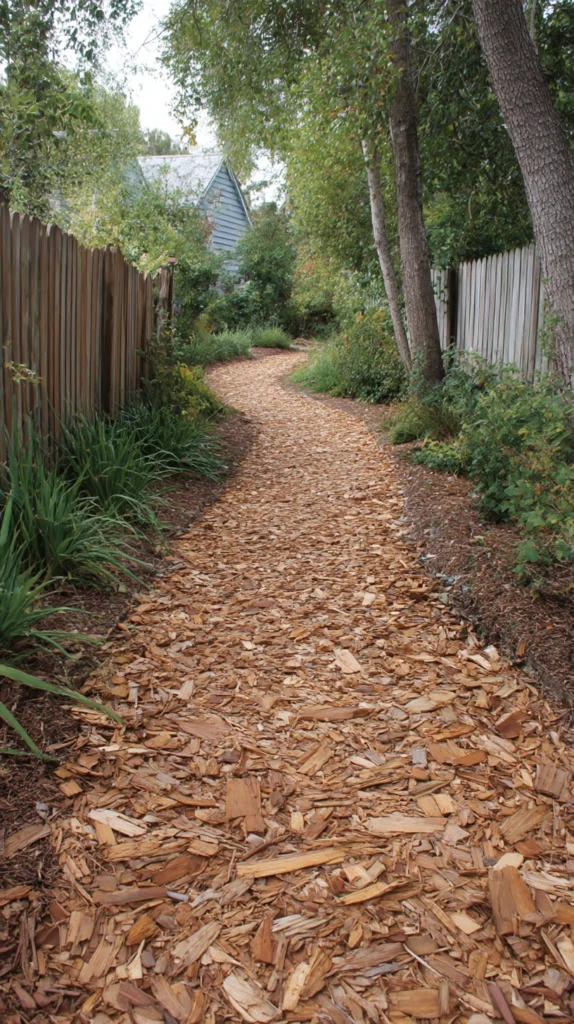
Create woodland-appropriate pathways using natural wood chip mulch establishing organic routes through naturalistic gardens while the biodegradable material enriches soil as it decomposes over time. Edge mulch paths maintaining boundaries, install adequate depth of 3-4 inches creating proper coverage, and refresh annually as material decomposes maintaining appearance and function.
The mulch paths suit woodland or naturalistic gardens while their soft surface provides comfortable walking and sound dampening. Choose appropriate mulch types including hardwood, cedar, or pine selecting based on longevity and aesthetic preferences.
6. Concrete Paver Geometric Modern
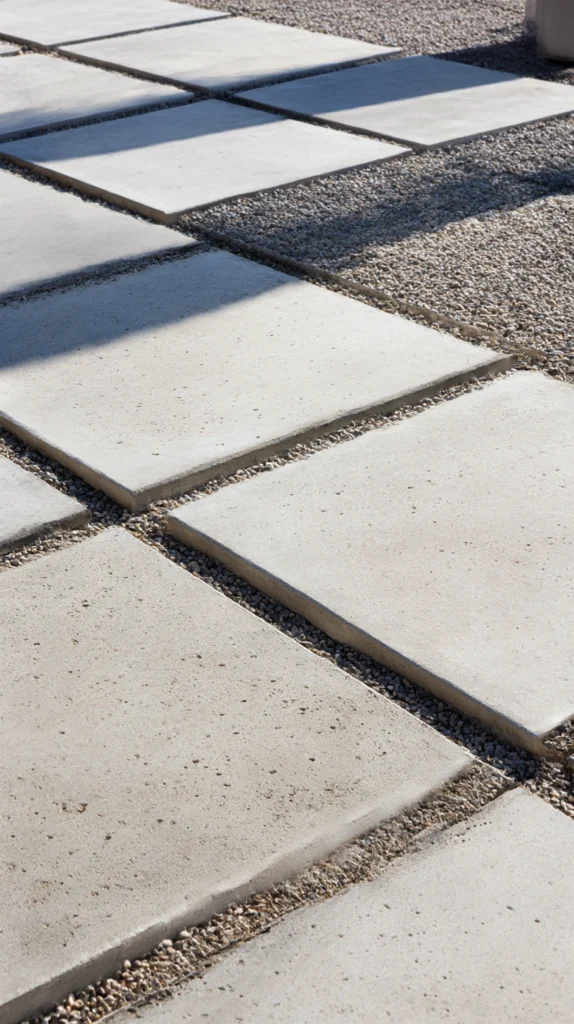
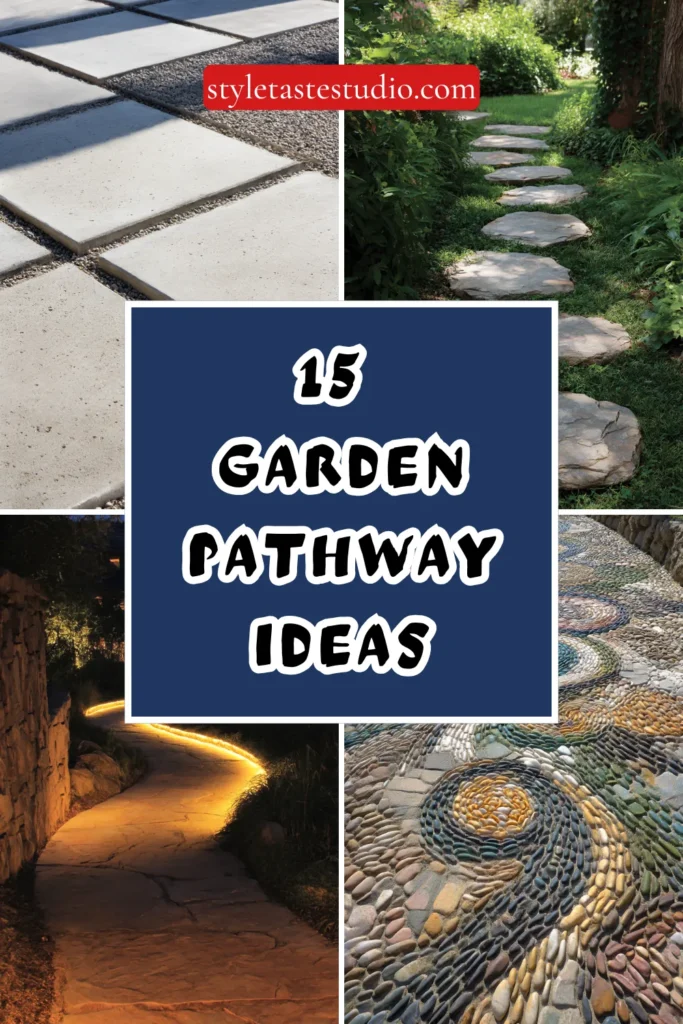
Install contemporary concrete pavers in clean geometric patterns creating modern minimalist pathways with precise lines and the kind of architectural quality that suits contemporary landscapes. Choose pavers in large formats minimizing grout lines, select neutral colors including grays or warm earth tones, and install in grid patterns or offset running bond creating different visual effects.
The concrete pavers provide durable modern surfaces while their uniform dimensions create the kind of precise geometric order contemporary design celebrates. Set over proper bases ensuring long-term stability and preventing settling.
7. Mixed Material Combination
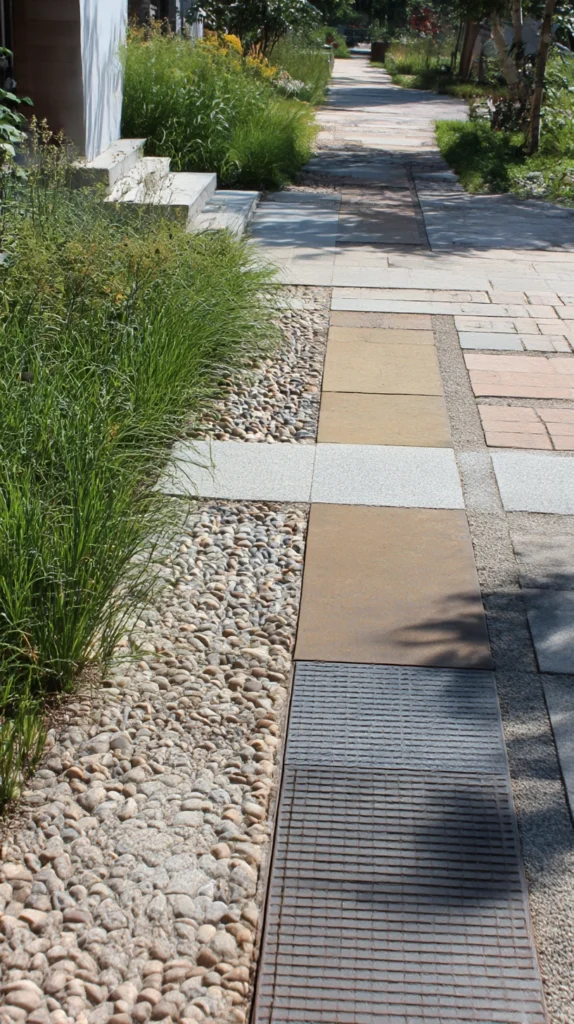
Design distinctive pathways combining multiple materials including stone borders with gravel centers, brick edges with flagstone fields, or concrete pavers alternating with planted strips creating visual interest through material variety.
Use contrasting materials creating deliberate patterns, ensure materials coordinate aesthetically preventing chaotic appearances, and design combinations considering maintenance requirements of each material. The mixed approach adds visual complexity and allows creative expression while the material variety can reduce costs using expensive materials sparingly as accents rather than complete coverage.
8. Grass Pathway Strips
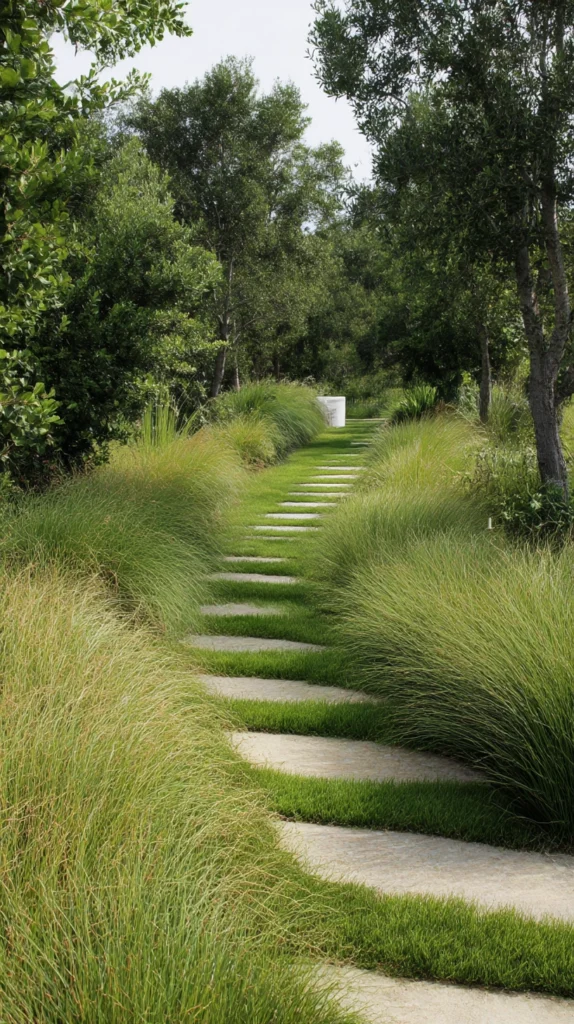
Establish living pathways mowing strips through meadows or between garden beds creating green circulation that disappears into surrounding landscapes when not actively maintained as paths. Mow pathways through unmowed areas creating defined routes, maintain regular mowing keeping paths distinct from surrounding vegetation, and adjust path locations seasonally following desire lines or changing garden layouts.
The grass paths require no installation cost or materials while their living nature creates the most naturalistic garden integration possible. Best suited for informal gardens where pristine pathway maintenance isn’t essential.
9. Reclaimed Brick Character
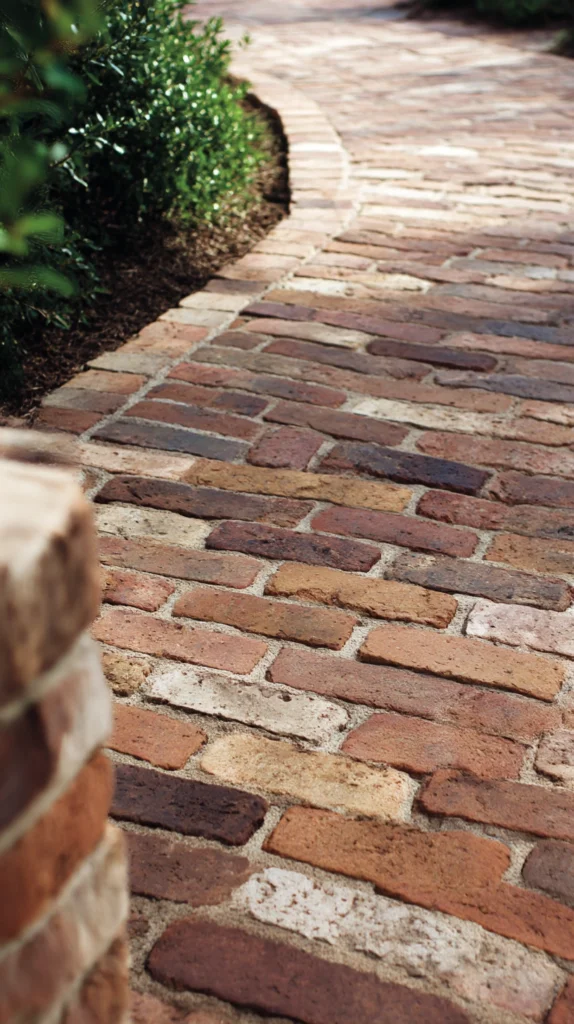
Create pathways rich with history using reclaimed brick salvaged from old buildings, streets, or demolished structures bringing authentic aged character and sustainability credentials to garden designs. Source quality reclaimed brick ensuring adequate condition for pathway use, appreciate color variations and weathered appearances as character rather than flaws, and install carefully despite irregular dimensions that may complicate fitting.
The reclaimed material adds authentic patina impossible to achieve with new materials while the sustainable reuse appeals to environmentally conscious gardeners. Expect color and size variations creating organic rather than uniform appearances.
10. Boardwalk Through Wetlands
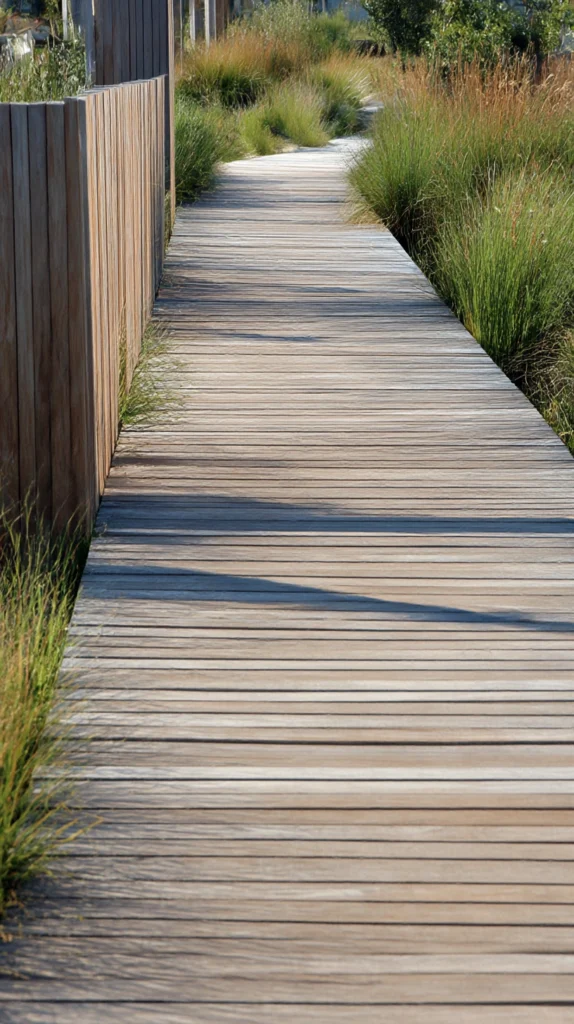
Design elevated wooden walkways bridging wet areas, creating level paths through sloped terrain, or simply adding architectural interest through their distinctive construction and natural material warmth.
Build frames using pressure-treated lumber or naturally rot-resistant species like cedar, install decking creating walking surfaces, and ensure adequate drainage beneath preventing standing water and premature deterioration. The elevated paths provide dry circulation through challenging areas while their boardwalk construction adds distinctive character. Include railings for safety where warranted by height or location.
11. Mosaic Pebble Artwork
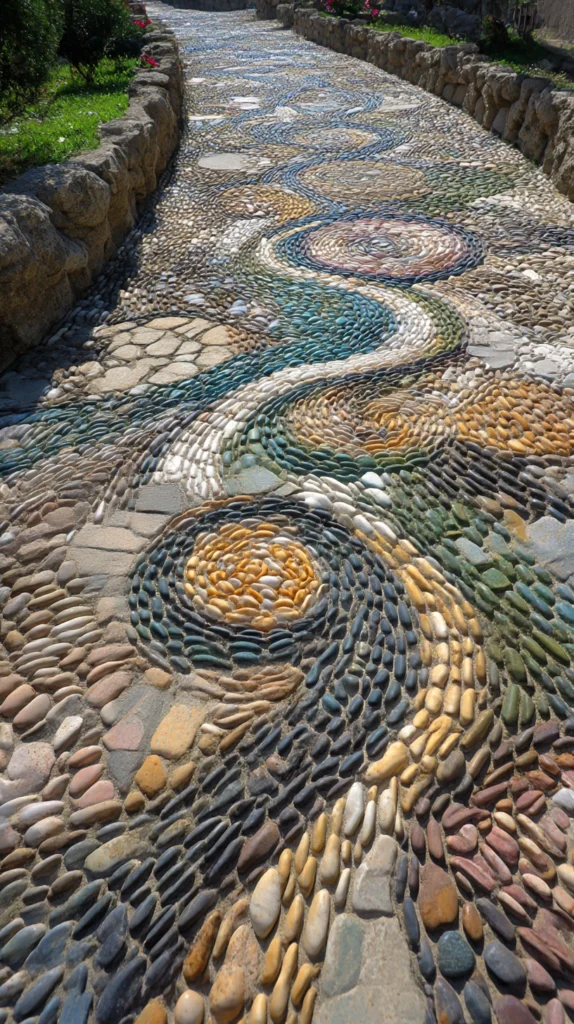
Create artistic pathways incorporating decorative pebble mosaics where stone arranged in deliberate patterns transforms functional circulation into outdoor artwork worthy of slow contemplation and appreciation.
Design patterns ranging from simple geometric forms to elaborate pictorial scenes, set pebbles vertically in mortar beds creating mosaics, and seal finished work protecting patterns from weather and foot traffic. The mosaic paths require significant labor and artistic skill but create genuinely unique pathways impossible to purchase or replicate. Consider professional installation for complex designs or embrace simpler patterns for DIY projects.
12. Permeable Paver Sustainability
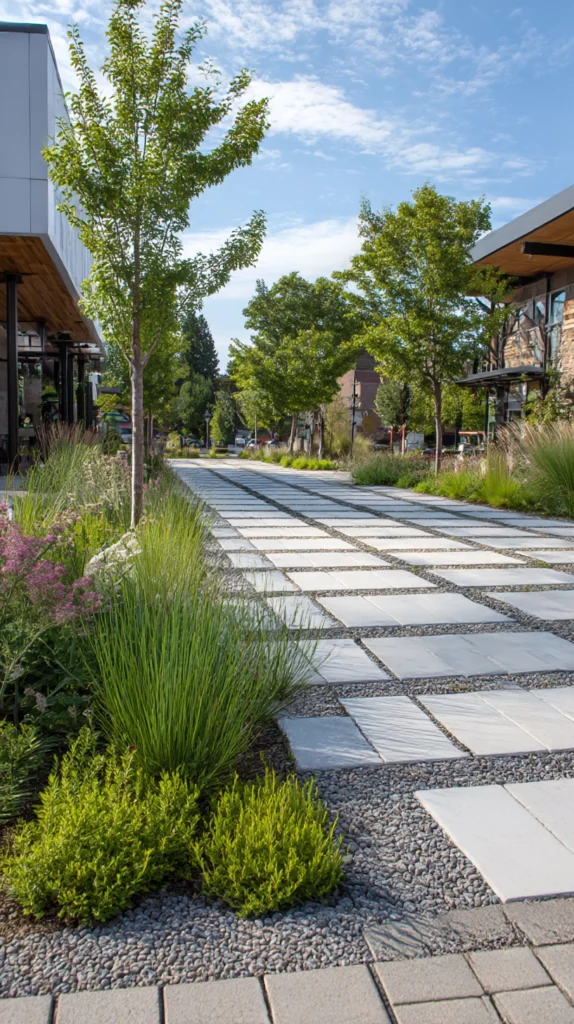
Install permeable pavers allowing rainwater infiltration through pathway surfaces addressing environmental concerns while creating attractive durable circulation meeting contemporary sustainability expectations. Choose specialized permeable paver systems designed for water infiltration, install over proper aggregate bases allowing drainage, and maintain by periodically cleaning preventing sediment from clogging permeable joints.
The sustainable paths reduce stormwater runoff while qualifying for green building credits in some jurisdictions. The environmental benefits come with higher initial costs compared to traditional impermeable paving.
13. Curved Flowing Routes
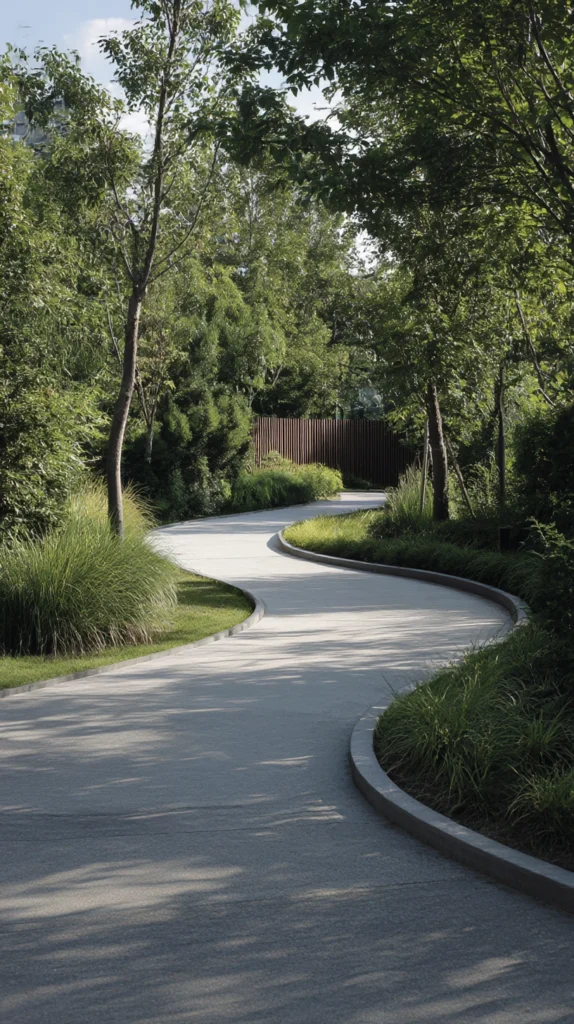
Design pathways following gentle curves rather than straight lines creating organic flowing circulation that appears naturally evolved, guides movement gracefully, and generally creates more interesting spatial experiences than rigid linear routes. Establish curves using flexible forms or careful hand-shaping creating smooth transitions without abrupt direction changes, ensure curves feel purposeful rather than arbitrary placing them around obstacles or creating deliberate meandering, and maintain adequate width throughout curves preventing pinch points. The curved paths create more interesting journeys encouraging slower contemplative movement rather than direct utilitarian transit.
14. Lighted Evening Pathways
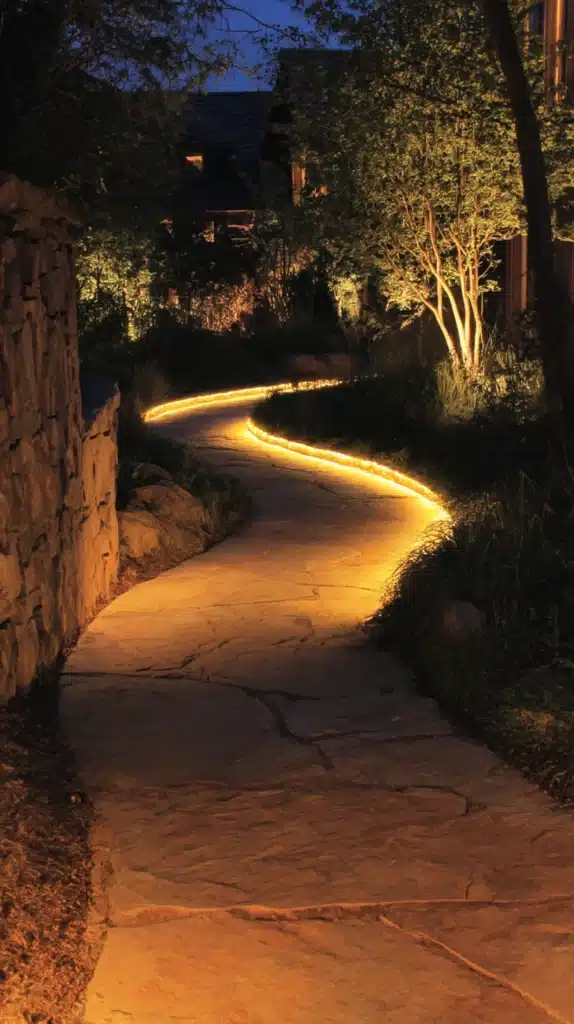
Incorporate landscape lighting along pathway edges, within pathway materials, or adjacent to routes ensuring safe navigation after dark while creating beautiful nighttime garden atmosphics extending usability beyond daylight hours. Install low-voltage LED path lights along pathway edges, use solar lights eliminating electrical installation, or embed lighting within pathway materials themselves.
The lighting provides safety while creating beautiful evening effects that reveal gardens differently than daylight presentations. Design lighting avoiding harsh brightness instead creating gentle illumination that guides without overwhelming.
15. Living Groundcover Paths
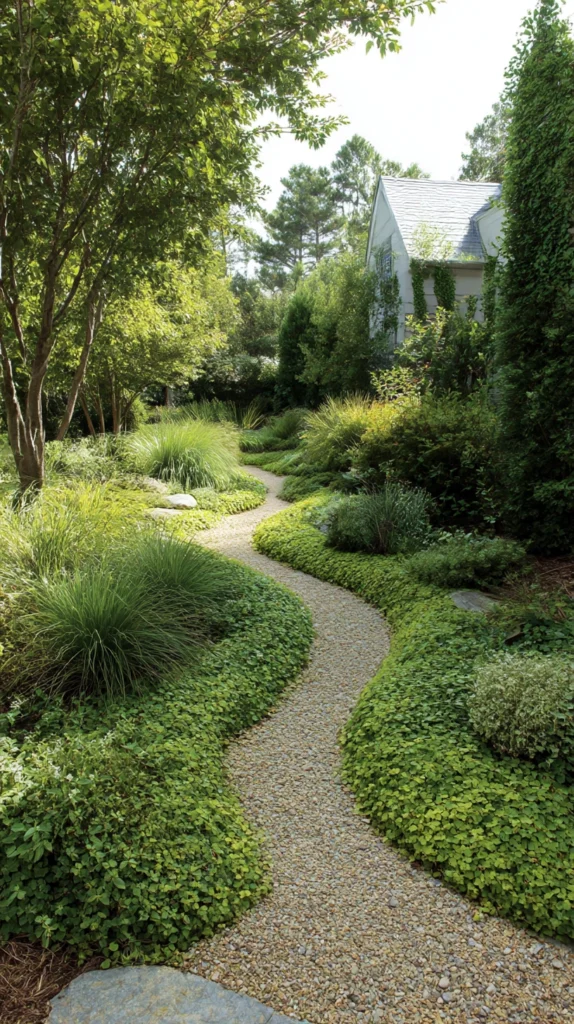
Establish pathways through living groundcovers including creeping thyme, moss, or other low-growing plants creating fragrant or textured walking surfaces that remain living rather than hardscape installations. Choose groundcovers tolerating moderate foot traffic, plant densely ensuring quick coverage, and accept that living paths require more maintenance than hardscape alternatives including watering, weeding, and replanting as needed.
The living paths create the most naturalistic integration with surrounding gardens while some varieties release pleasant scents when walked upon. Best suited for light-traffic areas where heavy use wouldn’t destroy plantings.
Successfully implementing garden pathways requires proper width ensuring comfortable navigation typically minimum 3-4 feet for primary paths allowing two people to walk side-by-side, adequate base preparation preventing settling or shifting that creates uneven dangerous walking surfaces, and appropriate material selection matching garden styles and maintenance capacities. Consider drainage ensuring paths don’t create water flow problems or standing puddles.
Design paths connecting logical destinations rather than creating routes lacking purpose, establish clear hierarchy through varied widths using wider primary paths and narrower secondary routes, and integrate pathways with surrounding plantings rather than treating them as separate isolated elements.
Most importantly, recognize that pathways fundamentally structure garden experiences determining how people move through and perceive outdoor spaces, proving that thoughtful path design represents essential rather than optional landscape investment that elevates entire properties through improved circulation, enhanced beauty, and the kind of intentional design that transforms ordinary yards into genuinely elevated landscapes worthy of the pathway planning and installation they receive.