
13 Japandi Bedroom Ideas for a Serene Minimal Space
Japandi bedrooms represent the contemporary intersection where Japanese minimalism combines with Scandinavian warmth, creating the kind of serene functional spaces that promote genuine rest through deliberate aesthetic restraint paired with intentional comfort.
This refined design philosophy acknowledges that bedrooms demand more than pure minimalism’s severity, instead balancing sparse arrangements with genuine coziness through natural materials, warm lighting, and thoughtful textiles that make minimal spaces feel inviting rather than austere.

Strategic Japandi bedroom design incorporating natural materials, establishing organic authenticity, restrained color palettes supporting relaxation, and selective meaningful elements prevents the coldness that incomplete minimalism sometimes creates while maintaining the calm clarity that defines the aesthetic.
Understanding which Japandi principles genuinely serve bedroom purposes, how to balance minimalism’s restraint with necessary comfort, and what constitutes authentic Japandi versus superficial trend-following ensures bedroom investments deliver lasting tranquility supporting genuine restorative sleep.
These thirteen Japandi bedroom ideas demonstrate practical approaches from material selection through spatial arrangement, each proving that thoughtful Japandi design creates the kind of serene spaces that genuinely support the restful sleep and peaceful living that bedrooms should provide.
1. Natural Wood Bed Frame Creating Organic Foundation
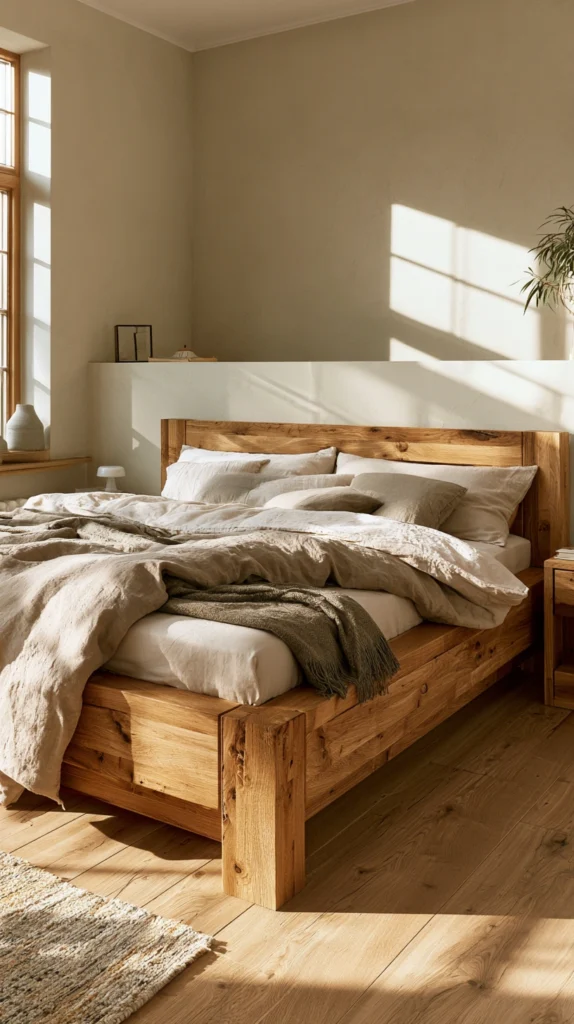
Establish authentic Japandi foundations through substantial natural wood bed frames, celebrating material authenticity and organic warmth. Choose solid wood in natural or light finishes, appreciate grain patterns and material imperfections as character elements, and position prominently as a clear bedroom focal point.
The natural material provides warmth and authenticity. The visible grain creates organic visual interest. The substantial construction demonstrates quality craftsmanship. The wood foundation establishes the Japandi character immediately.
2. Neutral Minimalist Color Palette Creating Calm
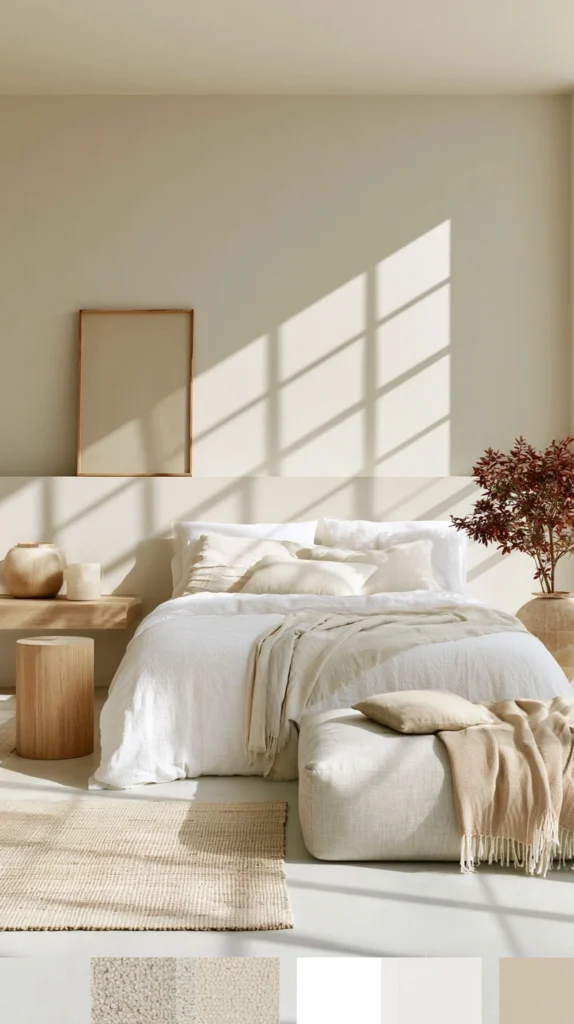
Develop serene environments through restrained color schemes using soft whites, warm grays, and natural beiges, creating the kind of calm visual backgrounds that support relaxation.
Paint walls in soft neutrals, limit accent colors to single minimalist elements, and appreciate how restraint creates psychological calm. The neutral foundation eliminates visual stimulation. The soft tones support quality sleep. The consistent palette creates visual harmony. The minimalist discipline prevents sensory overwhelm.
3. Layered Natural Fiber Textiles Adding Warmth
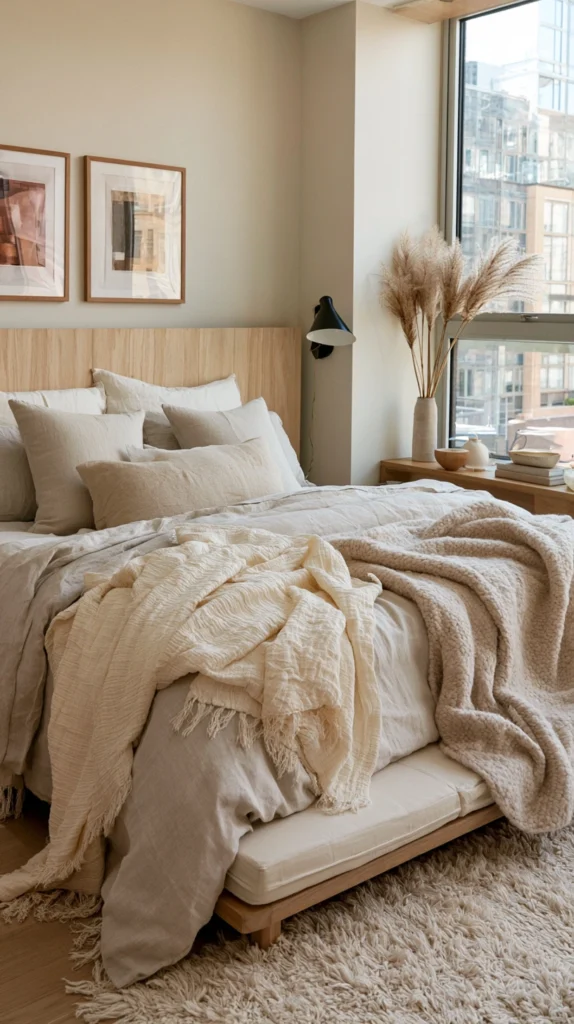
Introduce essential coziness through generous layers of natural fiber textiles, including linen, cotton, and wool, preventing the coldness that pure minimalism sometimes creates.
Choose quality linens in cream or soft neutrals, layer blankets in varied textures, and add pillows in coordinating tones. The textile layering creates visual and tactile warmth. The natural materials provide organic authenticity. The textured variety adds visual interest. The substantial layering creates inviting comfort.
4. Low-Profile Platform Bed Creating Spatial Openness
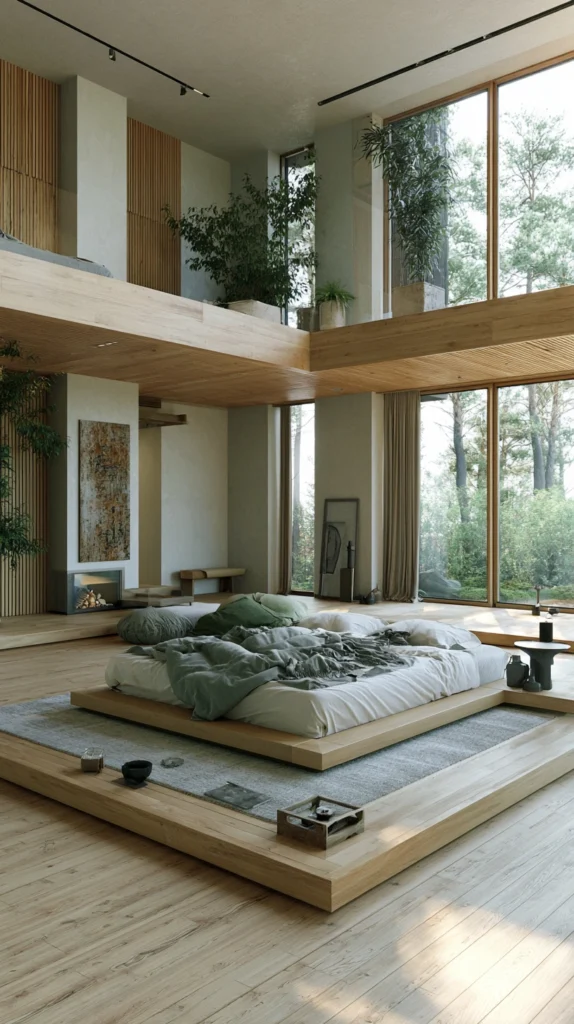
Establish open, serene environments through low-profile platform beds, eliminating bed frames’ visual heaviness, creating a spacious, airy character. Design or choose beds with minimal clearance from floors, appreciate how low positioning creates openness, and coordinate with surrounding minimal elements.
The low profile maintains visual lightness. The minimal structure preserves spatial openness. The grounded positioning grounds spaces. The simple design suits the Japandi aesthetic perfectly.
5. Tatami Mat or Natural Flooring: Establishing Authenticity
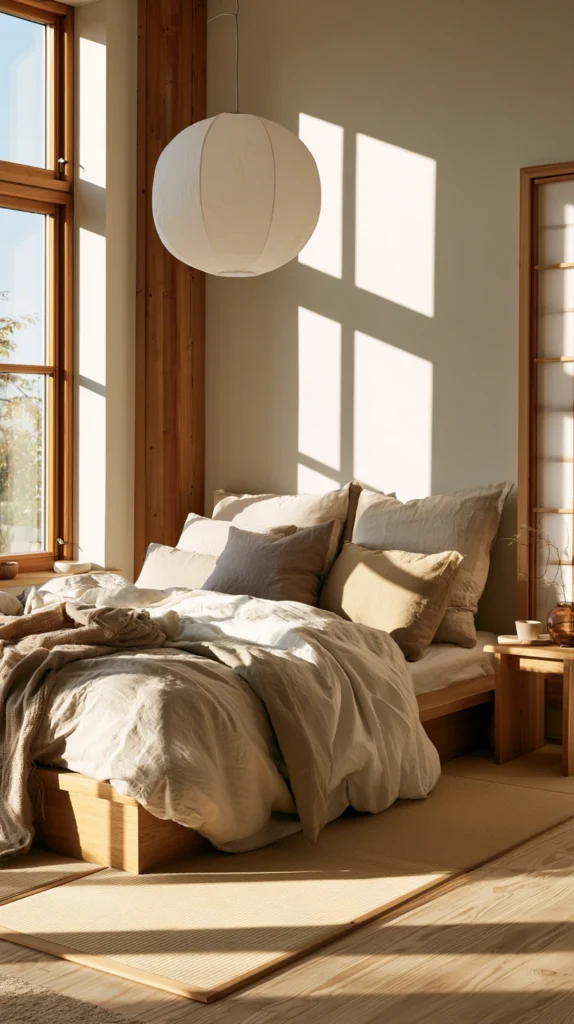
Honor Japanese traditions through tatami mats or natural flooring materials, creating authentic, organic foundations and connecting to cultural roots. Install tatami in portions of bedrooms, use natural wood or stone flooring, and appreciate how authentic materials establish genuine character.
The traditional materials provide an authentic cultural connection. The natural quality creates organic warmth. The organic character prevents sanitized minimalism. The authentic approach honors design heritage.
6. Shoji Screen Room Dividers Creating Privacy and Beauty
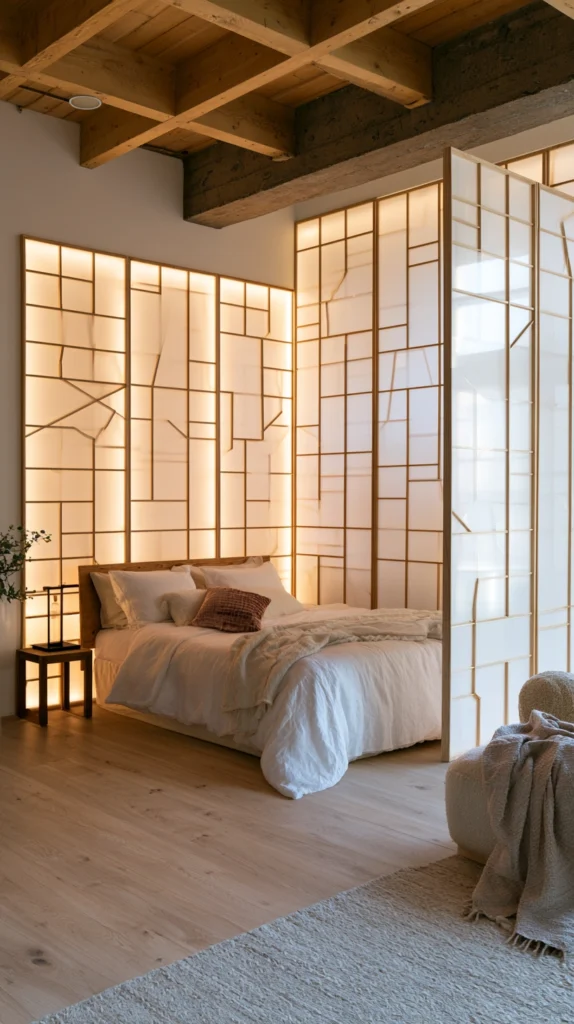
Incorporate traditional shoji screens, establishing privacy while maintaining visual lightness and introducing sculptural architectural interest. Install shoji panels, creating flexible room divisions, appreciate the delicate geometric designs, and use them as functional art elements. The translucent panels maintain light penetration. The geometric designs add visual interest. The traditional elements establish the Japandi character. The flexible function adapts to varying needs.
7. Minimal Nightstands Maintaining Spatial Clarity
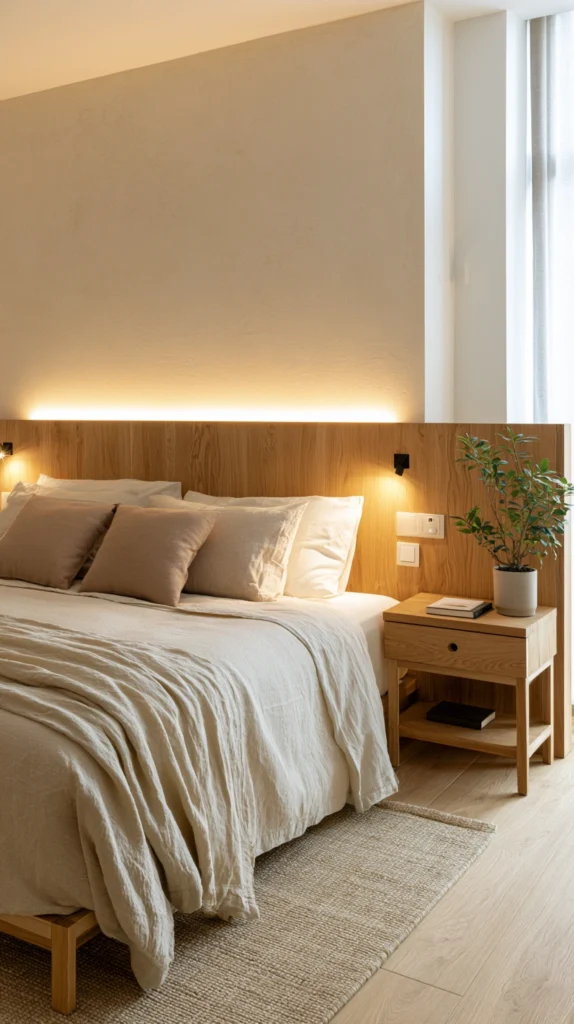
Preserve open environments through small, uncluttered nightstands providing essential functionality without visual heaviness. Choose simple wooden tables with clean lines, keep surfaces mostly clear, and limit to genuinely necessary items. The minimal design maintains openness. The simple forms suit japandi aesthetic. The restrained approach prevents clutter. The functional simplicity supports actual use.
8. Natural Lighting Maximization Supporting Circadian Health
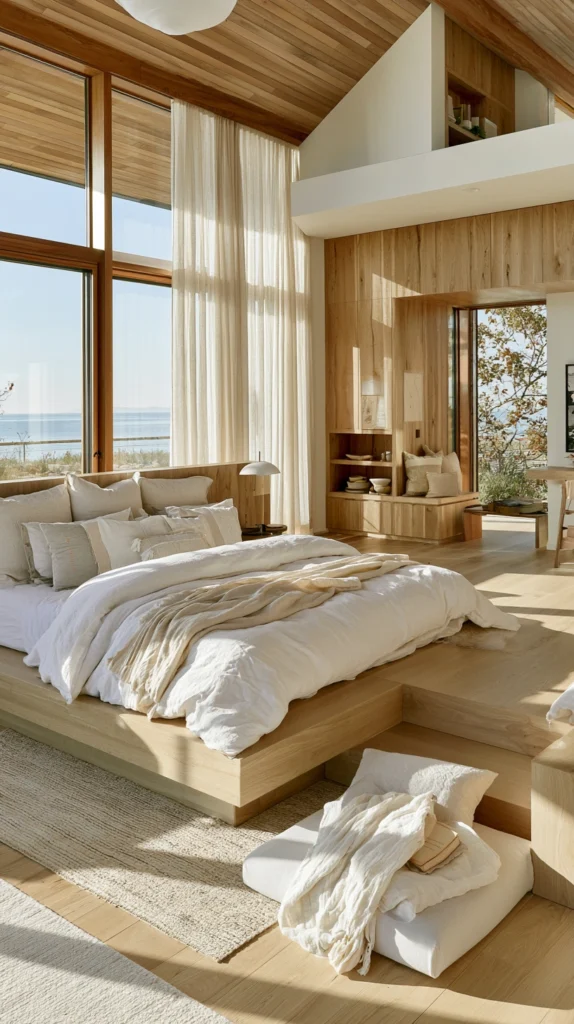
Prioritize abundant natural light through strategic window arrangement and minimal coverings supporting sleep quality and psychological wellbeing. Maximize window exposure, use simple translucent curtains allowing light control, and appreciate how natural illumination supports healthy circadian rhythms. The natural light provides psychological benefits. The minimal coverings maintain openness. The filtered light creates soft ambiance. The quality light supports sleep quality.
9. Warm Ambient Lighting Creating Evening Comfort
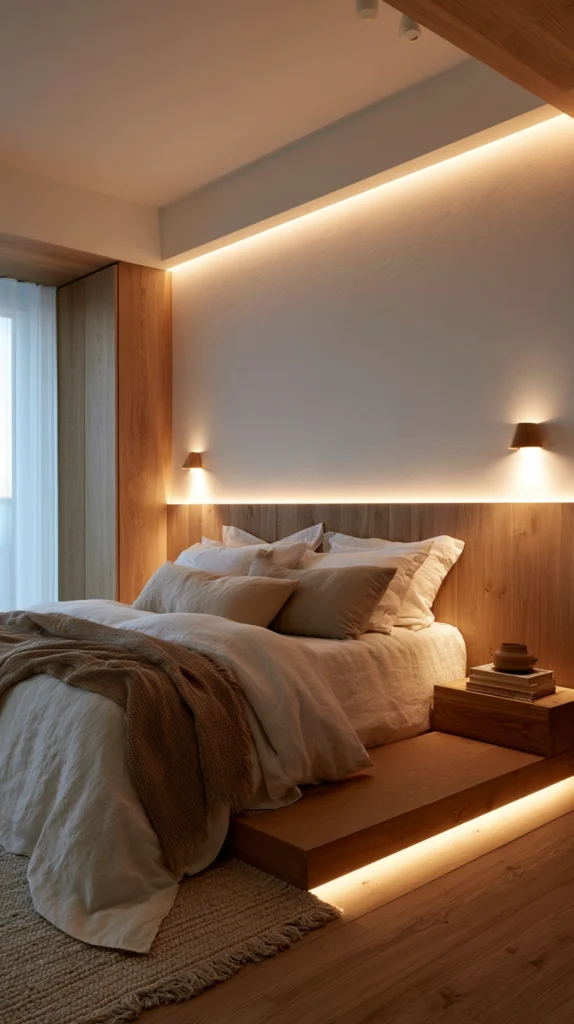
Balance minimal daytime aesthetics through warm evening lighting preventing darkness while maintaining serene character. Install dimmers enabling brightness adjustment, choose warm LED bulbs creating psychological comfort, and position lighting providing gentle illumination. The warm light quality creates coziness. The controllable brightness accommodates varied needs. The layered approach maintains visual restraint. The atmospheric lighting ensures comfort.
10. Ceramic or Wooden Accent Objects Creating Meaning
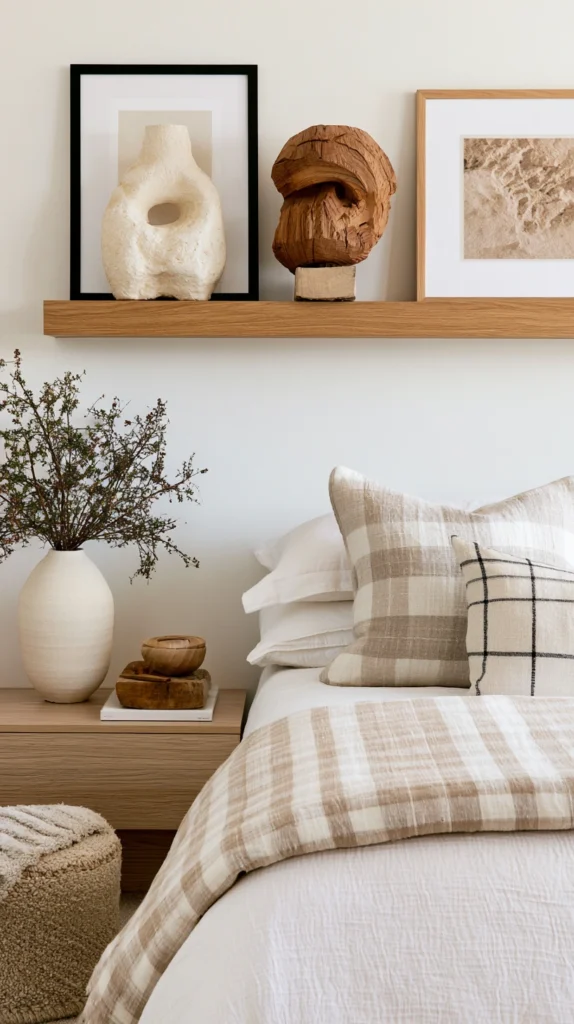
Introduce carefully selected meaningful objects preventing austere emptiness while maintaining minimalist discipline. Display single significant ceramic pieces, wooden sculptures, or natural objects with genuine personal meaning, and position thoughtfully as focal points. The meaningful selection prevents sterile coldness. The limited quantity maintains minimalist restraint. The personal connection creates emotional resonance. The curated approach demonstrates intentional design.
11. Indoor Plant Integration Creating Living Connection
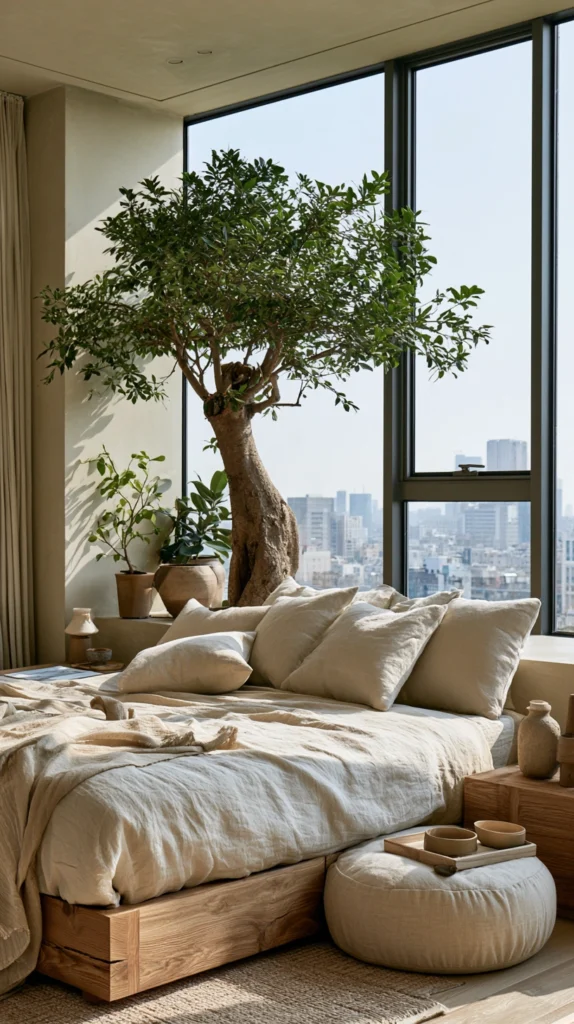
Add life and organic presence through strategically positioned houseplants creating nature connection and psychological benefits. Include substantial potted plants providing presence without clutter, choose varieties suited to bedroom conditions, and appreciate how greenery softens minimal spaces. The living elements add authentic organic presence. The green color creates psychological calm. The natural connection prevents severity. The botanical integration completes japandi aesthetic.
12. Japanese Calligraphy or Artwork Creating Cultural Authenticity
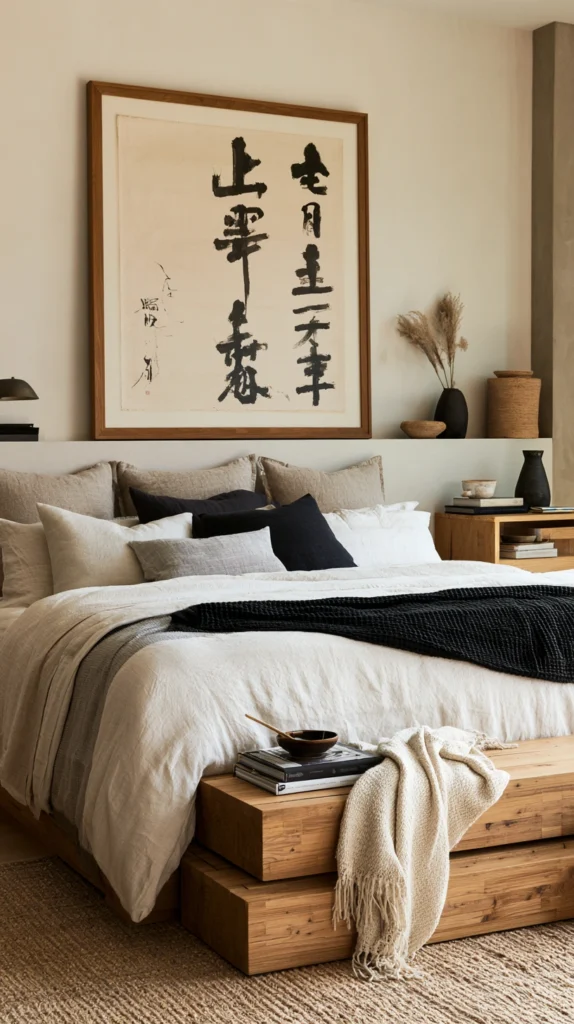
Honor design heritage through meaningful Japanese artwork, establishing cultural authenticity and visual interest. Display quality calligraphy, Japanese prints, or artwork with personal significance, frame simply using natural materials, and position as clear focal points. The authentic artwork provides a cultural connection. The meaningful selection prevents generic minimalism. The artistic elements add visual interest. The cultural reference establishes the Japandi character.
13. Functional Simplicity in Storage Solutions
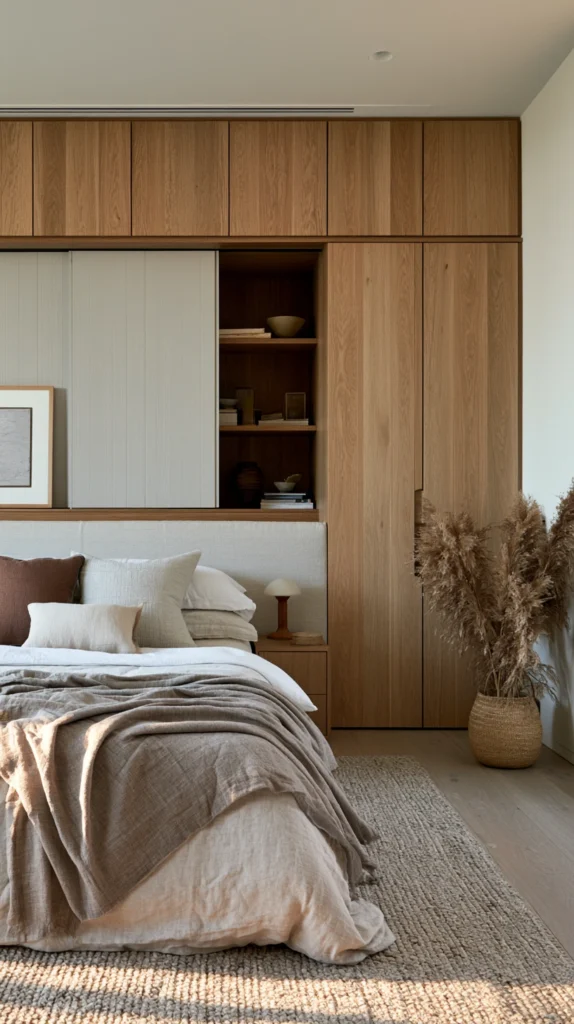
Maintain visual clarity through hidden or integrated storage solutions, providing organization without visible accumulation. Design minimal visible storage, use low-profile storage solutions, and keep surfaces clear, preventing clutter. The hidden storage maintains openness. The minimal visibility preserves calm. The functional approach supports actual organization. The disciplined arrangement prevents chaos.
Successfully creating Japandi bedrooms requires authentic commitment to minimalism tempered with genuine comfort, ensuring spaces remain livable rather than austere, natural material selections establishing organic authenticity and warmth, preventing cold severity, and meaningful object selection eliminating both excessive decoration and sterile emptiness. Balance restraint with warmth, ensuring comfort supports relaxation.
Choose quality natural materials, justifying minimal selection. Select meaningful personal elements to create a genuine connection. Maintain disciplined editing, preventing accumulation. Ensure adequate functional storage containing clutter. Position lighting thoughtfully supporting both sleep and wakefulness.
Most importantly, recognize that authentic Japandi bedrooms succeed through intentional balance where minimal discipline combined with careful warmth creates genuinely serene spaces that feel both designed and comfortable, proving that thoughtful Japandi design delivers the kind of peaceful environments supporting restorative sleep.
And genuine wellbeing demonstrating that minimal does not require coldness when natural materials, warm lighting, and thoughtful comfort elements combine, creating spaces that feel simultaneously restrained and inviting, establishing the kind of genuine tranquility that truly supports the rest and restoration bedrooms should provide.