
14 Modern Farmhouse Summer Decor Ideas You’ll Love
Modern farmhouse style has staying power for a simple reason — it balances warmth and practicality in a way that few other interior aesthetics manage. The clean lines and neutral palette of contemporary design meet the natural materials, worn textures, and unpretentious comfort of traditional farmhouse living, and the result is a home that looks considered without feeling stiff.
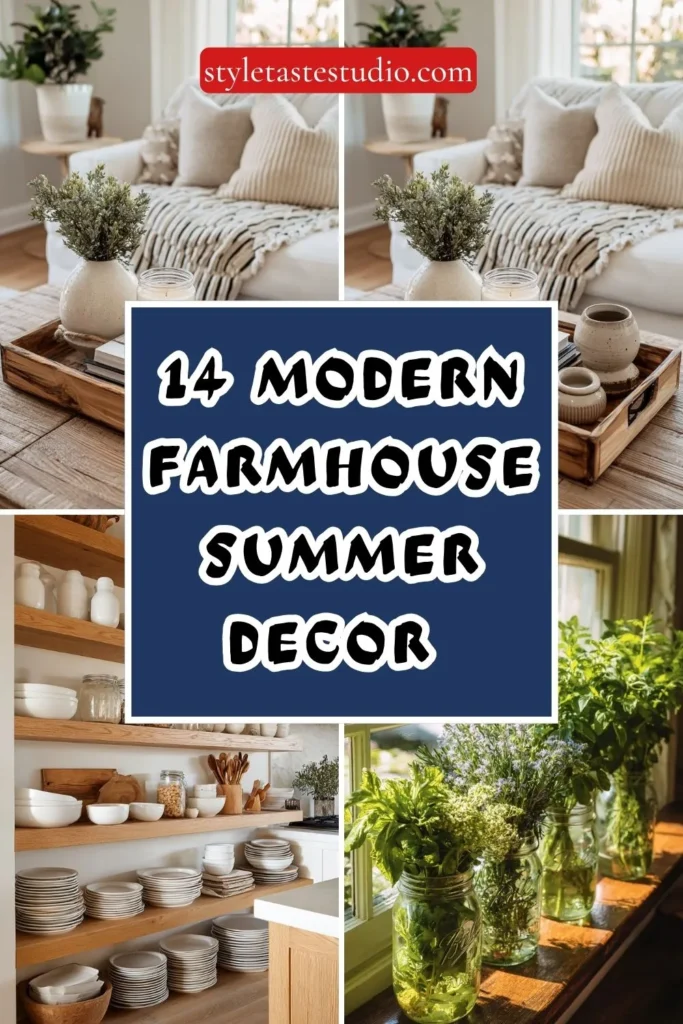
In summer, this aesthetic leans lighter and airier — white linen, fresh greenery, open windows, and the kind of relaxed, gathered feeling that makes a house genuinely comfortable to live in through the warmest months of the year.
The fourteen ideas below translate the modern farmhouse aesthetic into specific, achievable summer decor updates. Each one works as a standalone change or as part of a broader seasonal refresh, and all of them can be implemented without a significant investment of time or budget. Costs and a practical styling tip are included throughout.
1. White Linen Slipcovers for Summer Freshness
Budget: $60 – $250
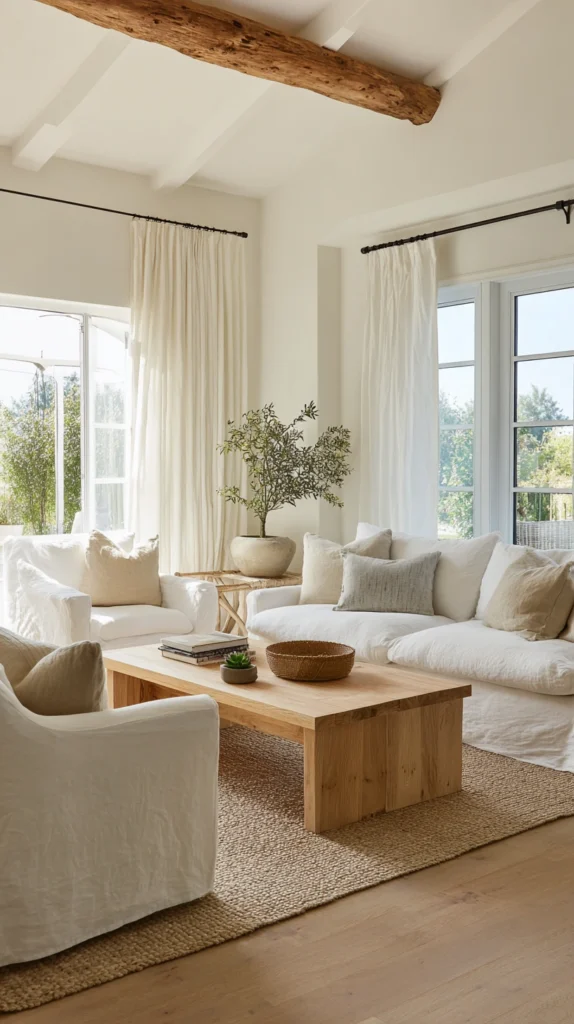
Switching sofa and armchair upholstery to white or cream linen slipcovers is one of the most effective seasonal transformations available for a modern farmhouse interior. The lighter fabric immediately shifts the feel of a room from the heavier, cozier quality appropriate to winter to the fresh, airy quality that summer demands. Linen slipcovers also have a practical advantage in summer — they are washable, breathable, and significantly cooler to sit on than velvet, chenille, or synthetic upholstery in warm weather.
Ready-made linen slipcovers in standard sofa sizes cost $60–$180 from specialist retailers and online marketplaces. Custom slipcovers run $150–$250 or more depending on the size and complexity of the piece being covered. Stone-washed linen in natural, white, or oatmeal tones suits the modern farmhouse palette best — the slightly rumpled, lived-in quality of washed linen is an asset in this aesthetic rather than something to be ironed out. Pair with a neutral throw and two or three cushions in complementary textures to complete the seasonal swap.
Style tip: Resist the urge to iron linen slipcovers flat after washing. The natural relaxed creasing of unwashed linen is part of the farmhouse aesthetic — it signals that the fabric is real, natural, and actually used rather than preserved. A completely smooth, pressed linen sofa cover looks more formal than the modern farmhouse style intends.
2. A Wooden Farmhouse Dining Table Dressed for Summer
Budget: $30 – $120 for seasonal styling
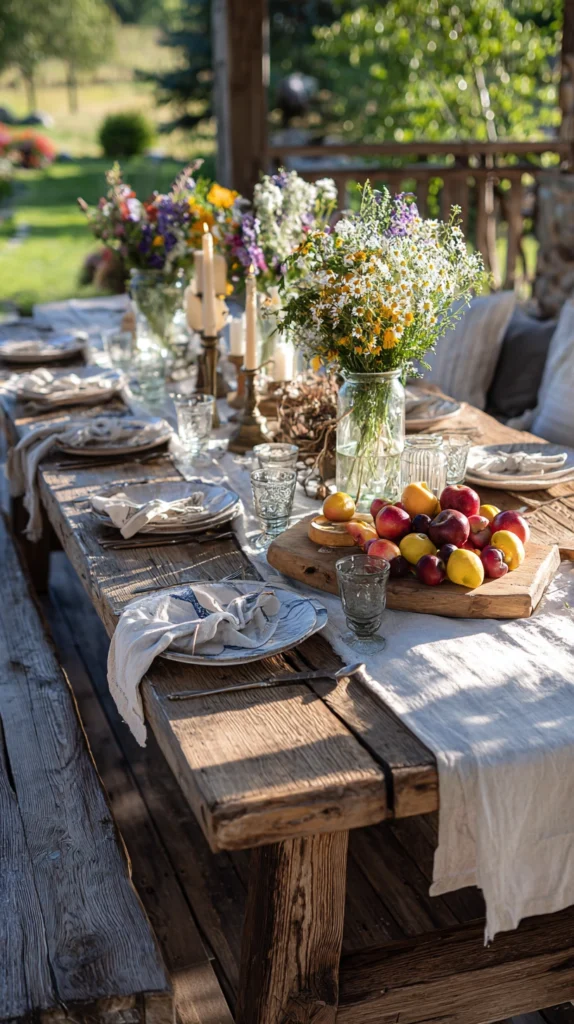
The farmhouse dining table is the central piece of furniture in this aesthetic and the most important surface to refresh for summer. A long, solid wood table dressed with simple linen or cotton runners, a wooden board of seasonal fruit and herbs, a cluster of glass bottles with wildflowers, and mismatched but complementary candlesticks transforms the table from a functional piece to a genuinely inviting one — the kind that makes people want to sit down and stay for a second glass of something cold.
A natural linen table runner costs $15–$40. A simple wooden serving board for a centrepiece display costs $20–$50. Wildflowers from the garden arranged in repurposed glass bottles cost nothing beyond the time to pick them. Three or four mismatched candlesticks in ceramic or turned wood cost $5–$15 each from charity shops and vintage markets. The total seasonal dressing of a farmhouse dining table sits between $30 and $120 for materials that last across multiple seasons with modest storage and care between uses.
Style tip: Dress the table for everyday use rather than saving the arrangement for occasions. A farmhouse table that looks welcoming and arranged on a Tuesday morning creates a different quality of daily life than one that is cleared and bare except when entertaining. The style is built for lived-in abundance, not reserved presentation.
3. Shiplap or Board-and-Batten Accent Wall
Budget: $80 – $400
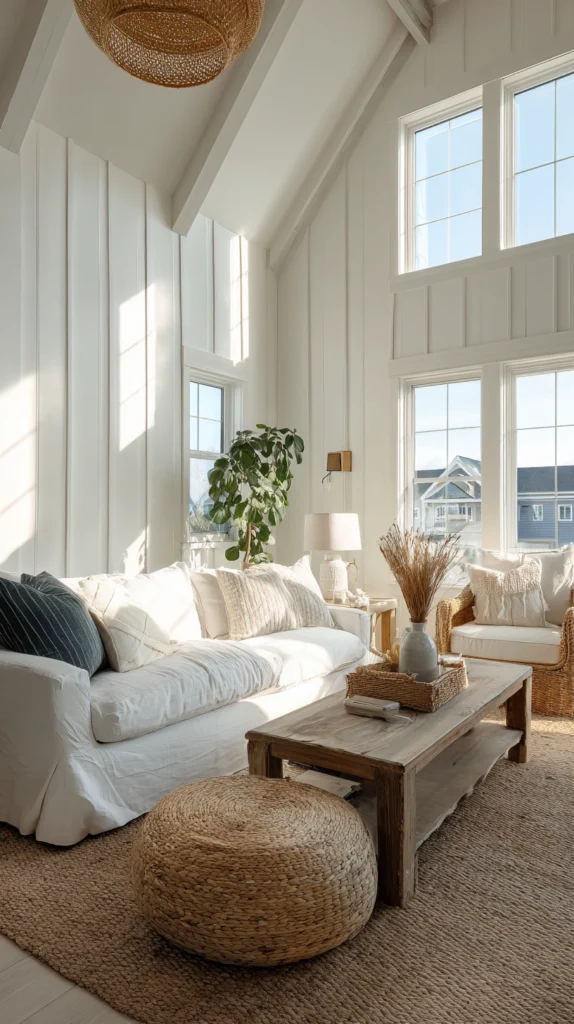
A shiplap or board-and-batten accent wall is one of the most characteristically modern farmhouse architectural details available and one that can be added to a room over a single weekend without professional tradespeople. Painted in a crisp white or warm off-white, a feature wall of vertical or horizontal timber boards adds texture, depth, and a quietly crafted quality to a room that paint alone never achieves. In summer light, the shadow lines created by the boards give the wall a dimensionality that reads particularly well.
MDF shiplap-effect boards suitable for interior walls cost $1.50–$3 per linear foot from timber merchants and DIY retailers. A standard 3-metre accent wall requires approximately 60–80 linear feet of boards depending on board width, totalling $90–$240 in materials before paint. Tongue-and-groove timber boards cost slightly more at $2–$4 per linear foot but have a more substantial feel. Add primer and two coats of quality white or off-white paint at $20–$40 per tin. The complete project including fixings, filler, and paint sits between $130 and $400 for a medium-sized wall.
Style tip: Paint the shiplap wall and the surrounding walls in the same white or off-white tone rather than using the shiplap as a contrasting feature against a differently coloured wall. Tone-on-tone treatment makes the texture of the boards the feature rather than the colour contrast — which suits the modern farmhouse aesthetic considerably better than a strongly contrasting accent wall treatment.
4. Mason Jar Vases and Greenery Displays
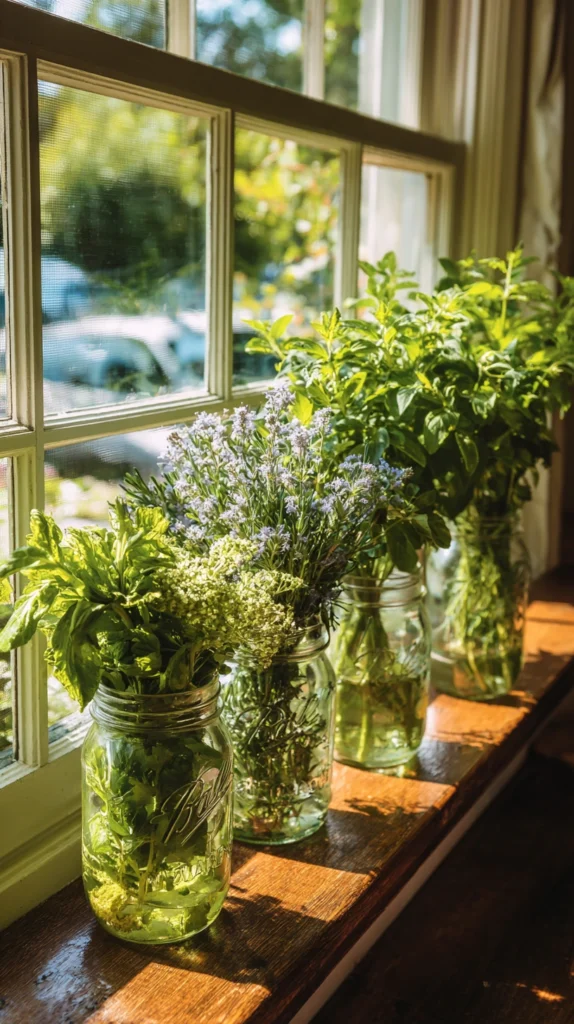
Budget: $10 – $50
Mason jars used as vases are one of the most enduring modern farmhouse decor signatures — practical, inexpensive, entirely unpretentious, and immediately effective as vessels for summer garden cuttings, wildflowers, herbs, and greenery. A cluster of three to five mason jars in varying heights along a windowsill, mantelpiece, or kitchen shelf, each holding a simple arrangement of whatever is growing in the garden that week, brings seasonal freshness into the interior with very little effort or cost.
Wide-mouth mason jars cost $1–$3 each from kitchen and homeware retailers or can be repurposed from jam and preserve jars. A set of six in varying sizes runs $8–$20. Fill with whatever is in season from the garden or a farmers market — lavender, rosemary, fresh mint, sunflowers, cosmos, or simple leafy stems all work equally well. The arrangement changes weekly as different plants come into their own through summer, which keeps the display fresh and the interior connected to the season outside without requiring any significant ongoing investment.
Style tip: Group mason jar arrangements at one end of a surface rather than spreading individual jars evenly across it. A cluster of five jars at one corner of a kitchen shelf creates a strong display. The same five jars spaced evenly along the same shelf look like a row of containers waiting to be used rather than a considered arrangement. Grouping is the detail that makes the difference.
5. Neutral Linen Bedding With Textural Layers
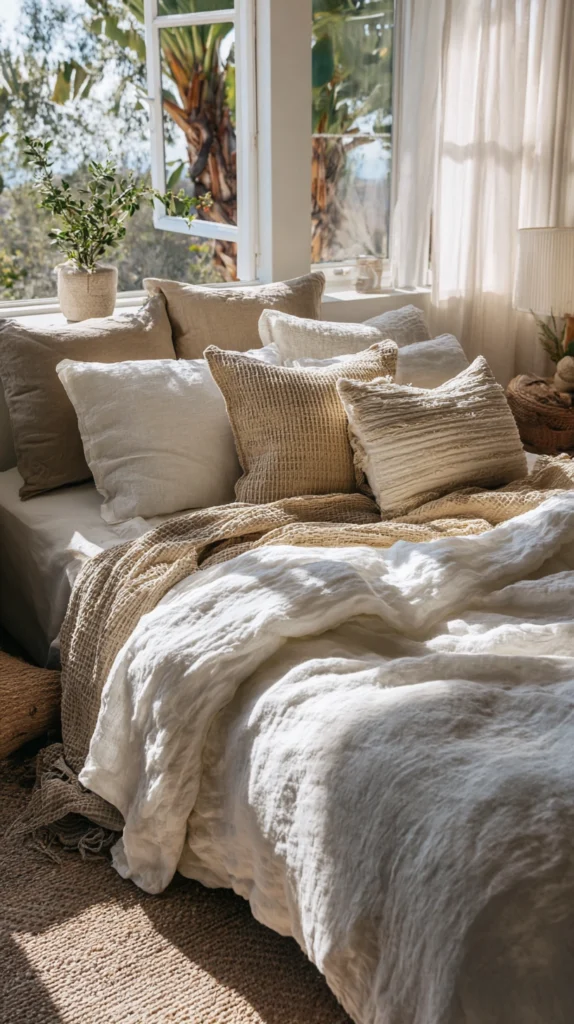
Budget: $80 – $300
A summer bed in the modern farmhouse style is built in layers of natural, breathable textiles in a neutral palette — white or oatmeal linen duvet cover, a cotton waffle blanket folded at the foot, one or two textural throw pillows in a complementary neutral, and a simple cotton quilt draped loosely over one corner. The layering is key — it creates a gathered, comfortable appearance while allowing the bed to be adjusted easily through warm summer nights when the duvet is too much and the waffle blanket is exactly right.
A quality linen duvet cover set in white or natural costs $80–$180. A cotton waffle blanket runs $30–$80. Textural cushion covers in washed cotton, grain sack stripe, or natural linen cost $15–$35 each. A simple cotton quilt or coverlet costs $40–$100. Choose all pieces from the same narrow colour range — white, natural, oatmeal, and warm cream — to create the serene, cohesive bedroom atmosphere that the modern farmhouse style produces at its best. Introducing colour into the bedroom bedding works against the quiet, restful quality that makes this style worth pursuing in the first place.
Style tip: Leave the bed slightly undone rather than making it with military precision each morning. A duvet pulled back at one corner, pillows leaning rather than standing upright, and a throw slightly rumpled at the foot creates the warm, inhabited quality that modern farmhouse bedrooms require. A perfectly made bed in this style looks like a hotel room. A slightly casual one looks like home.
6. A Vintage or Antique Wooden Clock
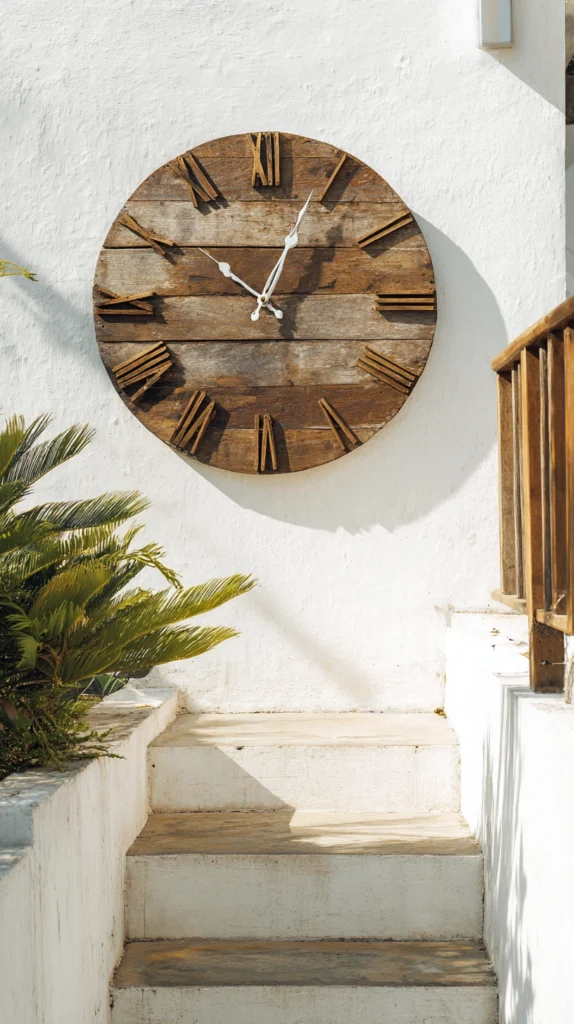
Budget: $20 – $120
A large wooden or distressed metal wall clock is one of the most recognisable modern farmhouse decor elements and one of the most practically useful — it is decoration that functions, which suits the farmhouse philosophy of objects earning their place through purpose as much as appearance. A clock with a substantial face — 40 cm diameter or larger — makes enough of a visual statement to anchor a wall or mantelpiece arrangement without requiring anything else around it, which suits the cleaner, more edited side of the modern farmhouse palette.
New farmhouse-style wooden wall clocks in 40–60 cm diameter cost $30–$80 from homewares retailers. Vintage and antique wooden clocks with genuine patina from markets and charity shops run $20–$120 depending on size and condition. Distressed metal clockfaces in an industrial-farmhouse crossover style cost $40–$100. Mount at eye level on a clean wall with nothing immediately beside it — the negative space around a large clock is part of its visual impact. A clock surrounded by other wall objects loses the quiet authority that a generously spaced single piece commands.
Style tip: Choose a clock with a simple, legible face rather than an elaborately decorated one. Modern farmhouse decor values restraint and function — a clock face that prioritises readability over decoration suits the aesthetic better than an ornate one, even when the ornate version is technically a more expensive and crafted piece. Simplicity is always the right direction in this style.
7. Fresh Herb Pots in the Kitchen
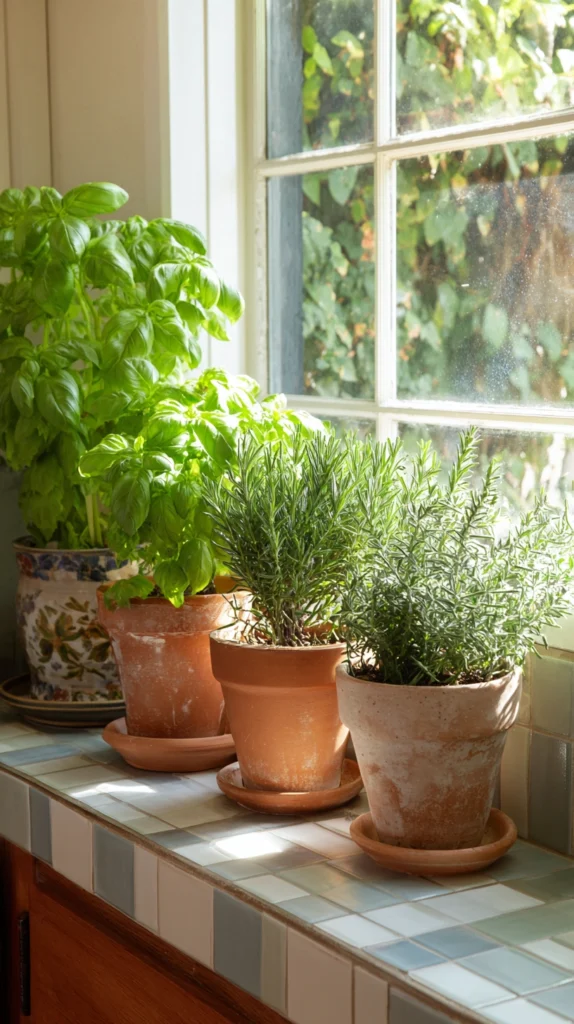
Budget: $20 – $60
A row of herb pots on the kitchen windowsill or counter is one of the most naturally modern farmhouse details a kitchen can have — practical, aromatic, visually connected to the garden outside, and entirely in keeping with the farmhouse philosophy that a kitchen should be a working, productive space as well as a good-looking one. Rosemary, thyme, basil, and flat-leaf parsley in terracotta or simple white ceramic pots bring life and fragrance to the kitchen surface at minimal cost and with very little ongoing effort.
Herb plants in small pots cost $2–$6 each from garden centres and supermarkets through summer. Terracotta pots to transfer them into cost $2–$8 each. A matching set of three white ceramic herb pots with simple labels runs $15–$30. Group the herbs together in a tight cluster rather than spacing them across the windowsill — the grouped arrangement reads as a kitchen feature rather than a scattering of individual pots that have accumulated without intention. Label each pot with a simple chalk label or a small hand-written tag for the farmhouse detail that takes five seconds to add and makes the arrangement look considered.
Style tip: Harvest from kitchen herbs regularly rather than allowing them to grow unchecked on the windowsill. A herb plant that is never picked becomes leggy, flowers prematurely, and loses the compact, productive form that makes a herb pot look good. Regular picking — even a small amount for each meal — keeps the plants in a continuously productive and visually appealing state through the full summer season.
8. Galvanised Metal Accents and Industrial Details
Budget: $20 – $100
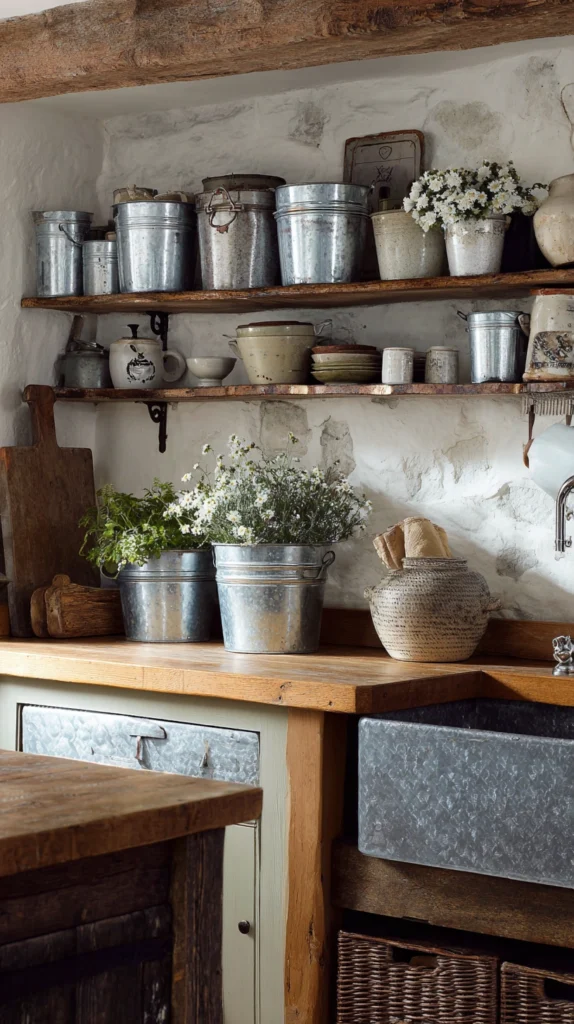
Galvanised metal — buckets, trays, planters, pendant shades, and storage containers — is the industrial counterpart to the natural wood and linen that characterises the softer side of modern farmhouse decor. The two work together because they share the same commitment to function over ornament: galvanised metal was designed for utility and carries that practicality honestly, in the same way that a worn wooden board or a linen tea towel does. Used in summer as planters, drinks coolers, or display vessels, galvanised pieces add a specifically farmhouse character that no other material quite replicates.
A galvanised metal bucket costs $5–$15 and works as a planter, a wine cooler for outdoor dining, or a container for rolled towels in a bathroom. A galvanised tray costs $10–$25 and functions as a styled surface for candles, bottles, and small objects. A galvanised pendant lampshade costs $20–$50 and brings industrial farmhouse character to a kitchen or dining area for a fraction of what a designed light fitting costs. Use galvanised pieces sparingly — two or three across a room or kitchen surface rather than in every corner, where the material tips from a considered detail into an overworked theme.
Style tip: Mix galvanised metal with wood, linen, and ceramic rather than grouping all metal pieces together. The appeal of galvanised metal in a farmhouse interior is the contrast it provides against softer, warmer materials — clustered together without those contrasting textures around them, metal pieces lose the quality that makes them interesting within the wider decorating scheme.
9. A Farmhouse Kitchen Sign or Typography Print
Budget: $15 – $80
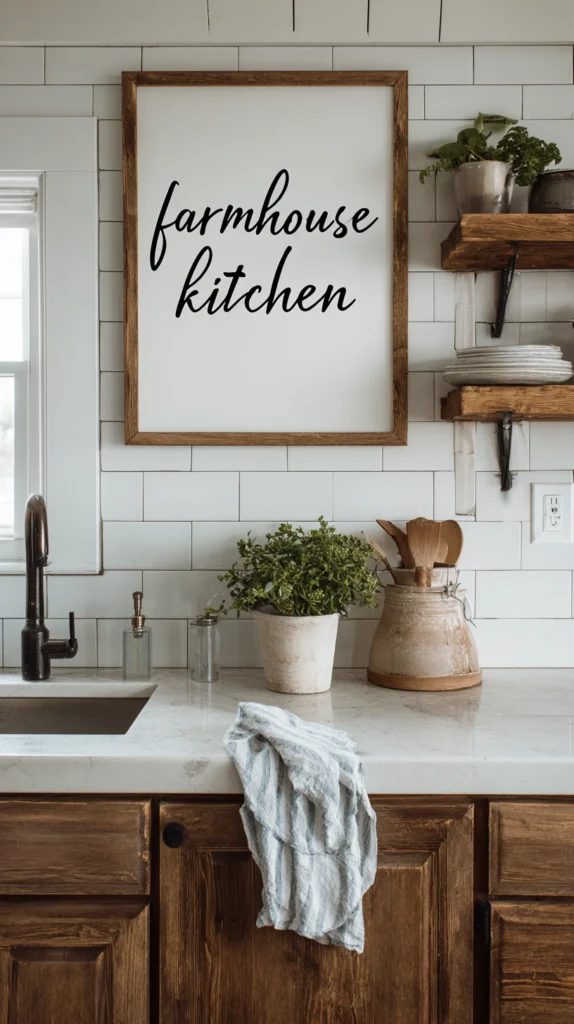
A simple typographic print or wooden sign in the kitchen — a single word, a short phrase, or a list of something seasonal — is one of the most straightforward modern farmhouse decor additions available. It does not need to be a statement piece or carry a particularly meaningful message. It needs to be clean, legible, and in a typeface and colour that suits the room. A black serif font on a white or natural background, framed simply or printed directly onto reclaimed wood, is the combination that works most reliably across the widest range of modern farmhouse kitchens and dining spaces.
Typographic prints from independent designers on Etsy cost $5–$20 unframed. A simple black frame adds $10–$25. Wooden signs with routed or painted lettering cost $20–$60 depending on size and source. Choose a phrase that suits the season — something connected to gathering, food, warmth, or summer — rather than a generic motivational statement that disconnects from the specific character of the farmhouse aesthetic. A hand-lettered sign made with a paint pen on a piece of reclaimed timber costs almost nothing and often looks better than a purchased equivalent because the imperfection of the hand-lettering suits the style.
Style tip: Hang the sign or print at the eye level of someone standing at the kitchen counter rather than at the eye level of someone seated. Kitchen wall decor is viewed primarily while standing and cooking — mounting at standing eye level means the piece is in the natural field of vision during the time most people spend in the kitchen rather than positioned for an audience that is seated at the table looking toward the kitchen from a distance.
10. Sheer White Curtains at Every Window
Budget: $30 – $150
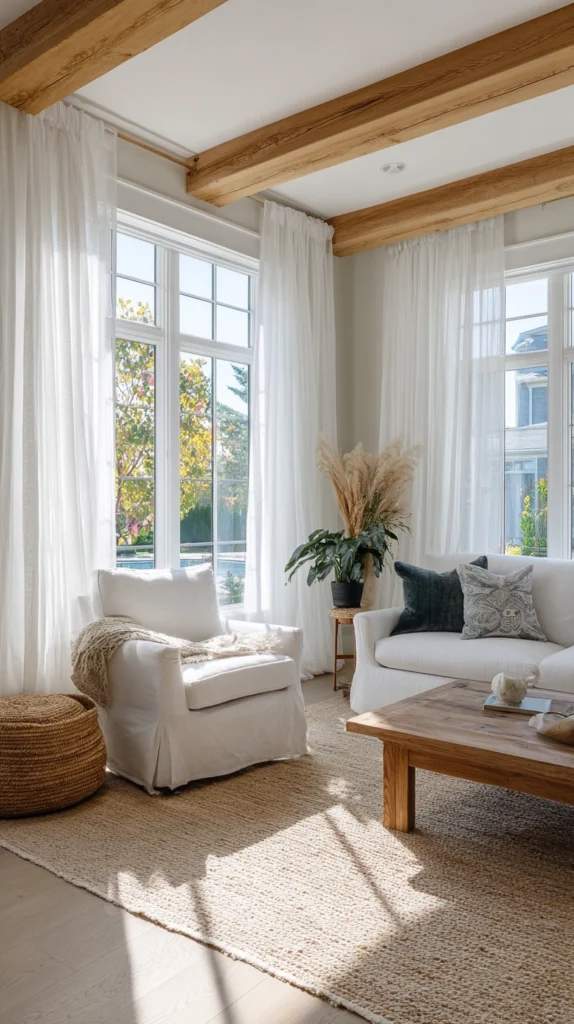
Sheer white or cream curtains hung at ceiling height are one of the most effective and most affordable modern farmhouse summer decor upgrades available for any room in the house. They filter direct sun into soft, diffuse light without darkening the room, they move in any air movement through an open window in a way that is immediately pleasant, and the consistent use of the same sheer fabric across multiple windows in the same space creates the kind of visual coherence that makes a room feel considered and calm rather than assembled from different decisions made at different times.
Sheer white cotton or linen voile curtain panels cost $10–$30 each from most homewares retailers. A 240 cm drop panel suits most standard ceiling heights and hangs well without custom cutting. Hang from a simple wooden or iron curtain pole — wrought iron poles with simple bracket fixings cost $15–$40 for a standard window width. Use two panels per window and hang them from the ceiling line rather than from the window frame — the ceiling-height installation makes the windows look taller and the room feel more generously proportioned than a panel hung at the top of the window frame alone.
Style tip: Tie sheer curtains back loosely with a piece of natural jute twine or a simple linen ribbon rather than a formal curtain tieback. The informal tie creates the relaxed, gathered quality appropriate to the farmhouse aesthetic at no cost beyond the material itself, and it allows the curtain to billow naturally below the tie point in a way that a rigid metal tieback does not.
11. A Wooden Tray as a Styled Surface
Budget: $20 – $70
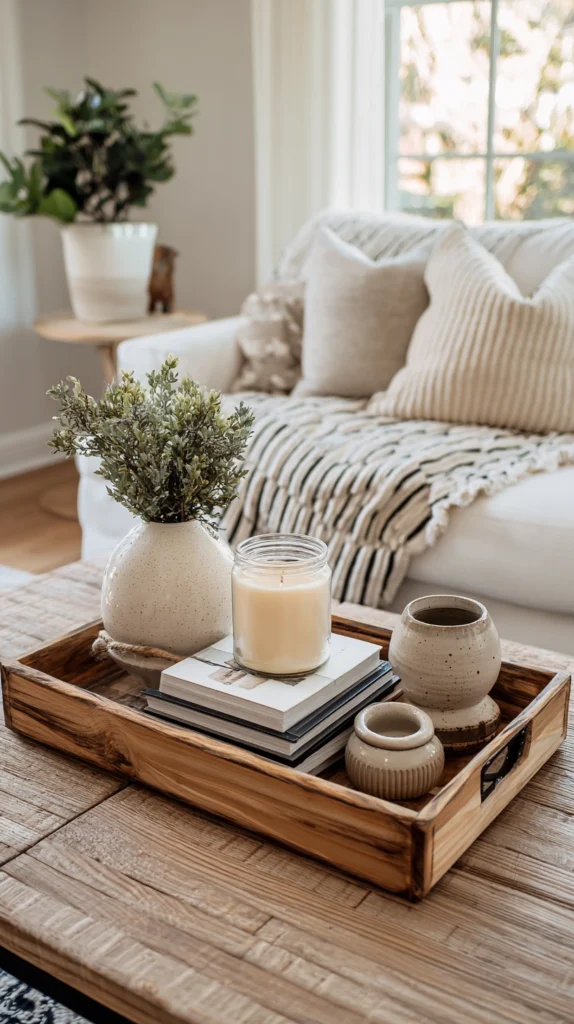
A wooden tray used to organise and display a small collection of objects on a coffee table, ottoman, kitchen counter, or dresser is one of the most effective and most underused modern farmhouse styling tools. The tray defines a boundary within which the objects are arranged, which immediately makes even an informal collection of mismatched items read as a considered vignette rather than a random accumulation of things that have been left on a surface. The tray is the frame — the objects within it are the composition.
A simple rectangular wooden tray in natural or whitewashed timber costs $20–$50 from homewares retailers, or can be made from a reclaimed timber offcut for almost nothing. Style the tray with three to five objects in varying heights — a small plant or moss ball, a candle in a simple holder, a ceramic object, a small stack of books or coasters, and one galvanised or terracotta detail. Keep the palette within two or three neutral tones. Replace one or two objects in the tray each month to keep the display from becoming static while maintaining the overall arrangement that is already working.
Style tip: Use an odd number of objects within the tray arrangement — three or five rather than two or four. Odd-numbered groupings feel naturally balanced without the symmetry that even numbers produce, and symmetrical arrangements on a farmhouse surface read as more formal than the style intends. The slight visual tension of an asymmetric odd-number grouping is what makes a styled tray look effortful without looking arranged.
12. Sunflowers and Seasonal Cutting Garden Flowers
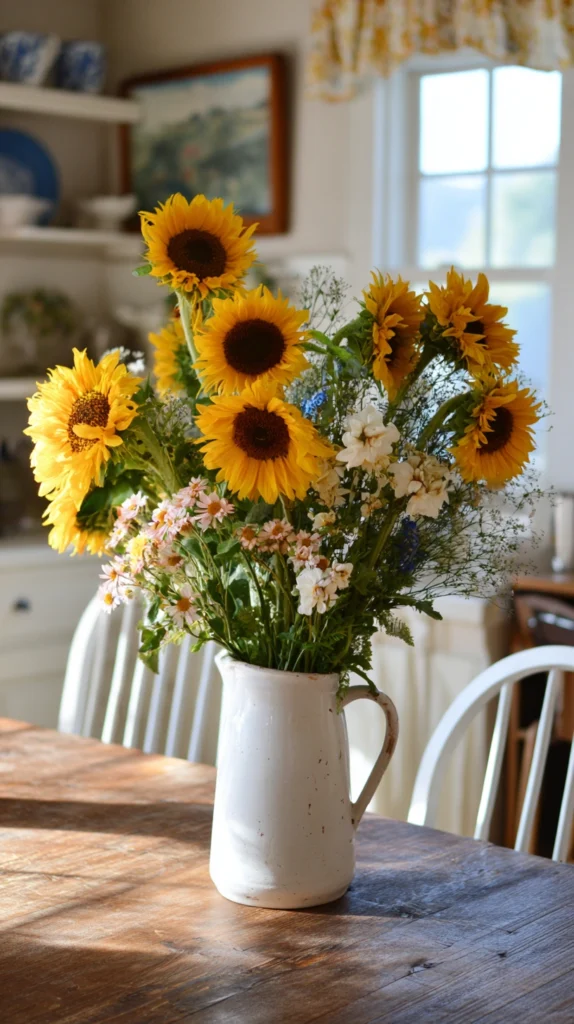
Budget: $5 – $40
Sunflowers are the definitive modern farmhouse summer flower — bold, warm-coloured, unshowy in their appeal, and completely honest about what they are. A large bunch of sunflowers in a stoneware jug or a galvanised bucket on the kitchen table or kitchen counter costs very little from a farmers market or a garden centre and immediately shifts the character of the space in a way that no other seasonal decor element achieves as quickly or as affordably. Supplemented with whatever else is in season — zinnias, cosmos, marigolds, and rudbeckia — they make the interior feel genuinely connected to the summer garden outside.
A bunch of ten sunflowers costs $5–$12 from farmers markets and $8–$18 from florists. Growing your own from seed — a packet of mixed sunflower seed costs $2–$5 and produces stems from July onward — reduces the cost further and means fresh flowers are available throughout the season without repeated purchasing. A stoneware jug or crock as a vessel costs $15–$40 from kitchen and homewares retailers and suits both sunflowers and mixed seasonal stems better than any glass vase in the farmhouse context because the opacity and weight of the ceramic suits the unpretentious, grounded quality of the arrangement.
Style tip: Change the water in the sunflower arrangement every two days and recut the stems at an angle each time. Sunflowers drink a large volume of water and the vessel depletes faster than most other cut flowers — a sunflower arrangement left in unchanged water for more than two days begins to decline noticeably, which defeats the purpose of a flower that is at its most effective when it is clearly and vigorously alive.
13. Open Shelving With Organised Dishware
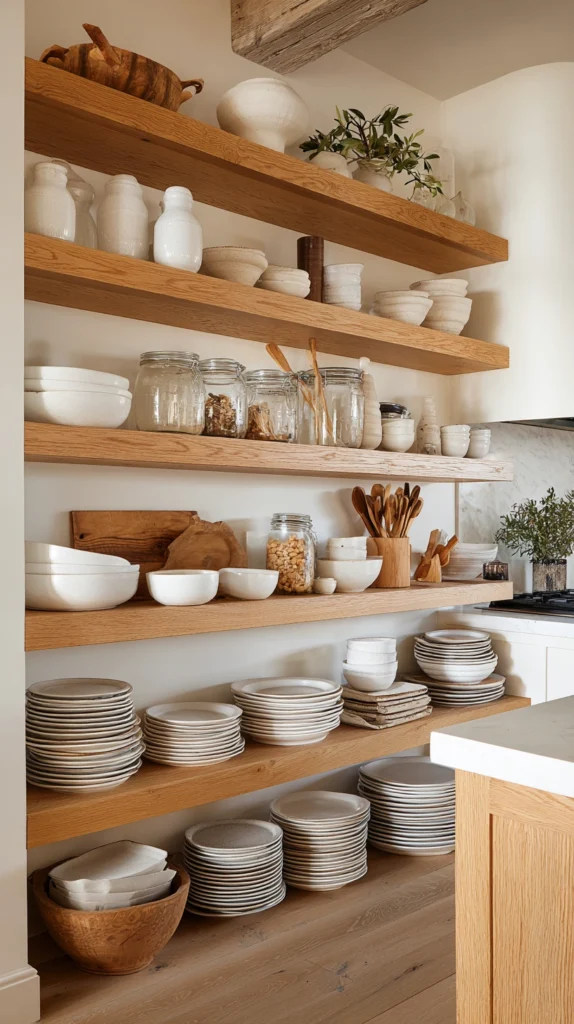
Budget: $60 – $300
Open kitchen shelving displaying an organised collection of simple white dishware, mason jars, wooden utensils, and seasonal small objects is one of the most characteristically modern farmhouse kitchen details. It turns the practical storage of everyday items into a display — but only when the items being displayed are genuinely simple, consistent, and curated enough to merit the visibility. White or cream ceramic plates and bowls stacked on an open shelf look entirely different from the same items behind closed cupboard doors, and the difference they make to the character of a farmhouse kitchen is considerable.
Floating wooden shelves in natural timber or a whitewashed finish cost $20–$50 each to purchase and install. A set of simple white ceramic dinnerware — plates, bowls, and mugs — in a consistent style costs $40–$120 for a four-person set from most kitchen retailers. Arrange dishware by type and size rather than by occasion — all plates together, all bowls together, all mugs in a row — and use the spaces between the practical items for a mason jar of wooden spoons, a small plant, or a single ceramic piece with visual interest. The organisation itself is the style — do not add decorative objects to compensate for dishware that is too varied or colourful to display cleanly.
Style tip: Keep one shelf entirely clear except for two or three large objects — a ceramic jug, a wooden bowl, a single plant. The empty space on that shelf is not wasted display area. It is the visual rest that allows the busier shelves around it to be read clearly. A set of shelves where every available space is filled looks like storage. Shelves with breathing room look designed.
14. A Porch or Entryway Summer Refresh
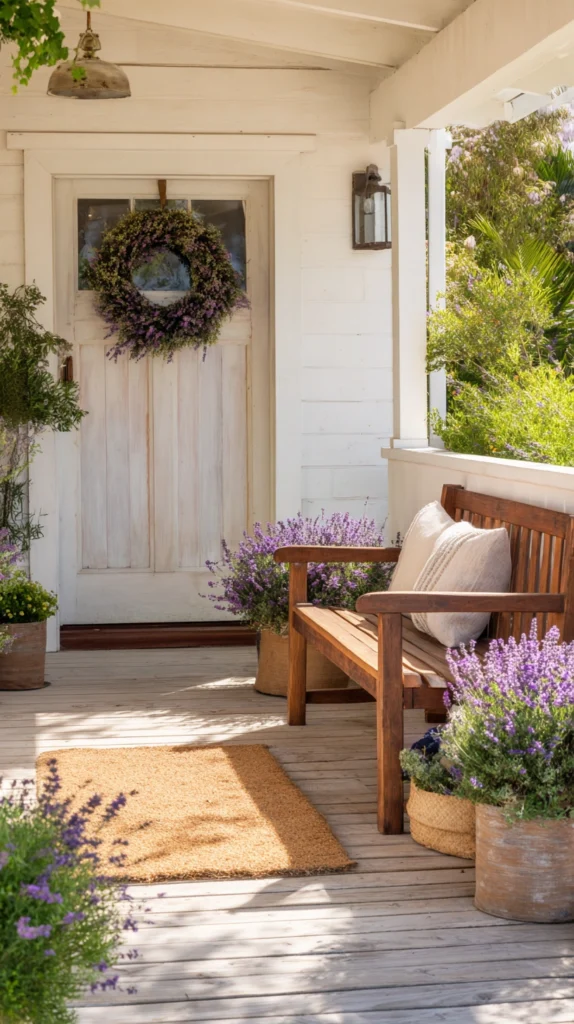
Budget: $40 – $200
The porch or entryway is the first impression of a modern farmhouse interior and the easiest room to refresh for summer with a small number of well-chosen changes. A new doormat in a natural material — coir or sisal — with a simple monogram or graphic, a pair of potted lavender or geraniums flanking the door, a small wooden bench with a summer throw draped over it, and a simple wreath of dried or fresh summer flowers on the door together create an arrival experience that immediately signals the warmth and ease of the modern farmhouse aesthetic before anyone has stepped inside.
A quality coir doormat costs $20–$50. Potted lavender plants in terracotta pots cost $8–$15 each. A simple wooden entryway bench costs $80–$200 from furniture retailers or can be found second-hand for $20–$60. A summer wreath of dried lavender, wheat stems, and eucalyptus costs $15–$40 from an artisan maker or $5–$15 to make from garden materials. A summer throw for the bench runs $20–$50. The complete entryway refresh using all of these elements sits between $130 and $300 — a reasonable investment for the space that creates the first impression of the entire home through the summer months.
Style tip: Keep the entryway and porch surfaces as clear as possible — one mat, two pots, one bench, one wreath. The farmhouse entryway is not an opportunity to display every seasonal decoration available. It is an introduction to the warmth and simplicity of the interior beyond it, and restraint at the entrance sets the expectation for the rest of the home more effectively than abundance does.
Modern farmhouse summer decor works best when it serves the way a home is actually lived in through the warmest months — doors open, windows light, surfaces functional, and every room organised around the people using it rather than around the appearance it creates for an observer. The style is built for genuine comfort rather than display, and the ideas on this list are all most effective when they are used rather than preserved.
Pick two or three updates from this list that address the rooms you spend the most time in through summer and start there. The modern farmhouse aesthetic rewards consistent application of simple ideas across a whole home more than it rewards a single elaborate gesture in a single room. Small, right decisions made across every surface and every space add up to something that feels genuinely cohesive — and that is always the goal worth working toward.