15 Tropical Summer Decor Ideas That Instantly Elevate Your Space
Tropical decor done well is not a collection of flamingo prints and plastic palm trees. It is the particular quality of a room that feels lush, layered, and genuinely alive — where large-leafed plants reach into corners, where natural materials warm every surface, where colour is used with enough confidence to feel abundant rather than cautious, and where the overall effect is one of generous, unhurried ease. It borrows from the aesthetics of Bali, coastal Brazil, the Caribbean, and Southeast Asia without being a literal reproduction of any of them.

The fifteen ideas below bring that quality into any home through specific, achievable decor choices that work as individual seasonal updates or as part of a complete tropical summer scheme. Each one prioritises atmosphere and sensory richness over theme-park literalism, and all of them can be implemented at a range of budgets without requiring a full room redesign. Costs and a styling tip are included with each to help you get the look right from the first piece you add.
1. Large-Leafed Tropical Houseplants as Room Anchors
Budget: $30 – $150
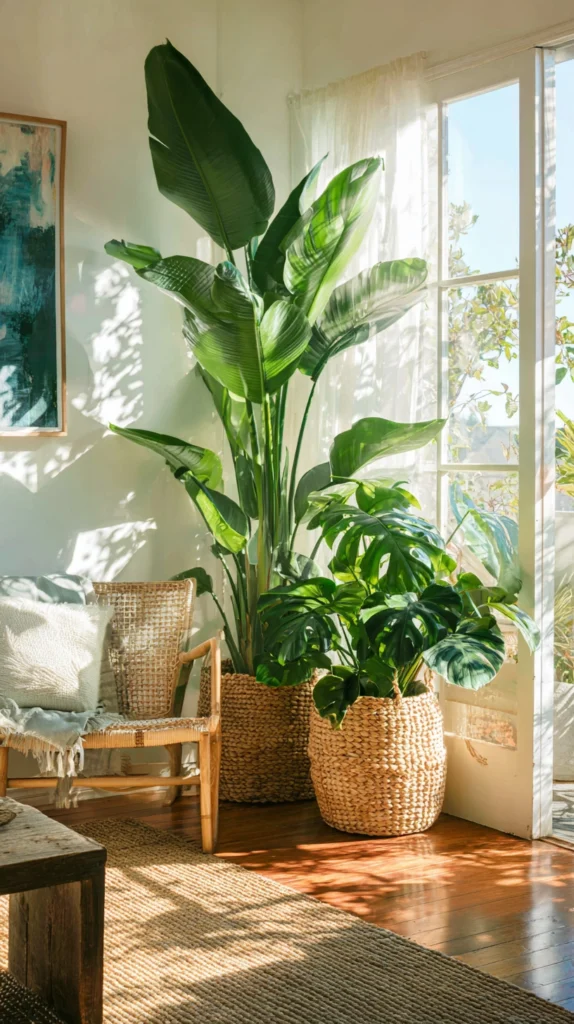
Nothing establishes a tropical interior more immediately or more effectively than large-leafed plants placed with confidence at the corners and edges of a room. A monstera with leaves reaching beyond its pot, a bird of paradise standing 1.5 metres tall, an elephant ear with leaves the size of a dinner plate, or a large fiddle leaf fig anchoring a wall — these are plants that change the scale and atmosphere of a room rather than merely decorating it. The key is size: small plants in a room add colour, but large plants change the experience of being in the space.
A large monstera deliciosa in a 21–24 cm pot costs $30–$60. A bird of paradise (Strelitzia nicolai) in a 24–28 cm pot runs $50–$120. An elephant ear (Alocasia or Colocasia) in a 19–21 cm pot costs $20–$50. A fiddle leaf fig in a 24 cm pot runs $40–$100. Place in decorative pots of at least 35–40 cm diameter in materials that suit the tropical palette — rattan basket liners, terracotta, hand-thrown dark glazed ceramic, or woven seagrass pot covers. Position plants where they receive the natural light they need to genuinely thrive rather than where they look best in a styled photograph — a healthy plant always looks better than a struggling one regardless of its position in the room.
Style tip: Cluster two or three large plants of different species together in one corner rather than distributing single plants across the room. A grouped planting creates the density and layering of a genuine tropical landscape — the overlapping leaves at different heights create depth and shadow that a single plant standing alone never produces regardless of how large or beautiful it is individually.
2. A Statement Tropical Wallpaper or Mural
Budget: $80 – $400
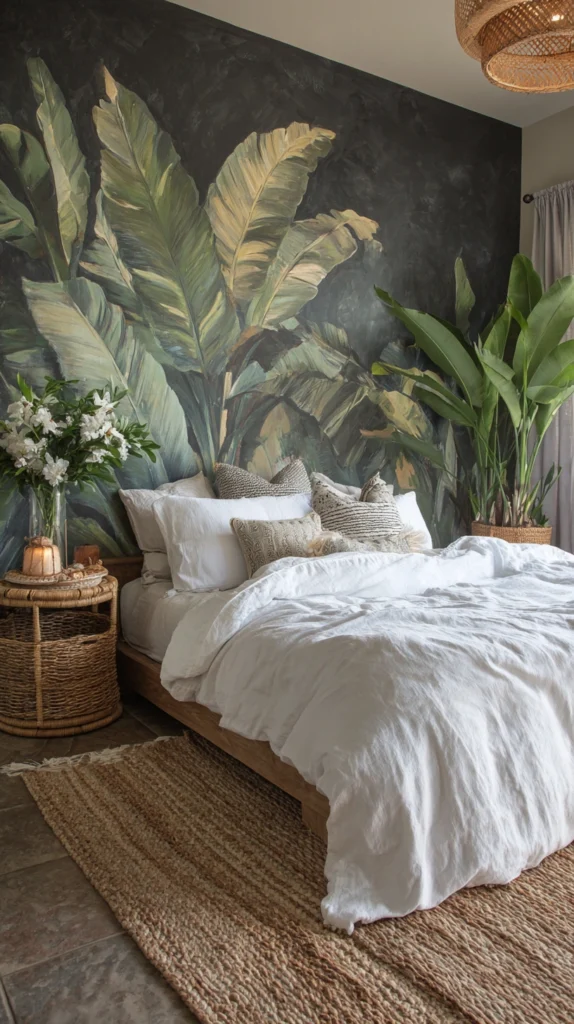
A single wall of tropical botanical wallpaper — large-leafed palms, oversized florals, dense jungle foliage — is the fastest and most dramatic way to bring tropical atmosphere into a room. It does not require the whole room to change around it: a tropical feature wall behind a bed, a sofa, or at the end of a hallway creates a focal point strong enough to set the tone for the entire space while the remaining walls stay neutral. The key is choosing a design with depth and botanical accuracy rather than a flat, cartoon-style tropical print that reads as themed rather than considered.
Peel-and-stick tropical wallpaper suitable for renters costs $30–$80 per roll, with most feature walls requiring three to four rolls. Traditional paste-the-wall wallpaper in botanical tropical designs runs $40–$120 per roll from specialist wallpaper retailers including Graham and Brown, Osborne and Little, and independent designers on Etsy. A custom-printed wallpaper mural — one large image covering the whole wall — costs $100–$300 for a standard wall size and creates a more immersive, photographic effect than a repeating pattern. Dark background botanical wallpapers in deep green, navy, or charcoal read as the most genuinely luxurious option within this format.
Style tip: Choose a wallpaper where the botanical elements are drawn or painted in a realistic, detailed style rather than a simplified graphic one. Realistically rendered leaves, fronds, and flowers at large scale read as art. Simplified graphic tropical prints at the same scale read as pattern — and the distinction between the two is what separates tropical decor that feels elevated from tropical decor that feels like a holiday rental.
3. Rattan and Bamboo Furniture Throughout
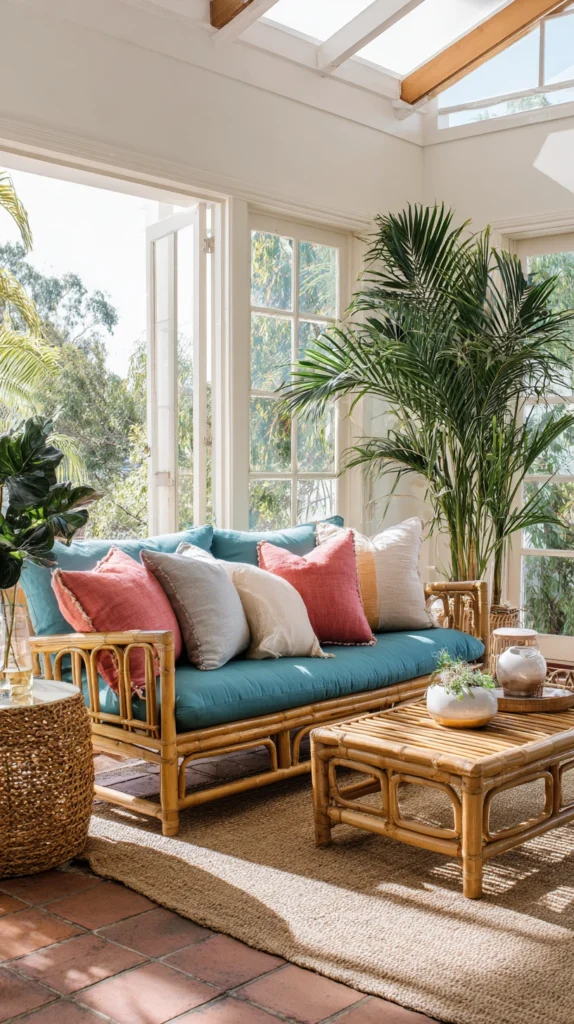
Budget: $80 – $800
Rattan and bamboo are the structural furniture materials most completely suited to a tropical interior. They are light, warm in tone, visually open in their weave, and immediately suggestive of the humid, sun-drenched environments where tropical design has its roots. Used consistently across multiple pieces — a rattan sofa, a bamboo side table, a woven dining chair, a cane headboard — they create a material cohesion in the room that makes the tropical scheme feel genuinely designed rather than assembled from a collection of individual pieces that happen to share a colour palette.
A rattan two-seater sofa costs $200–$500. A bamboo side table runs $40–$100. Rattan dining chairs cost $80–$200 each. A cane or rattan headboard runs $100–$300. Second-hand rattan furniture from markets and online resale platforms is often the best quality and best value simultaneously — older rattan pieces have a patina and weight that new mass-produced equivalents lack, and the material improves rather than deteriorates with age when maintained with an occasional coat of natural oil. A room furnished primarily in rattan and bamboo costs less than the equivalent upholstered furniture and creates a significantly more specific and atmospheric tropical interior.
Style tip: Add cushions and textiles to rattan furniture in solid, saturated tropical colours — deep teal, terracotta, saffron yellow, or warm coral — rather than in neutral tones. The contrast between the natural straw tone of rattan and a richly coloured cushion is one of the most characteristically tropical colour combinations available and it requires no further decoration in the room to look complete and considered.
4. Deep Jewel Tones on Walls or in Textiles
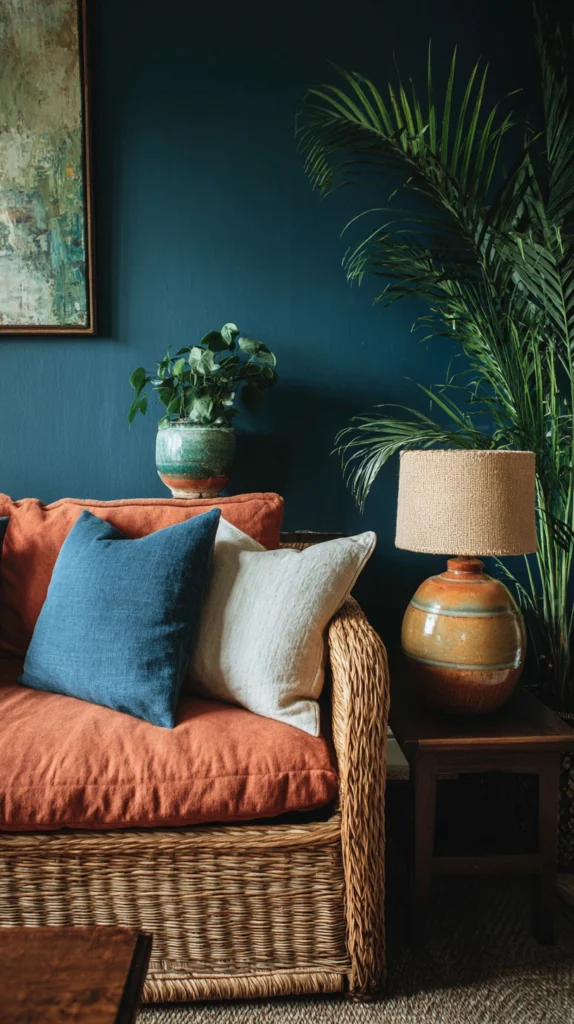
Budget: $30 – $200
Tropical interiors are not afraid of colour. The deep, saturated jewel tones that feature in genuinely tropical spaces — emerald green, sapphire blue, deep coral, warm turmeric, rich plum — reflect the intensity of a natural world where foliage is dark and vivid and flowers are almost unreasonably bold. These colours used on walls, in large textile panels, or in major upholstered pieces create the richness and depth that makes a tropical room feel genuinely immersive rather than simply decorated. Used with confidence, they are among the most elevating choices available in interior colour.
A litre of quality interior paint in a deep jewel tone costs $15–$35 and covers approximately 12 square metres. A large velvet or linen cushion cover in emerald or sapphire costs $20–$50. A tropical-coloured throw in deep teal or coral linen runs $30–$80. An emerald green or deep blue ceramic lamp base costs $40–$120. Introduce jewel tones gradually — a single deep green wall behind a sofa, two emerald cushions on a rattan chair, or one sapphire blue lamp creates enough saturated colour to establish the tropical palette without overwhelming a room that is approaching the style incrementally rather than committing to it wholesale.
Style tip: Pair jewel tone walls with natural materials rather than with white surfaces. Deep emerald green looks significantly more tropical and more luxurious against rattan, dark wood, and terracotta than against the clinical white surfaces it is often paired with in contemporary interiors. The richness of the colour needs the warmth of natural materials to read as lush rather than dark.
5. Tropical Print Cushions and Throws
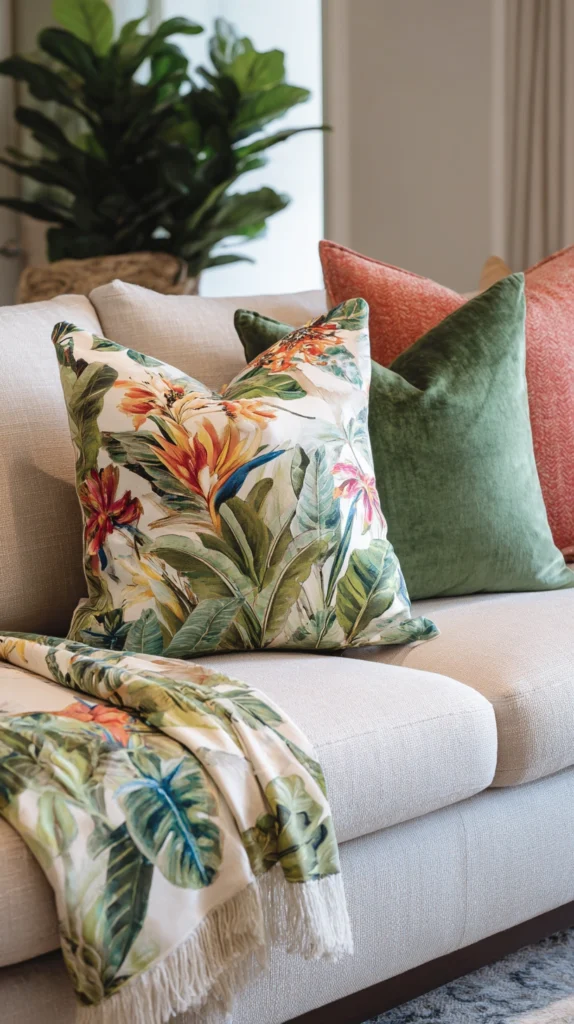
Budget: $30 – $150
Tropical print textiles — botanical leaf prints, bird of paradise florals, palm frond patterns, and exotic bird motifs on cotton, linen, or velvet — are the most accessible and most immediately effective way to introduce tropical character into any room without committing to a full decorating overhaul. A set of three or four printed cushions on a neutral sofa, a tropical-print throw draped over an armchair, or a patterned tablecloth on the dining table shifts the seasonal character of the space without requiring any permanent change to the room’s structure or palette.
Tropical print cushion covers in cotton or linen cost $15–$40 each. A set of four in coordinating but not identical prints runs $50–$120. A tropical botanical print throw costs $30–$80. Choose prints that reference real botanical species — Monstera, Heliconia, Bird of Paradise, Banana leaf — rather than stylised or cartoon tropical motifs. Realistic botanical prints age better within a room, suit a wider range of complementary materials and colours, and read as more considered and more genuinely decorative than simplified graphic pattern alternatives at the same price point.
Style tip: Mix botanical print cushions with solid-coloured ones in the colours drawn from the print rather than using all printed cushions together. One large leaf-print cushion flanked by two solid emerald cushions and one solid terracotta cushion creates a more cohesive and more sophisticated arrangement than four different tropical prints competing for attention on the same sofa. The solid colours anchor the print and allow it to be read clearly.
6. A Canopy Bed or Draped Headboard
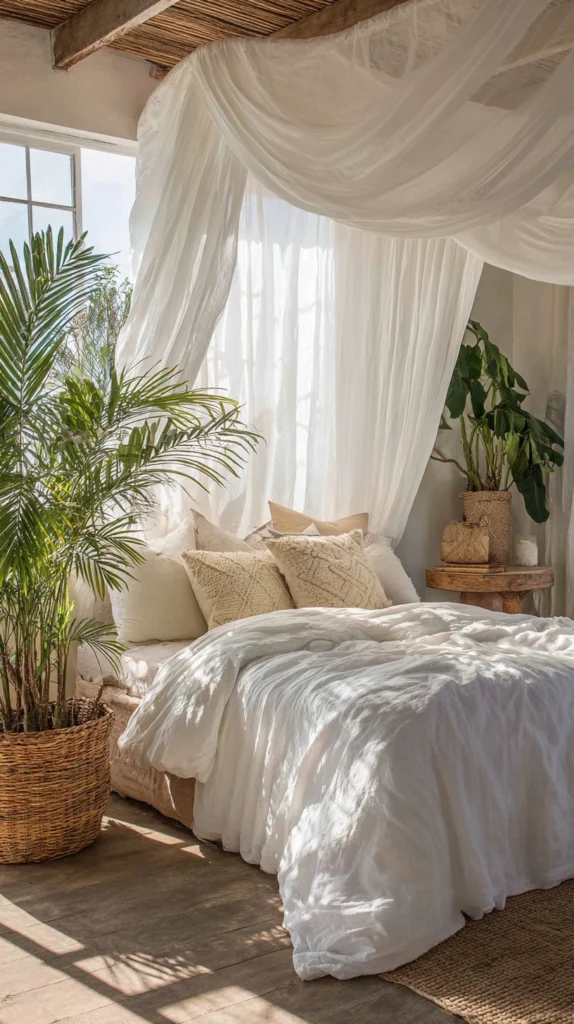
Budget: $80 – $400
A canopy bed — or a bed with sheer fabric draped from a ceiling hook above the headboard — creates the most evocative and most universally appealing tropical bedroom detail. The draped fabric suggests both luxury and protection, references the mosquito nets of genuinely tropical sleeping environments, and transforms an ordinary bedroom into a space with a particular atmosphere and intimacy that no other single piece of furniture or textile achieves as efficiently. In white or cream linen it reads as clean and airy. In a deep jewel tone it reads as genuinely dramatic.
A four-poster bed frame in rattan, bamboo, or dark wood costs $300–$800. A ceiling-mounted canopy hook with a single panel of sheer fabric draped from it costs $20–$60 for the hook and $30–$80 for a generously sized sheer linen or cotton panel. A pre-made bed canopy in white cotton muslin costs $30–$80 and requires only a single ceiling fixing point. The fabric should be light enough to move in any air movement through the bedroom — a billowing canopy above a bed in a tropical interior is one of the most atmospherically successful decor effects available at any price point.
Style tip: Keep the bedding beneath a canopy simple and in a single colour rather than introducing pattern. The canopy itself is the statement — patterned or multi-coloured bedding beneath it competes with the overhead fabric rather than completing the composition. White or cream linen sheets and a solid-coloured throw in a deep tropical tone is the combination that makes a canopy bed look most completely considered.
7. Woven Grass and Seagrass Rugs
Budget: $50 – $300
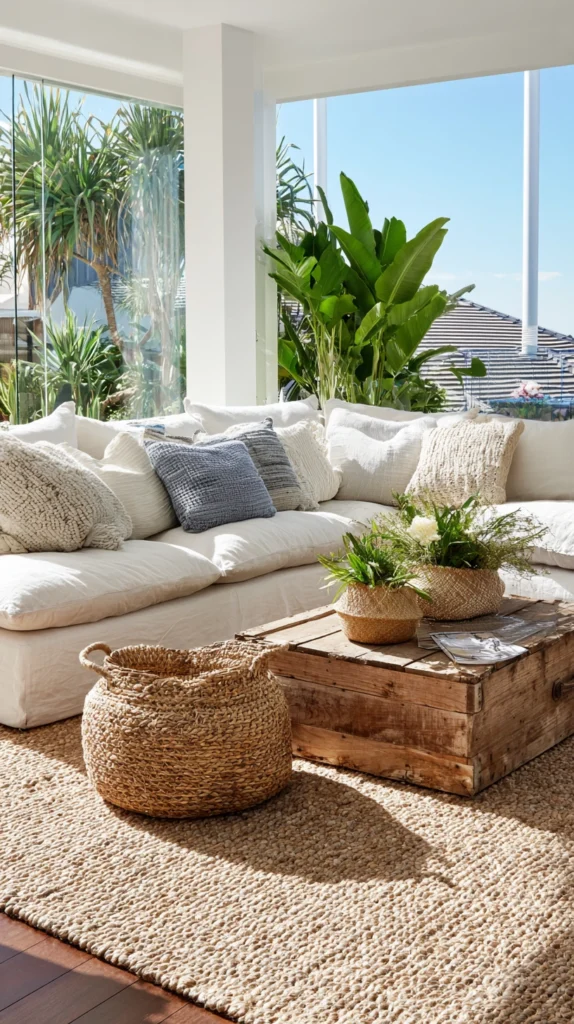
A woven seagrass, sisal, or jute rug is the most naturally appropriate floor covering for a tropical interior — the undyed, natural-fibre surface grounds the room in the same organic warmth as the rattan furniture and terracotta pots around it, and the tight weave texture adds a tactile quality underfoot that complements the visual richness of large-leafed plants and jewel-toned textiles at eye level. In summer it is also cooler and more pleasant underfoot than a plush woven rug, which suits both the aesthetic and the practical requirements of a hot-weather interior.
A seagrass rug in 160×230 cm costs $60–$150. Jute rugs in the same size run $50–$120. Sisal — the most durable of the three — costs $80–$200 for equivalent coverage. All three are available with a cotton border in a complementary colour — a dark green or deep coral border on a natural seagrass rug adds a colour detail that ties the rug to the wider tropical palette without introducing pattern. Layer a smaller patterned or coloured rug on top for the layered, rich-floor effect that suits a maximalist tropical scheme without losing the natural material quality of the base surface underneath.
Style tip: Use a rug pad beneath a woven natural fibre rug on hard flooring — seagrass and jute slide on smooth surfaces and a pad prevents the rug from moving underfoot and developing creases at the edges. A rug pad costs $15–$40 for a standard size and extends the life of the rug significantly by preventing the wear that occurs when natural fibre rubs repeatedly against a hard floor surface.
8. Statement Tropical Lighting
Budget: $60 – $300
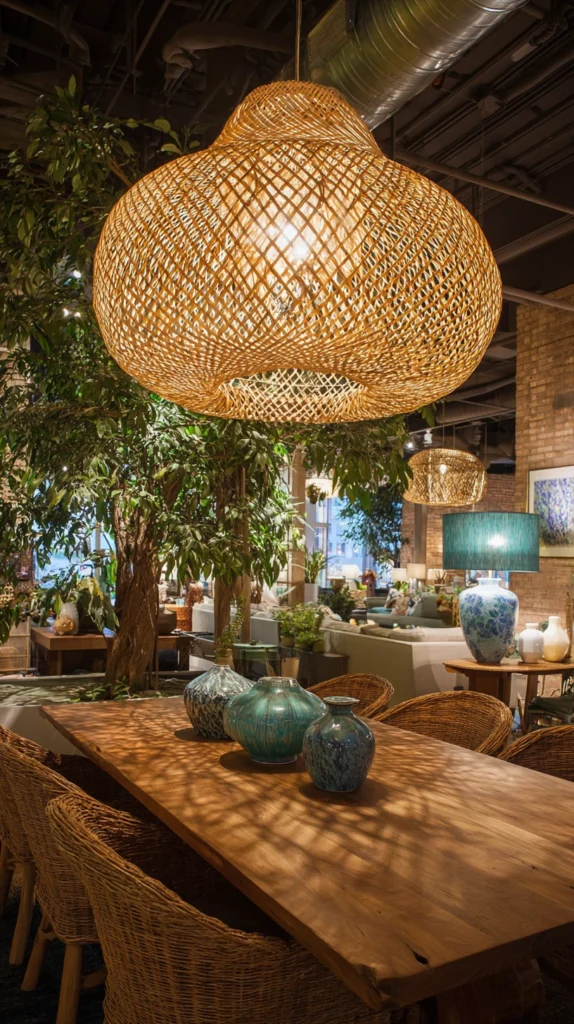
Lighting in a tropical interior should be warm, layered, and — wherever possible — made from natural materials that suit the organic palette of the room. A rattan or bamboo pendant shade over the dining table casts dappled, patterned light through its weave. A ceramic lamp base in a deep jewel tone on a side table adds a pool of warm light at the right height for reading and conversation. A cluster of hanging woven pendant lights at varying heights above a seating area creates the ambient, distributed glow that makes a tropical room feel genuinely atmospheric rather than merely well-lit.
A large rattan or bamboo pendant shade costs $40–$100 from homewares retailers. A woven seagrass or palm leaf pendant runs $30–$80. A ceramic lamp base in emerald, cobalt, or terracotta costs $40–$120 with a simple linen or paper shade. A set of three hanging woven pendants in graduated sizes runs $80–$200. All lighting should use warm white bulbs at 2700K or below — cool white light undermines the warmth and richness of a tropical palette immediately and thoroughly, replacing the lush, golden atmosphere the decor is building with the flat, uninviting quality of overhead office lighting.
Style tip: Install a dimmer switch on the main ceiling light in any room where tropical decor is the goal. The ability to reduce overhead light and rely on table lamps and floor lamps for evening illumination transforms the atmosphere of the room more completely than any single decorating decision. A dimmable tropical room at evening is an entirely different experience from the same room at full overhead brightness — and the dimmer costs $15–$30 to install, making it the best-value lighting upgrade available.
9. An Indoor Water Feature or Tabletop Fountain
Budget: $30 – $200
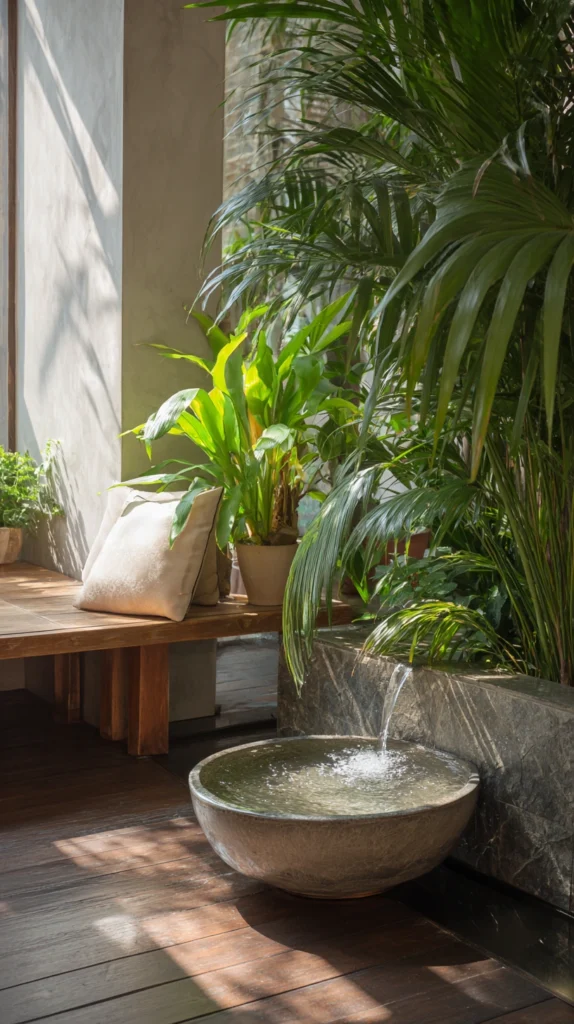
Moving water is one of the most characteristically tropical sensory elements — the sound of a fountain, a wall-mounted water feature, or even a simple tabletop pump in a ceramic bowl of pebbles adds an acoustic dimension to a room that purely visual decor cannot provide. In a tropical interior, the sound of water alongside the sight of large-leafed plants and the warmth of natural materials creates a genuinely multi-sensory environment that is immediately more immersive and more relaxing than a visually equivalent room without it. The effect is disproportionate to the cost and complexity of the installation.
A self-contained tabletop fountain in stone, ceramic, or resin costs $30–$80. A wall-mounted indoor water feature with a reservoir and pump runs $80–$200. A simple DIY version — a submersible pump ($15–$25), a large ceramic bowl, and smooth black river pebbles ($8–$15) — creates a pebble pool fountain for under $50 in materials that looks completely at home in a tropical interior. Place close to the main seating area where the sound is most directly experienced. Clean the pump filter every four weeks and top up the reservoir weekly to keep the feature running well through the season.
Style tip: Set a tabletop fountain on a surface where it is at sitting ear height rather than overhead or at floor level. The sound of moving water is most relaxing and most effective as a background element when it comes from roughly the same level as the listener rather than from above or below — a fountain on a coffee table or low side surface delivers the acoustic benefit most completely to someone seated in the room beside it.
10. Tropical Botanical Art Prints
Budget: $20 – $150
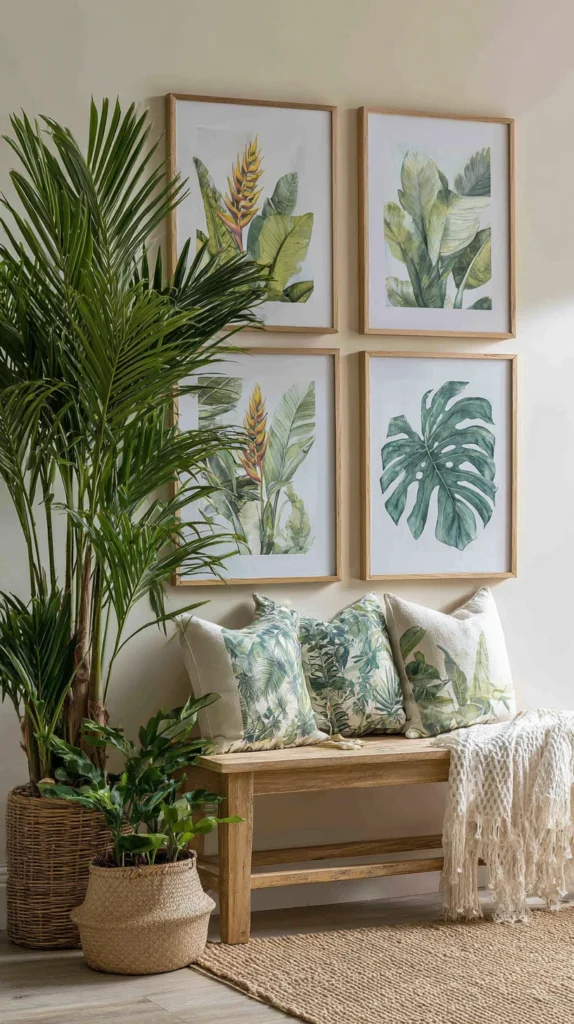
Large-format botanical prints of tropical species — heliconias, bird of paradise, banana leaves, monstera, orchids, and exotic ferns — bring the precision and beauty of scientific illustration into a tropical interior in a form that suits any wall in any room. On a dark background they read as dramatically luxurious. On a white or cream background they read as fresh and considered. Either way they add a layer of visual interest and botanical richness that complements the living plants in the room and the natural materials of the furniture without competing with either.
Digital botanical prints from independent artists on Etsy cost $5–$20 each unframed and can be printed at home or at a local print shop for $5–$15 per A2 or A1 print. Original limited edition botanical prints cost $30–$100. Frame in simple black frames for a dramatic tropical effect or natural timber frames for a lighter, more botanical-illustration quality. A set of three large botanical prints in matching frames on a single wall creates a display for $60–$150 in total that anchors the tropical scheme without requiring any paint or wallpaper change to the wall behind them.
Style tip: Scale the prints generously — A2 minimum, A1 or larger where the wall allows. Botanical prints at small scale look like page illustrations from a book that have been removed and framed. At large scale they read as proper wall art with enough visual presence to contribute meaningfully to the character of a room rather than decorating its margins. Size is the single most important decision in making botanical prints work on a wall.
11. Bamboo and Teak Outdoor Furniture
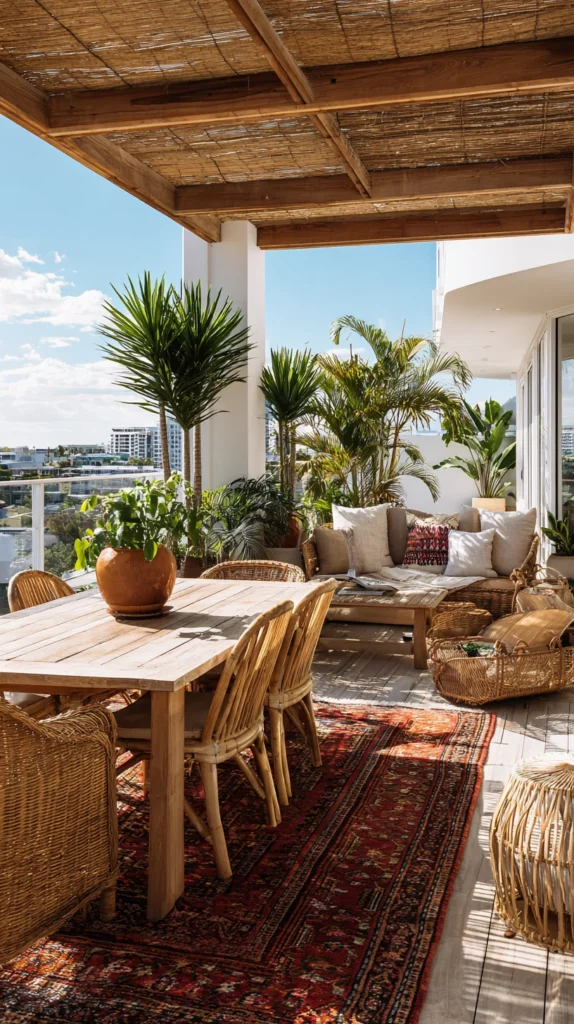
Budget: $150 – $800
A tropical outdoor space — whether a terrace, balcony, or garden — furnished in bamboo, teak, or dark-stained hardwood creates an outdoor room with an atmosphere entirely different from the standard plastic or powder-coated aluminium garden furniture that most outdoor spaces default to. The natural grain of teak darkening with age, the warmth of bamboo in afternoon light, and the depth of colour of a properly maintained hardwood surface all contribute to the outdoor tropical aesthetic that is as important as the indoor scheme it extends and connects to.
A teak outdoor dining set for four costs $300–$700. Bamboo sun loungers run $80–$200 each. A teak garden bench costs $150–$400. Rattan outdoor sofas with weatherproof cushions run $250–$600. Treat teak furniture with teak oil at the start of each season to maintain the warm honey tone — untreated teak weathers to a silvery grey, which suits some outdoor schemes but loses the warmth that suits a tropical palette best. Bamboo furniture requires an annual coat of outdoor varnish or bamboo sealer to prevent cracking in harsh weather.
Style tip: Add a large outdoor rug beneath the outdoor furniture arrangement — a woven polypropylene rug in a tropical pattern or a solid deep green or terracotta tone defines the outdoor dining or seating space as a room rather than furniture placed on a patio. An outdoor rug on a tropical terrace is the single addition that most completely transforms the space from functional outdoor area to genuine outdoor room.
12. Fresh Tropical Flowers as Weekly Decoration
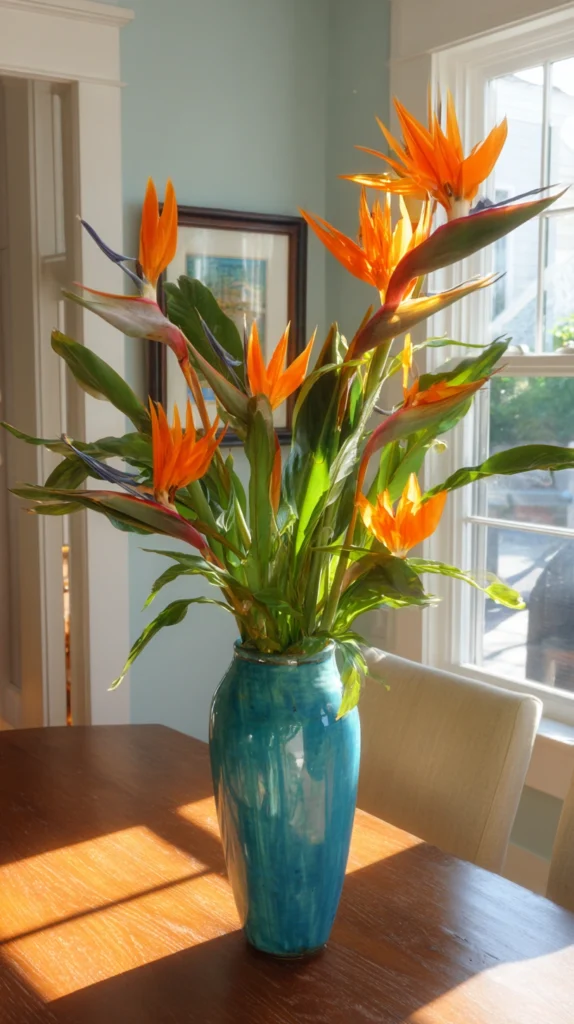
Budget: $10 – $50 per arrangement
Fresh tropical flowers — bird of paradise stems, heliconias, anthuriums, orchids, and proteas — used as a weekly flower arrangement in a large, simple vase elevate a tropical interior in a way that no permanent decor element quite matches. They are changed weekly, which keeps the room alive and seasonally connected in a way that printed textiles and artificial plants cannot. A single stem of bird of paradise in a tall ceramic vase is a complete decorative statement that needs nothing around it. Five stems of mixed tropical flowers in a wide-mouth vessel is a display of genuine richness and generosity.
A single bird of paradise stem costs $3–$8 from a florist. A bunch of mixed tropical stems runs $15–$40 depending on the varieties included. Anthuriums in a pot cost $8–$20 and last three to four weeks before fading. A tall, simple ceramic or glass vase suitable for tropical stems costs $20–$60. The ongoing weekly investment in a fresh tropical arrangement sits at $10–$40 per week — less than a coffee subscription and considerably more impactful on the daily atmosphere of the home it inhabits.
Style tip: Use a single species in a large quantity rather than mixing many different tropical flowers in one arrangement. Seven bird of paradise stems in a tall vase is more dramatic and more considered than seven different tropical species mixed together. The repetition of a single extraordinary flower at generous scale reads as a confident decorating choice. The mix of many species reads as a florist’s arrangement — beautiful but less specific in its aesthetic intention.
13. Dark Dramatic Paint Colours in Small Spaces
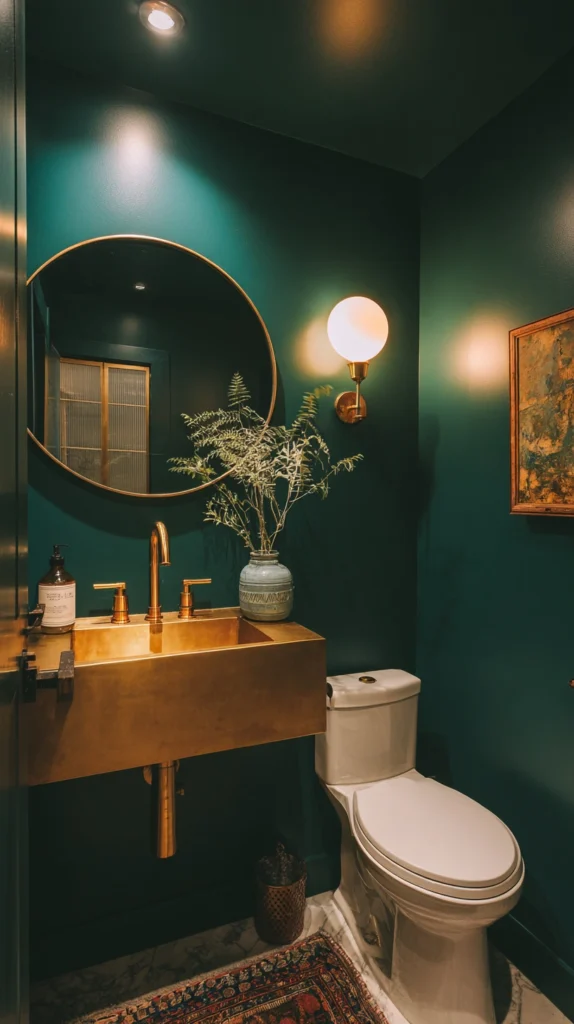
Budget: $30 – $120
Small spaces — a bathroom, a hallway, a powder room, a study — painted in a deep, dark tropical colour create one of the most dramatically effective and most immediately luxurious interiors available at minimal cost. Deep forest green, midnight blue, rich plum, or dark terracotta on all four walls of a small room creates an immersive, jewel-box quality that is the opposite of the pale, expanding-colour logic most decorators apply to small spaces. In a tropical scheme, the darkness is intentional — it references the depth of a rainforest canopy or the interior of a shaded tropical pavilion, and it works precisely because it commits fully rather than hedging toward something lighter.
A litre of deep, quality interior paint costs $15–$35 and covers a small bathroom or hallway in two coats. Deep green colours including Farrow and Ball’s Calke Green, Studio Green, and Mizzle, or equivalent tones from other quality paint brands, are the most consistently successful deep tropical colours for a small interior space. Pair with brass or aged brass hardware and fittings — the warm tone of brass against a deep green or blue wall is one of the richest and most specifically tropical colour-material combinations in interior design.
Style tip: Paint the ceiling the same deep colour as the walls in a small dark room rather than keeping it white. A ceiling painted the same tone as the walls removes the hard visual boundary at the top of the room and creates a fully enveloping, cave-like or forest-like quality that white ceilings interrupt. The all-over dark room feels dramatic and intentional. The dark-walled room with a white ceiling feels like a decor experiment that was not quite committed to all the way.
14. Woven Wall Art and Textile Hangings
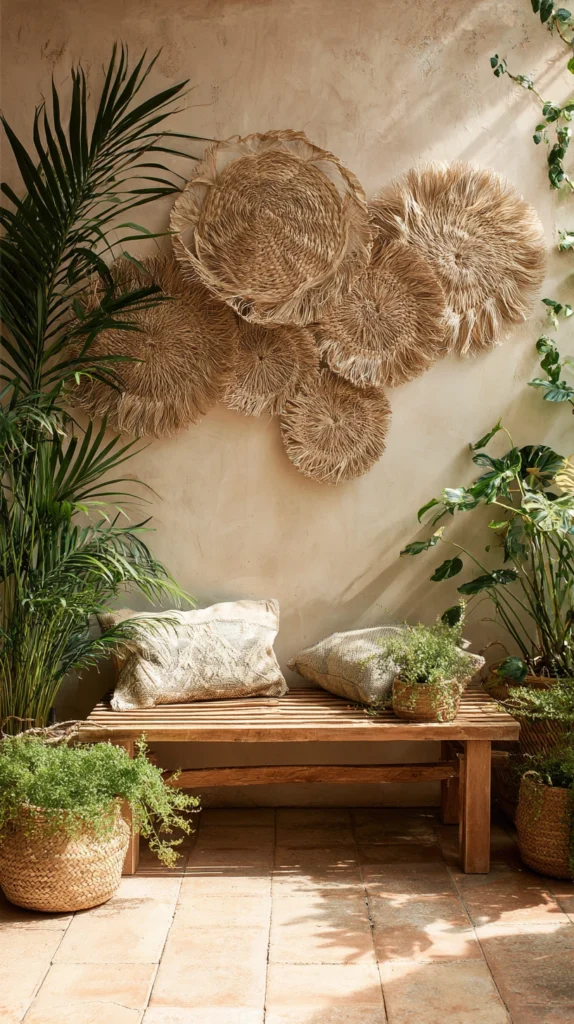
Budget: $30 – $200
Large woven wall hangings in natural fibres — jute, seagrass, palm leaf, banana fibre — add a layer of texture and handcraft to a tropical wall that framed prints and mirrors cannot provide. The organic quality of natural fibre weaving, with its slight irregularities and warm neutral tones, creates visual depth and warmth on a wall surface that suits the layered, material-rich aesthetic of a tropical interior better than any more finished or more polished wall art format. Against a deep jewel-tone wall they read as light and textural. Against a white wall they provide the warmth and weight the surface needs.
Woven wall hangings in natural fibres from independent makers on Etsy cost $30–$100 for medium pieces and $80–$200 for large statement versions. Palm leaf wall art panels cost $20–$60 each. A grouping of three or four natural fibre woven pieces in different sizes and weave patterns creates a wall display for $80–$180 that adds more textural richness to a tropical interior than the equivalent investment in framed prints. Source from makers who use genuinely natural and undyed materials — synthetic fibres produced to look like natural ones lack the warmth and the slight imperfection of weave that makes the real material worth displaying.
Style tip: Mix woven wall art with living plants placed nearby so that the organic quality of the woven material is reinforced by the living organic material beside it. A woven wall hanging beside a large monstera or a trailing pothos creates a visual conversation between the two forms of organic material — dried and living, still and growing — that makes both elements more interesting than either would be displayed in isolation on opposite sides of the room.
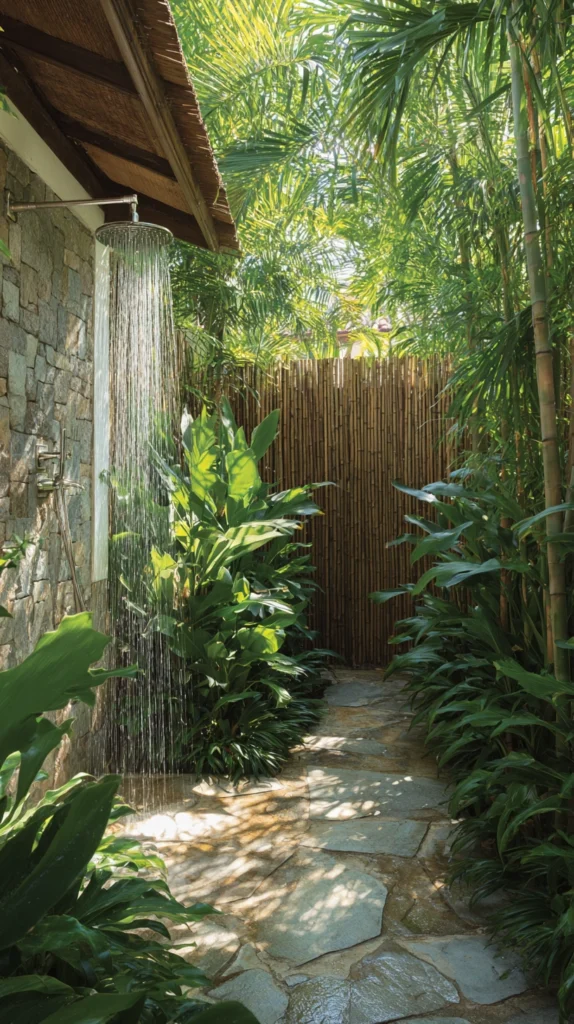
15. An Outdoor Shower or Tropical Bathroom Detail
Budget: $80 – $600
An outdoor shower — even a simple one rigged from a garden hose with a rainfall head in a fenced corner of the garden — is the most specifically and most completely tropical outdoor addition available for a home garden. It references the open-air bathing culture of tropical resorts and island living in a way that any other outdoor feature only approximates. Surrounded by large potted tropical plants, with bamboo screens for privacy and smooth stone or wooden decking underfoot, an outdoor shower becomes one of the most genuinely pleasurable features of a summer garden — used daily rather than occasionally and remembered long after the season has ended.
A basic garden hose outdoor shower kit with a rainfall head and simple on-off valve costs $40–$80. A freestanding outdoor shower column in stainless steel or powder-coated aluminium runs $150–$400. A timber or bamboo privacy screen costs $30–$80 per panel. For an indoor bathroom update that references the same aesthetic, a rainfall shower head costs $40–$120 and transforms the shower experience immediately — combined with dark wall tiles, brass fittings, a large tropical plant in the corner, and a woven bath mat, it creates a bathroom that references the luxury of a tropical resort without requiring any structural changes to the room.
Style tip: Plant the area immediately around an outdoor shower with large-leafed tropical or sub-tropical plants — canna lilies, gunnera, tree ferns, or large hostas in a shadier position. The plants provide privacy, create atmosphere, and make the outdoor shower feel genuinely embedded within a tropical landscape rather than installed in a garden that happens to have a shower fitting attached to the wall. The planting turns a practical feature into an experience.
Tropical decor at its most elevated is always about atmosphere rather than theme. The goal is a space that feels genuinely lush, warm, and alive — where the air seems different from the street outside, where every material in the room has a warmth and an organic quality, and where the overall effect is one of abundance rather than accumulation. The difference between a tropical room that feels luxurious and one that feels like a holiday rental is almost always the quality and confidence of the individual choices rather than the quantity of tropical elements included.
Start with the plants — they are the most irreplaceable element of a tropical interior and the one that takes the longest to establish. Add the natural materials, the jewel tones, and the lighting in whatever order suits your budget and your room. Let the scheme build across a season rather than completing it in an afternoon. The best tropical interiors always look as though they grew into their character gradually — because the ones worth emulating always did.