15 Mud Kitchen Ideas for Imaginative Outdoor Play
Mud kitchens represent dedicated outdoor play spaces where children engage in messy sensory play, create imaginary culinary masterpieces from natural materials, and experience the kind of unstructured creative outdoor time increasingly rare in contemporary scheduled childhoods.
These simple setups combining work surfaces, water access, old cookware, and natural ingredients like mud, sand, leaves, and flowers create the outdoor equivalent of indoor play kitchens while encouraging nature connection, sensory exploration, and the kind of gloriously messy play that develops creativity, fine motor skills, and scientific thinking through hands-on experimentation.
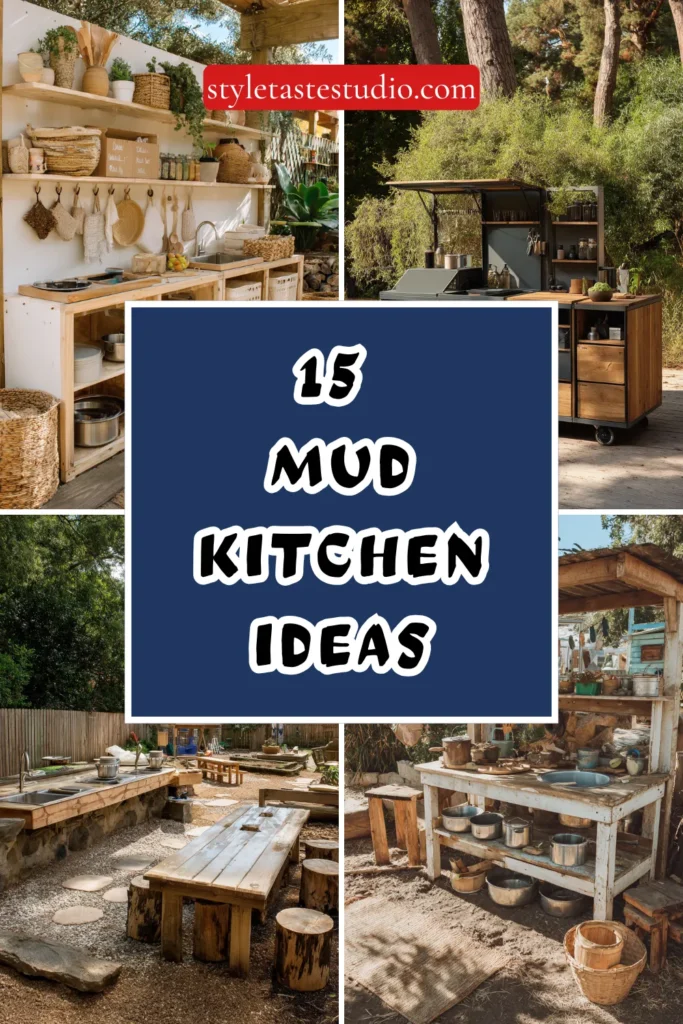
Strategic mud kitchen design incorporating age-appropriate heights, durable weather-resistant construction, organized storage, and thoughtful positioning maximizes playability while minimizing adult frustration through containment and easy supervision.
Understanding which features create genuinely engaging play versus merely decorative setups, how to balance safety with appropriate risk, and what constitutes adequate mud kitchen amenities ensures these outdoor play spaces deliver the developmental benefits that make initial investment and ongoing mess tolerance worthwhile.
These fifteen mud kitchen ideas demonstrate diverse approaches from simple repurposed furniture to elaborate custom builds, each proving that thoughtful mud kitchen design creates the kind of engaging outdoor play that keeps children occupied for hours while supporting development through nature-based imaginative play.
1. Repurposed Furniture Simple Setup
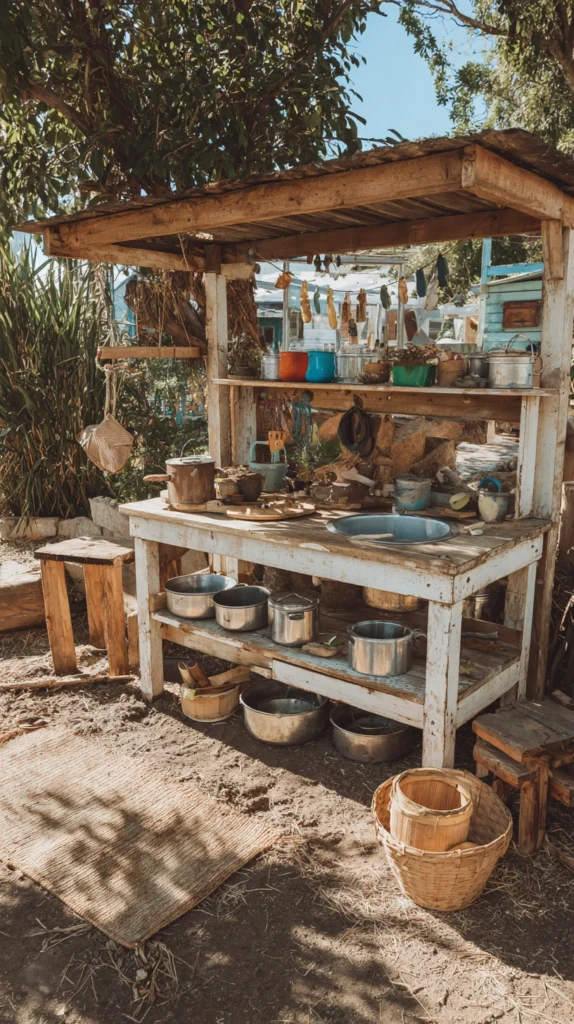
Convert old tables, benches, or discarded furniture into instant mud kitchens requiring minimal investment while teaching resourcefulness and providing functional play spaces without elaborate construction.
Position sturdy tables or benches at appropriate heights for children’s ages, add plastic bins or old cookware creating play stations, and include basic accessories like wooden spoons, measuring cups, and mixing bowls sourced from thrift stores. The simple repurposed approach minimizes cost and environmental impact while creating perfectly functional play spaces.
Accept that repurposed furniture may weather and deteriorate, but consider this natural lifecycle teaching rather than failure. Add waterproof covers to protect when not in use if extending furniture life matters.
2. Pallet Wood DIY Construction
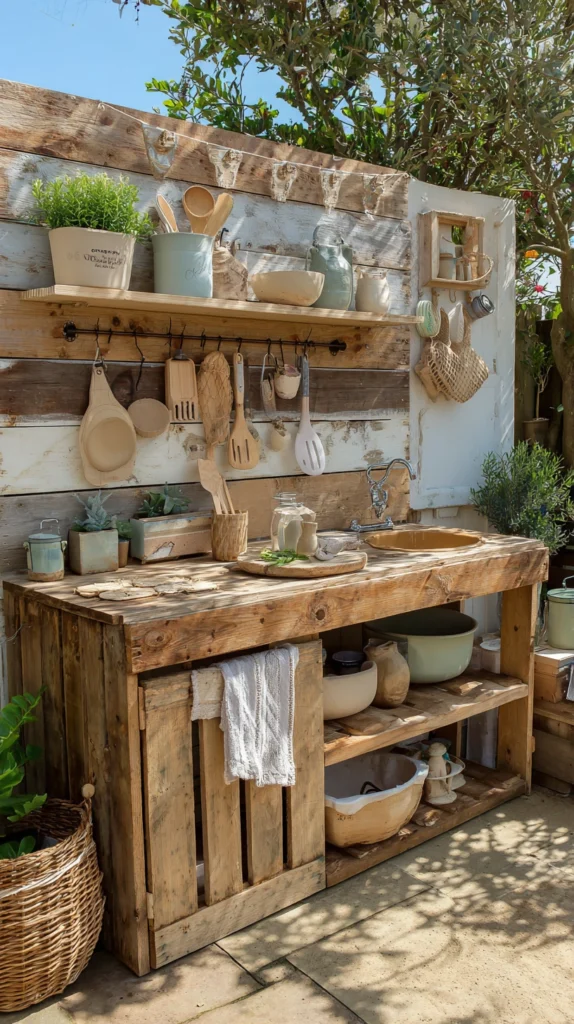
Build custom mud kitchens using reclaimed pallet wood creating rustic, attractive structures at minimal cost, while the DIY construction allows customization, matching specific space constraints and design preferences. Disassemble pallets carefully, removing nails, design structures appropriate for the available space and children’s heights, and assemble using weather-resistant screws, creating durable constructions.
Sand rough edges, preventing splinters while maintaining rustic character. The pallet construction creates attractive rustic aesthetics while the free or low-cost materials make elaborate designs financially accessible. Seal wood with child-safe finishes protecting against weather, while the natural wood appearance suits outdoor garden settings beautifully.
3. Sink and Faucet Integration
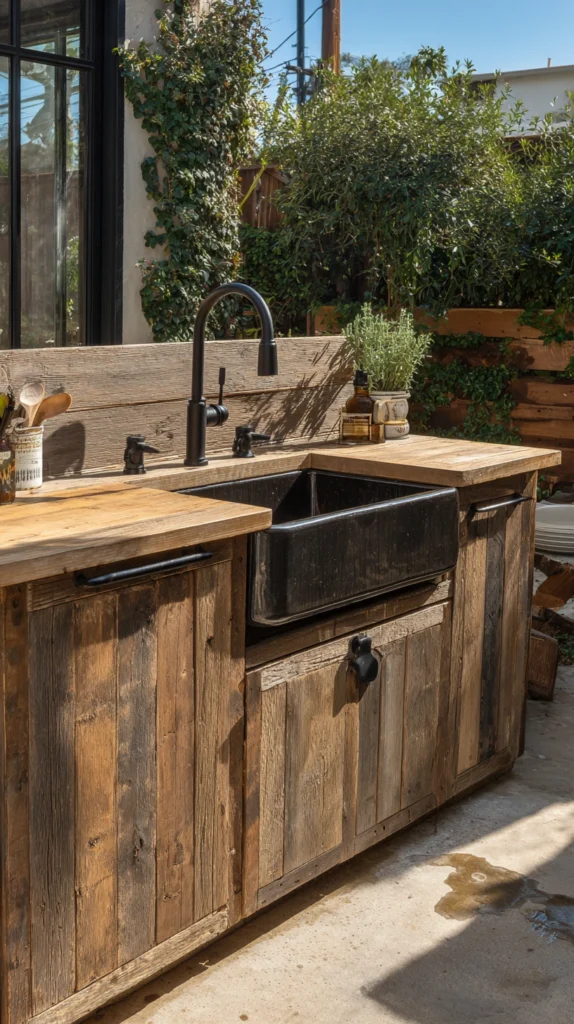
Include functional or play sinks with working or pretend faucets, creating a realistic kitchen simulation while the water access provides essential mud kitchen ingredients, enabling genuine messy play.
Install old salvaged sinks into custom counters, creating authentic fixtures, add non-functional vintage faucets for pretend play, or include working hose connections providing actual water access. The sink inclusion creates realistic play while containing water mess somewhat better than open buckets.
Drill drainage holes to prevent standing water that attracts mosquitoes, while the drainage keeps play areas from becoming swampy. Position near outdoor spigots simplifies water access for refilling play containers.
4. Multi-Level Height Variation
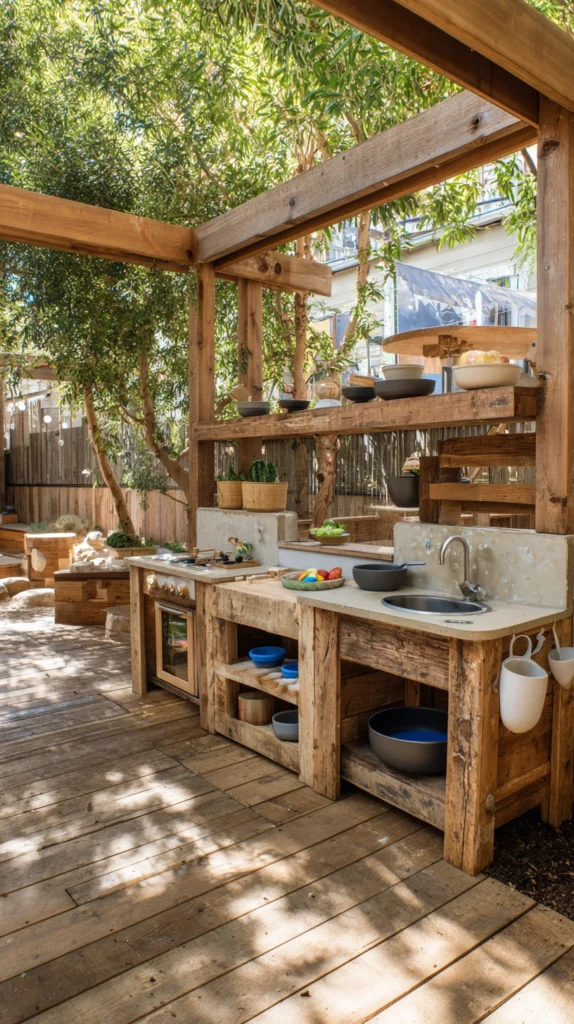
Design mud kitchens with varied counter heights accommodating different ages simultaneously, allowing siblings to play together while the multiple work surfaces prevent crowding and territorial disputes.
Create lower sections for toddlers approximately 18-20 inches high, standard heights around 24-28 inches for preschoolers, and taller sections reaching 30-36 inches for older elementary children.
The varied heights extend the usable age range, allowing mud kitchens to serve growing children for many years. The multiple levels create architectural interest while the varied surfaces accommodate different play scenarios happening simultaneously without interference.
5. Storage Cubby Organization
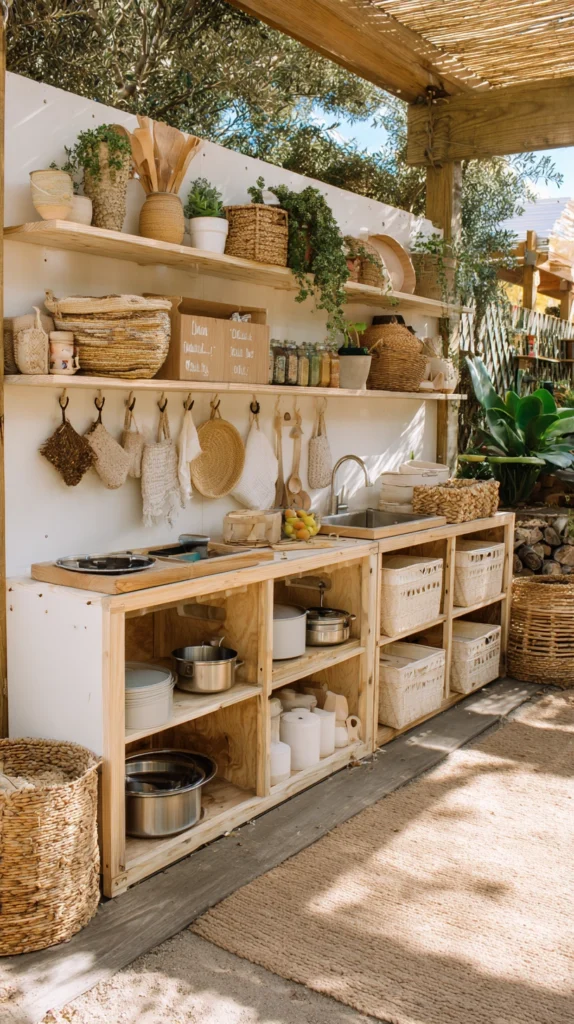
Incorporate dedicated storage, including open cubbies, hooks, and shelving, organizing cookware, utensils, and natural play materials, creating tidy, accessible organization that encourages independent cleanup and sustained engagement.
Design shelving holding pots, pans, bowls, and utensils, keeping everything accessible, add hooks for hanging items like aprons or dish towels, and include bins for natural materials like pinecones, shells, or interesting stones.
The organized storage maintains tidier play areas while the visible organization helps children find desired items without adult assistance. Label storage areas with pictures, helping pre-readers maintain organization, independently develop responsibility, and self-sufficiency.
6. Chalkboard Menu and Recipe Surface
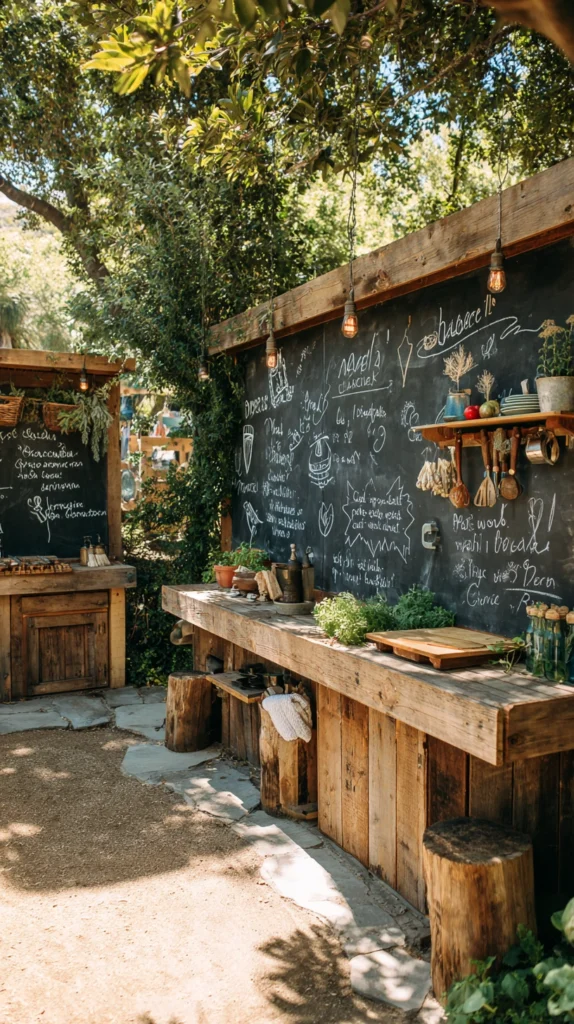
Add chalkboard paint to cabinet doors, backsplash areas, or dedicated panels, allowing children to write menus, draw recipes, or create signs, enhancing imaginative play and incorporating literacy into outdoor activities.
Paint sections with chalkboard finish, creating writing surfaces, provide outdoor chalk stored in weatherproof containers, and encourage menu creation and recipe documentation, extending play beyond pure mud mixing.
The literacy component adds educational value while the creative expression through menu writing or decorative drawings extends engagement. The erasable surface allows continuous reinvention, maintaining fresh interest.
7. Natural Material Ingredient Station
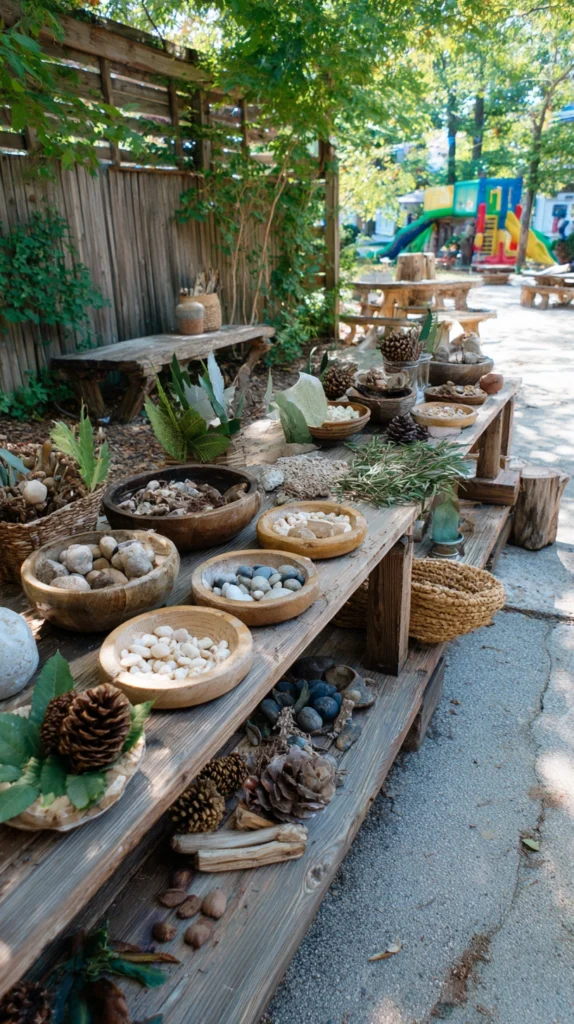
Establish dedicated areas organizing natural play ingredients including sand, soil, leaves, flower petals, grass clippings, and interesting found objects, creating well-stocked mud kitchens that inspire creative concoctions. Provide bins or containers holding different materials labeled or color-coded for organization, include scoops and tools for transferring ingredients, and replenish regularly, maintaining adequate supplies.
Encourage children to gather their own natural ingredients, teaching plant identification and seasonal awareness. The varied materials inspire creativity while the natural focus creates a nature connection and sensory exploration. Include herb garden sections where children can harvest rosemary, mint, or other aromatic plants, adding fragrant elements to mud creations.
8. Overhead Shade Protection
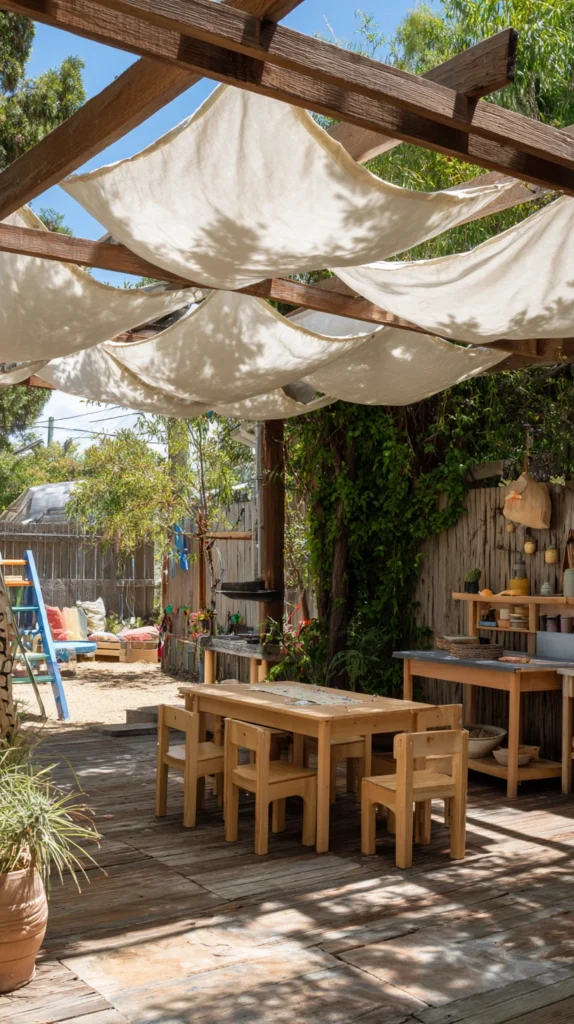
Install shade structures, including pergolas, shade sails, or simple canopies, protecting mud kitchen areas from direct sun, allowing comfortable extended play during hot weather, while protecting from light rain, extending usable seasons. Build permanent pergolas creating attractive architectural features, install retractable shade sails offering flexible coverage, or use simple tarps or canopies providing basic weather protection.
The shade extends comfortable play duration, preventing overheating while the covered space remains usable during light rain, encouraging outdoor play regardless of minor weather variations. The structure creates a defined outdoor room feeling while the overhead coverage makes spaces feel more enclosed and special.
9. Pretend Appliance Details
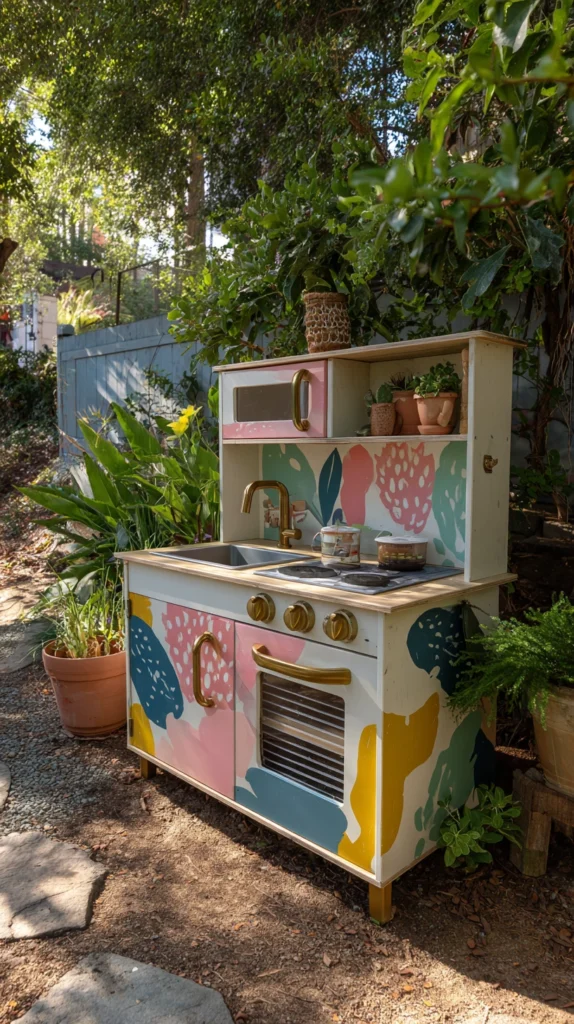
Add play appliances, including drawn or mounted burner circles, oven doors, refrigerator sections, or other kitchen elements, creating a realistic simulation that enhances imaginative role-play and kitchen reenactment. Paint burner circles on work surfaces using outdoor paint, mount old oven doors creating pretend baking areas, or add small cabinets functioning as refrigerators or storage.
The realistic details inspire more elaborate pretend play, while the familiar kitchen elements allow children to reenact observed cooking experiences. Include knobs and handles that turn or open, creating interactive elements that engage children in manipulative play, developing fine motor skills.
10. Community Gathering Design
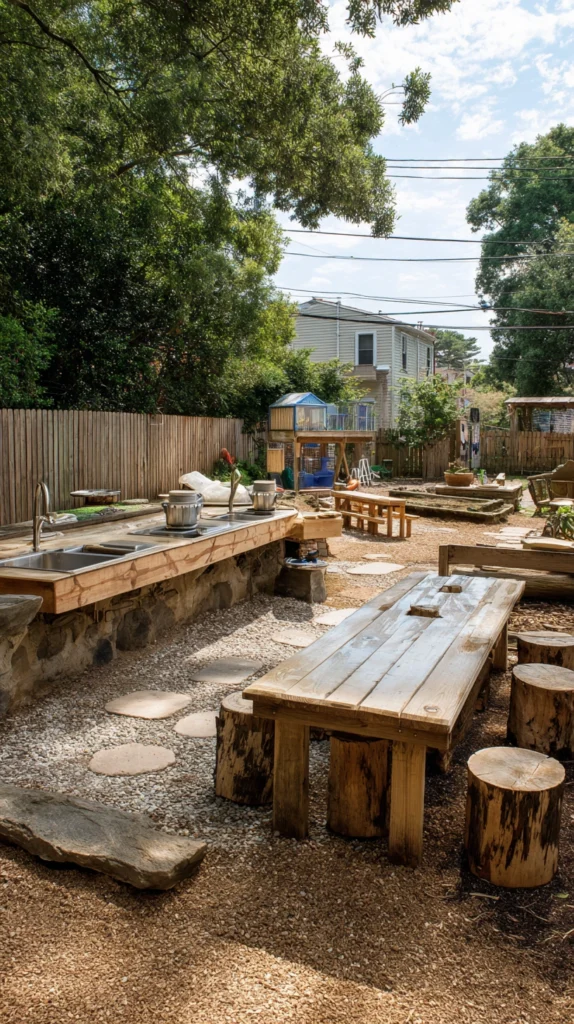
Create larger collaborative mud kitchens designed for multiple children, encouraging social play, cooperation, and shared imaginative scenarios rather than solitary individual play. Design with multiple work stations allowing several children to work simultaneously, including serving windows or counters where children serve their creations to others, and provide adequate space, preventing overcrowding and conflicts.
The social design encourages cooperative play and negotiation skills, while the shared space creates a community feeling. The larger scale suits families with multiple children, shared yards, or community gardens where mud kitchens serve neighborhood play groups.
11. Seasonal Decoration Flexibility
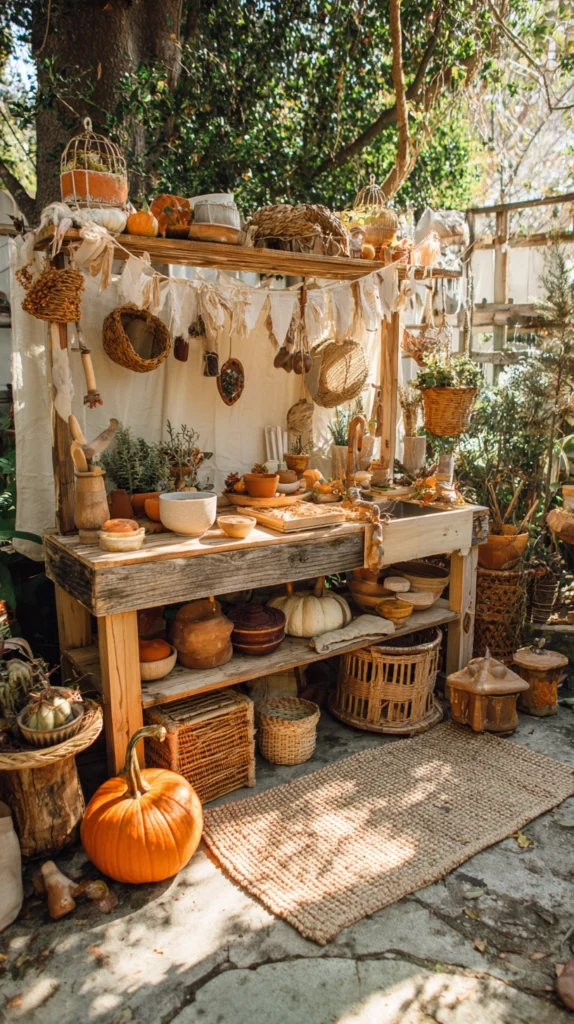
Design mud kitchens allowing seasonal decoration, including hooks for hanging seasonal elements, surfaces for displaying found nature treasures, or frameworks supporting seasonal themes, creating dynamic spaces that evolve throughout the year.
Add hooks or display areas where children can hang seasonal decorations they create or find, encourage seasonal ingredient gathering reflecting current outdoor availability, and embrace the changing natural materials throughout seasons.
The seasonal evolution maintains fresh interest while the nature connection teaches seasonal awareness and ecological observation. Spring flowers give way to summer herbs, fall leaves, and winter evergreens, creating continuous engagement through changing natural palettes.
12. Water Table Integration
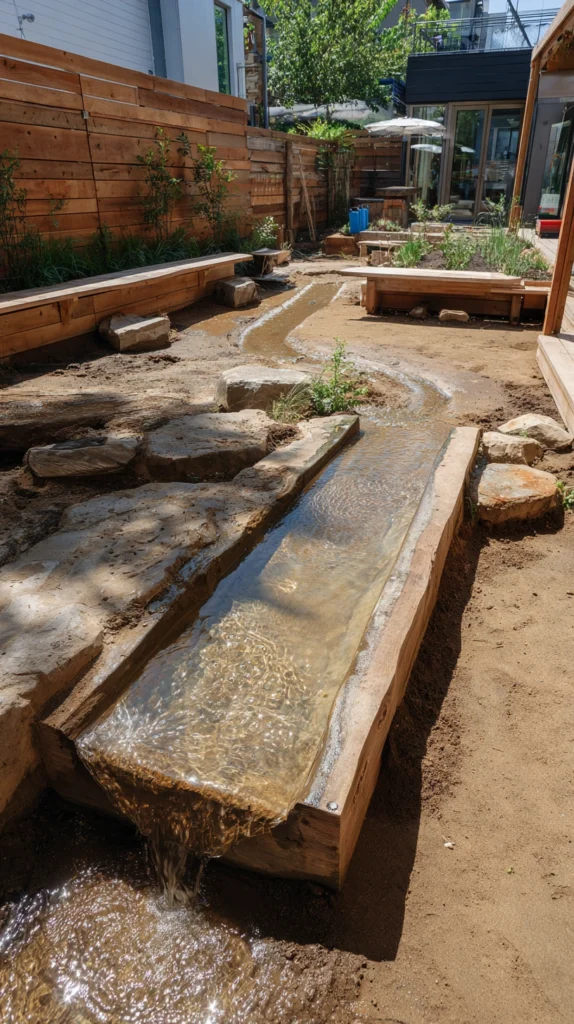
Combine mud kitchen with water table elements, creating dual-purpose play spaces where clean water play and muddy mixing coexist, offering varied play opportunities within unified structures. Include separate clean water sections for rinsing or pure water play distinct from muddy areas, provide containers allowing water transfer between sections, and design drainage to prevent areas from becoming waterlogged.
The water access enables genuine mud creation, while the separate clean water areas allow varied play without everything becoming uniformly muddy. The water play provides sensory experience and scientific exploration through pouring, measuring, and observing water properties.
13. Recycled Material Construction
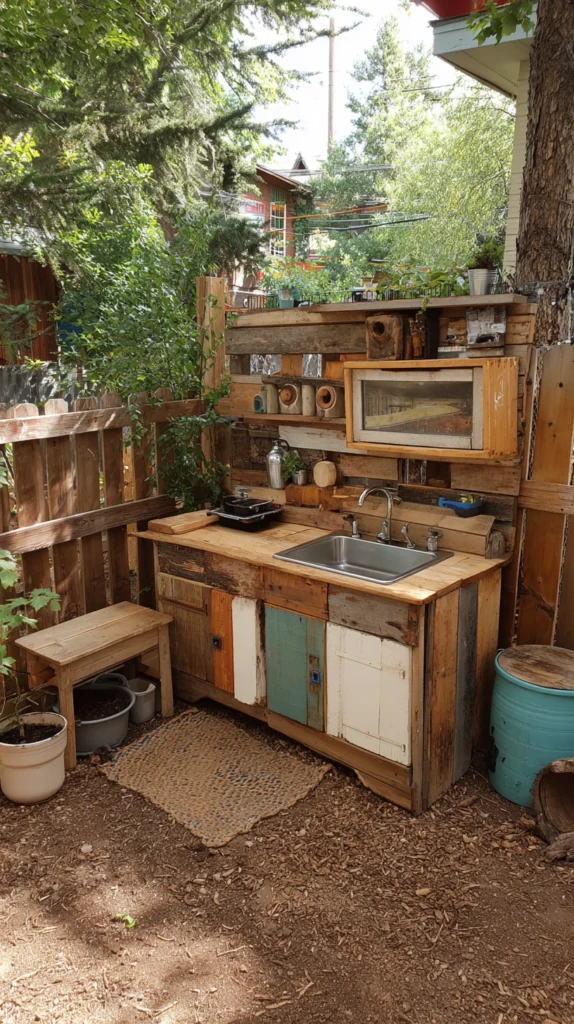
Build entirely from recycled and found materials, including old doors, window frames, salvaged cabinets, or architectural remnants, creating unique characterful mud kitchens while teaching sustainability and creative reuse.
Source materials from salvage yards, renovation projects, or curbside finds, assembling eclectic personalized structures, embracing the varied materials’ mismatched character as rustic charm, and involving children in sourcing and design decisions, teaching resourcefulness.
The recycled construction minimizes environmental impact and cost, while the unique assembled character creates one-of-a-kind structures impossible to replicate. The scavenging and building process provides educational opportunities beyond the finished play value.
14. Portable Modular Design
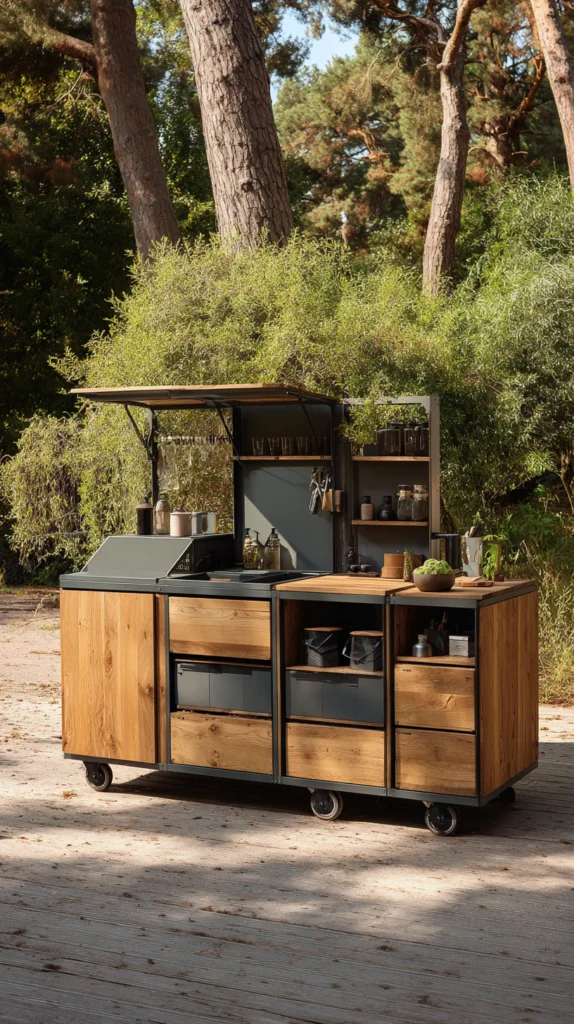
Create moveable mud kitchens using lightweight materials or wheels, allowing repositioning following shade, accommodating changing yard uses, or storing during off-seasons, protecting investments, and maintaining flexibility.
Build with lightweight materials or add casters allowing easy movement, design compact footprints fitting through gates or doors if indoor winter storage is desired, and create modular sections that separate for storage or reconfigure for different play scenarios.
The portability allows optimal positioning throughout seasons following shade or sun as desired, while the storage capability protects from harsh winter weather in cold climates. The flexibility accommodates changing yard uses when mud kitchen areas are needed for other purposes.
15. Living Roof Garden Addition
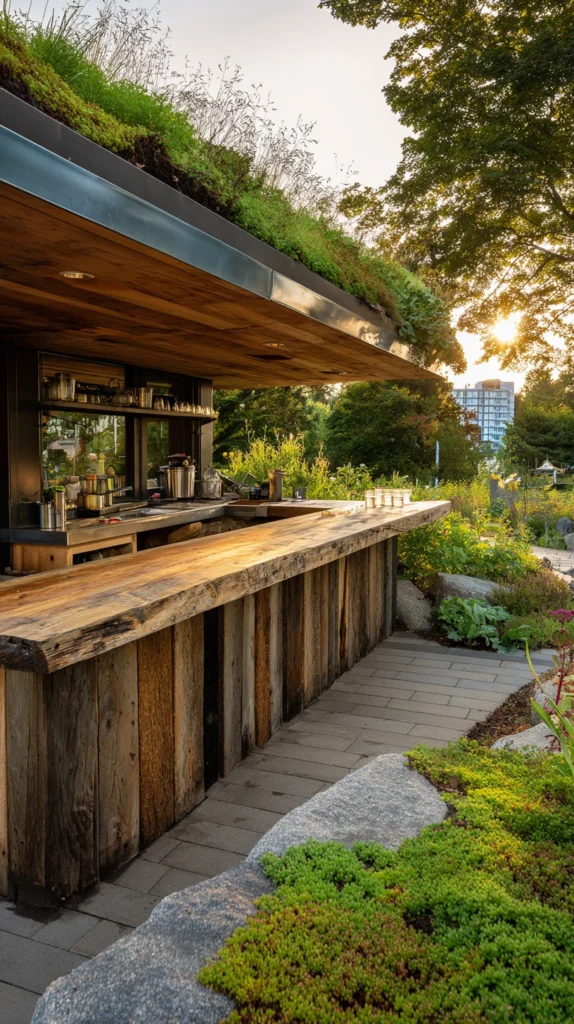
Top mud kitchens with living roofs planted with sedums, herbs, or other shallow-rooted plants create ecological benefits, additional sensory interest, and the opportunity for children to harvest roof-grown ingredients for their mud creations. Build sturdy structures supporting the additional weight of soil and plants, install proper waterproofing protecting wooden structures beneath, and plant with drought-tolerant species requiring minimal maintenance.
The living roof creates an ecological habitat while providing harvestable materials and demonstrating green building concepts. The visual interest of planted roofs makes mud kitchens attractive landscape features rather than purely utilitarian play structures. Include child-safe plants, avoiding toxic varieties that might be tasted during play.
Successfully creating mud kitchens requires positioning where mess remains acceptable, understanding that muddy play inevitably spreads beyond immediate kitchen boundaries, requiring tolerance for surrounding disorder, using weather-resistant materials, accepting that outdoor furniture weathers and deteriorates, requiring eventual replacement.
And establishing clear boundaries about muddy hand-washing and staying outdoors until cleaned, preventing indoor mess transfer. Provide nearby hose access or outdoor washing stations, simplifying cleanup before indoor entry.
Set reasonable expectations about mess accepting that mud kitchen play is inherently dirty, requiring laundry tolerance, and understanding that developmental benefits justify the additional cleaning.
Establish rules about what constitutes acceptable ingredients, preventing the incorporation of pet waste, trash, or genuinely unsafe materials. Supervise appropriately, particularly with younger children, while allowing the independence and risk-taking that makes outdoor play developmentally valuable.
Most importantly, recognize that mud kitchens represent investments in childhood development, outdoor play, nature connection, and imaginative creativity that increasingly structured indoor-focused childhoods often lack, proving that the mess, construction effort, and ongoing maintenance create worthwhile returns through hours of engaged play, developmental benefits, and the kind of childhood memories that last lifetimes making mud kitchens among the most valuable additions to family yards despite or perhaps because of their gloriously messy nature.