15 Succulent Rock Garden Ideas
A succulent rock garden is one of the most rewarding and visually compelling garden forms available to the modern gardener — a composition that combines the sculptural drama of stone with the extraordinary architectural diversity of succulent plants to create something that reads simultaneously as natural landscape and deliberate design.
Unlike most garden styles that demand constant maintenance, regular watering, and seasonal replanting, the succulent rock garden improves with age, requires minimal intervention once established, and looks genuinely beautiful every month of the year.
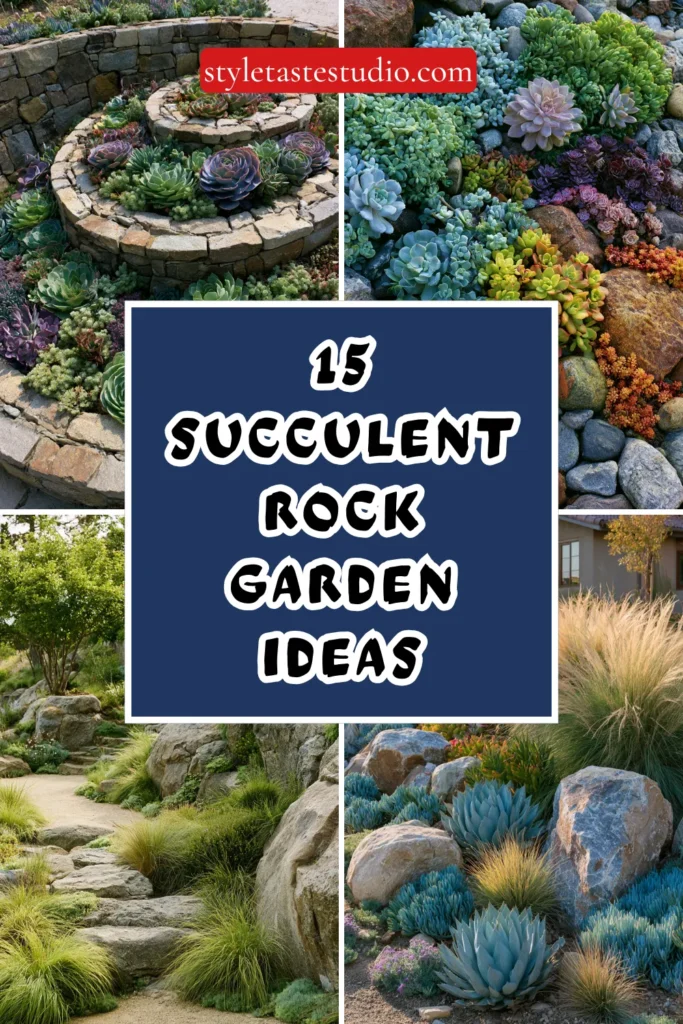
The combination works because stone and succulent share the same essential character — both are products of harsh, dry environments where survival depends on efficiency, structure, and the kind of stripped-back beauty that comes from having nothing unnecessary.
These fifteen ideas cover the full range of succulent rock garden approaches, from large-scale landscape installations to compact container arrangements, from bold contemporary compositions to naturalistic alpine meadow styles, each one practical, achievable, and designed to perform as well as it looks.
1. The Sloped Hillside Rock Garden
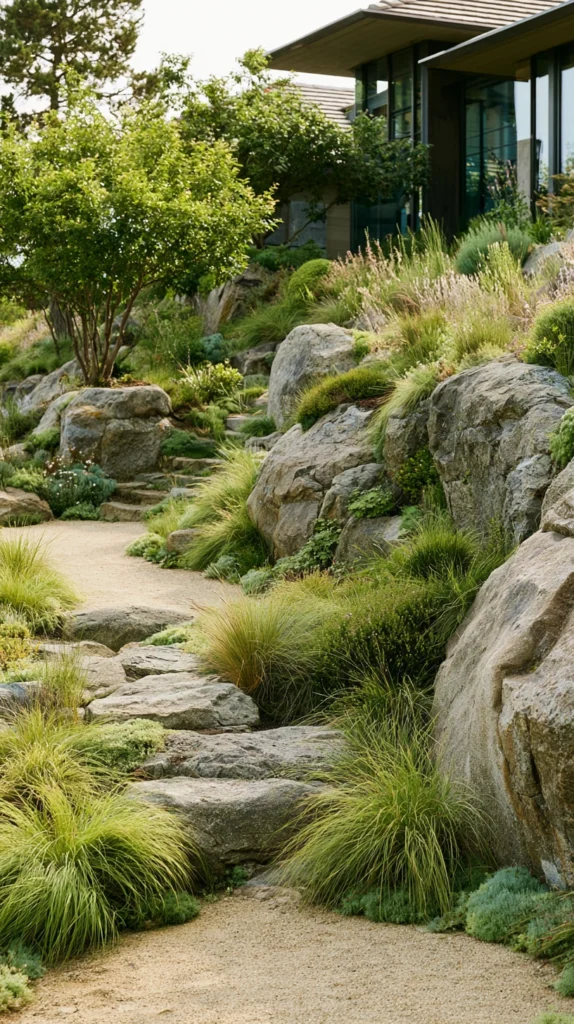
A naturally or artificially sloped garden surface is the ideal foundation for a succulent rock garden — the gradient ensures the sharp drainage that succulents require absolutely, prevents water from pooling around vulnerable root crowns, and creates a naturally tiered planting surface that allows plants at different levels to be seen clearly without obscuring one another.
Place the largest boulders first, burying at least one third of each stone below the soil surface so they read as emerging from the ground rather than sitting on top of it. Plant in generous single-variety drifts between and around the stones, choosing varieties that contrast in form — the flat rosettes of echeveria beside the vertical columns of euphorbia, the spreading mats of sedum beside the bold architectural presence of agave.
2. The Dry River Bed Design
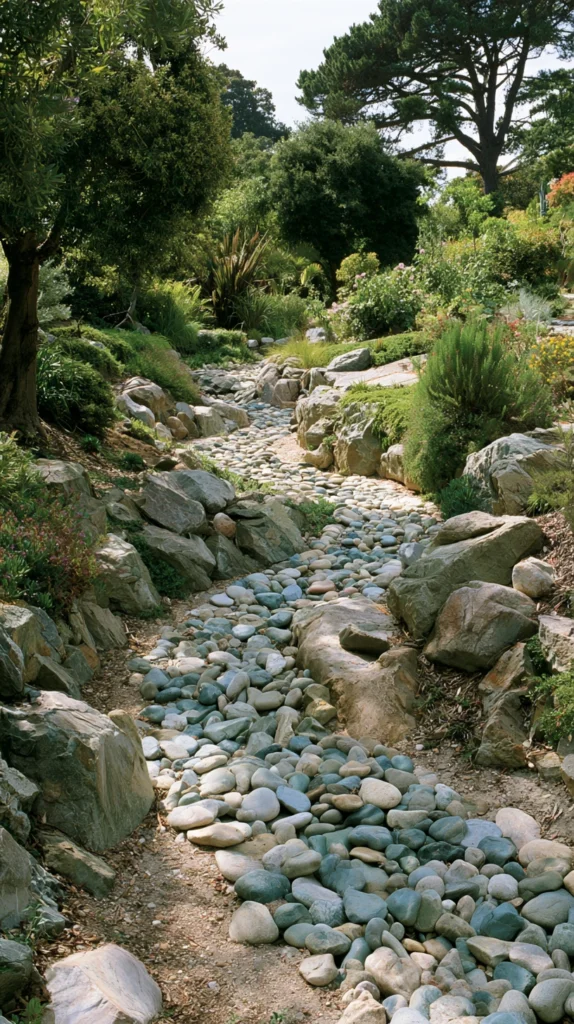
A dry river bed running through a succulent planting — a naturalistic channel of smooth, rounded river pebbles and larger cobblestones suggesting a watercourse that flows only in the imagination — is one of the most effective structural devices available to the succulent rock garden designer.
The pebble river bed provides visual movement through an otherwise static composition, creates a clear directional flow that guides the eye through the planting, and serves the entirely practical function of directing rainwater away from plant crowns during heavy rainfall.
Plant the banks of the river bed in contrasting succulent varieties — low spreading sedums and delosperma on the immediate margins, taller aloes and agaves set back from the edge as the planting deepens away from the channel.
3. The Container Rock Garden
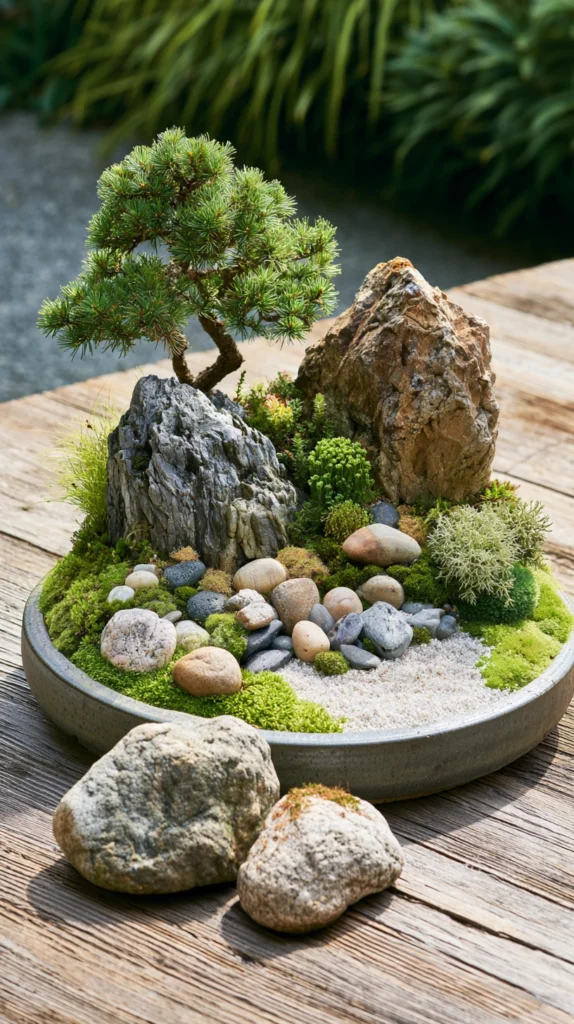
A large container or trough planted as a miniature rock garden — small stones and pebbles arranged around a composition of compact succulents, including sempervivums, small echeverias, haworthias, and dwarf sedums — brings the rock garden aesthetic to terraces, balconies, rooftops, and small courtyard gardens where ground-level planting is not possible.
Use a container with generous drainage holes, fill with a gritty free-draining mix of standard compost and horticultural grit at roughly equal proportions, and place a few small pieces of interesting stone — slate fragments, worn limestone, smooth quartz — within the planting to anchor the composition and create the impression of a genuine rocky landscape in miniature. Top-dress with fine grit or crushed granite for a clean, professional finish.
4. The Colour-Themed Succulent Composition
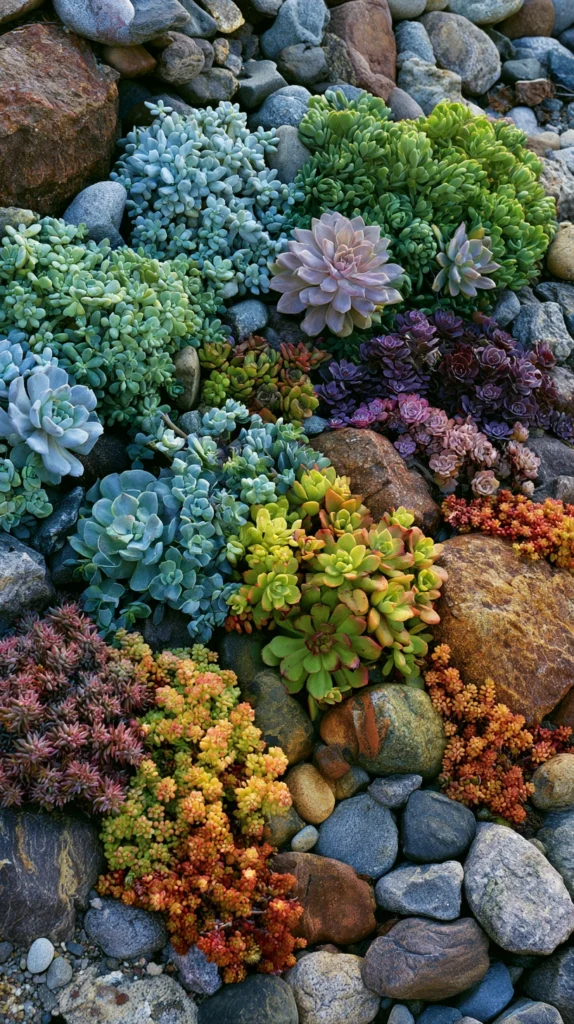
Succulents offer one of the most extraordinary colour ranges of any plant group — blue-grey agaves, deep purple aeoniums, silver-white dudleyas, blush pink echeverias, red-tipped aloes, and the almost luminous green of jade plants — and a rock garden composition built around a deliberate colour theme exploits this palette with exceptional effect.
A cool-toned composition in silver, blue-grey, and soft purple, using Agave parryi, Echeveria ‘Perle von Nürnberg’, blue Senecio mandraliscae, and purple Aeonium arboreum, creates a sophisticated, almost monochromatic arrangement of remarkable elegance and restraint. Warm-toned compositions in terracotta, rust, amber, and deep green work equally well and tend to photograph beautifully against natural stone backgrounds in warm afternoon light.
5. The Vertical Rock Wall Garden
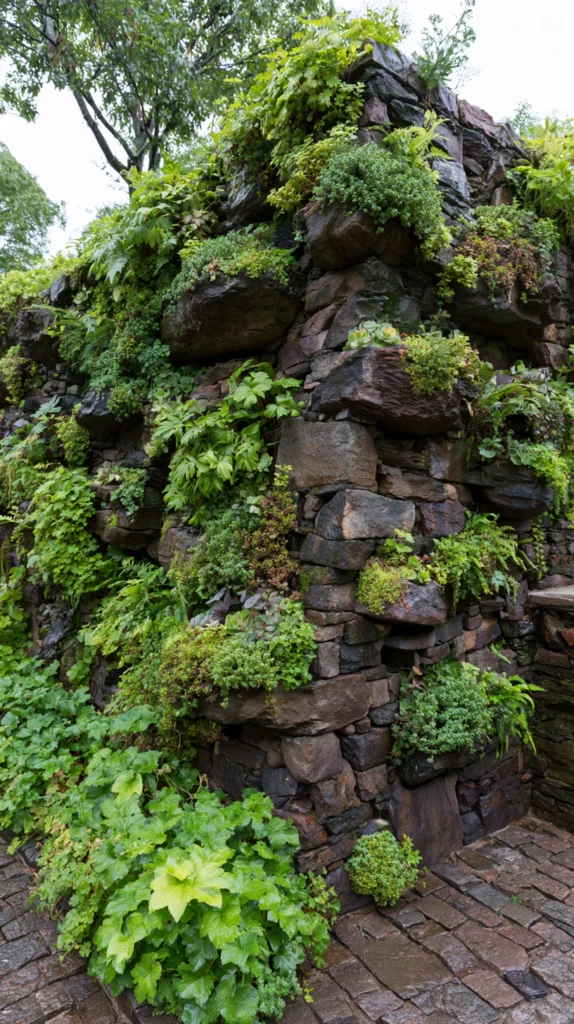
A dry stone retaining wall — built from stacked flat stones without mortar, with planting pockets between the courses — is one of the most beautiful and space-efficient succulent garden structures possible, turning a vertical boundary surface into a living planted tapestry of extraordinary density and variety.
Sempervivums are the classic wall plant, their tight rosettes fitting perfectly into the narrow gaps between stones and spreading gradually to fill available space with minimal intervention. Sedums, small echeverias, and creeping delosperma also perform well in wall crevices, their trailing growth softening the stone face progressively over time. Build the wall with a slight backward lean to direct rainwater into the planting pockets rather than away from them.
6. The Desert Landscape Garden
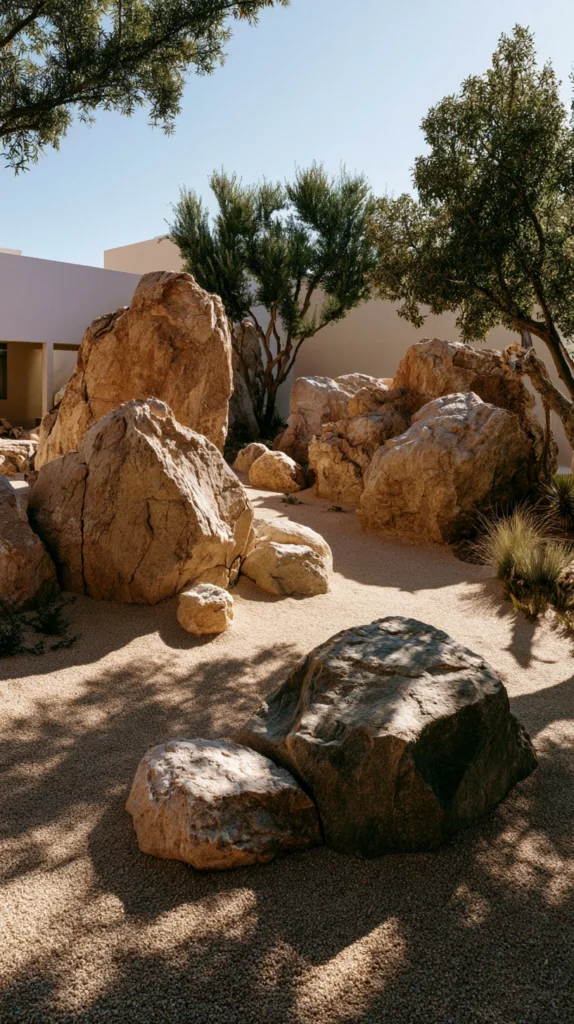
A full desert landscape garden — generous drifts of large agaves, towering columnar cacti, ocotillo, yucca, and nolina set among decomposed granite and boulders of varying sizes — creates a bold, dramatic, unmistakably southwestern aesthetic that reads as genuinely architectural rather than simply planted.
The key to making the desert landscape garden look designed rather than randomly assembled is restraint in variety — using fewer species in larger quantities, spacing plants with the generous breathing room that desert plants occupy in their natural habitat, and resisting the impulse to fill every gap with additional planting. The negative space between plants, covered in clean gravel or decomposed granite, is as important to the composition as the plants themselves.
7. The Alpine Meadow Rock Garden
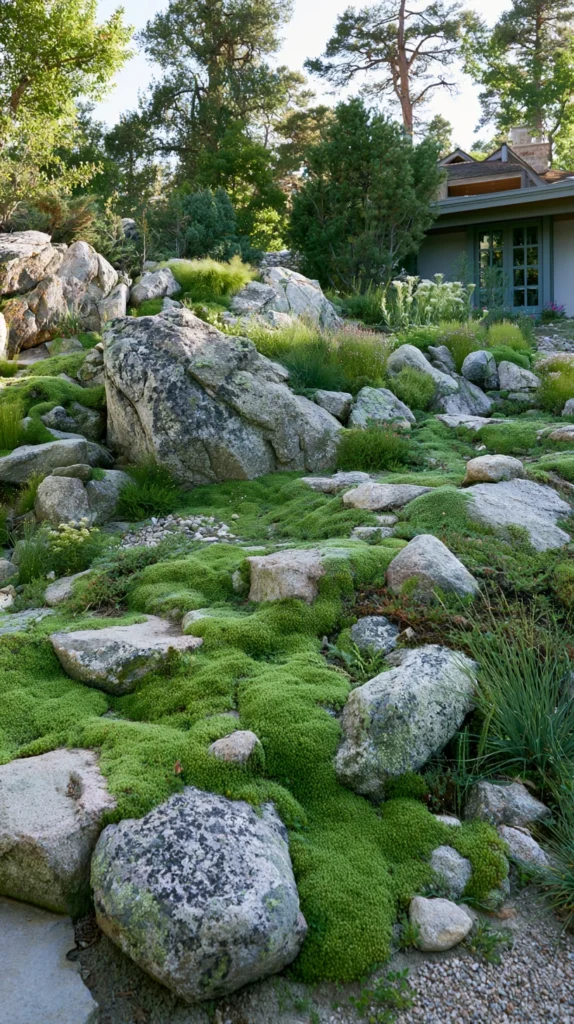
An alpine-inspired rock garden — smaller stones and natural outcroppings of weathered limestone or sandstone, planted with compact alpine succulents including tight sempervivum varieties, dwarf sedums, and small saxifrages alongside non-succulent alpine companions — creates a naturalistic mountain landscape effect of genuine charm and delicacy.
The alpine style favours irregularity over formality, using stones of varying sizes placed at natural angles as though deposited by geological process rather than human arrangement. Plant in small informal groups rather than large drifts, allow plants to seed and spread naturally between stones over time, and the garden develops an increasingly convincing naturalistic quality with each passing year.
8. The Succulent Spiral Garden
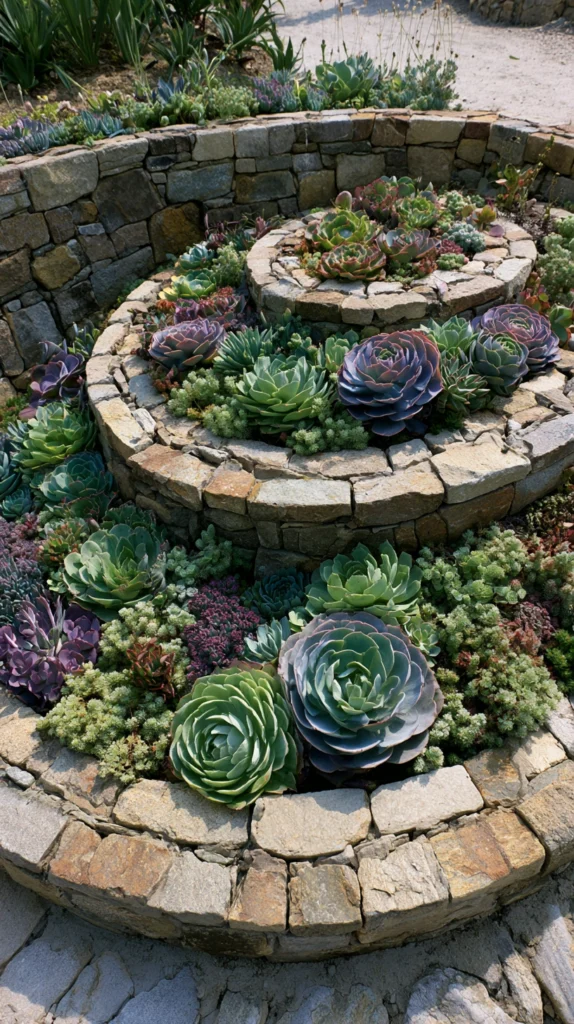
A raised spiral structure — built from stacked stone or reclaimed brick in a gradually ascending coil, filled with gritty free-draining growing medium, and planted with a diverse collection of succulents that increases in drought and sun tolerance from the base to the apex — is a compact, space-efficient, and visually distinctive rock garden form that works particularly well in smaller gardens where a flat planting lacks sufficient visual drama.
The spiral form creates a significant planting area in a small footprint, while the varying aspect and drainage conditions at different points in the spiral allow a wider range of species to be grown successfully than a flat bed of the same size would permit. Top the spiral with the most drought-tolerant specimens — small cacti, tight sempervivums, silver-leaved dudleyas — and graduate to slightly more moisture-tolerant varieties at the base.
9. The Raised Bed Rock Garden
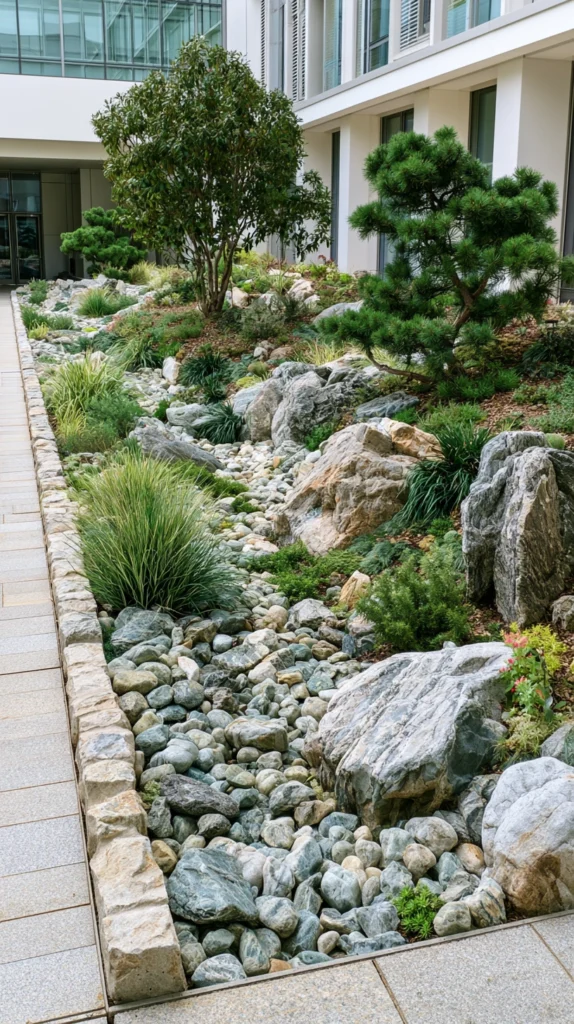
A raised bed constructed from natural stone, Corten steel, or reclaimed timber and filled with a sharply drained, gritty growing medium creates the ideal controlled environment for succulent cultivation in climates where native soil is heavy, poorly drained, or otherwise unsuitable for growing these plants at ground level.
The raised height brings the planting closer to eye level, making the detailed beauty of individual plants — the precise geometry of an echeveria rosette, the intricate patterning of a haworthia, the jewel-like colour of a small sedum — far more visible and appreciable than it would be at ground level. Embed a selection of interesting stones within the bed surface to create the rock garden aesthetic and provide the thermal mass that many succulents appreciate.
10. The Succulent Lawn Alternative
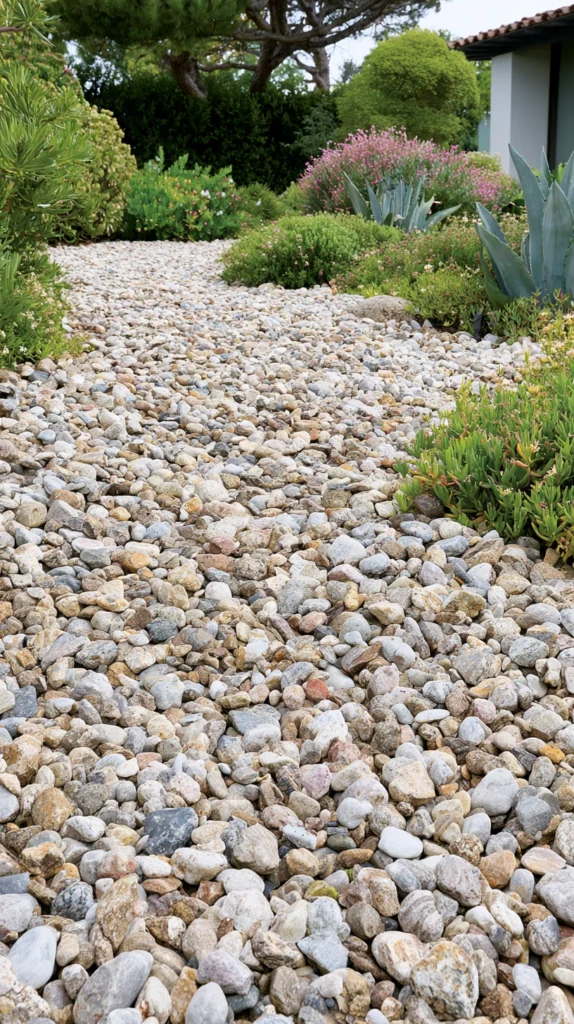
A ground-level succulent planting used as a complete lawn alternative — low spreading sedums, delosperma, and creeping mesembryanthemum covering the entire ground surface in a dense, weed-suppressing, flowering carpet — is one of the most practical and visually rewarding applications of succulent plants in residential garden design.
The planting establishes quickly from plug plants or rooted cuttings, spreads to fill gaps within two growing seasons, requires no mowing, minimal watering once established, and produces a carpet of summer flowers in yellow, pink, orange, and white that no grass lawn can come close to matching for visual interest. Incorporate a few larger stones or boulders through the planting to add vertical interest and anchor the composition structurally.
11. The Night Garden Succulent Arrangement
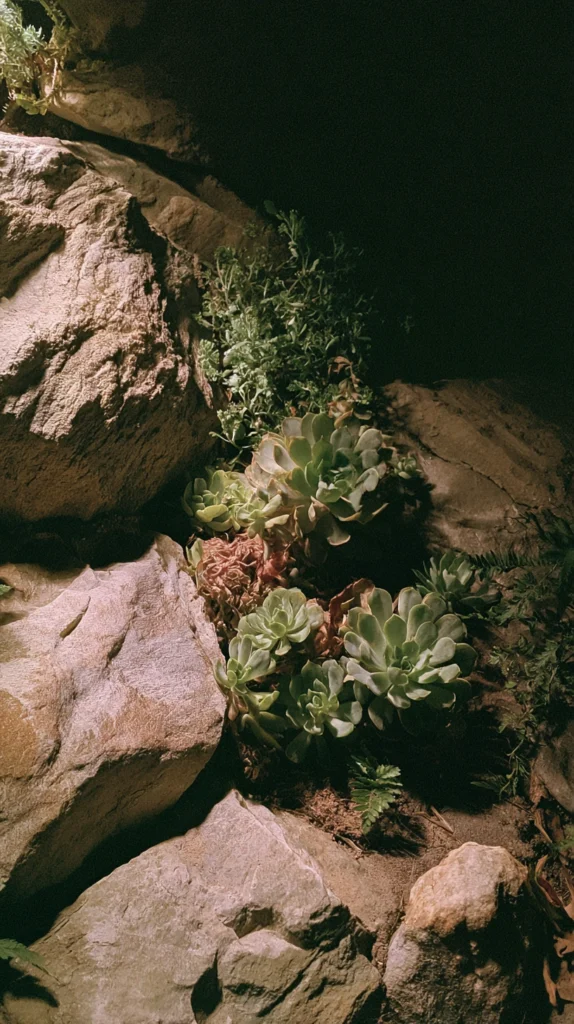
A succulent rock garden designed specifically for evening beauty — using silver, white, and pale blue-grey varieties whose foliage reflects available moonlight and artificial light most effectively — creates a genuinely magical outdoor space that performs as well after dark as it does through the day.
Silver-leaved Dudleya brittonii, the ice-blue Agave parryi, white-edged Agave americana ‘Variegata’, and the luminous silvery Senecio serpens collectively create a planting that appears almost to glow in low evening light. Supplement with warm low-level path lighting or discreet uplighting of the larger boulders and statement plants to make the composition genuinely dramatic as a night garden.
12. The Coastal Rock Garden
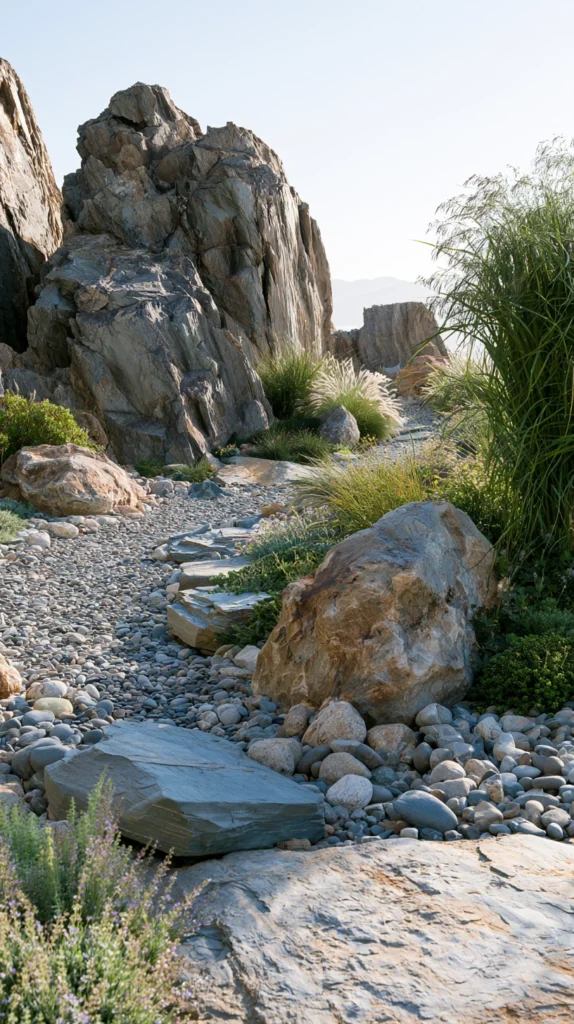
A succulent rock garden designed for coastal exposure — using salt-tolerant, wind-resistant varieties capable of thriving in the challenging conditions of seaside gardens — solves one of gardening’s most persistent problems while creating a genuinely beautiful, site-appropriate planting that reflects the rocky coastal landscape it inhabits.
Agaves, aloes, large-leaved sedums, and the extraordinarily salt-tolerant Carpobrotus edulis and Hottentot fig are among the most reliable coastal succulent performers, their tough, water-storing tissues making them largely indifferent to salt spray and desiccating sea winds. Use large weathered boulders — ideally of local stone that matches or complements the natural coastal geology — to anchor the planting and create a composition that reads as an extension of the rocky shoreline landscape rather than a garden imposed upon it.
13. The Succulent and Ornamental Grass Combination
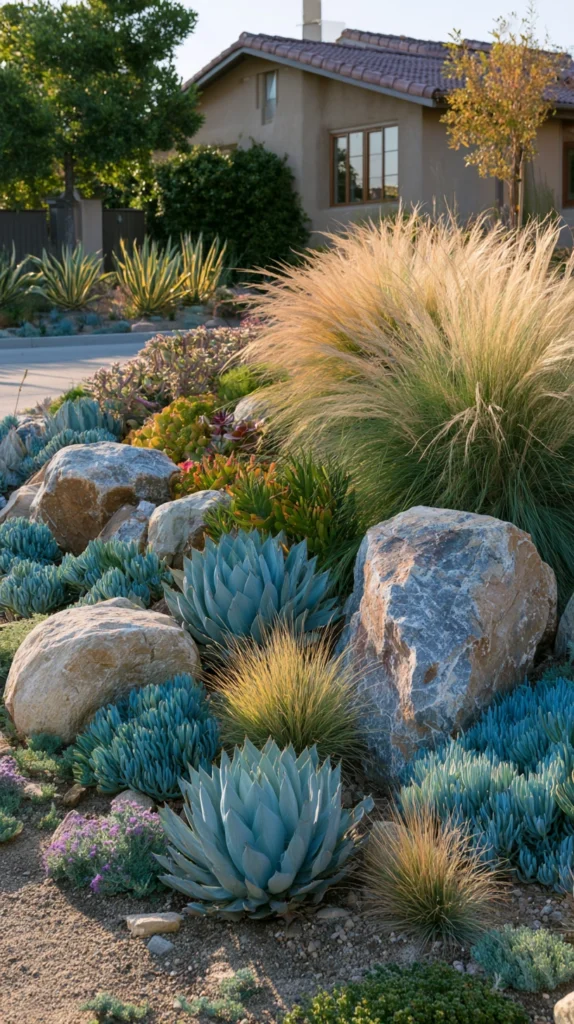
Combining succulents with ornamental grasses — the soft, flowing movement of Stipa tenuissima, Festuca glauca, or Pennisetum alongside the rigid architectural forms of agave, aloe, and large echeveria — creates a planting composition of extraordinary textural contrast and visual dynamism that neither plant group achieves as effectively alone.
The grasses bring movement, lightness, and seasonal change to a planting that might otherwise read as static, while the succulents provide the permanent structural backbone that grasses alone cannot deliver. Place the grasses where prevailing breezes will animate them most effectively, creating a living kinetic contrast to the still, sculptural presence of the surrounding succulents and stone.
14. The Succulent Tapestry Bed
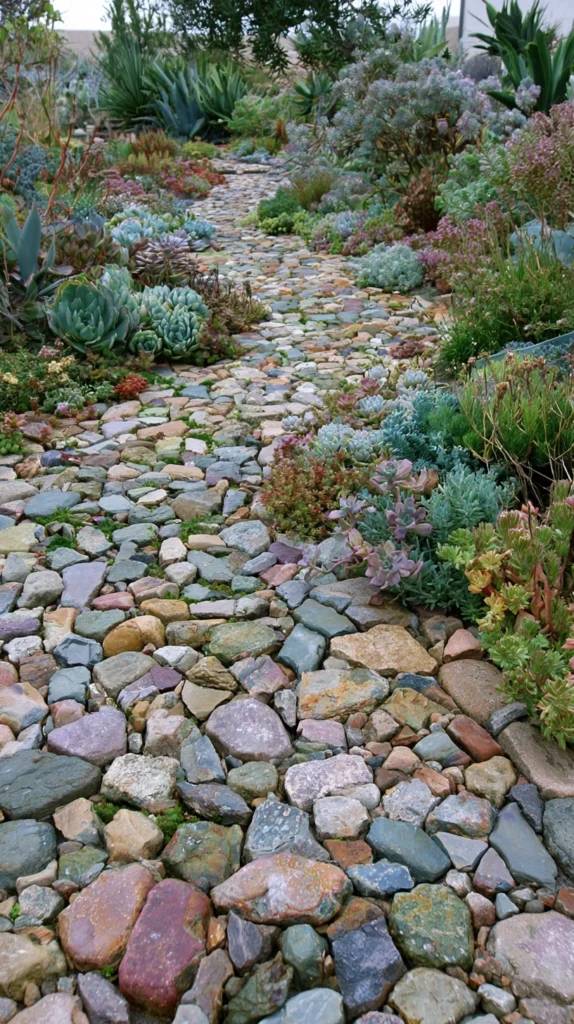
A flat or gently sloping bed planted as a tapestry of contrasting succulent varieties — each one selected for its leaf colour, rosette size, and growth habit, arranged in interlocking drifts that create a dense, weed-excluding, multi-textured ground-level composition — is the succulent rock garden at its most painterly and most detailed.
The tapestry approach works best with varieties of similar vigour so that no single plant dominates or suppresses its neighbours — small and medium echeverias, compact sempervivums, low sedums, and dwarf aloes are all well-matched in growth rate and spread. Embed flat stones at intervals through the tapestry, flush with the planting surface, to create visual anchors and allow access for maintenance without compacting the growing medium.
15. The Entrance and Pathway Rock Garden
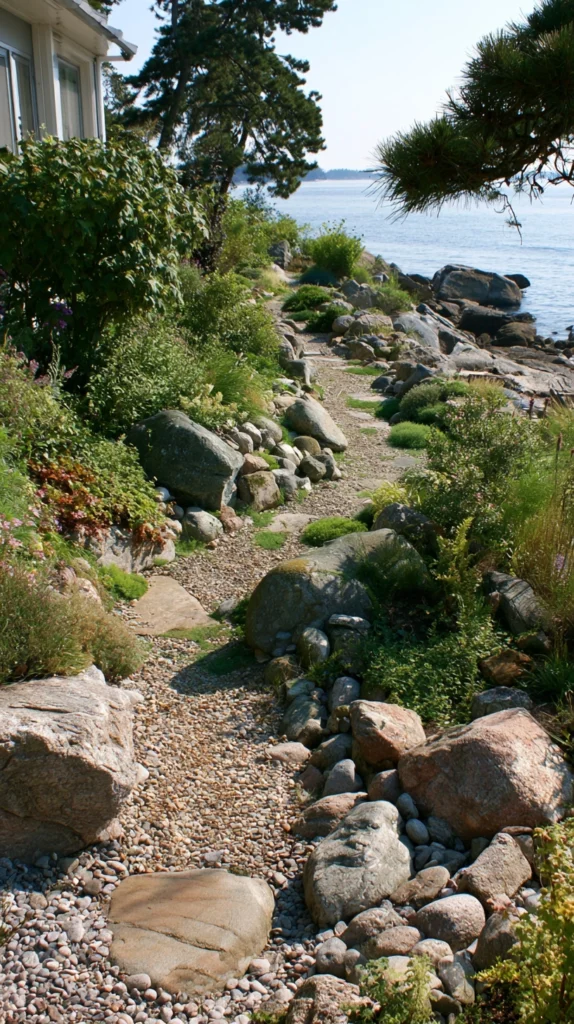
A succulent rock garden flanking a front entrance path or driveway — low spreading plants covering the ground surface between placed boulders and specimen agaves or aloes marking key points along the route — creates an immediate and lasting first impression of considered, distinctive garden design that signals the character of the property before a visitor has reached the front door.
The entrance rock garden works particularly well in warm, dry climates where traditional lawn and border planting struggles through summer drought, replacing high-maintenance grass and seasonal bedding with a permanent, low-water, year-round beautiful planting that improves in quality and visual density with each growing season.
Final Thoughts: Building a Succulent Rock Garden That Lasts
The succulent rock garden that looks genuinely beautiful and performs reliably over years rather than seasons is built on two foundational principles — excellent drainage and honest restraint in plant selection.
Get the drainage right from the outset by incorporating generous quantities of horticultural grit or crushed granite into the growing medium, and the plants will largely take care of themselves. Choose fewer varieties in larger quantities rather than one of everything, and the composition will read as designed rather than collected.
Stone placement deserves as much care and time as plant selection — a well-placed boulder that reads as genuinely embedded in the landscape is worth more to the overall composition than any number of additional plant varieties. Work slowly, stand back regularly, and resist the impulse to fill every gap immediately.
The succulent rock garden, more than almost any other garden form, rewards patience — becoming more beautiful, more naturalistic, and more completely itself with every season that passes.