
15 Climbing Vine Fence Ideas
The climbing vine is the garden fence’s most natural, most transformative, and most completely extraordinary partner — the plant whose specific evolutionary strategy of using an existing vertical structure as the framework for its own upward botanical ambition makes it the most efficient, the most spatially generous, and the most genuinely beautiful fence covering solution available in any garden of any size, any aspect, and any climatic condition. A fence clothed in a genuinely well-chosen climbing vine is not merely a more attractive boundary.
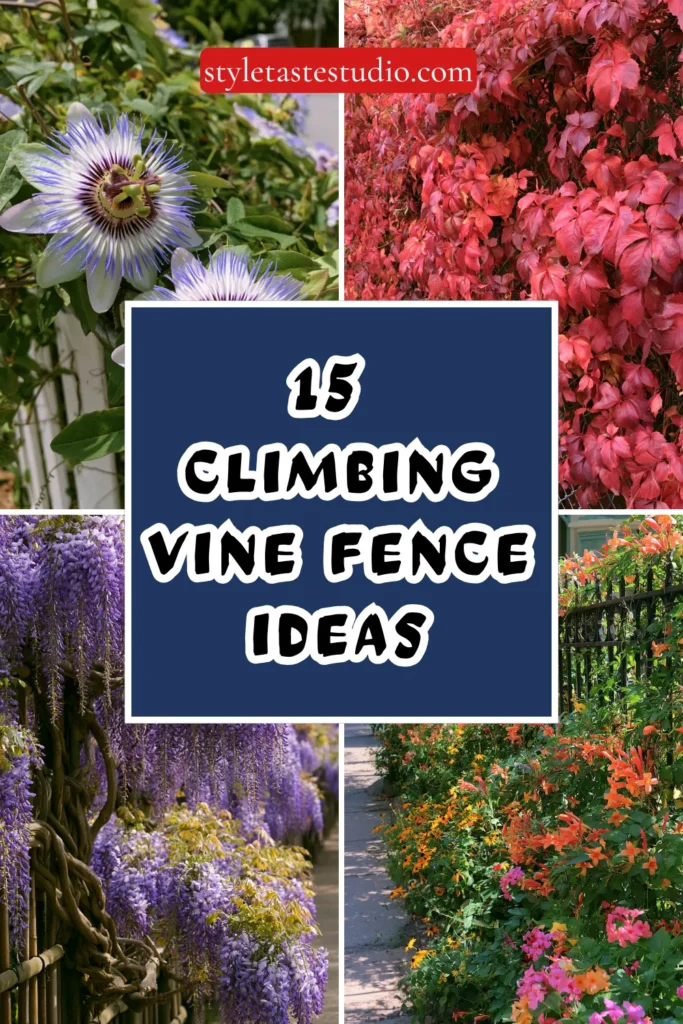
It is a living architectural element of complete botanical authority, a wildlife habitat of genuine ecological value, and a seasonal display of such extraordinary natural beauty that it transforms the garden’s entire character from the moment of its first genuine establishment. Here are 15 climbing vine fence ideas that will make every fence in the garden the most beautiful and the most botanically extraordinary feature of the outdoor space.
1. Wisteria for Cascading Spring Magnificence
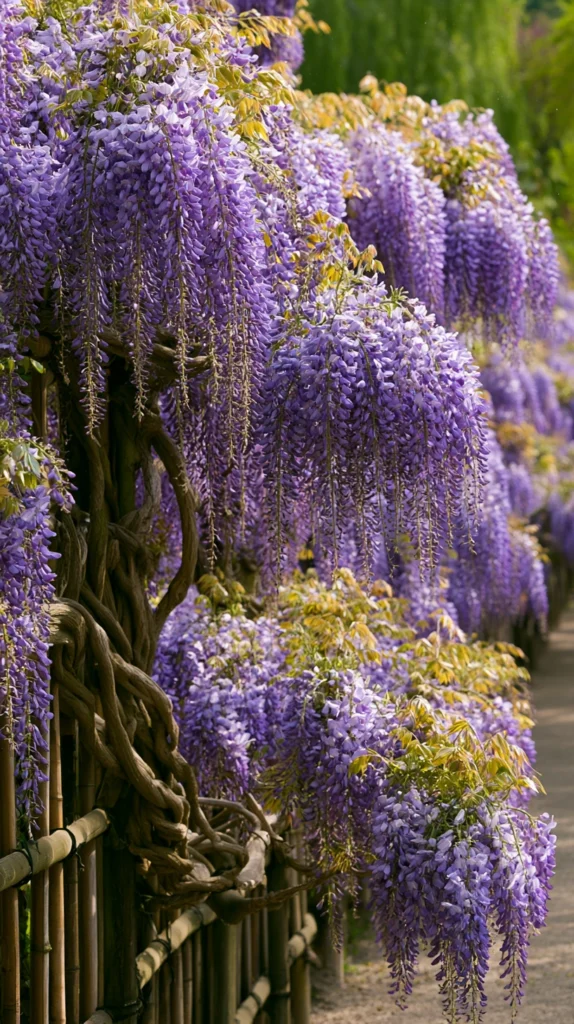
Wisteria is the climbing vine of most completely overwhelming and most genuinely spectacular fence display — its cascading racemes of lilac, violet, or white flowers hanging in pendulous clusters of such extraordinary botanical beauty that the fence they cover during the peak of the spring flowering season becomes, for those two or three weeks of annual performance, the single most spectacular feature of the entire garden and one of the most genuinely extraordinary botanical displays available in any temperate outdoor space.
Train wisteria along horizontal wires fixed to the fence at thirty-centimetre vertical intervals, tying the main structural stems in the direction of growth with complete regularity throughout the establishment years, and prune twice annually.
In midsummer, to reduce the whippy lateral growth to five or six leaves, and in late winter, to reduce the same laterals further to two or three buds, for the specific, productive spur system whose annual shortening concentrates the plant’s considerable energy into flower bud production of maximum spectacular generosity.
2. Clematis for Continuous Multi-Season Color
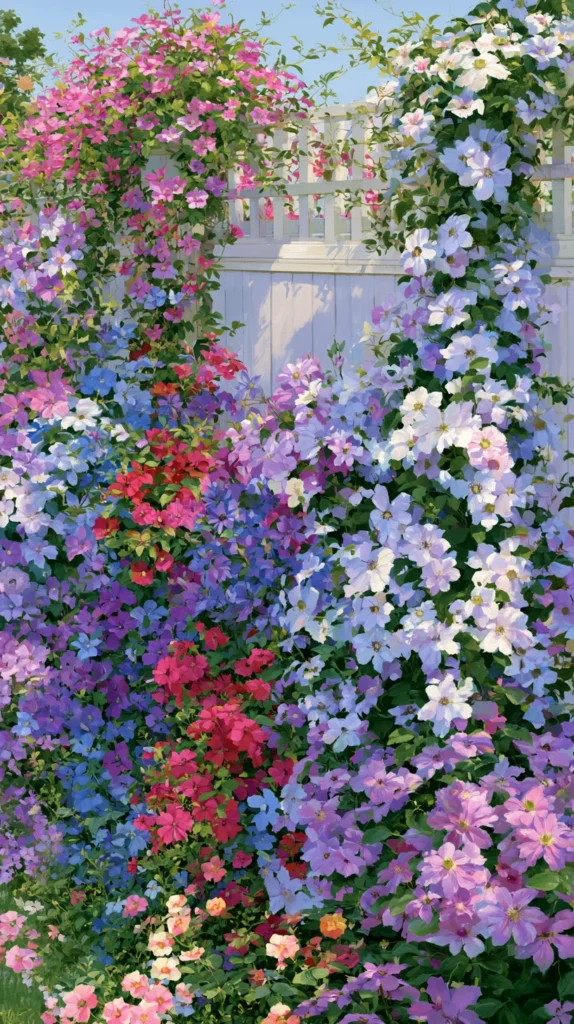
The clematis is the climbing vine of most extraordinary species and variety diversity — a genus of several hundred species whose collective range of flower color, flower form, flowering season, and vigour encompasses every conceivable combination of fence planting requirement from the small-flowered, late-winter-blooming Clematis cirrhosa through the enormous-flowered, early-summer spectacle of the large hybrid clematis to the delicate, nodding, midsummer grace of the viticella group.
Plant a sequence of clematis varieties with overlapping flowering seasons along the fence — the early Nelly Moser or The President, followed by the midsummer Jackmanii or Perle d’Azur, followed by the late-season Prince Charles or Etoile Violette.
For a fence display of continuous, succession-flowering color from late spring through the first frosts of autumn that no other single climbing vine genus can match for the duration and the variety of its sequential seasonal contribution.
3. Climbing Roses for Romantic Fragrant Beauty
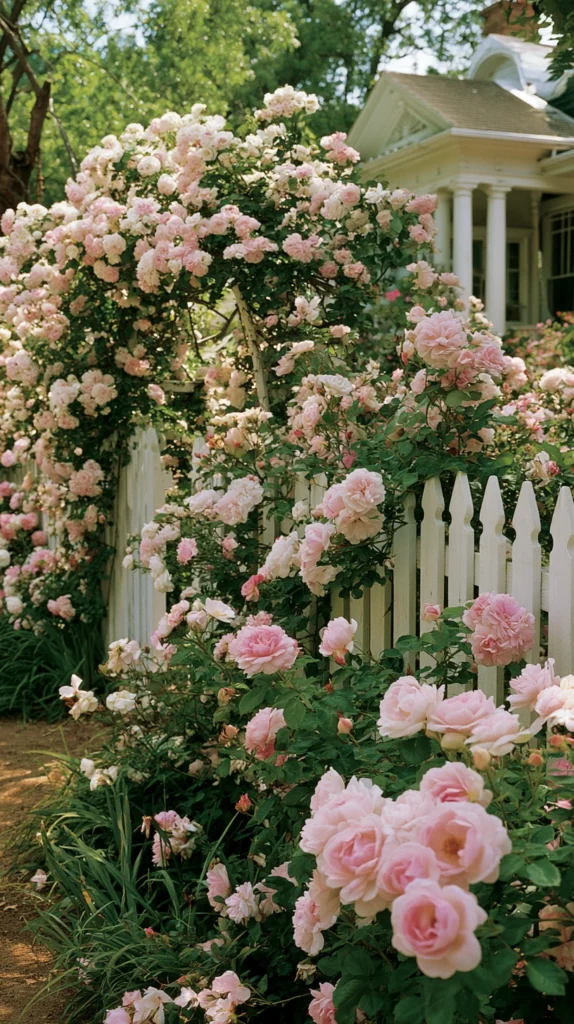
The climbing rose trained along a garden fence is the vine planting idea of most complete romantic beauty and most genuinely historically resonant garden character — a combination of structure and botanical generosity so perfectly suited to each other that the climbing rose-covered fence has been the definitive image of the beautiful garden boundary in the Western horticultural tradition for as long as gardens have been deliberately and lovingly designed.
Choose repeat-flowering climbing varieties of genuine disease resistance and genuine fragrance quality — the David Austin climbers of extraordinary petal complexity and extraordinary perfume, or the classic hybrid climbing teas whose specific, concentrated rose fragrance fills the garden air with a scent of complete, olfactory magnificence.
And train the long, flexible canes horizontally along wires fixed to the fence structure for the maximum lateral growth stimulation that produces the most abundant and the most continuously generous flowering display.
4. Virginia Creeper for Spectacular Autumn Color
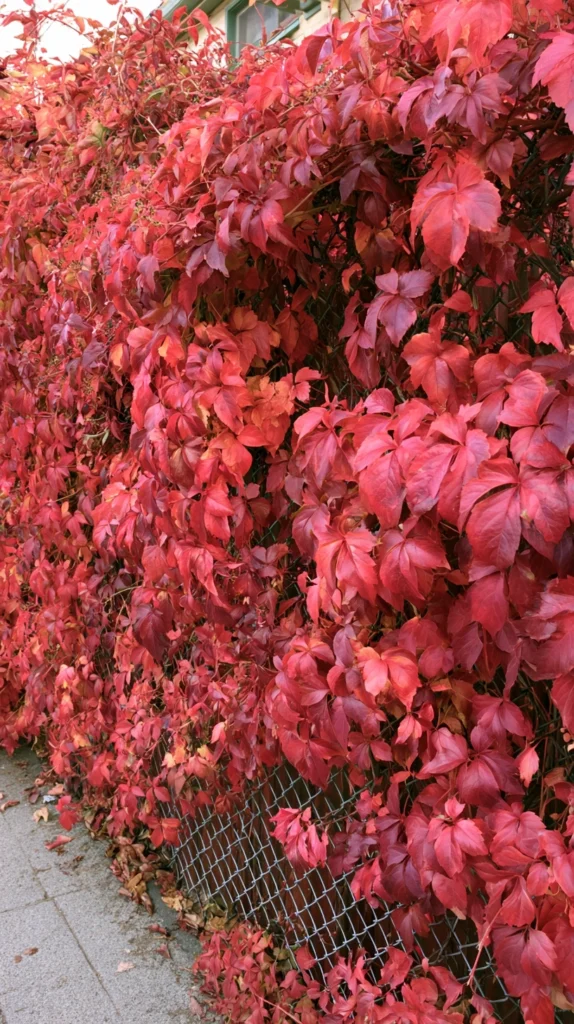
Virginia creeper — Parthenocissus quinquefolia — is the climbing vine of most completely extraordinary and most dramatically transformative autumn color display available for the garden fence, its five-leaflet compound leaves turning from their summer green to the most intense, the most vivid, and the most genuinely spectacular crimson, scarlet, and deep burgundy of any climbing plant in the temperate garden at the first cool nights of the early autumn season.
The self-clinging aerial rootlets of Virginia creeper attach to fence surfaces with remarkable tenacity and remarkable botanical independence — requiring no wire, no tying, and no training support beyond the fence surface itself — and the plant’s vigorous, rapid growth rate covers even a substantial fence run with complete botanical thoroughness in two or three growing seasons of generous establishment, creating a fence covering of such extraordinary summer greenery and such completely magnificent autumn color transformation that it represents the most visually dramatic seasonal fence vine available in any cool temperate garden.
5. Jasmine for Evening Garden Fragrance
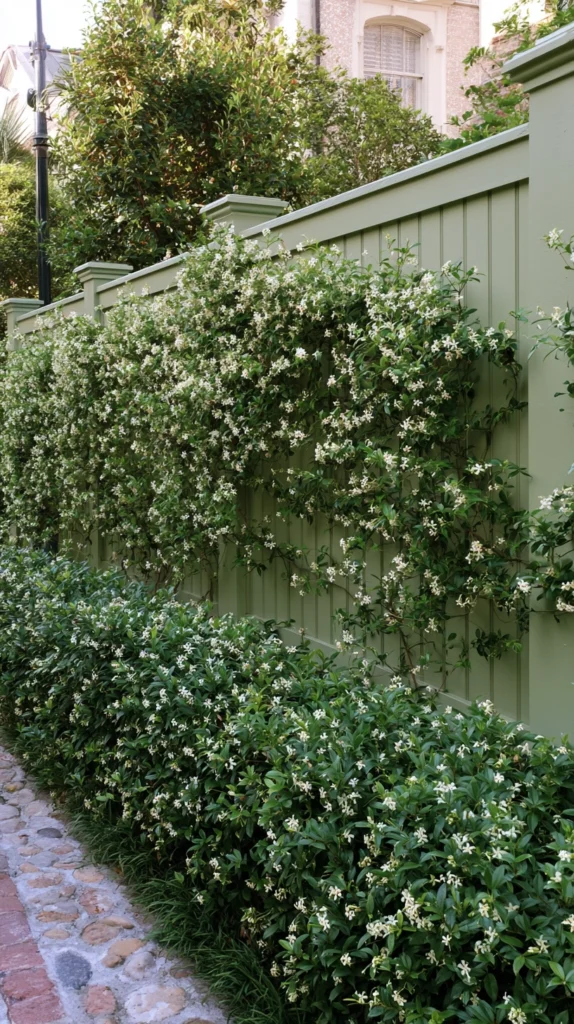
Jasmine — Jasminum officinale and its many garden-worthy relatives — is the climbing fence vine of most extraordinary olfactory contribution and most completely irresistible evening garden atmosphere, its small, white, star-shaped flowers releasing a fragrance of such concentrated, such sweet, and such genuinely magnificent intensity into the warm summer evening air that the fence section covered in jasmine in full flower becomes the garden’s most sought-after destination at precisely the time of day when the outdoor space is most actively, most pleasurably, and most completely inhabited.
Train jasmine along horizontal wires or through a panel of wire mesh fixed to the fence structure, positioning the jasmine-covered section of the fence adjacent to the garden’s outdoor seating or dining area for the maximum atmospheric benefit of the fragrance at the specific, warm, completely extraordinary moment of the summer evening when the air temperature drops sufficiently to concentrate the jasmine’s volatile aromatic compounds into the olfactory experience of most complete, most genuinely overwhelming, and most memorably beautiful summer garden sensory richness.
6. Hydrangea Petiolaris for Shaded Fence Coverage
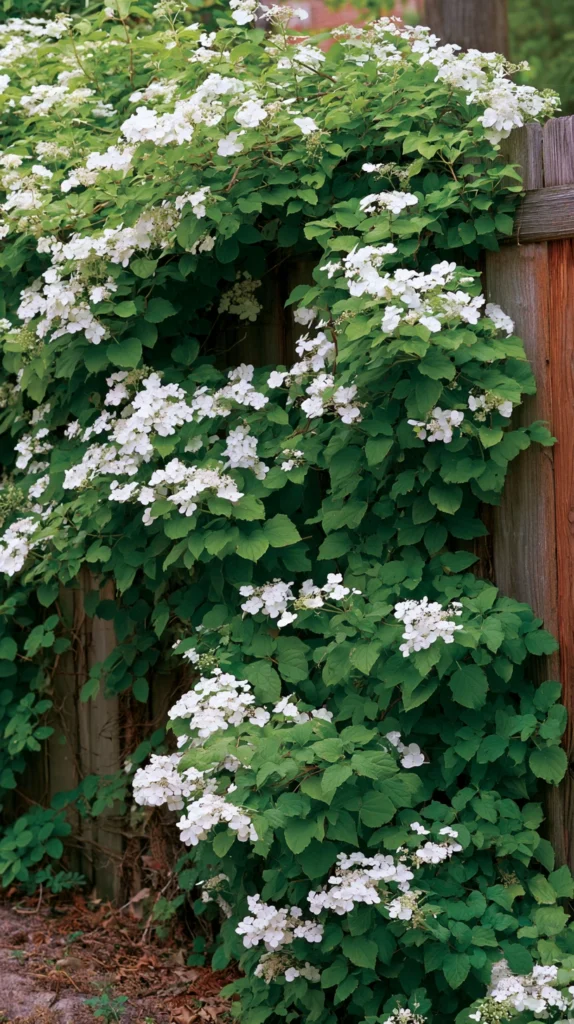
Hydrangea anomala petiolaris — the climbing hydrangea — is the fence vine of most complete and most genuinely valuable horticultural solution for the shaded, north-facing, or heavily tree-canopied fence position that eliminates the majority of flowering climbing vines from practical consideration through the simple, botanical reality of insufficient sunlight for flower bud initiation and development of any genuine decorative quality.
The climbing hydrangea’s self-clinging habit, its remarkable shade tolerance, and its genuinely extraordinary flat-headed, lace-cap style white flower clusters produced in midsummer on the established plant create a shaded fence covering of complete botanical self-sufficiency and genuine decorative beauty.
The plant asks nothing of the gardener beyond the initial planting establishment and rewarding that modest initial investment with decades of increasingly beautiful and increasingly productive annual flowering on an increasingly extensive coverage of whatever shaded fence surface it has been given the freedom and the time to colonise completely.
7. Passionflower for Exotic Tropical Drama
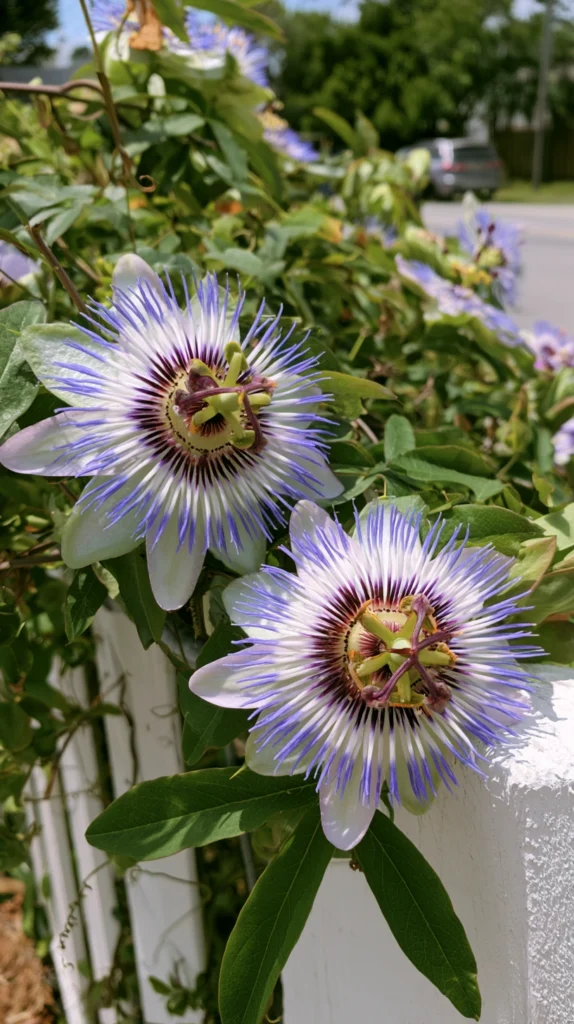
The passionflower — Passiflora caerulea and its many garden-worthy hybrids — is the fence vine of most exotic, most completely unexpected, and most genuinely extraordinary individual flower beauty available in any temperate garden, its extraordinarily complex flower structure of radiate corona filaments, prominent central column, and specific geometric symmetry creating a botanical object of such complete, intricate.
And such genuinely astonishing natural beauty that it stops every garden visitor who encounters it in full flower for the specific, extended, completely absorbed botanical examination that only the most genuinely extraordinary individual flowers in the temperate garden vocabulary reliably and consistently provoke.
The passionflower climbs by tendrils and requires horizontal wires or a wire mesh panel fixed to the fence structure for its most effective and its most complete coverage — providing in return for this modest structural provision a rapidly growing, abundantly flowering, and remarkably cold-hardy fence vine whose exotic tropical appearance belies the genuine temperate resilience of an established root system that survives most UK winters with complete botanical equanimity.
8. Honeysuckle for Wildlife-Friendly Fragrance
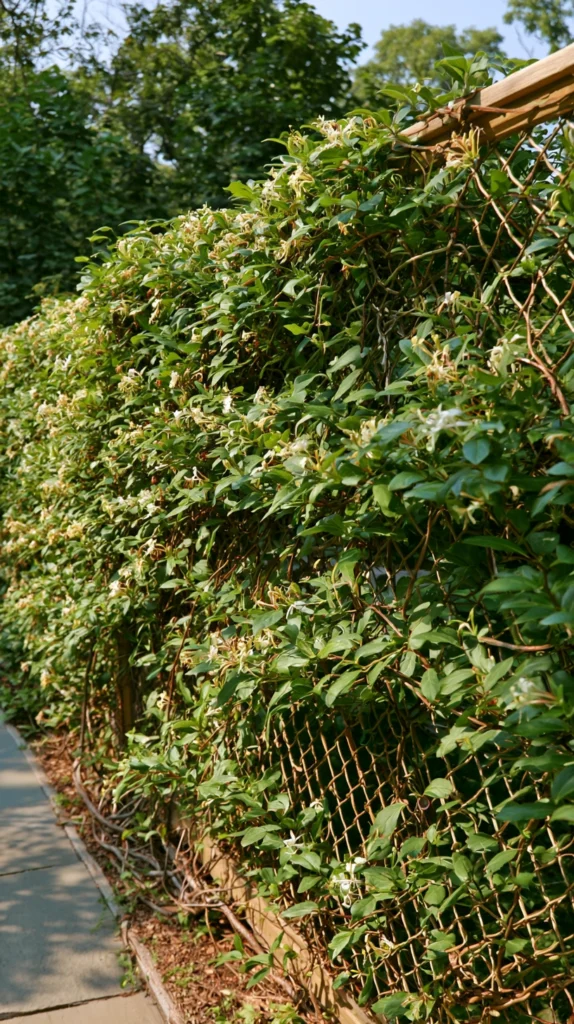
Honeysuckle — Lonicera periclymenum and its many named garden varieties — is the fence vine of most completely perfect ecological generosity and most completely irresistible combined ornamental and wildlife value, its tubular flowers of cream, yellow, and deep pink providing one of the most important nectar sources for the hawkmoths and bumblebees of the summer garden while simultaneously releasing a fragrance of such sweet, warm, and genuinely extraordinary quality into the evening air that the honeysuckle-covered fence section becomes the garden’s most olfactorily magnificent and most wildlife-active botanical destination simultaneously.
Plant honeysuckle through a wire mesh panel or along horizontal fence wires with complete botanical confidence in its vigorous, twining growth habit and its complete indifference to the specific challenges of the fence-growing environment — selecting the variety Lonicera periclymenum Serotina for the latest and the longest flowering season of any commonly available garden honeysuckle.
And allowing it the two or three establishment seasons its root system requires before the truly spectacular, wildlife-attracting, fragrance-generating performance that the mature honeysuckle delivers with such annual and such completely extraordinary botanical reliability.
9. Chocolate Vine for Unusual Spring Interest
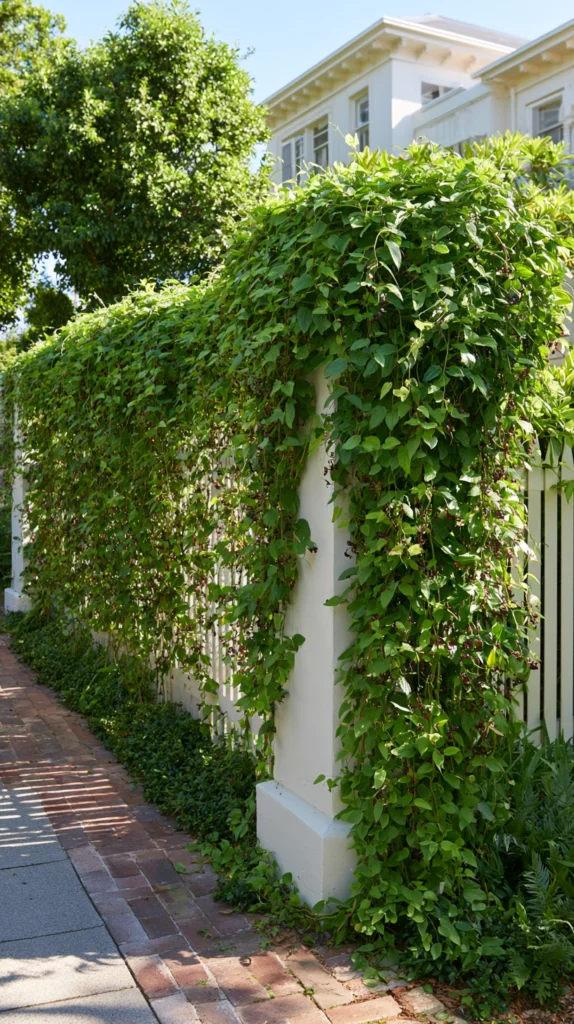
Akebia quinata — the chocolate vine — is the fence climbing plant of most completely unusual and most genuinely original spring interest, its small, deep maroon-purple flowers appearing in early to mid spring before most other garden climbers have fully emerged from dormancy, carrying the specific, warm, vanilla-chocolate fragrance that gives the plant its evocative common name and that fills the early spring garden with an unexpected olfactory richness of considerable sensory pleasure.
The chocolate vine’s semi-evergreen foliage of attractive, five-leaflet compound leaves provides year-round fence coverage of genuine ornamental quality — its refined, slightly bluish-green leaf color and its neat, elegant leaflet arrangement creating a fence covering of complete decorative interest throughout the growing season, supplemented in warm summers by the production of unusual, sausage-shaped, purple-skinned edible fruits of genuine botanical curiosity and genuine culinary interest.
10. Eccremocarpus for Annual Exotic Color
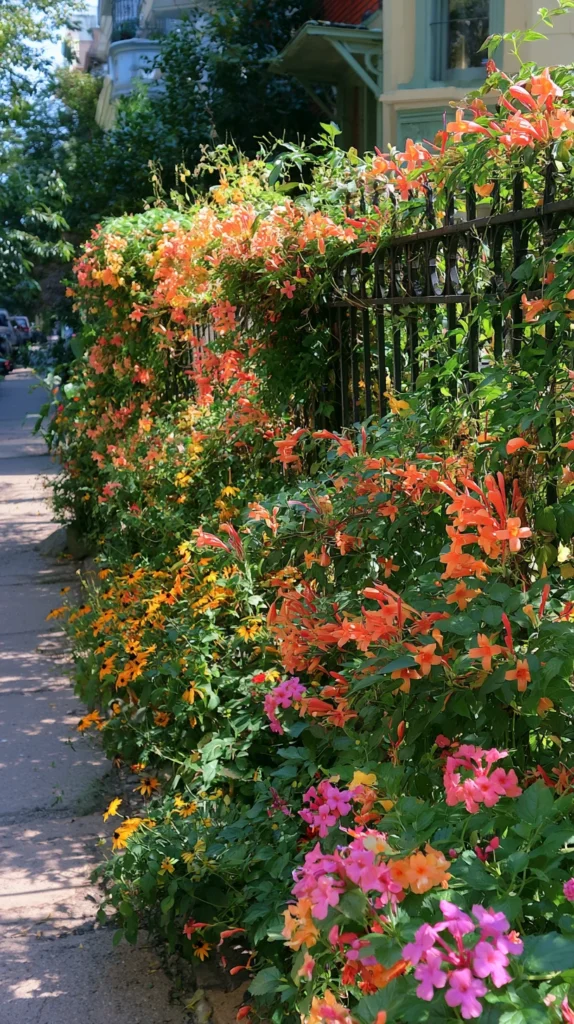
Eccremocarpus scaber — the Chilean glory flower — is the fence vine of most brilliant, most continuously produced, and most exotic-looking tubular flower display available in the garden from a plant of annual or borderline perennial status, its vivid orange, red, or yellow flowers produced in such prolific and such continuous succession from early summer through the first hard frosts of autumn that the fence section it covers glows with a warmth and an intensity of color that no hardy perennial fence vine of comparable vigour can approach.
Grow Eccremocarpus from seed sown indoors in early spring, plant out after the last frost danger has passed at the base of the fence whose wires or mesh will support its tendrilled climbing growth, and allow it the warmth of a south or west-facing fence aspect for the most continuous.
The most prolific, and the most genuinely extraordinary tubular flower production that this remarkable, sun-loving, warmth-dependent fence vine delivers when the specific environmental conditions of maximum solar warmth and maximum summer heat are provided with complete site selection intelligence.
11. Tropaeolum Speciosum for Scarlet Summer Fire
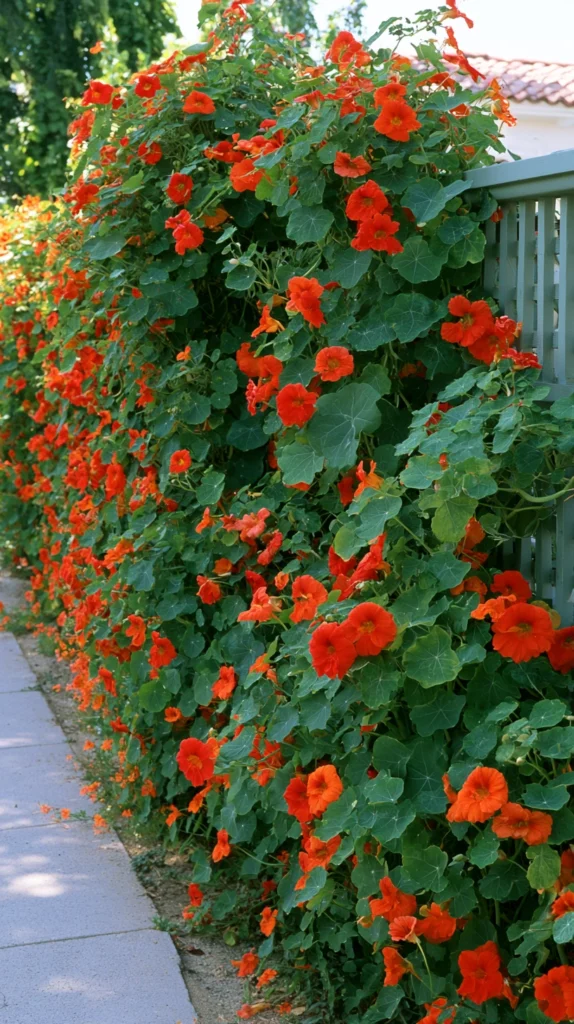
Tropaeolum speciosum — the flame nasturtium or flame creeper — is one of the most genuinely spectacular and the most completely extraordinary fence climbing vines available in the cool temperate garden, its vivid scarlet flowers produced in generous succession throughout the summer months, creating a fence display of such intensity.
Such brilliantly saturated color and such botanical visual drama that it is routinely described by garden designers and by garden visitors alike as one of the most astonishing botanical sights available in the British and northwest European garden tradition.
The flame nasturtium’s specific cultural requirement — a cool, moist root run in an acid soil while the climbing stems reach upward into the warmth and the light of a south or west-facing fence aspect — makes it a plant of specific rather than universal garden applicability, but for the garden whose acid soil conditions and whose fence aspect .
Provide the specific combination of cool root environment and warm aerial growing conditions that the plant requires, the flame nasturtium’s summer fence display of vivid, continuously produced scarlet flowers and its subsequent display of deep blue berries set among scarlet calyces in the autumn creates a fence vine experience of completely unforgettable, genuinely fire-like botanical beauty.
12. Kiwi Vine for Bold Foliage and Fruit
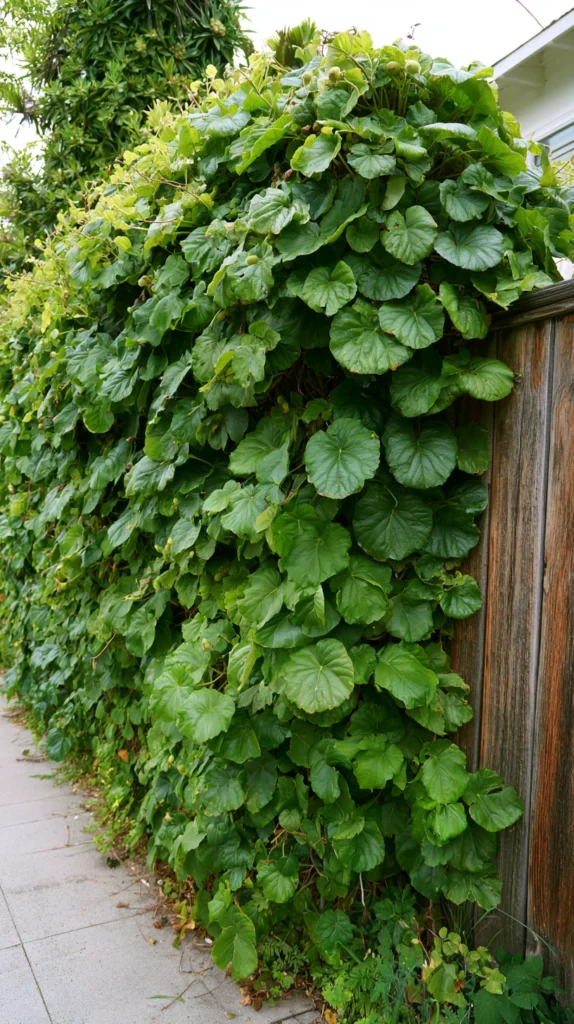
Actinidia deliciosa and its smaller-fruiting, hardier relative Actinidia arguta — the kiwi vines — are the fence climbing plants of most bold, most dramatic, and most genuinely tropical-looking foliage display available in the cool temperate garden fence planting vocabulary, their large, heart-shaped leaves of deep, glossy green creating a fence covering of such complete, such dense, and such genuinely lush botanical abundance that the fence beneath them disappears entirely behind a living wall of vegetation of completely extraordinary summer visual impact.
Plant one male and one female plant of the appropriate kiwi species for the specific climate of the garden — Actinidia deliciosa for the warmest, most sheltered fence positions of the most favoured British gardens, Actinidia arguta for the cooler and the more exposed positions where the greater cold hardiness of the hardy kiwi provides the reliability of establishment and survival that the less hardy full-sized kiwi cannot guarantee.
And the established kiwi fence vine will produce both the most impressive foliage coverage and, in favourable summers, the most unexpected and the most genuinely rewarding productive fruit display of any ornamental fence vine on this list.
13. Parthenocissus Henryana for Elegant Shade Coverage
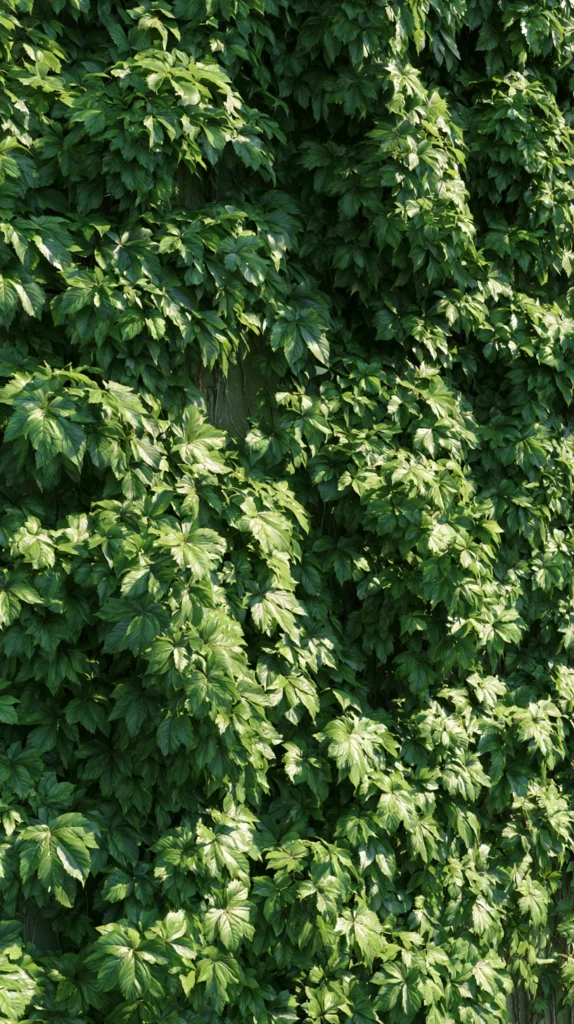
Parthenocissus henryana — the Chinese Virginia creeper — combines the self-clinging shade tolerance of its more vigorous American cousin with a foliage refinement and a specific decorative quality that makes it the most elegant and the most genuinely ornamentally sophisticated of all the self-clinging fence vines available in the temperate garden. Its compound leaves of dark green are marked with silvery veining along the main ribs.
A variegation of considerable delicacy and considerable decorative beauty that gives the plant a distinctive ornamental character entirely its own, and turns in autumn to the vivid crimson and rich burgundy of the Virginia creeper family’s characteristic seasonal color transformation.
Position Parthenocissus henryana on the shadiest, most northerly-facing sections of the garden fence where its shade tolerance gives it a practical horticultural advantage over most other fence vines, while its refined variegated foliage provides an ornamental contribution of sufficient quality and sufficient distinctiveness to justify its presence on the most visible and the most design-critical sections of the garden boundary.
14. Pileostegia Viburnoides for Evergreen Shade Interest
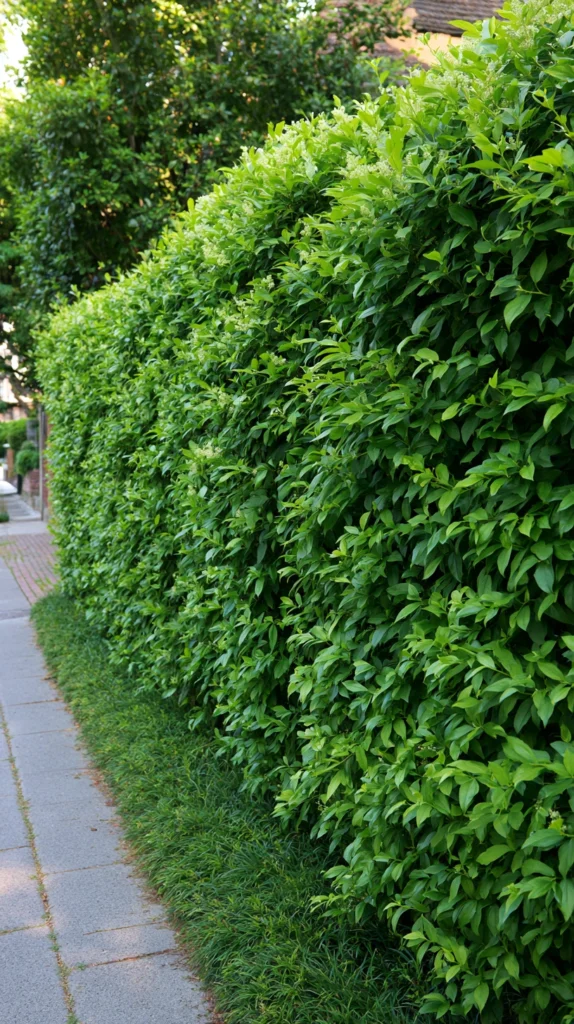
Pileostegia viburnoides is the fence vine of most genuinely valuable and most underused year-round contribution for the shaded garden fence position — a self-clinging, evergreen climbing shrub whose leathery, deep green leaves provide complete fence coverage of genuine decorative quality throughout all twelve months of the year, supplemented in late summer and early autumn by flat-headed panicles of creamy white flowers of considerable ornamental beauty and considerable pollinator value.
The pileostegia’s specific combination of evergreen habit, self-clinging growth, shade tolerance, and late-season flowering creates a fence vine of exceptional versatility and exceptional horticultural value for the most challenging fence positions of the garden .
The deeply shaded, the persistently damp, and the northerly-facing fence sections that eliminate the vast majority of flowering fence vines from consideration and that the pileostegia inhabits with the botanical equanimity and the ornamental generosity of a plant perfectly adapted to the specific growing conditions it encounters.
15. Design the Vine Fence as a Complete Living Wall
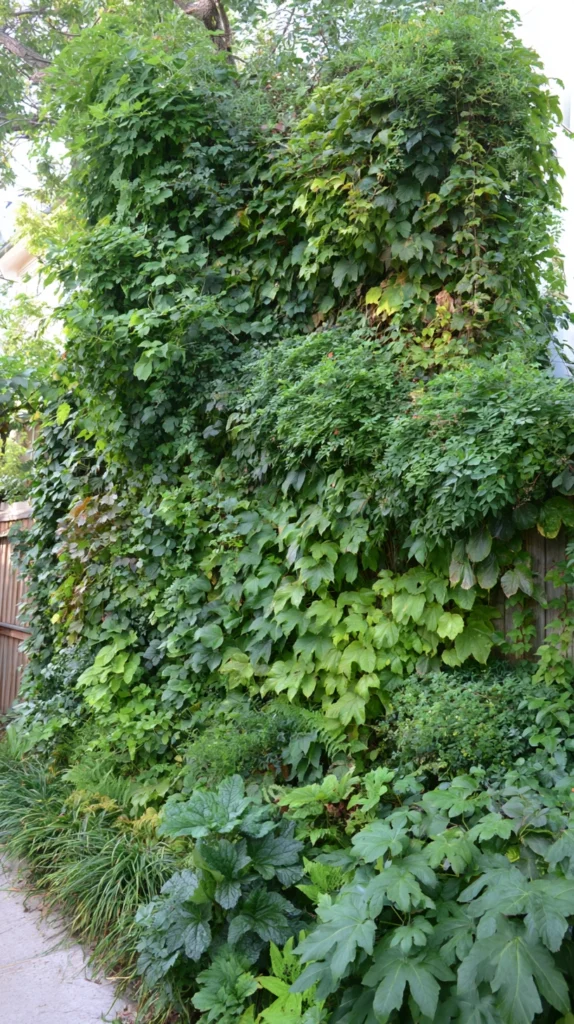
The final and most important climbing vine fence idea is the one that transcends the selection of any individual vine species or any specific planting arrangement and approaches the fence as a complete, layered, multi-species living wall of botanical ambition.
A fence planting of such extraordinary species diversity, such as considered seasonal planning, and such complete ecological generosity that it delivers botanical interest, fragrance, color, wildlife value, and genuine visual magnificence across every month of the garden year without a single week of decorative vacancy or horticultural disappointment.
Design the complete living vine fence wall with genuine seasonal mapping intelligence — assigning each section of the fence to the species whose specific seasonal contribution fills the specific period when that section’s most visible position demands the most extraordinary botanical performance.
And ensuring that the combined, overlapping, continuous botanical contribution of all the vine species together creates a fence of such complete, such continuous, and such genuinely extraordinary year-round living wall beauty that the garden boundary becomes not the garden’s edge but its most magnificent and its most completely, botanically alive centre.
The climbing vine fence designed with genuine botanical knowledge, genuine site intelligence, and genuine creative ambition for the specific, extraordinary potential of the vertical garden surface is one of the most rewarding and most transformative planting investments available to any garden of any size and any aspect.
It turns the boundary into a botanical spectacle, the fence into a living wall of complete seasonal magnificence, and the garden’s edge into its most genuinely, continuously, and completely extraordinary growing achievement.