14 Genius Cinder Block Garden Ideas You’ll Wish You Tried Sooner
Cinder blocks are the most criminally underestimated material in the domestic garden — the humble, inexpensive, universally available concrete masonry unit that the majority of gardeners walk past at the hardware store with complete indifference and the occasional slight disdain, seeing only the raw material of the industrial construction site and missing entirely the extraordinary versatility, the genuine structural capability, and the specific, robust, industrial-meets-natural aesthetic potential that the cinder block possesses in quantities that would astonish any gardener willing to look at it with genuine creative imagination rather than conventional material prejudice.
The cinder block is heavy, yes, and grey, and not inherently beautiful in the way that reclaimed timber or hand-thrown ceramic or aged natural stone is immediately and instinctively beautiful.
But it is also inexpensive, durable, structurally capable, endlessly configurable, and possessed of a specific, honest, unpretentious material character that — in the hands of a gardener with genuine creative intelligence and genuine willingness to work with its specific qualities rather than against them — produces garden features of extraordinary practical value, extraordinary creative originality, and a genuinely distinctive aesthetic personality that no other garden material available at a comparable price point can approach. Here are 14 genius cinder block garden ideas you will wish you had tried considerably sooner.
1. Build Raised Garden Beds of Complete Structural Permanence
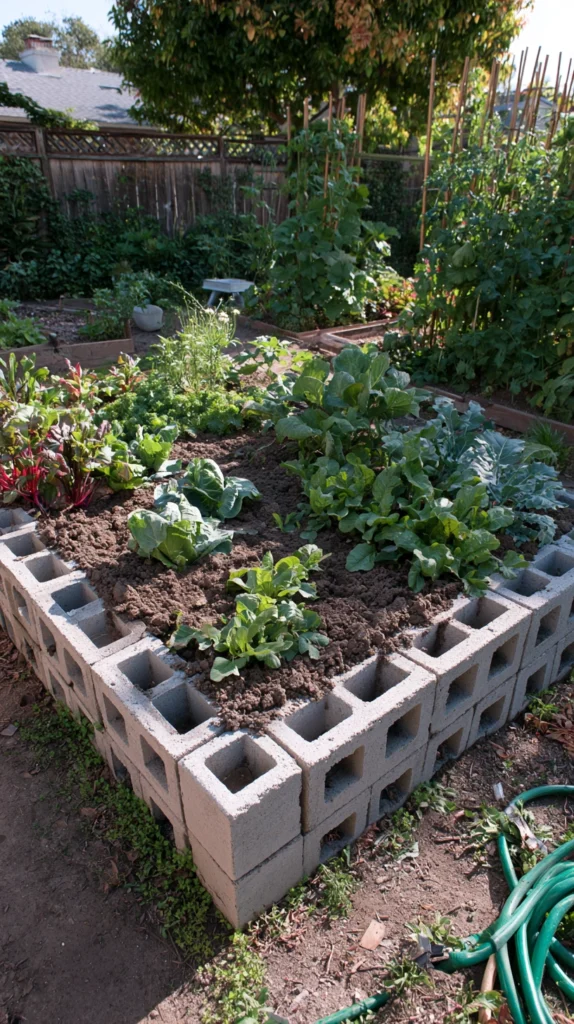
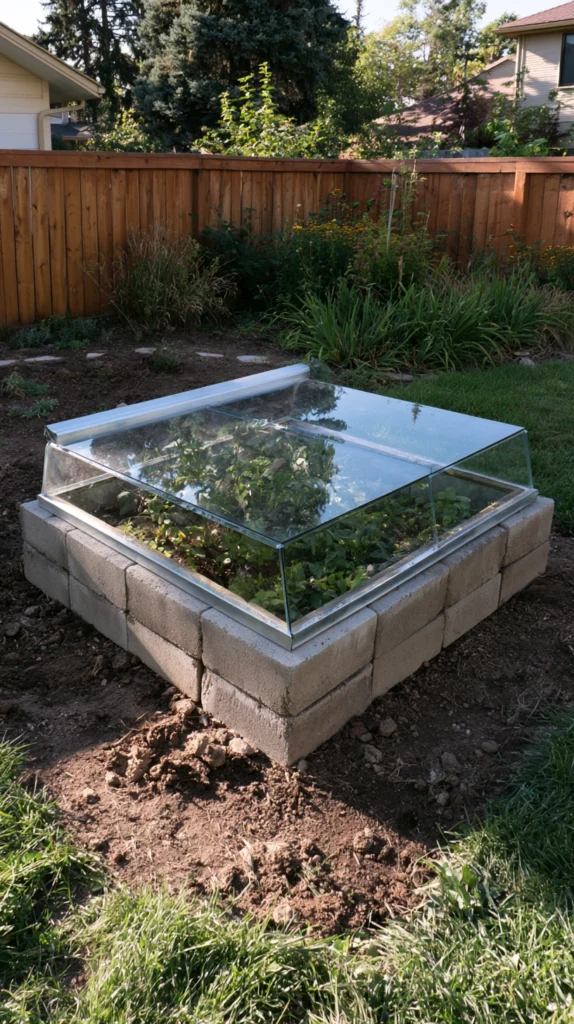
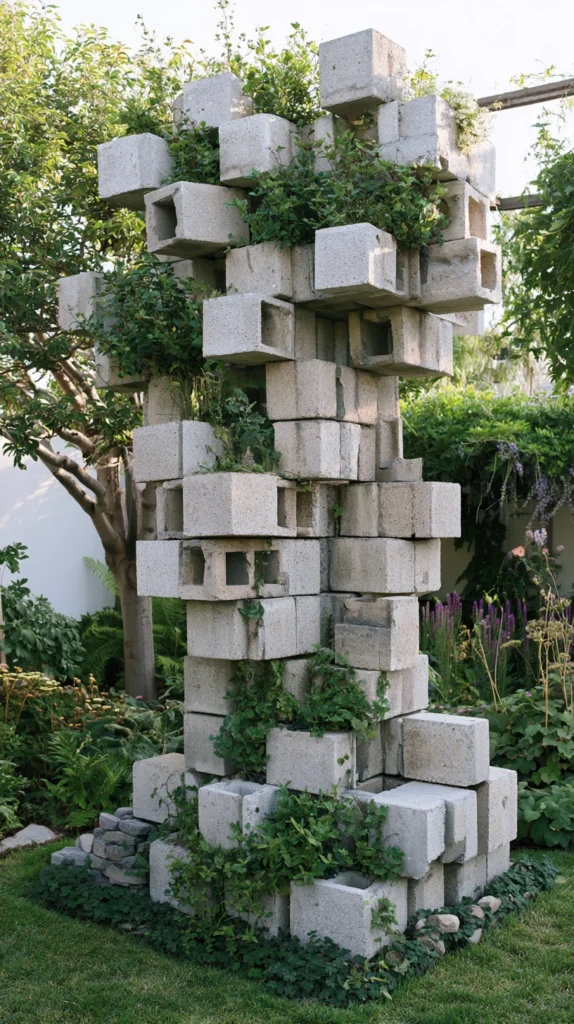
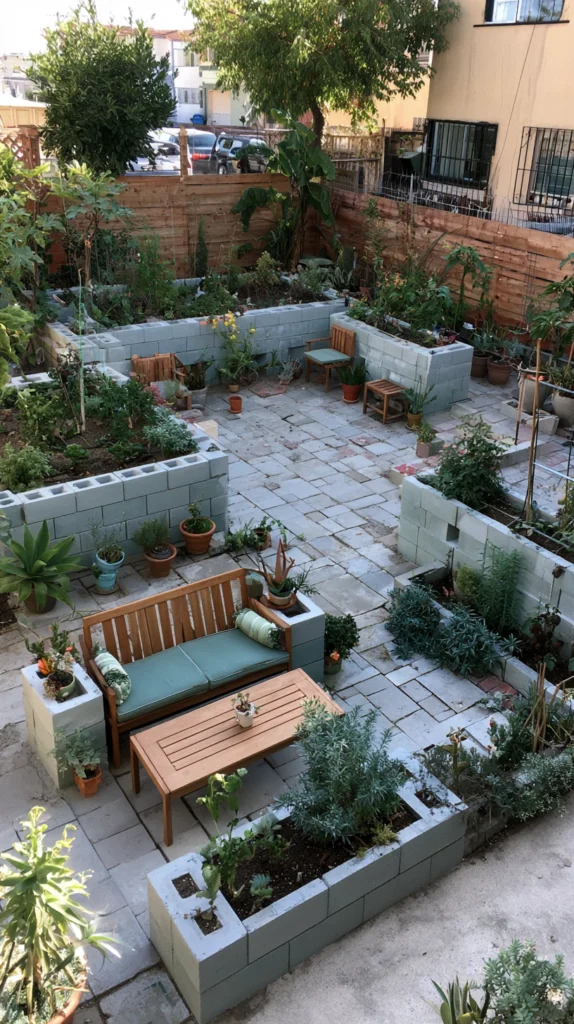
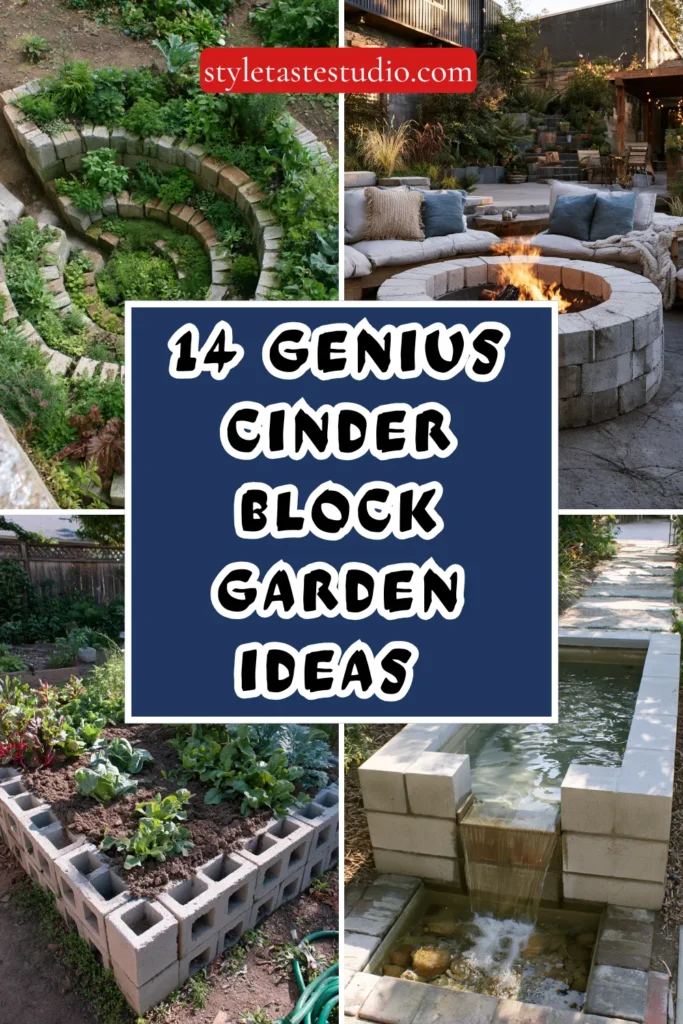
The cinder block raised garden bed is the most immediately practical and the most completely rewarding of all cinder block garden applications — a growing structure of such genuine structural permanence, such complete weather resistance, and such extraordinary durability that a well-built cinder block raised bed will outlast every other raised bed construction material available at any price point with the specific, untroubled confidence of a structure that was designed for permanence rather than decorated for appearance.
Stack two courses of standard cinder blocks in a rectangular configuration of appropriate dimensions — a width of no more than 120 centimetres to allow comfortable reach to the bed’s centre from both sides, and a length determined by the available space and the growing ambition of the household — fill with a growing medium of the highest possible quality, and plant with the specific crops and ornamentals that the bed’s specific aspect and specific microclimate will support most productively.
The hollow cores of the upper course of cinder blocks are an additional growing resource of extraordinary versatility — plant them with strawberries, with trailing herbs, with compact succulents, or with the annual flowers that provide the cutting garden with its most cheerful and most continuously productive seasonal display.
2. Create a Tiered Planting Wall of Hollow Core Planters
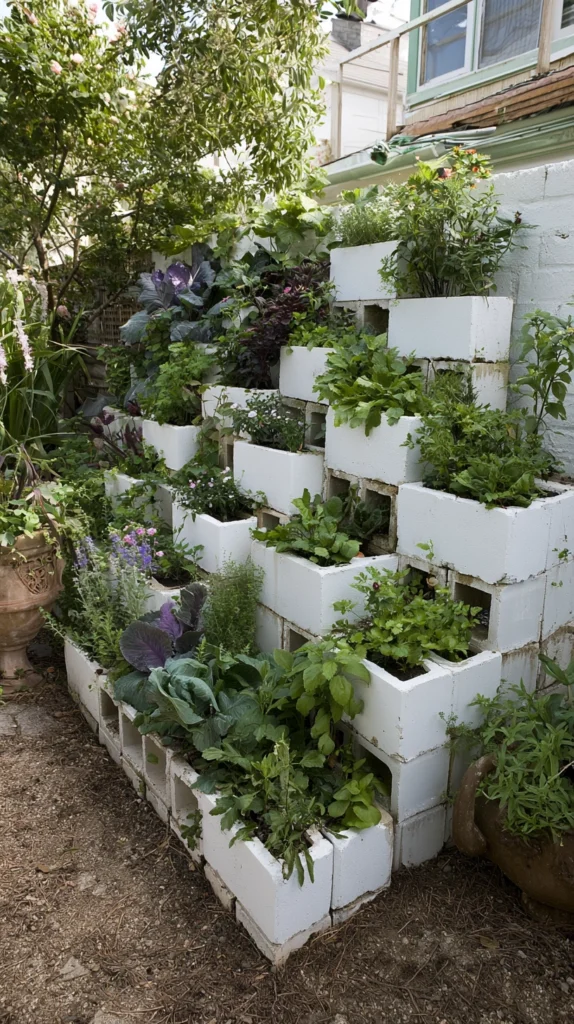
A tiered cinder block planting wall — blocks stacked in a stepped configuration whose each successive tier is set back from the one below, creating a series of planting shelves of increasing height whose hollow cores are filled with growing medium and planted with a cascade of trailing, spilling, and upright species of complementary ornamental character — is the cinder block garden feature of most complete visual transformation and most extraordinary planting versatility.
The tiered cinder block planting wall creates a vertical garden of extraordinary productive efficiency from a horizontal footprint of absolute minimum — each tier adding a new horizontal planting surface and a new vertical growing environment whose hollow cores accommodate plants of the most diverse character and the most varied ornamental contribution.
Paint the cinder blocks before assembly in a color of genuine decorative ambition — a deep, botanical sage green that recedes into the surrounding planting with complete natural grace, or a warm, terracotta-adjacent ochre that reflects the warm tones of the garden’s flowering palette — for a tiered planting wall of complete decorative coherence and complete horticultural productivity.
3. Design a Cinder Block Fire Pit of Industrial Chic
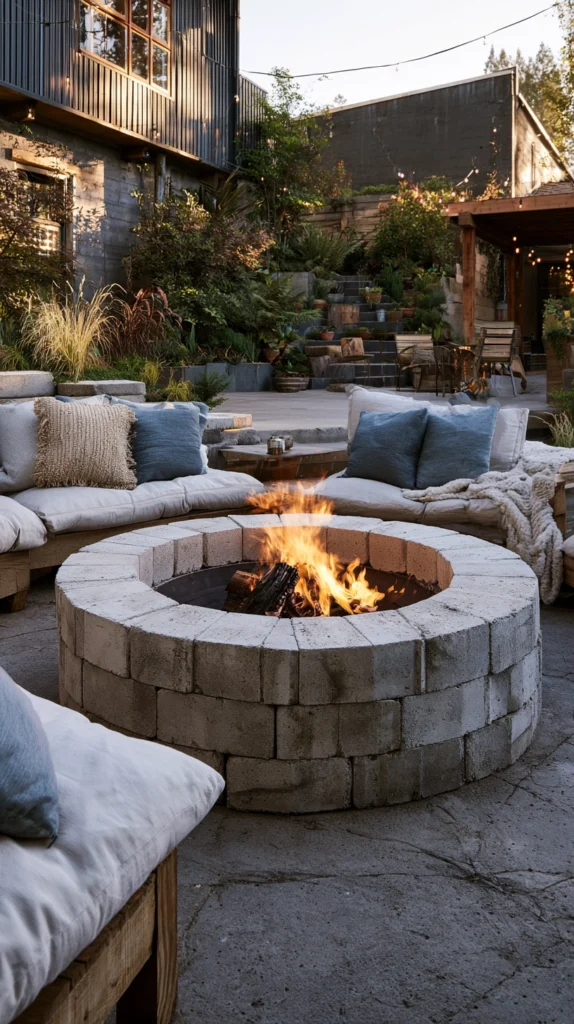
A fire pit constructed from cinder blocks — the blocks arranged in a circular or square configuration of sufficient internal diameter for a generous fire and sufficient wall height to contain sparks and direct radiated heat toward the surrounding seating — is the garden gathering feature of most immediate practical value and most genuinely original industrial aesthetic character.
The cinder block fire pit requires no mortar in its simplest configuration — the blocks’ weight and their mutual interlocking pressure providing sufficient structural stability for a fire feature of safe and genuinely practical performance — and can be disassembled, reconfigured, or relocated with a speed and ease that no mortared masonry structure of comparable fire management performance could approach.
Line the interior of the cinder block fire pit with fire bricks for the most complete thermal protection of the cinder block structure and the most efficient fire management performance of the assembled feature.
4. Build a Cinder Block Outdoor Kitchen Base
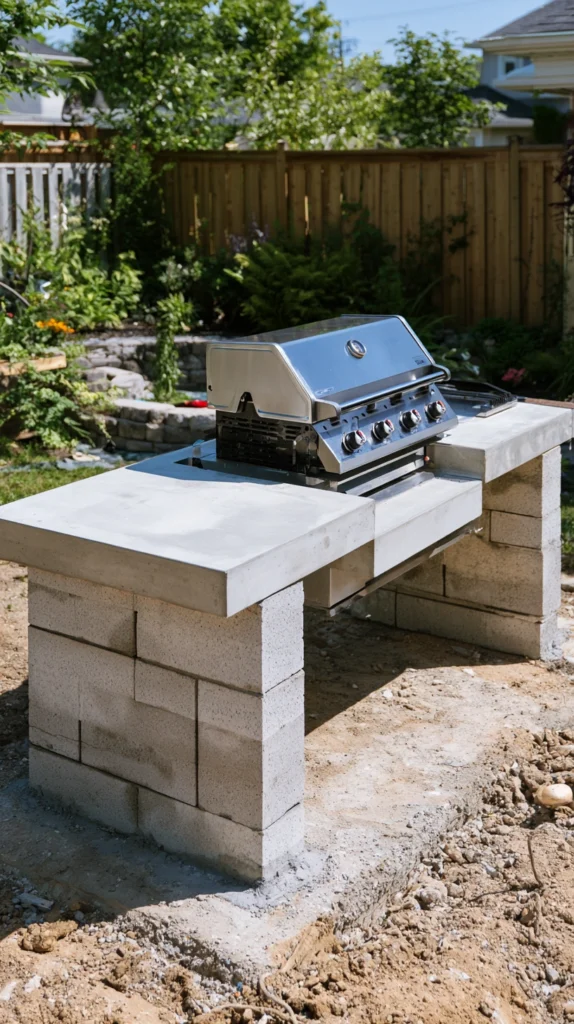
A cinder block structure used as the base and the primary construction material for a permanent outdoor kitchen installation — the counter structure, the grill housing, the storage cabinets, and the sink surround all built from stacked, mortared cinder blocks of structural integrity and genuine load-bearing capability.
It creates an outdoor kitchen of extraordinary structural permanence and extraordinary construction economy that the prefabricated stainless steel outdoor kitchen module cannot approach for longevity, for site-specific adaptability, or for the specific, solid, genuinely built quality that a mortared masonry outdoor kitchen structure possesses from its first day of use.
Render the exterior cinder block surfaces in a stucco or a concrete render finish of appropriate texture and color, top the counter surfaces with a natural stone or concrete countertop of genuine outdoor durability, and install the grill and the appliances of your outdoor culinary ambition within the cinder block structure for an outdoor kitchen of complete, permanent, genuinely extraordinary cooking capability.
5. Create a Cinder Block Garden Bench and Seating
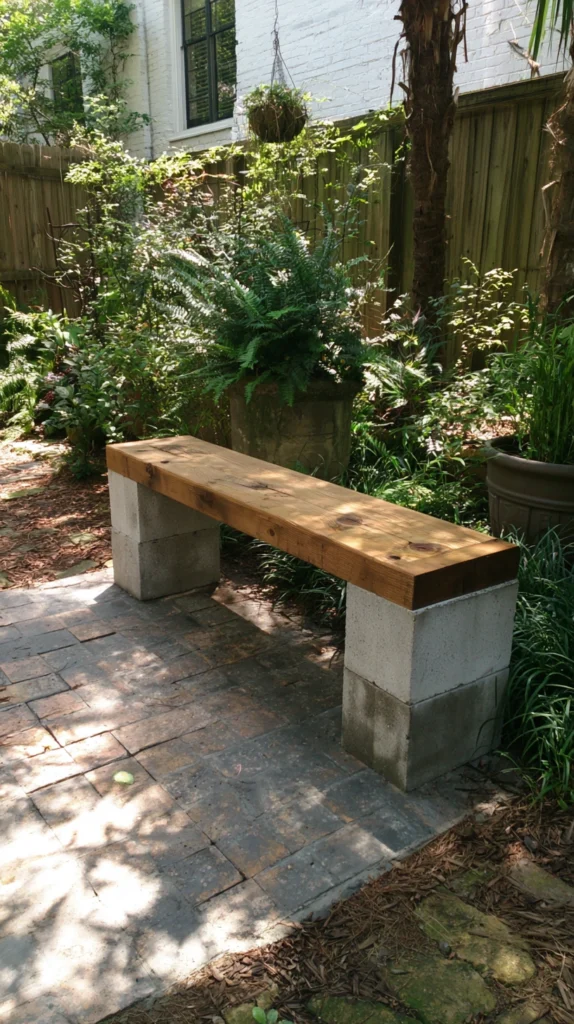
A garden bench constructed from cinder blocks — a pair of stacked block pillars of appropriate height at each end of the seating position, supporting a timber plank, a natural stone slab, or a concrete cast seat element of appropriate length and appropriate surface quality — creates a garden seating feature of extraordinary structural simplicity, extraordinary structural permanence, and a specific, honest, industrial material honesty that the finest contemporary landscape design has embraced with genuine enthusiasm and genuine creative intelligence.
The cinder block garden bench requires no specialist construction skill, no complex joinery, and no expensive materials beyond the blocks themselves and the seat element that spans between them, yet it produces a seating feature of complete functional adequacy and a genuinely distinctive aesthetic character that commercial garden furniture of equivalent durability costs considerably more to achieve.
6. Stack a Cinder Block Bookshelf or Display Unit
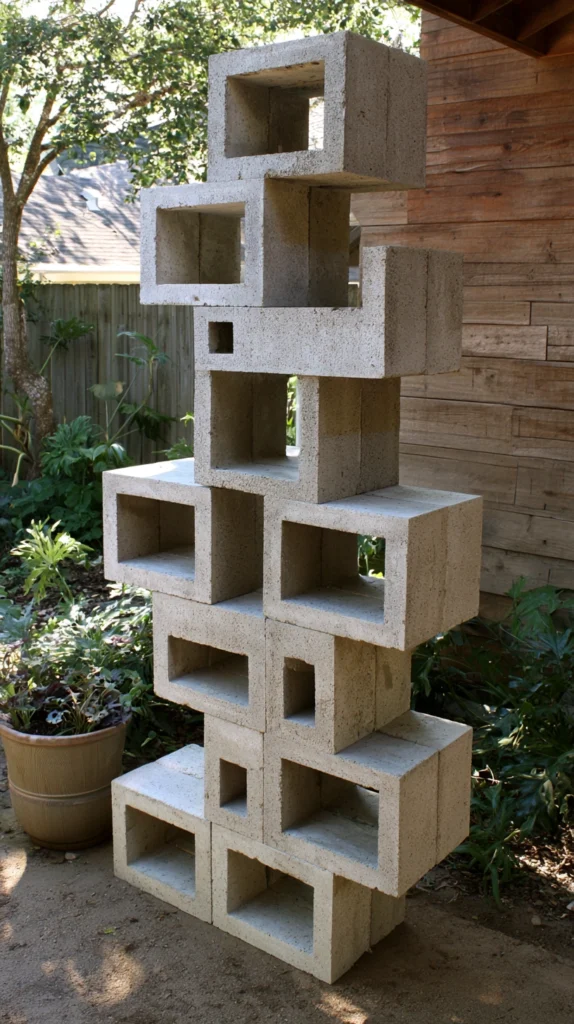
A cinder block bookshelf or outdoor display unit — blocks stacked in alternating orientations to create a stable, visually interesting structure of shelving columns whose hollow cores and whose horizontal surfaces together provide storage and display space of extraordinary versatility and extraordinary structural stability — is the cinder block garden idea of most genuinely surprising decorative application and most completely original aesthetic result.
Stacked cinder blocks in the garden environment create a display structure of considerable industrial charm for the display of potted plants, garden tools of decorative character, outdoor candles in hurricane glass, and other decorative objects of the outdoor living aesthetic. Paint the blocks in the garden’s established palette for a display unit of complete decorative coherence, or leave them in their natural grey for a raw, honest, industrial display structure of genuine material authenticity.
7. Build a Cinder Block Herb Spiral
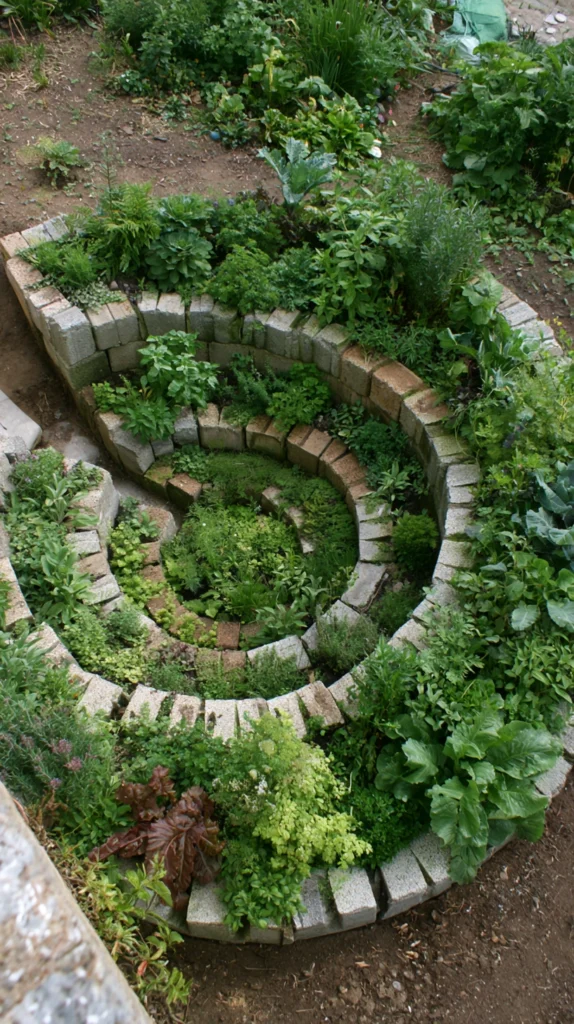
The herb spiral — the specific, space-efficient garden feature that creates multiple distinct growing microenvironments within a single, compact, vertically ascending spiral structure — constructed from cinder blocks, creates the most structurally permanent, the most visually substantial, and the most genuinely beautiful version of this classic kitchen garden feature available in any construction material.
Build the cinder block herb spiral by laying blocks in an ascending circular spiral, each course slightly narrower in diameter than the one below, creating a tiered, spiraling structure whose different heights and different aspects provide the distinct growing conditions — the full sun and the free drainage of the upper tiers, the partial shade and the greater moisture retention of the lower tiers — that the diverse light and moisture requirements of a comprehensive herb collection demand. Plant the hollow cores of each block with the specific herbs most suited to the microenvironment of each tier’s specific growing conditions.
8. Create a Cinder Block Vertical Succulent Garden
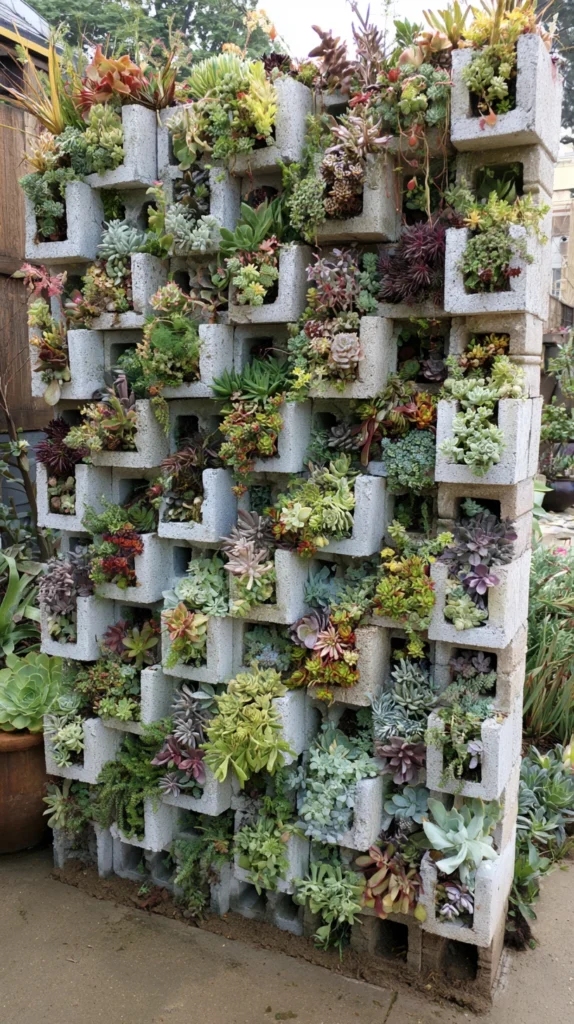
A vertical garden of succulent plants growing in the hollow cores of a cinder block wall — the blocks filled with a free-draining succulent growing medium of appropriate composition, each hollow core planted with a specimen of genuine ornamental character from the extraordinary diversity of the Crassulaceae and the Cactaceae families.
It creates a garden feature of such extraordinary botanical variety, such genuinely original visual impact, and such complete, low-maintenance horticultural pleasure that it represents, for the gardener who tries it, one of the most rewarding and most genuinely surprising plant display discoveries available in the entire cinder block garden vocabulary.
The vertical succulent cinder block garden requires minimal irrigation, minimal fertilisation, and minimal maintenance intervention of any kind — the succulents’ specific adaptation to drought and to the specific, well-drained, hot, dry conditions of the cinder block hollow core growing environment, making them the most perfectly suited and the most completely self-sufficient plants available for this specific application.
9. Install a Cinder Block Retaining Wall
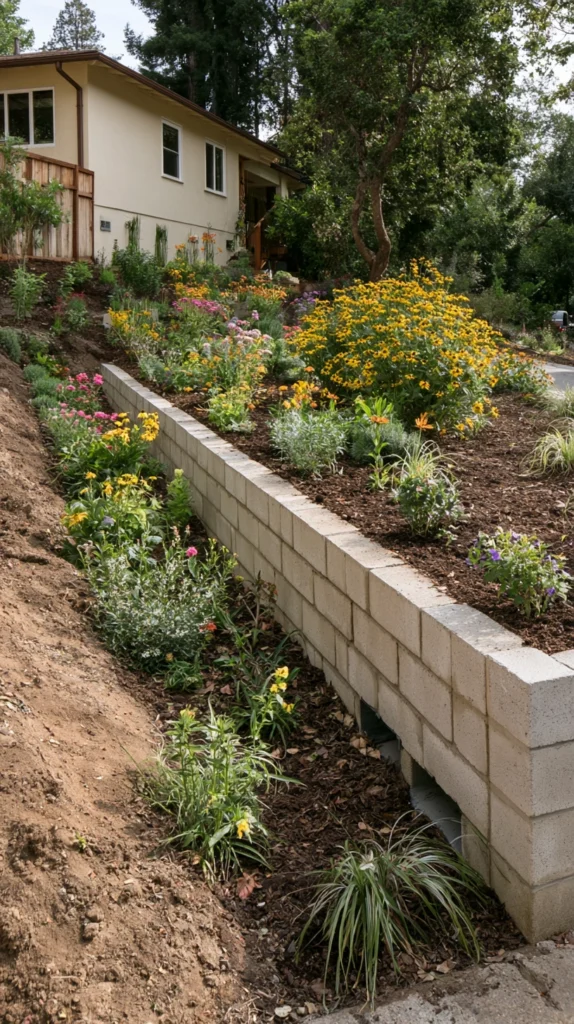
A cinder block retaining wall — the most structurally capable and the most genuinely permanent solution to the garden’s sloped terrain management challenge, capable of retaining greater soil loads with greater structural confidence than any other unmortared garden wall material available at a comparable cost.
It creates a slope management feature of complete engineering adequacy and a genuine opportunity for decorative intervention through painting, rendering, planting of the hollow cores, or training of climbing plants across the wall’s exposed face.
Build the retaining wall with appropriate backward lean for structural stability on sloped sites, fill the hollow cores with concrete for maximum structural integrity in walls of significant retained soil load, and incorporate drainage outlets at appropriate intervals through the wall’s base to prevent the accumulation of hydrostatic pressure behind the retained soil face.
10. Build a Cinder Block Potting Bench
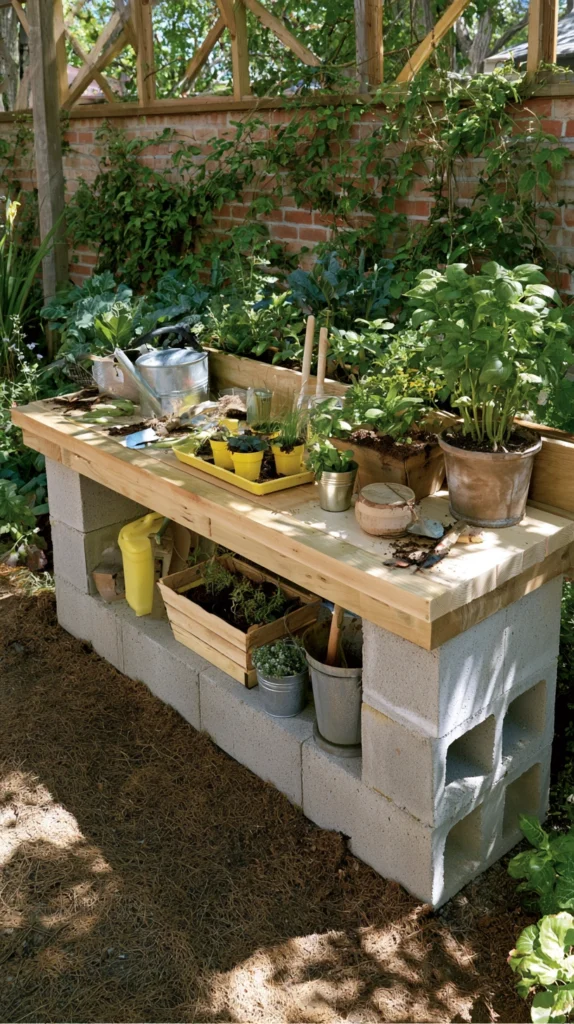
A potting bench constructed from cinder blocks — the bench surface supported on a cinder block base structure of appropriate height, fitted with a timber or concrete working surface of appropriate size, and equipped with the shelving, the storage, and the tool organisation features that a genuinely productive potting bench requires.
It creates a garden workspace of extraordinary structural permanence, extraordinary practical capability, and a genuine, honest, completely unpretentious material character that the finest and the most genuinely used potting benches have always possessed and that the more decoratively elaborate garden furniture alternatives frequently fail to achieve. Build the cinder block potting bench against the garden wall for maximum structural stability and maximum workspace organisation efficiency.
11. Create a Cinder Block Water Feature
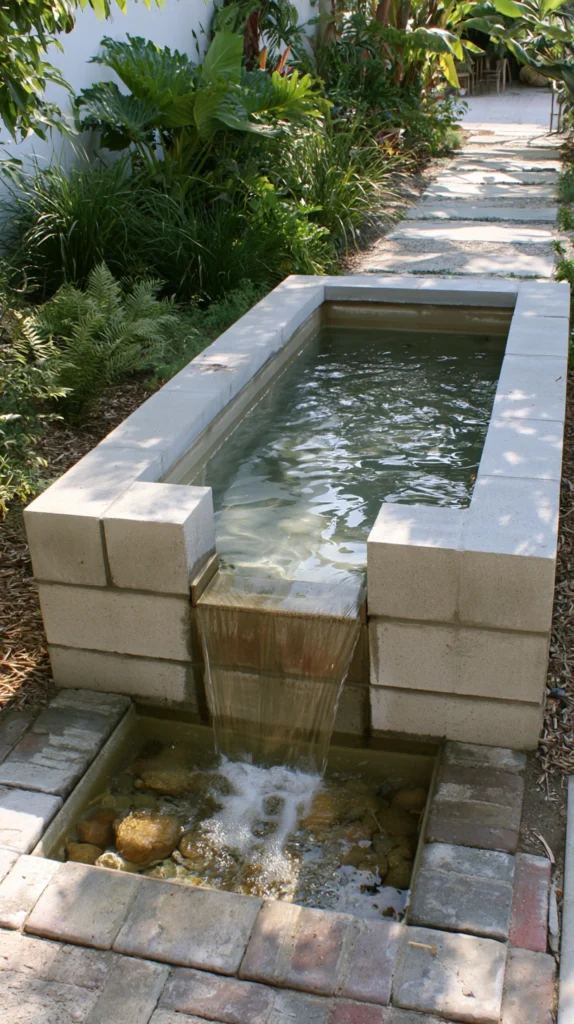
A water feature constructed from cinder blocks — the blocks used as the structural walls of a formal pond, a raised water garden, or a fountain basin of appropriate proportions — creates a water garden feature of extraordinary structural permanence and extraordinary design versatility.
Waterproof the interior of the cinder block water feature with a flexible pond liner or a specialist hydraulic render of complete water retention capability, fill it with water to the appropriate depth for the specific aquatic plants and the specific fish or aquatic insects the garden’s ecological ambition intends to support, and dress the exterior cinder block surfaces with render, natural stone cladding, or climbing aquatic plants for a water feature of complete visual beauty and complete structural permanence.
12. Design a Cinder Block Cold Frame
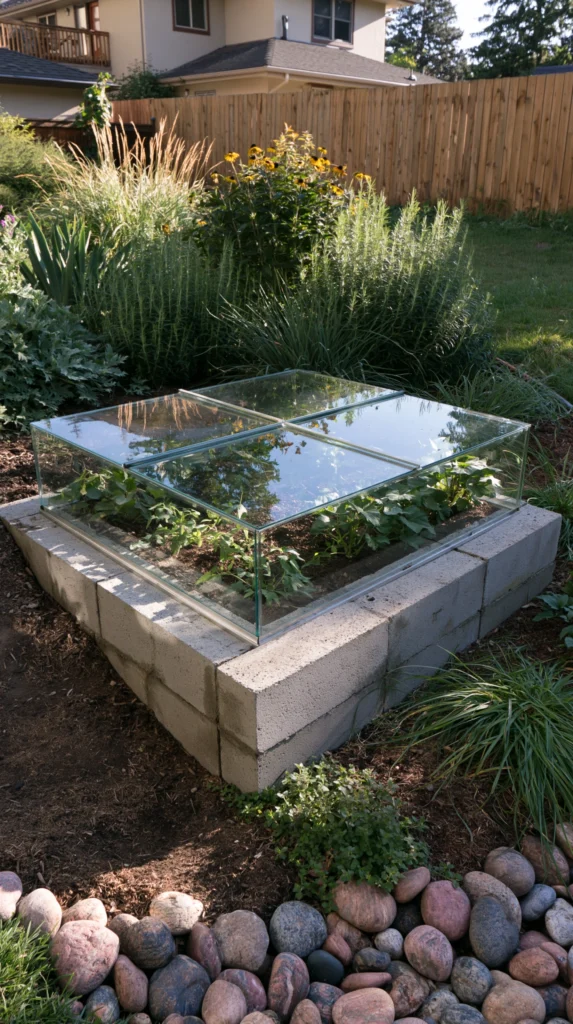
A cold frame constructed from cinder blocks — the blocks used as the four walls of a growing structure of appropriate internal dimensions, topped with old window sashes, polycarbonate panels, or purpose-made glazing of appropriate light transmission quality — creates a season-extension growing structure of extraordinary thermal mass and extraordinary structural permanence.
The cinder block cold frame’s specific thermal advantage over timber or polycarbonate cold frame alternatives is the thermal mass of the concrete block walls — their capacity to absorb daytime solar heat and release it slowly through the cold of the night, maintaining the internal temperature of the growing environment at a level consistently several degrees above the ambient external temperature and extending the productive growing season by weeks at both ends of the calendar.
13. Stack Cinder Blocks as Sculptural Garden Art
Cinder blocks are used not for their structural capability but for their specific visual character as raw, grey, geometric objects arranged in compositions of genuine sculptural ambition — stacked, oriented, grouped, and positioned within the garden landscape with the same deliberate compositional intelligence applied to any other form of garden sculpture.
It creates garden art features of extraordinary creative originality and extraordinary material honesty. Paint individual blocks in vivid, saturated colors and arrange them in geometric compositions of deliberate chromatic order.
Stack them in ascending or descending configurations of graduated height that create sculptural structures of considerable spatial presence. Arrange them as garden markers, as pathway borders, or as the structural bones of a garden installation of genuine contemporary artistic ambition.
14. Make the Cinder Block Garden Completely Your Own
The final and most important cinder block garden idea is the one that transforms every practical, structural, and aesthetic possibility described in the preceding thirteen ideas from a collection of clever construction techniques into a genuinely personal, genuinely creative, and genuinely extraordinary garden expression.
The the idea that the cinder block, in the hands of a gardener with genuine creative imagination and genuine willingness to see past its industrial origin into its extraordinary creative potential, is not merely a construction material of practical utility but a medium of complete garden self-expression.
Paint them in the colors that make you happiest in the outdoor space you spend the most time in. Stack them in the configurations that your specific garden’s specific spatial requirements most logically and most beautifully demand. Plant them with the herbs, the succulents, the strawberries, and the trailing annuals that your specific gardening life most naturally and most joyfully produces.
And allow the cinder block garden you create — completely, honestly, and with the full creative confidence of a gardener who has discovered that the most extraordinary garden features are frequently made from the most ordinary materials — to be exactly, specifically, and completely yours.
The cinder block garden designed with genuine creative imagination, genuine structural intelligence, and genuine willingness to look past the most ordinary material in the hardware store to the extraordinary garden it is capable of producing is one of the most rewarding, the most economical, and the most genuinely surprising creative discoveries available to any gardener willing to make it.
It costs very little, it lasts almost indefinitely, and it proves — with complete, concrete, completely unpretentious conviction — that the finest gardens have never required the finest materials, but only the finest creative intentions.