15 Lantern Pathway Lighting Ideas for Beautiful and Functional Outdoor Spaces
Lantern pathway lighting transforms ordinary garden walkways and outdoor passages into atmospheric, inviting spaces that serve both practical navigation needs and aesthetic ambitions.
Whether guiding guests from driveway to front door, illuminating backyard garden paths, or marking the edges of poolside walkways, the right lantern placement and style elevates outdoor spaces from merely functional to genuinely beautiful. Unlike floodlights or spotlights that prioritize raw illumination, lantern-style pathway lighting casts warm, diffused light at ground level, creating gentle pools of glow that feel welcoming rather than institutional.
The variety of available styles — from solar-powered stake lanterns requiring zero wiring to hardwired copper fixtures built to last decades — means there is a practical option for every budget, skill level, and design preference.
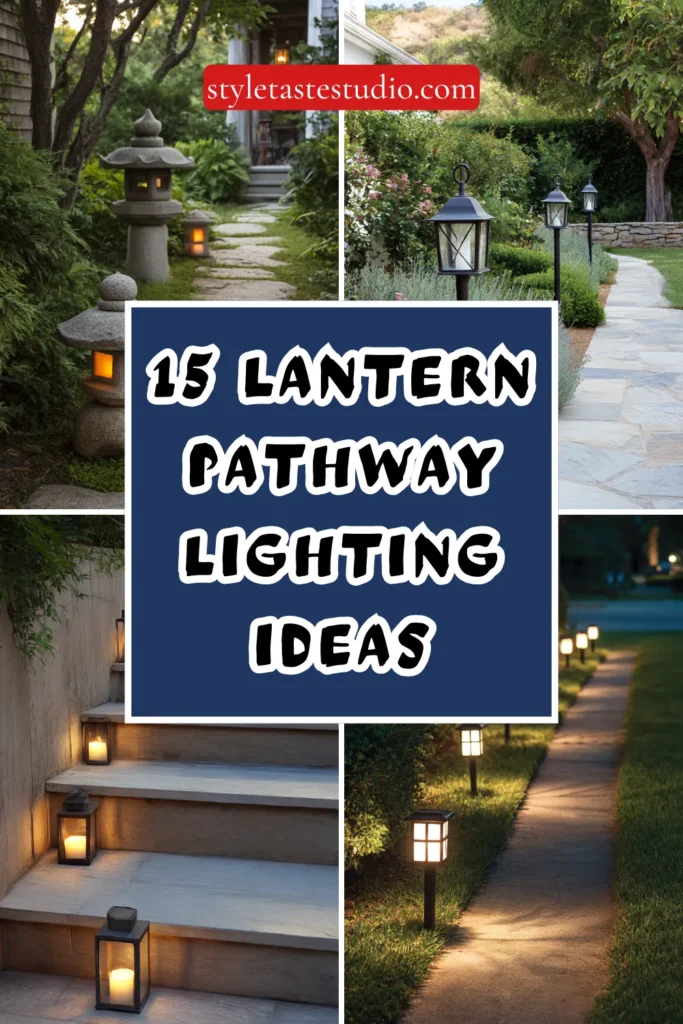
Material choices including powder-coated steel, weather-resistant aluminum, natural copper, and recycled glass dramatically affect both longevity and visual character, making selection decisions worth careful thought. Understanding spacing principles, power source trade-offs, and how to coordinate lantern styles with existing architecture ensures pathway lighting enhances rather than clutters outdoor environments.
These fifteen ideas cover diverse approaches suitable for cottage gardens, modern minimalist landscapes, rustic farmyard settings, and everything in between, proving that thoughtful pathway lantern lighting is one of the most impactful and accessible outdoor improvements any homeowner can undertake.
1. Solar Stake Lanterns
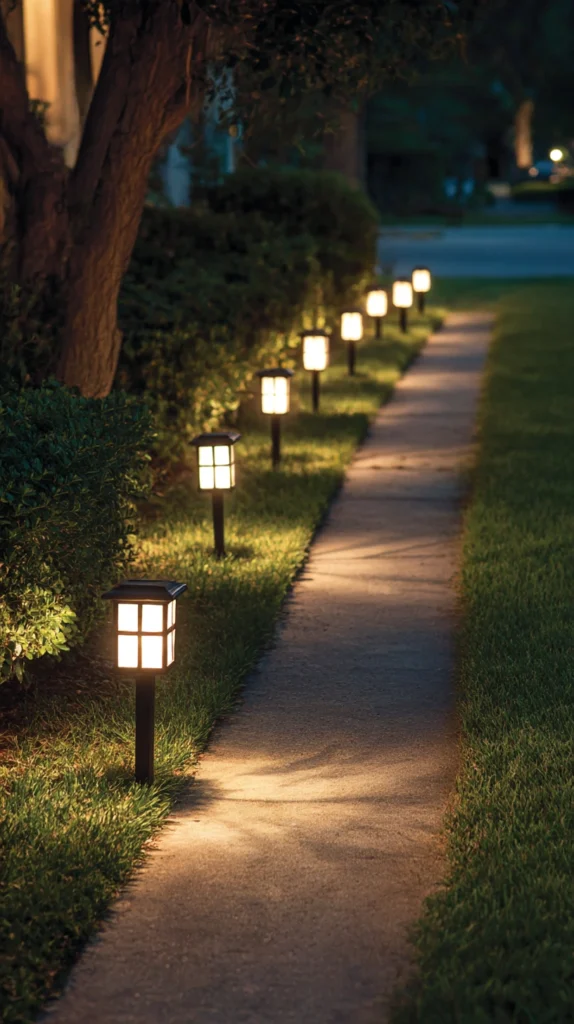
Solar stake lanterns offer the most accessible entry point into pathway lighting, requiring no electrical work, no wiring, and no ongoing energy costs beyond the initial purchase. Install them by pressing the stake directly into soil alongside pathways, positioning the integrated solar panel toward maximum sun exposure throughout the day.
Modern solar lanterns have improved dramatically in recent years, with quality models offering genuine brightness lasting six to eight hours on a full charge. Choose lanterns with warm amber LEDs rather than cool white for more inviting light, and space them roughly six to eight feet apart for consistent coverage without overwhelming density.
2. Hardwired Low-Voltage Systems
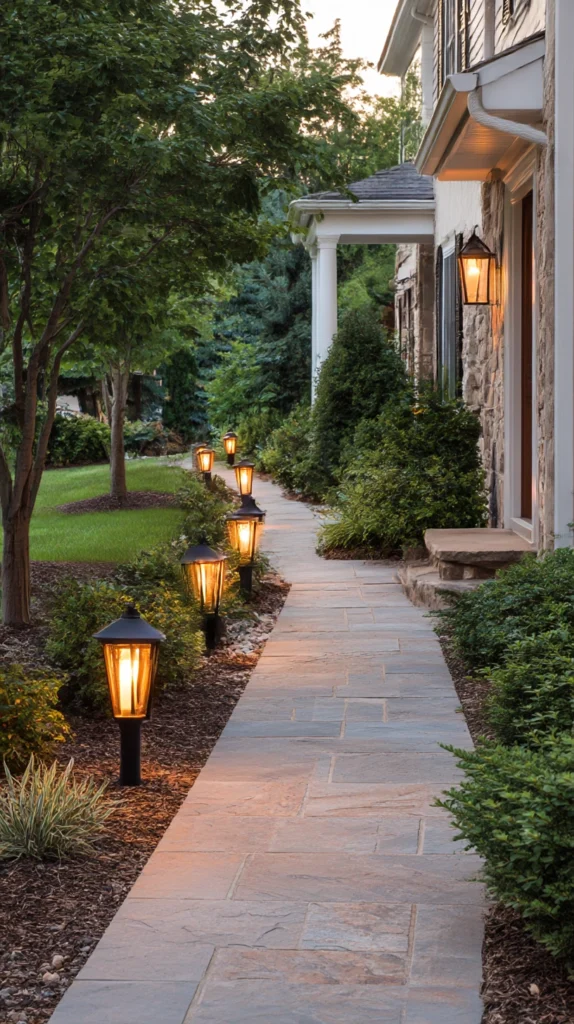
For homeowners seeking reliable, consistent illumination independent of weather or sunlight availability, hardwired low-voltage lantern systems represent the gold standard. These 12-volt systems connect multiple lanterns to a central transformer plugged into a standard outdoor outlet, distributing power safely along buried cable runs.
The upfront installation effort pays dividends through dependable nightly performance, precise brightness control, and compatibility with timers and smart home systems. Kits are widely available containing transformer, cable, and six to ten lantern fixtures, making initial installation manageable for confident DIY enthusiasts.
3. Vintage Carriage Lanterns
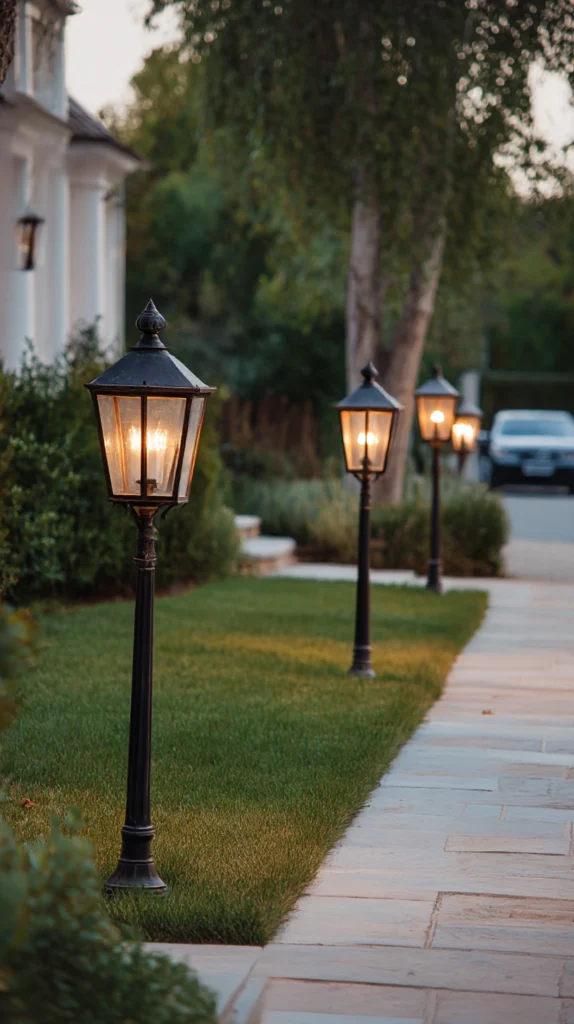
Carriage-style lanterns featuring crossbar window frames, pitched roof caps, and antique bronze or black finishes bring timeless elegance to traditional home styles. Mount these on short post stakes positioned at driveway edges or along formal front walkways where their architectural character complements brick facades, colonial detailing, or craftsman exteriors. Pair with warm Edison-style LED bulbs to complete the vintage aesthetic while maintaining modern efficiency. Their substantial size and weighty appearance communicate permanence and care, making first impressions genuinely memorable.
4. Japanese-Inspired Stone Lanterns
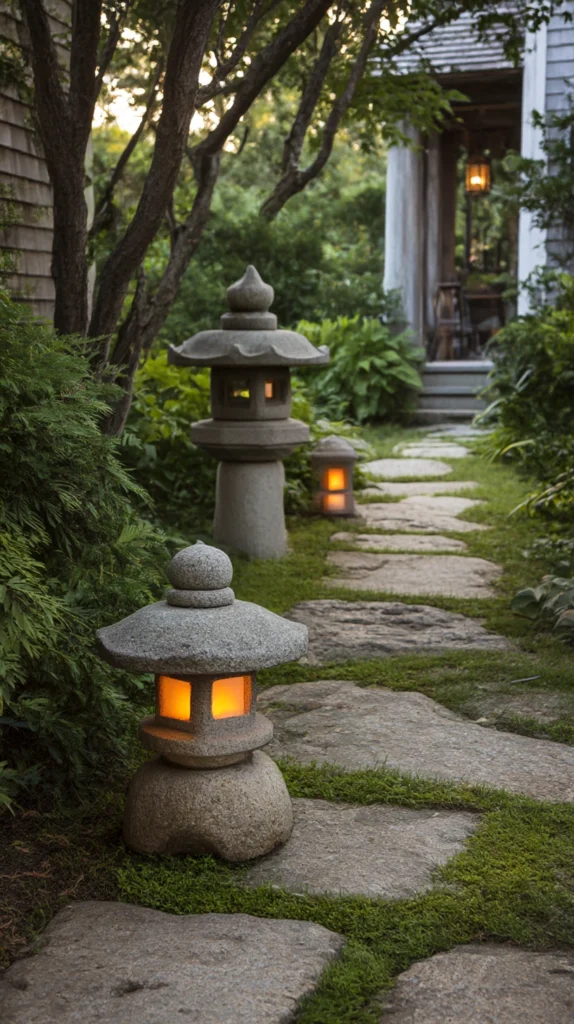
Stone or concrete pagoda-style lanterns evoke Japanese garden traditions, casting beautifully patterned light through carved openings onto surrounding surfaces. These freestanding fixtures require no stakes or mounting hardware, simply resting on level ground alongside pathways or at path junctions where their sculptural presence anchors the landscape design.
Battery-powered LED candles inserted through access doors eliminate fire hazards while maintaining the glowing amber effect. Their weight prevents displacement by wind or casual bumping, making them genuinely low-maintenance permanent additions.
5. Copper Lantern Patina Effect
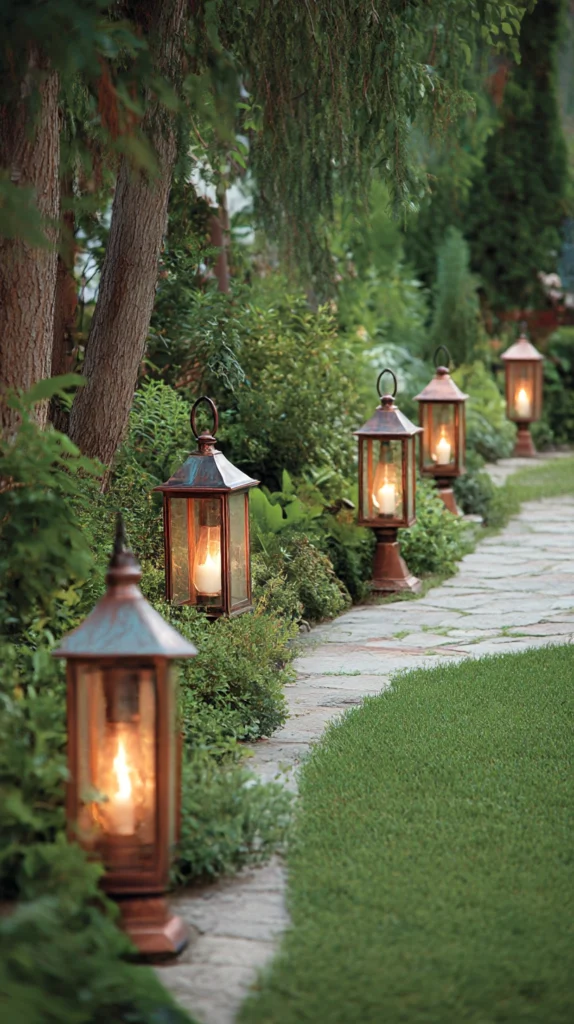
Copper lanterns begin their lives with bright warm metallic tones before gradually developing the distinctive blue-green patina that copper enthusiasts prize as genuinely beautiful aging. Install copper stake lanterns knowing that their appearance will evolve over two to three years into something richer and more characterful than when first purchased.
This living quality suits naturalistic garden settings, cottage-style landscapes, and environments where organic change feels appropriate rather than concerning. Copper’s natural antimicrobial properties also resist the algae and mold growth that affects lesser materials in damp climates.
6. Industrial Cage Lanterns
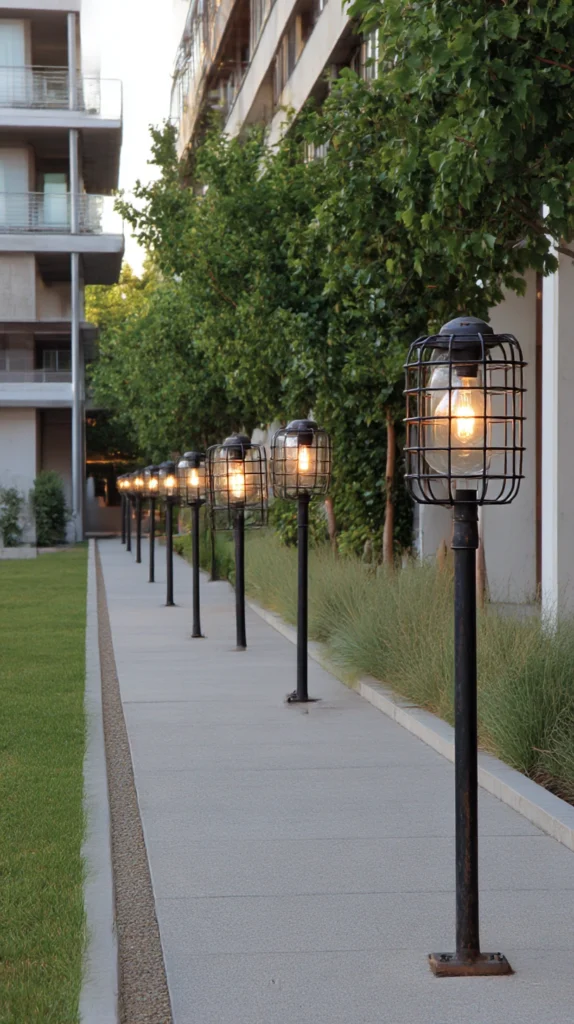
Black steel cage lanterns enclosing visible Edison bulbs deliver the industrial-modern aesthetic perfectly suited to contemporary homes, urban gardens, and outdoor entertainment spaces with a deliberate edge.
The exposed bulb design makes the light source itself a design element, while the protective cage maintains safety and weather resistance. Mount on square post stakes for a crisp geometric installation, spacing them evenly at five-foot intervals for density that reads as intentional and designed. These pair well with concrete pavers, steel edging, and the kind of minimalist planting schemes that characterize modern landscape design.
7. Lantern Clusters at Path Junctions
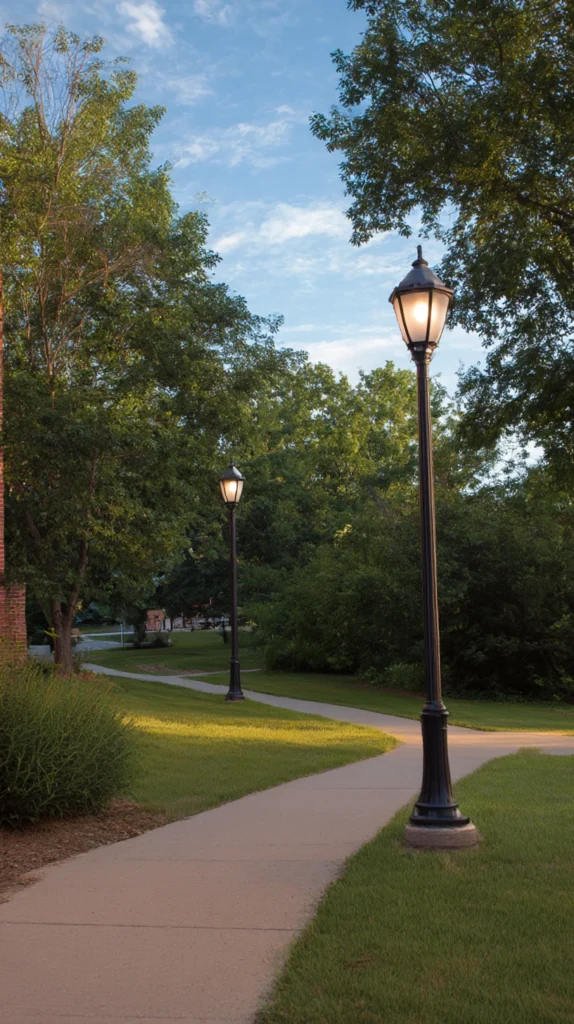
Rather than spacing lanterns uniformly along entire pathway lengths, consider clustering two or three lanterns of varying heights at key decision points — where paths split, where steps begin, or where pathways meet patios.
These deliberate groupings create moments of visual interest and practical brightness exactly where navigation benefits most, while leaving stretches of pathway in comfortable ambient dimness that actually enhances the overall atmospheric quality. Use matching lanterns in different heights, or mix complementary styles within a coordinated finish family.
8. Hanging Lanterns on Shepherd’s Hooks
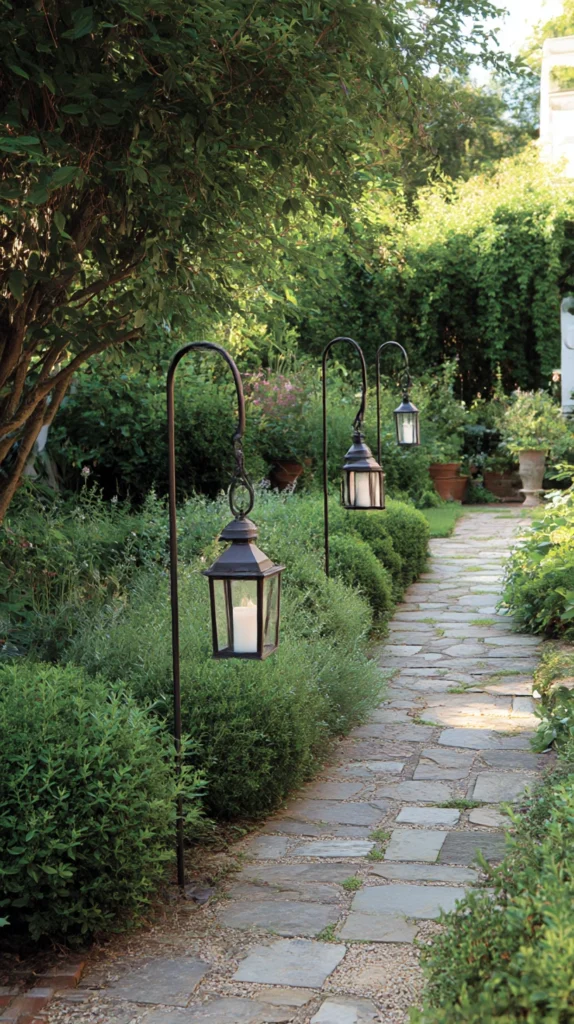
Shepherd’s hook stakes installed alongside pathways allow lanterns to hang at waist or chest height rather than ground level, producing a distinctly different light quality that spreads further across pathway surfaces. This approach works especially well in cottage gardens, where hanging lanterns among tall flowering perennials create a genuinely enchanting effect during evening hours.
Use solar-powered hanging lanterns with built-in panels positioned at the hook’s top for adequate charging, or run low-voltage cable up through hollow hook posts for hardwired reliability.
9. Flush-Mount Recessed Path Lights
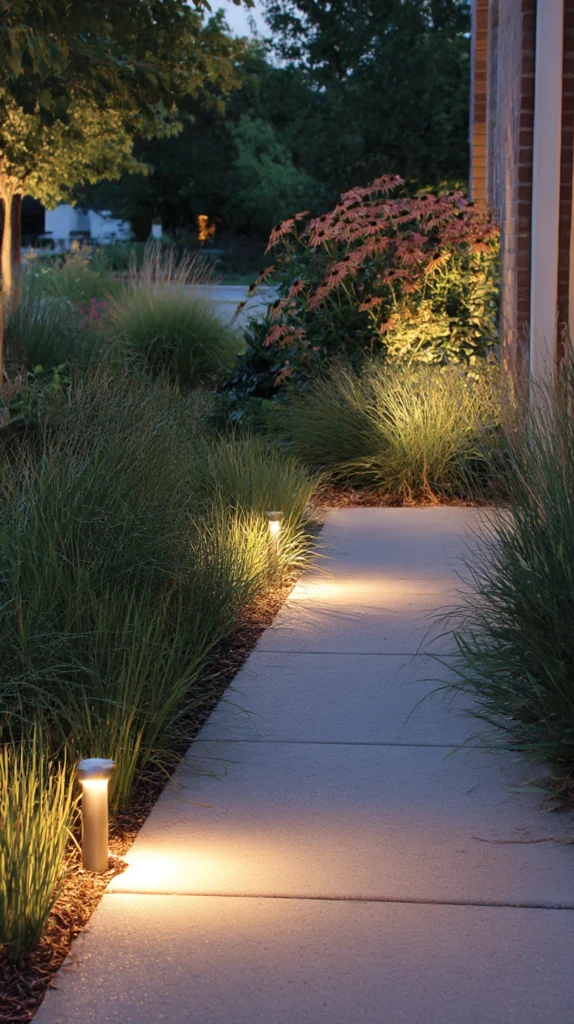
For a sleeker alternative to traditional upright lanterns, recessed flush-mount fixtures embedded directly into pathway surfaces or adjacent ground provide illumination without any above-ground profile.
These work beautifully alongside more traditional lanterns, with recessed lights handling practical surface illumination while decorative lanterns contribute ambient atmosphere and visual character. Install in paver joints or gravel areas where maintenance access remains practical, connecting to the same low-voltage transformer system serving upright pathway lanterns.
10. Lanterns Lining Stairway Edges
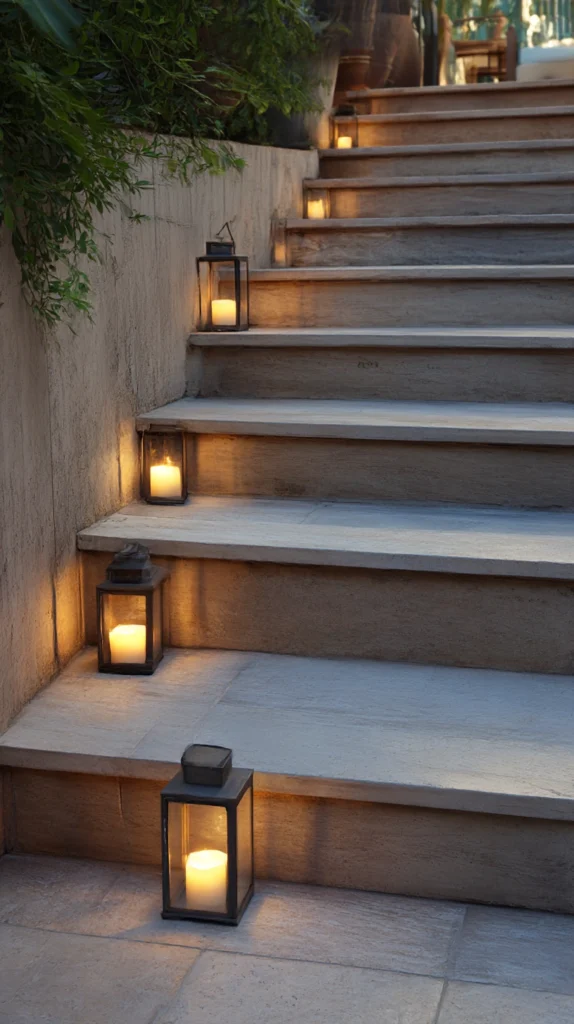
Exterior steps deserve dedicated lighting attention both for safety and visual drama, with low-profile lanterns mounted at each step edge casting light downward across treads where feet actually land. Choose compact lanterns in scale with the steps themselves, avoiding oversized fixtures that overwhelm the architecture.
Solar-powered step lights with built-in motion sensors provide excellent practical performance with zero wiring complexity, activating automatically when movement is detected and conserving battery capacity during quiet periods.
11. Moroccan-Style Perforated Lanterns
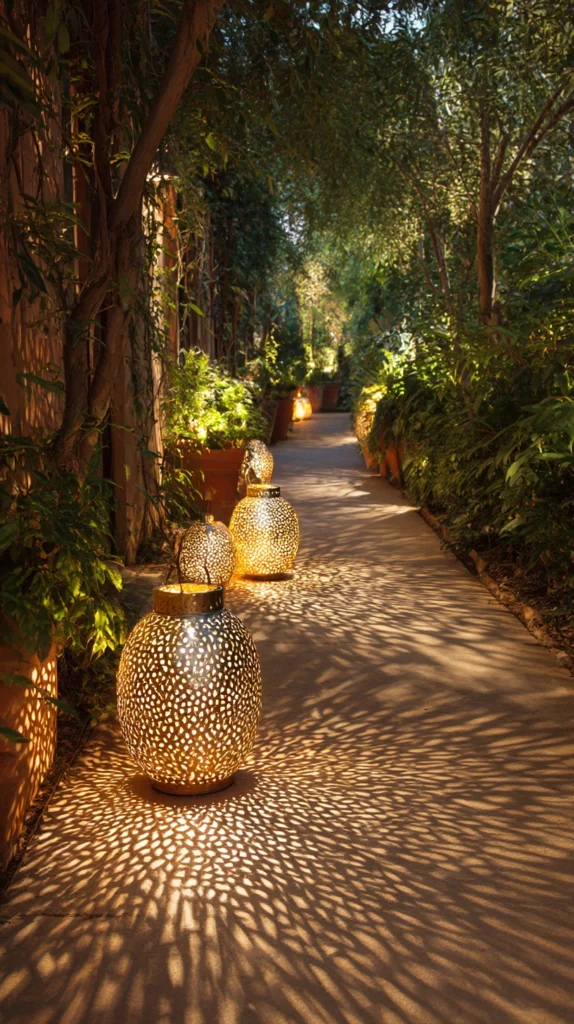
Pierced metal lanterns featuring geometric perforation patterns cast intricate shadow displays across adjacent surfaces that transform simple pathways into genuinely magical evening environments. The punched patterns — whether traditional geometric arabesque, star motifs, or organic botanical forms — project onto gravel, pavers, or planting beds with surprising intricacy and beauty.
Use these as focal point installations at path entrances or garden destinations rather than uniformly spacing them along entire lengths, where their dramatic light patterns can genuinely be appreciated.
12. Timber Post Lantern Mounts
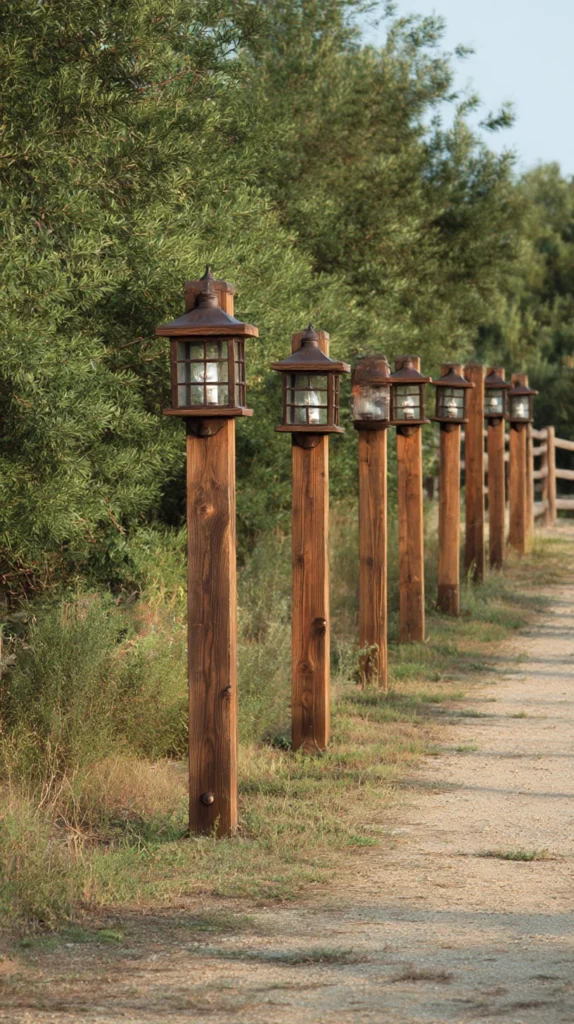
Pressure-treated or naturally rot-resistant timber posts cut to 18-24 inch heights and topped with cap-mounted lantern fixtures create a farmhouse or rustic aesthetic perfectly suited to country properties, kitchen gardens, and informal backyard pathways. Set posts in pre-drilled holes without concrete for easier future repositioning, ensuring tops are level before securing lantern caps.
Cedar, black locust, and teak provide excellent natural rot resistance without chemical treatment, making them genuinely appropriate for kitchen garden settings where chemical exposure raises concerns.
13. Smart Pathway Lanterns
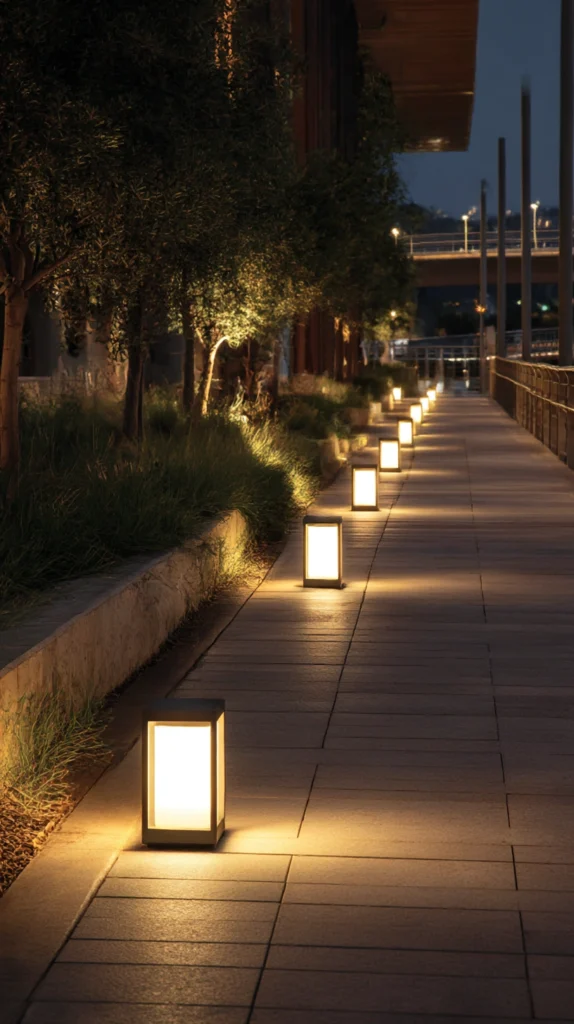
Wi-Fi enabled pathway lanterns connecting to home automation systems allow scheduling, dimming, color temperature adjustment, and motion-triggered activation controlled from smartphones or voice assistants.
Program lanterns to activate at sunset, dim to ten percent after midnight, and brighten instantly when motion is detected — delivering both atmosphere and security in a single system. The additional cost over standard low-voltage fixtures pays back through genuine convenience, energy optimization, and the ability to adjust lighting character seasonally or for specific outdoor occasions.
14. Lanterns Paired with Reflective Mulch
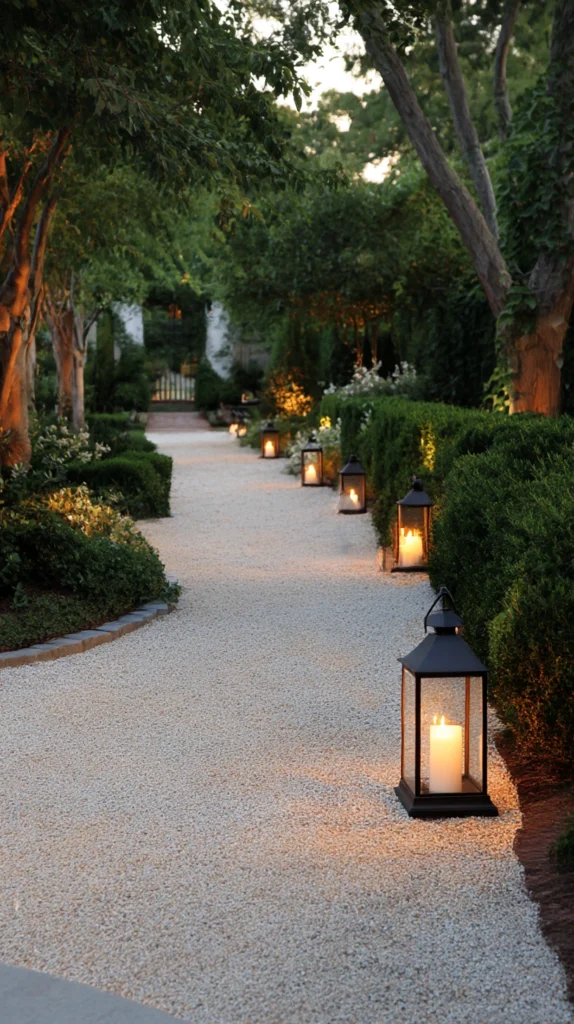
Maximize pathway lantern effectiveness by pairing warm-toned fixtures with light-colored pathway surfaces — pale gravel, white decomposed granite, or light-toned mulch — that reflect and amplify emitted light. Darker pathway materials absorb rather than bounce light, requiring more fixtures or higher brightness to achieve equivalent visibility.
Pale pathway surfaces effectively double the visual impact of existing lanterns, making this pairing consideration one of the most cost-effective lighting enhancement strategies available.
15. Seasonal Lantern Swapping
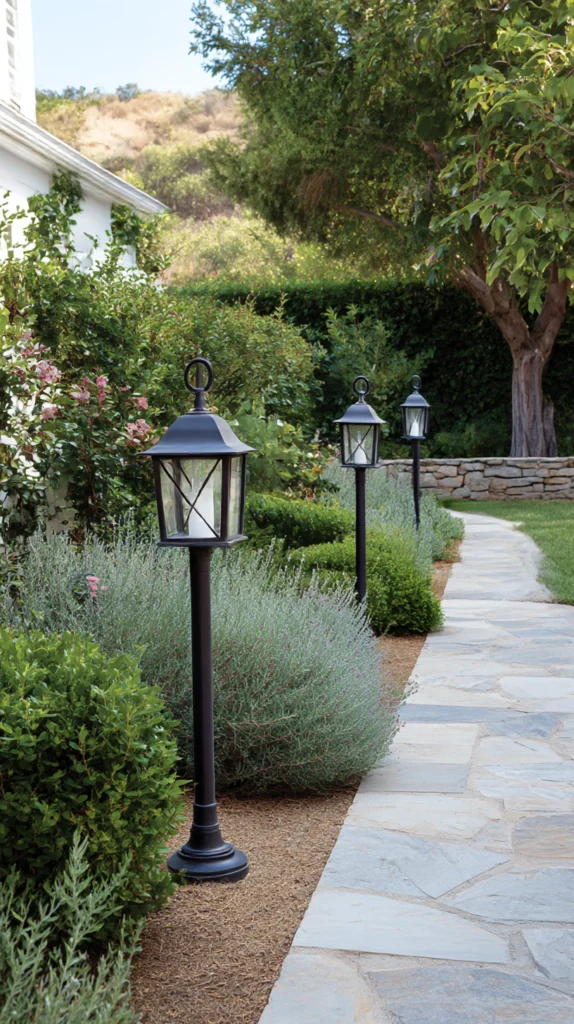
Design pathway infrastructure for easy seasonal fixture swapping, installing permanent low-voltage cable runs with standardized mounting stakes that accept interchangeable lantern tops.
This approach allows maintaining year-round reliable illumination infrastructure while rotating decorative lantern styles seasonally — transitioning from warm copper harvest lanterns in autumn to clean white frosted glass in winter, returning to open wire Mediterranean styles through summer months. The initial system investment serves indefinitely while seasonal lantern purchases remain relatively modest.
Successful pathway lantern installation requires planning fixture spacing before purchasing, as both overcrowding and excessive gaps undermine the finished effect. Walk pathways after dark before installing any fixtures, noting where darkness creates genuine navigation difficulty versus where ambient light already provides adequate visibility.
Connect all hardwired fixtures to timers or photocells ensuring automatic activation at dusk, eliminating the daily manual switching that quickly becomes an inconvenient habit. Prioritize weather ratings appropriate to local climate, ensuring IP65 or higher ingress protection ratings for any fixtures in regions experiencing significant rainfall or temperature extremes.
Most importantly, choose lantern styles that genuinely complement the existing architectural character of both home and landscape, since pathway lighting succeeds most completely when it feels like a natural extension of the overall outdoor design vision rather than an afterthought installed simply to provide light.