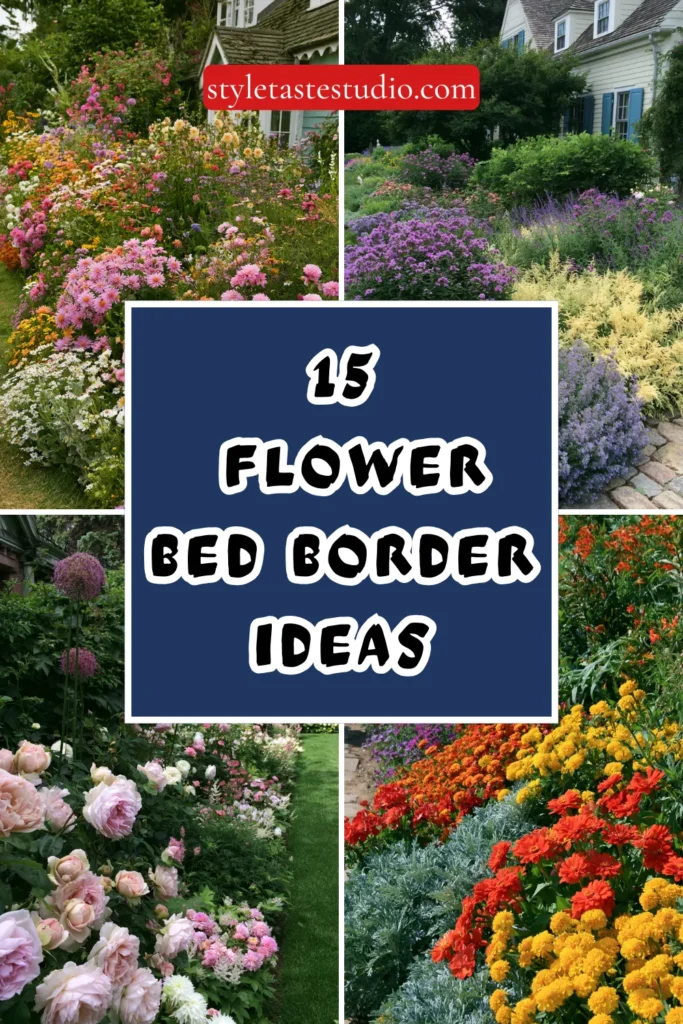
15 Flower Bed Border Ideas
A well-designed flower bed border is one of the most transformative elements available to a residential garden — a linear planting that defines space, creates structure, guides movement, and delivers season-long colour and texture in a way that no other garden feature quite replicates.
The border is where garden design becomes most visible and most personal, where plant selection reveals genuine taste, and where the difference between a considered garden and an accidental one is most immediately apparent.
These fifteen ideas cover the full range of border styles, plant combinations, and design approaches — from the classic English herbaceous border to the contemporary naturalistic drift, from the low-maintenance gravel garden edge to the dramatic shade border beneath a canopy of mature trees. Each one is practical, achievable, and designed to look genuinely beautiful rather than merely adequate.
1. The Classic English Herbaceous Border
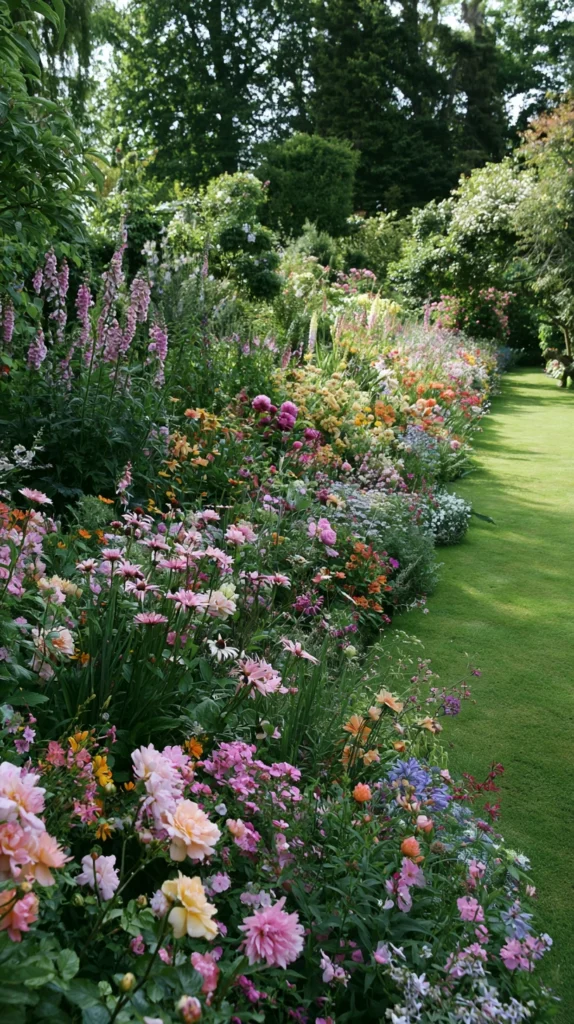
The English herbaceous border — tall delphiniums and foxgloves at the back, mid-height peonies and geraniums through the middle, low catmint and lady’s mantle at the front — remains the most complete and most satisfying border form ever developed.
The layered planting creates depth, the succession of flowering ensures interest from late spring through early autumn, and the overall effect is one of generous, almost effortless abundance. Stake tall plants early in the season before they need it, and the border will hold its structure through wind and summer rain without collapse.
2. The Hot Colour Border
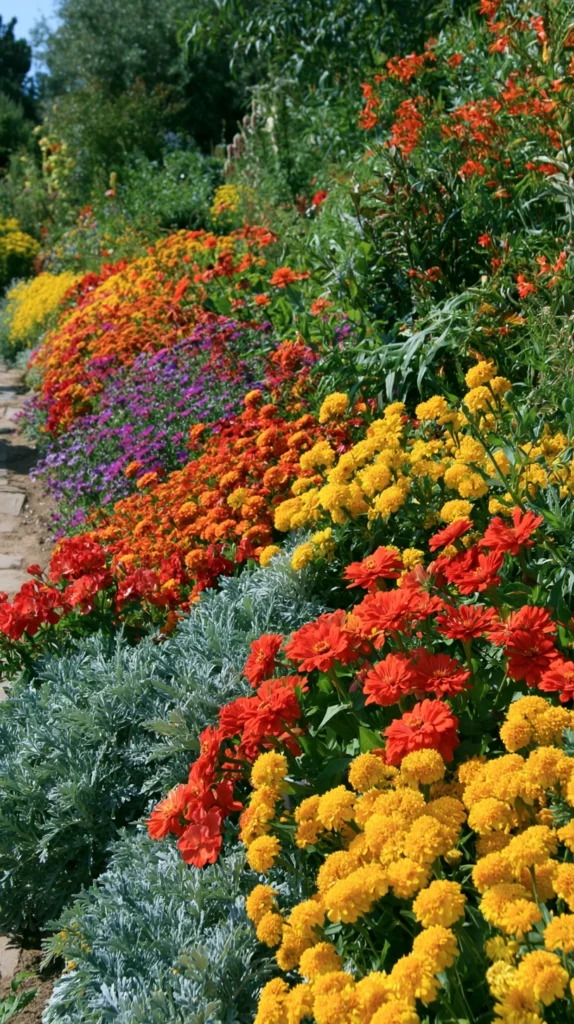
A border built exclusively around hot colours — deep red, burnt orange, acid yellow, rich magenta — creates the kind of bold, unapologetic visual impact that more restrained palettes simply cannot achieve.
Crocosmia, helenium, rudbeckia, and red-hot poker planted in generous drifts deliver this effect from midsummer through autumn with minimal intervention. Position a hot border where it catches afternoon and evening light, when the warm tones intensify dramatically, and the border reads at its most extraordinary.
3. The White and Silver Border
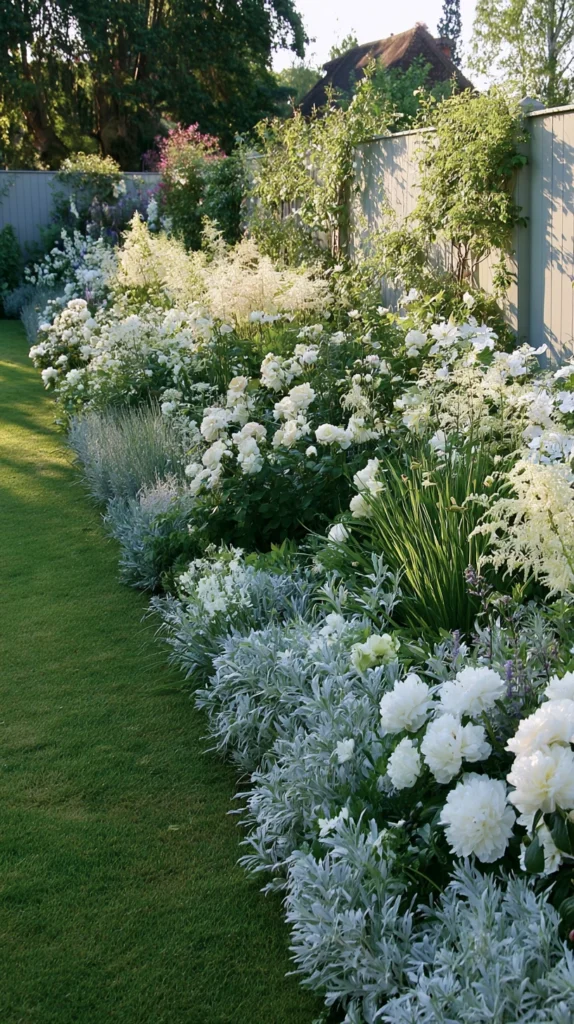
A border planted entirely in white flowers and silver-grey foliage has a luminous, almost ethereal quality that reads beautifully in both daylight and evening light. White agapanthus, Phlox ‘David’, Stachys byzantina, Artemisia ‘Powis Castle’, and white cosmos planted in generous masses create a composition of remarkable sophistication and calm.
The restraint of a single-colour palette forces attention onto form, texture, and structure rather than colour contrast, producing a border that feels genuinely designed rather than simply planted.
4. The Cottage Garden Border
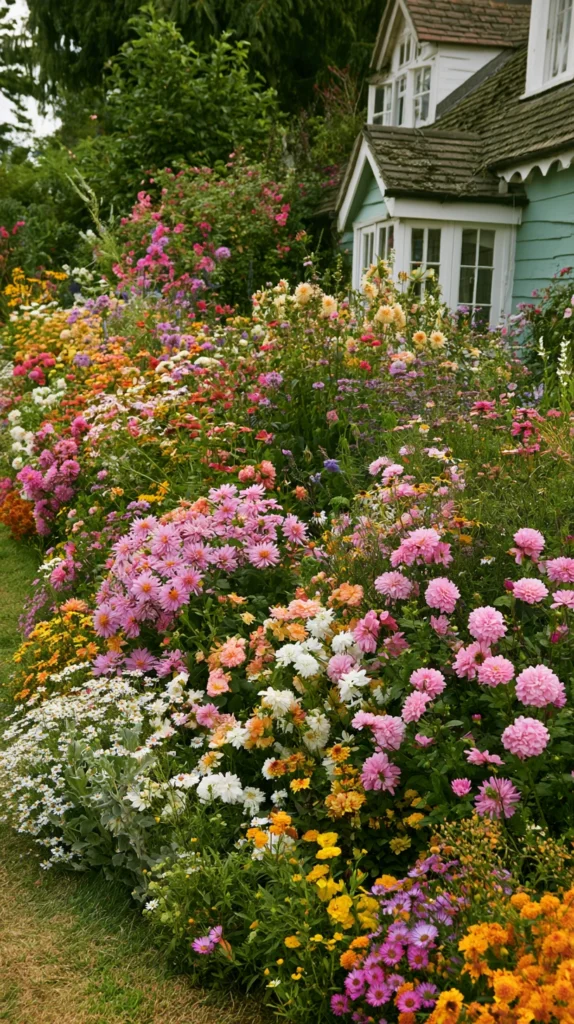
The cottage garden border — an apparently relaxed, abundant mix of self-seeding annuals and perennials including foxglove, aquilegia, sweet william, nigella, and hollyhock — achieves its characteristically generous, unforced quality through deliberate plant selection and intelligent editing rather than genuine randomness.
Allow plants to self-seed freely, remove those that seed in the wrong positions, and the border develops a natural, evolving character that looks entirely uncontrived. The trick is to start with strong, vigorous varieties and let the garden make its own decisions from there.
5. The Prairie-Style Naturalistic Border
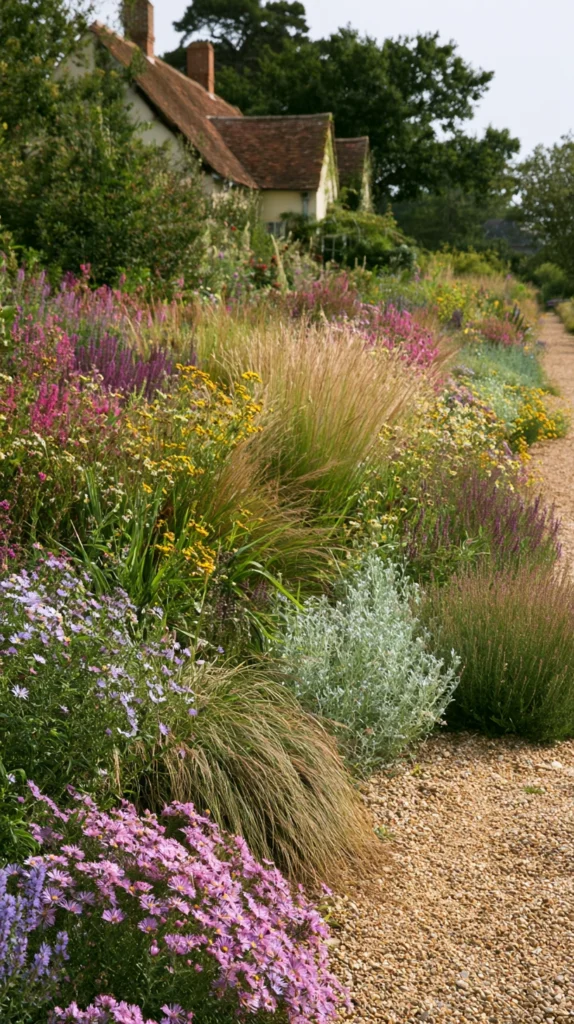
The prairie-style border — tall grasses, echinacea, rudbeckia, verbena bonariensis, and sanguisorba planted in naturalistic interwoven drifts — brings the visual quality of a wildflower meadow into a designed garden context with far greater reliability and longevity.
The key design principle is transparency: plants of varying heights are mixed through the border so that views through the planting create layered depth rather than a solid front-to-back progression. It looks extraordinary from late summer through winter, when the seedheads and grass plumes catch frost and low light in equal measure.
6. The Shade Border
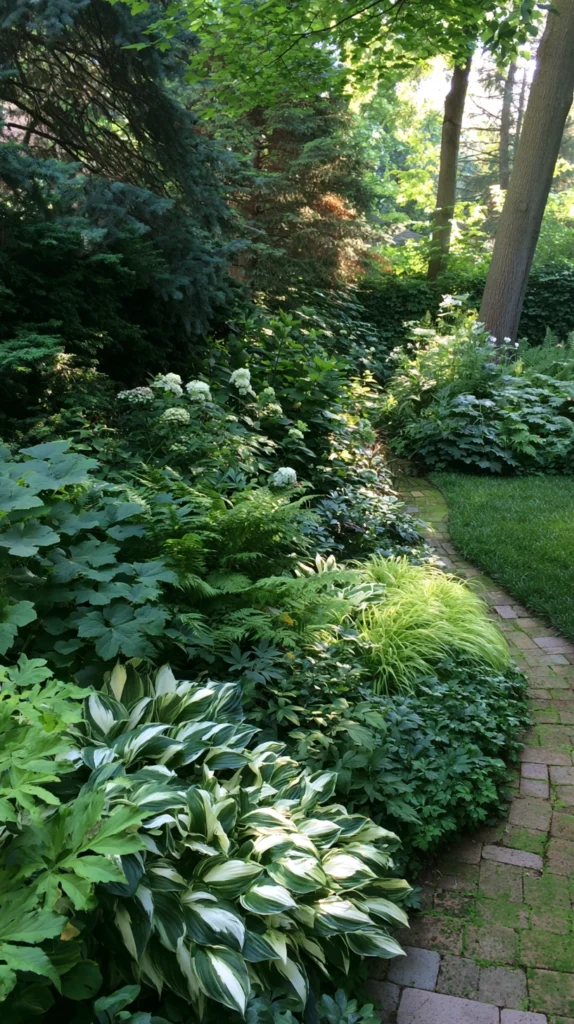
A shaded border beneath mature trees or along a north-facing fence is an opportunity rather than a limitation — the plant palette available for genuinely deep shade includes some of the most beautiful foliage plants in cultivation.
Hostas in large clumps, ferns in contrasting textures, hellebores for late winter and early spring flowers, astrantia, digitalis, and the extraordinary Podophyllum species for dramatic large-leaved groundcover: these plants collectively create a rich, layered, deeply textured border that asks for no direct sunlight and very little maintenance once established.
7. The Gravel Border Edge
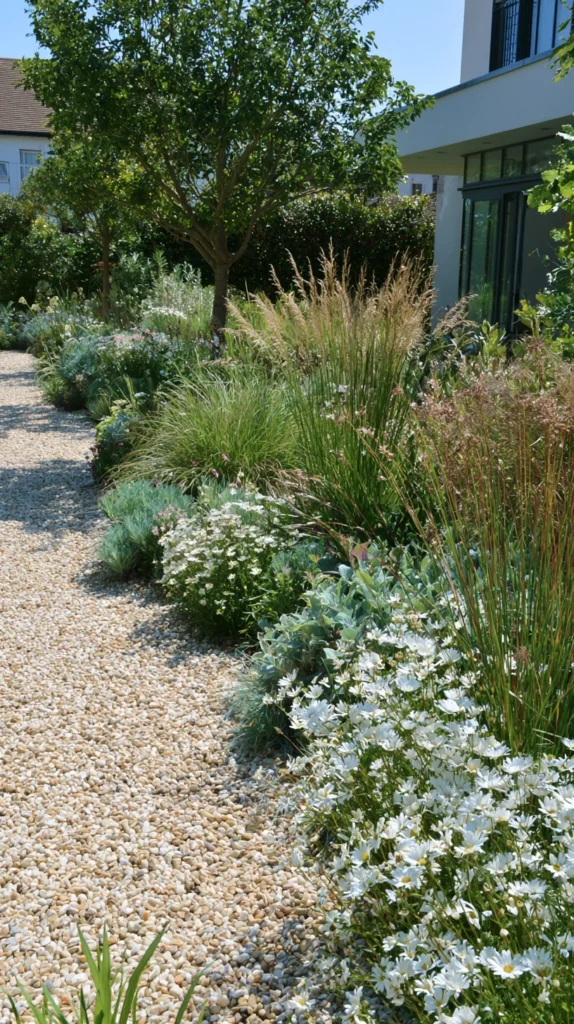
A border edged in a generous band of fine gravel — the planting emerging through and spilling over the gravel surface rather than stopping abruptly at a hard edge — creates a softer, more naturalistic transition between planted and paved areas than any formal edging material can achieve.
Mediterranean plants — lavender, nepeta, salvia, cistus, stachys — thrive in the sharply drained conditions the gravel surface creates and spread naturally into the gravel over time, softening the edge progressively with each growing season. The gravel also suppresses weeds effectively and eliminates the need for regular edge cutting.
8. The Long Season Bulb and Perennial Border
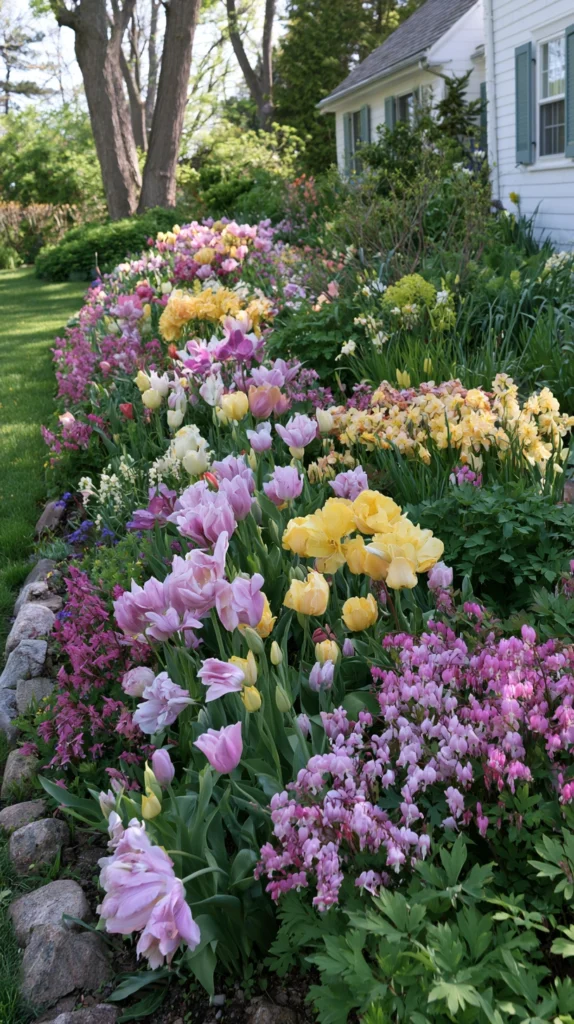
A border designed specifically for maximum seasonal continuity — snowdrops and hellebores in late winter, tulips and alliums in spring, perennials and roses through summer, dahlias and rudbeckia in autumn, and structural grasses through winter — delivers colour and interest across all twelve months rather than peaking briefly and then fading.
The planning requires careful attention to succession, with early-season bulbs planted beneath later-emerging perennials whose foliage covers and disguises the bulb foliage as it dies back naturally through late spring and early summer.
9. The Foliage-Forward Border
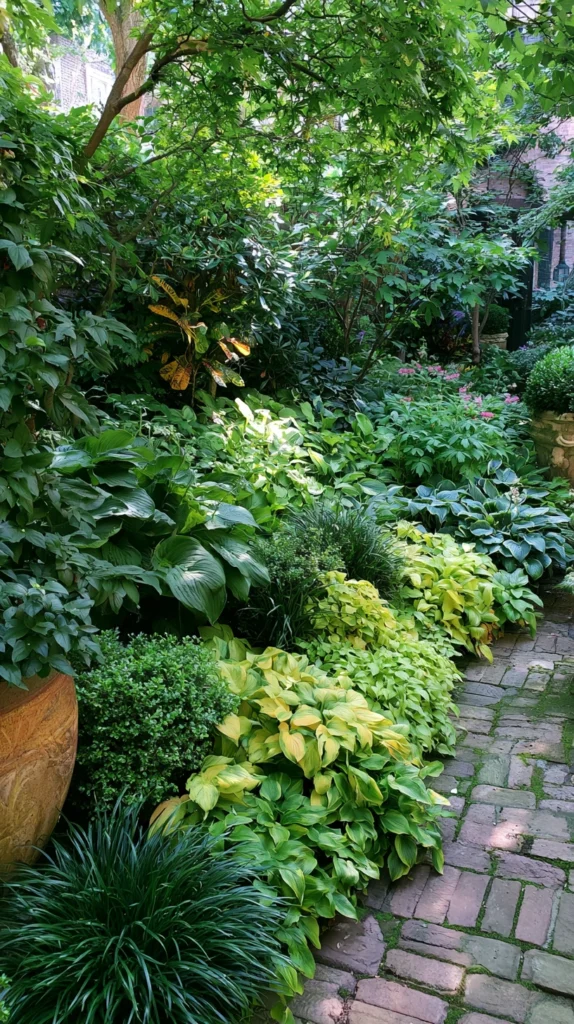
A border designed primarily around foliage rather than flowers — using the extraordinary range of leaf colour, texture, size, and form available in the modern plant palette — achieves a year-round consistency and sophistication that flower-dependent borders cannot match.
Combine the large paddle leaves of Hosta ‘Sum and Substance’ with the fine texture of Hakonechloa grass, the deeply cut silver foliage of Melianthus major, the dark glossy straps of Ophiopogon planiscapus ‘Nigrescens’, and the bold architectural presence of a Fatsia japonica. The result is a border of extraordinary visual richness that looks as good in February as it does in July.
10. The Cutting Garden Border
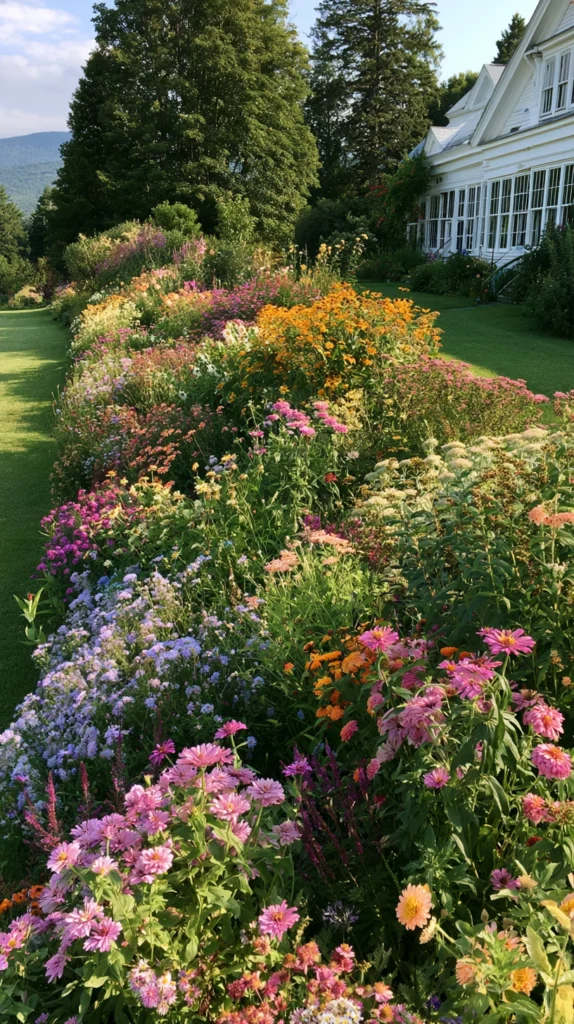
A border designed to supply fresh flowers for the house — dahlias, sweet peas, zinnias, cosmos, lisianthus, ammi, and scabiosa planted in generous, productive blocks — can look as beautiful in the garden as it performs in a vase, provided it is designed with visual composition in mind rather than pure productivity.
Arrange the cutting varieties in colour-harmonious groupings, edge the border neatly in low herbs or annual alyssum, and the overall effect reads as a designed planting rather than a crop row. Regular cutting, rather than depleting the display, keeps the plants flowering more prolifically throughout the season.
11. The Tropical-Style Border
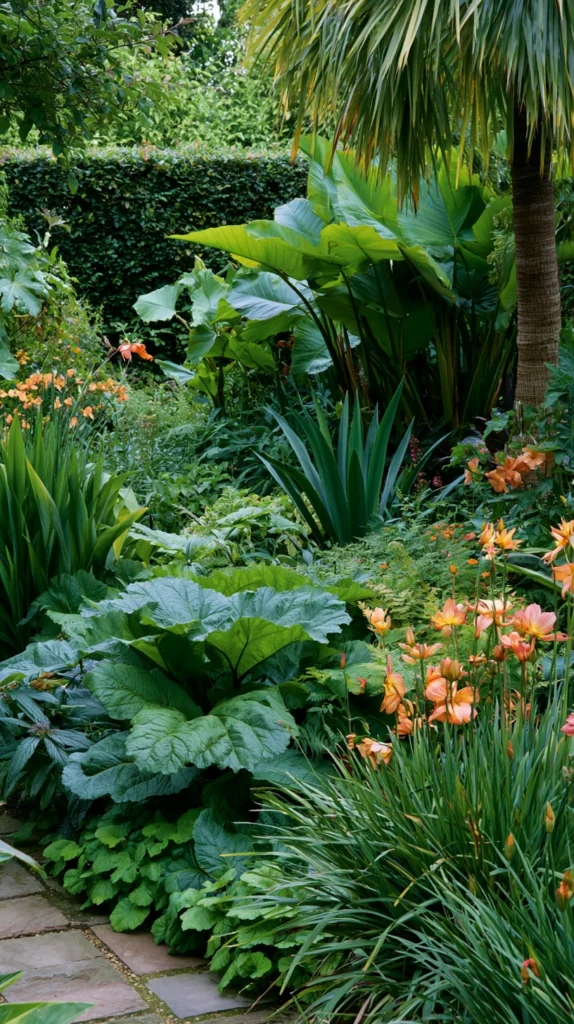
A border planted in large-leaved, bold-textured, architecturally dramatic plants — cannas, bananas, dahlias, tithonia, ricinus, hedychium, and elephant ears — creates a genuinely exotic, high-impact display that reads as completely unlike any traditional English border style.
The planting relies on scale and drama rather than delicacy and subtlety, with individual plants large enough to be read from a distance and bold enough to hold their own against strong summer light. Most tender plants in this palette need lifting and storing through winter in temperate climates, making the border an annual commitment rather than a low-maintenance perennial planting.
12. The Rose and Allium Border
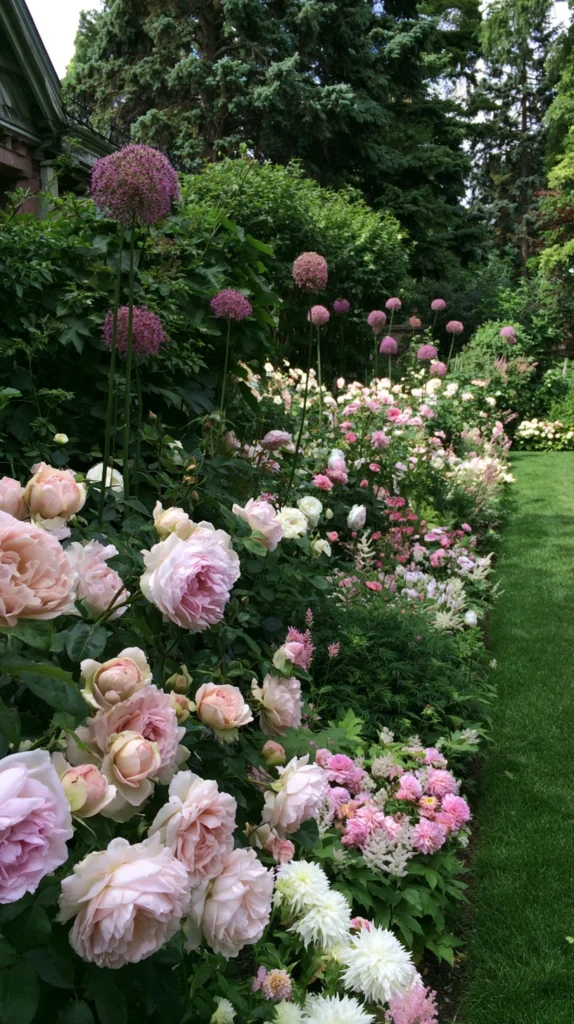
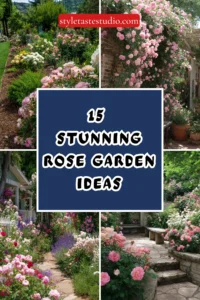
Roses underplanted with alliums is one of the most reliably beautiful plant combinations in border design — the spherical purple heads of alliums emerging through and above the lower rose foliage in late spring, before the roses reach full flowering height, creates a layered composition of extraordinary elegance.
Choose repeat-flowering shrub roses in soft pink, blush, apricot, or deep crimson, underplant generously with Allium hollandicum ‘Purple Sensation’ or the taller Allium ‘Gladiator’, and allow Geranium ‘Rozanne’ to weave through the base of the border as a long-season flowering groundcover. The combination requires minimal design skill to execute beautifully and delivers exceptional results from May through September.
13. The Pollinator Border
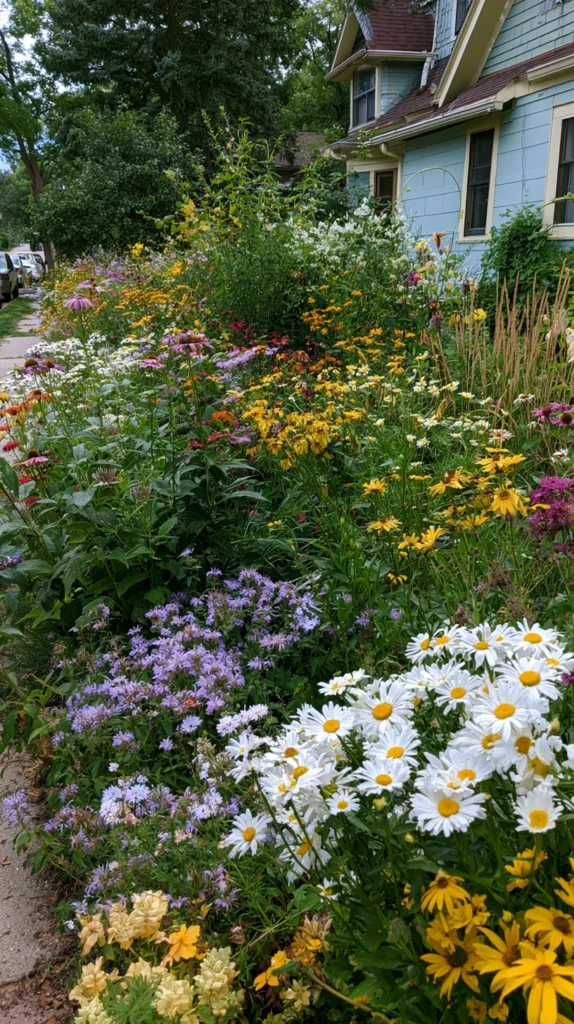
A border planted specifically to support bees, butterflies, hoverflies, and other beneficial insects — single-flowered varieties of echinacea, agastache, salvia, verbena bonariensis, scabiosa, and nepeta planted in generous masses — is both ecologically valuable and visually beautiful in equal measure.
Single-flowered varieties are essential: the double-flowered forms that many gardeners favour are frequently inaccessible to pollinators and should be avoided in a border designed for genuine ecological function. A well-planted pollinator border in full summer activity — humming, moving, alive with insect presence — is one of the most genuinely rewarding garden experiences available.
14. The Winter Structure Border
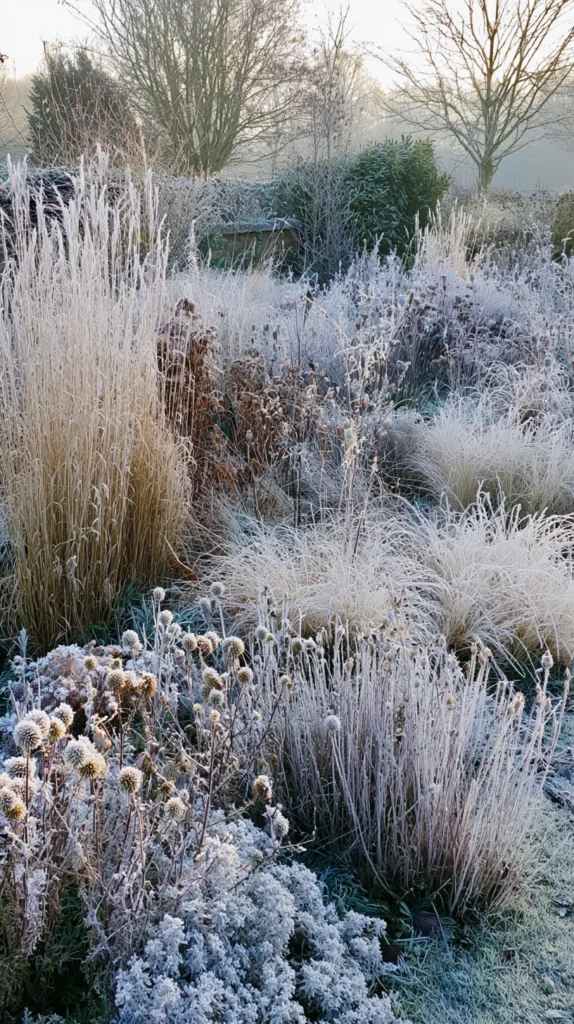
A border designed specifically to look beautiful in winter — relying on the seedheads of perennials, the stems and berries of shrubs, the persistent foliage of evergreen plants, and the architectural presence of ornamental grasses rather than on flower colour — addresses the season that most borders completely abandon. Pennisetum, Miscanthus, and Molinia grasses hold their plumes through frost and into January.
The seedheads of echinacea, rudbeckia, and teasel stand as architectural forms against low winter light and carry frost beautifully. Evergreen structure from clipped box, sarcoccocca, and Viburnum davidii ensures the border retains visual mass and interest through the coldest months.
15. The Low-Maintenance Shrub and Perennial Border
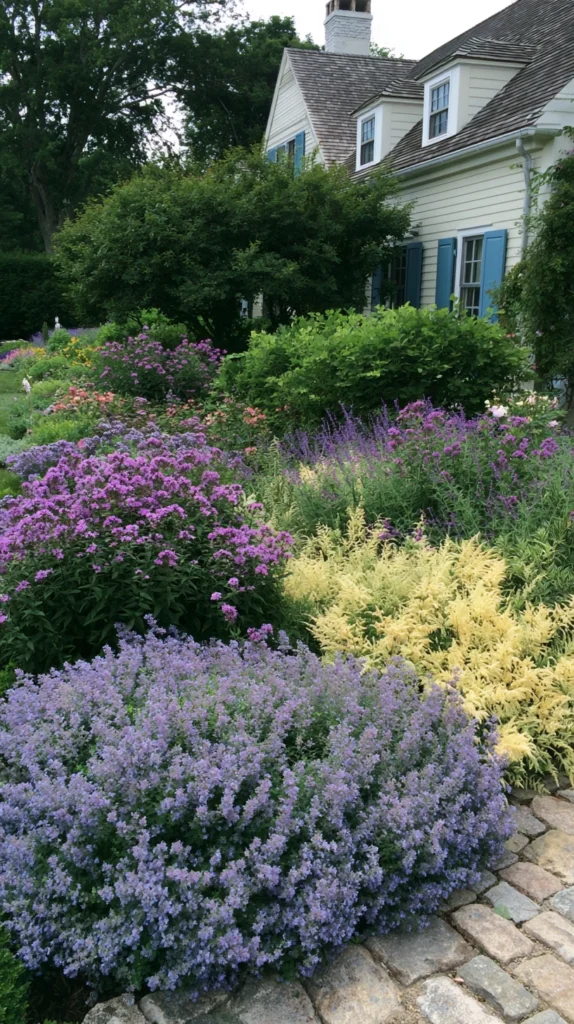
A border built primarily from tough, reliable, low-maintenance perennials and shrubs — geraniums, salvias, nepeta, rudbeckia, amsonia, and deciduous shrubs like caryopteris and perovskia — delivers exceptional seasonal performance with minimal ongoing intervention beyond an annual cut-back in late winter or early spring. The plants in this palette are drought-tolerant once established, resistant to most common pests and diseases, and reliably self-supporting without staking.
For a gardener who wants a beautiful, productive border without high ongoing maintenance demands, this combination of tough, generous plants is the most practical and most rewarding starting point available.
Final Thoughts: Designing a Border That Rewards Every Season
The flower bed border that looks genuinely beautiful across all seasons is the product of deliberate planning rather than spontaneous planting — attention to succession, structural backbone, and the relationship between adjacent plants at every stage of the growing year. Begin with clear structure, choose plants that earn their space across multiple seasons, and edit with confidence when something is not performing as intended.
The border is never truly finished. It evolves with the garden, with the gardener’s growing knowledge, and with the gradual establishment of plants that become more beautiful with each passing year. That quality of ongoing development — the sense that the border is always becoming rather than simply being — is what makes the flower bed border the most consistently rewarding element in any designed garden.