15 Garden Fence Planting Ideas
The garden fence is one of the most consistently underused and most genuinely transformative planting opportunities available in any domestic outdoor space — a vertical surface of considerable extent whose potential as a living, growing, botanically extraordinary display is overlooked by the majority of gardeners who see it as a boundary marking rather than as the remarkable horticultural canvas it is.
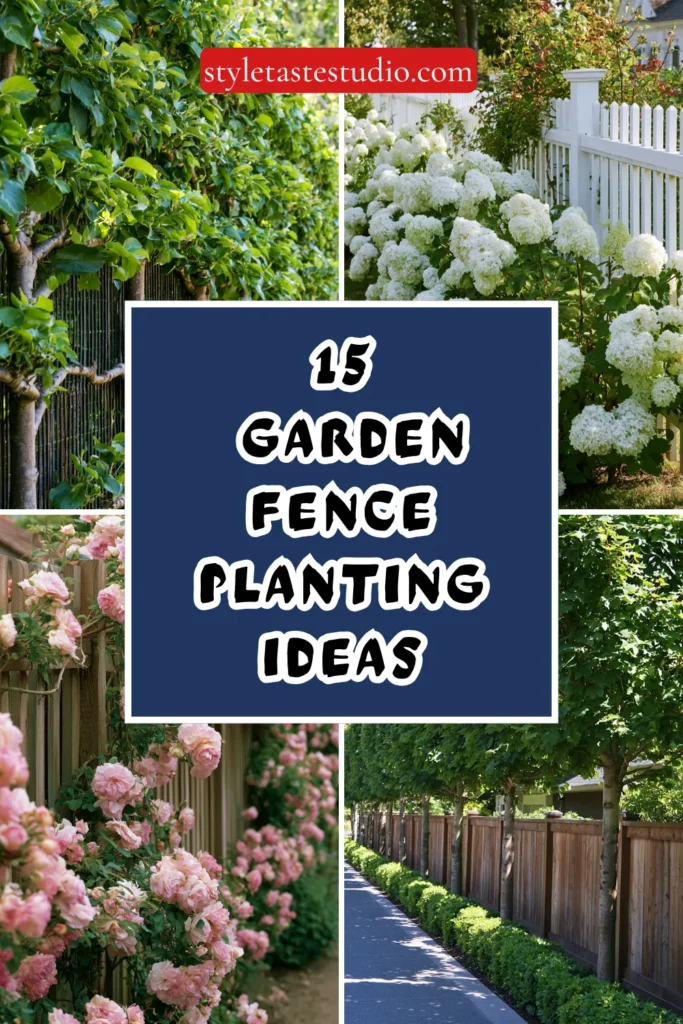
A garden fence planted with genuine knowledge, genuine creative ambition, and genuine understanding of the specific growing conditions that the fence’s aspect, its material, and its microclimate create is not merely a more beautiful boundary.
It is a complete, layered, seasonally extraordinary garden feature of such botanical richness and such atmospheric power that the fence itself becomes the most important and the most visually magnificent element of the entire garden. Here are 15 garden fence planting ideas that will transform every boundary in the garden from a structural necessity into a botanical extravaganza.
1. Train Climbing Roses for Classic Romantic Beauty
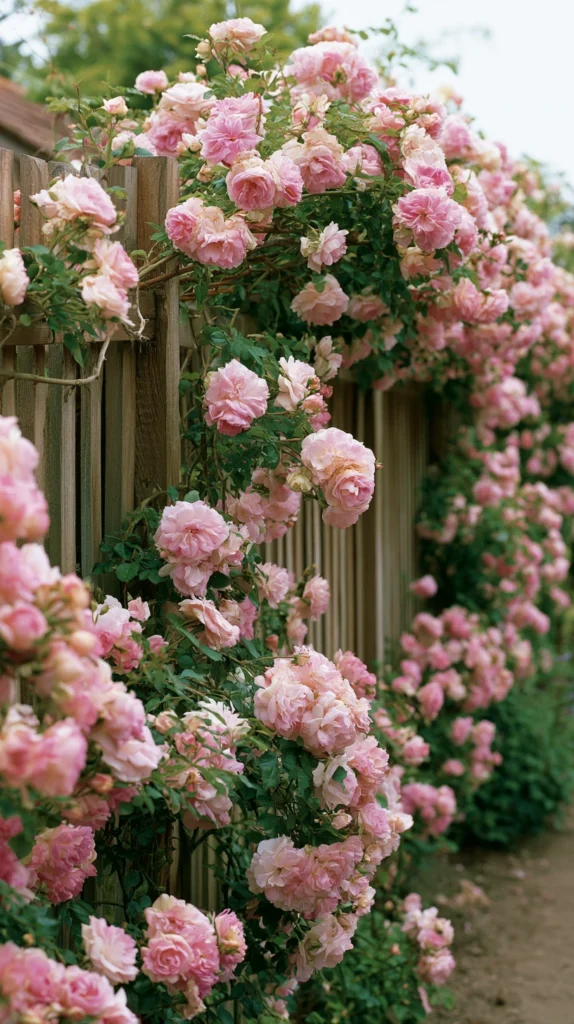
The climbing rose trained along a garden fence is one of the most completely, most historically, and most enduringly beautiful fence planting ideas available in any temperate garden — a combination of structure and botanical generosity so perfectly matched that the great gardening traditions of Europe, America, and Asia have all arrived independently at the same conclusion: that a fence clothed in climbing roses is one of the most genuinely extraordinary things a garden can contain.
Choose repeat-flowering varieties of genuine climbing vigour and genuine disease resistance — the David Austin climbers of extraordinary petal count and extraordinary fragrance, the old climbing hybrid teas whose specific, concentrated rose perfume fills the garden with a fragrance of complete olfactory magnificence during their peak flowering period, or the smaller-flowered ramblers whose single, magnificent flush of bloom in midsummer creates a flowering display of such extraordinary abundance that it transforms the garden’s entire character for the duration of its performance.
Train the canes horizontally along the fence wire for the maximum flowering production that the encouraged lateral growth creates, and the climbing rose fence becomes the garden’s most spectacular and most botanically generous seasonal display.
2. Plant Wisteria for Spectacular Spring Drama
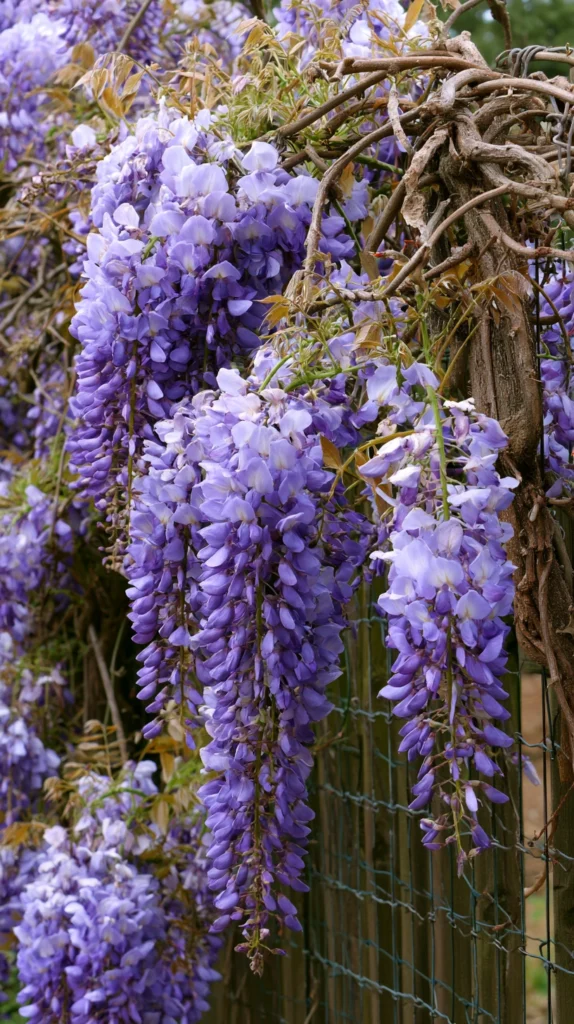
Wisteria on a garden fence — its twining stems wound carefully through a network of horizontal wires fixed to the fence structure, its cascading racemes of lilac, violet-blue, or white flowers hanging in the specific, completely extraordinary pendulous clusters of the most spectacular of all temperate climbing plants — creates a fence planting of such annual, seasonal, completely overwhelming botanical drama that it becomes, for the two to three weeks of its flowering, the single most extraordinary visual feature of the entire garden.
Wisteria establishes slowly and requires patient, knowledgeable annual pruning — the specific summer and winter pruning regime that builds the spur system responsible for the flower bud production of the following spring’s display .
But rewards this modest annual investment of time and horticultural knowledge with decades of increasingly spectacular flowering that improves year upon year with the accumulating botanical resource of an increasingly mature, increasingly productive root system and an increasingly extensive flowering spur structure.
3. Create a Year-Round Evergreen Screen with Ivy
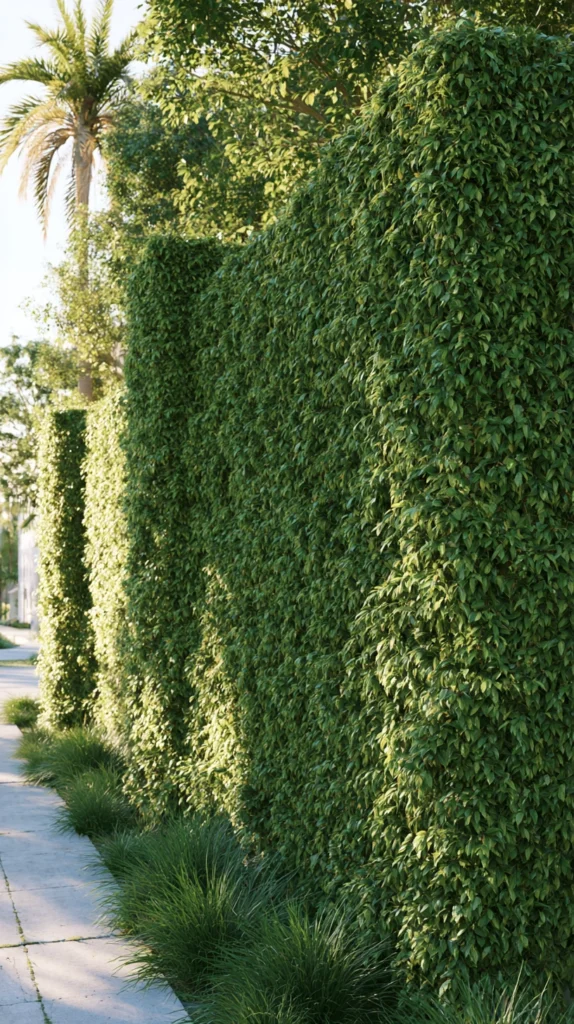
Ivy — the most versatile, the most shade-tolerant, and the most completely self-sufficient of all garden fence climbing plants — is the fence planting choice of most complete year-round coverage and most genuinely effortless maintenance for the garden fence whose aspect, whose available gardening time, or whose specific planting objective makes the flowering climber’s more seasonal contribution an insufficient solution to the fence’s most fundamental covering requirement.
Choose variegated ivy varieties for the specific quality of year-round decorative interest that the cream, yellow, or silver patterning of the variegated leaf provides against the dark green of the ivy’s base color .
A visual interest of sufficient decorative contribution to justify the ivy’s fence presence through the full twelve months of the garden year rather than merely through the brief flowering season of the more spectacular but less continuously beautiful flowering alternatives. The ivy fence covering improves the garden’s sound management, wildlife habitat, and thermal insulation simultaneously with its decorative contribution.
4. Grow Sweet Peas on Vertical Netting for Summer Fragrance
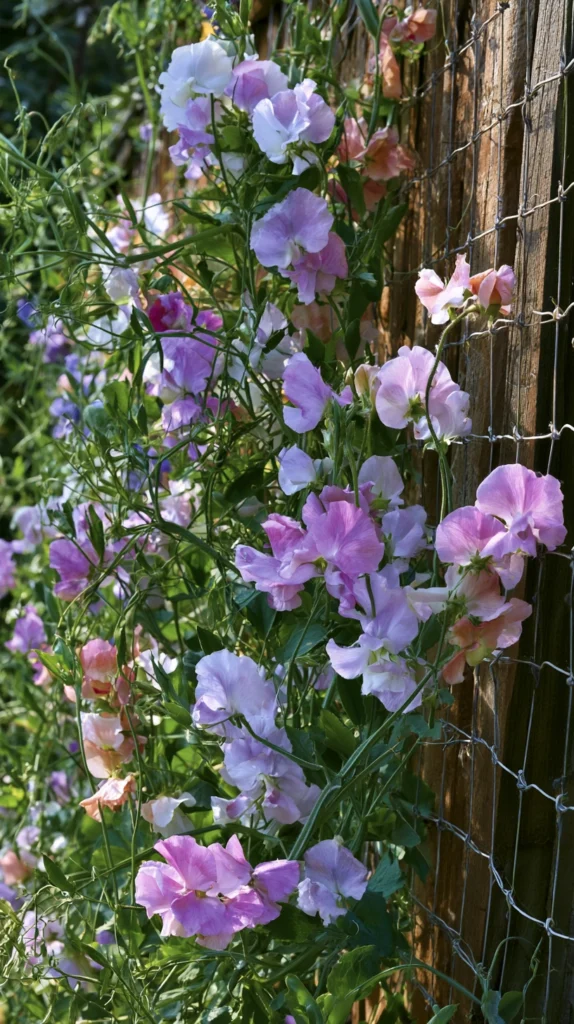
Sweet peas grown on a network of vertical netting or horizontal wire fixed to the garden fence create a summer fence planting of extraordinary color variety, extraordinary daily cutting reward, and the most intensely sweet, most genuinely extraordinary garden fragrance available in any annual climbing plant of the temperate garden vocabulary.
The sweet pea’s specific biological generosity — its production of more flowers in response to the regular removal of its blooms that makes it the cut flower gardener’s most productive and most continuously rewarding plant — means that a sweet pea-covered garden fence in full summer production provides an essentially inexhaustible supply of cut flowers of extraordinary color range and extraordinary vase life for the interior of the home throughout the full duration of the summer season, while maintaining a fence display of continuous, replenishing, genuinely magnificent botanical abundance.
5. Plant Espaliered Fruit Trees for Productive Elegance
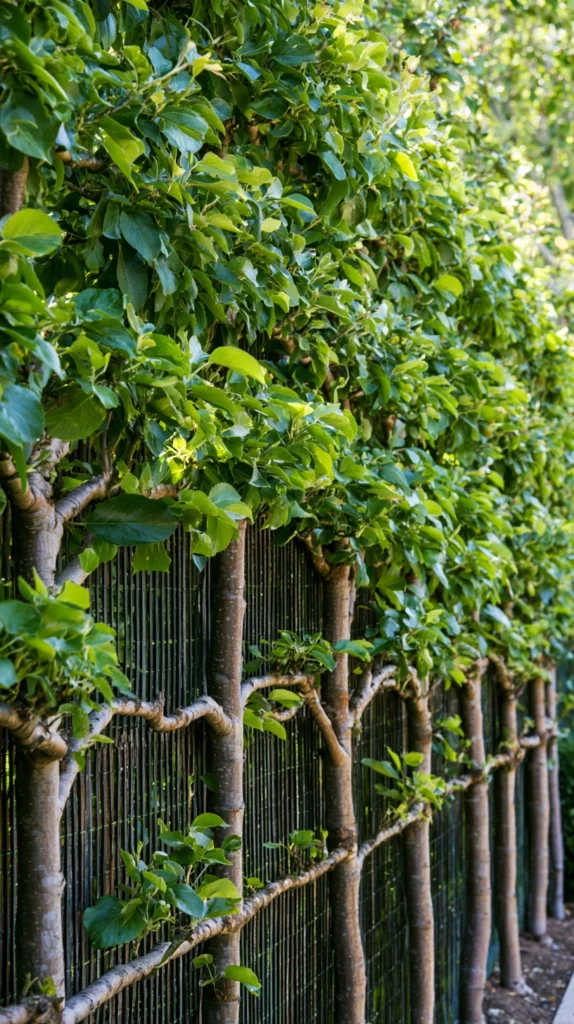
An espalier fruit tree — the specific, ancient horticultural technique of training a fruit tree in a flat, two-dimensional form against a fence or wall by carefully selecting and positioning the lateral branches in a structured horizontal, fan, or Belgian fence pattern — is the fence planting idea of most complete integration of productive agricultural purpose with genuinely extraordinary decorative beauty.
The espaliered apple or pear on a garden fence produces fruit of remarkable quality — the fence’s thermal mass and solar reflection creating a microclimate of increased warmth and increased light intensity that promotes fruit development of exceptional flavor and exceptional color — while creating a garden boundary of such extraordinary formal elegance and such completely unusual visual character that it functions simultaneously as the garden’s most productive food source and its most architecturally beautiful boundary treatment.
6. Use Clematis for Long-Season Flowering Color
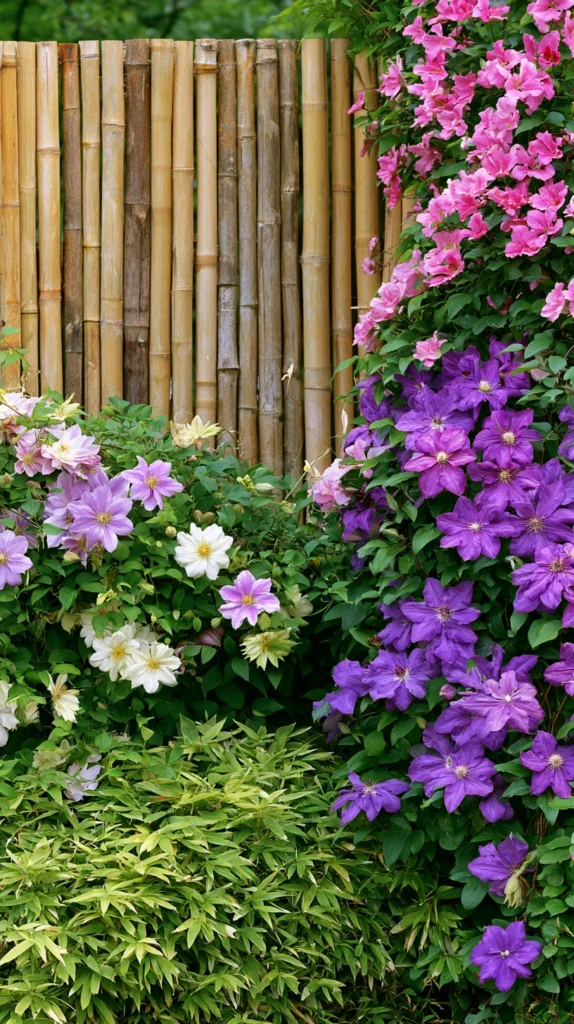
The clematis family — with its several hundred species and the thousands of named garden varieties they have produced through centuries of horticultural selection and hybridisation — is the fence planting genus of most extraordinary flowering diversity and most genuinely extended seasonal contribution, offering the garden fence planter varieties whose combined flowering seasons extend from the late winter blooming of Clematis cirrhosa through the spring flowering of the Montanas, the midsummer flowering of the large-flowered hybrids, and the late summer and autumn flowering of the viticella and texensis groups.
Select a sequence of clematis varieties whose overlapping flowering seasons create a continuous succession of color on the garden fence from the first warmth of late winter through to the first frosts of autumn — a botanical relay of extraordinary color diversity and extraordinary seasonal persistence that no other climbing plant genus can match for the completeness and the duration of its fence-covering flowering contribution.
7. Install a Bamboo Screen with Understorey Planting
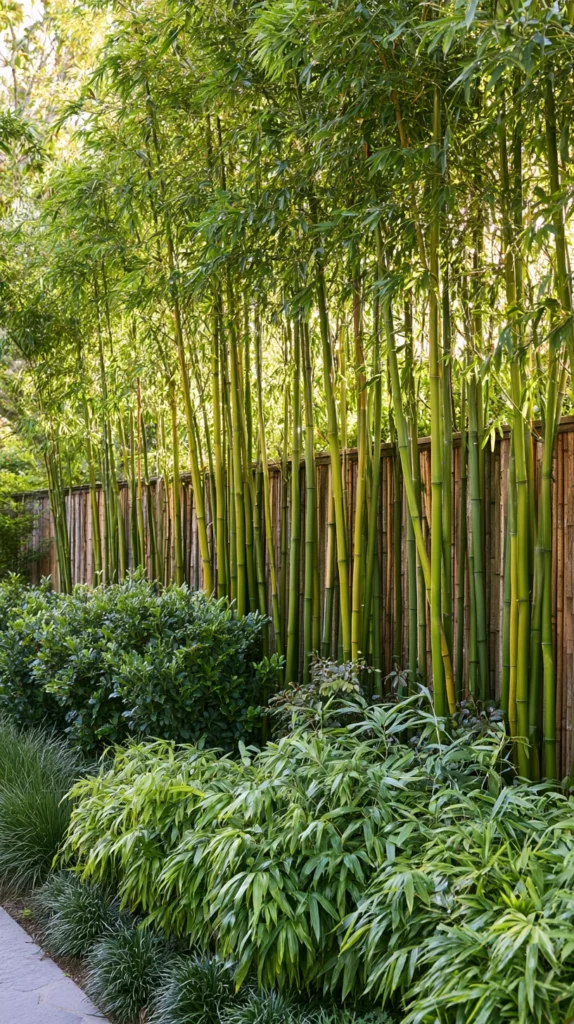
A bamboo screen — clumping bamboo varieties of appropriate height and appropriate aesthetic character planted immediately in front of the garden fence rather than trained upon it — creates a living boundary treatment of extraordinary tropical atmosphere, extraordinary privacy, and extraordinary acoustic management that is simultaneously the most immediately effective and the most botanically sophisticated of all the fence planting approaches on this list.
Supplement the bamboo screen’s vertical, structural presence with an understorey planting of shade-tolerant species in the zone of lower light created by the bamboo’s canopy — the hostas, the ferns, the astilbes, and the epimediums that thrive in the specific growing conditions of the bamboo shade and create, at the fence planting’s base, a layer of botanical richness and botanical variety that the uniform bamboo stem display above it cannot provide alone.
8. Plant a Productive Kitchen Garden Fence
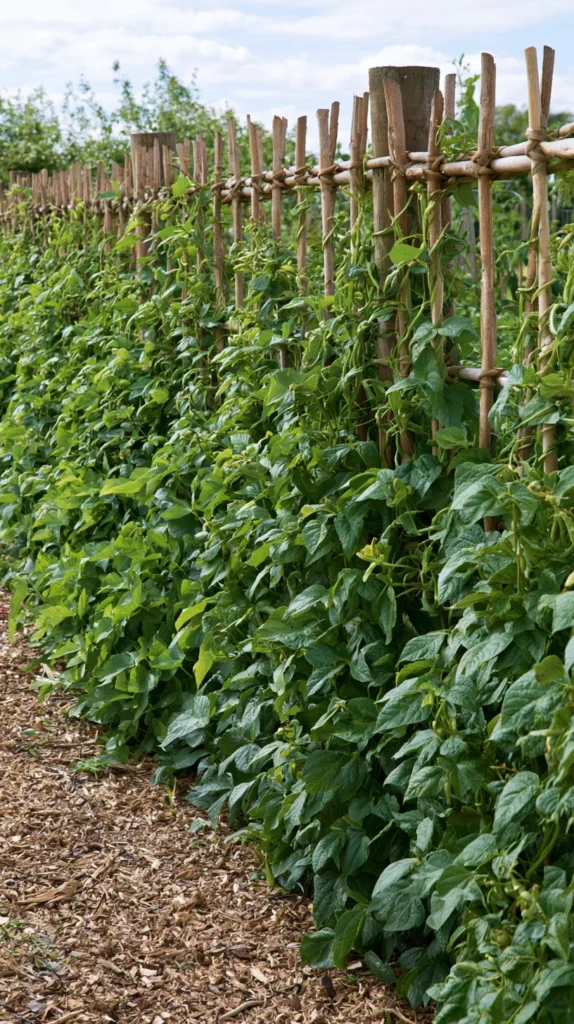
A garden fence transformed into a productive kitchen garden growing structure — with horizontal training wires supporting cordon-trained tomatoes, espalier-trained soft fruit, climbing French beans, and the climbing varieties of courgette and cucumber whose upward growth habit makes them the most space-efficient of all kitchen garden fence crops — is the fence planting idea of most complete practical value and most genuinely rewarding daily horticultural engagement.
The productive kitchen garden fence makes the garden boundary not merely more beautiful but genuinely, daily, completely nourishing — the source of fresh tomatoes, fresh beans, and fresh cucumbers throughout the summer season, harvested from a growing surface that occupies no additional floor space beyond the fence’s existing footprint and that provides a growing environment of remarkable productivity in the specific, warm, sheltered microclimate that the south or west-facing garden fence creates.
9. Create a Wildlife Hedge with Native Species
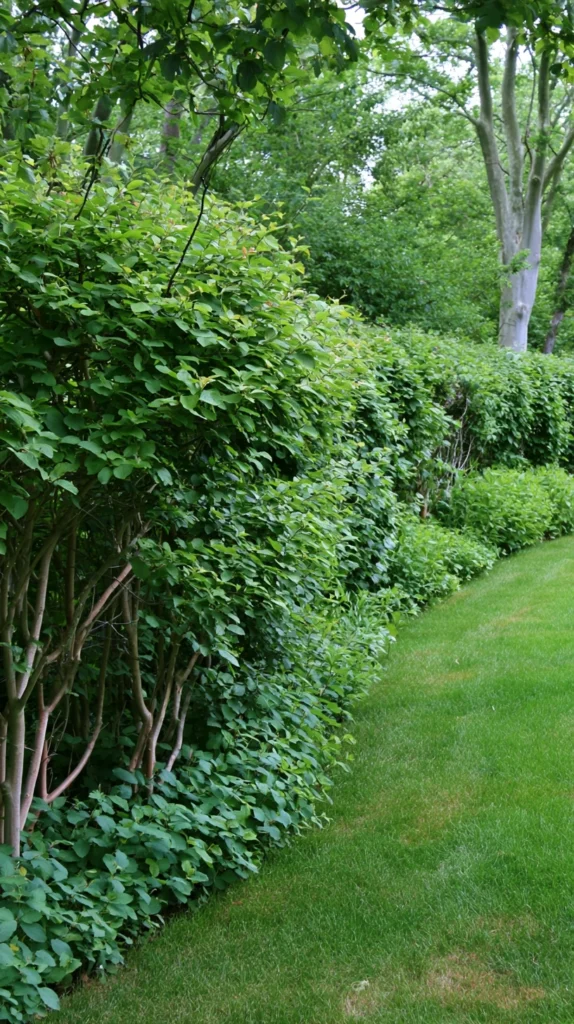
A native hedgerow planting immediately adjacent to the garden fence — hawthorn, blackthorn, dog rose, field maple, and hazel planted in a mixed, multi-species configuration of the traditional British countryside hedgerow — creates the most ecologically valuable and the most wildlife-supportive fence planting available in any temperate garden.
The native hedgerow fence planting provides nesting habitat for garden birds of extraordinary diversity, foraging habitat and overwintering shelter for hedgehogs, slowworms, and the complete range of beneficial garden invertebrates, and a berry and fruit display of genuine decorative beauty in the autumn and winter months that extends the fence planting’s visual contribution through the seasons when most ornamental climbing plants have retreated from their summer splendour to their dormant winter structure.
10. Train Jasmine for Extraordinary Nighttime Fragrance
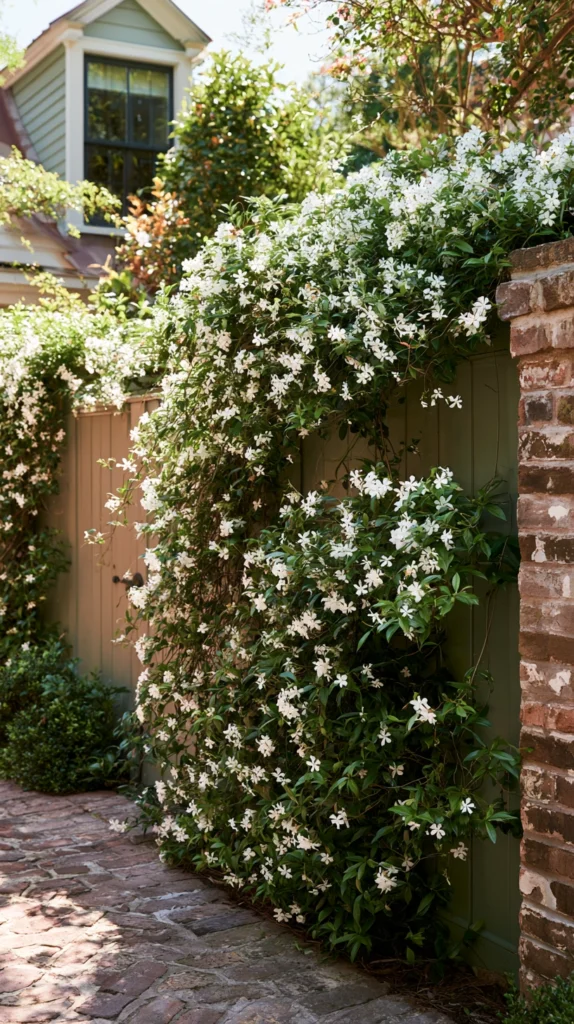
Jasmine on a garden fence — Jasminum officinale trained along horizontal wires through the summer months, its white, star-shaped flowers opening in the warmth of the summer afternoon and releasing their extraordinary, concentrated, completely magnificent fragrance into the garden with the maximum intensity of the warm summer evening — creates a fence planting of such extraordinary olfactory power and such completely irresistible sensory richness that the garden’s evening atmosphere is transformed from merely pleasant to genuinely, completely extraordinary.
Position the jasmine-covered section of the garden fence adjacent to the outdoor dining or seating area for the maximum atmospheric benefit of the fragrance at the specific time of evening when the garden is most actively and most pleasurably inhabited. The transition from the day’s warmth to the evening’s cooler, fragrance-concentrating air creates the specific, absolutely extraordinary olfactory moment that jasmine produces with such reliable and such completely magnificent daily summer generosity.
11. Plant Pleached Trees for Elevated Structure
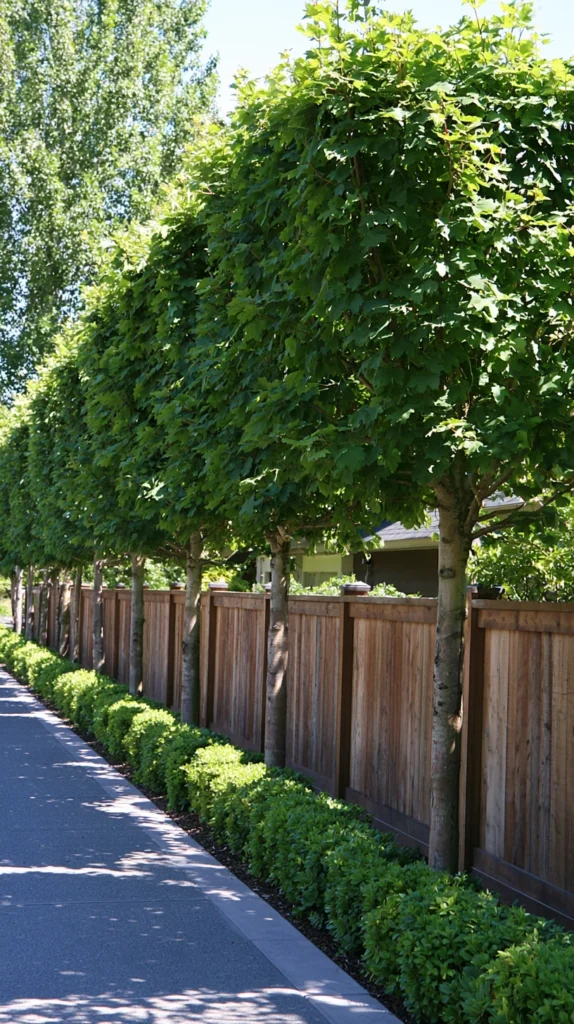
Pleached trees — limes, hornbeams, or planes trained into flat, screen-like forms on a framework of canes and wires above a clear stem of appropriate height — create a fence planting of the most sophisticated and the most architecturally refined character available in the garden boundary vocabulary, adding a layer of elevated botanical structure above the fence line that extends the garden’s vertical planting interest into the aerial zone above the fence’s structural height.
The pleached tree screen above the garden fence is the fence planting choice of most complete formal garden design authority — the specific, trained, architecturally precise botanical intervention that distinguishes the garden designed with genuine landscape intelligence from the garden whose fence planting, however botanically generous, has not been considered in relation to the broader spatial composition of the outdoor space it contributes to and partially defines.
12. Use Annual Climbers for Instant Seasonal Impact
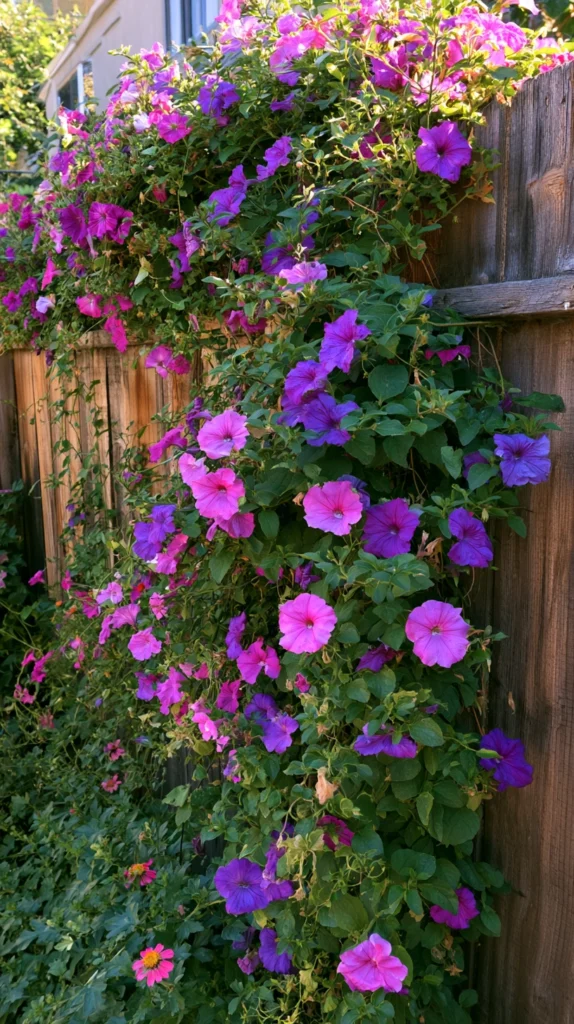
Annual climbing plants — the nasturtium in its climbing varieties, the morning glory in its extraordinary electric blue and deep purple flower colors, the black-eyed Susan vine, and the climbing lathyrus species beyond the sweet pea — offer the garden fence planting project of most immediate seasonal impact and most completely flexible annual renewal, allowing the fence’s botanical character to change entirely from season to season without the commitment of the perennial climber’s permanent structural presence.
Grow annual climbers from seed sown directly at the fence base in late spring for the most economical and the most genuinely satisfying fence planting experience — the specific pleasure of watching the seedling emerge, establish, climb, and flower with a speed and an enthusiasm that the perennial climber, establishing slowly through its first seasons, cannot approach for the immediate, season-long gratification of the impatient or the experimentally minded fence planter.
13. Create a Fragrant Herb Fence Border
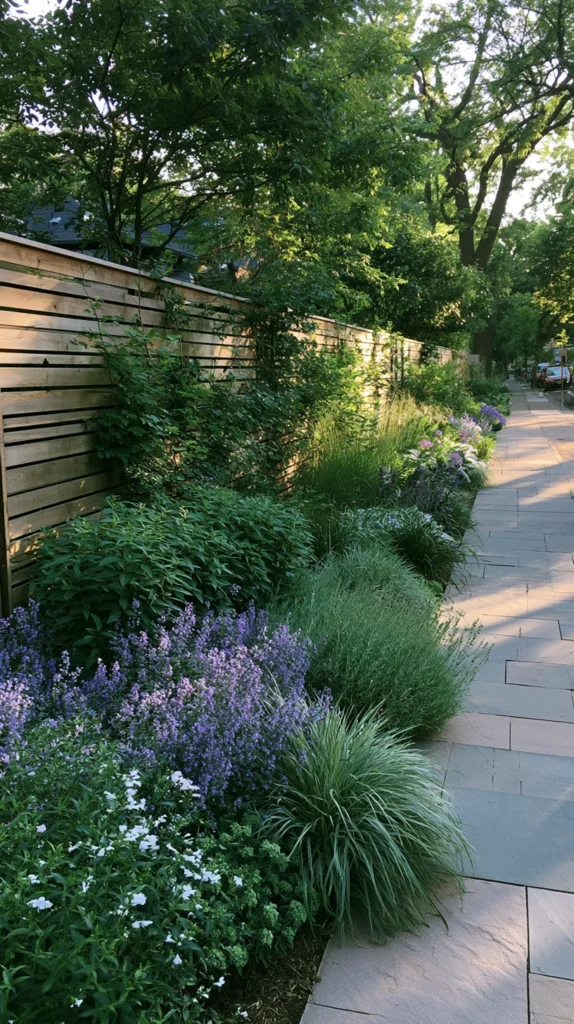
A border of fragrant herbs planted along the base of the garden fence — lavender, rosemary, sage, lemon verbena, and the fragrant thymes planted in generous drifts of complementary height and fragrance.
It creates a fence planting of extraordinary olfactory richness, extraordinary culinary utility, and extraordinary ornamental beauty that works as beautifully as a front-of-fence border planting of purely decorative character and as a genuinely productive kitchen herb garden simultaneously.
The fragrant herb fence border requires excellent drainage and full sun for the most productive and the most ornamentally spectacular result — the conditions that the south or west-facing garden fence most reliably provides, and in which the lavender, the rosemary, and the fragrant thymes achieve the specific, dense, richly aromatic growth habit and the specific, concentrated, genuinely extraordinary fragrance intensity that their native Mediterranean climate produces and that the garden fence’s warmest and most sun-exposed positions most closely replicate in the temperate garden.
14. Plant a Hydrangea Border for Late Season Color
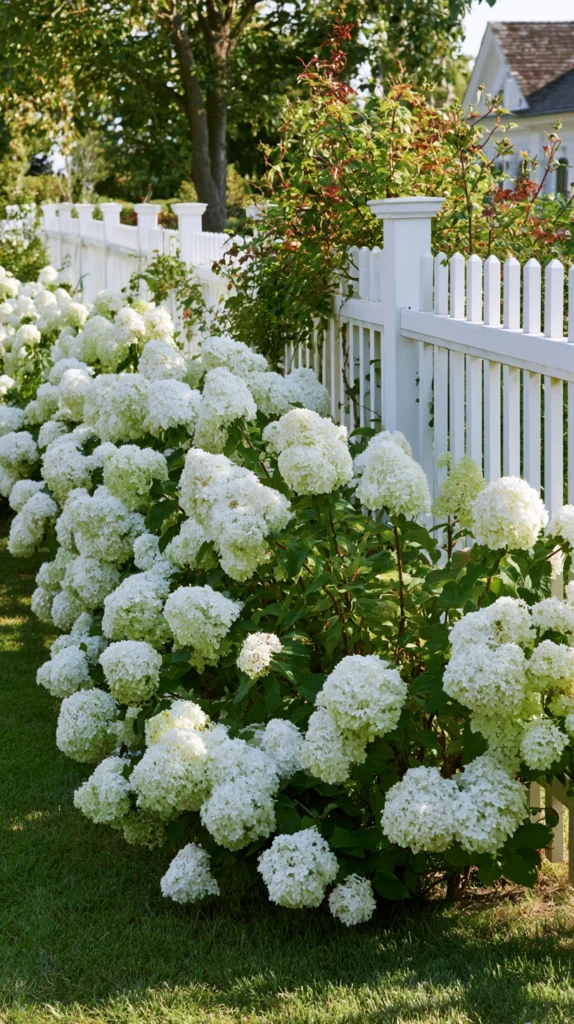
Hydrangeas planted at the base of the garden fence — the climbing hydrangea, Hydrangea anomala petiolaris, trained self-clingly against the fence structure for vertical coverage, supplemented by the large-headed mophead and lacecap varieties in the border immediately in front of the fence for horizontal flowering abundance .
It create a fence planting of extraordinary late summer and autumn color contribution that fills the specific seasonal gap when the spring and early summer fence climbers have completed their flowering and the garden’s boundary risk losing the botanical visual impact it has maintained through the peak season.
The climbing hydrangea’s self-clinging growth habit makes it the most independently capable and the most maintenance-minimal of all the fence climbing plants on this list — requiring no tying, no wire training, and no structural support beyond the fence surface itself to which it attaches with complete and completely reliable botanical self-sufficiency.
15. Design the Fence Planting as a Complete Year-Round Tapestry
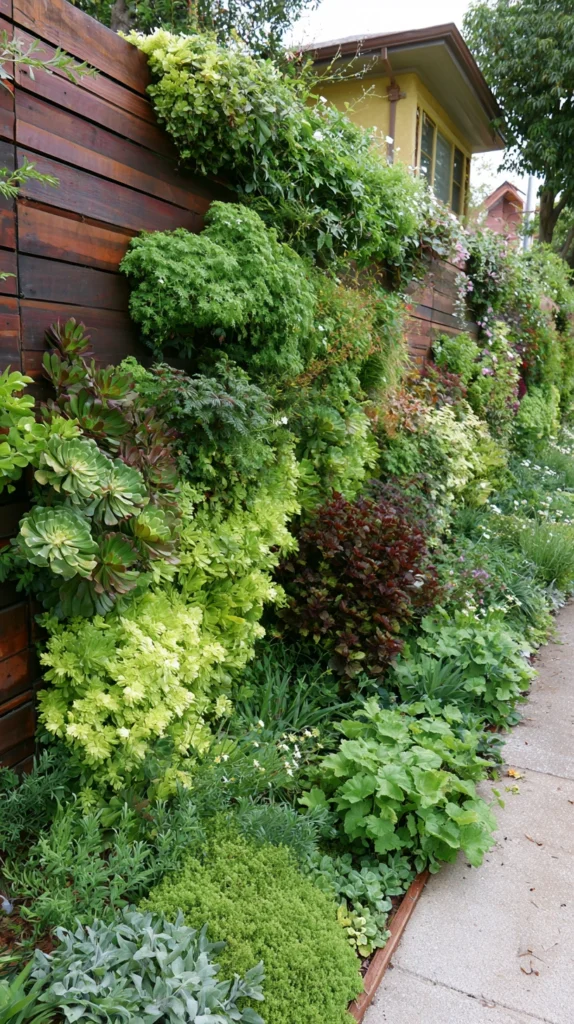
The final and most important garden fence planting idea is the one that approaches the fence not as a surface for the installation of a single plant species or a single planting type, but as a complete, layered, seasonally continuous botanical tapestry of climbing plants, wall shrubs, front-of-fence border perennials, and self-supporting structural plants whose combined contribution to the garden’s visual, olfactory, and ecological richness extends across the full twelve months of the garden year without a single week of botanical vacancy or decorative inadequacy.
Design the fence planting tapestry with genuine seasonal planning intelligence — mapping the flowering, the fragrance, the foliage interest, and the ecological contribution of each plant across the full annual calendar and ensuring that every position within the fence’s planting zone is occupied by something of genuine botanical value at every point in the year.
The fence planting designed as a complete year-round tapestry is the garden boundary of most extraordinary and most continuously rewarding botanical achievement — the boundary that makes the garden’s perimeter not its least interesting feature but its most completely, seasonally, and botanically magnificent one.
The garden fence planted with genuine botanical knowledge, genuine creative ambition, and genuine understanding of the extraordinary growing and displaying potential of the vertical garden surface is one of the most transformative and rewarding planting projects available to any gardener of any level of experience and any size of garden.
It turns the boundary into the destination, the edge into the centre, and the structural necessity into the most genuinely, continuously, and completely extraordinarily beautiful botanical feature the garden contains.