
15 Cream and White Bedroom Ideas
Cream and white is the bedroom palette that contains the entire argument for restraint within a single colour relationship — the combination of the warmest possible neutral with its purest possible expression, creating a bedroom environment of extraordinary luminosity, genuine warmth, and the specific quality of calm that comes from a room where colour has been reduced to its most essential and most beautiful minimum.

It is the palette that forgives every imperfection of natural light, that makes every natural material placed within it look more beautiful than it would in any other colour context, and that creates the specific quality of morning light in a bedroom — that warm, diffused, honey-toned glow that makes waking up feel genuinely pleasant — more reliably and more completely than any other colour combination available.
The cream and white bedroom done poorly is simply pale — a room that reads as unfinished, underconsidered, and slightly clinical in its commitment to avoiding colour. The cream and white bedroom done properly is something else entirely — a room of genuine depth, genuine warmth, and the particular sophisticated quality of a palette that has been chosen with intelligence rather than adopted by default. These fifteen ideas demonstrate exactly how to achieve the latter.
1. Establish the Difference Between Your Cream and Your White Deliberately
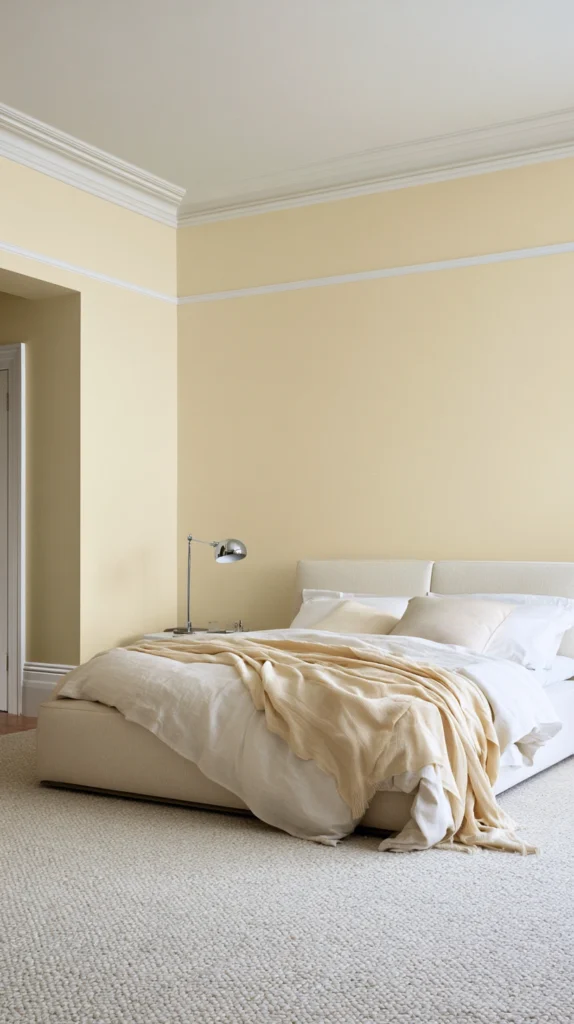
The cream and white bedroom that looks genuinely considered rather than accidentally pale is the one where the distinction between the cream and the white has been made deliberately and consistently — where the cream is genuinely warm, genuinely distinct from the white, and applied to specific surfaces with a clear compositional logic rather than used interchangeably with the white in a way that blurs the palette’s tonal structure.
Use white on the ceiling and the architectural woodwork — the cornice, the skirting, the door frames — and cream on the walls, or vice versa, but make the choice and execute it consistently throughout the room. The deliberate tonal separation between the two creates the visual depth that a single-tone white or cream room lacks, while maintaining the palette’s essential unity and warmth.
2. Choose Bedding That Layers Both Tones
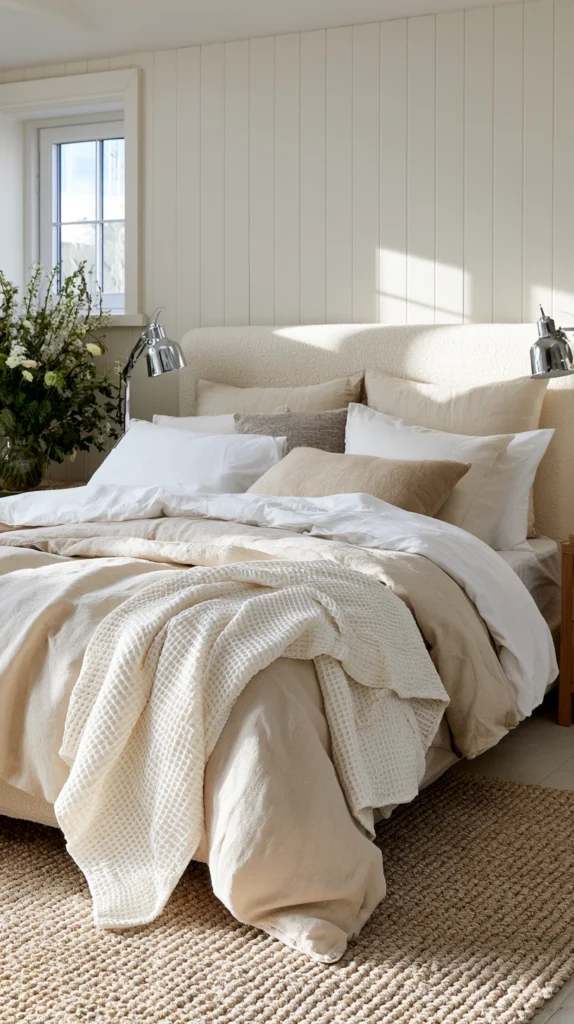
The bedding in a cream and white bedroom is the room’s primary textile composition and its primary opportunity to introduce the tonal layering that gives the palette its depth and its genuine visual richness — a washed white linen fitted sheet beneath a cream duvet cover, a white waffle blanket above it, a cream or natural linen Euro pillow arrangement at the head, and a slightly deeper warm natural throw folded across the foot in a tone that sits between cream and oatmeal.
The layering creates the composed, hotel-like quality of a bed that is beautiful to look at and genuinely comfortable to sleep in, its tonal variation providing sufficient visual interest to make the bed the room’s primary decorative element without introducing any colour complexity that would disturb the palette’s essential calm. Wash every linen element regularly and allow the natural softening and slight tonal deepening that washing produces to develop the bedding’s character over time.
3. Introduce Texture as the Primary Design Variable
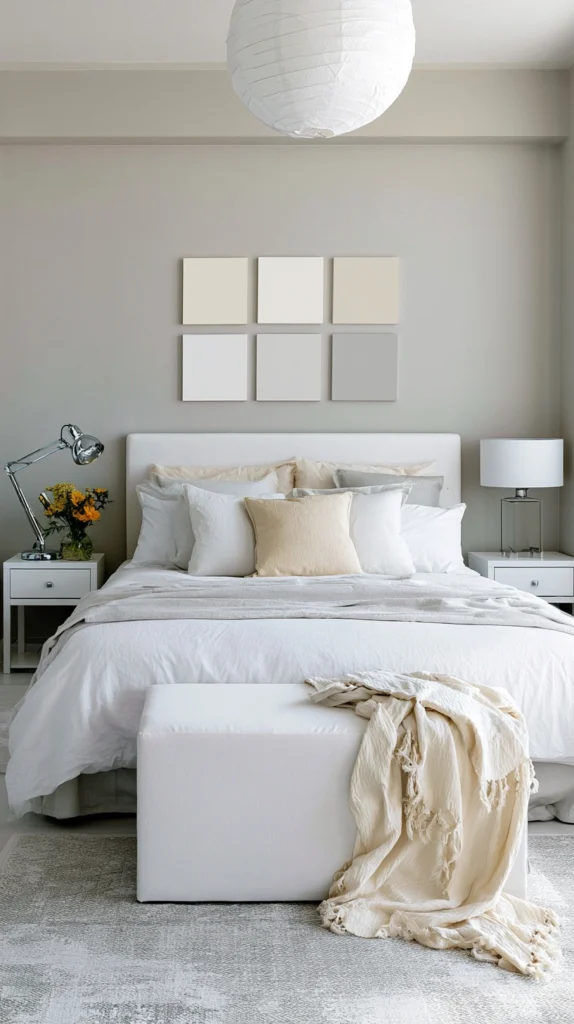
The cream and white bedroom that avoids the flatness of an all-pale room does so entirely through texture — the specific, deliberate contrast between surfaces that are smooth and surfaces that are rough, between fabrics that are flat and fabrics that are deeply woven, between walls that are painted and walls that are plastered or limewashed to a surface of genuine tactile depth. A rough-plastered limewash wall beside a smooth linen headboard. A waffle-weave blanket beside a flat linen duvet.
A natural rattan side table beside a smooth painted bedside drawer unit. A boucle cushion beside a simple linen pillow. These textural contrasts — each individually subtle, collectively significant — create the visual and sensory richness that makes the cream and white bedroom feel genuinely abundant rather than simply pale.
4. Use a Limewash or Venetian Plaster Finish on the Primary Wall
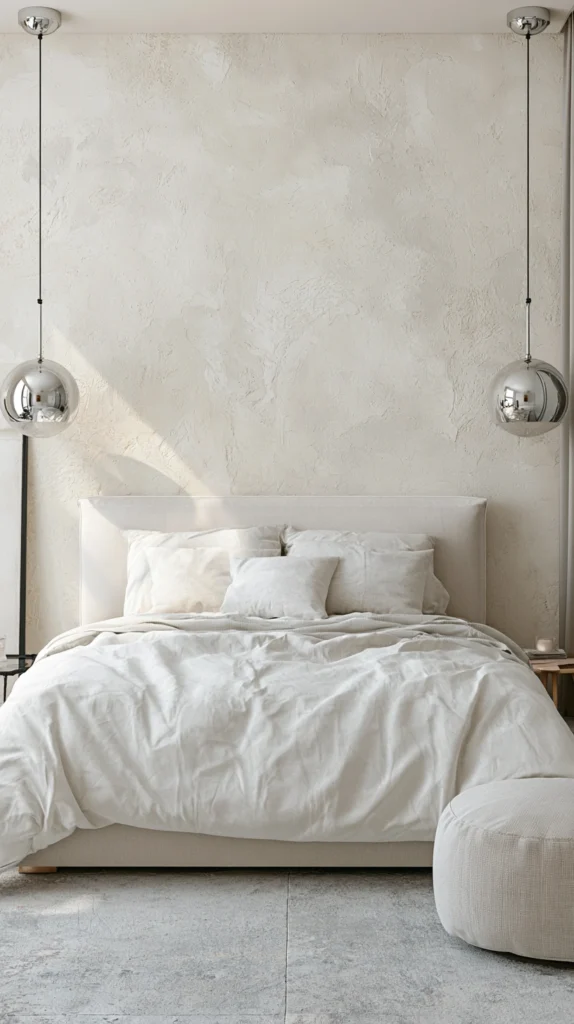
The wall behind the bed treated in limewash or Venetian plaster — its characteristic multi-layered, slightly translucent surface absorbing and returning light in a quality of warm, slightly shifting luminosity that flat paint entirely lacks — is the cream and white bedroom’s most powerful and most transformative single surface decision, creating the depth of material character that allows the room’s restrained palette to feel genuinely rich rather than simply restrained.
Apply in a warm white with the faintest possible creamy undertone — not enough colour to read as obviously tinted, but enough warmth to prevent the surface from reading as simply white — and the limewash wall becomes the bedroom’s primary visual feature, its depth and its warmth providing sufficient interest to make every other surface’s simplicity read as deliberate and composed rather than underdesigned.
5. Choose Natural Timber Furniture in Pale Species
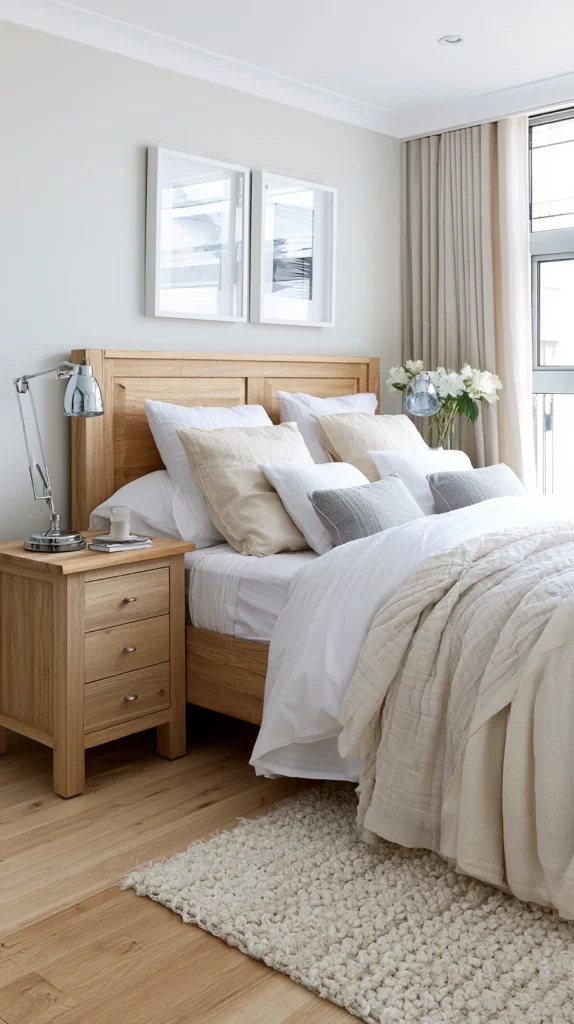
Natural timber furniture in pale oak, ash, or lightly finished pine — its warm grain and honey tone connecting the cream and white bedroom’s palette to the material world of the natural landscape — is the furniture choice that most completely grounds the pale palette in genuine material warmth and prevents the all-cream-and-white room from reading as simply blank rather than genuinely calm.
The pale timber species work in the cream and white bedroom precisely because they occupy the tonal zone between the white and the cream — slightly warmer than the white, slightly lighter than the cream, their grain and their natural surface variation providing the material interest that the palette’s tonal restraint otherwise lacks. Choose simple, honest furniture profiles that allow the timber’s natural beauty to be the piece’s entire visual statement rather than competing with decorative detail.
6. Layer Rugs in Complementary Natural Tones
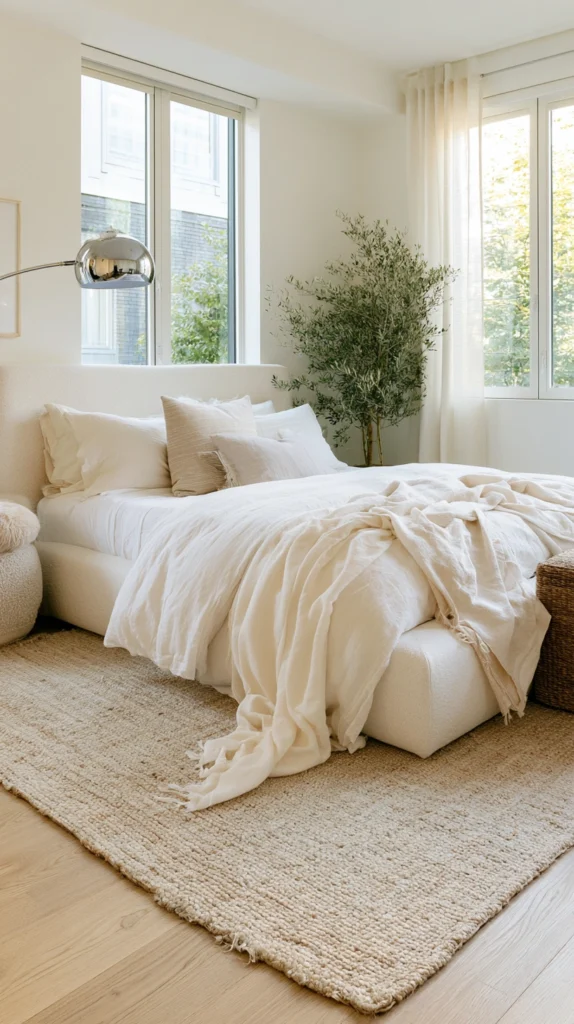
A layered rug arrangement in the cream and white bedroom — a large natural fibre base rug in warm jute or sisal beneath a smaller vintage or contemporary rug in cream, ivory, or the palest warm neutral — creates the floor’s textural and tonal contribution to the room’s overall layered quality while maintaining the palette’s essential warmth and visual restraint.
The base rug’s natural fibre texture provides the organic warmth and the honest material character that pale timber floors, however beautiful, cannot provide at the floor level where the body is closest to the surface and tactile quality is most directly experienced.
The upper rug’s pattern or texture — whether a simple geometric in ivory and cream or a vintage flat-weave in the same warm neutral family — creates the floor’s visual interest without introducing colour complexity that disturbs the room’s fundamental palette.
7. Install Warm-Toned Lighting Throughout
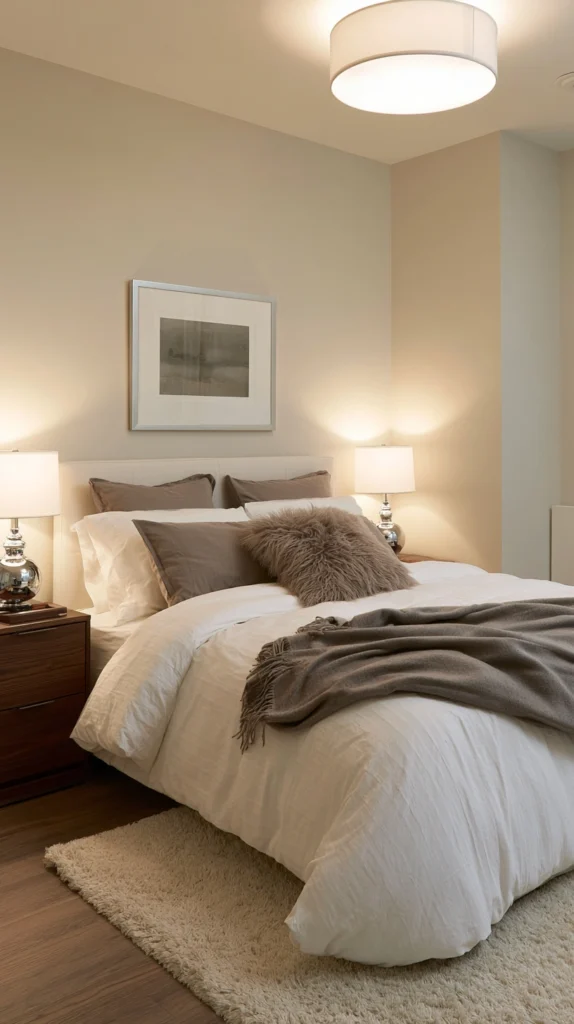
The cream and white bedroom’s luminosity — its quality of warm, diffused, gently glowing light that makes the room feel genuinely inviting at every hour of the day and every hour of the evening — depends entirely on the quality and the colour temperature of the artificial lighting as much as on the reflective quality of the pale surfaces.
Use warm-toned bulbs at 2200K to 2700K in every fixture throughout the room — the bedside lamps, the ceiling pendant, the dressing table lighting — and install every circuit on dimmer switches that allow the room’s light level to be modulated from the bright, well-lit quality of an active morning routine to the warm, gentle glow of an evening winding down.
The cream and white bedroom lit with cool-toned bulbs reads as clinical rather than luminous — the bulb temperature is the detail that determines whether the pale palette glows or simply appears flat.
8. Use Cream Linen Curtains From Ceiling Height
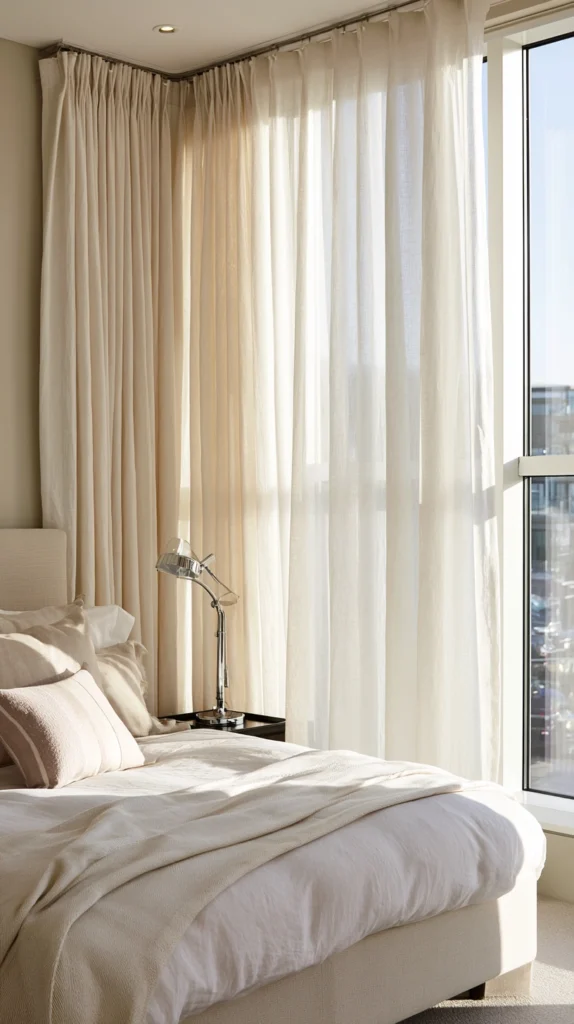
Floor-to-ceiling cream linen curtains — hung from a rod mounted at the highest point of the wall, their fabric falling in relaxed folds to pool slightly on the floor, unlined or very lightly lined so the natural light filters through them in a warm, slightly golden quality — are the window treatment that most completely captures and holds the cream and white bedroom’s essential atmospheric quality, converting the window from a practical opening in the wall into the room’s primary source of the warm, filtered light that makes the pale palette so consistently beautiful.
The cream linen curtain hung at ceiling height also performs the spatial function of making the room appear taller than its actual ceiling height — its vertical fall from the highest possible hung position draws the eye upward in a continuous line of warm fabric that extends the room’s apparent vertical dimension.
9. Add a Single Warm Accent in Terracotta or Warm Gold
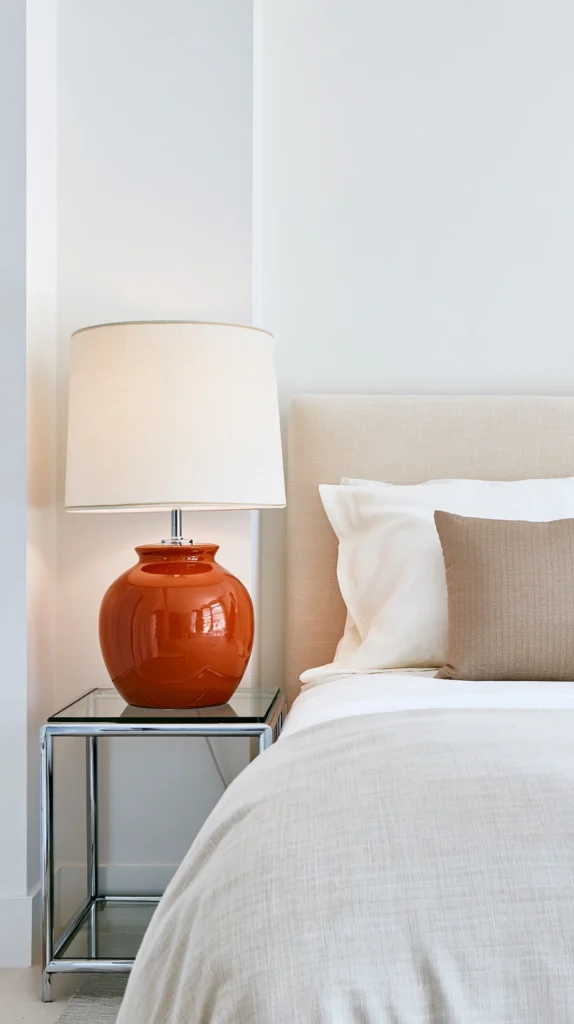
The cream and white bedroom that contains not a single element of warmth beyond its own palette risks a quality of slightly cold perfectionism that prevents the room from feeling genuinely inviting rather than simply beautiful — and the single warm accent, introduced with genuine restraint and genuine placement intention, resolves this risk completely without disturbing the palette’s essential tonal unity. A terracotta ceramic lamp base on the bedside table.
A warm gold picture frame around a single piece of art above the dresser. A single warm amber candle on the window ledge. One of these accent elements — chosen for its material warmth and its tonal connection to the cream end of the palette — provides the visual anchor that the room’s pale palette needs to feel genuinely grounded rather than floating in its own luminosity.
10. Keep the Headboard Simple and Upholstered in Natural Linen
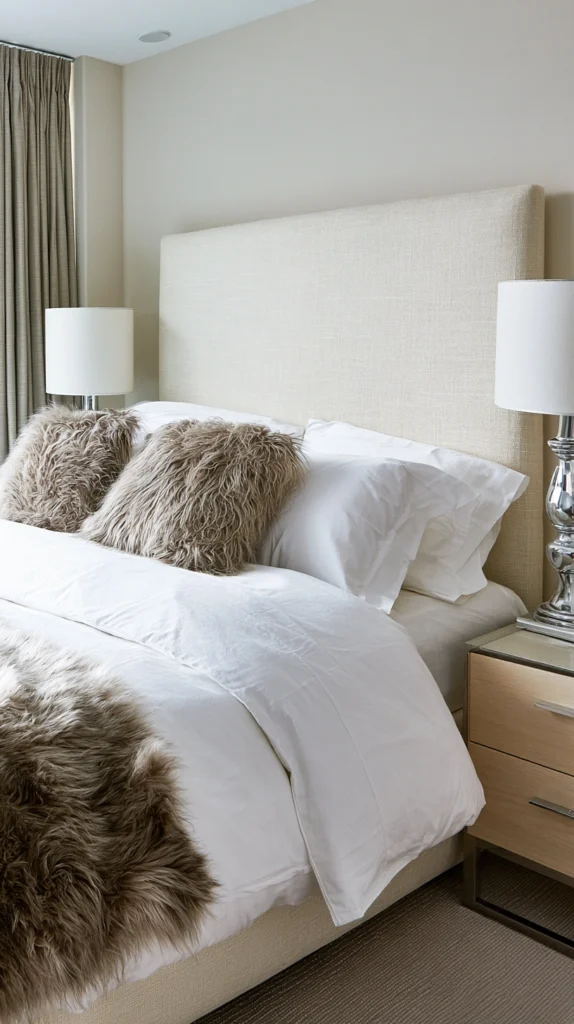
A headboard upholstered in natural linen — undyed or washed to a warm oatmeal tone, its fabric soft and slightly rumpled in the way that natural linen always eventually becomes — is the cream and white bedroom’s most essential furniture piece and the one that most directly and most continuously communicates the room’s palette and its material values from the most prominent position in the space.
Choose a headboard of generous height — taller than standard, its top edge approaching the ceiling in rooms of generous height — so its fabric surface becomes the room’s primary textile backdrop and its cream-adjacent tone reads clearly as a designed material element rather than simply a functional bed component. Keep the profile absolutely simple — no tufting, no button detail, no shaped edge — and allow the linen’s natural texture and honest tone to be the headboard’s entire design.
11. Use Mirrors to Amplify the Palette’s Luminosity
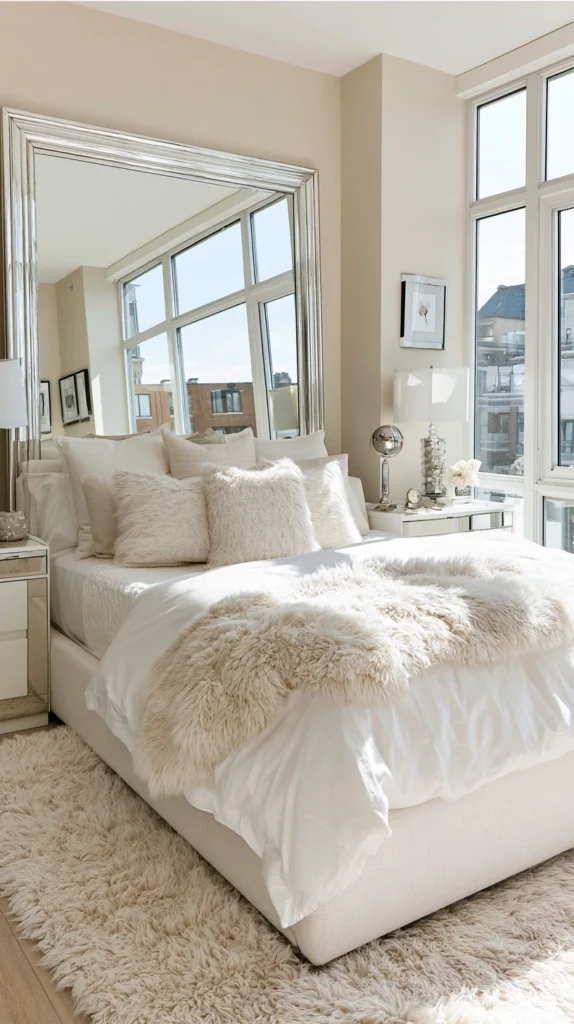
A large mirror — or two mirrors, one on either side of the room — positioned to reflect the window and the natural light it admits creates the cream and white bedroom’s most powerful luminosity amplification, bouncing the room’s warm natural light between reflective surfaces and filling the space with the quality of gently multiplied illumination that makes pale palettes look their most luminous and most beautiful.
Choose mirrors in frames that connect to the room’s material palette — natural timber, a simple plaster frame, or a slim aged brass border — rather than ornate or heavily decorative frames that introduce visual complexity, the room’s essential calm does not invite. A full-length leaning mirror beside the bedroom door and a smaller framed mirror above the dresser are the two mirror positions that provide the most practical and the most atmospheric contribution to the room’s overall luminosity simultaneously.
12. Style Every Surface With Extreme Editorial Discipline
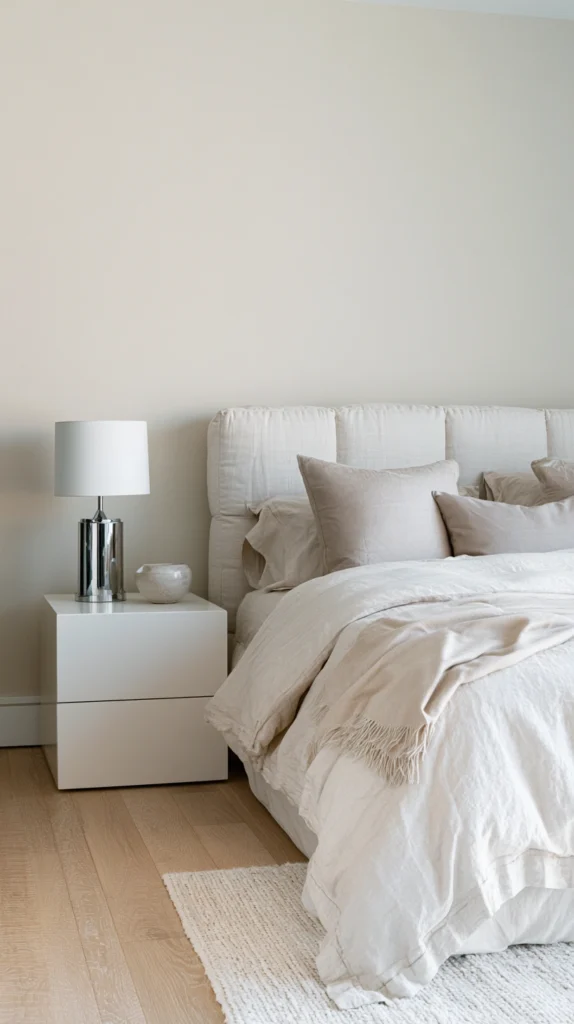
The cream and white bedroom that maintains its quality of luminous, composed calm through daily occupation requires a standard of editorial discipline applied to every visible surface that is more exacting than any other bedroom palette demands — because in a room of this tonal restraint, every object is visible against the pale background with a clarity and a prominence that darker rooms entirely lack, and every object that does not genuinely belong registers as clutter with an immediacy that would be forgiven in a room of greater colour complexity.
Two objects on the bedside table, maximum. One on the dresser, plus the lamp. The windowsill is clear. Every surface at its absolute minimum, maintained there with daily consistency, and the cream and white bedroom looks genuinely designed and genuinely beautiful from the moment of waking to the moment of sleeping.
13. Introduce Natural Dried Botanicals
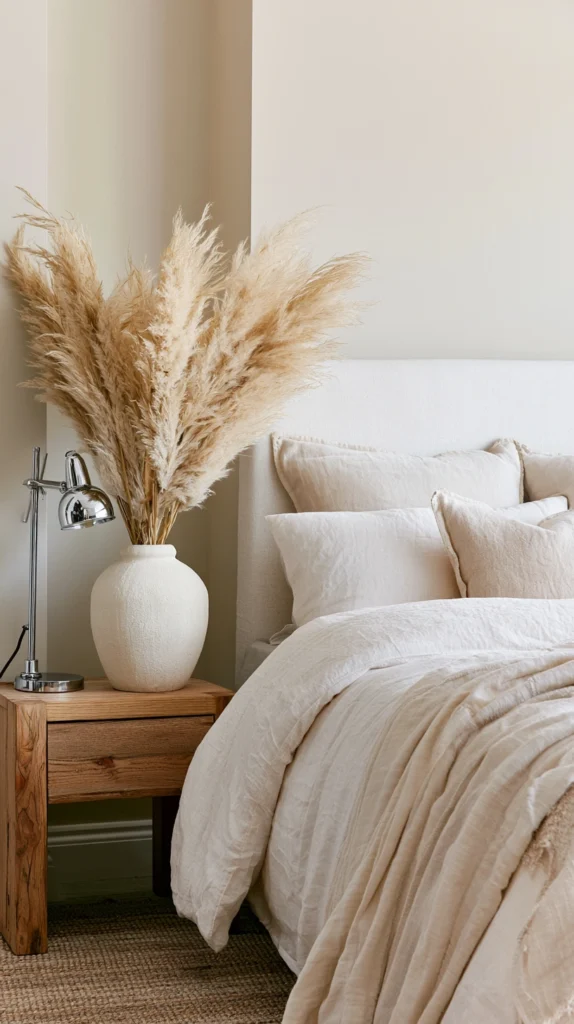
Natural dried botanicals — a bunch of dried pampas grass in a simple ceramic vase, a stem of dried lavender in a slim glass vessel, a small wreath of dried eucalyptus hung on the wall — introduce the organic quality of botanical material into the cream and white bedroom in a form that maintains the palette’s tonal unity rather than introducing the living green of fresh plants that would disrupt the palette’s essential harmony.
The dried botanical in its natural, slightly faded, warm ivory and cream tone is one of the few decorative additions that belongs to the cream and white palette rather than contrasting with it — its colour drawn from the same tonal family as the surrounding surfaces, its organic form providing the natural vitality and the material warmth that manufactured decorative objects cannot replicate with the same quality of genuine botanical character.
14. Choose Flooring That Warms the Palette From Below
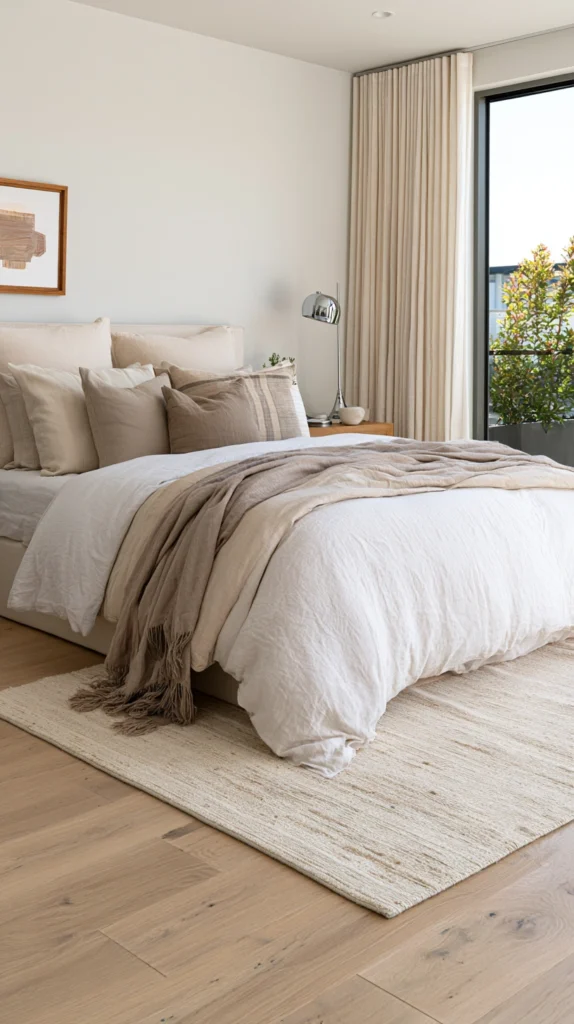
The floor of the cream and white bedroom should be pale enough to reflect available light upward and warm enough in its specific tone to contribute to the room’s overall warmth rather than cooling it toward the grey or blue tones that many contemporary floor finishes carry.
Wide-plank pale oak with a natural oil finish, whitewashed pine that retains its grain and warmth beneath the bleaching, or a warm-toned travertine or limestone in a large format: each of these floor choices provides the warm pale surface that anchors the cream and white bedroom’s palette at the floor level, where the room’s warmth is most physically experienced and most directly felt.
Layer a natural jute or cotton rug in the room’s primary floor zone for the additional warmth and texture that the hard floor surface benefits from in a room designed for barefoot comfort and genuine rest.
15. Create a Reading Corner in the Room’s Best-Lit Position
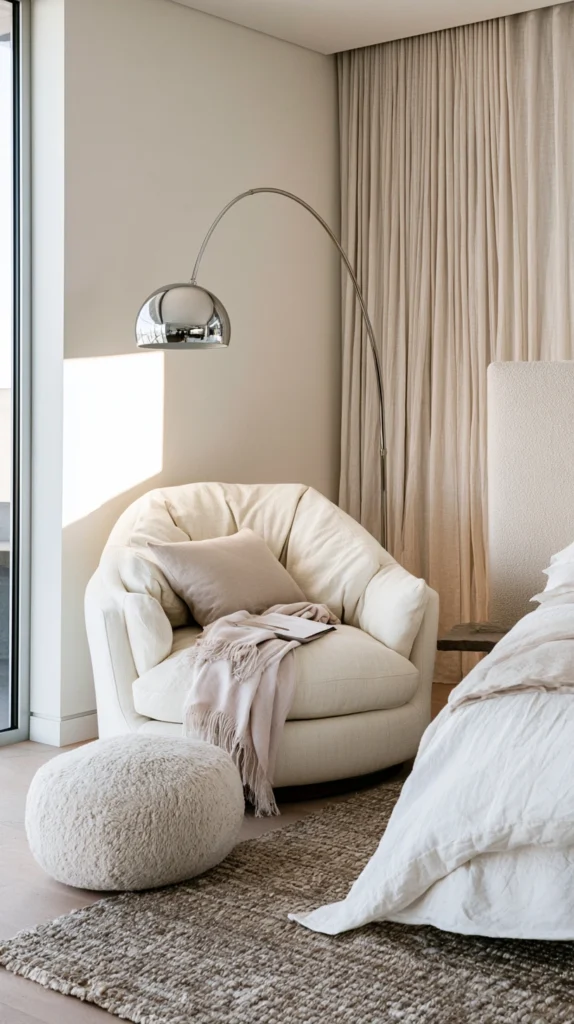
A reading corner in the cream and white bedroom — a deep, wide armchair upholstered in natural linen or a warm cream cotton, positioned in the corner that receives the best natural light the room offers, accompanied by a simple side table and a quality floor lamp — creates the secondary comfort zone that transforms the bedroom from a sleeping room into a complete retreat, and does so within the palette’s essential warmth and restraint.
The cream and white reading corner — its chair in a natural linen that connects to the bedding’s palette, its lamp’s warm light pooling in the corner’s contained space, its side table carrying a single ceramic vessel and the book currently being read — is the bedroom detail that most completely and most personally communicates the room’s invitation to genuine rest, genuine reading, and the particular quality of unhurried daily life that the cream and white bedroom is designed from the very first surface decision to support and to celebrate.
Final Thoughts: Building the Cream and White Bedroom With Patience and Precision
The cream and white bedroom that achieves its full potential is not assembled quickly — it is built slowly, with patience and with precision, each addition tested against the existing palette in the actual room light before being committed to, each surface edited with genuine discipline rather than decorated with accumulated objects whose individual beauty does not add up to a coherent whole.
Begin with the wall finish and the floor, establish the bedding as the room’s primary textile composition, and add every subsequent element in deliberate relationship to the tonal structure and the material warmth already established. The cream and white bedroom that is genuinely beautiful is always the one that was built with the most careful attention to the fewest, most essential elements — and the patience to stop adding things the moment the room feels complete.