
15 Home Sauna Ideas for a Spa-Like Backyard Retreat
The sauna is one of the oldest health practices in human history.
Not a trend. Not a wellness industry invention. A six-thousand-year tradition originating in Finland that has been understood, practised, and passed between generations as one of the most consistently beneficial things a person can do for their body and their mind.
The regular sauna user is not chasing a biohacking moment or responding to an influencer recommendation. They are participating in a practice whose benefits, cardiovascular improvement, reduced all-cause mortality, stress reduction, muscle recovery, improved sleep, have been documented in peer-reviewed research with a robustness that most wellness interventions never approach.
The home sauna makes this practice available at the moment it is most useful. Not when the gym’s sauna is available and not occupied. Not when the schedule permits a spa visit. Every evening after work. On Sunday morning before the garden is tended. At any moment the practice is wanted, which is the only moment at which the practice is actually performed.
Here are 15 ideas for building a home sauna that is genuinely beautiful, genuinely functional, and genuinely worth every element of the investment.
Why the Home Sauna Is One of the Best Backyard Investments Available
The home sauna is not a luxury in the sense of something frivolous and unnecessary.
It is a luxury in the sense of something that changes daily quality of life in a measurable and consistent way.
The research is specific. A study of Finnish men published in JAMA Internal Medicine in 2015 found that regular sauna users, defined as using a sauna four to seven times per week, had a sixty-three percent lower risk of sudden cardiac death and a forty percent lower risk of all-cause mortality compared to men who used the sauna once per week.
Subsequent studies have found reductions in dementia risk, improvements in blood pressure, reduced markers of inflammation, and consistent improvements in self-reported sleep quality and mood.

These are the health outcomes that most people spend significant money pursuing through gym memberships, supplements, and various interventions with considerably less evidence behind them.
The home sauna also has a social dimension that the gym sauna does not. Sitting with a partner, a friend, or a family member in the specific context of the sauna, away from phones and screens, in a warm, quiet space, is one of the most genuinely connective social activities available in a domestic setting.
From a property perspective, a well-designed outdoor sauna structure adds material value to a property in a way that few garden additions can match. It is a permanent structure with genuine utility that prospective buyers understand and value.
1. A Traditional Finnish-Style Barrel Sauna
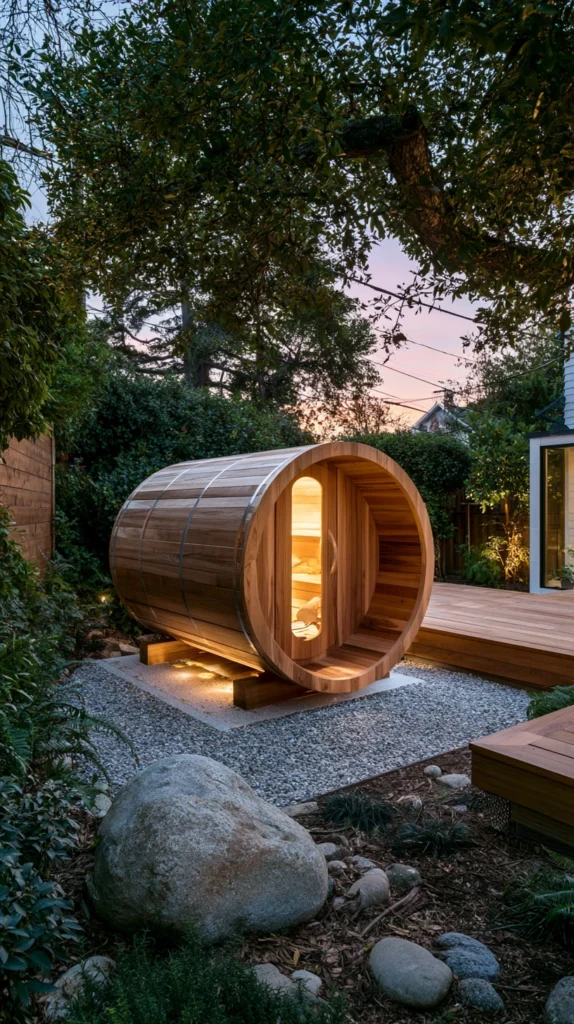
The barrel sauna is the most widely recognised outdoor sauna form and one of the most beautiful.
The cylindrical form, achieved by building the sauna structure from staves of solid timber assembled in a barrel shape, creates a volume that is structurally more efficient than a rectangular box. The curved walls distribute structural load evenly. The circular cross-section means the interior air volume heats faster and holds heat more efficiently than a rectangular room of equivalent floor area.
The aesthetic of the barrel sauna is specific and immediately recognisable. The horizontal bands of the cedar or spruce staves. The curved silhouette against the garden. The circular end windows that catch light differently from every angle. A barrel sauna in a garden looks like a considered garden feature rather than a utility structure.
Traditional Finnish sauna practice uses either a wood-burning stove, kiuas, or an electric heater to heat rocks, the heat of which is modified by löyly, the steam produced by ladling water onto the hot rocks. The traditional barrel sauna typically includes a bench at one height, sometimes two, and a door that opens onto the exterior.
Cedar and spruce are the standard materials for barrel saunas because they handle the thermal cycling of repeated heating and cooling without structural failure and because they resist the moisture that sauna use produces.
What makes the barrel sauna the most recognisable and most widely available home sauna:
- The cylindrical form is structurally efficient and heats faster than equivalent rectangular volumes
- Available as a complete kit that arrives and can be assembled in one to two days without specialist skills
- The aesthetic is immediately recognisable as a sauna feature rather than an ambiguous garden structure
- Cedar and spruce naturally handle moisture and thermal cycling without maintenance beyond periodic oiling
- Available in sizes from two-person to six-person capacities to suit different household requirements
- The barrel form allows installation on a simple gravel or timber deck base without a concrete foundation
2. A Traditional Finnish Smoke Sauna
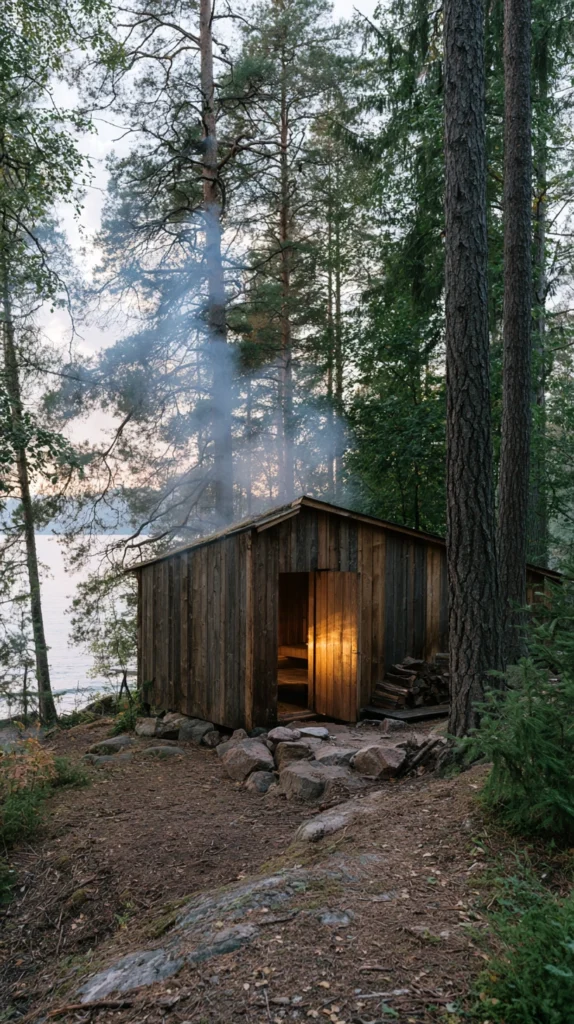
The smoke sauna, savusauna in Finnish, is the original form of the Finnish sauna and is considered by many who have experienced both to be the superior experience.
A smoke sauna has no chimney. The wood fire in the stove heats the room and fills it with smoke as it burns. After two to four hours of heating, the fire is extinguished and the room is ventilated. The smoke escapes and the room retains its heat in the stones and the wooden surfaces. The faint residue of smoke in the wood, the slight darkening of the surfaces, and the specific quality of the heat that smoke sauna produces are the qualities that devotees describe as unmatchable by any electric or standard wood-burning alternative.
Building a smoke sauna is a commitment of a different order from installing a barrel sauna kit. It requires a purpose-built structure of sufficient mass to retain heat through the ventilation period. It requires two to four hours of preparation before the first session is possible. And it requires an understanding of the practice that goes beyond the typical home sauna user’s experience.
For the enthusiast who wants the most authentic Finnish sauna experience and is willing to invest the time, learning, and materials that the smoke sauna requires, it is the pinnacle of the home sauna option.
3. A Scandinavian-Style Cabin Sauna With a Changing Room
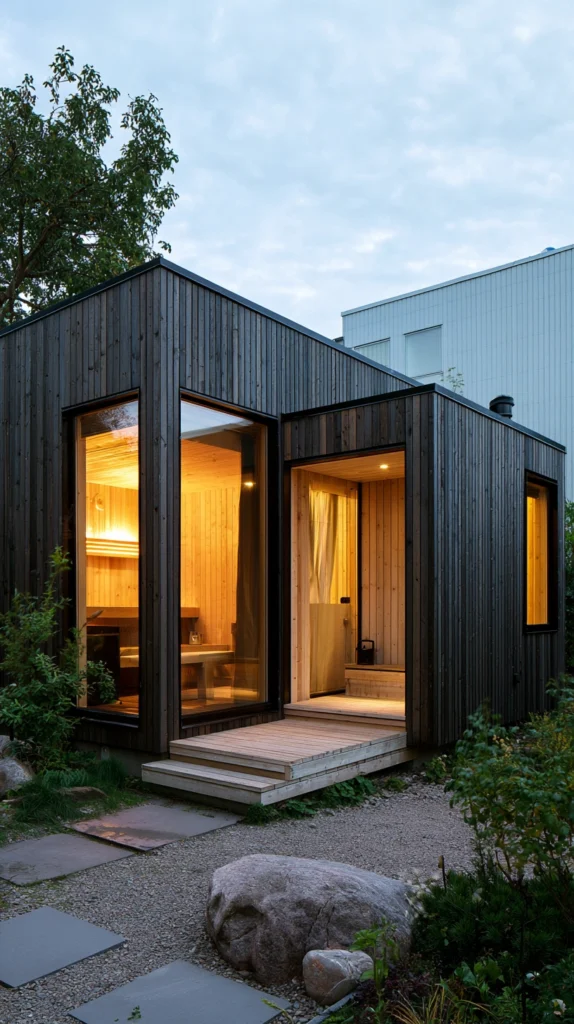
The cabin sauna is the outdoor sauna structure that most closely replicates the experience of a dedicated sauna facility within a domestic garden.
A rectangular timber structure of six to twenty square metres with a separate changing room or anteroom, the sauna room itself, and sometimes an additional cold rinse area or shower, creates a complete sauna facility that is not just a heating room but an entire ritual space.
The anteroom or changing room is the element that most elevates the cabin sauna experience beyond the barrel sauna. Having a specific space to undress, to leave clothes and towels, to cool between sessions, and to warm again after cooling outside, provides the complete ritual cycle that traditional sauna culture has always understood as the real practice.
Finnish sauna culture is not the sauna room alone. It is the alternation between heat and cold. Between the intense dry or steam heat inside and the cold of the outdoor shower, the cold plunge, or in the Finnish tradition, the lake. The anteroom is the transition space between these two poles.
Build the cabin sauna from the timber species appropriate to the outdoor climate. Cedar in damp, cool climates for its natural weather resistance. Spruce in drier climates where the less resinous wood is appropriate. Larch as an alternative that combines exceptional weather resistance with a warm, golden colour.
4. An Infrared Sauna Cabin
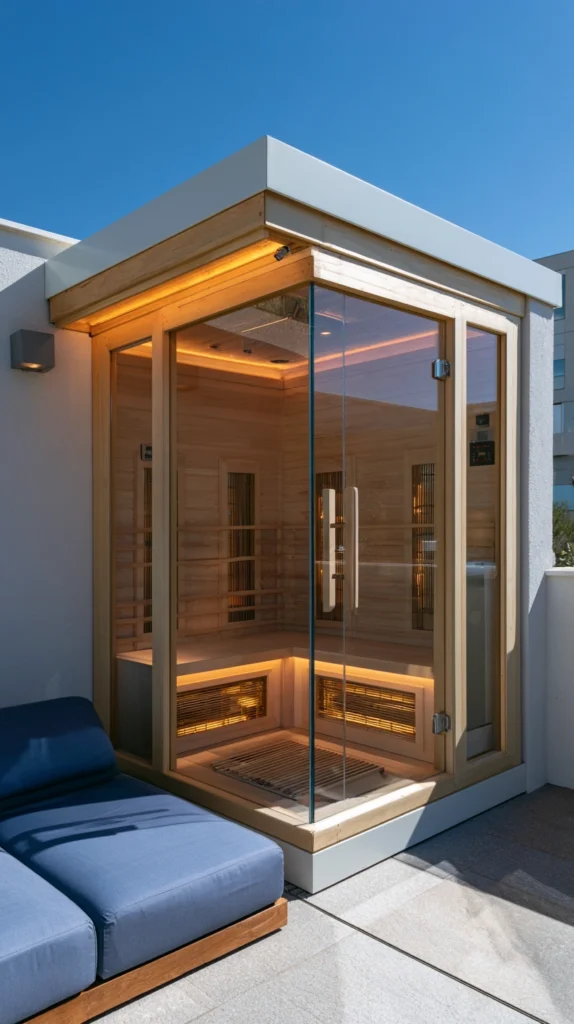
The infrared sauna is the sauna technology that differs fundamentally from the traditional Finnish form in its mechanism of action.
Traditional saunas heat the air to temperatures between eighty and one hundred degrees Celsius, which in turn heats the body through convection and conduction. The infrared sauna uses infrared radiation to heat the body directly at lower ambient temperatures, typically between forty-five and sixty degrees Celsius.
The health benefits attributed to infrared saunas, cardiovascular improvement, muscle recovery, stress reduction, are broadly similar to those attributed to traditional saunas, though the research base for traditional Finnish sauna is considerably more extensive than the infrared research base.
For home sauna use, the infrared cabin has practical advantages. It heats to operating temperature in fifteen to thirty minutes rather than the forty-five to sixty minutes required for a traditional sauna. The lower ambient temperature makes it more accessible for users who find the intense heat of a traditional sauna difficult. And the electrical installation is typically simpler than for a traditional electric sauna heater.
The cabin structure for an infrared sauna can be simpler and lighter than a traditional sauna because it does not need to handle the thermal extremes and the moisture load of a traditional sauna. Many infrared sauna cabins are available as prefabricated units that install indoors or outdoors with a standard electrical connection.
5. A Sauna Shed With a Natural Living Roof
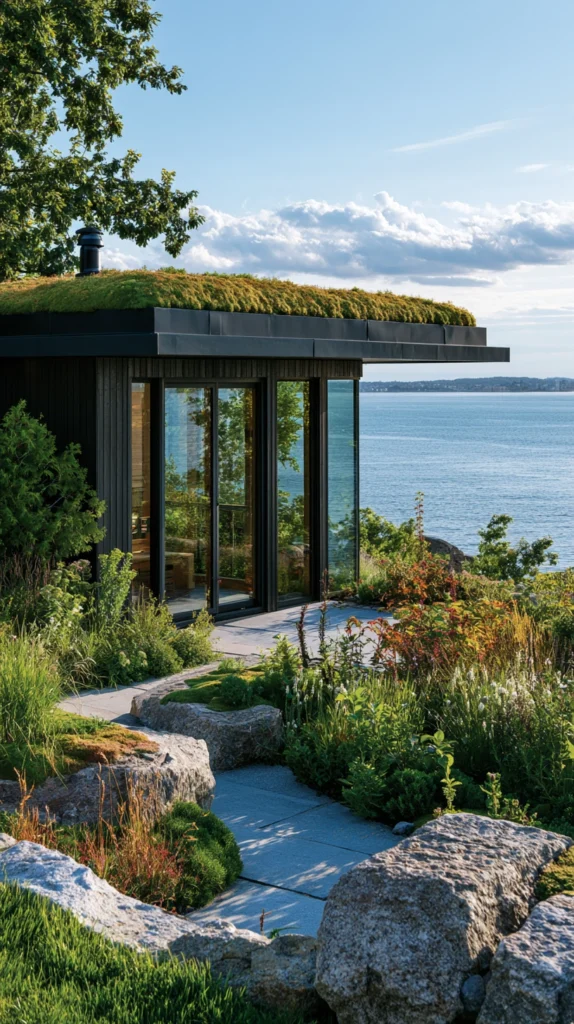
The sauna with a living, planted roof is the home sauna idea that most completely integrates the structure into the garden landscape.
A sedum or moss planted roof on a sauna structure, particularly on the lower-pitched or flat-roof forms of rectangular cabin saunas, transforms the structure from an object in the garden into an element of the garden itself. The planted roof changes colour through the seasons. It blends with the surrounding planting at the roofline in a way that a standard timber or felt roof does not.
The living roof also provides practical benefits. Additional thermal insulation that reduces the energy required to heat the sauna. Rainwater absorption that reduces runoff from the structure’s footprint. Sound insulation that reduces the noise of rain on the roof.
The structural requirements for a living roof are more demanding than for a standard roof. The roof must support the weight of the growing medium, the plants, and the water they retain, which is significantly more than the weight of standard roofing materials. The roof structure must also be waterproofed beneath the growing medium in a way that is compatible with the thermal demands of the sauna below.
A properly built sauna with a living roof is one of the most beautiful small garden structures available. The planted roof in full summer growth, above warm cedar walls, beside a cold shower or cold plunge pool, creates a garden feature of genuine extraordinary quality.
6. A Sauna With an Outdoor Cold Plunge Pool
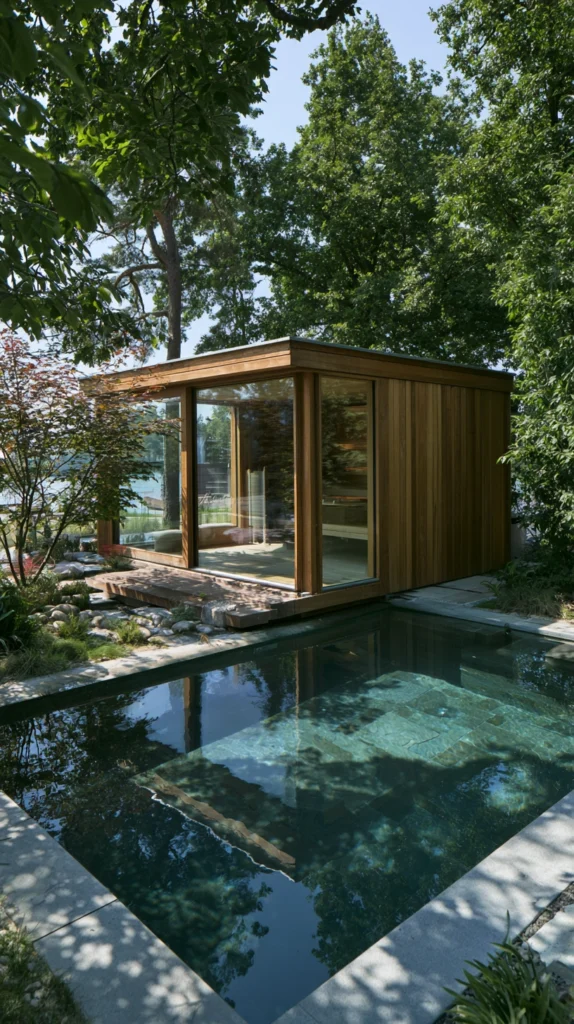
The cold plunge pool beside the sauna is not an accessory to the sauna experience.
It is the other half of it.
The alternation between intense heat and cold water immersion that Finnish and Nordic sauna culture has practised for centuries produces physiological effects, particularly the stimulation of the cardiovascular system and the release of noradrenaline that follows cold immersion, that heat alone does not produce.
The cold plunge pool needs to be close to the sauna. The transition between the sauna’s heat and the cold water should take seconds rather than minutes for the thermal contrast to be felt most immediately. A plunge pool of one to two metres in diameter and one to one and a half metres depth immediately outside the sauna door is the correct relationship.
Cold plunge pools can be as simple as a large galvanised metal stock tank filled with cold water and maintained with a pool-grade filtration system. A quality stock tank plunge pool, four to five feet in diameter, is available for a fraction of the cost of a purpose-built fibreglass or concrete plunge pool and provides the full physiological benefit.
For a warmer season plunge pool that also serves swimming, a small lap pool or a larger plunge pool of three metres by two metres gives the cold immersion benefit while being large enough for genuine use beyond the sauna ritual.
7. A Sauna With an Integrated Wood Burner and Traditional Kiuas
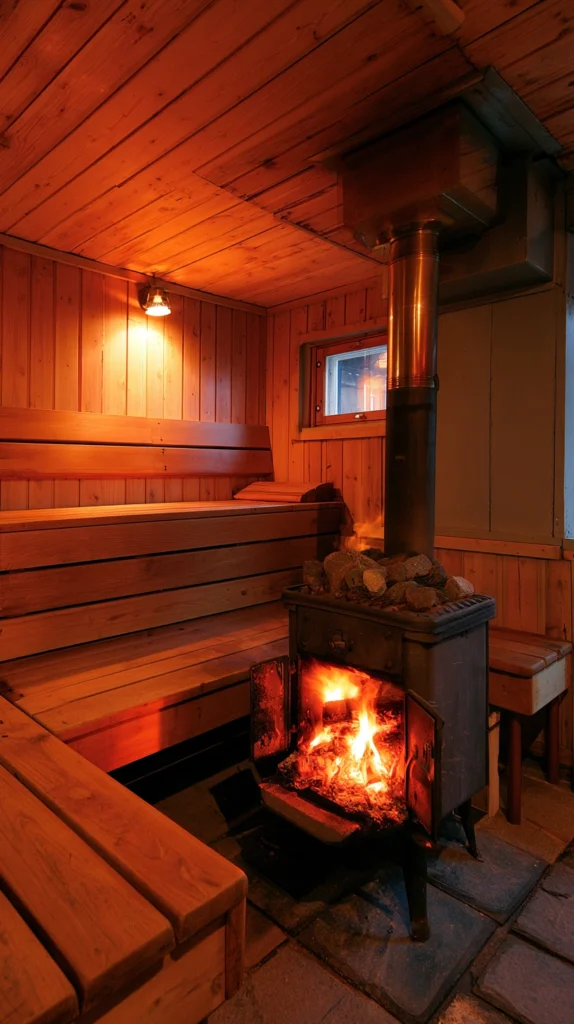
The wood-burning sauna stove, the kiuas, is the element that most connects the home sauna experience to its Finnish origins and provides the specific quality of heat and steam that traditional sauna users describe as superior to electric alternatives.
The wood fire takes longer to reach temperature than an electric heater. It requires the management of the fire, the sourcing and splitting of firewood, and the specific knowledge of how to build and maintain the fire for the sauna’s heat requirements. These are not inconveniences. They are part of the practice for the enthusiast who values the ritual as much as the outcome.
The heat produced by a wood-burning kiuas has a quality that electric sauna heaters replicate approximately but not completely. The fluctuating temperature of a wood fire produces a more dynamic heat than the consistent temperature of an electric heater. The smell of birch or cedar firewood in the air outside the sauna is part of the experience of arriving at the sauna structure.
The steam, löyly, produced by ladling water onto the hot rocks of a wood-burning kiuas is specific in its quality. The heat and the moisture combine in a way that changes the feel of the air on the skin, the scent of the sauna, and the depth of the sweat that follows. These qualities are what wood-burning sauna users describe when they explain why they maintain the additional effort of wood heat rather than switching to electric.
8. An Outdoor Shower Beside the Sauna
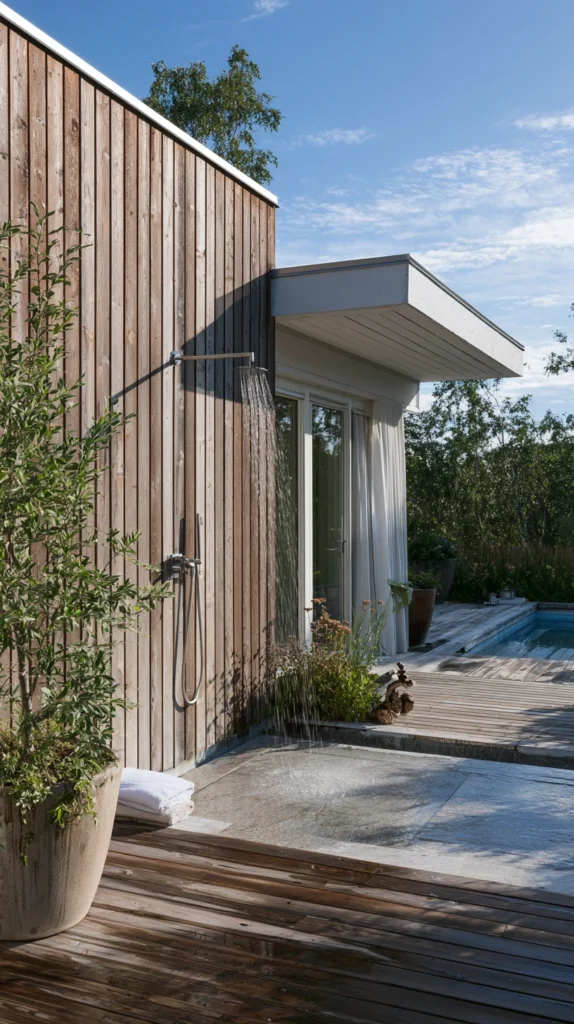
The outdoor shower is the accessible cold counterpart to the sauna that requires no plunge pool, no cold tub, and no additional structure.
A simple outdoor shower fixture beside the sauna door, fed with cold water from the garden’s water supply, provides the cold rinse after the heat session that the traditional sauna practice has always included. The cold water on the body after the sauna’s heat is not just comfort management. It is the active part of the thermal contrast cycle that produces the cardiovascular and autonomic nervous system benefits that distinguish sauna practice from simple sweating.
The outdoor shower beside the sauna creates the complete heat-cold cycle in the smallest possible footprint. A shower of thirty centimetres square is sufficient for the post-sauna rinse and takes almost no garden space.
The shower should be positioned where the cold water runoff can drain effectively. A gravel base or a teak decking platform with drainage gaps beneath it handles the water without creating a muddy area around the sauna entrance.
A beautiful outdoor shower, a brushed steel or aged copper fixture on a cedar or teak mounting, adds an aesthetic element to the sauna area that the purely functional alternative lacks. The sauna ritual area as a complete, designed outdoor space benefits from the same aesthetic attention as any other part of the garden design.
9. A Garden Sauna With Panoramic Views
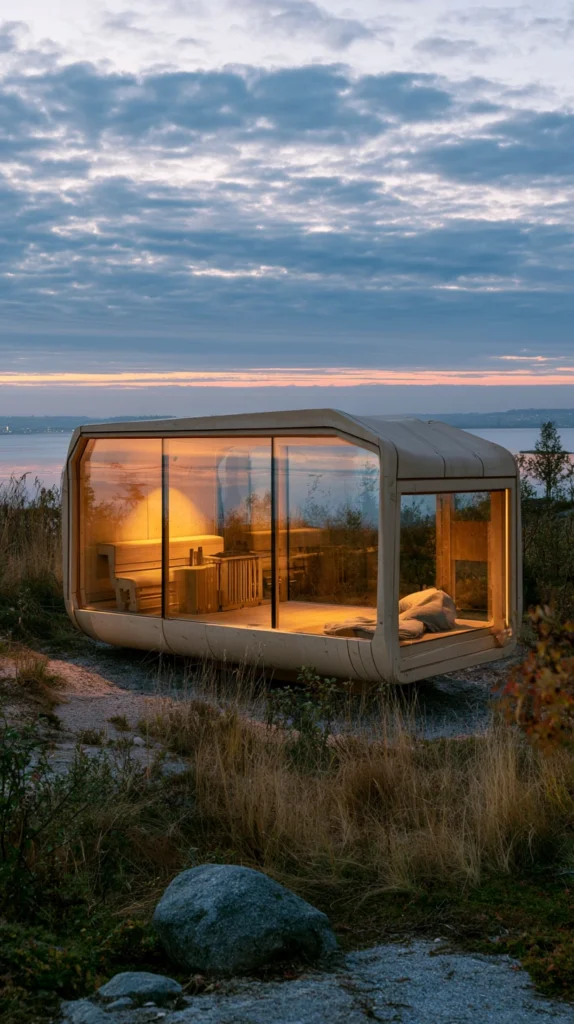
The sauna positioned for a specific view is the sauna that rewards the practice with a specific visual reward alongside the physical one.
The sauna with a large window or a glass door that opens toward the garden, toward a water feature, toward a treeline, or toward any view of value in the property’s landscape, turns the sauna session into a contemplative experience as well as a physical one.
Sitting in the heat of the sauna looking at the garden in winter. The frost on the grass visible through the steamed glass. The specific quality of late afternoon winter light across the bare trees. These views, experienced from the warm interior of the sauna, are part of the pleasure of the practice that Finnish culture has always understood.
Position the sauna so the main window or the glass door faces the most beautiful available view. If the garden has a specific view that is not available from the house, the sauna is the opportunity to create a structure positioned specifically to access that view.
The window glass in a sauna should be double-glazed at minimum for thermal efficiency. Triple-glazed glass is more appropriate for the highest-performance sauna insulation. The frames should be timber rather than metal because metal frames conduct heat away from the sauna room and create cold spots that affect the quality of the thermal environment.
10. A Sauna Pod or Spherical Structure
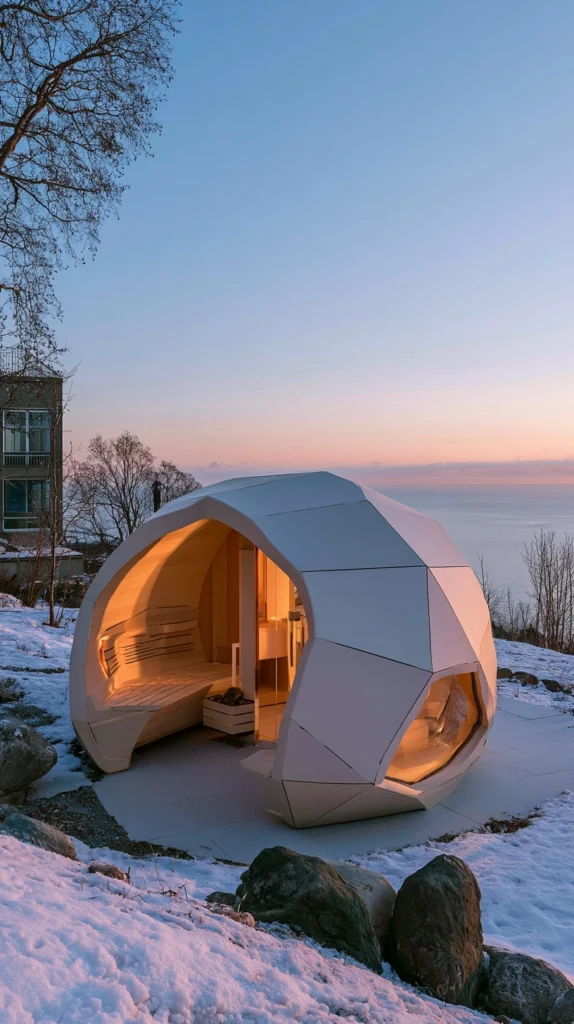
The sphere, the geodesic dome, and the pod forms of outdoor sauna are the contemporary alternatives to the cylindrical barrel and the rectangular cabin.
A spherical or dome sauna creates a structure with the same structural efficiency as the barrel, the curved surfaces distributing load evenly and the interior volume heating efficiently, but in a more dramatically contemporary form. A geodesic dome sauna in a garden reads as a piece of landscape architecture rather than a garden utility structure.
Spherical sauna pods in the style of the Finnish Kotimaisia Saunapodeja products use a spherical form that sits low in the landscape and creates a specific visual relationship with the garden that rectangular or cylindrical alternatives do not.
These forms are less widely available as off-the-shelf kits than barrel saunas and more often require bespoke design and construction. The premium in cost is significant but the result is a garden structure of genuinely distinctive character that no standard form can replicate.
For the property with a prominent garden position, where the sauna will be visible from multiple windows and from significant garden areas, the investment in a pod or spherical form is justified by the architectural quality it contributes to the overall landscape.
11. A Japanese Ofuro-Inspired Outdoor Tub and Sauna Combination
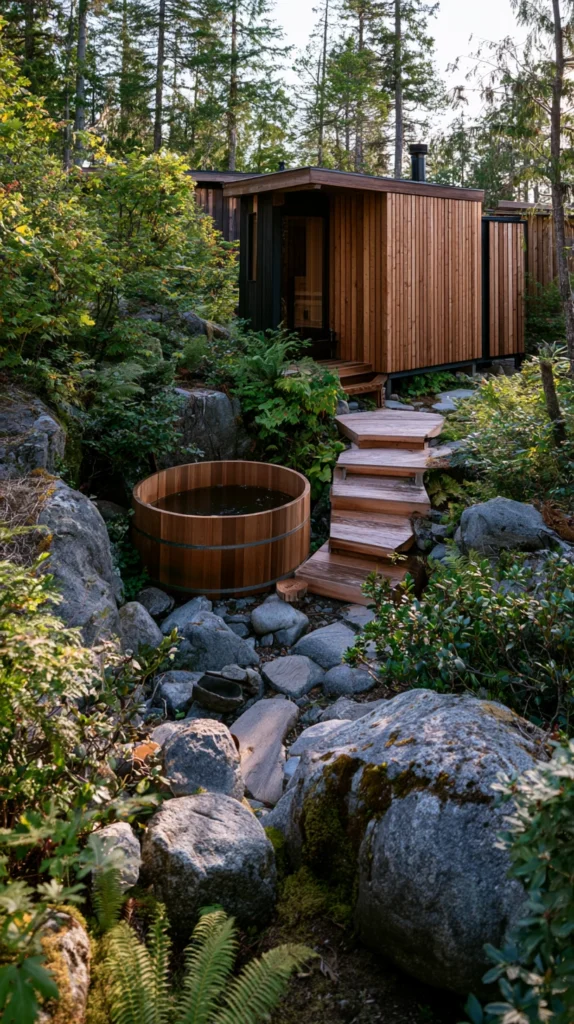
The Japanese outdoor bathing tradition, ofuro, shares many characteristics with the Finnish sauna tradition and the two practices are naturally complementary in a combined outdoor spa area.
The ofuro tub, a deep cedar or hinoki cypress soaking tub, is used for immersion in hot water rather than the dry or steam heat of a sauna. The combination of a Finnish-style sauna for dry heat and a Japanese-style cedar soaking tub for hot water immersion creates an outdoor bathing area that combines two of the world’s most sophisticated bathing traditions.
Cedar and hinoki cypress tubs produce a specific scent when filled with hot water that is among the most beautiful bath-related sensory experiences available. The scent of hinoki specifically, warm, woody, and subtly citrus, is so specifically pleasant that traditional Japanese spa culture values it as one of the primary benefits of the ofuro practice.
Position the soaking tub within the same outdoor spa area as the sauna but at a lower temperature than the cold plunge pool. The sauna provides the intense heat. The cold plunge provides the cold immersion. The soaking tub at approximately forty degrees Celsius provides the warm relaxation that follows the heat-cold cycle.
12. A Sauna With a Changing Room and Private Outdoor Seating
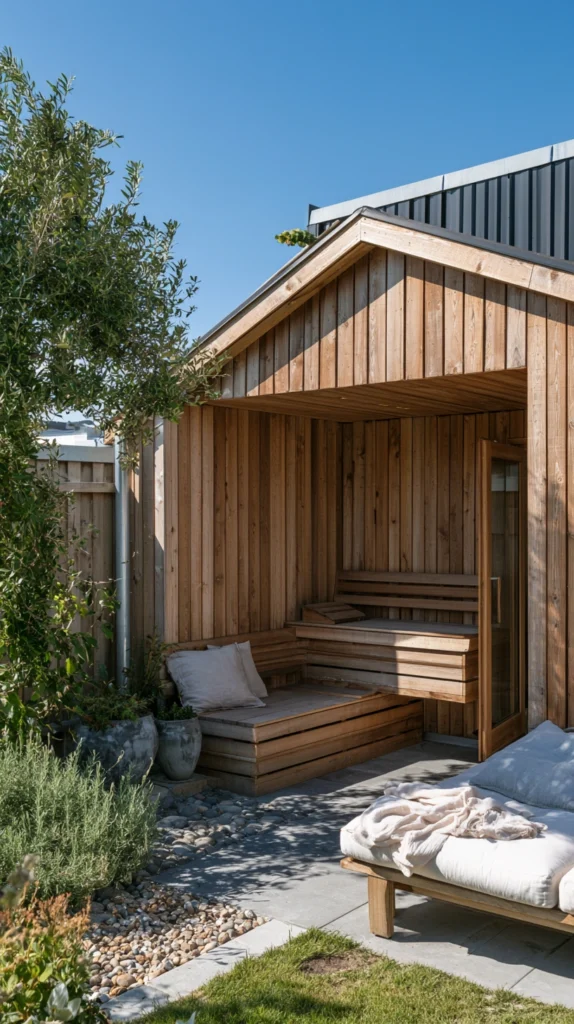
The sauna ritual requires time between sessions and that time needs a place.
The changing room and the outdoor seating area beside the sauna, out of view of the main house and enclosed by planting or a low fence, create the private outdoor space where the cooling session between sauna rounds is spent.
Finnish sauna tradition involves multiple rounds in the sauna, typically between two and four sessions of ten to fifteen minutes each, with cooling periods between each session that may involve going outside, a cold shower, or simply sitting in the outdoor air.
The private outdoor seating area makes these cooling periods pleasant rather than merely necessary. Two or three chairs or a low bench in a sheltered position beside the sauna door. A small table for the drink taken between rounds. The specific pleasure of sitting outside in cool air after the intense heat of the sauna, feeling the temperature of the skin beginning to normalise, is one of the most specifically pleasurable sensations of the sauna practice.
The planting around the seating area, evergreen shrubs for privacy and year-round screening, tall grasses or bamboo for movement and sound, creates the enclosure that makes the outdoor cooling area feel genuinely private and genuinely peaceful.
13. A Cedar Sauna With Stargazing Roof Panels
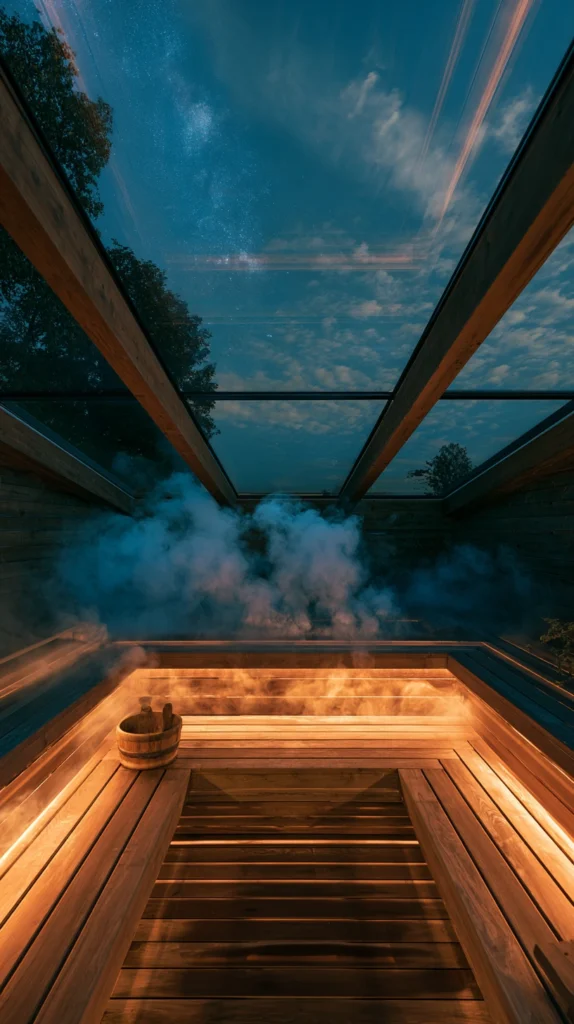
The sauna with a clear or translucent roof panel, positioned to look upward at the sky above while lying on the sauna bench, is the most atmospheric version of the glass-in-sauna concept.
A polycarbonate or tempered glass panel in the roof of the sauna, positioned above the main bench, allows the person using the sauna to look directly upward at the sky. On clear evenings the stars are visible from within the warm sauna. On cloudy nights the quality of the light through the translucent roof creates its own atmosphere.
This addition changes the sauna session from an enclosed, inward-looking experience to one that connects the person inside the warm sauna to the sky above and the natural world beyond the structure’s walls.
The structural requirement for a roof window or panel in a sauna must be met with appropriate materials. Standard double glazing is not suitable for sauna conditions because the moisture and temperature variation exceeds the specifications of standard domestic glazing. Purpose-made sauna windows in tempered glass with appropriate frame specifications handle the sauna environment correctly.
A wood-burning sauna with a roof panel above the bench and a cold plunge beside the door, used at night in winter, is a specific and extraordinary experience that makes the home sauna practice genuinely exceptional rather than merely beneficial.
14. A Mobile or Towable Sauna Trailer
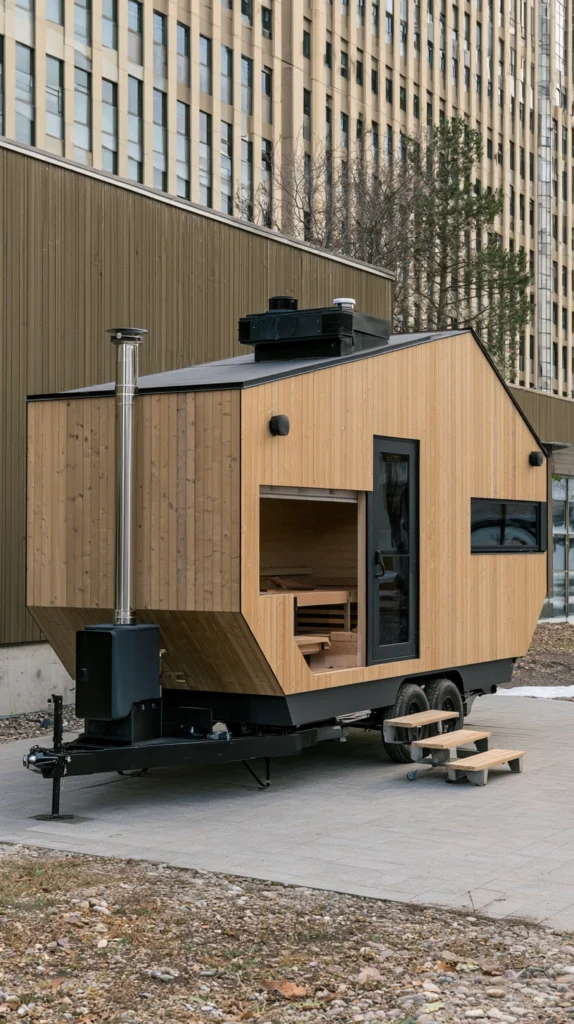
The mobile sauna on a trailer is the solution for properties without the planning permission, the lease terms, or the permanent garden space to support a fixed sauna structure.
A sauna built on a standard trailer base can be towed to a destination, parked, connected to a power supply or set up with its wood-burning stove, and used as a full sauna facility at any location accessible by road. It is equally at home parked beside a lake, on a campsite, or in the home driveway.
For properties where a permanent structure is not possible, the mobile sauna provides the full practice without the permanence. Towed away when not in use, parked in a drive or a storage facility, and retrieved for use on the schedule that the practice requires.
The mobile sauna on a trailer also offers the possibility of the lakeside, riverside, or countryside sauna experience that is part of Finnish sauna tradition. The sauna by the water, with the water for cold immersion immediately available, is the traditional context and the mobile sauna makes it accessible without owning lakeside property.
Build or specify the trailer sauna to the same quality standards as a fixed sauna. The timber, the stove or heater, the insulation, and the bench quality should be identical to a permanent structure. The mobile element should not imply a compromise in the quality of the sauna experience.
15. A Complete Backyard Wellness Area Around the Sauna
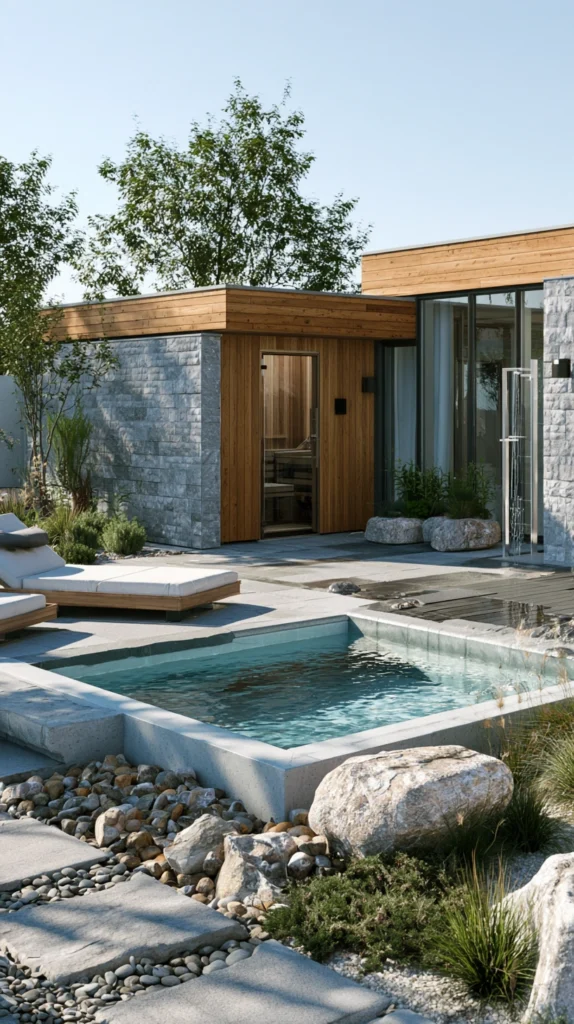
The most ambitious and most complete version of the home sauna is the sauna as the centrepiece of a dedicated backyard wellness area.
The sauna structure itself. A cold plunge pool immediately beside it. An outdoor shower between the two. A cedar soaking tub at a comfortable temperature for the recovery phase. A private seating area with screening planting for the outdoor cooling between rounds. A path connecting these elements in a deliberate ritual sequence.
The wellness area communicates that the backyard has a specific purpose beyond the general outdoor living that a lawn and a terrace provide. It is an outdoor space designed for a specific practice that has genuine health benefits and genuine social benefits and that the household values enough to invest in properly.
The design of the wellness area should be as carefully considered as the design of any other part of the home. The materials should be consistent. Cedar and timber throughout. The planting should provide screening and seasonal interest without overgrowing the structures it surrounds. The path between elements should be a pleasant surface to walk on barefoot, smooth river pebbles, fine gravel, timber decking.
The complete wellness area is not achieved in a single weekend. It is built over time as each element is added to an existing foundation. The sauna comes first. The cold shower follows. The plunge pool comes when the budget allows. The seating area as each season reveals what the outdoor cooling period needs.
The investment compounds. Each addition makes the previous elements more useful and more used. The complete wellness area, reached through successive seasons of adding to what was already there, is the most satisfying version of any garden project because it is genuinely and daily used.
How to Plan a Home Sauna Installation
The planning process for a home sauna depends primarily on whether the installation is a fixed outdoor structure, an indoor conversion, or a mobile unit.
For a fixed outdoor structure, check local planning regulations before any construction begins. In most jurisdictions a small garden structure below a certain floor area does not require planning permission, but the specific thresholds vary and the consequences of building without permission where it is required are significant.
Consider the power supply. An electric sauna heater of the appropriate output for the sauna volume requires a dedicated circuit from the property’s consumer unit. This is electrical installation that must be done by a qualified electrician and planned before the sauna structure is built.
Consider the drainage. The sauna and the outdoor shower produce water that needs to drain. A simple soakaway of sufficient capacity handles the volume of water from a small sauna and outdoor shower without connection to the main drainage system in most cases.
Consider the access path between the house and the sauna structure. Barefoot access in wet weather requires a surface that is safe, pleasant, and non-slip. Gravel, timber decking, or smooth stepping stones set in the path’s surface create a considered connection between the house and the sauna.
Common Mistakes in Home Sauna Planning
Under-insulating the structure. A sauna with inadequate insulation takes longer to heat, costs more to operate, and produces a less stable temperature environment during use. Insulate to a higher standard than seems necessary and the sauna performs better across its entire life.
Choosing a heater that is too small for the volume. The heater specification for a sauna is calculated from the room’s volume in cubic metres. Under-specifying the heater produces a sauna that never reaches the target temperature or takes so long to heat that the practice becomes impractical.
Positioning the sauna too far from the house. The transition between the house and the sauna should be as quick as possible in cold weather. A sauna at the far end of a long garden requires a longer outdoor transit in cold conditions that discourages use on the evenings when the practice is most beneficial.
Not providing adequate ventilation. The sauna must ventilate effectively during and after use. Inadequate ventilation causes moisture problems in the structure and creates a stagnant air quality in the sauna room that affects the quality of the experience.
Ignoring the cooling provision. A sauna without any cold cooling option, a shower, a plunge pool, or at minimum access to cold outdoor air in a private space, provides only half the traditional sauna practice. The cooling phase is as important as the heating phase.
Choosing appearance over function in the bench design. The bench is where the entire sauna experience is spent. The bench material must handle moisture without becoming sharp, splintery, or uncomfortable when wet. Aspen and abachi are the traditional bench materials because they do not overheat to the touch and do not splinter when wet.
Quick Summary
- A barrel sauna in cedar or spruce is the most widely available, most recognisable, and most quickly installed home sauna form
- A smoke sauna is the most traditional Finnish form, requiring the most preparation but producing the most authentic experience
- A cabin sauna with a separate changing room provides the complete ritual space that a single sauna room cannot
- An infrared sauna cabin heats faster and operates at lower temperatures, making it more accessible for some users
- A sauna with a living planted roof integrates into the garden landscape and provides additional thermal and acoustic insulation
- A cold plunge pool immediately beside the sauna is the second half of the traditional heat-cold cycle with the most documented health benefits
- A wood-burning kiuas stove provides the heat quality and the ritual quality that electric alternatives approximate but do not replicate
- An outdoor shower beside the sauna provides the cold rinse in the smallest possible footprint
- A sauna positioned for a specific garden view turns the practice into a contemplative as well as a physical experience
- A pod, sphere, or geodesic dome form creates the most architecturally distinctive garden sauna structure
- A Japanese ofuro soaking tub combined with a sauna creates a complete outdoor bathing area drawing from two traditions
- A changing room and private outdoor seating area beside the sauna provides the cooling space that the traditional practice requires
- A roof panel above the sauna bench creates the connection to the sky and stars that makes the session exceptional
- A mobile trailer sauna provides the full practice for properties without the planning permission or space for a fixed structure
- A complete wellness area of sauna, cold plunge, shower, soaking tub, and private seating is the most complete home spa available
- Build from the sauna first and add each subsequent element over time as the practice establishes itself and each addition enriches it
The home sauna is not a garden feature.
It is a practice with a dedicated space.
The practice is ancient and the evidence for its benefits is substantial. The space can be as simple as a barrel in the garden or as considered as a complete wellness area with multiple water features, screening planting, and a private ritual sequence.
Both deliver the practice.
Start with the sauna. Let the practice develop. Add what the practice reveals it needs.
The health, the quiet, and the specific pleasure of the regular sauna user are not waiting for the perfect installation.
They are waiting for the first session.