15 Genius Backyard Patio Designs with Pool Ideas You Need to See
We put in a pool two summers ago, and I genuinely underestimated how much the patio around it would matter. I figured the pool itself was the whole project, and the concrete around it was just an afterthought.
I was wrong about that almost immediately. The patio is where you actually spend most of your time, since nobody’s in the water every single minute of a pool day. It’s where the lounge chairs go, where the food shows up, where conversations happen while someone’s kid does cannonballs in the background.
We ended up redoing our patio layout twice before it actually worked the way we wanted it to. Both times, the fix came from copying an idea I’d seen at a friend’s house or stumbled across while researching other people’s backyards.
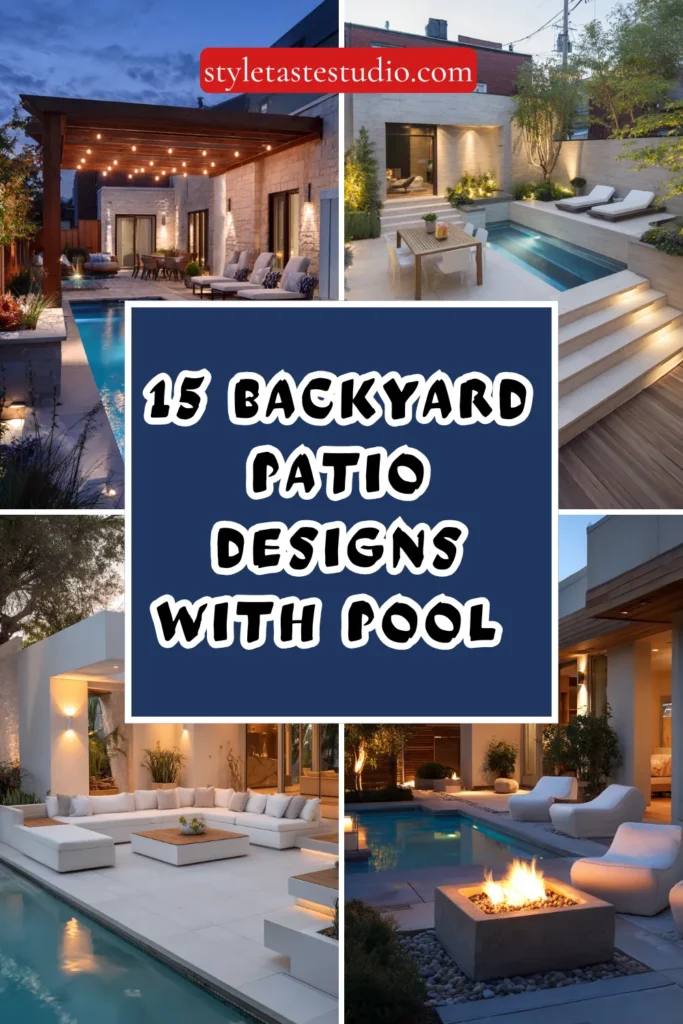
I’ve spent the two years since obsessively looking at other people’s pool patios, partly out of genuine interest and partly because I’m already plotting a third redesign. Here’s everything I’ve picked up, organized into fifteen ideas that actually make a difference.
Some of these are big structural decisions, and some are small enough to add to an existing patio this weekend. I’ve tried to include both, since not everyone is starting from a blank slate the way we were.
A quick note before diving in. Every backyard is different, and climate, budget, and how you actually use your pool will change which of these ideas matter most for your specific situation. I’ve tried to flag which additions were genuinely worth the cost for us and which ones were smaller, lower-stakes changes anyone could try first.
1. A Raised Sun Shelf Built Into the Pool Edge
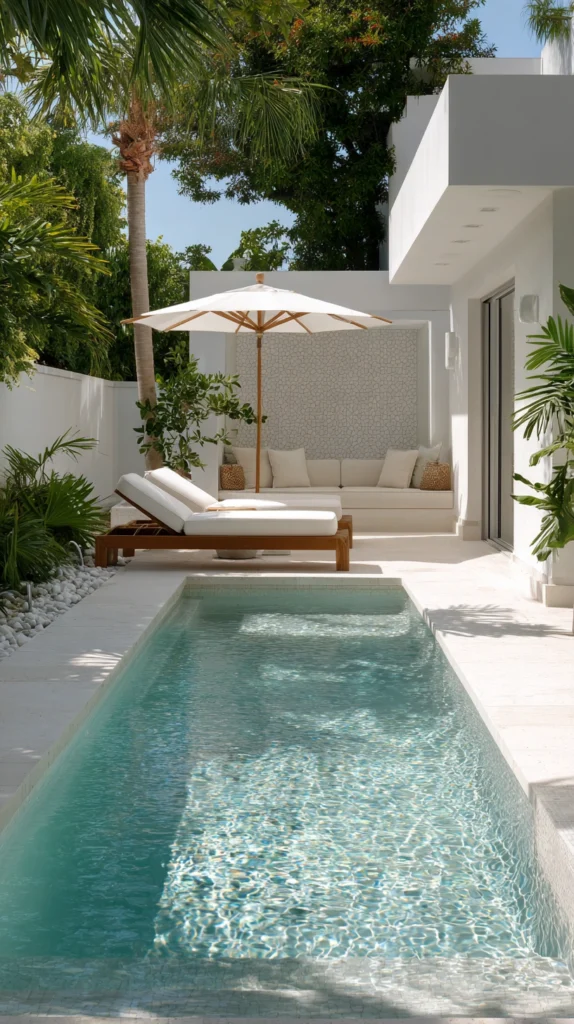
This was the single feature I regret not including in our original build. A sun shelf is a shallow, submerged ledge built right into the pool, usually just deep enough to sit a lounge chair partially underwater.
It blurs the line between the patio and the pool in a way that changes how people actually use the space. Instead of choosing between sitting on the patio or swimming, people just drift between both without really deciding.
- Typically built 6 to 12 inches deep, enough to cool off without fully submerging
- Works well positioned near the shallow end, close to where kids already tend to gather
- Weighted, pool-rated lounge furniture prevents chairs from floating away during use
- Umbrellas anchored into the shelf provide shade directly over the water
A friend added one during her pool build, and it’s become the single most-used feature in her entire backyard. Adults end up parked there with drinks for hours, half in the water and half out.
If I ever redo our pool from scratch, this is the first feature going back in. Retrofitting one into an existing pool is possible but expensive, so it’s worth planning for from the very beginning if you’re still in the design phase.
Beyond the practical use, there’s something about the sound and feel of shallow water lapping around a lounge chair that regular deck seating just can’t replicate. It’s a small detail on paper, but it ends up being the feature guests remember most vividly after visiting.
2. Multi-Level Patio Terracing
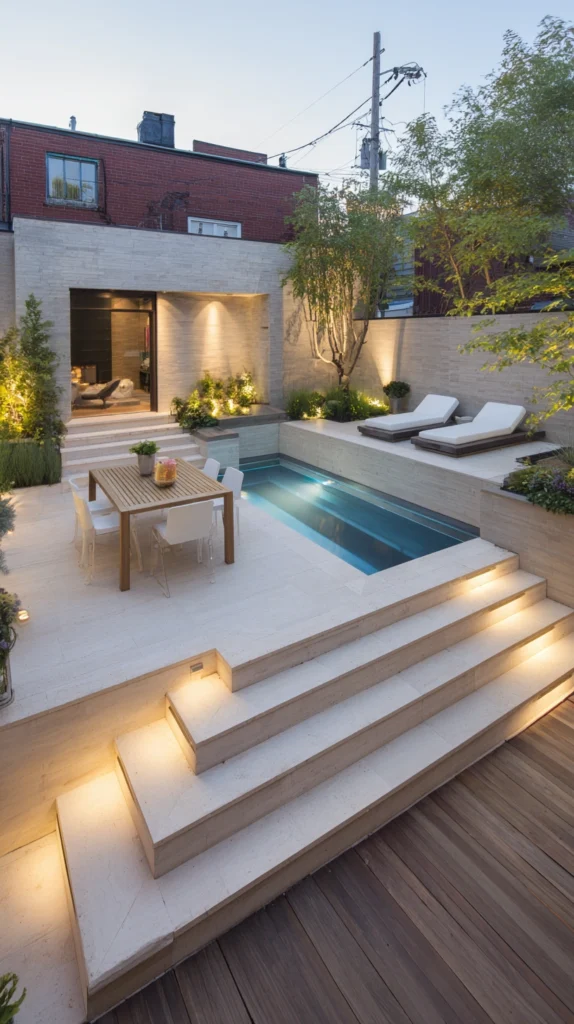
Our backyard has a slight slope, which we initially saw as a problem. It turned out to be an opportunity once we stopped trying to flatten everything into one single level.
Terracing the patio into two or three distinct levels gives a pool area more visual interest and, honestly, more actual function than a single flat slab ever could.
- Use the upper level for dining and cooking, away from splashing and wet feet
- Keep the lower level closest to the pool for lounging and direct pool access
- Retaining walls between levels double as extra seating if built at the right height
- Steps between levels should be wide and shallow, especially near wet pool areas, to reduce slip risk
We split ours into two levels, with the grill and dining table up top and lounge chairs down near the water. It’s made hosting significantly easier, since the cooking area stays dry and separate from the pool chaos.
The height change also does something subtle for the overall feel of the yard. It makes a relatively small backyard read as more spacious, since your eye has more to track than a single flat plane.
We also found that terracing helped manage drainage far better than our original flat design ever did. Water runoff from summer storms now moves predictably between levels instead of pooling awkwardly against the house foundation, which had been a recurring headache before the redesign.
3. A Covered Cabana or Pergola
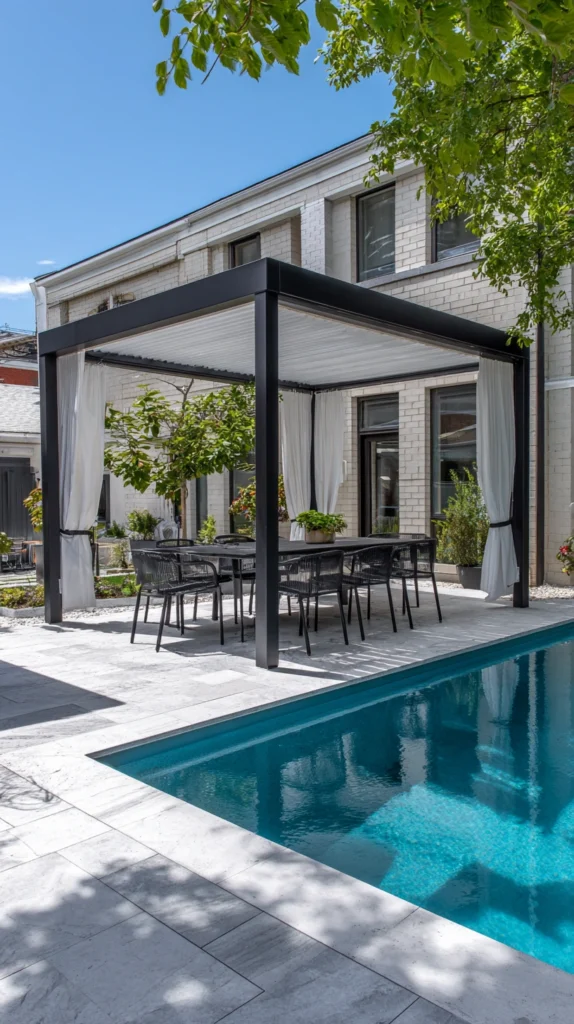
Direct sun sounds great in theory until you’ve spent an entire pool season without a single shaded spot to escape it. We learned this the hard way during our first summer.
A cabana or pergola solves that problem while also giving the whole patio a defined architectural anchor, rather than just an open slab of concrete surrounding the water.
- Pergolas with retractable canopies adapt to changing weather better than fixed roofs
- Fully covered cabanas work well if you want a genuine outdoor living room, complete with furniture
- Position shade structures based on your yard’s actual sun path, not just where it looks nice on paper
- String lights or hanging fixtures under a pergola extend usability into the evening
We added a pergola with a retractable canopy the second time around, positioned over our dining set on the upper terrace level. It’s completely changed how long people stay for a pool day.
Before, guests would start leaving once the afternoon sun got intense. Now people just move under the pergola and keep going, which honestly says more about the shade than anything else on this list.
4. Natural Stone Decking Instead of Poured Concrete
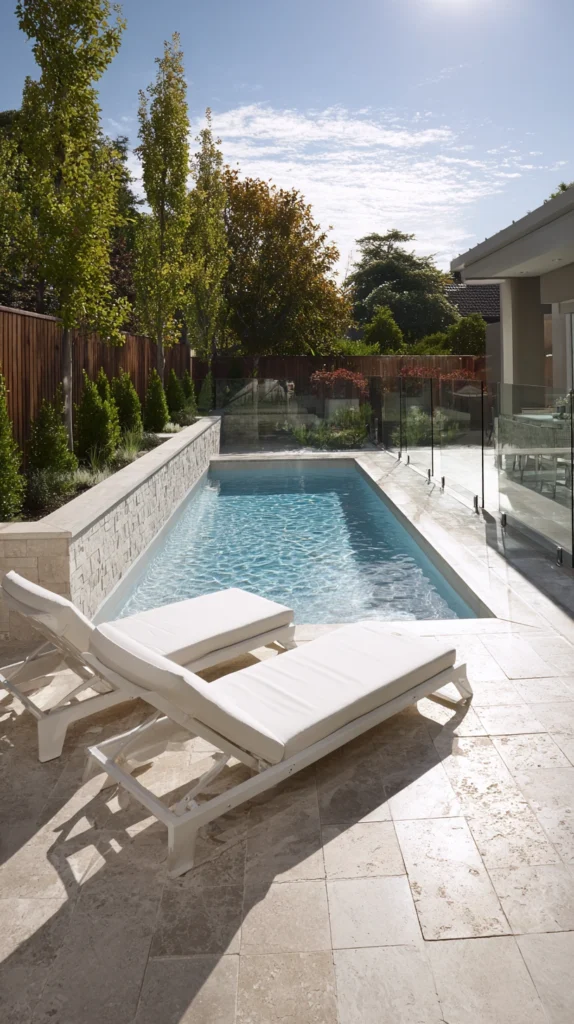
Our original patio was plain poured concrete, which looked fine on paper but turned out to be uncomfortably hot underfoot by early afternoon most summer days.
Natural stone genuinely solved that problem when we redid it, along with adding a texture and visual warmth that concrete alone never quite achieved.
- Travertine stays noticeably cooler underfoot than poured concrete in direct sun
- Irregular flagstone adds a more organic, less manufactured look around a pool edge
- Textured stone surfaces reduce slip risk better than smooth poured concrete
- Light-colored stone reflects heat better than darker options, worth prioritizing in hot climates
Switching to travertine around the pool edge specifically was the change that got the most direct comments from guests. People noticed immediately that they could walk barefoot without wincing.
It cost more than resurfacing the concrete would have, but between the comfort and the visual upgrade, it’s the single renovation I’d redo first if I were starting over.
5. An Outdoor Kitchen Built Into the Patio
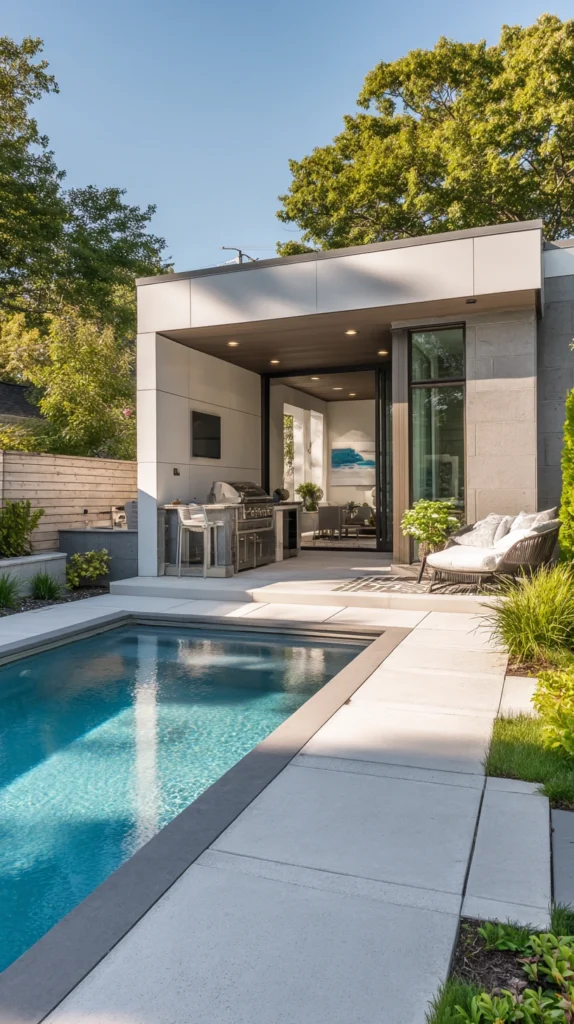
Running back and forth to an indoor kitchen during a pool party gets old fast, especially once you’re the one hosting and constantly leaving the group to grab something.
An outdoor kitchen, even a modest one, keeps the whole gathering centered around the patio instead of splitting attention between two separate spaces.
- A built-in grill is the minimum starting point, expandable later as budget allows
- Add a small sink if plumbing access makes it feasible, which cuts down on trips inside significantly
- Covered counter space protects food prep areas from direct sun and occasional splashing
- Mini fridges or built-in coolers keep drinks close without anyone needing to leave the patio at all
We started with just a built-in grill and a stretch of counter space, then added a small fridge the following year once we confirmed how much we actually used the space.
It’s become the default hosting setup for us now. Nobody has to duck inside constantly, and the person cooking stays part of the conversation instead of disappearing into the kitchen for twenty minutes at a time.
Even a small addition like a side burner made a bigger difference than expected, since it meant sides and sauces could happen right alongside the main grilling instead of requiring a trip back inside mid-cook.
6. Fire Features Near the Pool Area
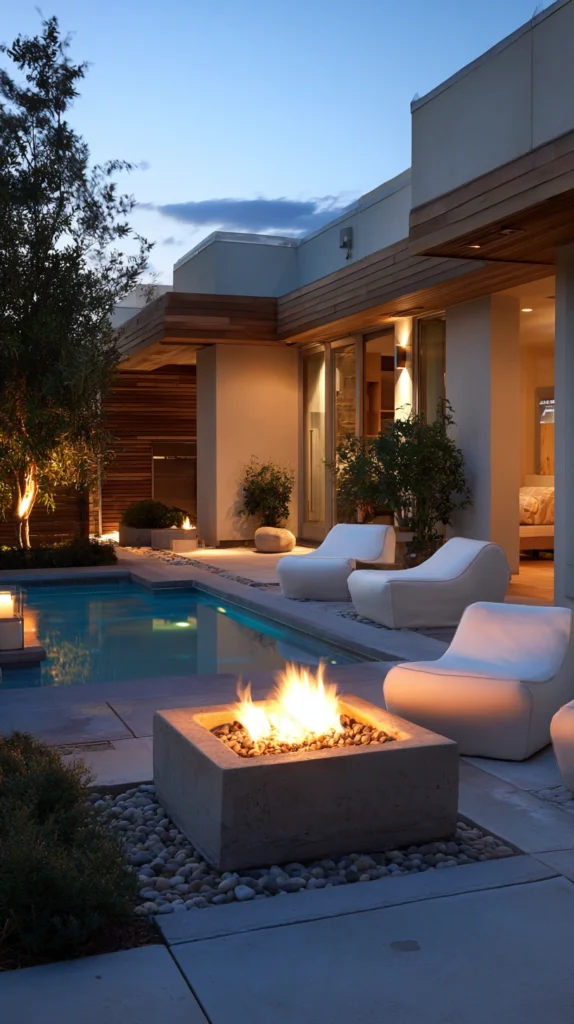
I didn’t expect a fire feature to get much use near a pool, assuming the two didn’t really belong in the same space. I was wrong, and it’s turned out to be one of the more popular additions.
Fire pits and fire bowls extend pool season usability into cooler evenings, and they give guests somewhere to gather once everyone’s out of the water for the night.
- Position fire features at a safe distance from the pool edge, following local code requirements
- Gas fire pits offer more convenience than wood-burning options, especially for spontaneous use
- Built-in seating around a fire feature keeps the area organized rather than relying on scattered furniture
- Consider wind patterns in your yard before finalizing placement, since smoke drift affects usability
We added a small gas fire bowl on our upper terrace, far enough from the pool to meet code but still visually connected to the whole space. It’s turned pool nights into something that lasts well past sunset now.
Kids especially love the transition from swimming to sitting by the fire in towels, which has genuinely become its own little ritual during our warmer months.
7. Poolside Daybeds Instead of Standard Loungers
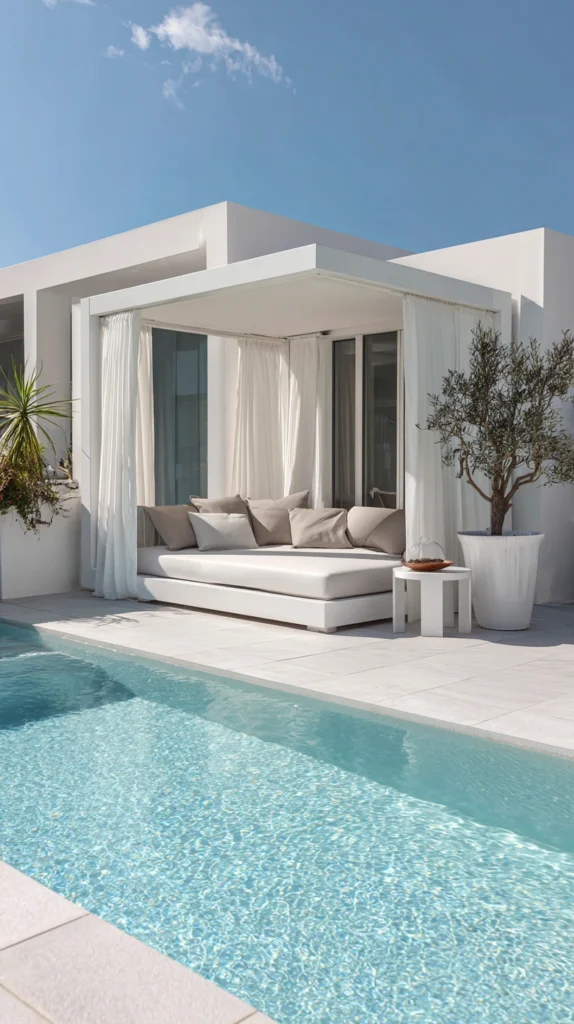
Standard pool loungers work fine, but daybeds change the whole feel of a patio in a way I didn’t anticipate until we tried one out at a rental property.
They read as more intentional, more like an actual outdoor room than a row of individual chairs lined up facing the water.
- Look for weather-resistant frames rated specifically for pool and patio use
- Canopy-topped daybeds provide built-in shade without needing a separate pergola overhead
- Position daybeds slightly off to the side rather than directly in the main walking path around the pool
- Washable, quick-dry cushions handle wet swimsuits far better than standard indoor-style fabric
We added a single daybed on our lower terrace level, and it’s consistently the first spot claimed whenever we have guests over. Something about the shape just reads as more relaxing than a row of individual chairs.
It also doubles as a nap spot for kids worn out from swimming, which has been a genuinely unexpected but welcome bonus of the whole addition.
8. Water Features That Blend Into the Patio
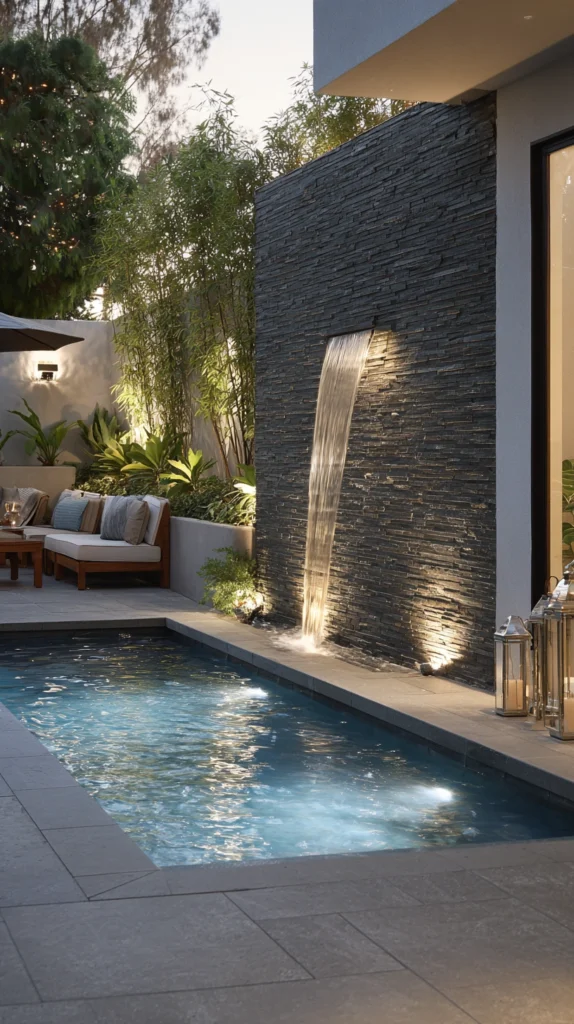
Beyond the pool itself, small water features scattered through the patio add both sound and visual interest that a plain concrete or stone surface doesn’t provide on its own.
We added a small wall-mounted water feature near our seating area, mostly for the sound of it more than anything visual.
- Wall-mounted water features work well against a fence or retaining wall bordering the patio
- Small fountains near seating areas mask nearby street noise, especially useful in suburban backyards
- LED lighting built into water features extends their visual impact into evening hours
- Keep water features on a separate pump system from the main pool for easier maintenance
The sound genuinely changes how the whole backyard feels, even during moments when nobody’s actually in the pool itself. It creates a kind of constant, calming background noise that makes the whole space feel more resort-like.
It was also one of the cheaper additions on this entire list, which surprised me given how much of a difference it made to the overall atmosphere.
9. Turf or Low-Maintenance Greenery Bordering the Patio
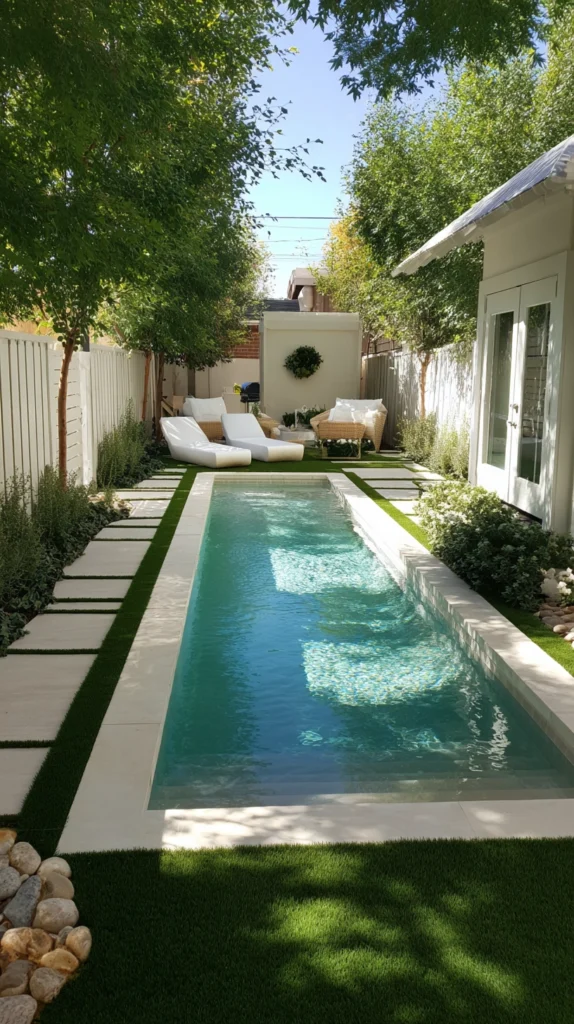
Grass right up against a pool patio gets torn up fast from constant foot traffic, wet feet, and pool chemicals splashing over the edge during use.
We switched a strip of struggling grass bordering our patio to artificial turf, and it solved a maintenance headache we hadn’t fully anticipated when we built the pool.
- Artificial turf handles pool splash and chlorine exposure far better than natural grass
- Drought-tolerant plantings around the patio edge reduce ongoing maintenance significantly
- Potted plants offer more flexibility than in-ground landscaping if you want to change the layout later
- Keep any plantings near the pool edge trimmed to avoid leaf litter constantly falling into the water
The turf border specifically solved our worst maintenance problem, since that patch of real grass had been permanently muddy and patchy from splash exposure before we made the switch.
It also stays green year-round without any watering, which matters more than I expected once we factored in how much water the pool itself already uses.
10. Outdoor Rugs Designed for Wet Environments
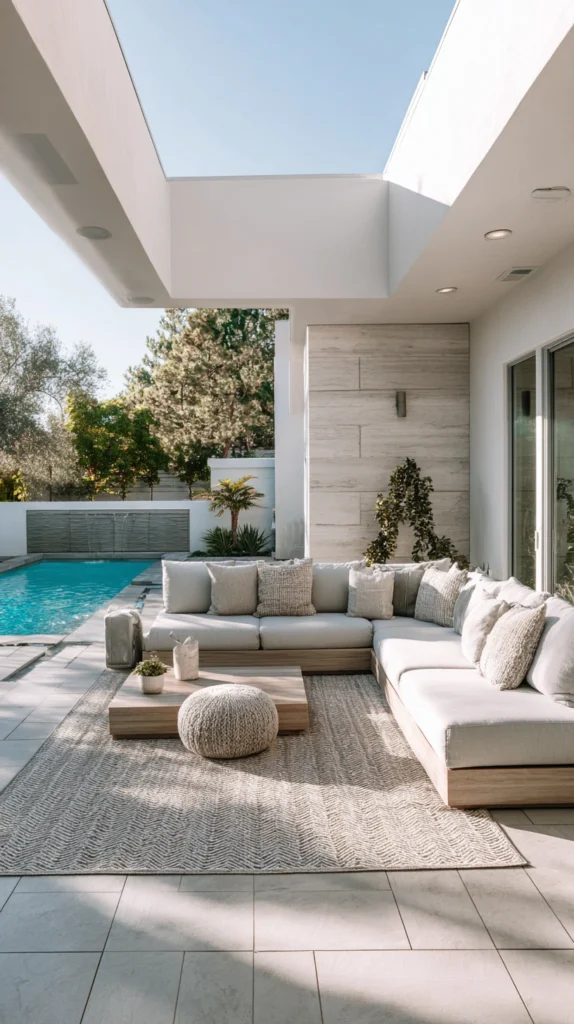
I didn’t think much about rugs on a pool patio until a friend pointed out how much softer and more finished her space felt with a couple of outdoor rugs layered onto the stone.
Standard indoor rugs obviously don’t work here, but pool-rated outdoor versions handle the wet, chlorinated environment without falling apart.
- Look specifically for polypropylene or similarly quick-drying, mold-resistant materials
- Layer a rug under a seating group to visually define that area separately from the open pool deck
- Bold patterns hide water spots and general wear better than solid, light colors
- Rinse and air dry rugs periodically to prevent chlorine buildup or mildew over time
We added two rugs, one under our dining set and one under the daybed, and both areas immediately felt more like distinct rooms rather than just open sections of the same slab.
It’s a small, relatively cheap addition, but it made the whole patio read as more finished and considered rather than just functional poolside concrete.
11. Tanning Ledges with Built-In Umbrella Sleeves
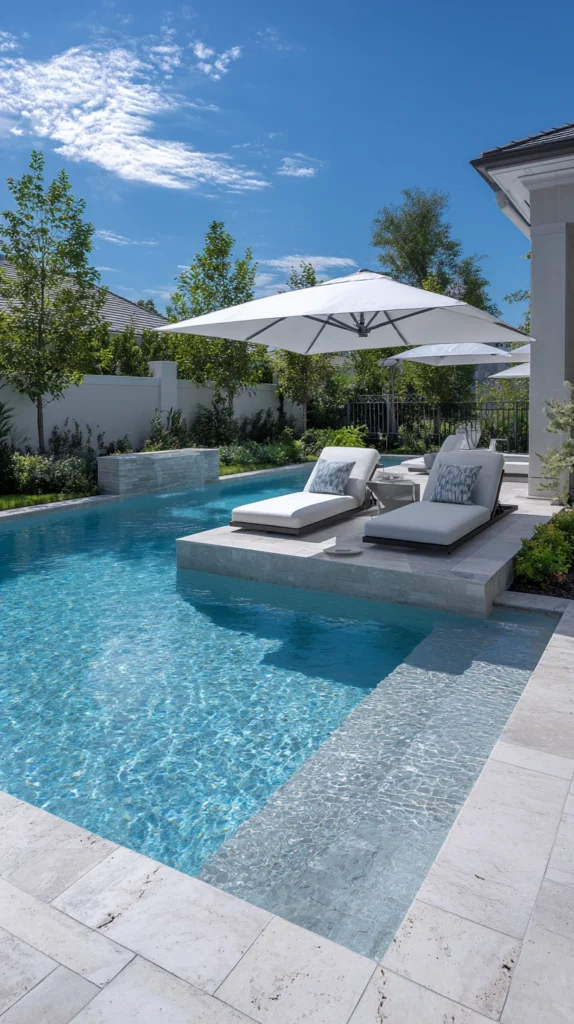
Similar in spirit to the sun shelf idea, but this one focuses specifically on giving that shallow lounging area proper shade without relying on freestanding umbrellas that tip over constantly in wind.
Built-in sleeves anchor umbrellas directly into the pool deck or the shelf itself, solving a problem that plagued our first attempt at shading the lounge area.
- Sleeves poured directly into the concrete or stone during construction hold umbrellas far more securely than base stands
- Position sleeves to account for the sun’s path through the specific hours you use the pool most
- Removable umbrella poles let you clear the area completely when not in use
- Coordinate umbrella fabric color with other patio textiles for a more cohesive overall look
We retrofitted umbrella sleeves into our stone patio during the second renovation, right at the edge of the shallow end, and it eliminated the constant battle with umbrellas toppling over in even mild wind.
It’s a small, practical detail that doesn’t show up in most inspiration photos, but it’s made a genuine daily difference in how usable that specific corner of the patio actually is.
12. Statement Lighting for Nighttime Pool Use
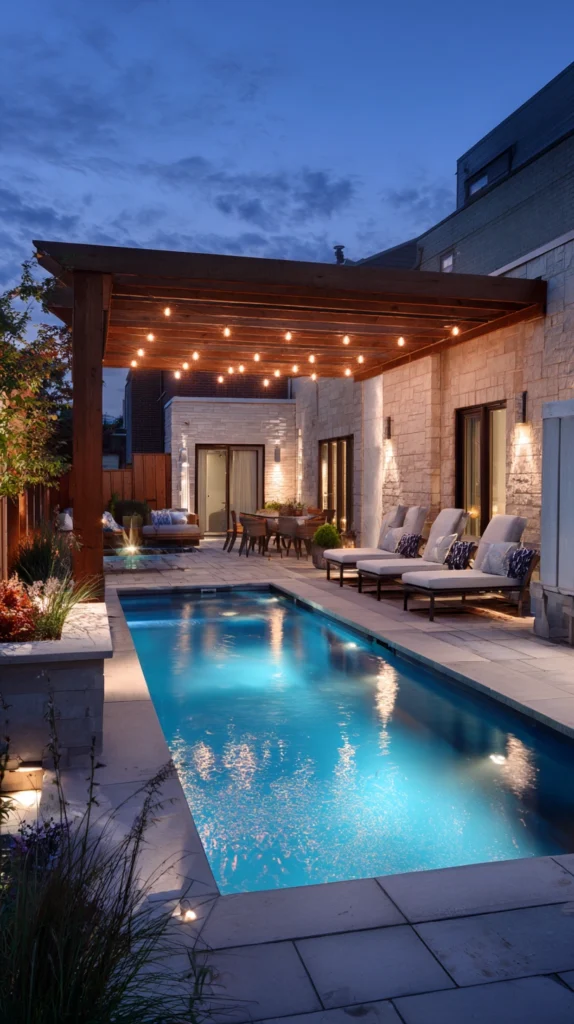
Our pool patio was basically unusable after dark for the first year, lit only by a single porch light that barely reached the water’s edge.
Layered outdoor lighting changed that completely, and it’s extended our actual usable pool hours by a significant margin during summer months.
- String lights overhead provide broad, ambient coverage across the whole patio area
- Path lighting along walkways improves safety around the pool edge after dark
- Underwater LED pool lights add a genuine wow factor for evening swimming
- Dimmable systems let you adjust the mood between an active pool party and a quieter evening
We added string lights across the pergola, small path lights along the stone walkway, and color-changing underwater LEDs in the pool itself. The transformation after sunset is honestly dramatic compared to before.
Evening pool time has become its own distinct experience from daytime swimming, almost like a completely different space depending on when you’re using it.
We’ve since found ourselves hosting more evening gatherings than daytime ones, mostly because the lighting makes the space feel special in a way harsh midday sun never quite achieves. It’s changed the whole rhythm of how we actually use the pool throughout a typical week.
13. A Dedicated Outdoor Shower Near the Patio
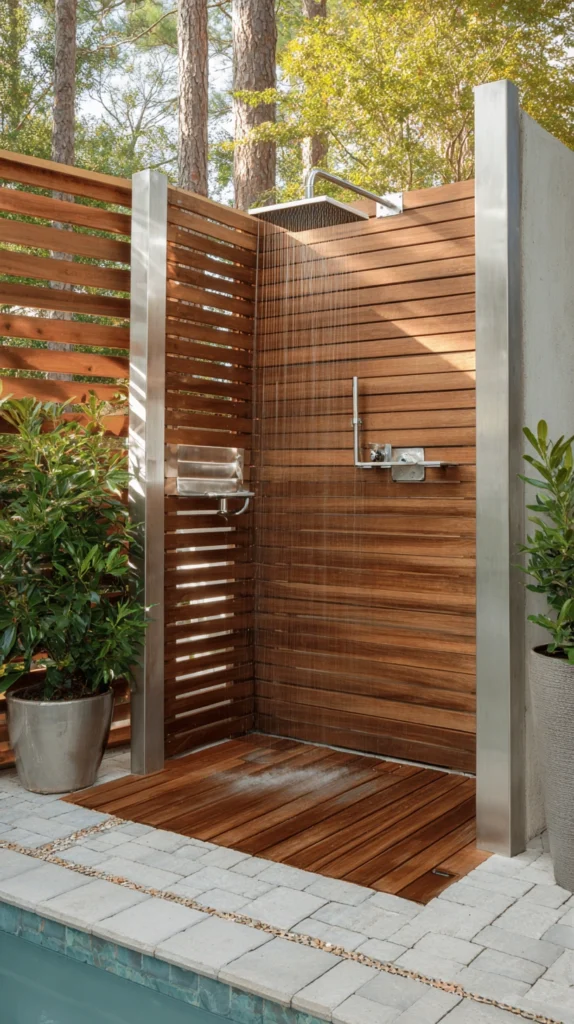
This felt like a luxury addition when we first considered it, but it’s turned into one of the most genuinely useful features we added during the second phase of our renovation.
An outdoor shower keeps chlorine, pool chemicals, and general wetness from tracking through the house every single time someone gets out of the pool.
- Position the shower near the pool exit point most people actually use, not just wherever plumbing is easiest
- A simple cold-water-only setup works fine for a quick rinse, though warm water adds comfort in cooler months
- Privacy screening, even minimal, makes the shower feel like an intentional feature rather than an exposed afterthought
- Quick-drain flooring beneath the shower prevents standing water from becoming a slip hazard
Ours sits just off the lower terrace, screened with a simple wood lattice panel for privacy. It’s cut down dramatically on wet footprints through the house every single pool day.
It’s the kind of feature that seems unnecessary until you have it, and then it becomes genuinely hard to imagine going back to a pool setup without one.
We also added a small hook and shelf just outside the shower for towels and sunscreen, which sounds minor but has meaningfully reduced the amount of clutter that used to accumulate around the pool’s edge before people headed inside.
14. Fire-and-Water Combination Features
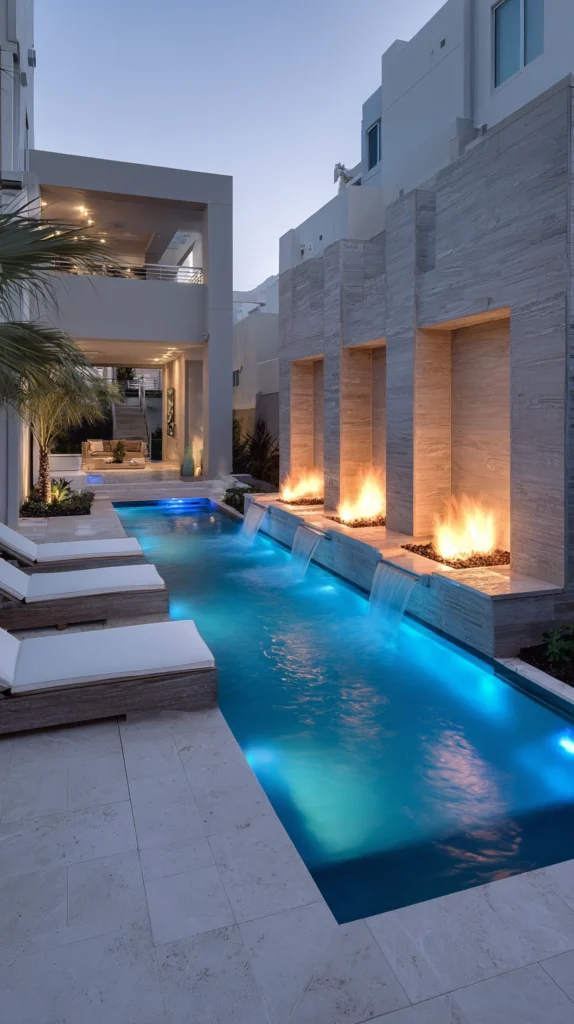
Beyond a standalone fire pit, some patio designs combine fire and water directly into the pool structure itself, usually through fire bowls positioned along the pool’s edge or on a raised wall nearby.
It’s a more dramatic, higher-budget option, but it creates a genuinely striking visual focal point that photographs well and functions as ambient lighting after dark.
- Fire bowls mounted on a raised wall bordering the pool create a dramatic nighttime silhouette
- Gas lines need to be planned during initial construction, since retrofitting is significantly more expensive
- Combine with a spillover water feature for a layered sensory effect between sound, light, and warmth
- Keep combination features on a separate control system from the main pool equipment for easier operation
We haven’t added this ourselves yet, mostly due to cost, but it’s the feature I keep coming back to whenever I browse other people’s finished pool patios online.
If a third renovation ever happens here, this is likely the headline addition, assuming the budget and the gas line planning actually cooperate with each other.
15. Flexible, Modular Outdoor Furniture
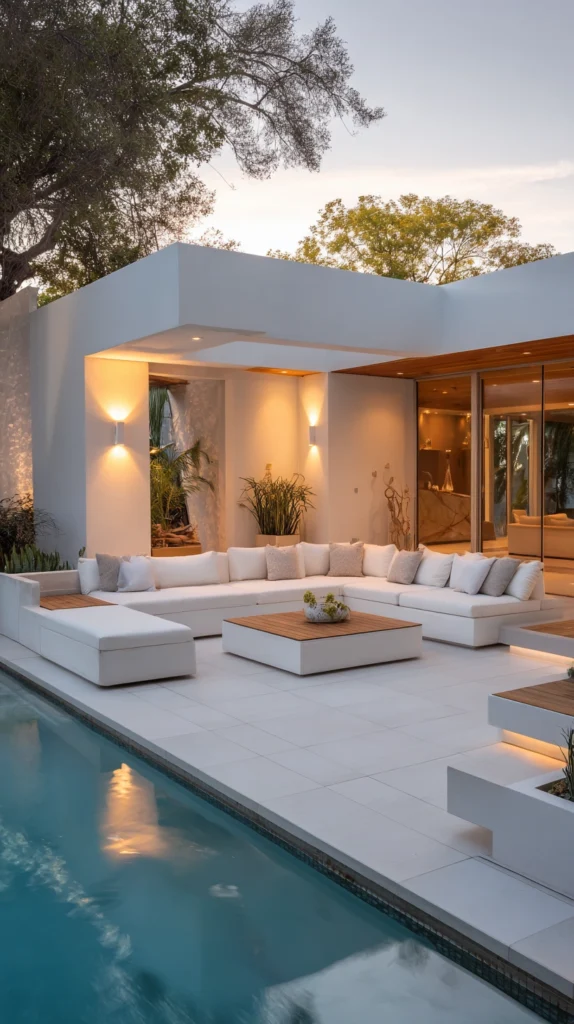
The last lesson we learned, almost by accident, was that fixed furniture arrangements around a pool rarely stay useful for long. Group sizes change, kids grow up, and how you actually use the space shifts year to year.
Modular furniture solved that problem for us in a way a single fixed sectional or a matched patio set never could.
- Individual ottomans and modular sectional pieces can be rearranged for different group sizes and occasions
- Stackable chairs offer flexibility for storage during off-season months in colder climates
- Weather-resistant materials matter more here than anywhere else, given constant sun and splash exposure
- Mix a few fixed pieces, like a dining table, with modular seating for the best of both approaches
We replaced our original fixed lounge set with modular pieces that can split into smaller groupings or combine into one large seating area depending on who’s actually over that day.
It’s the single change that’s made our patio feel like it grows and shifts with us, rather than locking us into one static layout we picked years ago and never revisited.
We’ve rearranged the modular pieces at least a dozen different ways over the past year alone, depending on whether it’s a big family gathering or just the two of us wanting a quiet evening by the water. That kind of flexibility has honestly made the furniture feel like one of the smarter investments in the whole project.
Looking back at both renovations, the biggest lesson has been that the patio deserves nearly as much planning as the pool itself. It’s genuinely where the majority of the time gets spent, water or no water.
If you’re still in the planning phase, I’d encourage spending real time thinking through how you’ll actually use the space day to day, not just how it’ll photograph on the day it’s finished. That’s where our first attempt went wrong, and where the second attempt finally got it right.
A final piece of advice, if you’re weighing which of these fifteen ideas to prioritize first. Start with whatever solves your biggest current frustration, not whatever looks most impressive in photos. For us that meant fixing the hot concrete and adding shade before anything else, since those were the two things making the space genuinely unpleasant to use during peak summer heat.
- Prioritize comfort fixes first, like shade and surface material, before purely decorative additions
- Budget for structural changes like terracing or built-in features during any initial construction, since retrofitting costs more later
- Add smaller, reversible upgrades like rugs, lighting, and modular furniture as you go, testing what actually gets used
- Talk to your pool contractor early about features like sun shelves and umbrella sleeves, since these are far easier to include from the start
Two years and two renovations later, our patio finally functions the way we originally imagined it would on the day the pool was poured. It just took longer, and a lot more research, than either of us expected going in.