15 Stock Tank Pool Ideas for a Cool Backyard Retreat
A stock tank pool started life as exactly what it sounds like — a galvanised steel trough meant for watering livestock, repurposed by someone who realised it was roughly the size and depth of a small plunge pool and cost a fraction of what an actual pool would. That accidental discovery has turned into one of the more genuinely useful backyard trends of the last few years, and it’s easy to see why once you look past the novelty of it.
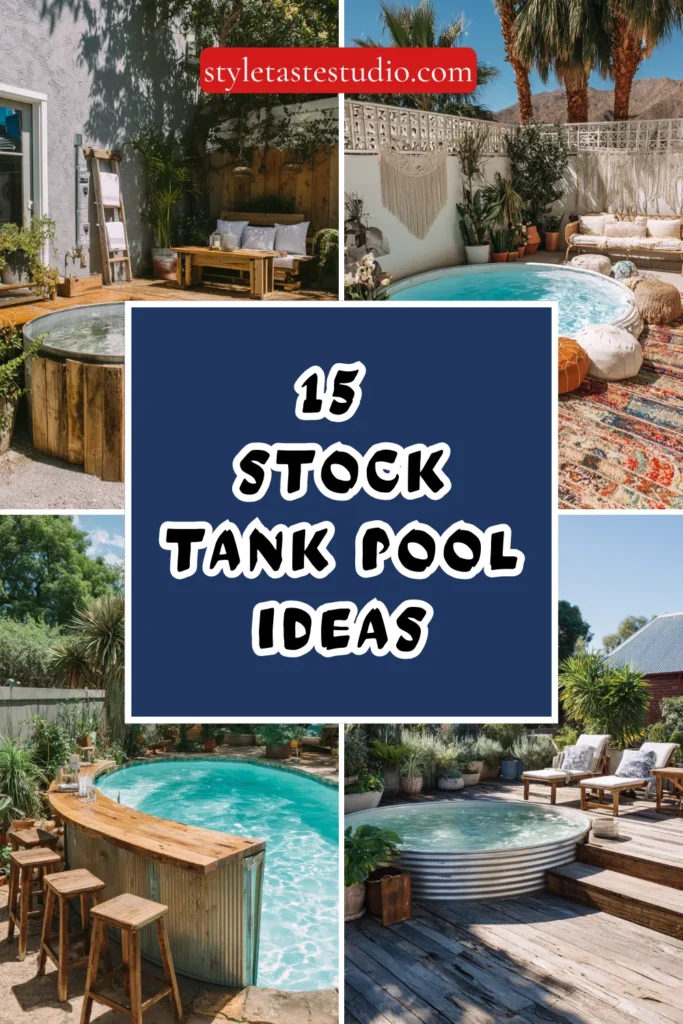
It fits where a real pool can’t — a tiny yard, a rental property, a budget that doesn’t stretch to permanent construction — and with a filtration pump, some considered styling, and a bit of surrounding deck or planting, it stops looking like a farm trough and starts looking like a genuine design choice. Here are fifteen ways to take that basic idea and make it your own.
Here are 15 stock tank pool ideas that transform a simple agricultural trough into the most enjoyable feature in any backyard.
1. Classic Galvanised Tank on a Timber Deck
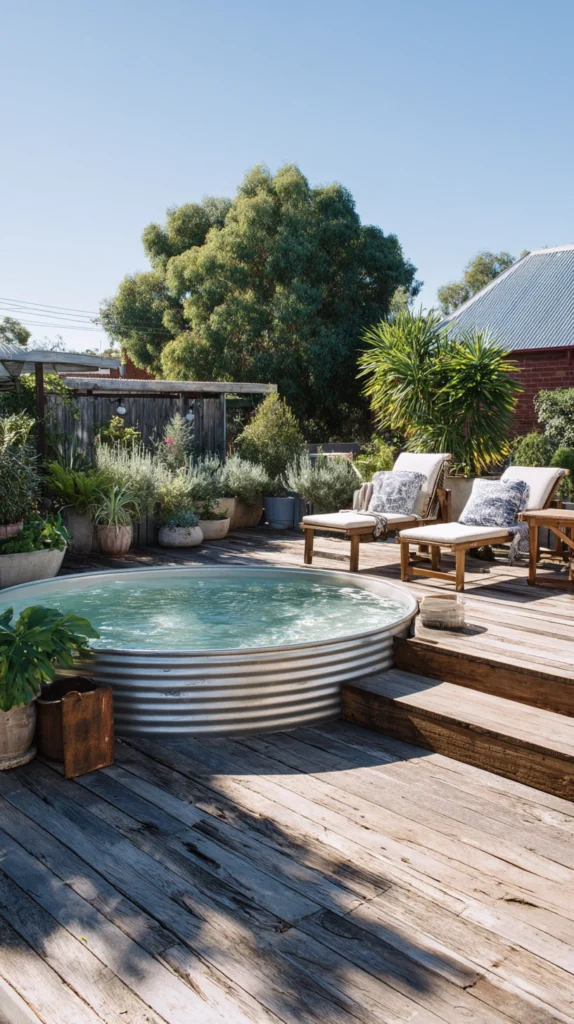
The most straightforward version of a stock tank pool is often the best-looking one. Set the tank on a low timber deck that extends out around it, and you’ve immediately given the whole setup a reason to exist beyond “we put a trough in the yard” — the deck frames the tank rather than just surrounding it, and gives people somewhere to actually stand and dry off.
Before filling it, line the interior with a food-grade epoxy coating. Galvanised steel has a zinc coating that can leach into the water over time, and the epoxy layer seals that off completely while also making the tank walls noticeably more comfortable against bare skin.
2. Stock Tank Pool with Filtration System
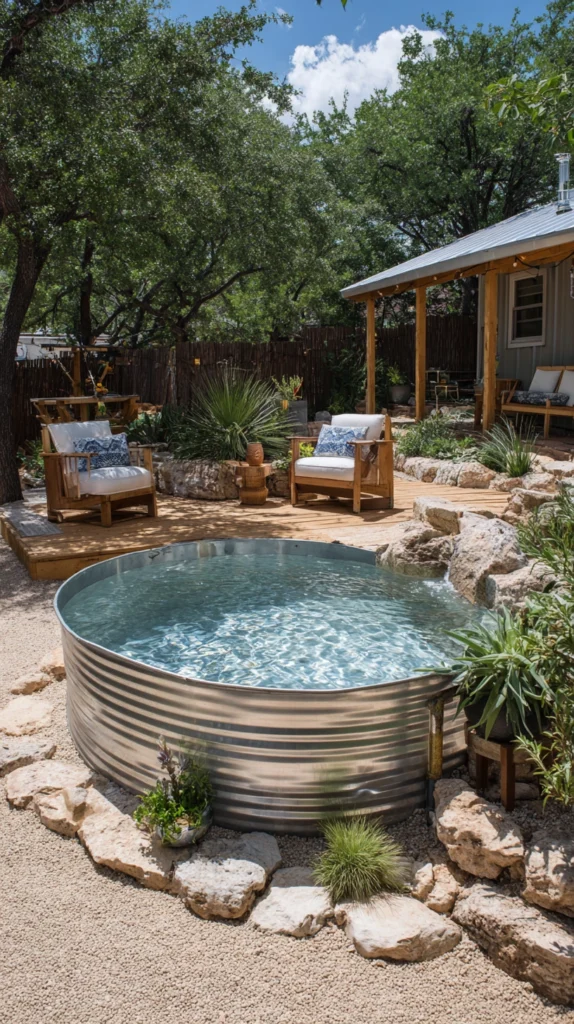
Without a filter, a stock tank pool is really just a very large bucket you have to drain and refill every few days. Add a cartridge filter pump and it becomes something you can actually maintain through an entire season — drill inlet and outlet holes, fit waterproof bulkhead connectors, and run a standard above-ground pool pump externally with flexible hose.
One thing worth getting right from the start: size the pump generously. A pump rated for double the tank’s actual volume keeps the water noticeably clearer with less chemical babysitting than one sized exactly to match — the extra cost is small, and the difference in water clarity is not.
3. Sunken Stock Tank Pool
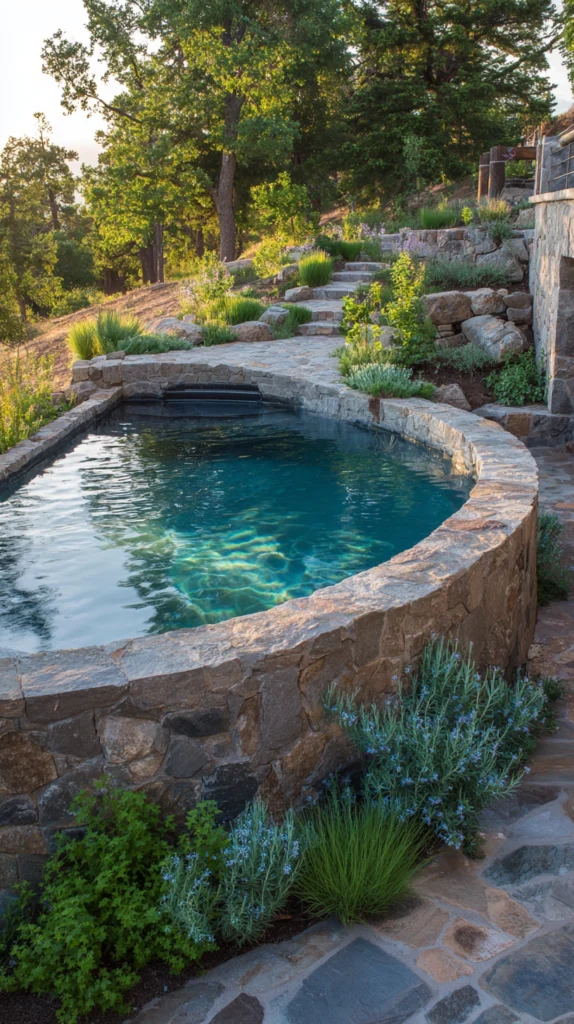
Digging the tank into the ground so its rim sits flush, or close to it, takes more labour than any above-ground setup on this list, but the payoff is a pool that looks like it was actually designed into the landscape rather than dropped onto it. Once the surrounding area is finished with paving or planting up to the rim, most visitors won’t clock that it started life as agricultural equipment at all.
The one step people skip and later regret: lay a drainage pipe from the base of the excavation before the tank goes in. Groundwater sitting against a buried tank corrodes it faster and can put real hydrostatic pressure on the walls, especially anywhere with a high water table.
4. Stock Tank with Shade Sail
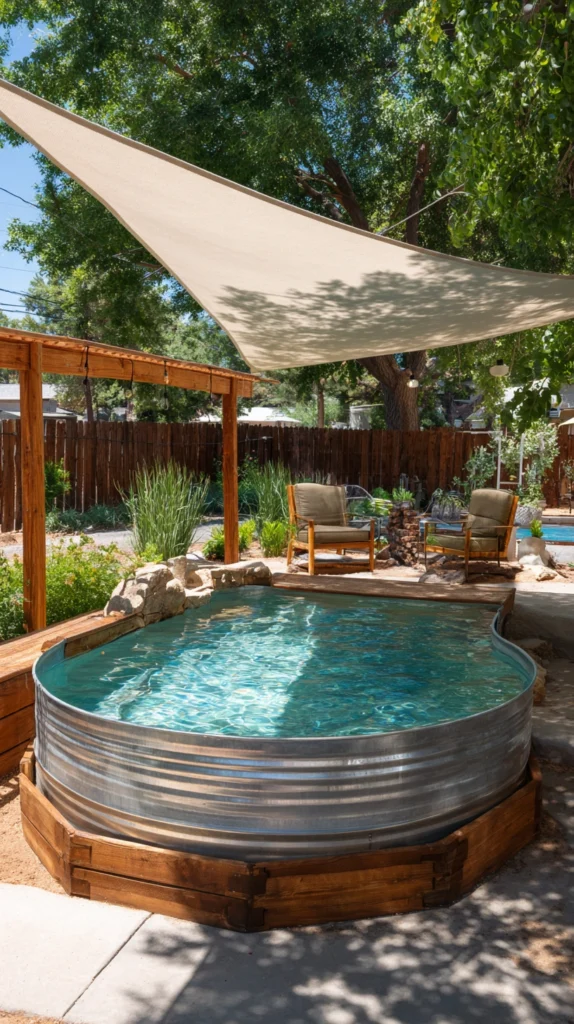
A tensioned shade sail overhead does two jobs at once — it cuts the direct sun that speeds up algae growth in still water, and it gives the whole pool area a defined “roof” that makes it read as an actual outdoor room instead of an object sitting in open yard.
Get the tension right when you install it. A sail that’s left too loose collects rainwater in the middle, and that pooled weight strains both the fabric and the anchor points until it eventually tears at the edges. Tensioned correctly, a sail sheds water on its own and stays taut for years rather than one season.
5. Bohemian Stock Tank Pool
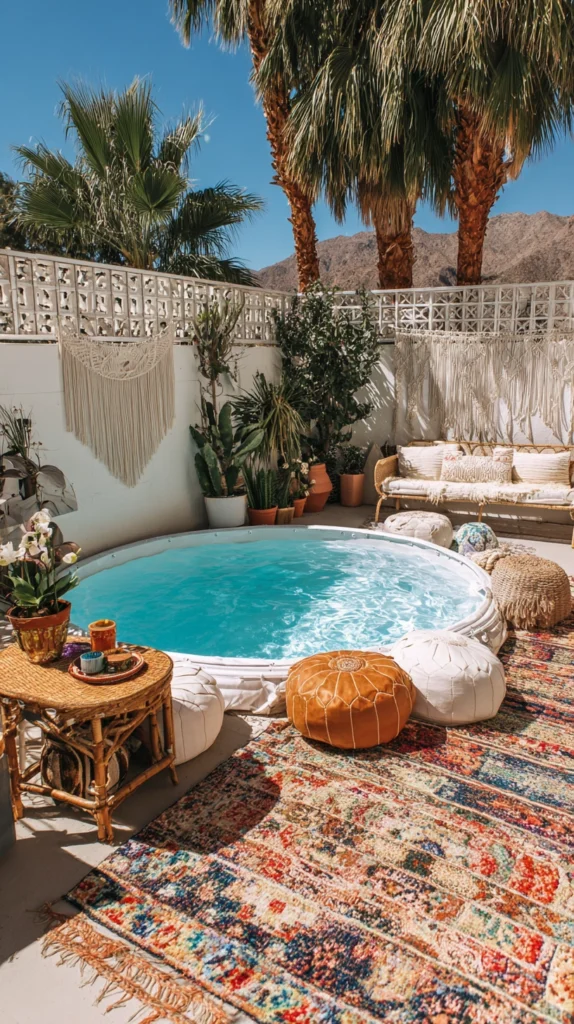
Raw galvanised steel has a texture that sits surprisingly well against a boho palette — floor cushions on a kilim rug, festoon lights strung overhead, a macramé hanging or two, pots of trailing greenery, maybe a stand of pampas grass nearby. The industrial edge of the tank contrasts with the softness of the textiles rather than clashing with it.
The catch is durability: standard indoor textiles fade, mildew, and fall apart fast in a poolside environment. Look specifically for outdoor-rated kilim weaves, solution-dyed cushion covers, and UV-stabilised macramé cord — the look survives multiple seasons instead of one.
6. Stock Tank with Timber Cladding
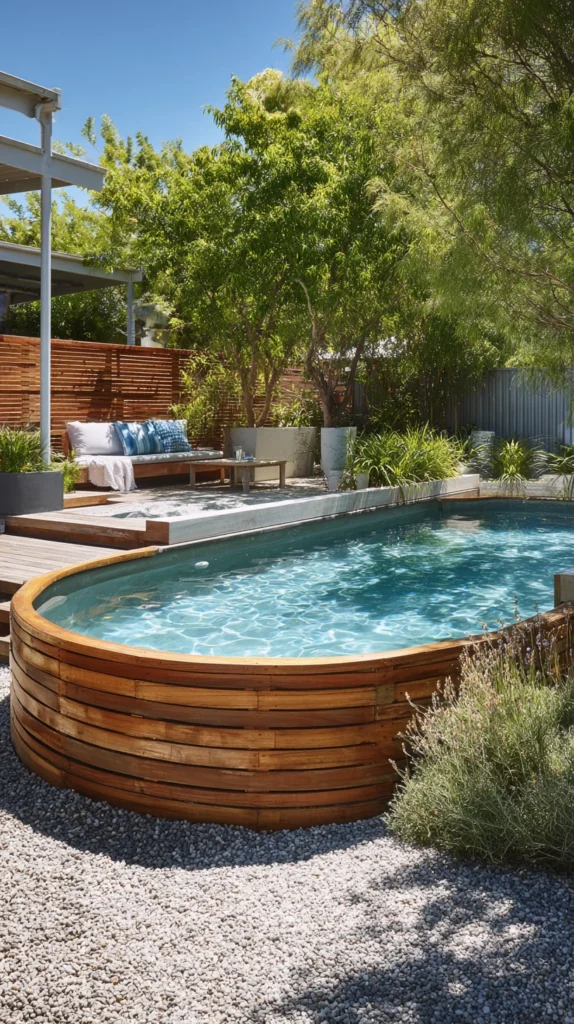
If bare galvanised steel isn’t the look you want, cladding hides it completely. Build a simple frame around the tank’s exterior and fix cedar, teak, or pressure-treated boards to it, either vertically or horizontally, and the whole thing reads as a built structure rather than a repurposed trough.
Leave a small gap — a couple of centimetres is enough — between the cladding and the tank wall itself. Direct contact traps moisture between the two materials, which speeds up corrosion on the metal and rot on the timber at the same time. A ventilation gap keeps both surfaces dry and both materials lasting considerably longer.
7. Stock Tank Pool with LED Lighting
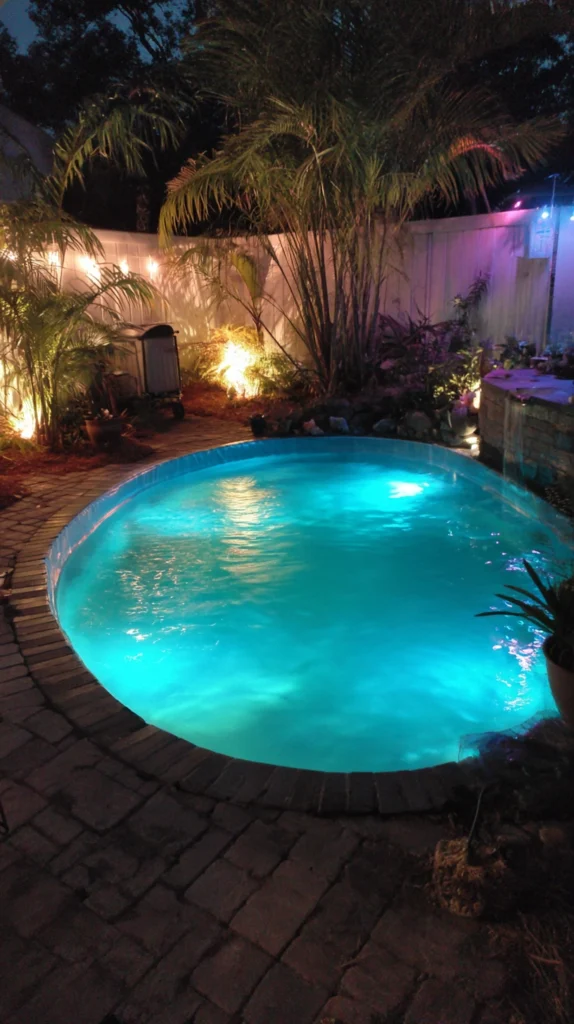
Underwater LED strips fixed below the waterline turn a stock tank pool into something genuinely striking after dark — the light refracting through moving water throws patterns onto the surrounding surfaces that daytime styling simply can’t match. A remote colour controller lets you shift the mood without touching the wiring again.
Stick to warm white or a soft blue rather than the full colour spectrum. Warm white mimics candlelight on water and flatters almost any setting; soft blue reads as convincingly “pool-like.” Saturated reds, greens, or purples tend to look garish in a tank this size — restraint does more work here than variety.
8. Stock Tank Cold Plunge Pool
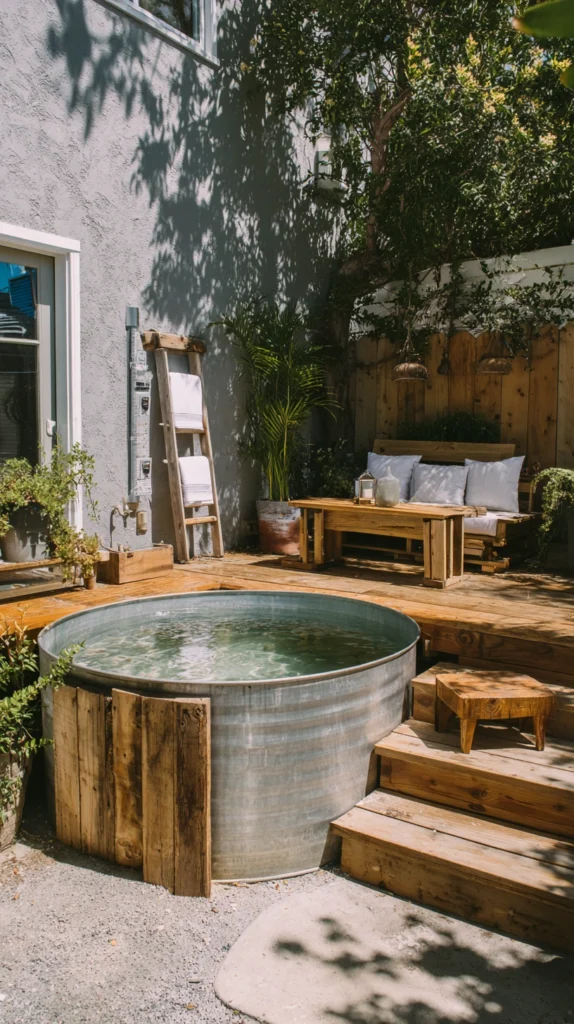
Repurposed for cold immersion rather than swimming, a stock tank turns out to be close to ideal proportions for the job — deep enough for a full-body soak, small enough that keeping the water genuinely cold doesn’t require a huge chiller. It’s a fraction of the footprint and cost of a purpose-built plunge tub.
If you’re using it year-round, add a fitted cover. It keeps the temperature more consistent between sessions, stops debris blowing in, and cuts the workload on whatever chiller unit is doing the cooling — smaller thermal swings mean less energy spent correcting them.
9. Stock Tank with Natural Planting Surrounds
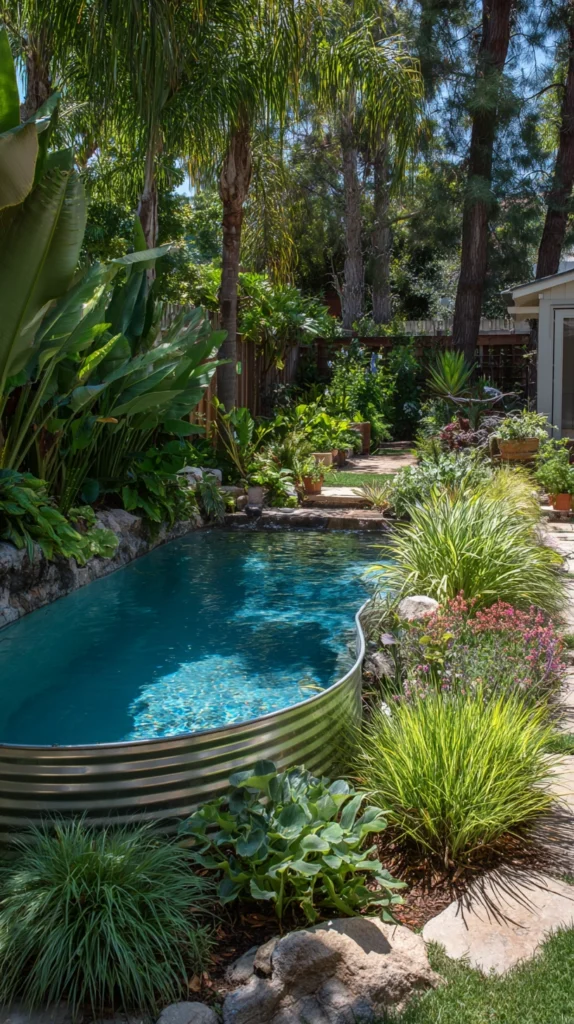
Surround the tank with generous, oversized planting — big-leafed perennials, ornamental grasses, anything with real presence — and the pool starts to feel like it’s emerged from the garden rather than been placed on top of it. Scale matters more than variety here: a few bold plants read as intentional, where lots of small delicate ones just look scattered.
Plant everything in containers rather than straight into the ground. It keeps roots away from the tank base, means nothing needs disturbing if the pool ever gets moved, and lets you swap plants out seasonally without redoing the whole bed.
10. Stock Tank Hot Tub
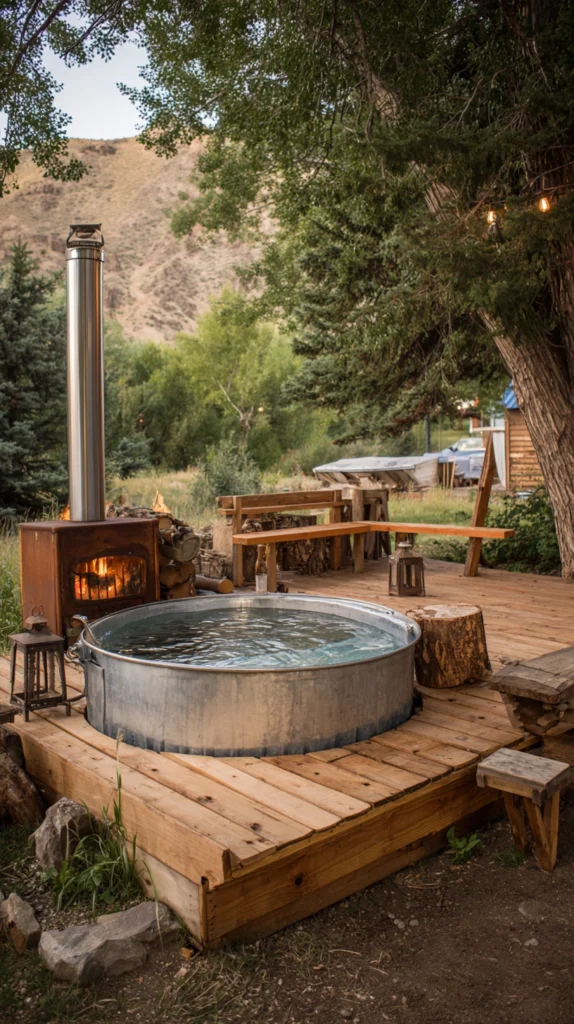
Fit a wood-fired or electric stock tank heater and the same trough that’s a cold plunge in idea #8 becomes a warm-water soak instead — at a fraction of what a purpose-built hot tub costs. Add a timber surround and a removable cover and it functions as a genuine year-round feature rather than a summer-only one.
Whatever cover you choose, make sure it’s load-bearing as well as insulating — rated to hold the weight of someone stepping on it by accident, or snow sitting on it through winter. A purely decorative cover on a heated tub is a real safety risk if it isn’t obviously distinguishable from solid ground in low light.
11. Stock Tank with Outdoor Shower
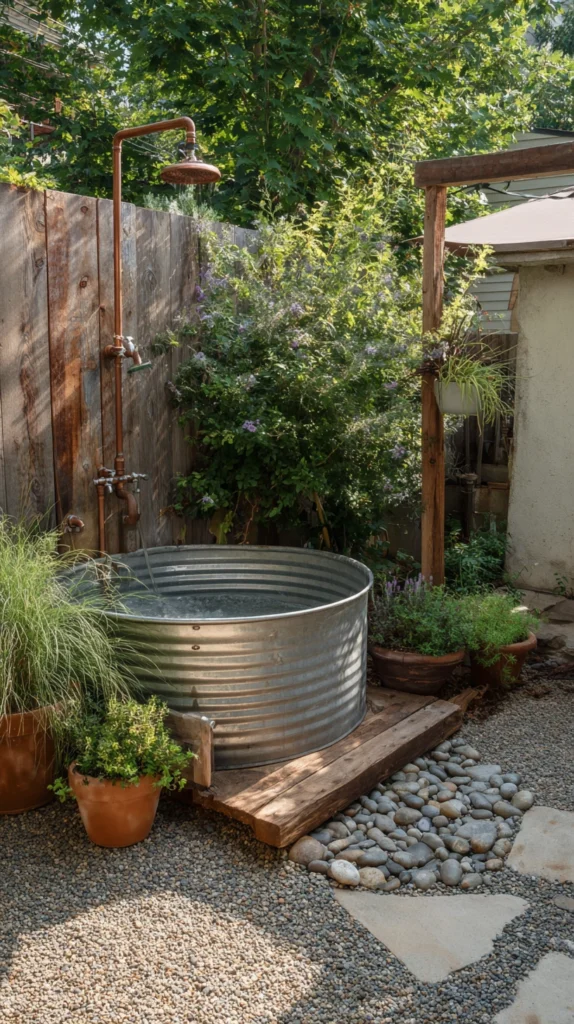
A simple shower next to the tank — copper pipe, a timber frame, connected to the garden hose or the household cold line — rounds out the whole setup in a way that’s easy to overlook until you don’t have it. Rinsing off before and after a soak keeps the tank cleaner and makes the whole thing more pleasant to use regularly rather than occasionally.
Dig a small gravel drainage pit beneath it — 60cm square, about 20cm deep, filled with coarse gravel is plenty. Without it, the ground under an outdoor shower turns into a permanent muddy patch within a few weeks of regular use.
12. Stock Tank Swim-Up Bar
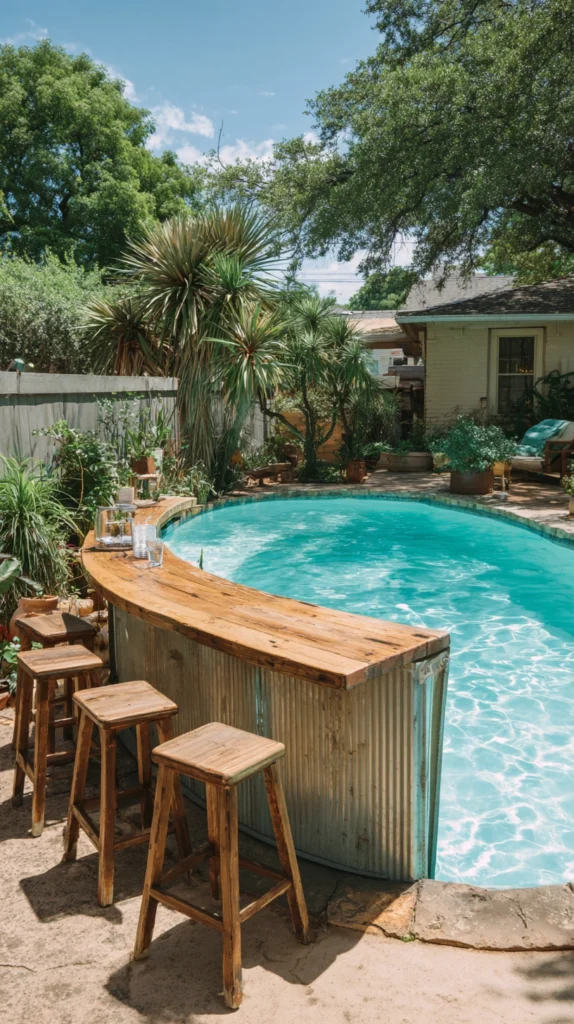
Build a simple counter at rim height along one side of the tank — stools on the outside, the water on the inside — and you’ve got a swim-up bar in miniature. Frame it in the same timber as any surrounding deck so it reads as part of the build rather than an add-on.
Waterproof the timber to at least 30cm above the waterline using a marine-grade sealant. Standard exterior finishes aren’t built for the constant splash contact a swim-up edge gets, and they’ll break down far faster here than they would on, say, a deck rail a few feet further from the water.
13. Stock Tank Pool with Privacy Screen
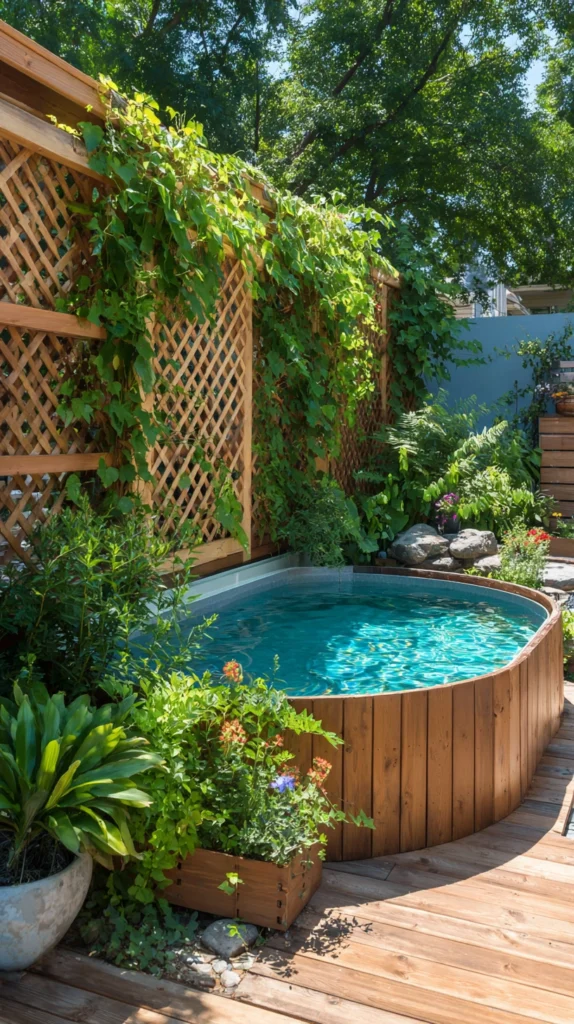
A screen on one or two sides — timber lattice, a stretched sailcloth panel, or a living wall of climbing plants — makes a real difference to how often the pool actually gets used. People soak and swim more when they’re not visible to every upstairs window on the block, and a targeted screen achieves that without boxing the whole tank in.
Work out which specific sightlines actually matter — usually a neighbour’s upper-floor windows — rather than screening the entire perimeter by default. Targeted screening keeps the airflow and openness on the sides that don’t need it, and avoids the slightly closed-in feeling of a tank walled in on every side.
14. Two Connected Stock Tanks
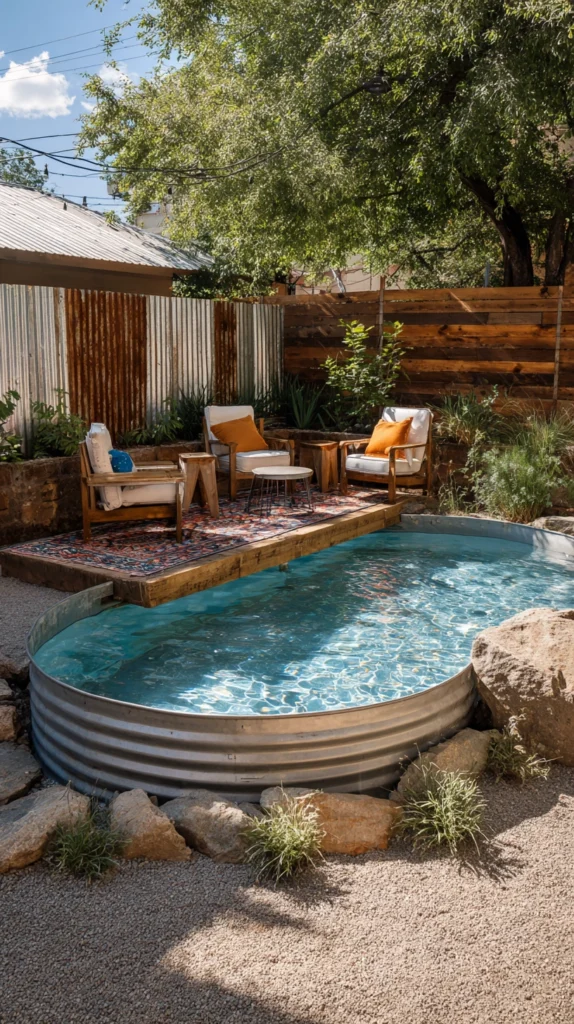
Join two tanks with a length of pipe through their adjoining walls and the water levels equalise automatically, giving you a genuinely larger swimming area while keeping every cost and portability advantage of the single-tank setup. Drilled holes and standard bulkhead fittings on each side are all the connection takes.
Set the two tanks at a slight offset rather than dead parallel. A perfectly aligned pair reads as obviously arranged; a small stagger looks more like it evolved naturally and creates a more interesting line to look at from the deck.
15. Decorated and Personalised Stock Tank
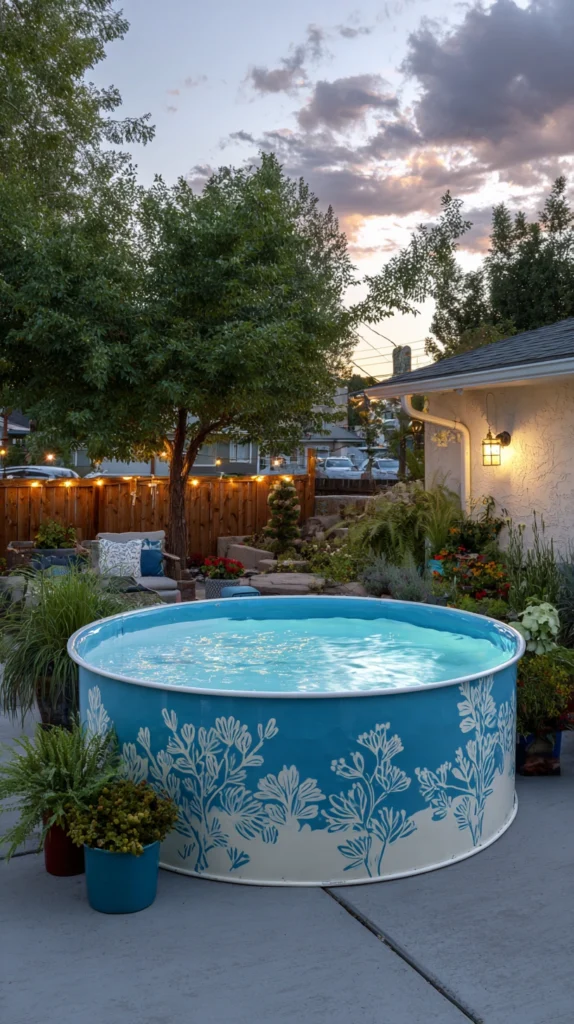
The last idea here isn’t structural at all — just paint. Stencilled botanicals, a geometric pattern, or the family name hand-lettered across the side turns an anonymous trough into something that’s unmistakably yours. Use an exterior metal paint made for galvanised steel, with a self-etching primer first so it actually bonds to the zinc coating underneath.
Do the painting before the tank goes anywhere near water — ideally before it’s even installed. Reaching around a filled, in-place tank to finish a design is awkward at best, risks getting paint in the water, and the finish is never quite as clean as painting the whole surface flat and unobstructed before installation.
The Simplest Pool Is Often the Best One
A stock tank pool isn’t really a cut-price version of a real pool — it’s its own thing, with its own advantages a conventional build can’t match: portable, personal, and installable in an afternoon rather than a season.
Pick the version that fits your yard and your budget, get the filtration right so the water actually stays clean, and put some thought into what surrounds it. Do that, and the first properly hot day of the year will make it obvious why so many people have swapped the in-ground pool plan for a repurposed trough instead.