15 Butterfly Garden Ideas to Attract Pollinators
Ask ten people what a butterfly garden needs and most will say the same thing: flowers, the more colorful the better.
That’s only half the story, and it’s the easier half. The plants that actually keep butterflies coming back season after season are chosen for function first, host plants for eggs and caterpillars, nectar timed to overlap with local migration and breeding cycles, shelter from wind and predators, and a few small details most flower-first gardens skip entirely.
None of this requires ripping out an existing yard. It’s mostly a matter of layering in the missing pieces around what’s already there.
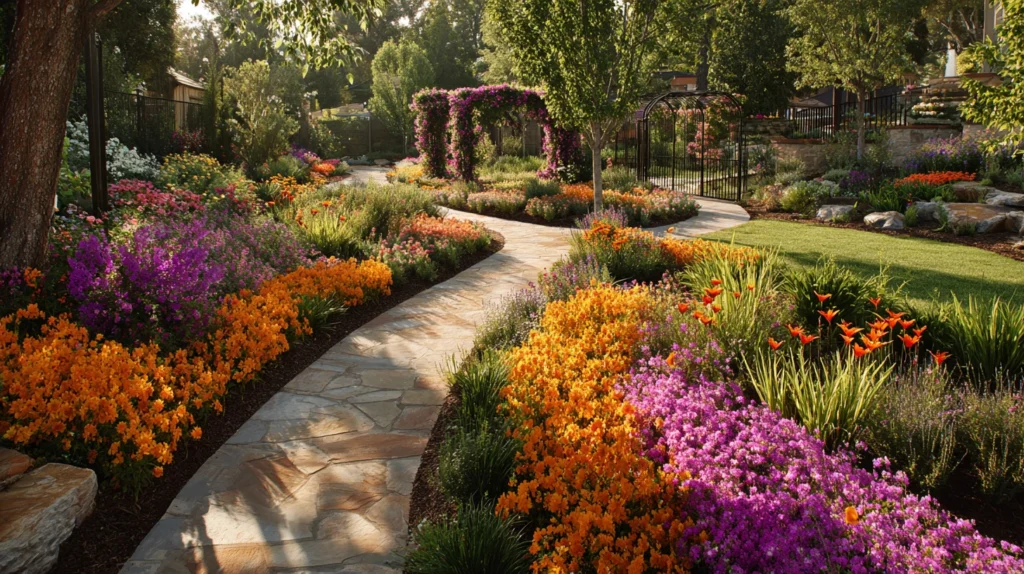
Here are 15 ways to build a yard pollinators genuinely rely on, not just visit occasionally.
Every one of these can be added a little at a time, without waiting for a full season of planning to get started.
1. A Swallowtail Host Patch of Fennel, Dill, and Parsley
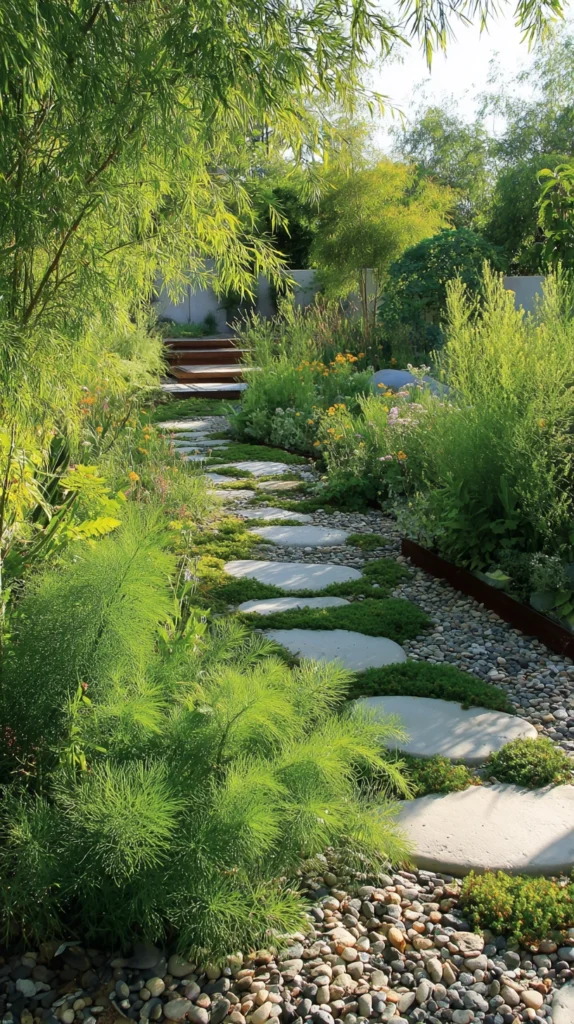
A dedicated planting of umbellifer herbs, specifically grown to feed swallowtail caterpillars rather than for kitchen use.
Swallowtail butterflies lay their eggs almost exclusively on plants in the carrot family, which includes fennel, dill, parsley, and Queen Anne’s lace, and a garden without any of these rarely sees a resident swallowtail population no matter how many nectar flowers are nearby.
I set aside a small patch specifically for this purpose, planting bronze fennel, dill, and curly parsley together and letting caterpillars strip entire plants back without any concern for harvesting them for the kitchen.
Budget tip: Dill and parsley seed is inexpensive and widely available, and letting a few plants go to seed each year means the patch largely reseeds itself without needing to buy new starts annually.
A few things worth knowing:
- Plant enough of each herb that losing a few plants entirely to caterpillars doesn’t feel like a real loss, since heavy feeding is the whole point
- Grow this patch separately from any herbs you’re actually harvesting for cooking, to avoid competing needs
- Expect to see the black, green, and yellow banded caterpillars specifically, which is the larval stage of the black swallowtail in much of North America
Watching this patch through a full season, from eggs to caterpillars to chrysalis to adult butterfly, tends to be one of the more rewarding things a beginner backyard naturalist can actually witness firsthand.
2. Color-Blocked Beds Using Butterfly Vision Research
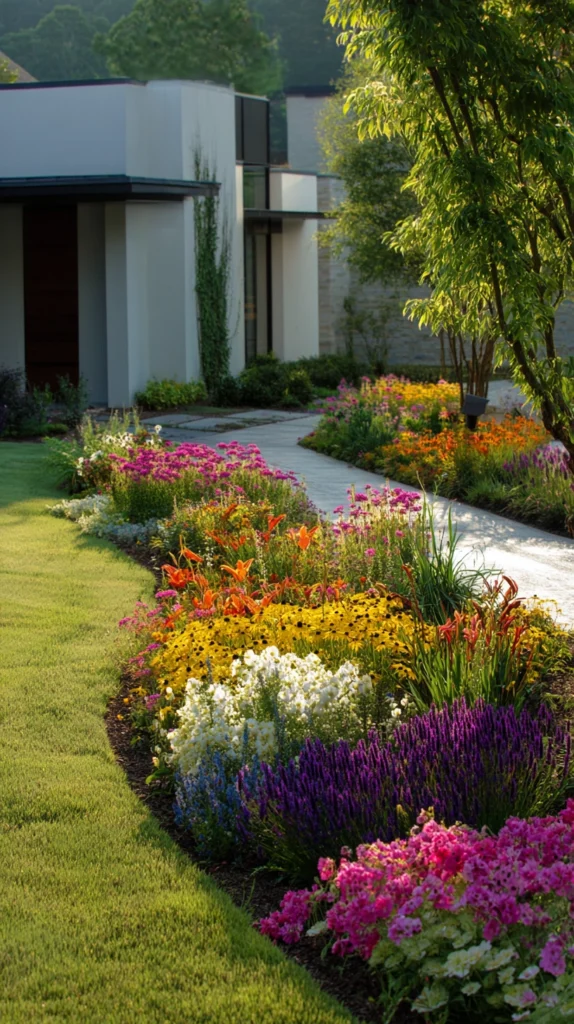
Planting beds arranged around the specific colors research shows butterflies see and respond to most strongly, particularly purple, yellow, orange, and pink, rather than planting purely for human aesthetic preference.
Butterflies perceive color differently than humans, and while any flower garden draws some activity, clustering blooms in the hues butterflies are known to favor tends to produce noticeably more consistent visits than a bed planted around a color scheme chosen for the house’s exterior paint.
I grouped purple coneflower, orange butterfly weed, and pink phlox together in one dedicated bed, deliberately avoiding the whites and blues that make up most of the rest of my garden’s color palette.
Style tip: Reserve your favorite colors for beds further from the main pollinator zone, and let the purple, orange, and yellow cluster do the heavy lifting specifically where you want the most butterfly activity concentrated.
A few things worth knowing:
- Purple and yellow in particular show up reliably across research on butterfly color preference, making them a safe starting point if you’re unsure where to begin
- Plant in solid color blocks rather than a scattered mix, since larger patches of a single hue are easier for butterflies to spot from a distance
- Pair this bed with a genuine host plant nearby, since color alone draws adult butterflies in to feed but doesn’t support the next generation
This approach turns garden design into something closer to setting a table specifically for your guests’ preferences, rather than decorating purely for your own taste.
3. A Passionflower Trellis for Gulf Fritillary and Zebra Longwing
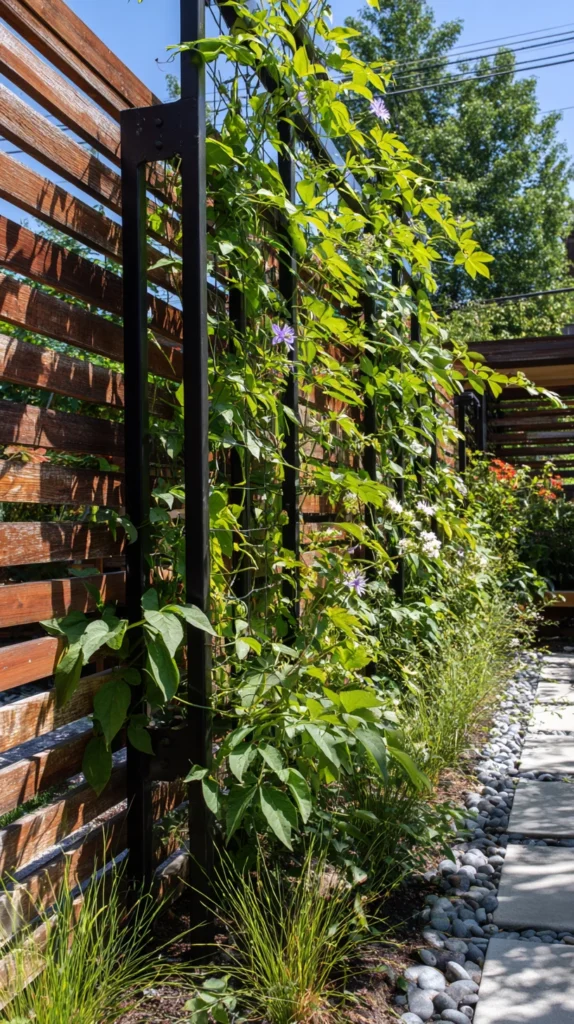
A climbing vine trellis planted specifically with passionflower, the required host plant for gulf fritillary and zebra longwing butterflies in warmer regions.
In climates where passionflower grows well, it functions the way milkweed does for monarchs, an essential host plant without which certain butterfly species simply can’t reproduce locally, regardless of how much other nectar is available.
I trained a passionflower vine up a simple wire trellis along my sunniest fence section, and within a single season it had drawn gulf fritillary butterflies that hadn’t previously visited my yard at all.
Budget tip: Passionflower is a vigorous grower once established, and a single vine often spreads enough within a couple of seasons to share cuttings with neighbors or start additional plantings elsewhere on the property for free.
A few things worth knowing:
- Confirm passionflower is well suited to your specific climate zone before planting, since it thrives mainly in warmer regions and struggles or dies back completely in genuinely cold winters
- Provide a sturdy trellis or fence structure, since mature vines put on considerable weight and length within a single growing season
- Expect vigorous growth that may need regular pruning to keep contained, particularly in the warm climates where this vine performs best
This is one of the more region-specific ideas on this list, delivering dramatic results where the climate suits it and doing very little anywhere the plant can’t reliably survive.
4. A Brush and Log Pile for Shelter and Overwintering
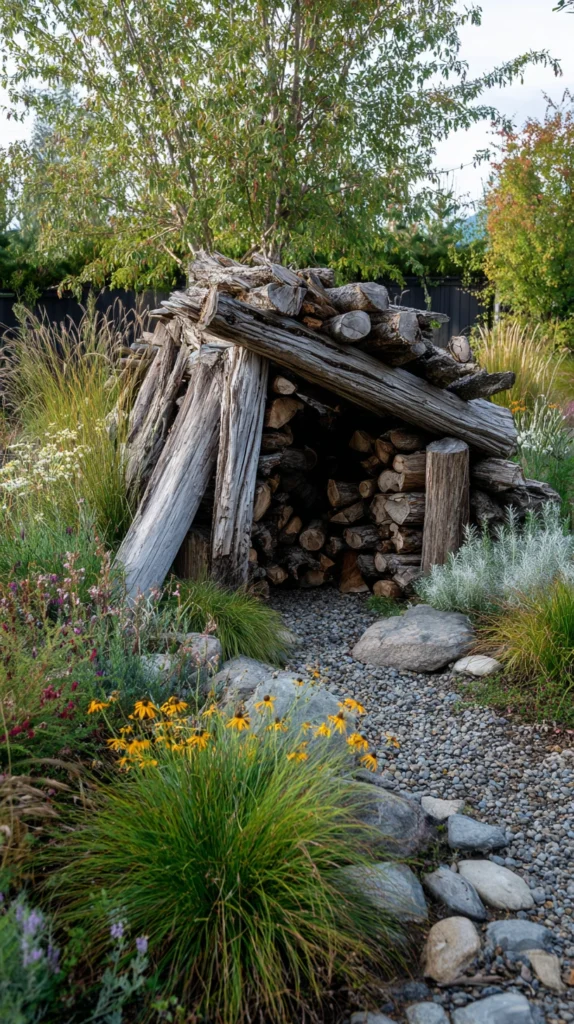
A deliberately stacked pile of fallen branches, logs, and yard debris, left in an out-of-the-way corner specifically to provide shelter for butterflies and other beneficial insects.
Unlike a tidy, fully cleared yard, a brush pile offers genuine protection from wind, predators, and winter cold, mimicking the kind of natural debris that would exist in an unmanaged wild space.
I started a modest brush pile in the back corner of my property using fallen branches from routine tree pruning, adding to it gradually rather than building it all at once.
Budget tip: This costs nothing beyond the time to stack material you’re likely already generating through normal yard maintenance, making it one of the only genuinely free additions on this entire list.
A few things worth knowing:
- Position the pile somewhere it won’t be disturbed for long stretches, since the whole point is providing undisturbed shelter across multiple seasons
- Layer larger branches at the base and finer material on top, creating varied gaps and pockets that suit different insect sizes
- Resist the urge to tidy or dismantle the pile seasonally, since its value comes specifically from being left alone rather than refreshed regularly
A well-established brush pile often becomes a more consistently used piece of habitat than any single planted bed, simply because it offers protection nothing else on the property provides.
5. Mineral and Salt Licks Alongside a Nectar Bed
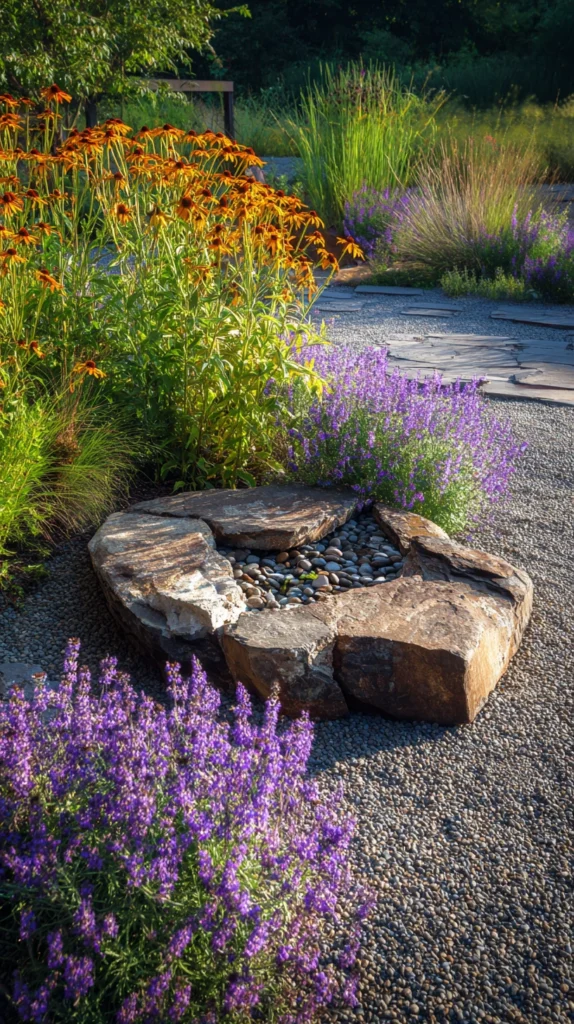
A small mineral station, often a shallow dish with a mix of wood ash, compost, or a commercial salt lick product, positioned near a nectar-rich bed to supplement what flowers alone can’t provide.
Nectar delivers sugar but very little in the way of sodium and other minerals, and many butterfly species, particularly males, actively seek out mineral sources separately from their regular feeding on flowers.
I added a small mineral station using a shallow dish filled with a mix of compost and wood ash, kept slightly damp and positioned in a sunny spot near my main pollinator bed.
Budget tip: A basic mineral station can be built from materials already on hand, wood ash from a fire pit or compost from an existing pile, without any additional purchase required.
A few things worth knowing:
- Keep the station slightly damp rather than fully saturated, since butterflies need to land and probe the surface rather than encounter standing liquid
- Position it in full sun, since mineral-seeking behavior tends to increase with warmth
- Refresh the material periodically, since it can dry out completely or wash away after heavy rain
This is a smaller, more overlooked detail compared to flower selection, but it rounds out a garden’s actual nutritional offering in a way flowers alone can’t fully replicate.
6. A Fragrant Evening Bed for Moths
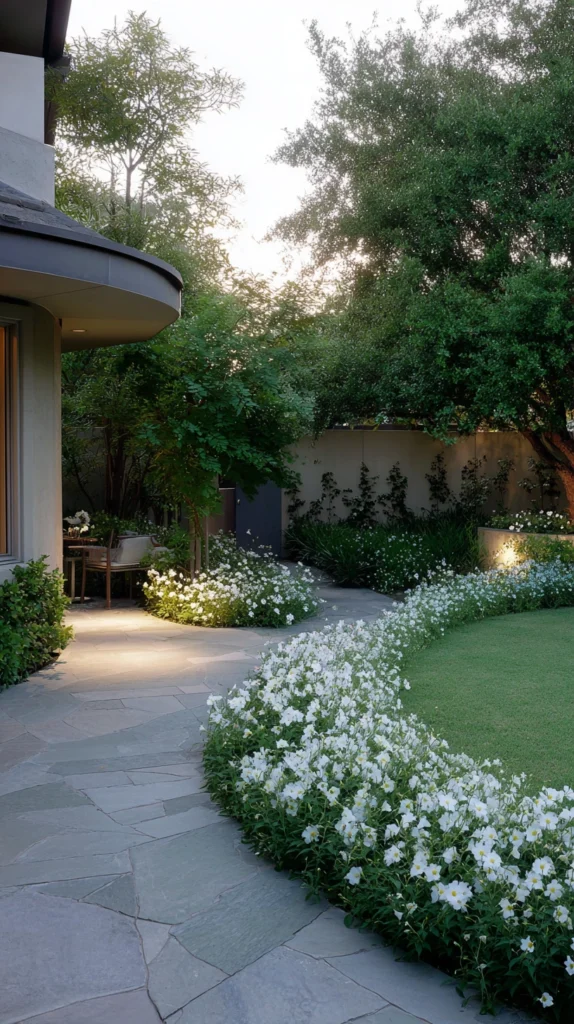
A planting specifically chosen around night-blooming, heavily fragrant flowers, extending pollinator support beyond daytime butterflies to include moths and other nocturnal pollinators.
Moths make up a much larger share of pollinating insects than most people realize, and a garden planted purely around daytime butterfly activity misses this entire second shift of pollinators working after dark.
I planted a small bed of evening primrose, nicotiana, and moonflower near my patio, choosing varieties specifically known for opening and releasing fragrance after sunset rather than during the day.
Style tip: Position this bed somewhere you’ll actually experience it in the evening, like near a patio or a window that stays open on warm nights, since much of its value depends on being present when it’s actually active.
A few things worth knowing:
- Choose genuinely night-blooming or night-fragrant species specifically, since many daytime flowers close or lose their fragrance once the sun sets
- Position this bed away from bright outdoor lighting, since artificial light at night can disrupt the natural behavior of the moths you’re trying to support
- Pair evening blooms with pale or white coloring where possible, since these tend to be more visible to nocturnal pollinators in low light
This bed rewards a completely different kind of garden attention, one that happens after most daytime garden tasks are already finished for the day.
7. An Island Bed Surrounded by a Mown Path
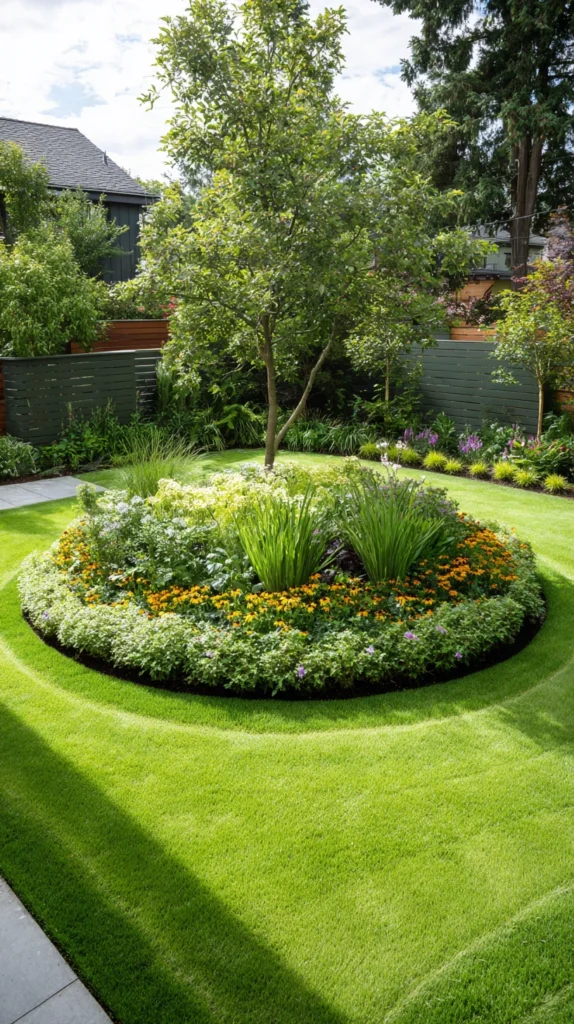
A dedicated pollinator planting shaped as a freestanding island within an otherwise mowed lawn, rather than a border bed along a fence or wall.
An island bed gets sun exposure from every direction rather than just one side, and it puts pollinator activity somewhere genuinely visible and central rather than tucked along a property edge most people rarely walk past.
I converted a roughly circular section in the middle of my backyard into a dense island planting, keeping a mowed path circling the entire perimeter so the bed reads as an intentional feature rather than an unmanaged patch.
Budget tip: An island bed can start small and expand gradually over several seasons, letting you spread the cost of new plants across multiple years rather than filling the entire space at once.
A few things worth knowing:
- Keep the mowed border consistently maintained, since this visual frame is what signals the bed is deliberate rather than neglected
- Plant taller specimens toward the center and shorter ones toward the outer edge, since an island bed gets viewed from all sides rather than just one
- Choose a shape that’s easy to mow around consistently, since sharp corners or narrow points get missed or damaged by routine mowing
Positioning a pollinator garden this centrally tends to make it one of the most-used and most-photographed parts of the whole yard, simply because it’s impossible to overlook.
8. Companion Planting Pollinator Flowers Into the Vegetable Garden
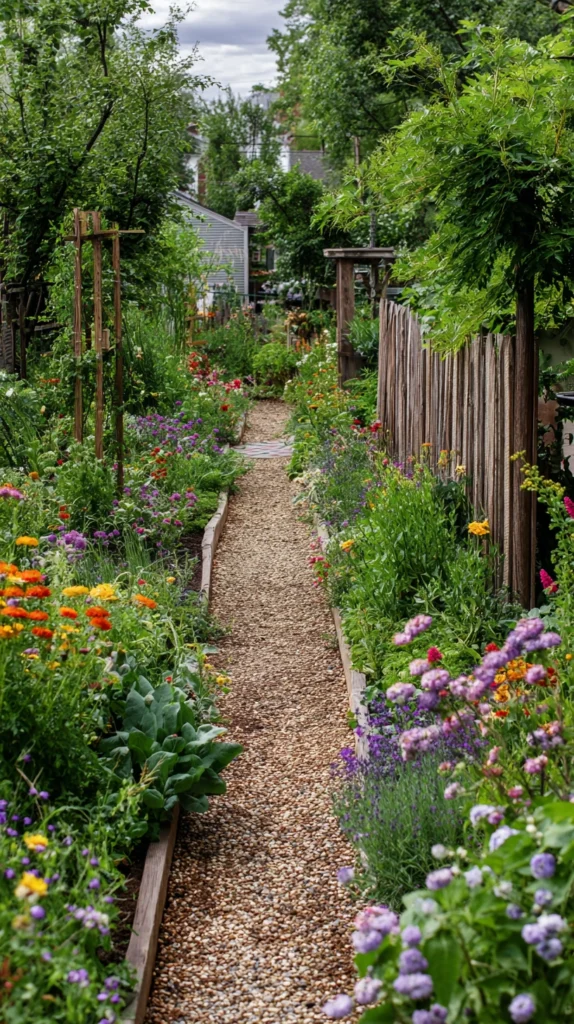
Interplanting specific pollinator-friendly flowers directly among vegetable rows, rather than keeping ornamental and edible growing spaces entirely separate.
Many vegetable crops actually benefit from the same pollinators a butterfly garden attracts, and tucking flowers directly into a vegetable bed brings pollinator activity right to the crops that need it most.
I interplanted borage, calendula, and zinnias throughout my vegetable beds, positioning them near squash and cucumber plants specifically since these crops depend heavily on pollinator visits to actually set fruit.
Budget tip: Many companion flowers, like calendula and zinnia, are inexpensive to grow from seed and can be tucked into small gaps between vegetable plants without requiring any dedicated additional bed space.
A few things worth knowing:
- Choose flowers with bloom times that overlap with when your vegetables actually need pollination, rather than planting purely for general garden color
- Avoid overly aggressive flowering plants that might compete with vegetables for light and root space
- Let a few vegetable plants themselves flower and bolt intentionally, since crops like dill, cilantro, and even lettuce provide real pollinator value once they bolt
This approach makes a vegetable garden do double duty, supporting both a genuine harvest and a meaningful pollinator population in the same footprint.
9. A Living Privacy Screen of Flowering Vines
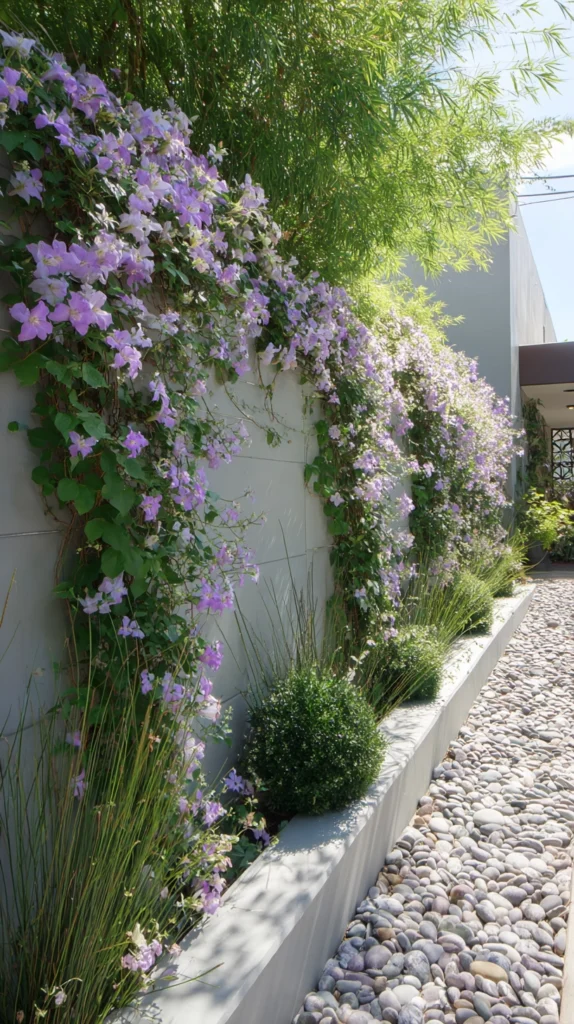
A fence or trellis line planted entirely with flowering vines chosen for pollinator value, functioning as both a privacy screen and an extended nectar corridor.
A privacy fence covered in flowering vines does far more ecological work than a bare wood or vinyl fence ever could, turning a purely functional boundary into another meaningful stretch of pollinator habitat.
I trained trumpet vine and native honeysuckle along my side fence, choosing both specifically for their long bloom windows and strong appeal to a range of pollinators beyond just butterflies.
Budget tip: A single vine planted at the base of a long fence run often spreads to cover considerable length within a few seasons, reducing the number of individual plants needed to fill the space.
A few things worth knowing:
- Choose vigorous but non-invasive vine species specifically for your region, since some popular flowering vines spread aggressively enough to become a genuine maintenance problem
- Provide sturdy support wire or trellis material, since mature flowering vines add considerable weight to a fence line over time
- Prune regularly to keep growth directed along the fence rather than spreading into neighboring trees or structures
This approach effectively doubles the purpose of a structure most yards already have, turning a plain boundary fence into a genuinely productive stretch of habitat.
10. A Children’s Observation Garden With Easy-to-Spot Features
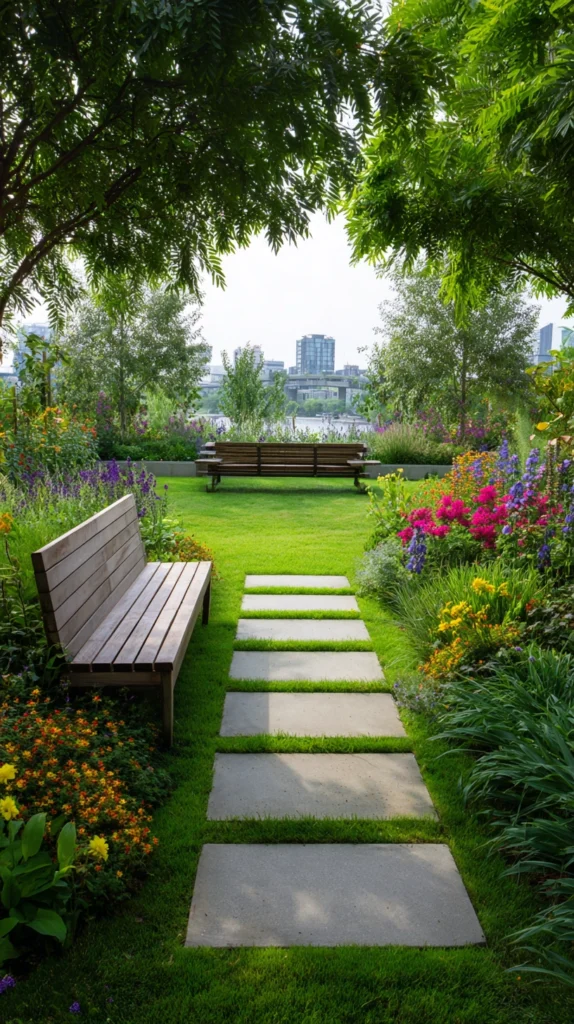
A dedicated section of the pollinator garden designed specifically with kids in mind, using large, easy-to-identify host plants and a simple viewing bench for close observation.
Getting kids genuinely interested in a butterfly garden usually depends on making the experience tangible, actual caterpillars they can find and check on regularly, rather than an abstract concept explained once and then forgotten.
I set aside a small bed near a low bench specifically planted with milkweed and dill, both easy for kids to check regularly for caterpillars, chrysalides, and eventually emerging adults.
Budget tip: This section doesn’t need to be large or elaborate, a modest cluster of a couple of host plants near comfortable seating delivers most of the educational value at very little added cost.
A few things worth knowing:
- Choose host plants known for larger, easier-to-spot caterpillars, since milkweed’s monarch caterpillars and dill’s swallowtail caterpillars are both large and visually distinct
- Position seating close enough for comfortable, repeated observation without needing to bend over constantly
- Resist handling caterpillars or chrysalides directly, teaching observation rather than touching, since handling can genuinely harm developing insects
This section often becomes the most visited part of the whole garden for a household with young kids, turning routine yard time into something closer to ongoing nature study.
11. A South-Facing Sun Trap Border
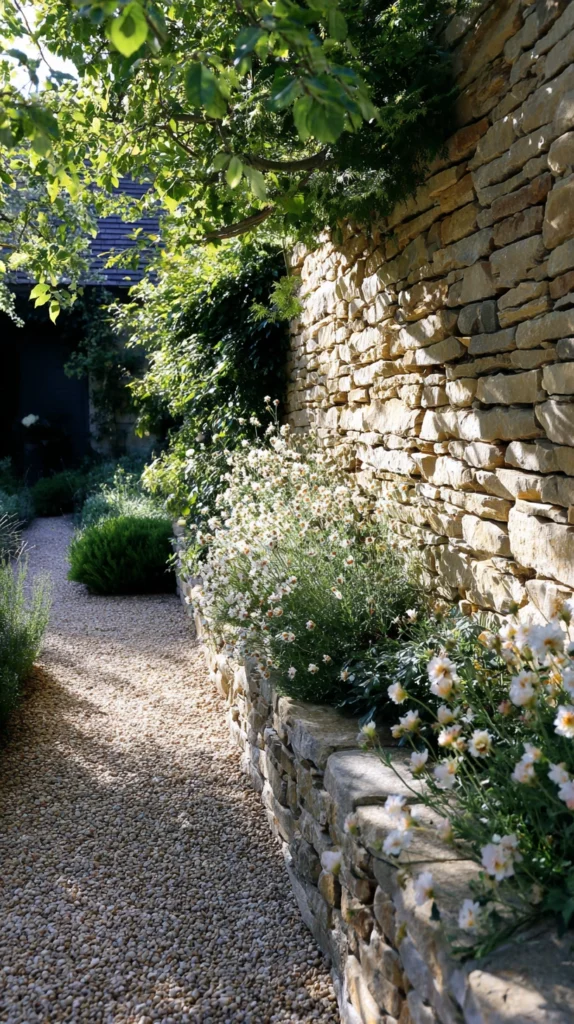
A planting bed specifically positioned and angled to maximize direct sun exposure and capture radiant heat, creating a warmer microclimate than the rest of the yard experiences.
Butterflies are considerably more active in warmer conditions, and a bed engineered specifically to run warmer than its surroundings, through orientation, nearby heat-retaining surfaces, and wind protection, tends to see extended activity earlier and later in the season than a standard bed.
I positioned my warmest bed against a south-facing brick wall, which absorbs and radiates heat back into the planting throughout the day, extending usable butterfly activity by a few weeks on both ends of the season compared to my more exposed beds.
Style tip: Look for an existing south-facing wall, fence, or other heat-retaining surface before building anything new, since taking advantage of a structure you already have costs nothing beyond the planting itself.
A few things worth knowing:
- South and west-facing exposures generally deliver the most consistent warmth throughout the day in the northern hemisphere
- Masonry, stone, and dark-colored surfaces absorb and hold heat considerably better than wood fencing or lighter colored walls
- Combine this warm exposure with some wind protection specifically, since heat retention alone doesn’t help much if cold wind is constantly cutting through the bed
This kind of deliberate microclimate planning often extends a garden’s most active pollinator window by several weeks compared to an equally well-planted bed positioned without any thought to sun exposure or heat retention.
12. A Rotating Annual Bed for Experimentation
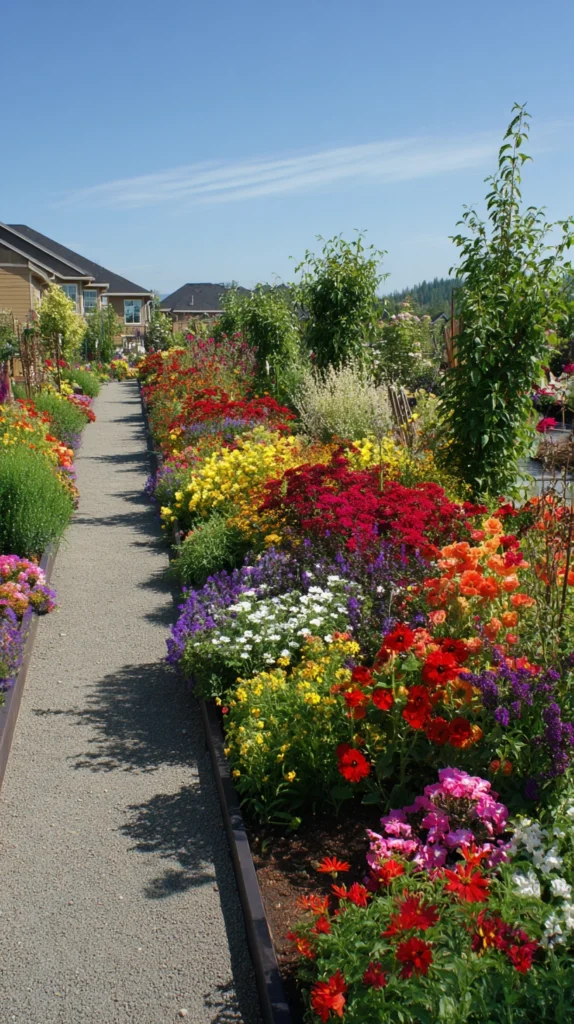
A section of the garden deliberately replanted each year with different annual nectar plants, used specifically to test which species perform best in your particular yard before committing to permanent perennial plantings.
Perennial pollinator beds are a long-term investment, and a rotating annual test bed lets you observe actual butterfly response to different species over a season or two before spending real money and effort on a permanent planting.
I keep one modest bed specifically for this purpose, trying different annual nectar plants each year and taking notes on which ones drew the most consistent activity before deciding what to make permanent elsewhere in the yard.
Budget tip: Annual seeds cost considerably less than perennial starts, making this an inexpensive way to genuinely test what works in your specific yard before committing to pricier permanent plantings.
A few things worth knowing:
- Keep simple notes or photos through the season, since it’s easy to forget which specific variety actually performed best once several seasons have passed
- Test a genuinely different mix each year rather than repeating the same annuals, to get the most useful comparative information
- Use this bed’s findings to inform your permanent perennial choices elsewhere, treating it as an ongoing experiment rather than a finished design
This approach turns garden planning into an actual feedback loop rather than a single guess made once and never revisited.
13. A Native Grass Backdrop for Structural Contrast
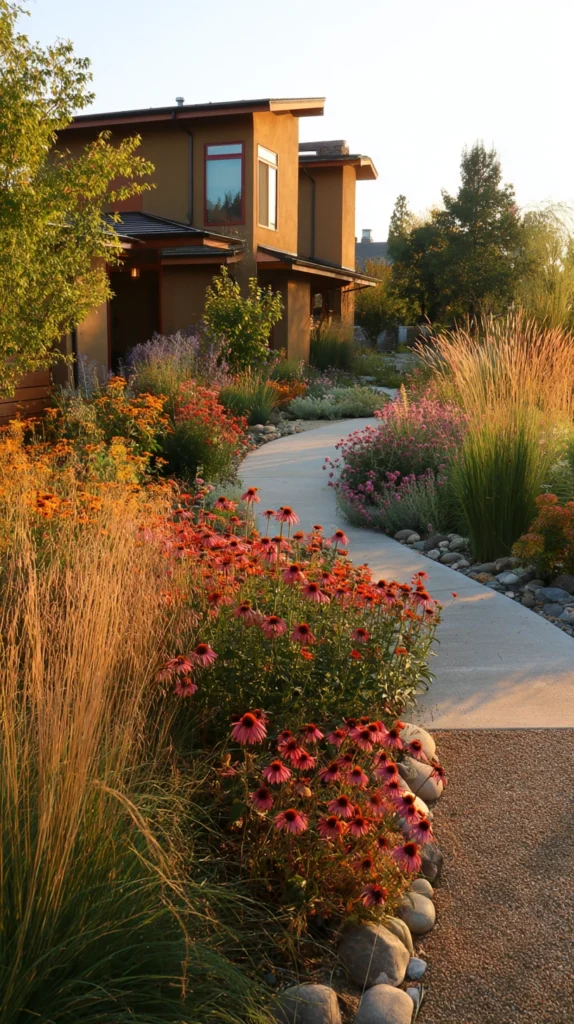
A planting of native ornamental grasses positioned behind or around a flowering pollinator bed, providing textural contrast and additional shelter value beyond flowers alone.
Grasses offer genuine habitat value that flowers don’t, including egg-laying sites for certain skipper butterfly species and general shelter from wind and predators, while also giving a flowering bed visual structure that lasts well beyond bloom season.
I planted a backdrop of little bluestem and switchgrass behind my main nectar bed, which now provides both a textural frame for the flowers in front and genuine habitat value of its own.
Budget tip: Native grasses are generally low-maintenance once established and can often be divided and replanted from a single starter clump every few years, reducing the ongoing cost of expanding this section.
A few things worth knowing:
- Research which grass species specifically host skipper butterflies in your region, since this varies considerably by area
- Cut grasses back once in late winter rather than maintaining them through a regular mowing schedule
- Position grasses where their winter structure, seed heads and dried blades left standing, adds visual interest even in the off-season
This addition rounds out a garden’s habitat value in a way that’s easy to overlook when planning is entirely focused on flower selection.
14. A Shared Corridor Planting With Neighbors
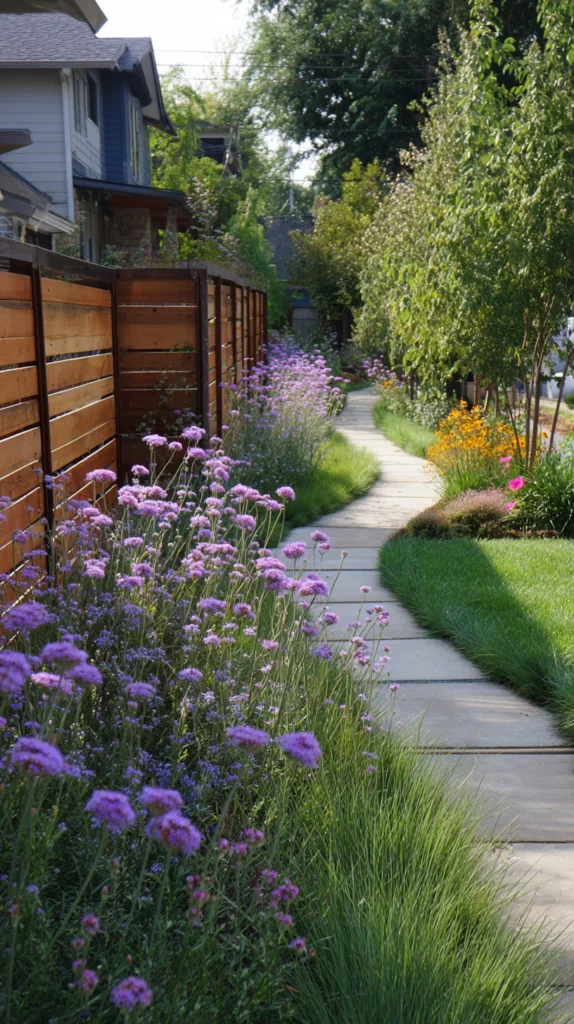
Coordinating pollinator plantings with neighboring yards specifically to create a connected corridor of habitat, rather than treating your own yard as an isolated effort.
A single well-planted yard surrounded by treated lawns and bare landscaping sees considerably less pollinator traffic than the same yard connected to several neighboring properties planting similarly, since many pollinators travel along corridors between habitat patches rather than settling in isolated pockets.
I coordinated with two neighboring households to plant compatible pollinator beds along our shared property lines, effectively tripling the total habitat corridor available to visiting butterflies compared to what any one of our yards could offer alone.
Budget tip: Splitting the cost of a bulk seed or plant order between multiple households reduces everyone’s individual expense while still delivering a considerably larger combined planting than any single yard’s budget would support alone.
A few things worth knowing:
- Start the conversation with immediate neighbors specifically, since adjacent yards create the most direct, unbroken corridor
- Choose overlapping plant species between yards where possible, since a consistent palette reads as one connected habitat rather than several unrelated plantings
- Share seedlings, divisions, or seed collected from your own plants as an easy, low-cost way to encourage neighbors to participate
This is one of the only ideas on this list that scales beyond what a single yard can accomplish alone, and it tends to produce the most dramatic increase in overall pollinator activity of anything on this entire list.
15. A Dedicated Skipper and Small Butterfly Grass Patch
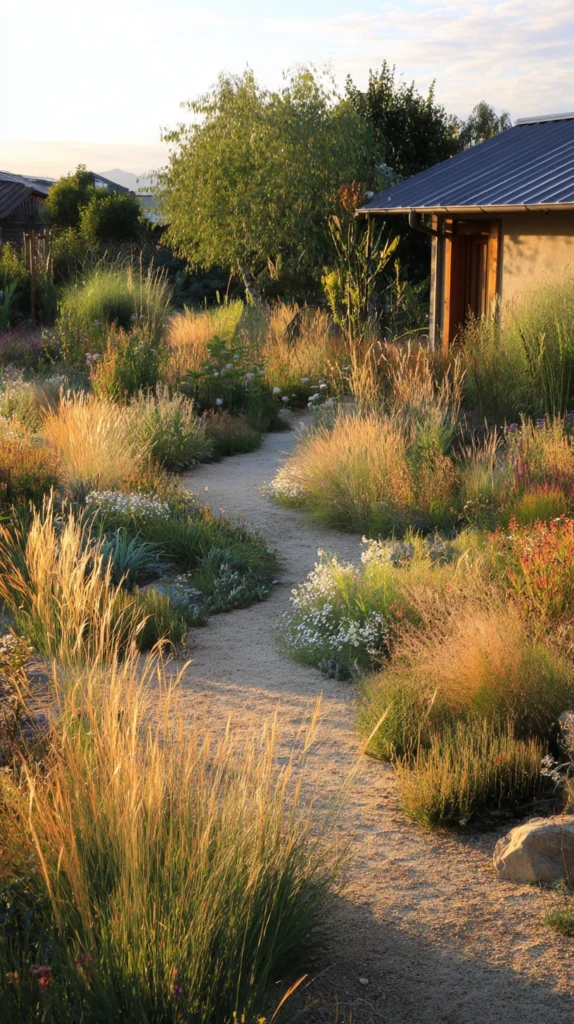
A planting specifically including host grasses for skipper butterflies, a commonly overlooked group of small, fast-flying butterflies that most garden planning ignores entirely in favor of larger, showier species.
Skippers are easy to miss or dismiss as moths given their smaller size and quick, darting flight pattern, but they make up a genuinely significant portion of overall butterfly diversity in most regions, and their caterpillars rely on specific native grasses rather than the flowering host plants larger butterflies typically need.
I added a small patch of purpletop and little bluestem specifically after researching which grasses supported local skipper species, and within a season I noticed considerably more of these smaller butterflies working through my yard than I’d previously registered at all.
Budget tip: Native grass plugs are generally inexpensive, and a modest patch specifically for this purpose requires far less space and investment than a full-scale grass meadow conversion.
A few things worth knowing:
- Research which specific native grasses host skipper species in your exact region, since this varies significantly by location
- Expect to need a genuinely close look to notice increased skipper activity at first, since their smaller size and quick movement make them easy to overlook even when present
- Combine this patch with nearby low nectar flowers, since skippers still need adult food sources close to their host grasses
This is one of the more overlooked additions on this entire list, quietly supporting butterfly diversity that most garden planning skips over in favor of larger, more obviously photogenic species.
Where to Start If This Feels Like a Lot at Once
The swallowtail host patch of fennel, dill, and parsley is the easiest entry point for most yards, since the plants are cheap, widely available, and useful even if the pollinator benefit takes a season to fully show up.
A Short List of Things Worth Researching Locally
- Which specific milkweed, passionflower, or host grass species are actually native to your region, since generic commercial varieties don’t always match local butterfly needs
- Your area’s typical monarch or other migratory butterfly timing, so bloom and host plant availability lines up with when they actually pass through
- Any local or state restrictions on species like butterfly bush or certain flowering vines before planting them
The Reason Well-Planted Yards Sometimes Underperform
A yard can have excellent host plants, reliable nectar, water, and shelter, and still see less activity than expected if it sits alone in a neighborhood otherwise landscaped with treated turf and ornamental plants offering nothing to pollinators. The most productive butterfly gardens tend to exist as part of a wider patchwork rather than as a single isolated effort, which is worth keeping in mind before assuming a quiet season means something in your own planting went wrong.