
15 Afrohemian Living Room Ideas for a Warm Textured Space
Afrohemian design blends African textile traditions, handcrafted artistry, and bohemian layering into a space that feels soulful, collected, and deeply personal.
Rather than following strict design rules, it celebrates natural materials, meaningful craftsmanship, rich textures, and pieces that tell a story. The most beautiful Afrohemian interiors aren’t created overnight—they evolve over time through thoughtful collecting, supporting skilled artisans, and mixing authentic cultural influences with relaxed, lived-in comfort.
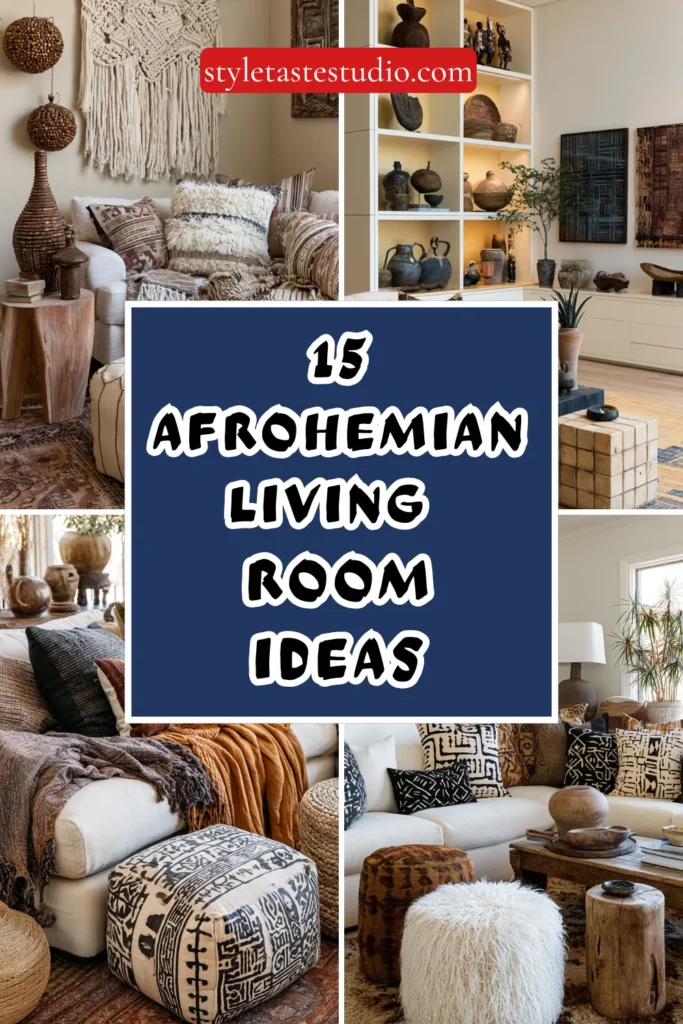
Because this style draws inspiration from diverse African cultures, authenticity matters just as much as aesthetics. Iconic textiles such as kente cloth, mudcloth, and Ndebele-inspired patterns each carry their own history and cultural significance, making it worth investing in ethically sourced, high-quality pieces instead of inexpensive imitations.
This guide breaks down every major element with realistic costs, helping you prioritize your budget so you can create an Afrohemian space that feels both beautiful and respectful of the traditions that inspired it.
1. A Warm Earth-Tone Base Palette
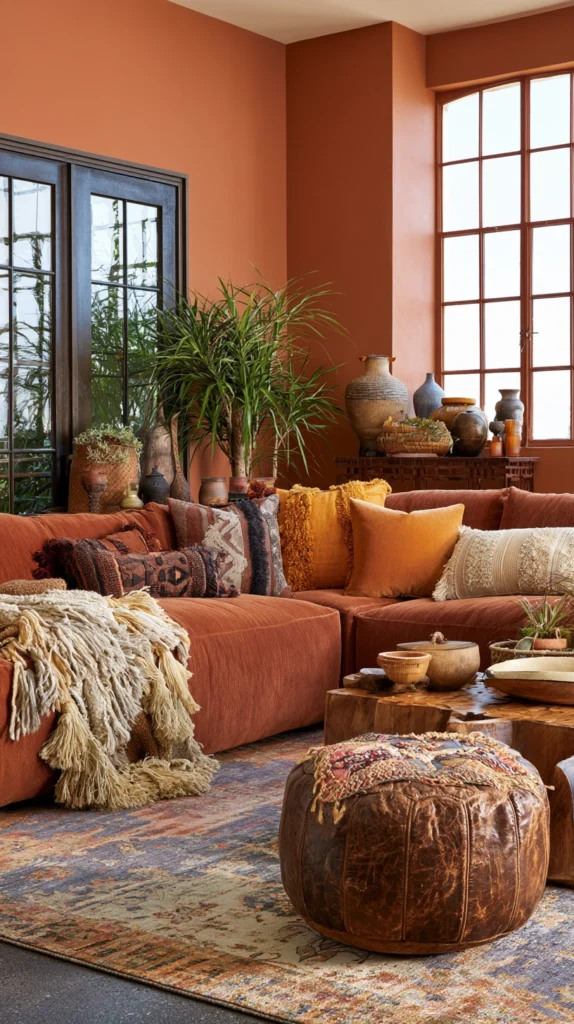
Budget: $60–150 for one wall in two coats, depending on paint brand.
- Ochre + terracotta + deep brown — the most classic pairing.
- Burnt orange + rust + charcoal — bolder and more contemporary.
- Warm sand + clay + espresso brown — softer, more neutral-leaning.
| Paint | Undertone | Cost (one wall) |
|---|---|---|
| Sherwin-Williams “Cavern Clay” | Warm red-orange | $60–90 |
| Benjamin Moore “Golden Straw” | Warm ochre | $65–95 |
| Farrow & Ball “London Clay” | Deep warm brown | $110–150 |
Paint one full wall or the whole room in the base tone rather than several small patches — a consistent base gives the layered textiles below something calm to sit against, and it’s cheaper per square foot than buying multiple small sample-sized cans.
2. Layered Textiles With Named Traditions
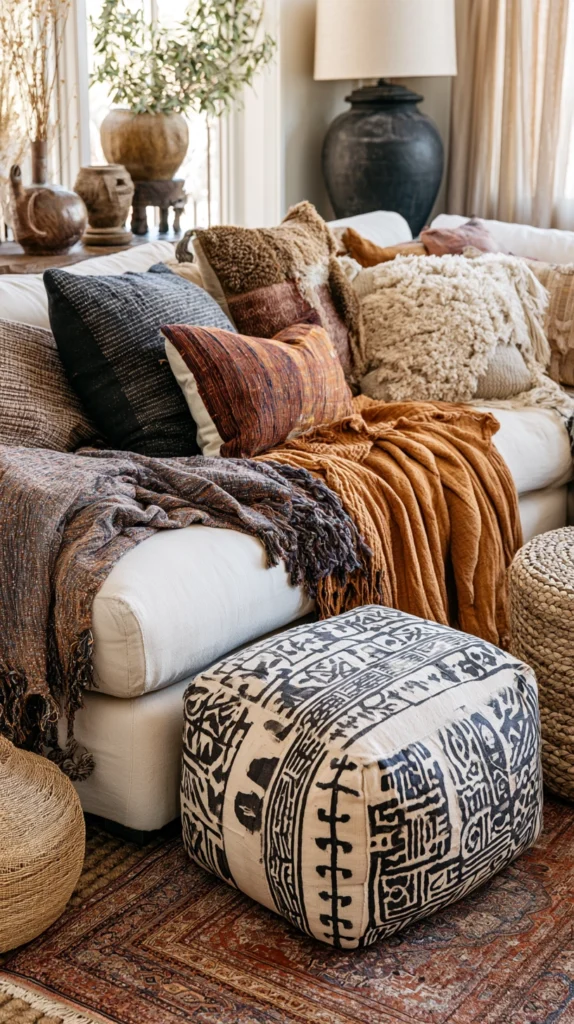
Budget: $40–200+ per piece depending on whether it’s genuine handmade cloth or a printed reproduction.
- Kente cloth — woven strip cloth from the Akan people of Ghana. Genuine woven pieces from Ghanaian weavers or fair-trade importers run $60–250+ depending on size; printed imitations run $15–30.
- Mudcloth (bogolanfini) — hand-dyed cotton from Mali using fermented mud and plant dyes. Genuine pieces run $50–150 for a throw-sized piece; printed cotton in the same pattern runs $15–35.
- Ndebele-inspired geometric prints — bold patterns associated with the Ndebele people of South Africa, widely available as textiles from $20–80.
If budget is tight, one genuine piece plus several printed pieces is a reasonable split — just buy from sellers who are upfront about which is which, rather than a lookalike marketed as authentic.
3. Geometric Pattern Layering Without Visual Chaos
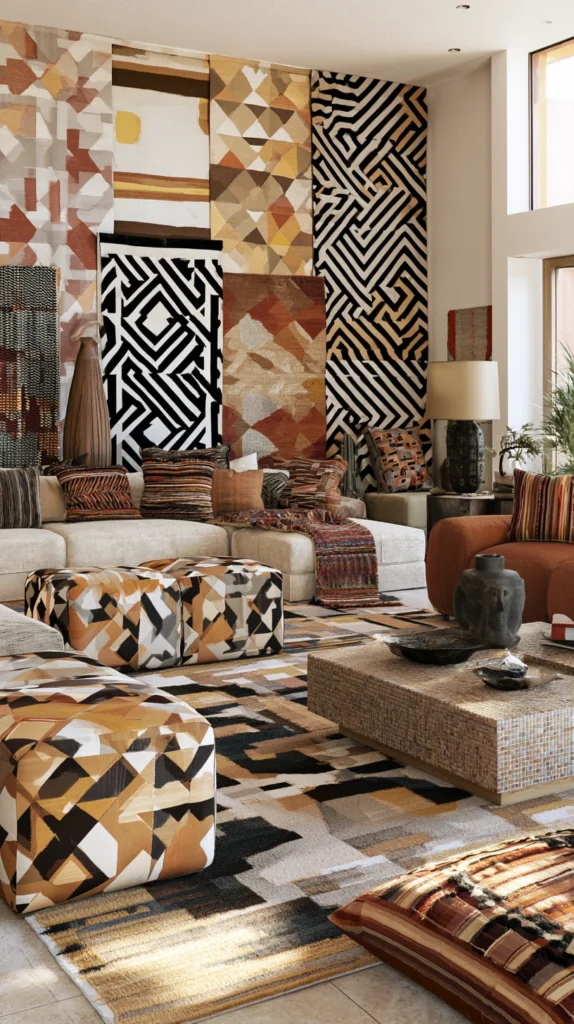
Budget: $0 — this is a styling rule, not a purchase, and it saves you from buying pieces that end up clashing.
Pick one dominant pattern scale (a large rug) and one or two smaller supporting patterns (mudcloth cushions, a smaller throw) that share at least one color with the dominant piece. Limit yourself to 2–3 patterns total in the main seating area, and keep one large surface — the sofa, or a large rug — in a solid color to give the eye somewhere to rest.
4. Natural Wood Furniture With Visible Craftsmanship
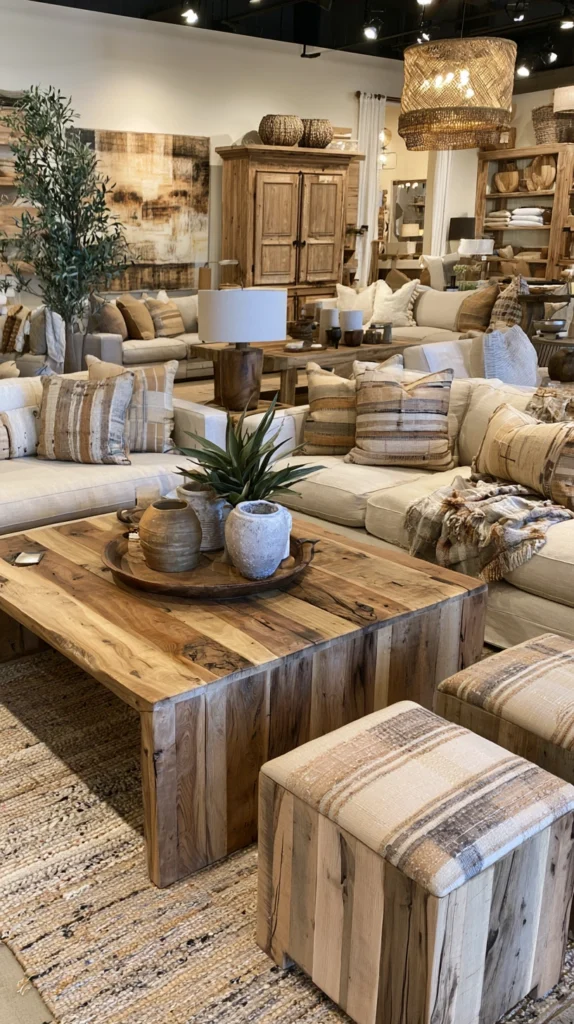
Budget: $80–400 for a hand-carved stool or side table; $600–1,800 for a larger console or coffee table.
Hand-carved stools (Ashanti-style stools from Ghana are a well-known traditional form) run $80–250 from makers or fair-trade importers — noticeably more than a mass-produced lookalike at $30–50, but with real craft behind them. Live-edge or visibly grained wood coffee tables pair well with the textile layering without competing for attention. A matte oil or wax finish (rather than glossy lacquer) is also cheaper to maintain over time — $10–15 for oil versus a professional refinish later.
5. Woven Wall Hangings as Focal Art
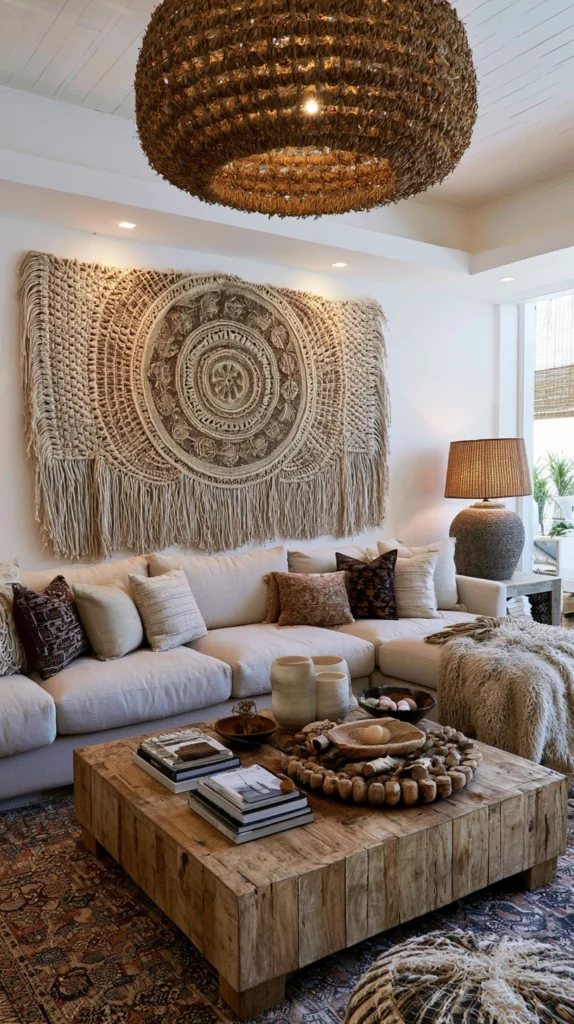
Budget: $60–300 depending on size.
Size it generously — aim for a piece covering at least 40–50% of the wall’s width above your furniture line, since an undersized hanging reads as an afterthought regardless of how much it cost. Mount with a simple wooden dowel and visible cord or leather strap ($5–15 in hardware if you’re framing it yourself) rather than paying extra for a hidden mounting system — the visible hardware is part of the look here.
6. Potted Plants in Varied, Deliberate Groupings
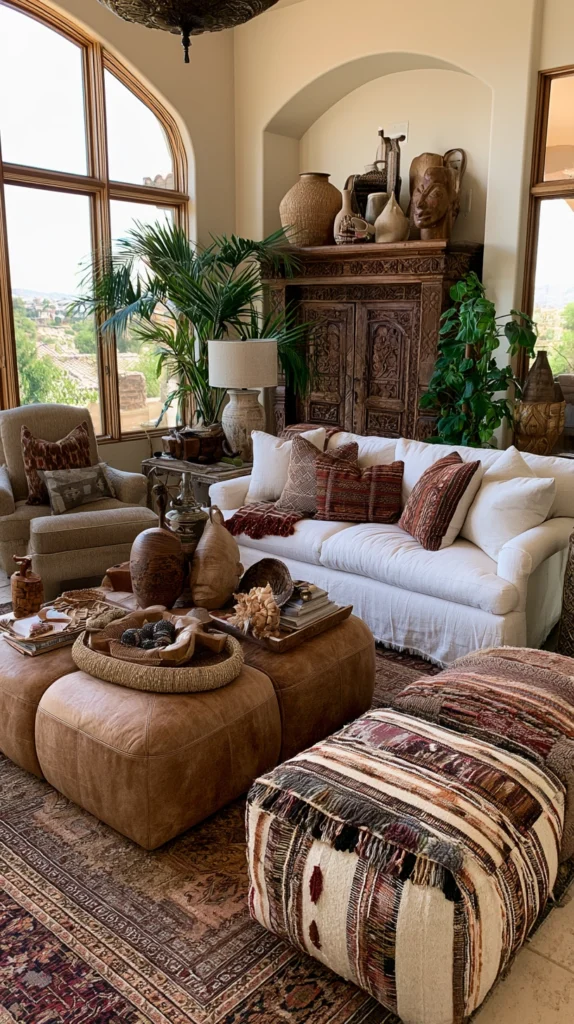
Budget: $60–150 for a cluster of three plants plus pots.
| Plant | Cost | Notes |
|---|---|---|
| Snake plant / ZZ plant | $15–30 | Low maintenance, low light OK |
| Fiddle leaf fig / rubber plant | $30–60 | Needs a well-lit corner |
| Trailing pothos | $10–20 | Good for shelves |
Cluster 3 plants of varying height in coordinating terracotta or woven basket planters ($10–20 each) rather than spacing single plants evenly — clusters read as intentional, spaced-out singles read as filler.
7. Brass and Copper Accessories
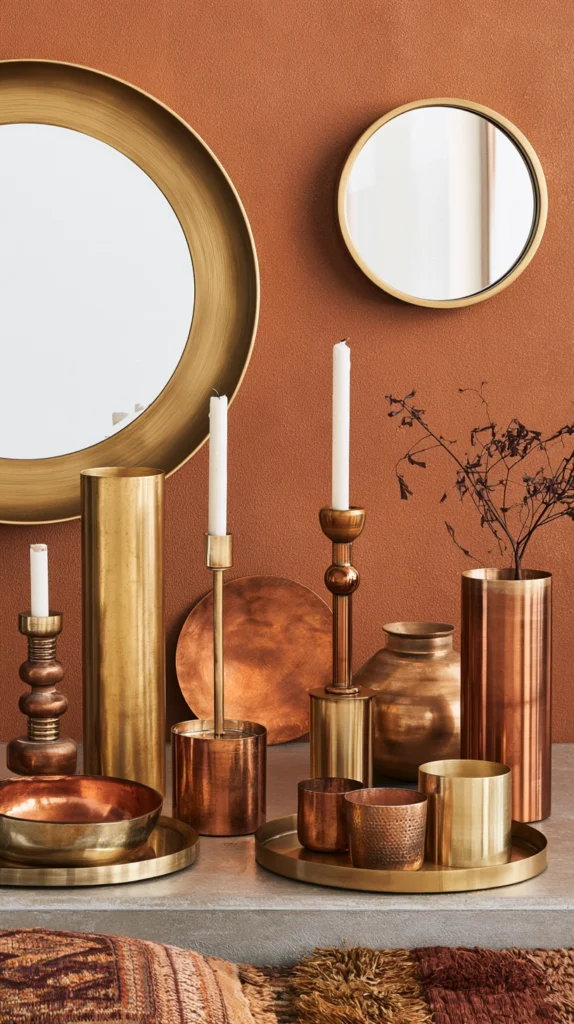
Budget: $20–50 for a set of cabinet pulls; $15–60 for candlesticks or small mirror frames.
This is one of the cheapest, highest-impact changes on the list. Unlacquered brass patinas naturally at no extra cost; if you’d rather it stay bright, a lacquered or PVD-coated finish costs a little more upfront ($5–10 more per piece) but needs no polishing later. Stick to one or two metal tones total — mixing three or more starts to look unplanned rather than layered.
8. Beaded and Macramé Details
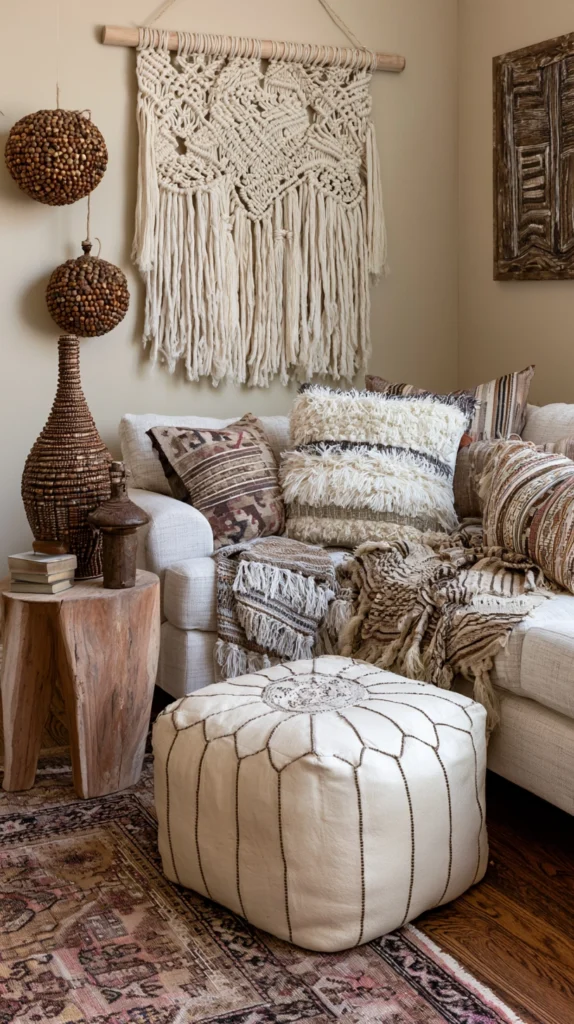
Budget: $20–60 for beaded cushion trim or a small macramé hanging; $10–20 for a DIY knotting kit if you’d rather make your own.
Beaded cushion trim or small decorative objects add detail at close range. Macramé wall hangings or plant hangers are widely available as fair-trade or maker-direct pieces — keep them to accent-scale items rather than large furniture, since the detail is easiest to appreciate up close.
9. A Gallery Wall Mixing African and Global Art
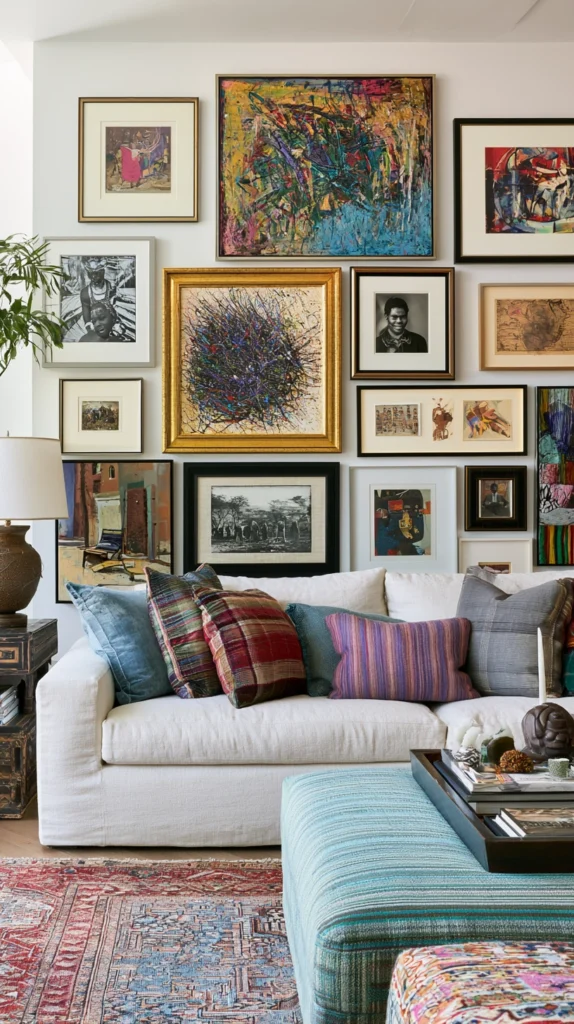
Budget: $30–120 per piece for prints from individual artists or African art marketplaces; framing adds $20–60 per piece if not already framed.
Mix mediums — a textile piece, a framed print, a small sculpture on a wall-mounted shelf. Buying from individual artists and African art marketplaces is often only a little more than mass-produced “African-inspired” prints from general decor retailers, and the piece comes with an actual story. Arrange with consistent 2–3 inch spacing between frames even when sizes vary.
10. Low Seating for Intimate Gathering
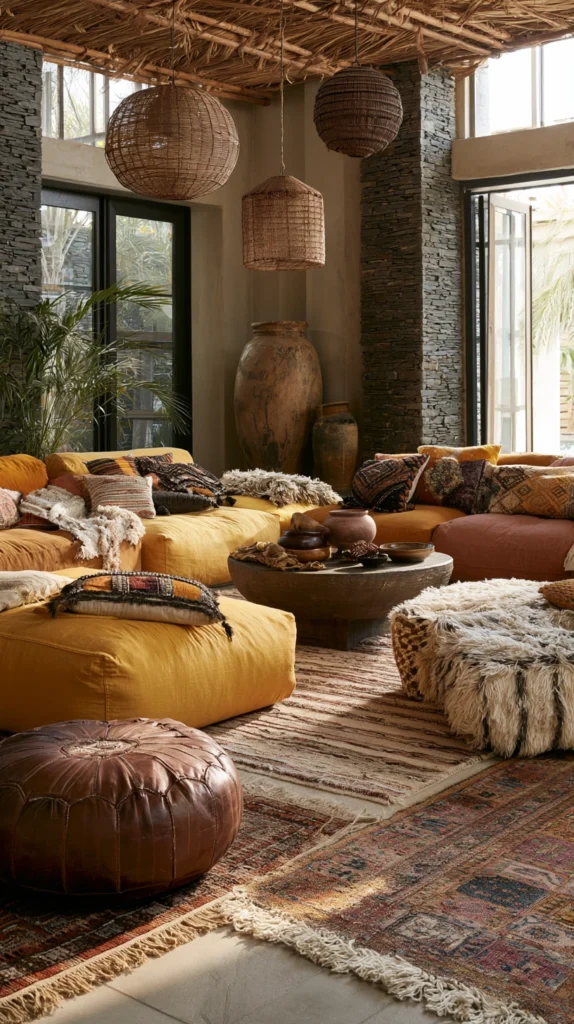
Budget: $80–250 for a cluster of large floor cushions or a low pouf arrangement.
A central low table ($40–120) plus a cluster of floor cushions changes how the room is actually used, not just how it looks. This works particularly well as a secondary seating zone alongside a conventional sofa rather than replacing all seating — a cheaper way to add capacity for gatherings than buying a second sofa.
11. Mudcloth in Small, Considered Doses
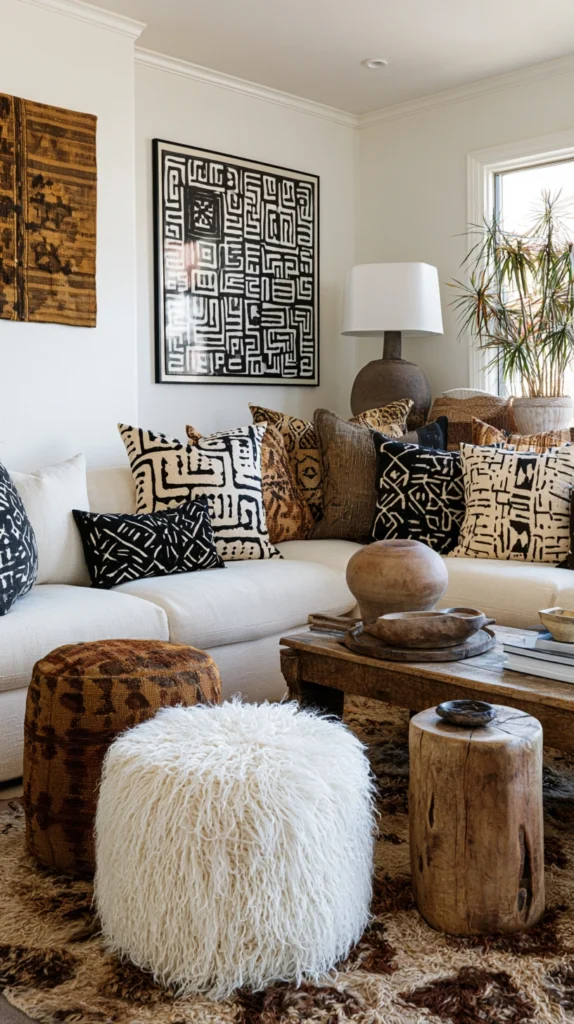
Budget: $25–80 for one genuine cushion cover or table runner.
Because genuine mudcloth (see #2) is a real investment at larger sizes, a single cushion cover or runner lets you incorporate it authentically without committing to a full sofa or large hanging. Pair with solid earth-tone textiles nearby rather than another bold pattern.
12. Warm, Layered Lighting
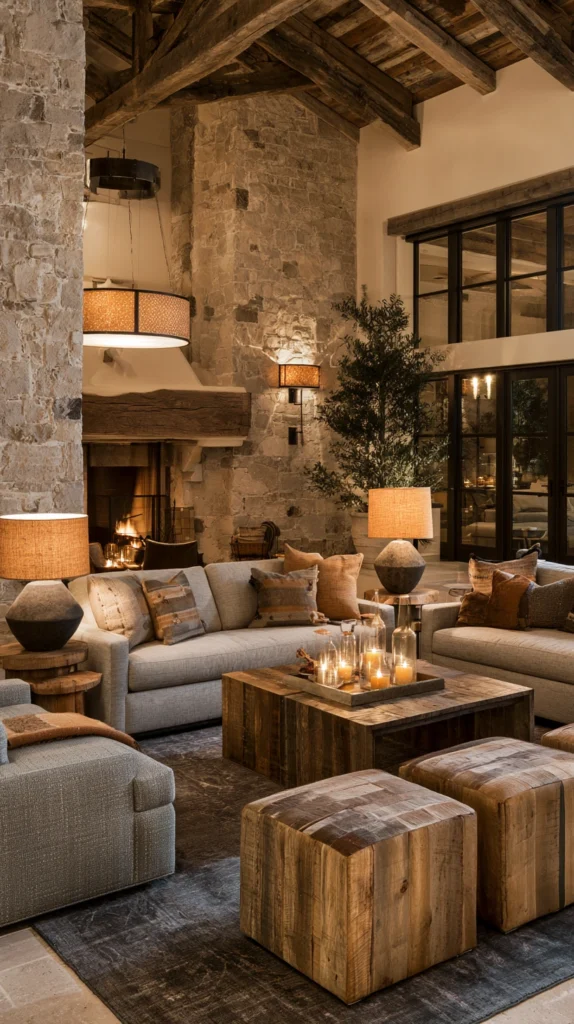
Budget: $80–200 for a floor lamp, table lamp, and warm bulbs throughout.
Warm-white bulbs (2200K–2700K, roughly $6–10 each) throughout the room; anything cooler makes earth-tone walls and wood look flat. Woven rattan or capiz-shell pendant shades ($30–70) pick up the natural-material theme already in the furniture and textiles.
13. An Intentionally Eclectic Furniture Mix
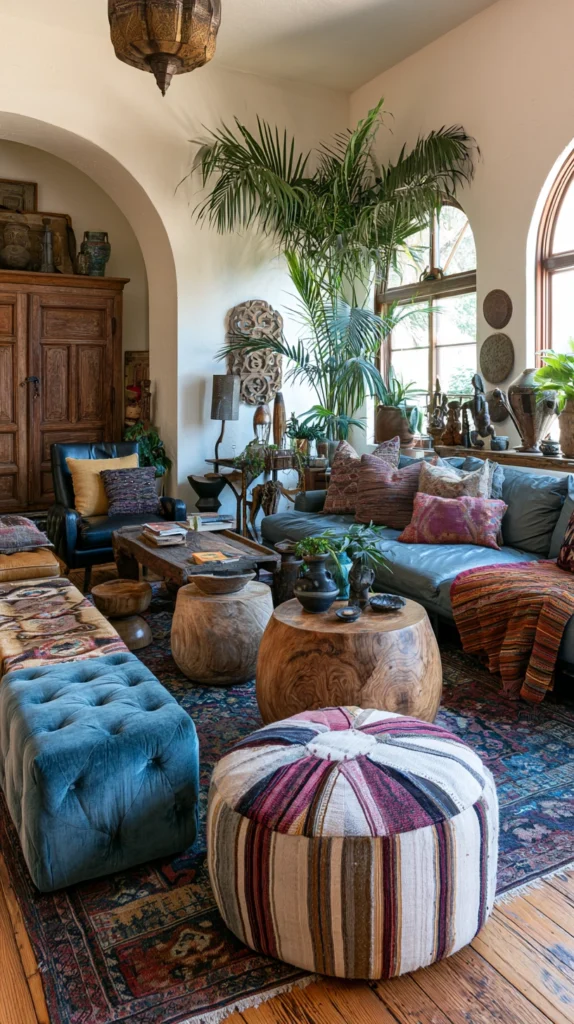
Budget: $150–600 for one secondhand sofa or accent chair, depending on condition.
Secondhand shops, estate sales, and marketplace listings are genuinely good sources here, often cheaper than new furniture and better suited to this style’s collected-over-time feel. If mixing eras feels risky on a budget, anchor with one larger neutral piece (a solid-color sofa) and let smaller, cheaper accent pieces carry more of the eclectic mixing.
14. Statement Throw Pillows in Coordinated Abundance
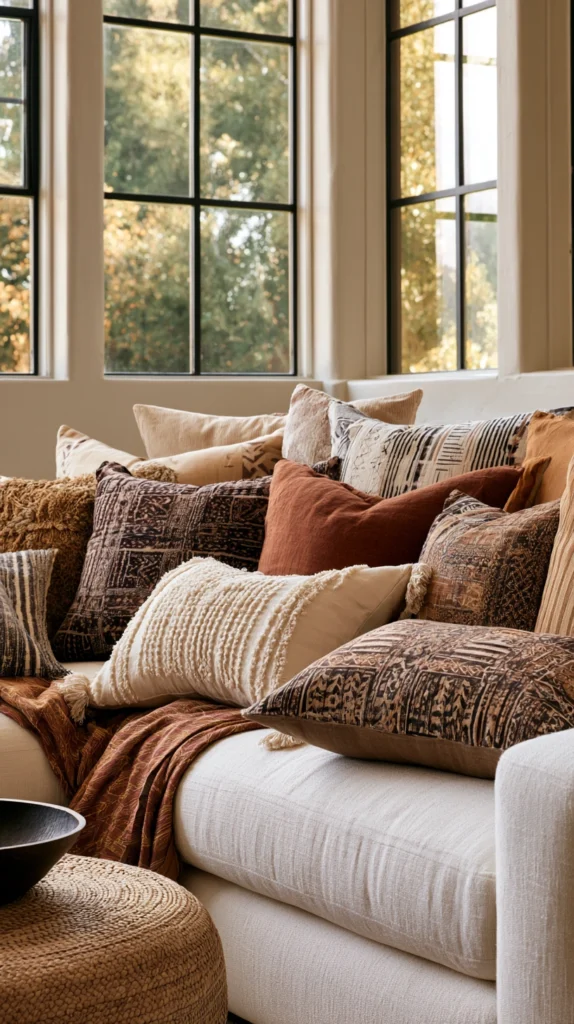
Budget: $125–350 for 5–7 pillow covers at $25–50 each.
Mix earth tones, jewel tones, and one or two patterned pieces (mudcloth or geometric print) rather than a matching set. Vary fabric type — velvet, woven cotton, beaded trim — not just color. Beyond 7 pillows on a standard sofa, the seating itself starts to disappear and you’re spending money on cushions nobody can actually sit near.
15. A Curated Display of Meaningful Objects
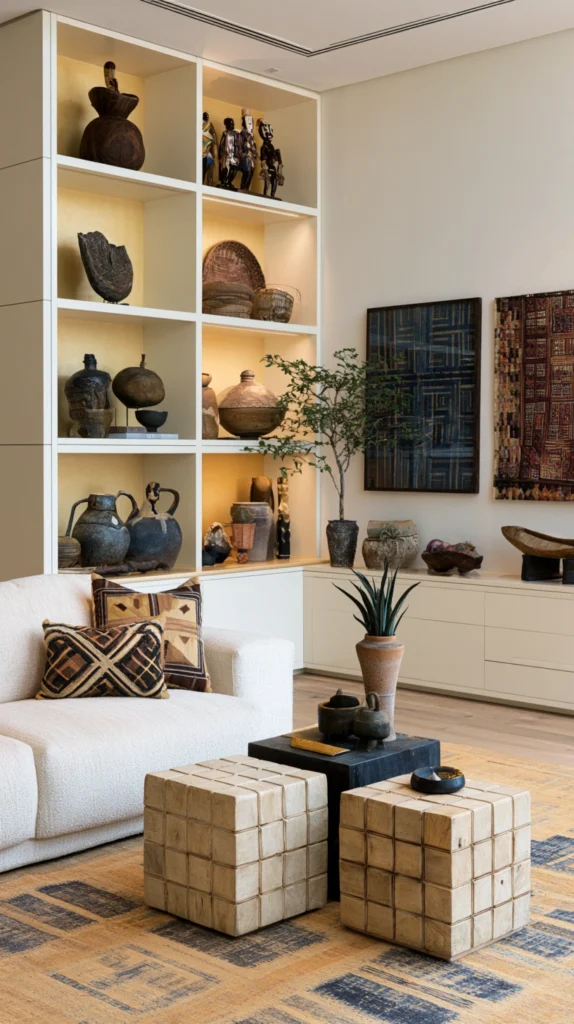
Budget: $0–100+, and honestly the lowest-cost, highest-impact item on this whole list.
Travel pieces, family objects, and handcrafted items with real history behind them do more for the room’s authenticity than any purchased decor item — and most of them you probably already own. Group them together on one console or shelf rather than scattering them through the room, and leave some negative space around the display so each piece is actually noticed.
Common Mistakes to Avoid
- Buying mass-produced “tribal print” decor instead of sourcing from African makers. Often only a small price difference, but a real difference in material quality and where your money goes.
- Overloading the room with pattern. More than 2–3 patterns in the main seating area competes with itself — and means you’ve spent money on pieces that cancel each other out visually.
- Mixing more than two metal finishes. Costs you nothing extra to avoid, but looks unplanned if you don’t.
- Skipping plain, solid “resting” surfaces. Pattern on every surface with no breathing room tires the eye fast, however much each individual piece cost.
- Treating specific traditions as interchangeable decoration. A little research when sourcing — a few minutes, no cost — goes a long way toward a room that feels considered.
Maintenance and What It Costs
- Genuine mudcloth: hand wash cold or dry clean only ($8–15 per item at a cleaner) — not colorfast in a washing machine.
- Woven textiles and beaded cushions: spot clean; avoid machine washing beaded pieces, which can damage trim.
- Unlacquered brass: free to let it patina naturally, or $8–12 for polish if you prefer it bright.
- Wood furniture with an oil finish: reapply oil every 6–12 months, roughly $10–15 per bottle, to keep the matte finish from drying out.
Total Budget by Commitment Level
| Commitment level | What’s included | Approx. total |
|---|---|---|
| Low (test the look) | Cushions, one wall hanging, a few plants | $100–200 |
| Medium (partial commitment) | Accent wall, rug, brass accessories, gallery wall | $350–700 |
| High (full transformation) | Sofa, genuine mudcloth/kente pieces, hand-carved furniture, full lighting layer | $2,000+ |
Frequently Asked Questions
How do I incorporate African textile traditions respectfully without overspending? Split your budget: one or two genuine pieces (a mudcloth cushion, a small kente accent) from makers or fair-trade importers, and printed reproductions for the rest. Sellers who are transparent about which is which make this easy to do on any budget.
Can this style work in a small living room without spending a fortune? Yes — favor a few larger, well-chosen pieces (one wall hanging, one patterned rug) over many small accent items. A small room with fewer, better pieces often costs less overall than one with a dozen small purchases that don’t quite work together.
Where should I spend first if my budget is limited? Base wall color (#1) and one genuine textile piece (#2) — both are relatively low-cost and do the most to set the room’s tone. Everything else can be added gradually as budget allows.
Where to Actually Shop
- Fair-trade importers and marketplaces: typically the most reliable source for genuine kente, mudcloth, and hand-carved pieces with clear origin information, and prices are often more reasonable than people expect once you skip the markup of a general home decor retailer.
- Individual makers on Etsy or similar platforms: search directly for the tradition by name (kente, bogolanfini, Ashanti stool) rather than generic terms like “African decor,” which tends to surface more mass-produced lookalikes.
- Estate sales and secondhand shops: genuinely good for the eclectic furniture mix (#13) and standalone decorative objects (#15) — this is where the lowest-cost, highest-character finds tend to turn up.
- General home decor retailers: fine for basics like plain-colored throw pillows, plant pots, and paint, but worth skipping for anything marketed specifically as “African-inspired” — that’s usually where the quality and sourcing gap is largest relative to price.
Splitting your shopping across these sources — genuine pieces from specialist sellers, basics from general retailers, character pieces from secondhand shops — tends to get you the most authentic-feeling room for the least total spend, rather than trying to source everything from one place.