15 Circus-Inspired Living Room Ideas With Bold Stripes and Sculptural Decor
A circus-inspired living room borrows the visual language of the big top — bold stripes, warm amber light, rich velvet, theatrical scale — without turning into a themed novelty room. It’s one of the more distinctive styles you can commit to, and it’s genuinely budget-flexible, since the impact comes from a few strong choices rather than dozens of small matching ones.

Here’s every piece, with a real budget attached to each one, so you know exactly what you’re signing up for before you start.
Why the Circus Aesthetic Produces Better Living Rooms Than Most People Expect
The circus aesthetic works in interior design for the same reason that theatrical design works on stage.
It understands that an environment creates an experience. That the colours of a space affect the mood of the people in it. That the quality of the light determines how long people want to stay. That objects with character, objects that have a story or a mystery or a specifically dramatic quality, make a room feel alive in a way that inert, neutral objects do not.
Every principle of effective theatrical design is also a principle of effective domestic design. The warm amber light that makes actors look beautiful makes guests look beautiful at the same time. The bold vertical stripe that makes a stage set feel taller makes a room feel taller. The velvet that communicates luxury and warmth from a theatre seat communicates the same things from a sofa.
The circus-inspired living room is the living room that applies these principles without apology. It is not embarrassed by its own warmth and drama. It is proud of it.
1. Bold Vertical Stripes on the Feature Wall
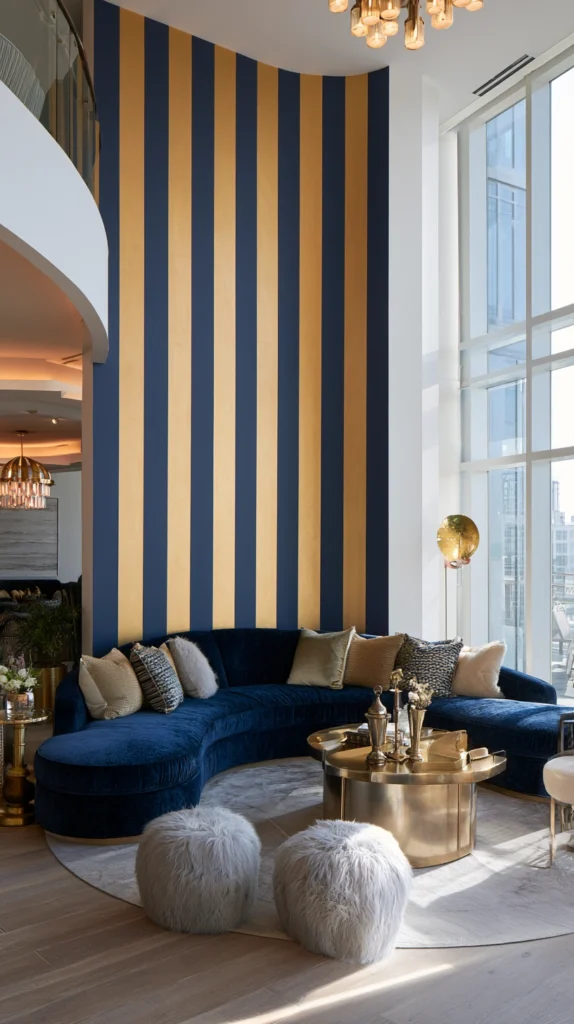
Budget: $70–120 for paint and tape on one standard feature wall.
The stripe sets the room’s identity, so get the proportions right before you pick up a brush.
- 4–6 inch stripes read as classic and graphic — the most traditional circus-tent proportion.
- 8–12 inch stripes feel contemporary and are easier to tape accurately if this is your first DIY stripe job.
- Uneven widths (a wide band broken by a thin accent stripe) add complexity without buying a third paint color.
| Color pairing | Mood | Paint names to search for |
|---|---|---|
| Red + cream | Classic | Benjamin Moore “Caliente” + “Simply White” |
| Navy + gold | Sophisticated | Farrow & Ball “Hague Blue” + “India Yellow” |
| Black + white | Maximum contrast | Any true black + bright white |
| Forest green + natural white | Relaxed | Sherwin-Williams “Rookwood Dark Green” + “Alabaster” |
Tip that saves you a redo: seal the tape edge with a thin coat of your base wall color before painting the stripe color. This stops bleed under the tape, which is the number one cause of ragged DIY stripes. Skipping this step is the difference between a $70 job and a $70-plus-a-full-repaint job.
2. A Deep Red or Crimson Velvet Sofa
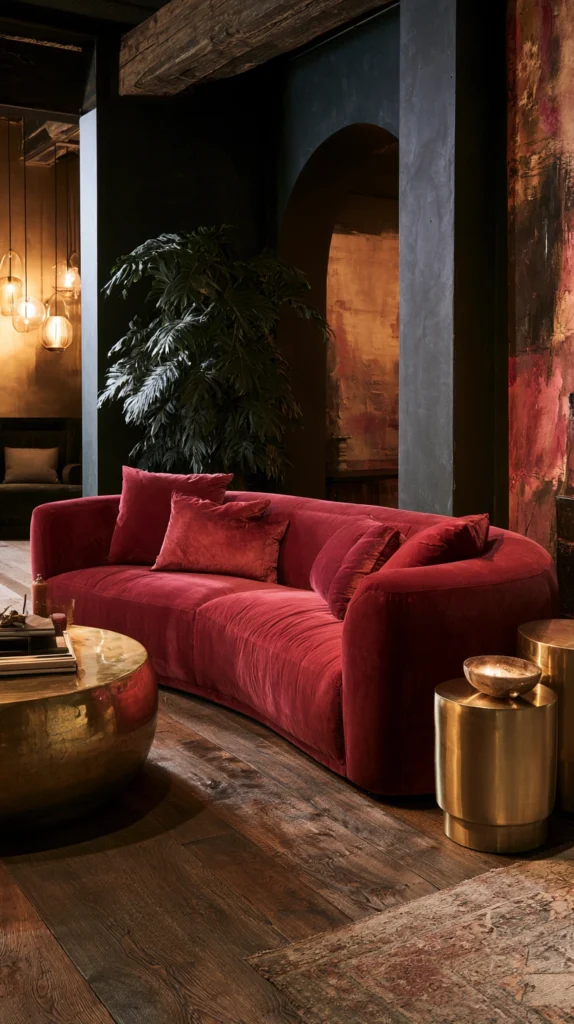
Budget: $300 (secondhand) to $2,500 (new).
This is your biggest single spend on the list, so prioritize it over smaller decor.
| Route | Cost | What you’re trading off |
|---|---|---|
| New velvet sofa, mid-range retailer | $1,200–2,500 | Widest color choice, no restoration work |
| Reupholster an existing frame | $800–1,800 | Cheaper if the frame’s solid; needs roughly 12–16 yards of fabric for a 3-seater |
| Vintage or secondhand | $300–900 | Check the frame and springs before buying — a “cheap” sofa with a broken frame isn’t actually cheap |
Cotton-linen velvet is more durable and more affordable than silk — save the silk for a cushion, not the whole sofa. Vacuum weekly with a soft brush attachment, and treat spills immediately since velvet stains set fast.
3. Globe Edison Bulb Lighting at Multiple Heights
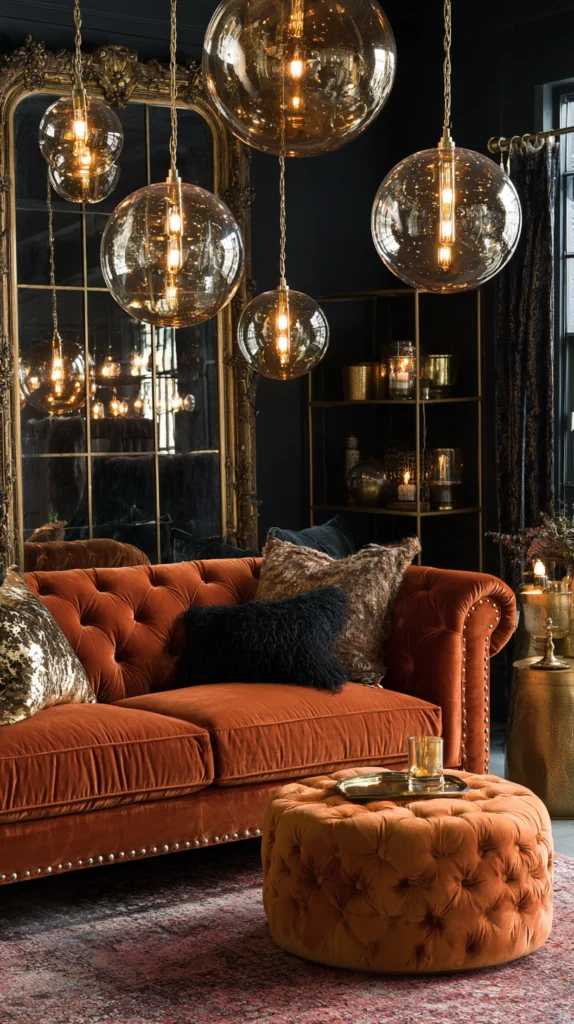
Budget: $150–350 for pendants, a floor lamp, two table lamps, and dimmers.
- Overhead: a cluster of 3–5 globe pendants ($20–50 each) at staggered heights above the seating area.
- Corner: one exposed-filament floor lamp ($40–90).
- Surface: two or three small lamps with amber shades ($25–50 each).
Look for 2200K–2700K “vintage” LED bulbs — they look like old filament bulbs but use a fraction of the power. Add dimmers: an in-wall dimmer switch is $15–25 and a manageable DIY project (turn off the breaker first); a plug-in lamp dimmer is even easier and needs zero wiring.
4. A Patchwork of Jewel-Toned Cushions on the Sofa
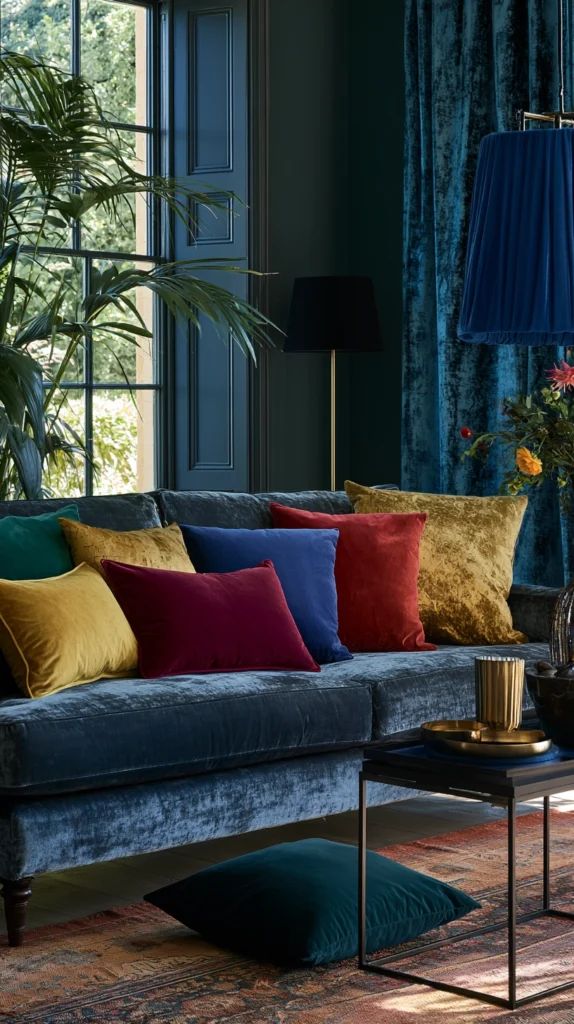
Budget: $125–350 for 5–7 cushion covers at $25–60 each.
Pick 4–5 colors from one palette family (teal, gold, burgundy, forest green) and mix at least three fabric types — velvet, woven tapestry, embroidered linen. Buy over a few weeks rather than all at once; spacing purchases out makes the mix look genuinely collected instead of bought-as-a-set. Secondhand and Etsy vintage sellers are cheaper and better sourced than big-box matching sets.
5. A Striped or Medallion Persian Rug
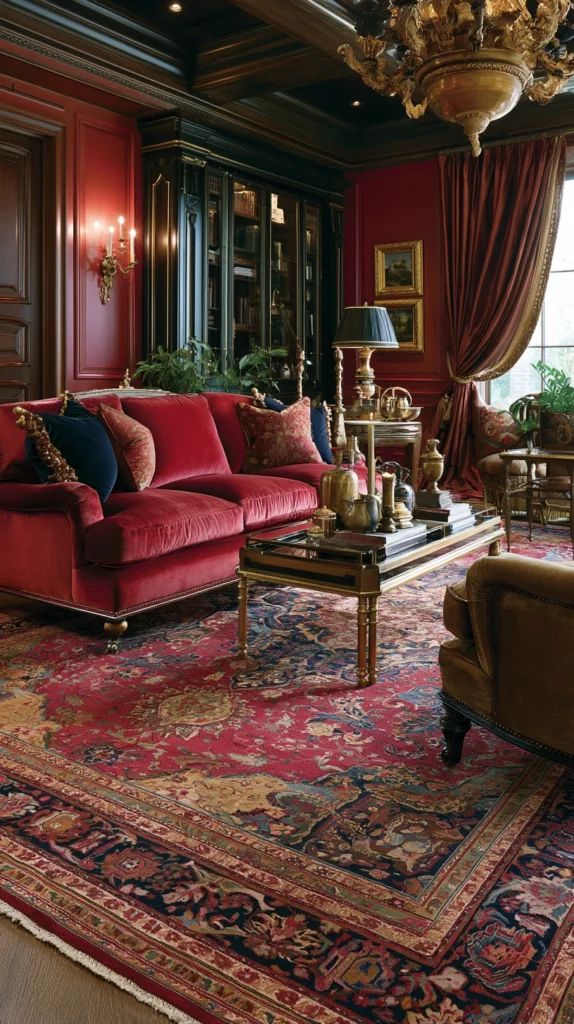
Budget: $250–800 for an 8×10, depending on route.
| Rug type | Cost (8×10) |
|---|---|
| New machine-made | $250–500 |
| Vintage/antique hand-knotted | $600–2,000+ |
| Moroccan/kilim flatweave | $300–800 |
Measure your actual seating footprint before buying — the rug needs to sit under the front legs of every seating piece at minimum. A rug too small for the room is the single most common (and most expensive to fix) sizing mistake on this list.
6. Vintage Circus and Carnival Framed Prints
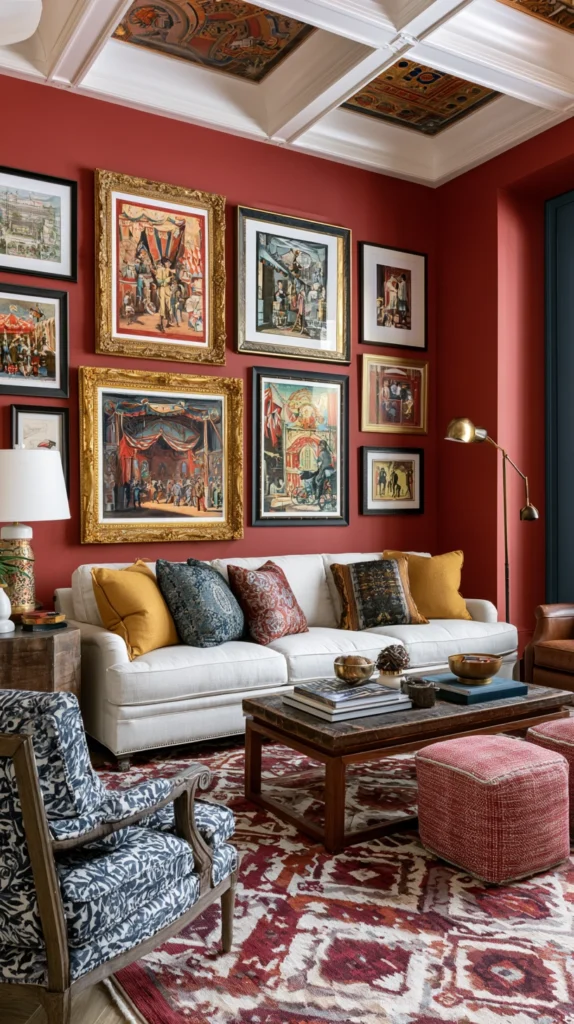
Budget: $40–150 per print, plus $100–250 if custom framing a large piece.
Look for reproductions of Victorian and early-20th-century circus poster art through print shops or museum reproduction stores rather than novelty decor sites — the typography and print quality is noticeably better for a similar price. Frame in substantial gold, black, or warm wood at least 2 inches wide; a thin modern frame undercuts the vintage feel and makes the print look cheaper than it actually cost.
Mix sizes: one large anchor piece (24×36″ or bigger) flanked by two or three smaller prints (11×14″ to 16×20″).
7. A Chandelier With Crystal or Amber Glass
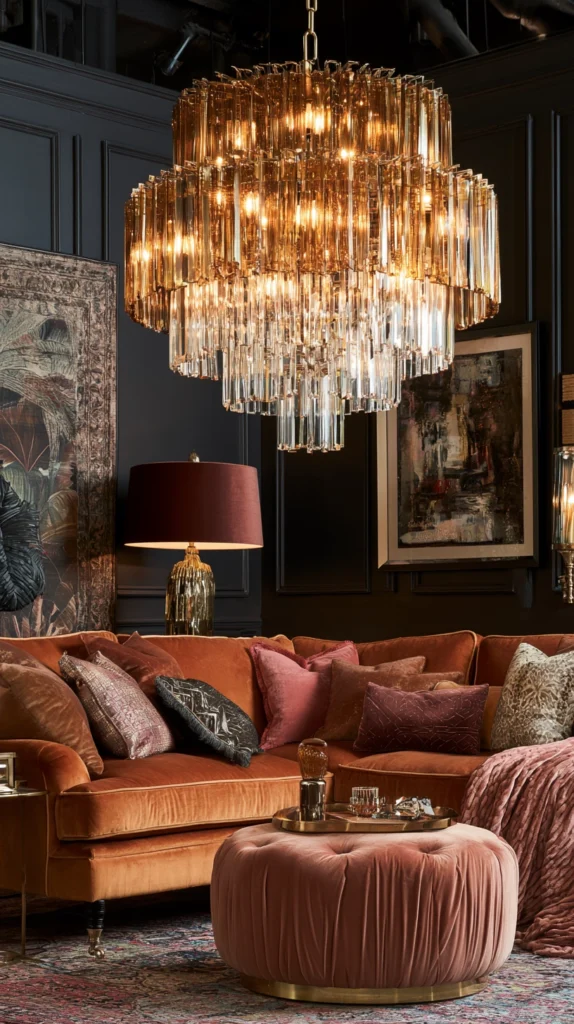
Budget: $200–600 for a solid mid-range fixture; vintage originals run higher.
Size it generously — this is where people underspend and the room ends up feeling under-lit. Add the room’s length and width in feet and use that number in inches as your rough diameter guide (a 14×16 ft room wants roughly a 30-inch fixture). Confirm your ceiling box can hold the weight before buying — anything over 20 lbs typically needs a proper brace, which can add $50–100 in electrician time if you don’t already have one.
8. Sculptural Objects That Demand Attention
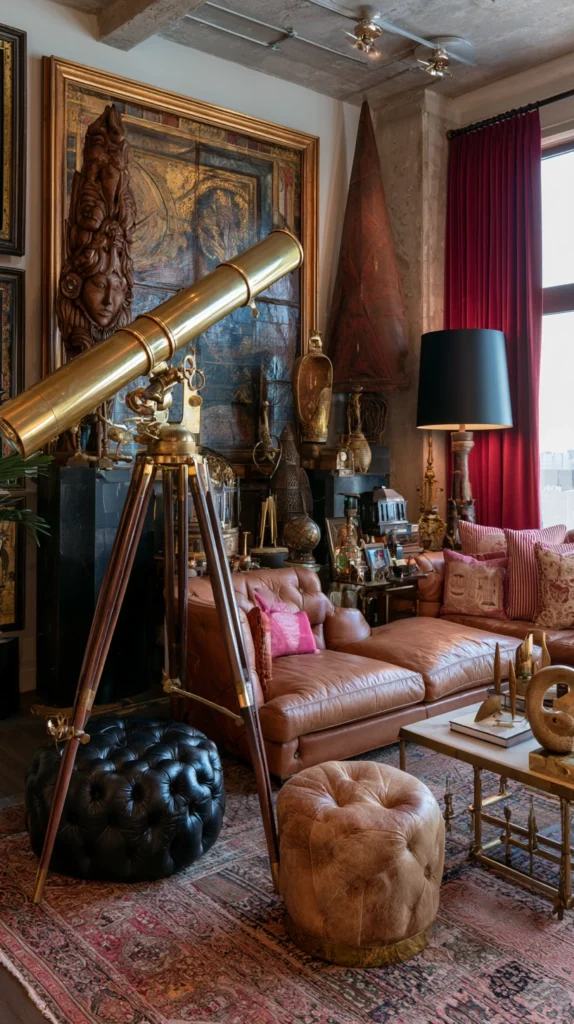
Budget: $30–200 per piece, and you only need one or two, not a collection.
- Estate sales and auction houses for vintage globes, scientific instruments, travel trunks.
- Architectural salvage yards for oversized carved or cast pieces.
- Local craft fairs for one-of-a-kind sculptural work.
One genuinely interesting $150 piece beats five generic $20 “curio” items — give it real breathing room on its own surface rather than crowding it with others.
9. Rich Curtains in Velvet or Heavy Linen
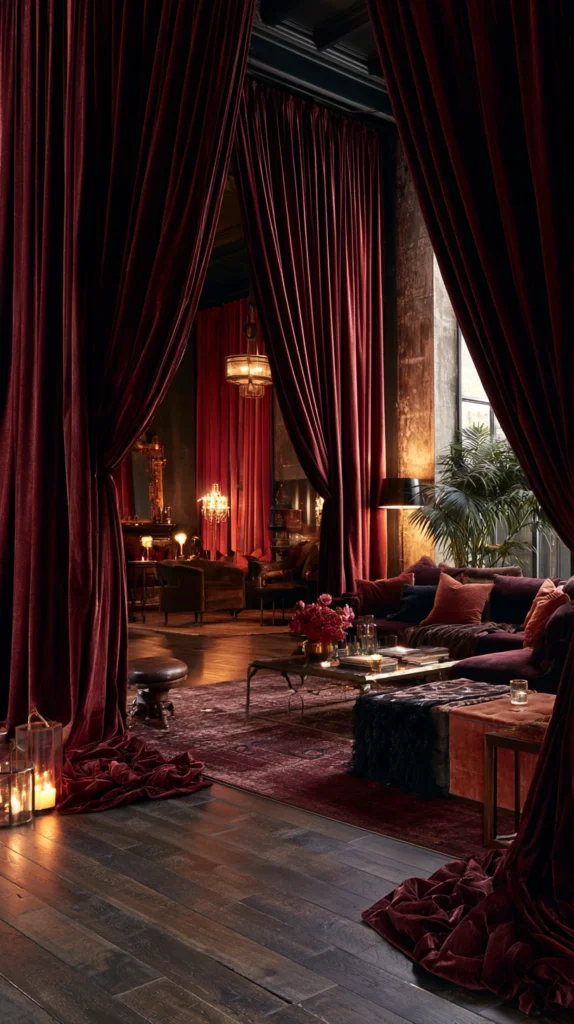
Budget: $150–400 per window for velvet or heavy linen in the 300–400 gsm range needed for real drape.
Mount the rod 4–6 inches above the window frame (or as close to the ceiling as the room allows) and extend it 6–10 inches beyond the frame on each side. Let the curtains touch the floor or “puddle” an extra 1–3 inches — hemmed exactly at floor length looks flat next to everything else in this style.
10. A Painted or Papered Ceiling
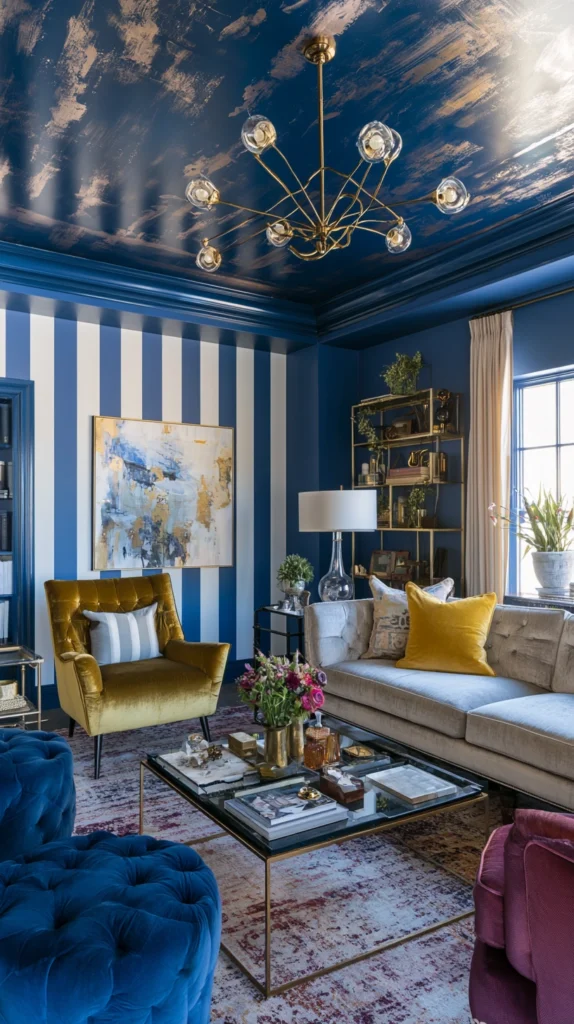
Budget: $80–150 for paint; $300–600 professionally installed if wallpapering.
- A deep complementary color in your wall’s sheen — cheapest, lowest-risk option.
- Metallic gold or bronze paint, to catch light from your chandelier.
- Patterned wallpaper (celestial, star, damask motifs) — the biggest showstopper, and worth hiring out since ceiling paper is more physically demanding than walls.
11. A Bookshelf Styled as a Cabinet of Curiosities
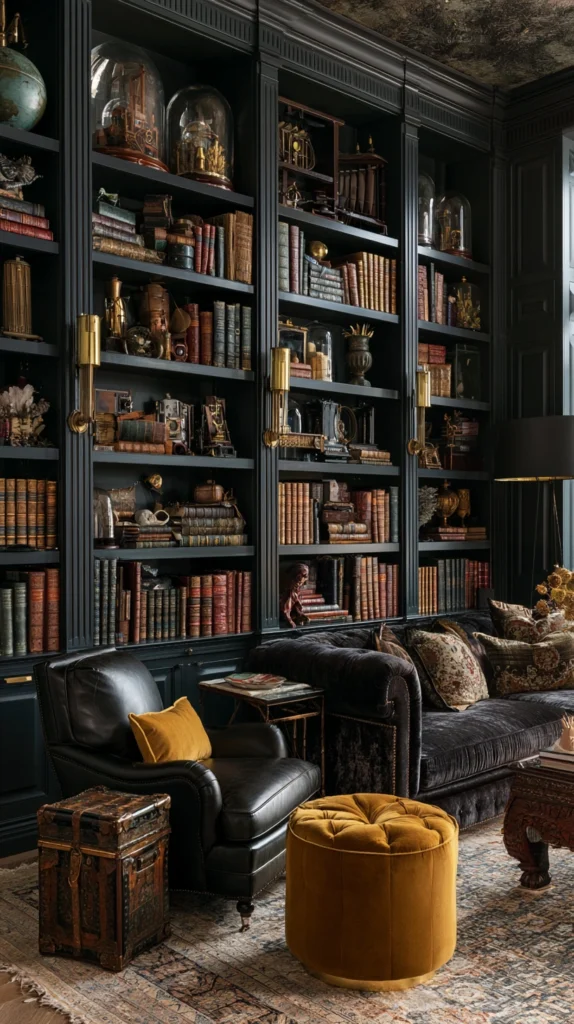
Budget: $0–300, mostly from what you already own plus a few finds.
Aim for roughly 60% books, 40% objects, rather than an even split. Include at least one genuinely unusual object per shelf — an odd scientific instrument, a taxidermy piece under glass ($40–150 secondhand), foreign currency in a small frame ($15–30). Leave a few inches of negative space on each shelf; packed edge-to-edge kills the “collected over years” look you’re going for.
12. A Statement Mirror in an Ornate Frame
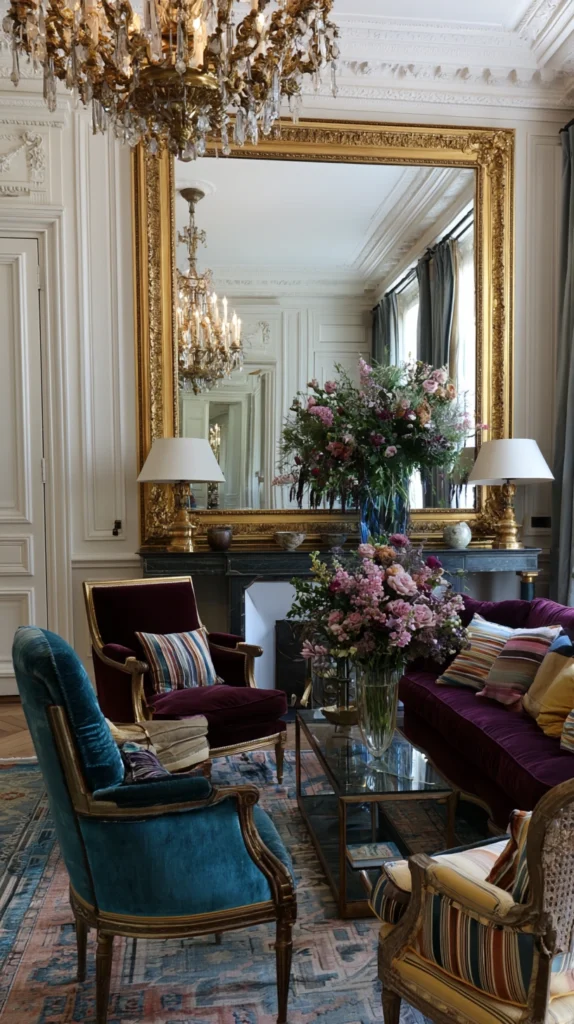
Budget: $80–350 depending on size and whether it’s new, reproduction-antiqued, or genuinely vintage.
Position opposite a window or your chandelier so it’s actually bouncing light around, not just decorating a wall. Size guide: roughly two-thirds the width of the furniture piece below it (console, mantel). Antiqued or foxed mirror glass gives a warmer, more atmospheric reflection than a flat modern mirror.
13. Deep Tones on All Four Walls for Full Immersion
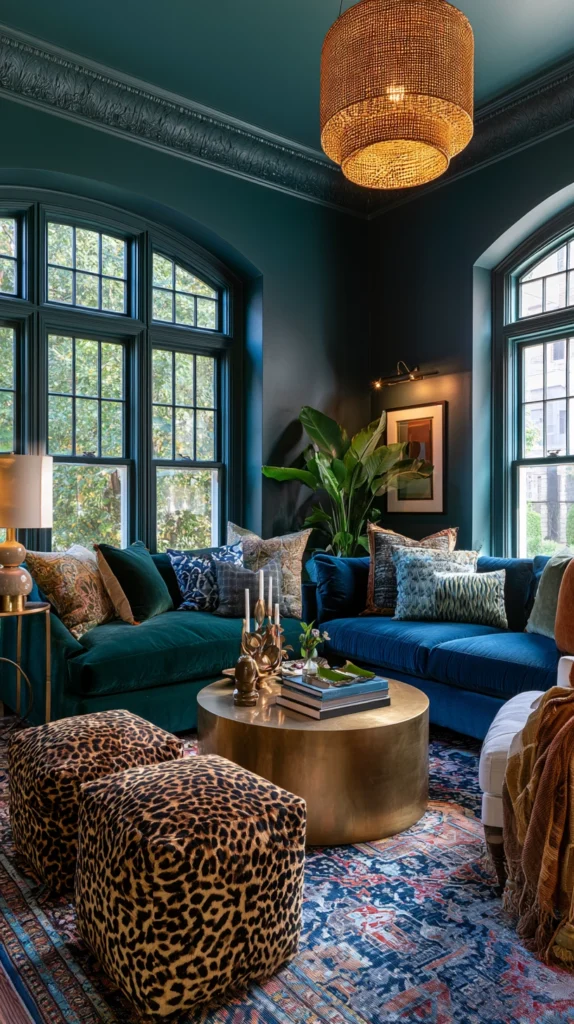
Budget: $200–350 in paint for a full room, once you’re ready for the bigger commitment.
Take the calmer, darker version of your stripe color across the remaining three walls rather than repeating the bold pattern everywhere. This works best once your layered lighting (see #3) is already in place — a fully dark room lit only by an overhead fixture reads gloomy instead of cozy. Test large swatches on two walls at different times of day before buying full cans.
14. A Fireplace Styled as a Stage Set
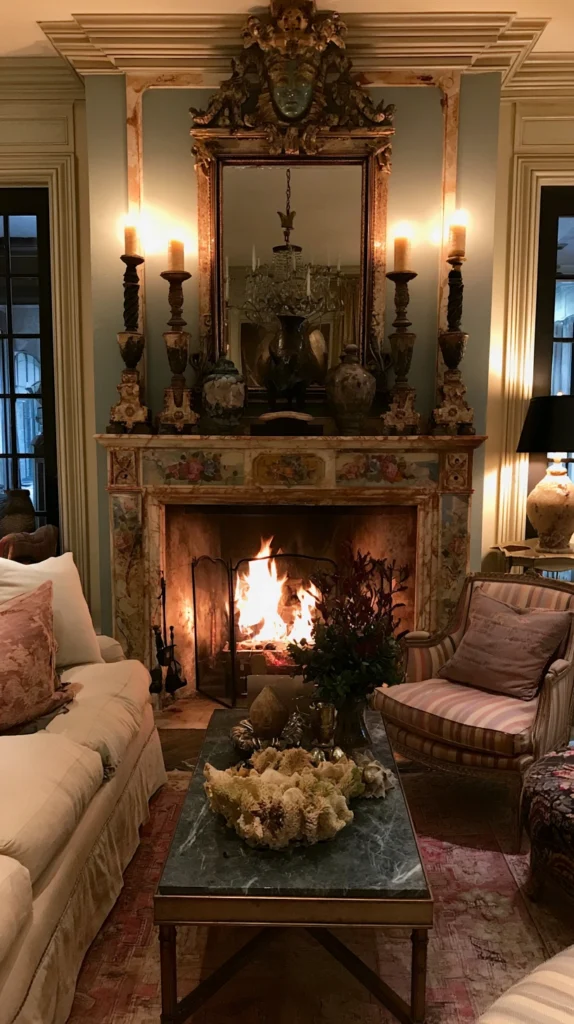
Budget: $60–200 for candlesticks, small objects, and a mirror or framed piece above.
Anchor each end of the mantel with a tall object of matching height. Center a mirror or framed piece above, sized to roughly two-thirds the mantel’s width. Fill the rest with 2–3 mid-height objects of varying character — avoid perfect symmetry, which reads as staged rather than collected. If you’re painting the surround, use heat-resistant paint rated for masonry or metal ($15–25 a can); regular wall paint will discolor near heat.
15. Full-Room Commitment: Making Every Choice Work Together
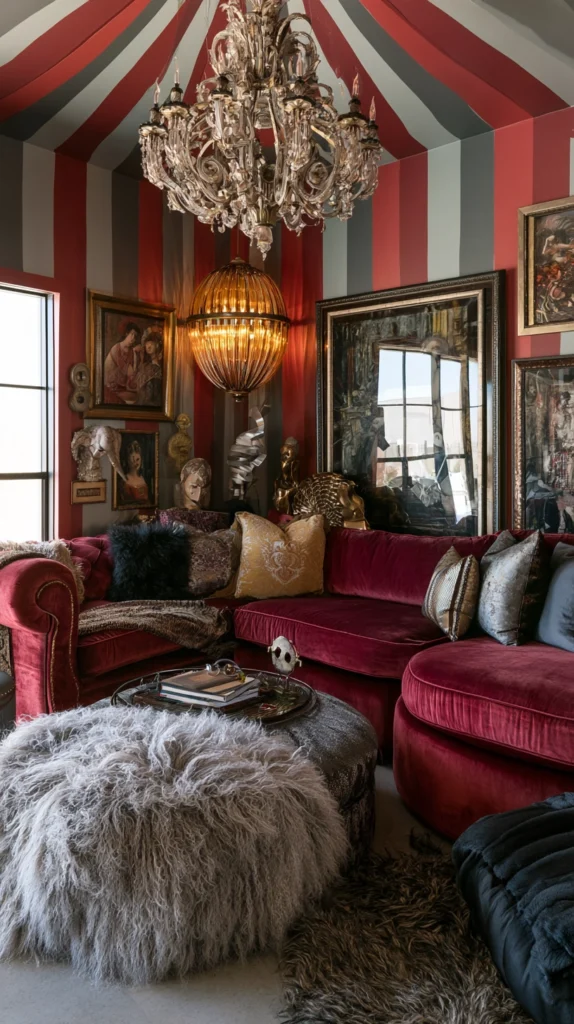
Budget: $0 — this is a consistency check, not a purchase.
- Every light source is warm-toned (2200K–2700K); no leftover cool-white bulbs hiding in a lamp somewhere.
- Stripe, sofa, curtains, and rug all pull from the same 3–4 color family, even if the exact shades vary.
- At least one genuinely unusual, non-matching object is in the room (see #8) — zero surprises reads as a themed set, not a home.
- Chandelier, sofa, and rug are all sized generously for the room, not conservatively.
Common Mistakes to Avoid
- Striping all four walls instead of one. Tips a bold room into a disorienting one.
- Mixing cool-white and warm bulbs. Even one cool bulb among warm ones is jarring — swap it out, it’s a $5–8 fix.
- Buying a themed circus object instead of a genuinely characterful one. A poster reproduction works; a plastic ringmaster figurine doesn’t.
- Undersizing the chandelier or rug. The most common places people underspend for the room’s actual scale.
- Skipping the dimmers. Full-brightness overhead light kills the whole atmosphere for a $15–25 fix you’re leaving on the table.
Total Budget by Commitment Level
| Commitment level | What’s included | Approx. total |
|---|---|---|
| Low (test the look) | Cushions, framed prints, one lamp | $150–300 |
| Medium (partial commitment) | Feature wall stripe, rug, pendant lighting, dimmers | $500–1,000 |
| High (full transformation) | Velvet sofa, chandelier, curtains, ceiling treatment, all-wall color | $2,500–5,000+ |
Ongoing Maintenance and What It Costs
- Velvet sofa: a soft brush vacuum attachment ($10–15 if you don’t already own one) keeps it looking fresh weekly; a professional upholstery clean every 1–2 years runs $100–200.
- Vintage rug: professional rug cleaning every 12–18 months, roughly $75–150 depending on size, extends the life of a $600+ investment significantly.
- Brass or gold hardware and frames: leave unlacquered pieces to patina naturally at no cost, or budget $10 for polish every few months if you want them to stay bright.
- LED filament bulbs: these last 15,000+ hours versus 1,000 for old-style incandescent, so despite costing a bit more per bulb ($6–12 vs $2), they work out cheaper over the life of the fixture and you won’t be replacing them every few months.
Spending a little more upfront on the pieces that get daily use — the sofa, the rug, the lighting — and saving on the smaller decorative pieces (secondhand frames, DIY cushion covers) is generally the better split than the reverse.
Frequently Asked Questions
Will this room feel too dark or busy for everyday living? Not if the lighting (see #3) is layered and warm rather than one overhead source. The layered light is genuinely the cheapest fix in this whole list ($150–350) for the biggest jump in how livable the room feels.
Can this work in a rental? Yes — prioritize removable items: a large striped rug ($250–500) instead of a striped wall, plug-in pendant or floor lamps instead of hardwired fixtures, peel-and-stick wallpaper for a smaller accent area. Sofa, cushions, curtains, and art all move with you.
How do I keep it from looking like a themed party room? Skip literal circus imagery (clowns, juggling props, big-top signage). The bold stripe, warm light, rich material, and characterful objects should carry the reference — not costume-shop decorations.