
13 Green and Beige Living Room Ideas
Green and beige is the living room colour combination that most completely captures the quality of the natural world brought indoors — the specific pairing of the organic, botanical vitality of green with the warm, grounded, earth-toned neutrality of beige that makes a room feel simultaneously alive and deeply calm, simultaneously connected to the landscape outside and genuinely comfortable to inhabit within.
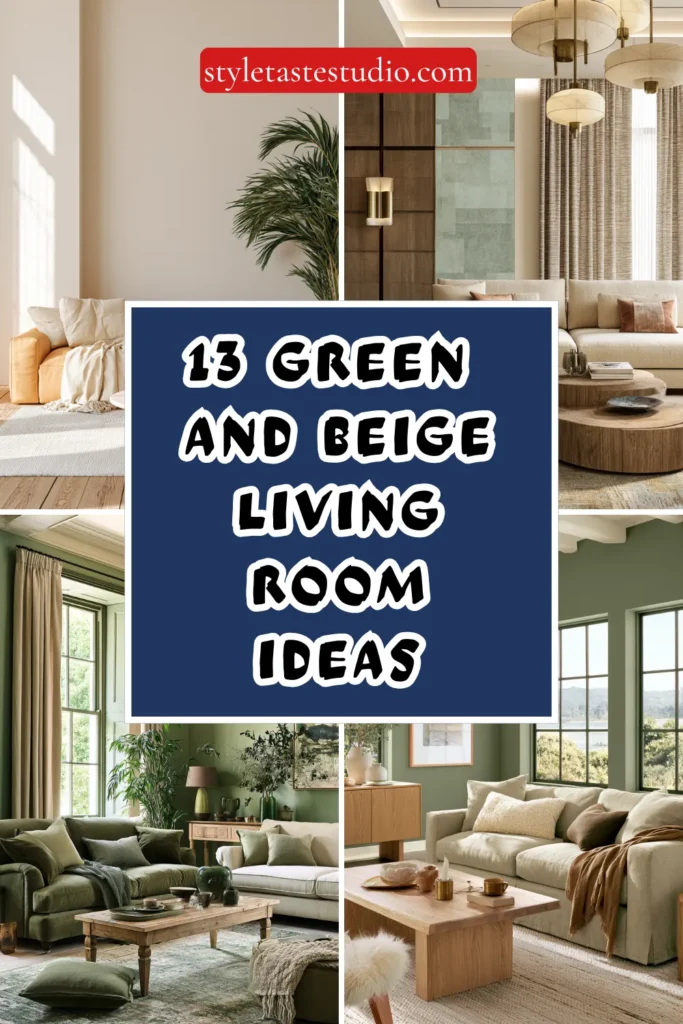
It is a palette that requires none of the dramatic commitment of a bold colour scheme and none of the clinical restraint of an all-neutral interior — it sits in the precise, generous middle ground between the two, offering warmth without intensity, colour without complexity, and the particular quality of natural harmony that the most enduringly beautiful living rooms share regardless of their style or their scale.
These thirteen ideas demonstrate how to use green and beige in a living room with the intelligence, the practical confidence, and the design clarity that allows the combination to achieve its full potential.
1. Sage Green Walls With Warm Beige Upholstery
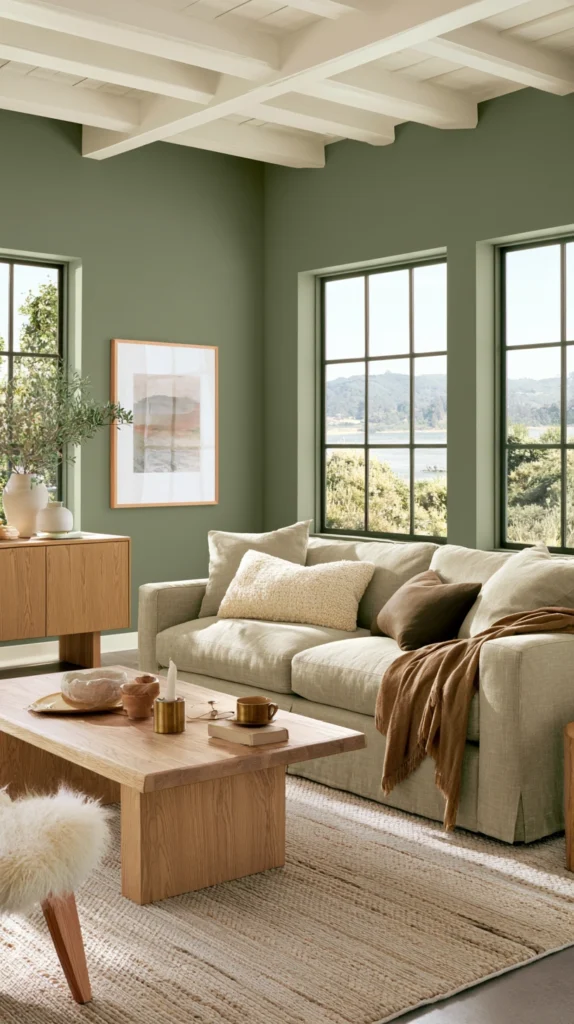
Sage green walls — the muted, slightly grey-toned green that sits between the botanical and the architectural, warm enough to feel genuinely organic and quiet enough to serve as a sophisticated backdrop rather than a dominant colour statement — combined with warm beige upholstery on the primary sofa and armchairs, create the green and beige living room in its most complete and most classically beautiful expression.
The sage wall provides the room’s colour character without overwhelming it, receding gently in bright natural light and deepening warmly in the artificial light of the evening, while the beige upholstery grounds the room in the warm neutral tone that prevents the green from reading as cool or botanical at the expense of genuine domestic comfort.
Add natural timber furniture, cream linen cushions, and warm terracotta or amber accent objects for the tonal depth that elevates the combination from simply pleasant to genuinely beautiful.
2. Olive Green Sofa on a Beige Foundation
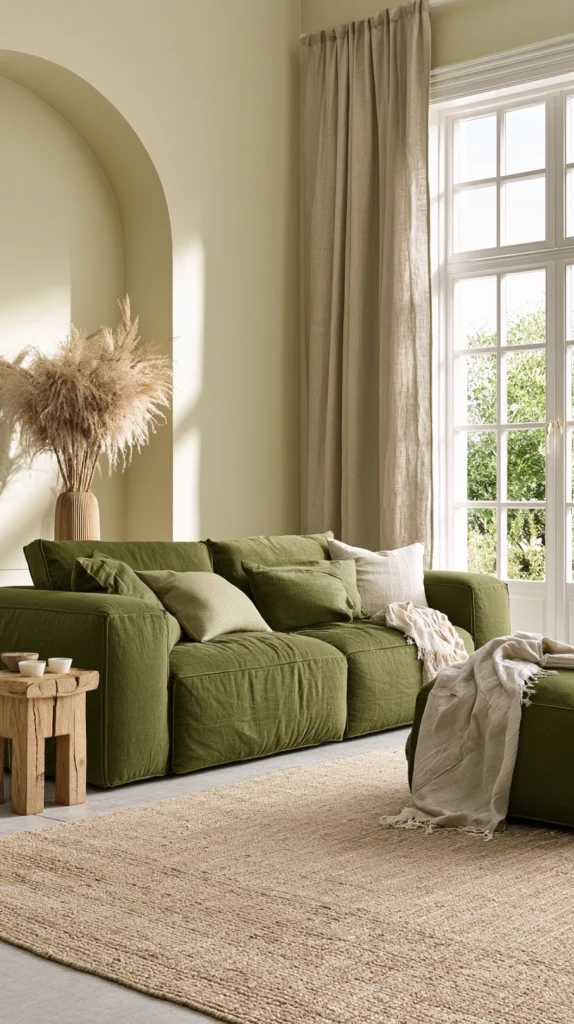
An olive green sofa — it’s warm, slightly yellow-toned green connecting the living room’s botanical palette to the earth tones of the beige foundation — positioned on a beige or warm natural fibre rug, against warm white or pale beige walls, creates the green and beige living room that is most immediately achievable and most practically accessible as a design starting point.
The olive sofa is the single furniture investment that introduces the green-beige palette most decisively and most beautifully — its warm, slightly complex colour reading differently in different light conditions, shifting between a warm earthy green in direct daylight and a deeper, richer tone in artificial evening light, always in complete harmony with the beige surfaces surrounding it. Style with cushions in cream, warm white, and the particular dusty terracotta that connects both green and beige to the broader earth-tone palette most naturally.
3. Create a Tonal Layering of Multiple Beiges and Greens
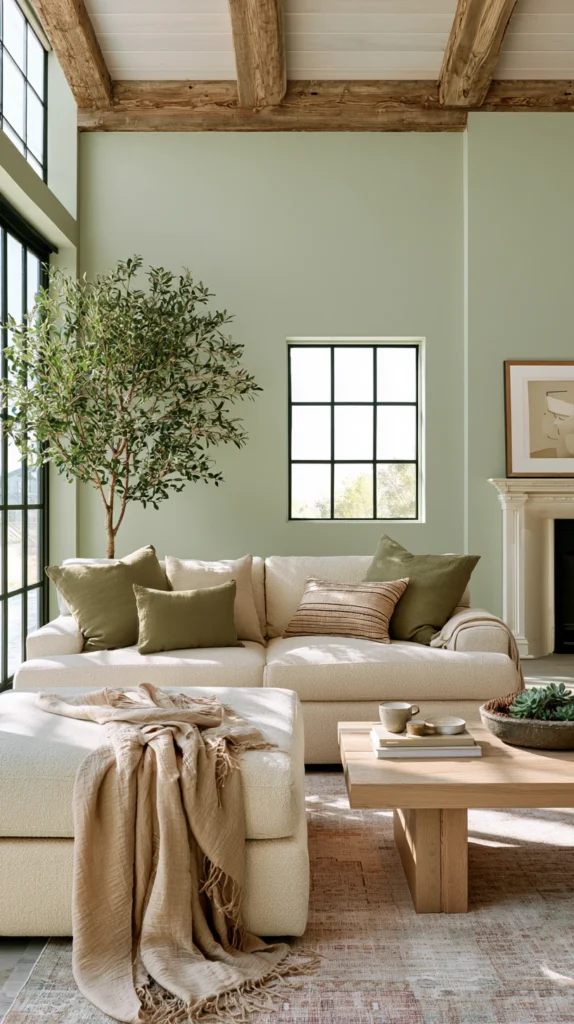
A green and beige living room that introduces multiple versions of each colour — walls in pale sage, sofa in warm oatmeal, rug in a slightly deeper warm beige, cushions in a slightly more saturated green, throw in a warm putty tone, ceramic objects in a deeper earthy green — creates the tonal richness and the genuine depth of a room that has been designed with attention to the full tonal range of its palette rather than simply combining one green and one beige and stopping there.
The multi-tonal approach references the way both colours actually appear in nature — beige as sand, as stone, as dried grass, as aged timber, as sun-bleached linen in a continuous range of warm neutral variation, green as leaf, as moss, as sage brush, as dried herb in an equally continuous botanical range — and the living room that captures this natural tonal variety creates an environment of genuine organic richness.
4. Use Forest Green as a Single Accent Wall
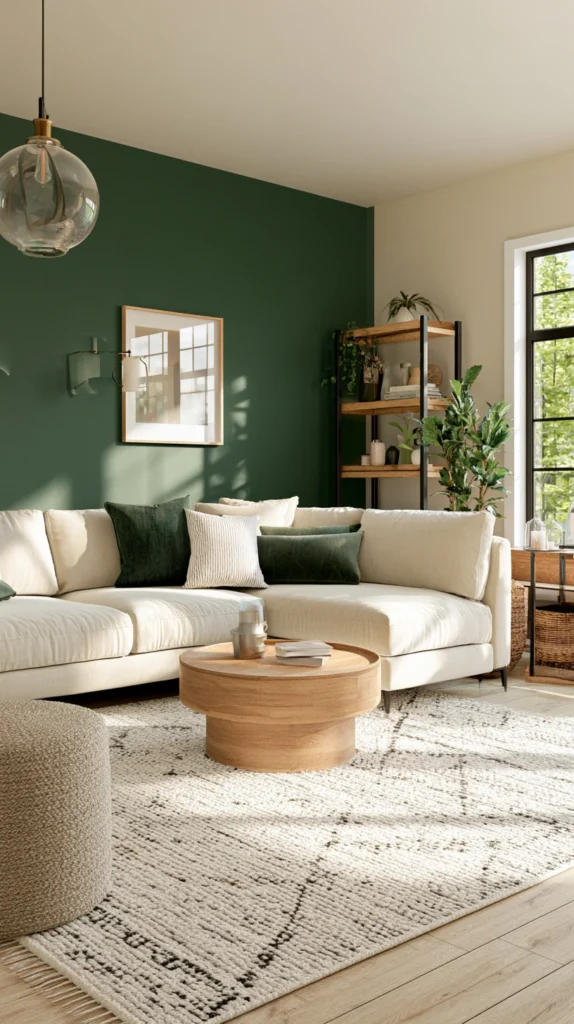
A single wall painted in a deeper, more saturated forest green — while the remaining walls stay in a warm beige or warm white — creates the green and beige living room’s most immediately dramatic and most architecturally considered iteration, the deep green accent wall providing the visual depth and the colour presence that more uniform palette applications cannot deliver with the same sense of spatial definition and compositional authority.
The forest green accent wall works best on the primary sightline wall — the wall opposite the room’s main entry point, or the wall behind the primary sofa — where its depth of colour creates a natural focal point that organises the room’s furniture arrangement and its visual composition around it. Keep the remaining walls in a warm beige with a slight green undertone rather than a stark white, which creates a more coherent colour relationship between the accent wall and the surrounding surfaces.
5. Introduce Green Through Planting and Beige Through Natural Materials
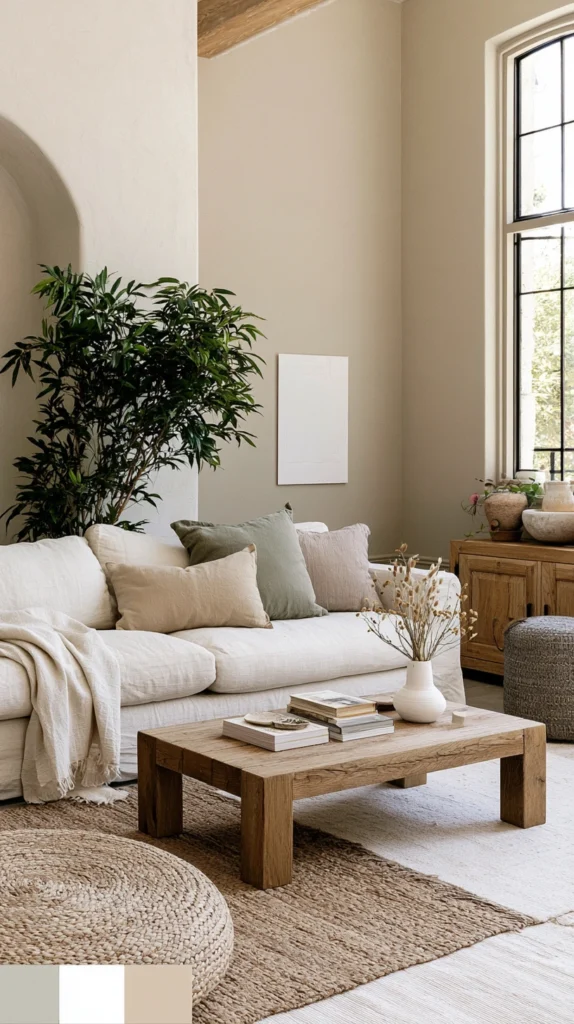
The green and beige living room that introduces its green component entirely through living plants and its beige component entirely through natural materials — linen upholstery, jute rugs, timber furniture, rattan accessories, unbleached cotton throws — creates the most genuinely organic and most authentically natural version of the palette, one whose colour relationship exists entirely within the material world rather than in applied paint or manufactured textile colour.
This approach produces a living room of extraordinary material honesty and genuine natural warmth — every green surface alive and organic, every beige surface warm and tactile, the combination of the two creating the quality of a natural landscape brought into the interior with complete fidelity to the materials that landscape is actually made of.
6. Choose a Green and Beige Patterned Rug as the Starting Point
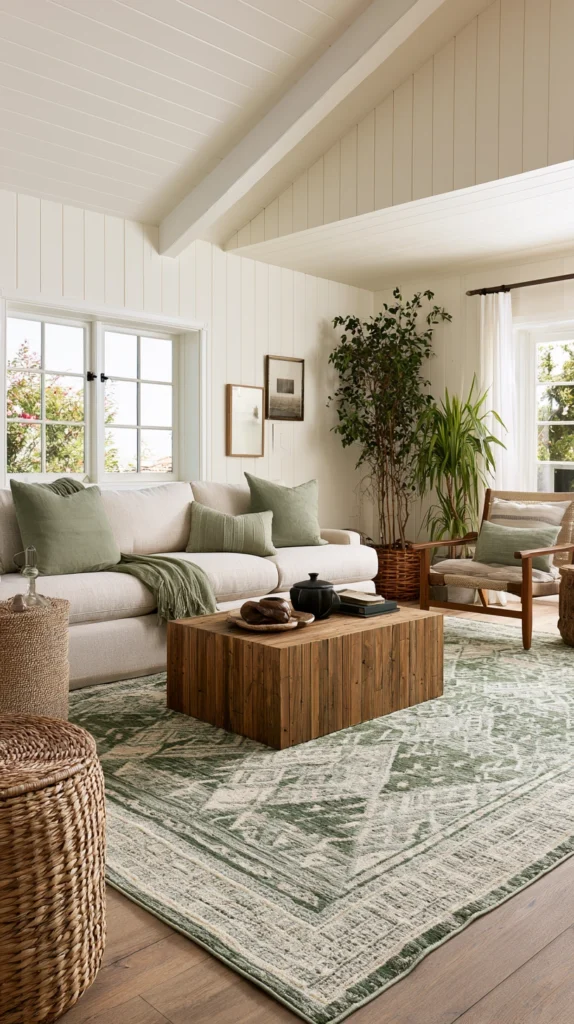
A rug whose pattern combines green and beige in a composition of genuine quality and genuine visual interest — a vintage Persian or Turkish kilim with warm green and beige in its traditional geometric pattern, a contemporary abstract combining sage and warm sand, a botanical print in leaf greens on a cream ground.
Placed at the living room’s centre establishes the palette’s specific tones and their proportional relationship from the floor upward, creating the most coherent and most naturally harmonious green-beige living room by allowing a single well-chosen object to make the palette’s foundational decisions.
Pull the rug’s specific green onto the walls or a single upholstered piece, its specific beige into the primary neutral surfaces, and allow the rug’s pattern to act as the room’s visual anchor and colour reference throughout the design process.
7. Layer Linen and Velvet Textures in Complementary Tones
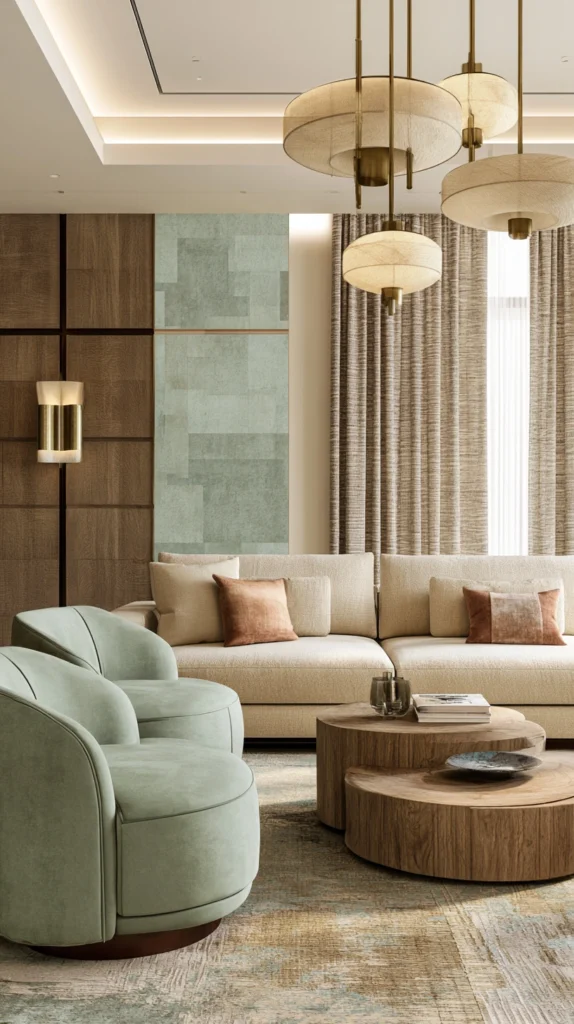
A green and beige living room that combines the textural contrast of linen and velvet — a linen sofa in warm beige beside a velvet armchair in soft sage green, or velvet cushions in forest green against a linen sofa in warm oatmeal — creates a palette that is experienced as much through the tactile quality of its surfaces as through their colour, the contrast between linen’s flat, honest weave and velvet’s deep pile creating a visual richness and a sensory warmth that single-texture rooms cannot achieve with the same completeness.
The linen and velvet combination also provides a practical tonal balance — the linen’s lighter, more reflective surface maintains the room’s luminosity while the velvet’s light-absorbing pile creates the depth and the visual weight that prevents the green-beige palette from reading as simply pale.
8. Use Botanical Wallpaper to Combine Both Colours
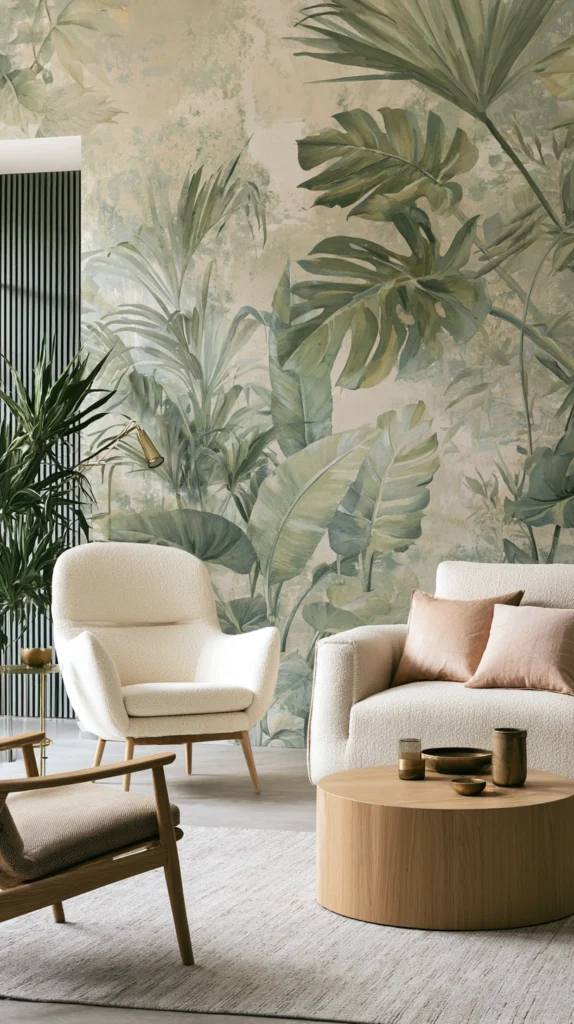
A botanical wallpaper — its leaf, branch, or plant forms in varying greens on a warm beige or cream ground — applied to one wall of the living room introduces the green and beige palette simultaneously through a single decorative decision, its botanical imagery connecting the colour combination to its natural reference with a directness and a visual richness that paint or plain textile cannot achieve with the same specificity or the same sense of genuine landscape connection.
Choose a botanical print whose scale suits the wall’s dimensions — large-scale prints on generous walls, smaller repeat patterns in more intimate spaces — and pull the print’s specific tones into the room’s upholstery, accessories, and secondary surfaces for the design coherence that transforms a wallpapered feature wall into the foundation of a genuinely unified palette.
9. Add Warm Brass and Natural Timber as Connecting Materials
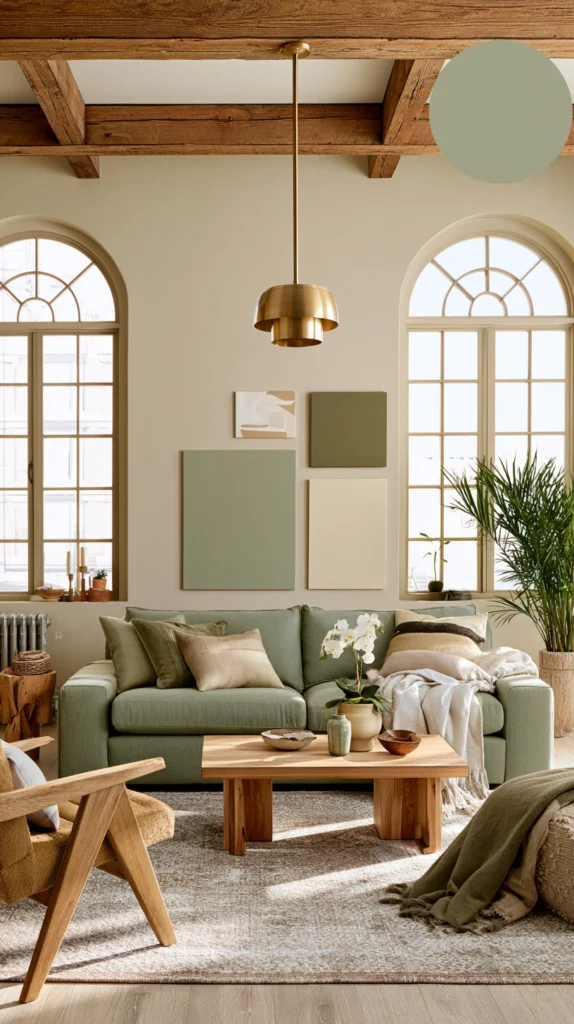
The green and beige living room that introduces warm brass hardware and natural timber furniture as its primary material elements creates the most complete and internally coherent version of the palette.
the warmth of the brass connecting to the beige’s earth-tone foundation, the natural grain and honey tone of the timber connecting to both the beige and the green simultaneously, the combination of metal and wood providing the material warmth and the honest craft quality that the botanical palette of green and beige most naturally and most beautifully complements.
Warm brass in lamp bases, picture frames, and small hardware details. Natural timber in the coffee table, the side tables, and the bookshelf. These material decisions cost no more than their alternatives and deliver a quality of warmth and coherence that the green-beige palette specifically rewards.
10. Create a Calm Monochromatic Green Room With Beige as Relief
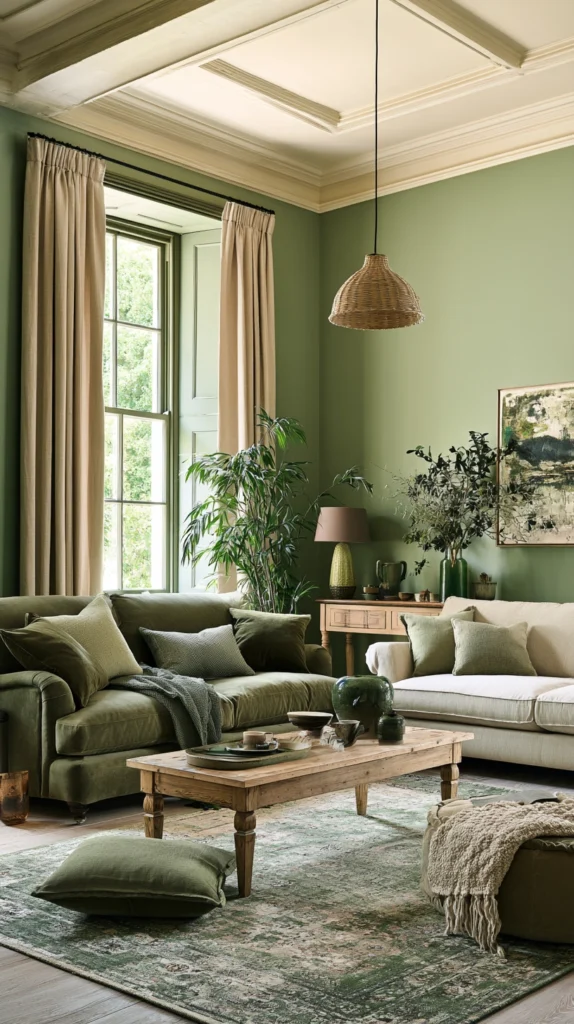
A living room decorated almost entirely in varying tones of green — from the palest barely-there aqua-green on the walls through the mid-toned sage of the upholstery to the deeper olive of the rug and the forest green of the cushions.
With beige introduced as a relief colour in the linen curtains, the natural fibre rug, and the cream painted ceiling, creates the most immersive and most botanically complete version of the green and beige combination, one whose primary experience is the richness and the depth of the green palette and whose beige functions as the necessary breathing space rather than as an equal partner.
The monochromatic green room with beige relief requires confidence in the palette and willingness to commit to the colour depth — the pale sage living room with beige accents is a tentative version of this idea, the multi-toned green room with beige relief is the fully realised one.
11. Design a Scandi-Inspired Green and Beige Scheme
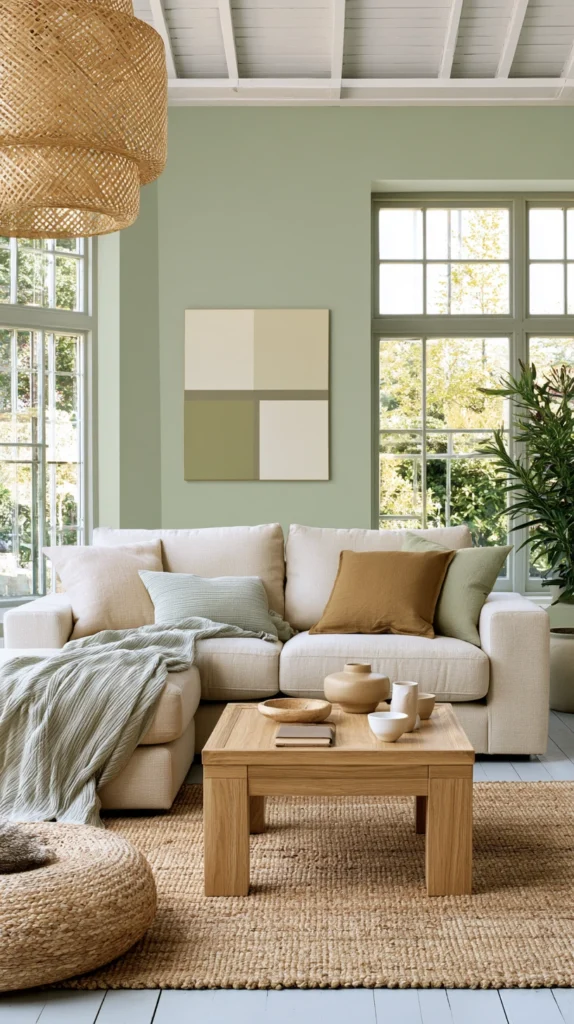
A Scandinavian-inspired green and beige living room — its palette in the pale, slightly cool versions of both colours that the Nordic design tradition characteristically employs, its furniture in clean-lined natural timber with simple profiles, its textiles in plain-woven natural fibres without pattern, and its overall atmosphere one of calm, ordered, functional beauty — creates the green and beige combination of greatest spatial serenity and greatest design clarity.
The Scandi interpretation uses green and beige at their most desaturated and most light-filled — a barely-there sage on white-washed walls, a warm natural linen on simple furniture, a pale jute rug on a light timber floor — creating a living room of extraordinary quietness and genuine Scandinavian restraint that makes the green-beige palette feel modern, considered, and completely of the moment.
12. Mix Patterns in the Same Green and Beige Palette
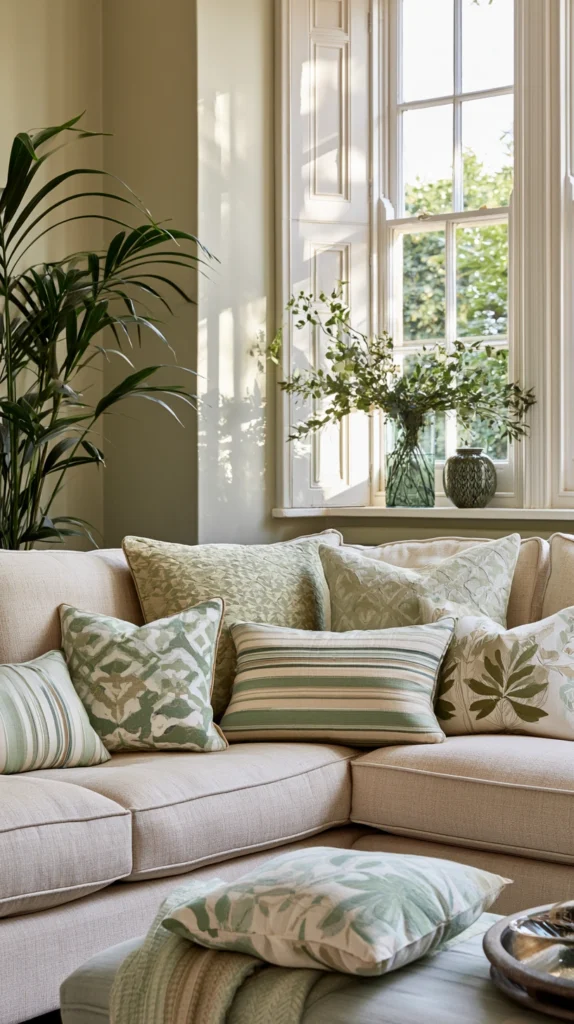
A living room that combines multiple patterns — a green and beige geometric cushion cover beside a botanical print throw, a striped rug in sage and cream beneath a plain sage sofa, a small floral pattern in green and beige on one armchair against plain-painted walls in a complementary tone.
It creates the most visually complex and most personally characterful version of the green and beige living room, its pattern mixing communicating a quality of collected, evolved interior design that single-pattern or pattern-free rooms cannot replicate with the same sense of genuine individual personality.
The key to successful pattern mixing within the green and beige palette is colour consistency — every pattern must use the same specific greens and the same specific beiges, so the tonal coherence of the palette holds the visual variety of the patterns together rather than allowing them to read as competing rather than complementary.
13. Keep It Simple With One Green Plant and One Beige Sofa
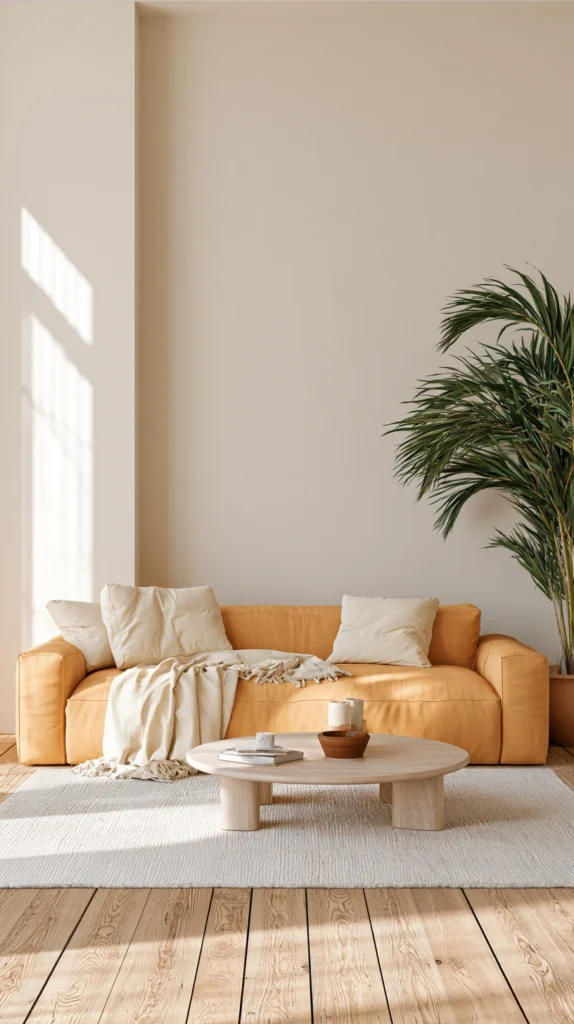
The most immediately achievable and most practically accessible green and beige living room begins and ends with two elements — one significant green plant in a simple ceramic pot positioned in the room’s best-lit corner, and one quality sofa in a warm beige or natural linen upholstery — and the discipline to allow this simple, honest combination to be the room’s entire colour and botanical statement rather than adding further elements in the hope that more will be more.
The single large plant and the beige sofa is the green and beige palette in its most essential and most honest form — the green alive, organic, and genuinely botanical, the beige warm, genuine, and materially honest — and the living room that starts here, with these two elements executed with genuine quality and genuine conviction, is already more beautiful than the living room that begins with a more complex palette and executes it with less.
Final Thoughts: Designing the Green and Beige Living Room With Honesty
The green and beige living room that achieves its full potential is the one designed with honest attention to the specific quality of each colour chosen — the warmth or coolness of the green, the richness or paleness of the beige, and the proportional relationship between the two that creates the balance the room requires.
Start with the natural materials — the linen, the timber, the jute, the living plant — and allow their inherent tones to establish the palette’s beige foundation before introducing the green in paint, upholstery, or textile.
Build the combination slowly, test each addition against the existing palette in the actual room light, and resist the impulse to add more once the balance feels genuinely right. The green and beige living room at its best requires very little — just the right tones, the right materials, and the confidence to stop when the room is complete.