15 Blue and Green Living Room Ideas
Blue and green is the colour combination that nature perfected long before interior designers discovered it — the specific pairing that appears in every landscape, every seascape, and every garden with such consistency and such beauty that the human eye has evolved to find it genuinely restful, genuinely harmonious, and genuinely restorative in a way that no purely constructed colour combination can quite replicate.
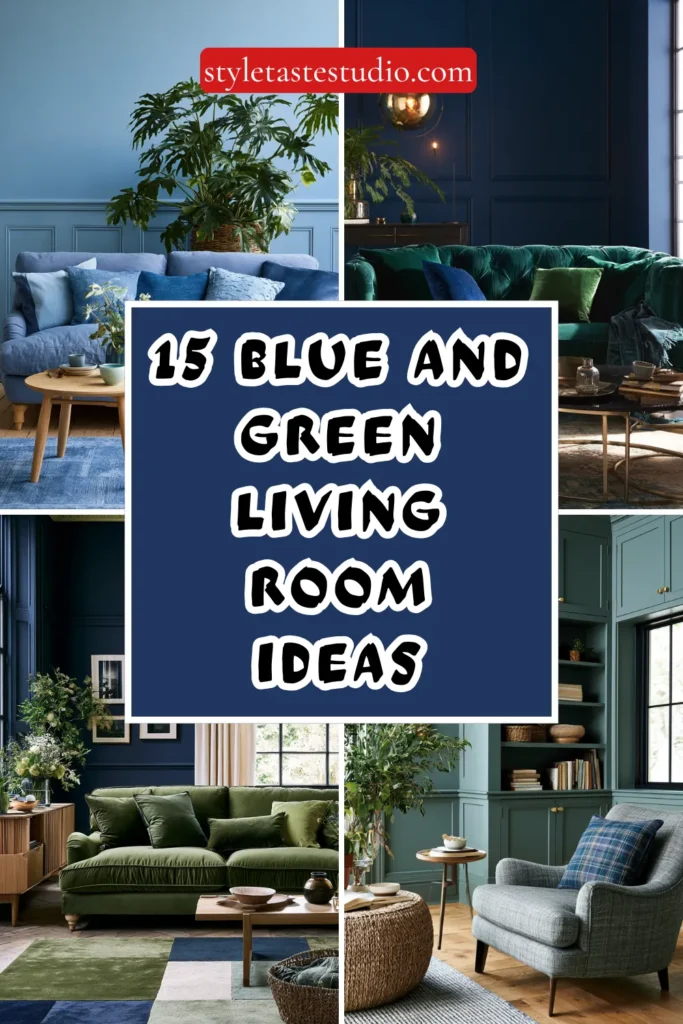
It is the palette of the ocean meeting the shore, of the forest canopy above a river, of the sky reflected in a meadow pool — and in a living room, it creates the specific quality of calm, natural, organic beauty that makes a space feel simultaneously sophisticated and deeply comfortable.
The blue and green living room is not a trend — it is a colour relationship of permanent validity and permanent appeal that works across every design style, every room proportion, and every quality of natural light. These fifteen ideas demonstrate exactly how to use it with intelligence and with confidence.
1. Pair Navy Walls With Forest Green Soft Furnishings
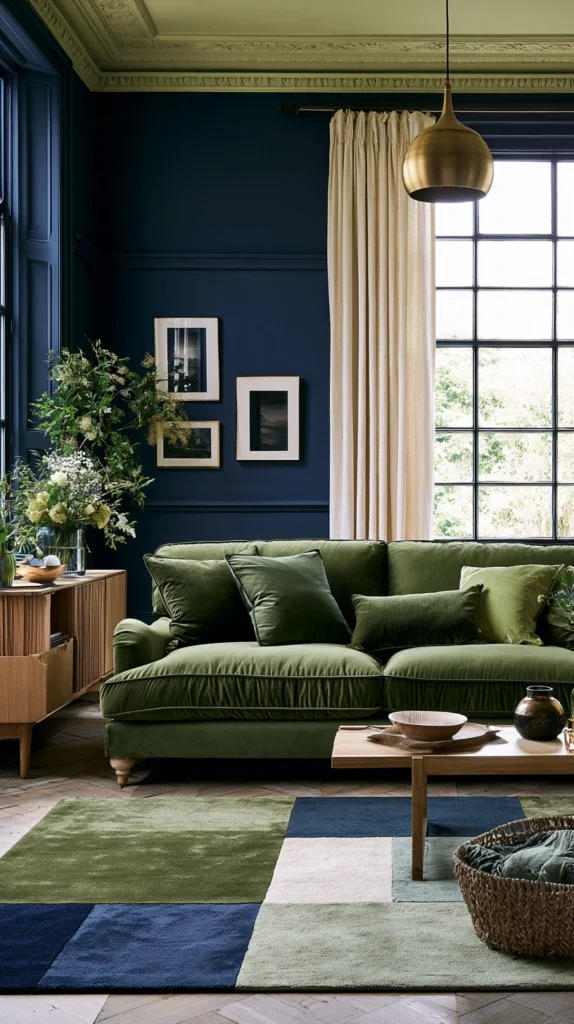
Navy walls — deep, saturated, slightly warm in their blue undertone — combined with forest green soft furnishings create the most dramatically beautiful and most completely considered expression of the blue-green pairing in a living room context. The depth of the navy wall provides the room’s architectural backdrop of considerable presence, while the forest green of the sofa, the cushions, and the throws introduce the organic, botanical quality that lifts the dark palette from simply moody to genuinely rich and genuinely alive.
Add warm brass hardware, natural timber furniture, and cream or warm white ceiling and trim to prevent the dark palette from feeling heavy, and the navy and forest green living room is the colour combination of greatest sophistication and greatest atmospheric quality available to the blue-green palette.
2. Use Sage Green Walls With Soft Blue Accents
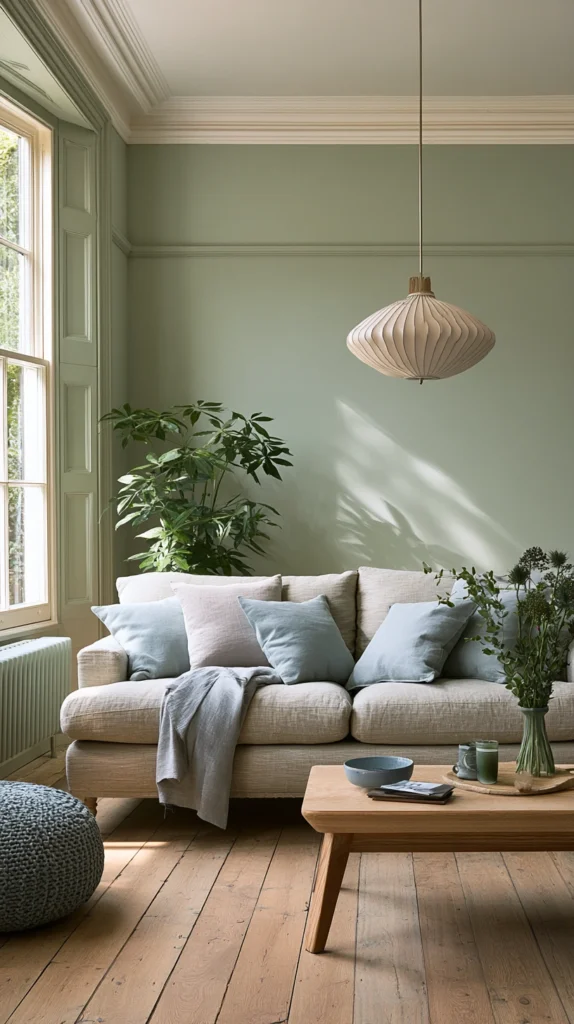
Sage green walls — the muted, slightly grey-toned green that sits between the botanical and the architectural, warm enough to feel genuinely organic and cool enough to feel genuinely refined — with soft blue accent pieces create the living room palette of greatest versatility and greatest consistent beauty in the blue-green family.
The sage wall reads as simultaneously a neutral and a colour — providing the warmth and the botanical quality of green without the intensity that saturated greens introduce, creating a backdrop against which the soft blue of cushions, throws, and ceramic objects reads as a natural complement rather than a deliberate colour statement.
This is the blue-green combination that suits the widest range of furniture colours, the widest range of natural light conditions, and the widest range of design aesthetics from contemporary minimalist to relaxed traditional.
3. Layer Teal as a Bridge Between Blue and Green
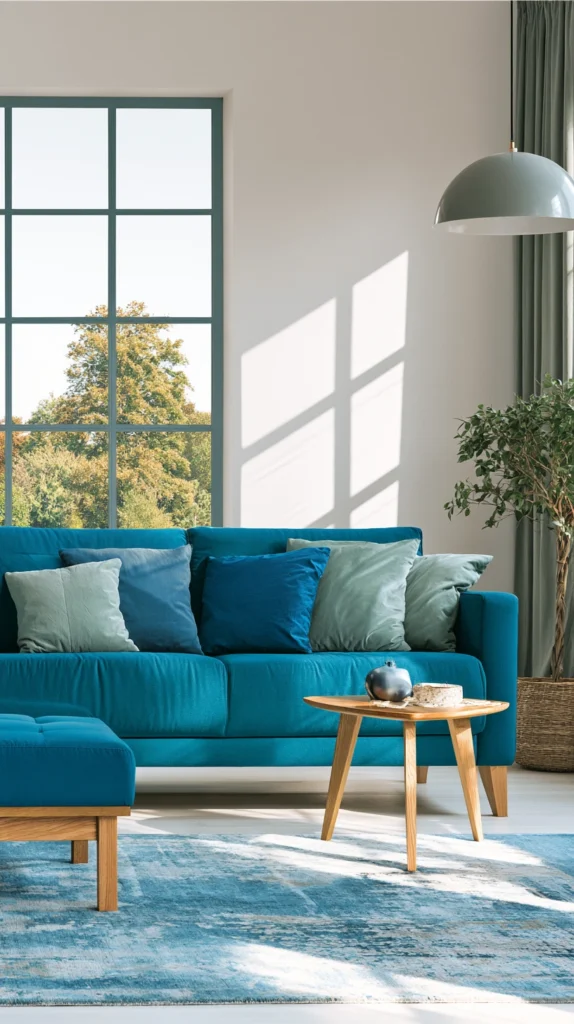
Teal — the specific colour that sits precisely at the midpoint between blue and green, combining the depth and the visual authority of both without being definitively either — is the living room colour that most elegantly resolves the question of how to use blue and green together by choosing the point of their meeting and making it the room’s primary colour statement.
A teal sofa in a room of warm white walls, natural timber floors, and accessories in both the bluer and the greener ends of the teal’s component colours creates a living room of genuine harmony and genuine design confidence — the teal providing the colour statement, the surrounding warm neutrals providing the context, and the blue and green accents providing the tonal depth that makes the combination feel genuinely layered rather than simply coloured.
4. Use Botanical Prints to Introduce Both Colours Simultaneously
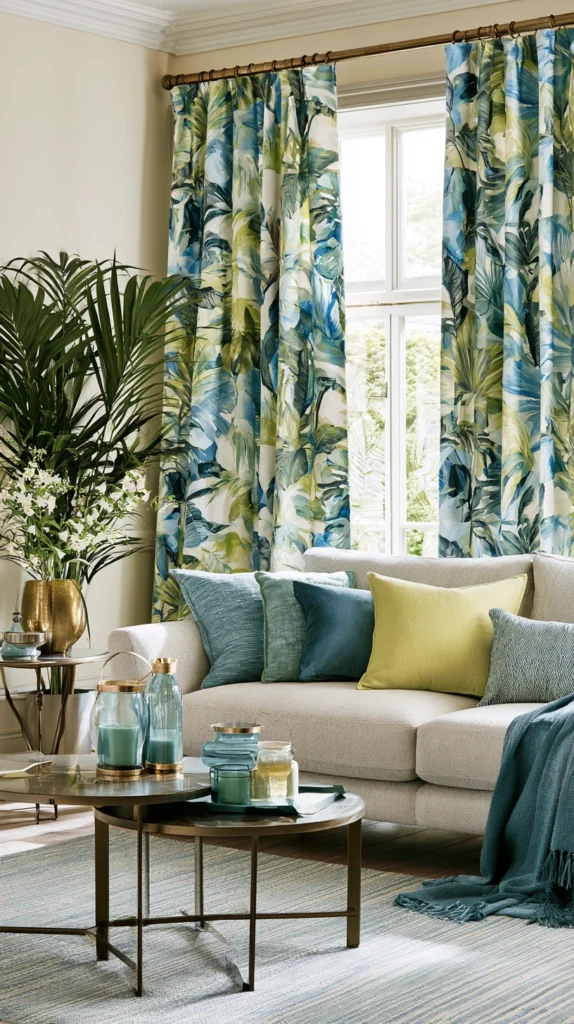
A large botanical print — overblown leaves in varying greens on a blue-ground fabric, or tropical botanicals in a palette that combines both colours within its natural plant references — used as curtain fabric, upholstery, or a statement cushion cover introduces the blue-green palette into the living room through a single design decision that establishes the room’s colour language simultaneously in both tones without requiring separate decisions for each colour’s introduction.
The botanical print reference is particularly effective in the blue-green living room because it connects the colour combination to its natural origin — the specific quality of blue sky through green foliage that makes the pairing feel genuinely restful at a physiological level rather than simply aesthetically pleasing. Pull the print’s specific blue and specific green into the surrounding room through paint, textile, and accessory choices in those exact tones for the most coherent result.
5. Try Dusty Blue Walls With Olive Green Accents
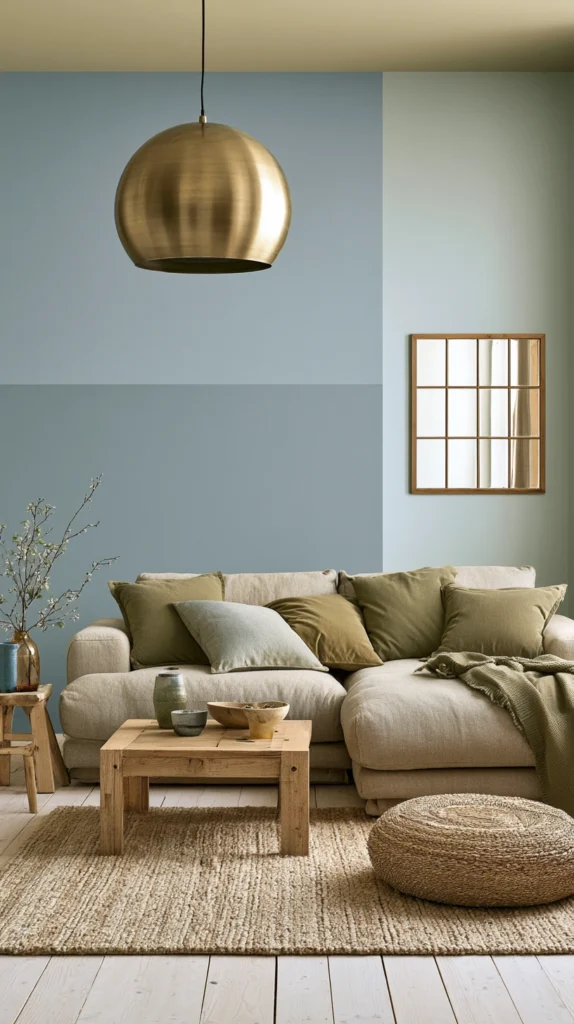
Dusty blue walls — the blue that has been slightly greyed, slightly desaturated, slightly warmed toward the quality of a sky seen through morning mist rather than the clarity of a summer midday — combined with olive green accents, create the living room palette of greatest earthiness and greatest historical resonance in the blue-green family.
The dusty blue and olive combination references the colour language of the Arts and Crafts movement, the Scandinavian painted interior tradition, and the particular quality of aged, faded colour that makes historic interiors so consistently beautiful — the palette of things that were once more saturated and have been improved by time and light into something subtler and more beautiful. Use the olive in throws, in ceramic objects, and in the occasional larger textile piece, like a rug or a cushion collection.
6. Create a Jewel-Toned Living Room in Emerald and Sapphire
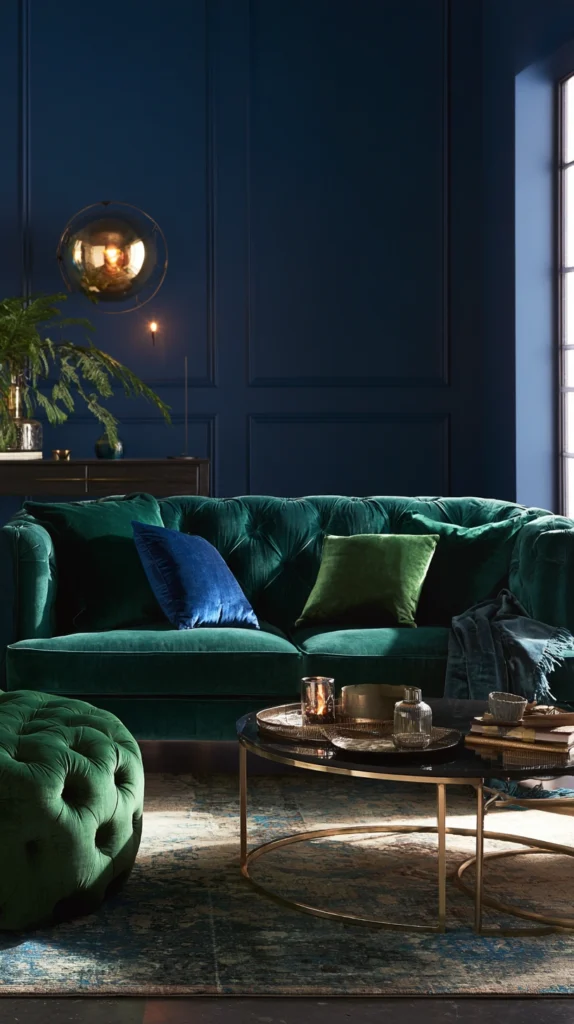
An emerald and sapphire living room — deep, saturated, genuinely jewel-toned in both its blue and its green, the colours used at full saturation rather than in their muted or dusty versions — creates the living room of greatest drama, greatest luxury, and greatest visual confidence available to the blue-green palette.
The jewel-toned approach requires commitment and requires the surrounding surfaces — ceiling, floor, and the architectural woodwork — to be specified with careful attention to the palette’s depth so that the room reads as rich rather than overwhelming. Aged brass hardware, velvet upholstery, and natural timber floors in warm amber tones are the supporting material decisions that allow the jewel tones to read as luxurious rather than simply dark.
7. Use Blue and Green in a Coastal Palette
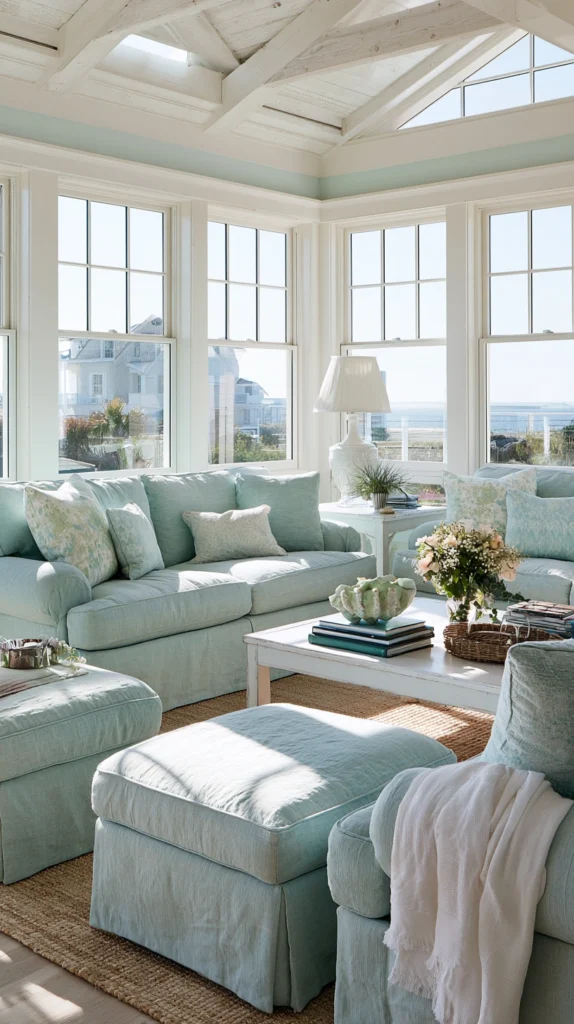
A coastal blue-green palette — the specific combination of washed-out seafoam, faded denim, bleached sage, and the warm sandy neutrals of a beach landscape that has been in the sun for a long time — creates the living room that feels most immediately and most completely connected to the seaside aesthetic that blue and green most naturally and most popularly references.
The coastal palette works because its colours are deliberately desaturated — the blue and the green both pushed toward white, toward sand, and toward the quality of natural colour that wind and salt and strong light produce in coastal environments — creating a living room that feels genuinely light, genuinely open, and genuinely connected to the natural landscape rather than decoratively referencing it. Natural timber, rope details, linen upholstery, and the warm neutrals of bleached wood and natural fibre rugs complete the coastal blue-green living room most authentically.
8. Introduce Green Through Planting Alone
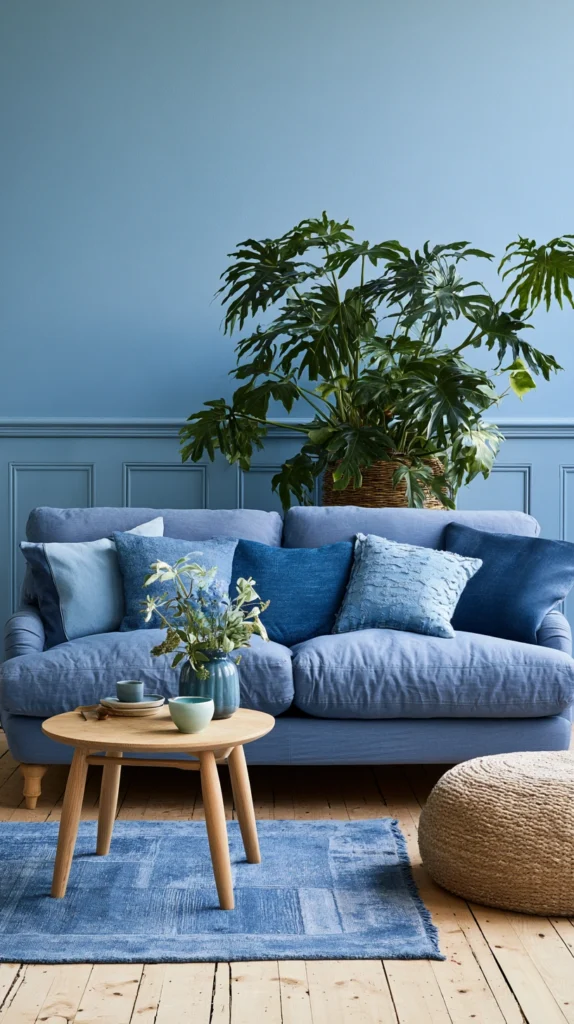
A living room whose blue-green palette introduces its green component entirely through living plants — the deep glossy green of a large monstera, the pale sage of a trailing pothos, the blue-green of an agave or a succulent collection, the bright fresh green of a fiddle-leaf fig in a corner of white wall — reserves the room’s painted and upholstered surfaces for the blue side of the palette while allowing the botanical element to carry the green’s contribution independently and organically.
The effect is a living room that reads as blue — walls in a quality blue tone, upholstery in a complementary blue-grey or teal — and then reveals its green dimension through the organic presence of the planting rather than through a second painted or textile colour, creating a colour relationship that feels entirely natural rather than deliberately constructed.
9. Layer Multiple Greens With a Single Consistent Blue
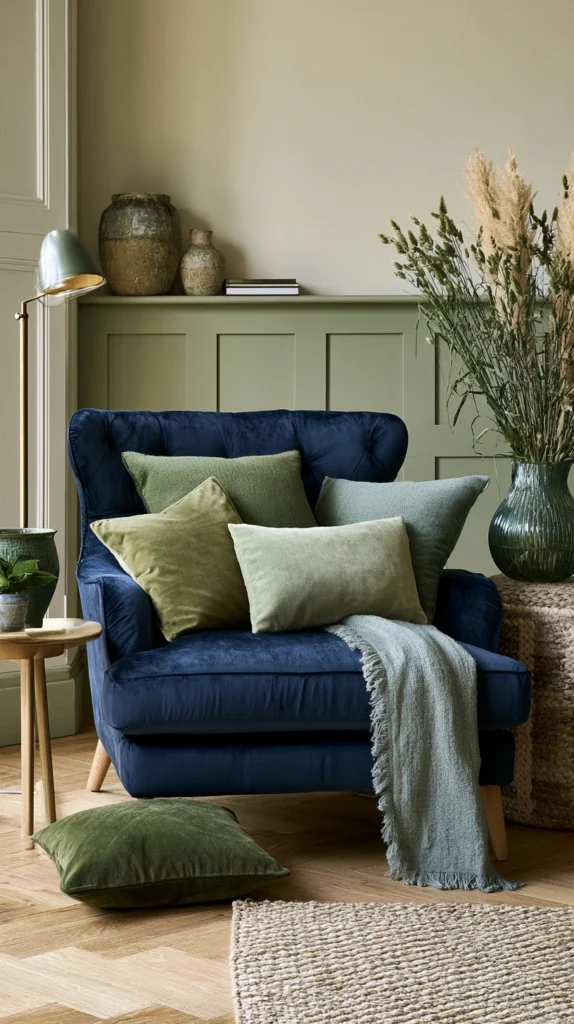
A living room that introduces multiple greens — sage, olive, forest, and the pale aqua-green that sits closest to blue — as the room’s primary palette complexity, anchored by a single consistent blue used in one or two specific elements, creates a tonal richness and a botanical abundance of colour that a two-tone blue-green combination cannot achieve with the same depth or the same sense of natural layering.
The multiple-green approach references the way green actually appears in nature — not as a single consistent colour but as an infinite range of tones, values, and temperatures that together create the quality of lush, layered botanical abundance. The single blue — a consistent navy cushion, a blue ceramic lamp, a blue-ground rug — provides the visual anchor that prevents the multiple greens from reading as unresolved.
10. Use a Blue and Green Patterned Rug as the Palette Foundation
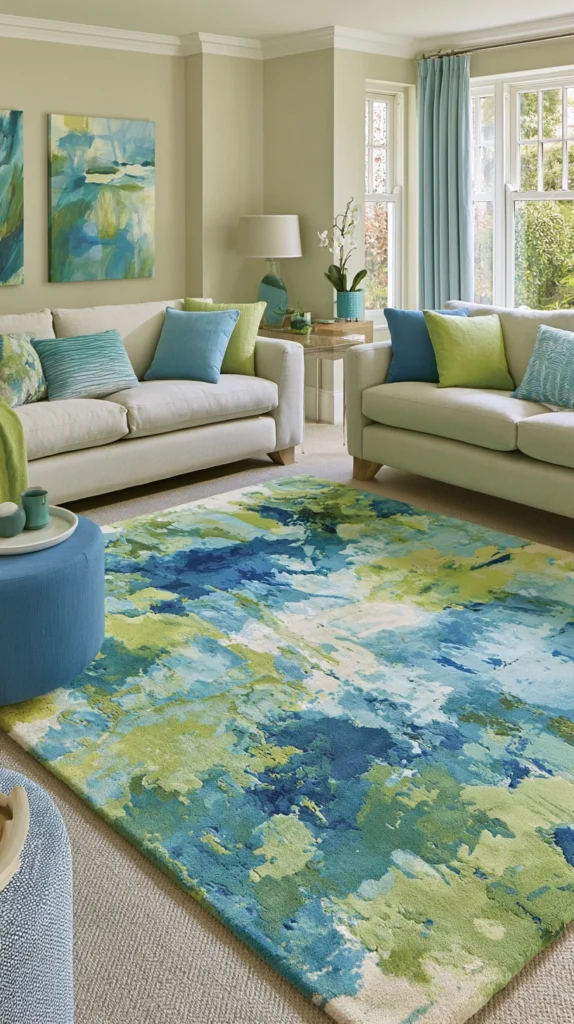
A rug whose pattern combines both blue and green in a composition of genuine visual quality — a vintage Persian or Oushak with both tones in its palette, a contemporary geometric combining navy and sage, or a traditional kilim whose warm blues and greens establish the room’s colour language from the floor upward.
It is the living room design approach that establishes the blue-green palette most organically and most coherently by beginning with the largest textile surface in the room rather than with the walls or the upholstery.
Pull the rug’s specific blue onto one wall or one upholstered surface, pull its specific green onto another, and allow the rug to act as the room’s colour arbiter — every other blue-green decision in the room made in relationship to the tones already established in the rug’s pattern rather than independently of them.
11. Combine Sky Blue and Eucalyptus Green for a Californian Feel
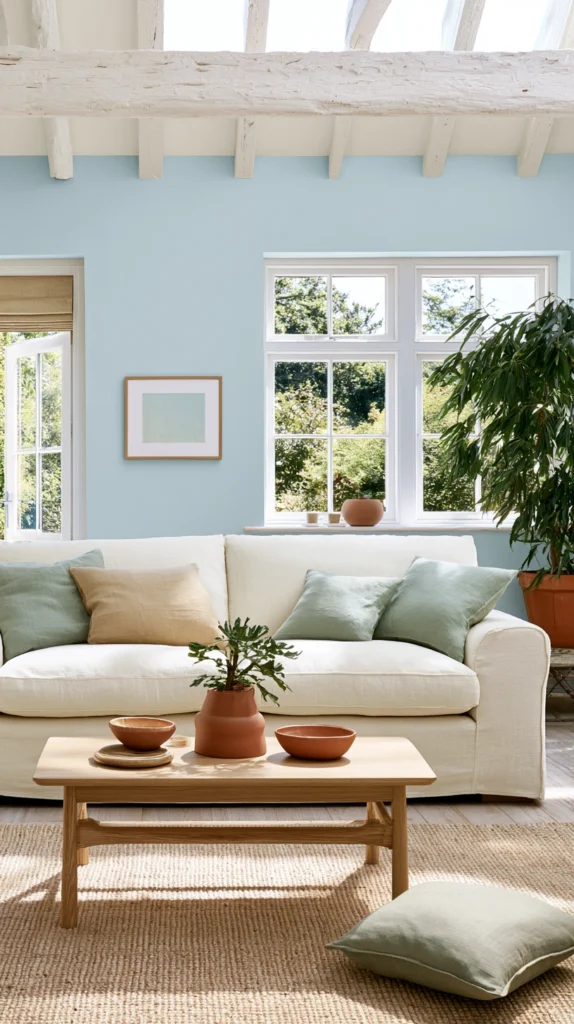
Sky blue walls — the clear, warm, genuinely light-filled blue of a cloudless California morning sky — combined with eucalyptus green in the textiles and the accessories, create the living room palette that most completely and most joyfully captures the quality of California light and the specific botanical character of the California landscape that makes the state’s interiors so consistently and so effortlessly beautiful.
The sky blue and eucalyptus combination is genuinely light — both colours are sufficiently pale and sufficiently warm to maintain the room’s luminosity rather than absorbing it — and genuinely botanical in its reference, the eucalyptus green connecting to the living landscape with the directness of a colour named for a specific, visually distinctive plant species. Use in combination with whitewashed timber, natural linen, and the warm terracotta accents that connect the California palette to its landscape most honestly.
12. Add Blue and Green Through Artwork Alone
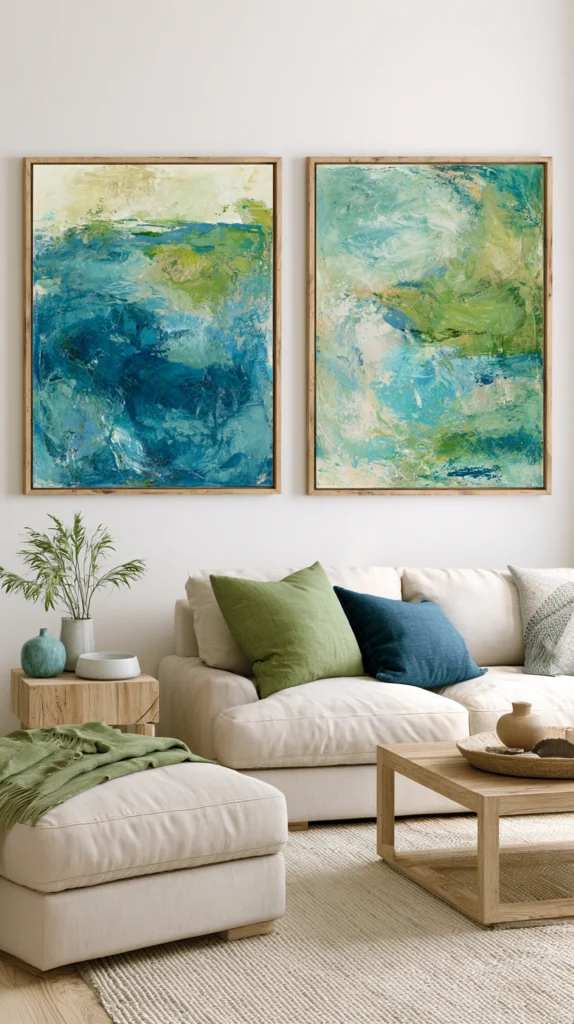
A living room whose walls, upholstery, and primary surfaces are all specified in warm, quiet neutrals — warm white walls, natural linen sofa, pale timber floor — but whose art collection introduces blue and green through a series of carefully chosen works in those tones creates the most restrained and most sophisticated version of the blue-green living room, one whose colour commitment is visible and deliberate but whose palette is contained within the framed boundaries of the artwork rather than applied to the room’s architectural or upholstered surfaces.
A large landscape painting combining blue sky and green land above the fireplace, a pair of botanical prints in complementary green tones on the adjacent wall, and a small blue ceramic sculpture on the coffee table: together, these introduce the blue-green palette as a curated collection of objects rather than as a decorative colour scheme applied to the room’s surfaces.
13. Use Dark Green Cabinetry With Blue Wall Paint
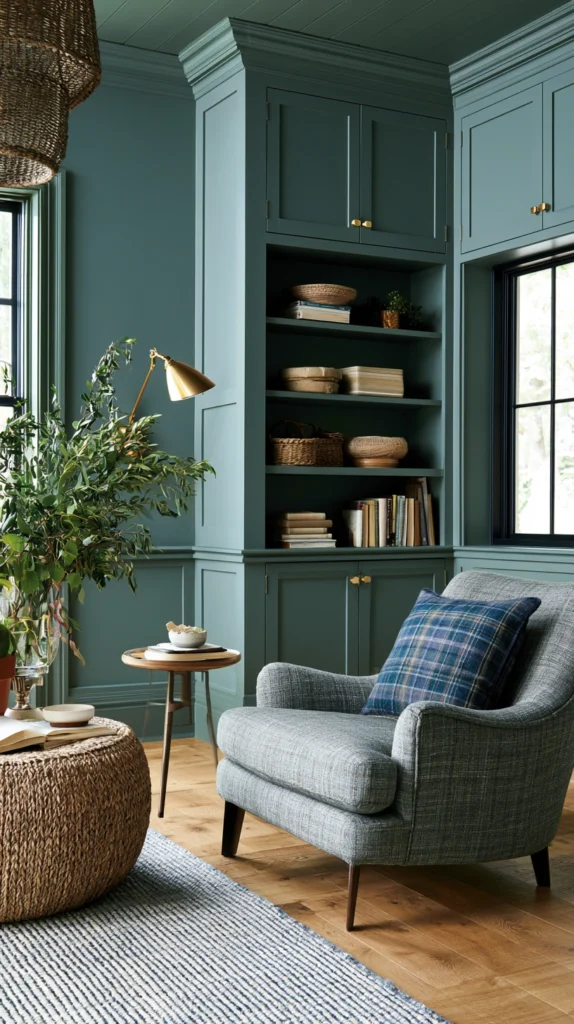
In a living room with built-in cabinetry — a library wall, an entertainment unit, a flanking pair of cupboards beside a fireplace — specifying the cabinetry in a deep, warm dark green while painting the surrounding walls in a complementary dusty or mid-toned blue creates the living room’s most deliberately architectural blue-green colour statement, the two colours occupying different surfaces and different spatial planes in a relationship that reads as designed rather than coincidental.
The dark green cabinetry reads as furniture against the blue wall, creating a colour combination that exists in the architectural dimension of the room rather than simply in the decorative layer — the surfaces themselves carry the palette rather than the objects placed upon them. Install warm brass hardware on the dark green cabinetry to connect the cool palette to the warm material tones of the timber floor and natural textile furnishings.
14. Combine Inky Blue With Tropical Green for Maximum Drama
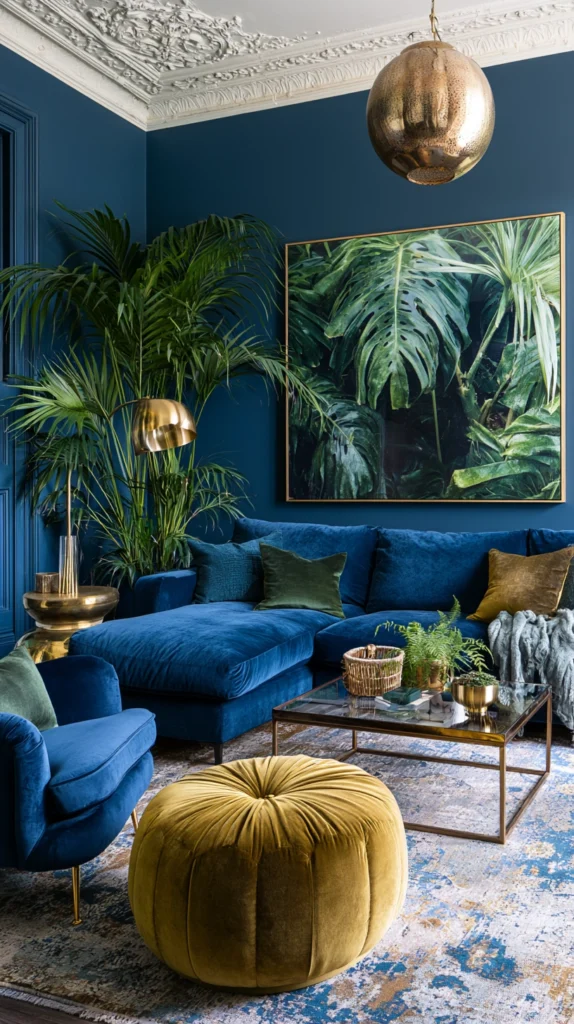
An inky blue — the specific deep, dark blue that sits at the boundary between midnight navy and charcoal, warm in its undertone, almost black in its depth — combined with tropical green in genuinely large-scale botanical prints, oversized plant forms, and the specific vivid green of large-leafed tropical plants creates the living room of maximum colour drama and maximum tropical character available to the blue-green palette.
The inky blue and tropical green combination requires scale — large furniture, high ceilings, generous windows — to prevent the depth of both colours from making the room feel enclosed rather than dramatically beautiful. Used in a room of sufficient scale, the combination creates an interior of extraordinary visual richness and genuine atmospheric power that makes the living room feel like the most extraordinary and most intensely designed space in the entire house.
15. Keep It Simple With Blue Sofa and Green Cushions
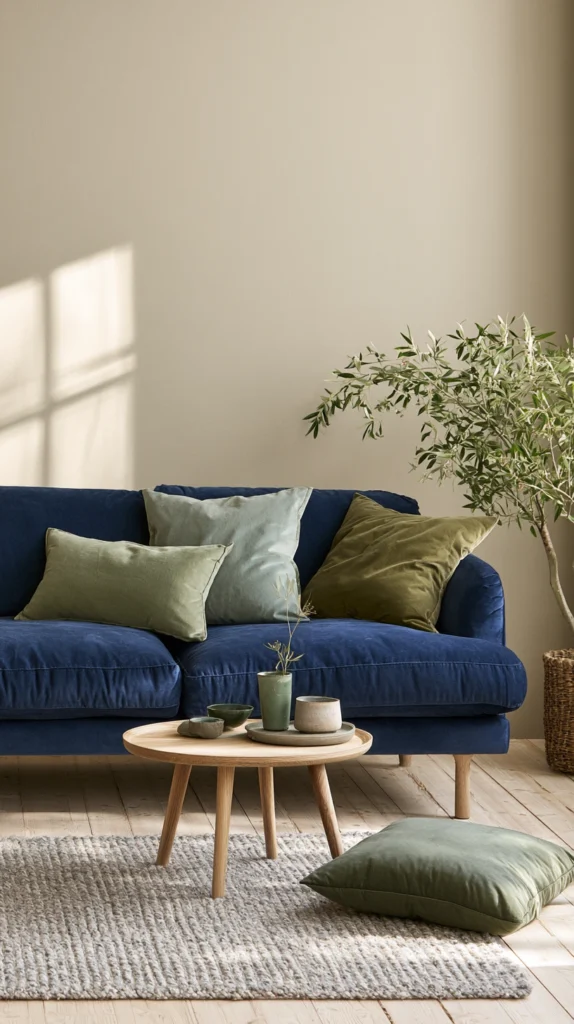
The most immediately achievable and most practically accessible blue-green living room is the one that introduces the palette through the simplest possible means — a quality sofa in a clear, confident blue, three or four cushions in complementary green tones ranging from sage to olive to forest, and the discipline to allow this simple colour relationship to be the room’s entire colour statement rather than adding further complexity.
The blue sofa and green cushion combination is the blue-green palette in its most distilled form — two colours, two surfaces, one clear relationship — and it is the version of the idea that most people can implement immediately without repainting, recovering, or replacing major elements of the existing room. The simplicity of the execution is the simplicity of the idea: blue and green belong together, and the living room that puts them together, even in the simplest possible way, is always the better for it.
Final Thoughts: Using Blue and Green With Confidence
The blue and green living room that looks genuinely considered and genuinely beautiful is the one where the specific blue and the specific green have been chosen in deliberate relationship to each other rather than independently — where the warmth or coolness of each tone, the saturation level of each colour, and the proportion of each within the room’s overall palette have been assessed together rather than sequentially.
Test paint colours and fabric samples together in the room’s actual light before committing to the combination. Allow the natural material palette of timber, stone, and linen to provide the warm neutral context that both colours need to read at their most beautiful, and commit to the combination with sufficient confidence to use it at a scale and in a quantity that the room can actually feel. The blue-green living room whispered is a missed opportunity. The blue-green living room is committed to being one of the most consistently beautiful colour experiences available to a residential interior.