
14 Farmhouse Kitchen Backsplash Ideas
The farmhouse kitchen has a design honesty that most other kitchen styles can only approximate — a directness of material, a warmth of surface, and a quality of lived-in authenticity that comes from a tradition of building and furnishing kitchens around genuine daily use rather than aesthetic aspiration.
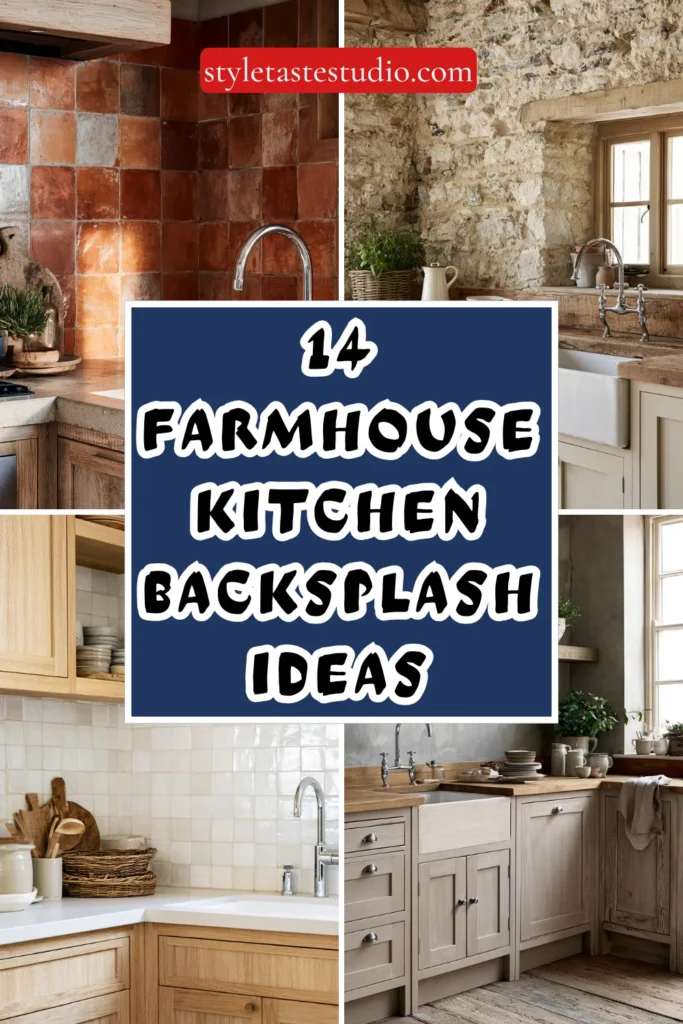
The farmhouse kitchen backsplash is the surface that most directly expresses this character — the element that sits between the workhorse countertop and the practical upper cabinets, absorbing the daily evidence of serious cooking while simultaneously communicating the warmth, the craft, and the material integrity that define the farmhouse aesthetic at its most genuine and most beautiful.
The backsplash in a farmhouse kitchen should look as though it belongs there — as though it was always the correct choice for this specific room in this specific house, as natural and as inevitable as the aged timber floor or the Belfast sink. These fourteen ideas demonstrate exactly how to achieve that quality.
1. Classic White Subway Tile With Dark Grout
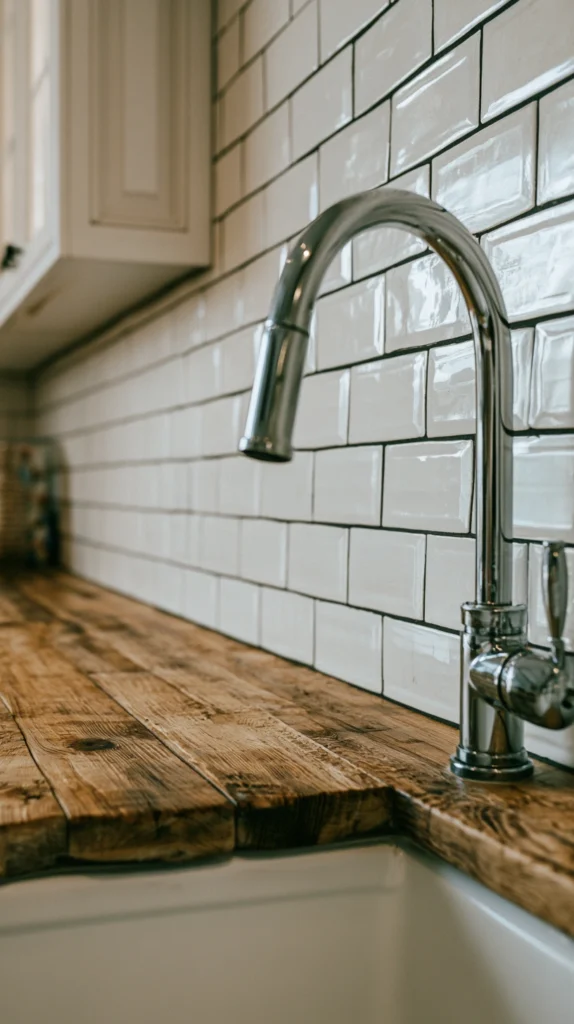
The white subway tile is the farmhouse backsplash’s foundational reference — the ceramic rectangle that has lined the walls of working kitchens since the early twentieth century and that carries its association with honest, practical, beautifully simple kitchen design so completely and so authentically that no amount of trend cycling has diminished its authority in a farmhouse context.
The dark grout specification — charcoal, slate, or the deep warm grey that sits between the two — is the contemporary update that transforms the subway tile from a default choice to a deliberate one, the grid pattern of dark lines between white tiles creating a graphic, confident surface of genuine visual presence rather than the recessive, self-effacing quality of the standard white-on-white grout installation. Install in the classic brick bond rather than a stacked pattern, extend to the full height between counter and upper cabinet, and the white subway tile with dark grout is the farmhouse backsplash that earns its position with complete authority.
2. Handmade Ceramic Tile in Warm White
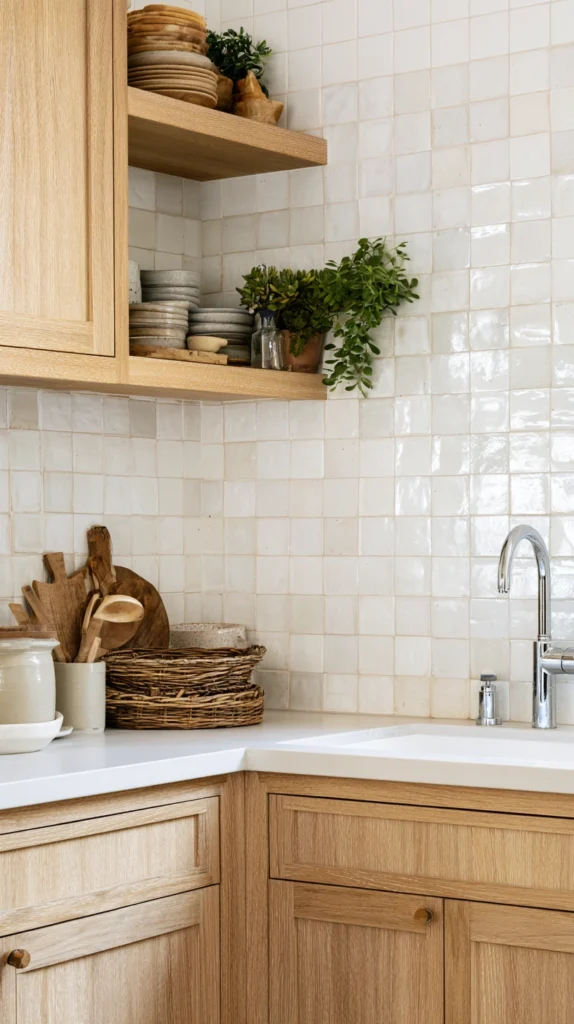
A handmade ceramic tile — its surface slightly irregular, its glaze applied by hand with the characteristic variation of colour and texture that the hand-dipping process produces, its edges gently rounded rather than factory-sharp — in warm white or the faintest ivory creates the farmhouse backsplash that most completely and most beautifully captures the craft tradition the aesthetic honours.
The handmade quality is visible and tactile in a way that mass-produced tile cannot replicate, regardless of its quality — the slight variation between adjacent tiles, the small imperfections in the glaze surface, the evidence of the making process in every piece — and it gives the farmhouse kitchen backsplash the authenticity and the warmth of genuine craft rather than the simulation of it. Install with a warm putty grout in slightly wider joints than a standard tile installation to allow each tile’s individual character to read clearly.
3. Reclaimed Brick Slips
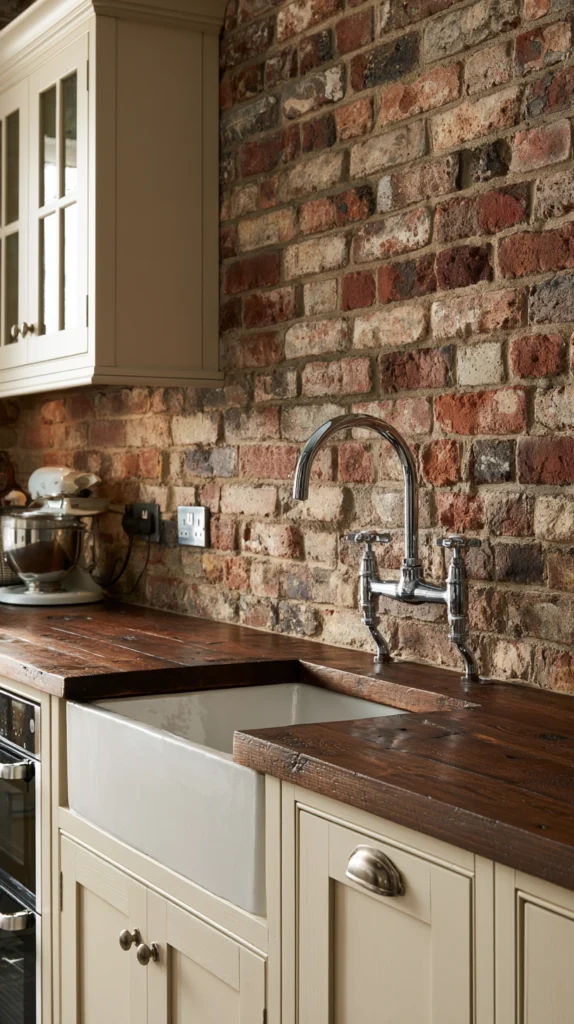
Thin brick slips cut from genuine reclaimed brick — their colour varying from warm amber to dusty rose to deep terracotta in the characteristic range of aged brick that has been fired, weathered, and patinated over decades of previous use — create the farmhouse kitchen backsplash of greatest material authenticity and greatest architectural character, connecting the kitchen space to the building tradition of the farmhouse itself with a directness and an honesty that no manufactured material can replicate.
The reclaimed brick backsplash suits the farmhouse kitchen’s most traditional expressions — alongside cream Aga ranges, painted timber cabinetry, and Belfast sinks — where its aged character and its warm, varied colour palette read as genuinely original to the building rather than as a decorative addition to it. Seal properly with a food-safe penetrating sealer, keep the mortar joints in a natural lime mortar tone, and allow the material’s inherent character to be the backsplash’s entire design.
4. Shiplap Timber Panelling
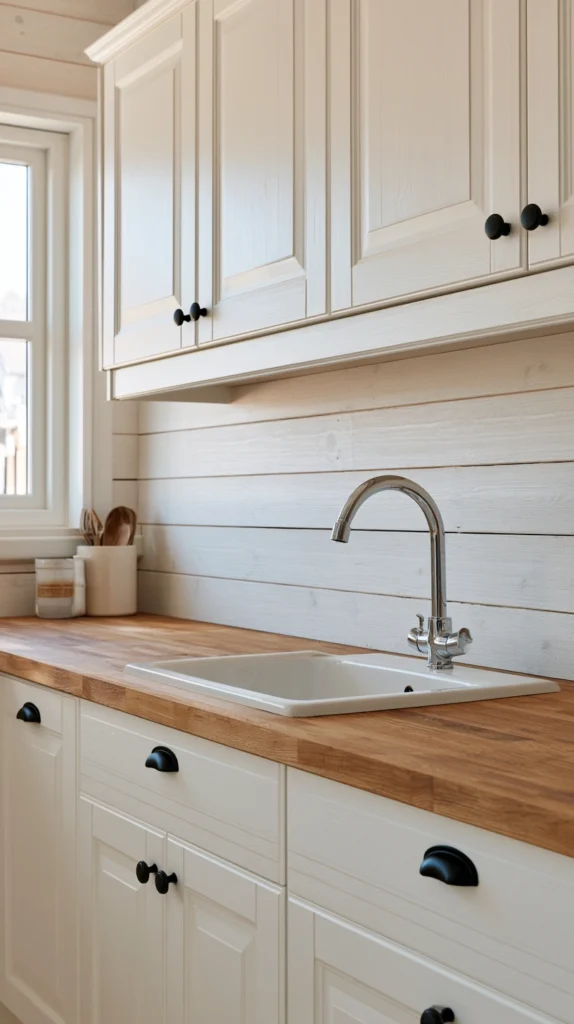
Painted timber shiplap — horizontal planks of consistent width with their characteristic shadow line reveal between each course, painted in the kitchen’s primary cabinet colour or in a complementary warm white — is the farmhouse backsplash that brings the wall panelling tradition of the American farmhouse interior into the kitchen’s most practical surface zone with a warmth and a material honesty that no tile-based alternative achieves with the same directness.
The shiplap backsplash requires proper sealing and regular maintenance in the cooking zone immediately behind the range — a food-safe paint finish of sufficient durability and a splashback of genuine tile or glass behind the hob itself are the practical requirements that make the painted timber backsplash genuinely functional as well as genuinely beautiful. Extend it from counter height to ceiling in a kitchen with sufficient ceiling height to carry the vertical expanse of panelling without the room feeling compressed.
5. Terracotta Tile in a Traditional Format
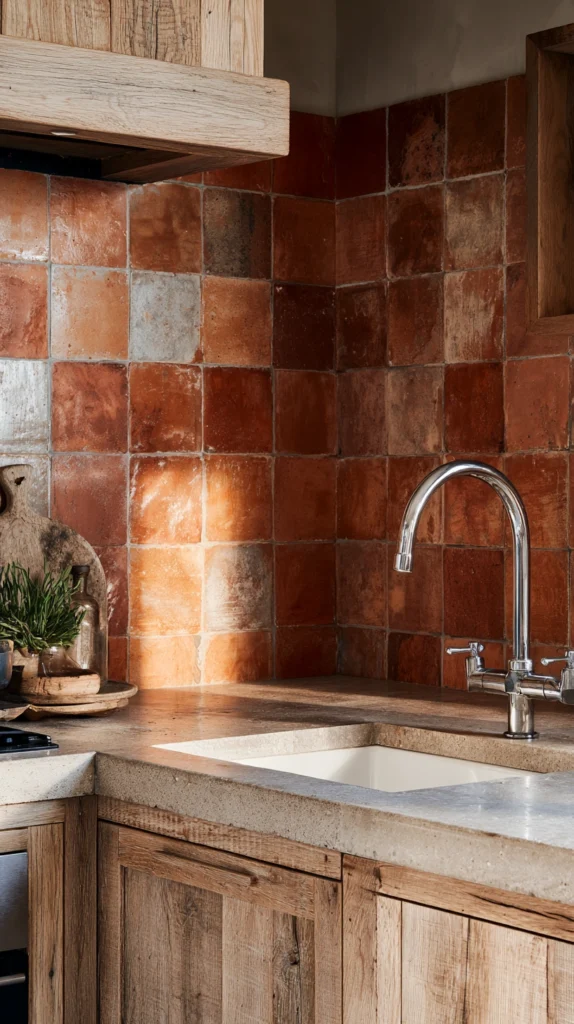
Traditional terracotta tile — hand-pressed, slightly irregular in dimension and surface, its warm fired-clay colour varying naturally between amber, rust, and the deep orange-red that characterises well-made terracotta — creates the farmhouse backsplash that connects most directly to the southern European and southwestern American farmhouse traditions where terracotta has been the kitchen surface material of choice for centuries.
The terracotta tile suits the farmhouse kitchen with a Mexican or Spanish colonial influence, particularly naturally — alongside warm timber cabinetry, rough plaster walls, and the wrought iron hardware that the aesthetic employs.
But it performs equally well in any farmhouse kitchen where the warmth of the palette and the honesty of the material language create the conditions in which terracotta’s character reads as genuinely right rather than decoratively imposed. Seal with a penetrating terracotta sealer before and after grouting to ensure practical kitchen performance without diminishing the material’s natural surface quality.
6. Beadboard Panelling in Classic White
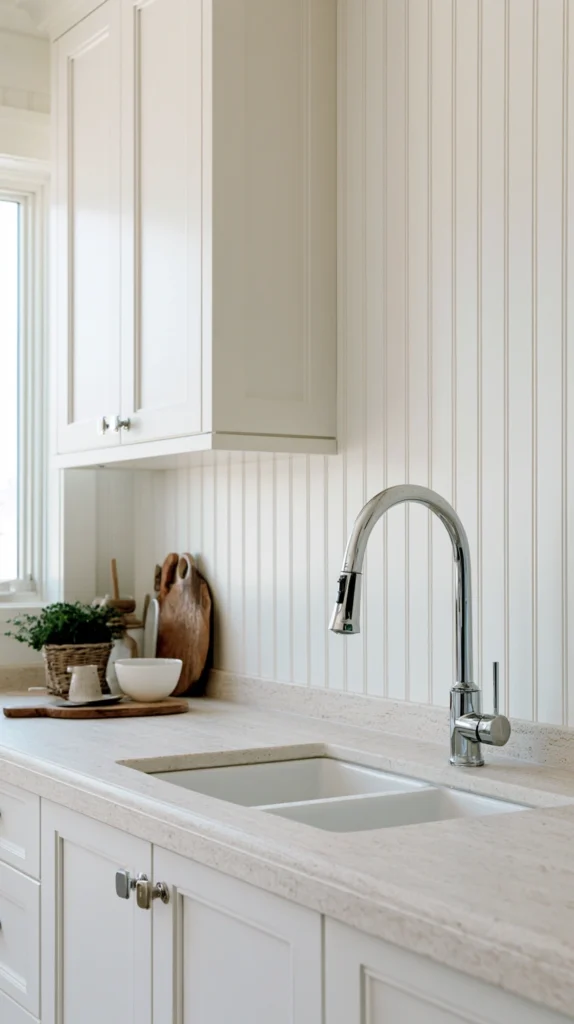
Beadboard — the narrow vertical timber panelling with its characteristic rounded bead between each plank, its association with the American vernacular building tradition, and its particular quality of gentle, domestic, slightly nostalgic charm — painted in a crisp warm white creates the farmhouse kitchen backsplash that is simultaneously the most traditionally American and the most consistently versatile of any panelling option available to the style.
The beadboard’s vertical orientation creates a subtle elongating quality on the backsplash surface, making the wall zone between counter and cabinet appear taller than a horizontal tile or panelling treatment would achieve in the same space. Use exterior grade or moisture-resistant MDF beadboard in the kitchen environment rather than standard interior timber panelling, and finish with a hard-wearing eggshell or semi-gloss paint that handles wiping and occasional splash exposure without deteriorating.
7. Zellige Tile in an Earthy Tone
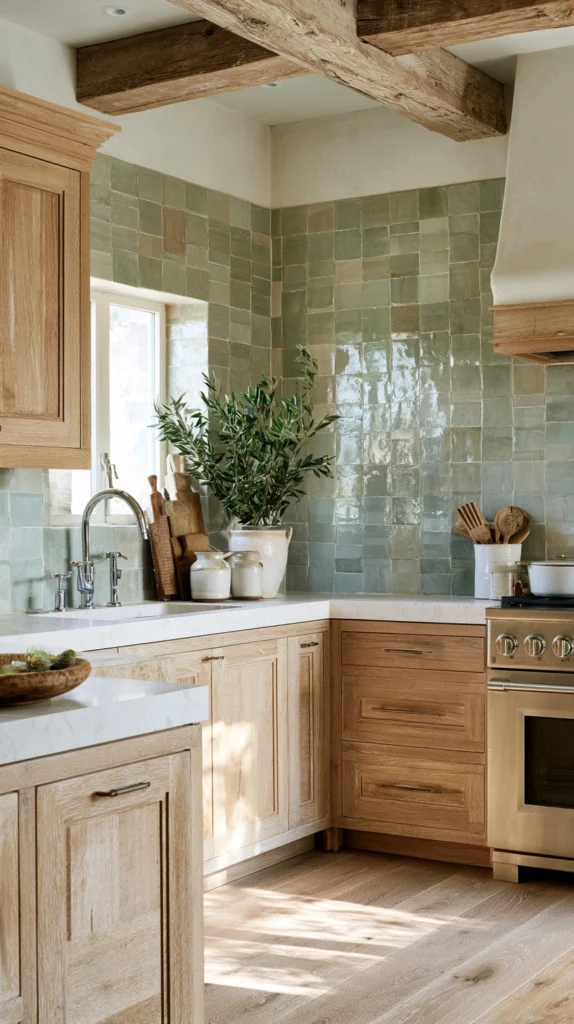
Zellige — the handmade Moroccan clay tile whose characteristic slightly irregular surface, subtle colour variation, and the particular luminosity of a hand-applied glaze on a textured base create a backsplash of extraordinary visual richness — in warm earthy tones of aged white, soft sage, or dusty terracotta connects the farmhouse kitchen to the Mediterranean craft tradition that shares the farmhouse aesthetic’s fundamental values of handcraft, material honesty, and the beauty of imperfect, genuinely made objects.
The zellige tile’s irregular surface catches kitchen light differently through the day, creating a backsplash that appears to shift in tone and texture as the light changes from morning to afternoon — a visual dynamism and material richness that flat, uniform tiles categorically cannot achieve. Install in a simple stacked or brick pattern and allow the material’s inherent complexity to be the backsplash’s entire design.
8. Painted Tongue and Groove Panelling
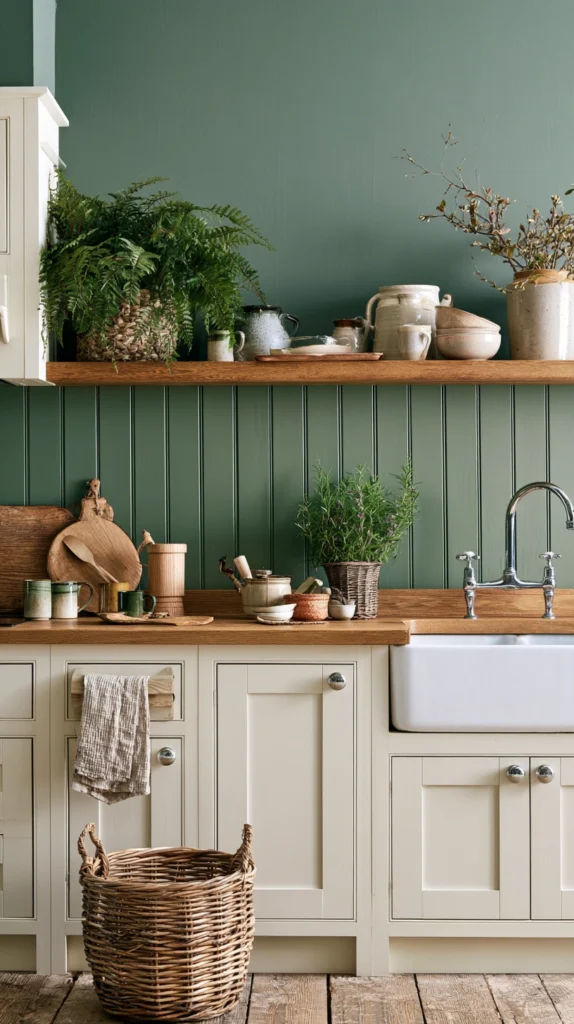
Tongue and groove timber panelling — its V-groove joint creating the characteristic linear surface texture of the traditional farmhouse interior wall treatment — applied to the kitchen backsplash zone and painted in a deep, confident colour that anchors the kitchen’s palette creates the farmhouse backsplash of greatest decorative ambition and greatest colour commitment available to a painted panelling approach.
Deep sage green, warm duck egg, faded navy, or the particular warm grey-green of traditional farmhouse paint colours: the tongue and groove backsplash in a confident colour creates a kitchen surface of genuine character and genuine beauty that connects the backsplash to the room’s overall colour story rather than treating it as a separate, neutral element between the counter and the cabinets. Seal with a durable kitchen-appropriate paint and wax or varnish the surface in the immediate cooking zone for additional moisture and grease resistance.
9. Limestone or Travertine Tile
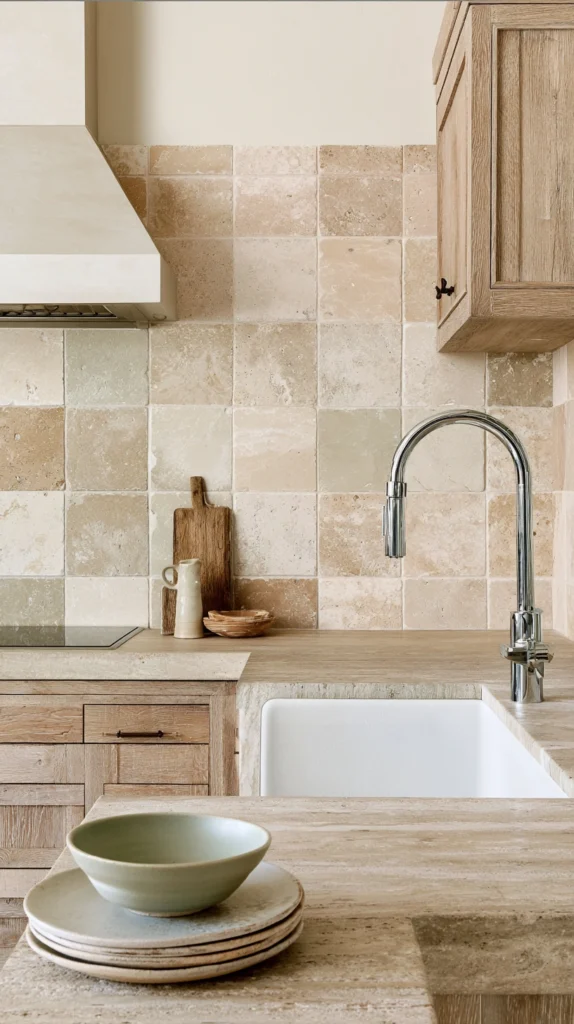
Honed limestone or travertine tile — its warm, slightly irregular natural surface, its fossil inclusions, and the particular quality of aged stone warmth that connects it to the farmhouse kitchen’s material tradition — creates a backsplash of genuine geological beauty and material sophistication that suits the more refined expressions of the farmhouse aesthetic with complete naturalness.
The limestone backsplash works particularly well in farmhouse kitchens that balance the rustic warmth of natural stone and aged timber with the slightly more considered material quality of a kitchen designed with genuine architectural intention — the stone’s natural colour variation and surface character connecting to the farmhouse tradition while its refined, honed quality elevates the overall material register of the space. Seal properly with a penetrating stone sealer rated for kitchen use and maintain with a pH-neutral stone cleaner that protects the sealer’s integrity.
10. Painted Concrete or Render Finish
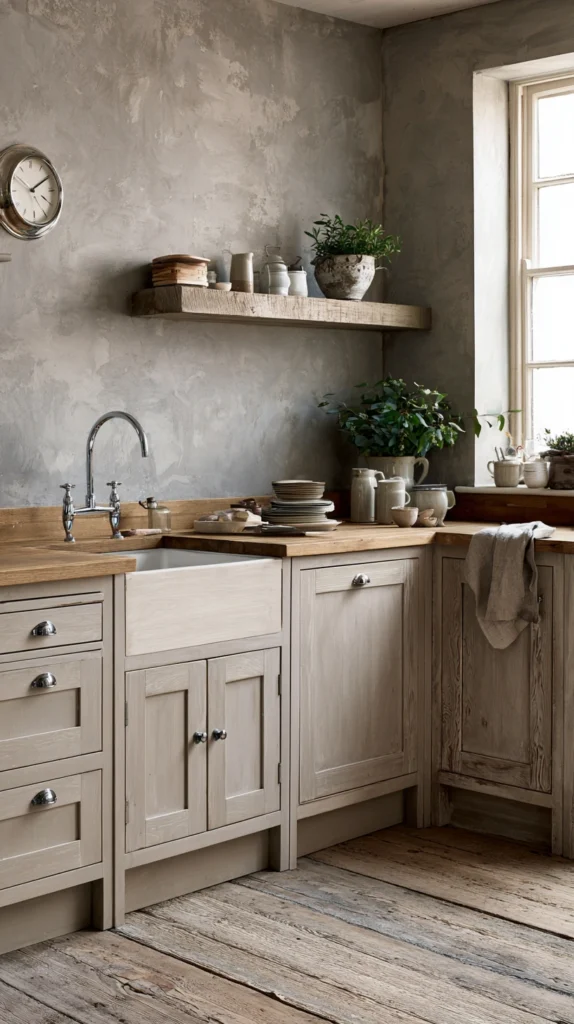
A hand-trowelled concrete or lime render finish applied directly to the backsplash wall — its slightly textured, slightly irregular surface painted or left in its natural colour — is the farmhouse backsplash that most directly references the working kitchen walls of traditional European farmhouses, where render was the standard interior wall finish and remained so through generations of continuous use and continuous repair.
The render backsplash has the quality of having always been there — its material simplicity and its visual quietness connecting to the farmhouse kitchen’s essential character of honest, unpretentious, genuinely functional design. Apply with a hand trowel rather than a mechanical applicator to preserve the characteristic slight surface variation that makes render beautiful rather than simply plain, and seal with a food-safe penetrating sealer for practical kitchen performance.
11. Moroccan-Style Encaustic Cement Tile
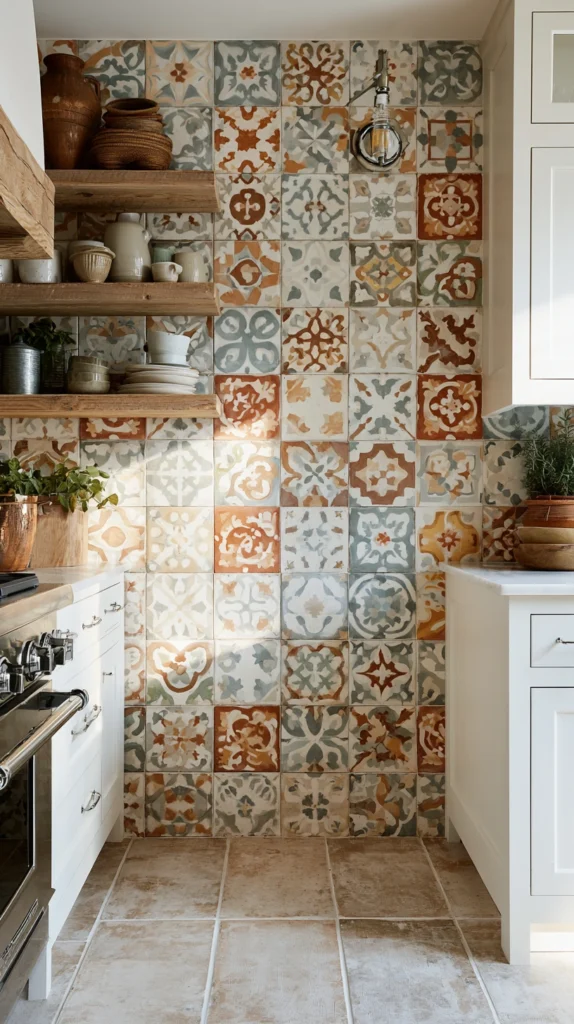
Encaustic cement tiles in the geometric patterns of the Moroccan and Spanish tile traditions — their matte, slightly absorbent surface, their rich colour variation within each tile’s pattern, and their historical association with the domestic interiors of the Mediterranean farmhouse creating a backsplash of genuine decorative richness and genuine cultural provenance — suit the farmhouse kitchen most naturally where the design references the southern European or southwestern American farmhouse traditions in its broader material and colour language.
The encaustic cement tile pattern should be chosen in a palette drawn from the kitchen’s existing colour scheme — terracotta, warm ochre, and cream for a warm-toned kitchen, sage green, dusty blue, and warm white for a cooler-palette farmhouse — and the tile’s matte surface sealed before and after installation with a penetrating sealer that protects without altering the material’s characteristic absorbed, earthy quality.
12. Exposed Stone or Flint Panel
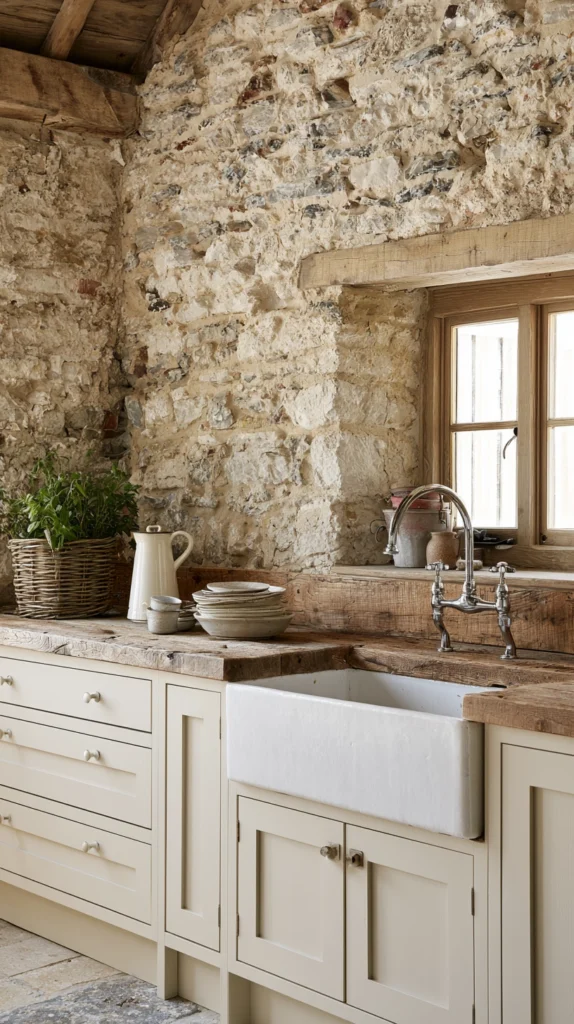
A panel of exposed natural stone — coursed limestone, random flint, or dry stone walling technique applied to the backsplash surface — brings the exterior material of the traditional farmhouse building directly into the kitchen interior with a material honesty and a regional identity that no imported or manufactured material can replicate.
The exposed stone backsplash is the farmhouse backsplash most specific to its geographical location — the flint backsplash that belongs to a Sussex or Norfolk farmhouse kitchen, the limestone panel that belongs to a Cotswold or Yorkshire one, the local sandstone that belongs to the American Midwest farmhouse — and its specificity is its greatest quality, connecting the kitchen irreversibly and beautifully to the landscape and the building tradition of its specific place.
13. Large Format Linen-Effect Porcelain
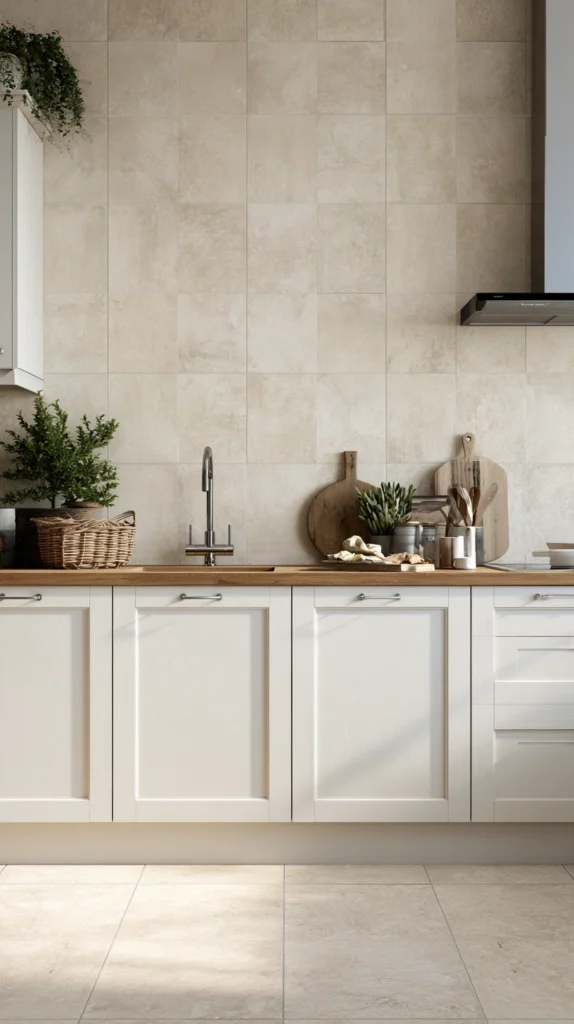
A large format porcelain tile with a linen or natural textile texture printed on its surface — its warm neutral tone and its organic surface pattern creating the impression of a natural material finish with the practical durability and the moisture resistance of a quality porcelain — is the farmhouse backsplash for the kitchen that wants the warmth and the tactile quality of a natural material without the maintenance requirements of genuine stone, timber, or terracotta.
The linen-effect porcelain suits the contemporary farmhouse kitchen most naturally — the expression of the aesthetic that combines the warmth and the material reference of the traditional farmhouse with the practical specification standards of a modern kitchen design — and its large format minimises the visible grout lines that smaller tile formats require, creating a cleaner, more continuous surface that reads as more architectural and less decorative than a small tile installation.
14. Mixed Material Mosaic in Natural Tones
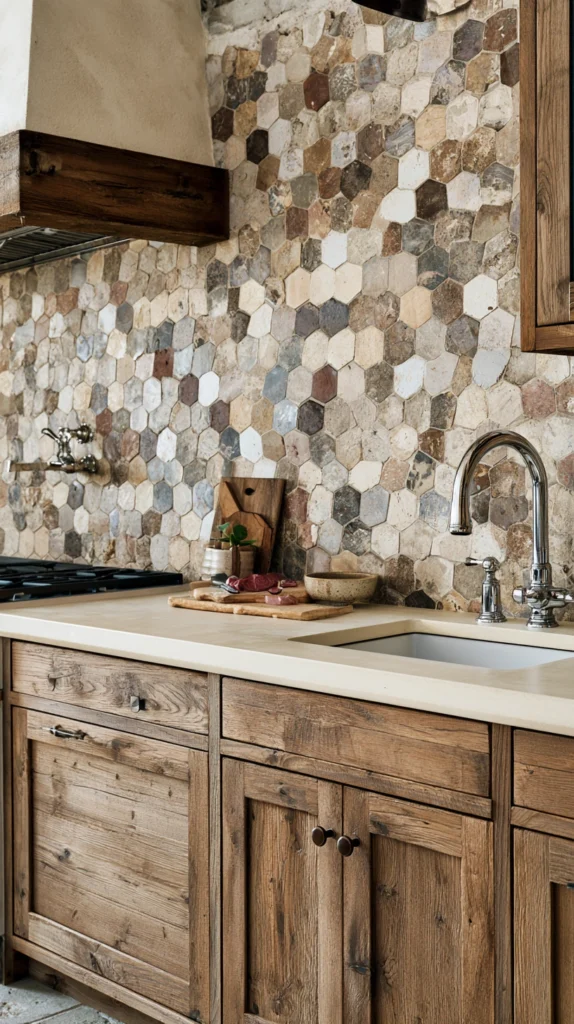
A mosaic backsplash combining natural stone, handmade ceramic, and perhaps a small quantity of natural timber or metal insert — its composition drawn from the materials present elsewhere in the kitchen, its colour palette entirely within the warm, earthy tones of the farmhouse aesthetic — creates the farmhouse backsplash of greatest material variety and greatest craft ambition, its hand-assembled composition communicating the farmhouse tradition of making with what is available, combining materials honestly, and producing something beautiful from the patient accumulation of small, genuine pieces.
Design the mosaic layout in advance, use an experienced mosaic installer for the assembly and grouting, and commission the material selection in deliberate relationship to the kitchen’s existing surfaces — the result is a farmhouse backsplash of complete uniqueness and complete material authenticity that no manufactured alternative can substitute for.
Final Thoughts: Choosing the Farmhouse Backsplash With Conviction
The farmhouse kitchen backsplash that genuinely belongs is the one chosen with honest attention to the specific farmhouse tradition the kitchen references — its geographical character, its historical period, its material palette, and the quality of authentic warmth and craft honesty that distinguishes the genuine farmhouse aesthetic from its many approximations.
Prioritise material authenticity over surface perfection, choose craft-made over mass-manufactured where the budget allows, and install with the quality of workmanship that honest materials deserve. The farmhouse backsplash that is genuinely right for its kitchen looks as though it was always there — and that quality of inevitable rightness is the highest standard available to any kitchen surface.