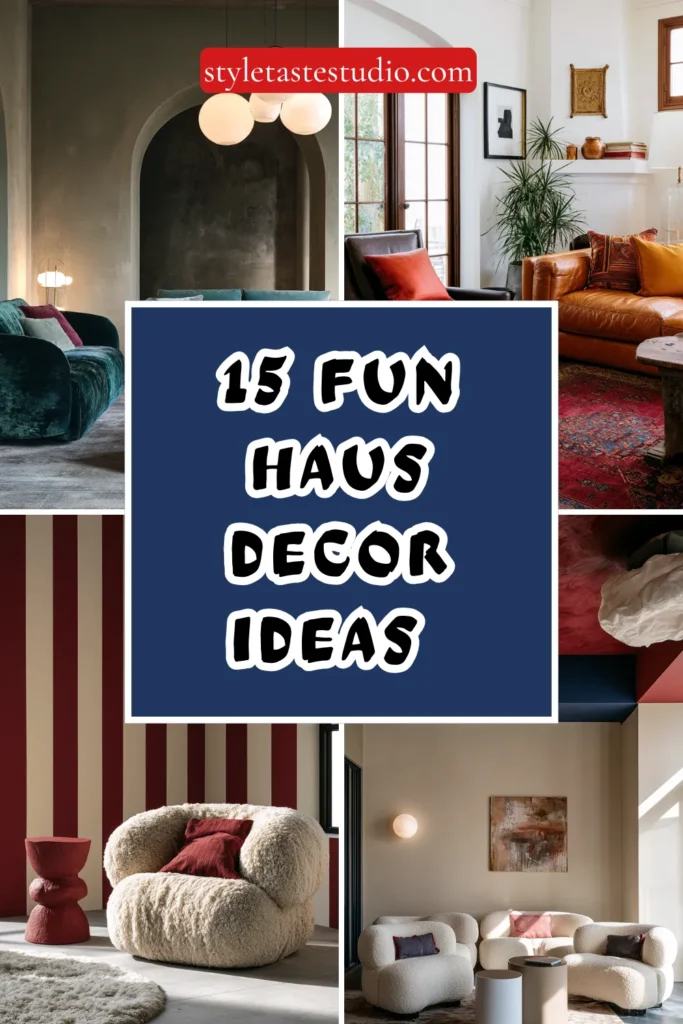
15 Fun Haus Decor Ideas for a Bold Circus-Inspired Home
Some homes play it safe with a neutral palette and matching furniture sets. Fun Haus decor is the opposite approach — it borrows the visual energy of the circus and carnival midway and applies it across an entire home, not just one room.
Done well, this isn’t a themed house full of clown figurines. It’s a home that uses bold stripes, warm theatrical lighting, rich velvet, and characterful objects with real confidence, the same way a well-designed stage set uses color and light to shape a mood.
The trick is committing fully in the spaces you choose, rather than half-committing everywhere. One striped hallway done properly beats five rooms with a single half-hearted circus-adjacent throw pillow each.
Below are 15 ways to build this look, room by room, each with a real budget attached so you know what you’re actually signing up for.
1. A Striped Feature Wall in Bold Vertical Bands
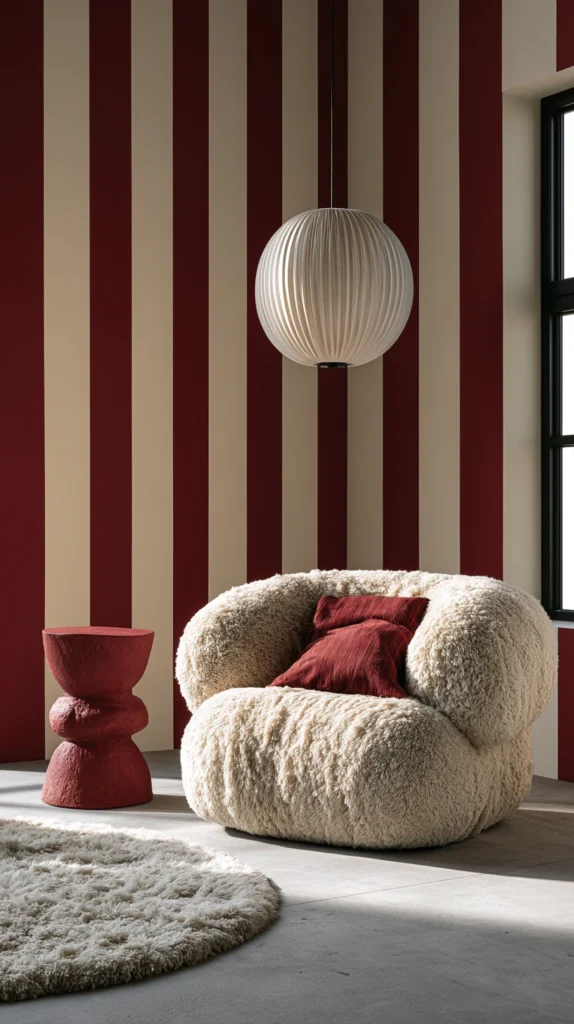
Budget: $50–100 per wall in paint and tape.
The vertical stripe belongs in more than just the living room — it works as a whole-home motif if you use it with intention.
- Hallway: bold red and cream stripes create an entrance that announces the home’s character before anyone reaches a room.
- Bedroom: navy and gold stripes behind the bed headboard make a theatrical backdrop without overwhelming a space meant for rest.
- Kid’s room: black and white stripes paired with primary-color furniture create a graphic, joyful space kids actually respond well to.
Painting technique: mark the wall with a laser level and painter’s tape at consistent intervals. Divide your wall’s width by your chosen stripe count — 8–10 stripes on a standard 12-foot wall gives stripes of roughly 14–18 inches, bold without becoming overwhelming. Apply the lighter color first as a base coat, let it cure 24 hours, tape, then apply the darker color in two coats.
2. Vintage Circus Poster Art in Mismatched Frames
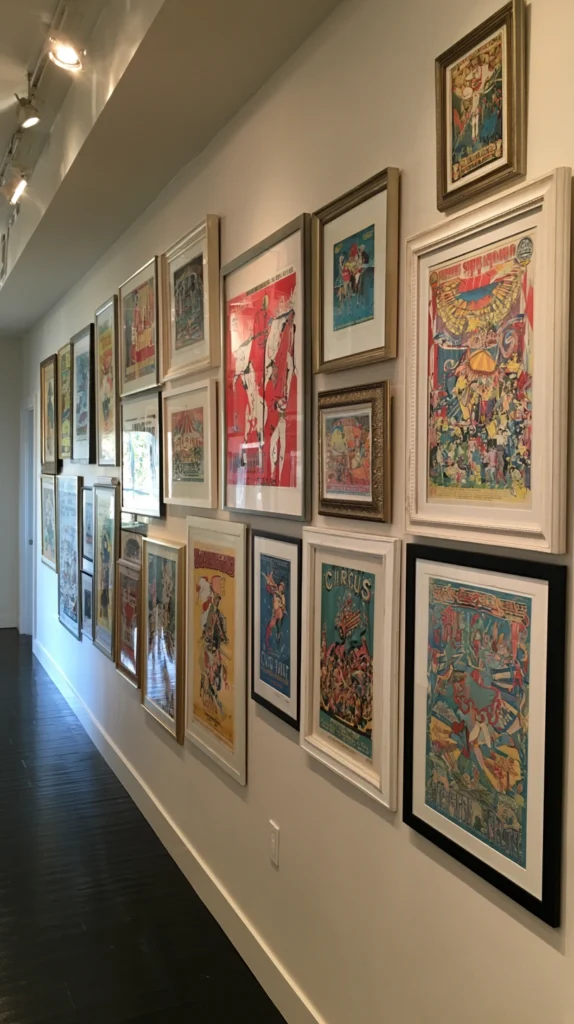
Budget: $30–120 per print, plus $15–60 per frame if not already framed.
Authentic and reproduction vintage circus posters — with their bold typography, flat vivid color, and theatrical promises — make genuinely strong wall art almost anywhere in the home.
Frame them inconsistently on purpose: different sizes, different frame colors and materials. Mismatched framing suits the scrapbook, accumulated character of this style far more than a uniform gallery wall. Look at print shops and museum reproduction stores rather than novelty decor sites — the print quality is noticeably better for a similar price.
3. A Red and Gold Color Palette Throughout
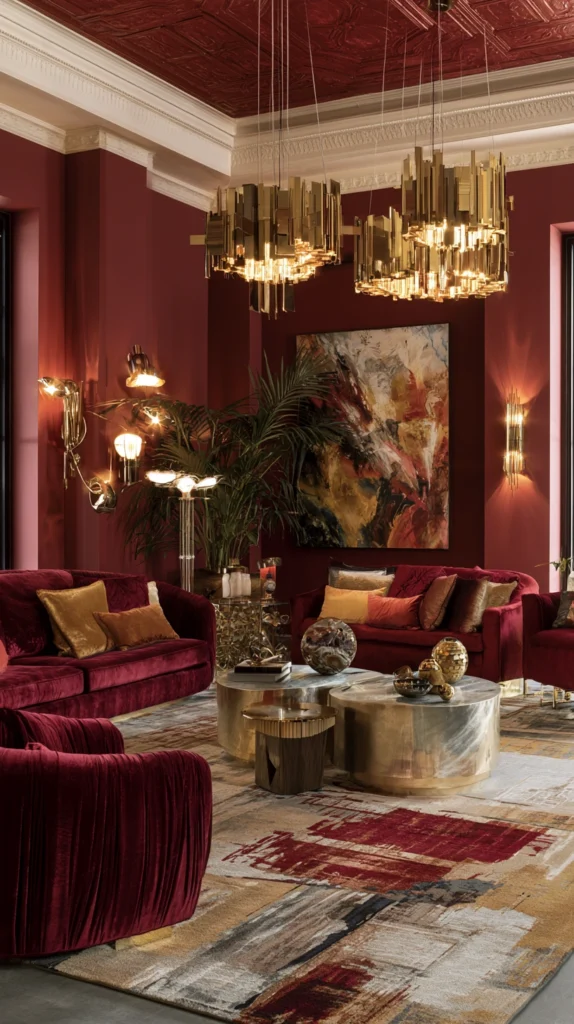
Budget: $0–200, since this is mostly a coordination decision applied to items you’re already buying.
Deep crimson red against warm burnished gold is the definitive circus color combination — the color of ring lights, velvet curtains, and a ringmaster’s coat. Apply it consistently across cushions, throws, lamp bases, and accent furniture through multiple rooms rather than confining it to one space, so the palette reads as a whole-home decision rather than an isolated accent.
| Item | Where to apply red/gold | Approx. cost |
|---|---|---|
| Cushion covers | Living room, bedroom | $20–40 each |
| Lamp bases | Any room with a table lamp | $30–70 |
| Throws | Sofa, bed | $30–60 |
4. Velvet Upholstery in Deep Jewel Tones
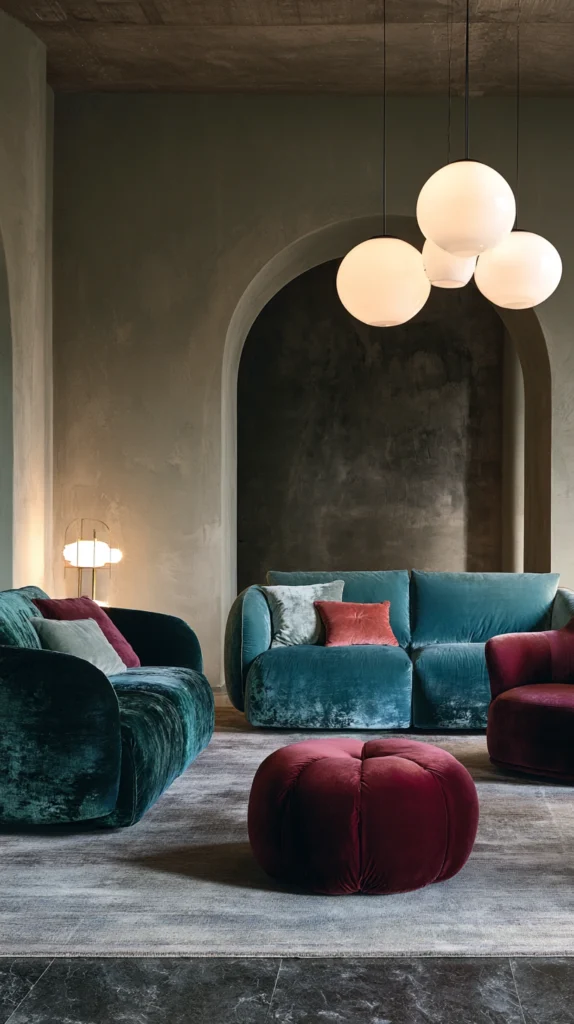
Budget: $300–2,000+ depending on whether you’re reupholstering, buying secondhand, or buying new.
Velvet belongs in this style the way sawdust belongs in the ring. A sofa in deep crimson velvet, armchairs in forest green or midnight blue — the richness of the pile in jewel tones adds theatrical luxury and catches light dramatically at different times of day.
- New velvet sofa: $1,200–2,500
- Reupholstering an existing frame: $800–1,800, needing roughly 12–16 yards of fabric for a 3-seater
- Secondhand/vintage: $300–900, check frame and spring condition first
5. Oversized Vintage-Style Typography in the Entry
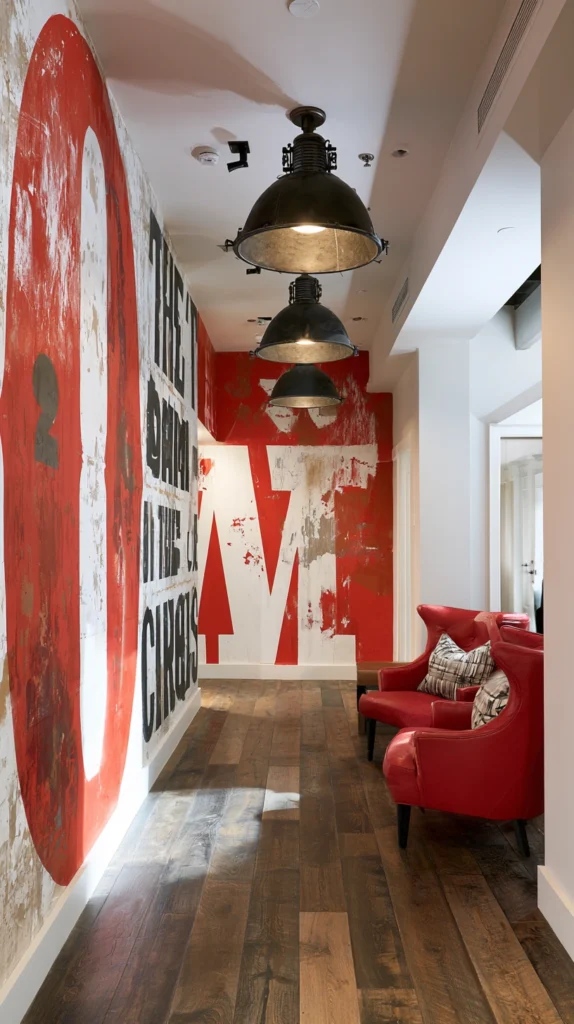
Budget: $60–250 for a large typographic art piece.
The entry should announce the home’s character immediately. A large-scale typographic piece, in the bold serif or condensed display fonts of Victorian circus printing — SPECTACULAR, EXTRAORDINARY, AMAZING — welcomes guests with showbill energy. Custom letterpress-style prints or reproductions run $60–150; a larger commissioned or hand-painted sign runs higher, $150–250+.
6. A Trapeze Rail for Curtains or Display
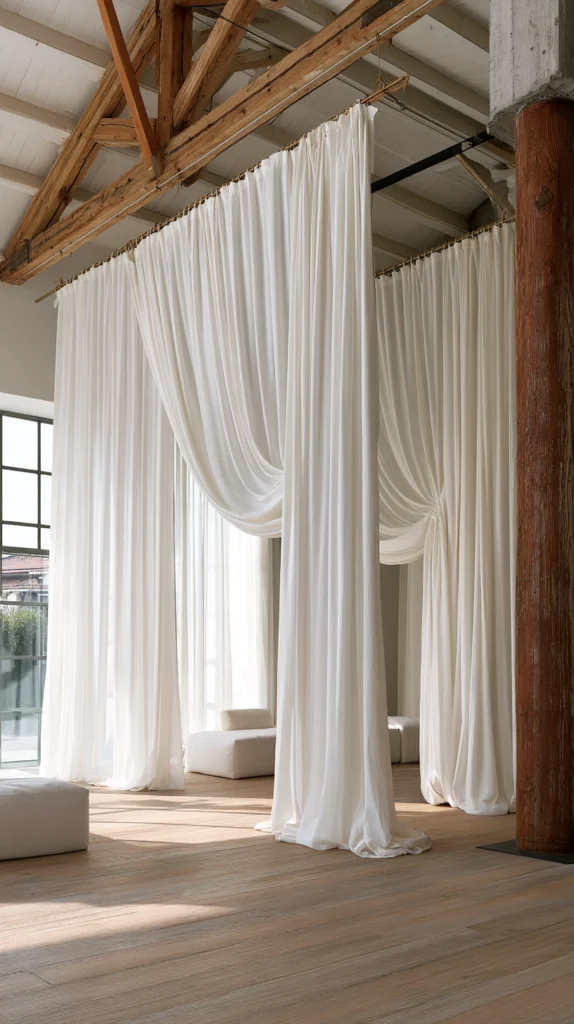
Budget: $80–200 for materials if building it yourself; $150–400 if commissioning a finished piece.
A horizontal wooden bar suspended by rope or chain from the ceiling, with curtains hung from it, is the single detail that stops most first-time visitors. In a bedroom, drape it with sheer fabric for a canopy effect. In a living room, use it to frame a window like a stage.
Building it yourself: a solid wood dowel or reclaimed pipe ($20–40), sturdy rope or chain rated for the weight of your fabric ($15–30), and two ceiling-mount hooks rated for the total load ($10–20) — confirm you’re anchoring into a joist, not just drywall, before hanging anything with real weight.
7. Patchwork and Mismatched Textiles
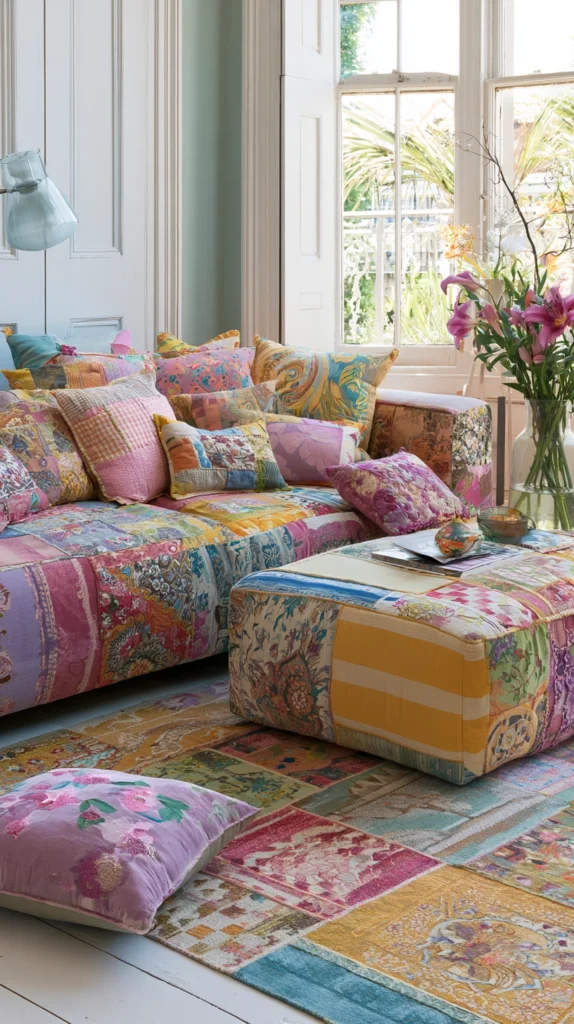
Budget: $100–300 for a mixed collection of cushions, throws, and one quilt.
This aesthetic has always embraced the assembled and the patched. Patchwork cushions in bold colors, mismatched throws in contrasting patterns, a quilt of circus-colored fabric on the bed — these layered, imperfect textiles create a warmth and handmade vitality that a matched, factory-uniform set can’t replicate.
Buy pieces gradually rather than as a set — a collection assembled over a few months looks more genuinely accumulated than one bought in a single order.
8. Globe and Edison Bulb Lighting Throughout
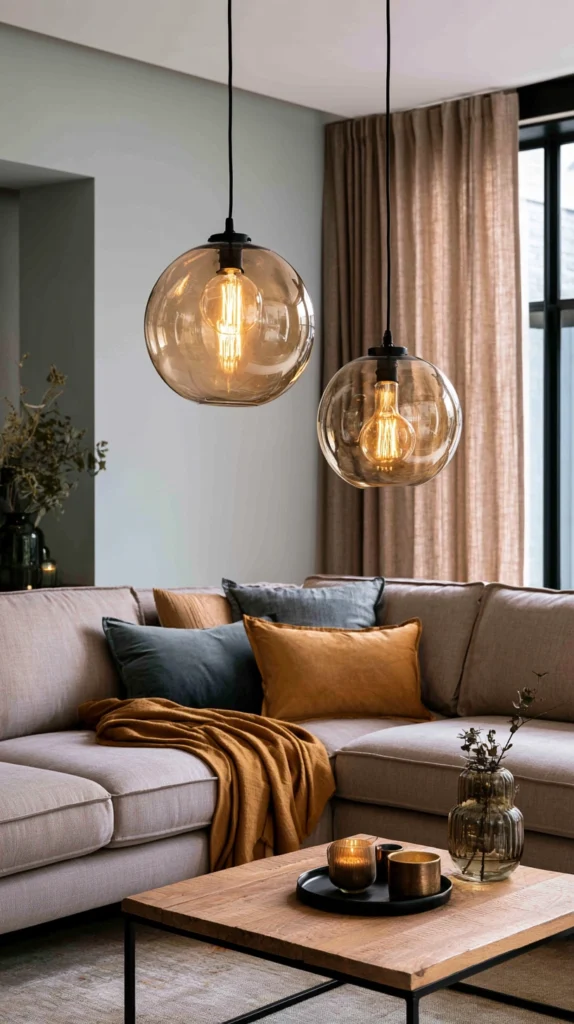
Budget: $150–400 for lighting across multiple rooms.
The warm amber glow of exposed filament bulbs is the lighting element that most directly references the circus and carnival.
- Strings of globe lights draped across a ceiling or patio: $25–50 per 25-foot strand
- Edison bulbs in simple pendant holders above a dining table: $60–150 per fixture
- A chandelier of bare filament bulbs at varying heights: $150–350
Use 2200K–2700K “vintage” LED bulbs throughout — they mimic old filament bulbs while lasting years longer and using far less power than true incandescent versions.
9. Animal Motifs in Art and Accessories
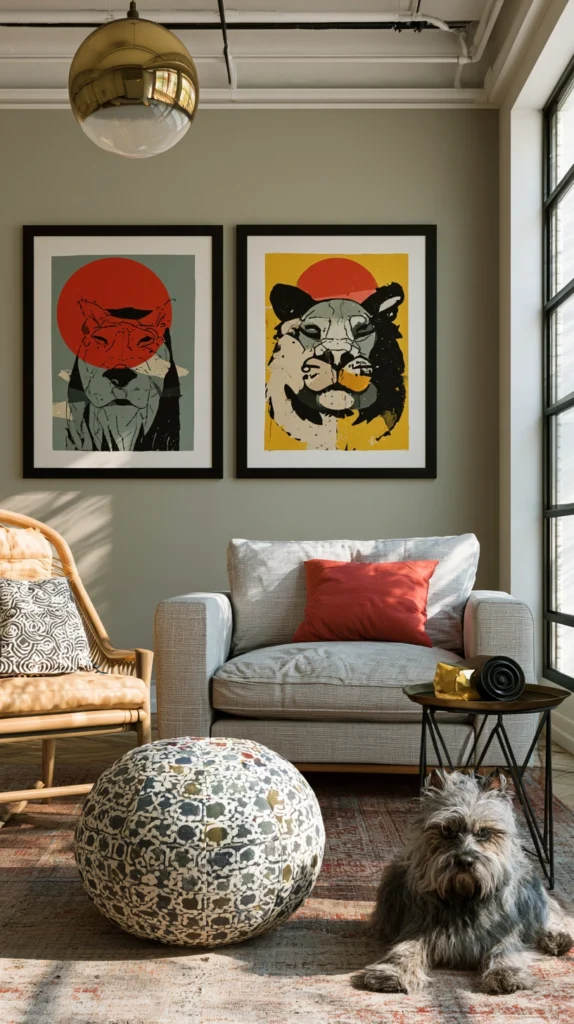
Budget: $20–100 per piece.
Keep this firmly in the graphic, illustrative tradition of vintage circus posters — elephants, lions, and horses depicted in flat, bold printed style — rather than realistic imagery, and steer clear of anything referencing circus animal welfare history, which most people don’t want represented literally in their home.
- Printed cushion covers with illustrated animals: $20–40
- Ceramic animal figurines: $15–50 each
- A framed vintage-style animal print above a mantel: $40–100
10. A Feature Ceiling in a Deep Bold Color
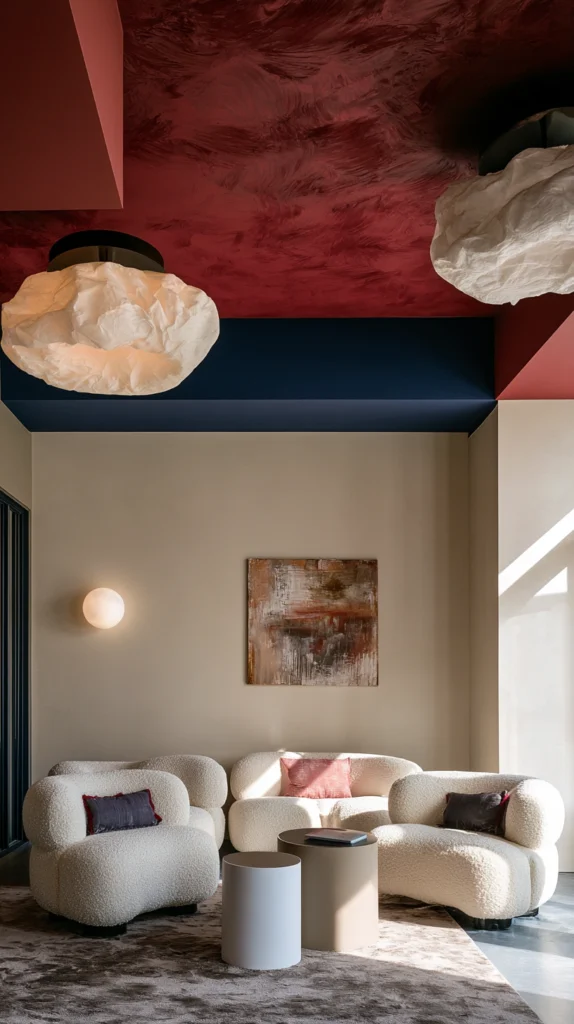
Budget: $80–150 in paint for a standard-sized room.
Most homes in this style focus their drama on walls and furniture and leave the ceiling untouched — painting it instead is a relatively low-cost move with an outsized effect. A deep red ceiling in a striped living room creates full theatrical immersion; a navy ceiling with gold accessories in a bedroom creates a night-under-canvas quality. Use a paint in the same sheen as your walls (matte or eggshell) to avoid unwanted glare from overhead light fixtures.
11. Stacked Vintage Trunks as Furniture and Storage
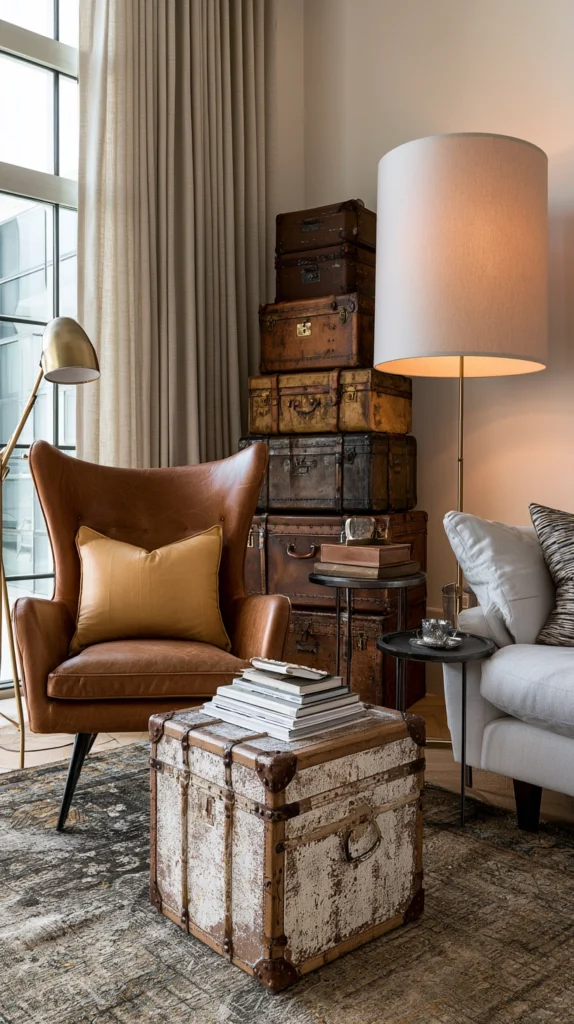
Budget: $60–300 per trunk, genuine or reproduction.
The traveling circus lived from trunk to trunk, and stacked vintage trunks — used as side tables, coffee tables, or statement storage — carry that mythology in physical form. Look for pieces with leather straps, metal corners, and faded travel labels for the most authentic character.
- Genuine vintage trunks (estate sales, antique shops): $80–300 depending on condition and size
- Reproduction trunks: $60–150, more consistent condition but less character
12. Moroccan or Persian Rugs in Bold Pattern
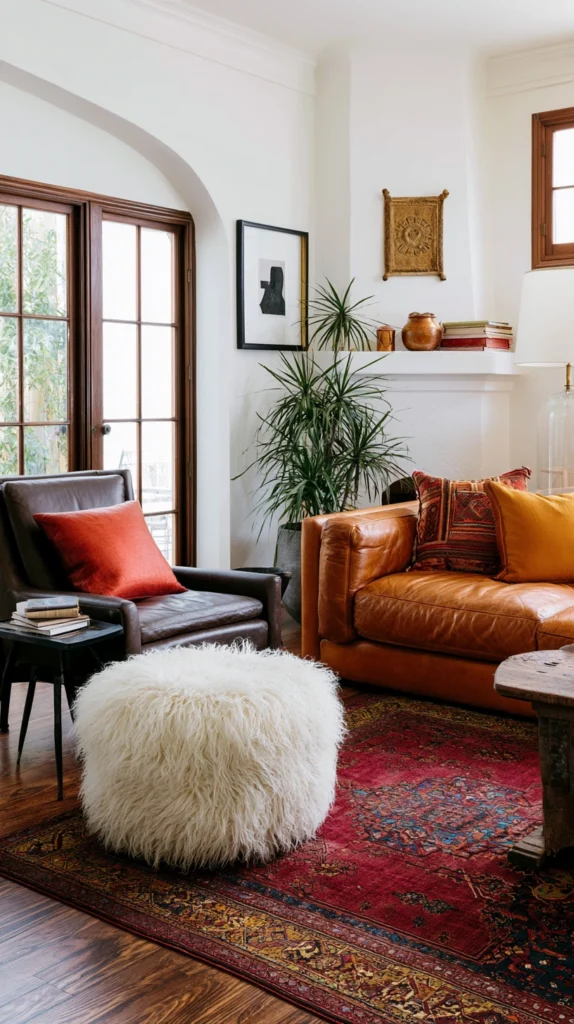
Budget: $250–800 for an 8×10, more for genuine antique pieces.
The rug should be as vivid as everything else in the room. A Moroccan or Persian rug in deep reds, golds, and blues grounds the theatrical color scheme with a warmth that a plain rug can’t provide. The visual density is a feature here, not a bug — this style is allowed to be busy, and a strongly patterned rug contributes to that rather than fighting it.
13. A Photo Booth Corner With Props
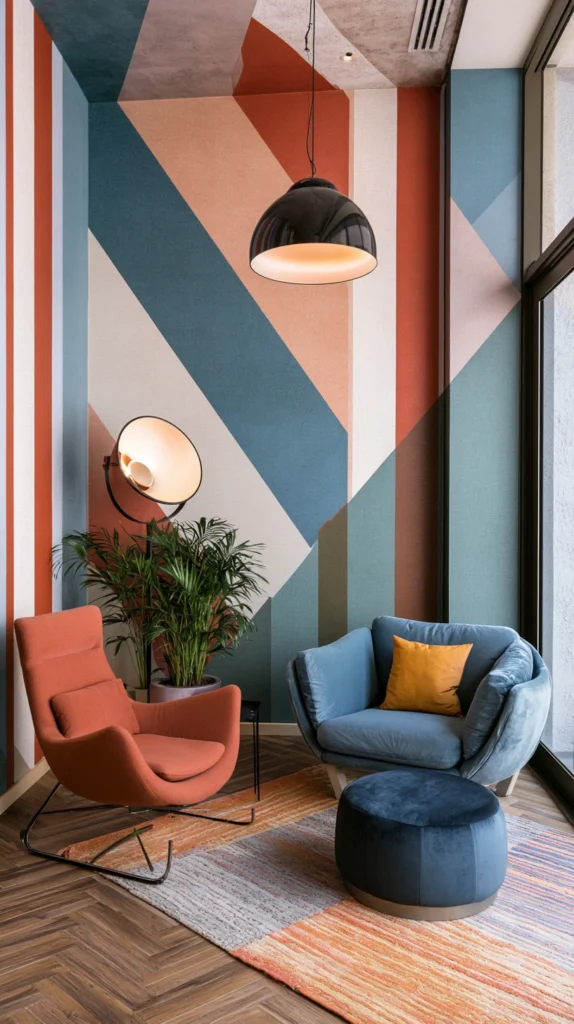
Budget: $80–200 for a backdrop, props, and simple lighting.
This is a home built for participation, not just observation. A designated corner with a striped backdrop, photo props (oversized glasses, feather boas, a top hat), and a basic ring light creates a spot that genuinely gets used at gatherings.
- Striped fabric or paper backdrop: $20–50
- Prop collection (secondhand shops, novelty stores): $30–80
- Basic ring light: $25–60
14. Maximalist Shelving With Curated Curiosities
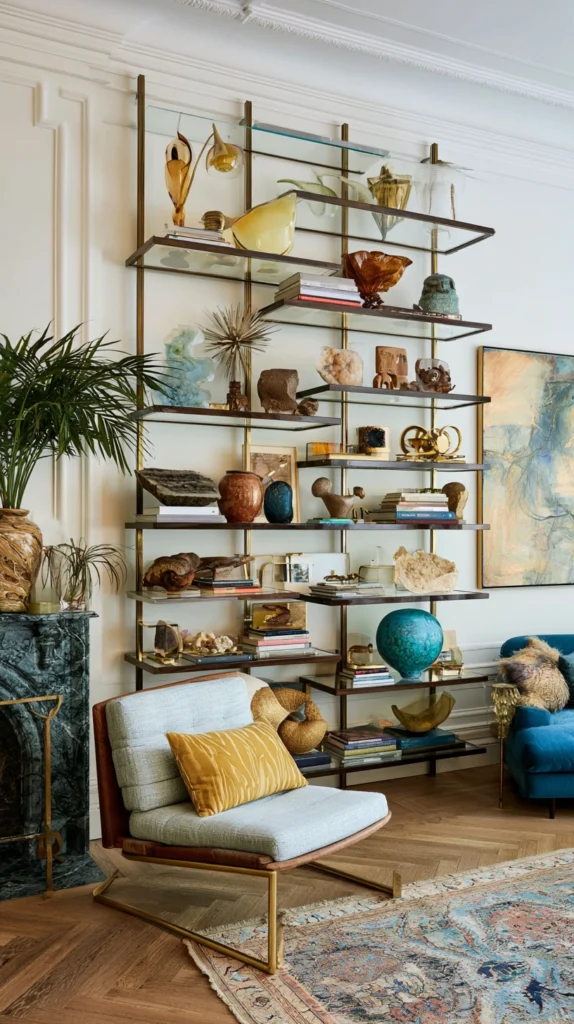
Budget: $50–250 for a shelf’s worth of objects, mostly secondhand.
This isn’t a display of matching decor pieces — it’s a cabinet of curiosities that rewards close inspection. Vintage glass bottles, small framed antique prints, a collection of juggling balls, miniature circus figurines, a magnifying glass — objects that make a visitor lean in and ask a question. Estate sales and secondhand shops are consistently the best and cheapest source for this kind of collected-object shelf.
15. The Commitment to Full Theatrical Joy
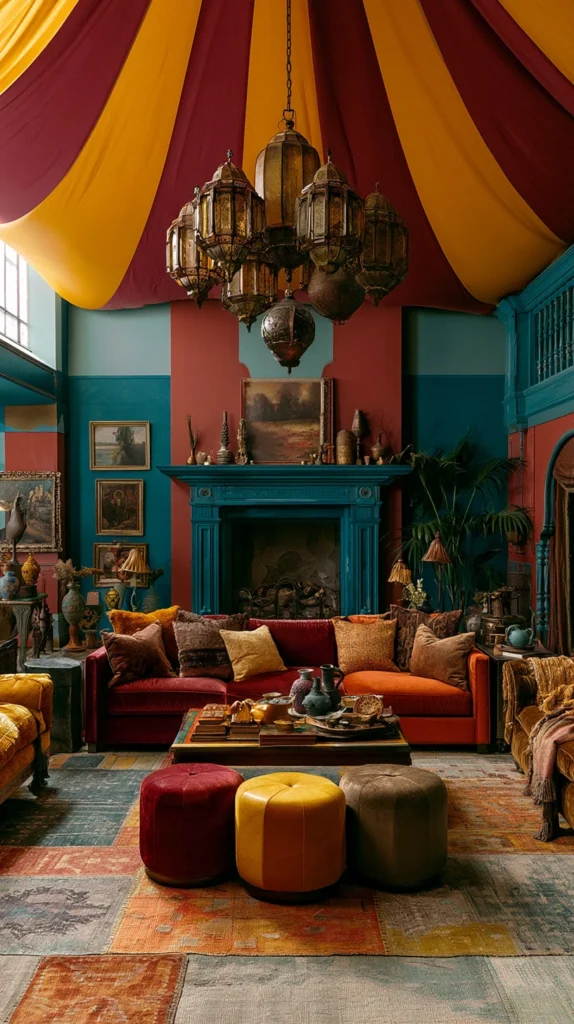
Budget: $0 — this is a final consistency check, not a purchase.
This whole aesthetic fails when it’s applied timidly. Half a striped wall. One circus poster surrounded by conventional art. A single velvet cushion in an otherwise beige room. It’s a style that knows exactly what it is and needs full commitment in the spaces you choose to apply it — pick your rooms, then commit completely rather than spreading a thin, half-hearted version across the whole house.
Room-by-Room Application Guide
Not every element on this list belongs in every room. Here’s a practical breakdown of where each idea tends to work best, so you’re not trying to force a trapeze rail into a small guest bathroom.
Entry and hallway:
- Striped feature wall (#1) — this is the single best room for a bold stripe, since it’s a transitional space rather than one you sit and relax in for hours.
- Oversized typography (#5) — sets the tone the moment someone walks in.
- Vintage poster art (#2) — a hallway gallery wall works especially well here.
Living room:
- Velvet upholstery (#4) and jewel-tone textiles (#7) — the room where people actually sit, so the tactile luxury matters most.
- Globe and Edison lighting (#8) — layered warm light does the most work in the room where evenings are spent.
- Moroccan or Persian rug (#12) and maximalist shelving (#14) — anchor the space visually.
Bedroom:
- Trapeze rail (#6) — works beautifully as a canopy frame here, less so in a high-traffic living space.
- Navy and gold stripe variation (#1) — a calmer palette than red and gold suits a room meant for rest.
- Patchwork quilt (#7) — genuinely functional as bedding, not just decorative.
Kid’s room:
- Black and white stripe with primary color furniture (#1) — reads as playful rather than intense in a child’s space.
- Animal motifs (#9) — a natural fit here in a way that feels slightly more restrained in adult spaces.
Dining room:
- Edison bulb chandelier (#8) — dining rooms are one of the best places for a genuinely dramatic overhead fixture, since the whole point of the room is gathering around a table lit from above.
- Stacked vintage trunks (#11) — useful as a sideboard or serving surface here.
Social/gathering space:
- Photo booth corner (#13) — needs a bit of floor space and a plain-ish wall, so a den, finished basement, or larger living room corner works better than a small entry.
Maintenance and What It Costs Over Time
- Velvet upholstery: a soft brush vacuum attachment ($10–15) keeps it fresh weekly; professional upholstery cleaning every 1–2 years runs $100–200.
- Globe and filament bulbs: LED versions last 15,000+ hours versus roughly 1,000 for true incandescent, so despite a higher per-bulb cost ($6–12 vs $2), they work out cheaper over a fixture’s lifetime and save you from replacing bulbs strung across a ceiling every few months.
- Vintage trunks and secondhand furniture: a light coat of furniture wax or oil every 6–12 months ($10–15) keeps leather straps and wood surfaces from drying out and cracking.
- Patterned rugs: professional cleaning every 12–18 months, roughly $75–150 depending on size, extends the life of a $250+ investment considerably.
- Trapeze rail installation: check rope or chain hardware for wear every few months if it’s load-bearing for a curtain or canopy — replacing worn rope ($10–20) is far cheaper than dealing with a failure later.
Spending more upfront on the pieces used daily — the sofa, the main lighting, the rug in your most-used room — and saving on the smaller collected pieces (secondhand trunks, gradually assembled patchwork textiles, thrifted curiosities) tends to get the best result for the money, rather than splitting the budget evenly across everything at once.
- Applying the aesthetic thinly across every room instead of fully in a few. One fully committed hallway or living room reads far better than five rooms each with a single token item.
- Choosing literal circus paraphernalia over the underlying design language. Bold stripe, warm light, rich velvet, and graphic vintage art carry the reference — a plastic ringmaster figurine doesn’t.
- Mixing cool-white bulbs into a room otherwise lit with warm filament bulbs. Even one mismatched bulb is visually jarring.
- Anchoring a trapeze rail or heavy hanging fixture into drywall instead of a joist. A weight-bearing installation needs a proper anchor point — check before you hang anything substantial.
- Buying a matched textile set instead of assembling patchwork pieces gradually. A set purchased all at once rarely reads as “collected” the way pieces bought over months do.
Total Budget by Room Commitment
| Commitment level | What’s included | Approx. total |
|---|---|---|
| Low (one accent detail per room) | Cushions, one poster, animal motif accessories | $150–350 |
| Medium (one fully committed room) | Feature wall, rug, lighting, textiles for one space | $700–1,400 |
| High (whole-home transformation) | Multiple striped walls, velvet furniture, trapeze rail, ceiling treatment, full lighting layer | $3,000–6,000+ |
Frequently Asked Questions
Do I need to apply this style to the whole house, or can I do just one room? One fully committed room works better than a thin version spread everywhere. Pick the space guests see most (entry, living room) or where you spend the most time (bedroom) and commit there first.
How is this different from a circus-themed living room specifically? The underlying design language is largely the same — stripes, velvet, warm filament lighting, patterned rugs. The difference here is scope: applying the aesthetic across multiple rooms and functional details (trapeze rail, photo booth corner, whole-home color palette) rather than confining it to one seating area.
Is this style kid-friendly, or better suited to adult-only spaces? It works well in kid’s rooms specifically — bold stripes and primary colors are genuinely popular with children, and elements like the photo booth corner and animal motif art translate naturally into a playful kid’s space without needing much adjustment.