
14 Platform Bed Ideas for a Low Modern Bedroom Look
The platform bed was the decision that changed how the bedroom felt before anything else changed.
Not a new rug. Not new lighting. Not a headboard or a gallery wall or a new set of linen.
The bed itself, lower to the ground than expected, and suddenly the whole room read differently. The ceiling: higher. The floor: more present. The space: quieter and more deliberate than it had been with the frame that came before it.
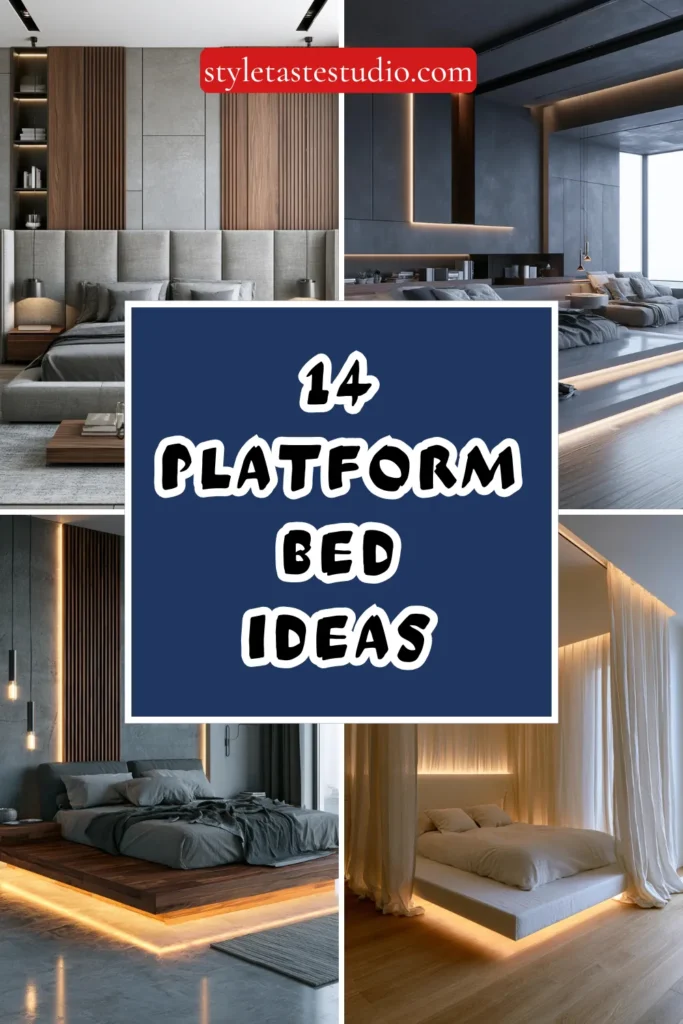
Platform beds work because they shift the geometry of the room. A standard bed frame sits 25 inches off the ground. A platform sits at 12 to 18. That difference — a foot or less — changes the visual weight of the room entirely. Less frame. More floor. The bed: an object that belongs to the room rather than one that dominates it.
Here are 14 platform bed ideas — from the simplest low frame to the most fully realized built-in — designed around that understanding.
Why Platform Beds Work Specifically in Modern Bedrooms
The floor effect
Without a platform bed: A standard-height frame with visible legs and under-bed space. The eye: drawn downward, interrupted by gap, frame, and shadow. The room: a collection of objects at different heights, none quite anchored.
With a platform bed: A low, continuous sleeping surface, close to the ground. The eye: traveling across the floor uninterrupted, landing on the bed as a horizontal plane. The room: settled. The bed belonging to the floor rather than floating above it.
The proportion advantage
Low beds make ceilings appear higher. The contrast between the sleeping surface and the ceiling above increases with every inch the bed descends. A room that felt average in height before: suddenly generous.
The clutter elimination
No under-bed gap means no under-bed storage problem. No storage problem means no visual clutter at floor level. No clutter at floor level means the room reads cleaner with no more effort than before.
The four ways platform beds are built
Before choosing any design:
Solid platform — a continuous surface of wood or upholstered panel, the mattress sitting directly on it. The most minimal version. No slats visible.
Slatted platform — evenly spaced wooden slats across the frame, the mattress resting on top. Better ventilation for the mattress. Slightly more visible structure.
Floating platform — a frame designed to appear to hover, with a recessed base that hides the support structure. The most architectural version.
Built-in platform — a permanent plywood or lumber structure built into the room. The most committed option and the one that most completely integrates the bed with the architecture.
1. The Solid Walnut Platform Frame
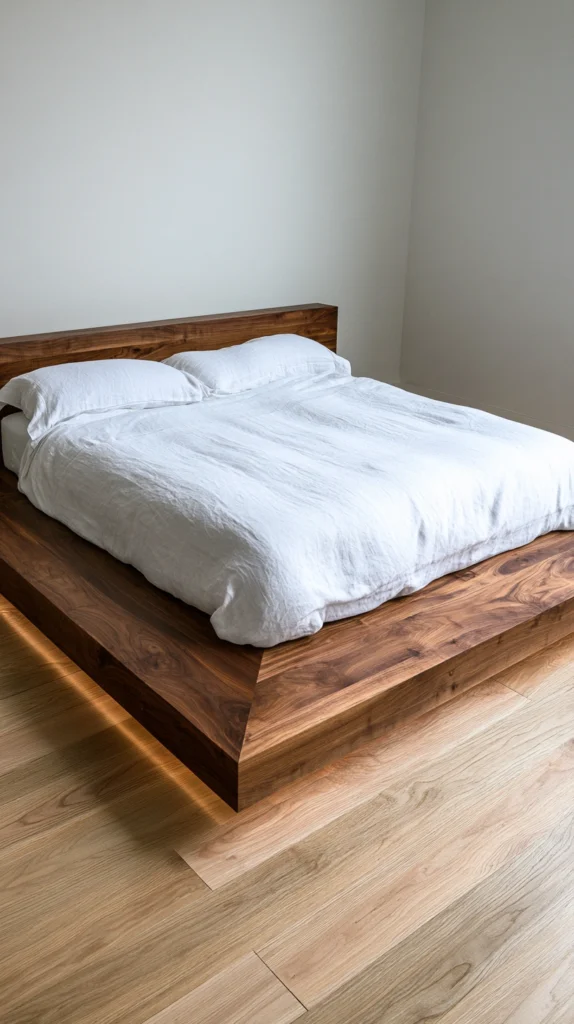
A solid walnut frame, low to the ground, with a continuous platform surface and clean-cut sides — no headboard, no legs, no visible hardware.
Why walnut suits the platform silhouette
Walnut is dark enough to read as deliberate against most flooring and light-colored bedding, and warm enough to prevent the frame from feeling cold or minimal. The grain does the visual work a headboard would otherwise do.
The frame
12 to 14 inches from floor to platform surface — low enough to change the room’s proportions, high enough to sit down and stand up without effort.
Mitered corners rather than visible joinery, for a clean-line appearance on every side.
The mattress
A low-profile mattress — 8 to 10 inches rather than the standard 12 — keeps the total sleeping height at 20 to 24 inches. Still comfortable. Proportionally correct for the frame.
The bedding
White or warm-cream linen, fitted without excess fabric bunching at the sides. The linen: the only softness in a deliberately spare arrangement.
The floor beneath
Light hardwood or polished concrete reinforces the low-horizontal quality of the frame. A dark floor competes with a dark walnut bed.
Cost breakdown: Solid walnut platform frame (queen): $600–1,400 Low-profile mattress: $300–800 Total: $900–2,200
2. The Upholstered Platform Bed in Warm Bouclé
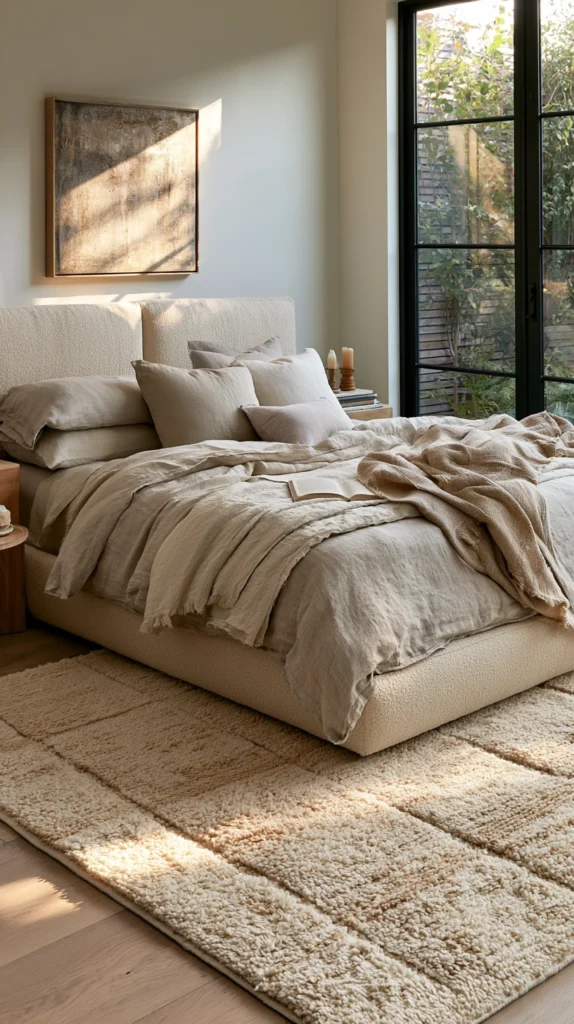
An upholstered platform frame — padded headboard, fabric-wrapped sides — in a warm bouclé, boucle linen, or textured cotton weave. The softest version of the platform silhouette.
Why upholstery suits the low format
A low upholstered frame reads as an object that belongs in the room — part furniture, part architectural surface — in a way that a bare wood frame doesn’t always achieve. The fabric absorbs sound and adds warmth at the level where warmth is needed most.
The fabric
Warm bouclé in oatmeal, camel, or warm grey — the current standard for bedroom upholstery in a modern space. Or a textured linen-cotton weave for a cooler, more minimal result.
No pattern. The texture is the interest.
The headboard
Low and wide — 24 to 30 inches tall rather than the standard 40 to 48 — proportional to the frame’s low profile. A headboard at standard height on a low platform looks borrowed from a different bed.
The bedding
One or two additional textures to layer against the bouclé: a linen duvet, a chunky knit throw. The room: an exercise in how many warm neutrals can coexist before the arrangement tips into something else.
The legs
Either no legs (solid skirted base) or short brass pin legs — 2 to 3 inches — for a floating quality without significant height gain.
Cost breakdown: Upholstered bouclé platform frame (queen): $500–1,200 Low-profile mattress: $300–800 Total: $800–2,000
3. The DIY Plywood Platform Built Into the Room
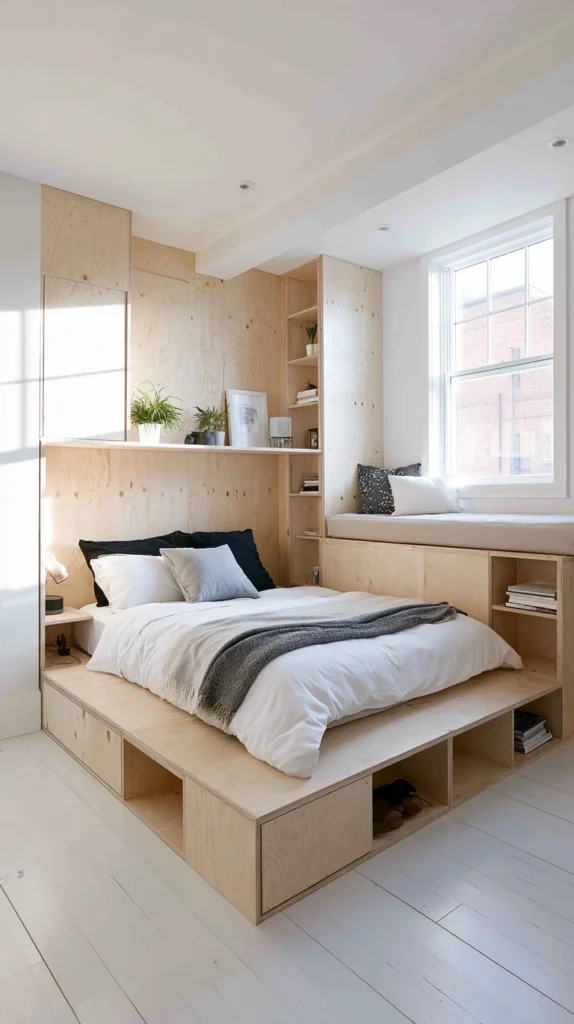
A permanent platform built from 3/4-inch plywood, constructed to fit the exact dimensions of the room’s sleeping zone, painted or stained to match the walls or floor.
Why built-in suits some rooms better than furniture
A built-in platform integrates the bed into the architecture rather than placing furniture inside the room. In small bedrooms, narrow rooms, or rooms with unusual proportions, a built-in solves spatial problems that no furniture solution can.
The construction
2×4 lumber as the structural base, 3/4-inch plywood as the platform surface. The frame: sized to the mattress plus 4 inches on each visible side. Height: 8 to 12 inches from floor to platform surface.
A router run along the visible edges for a finished appearance rather than a raw plywood edge.
The finish
Painted the same color as the walls for a continuous, architectural appearance — the bed reading as part of the room rather than placed inside it.
Or stained in a wood tone that matches the existing flooring, so the platform becomes an extension of the floor plane.
The storage option
Drawer boxes built into the platform front, with full-extension slides. Two to four drawers across the full width — the most significant organizational benefit of the built-in format.
The cost advantage
A built-in platform costs a fraction of a solid wood frame and is built to the exact proportions of the room rather than adapted from a standard size.
Cost breakdown: Lumber and plywood materials: $80–180 Paint or stain: $20–40 Optional drawer slides (4 pairs): $50–90 Total: $150–310
4. The Japanese-Inspired Tatami Platform
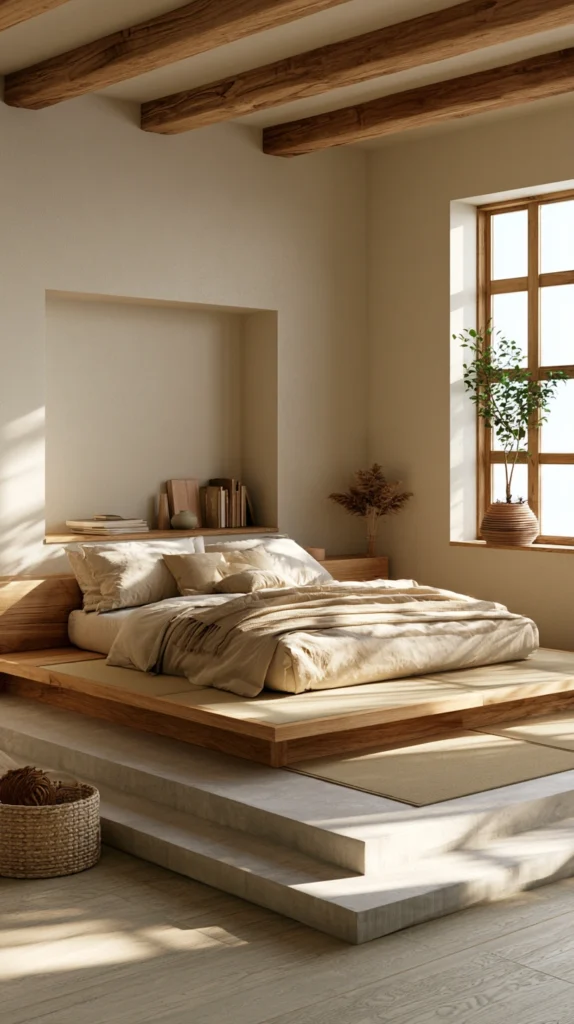
A low platform — 4 to 6 inches from floor surface to sleeping level — in solid wood or lacquered MDF, designed around the traditional Japanese floor-sleeping aesthetic.
Why the floor level matters
The closer a bed sits to the floor, the more the room reads as a single unified space rather than a room with furniture in it. Japanese sleeping traditions work from this principle: the sleeping surface as part of the floor, not an elevation above it.
The frame
Solid hinoki or oak, or lacquered MDF in white or black, at 4 to 6 inches total height. Some versions sit directly on the floor with no clearance at all.
The mattress
A firm low-profile mattress — 6 to 8 inches — or a traditional shikibuton (Japanese floor mattress) rolled out each night. The shikibuton: the most committed version of the aesthetic and the most space-efficient.
The room
This format requires the rest of the room to match the floor-level logic. Low furniture throughout — a low side table rather than a nightstand, seating at floor level or close to it, storage at baseboard height.
The result
A room that reads as intentionally horizontal from every angle. Calm to a degree that standard-height furniture rarely achieves.
Cost breakdown: Japanese-style low platform frame: $300–700 Low-profile mattress or shikibuton: $150–400 Total: $450–1,100
5. The Floating Platform with Concealed LED Base
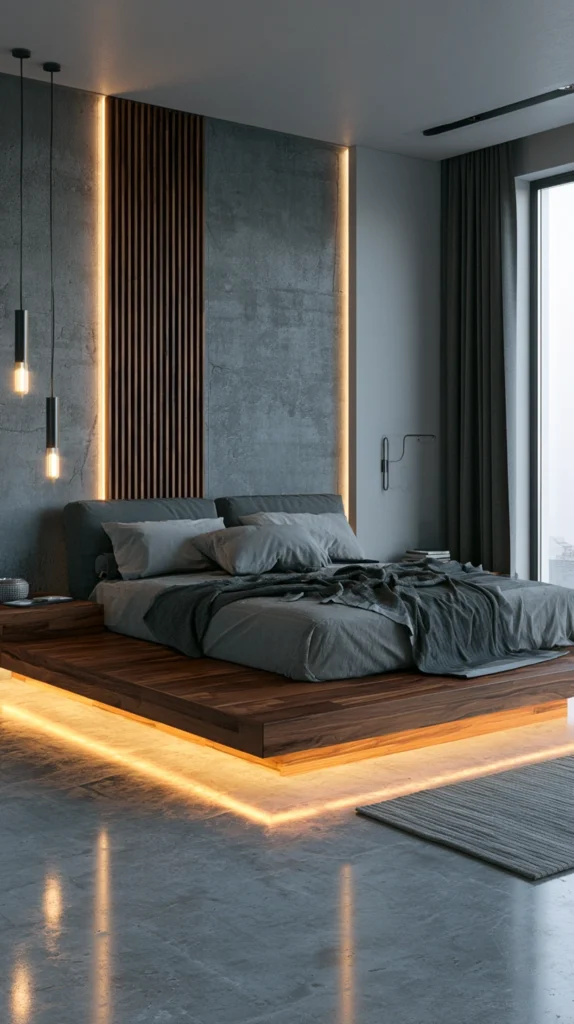
A platform frame designed to appear to hover above the floor, achieved through a recessed base and a strip of LED lighting underneath that illuminates the gap between frame and floor.
Why the floating illusion works
A visible gap beneath a bed reads as structural necessity. A glowing gap reads as a design decision. The distinction is significant — the floating platform becomes the room’s most deliberate object rather than one of several pieces of furniture.
The frame construction
A recessed base — set 2 to 3 inches inside the frame perimeter — supports the platform invisibly. The outer edge of the frame extends to the floor on the visible sides, concealing the base while leaving a shadow gap where LED strips are mounted.
The LED strip
Warm white — 2700K — mounted to the underside of the frame edge facing the floor. On a timer or a smart plug set to the same schedule as bedtime lighting.
The floor requirement
Light flooring amplifies the glow; dark flooring absorbs it. A light hardwood or light-toned tile creates the most visible floating effect.
The bedding
Simple and horizontal — no excess overhang at the sides that would obscure the gap. The glow requires clear sightlines from the doorway.
Cost breakdown: Floating platform frame (queen): $700–1,600 LED strip lights (10 feet): $15–30 Smart plug: $10–20 Total: $725–1,650
6. The Concrete and Wood Combination Platform
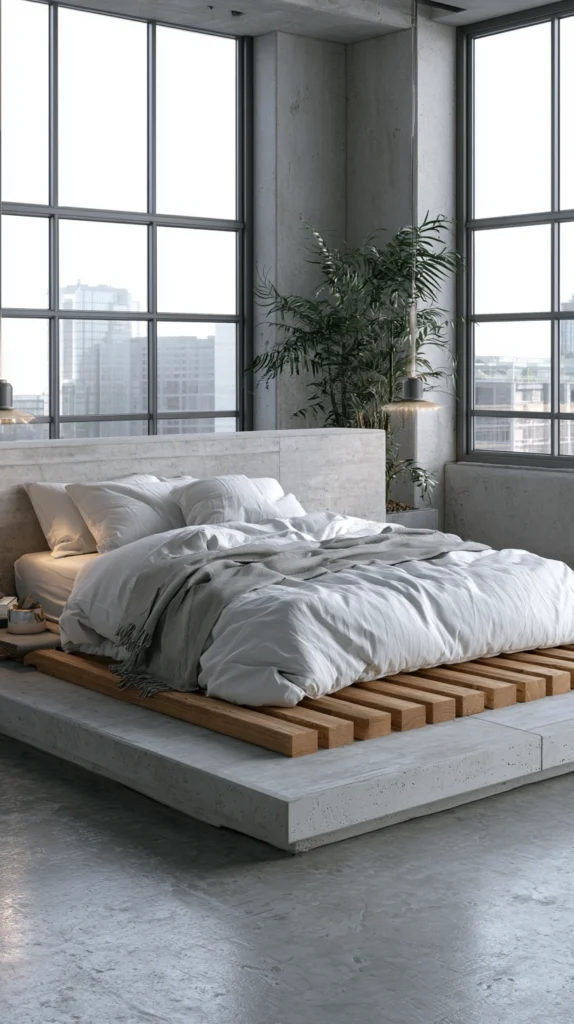
A platform frame that combines concrete-look elements — poured concrete side panels, concrete-effect tile, or concrete-finish MDF — with warm wood slat surfaces, for a material contrast unique to modern industrial aesthetics.
Why this combination resolves a tension
Concrete alone in a bedroom reads cold and institutional. Wood alone reads warm but conventional. Concrete paired with warm wood: the industrial edge tempered by organic warmth. The tension: the design.
The structure
Concrete side panels cast at 12 to 16 inches tall, used as the visible structural frame. Warm wood slats — oak or ash — spanning the top surface for the sleeping platform.
Or a simpler version: concrete-finish paint or tile applied to an MDF frame, with a solid wood top panel.
The bedding
White or pale linen against the warm wood surface, with one dark accent — a charcoal throw, a single dark cushion — that echoes the concrete tone.
The side table
A concrete-finish or dark steel side table at platform height, for continuity with the frame material.
The floor
Polished concrete is the obvious pairing, but light oak flooring works equally well — the floor: warm, the frame: cool, the balance sustained by the wood slat surface above.
Cost breakdown: Concrete-effect platform frame (custom or DIY): $200–500 Or poured concrete panels (fabricated): $800–2,000 Wood slat surface: $80–200 Total: $280–2,200
7. The Minimalist Black Steel Platform Frame
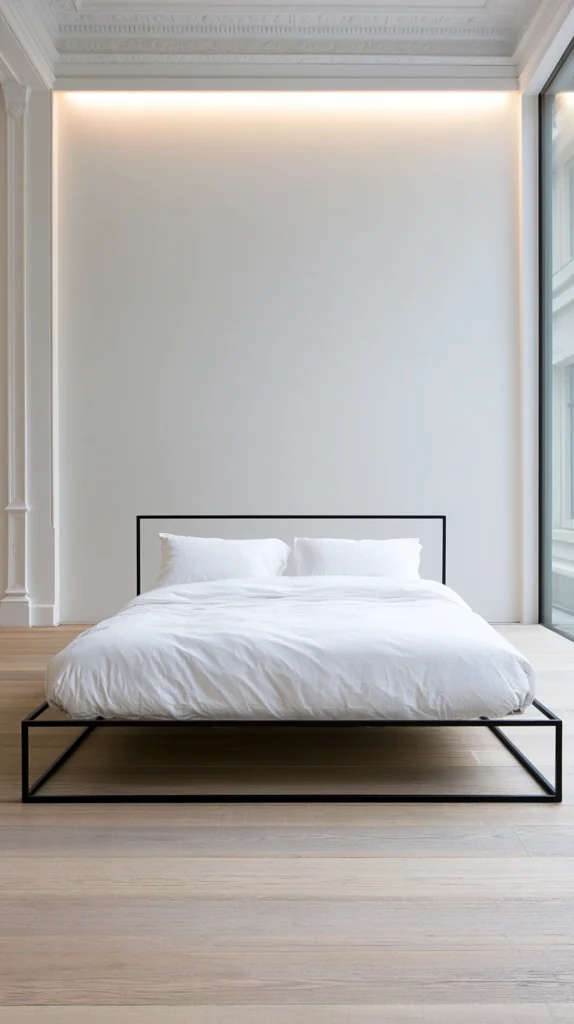
A powder-coated black steel frame — thin-profile, low to the ground, with visible welded joints — for the most paired-back version of the platform aesthetic.
Why black steel suits a modern bedroom
Black steel has no grain, no variation, no decorative detail. It reads as structure rather than furniture — the bed: a precisely calibrated object, not a piece of decor.
The frame
Steel tube or steel flat bar, welded at the corners, with a platform surface in slatted wood or a solid steel sheet. Profile: as thin as structural load allows — 1 to 2-inch tube for the most graphic quality.
The height
12 to 14 inches from floor to sleeping surface. At this height, the steel frame is visible but not dominant — present as a line rather than a mass.
The bedding
White linen, pulled tight. No excess texture or pattern. The bedding: a surface, not a feature.
The contrast
One warm element somewhere in the room — a wood side table, a leather throw, a warm-toned plant pot — to prevent the combination of black steel and white linen from reading as cold.
The room
Light walls, light floor, one dark-framed piece of art. The room: deliberately almost empty around a frame that earns the space through precision rather than through decoration.
Cost breakdown: Black steel platform frame (queen): $400–900 Low-profile mattress: $300–800 Total: $700–1,700
8. The Upholstered Platform with Integrated Nightstands
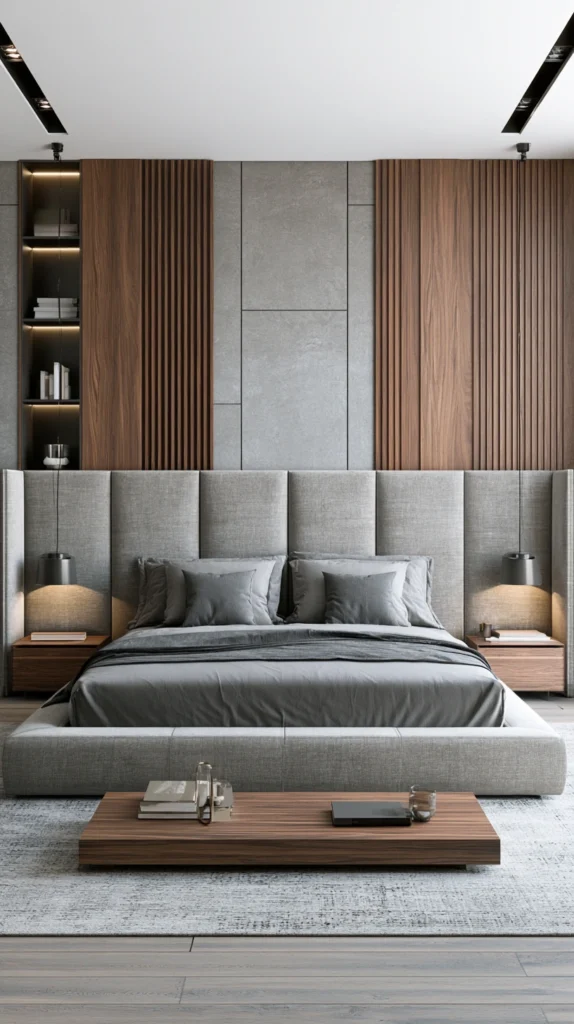
A wide platform frame with side extensions — flat surfaces at the same height as the platform edge — that function as integrated nightstands without requiring separate furniture.
Why integrated nightstands change the room
Separate nightstands create three separate objects where one would do. An integrated platform with side shelves reads as a single designed piece — simpler, lower, and more cohesive than the combination it replaces.
The structure
The main platform plus two side wings, each 16 to 20 inches wide and at the same height as the platform surface. The wings: finished in the same material as the frame.
The wing surface
Enough space for: a lamp, a book, a phone charger, a water glass. The full function of a nightstand in a surface that doesn’t require a separate piece of furniture.
The lamp
A plug-in wall-mounted lamp above each wing, rather than a table lamp on the surface — keeps the surface clear for daily objects.
The bedding
Fitted neatly to the edge of the platform, without overhang onto the wing surfaces. The wings: visibly separate from the sleeping surface, even in the same continuous frame.
Cost breakdown: Integrated platform frame with side wings (queen): $700–1,500 Wall-mounted plug-in lamps (2): $60–120 Total: $760–1,620
9. The Platform Bed in a Deep Color Bedroom
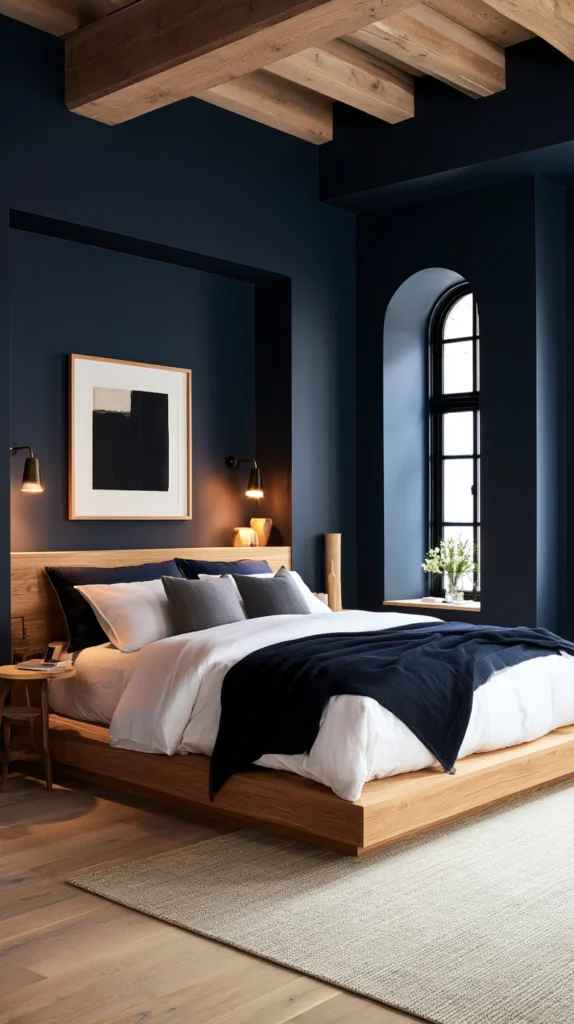
A natural wood or upholstered platform frame in a bedroom with deeply colored walls — navy, forest green, terracotta, aubergine — where the low bed sits against a rich backdrop rather than a neutral one.
Why low beds suit dark rooms
A standard-height bed in a dark-walled room reads as an obstacle — tall and present, competing with the color around it. A platform bed in the same room becomes part of the color field, settled into the depth of the room rather than rising above it.
The wall color and frame pairing
Navy wall with a natural oak platform: the warm wood reads gold against deep blue. Forest green wall with a walnut platform: two warm darks that deepen each other. Terracotta wall with a white upholstered platform: the platform as a pale object in a warm envelope. Aubergine wall with a brass-legged platform: the platform recedes while the brass catches the light.
The lighting
More important than in a light room. Layered warm lighting — a wall-mounted lamp on each side, a lamp on the floor in a corner — prevents the room from reading simply dark.
The bedding
Lighter than the walls, always. The bedding: the room’s source of light and softness in an otherwise deep palette.
Cost breakdown: Platform frame (any material): $400–1,200 Deep color paint: $40–80 Total: $440–1,280
10. The Platform Bed with Curtain Enclosure
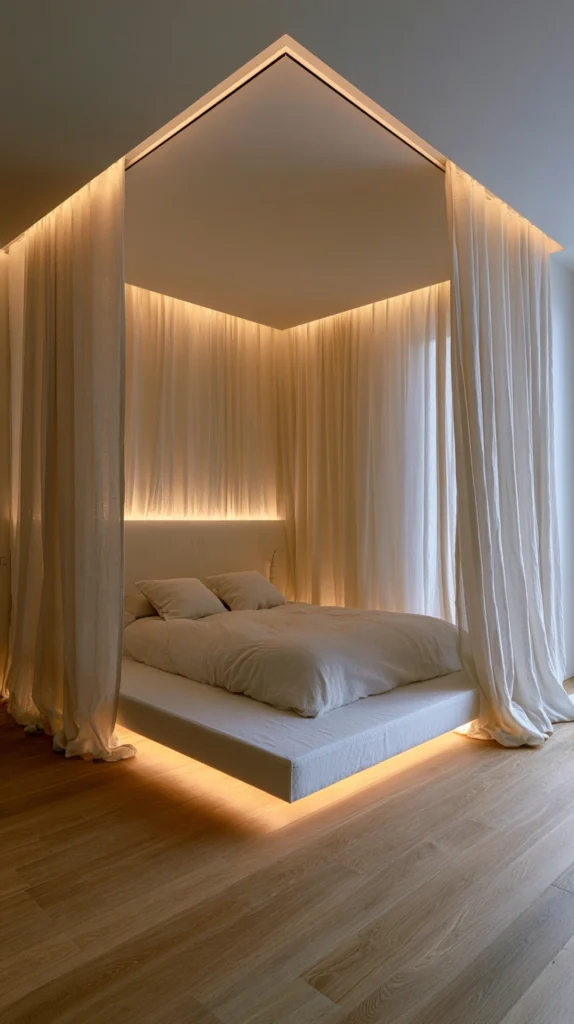
A platform frame positioned at the center or against one wall, with floor-to-ceiling curtains hung from a ceiling track on three sides — the bed becoming an enclosed sleeping alcove within the larger room.
Why enclosure suits the platform
A platform bed enclosed by curtains creates two separate atmospheres: the enclosed sleeping zone and the surrounding room. The platform: the architecture of the sleeping space. The curtains: its walls.
The curtain track
A ceiling-mounted track on three sides of the bed. Heavy linen or velvet panels in a single color — the same tone as the walls, or one shade deeper.
The interior
A wall-mounted reading lamp inside the curtain enclosure. A small floating shelf at headboard height. A warm LED strip at the ceiling track edge, giving the interior a soft perimeter glow when the curtains are drawn.
The exterior
The curtains closed: the platform invisible, the room clear and uninterrupted. The curtains open: the bed revealed, the platform reading as a designed sleeping surface within a designed sleeping zone.
The floor
A small rug within the curtained enclosure — lighter than the surrounding floor, to mark the sleeping zone separately from the room.
Cost breakdown: Ceiling curtain track: $40–90 Curtain panels (6): $120–300 Platform frame: $400–1,000 Total: $560–1,390
11. The Stained Concrete Block Platform
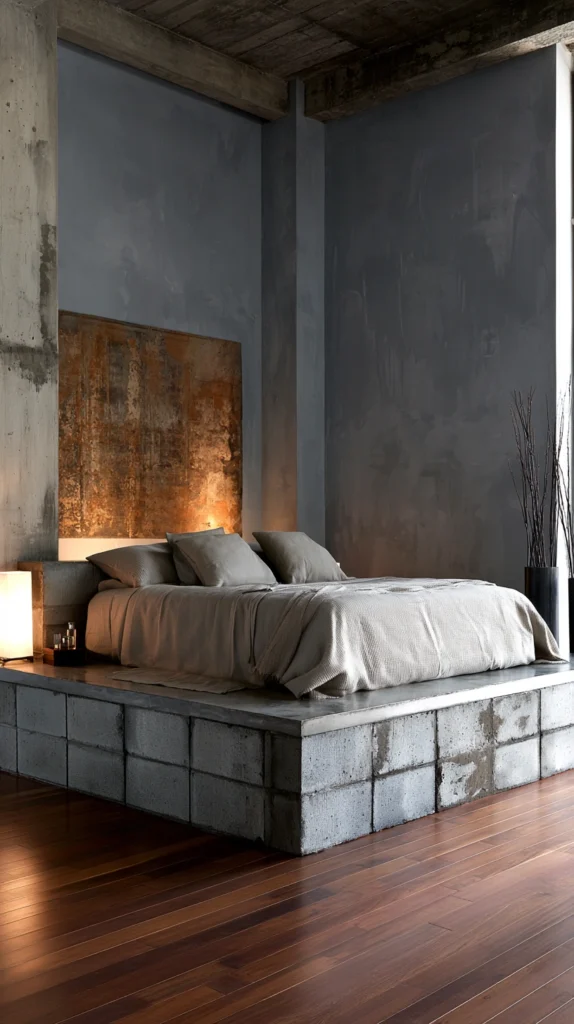
A platform frame built from concrete masonry blocks — the standard 8×8×16-inch grey CMU — used structurally and left unsealed for the most raw, industrial version of the low-bed aesthetic.
Why CMU blocks work for a permanent platform
Concrete blocks are structural, load-rated, available at any home improvement store for under $2 each, and require no fasteners or adhesive when stacked in a stable configuration. The result: a platform that looks like it was designed by an architect and costs less than a flat-pack frame.
The construction
Blocks stacked two high — 16 inches total, the right height for platform sleeping — in a rectangular configuration sized to the mattress. A sheet of 3/4-inch plywood cut to the mattress size placed on top, with a thin foam pad between plywood and mattress.
No mortar required. The weight of the mattress and the weight of the blocks hold the structure stable.
The finish
Unsealed — raw grey concrete. Or sealed with a concrete sealer for a smoother, slightly darker appearance. Or painted in a warm white or dark tone for a less industrial result.
The room
This format requires deliberate warm counterbalancing — the blocks are cold in color and material. Natural wood side tables, warm-toned linen, a large plant, and warm bulbs in every lamp bring the room back toward livable.
Cost breakdown: CMU blocks (16–20 for a queen platform): $30–50 Plywood sheet: $30–50 Total: $60–100 — the least expensive platform option on this list
12. The Platform with a Recessed Bookshelf Headboard
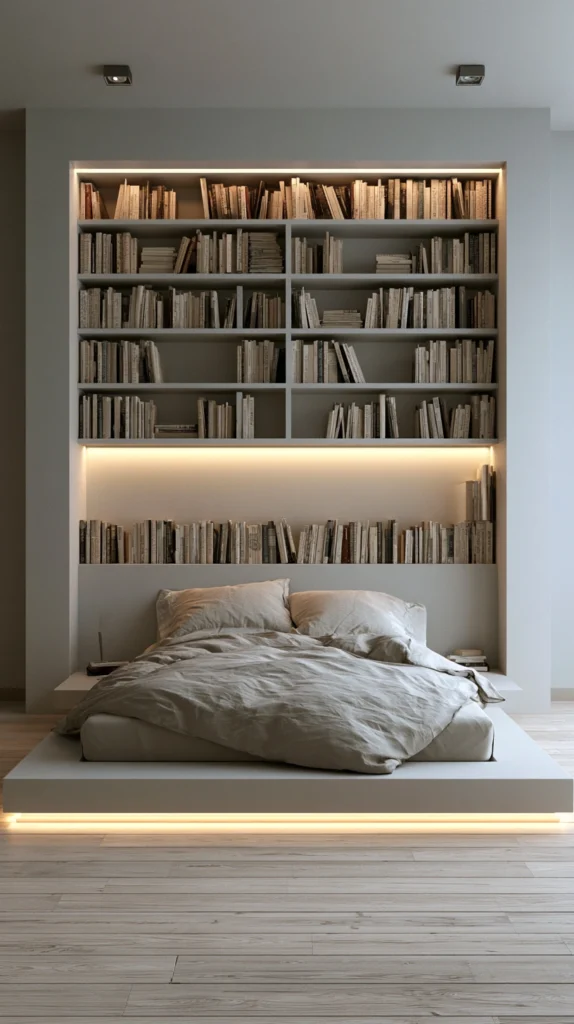
A platform frame with a built-in or wall-mounted bookshelf running the full width of the bed at headboard height — the books and objects on the shelf replacing the headboard’s visual function.
Why books make a better headboard than most headboards
A headboard provides one thing: a visual stop at the top of the bed. A bookshelf provides the same visual stop plus storage, plus a display surface, plus the particular warmth of a room where books are visible and within reach of the bed.
The shelf construction
A floating shelf at headboard height — 24 to 36 inches above the mattress surface — spanning the full bed width plus 6 inches on each side. Depth: 8 to 10 inches. Material: the same wood as the platform frame, or a contrasting tone.
The shelf contents
Books arranged with spines outward, grouped loosely by color or height. One lamp on the shelf, positioned at the side rather than the center. One plant. Two or three objects that are actually meaningful rather than placed for appearance.
The lighting
A small LED picture light or a clip light mounted to the shelf underside, casting warm light downward onto the pillows. Reading light without a lamp on the sleeping surface.
The frame below
Minimal — a low slatted or solid platform whose visual complexity stops at the mattress level, leaving the shelf above as the room’s single display element.
Cost breakdown: Floating shelf (hardwood, custom-length): $40–80 Platform frame: $400–1,000 Shelf lamp: $25–50 Total: $465–1,130
13. The Platform Bed in a Warm Wood and White Palette
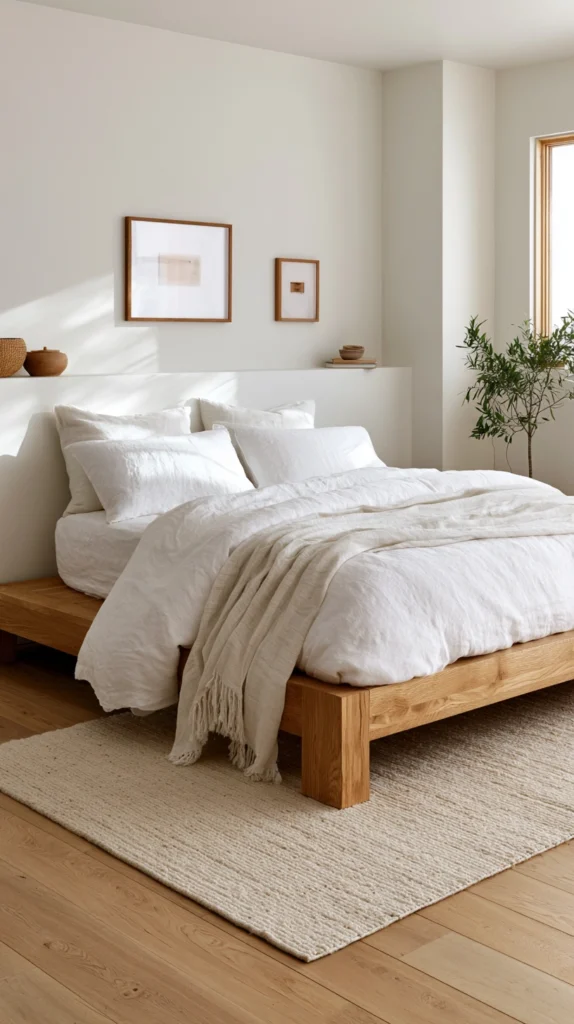
A natural wood platform — oak, ash, or pine — in a room of white walls, white linen, and warm wooden surfaces throughout. The palette: the most versatile and accessible version of the low modern bedroom.
Why white and warm wood is the most enduring platform pairing
Warm wood against white walls reads as intentional in almost every context and aesthetic — Scandinavian, Japanese, minimal, organic. It is the pairing that ages best, requires the fewest supporting decisions, and reads cleanly in every quality of light.
The frame
Natural oak or ash — not stained, not painted — in a simple slatted or solid platform silhouette. The grain: the only decoration the frame needs.
The walls
Warm white rather than cool white. Benjamin Moore White Dove or Sherwin-Williams Alabaster — both carry a slight cream undertone that keeps the white from reading clinical alongside warm wood.
The textiles
White linen duvet. One oatmeal throw. Two to three pillows in natural linen without cases — the textured pillow, not the printed one.
The floor
Light oak flooring continuous from the rest of the room, without a rug, so the platform reads as growing from the floor rather than placed on top of it.
Or a single natural fiber rug — jute, sisal — defining the sleeping zone within the larger floor plane.
The single color note
One object in a warm tone — a terracotta pot, a caramel leather journal, a single dried stem in an amber vase. Enough to prevent the palette from reading as a showroom.
Cost breakdown: Oak or ash platform frame: $500–1,200 White linen bedding set: $80–180 Total: $580–1,380
14. The Fully Considered Low Modern Bedroom (The Complete Room)
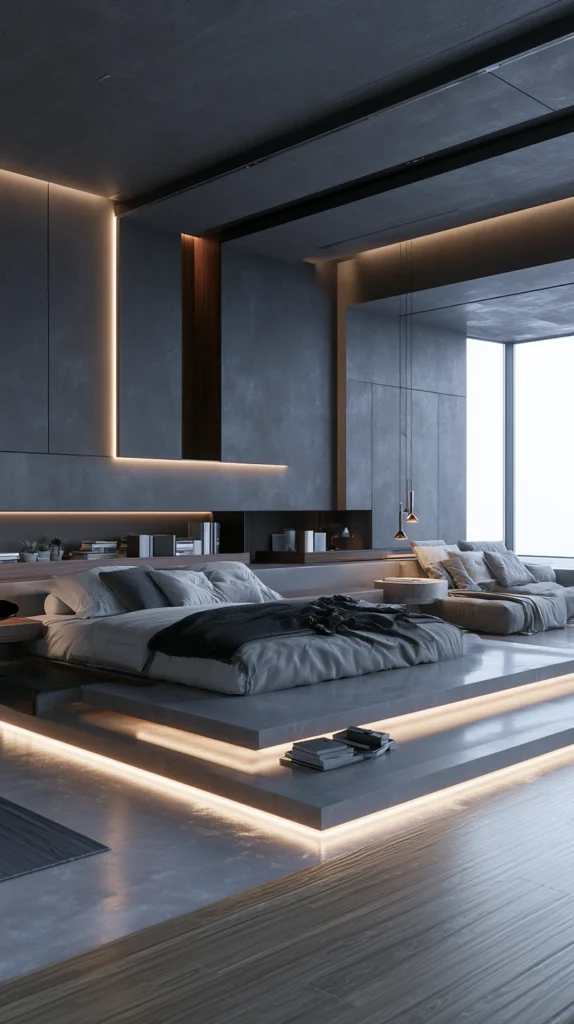
A bedroom designed around the platform bed as the central organizing decision — every choice in the room made in response to the low horizontal bed at its center.
What separates the complete room from a single furniture purchase
A platform bed in an otherwise unchanged room: a new frame. A bedroom designed around a platform bed: a different kind of room. The difference: whether the wall color, the lighting, the floor treatment, the furniture heights, and the textile choices were each made in response to the bed’s proportions.
The elements of the complete low modern bedroom
The frame
One platform bed in a material that sets the room’s material direction — solid walnut for a warm, organic room; black steel for a graphic, minimal room; upholstered bouclé for a soft, textural room.
The walls
Either very light — warm white, off-white — so the room reads as open and the bed reads as the main object. Or very dark — navy, forest green, deep terracotta — so the room reads as enveloping and the bed recedes into the depth.
The lighting
Three sources, none of them overhead only. A floor lamp in a corner. A wall-mounted reading lamp on each side. An ambient layer — LED strip or string lights — at floor or ceiling level.
The floor
Left mostly bare, or with one rug that stops short of the bed edges, so the platform sits on the floor rather than on a textile field.
The furniture
Everything as low as possible. Low side tables at platform height, not at standard nightstand height (24 to 26 inches). A low dresser or chest. A floor-level lamp.
The textiles
Bedding fitted closely — not puddling at the sides. A single throw at the foot, folded once. Two to four pillows, all in the same linen or cotton tone. No decorative pillows that will be removed before sleeping.
The room as it works across a day
7am: The low bed in clear morning light, the platform reading as a horizontal plane against the wall. The room: spacious in a way a standard-height bed rarely allows.
12pm: The room at rest between uses. The bed made. The single throw folded at the foot. The room: organized without effort because there is little to organize.
6pm: Lamps on. The low frame: more visible in lamp light than in daylight, the warm wood or upholstered surface catching the glow. The room: already prepared for the end of the day.
11pm: One lamp only. The LED strip under the frame glowing at floor level, if the floating platform was chosen. The room: ready.
The complete low modern bedroom: not a style but a decision about how a room should feel to live in. The platform bed: the decision that makes that feeling possible.
Cost breakdown for the complete room: Platform frame (any material above): $400–1,400 Low-profile mattress: $300–800 Wall paint: $40–80 Lighting (3 fixtures): $120–300 Low side tables (2): $80–200 Bedding: $80–200 Single rug (if used): $60–200 Total: $1,080–3,180
Phased over two to three seasons:
Season one ($400–800): The platform frame A low-profile mattress White linen bedding
Season two ($200–500): The wall color decision One additional lighting layer Low side tables
Season three ($200–600): A rug, if not chosen initially A floor lamp Any remaining furniture at the correct height
The low modern bedroom: not a weekend project but a room built intentionally over time, from the bed outward.
The question before any platform bed decision
Before choosing a frame, a material, a finish:
What is the primary reason for wanting this feeling in the room?
If the answer is: full transformation — the built-in plywood platform or the fully considered complete room. If the answer is: testing the low aesthetic first — the solid walnut frame or the upholstered bouclé option. If the answer is: atmosphere without construction — the Japanese low frame or the black steel option. If the answer is: the simplest and cheapest possible entry — the CMU block platform at under $100.
The design follows the level of commitment available. Every platform bed idea on this list serves the same low horizontal aesthetic at a different scale, material, and price point.
The low modern bedroom: not a single purchase but a room that grows from one decision made at the right height.