14 Geometric Pattern Wall Ideas for a Bold Maximalist Room
Most wall treatment advice defaults toward restraint — one accent wall, a muted tone, pattern used sparingly if at all. Maximalist design rejects that premise entirely. A geometric pattern wall isn’t a cautious accent; it’s a full commitment to visual rhythm, repetition, and scale, treated as the room’s foundation rather than a single decorative gesture layered on top of a neutral backdrop.
The risk with bold geometric pattern is real — poorly scaled or badly paired, it can read chaotic rather than confident. But the difference between a maximalist room that feels curated and one that feels like visual noise almost never comes down to how bold the pattern is.
It comes down to whether the pattern has a clear scale, a considered colour relationship to the rest of the room, and enough breathing room in the room’s other elements to let the wall actually do its job as a focal statement.
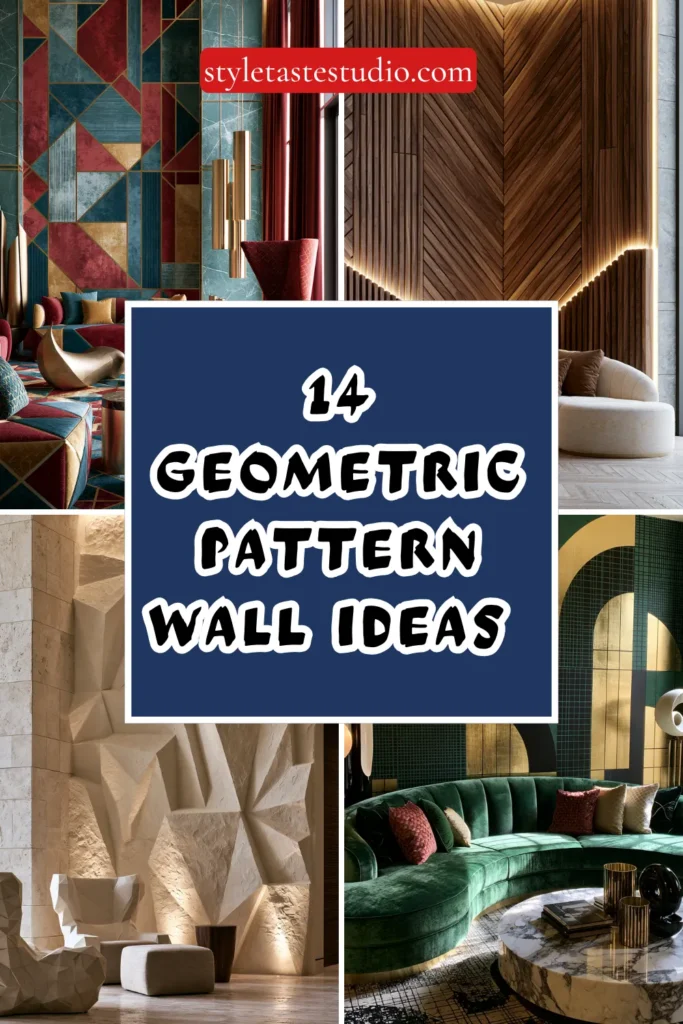
This list treats geometric pattern as a serious design tool, not just a wallpaper choice, covering everything from paint and tile to mirror and plaster. Here are 14 ways to build a bold geometric wall that anchors a maximalist room rather than overwhelming it.
Why Some Bold Pattern Walls Read Chaotic Instead of Confident
The scale-mismatch problem:
Without considering scale relative to the room:
- A small, busy geometric print applied to a large wall, multiplying into visual static from a normal viewing distance
- A single, huge-scale pattern crammed onto a small wall, with no room for the eye to register the repeat
- The result: pattern that reads as noise rather than a coherent, readable design
With scale matched to the room:
- Pattern scale chosen relative to the wall’s actual size and the room’s typical viewing distance
- Larger, simpler geometric repeats for bigger walls and rooms viewed from a distance; smaller, denser patterns reserved for closer-range walls
- The result: the pattern reads clearly as an intentional design element, at the scale it’s meant to be seen
The competing-pattern problem:
- Multiple bold patterns introduced without any shared colour thread or scale relationship
- The result: patterns fighting each other for attention rather than working together as a layered, considered maximalist scheme
The no-relief problem:
- Every surface in the room, including furniture and textiles, matching the same intensity of pattern and colour as the wall
- The result: even a genuinely well-designed wall gets lost, since nothing in the room provides visual relief or a resting point for the eye
The Five Bold Geometric Wall Principles
Before choosing any individual idea below, these five principles keep a maximalist geometric wall reading confident rather than chaotic:
Scale matched to the wall and viewing distance:
- Larger patterns for larger walls and rooms viewed from across a space
- Smaller, denser patterns reserved for closer, more intimate walls
One dominant pattern, with supporting elements in a shared colour family:
- A single geometric focal wall or feature, with other patterns in the room (if any) sharing at least one colour with it
- Multiple unrelated bold patterns compete rather than layer
At least one significant area of visual relief:
- A solid-coloured ceiling, floor, or furniture piece providing a place for the eye to rest
- Full pattern saturation on every surface removes any resting point and tips into visual overload
Repetition as the organizing structure:
- Geometric pattern relies on a clear, readable repeat; irregular or overly complex geometric forms lose the visual rhythm that makes pattern work in the first place
- A simple, well-executed repeat reads bolder and more confident than a complicated one
Colour saturation considered alongside pattern:
- A high-contrast, saturated palette reads maximalist on its own; pattern adds a second layer of intensity on top of it
- Choosing where the room’s overall colour intensity peaks (the wall, or elsewhere) avoids every element competing at full saturation simultaneously
1. A Bold Geometric Wallpaper Feature Wall
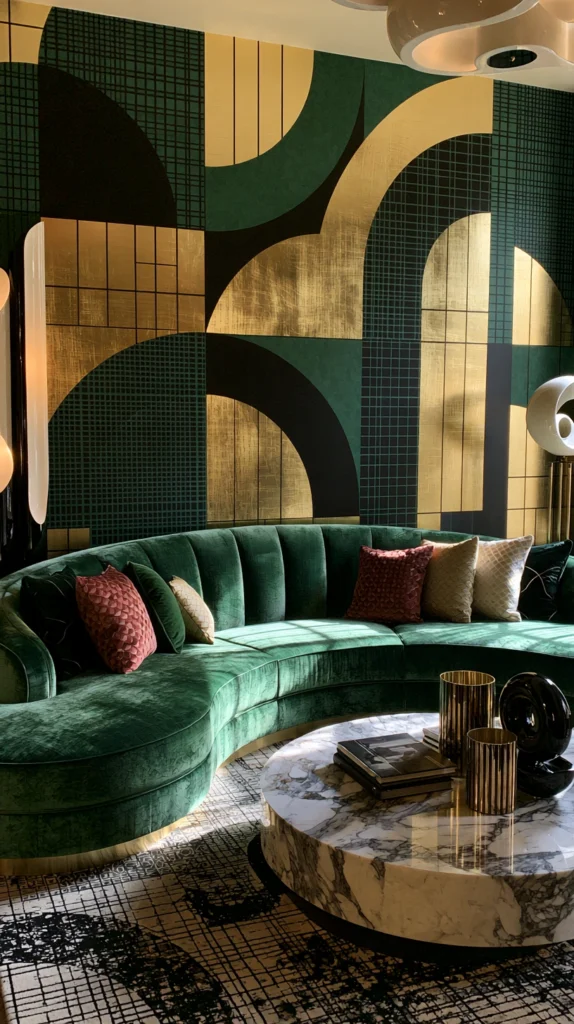
A single wall covered in a large-scale, high-contrast geometric wallpaper — chevron, ikat, or a bold repeating tile motif — as the room’s clear anchor.
Why wallpaper remains the most direct route to a bold geometric statement
Wallpaper delivers precise, professionally designed pattern repeats at a scale and colour saturation that would be difficult to achieve reliably with DIY paint techniques. For a maximalist room specifically, it’s often the fastest way to establish a confident, fully committed pattern statement in a single project.
Scale and colour selection
- A large-scale repeat (12+ inch pattern units) for a full wall application, avoiding a busy, small-scale print that can overwhelm at full-wall coverage
- A high-contrast colour pairing (deep navy and warm gold, or black and a saturated jewel tone) for maximum visual impact
Cost breakdown
- Bold geometric wallpaper (per roll, sufficient for one wall): $60–120 per roll, typically 2–4 rolls needed
- Total: $180–480
2. A Hand-Painted Geometric Mural
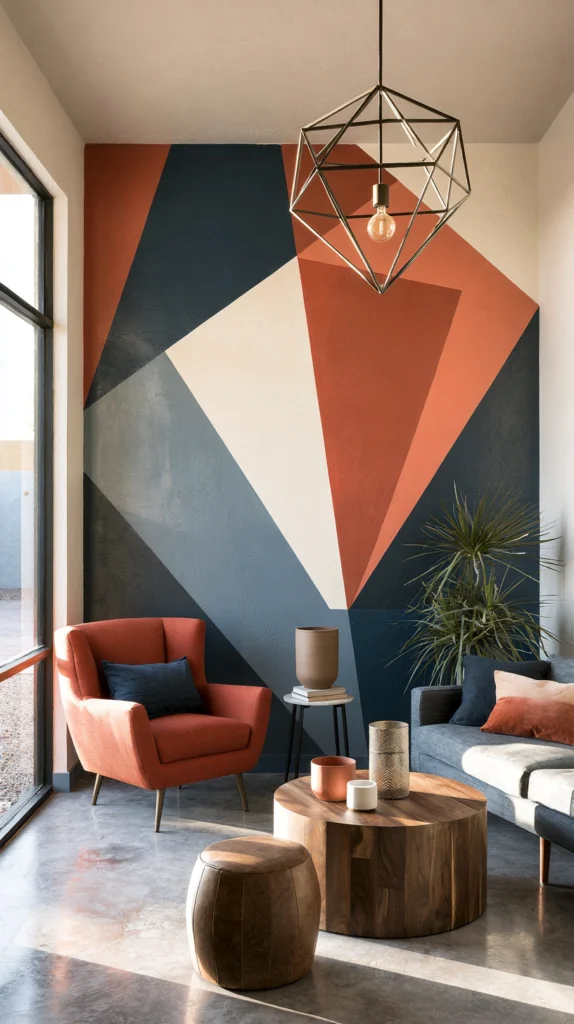
A large-scale geometric pattern painted directly onto the wall using painter’s tape and multiple paint colours, rather than wallpaper — a lower-cost, fully customizable alternative.
Why hand-painting offers more control over exact colour and scale
Unlike wallpaper, which comes in fixed colourways and repeat sizes, a hand-painted mural can be scaled and coloured exactly to the room’s specific dimensions and palette, without being limited to a manufacturer’s existing product line.
Execution notes
- Painter’s tape used to mask the geometric shapes before applying each colour, working from the lightest colour to the darkest
- A simple, large-scale geometric form (triangles, a chevron pattern, or a bold grid) is more achievable as a DIY project than a highly detailed or curved design
Cost breakdown
- Paint (multiple colours) and painter’s tape: $60–110
- Total: $60–110
3. A Geometric Tile Accent Wall
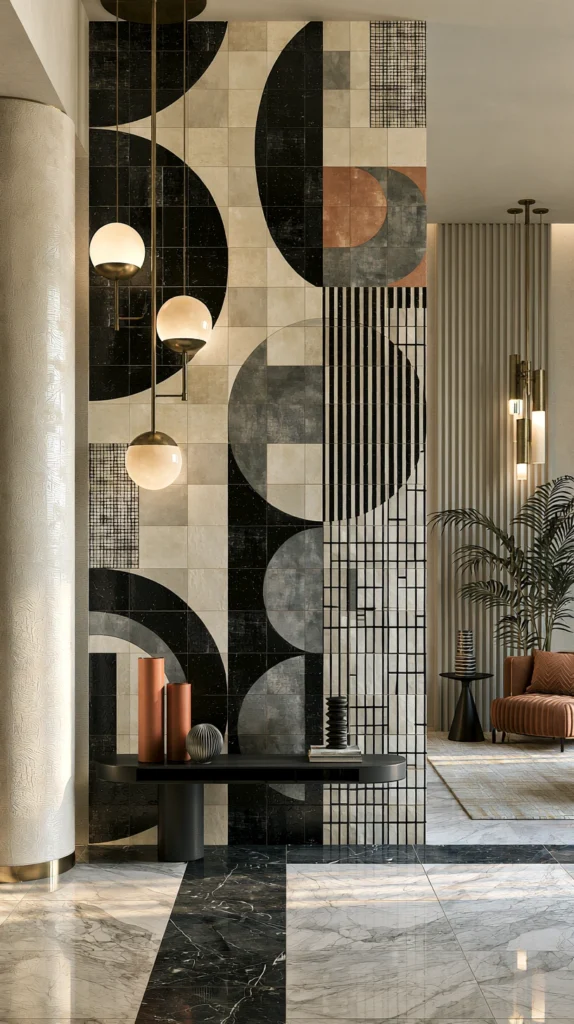
Patterned cement or ceramic tile, in a bold geometric design, installed as a full accent wall — most commonly in a bathroom, kitchen, or entryway, though increasingly used in living spaces as well.
Why tile offers a different texture and permanence than paint or paper
Tile introduces genuine dimensional texture and a permanent, durable finish that neither paint nor wallpaper can match, making it particularly well suited to a maximalist room that wants its boldest gesture to also be its most substantial, long-term material investment.
Selection and installation
- Cement tile in a bold geometric motif, available in a wide range of colourways and pattern scales
- Best suited to a wall without excessive obstruction (outlets, switches) for the cleanest overall pattern read
Cost breakdown
- Geometric cement or ceramic tile (per sq ft, installed): $15–30
- Total (average accent wall, ~100 sq ft): $1,500–3,000
4. Layered Pattern Through Wallpaper and Textiles
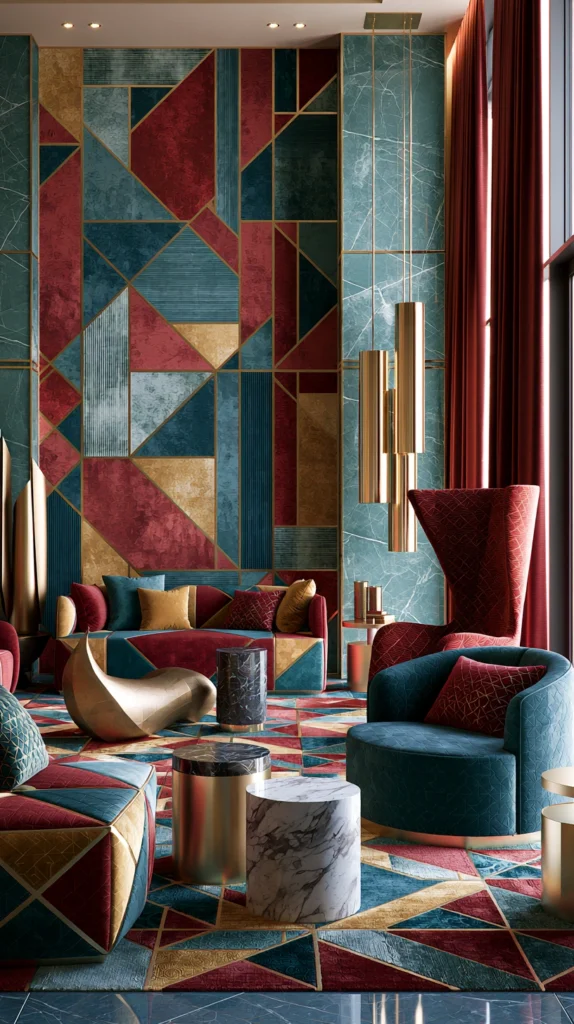
A geometric wallpaper wall paired deliberately with a second, smaller-scale pattern in the room’s textiles — cushions, a rug, or curtains — sharing at least one colour with the wallpaper.
Why layering two patterns (carefully) suits a true maximalist approach
A single pattern, however bold, is a more restrained maximalist gesture than most fully committed maximalist rooms actually aim for. Layering a second, distinctly different-scaled pattern in the textiles — while sharing a colour thread with the wall — achieves the richer, more saturated effect associated with genuine maximalism, without the patterns competing directly.
Building the layer
- The wallpaper pattern at a larger scale, the textile pattern at a noticeably smaller scale, avoiding two patterns of similar visual weight
- At least one specific colour repeated in both the wallpaper and the textile pattern, tying the two together
Cost breakdown
- Patterned cushions or throw (in addition to wallpaper cost from Idea #1): $60–120
- Total: $60–120
5. A Color-Blocked Geometric Paint Treatment
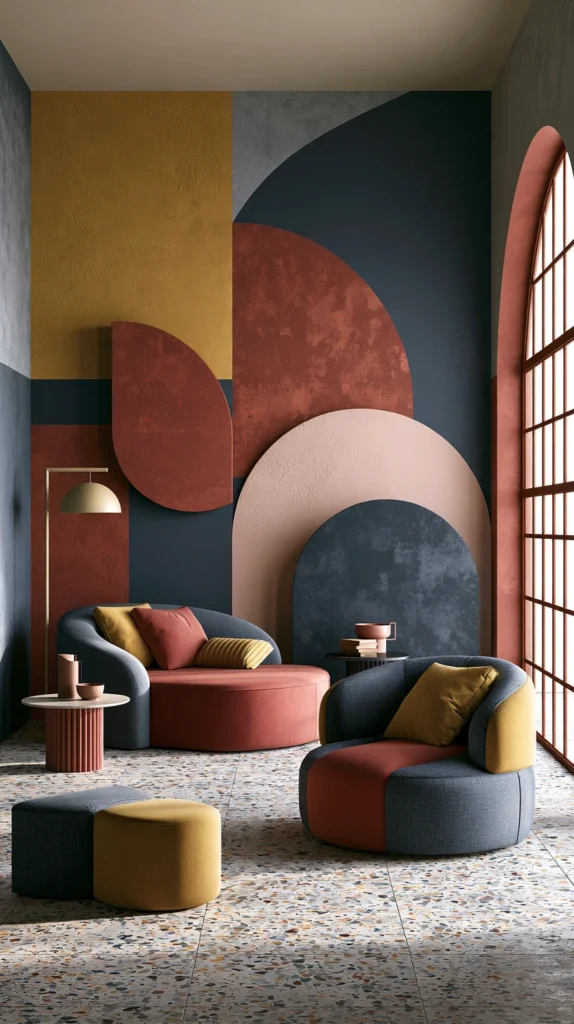
Large geometric shapes — triangles, diamonds, or an angular grid — painted in blocks of solid, contrasting colour directly onto the wall, without any smaller repeating pattern.
Why large color-blocking reads bold without needing a printed pattern
Color-blocking relies entirely on the contrast and placement of large solid shapes rather than a printed repeat, delivering a strong graphic, geometric statement through paint alone. It’s particularly effective in a room where a printed wallpaper’s specific style doesn’t suit the rest of the decor, but a bold graphic gesture is still wanted.
Execution notes
- Large-format shapes (each block at least 12–24 inches across) rather than a dense, small-scale pattern, which is difficult to execute cleanly with paint and tape
- Three to four colours maximum, chosen from a considered palette rather than an arbitrary mix
Cost breakdown
- Paint (3–4 colours) and painter’s tape: $70–130
- Total: $70–130
6. A Wood Slat Herringbone or Chevron Wall
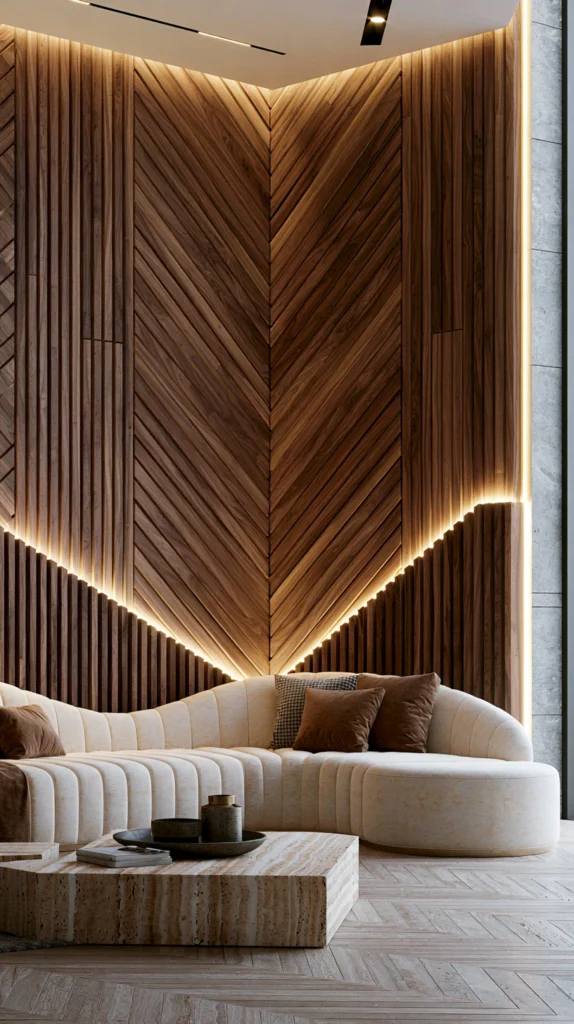
Wood slats installed in a herringbone or chevron pattern, providing a dimensional, textural geometric statement rather than a flat printed or painted one.
Why a wood slat pattern suits a maximalist room that also wants warmth
Where wallpaper and paint provide colour-driven pattern, a wood slat wall delivers the same geometric repetition through material and shadow instead, adding genuine dimensional texture and warmth that a flat pattern can’t provide. It suits a maximalist room that wants boldness through material richness as much as through colour.
Installation and finish
- Slats cut and installed at consistent angles to form the herringbone or chevron repeat, typically requiring more precise measurement and cutting than a straight slat wall
- Left natural or stained in a rich, deep tone for maximum shadow and dimensional contrast
Cost breakdown
- Wood slat herringbone or chevron wall (per sq ft, installed): $18–32
- Total (one accent wall, ~100 sq ft): $1,800–3,200
7. A Geometric Grid Gallery Wall
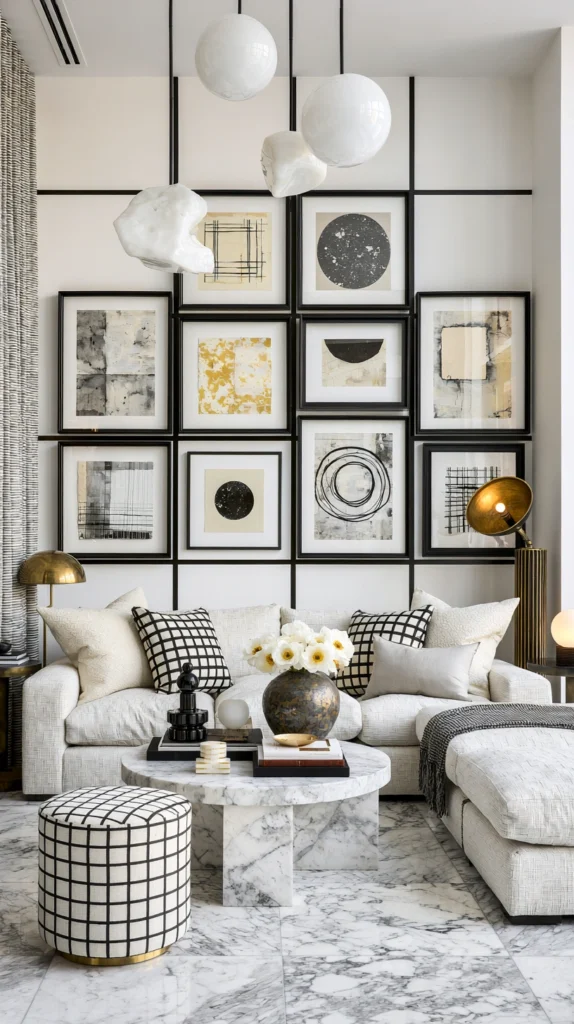
Art and mirrors arranged in a strict, evenly spaced geometric grid — rather than an organic, varied cluster — creating a pattern effect through the arrangement itself rather than any single patterned surface.
Why arrangement alone can create a geometric pattern effect
Not every idea on this list requires a printed or painted pattern. A gallery wall arranged in a precise, repeating grid — same-sized frames, identical spacing — creates a geometric, repetitive visual rhythm purely through composition, offering a more budget-friendly and reversible route to the same underlying design principle.
Layout guidance
- Identical or closely matched frame sizes, arranged in a strict grid with consistent spacing (2–3 inches) between each piece
- A minimum grid of 3×3 or 4×4 for the repetition to read clearly as an intentional pattern rather than a simple small gallery
Cost breakdown
- Matching frames (9–16, depending on grid size): $70–160
- Total: $70–160
8. A Mirror Tile Geometric Wall
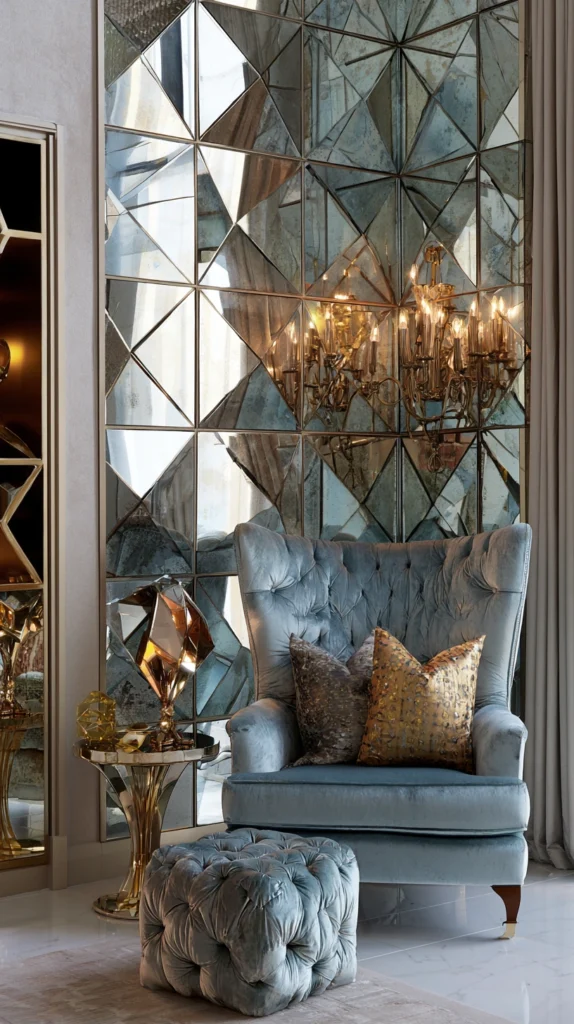
Small geometric mirror tiles — hexagons, diamonds, or triangles — installed across a full wall or a large section of one, creating a reflective, dimensional geometric pattern.
Why mirror tile adds a reflective quality no printed pattern can replicate
Beyond its geometric repeat, a mirror tile wall reflects and fractures light and colour from the rest of the room, adding a genuinely different sensory quality than any flat pattern. In a maximalist room already rich with colour and pattern elsewhere, the mirrored surface reflects and multiplies that richness rather than adding a competing flat surface.
Installation notes
- Mirror tiles are typically installed with a specialized adhesive rated for mirror-backed materials, since standard tile adhesive can damage the mirror backing over time
- Best suited to a wall without heavy furniture placement directly against it, so the full reflective effect remains visible
Cost breakdown
- Geometric mirror tile (per sq ft, installed): $20–40
- Total (accent wall, ~80 sq ft): $1,600–3,200
9. A Patterned Ceiling as the Fifth Wall
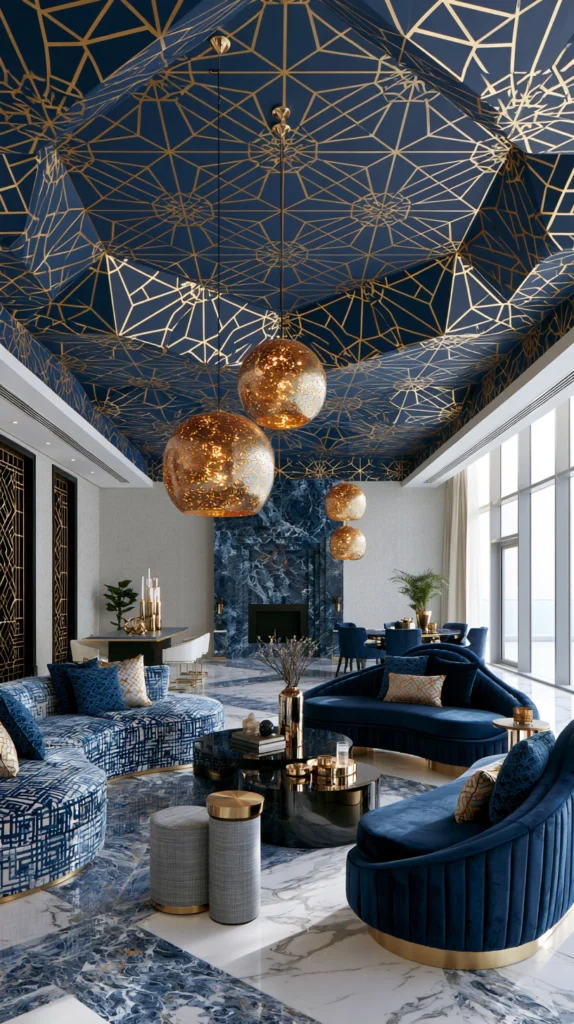
Bold geometric wallpaper or a painted pattern applied to the ceiling rather than a wall, treating the ceiling as an additional surface for the room’s maximalist statement.
Why the ceiling is an underused opportunity in most rooms
Ceilings are almost universally left plain white, regardless of how boldly the rest of a room is decorated, missing an entire surface that’s fully visible from most points in the room. Applying pattern here, sometimes called treating the ceiling as the room’s “fifth wall,” delivers a genuinely unexpected maximalist gesture most visitors won’t have seen before.
Selection and application
- A pattern that reads well when viewed from below and often at an angle, since a busy, detailed print can distort or become harder to parse from a ceiling vantage point compared to a wall
- Coordinated with, rather than identical to, any wall pattern already in the room, to avoid an overly matched, coordinated-set appearance
Cost breakdown
- Ceiling wallpaper (per room, average size): $200–450
- Total: $200–450
10. A Vinyl Decal Geometric Pattern
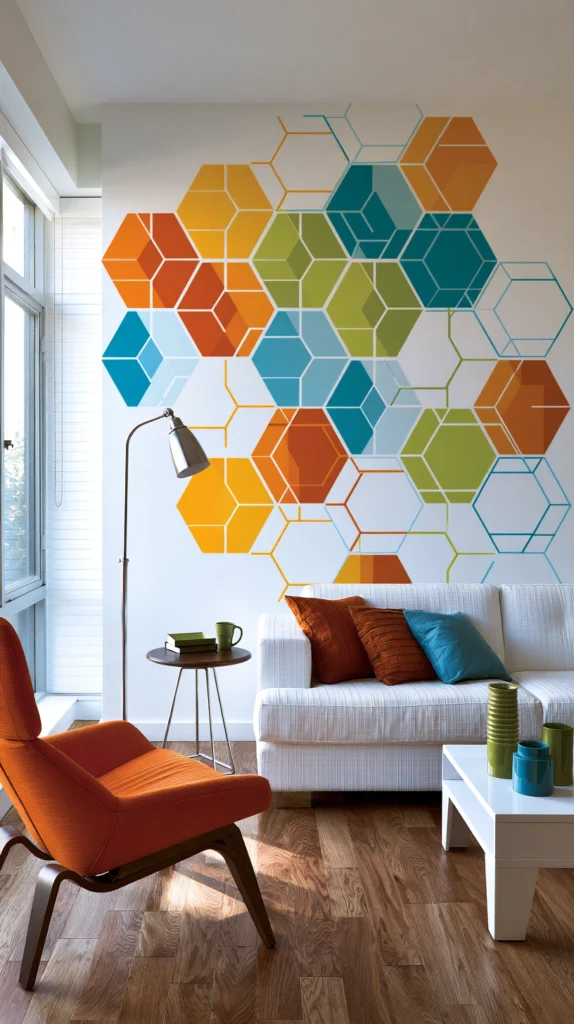
Removable vinyl wall decals, applied in a geometric arrangement, offering a lower-cost and fully reversible alternative to wallpaper or paint.
Why vinyl decals suit a rental or a lower-commitment approach
Unlike wallpaper or paint, vinyl decals can be removed without damaging the wall surface underneath, making this the most practical option for a renter or anyone hesitant to commit to a permanent bold pattern treatment.
Application notes
- Applied to a clean, smooth wall surface for the best adhesion and longevity
- Available in a wide range of geometric shapes and repeat scales, allowing a custom arrangement built from individual decal units rather than a single continuous roll
Cost breakdown
- Geometric vinyl wall decals (sufficient for one wall): $40–90
- Total: $40–90
11. A Textured Plaster Geometric Relief
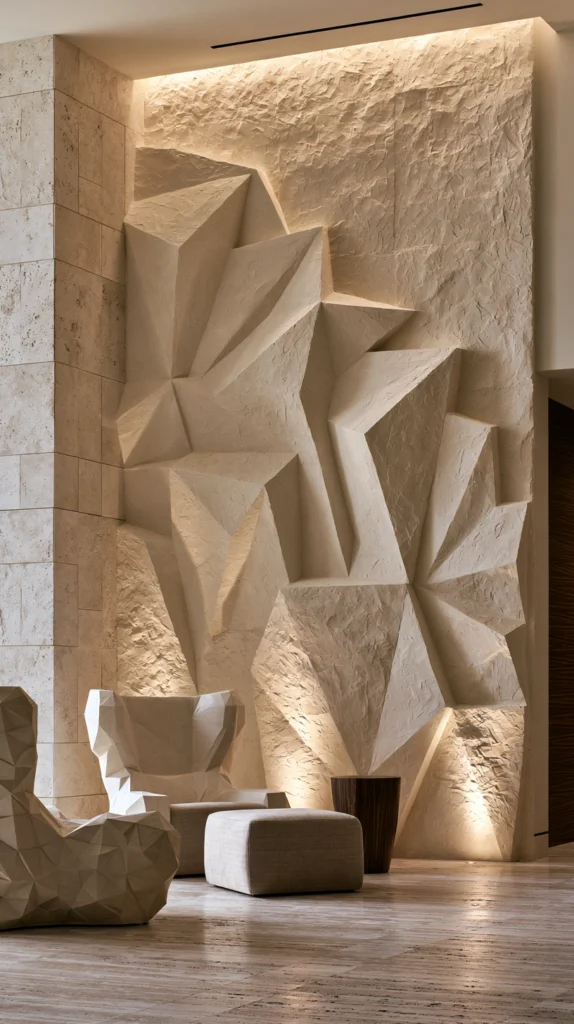
A geometric pattern created through raised or recessed plaster relief work, rather than colour or printed pattern, relying entirely on shadow and texture for its visual effect.
Why a relief pattern reads as the most substantial, custom option on this list
Unlike any flat pattern application, a plaster relief wall creates genuine three-dimensional texture, with the pattern’s visibility shifting as light changes throughout the day. It’s also among the most bespoke options available, typically requiring a skilled plasterer or artisan to execute well.
Execution and finish
- Typically applied over an existing wall surface by a skilled plasterer, using a template or freehand technique for the geometric repeat
- Left in its natural plaster tone, or painted a single colour afterward to emphasize the shadow and texture over any colour contrast
Cost breakdown
- Custom plaster relief wall (professionally executed, per sq ft): $25–50
- Total (accent wall, ~100 sq ft): $2,500–5,000
12. A Bold Geometric Rug as the Grounding Element
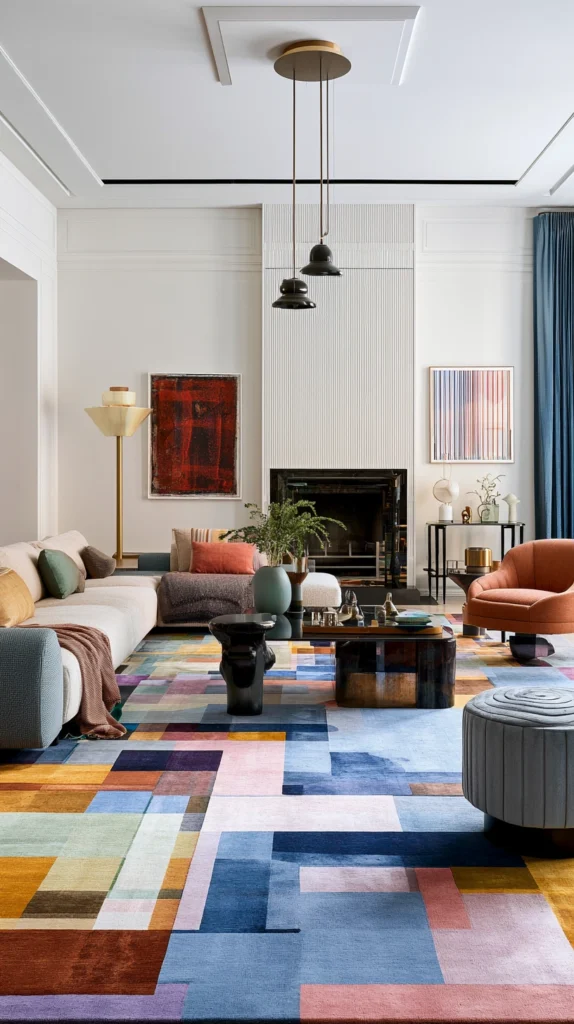
Rather than (or in addition to) a patterned wall, a bold geometric rug used as the room’s primary pattern statement at floor level, with walls kept comparatively simple.
Why grounding the pattern at floor level is a valid alternative approach
Not every maximalist room needs its boldest gesture on the wall. A large, high-contrast geometric rug can serve the same anchoring function from the floor, allowing the walls to stay simpler while the room still reads as confidently patterned and maximalist overall.
Selection and placement
- A rug sized generously for the room, with the pattern’s scale suited to a floor-level viewing distance (typically able to be somewhat busier than a wall pattern would be, since it’s viewed from directly above and up close)
- Paired with solid-coloured or simply patterned walls, letting the rug carry the room’s primary geometric statement
Cost breakdown
- Large bold geometric area rug: $300–650
- Total: $300–650
13. Geometric Curtain or Fabric Panels
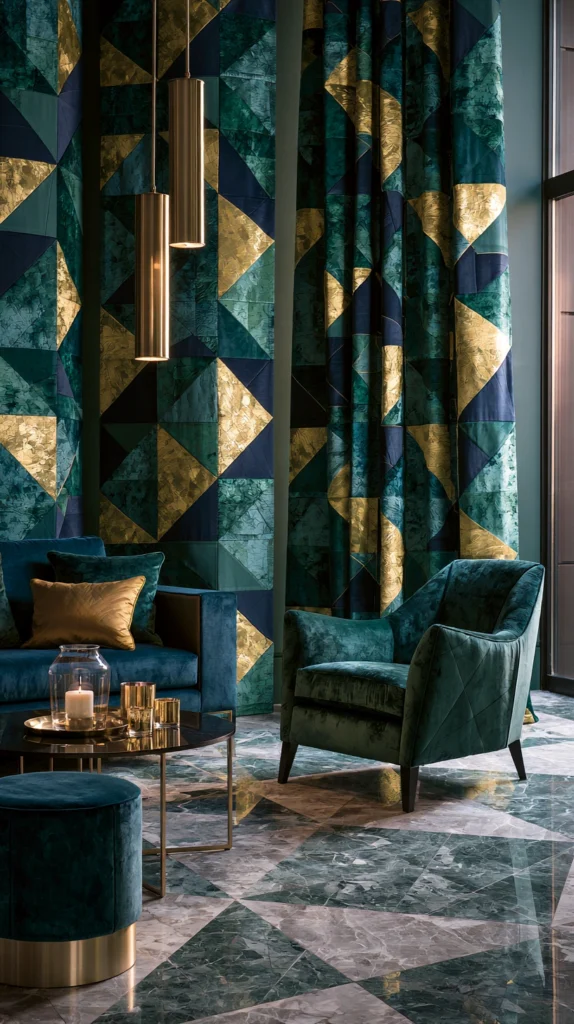
Full-length curtains or fabric wall panels in a bold geometric print, used to introduce pattern across a large vertical surface without a permanent wall treatment.
Why fabric panels offer scale with full reversibility
Curtains or hung fabric panels can achieve a similarly large-scale visual impact to a full wallpapered wall, while remaining completely reversible and, in the case of curtains, functional as actual window treatment as well.
Application
- Full-length panels, hung close to the ceiling, in the same bold geometric print used elsewhere in the room’s pattern scheme
- Can be used purely as a wall-mounted fabric panel (rather than functional curtains) on a wall without a window, for a fully custom, tapestry-like effect
Cost breakdown
- Geometric print curtain or fabric panels (pair): $60–140
- Total: $60–140
14. The Complete Bold Maximalist Geometric Room
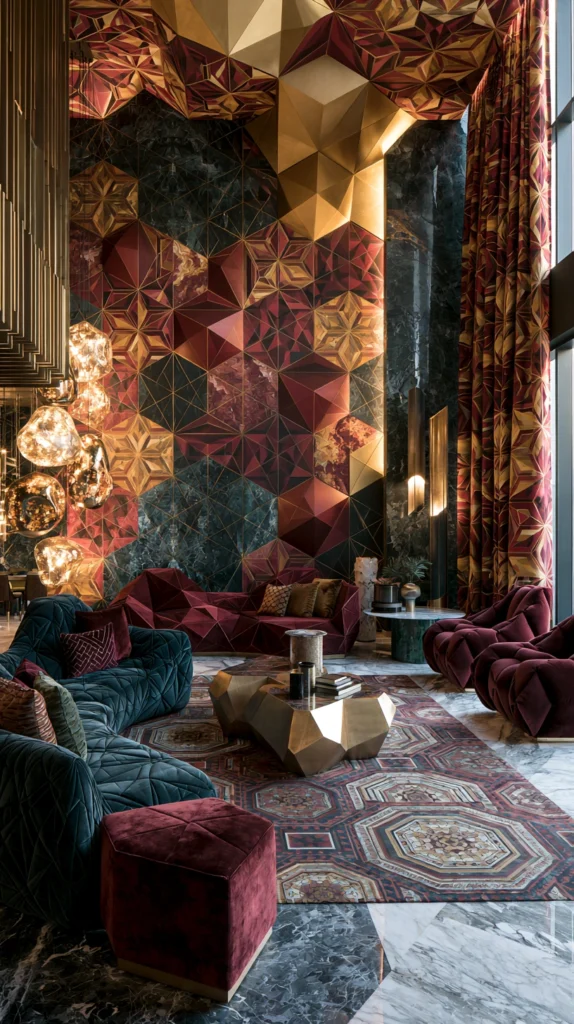
A room designed with every principle above applied together — the definitive version of a maximalist space where geometric pattern reads as confidently curated rather than overwhelming.
What separates the complete room from a single bold wallpaper choice
A single stunning geometric wallpaper wall, surrounded by furniture and textiles with no relationship to its pattern or colour, still risks feeling like one disconnected decision rather than a fully realized maximalist scheme. The complete version repeats the wall’s colour and pattern language throughout the room at varying scales, while still preserving enough visual relief that the whole space reads as intentional rather than chaotic.
The elements of the complete room
The primary statement:
- One bold geometric wallpaper or painted feature wall (Idea #1, #2, or #5)
The supporting pattern layers:
- A smaller-scale patterned textile sharing the wall’s colour palette (Idea #4)
- A geometric rug at floor level, in a complementary but distinct scale (Idea #12)
- Geometric curtain or fabric panels (Idea #13)
The unexpected surfaces:
- A patterned ceiling, if the room’s height and lighting suit it (Idea #9)
- Mirror or plaster relief detailing on a secondary wall, if budget allows (Idea #8 or #11)
The visual relief:
- At least one wall left in a simple, solid colour
- Furniture in solid, saturated colours rather than additional competing patterns
The room in use on an ordinary evening:
The feature wall anchors the space immediately on entry, its scale and colour repeated more quietly in the rug underfoot and the cushions on the sofa. The ceiling, painted or papered to match, completes the sense of being fully inside a considered pattern world rather than simply facing one wall of it. A single plain wall and solid-coloured furniture give the eye somewhere to land between all the pattern, keeping the room feeling curated rather than visually exhausting.
Cost breakdown for the complete room
Assuming a starting point of a plain, unpapered room:
- Feature wallpaper wall: $180–480
- Patterned textiles: $60–120
- Geometric rug: $300–650
- Curtain or fabric panels: $60–140
- Ceiling treatment: $200–450
Total: $800–1,840 (excluding tile, mirror, or plaster options, which run considerably higher)
Phased over two stages:
Stage one ($250–600):
- Feature wall
- Patterned textiles
Stage two ($550–1,240):
- Rug
- Curtain panels
- Ceiling treatment
The complete maximalist geometric room: not a single bold wall, but a full environment where pattern repeats confidently across multiple surfaces and scales, with just enough relief to keep it readable.
The Question Before Any Bold Geometric Wall Project
Before choosing a pattern:
Is the goal a single strong statement, or a fully immersive maximalist room?
If the answer is: a single statement wall in an otherwise simpler room — the wallpaper or painted feature wall alone (Ideas #1, #2, or #5) delivers the full impact without requiring the rest of the room to follow suit.
If the answer is: a fully committed maximalist space — build the complete version, repeating the wall’s pattern language across textiles, rugs, and even the ceiling.
If the answer is: renting, or hesitant to commit permanently — vinyl decals or fabric panels deliver the same visual boldness with full reversibility.
If the answer is: budget-conscious but still wanting real impact — the gallery wall grid (Idea #7) achieves a genuine geometric pattern effect through arrangement alone, at a fraction of the cost of wallpaper or tile.
The approach follows how fully committed the room and household are to a genuinely maximalist direction, not the most dramatic option on this list. A single well-executed feature wall, properly scaled and paired with some visual relief elsewhere in the room, can deliver most of the impact of a fully immersive treatment at a fraction of the cost and commitment.
Getting Started This Weekend
The immediate bold geometric step:
Choose one wall and measure its actual dimensions against typical pattern repeat sizes.
Confirms the right pattern scale before any wallpaper or paint purchase is made.
Test a paint or wallpaper sample directly on the wall, viewed from the room’s typical seating distance.
Pattern that looks right up close can read completely differently from across a room.
Identify one existing textile or rug that could share a colour with the planned wall.
Establishes the colour thread that will tie the room together before the wall itself is finished.
Confirm at least one wall or large furniture piece will stay solid and simple.
Plans the room’s visual relief before the pattern goes up, rather than realizing afterward that nothing balances it.
The rest of the room: the elaboration of this weekend.
The pattern: the beginning. The maximalist room: what bold geometric repetition becomes once it’s scaled, coloured, and balanced with enough restraint to actually be read as confident design.