15 Witchcore Living Room Ideas for a Moody Enchanting Space
Witchcore draws from a specific, recognizable well of imagery — apothecary bottles, dried botanicals, dark velvet, candlelight, old books — but at its core it’s really about a room that rejects the bright, evenly-lit, everything-visible default most living rooms default to. It’s a space built around shadow as much as light, where a corner left dim is a feature rather than an oversight, and where objects are chosen for the sense of history and mystery they carry rather than how well they photograph in daylight.
Done well, this aesthetic reads as genuinely atmospheric rather than costume-like, the same distinction that separates an authentic collected room from a themed one.
The difference usually comes down to restraint with the more literal symbols (skulls, tarot cards, overt occult imagery used sparingly if at all) and a heavy reliance on mood-setting fundamentals — dark colour, warm low light, rich texture — that don’t require any single reference to read as intentional.
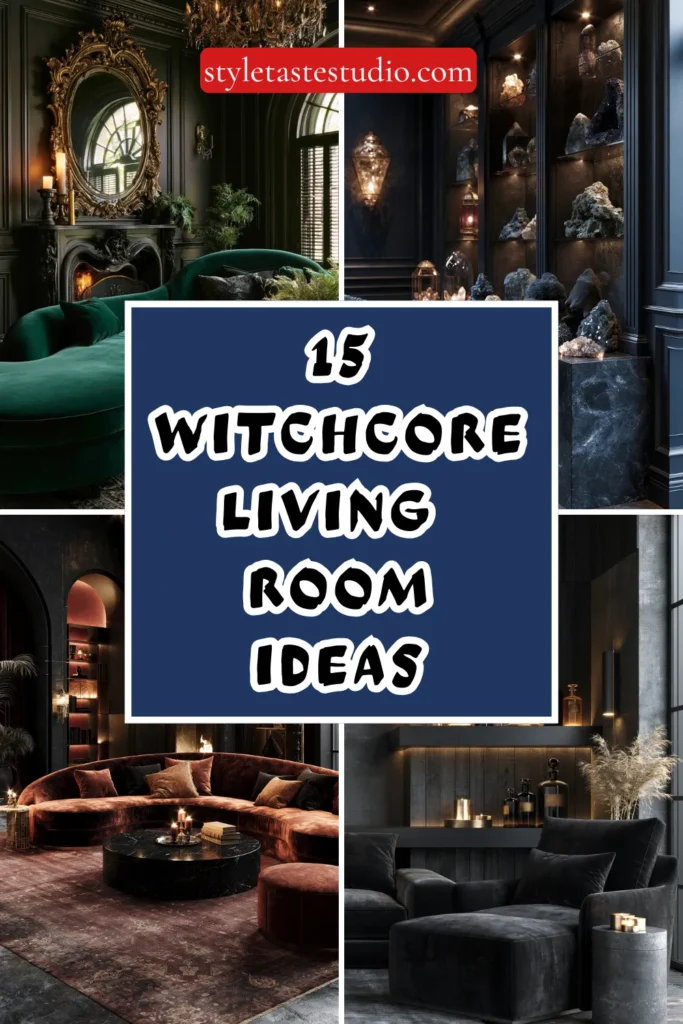
Here are 15 ways to build a witchcore living room that feels genuinely enchanting rather than like a seasonal costume shop display.
Why Some Witchcore Rooms Read as Costume Instead of Atmospheric
The literal-symbol-overload problem:
Without restraint on imagery:
- Skulls, tarot imagery, and overtly occult symbols repeated across multiple objects throughout the room
- The result: reads as a themed display built around a specific reference rather than a genuinely moody, atmospheric space
With restraint on imagery:
- Mood and material carrying most of the aesthetic’s weight — dark colour, candlelight, velvet, dried botanicals
- One or two more literal objects used sparingly, if at all, rather than repeated throughout
- The result: reads as a considered, atmospheric room rather than a themed one
The too-bright problem:
- Standard overhead lighting left in place, undermining the entire premise of a room built around shadow and candlelight
- The result: even with all the right objects in place, bright even lighting flattens the intended mood completely
The cluttered-collection problem:
- Every apothecary bottle, crystal, and dried herb bundle owned displayed simultaneously with no editing
- The result: reads as an overwhelmed collection rather than a curated, atmospheric display
The Five Witchcore Atmosphere Principles
Before choosing any individual idea below, these five principles keep the room reading genuinely moody and enchanting rather than costume-like:
Darkness as a deliberate design choice, not just an accent:
- Deep wall colour, dim corners, and candlelight embraced rather than avoided
- The willingness to let parts of the room stay genuinely dim is central to the whole aesthetic
Restraint with literal occult or mystical imagery:
- One or two subtle objects rather than a room full of overt symbols
- Mood and material do more work than literal iconography
Genuine texture over flat surfaces:
- Velvet, aged wood, wrought iron, and old paper
- A flat, smooth, modern room can’t achieve this aesthetic regardless of the objects placed in it
Warm, low, flickering light as the dominant source:
- Candles and warm lamps, with minimal or no overhead lighting used
- As central to this aesthetic as it is to hobbitcore, though in service of a different, more dramatic mood
Curated, edited object displays:
- A handful of well-chosen apothecary bottles or botanical specimens, not an entire collection displayed at once
- Editing matters as much here as in any other styled room
1. A Deep Purple or Near-Black Wall Colour
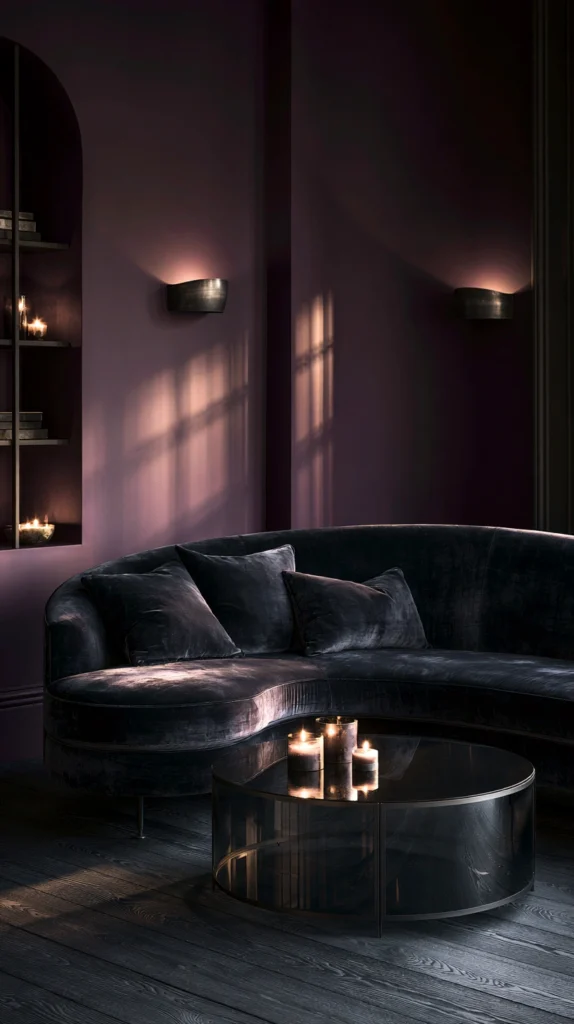
The living room’s walls painted in a deep, dark plum, aubergine, or near-black tone, establishing the room’s foundational mood before any object is added.
Why wall colour is the single most important decision for this aesthetic
More than any object placed within it, the wall colour determines whether a room reads genuinely atmospheric or simply dimly furnished. A true dark tone — not a mid-toned grey or a “greige” — is what allows candlelight and warm lamps to create the dramatic, enveloping shadow this whole aesthetic depends on.
Selection and application
- A deep aubergine, oxblood, or near-black charcoal, in a matte or eggshell finish that absorbs rather than reflects light
- Applied to all walls for full immersion, or to the room’s primary wall if a more gradual introduction is preferred
Cost breakdown
- Deep-toned paint (2 gallons for an average room): $70–110
- Total: $70–110
2. An Apothecary Bottle Display
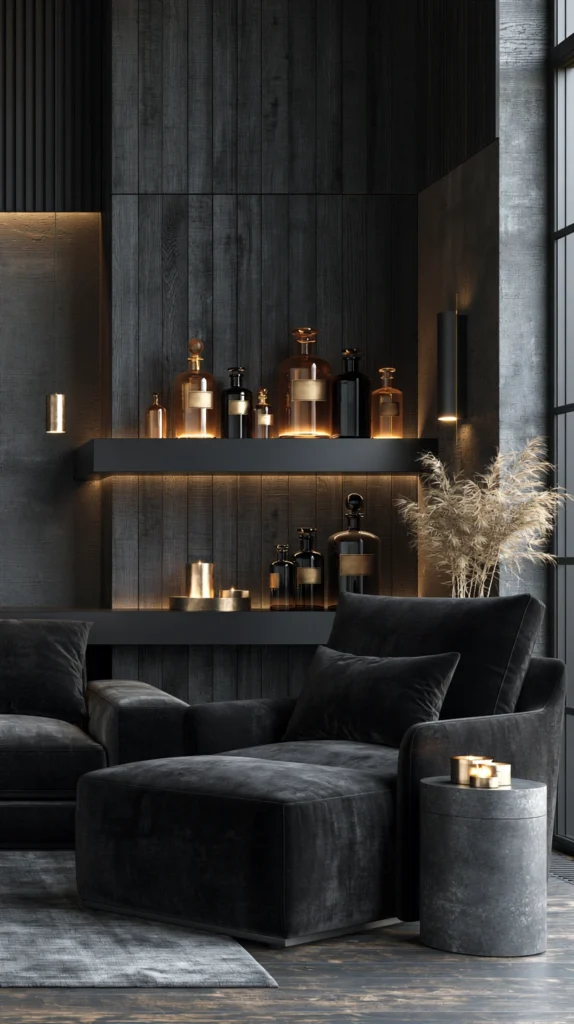
A grouping of amber and dark glass apothecary bottles, arranged on a shelf or mantel, some empty and some holding dried botanicals or tinted liquid.
Why apothecary bottles are one of the aesthetic’s most versatile objects
Beyond their strong visual association with this aesthetic, apothecary bottles are functional as vessels for dried herbs and botanicals (Idea #3), meaning this single object category serves both a display and a practical storage role at once.
Sourcing and styling
- Secondhand shops and antique stores typically offer more character and lower cost than new reproduction bottles
- Grouped in a cluster of 5–7, varying in height and exact tone, rather than a uniform matched set
Cost breakdown
- Apothecary bottles (5–7, secondhand): $25–55
- Total: $25–55
3. Hanging Dried Botanicals
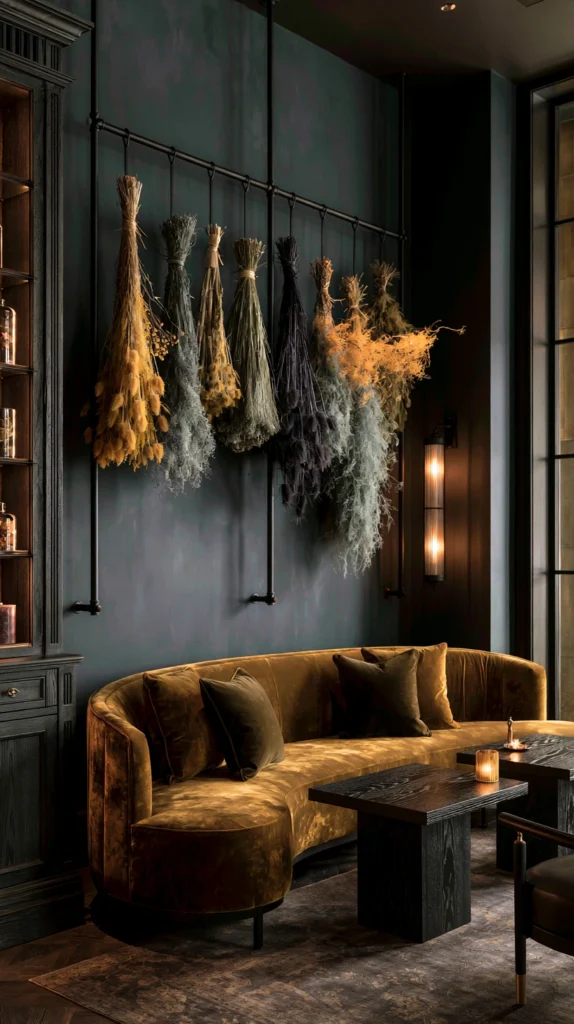
Bundles of dried botanicals — herbs, dark-toned dried flowers, seed pods — hung from a shelf, a beam, or a small rack, echoing an apothecary or witch’s cottage tradition.
Why dried botanicals suit this specific mood differently than a cottagecore application
Where a hobbitcore room hangs herbs primarily for their warm, homey, culinary association, a witchcore room leans toward deeper, more dramatic botanicals — dried roses gone dark, eucalyptus, and darker seed pods — suited to a more mysterious and atmospheric overall mood rather than a purely cozy one.
Assembly and placement
- Small bundles tied with dark ribbon or twine, hung from a shelf edge or a small wall-mounted rack
- A mix of deep burgundy, dark green, and brown-toned dried material, rather than the paler, cream-toned dried florals suited to a lighter aesthetic
Cost breakdown
- Dried botanical bundles: $15–28
- Total: $15–28
4. A Black Taper Candle Cluster
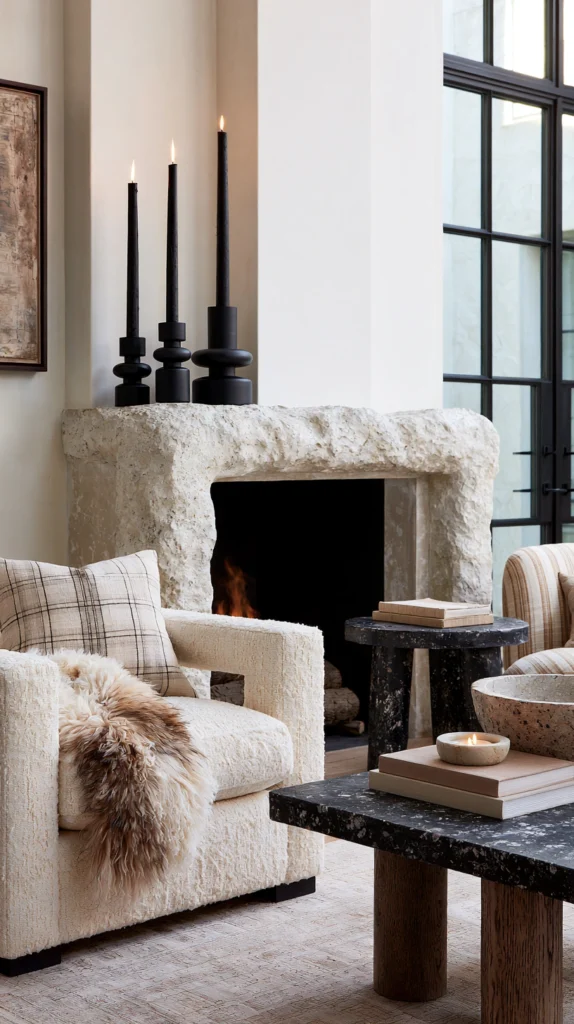
A grouping of black or deep-toned taper candles, at varying heights, in simple dark metal or wood holders, positioned on a mantel or side table as one of the room’s primary light sources.
Why candles function as both light source and atmosphere in this aesthetic
Candlelight is arguably the single most defining sensory element of this entire style, providing genuinely low, warm, flickering light that no electric bulb fully replicates, while the candles themselves — particularly in black or deep jewel tones — serve as a strong visual object even unlit.
Placement and safety
- Varied heights (6–16 inches), clustered together on a stable, heat-safe surface
- Positioned away from curtains, throws, or anything flammable, particularly given the number of candles typically involved in this styling approach
Cost breakdown
- Black or deep-toned taper candles (6–8) and holders: $30–60
- Total: $30–60
5. Dark Velvet Upholstery
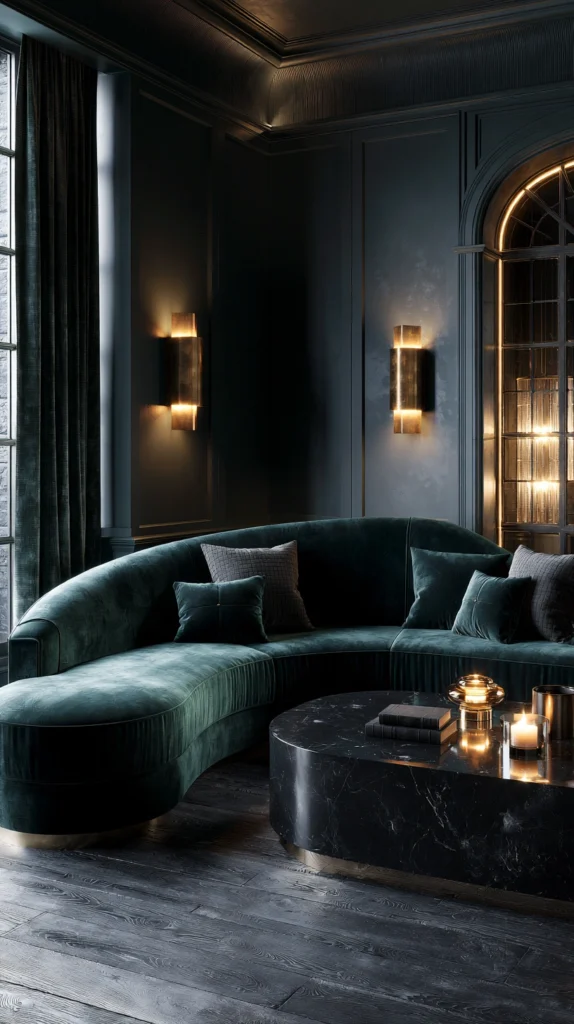
A sofa or accent chair upholstered in a deep jewel-toned or black velvet, providing the room’s primary seating and its richest single textural statement.
Why velvet specifically suits this aesthetic’s material language
Velvet’s depth of colour and light-catching pile read as inherently rich and slightly dramatic, particularly in dark, saturated tones, aligning directly with the overall moody, theatrical quality this aesthetic depends on more than a flatter, more casual upholstery fabric would.
Selection
- Deep emerald, oxblood, or black velvet, depending on the room’s specific colour direction
- A slightly traditional or vintage-influenced silhouette suits the aesthetic more naturally than an overly minimal, contemporary shape
Cost breakdown
- Velvet sofa or accent chair: $500–1,400
- Total: $500–1,400
6. A Curated Vintage Book and Occult-Adjacent Display
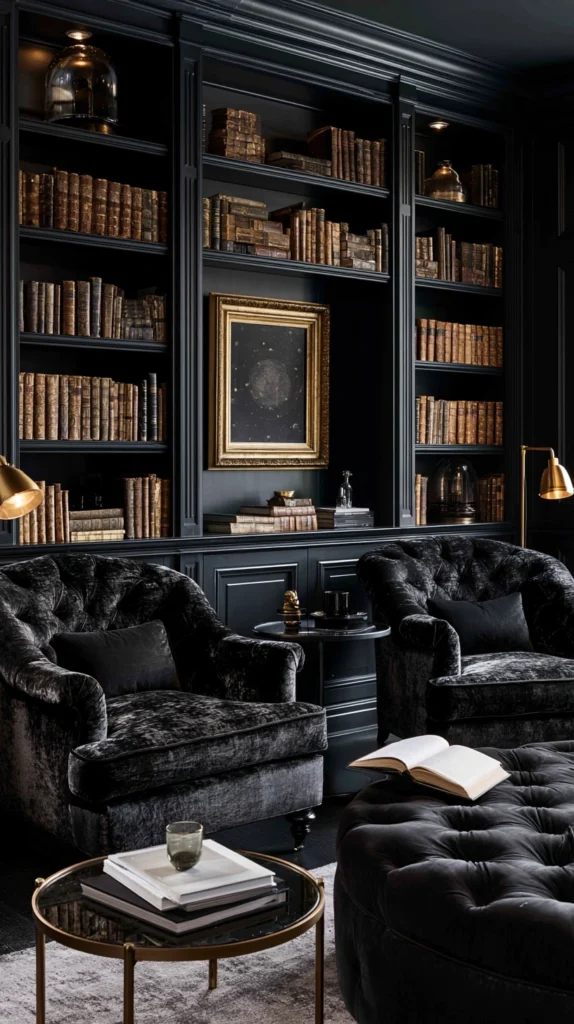
A stack or small shelf of genuinely old, worn books, styled alongside one or two subtle occult-adjacent objects — a small tarot deck, an astrological print — used with restraint rather than as a dominant feature.
Why restraint matters most with this specific category of object
Books and subtle references to divination or astrology carry strong associative weight for this aesthetic, but overusing them — multiple tarot decks, several astrological charts, repeated occult symbols — tips the room from atmospheric into overtly themed. One small, well-placed grouping does more than an entire shelf dedicated to the same category of object.
Styling
- A stack of 4–6 genuinely old books, in dark or worn covers, as the base of the display
- One small, subtle addition (a single tarot card framed, a small astrological print) rather than a full collection
Cost breakdown
- Secondhand books: $10–20
- Small framed print or single occult-adjacent object: $15–35
- Total: $25–55
7. A Crystal and Mineral Display
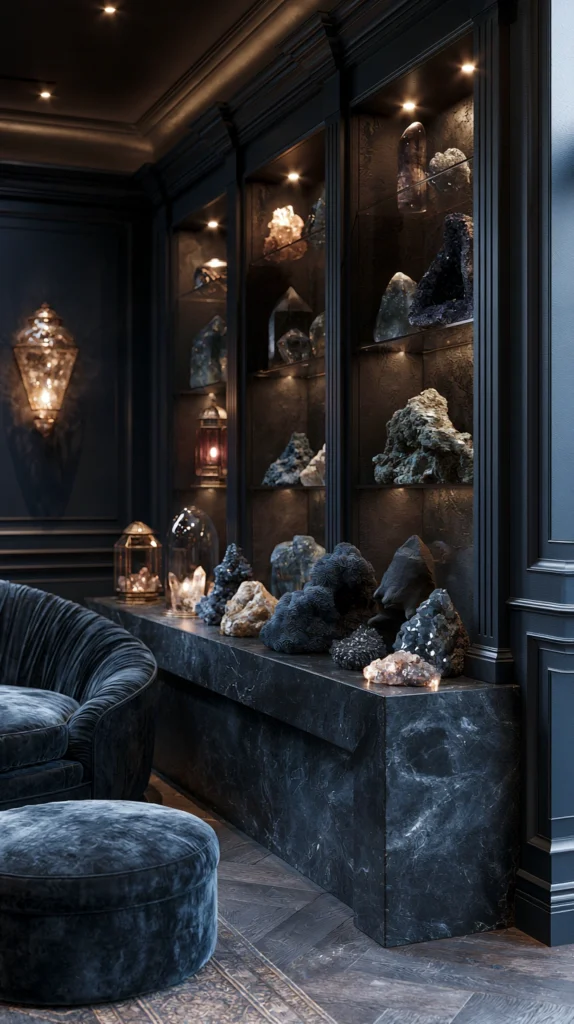
A small curated grouping of natural crystals and mineral specimens, displayed on a shelf or side table, adding genuine natural texture and a mineral, earthy quality to the room.
Why natural crystals read more genuine than styled “crystal decor”
Actual raw or polished mineral specimens, sourced from a rock shop or natural history-focused retailer, carry a materially different quality than mass-produced decorative “crystal” objects designed purely for the aesthetic. The natural, irregular forms and genuine geological origin add authenticity that a purely decorative version can’t replicate.
Selection and grouping
- 3–5 specimens of varying size and type (amethyst, quartz, a dark tourmaline), grouped rather than scattered individually
- Displayed on a small tray or directly on a shelf, following the same grouping and restraint principle used in any styled display
Cost breakdown
- Crystal and mineral specimens (3–5): $20–50
- Total: $20–50
8. Moon Phase Wall Art
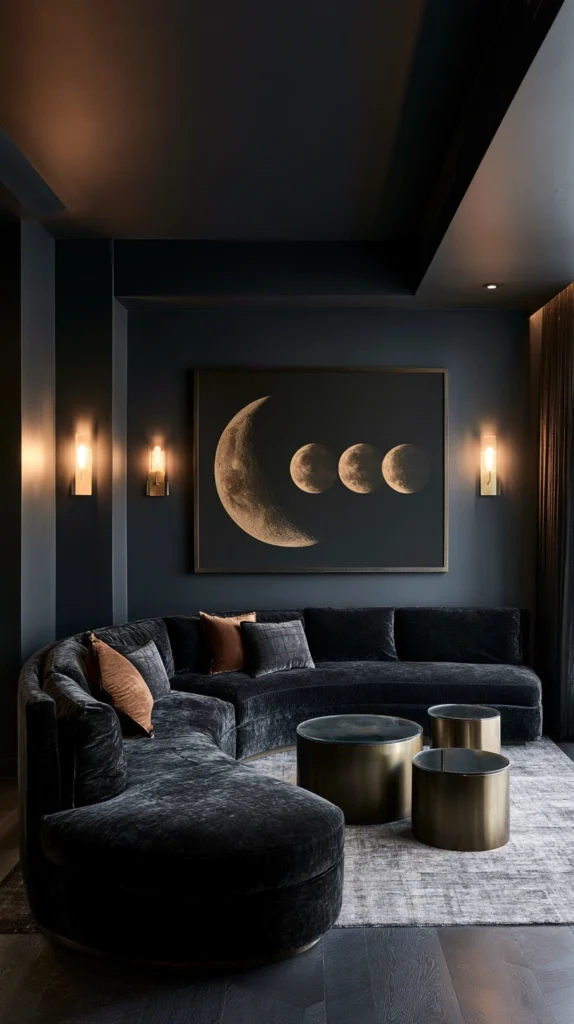
A simple, understated piece of art depicting the lunar cycle, hung as a quiet nod to the aesthetic’s broader connection to natural and celestial cycles.
Why a moon phase motif suits this aesthetic without tipping into costume
Unlike more overt occult symbolism, a moon phase illustration carries a softer, more universally appealing celestial reference that reads as elegant and atmospheric on its own merit, independent of how strongly a viewer associates it with any specific aesthetic trend.
Selection and placement
- A simple line-drawing or minimalist illustration style, rather than an elaborate or heavily detailed piece
- Hung as a single statement piece, rather than paired with multiple additional celestial-themed items
Cost breakdown
- Moon phase print, framed: $30–60
- Total: $30–60
9. An Ornate Antique Mirror
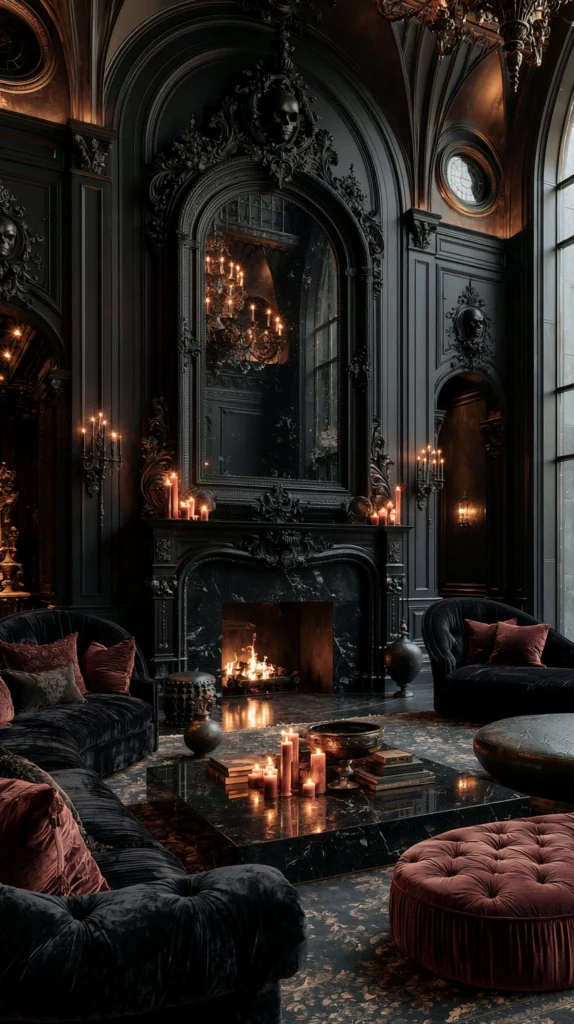
A mirror in a dark, ornate, aged frame — wrought iron, dark wood, or aged brass — providing both a functional light-reflecting element and a strong period-appropriate visual statement.
Why an ornate frame suits this aesthetic more than a simple modern one
A minimalist or unframed mirror reads too contemporary for this aesthetic’s generally antique, gothic-leaning visual language. An ornate, dark-framed mirror — genuinely aged where possible — reinforces the sense of history and mystery central to the room’s overall mood.
Sourcing and placement
- Antique shops and estate sales typically offer better character and often lower cost than new reproduction ornate mirrors
- Positioned to reflect candlelight specifically, amplifying the room’s primary light source rather than simply reflecting a blank wall
Cost breakdown
- Ornate antique or vintage-style mirror: $60–150
- Total: $60–150
10. A Dark Patterned Persian-Style Rug
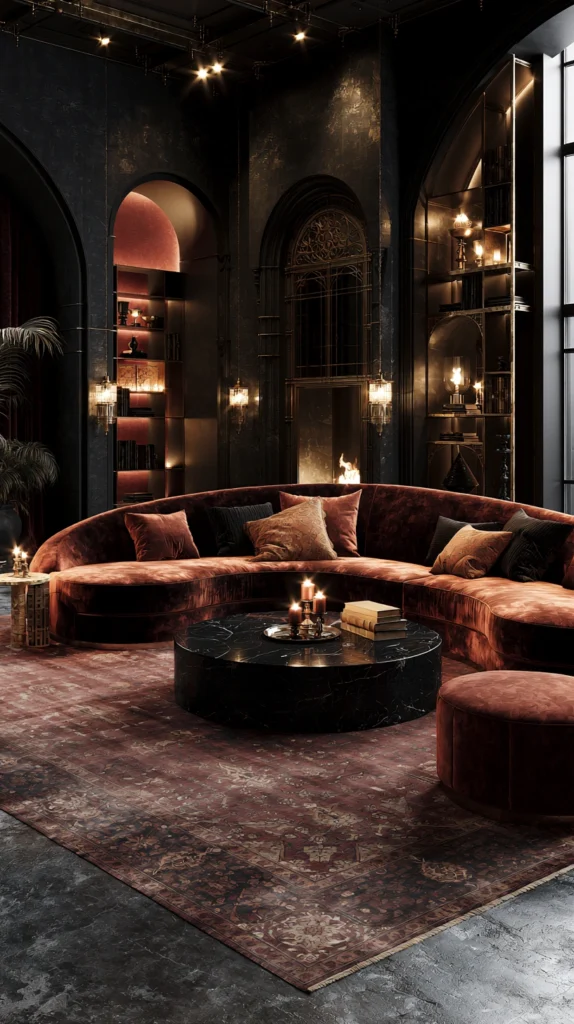
A rug in a rich, dark, traditional Persian or Oriental-influenced pattern, grounding the room’s floor in the same layered, historical visual language as the rest of the space.
Why this specific rug style suits the aesthetic’s overall reference points
Deep, richly patterned traditional rugs carry the same sense of accumulated history and old-world formality that ornate mirrors and antique books contribute elsewhere in the room, extending that same quality to the floor rather than leaving it as a plain, contemporary surface.
Selection
- Deep reds, blues, and golds within an overall dark base tone, rather than a pale or minimally patterned rug
- Sized to extend well beyond the seating group, following standard rug sizing principles for a living room
Cost breakdown
- Dark patterned area rug (8×10 ft): $250–550
- Total: $250–550
11. Botanical Illustration Art
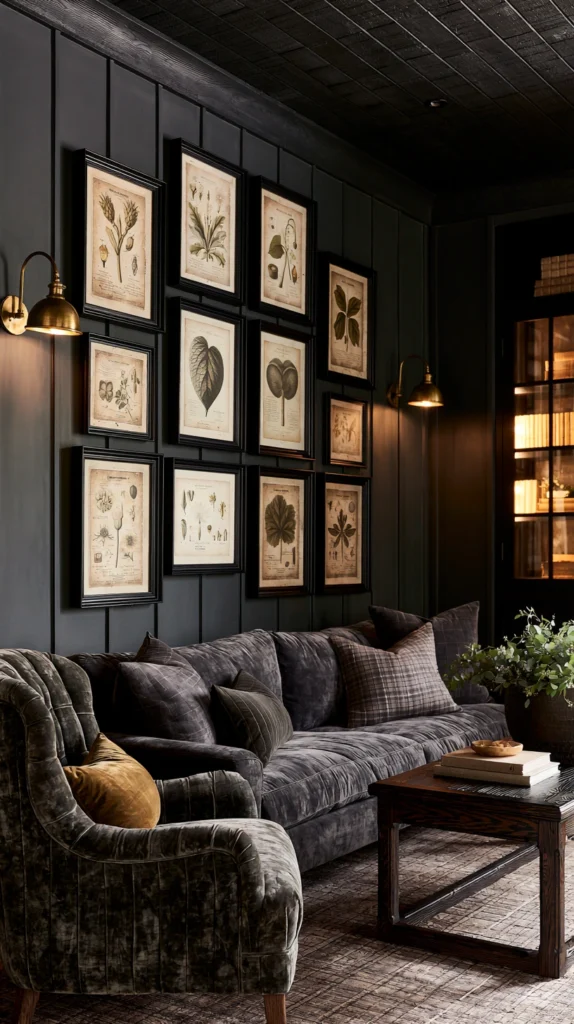
Framed vintage-style botanical illustrations — particularly of herbs, fungi, or unusual plant specimens — hung in a small cluster, reinforcing the room’s apothecary and natural-world references through art rather than literal objects.
Why botanical illustration suits this aesthetic without any overt symbolism
A cluster of detailed, antique-style botanical prints carries the same naturalist, apothecary-adjacent quality as dried herb bundles or crystal displays, but does so purely through art, offering another way to reinforce the room’s overall reference points without adding to any single object category.
Selection and layout
- Vintage-style illustrations, ideally in a naturalist scientific illustration style rather than a modern decorative botanical print
- 3–5 pieces in matching dark frames, arranged in a small cluster rather than spread individually around the room
Cost breakdown
- Botanical illustration prints, framed (3–5): $60–120
- Total: $60–120
12. Wrought Iron Accents
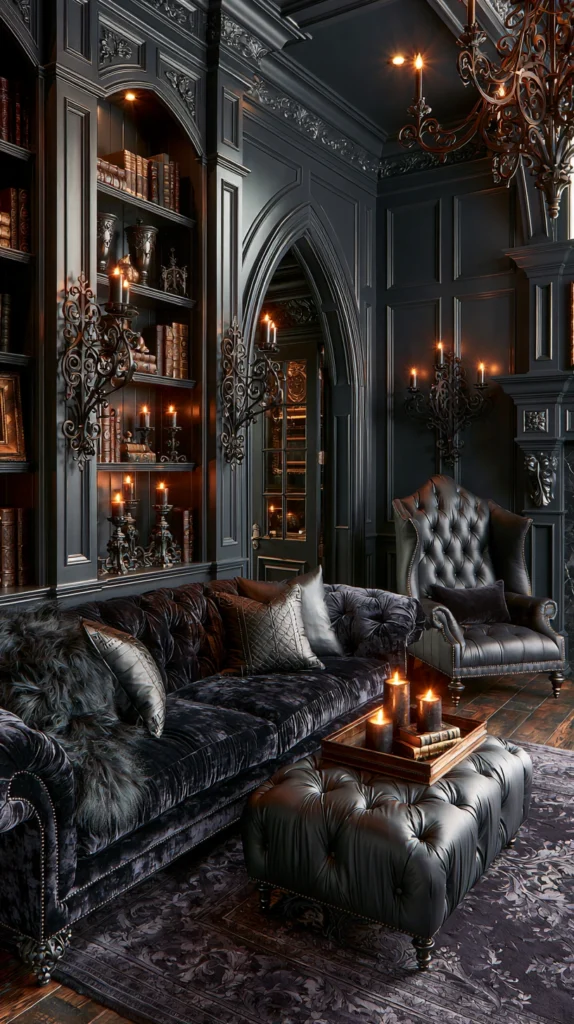
Wrought iron candelabra, curtain rods, or small shelf brackets, adding a genuinely aged, dark metal texture distinct from the warmer brass finishes common in other styling approaches.
Why wrought iron suits this aesthetic’s material language specifically
Where brass reads warm and inviting, wrought iron carries a more gothic, historical, slightly severe quality that aligns more directly with this aesthetic’s overall dark, dramatic mood. It’s a deliberate departure from the warm-metal principle that governs most other rooms in this material’s broader use.
Where to apply it
- A wrought iron candelabra as a primary candle display piece
- Curtain rods and finials in the same dark, aged metal finish, tying the window treatment into the same material family
Cost breakdown
- Wrought iron candelabra: $30–70
- Wrought iron curtain rod: $35–70
- Total: $65–140
13. Fringe and Tassel Textile Details
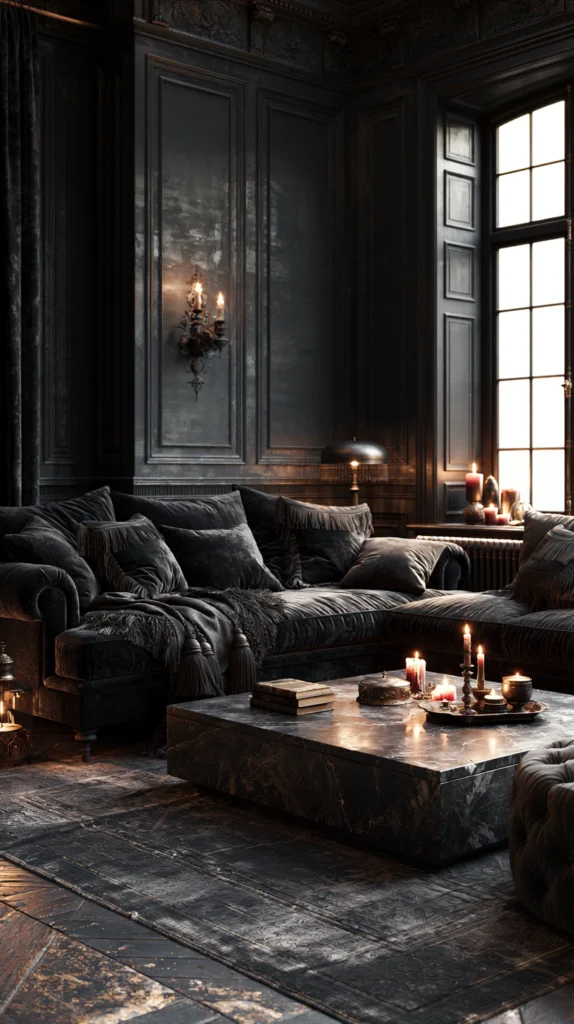
Cushions, a throw, or a lampshade finished with fringe or tassel trim, adding a Victorian-influenced textural detail distinct from a plainer, more contemporary textile finish.
Why fringe and tassels suit this aesthetic’s historical reference points
Fringe and tassel trim carry a strong association with Victorian and gothic revival interior design, both periods this aesthetic draws on heavily, adding a layer of period-appropriate detail to textiles that would otherwise read as more contemporary and plain.
Selection
- Deep jewel-toned or black fringe trim, on cushions or a throw in a complementary velvet or heavy textile
- Applied to one or two pieces rather than throughout every textile in the room, maintaining the same restraint principle used with more literal occult objects
Cost breakdown
- Fringe-trimmed cushions or throw: $45–90
- Total: $45–90
14. Low, Warm Lamp Lighting With No Overhead
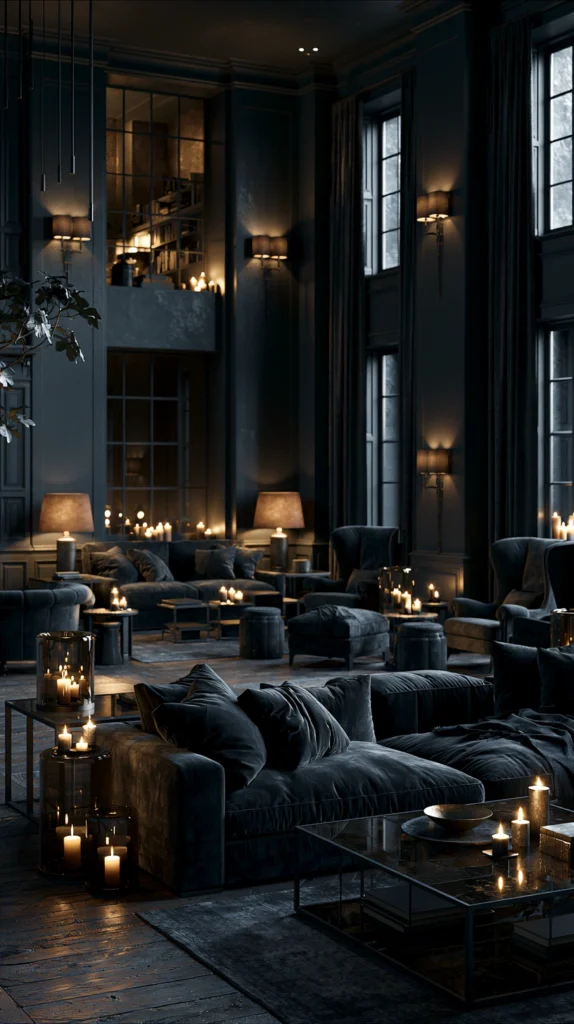
A lighting plan built entirely around table and floor lamps at a warm colour temperature, with the room’s overhead fixture used minimally or not at all.
Why avoiding overhead light matters more here than in almost any other aesthetic
A single bright overhead fixture flattens shadow and eliminates the dramatic, uneven light this aesthetic depends on almost entirely. Building the room’s lighting plan around several lower, warmer sources instead — supplemented by candlelight — is arguably as important to the finished mood as any single object in the room.
Building the lighting plan
- Two or three table or floor lamps, positioned at varying heights around the room, each with a warm 2700K or lower bulb
- The overhead fixture, if one exists, used only rarely, or replaced with a dimmer set permanently low
Cost breakdown
- Table or floor lamps (2–3, if not already owned): $90–220
- Total: $0–220 depending on existing lighting
15. The Complete Witchcore Living Room
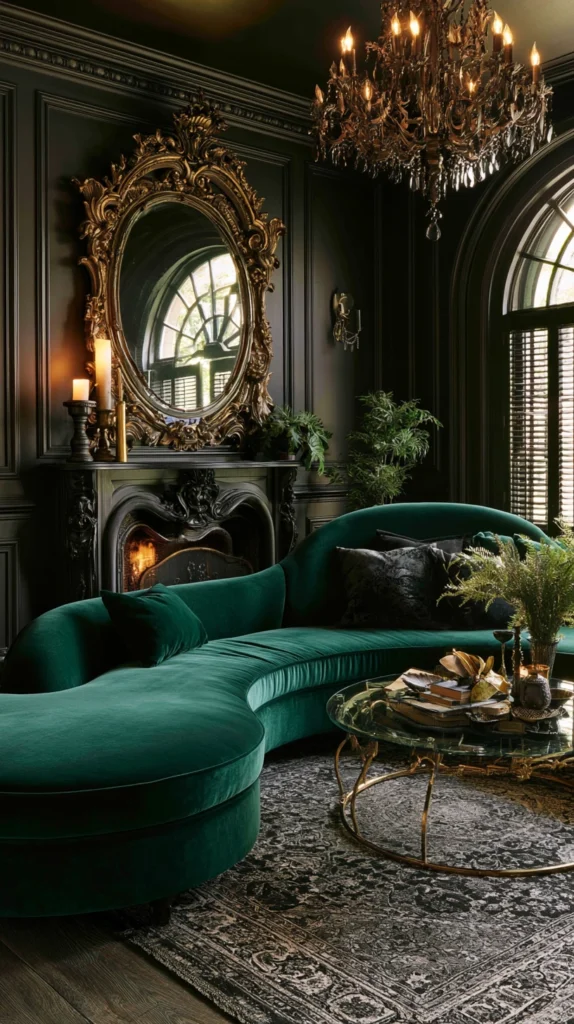
A living room with every principle above applied together — the definitive version of the aesthetic that reads as genuinely moody and enchanting rather than a themed display built around a single reference.
What separates the complete room from a few scattered witchy objects
A room with one apothecary bottle grouping and a moon phase print, but otherwise bright overhead lighting and pale walls, still reads as an incomplete gesture. The complete version resolves the wall colour, lighting, texture, and object curation all at once, so the mood is established at every level rather than through a few isolated decorative choices.
The elements of the complete room
The foundation:
- Deep plum or near-black walls (Idea #1)
- Dark velvet seating (Idea #5)
- A dark patterned rug (Idea #10)
The light:
- Low, warm lamp lighting with minimal overhead use (Idea #14)
- A black taper candle cluster (Idea #4)
- Wrought iron candelabra and curtain rods (Idea #12)
The curated displays:
- An apothecary bottle grouping (Idea #2)
- Hanging dried botanicals (Idea #3)
- A crystal and mineral display (Idea #7)
- A restrained vintage book and single occult-adjacent object grouping (Idea #6)
The art and reflective surfaces:
- An ornate antique mirror (Idea #9)
- Botanical illustration art (Idea #11)
- A moon phase print (Idea #8)
The textile details:
- Fringe and tassel trim on one or two textile pieces (Idea #13)
The room on an ordinary evening:
The overhead light stays off entirely, the room lit by two lamps and the candle cluster on the mantel, their flicker caught and doubled by the ornate mirror across the room. The velvet sofa and dark rug absorb rather than reflect what little light there is, while the apothecary bottles and dried botanicals sit in quiet, curated groupings rather than a cluttered collection. Nothing in the room shouts for attention through overt symbolism — the mood comes entirely from colour, texture, and the deliberate choice to let the space stay genuinely dim.
Cost breakdown for the complete room
Assuming a starting point of a neutral, unfurnished living room:
- Wall paint: $70–110
- Velvet sofa or chair: $500–1,400
- Rug: $250–550
- Lamps: $0–220
- Candle cluster: $30–60
- Wrought iron accents: $65–140
- Apothecary bottles: $25–55
- Dried botanicals: $15–28
- Crystal display: $20–50
- Books and occult-adjacent object: $25–55
- Mirror: $60–150
- Botanical illustrations: $60–120
- Moon phase print: $30–60
- Fringe-trimmed textiles: $45–90
Total: $1,195–3,088
Phased over two or three stages:
Stage one ($700–1,700):
- Wall paint
- Velvet seating
- Lamps and candle cluster
Stage two ($400–1,000):
- Rug
- Mirror
- Wrought iron accents
Stage three ($200–500):
- Apothecary bottles, botanicals, and crystals
- Art and textile details
The complete witchcore living room: not a collection of themed objects, but a room where colour, light, and texture together create a genuinely atmospheric space, with only the lightest touch of literal symbolism.
The Question Before Any Witchcore Styling Project
Before buying anything:
Is the current room’s foundation (walls, lighting, seating) already dark and warm, or does it need to change first?
If the answer is: already dark-toned or easily painted that way — focus the remaining budget on lighting and curated displays, since the foundation is already doing much of the work.
If the answer is: currently bright and pale — prioritise the wall colour and lighting plan before any smaller styling object; these two changes affect the room’s entire mood more than any individual apothecary bottle or crystal ever could.
If the answer is: renting, or unable to paint — lean heavily into the lighting plan (lamps, candles) and dark textiles (a rug, a velvet throw), both of which can transform a room’s mood considerably without any permanent wall change.
If the answer is: worried about the room reading as costume — apply the restraint principle strictly around any overtly occult or symbolic object; one small, well-placed piece will always read more genuinely atmospheric than several matching themed items competing for attention.
The approach follows what the room’s foundation currently supports, not the most elaborate collection of objects available. A dark, well-lit room with almost no explicitly “witchy” objects will often read more genuinely enchanting than a brightly lit room crowded with them.
Getting Started This Weekend
The immediate witchcore update:
Turn off the overhead light for one evening and rely entirely on lamps and candles.
Tests the room’s mood under the lighting plan this whole aesthetic depends on, before any other purchase.
Paint one wall, or the full room, in a deep plum or near-black tone.
The single highest-impact foundational change available.
Add one small, curated grouping — apothecary bottles, dried botanicals, or crystals.
Tests the styling direction with restraint, rather than assembling a full collection at once.
Layer one dark textile — a velvet throw or a fringe-trimmed cushion — onto existing furniture.
Introduces the aesthetic’s textural richness without requiring new furniture.
The rest of the room: the elaboration of this weekend.
The candlelight: the beginning. The witchcore living room: what a space becomes once darkness, texture, and restraint are all working together toward the same enchanting mood.