
Kalanchoe Care: The Complete Guide to Growing Healthy, Blooming Plants
Kalanchoe is one of the most forgiving flowering succulents you can grow indoors, producing clusters of long-lasting blooms in red, pink, orange, yellow, and white with surprisingly little fuss. It’s a favorite for beginners specifically because it tolerates some neglect, but a little bit of the right care goes a long way toward getting it to rebloom year after year.
Below is a complete guide to Kalanchoe care, covering light, water, soil, temperature, feeding, blooming, propagation, and common problems, with real numbers and specifics so the plant actually thrives rather than just survives.

Light Requirements
Kalanchoe needs bright, indirect light to grow well and to set new flower buds. A spot near an east or west-facing window, or a few feet back from a south-facing one, is usually ideal.
Aim for at least 6 hours of bright light daily. Direct afternoon sun in the height of summer can scorch the leaves, so filtered light or morning sun is the safer choice in hot climates.
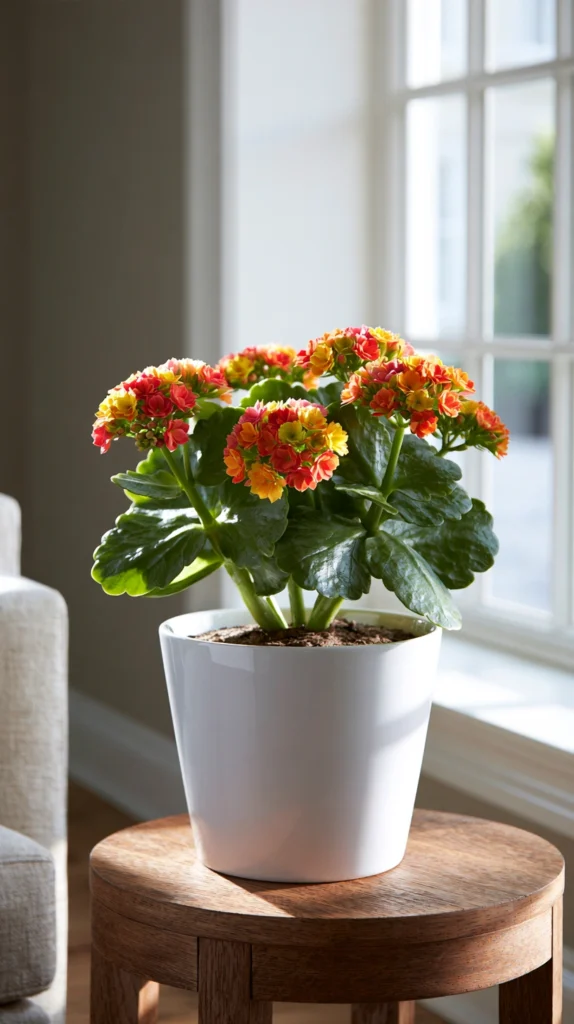
Insufficient light is one of the most common reasons a Kalanchoe stops blooming or grows leggy, with long stretches of bare stem between leaves.
If natural light is limited, a grow light positioned 12-18 inches above the plant for 10-12 hours daily can substitute effectively.
Signs of Incorrect Light
Leggy, stretched growth with pale leaves usually signals too little light. Leaves that develop brown or bleached patches usually signal too much direct sun.
Rotating the pot a quarter turn every week or two also keeps growth even, since Kalanchoe naturally leans toward its light source over time.
Watering Kalanchoe
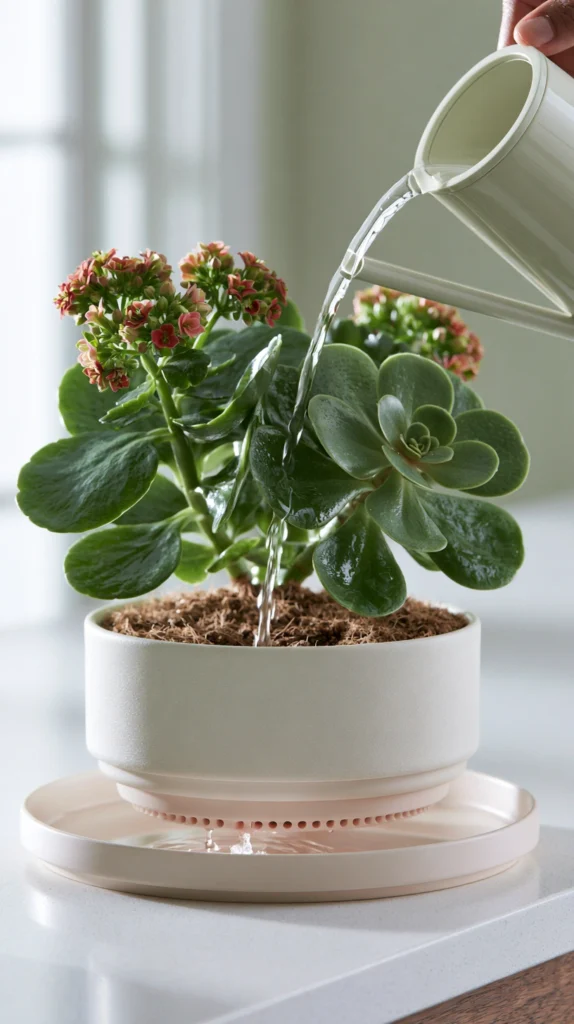
Kalanchoe is a succulent, which means it stores water in its thick leaves and needs the soil to dry out fully between waterings. Overwatering is the single most common cause of Kalanchoe problems and death.
Water only when the top 1-2 inches of soil are completely dry, typically every 2-3 weeks. Always check the soil with a finger before watering rather than sticking to a fixed schedule, since actual drying time varies with light, temperature, and pot size.
Water thoroughly until it drains from the bottom of the pot, then empty any standing water from the saucer within 30 minutes. Letting the pot sit in standing water is one of the fastest ways to cause root rot.
Reduce watering further in winter, when growth naturally slows, to roughly once every 3-4 weeks depending on your home’s humidity and heating.
Signs of Watering Problems
Soft, mushy, yellowing leaves usually indicate overwatering and potential root rot. Wrinkled, shriveled leaves usually indicate the plant has gone too long without water.
When in doubt, underwatering is the safer mistake to make, since Kalanchoe recovers from mild drought far more easily than from root rot.
Soil and Potting Mix
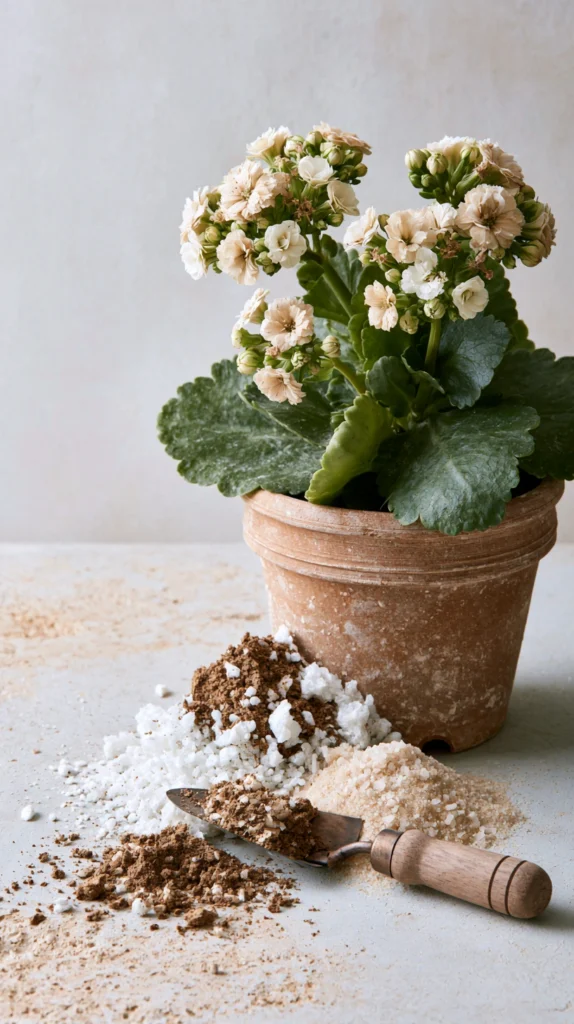
Kalanchoe needs fast-draining soil to prevent water from sitting around the roots. A standard succulent or cactus potting mix works well right out of the bag.
Mix two parts standard potting soil with one part perlite or coarse sand if you don’t have a pre-made succulent blend on hand, to improve drainage without buying a specialty product.
A pot with at least one drainage hole is non-negotiable for this plant, since even the right soil mix can’t compensate for water having nowhere to escape. Terracotta pots are a good choice specifically because the porous material helps excess moisture evaporate faster than plastic or ceramic.
Avoid pots that are much larger than the current root ball, since oversized pots hold excess moisture for longer than the roots can use, increasing rot risk.
Temperature and Humidity
Kalanchoe prefers warm, moderate conditions similar to typical indoor room temperature. It does not tolerate frost or prolonged cold exposure.
Keep the plant between 65-75°F (18-24°C) for best growth, and never let it sit below 50°F (10°C) for any extended period.
Average indoor humidity is fine for this plant, and misting is unnecessary since Kalanchoe is adapted to relatively dry native conditions in Madagascar. Excess humidity around the leaves can actually increase the risk of fungal issues.
Keep the plant away from cold drafts near winter windows and doors, as well as away from heating vents that blow hot, dry air directly onto the leaves.
Fertilizing Schedule
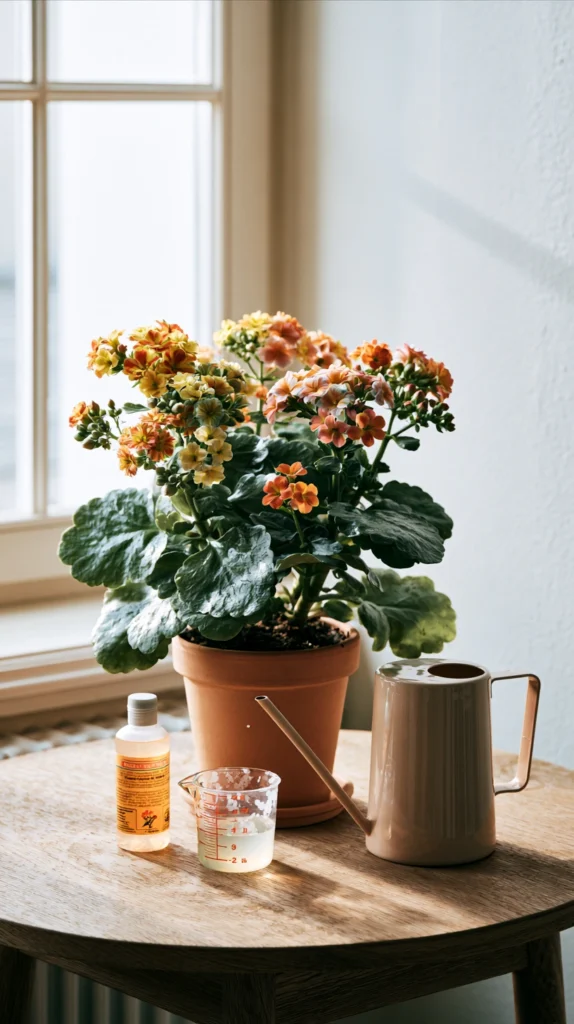
Kalanchoe doesn’t need heavy feeding, but a light fertilizing schedule during the active growing season supports stronger blooms. Over-fertilizing is more likely to cause problems than under-fertilizing with this plant.
Feed with a balanced liquid fertilizer (10-10-10 or similar) diluted to half strength, once every 4-6 weeks during spring and summer. Stop fertilizing entirely in fall and winter when the plant’s growth naturally slows.
A fertilizer with a slightly higher phosphorus ratio (the middle number) can help support bud and bloom development if you’re specifically trying to encourage flowering. Always water the plant first before applying liquid fertilizer to avoid burning the roots with concentrated nutrients on dry soil.
Flush the soil with plain water every couple of months to prevent mineral salt buildup from regular fertilizing, which can otherwise show up as a white crust on the soil surface or pot rim.
Encouraging Blooms
Getting a Kalanchoe to rebloom after its first flowering cycle is the part most people find tricky, since the plant needs a period of darkness to reset its flowering cycle. This process is called photoperiodism, and it’s the same mechanism that makes poinsettias bloom on a schedule.
Give the plant 14 hours of complete darkness and 10 hours of bright light daily for 6 weeks to trigger new flower buds. A closet, box, or simply moving the plant to a dark room each evening works, as long as the darkness is completely uninterrupted by household lighting.
Even a brief burst of light during the dark period (a phone flashlight, a hallway light) can disrupt the cycle and delay blooming, so consistency matters more than the specific method used to create darkness.
Once new buds appear, return the plant to its normal bright light schedule and resume regular watering and feeding to support the blooms through to full flower.
Deadheading Spent Blooms
Removing spent flower clusters as they fade encourages the plant to redirect energy into new growth rather than seed production. Snip the flower stem near its base with clean scissors or pruning snips.
This small bit of regular maintenance keeps the plant looking tidy between major bloom cycles and supports overall plant health.
Pruning and Shaping
Light pruning keeps Kalanchoe compact and encourages fuller, bushier growth rather than tall, leggy stems. The best time to prune is right after a bloom cycle finishes.
Pinch or cut stems back by about one-third, just above a leaf node, to encourage branching at that point. New stems typically emerge from the cut within a few weeks under good light conditions.
Removing any yellowing, damaged, or dead leaves as you spot them also keeps the plant healthier overall and makes it easier to catch pest or disease problems early, since you’re getting a closer look at the plant during routine grooming.
Save healthy pruned stem cuttings, since they can be used immediately for propagation rather than discarded.
Propagation Methods
Kalanchoe propagates easily from both stem and leaf cuttings, making it simple to create new plants from an existing one at no additional cost. This is one of the easiest succulents to propagate successfully as a beginner.
For stem cuttings, let a 3-4 inch cutting callus over (dry out) for 1-2 days before planting in a well-draining soil mix. This callusing step significantly reduces the risk of the cutting rotting before it can root.
For leaf cuttings, gently twist a healthy leaf free from the stem, let it callus for a day or two, then lay it on top of moist succulent soil rather than burying it. New tiny plantlets typically emerge from the base of the leaf within several weeks.
Keep new cuttings in bright, indirect light and water sparingly — just enough to keep the soil from fully drying out — until roots establish, which usually takes 3-4 weeks.
Repotting Guide
Kalanchoe doesn’t need frequent repotting, since it actually prefers being slightly root-bound and blooms more reliably in a snug pot than in an oversized one. Repotting is mainly needed when the plant has clearly outgrown its container.
Repot only every 2-3 years, or when you see roots emerging from the drainage hole or circling tightly at the surface. Choose a new pot only 1-2 inches larger in diameter than the current one.
Spring, right after a bloom cycle ends, is the best time to repot, since the plant is entering active growth and recovers from the root disturbance more quickly. Gently loosen the root ball and remove any old, compacted soil before placing it in fresh succulent mix.
Hold off on fertilizing for about 4 weeks after repotting to give the roots time to settle into the new soil without added stress.
Common Pests and Problems
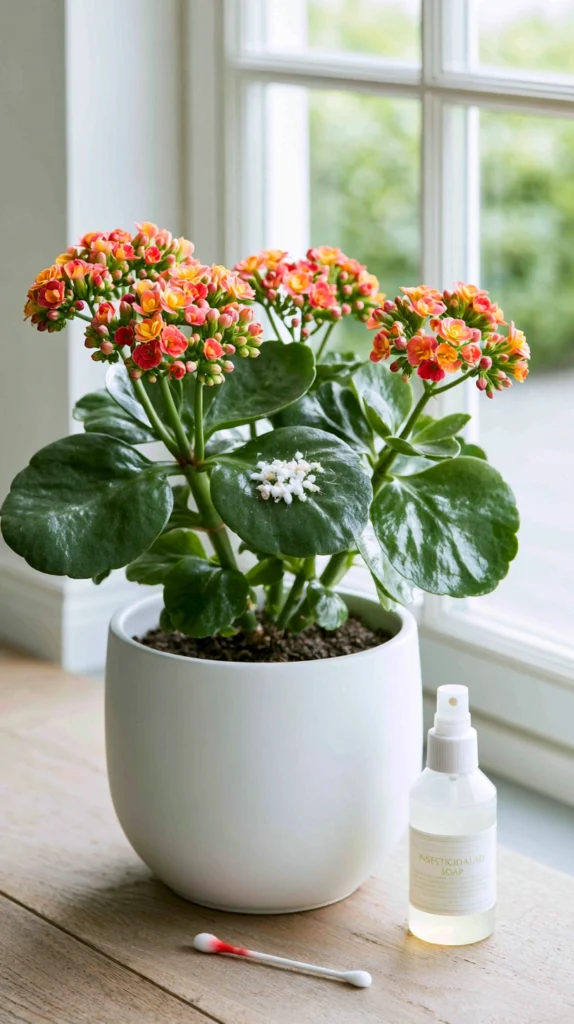
Kalanchoe is relatively pest-resistant compared to many houseplants, but it can still attract a few common culprits, especially if it’s stressed from incorrect watering or low light. Regular visual checks catch most problems early, before they spread.
Mealybugs show up as small white, cottony clusters, usually in leaf joints. Treat with a cotton swab dipped in rubbing alcohol, or a diluted insecticidal soap spray for larger infestations.
Aphids cluster on new growth and flower buds, and are usually visible as small green or black insects. A strong spray of water followed by insecticidal soap typically clears them within a week or two of repeated treatment.
Powdery mildew appears as a white, dusty coating on leaves, usually caused by excess humidity or poor air circulation. Improving airflow around the plant and avoiding overhead watering helps prevent recurrence.
Isolating any newly affected plant from other houseplants while treating it prevents pests from spreading to your broader collection.
Toxicity and Pet Safety
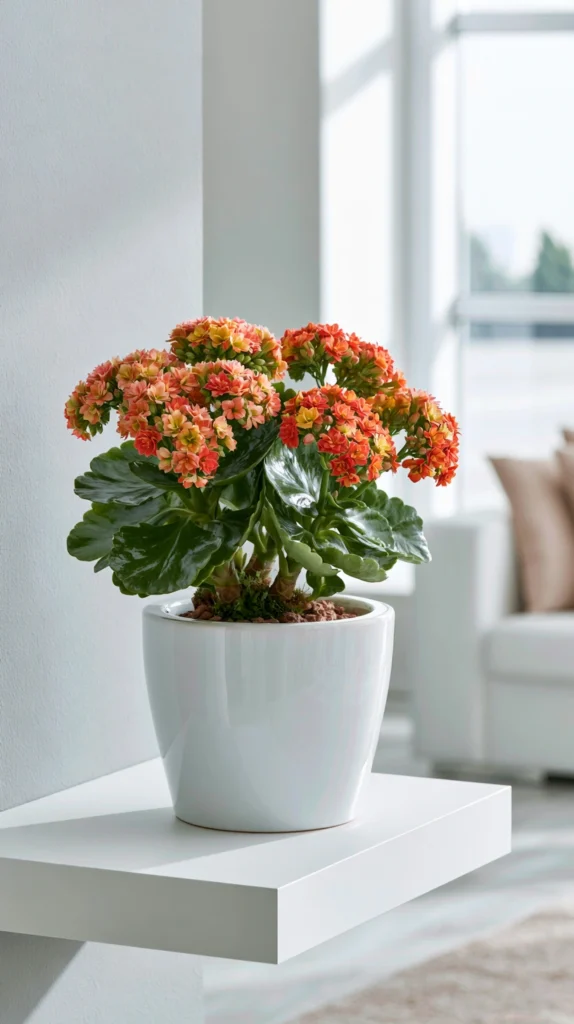
Kalanchoe contains compounds that are toxic to cats, dogs, and other pets if chewed or ingested, and can also cause mild irritation in humans with sensitive skin. This is worth knowing before placing the plant somewhere pets can easily reach.
Keep the plant on a high shelf or in a room pets don’t have regular access to, since even small amounts of ingested plant material can cause vomiting, diarrhea, or more serious symptoms in animals.
If you suspect a pet has eaten part of a Kalanchoe plant, contact a veterinarian or a pet poison hotline promptly rather than waiting to see if symptoms develop.
Seasonal Care Calendar
Spring: Resume regular fertilizing, repot if needed, and begin light pruning after blooms fade.
Summer: Maintain regular watering as temperatures rise, watch for pests during the active growing season, and protect from intense afternoon sun.
Fall: Begin the dark treatment cycle if you want winter blooms, and start tapering off fertilizer as growth slows.
Winter: Reduce watering frequency, keep the plant away from cold drafts and heating vents, and hold off on fertilizing until spring.
Troubleshooting Common Issues
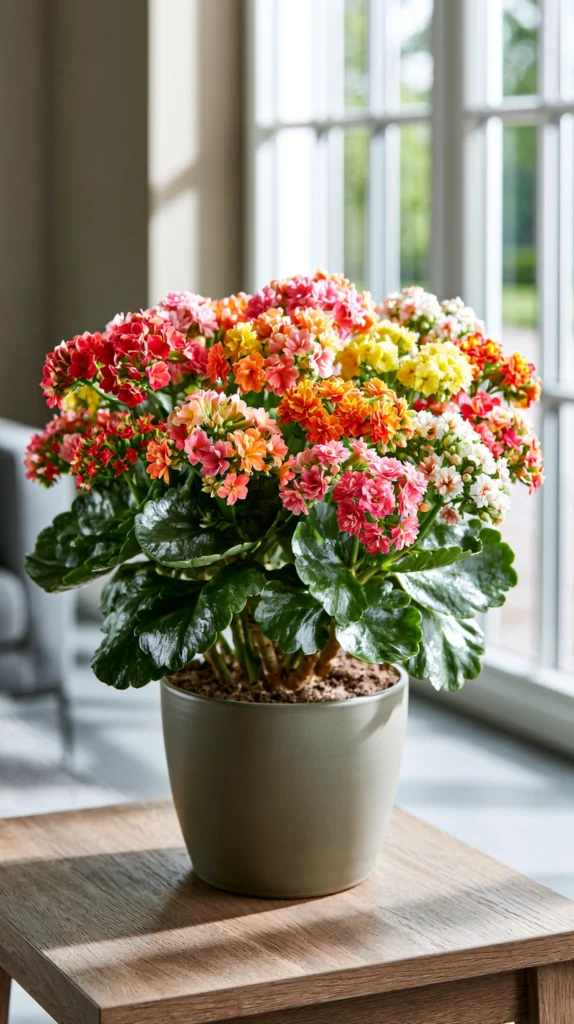
Plant isn’t blooming: Most often caused by insufficient light or a lack of the dark-period treatment needed to trigger new buds.
Leaves turning yellow and soft: Almost always a sign of overwatering; check for root rot and adjust the watering schedule immediately.
Leggy, stretched growth: Typically caused by too little light; move the plant to a brighter spot and prune back the leggy stems.
Leaves dropping: Can result from either significant underwatering or a sudden change in temperature or light conditions; check soil moisture first before ruling out environmental stress.
Quick Care Cheat Sheet
At a glance:
- Light: bright, indirect, 6+ hours daily
- Water: only when soil is fully dry, every 2-3 weeks
- Soil: fast-draining succulent or cactus mix
- Temperature: 65-75°F, no frost exposure
- Fertilizer: half-strength balanced feed, every 4-6 weeks in growing season
- Reblooming: 14 hours darkness, 10 hours light, for 6 weeks
- Repotting: every 2-3 years, only slightly larger pot
- Toxicity: keep away from pets
Remember
Kalanchoe rewards consistency more than intensity, so a simple, regular check-in on soil moisture and light exposure matters more than any single perfect care routine, always err toward underwatering rather than overwatering since root rot is harder to reverse than mild drought stress, give the plant its dark-period rest if you want it to rebloom rather than assuming a single bloom cycle is all it can offer, and treat repotting and pruning as occasional maintenance rather than something this plant needs frequently.