
14 Middle School Classroom Decor Ideas That Actually Respect the Students in Them
Middle schoolers are not large elementary students.
They are not small high schoolers either.
They occupy a specific developmental territory of their own. Old enough to find anything babyish genuinely mortifying. Young enough to still need warmth, structure, and a sense that the space they spend most of their waking hours in was designed with some thought for their comfort and dignity.
Most middle school classroom decor misses this completely.
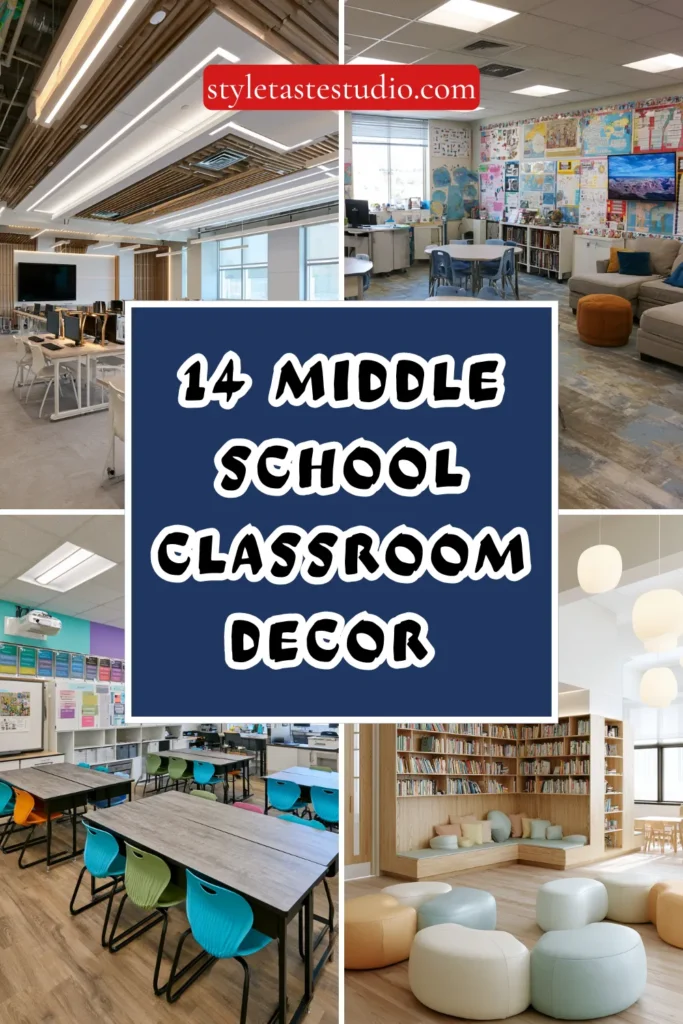
It falls into one of two traps. The first trap is the elementary classroom aesthetic carried upward, the bright primary colours, the cartoon characters, the border tape with smiley faces, applied to students who are twelve and thirteen and will roll their eyes at every inch of it. The second trap is the stripped-down, purely functional space that communicates nothing about the teacher, the subject, or the students themselves and makes the classroom feel like a waiting room rather than a place where learning happens.
The classroom decor that works for middle schoolers sits between these two failures. It respects their growing sophistication while providing the warmth and intentionality that an empty, bare room cannot. It is interesting without being juvenile. Welcoming without being childish. Purposeful without being institutional.
These 14 ideas build that classroom.
Why Classroom Environment Matters More for Middle Schoolers Than Most People Realise
The physical environment of a classroom communicates something to every student who walks into it before a single word is spoken.
A classroom that has been thought about, where someone has made choices about what goes on the walls and why, where the arrangement serves students’ learning and not just the administrative logistics of fitting thirty children into a rectangular room, communicates that the teacher considers the students worth that thought.
This matters enormously for middle schoolers who are at an age where they are acutely sensitive to whether they are genuinely seen by the adults in their lives or merely managed by them. A teacher who has invested care in the physical environment has demonstrated that care before the students have opened a single textbook.
Research on classroom environment consistently shows that students perform better in spaces that feel welcoming, organised, and purposefully designed. For middle schoolers specifically, who are navigating identity formation alongside academic demands, a classroom that reflects their age, their interests, and their dignity contributes to the sense of belonging that makes learning possible.
1. A Student Work Gallery That Celebrates Quality and Effort
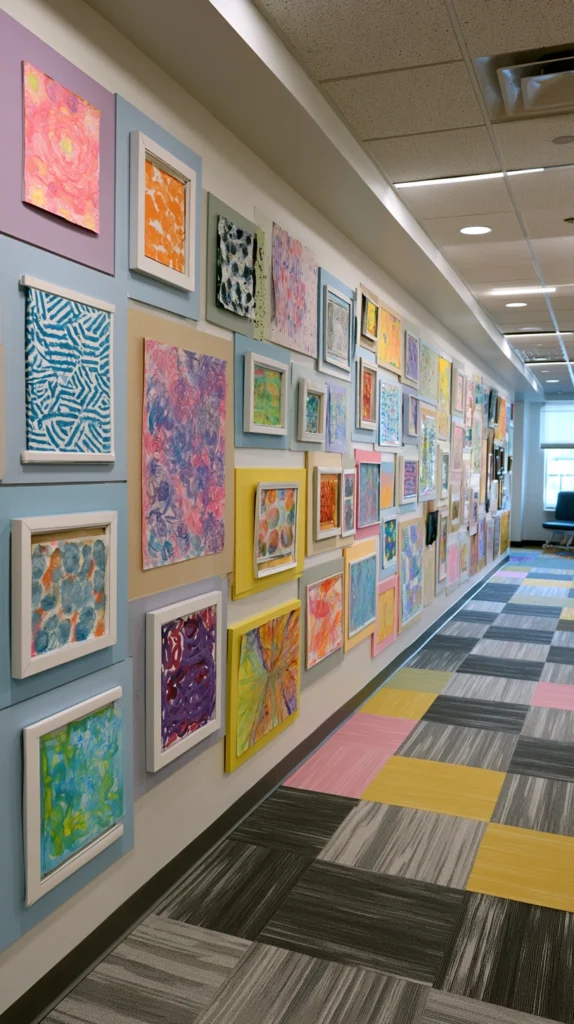
The most powerful thing that can go on a middle school classroom wall is the work of the students who spend their days in the room.
Not a selection of perfect pieces chosen by the teacher and displayed as exemplars. A gallery that includes work from every student, genuinely curated for display, with consistent framing and presentation that communicates that the work is worth displaying rather than just posted to fill wall space.
Consistent presentation matters more than the quality of the work itself. Work mounted on matching card stock in a neutral colour, labelled with the student’s name in a consistent format, displayed in a defined gallery area, reads as valued and exhibited. The same work pinned haphazardly to a bulletin board with different pin colours reads as managed rather than celebrated.
Middle schoolers are exquisitely sensitive to whether their work is genuinely respected or merely tolerated on the wall. The difference between a teacher who curates and frames and the teacher who pins and forgets is immediately apparent to the students whose work is in question.
Rotate the gallery regularly. Work that stays on the wall for an entire year stops being seen by anyone, including the student who produced it. Fresh rotation every three to four weeks gives each piece a period of genuine visibility.
What makes a student work in a gallery or a middle school classroom?
- Consistent mounting and framing that communicates genuine curation
- Work from every student rather than a selected few of the highest achievers
- Regular rotation that gives each piece a defined period of genuine visibility
- Clear labelling that attributes each piece to its maker, with the student’s name
- A defined gallery wall or section that gives the display architectural intentionality
- Work that spans different types of output, written, drawn, designed, and constructed
2. A Classroom Library or Reading Corner
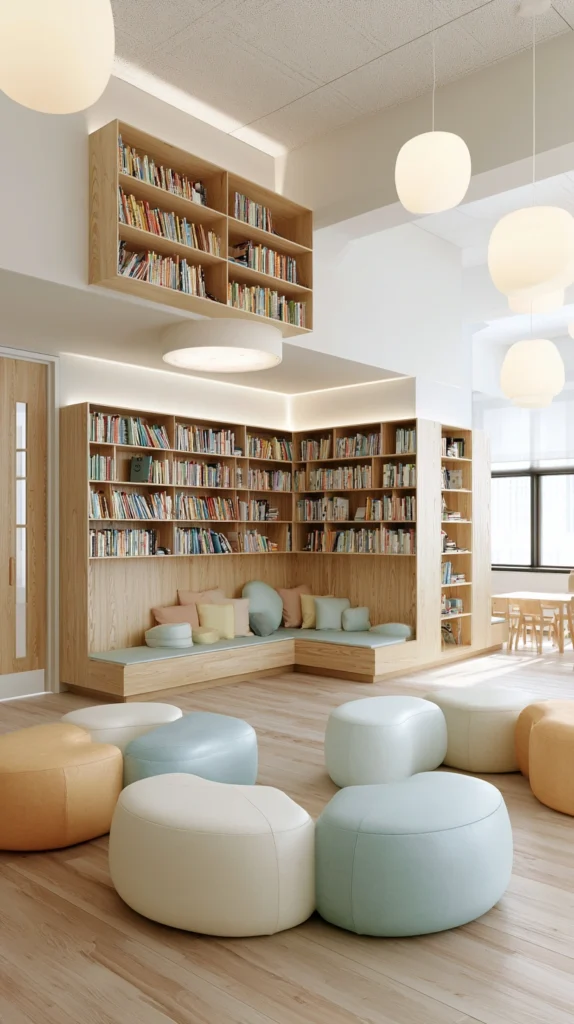
Books in a classroom communicate something that no poster or bulletin board display can.
A classroom library, even a modest one of fifty to a hundred well-chosen titles, tells students that reading is something that happens here, in this room, not just in the school library or at home. That the teacher considers books worth having nearby. That there is always something to read when there is time.
Middle schoolers are at an age where their reading lives are diverging rapidly. Some are reading independently and enthusiastically. Some have become disengaged from reading through a combination of challenging texts, insufficient time, and the competing attraction of screens. A classroom library that contains genuinely appealing titles at appropriate reading levels can make a difference to the latter group that a single assigned text cannot.
Display books face-out where possible. The cover of a book is its most persuasive advertisement. A shelf of spines showing is a library. A shelf of covers showing is an invitation.
The reading corner, a defined comfortable seating area of one or two beanbags, floor cushions, or a small sofa section beside the classroom library, makes the books accessible in a physical sense as well as a visual one. Students who can pick up a book and read it in comfort are more likely to do so than students who would need to bring it to a desk.
3. Inspirational Quotes That Are Actually Relevant to Middle Schoolers
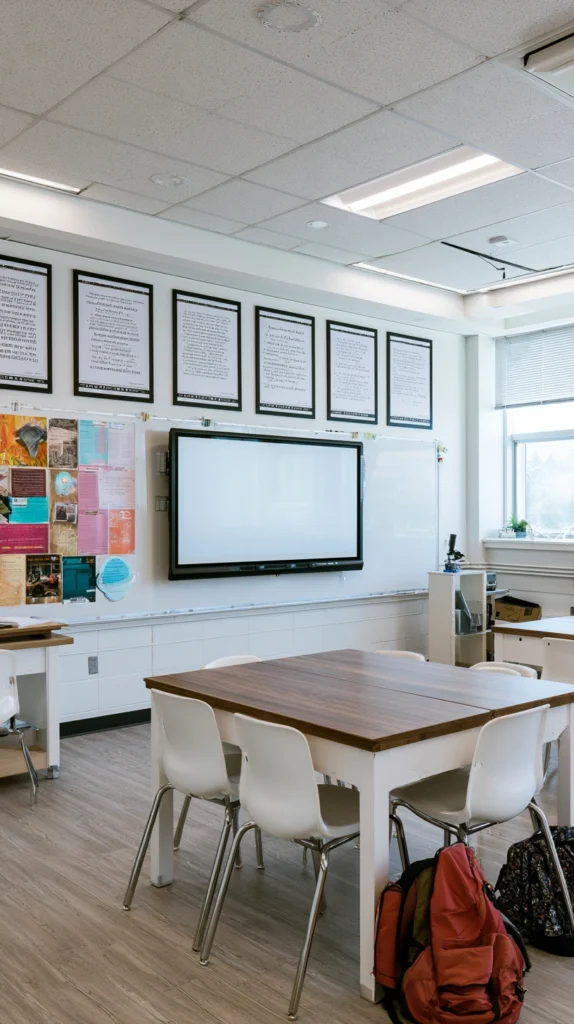
The inspirational quote poster is the most frequently deployed and most frequently ignored decorative element in any classroom.
The problem is not the concept of displaying words worth reading. The problem is that most classroom quote posters display words that twelve-year-olds cannot genuinely connect to. Abstract motivational language about success and perseverance that lands differently on a person who has lived thirty-five years than on a person who has lived twelve.
The quotes that work in a middle school classroom are specific rather than generic. Funny rather than earnest. From people the students already care about or are curious about. Relevant to the subject being studied rather than universally applicable to any situation.
A quote from a scientist that reveals genuine personality rather than packaged wisdom. A line from a novel that the class is reading that means something in context. A statement from an athlete, musician, or public figure that the students admire that touches on something real about effort or failure or growth.
Better still: quotes from the students themselves. A rolling display of interesting, funny, or insightful things that students have said in class, properly attributed, displayed for the term. The students whose words appear on the wall experience recognition. The students who read them experience that their peers are worth listening to.
4. A Living Plant Display
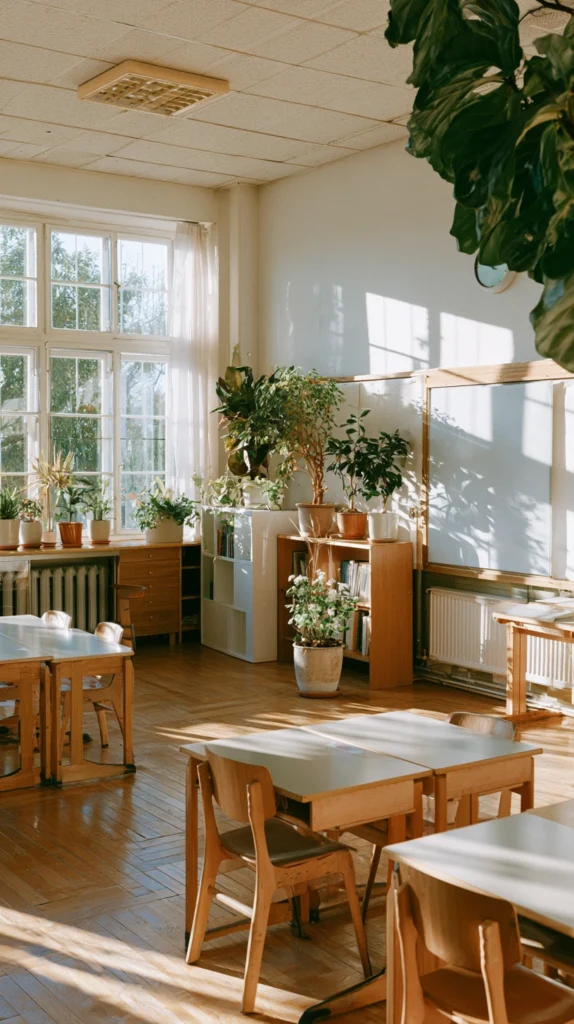
Plants in a classroom do something that no poster or display can replicate.
They are alive. They respond to care. They grow visibly over the course of a school year. They die if neglected. They are genuinely different from every other object in a classroom because they are organisms rather than manufactured items.
This aliveness makes classroom plants unexpectedly powerful as an element of the classroom environment. They introduce biological reality into a space that is otherwise entirely made and managed by human decisions. A pothos trailing from a high shelf is genuinely growing, genuinely responding to light, genuinely producing oxygen. None of the other objects in the classroom are doing any of those things.
For middle schoolers who are often bored by the artificial separation between school and the natural world, a classroom that contains living things is a classroom that acknowledges that the natural world is always present even when you are indoors.
Choose plants that are genuinely difficult to kill. Pothos, ZZ plants, snake plants, and spider plants all tolerate the varying light and temperature conditions of a classroom and survive weekends, school breaks, and the inevitable inconsistency of student watering. A classroom plant that dies communicates the wrong message.
Consider involving students in the plant care as a rotating responsibility. The act of noticing whether a plant needs water, of reporting that the pothos has grown six inches since September, develops attentiveness and connection to the living environment of the classroom.
5. An Interactive Display That Changes and Invites Participation
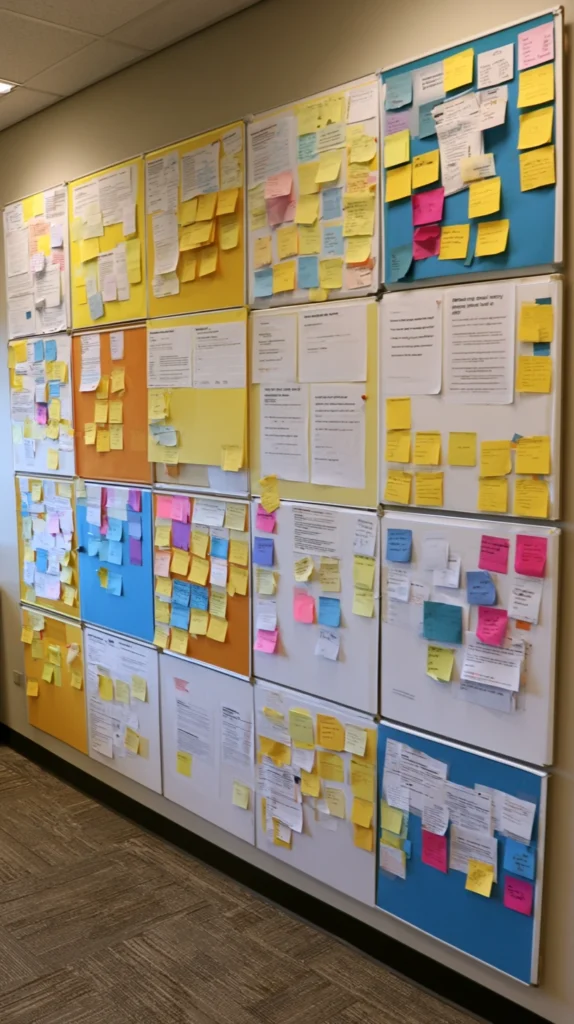
The static display that goes up in September and comes down in June is a display that stops being seen by October.
An interactive display that changes, that invites student contribution, that poses questions rather than presenting conclusions, remains alive throughout the school year in a way that fixed displays cannot.
A question board where a new question is posted each week and students add sticky note responses. Not test questions. Questions that are genuinely interesting and open-ended. What is the most important invention of the last hundred years? What would you change about how this school works? What did you learn this week that surprised you?
A world map or subject-specific map where students mark places of relevance as the curriculum explores different regions, historical events, or scientific discoveries.
A running tally or data display that updates as the class conducts ongoing experiments, tracks reading progress, or follows current events in the subject area.
An opinion spectrum displayed along a wall where students can place themselves on a scale from strongly agree to strongly disagree on a new question each week.
The interactive element signals to students that the classroom is a place where their thinking is actively solicited rather than passively received. For middle schoolers who are developing strong opinions and a strong desire to be heard, this signal matters.
6. A Subject-Specific Display That Shows the Discipline as Living and Current
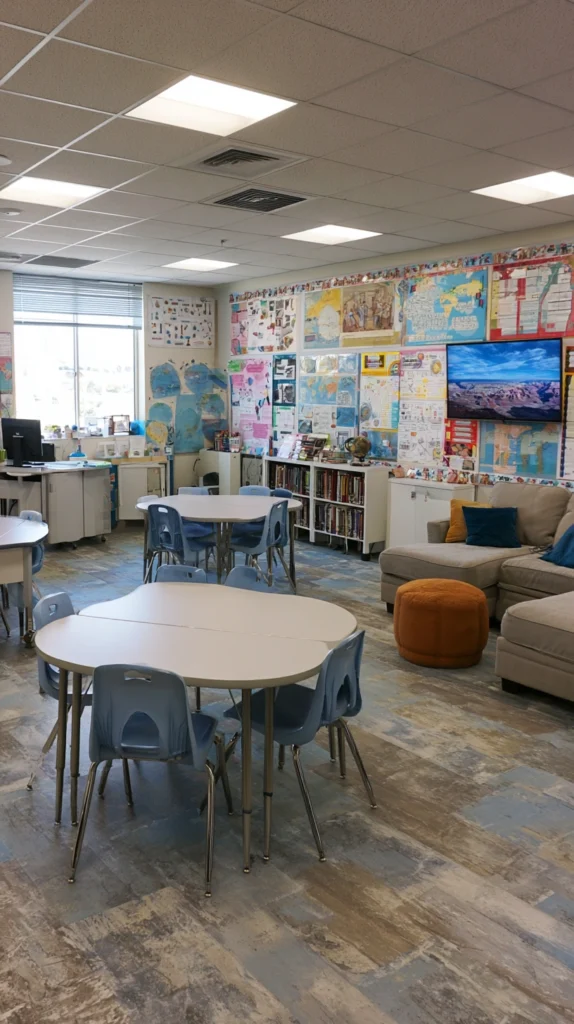
Every academic subject is part of an ongoing human conversation that extends far beyond the textbook.
A subject-specific display that connects the classroom curriculum to the world beyond school communicates this living quality in a way that a textbook alone cannot.
A science classroom with a rotating display of recent scientific discoveries, current research from working scientists, or ongoing questions that science has not yet answered shows students that the subject is not a fixed body of settled knowledge but a continuously evolving inquiry.
A history classroom with a current events section that draws connections between historical patterns and contemporary situations shows students that history is not only about the past but about understanding the present.
A mathematics classroom with real-world applications of the current topic, the statistics used in sports performance analysis, the geometry of architecture, and the probability calculations in insurance shows students that mathematics is embedded in the world they already inhabit.
The subject display that connects the classroom to the living world of the discipline is the antidote to the student question that every teacher has encountered and struggled to answer well. When is anyone actually going to use this?
7. A Calm Corner or Quiet Regulation Zone
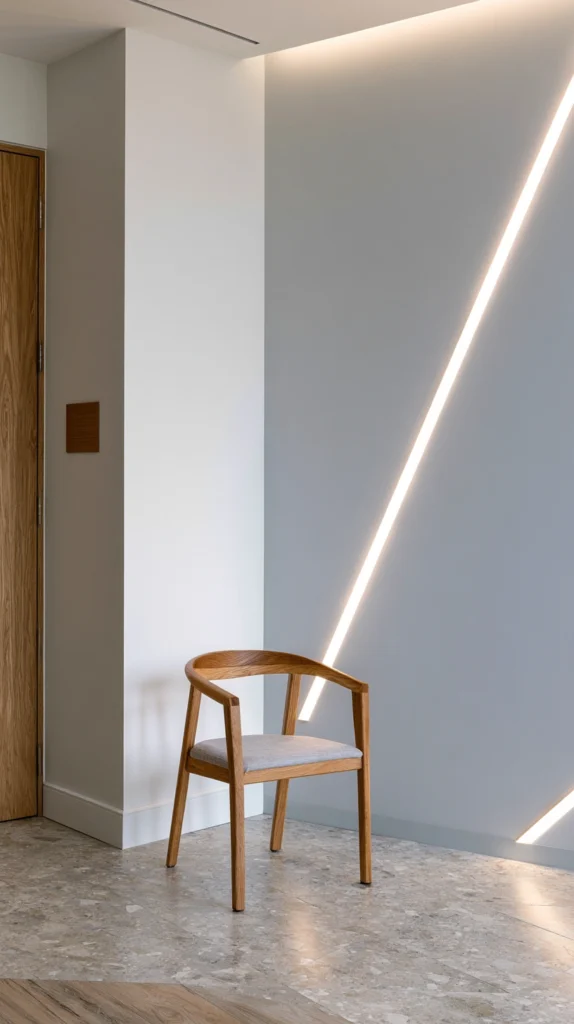
Middle school is a period of profound emotional and social turbulence.
Students arrive in classrooms carrying the weight of hallway social dynamics, family situations, physical changes, and the complex, sometimes overwhelming experience of figuring out who they are. The assumption that students can leave all of this at the classroom door and arrive in a state of ready-to-learn equanimity is not realistic.
A calm corner, a small, defined area with a few sensory regulation tools, is a research-supported classroom element that gives students who need a brief moment of regulation a place to find it without disrupting the class or requiring public disclosure of what they are struggling with.
The calm corner for middle schoolers should not look like an elementary calm-down corner. No bright colours. No cartoon characters. No childish elements that would make a twelve-year-old reluctant to use it for fear of looking immature.
A simple chair or floor cushion in a slightly separate corner. A small basket with a few sensory items, a stress ball, a fidget tool, a breathing card. A brief visual prompt for simple regulation strategies. Enough definition to be clearly the calm corner without enough prominence to make using it feel exposed.
The existence of the calm corner, even if students rarely use it, communicates that the teacher understands that emotions and learning are not separate systems and that the classroom is a place where the whole student is considered.
8. Collaborative Seating Arrangements With Flexible Configuration
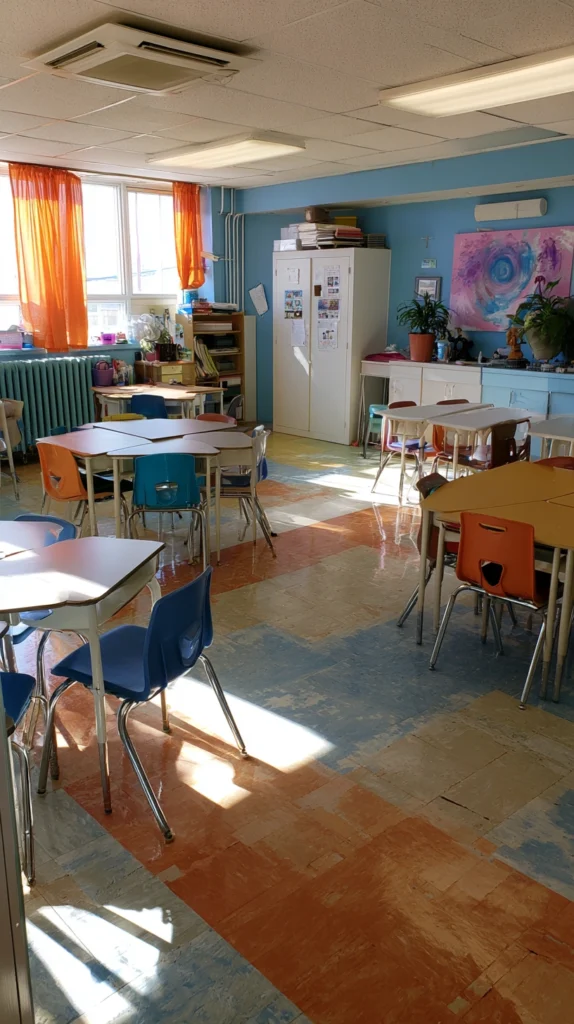
The physical arrangement of the classroom is one of the most powerful and most overlooked elements of classroom environment.
Rows of desks facing the front communicate a specific message about who holds knowledge in the room and how it flows. The teacher has it. The students receive it. Interaction is between student and teacher, mediated by the front of the room, rather than between students.
Cluster arrangements of desks in groups of four or six communicate a different message. Knowledge can move laterally between students as well as vertically from teacher to students. Collaborative work is expected and arranged for rather than an occasional disruption to the normal order.
Neither arrangement is always correct. Different learning activities suit different configurations and a classroom that can transition between them is more versatile than one locked into a single arrangement.
Label the different configurations so students can move between them efficiently without the configuration change consuming significant class time. Row arrangement for tests and certain direct instruction. Cluster arrangement for group work. Horseshoe arrangement for discussion. Named configurations, rehearsed transitions.
The flexibility itself communicates something important. Learning takes different forms and the physical environment supports those different forms rather than constraining them to a single mode.
9. A Vocabulary and Language Wall That Evolves
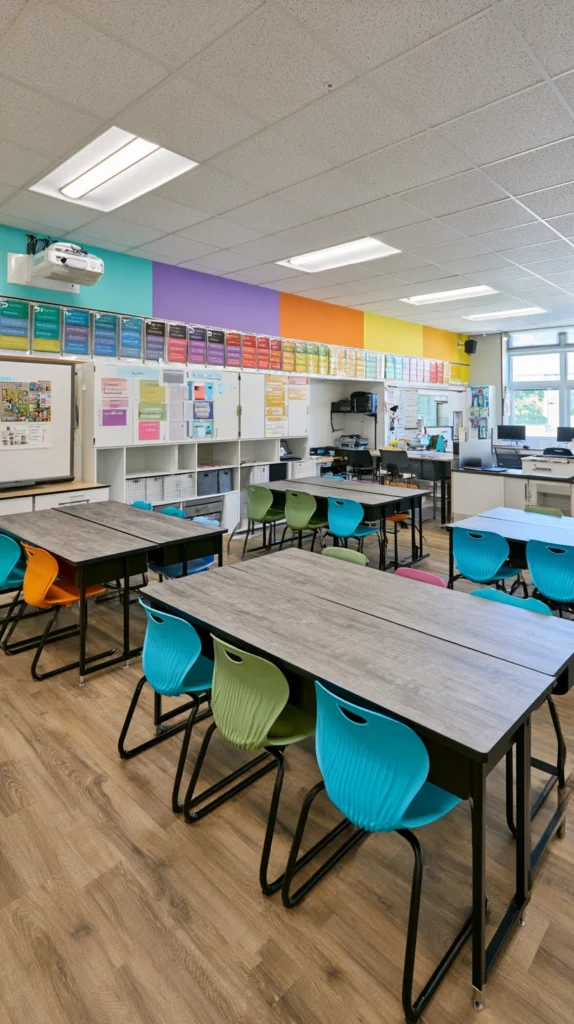
Every academic subject has a vocabulary that distinguishes those who know the discipline from those who are encountering it for the first time.
A vocabulary wall that displays the key terms of the subject, defined in accessible language with visual support where possible, reduces the cognitive barrier of engaging with disciplinary language by making it persistently visible and available.
The vocabulary wall that works in a middle school classroom is one that grows across the school year rather than one installed complete in September. New terms added as the curriculum introduces them. Previously learned terms revisited as they recur in new contexts.
Middle schoolers who can see the words they are learning positioned in relation to each other begin to develop the sense of a disciplinary vocabulary as a system rather than a list of isolated terms to memorise.
The visual quality of the vocabulary wall matters for middle schoolers who have strong aesthetic judgements. Clean typography, consistent visual treatment, adequate white space between entries. A vocabulary wall that looks considered rather than improvised is one that students are more likely to engage with and less likely to find embarrassing.
10. Student Identity Displays That Celebrate Who Is in the Room
A classroom is not an abstract learning environment inhabited by generic students.
It is a specific room inhabited by specific people with specific names, interests, experiences, and perspectives. A classroom that acknowledges and celebrates this specificity feels genuinely different from one that treats the students as interchangeable occupants of the learning space.
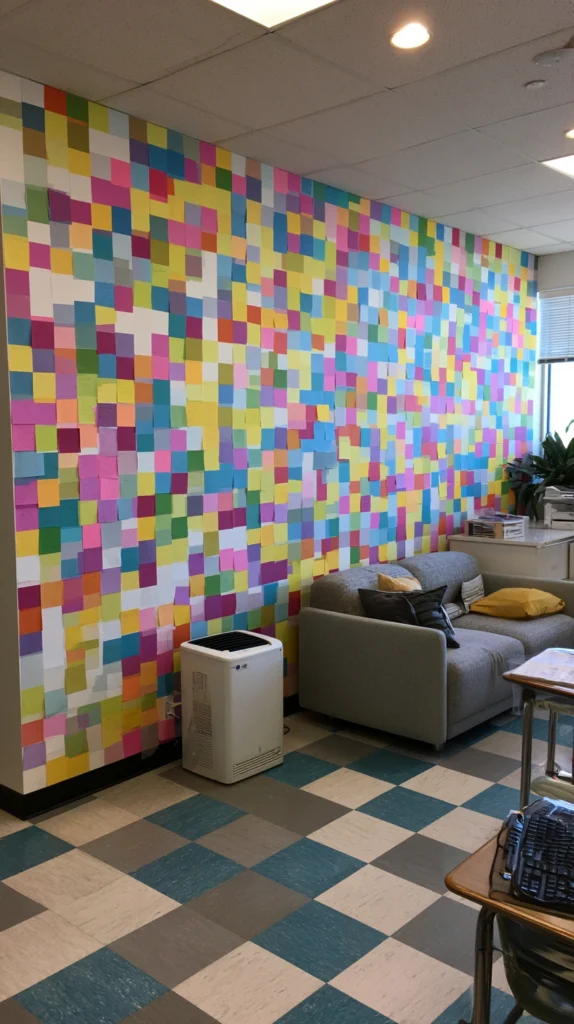
Early in the school year, a student biography or interest project displayed on the classroom walls gives every student a piece of the room that is unambiguously theirs. Not a performance of academic identity. A representation of genuine personal identity.
What music do you listen to most? What is a place that matters to you and why? What is something you know more about than most people your age? What would you be doing right now if school did not exist?
These questions produce displays that reveal middle schoolers as the genuinely interesting, complex, and varied people they are. Students read each other’s displays with real curiosity. Teachers learn things about their students that direct questioning would never surface.
The student identity display communicates to each individual student that their presence in the room is genuinely registered, that they are not anonymous to the teacher, and that their personal life and their school life are not required to be completely separate.
11. Subject-Relevant Art and Visual Culture
Decorating a classroom with generic inspirational posters is a decision of absence rather than presence.
It fills space without making a choice about what should fill it.
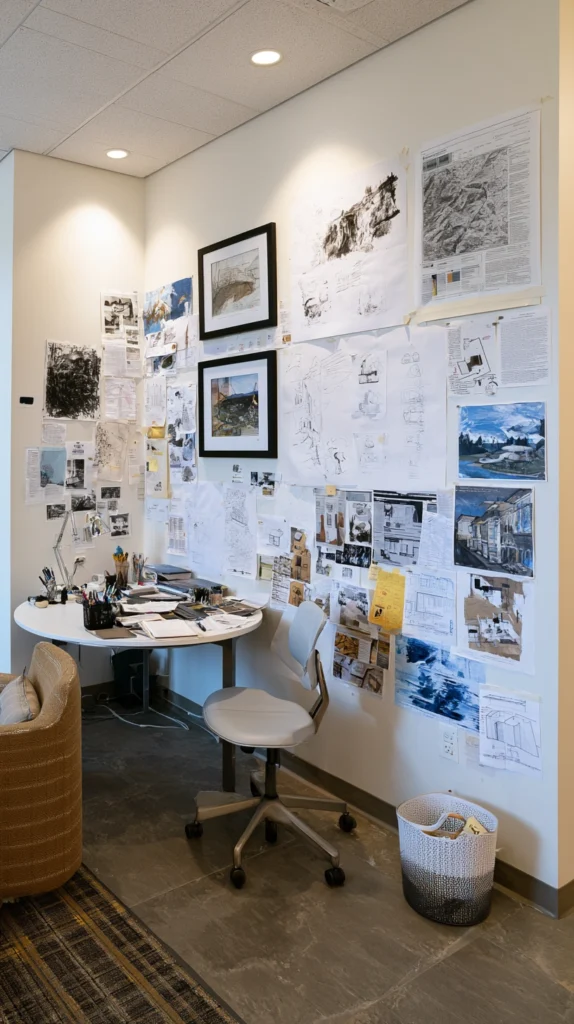
Art and visual culture that is genuinely relevant to the subject area makes a choice. It says something about what the teacher finds interesting and what the subject contains that is worth looking at beyond the textbook.
A science classroom with a large print of the Hubble telescope’s deep field image, showing thousands of galaxies in a patch of sky that appears empty to the naked eye, on the wall above the board is a conversation piece that can generate questions and discussions for an entire school year.
A history classroom with maps, photographs, and primary source images from the periods being studied surrounds students with the visual culture of the historical moments they are examining rather than presenting history as exclusively textual.
An English classroom with covers of books from across literary history, author photographs, manuscript pages, and images of the settings of studied texts creates a visual context for the literature that pure text cannot provide.
Choose art and images that you find genuinely interesting rather than ones that seem appropriate. Students notice and respond to authentic enthusiasm. A print on the wall that the teacher can talk about with genuine interest is more pedagogically powerful than five prints chosen because they seemed relevant.
12. A Success Wall That Celebrates Breadth Not Just Achievement
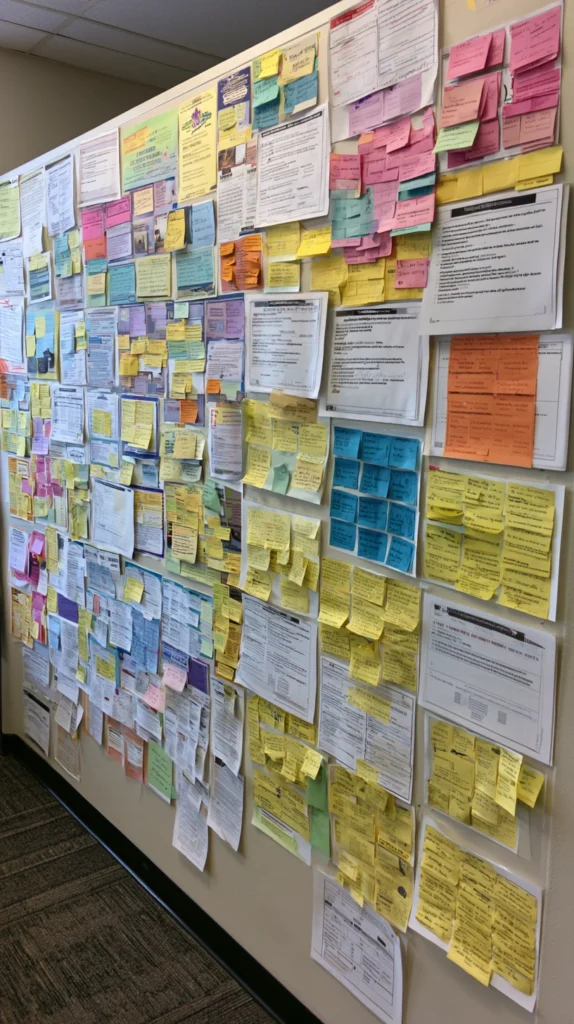
The traditional classroom success display celebrates academic achievement. Test scores. Awards. Academic competitions won.
The students whose names appear on such displays are typically a small and consistent subset of the class. The students whose names never appear learn a clear lesson from the display that was not intentionally taught.
A success wall that celebrates a broader definition of achievement, curiosity, persistence, creative risk-taking, supporting others, asking the question nobody else was willing to ask, catching something that was missed, producing work that surprised you, reaching a personal best rather than a class best, includes a much wider range of students.
Middle school is a period when students’ sense of academic identity is still being formed. A classroom that defines success narrowly tells some students early that academic success is not for them. A classroom that defines success broadly keeps more students inside the circle of those who belong in this room and can do what this room asks.
The teacher’s role is to notice and name the successes that are not automatically visible. The student who has gone from consistently disengaged to consistently present. The student who asked a question that changed the direction of the class discussion. The student who helped a classmate understand something that they themselves had only just grasped.
13. Lighting That Serves the Students Rather Than Just the Building
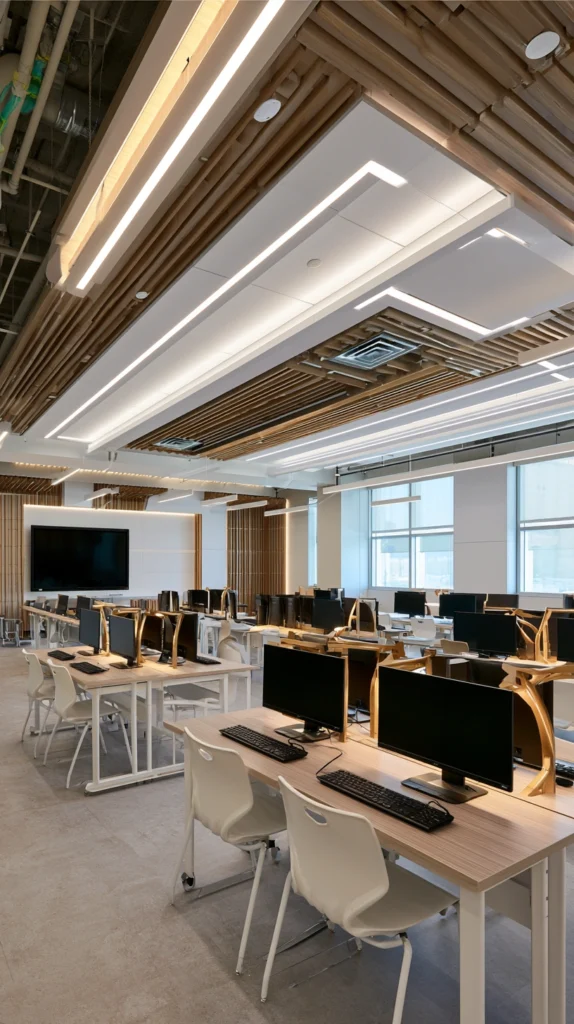
Classroom lighting is one of the most consistently overlooked environmental factors affecting student wellbeing and learning.
Most classrooms are lit by overhead fluorescent fixtures that produce a flat, bright, slightly flickering light that is at best uncomfortable and at worst genuinely disruptive to students who are sensitive to light quality. It is the lighting of function without any consideration of comfort.
Teachers cannot always change the overhead fixtures but can supplement them with lighting that serves students better.
A floor lamp or desk lamp in the reading corner creates a warm, comfortable light quality in that zone that contrasts productively with the overhead fluorescents in the main working area. Students who choose to read in the reading corner are in a genuinely different light environment.
A salt lamp, a cluster of LED candles, or warm-toned string lights displayed decoratively on a shelf or above a display area add warm light as an aesthetic element rather than a functional one. Their contribution to the overall light quality of the room is modest but their visual warmth changes the feeling of the space.
If the fluorescent overhead fixtures have a dimmer or can be partially switched off, using partial overhead lighting supplemented by warmer supplementary sources during certain activities changes the classroom environment more dramatically than any decorative addition.
14. A Teacher’s Own Personality and Interests Visible in the Space
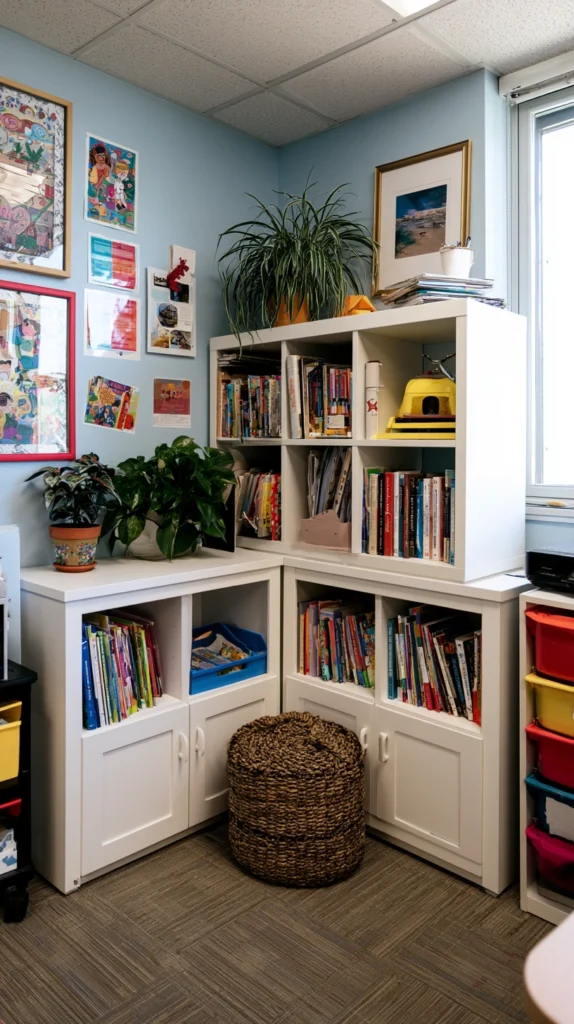
The most important element of any middle school classroom is the teacher.
And one of the most effective things a teacher can do with the physical environment of a classroom is make their own personality, interests, and genuine enthusiasms visible within it.
Not in a performative way. Not a curated personal brand. The genuine indicators of who the teacher actually is outside of teacher identity.
A shelf with a few books that are personally meaningful, not exclusively curriculum-relevant. A photograph or two from a place that matters to the teacher. A small object or two with personal significance. A piece of art chosen because the teacher finds it genuinely interesting rather than because it seems appropriate for a classroom.
Middle schoolers are navigating their own identity formation and they are acutely interested in the identities of the adults around them. A teacher who is a full person with genuine interests beyond teaching is a teacher who is considerably more interesting to learn from than one whose entire visible identity is institutional.
The classroom where the teacher’s humanity is visible is a safer classroom for students to bring their own humanity into.
It is also, consistently, the classroom that students remember for years after they have left it.
How to Approach Middle School Classroom Decor as a New Teacher
The most common mistake made by new middle school teachers setting up their first classroom is doing too much too soon.
The classroom filled with every display, every decorative element, every system and sign, in the first week before students have arrived, is a classroom that was designed without knowing the students who will inhabit it.
Start with the structure. The furniture arrangement that serves your teaching approach. The defined areas for their intended uses. The essential systems, the vocabulary wall framework, the gallery area, the classroom library basics.
Leave the rest to develop over the school year. The student work gallery fills with actual student work. The interactive display develops as the class develops its collective identity. The success wall reflects the specific achievements of the specific students in the room.
The classroom that was mostly empty in September and full of meaning by June tells a better story about the year than the classroom that was elaborately decorated before any students arrived.
Common Mistakes in Middle School Classroom Decor
Using elementary aesthetics for middle school students. Bright primary colours, cartoon characters, and overly cheerful border tape belong in classrooms for much younger students. Middle schoolers notice and are repelled by decor that treats them as younger than they are.
Displaying only the work of high achievers. A gallery that consistently features the same students communicates something unintended to everyone else in the room. Find ways to display something genuine from every student.
Covering every surface with information. A classroom where every square centimetre of wall space is covered with displays, information, and decoration creates visual noise that is overwhelming rather than stimulating. Negative space in a classroom serves the same function as negative space in any other design context.
Laminating everything identically. The classroom where every single display element is laminated in the same format looks institutional rather than designed. Vary the presentation to match the content.
Ignoring the smell and sound of the classroom. Environment extends beyond the visual. A classroom that smells and sounds as well as looks considered is a more genuinely welcoming space. Plants help. Soft furnishings in the reading corner absorb sound. These non-visual elements contribute to the overall feeling of the environment.
Forgetting that the classroom will be cleaned and changed. Display elements that are fragile, attached with materials that damage walls, or positioned to obstruct cleaning will not survive the school year. Design for durability and practical reality.
Making it all about the teacher. A classroom covered in the teacher’s personal brand, colour scheme, and identity statements is a classroom that leaves no room for the students. The students should eventually see themselves in the room more clearly than they see the teacher.
Quick Summary
- A student work gallery with consistent framing and regular rotation communicates that every student’s output is genuinely valued
- A classroom library with face-out book display and a comfortable reading area invites reading as something that happens in this room
- Inspirational quotes work best when they are specific, funny, relevant to the subject, or come from the students themselves
- Living plants introduce genuine biological aliveness into the classroom environment in a way no manufactured object can
- Interactive displays that change and invite student contribution remain alive throughout the year in ways static displays cannot
- Subject-specific displays that connect the curriculum to the living world of the discipline answer the most important student question
- A calm corner designed for middle school dignity rather than elementary aesthetics supports emotional regulation without condescension
- Flexible seating configurations with named transitions communicate that learning takes different forms and the room serves them all
- A vocabulary wall that grows across the year as the curriculum develops gives students a visible map of disciplinary language
- Student identity displays early in the year establish that specific people inhabit this room and their specificity is registered
- Subject-relevant art and visual culture chosen for genuine teacher interest creates more engagement than generic inspirational content
- A success wall that celebrates breadth of achievement keeps more students inside the circle of those who belong in this room
- Supplementary warm lighting in defined areas creates environmental variety that flat overhead fluorescents cannot provide
- Visible evidence of the teacher’s genuine personality and interests makes the classroom safer for students to bring their own
A middle school classroom is not a container for instruction.
It is an environment that either supports or undermines the people inside it every moment of every day it is used.
The students who spend thirty-five hours a week in that room notice everything about it. They notice what is on the walls and what is not. They notice whether their work is there and whether it is treated as worth displaying. They notice whether the teacher has made choices or simply filled space.
Design the room for the students who will actually inhabit it.
They will notice.
And the ones who feel genuinely seen in the room will be the ones who are ready to learn in it.