
14 Small Home Office Fall Makeover Ideas
A small home office in fall has a specific problem. The room is already tight on space, so adding seasonal decor risks tipping it from functional to cluttered.
The solution isn’t adding less — it’s adding smarter. Every change in a small space needs to earn its place by either improving how the room feels or improving how it functions. Ideally both.

These fourteen ideas are built around that constraint. Each one is specific to small offices — with size-appropriate product dimensions, budget ranges, and the reasoning behind why each change works in a compact room rather than a larger one.
For ideas on fall updates across the rest of the home, the home design section on StyleTasteStudio covers seasonal changes room by room at every budget level.
1. Swap the Desk Lamp for a Warm-Toned Alternative
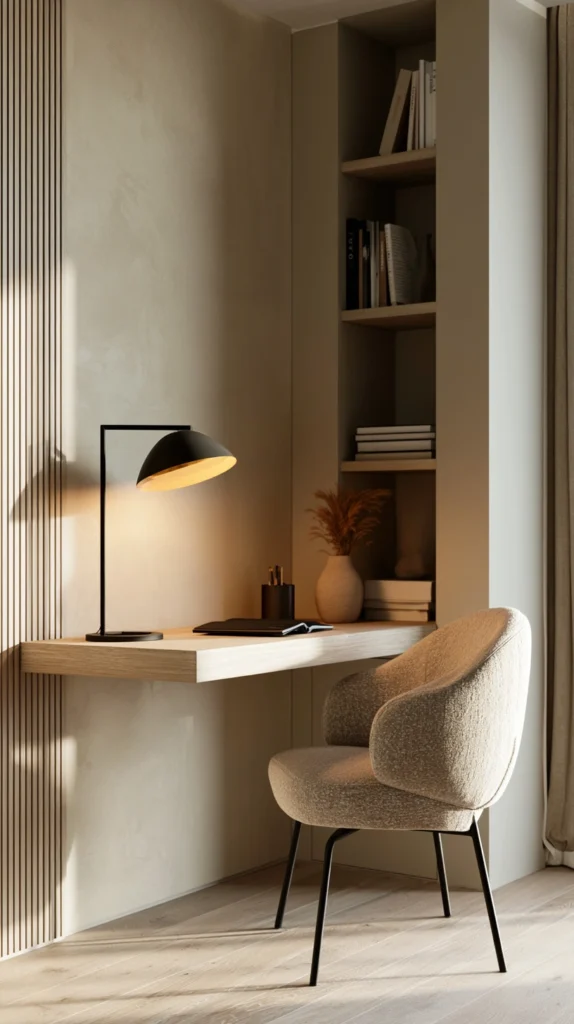
The desk lamp is the most-used light source in a small home office. It’s also the easiest single swap that changes the room’s entire atmosphere.
Most desk lamps ship with a cool-white or daylight bulb — useful for task visibility but harsh in fall when the light outside has already shifted warm and golden. Replacing the bulb with a 2700K warm white LED, or replacing the lamp itself with one that has a warm-toned fabric shade, shifts the working environment without touching anything else.
For small offices specifically, choose a lamp with a compact base — under 6 inches in diameter — so it doesn’t consume functional counter space. An articulating arm lamp mounted to the desk edge is even better: it provides directed task light and takes up zero surface area when not in use.
BenQ’s WiT e-Reading lamp and Govee’s smart desk lamp both offer adjustable color temperature in a compact form. Budget options from Amazon with a linen shade and a 2700K bulb run $25–$45.
Tip: Position the lamp on the opposite side of the desk from your dominant hand. Right-handed writers should place it to the left so the lamp casts light across the work surface rather than creating a shadow where the hand rests.
Budget: $25–$60
2. Add a Single Warm-Toned Accent Wall with Peel-and-Stick Wallpaper
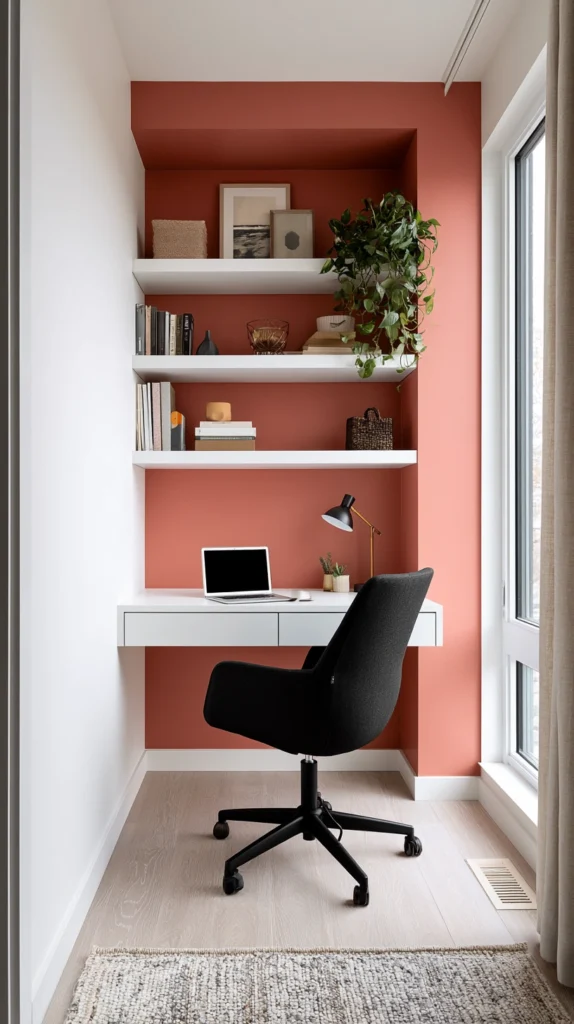
In a small office, a full repaint is a commitment. Peel-and-stick wallpaper on one wall delivers the same visual impact in an afternoon with zero permanence.
For fall, look for patterns in warm neutrals — textured linen prints, subtle geometric patterns in ochre or terracotta, or a tone-on-tone botanical in warm brown. The key in a small space is choosing a pattern with a small or medium repeat — large-scale patterns make a small wall feel busy rather than elevated.
Apply peel-and-stick wallpaper only to the wall directly behind the desk or monitor. This is the wall most visible during video calls, which makes it the highest-impact surface in the room. Covering it in something intentional changes how the space reads on camera as much as in person.
NuWallpaper and RoomMates both make peel-and-stick options that remove cleanly and run $25–$55 per roll. Most single-wall projects in a small office require one to two rolls depending on wall dimensions.
Tip: Measure the wall height and width before ordering and add 4 inches to each dimension for trimming. Peel-and-stick wallpaper is unforgiving if you run short mid-project — having extra prevents a seam at a visible midpoint.
Budget: $25–$60
3. Introduce a Fall Palette Through a New Desk Pad
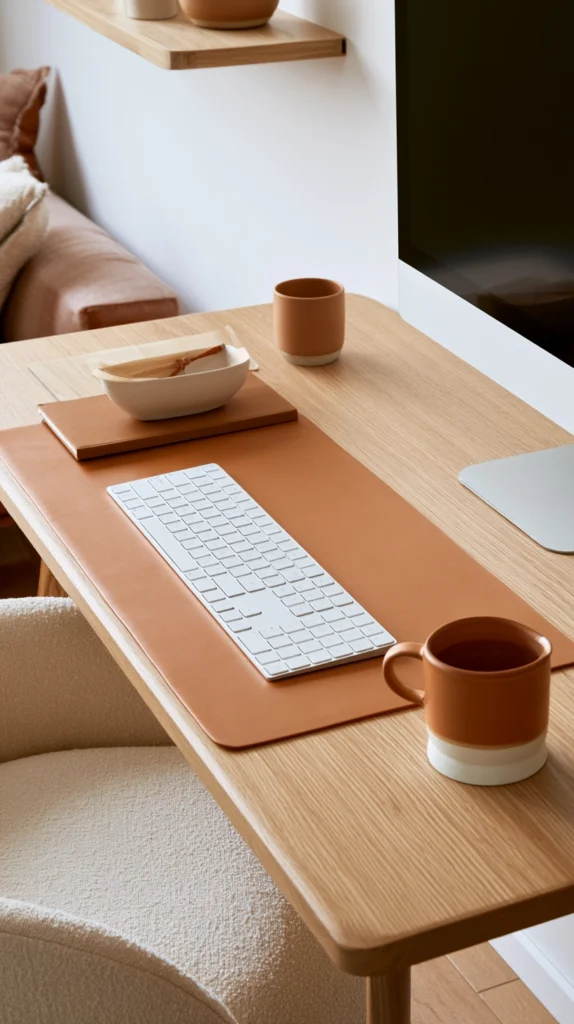
A desk pad — a large flat surface cover in leather, felt, or cork — is one of the most space-efficient ways to introduce seasonal color into a small office.
It adds color to the largest horizontal surface in the room without taking up any additional space. In fall tones — caramel, rust, terracotta, or deep olive — it shifts the desk zone’s entire temperature from neutral to warm.
For small desks specifically, look for pads in the 24×14-inch to 31×15-inch range rather than oversized versions that leave no clear desk surface on either side. The pad should cover the central working area while leaving room for a keyboard, a lamp, and whatever you keep at hand.
Felt pads from Navaris, leather-look options from Ktrio, and cork pads from Amazon Basics all run $15–$35 in the right size range for a compact desk.
Tip: Cork pads serve double duty as a pinboard for physical notes and reference cards. If you work with sticky notes or printed references, cork is more functional than felt at the same price point.
Budget: $15–$35
4. Hang a Small Fall-Toned Artwork or Framed Print Above the Desk
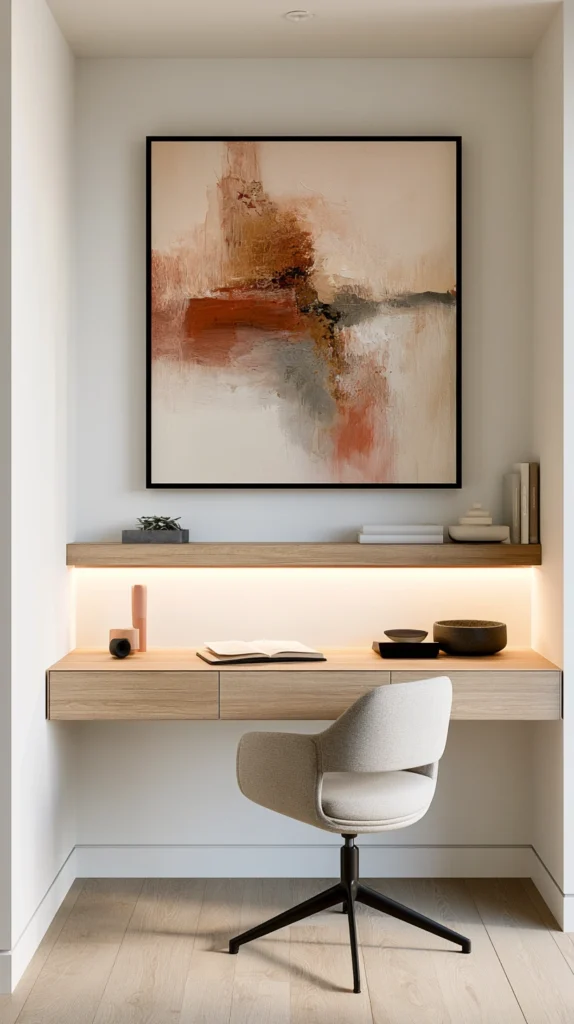
A blank wall above a desk in a small office makes the room feel unfinished. One piece of art changes that — and in a small space, one is genuinely enough.
For fall, choose art with warm tones rather than explicitly seasonal imagery. Abstract prints in ochre, rust, and brown; botanical illustrations in muted gold and green; landscape photography at golden hour — all of these read as fall-appropriate without being tied to a specific holiday or month.
Keep the frame size proportional to the wall width. A general rule: the art should span 50–75% of the desk width below it. A 24-inch wide desk works well with a 12–18-inch wide print. Going larger in a small space makes the wall feel top-heavy.
Printable digital art from Etsy costs $3–$12 for the file, which you can print at a local print shop in exactly the size you need. Pair with a simple black or natural wood frame from IKEA’s RIBBA line at $5–$12.
Tip: Hang the print at seated eye level rather than standing eye level. Most people hang wall art too high in a home office. The right height is one where the center of the print is at roughly your eye level when sitting at the desk — usually 10–12 inches lower than you’d hang it in a hallway or living room.
Budget: $10–$30 for print plus frame
5. Bring in One Plant That Thrives in Low Fall Light
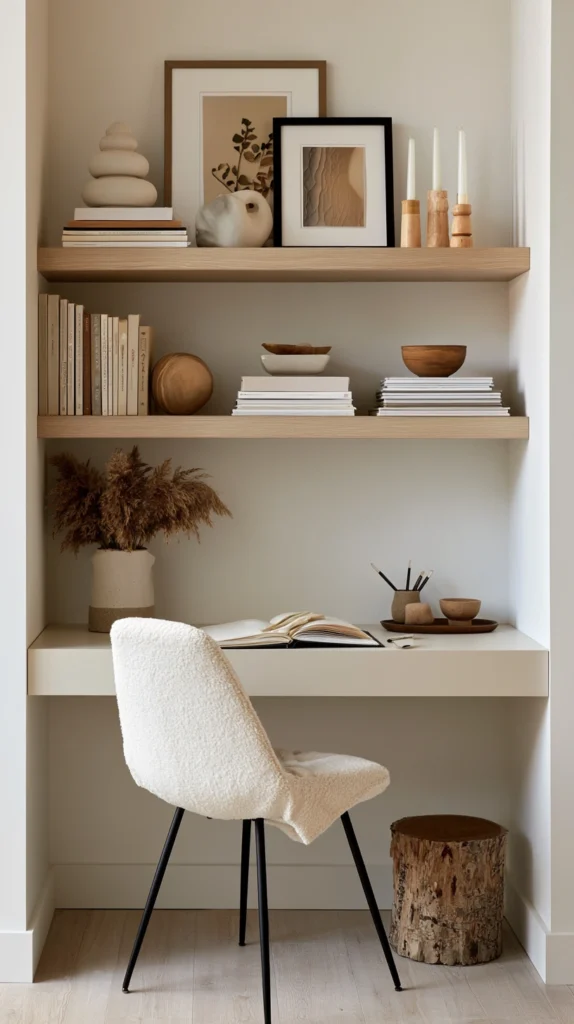
Plants in a home office improve air quality and give the eyes a natural resting point during screen breaks. In fall, as natural light levels drop, the plant choice needs to match the changing conditions.
The best low-light fall office plants: pothos (especially golden or neon varieties that add warm color), ZZ plants, snake plants, and heartleaf philodendron. All of these tolerate the reduced daylight hours of October and November without dropping leaves or going into visible stress.
In a small office, plant placement matters. A plant on the desk itself takes up functional workspace — better to use a small wall-mounted shelf, a corner floor stand, or a clip-on monitor shelf at screen level where the plant is visible without occupying work surface.
A 4-inch potted pothos or philodendron from a local nursery or Home Depot runs $5–$12. A simple ceramic pot in terracotta or matte white runs $4–$10.
Tip: Water fall office plants less frequently than in summer. Lower light means slower growth and slower water absorption — overwatering is the most common way to kill an otherwise low-maintenance plant during fall and winter.
Budget: $8–$25 including pot
6. Layer a Warm Throw on the Office Chair
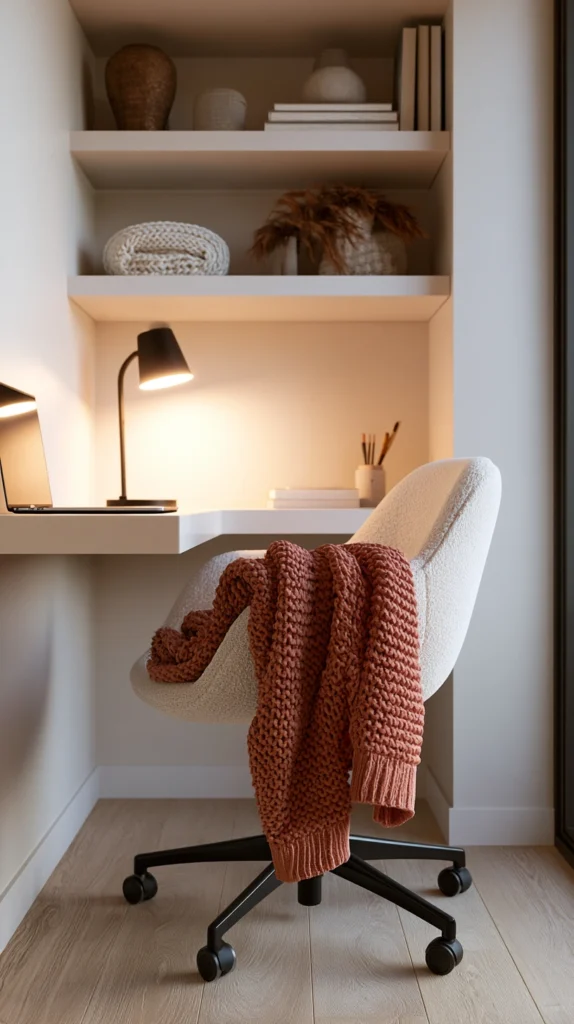
An office chair with a throw blanket draped over the back or arm changes how the chair feels before you even sit down. It signals comfort and warmth in a way that an ergonomic chair alone never does.
For a small office, choose a throw in a compact size — 50×60 inches rather than a full 60×80-inch blanket — so it drapes cleanly without pooling on the floor or overwhelming the chair visually.
Fall palette options that work against most standard office chair colors (black, grey, navy): terracotta, caramel, rust, deep olive, and warm cream. Any of these read as intentional against a neutral chair.
Fold the throw in thirds lengthwise and drape it over one arm rather than spreading it across the back. This keeps it accessible and creates a neater profile than a throw bunched across the seat.
H&M Home, Target’s threshold line, and Amazon all carry 50×60-inch washable cotton or cotton-blend throws in fall tones for $18–$35.
Tip: Choose a machine-washable throw rather than dry-clean only. An office chair throw gets used daily and needs regular washing — dry-clean-only throws become a chore rather than a comfort item within the first month.
Budget: $18–$40
7. Upgrade the Cable Management with Warm-Toned Accessories
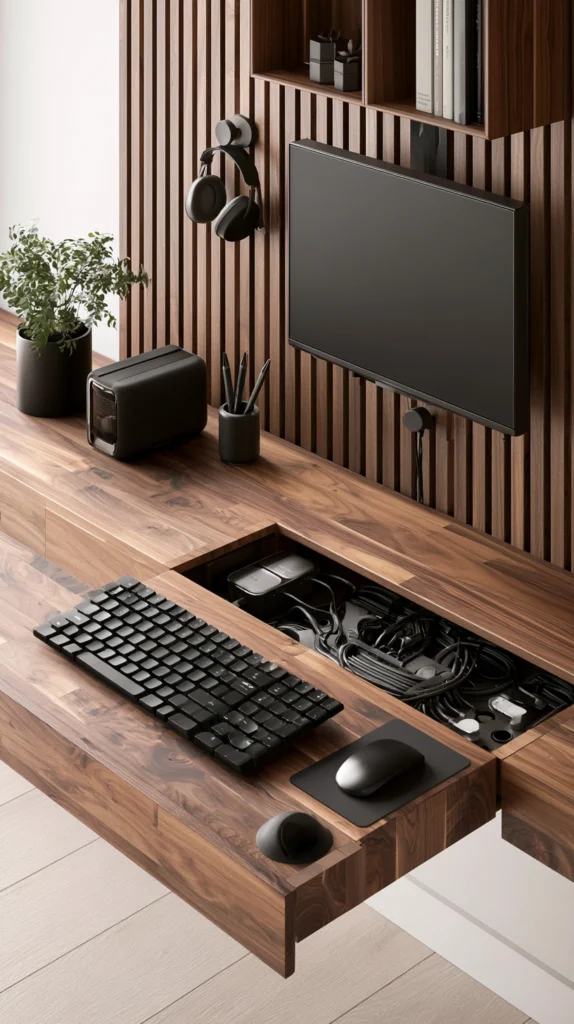
Cable clutter in a small home office is disproportionately damaging to the room’s overall appearance. In a larger office, loose cables get lost in the visual noise of the space. In a small office, they dominate.
Fall makeover season is a good prompt to address this properly. A cable management box in a warm wood-look finish — available from Amazon, IKEA, and D-Line — hides power strips and excess cable length in a contained, intentional-looking unit. Pair with adhesive cable clips in a matching tone to run cables along the desk edge or down the wall rather than across the floor.
The warm wood-look finish of current cable management boxes means they read as a design choice rather than a technical accessory. Placed on or beneath the desk, they fit into a fall warm-wood aesthetic rather than looking like IT equipment.
IKEA’s KVISSLE cable management box ($15) and Amazon’s basic wood-look cable boxes ($12–$25) both work well for standard home office cable volumes.
Tip: Take a photo of your cable setup before reorganizing. It’s easy to forget which cable connects to what mid-project, and a reference photo prevents the frustration of having to trace connections from scratch when reconnecting.
Budget: $15–$35
8. Use a Floating Shelf for Fall Display and Storage
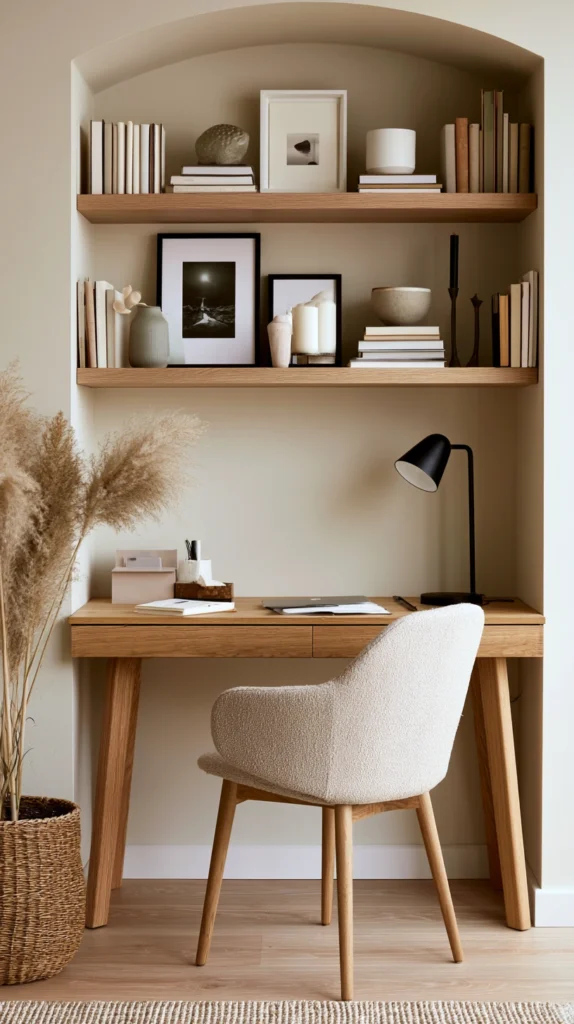
A floating shelf above or beside the desk adds vertical storage in a small office without taking any floor space — and it creates a display surface for fall accessories that the desk surface can’t spare.
For fall, style the shelf with a mix of functional and decorative items in warm tones: a small plant, two or three books with warm-colored spines turned face-out, a ceramic mug used for pens, a small candle or wax warmer. The functional items — books, pen holder — earn the shelf’s place; the decorative items — plant, candle — make it look seasonal.
Keep the shelf depth at 6 inches or less above a desk. A deeper shelf intrudes into the sightline and the usable space above the work surface. Most standard floating shelves sold for kitchen or bathroom use come in 6-inch depth and are structurally identical to office shelves at the same price.
IKEA’s LACK shelves ($7–$10) and Shiplap-look floating shelves from Amazon ($15–$30) both work for this application.
Tip: Mount the shelf into a wall stud rather than relying on drywall anchors alone. A shelf holding books, ceramics, and a plant holds more weight than most drywall anchors are rated for long-term. Use a stud finder before drilling.
Budget: $15–$35 including hardware
9. Replace Generic Storage Bins with Warm-Toned Woven Baskets
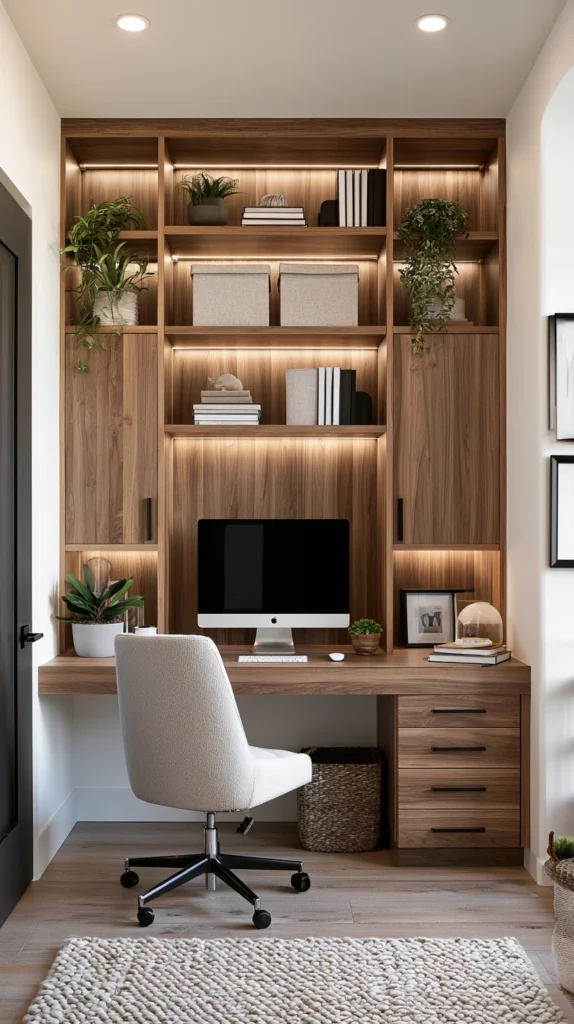
Storage in a small home office is necessary. The question is whether that storage reads as visual clutter or as a considered part of the room.
Generic black or grey storage bins hold items efficiently but add nothing to the room aesthetically. Woven baskets in natural seagrass, jute, or rattan hold the same items, occupy the same space, and add warm organic texture that works directly with a fall palette.
For small offices, use baskets with lids for items you access infrequently — document storage, tech accessories, spare supplies. Use open baskets for items you reach for daily. This combination keeps the room looking organized from the door while remaining functional for everyday work.
A set of two woven storage baskets with lids in a size suitable for a bookshelf or desk unit (approximately 11×11×11 inches) runs $20–$40 from Amazon, Target, or TJ Maxx.
Tip: Label baskets with a small leather tag or a folded kraft paper card rather than a printed label. The material of the label becomes part of the aesthetic rather than fighting against it — a kraft paper card tucked into a jute basket looks intentional in a way that a printed adhesive label never does.
Budget: $20–$45
10. Add a Small Wax Warmer for Seasonal Scent
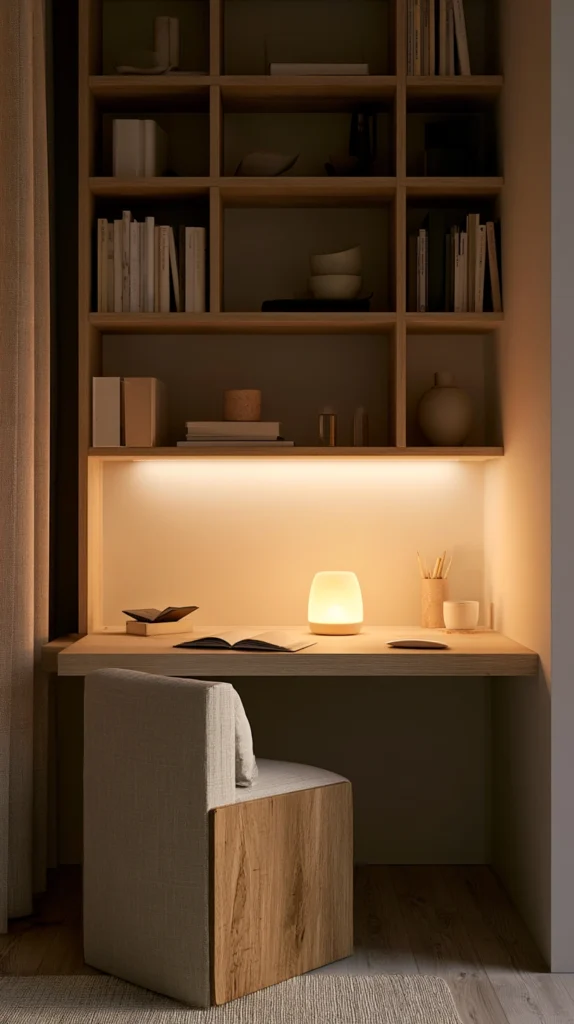
Scent is underused in home office design. It affects concentration, mood, and how the space feels at a level that most visual changes don’t reach.
For fall, a small electric wax warmer — not a candle, which is a fire risk on a working desk — allows continuous low-level scent without supervision. Cedarwood, sandalwood, cinnamon bark, and tobacco vanilla are all fall-appropriate scents that ground rather than distract.
The distinction worth making: sweet, food-adjacent fall scents (pumpkin pie, apple cider) are pleasant for a short time but can become distracting during focused work. Earthy, wood-based scents maintain their background quality over a full work session without demanding attention.
Better Homes & Gardens wax melts (widely available at Walmart) and Scentsy wax bars both offer fall-appropriate earthy options for $4–$8 per pack. A basic ceramic wax warmer runs $12–$20.
Tip: Run the warmer for the first 30–45 minutes of the work session, then turn it off. The scent lingers for 2–3 hours after the warmer goes off, and continuous running reduces the perceived intensity of the scent through adaptation.
Budget: $15–$30 for warmer plus first wax pack
11. Install a Small Pinboard with Fall-Toned Fabric Cover
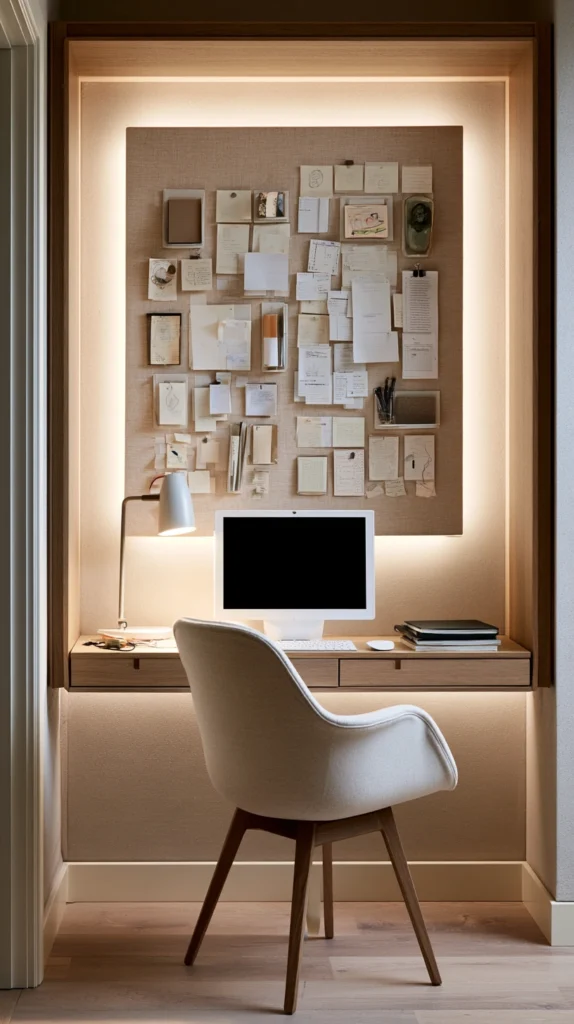
A standard corkboard is functional but visually flat. Covering it with a fall-toned linen or burlap fabric takes ten minutes and changes its visual impact entirely.
Cut fabric to the board size plus 2 inches on each side. Pull fabric taut over the front face and staple to the back edge — start from the center of each side and work toward the corners to prevent bunching. For fall, use a natural undyed linen, a warm camel-toned canvas, or a herringbone fabric in rust and cream. The fabric becomes the background that makes everything pinned to the board look curated rather than random.
In a small office, a pinboard in the 17×23-inch range is usually sufficient — large enough to hold a month’s worth of reference material, small enough not to dominate a wall.
Standard cork boards in this size run $10–$18. Fabric from a craft store at $5–$10 per yard covers the board with fabric to spare.
Tip: Keep the top 20% of the board empty. A board packed to every corner looks like a cluttered bulletin board. One third empty reads as organized — the items that are pinned feel deliberate rather than accumulated.
Budget: $15–$28
12. Swap Out a Desk Chair Cushion for a Fall-Toned Version
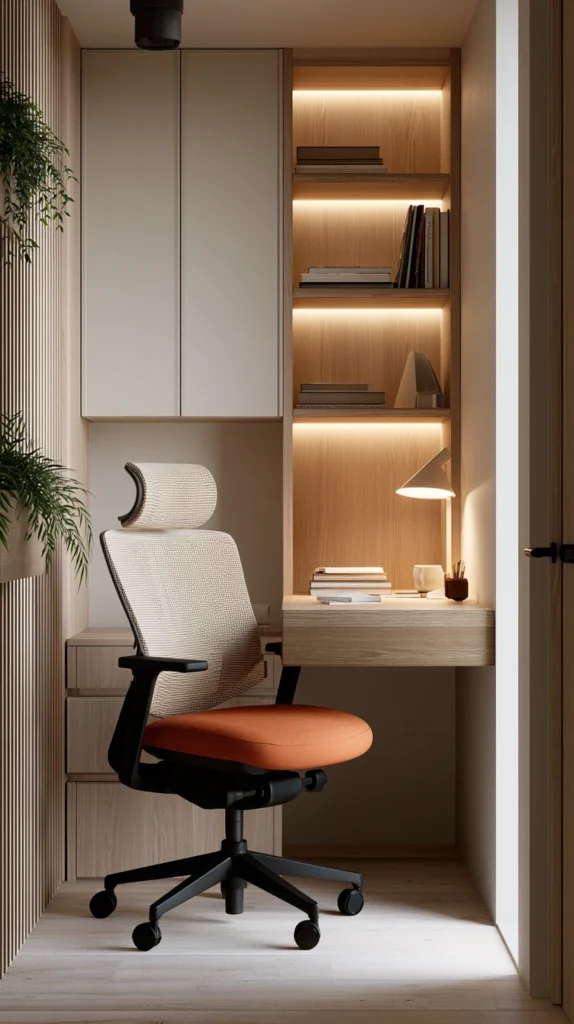
If the office chair has a removable seat cushion, replacing it with a fall-toned alternative is the fastest textile change in the room.
Chair cushion covers in terracotta, burnt orange, deep olive, or warm rust are widely available in standard seat sizes. Most dining chair cushion covers (16×16-inch, 18×18-inch, or 16×14-inch trapezoid shapes common in office chairs) are interchangeable with office chair cushions of the same dimensions.
For chairs without a removable cushion, a tie-on chair pad — the type with fabric ties at the back corners — adds a fall-toned textile to the seat without requiring any modification to the chair itself.
Target, Amazon, and HomeGoods carry seasonal seat cushion covers in fall tones for $12–$28 per cushion. IKEA’s MALINDA and JUTIS chair pads offer simple, affordable options in neutral warm tones.
Tip: Measure the existing cushion before ordering a replacement or cover. Chair seat shapes vary more than they appear — taking the dimensions of length, width, and the front-to-back depth ensures the new cushion fits without overhang or gaps at the sides.
Budget: $12–$30
13. Create a Micro Reading Corner Using Unused Floor Space
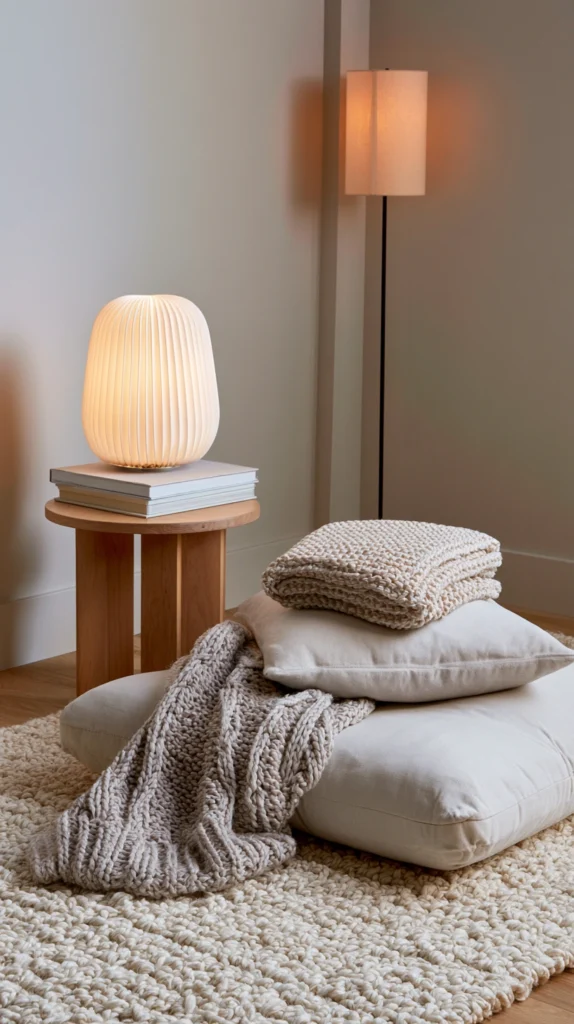
Even in a very small home office, there’s usually a corner or a wall section that isn’t carrying its full weight — behind the door, beside the filing cabinet, in the space between a window and the wall.
A micro reading corner uses that dead space to create a second mode in the room: a place to read, think, or review notes away from the screen. The minimum setup is a floor cushion or a compact stool, a small side table or crate, and a floor lamp positioned to read by.
For fall, the reading corner is where the most overtly seasonal textiles belong — a chunky knit throw, a pillow in a warm print, a warm-toned rug under the cushion. The desk area stays productive and restrained; the corner carries the seasonal comfort.
A floor cushion runs $20–$40. A small bamboo or wood side table runs $15–$30. A simple arc floor lamp runs $30–$55.
Tip: Face the reading corner away from the computer monitor. Even a 45-degree angle away from the screen creates enough visual separation that sitting in the corner feels genuinely different from sitting at the desk — which is the point.
Budget: $60–$120 for a complete micro corner
14. Style the Windowsill as a Fall Vignette
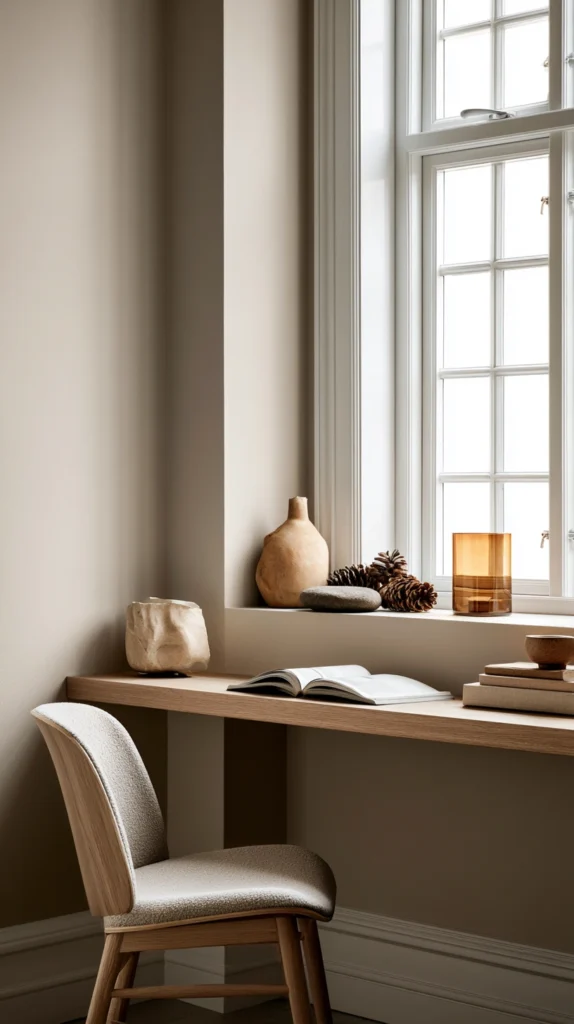
A windowsill in a small home office is almost always underused. It collects dust and the occasional forgotten mug, but it rarely functions as a deliberate design element.
For fall, treat the windowsill as a curated vignette: one small plant in a terracotta pot, two or three small objects in warm tones (a pinecone, a smooth stone, a small ceramic piece), and optionally a battery tea light or small amber votive for evening light.
Keep the total number of objects to four or fewer. The windowsill needs to remain clear enough that the window can be opened — and in a small office, a cluttered windowsill makes the room feel closed in rather than connected to the outdoors.
During daylight hours, the natural light backlights the plant and objects, creating a warm silhouette effect. In the evening, the tea light or votive provides a low-level warm glow at window height that adds to the layered lighting effect alongside the desk lamp.
For more ideas on seasonal room styling that combines lighting, textiles, and small accessories at a room-by-room level, the fall home decor ideas on StyleTasteStudio cover the full home with the same focus on small, intentional changes over full seasonal overhauls.
Tip: Clean the windowsill and the lower half of the window glass before setting up the vignette. In a small office where the windowsill is at eye level from the desk, a dusty sill or streaked glass undermines the effect of even the most carefully chosen objects.
Budget: $8–$20
Final Thoughts
A small home office fall makeover works best as a series of small decisions rather than a single overhaul.
The desk lamp, the desk pad, and one piece of art on the wall behind the desk address the three surfaces you look at most during a working day. Add a throw to the chair and a plant on a shelf, and the room already feels substantially different.
Work from the desk outward — desk surface first, chair second, walls third, corners last. This sequence keeps the functional core of the room intact while layering in seasonal comfort at each step.
Browse more seasonal home office and workspace ideas in the home design section on StyleTasteStudio.