
15 Black Decor Styling Ideas That Don’t Feel Too Dark
Black decor represents a design paradox where the dramatic color delivers the kind of sophisticated modern character that many interiors genuinely benefit from while simultaneously creating the risk of spaces feeling oppressive, cave-like, or overwhelmingly dark when applied without thoughtful balance and strategic restraint.
The fear of darkness prevents many people from embracing black’s legitimate design benefits, resulting in safe neutral interiors that lack the visual drama and sophistication that black elements provide when used appropriately.

Strategic black decor styling incorporating adequate complementary brightness, intentional placement concentrating darkness in specific areas rather than throughout, and material selections that reflect light despite their dark color creates spaces that feel designed rather than dark while delivering the modern, sophisticated character that black inherently provides.
Understanding which black applications deliver maximum impact with minimum darkness, how to balance dark elements with sufficient brightness, preventing oppressive feelings, and what constitutes successful black styling versus overwhelming shadow ensures decor choices enhance rather than compromise spaces.
These fifteen black decor styling ideas demonstrate practical approaches from strategic accent placement through reflective finishes, each proving that black elements can create sophisticated, beautiful spaces that feel open and bright rather than dim and confining.
1. Black Accents Against Bright White Walls
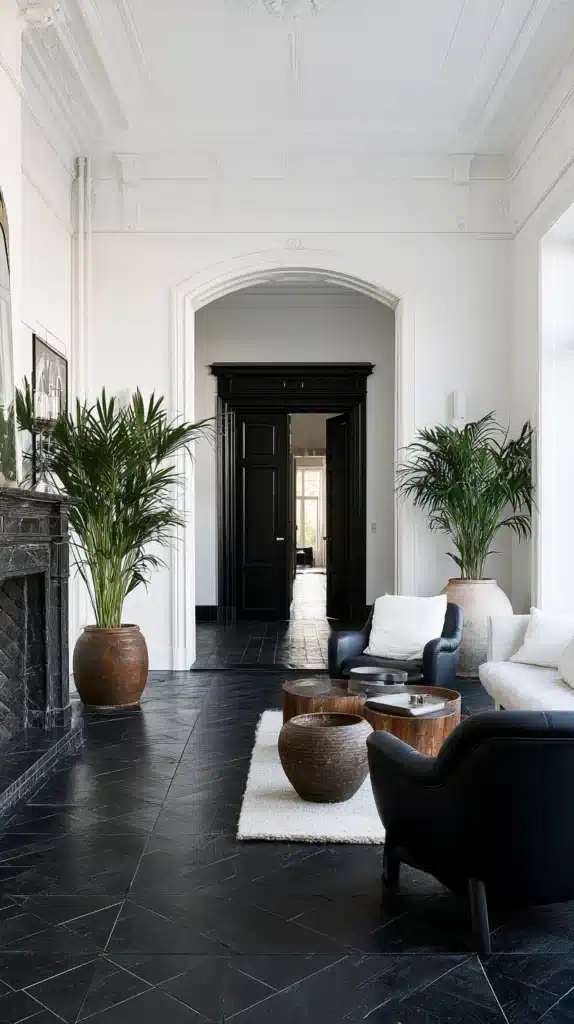
Create maximum contrast and light through strategic black elements against crisp white backgrounds, establishing the kind of graphic modern character that prevents darkness through dominant brightness. Paint walls in pure bright white, maintaining maximum light reflection, introduce black elements through trim, doors, or furniture, and appreciate how the contrast creates visual drama without darkness.
The white-dominant palette keeps spaces bright while the black accents provide necessary visual weight and sophistication. The high-contrast combination creates the kind of modern character that pure white alone cannot achieve while maintaining the brightness that white provides.
2. Reflective Black Finishes and Gloss
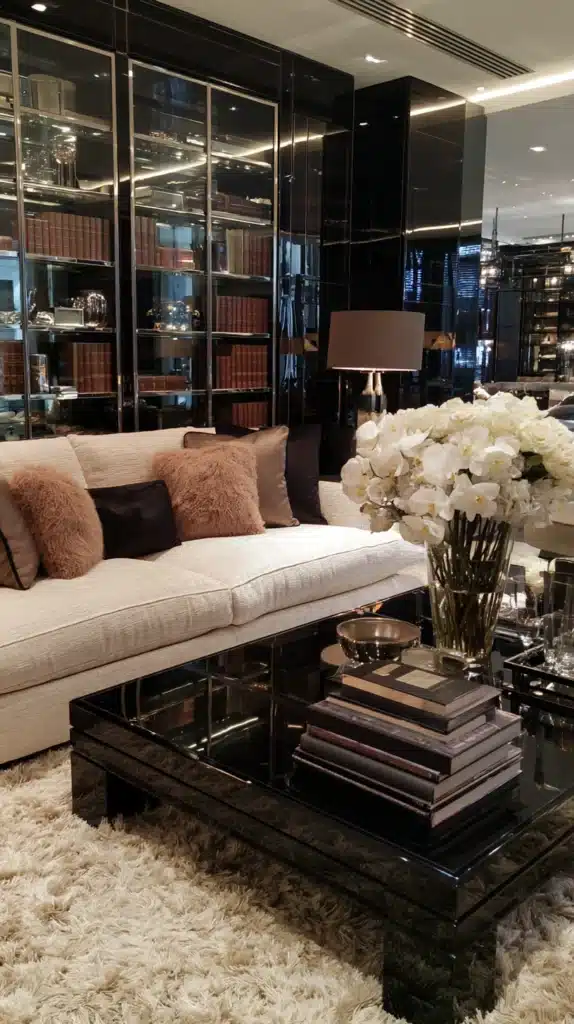
Choose black elements with reflective finishes, including gloss paint, polished surfaces, or lacquered materials, where light reflection prevents the flatness and darkness that matte black sometimes creates. Select glossy black paint for accent walls or trim, choose polished black marble or stone reflecting light naturally, and appreciate how reflective surfaces add dimension and light.
The reflective quality bounces light around spaces, creating perceived brightness despite dark color. The glossy finish prevents the visual weight that completely matte black creates while maintaining sophistication.
3. Black Framing Around White Spaces
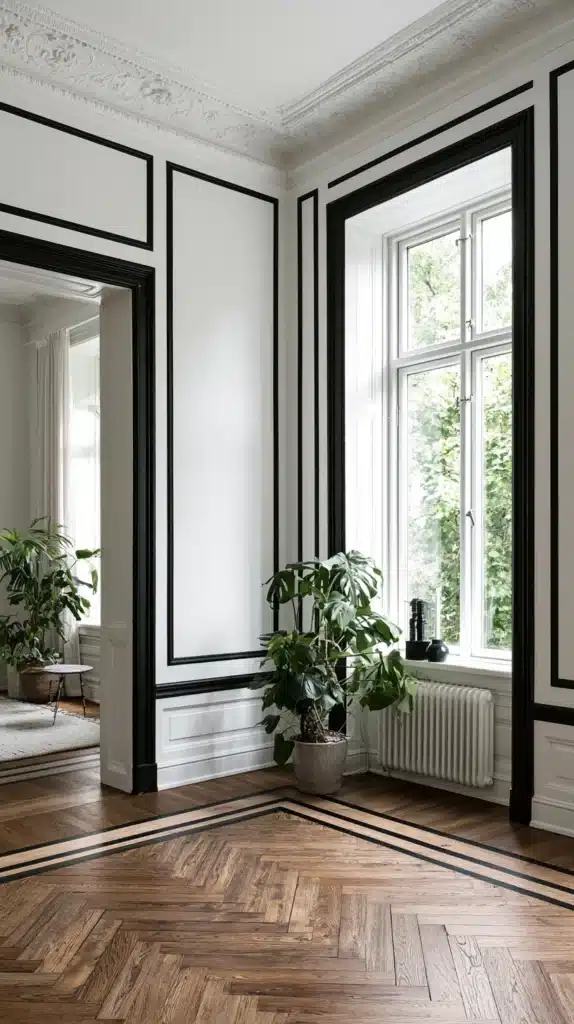
Create architectural definition through black frames, trim, or architectural details, establishing structure while white spaces maintain brightness and openness. Paint interior door frames black, framing white walls, use black trim creating architectural interest, or install black-framed windows, maintaining views and light transmission.
The dark framing adds definition while the white spaces remain dominant. The architectural approach creates modern character through structural rather than decorative elements.
4. Strategic Black Accent Wall
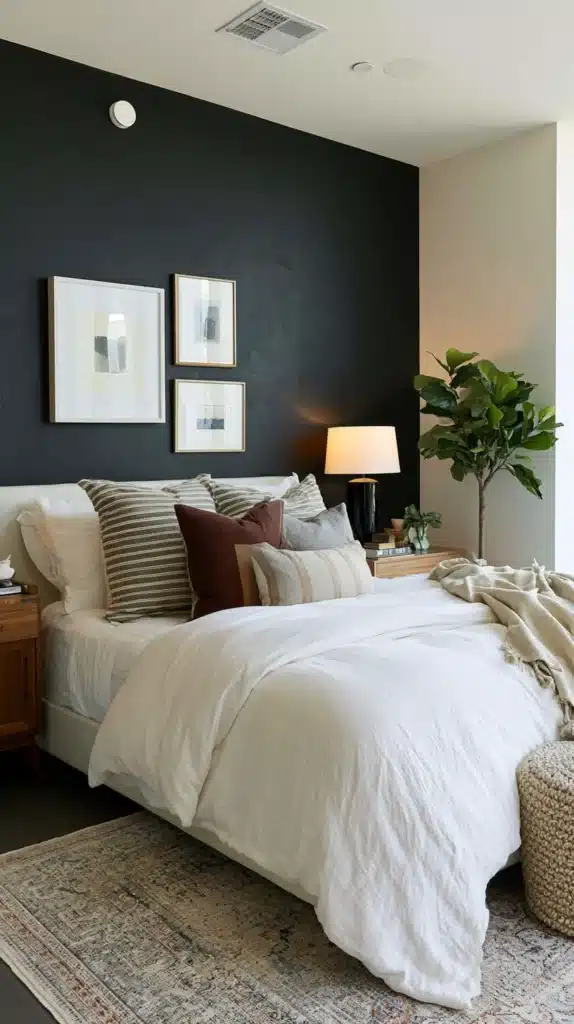
Contain darkness through single black accent walls, creating dramatic focal points without overwhelming entire rooms through complete saturation. Paint walls behind beds or above mantels,
establishing focal points, keep remaining walls light maintaining overall brightness, and position accent walls where the darkness receives proper appreciation. The single dark wall creates impact while the surrounding brightness prevents oppressive darkness. The focal point approach delivers drama without sacrificing the openness that bright spaces maintain.
5. Black Furniture Against Light Backgrounds
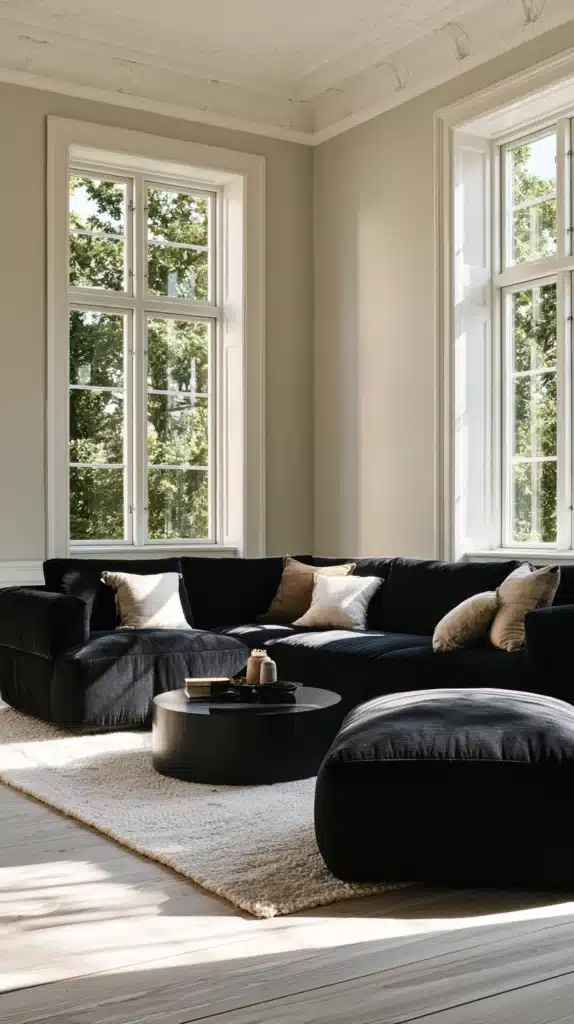
Position substantial black furniture pieces, establishing visual weight against predominantly light interiors, creating balance without total darkness. Use black sofas or tables against white or light walls, ensure adequate lighting around dark furniture, preventing shadow creation, and appreciate how dark furniture adds a necessary visual anchor to light spaces.
The furniture creates grounding weight while the light backgrounds maintain overall brightness. The contrast creates the modern, sophisticated character that monochromatic light interiors sometimes lack.
6. Generous Natural and Artificial Lighting
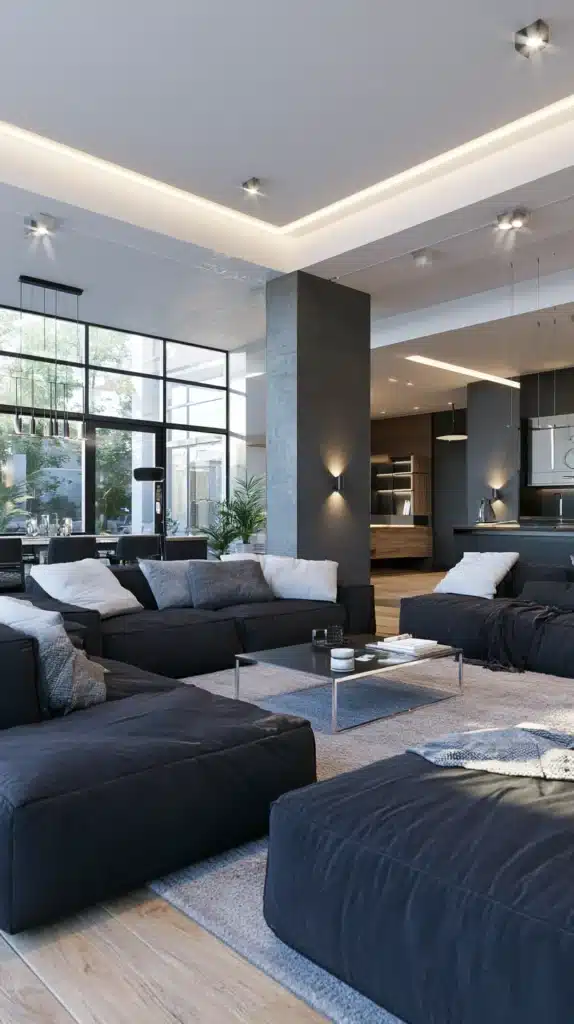
Compensate for black elements through abundant illumination from natural windows and quality artificial sources, ensuring spaces remain bright despite dark decor elements. Maximize window exposure, allowing natural light penetration, install generous artificial lighting in varied layers from task through ambient, and use bright bulbs compensating for light absorption.
The abundant illumination prevents darkness from overwhelming spaces despite black elements. The layered lighting provides flexibility, adjusting brightness to suit varying needs and times of day.
7. Black Details in Textiles and Soft Furnishings
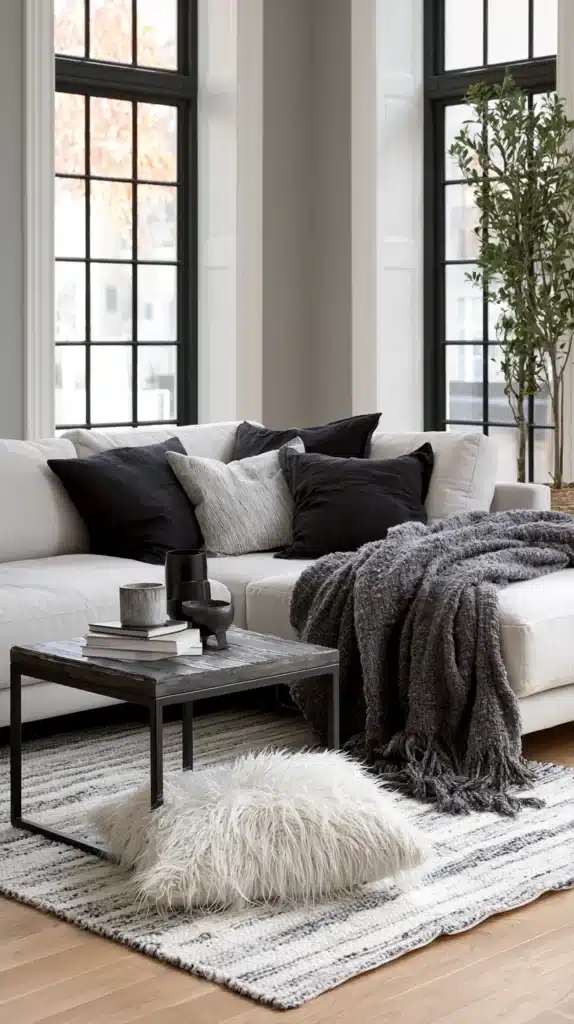
Introduce black through soft elements, including pillows, throws, and upholstery, where the fabric elements prevent the architectural heaviness that large black furniture or walls create. Add black throw pillows to light sofas, layer black textiles creating visual interest, and appreciate how soft furnishings feel lighter than rigid furniture.
The textile application allows black introduction without architectural weight. The flexible soft elements can be adjusted or removed if darkness feels excessive.
8. Mixed Metal Coordination with Black Elements
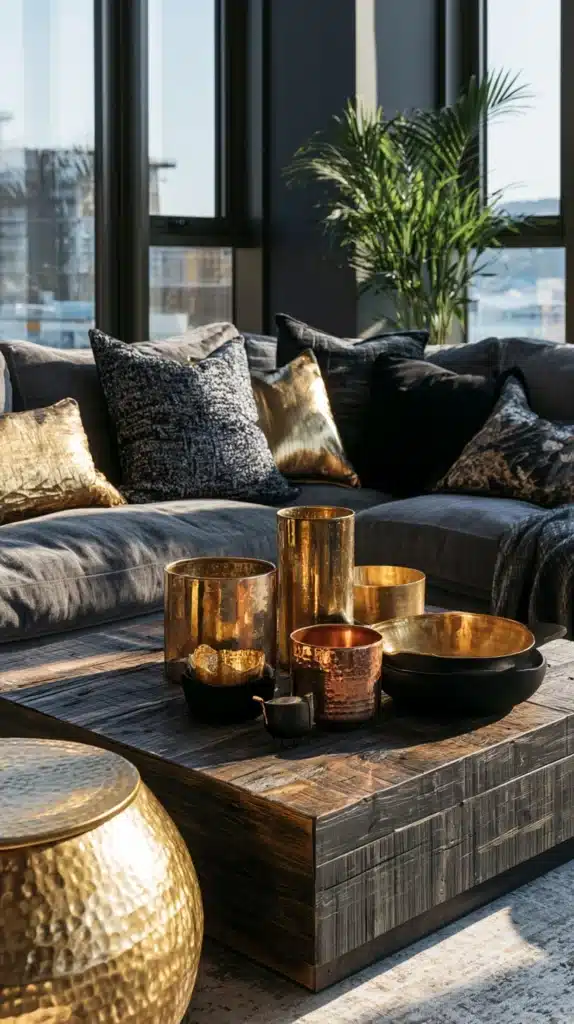
Pair black decor with warm metallic finishes, including brass, copper, or rose gold, creating the kind of warm visual interest that prevents cold darkness. Coordinate black fixtures with warm metal hardware, choose lighting with metallic elements, and appreciate how metallic warmth balances cool black.
The warm metals add necessary visual warmth preventing starkness that black with chrome or silver sometimes creates. The combined materials create the kind of sophisticated luxury that monochromatic approaches cannot achieve.
9. Black Trim on Light Furniture
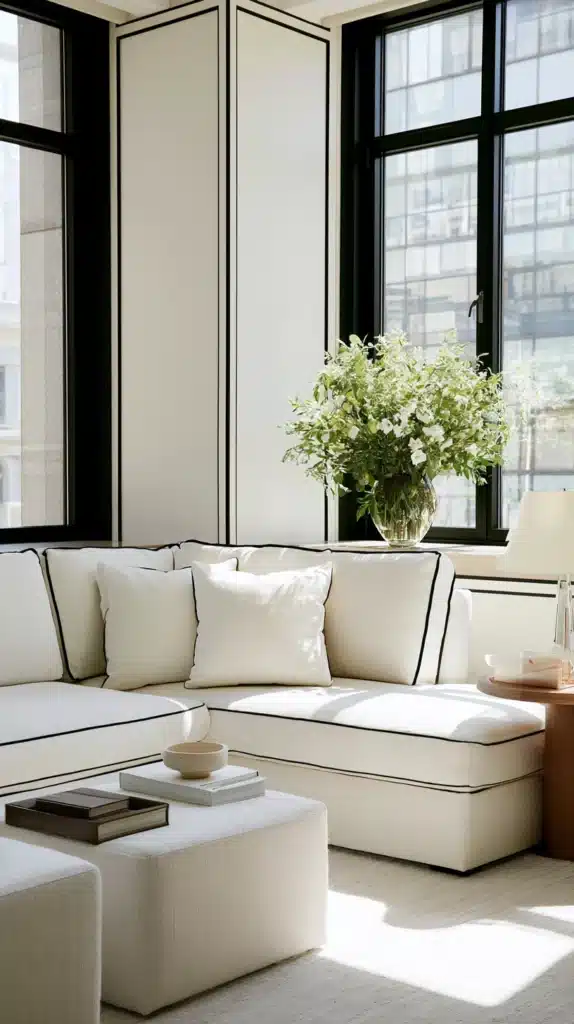
Create definition through black trim, piping, or edges on predominantly light furniture, establishing visual clarity without overwhelming darkness. Choose sofas with black piping, furniture with black trim details, or light upholstery with dark edge treatments.
The trim application adds definition and sophistication while remaining predominantly light. The detailed approach delivers elegance through considered detail rather than saturating darkness.
10. Strategic Black Shelving or Storage
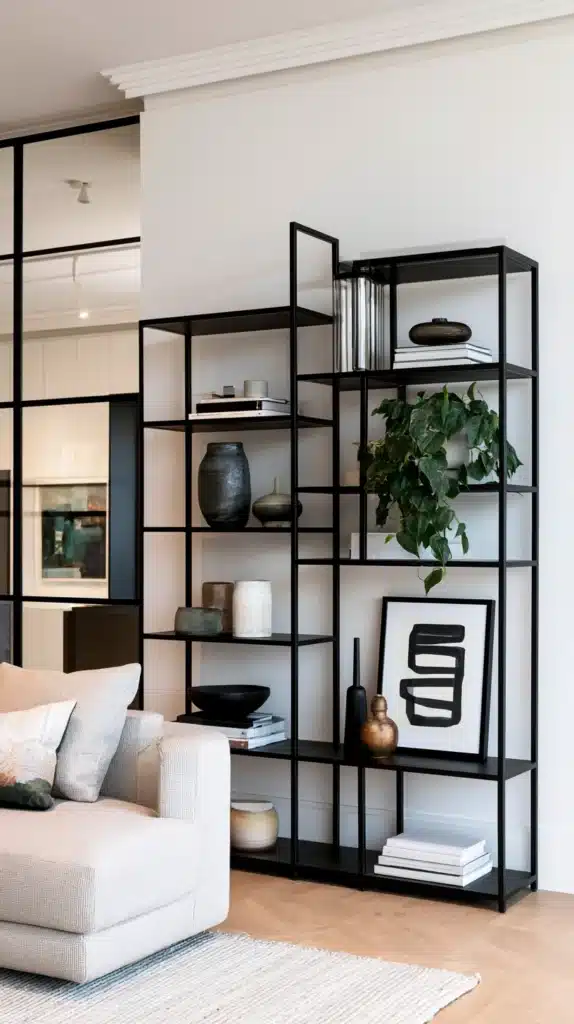
Position black storage elements establishing organization, while the furniture-scale pieces feel less architectural than painted walls or cabinetry. Install black shelving providing storage and visual structure, choose black storage baskets within bright rooms, and appreciate how functional furniture feels lighter than permanent fixtures. The storage approach provides practical necessity while the furniture scale prevents oppressive architectural weight.
11. Black Art and Frames Against Light Walls
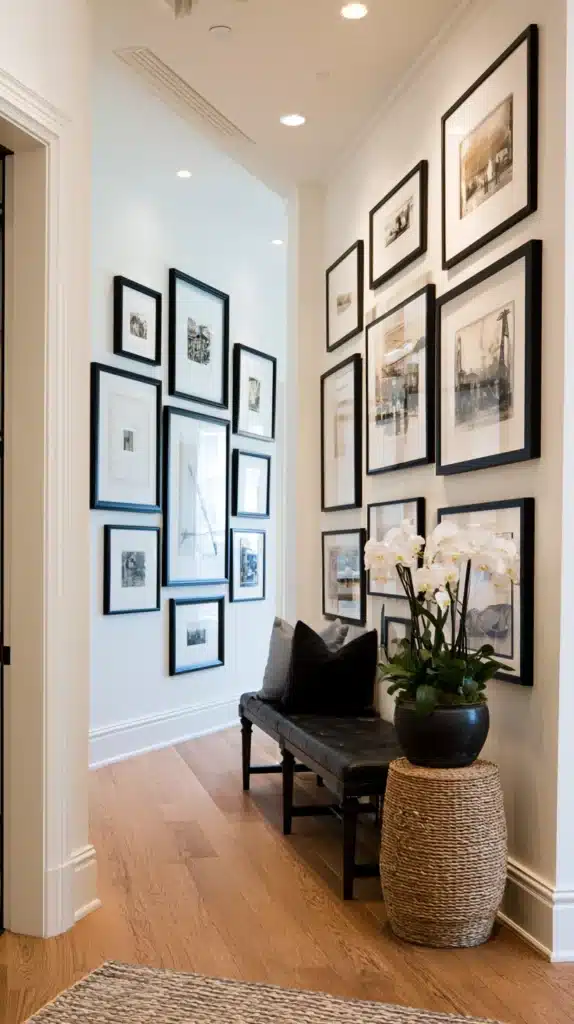
Display black-framed artwork and photographs, establishing visual interest through framed elements rather than architectural applications. Mount black-framed prints and photographs on white walls, creating focal points, appreciate how the frames add definition without wall coverage, and use varied sizes to create gallery-style interest.
The framed approach delivers sophistication through curation rather than saturation. The displayed pieces become decorative elements rather than architectural impositions.
12. Patterned Black Elements with White Space
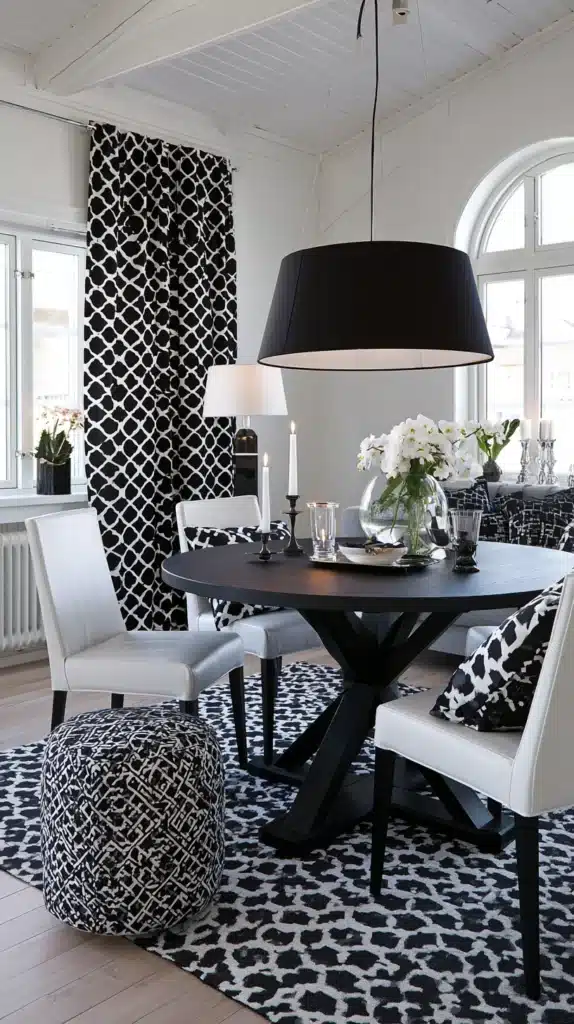
Introduce black through patterned textiles and wallpapers, where white space within patterns prevents solid darkness. Choose black and white patterned fabrics, geometric prints containing white areas, or striped designs maintaining light.
The pattern integration introduces black, while the white space maintains brightness. The patterned approach creates visual interest, preventing the flatness that solid color sometimes creates.
13. Black Lighting Fixtures with Bright Bulbs
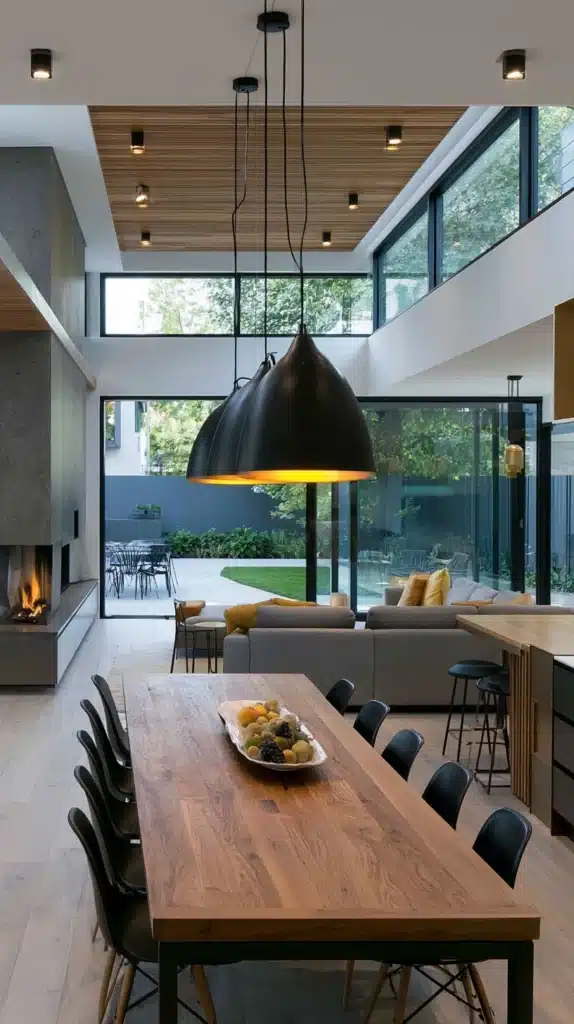
Use stylish black light fixtures featuring warm, bright bulbs, creating the kind of design sophistication that black frames provide, while brightness eliminates darkness concerns.
Choose black pendant lights or sconces with warm LED bulbs, appreciate how black frames elegantly showcase light sources, and ensure adequate brightness despite dark fixture color. The black fixture provides modern character while the bright light ensures illumination. The combination delivers both aesthetic and functional success.
14. Minimal Black Application with Maximum Impact
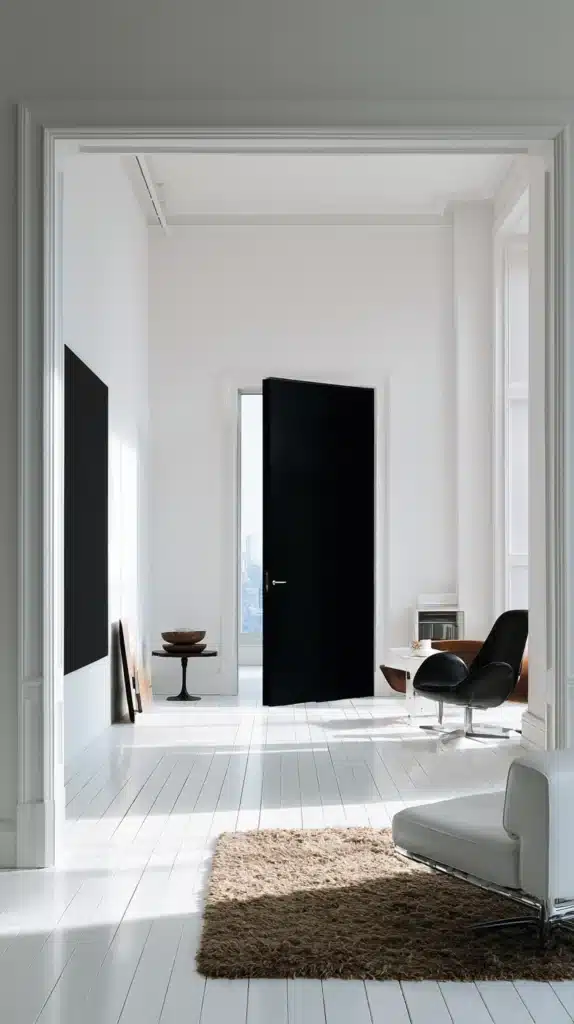
Achieve dramatic effect through restrained black use where single bold elements create sufficient impact, preventing the need for extensive application. Paint a single black door creating architectural interest, apply black trim establishing definition, or use one substantial black piece establishing focal points. The minimal application delivers maximum impact with minimal dark surfaces. The restraint prevents darkness from accumulating through multiple applications.
15. Black Accents Creating Depth and Dimension
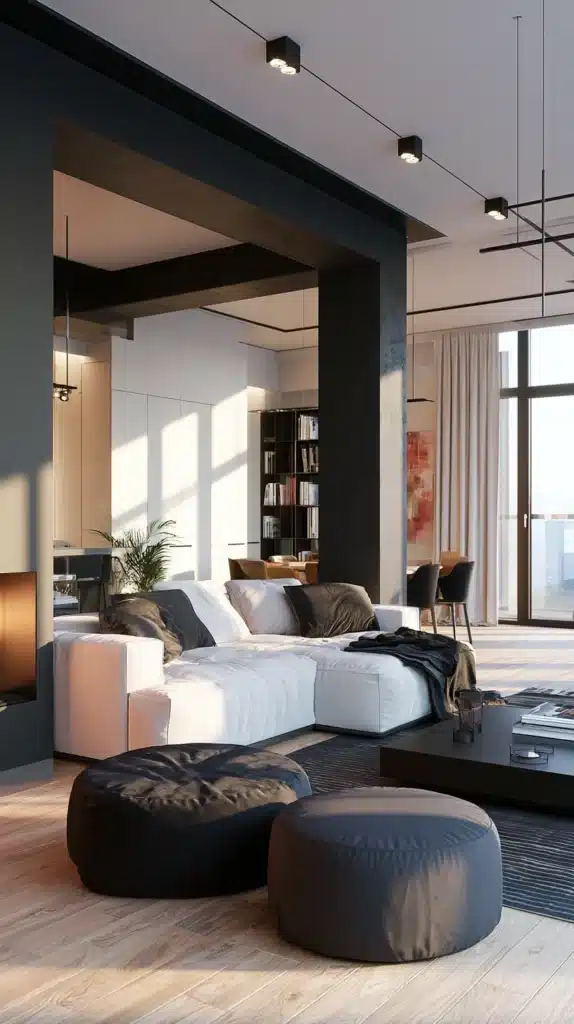
Use black strategically to create visual depth where darker elements positioned at space edges create receding effects making interiors feel larger rather than smaller. Position black in corners creating depth illusion, use dark colors receding visually away from entry points, and appreciate how strategic placement creates spaciousness despite darkness. The depth strategy uses black psychologically creating perceived size while black itself creates modern character.
Successfully implementing black decor without overwhelming darkness requires adequate bright foundational elements maintaining dominant lightness, strategic placement concentrating darkness in areas that benefit from definition rather than throughout entire spaces, and intentional lighting ensuring black elements do not create shadow or gloom.
Balance black with sufficient white or light neutrals, maintaining brightness. Use reflective finishes where possible, adding light bounce despite dark color. Avoid complete room saturation, maintaining escape from darkness.
Layer lighting, ensuring adequate illumination regardless of black elements. Consider the psychological impact, understanding that personal tolerance for darkness varies. Test black elements before full commitment, ensuring comfort with darkness levels.
Most importantly, recognize that black represents a sophisticated design tool when applied thoughtfully, where the dramatic color delivers genuine aesthetic benefits without sacrificing the brightness and openness that livable spaces require, proving that successful black decor styling balances modern sophistication with practical brightness, creating spaces that feel intentionally designed and genuinely beautiful rather than dark or oppressive, demonstrating that black belongs in thoughtfully designed interiors.
When an application respects both aesthetic potential and human comfort, requiring adequate complementary brightness, strategic restraint, and quality materials, ensuring that dramatic dark elements enhance rather than dominate, creating the sophisticated modern character that makes black such a powerful design tool when executed with appropriate balance and vision.