
15 Japanese Soaking Tub Ideas
The Japanese soaking tub — the ofuro, as it is known in the tradition from which it originates — is one of the most extraordinary and most genuinely transformative bathroom additions available to any home with the spatial intelligence to accommodate it and the cultural intelligence to understand what it represents.
The ofuro is not merely a bathtub of different proportions — not simply the Western bathtub made deeper, made rounder, made smaller in footprint, but greater in water depth. It is a completely different conception of what the act of bathing is for, what it produces in the body and the mind of the person who performs it, and what the domestic space dedicated to it should look, feel, smell, and sound like to support that act with the maximum possible beauty, the maximum possible calm, and the maximum possible quality of genuine physical and psychological restoration.
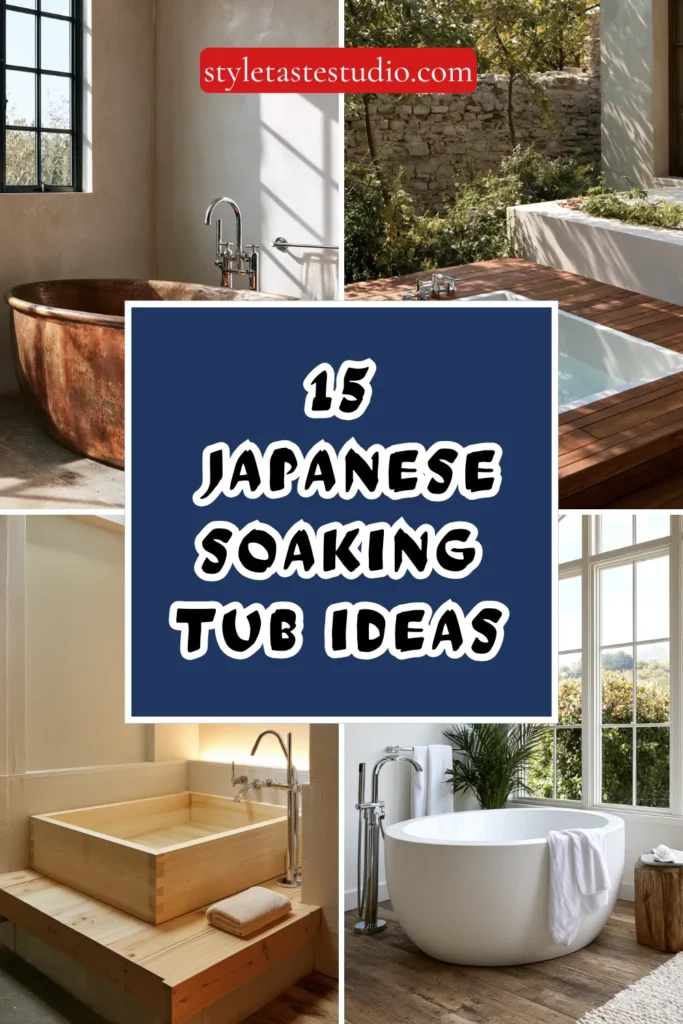
The Japanese soaking tub is the bathing vessel of stillness rather than cleansing — of full-body immersion in hot water maintained at a temperature considerably higher than the Western bathing convention, for a duration considerably longer, in a vessel considerably deeper, and with a quality of deliberate, unhurried, completely intentional physical and mental surrender to the specific restorative power of sustained hot water immersion that the Western bathing tradition has never quite managed to achieve with the same cultural seriousness or the same genuinely extraordinary results.
Here are 15 Japanese soaking tub ideas that will bring this most extraordinary of bathing traditions into the domestic bathroom with complete cultural authenticity and complete design ambition.
1. The Traditional Hinoki Cypress Wood Tub
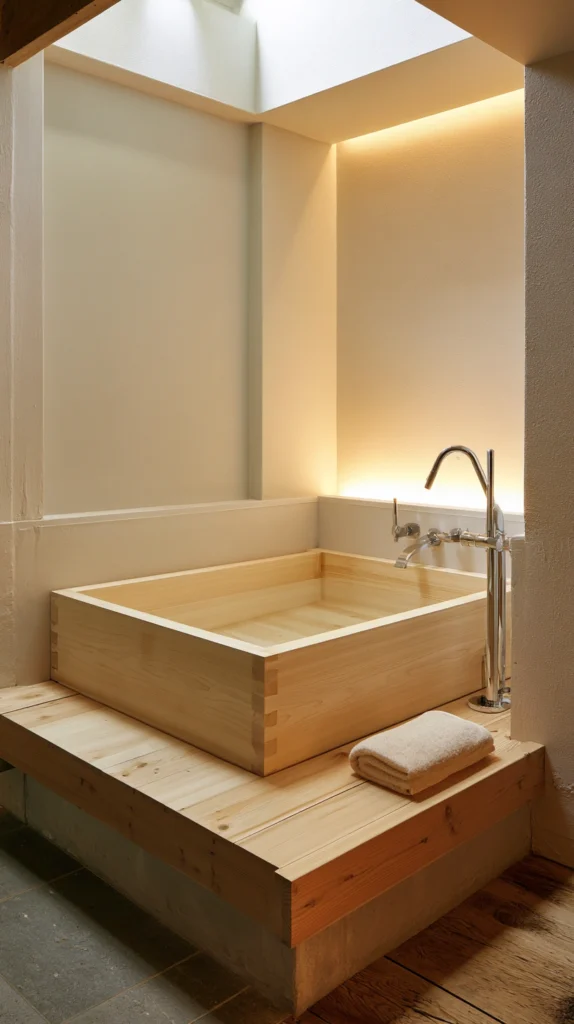
The hinoki cypress wood soaking tub is the Japanese ofuro in its most authentic, most culturally specific, and most genuinely extraordinary material form — a bathing vessel made from the aromatic, pale-golden, extraordinarily beautiful timber of the Japanese hinoki cypress, whose specific combination of natural oil content, natural antimicrobial properties, and the completely extraordinary fragrance that hot water releases from its grain creates a bathing environment of such complete sensory richness and such genuine cultural depth that every other bathing vessel available in any bathroom anywhere in the world feels, after a single soaking in a hinoki tub, somehow slightly incomplete.
The hinoki tub’s fragrance — a clean, warm, slightly sweet, completely extraordinary aromatic quality that intensifies with heat and that fills the entire bathroom with the specific, calming, deeply restorative scent of a Japanese forest after rainfall — is the single most extraordinary olfactory experience available in any domestic bathroom and the quality that most powerfully and most immediately communicates the cultural seriousness of the Japanese soaking tradition to anyone who has not previously encountered it. Install the hinoki tub on a raised timber platform for the most authentic and architecturally beautiful presentation.
2. The Deep-Soaking Stone Tub
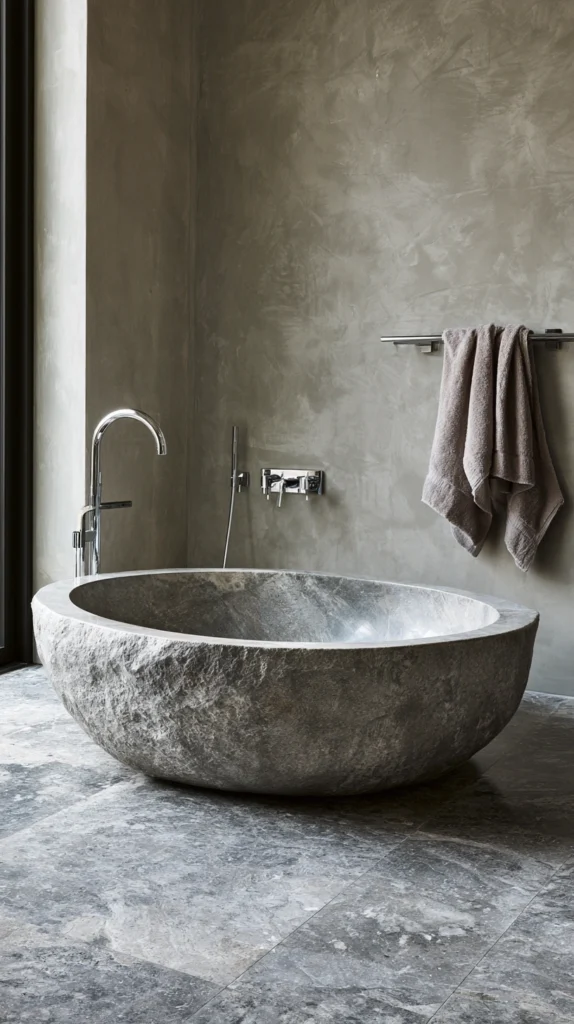
A Japanese soaking tub carved or cast from natural stone — granite, basalt, limestone, or the specific, dark, volcanic stone of the Japanese geological landscape — creates a bathing vessel of extraordinary material permanence, extraordinary thermal mass, and extraordinary visual authority that gives the bathroom a quality of geological weight and geological beauty available in no other bathing material.
The stone soaking tub retains heat with extraordinary efficiency — the stone’s thermal mass absorbs the hot water’s heat and releases it slowly back into the water as the bath cools, extending the usable soaking time by a considerable margin and maintaining the specifically high temperature that the Japanese soaking tradition requires for its full restorative effect. Position the stone soaking tub on a stone platform that continues the tub’s material vocabulary into the surrounding bathroom floor for a bathing environment of complete material coherence and complete geological beauty.
3. The Outdoor Rotenburo Tub
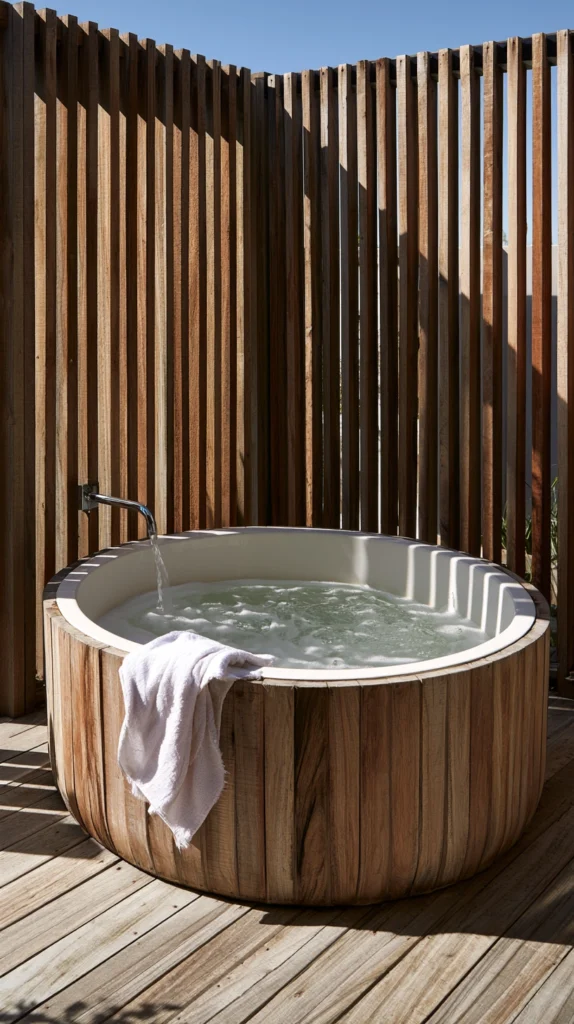
The rotenburo — the Japanese outdoor soaking tub, typically positioned within a garden environment of carefully considered botanical beauty, exposed to the open sky, and designed to be used in all weathers and all seasons — is the Japanese soaking tradition’s most completely extraordinary and most genuinely unforgettable bathing experience.
Soaking in an outdoor rotenburo during a Japanese snowfall, the body warm in the steam-wreathed water while the winter air cools the face and the surrounding garden lies white and silent — is an experience of such complete, such extraordinary, such genuinely transcendent physical and sensory pleasure that it permanently redefines every indoor bathing experience that precedes or follows it.
Recreate the rotenburo in the domestic garden — a deep cedar or stone soaking tub positioned on a timber deck in the garden’s most private and most botanically beautiful corner, equipped with a privacy screen of bamboo or natural timber slats, and surrounded by the most fragrant and most architecturally appropriate planting the garden’s specific conditions will support.
4. The Minimalist Built-In Concrete Tub
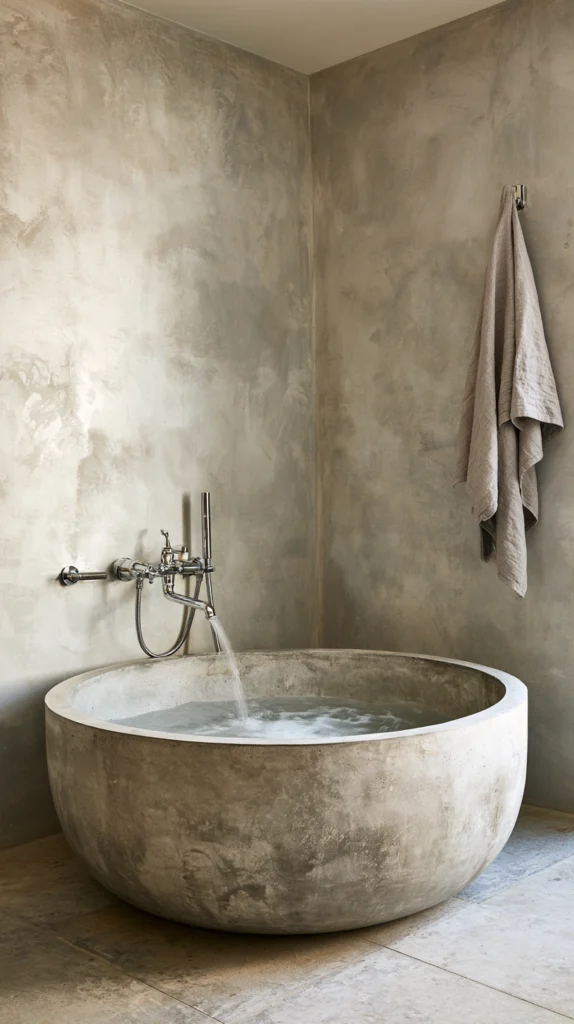
A Japanese soaking tub cast in polished concrete — built into the bathroom floor as a permanent, fully integrated architectural element rather than installed as a freestanding vessel of conventional plumbing connection — creates a bathing environment of extraordinary minimalist architectural power and extraordinary material beauty.
The built-in concrete soaking tub is the Japanese bathing vessel of most complete Western contemporary bathroom integration — the tub that speaks the visual language of the most sophisticated contemporary architecture while maintaining the specific depth, the specific proportions, and the specific bathing philosophy of the Japanese soaking tradition with complete functional authenticity.
Finish the concrete in a warm, slightly textured, polished surface of pale grey or warm charcoal, extend the same concrete material to the tub’s surrounding floor and to the bathroom wall behind it for a bathing environment of complete material coherence and complete minimalist architectural authority.
5. The Square Hinoki Platform Tub
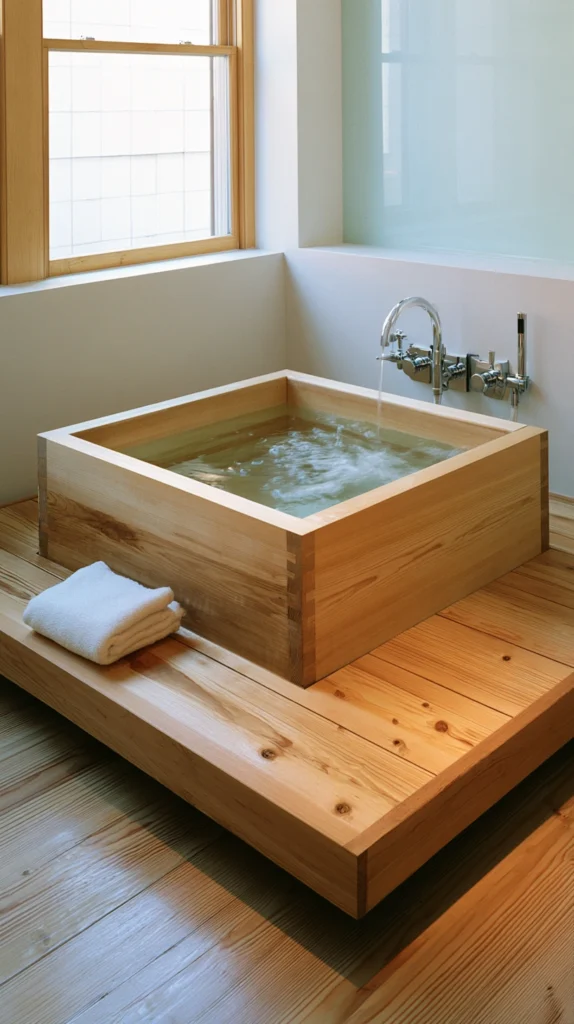
A square hinoki soaking tub — the traditional square or rectangular form of the Japanese ofuro as it appears in the finest Japanese bathhouses and the most authentic Japanese domestic bathrooms — installed on a raised timber platform of matching hinoki or dark-stained timber creates the most complete and the most architecturally resolved presentation of the Japanese soaking tub available in the domestic bathroom.
The raised platform gives the square hinoki tub its most important spatial dimension. The elevation that makes the act of stepping up to the tub’s rim and lowering the body into the deep, hot water a genuinely ceremonial movement of considerable physical and psychological significance, and that gives the tub itself the quality of a dedicated, architecturally defined bathing stage rather than a plumbing fixture installed at floor level.
6. The Copper Soaking Tub with Japanese Aesthetic
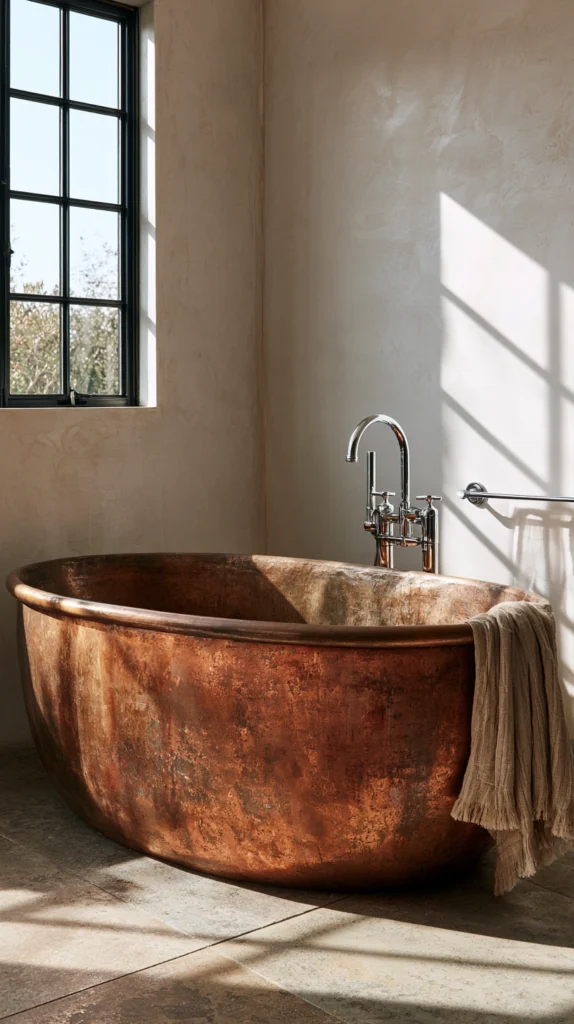
A copper soaking tub — the specific, extraordinarily beautiful material of the Japanese onsen’s most traditional water vessels, applied to a deep-soaking tub of appropriate Japanese proportions and appropriate Japanese formal simplicity — creates a bathing vessel of such extraordinary visual warmth, such extraordinary material richness, and such genuinely extraordinary thermal performance that it occupies a decorative category of complete uniqueness in the contemporary bathroom. Copper is an extraordinary thermal conductor.
It it heats rapidly, it maintains temperature with considerable efficiency, and it develops, through years of use and exposure to water and air, the specific, complex, living patina of genuinely extraordinary beauty that no other metal available for bathtub construction acquires with the same naturalness or the same decorative power. A copper soaking tub of Japanese proportions in a bathroom of Japanese material simplicity is the most visually extraordinary Japanese bathing installation available in any Western domestic bathroom.
7. The Glass-Walled Tub with Garden View
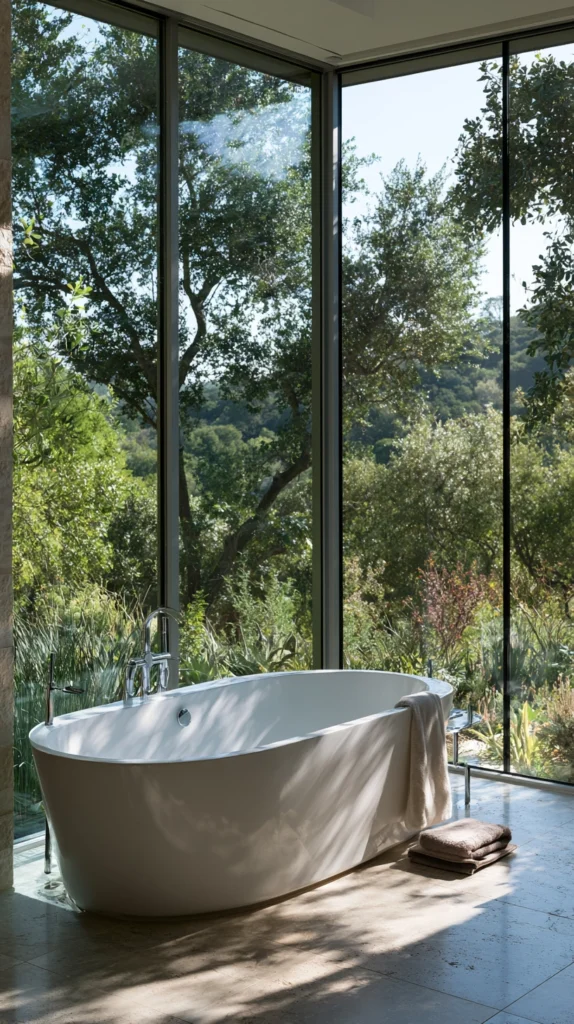
A Japanese soaking tub positioned against a floor-to-ceiling glass wall with a direct view onto a carefully designed Japanese garden — the raked gravel garden, the moss garden, the bamboo garden, or the garden of stone and water that the Japanese landscape tradition has developed over centuries into one of the most extraordinary forms of designed natural beauty available in any cultural tradition.
It creates the closest possible domestic approximation of the rotenburo’s specific, extraordinary quality of bathing within the natural environment while maintaining the warmth, the protection, and the privacy of the interior bathroom.
The garden view through the glass wall transforms the act of soaking in the deep, hot water from a purely physical experience of thermal pleasure into a meditative visual experience of complete, sustained, genuinely extraordinary natural beauty.
8. The Teak and Steel Contemporary Ofuro
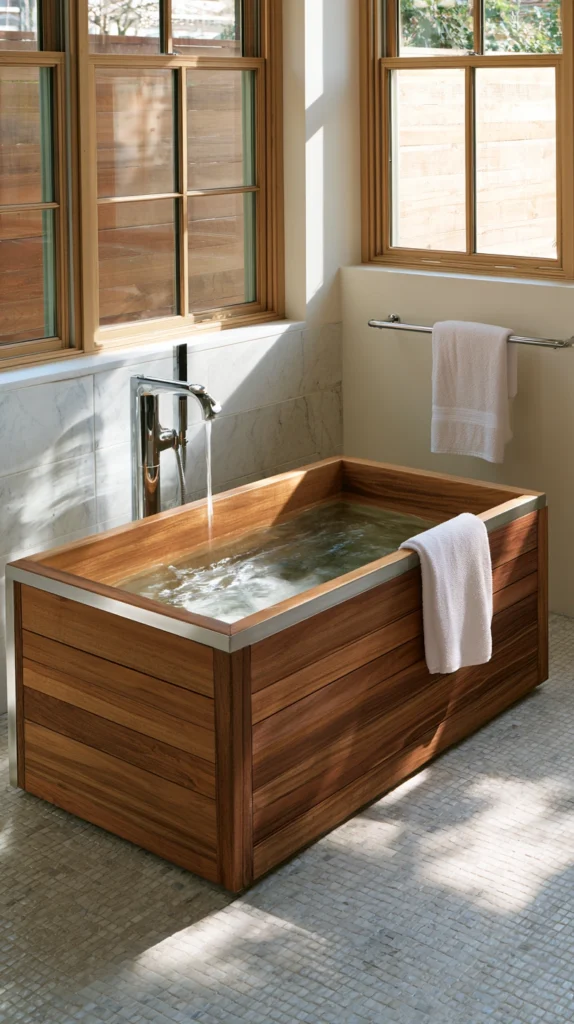
A contemporary Japanese soaking tub that combines teak timber with stainless steel or matte black steel — the teak providing the warmth, the natural material richness, and the cultural connection to the wooden ofuro tradition, while the steel provides the structural precision, the watertight integrity, and the clean, modern aesthetic of the contemporary bathroom.
It creates a bathing vessel of complete material sophistication and complete cultural authenticity that speaks simultaneously to the ancient Japanese soaking tradition and to the most rigorous contemporary bathroom design standards.
The teak and steel combination tub is the Japanese soaking vessel of most complete cross-cultural design intelligence — the tub that honors the ofuro’s material and cultural origins while integrating its bathing philosophy into the vocabulary of the most sophisticated contemporary Western bathroom.
9. The Japanese Soaking Tub with Overflow Channel
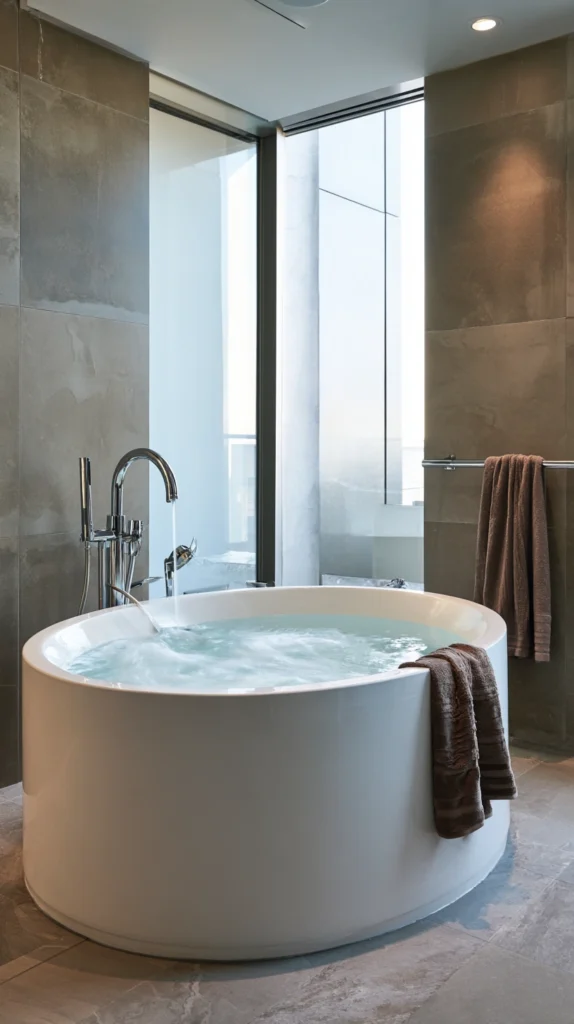
A Japanese soaking tub designed with an overflow channel — a narrow, precisely engineered channel around the tub’s full perimeter at the rim level that allows the water to overflow in a continuous, controlled sheet when the tub is filled and that creates the specific, extraordinary, continuously flowing water experience of the ryokan’s finest bath chambers — is the Japanese soaking installation of most complete sensory ambition and most complete immersive water experience.
The overflow channel gives the soaking tub the specific quality of the infinity pool’s edge applied to the bathing vessel — the illusion of water extending to the very limit of the tub’s rim with no boundary between the body and the water’s surface, and the continuous, softly musical sound of overflowing water that fills the bathroom with the most beautiful and the most consistently calming of all domestic acoustic experiences.
10. The Bamboo-Framed Soaking Tub Enclosure
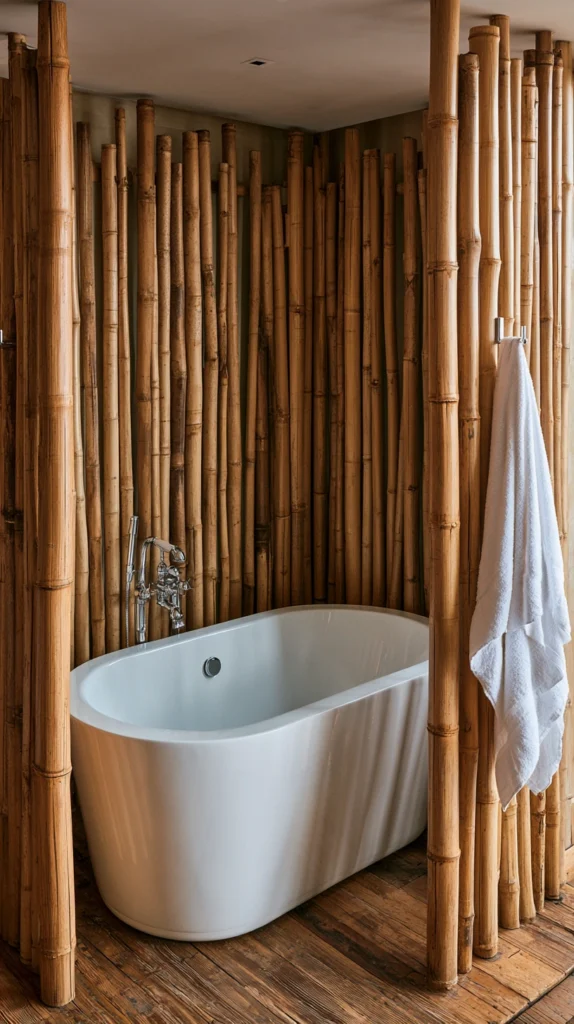
A Japanese soaking tub enclosed within a bamboo-framed architectural structure — a partial enclosure of natural bamboo poles assembled into a screen or a partial room within the bathroom that creates a dedicated bathing zone of complete Japanese aesthetic authenticity — gives the soaking tub its most complete and most immersive cultural context.
The bamboo enclosure references the onsen’s architectural tradition of natural material bathing environments while creating within the domestic bathroom a zone of such specific, such atmospheric, and such genuinely extraordinary Japanese cultural character that the act of entering it and lowering into the deep, hot water becomes a genuine ritual of cultural as well as physical significance.
11. The Freestanding Round Ofuro
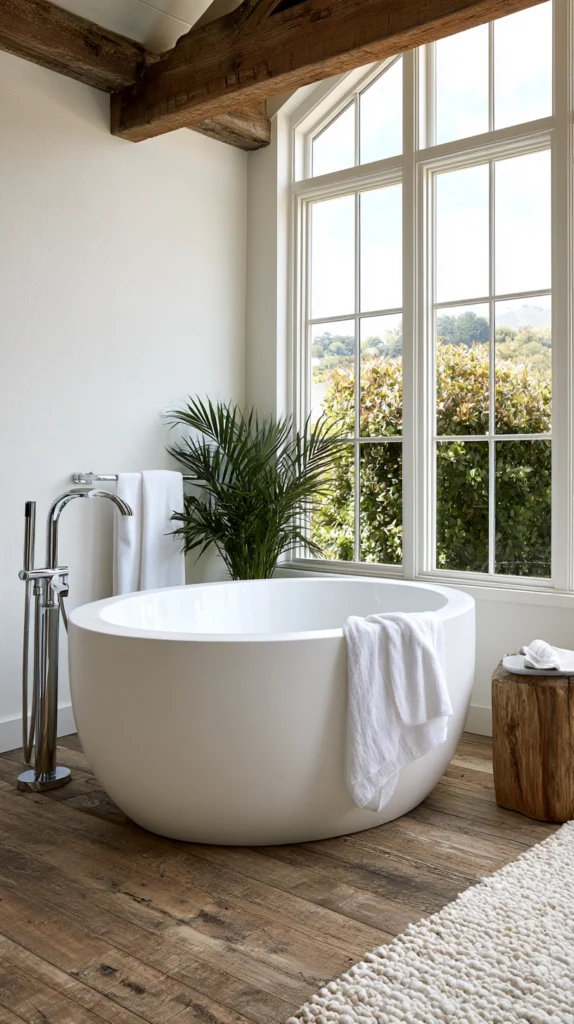
A round, freestanding Japanese soaking tub — the circular form that the barrel-inspired ofuro tradition produces in its most spatially efficient and its most visually charming domestic expression — installed as the bathroom’s primary bathing vessel creates a bathing environment of complete Japanese aesthetic simplicity and complete functional elegance.
The round freestanding ofuro’s specific proportions — its depth considerably greater than its diameter, its internal volume concentrated in vertical water depth rather than horizontal surface area — create the specific, completely extraordinary full-body immersion experience that the Japanese soaking tradition defines as its essential and its most restorative quality, in a freestanding vessel of sufficient visual beauty and sufficient spatial efficiency to suit the domestic bathroom of almost any scale.
12. The Two-Person Japanese Soaking Tub
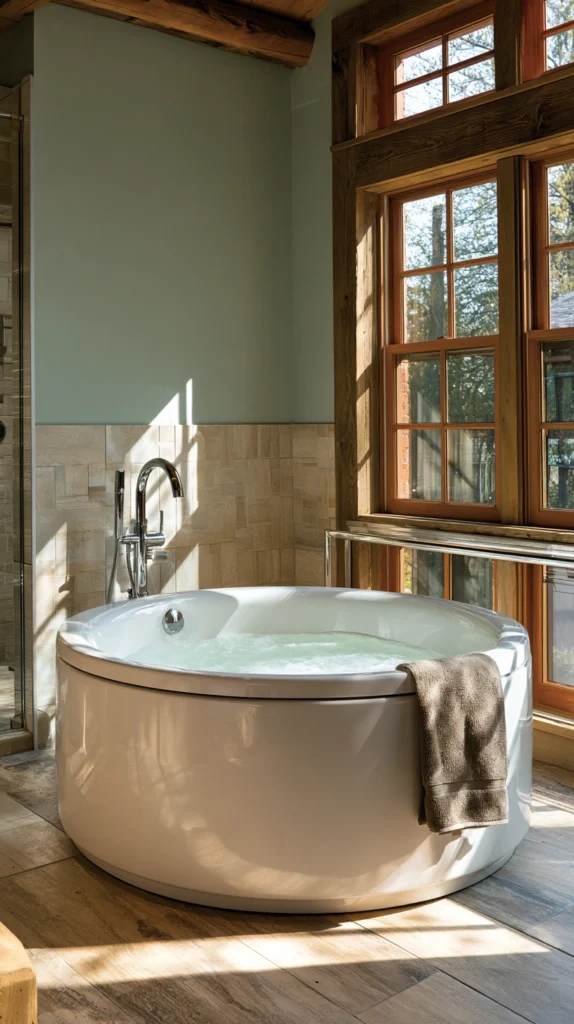
A Japanese soaking tub of sufficient proportions to accommodate two people simultaneously — a tub whose interior dimensions allow two adults to sit facing each other in the deep, hot water with complete comfort and complete ease — creates a shared bathing experience of such extraordinary intimacy, such genuine physical pleasure.
And such complete departure from the ordinary routine of the domestic bathroom that it transforms the act of bathing from a solitary personal hygiene ritual into one of the most genuinely pleasurable and most genuinely connecting experiences available in any domestic space. The two-person Japanese soaking tub is the bathroom installation of most complete domestic luxury and most complete relational generosity.
13. The Sunken Japanese Soaking Tub
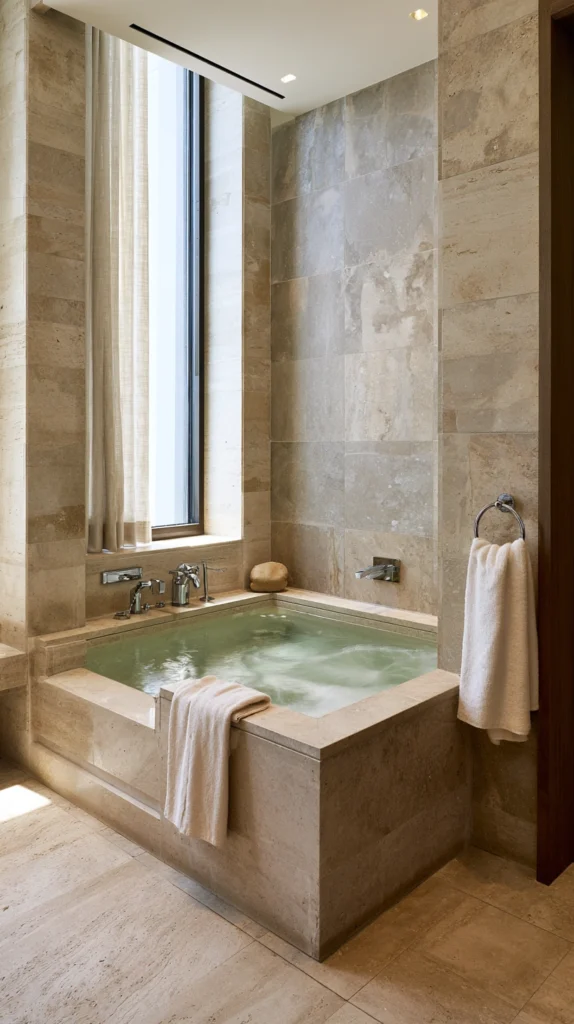
A sunken Japanese soaking tub — built into a recess in the bathroom floor so that the tub’s rim sits flush with or slightly below the surrounding floor surface, and the act of entering the tub is the act of stepping down into a defined bathing recess rather than stepping up and over a raised rim — creates a bathing installation of extraordinary architectural elegance and extraordinary physical accessibility.
The sunken soaking tub gives the bathroom floor a quality of spatial continuity and material coherence available in no above-floor tub configuration, and the experience of lowering into the deep, hot water from a position level with the surrounding floor is among the most physically graceful and the most psychologically complete bathing movements that any tub design produces.
14. The Japanese Soaking Tub with Integrated Wood Deck
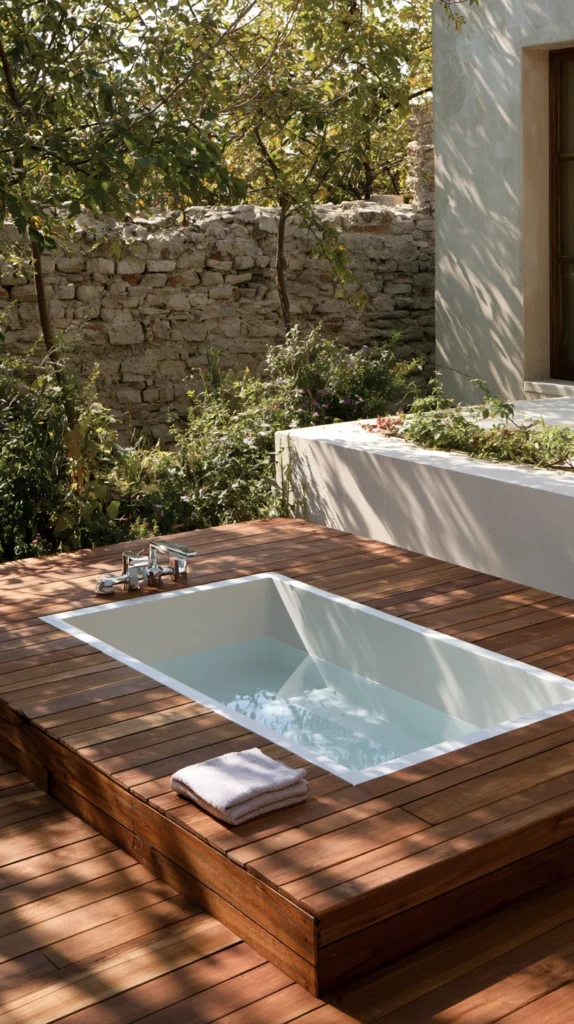
A Japanese soaking tub installed within a dedicated timber platform of generous proportions — a wide, extending deck of hinoki or teak timber that surrounds the tub on all accessible sides and provides a surface for the bathtime accessories, the folded towels, the single candle, and the small ceramic vessel of bath salts that the Japanese bathing ritual deploys with such considered, such beautiful, and such genuinely restorative simplicity — creates a bathing environment of complete architectural completeness and complete ritual support.
The integrated timber deck gives the Japanese soaking tub its most resolved and its most beautiful domestic architectural context — the platform that transforms the tub from a plumbing fixture in a bathroom into a dedicated bathing stage within a complete, designed, genuinely extraordinary bathing environment.
15. Design the Japanese Soaking Tub as a Complete Bathing Philosophy
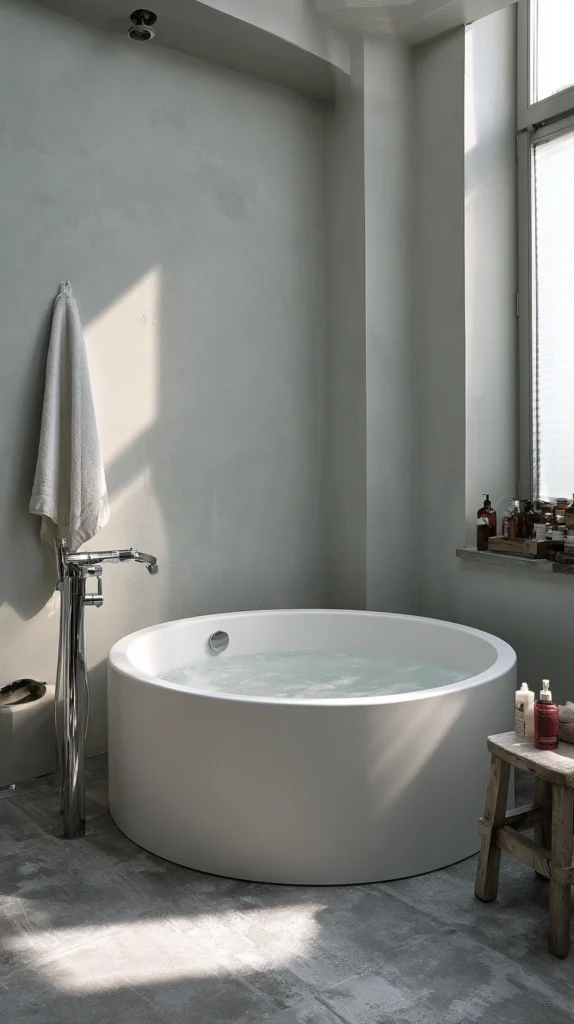
The final and most important Japanese soaking tub idea is the one that cannot be specified in a materials list, a tub model number, or a bathroom design brief — the idea that the Japanese soaking tub, in any of its fifteen specific design expressions described above, is most completely and most genuinely itself when it is installed not merely as a beautiful bathing vessel in a beautifully designed bathroom.
But as the physical expression of a complete bathing philosophy whose transformative power lies not in the tub’s specific material or its specific form or its specific position in the bathroom layout, but in the specific quality of intentional, unhurried, completely surrendered presence that the Japanese soaking tradition has always required of the person who enters the water.
Design the bathroom and the tub with that philosophy as the governing principle — with the understanding that the most extraordinary bathing experience available in any home begins not when the hot water reaches the correct temperature but when the person lowering their body into it has genuinely, completely, and beautifully decided to stop everything else and simply be there — and the Japanese soaking tub you create will be, every time it is used with that specific quality of intention, one of the most restorative and one of the most genuinely extraordinary domestic experiences available anywhere in the world.
The Japanese soaking tub installed with genuine cultural knowledge, genuine material quality, and genuine understanding of the specific, extraordinary bathing philosophy it embodies is one of the most transformative and most genuinely valuable additions available to any bathroom of sufficient spatial and budgetary generosity to accommodate it.
It proves, with complete physical and complete sensory conviction, that the finest bathing experience has never been about the most powerful shower jet or the most extensive product collection or the most technically sophisticated plumbing system — it has always been, and will always be, about the hot water, the stillness, the depth, and the complete, unhurried, genuinely extraordinary quality of simply being immersed.