
14 Hobbitcore Home Office Ideas for Creative Spaces
Hobbitcore is the aesthetic that refuses to apologize for being comfortable. Low ceilings, thick rugs, candlelight, bookshelves packed to capacity, plants in every corner, wood everywhere, and a general feeling that the space was grown rather than designed.
Applied to a home office, it solves a problem that most workspace design ignores entirely: how to make a place where you work for eight hours a day feel like somewhere you actually want to be.
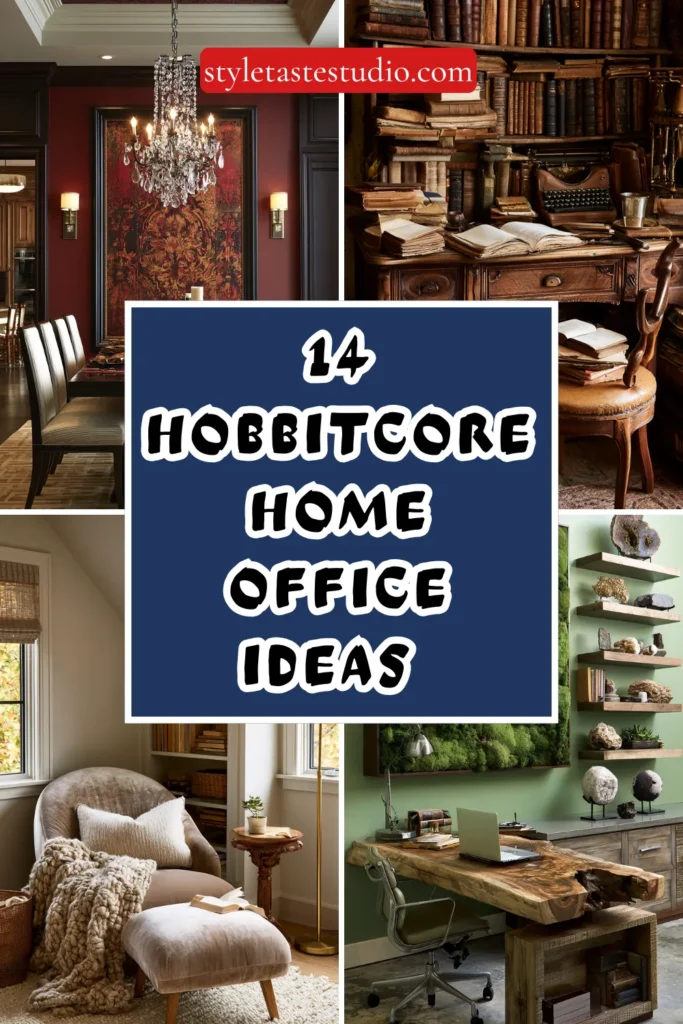
The hobbitcore office doesn’t look sterile. It doesn’t look minimal. It looks like a scholar’s study inside a hill — books, warmth, texture, living things, and enough nooks and surfaces to hold everything that makes creative work feel possible.
These fourteen ideas cover the materials, furniture, lighting, plants, and small details that build this aesthetic from scratch or layer it into an existing space.
1. Cover the Desk Surface with a Dark Wood or Leather Mat
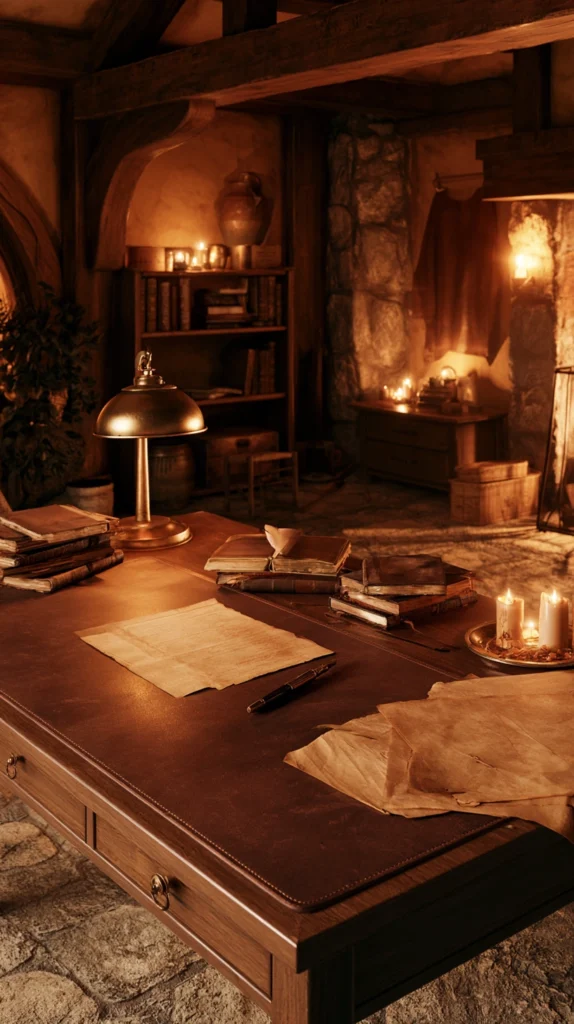
The desk is the center of the hobbitcore office, and it should look like it has history.
A bare modern desk surface — white laminate, glass, pale birch — works against the aesthetic regardless of what’s placed on it. The solution is covering it with a material that reads as warm and aged: a dark wood desk mat, a full-surface leather pad in chocolate brown or forest green, or a piece of cut cork in a dark natural tone.
Leather desk pads in dark brown or olive green are available from Amazon and Etsy in full-desk sizes ($25–$60) and create the writing surface of an old study immediately. Pair with a brass or iron desk lamp and the transformation of the surface is complete before anything else is placed on it.
If the desk itself is a dark wood — walnut, mahogany-stained pine, or dark oak — no mat is needed. The wood does the work.
Tip: Add a small piece of green blotter paper (the kind used in antique writing sets) to the center of the desk mat for an authentic scholar’s desk detail. Green leather blotters are associated with old libraries and studies — even a small piece in that color triggers the association immediately.
Budget: $25–$60
2. Build Bookshelves That Look Overfull on Purpose
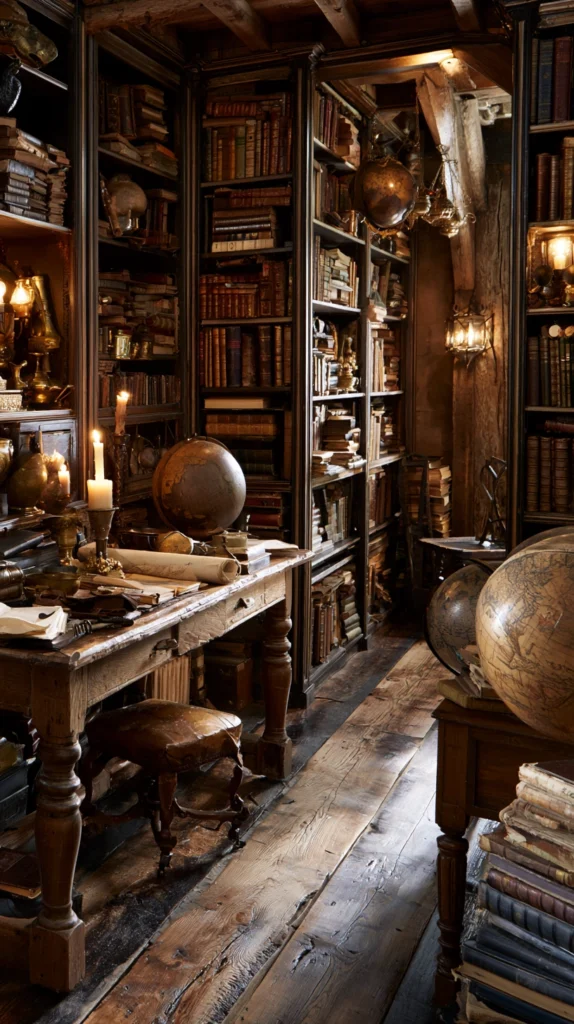
A hobbitcore bookshelf is not a curated shelf with breathing room between objects. It is a shelf that holds more than seems structurally advisable and looks better for it.
Double-stack paperbacks with a row of taller hardcovers in front. Stack horizontally on every other shelf. Mix books with small found objects — a river stone, a candle, a pinecone, a small glass bottle — tucked between volumes rather than arranged in a dedicated display section.
The overfull quality is not accidental. It communicates that the books are actually read, the objects are genuinely collected, and the shelf grew over time rather than being assembled. That quality is exactly what the hobbitcore office needs — evidence of a life lived in the space.
If the existing bookshelves are shallow, add a second floating shelf in front of or below the existing one. Depth and density are both part of the aesthetic.
Tip: Remove dust jackets from hardcover books before shelving. The cloth or board cover beneath is almost always a richer texture and color than the printed jacket, and a shelf of unjacketed hardcovers reads as genuinely old rather than recently purchased.
Budget: $0 using existing books and objects
3. Use Warm Edison or Candle-Flame Bulbs in Every Fixture
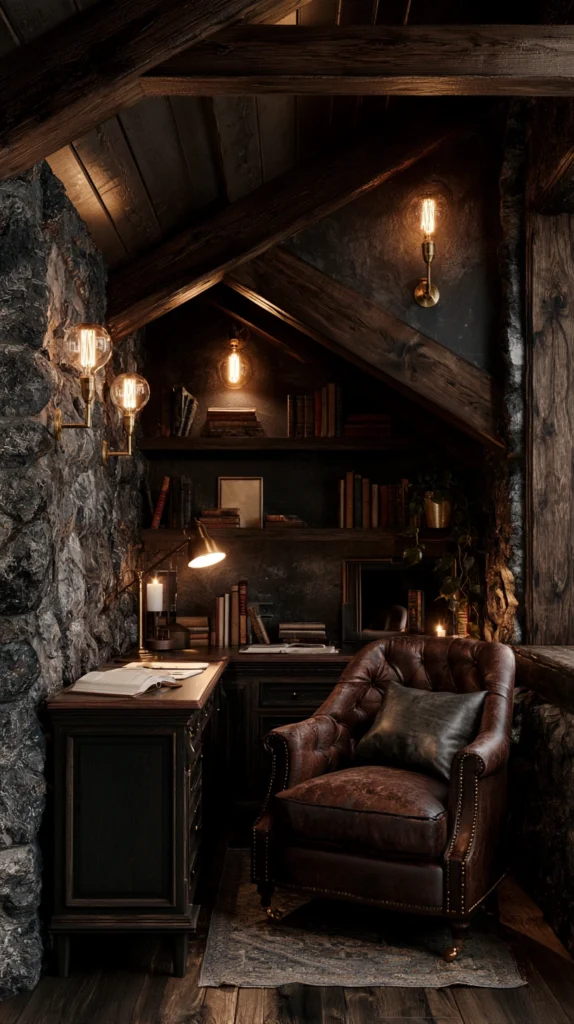
Hobbitcore lighting is firelight by another name. Every bulb in the office should produce light in the 2200K–2700K range — warm amber, close to candle temperature, as far from daylight as you can get while still seeing clearly.
Edison filament bulbs with visible warm glowing filaments are the most visually accurate choice. In a table lamp with a fabric shade, the filament is partly visible through the shade material and adds a visual warmth that an LED bulb inside an opaque shade doesn’t produce.
Candle-flame shaped bulbs — the tapered style used in chandeliers — in pendant lights or a small chandelier over the desk add a specifically medieval quality to the space. Combined with a dark lampshade (forest green, burgundy, or black), they produce exactly the scholar’s-study light that hobbitcore references.
Edison filament LEDs run $8–$20 for a two-pack. Candle-flame bulbs in the same range run $6–$15.
Tip: Add a dimmer switch to the main desk lamp circuit. Hobbitcore light should be adjustable — bright enough for focused work, dim enough for afternoon reading and thinking. A dimmer costs $12–$25 and changes the room’s range of atmosphere significantly.
Budget: $8–$25
4. Hang Mismatched Vintage Frames and Maps on the Walls
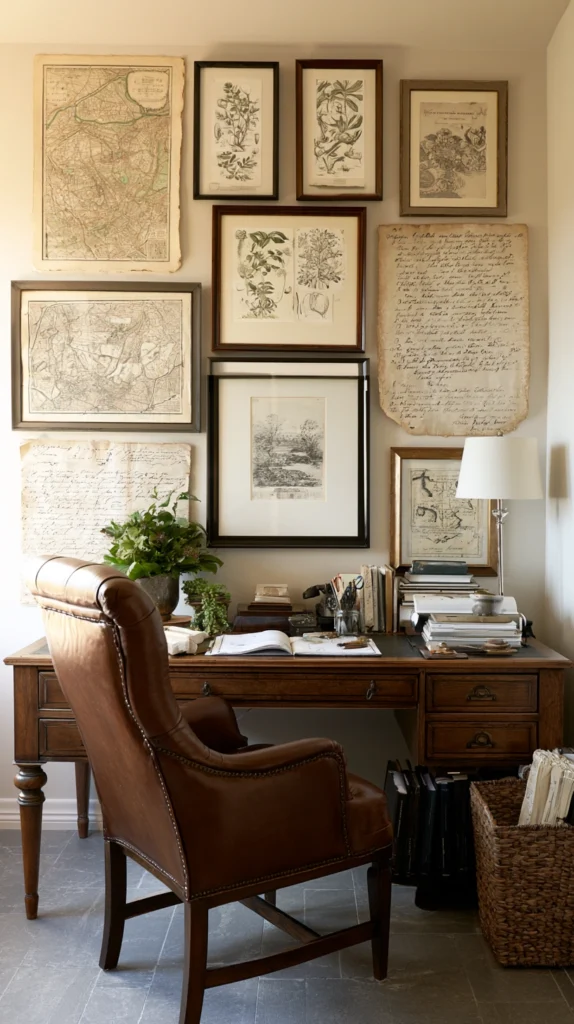
Hobbitcore walls don’t have a gallery system. They have a collection — maps, botanical prints, handwritten notes, old photographs, pressed plants — hung at different heights in different frame sizes with no visible organizing principle beyond “it belongs here.”
The mismatched quality is essential. Matching frames in a grid arrangement reads as gallery-wall decor. Mismatched frames at varied heights reads as accumulated over years — the visual quality hobbitcore is built on.
For content, prioritize: antique or antique-style maps (topographic, hand-drawn style, or old cartographic prints), botanical illustrations in aged paper tones, nature illustrations from old encyclopedias, and personal photographs in non-standard sizes.
Thrift stores reliably stock mismatched frames at $1–$4 each. Antique-style map and botanical prints are available as printable files on Etsy for $3–$8 each.
Tip: Hang some frames slightly askew rather than perfectly level. One or two frames at a barely perceptible angle adds to the quality of a space that grew organically. Everything perfectly level looks deliberately placed — the opposite of what the aesthetic requires.
Budget: $15–$40 for a full wall collection
5. Add a Reading Nook Corner with a Low Chair and Footstool
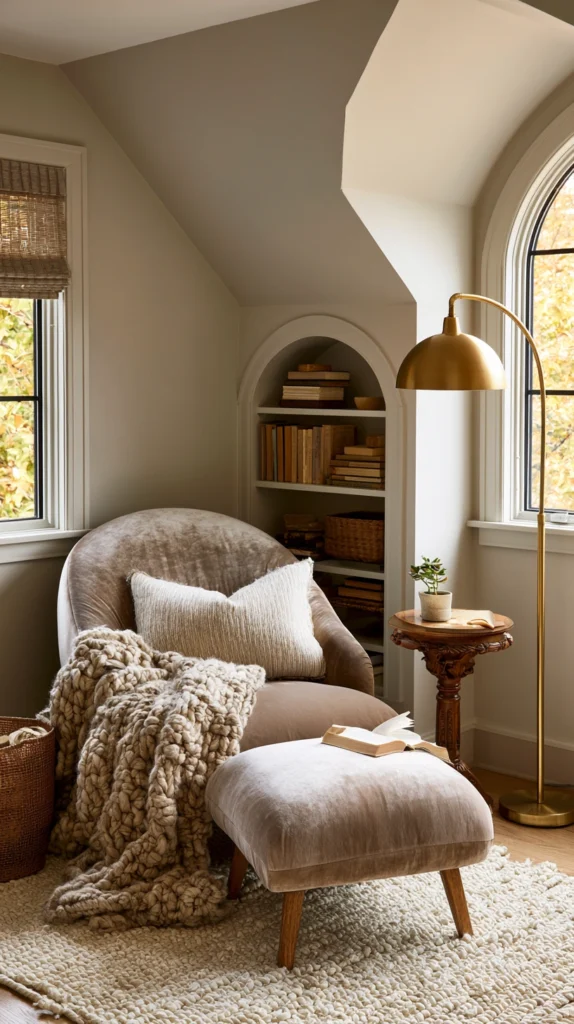
The hobbitcore office requires a reading corner. Not a chair beside the desk, but a genuinely separate zone — low, cushioned, positioned near the bookshelf — where the reading and thinking work happens away from the screen.
A low armchair (seat height 14–16 inches rather than the standard 18–20 inches) with a small footstool or ottoman creates the low, settled quality that hobbitcore sitting positions reference. Combine with a small side table for a mug and a lamp positioned at shoulder height for reading light.
Upholstery matters. Velvet, worn leather, woven cotton, or a textured boucle all work. Avoid modern performance fabrics — anything that reads as designed for practicality rather than comfort breaks the aesthetic.
A secondhand armchair with interesting upholstery from a thrift store or Facebook Marketplace runs $20–$80. A simple wooden footstool runs $15–$40.
Tip: Add a small woven blanket folded on the chair arm rather than draped across the back. A blanket within arm’s reach of a reading chair communicates that the chair is actually used for extended sitting — which it should be.
Budget: $35–$120 for chair and footstool
6. Hang Trailing Plants from the Ceiling or High Shelves
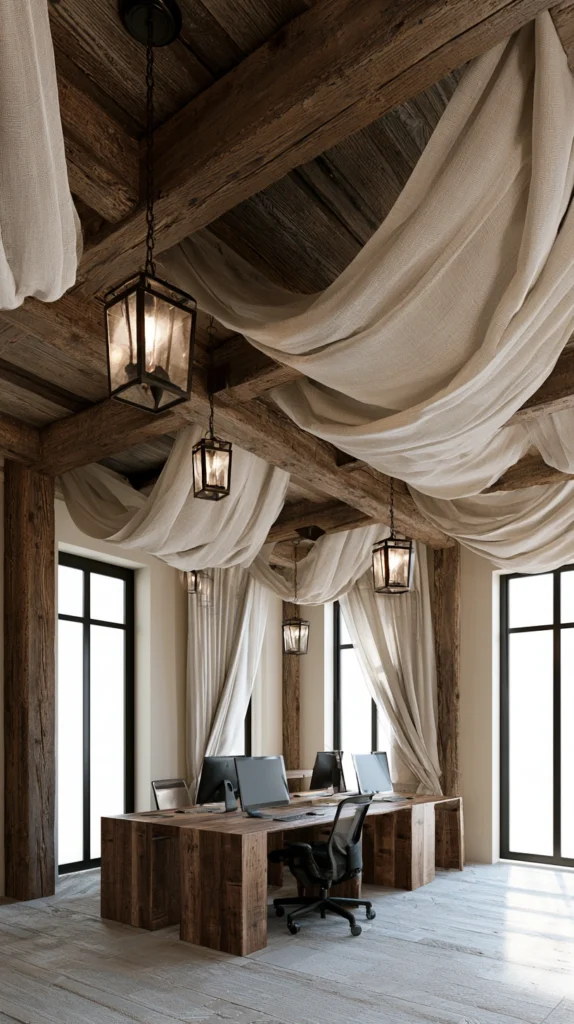
Hobbitcore interiors always have plants encroaching on the space — growing in from corners, trailing down from shelves, hanging at eye level and above. The plants don’t look maintained. They look like the room grew around them.
Trailing plants hung from ceiling hooks or placed on top of high bookshelves and allowed to trail downward create this quality most effectively. Pothos, heartleaf philodendron, and string of pearls all trail naturally and tolerate the lower light of an interior office space.
Macramé or jute hanging planters in natural undyed fiber contribute to the hobbitcore material palette. Metal hanging planters work against it — they read as modern and industrial, which is the opposite of what the aesthetic needs.
A trailing pothos in a jute hanger runs $12–$25 including pot and hanger.
Tip: Let trailing plants get longer than feels comfortable before trimming. The overgrown quality — vines reaching toward the floor, tendrils touching the bookshelf — is part of what makes them read as a hobbitcore element rather than a decorative plant placed on a shelf.
Budget: $12–$30 per hanging plant
7. Use Candlesticks and Lanterns as Desk Companions
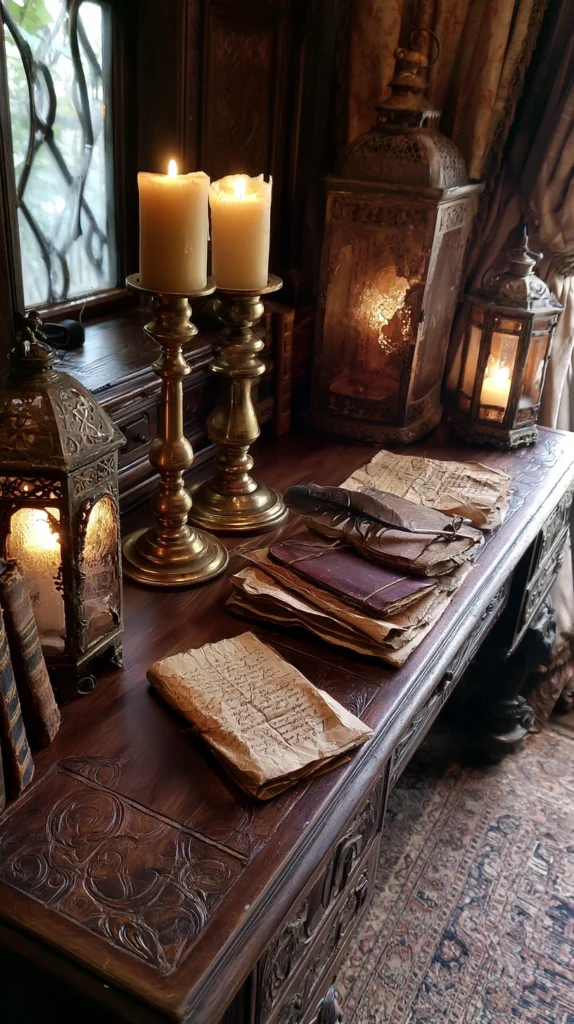
Candles on a desk are both a hobbitcore aesthetic detail and a genuine productivity aid — the act of lighting a candle signals the start of a work session in the same way a ritual marks a transition.
Taper candles in iron or brass candlesticks on either side of the desk monitor create an old-study quality that no other desk element produces. Pair with a small lantern at desk level or on a nearby shelf for a secondary warm light source.
For a working desk, LED candles inside the lantern are the practical choice — the flickering light of a real taper during extended work sessions can become distracting, and the fire risk of a real candle beside paper and notebooks is real.
For the candlesticks themselves, use real taper candles lit briefly at the start and end of the work session as a ritual rather than burning throughout the day.
Brass or iron taper candlesticks run $8–$25 each at antique stores and thrift shops. New ones in an aged finish run $10–$30.
Tip: Dip the base of taper candles briefly in warm water before inserting into a candlestick. The slight softening of the wax at the base allows it to conform to the candlestick cup rather than sitting at an angle — a small detail that makes the difference between a candle that looks placed and one that looks settled in.
Budget: $16–$50 for two candlesticks
8. Install a Dark Green or Burgundy Accent Wall
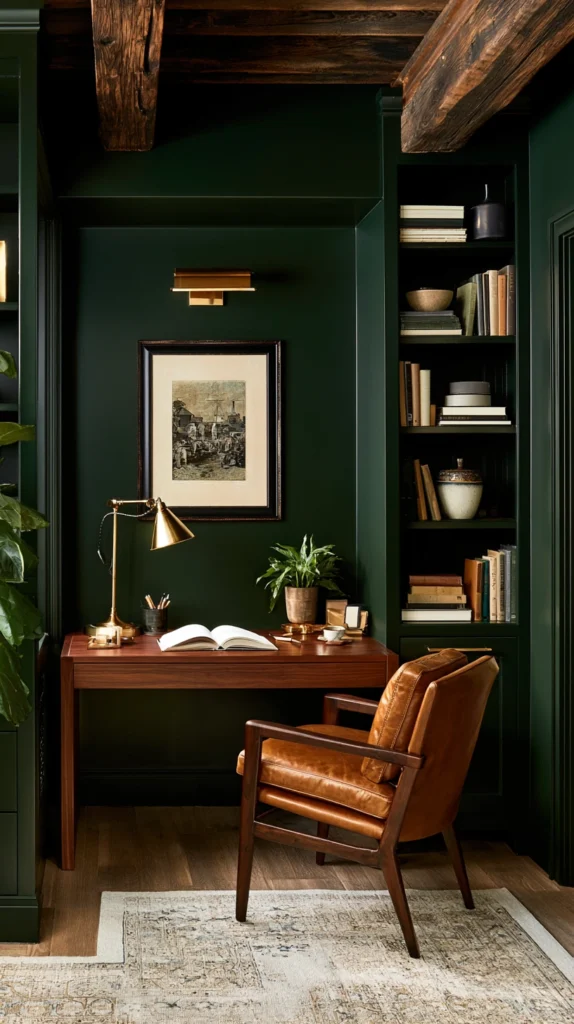
Color in a hobbitcore office should feel like the inside of something — a study, a burrow, an old library room. Light, neutral, and airy are the opposite of what the aesthetic needs.
A dark green or burgundy accent wall behind the desk or around the bookshelf creates the enclosed, warm quality that makes hobbitcore spaces feel like a retreat from the world rather than a functional workspace.
Dark green options: Sherwin-Williams Hunt Club (SW 6468), Benjamin Moore Salamander (2050-10), or Farrow & Ball Calke Green (No. 80). Burgundy options: Benjamin Moore Mulberry (2083-20), Sherwin-Williams Cordovan (SW 2801).
Paint the wall behind the bookshelf and desk specifically — this is the wall that frames the primary activity zone of the office and creates the backdrop for video calls. An accent wall in this position changes the room’s character at the point where it matters most.
A quart of paint covers approximately one standard accent wall for $15–$30.
Tip: Use a satin or eggshell finish rather than matte on a dark accent wall. Dark matte paint absorbs so much light that the room can feel small in an uncomfortable way rather than a cozy way. Satin reflects slightly and keeps the dark tone luminous.
Budget: $15–$35
9. Fill Desk Surfaces with Analog Tools and Found Objects

The hobbitcore desk is not a minimalist workspace. It holds the tools of creative work in a way that makes them visible and accessible — quill-style pens in a ceramic holder, an inkwell, a wax seal kit, a magnifying glass, a compass, a small leather notebook.
These aren’t decorative objects in the hobbitcore office. They get used. The wax seal closes correspondence. The fountain pen writes in the notebook. The analog quality of these tools — objects that require deliberate physical interaction rather than a screen tap — is part of what makes the space feel different from a standard office.
Collect these items gradually rather than purchasing a set. Thrift stores reliably stock old pen holders, ceramic dishes, glass bottles, and small curiosities that fit the desk without looking like a curated “hobbit office” kit.
Tip: Add one functional scientific or natural history object to the desk — a small magnifying glass, a compass, a geode, a piece of interesting rock or crystal. These objects signal that the person who works here is curious about the physical world, which is the character that hobbitcore offices project.
Budget: $10–$30 for a collection built over time
10. Layer Multiple Rugs for a Layered Floor
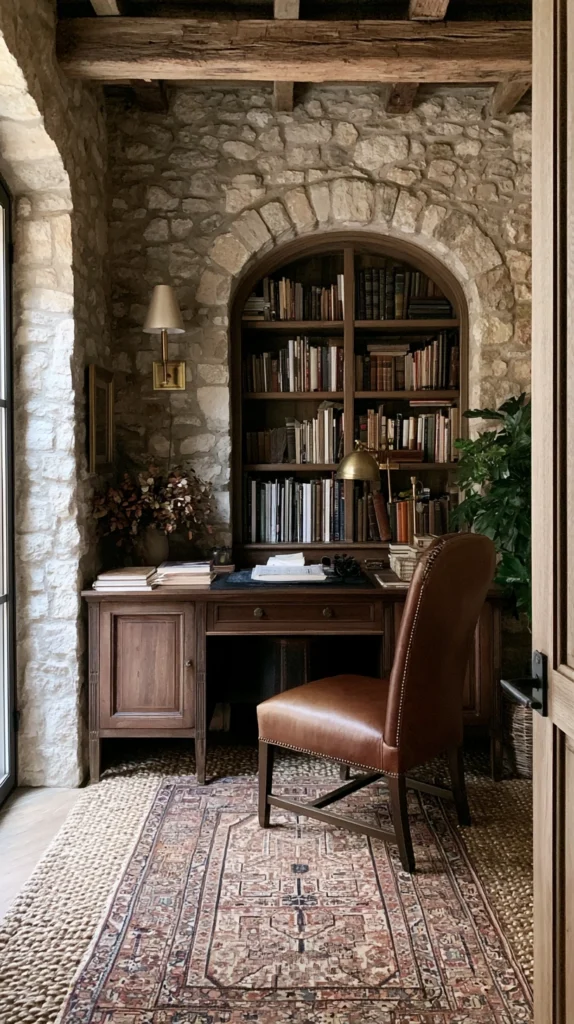
A single rug on a hobbitcore office floor looks like a rug. Two layered rugs look like a floor that has been lived on.
A large jute or sisal base rug provides the natural fiber ground. Over it, a smaller vintage-style rug in deep colors — a worn Persian pattern in burgundy and gold, a Turkish kilim in rust and brown, a braided rag rug in autumn tones — creates the layered, accumulated quality that defines hobbitcore interiors.
The layered approach also adds acoustic softness to the office — multiple layers of textile underfoot absorb sound in a way a single rug doesn’t, which makes the room quieter during phone calls and video meetings.
For the vintage-style upper rug, thrift stores and estate sales are the best source. A worn, slightly faded rug with visible pattern age reads as genuinely collected. A new vintage-look rug reads as purchased — a distinction that matters in an aesthetic built on authenticity.
Tip: Use a rug pad between the two layers. Natural fiber rugs have almost no grip against each other — without a pad, the upper rug slides freely on the jute base and bunches at the edges within a few days.
Budget: $40–$90 for both layers
11. Add Moss, Ferns, and Small Woodland Plants
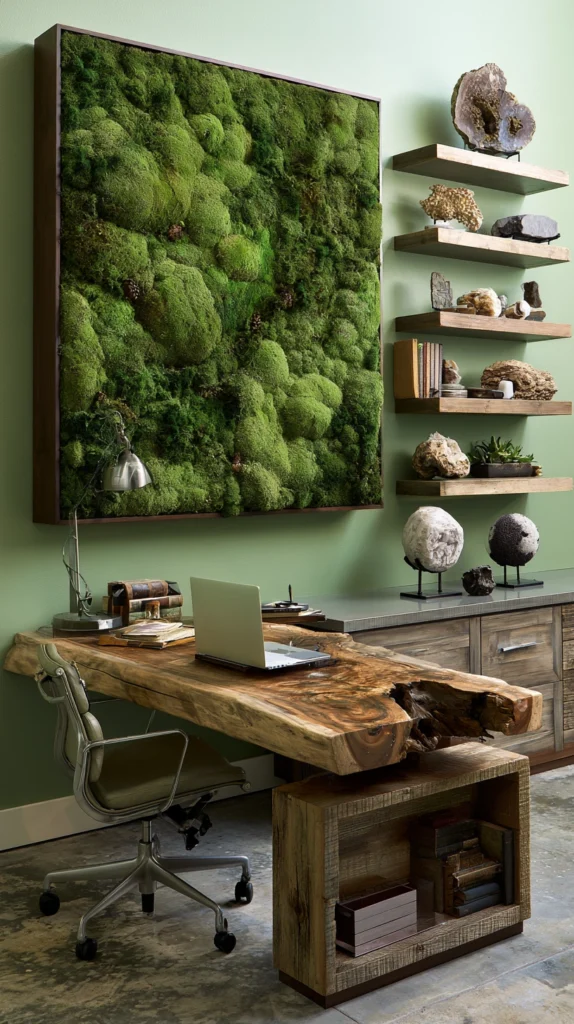
Beyond the trailing plants on shelves and ceilings, hobbitcore offices need ground-level and surface-level plant life — the kind associated with woodland floors and damp, green spaces.
Ferns work particularly well because they look ancient and thrive in lower light conditions typical of interior spaces. Boston ferns, bird’s nest ferns, and maidenhair ferns all have the lush, layered foliage that reads as woodland rather than tropical or desert.
Sheet moss and preserved moss arranged in small frames, terrariums, or wooden boxes add green at desk and shelf level without requiring watering. Preserved moss is available at craft stores for $8–$15 per bag and maintains its color and texture indefinitely without care.
Group plants at different heights rather than clustering them all together at floor level. A fern on the floor, a pothos trailing from a shelf at mid-height, and a small moss arrangement on the desk creates the sense that green is present at every level of the space.
Tip: Place ferns near the humidifier if one runs in the office, or mist them every two to three days. Ferns require more humidity than most indoor plants and dry office air causes the fronds to brown at the tips — a watering change that signals stress rather than the lush health the aesthetic requires.
Budget: $15–$40 for ferns and moss
12. Use a Wooden Crate or Trunk for Storage and Surface Space
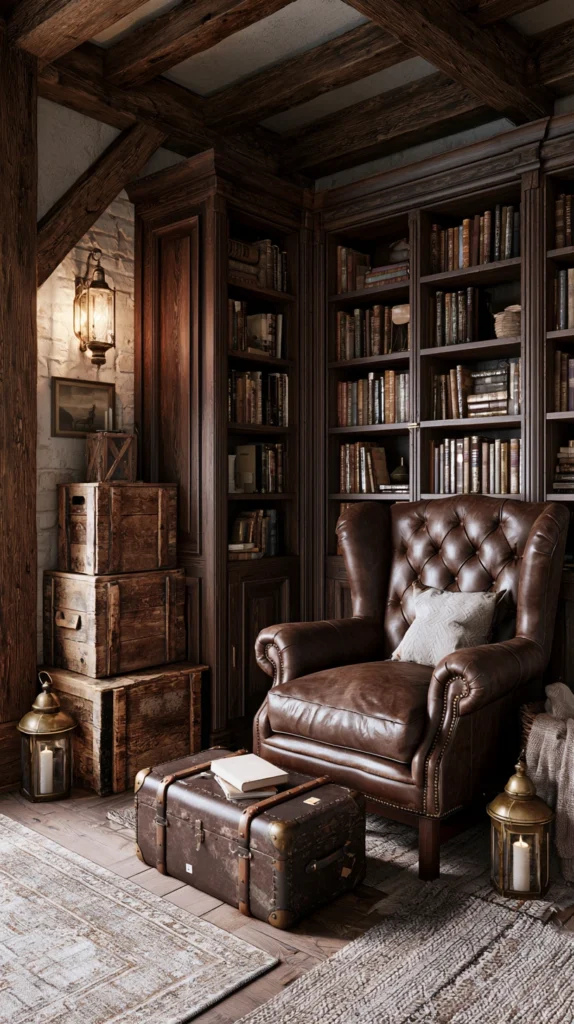
A wooden crate or an old steamer trunk used as storage beside the reading chair or under a side table contributes to the hobbitcore material palette while solving a real organizational problem.
The crate holds books currently in rotation, notebooks, project materials, or whatever accumulates around the reading corner. The trunk holds file storage, archived projects, or seasonal items. Both read as objects with history rather than flat-pack furniture solutions.
An old wooden wine crate costs $5–$10 from wine shops and is immediately usable. A steamer trunk from a thrift store or estate sale runs $30–$80 depending on condition and is often in better shape than its appearance suggests.
Paint or stain is not required — the aged, raw wood quality is more appropriate to the aesthetic than a finished surface would be.
Tip: Stack two or three wooden crates at different angles in the reading corner rather than placing them uniformly. A deliberate stack with one turned horizontally and one vertically reads as a functional bookshelf improvisation — the kind of thing a hobbit would build. Uniform stacking reads as storage furniture.
Budget: $5–$80 depending on source
13. Incorporate Warm Scent Through Wood, Smoke, and Earth Notes
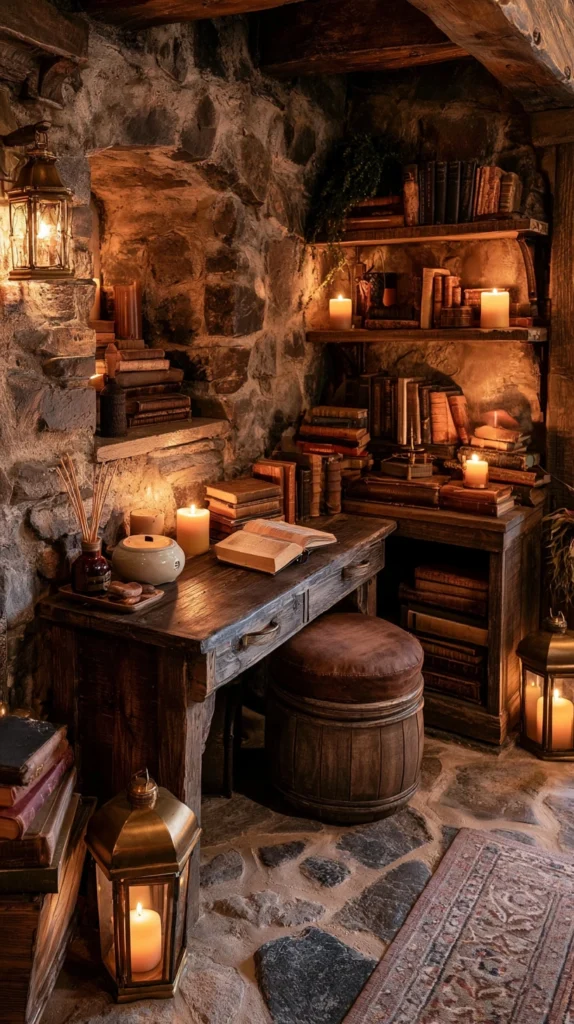
The sensory experience of a hobbitcore office extends beyond the visual. The room should smell like old books, wood smoke, earth, and something green.
A reed diffuser or wax warmer in cedarwood, sandalwood, oakmoss, or tobacco vanilla creates a warm, woody baseline scent. Pair with an occasional use of a palo santo or incense stick — the light smoke note adds a transient quality that no diffuser replicates.
Beeswax candles contribute their own faint natural honey scent when burned — the most authentic and non-synthetic candle scent available. Real books on open shelves produce a faint vanilla-and-almond note from the lignin breakdown in older paper — an effect that increases when books are present in quantity.
The combination of diffuser scent, occasional incense, beeswax candles, and real books creates a layered scent environment that no single product achieves.
Tip: Run any scent element for the first 30 minutes of the work session only. The olfactory system adapts to continuous scent within an hour — a scent element running all day becomes imperceptible while a 30-minute burst creates an association between the scent and the work session that activates focus each time.
Budget: $15–$30 for diffuser and incense
14. Keep the Space Slightly Imperfect on Purpose
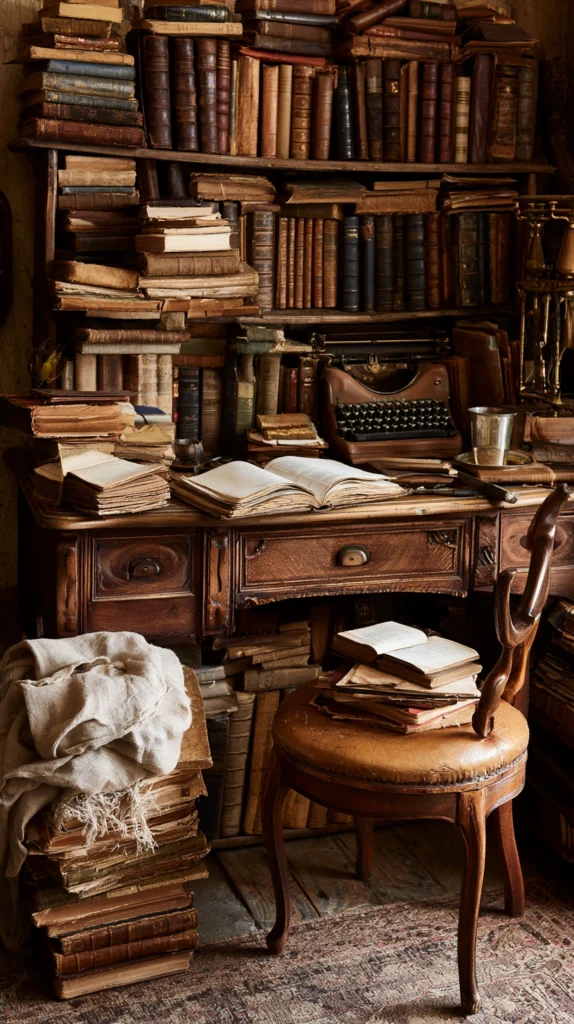
The final idea is the one that determines whether everything else works.
A hobbitcore office with perfectly aligned bookshelves, symmetrically placed objects, and carefully maintained order looks like a recreation of the aesthetic rather than an expression of it. The quality that makes the style work — the sense that the space grew organically around the person who inhabits it — requires genuine imperfection.
A mug ring on the desk from yesterday’s tea. A plant that has grown past its allotted space. A stack of books on the floor beside the chair because the shelf is full. A candle that has burned unevenly. These are not failures of the space — they are evidence that the space is lived in.
The deliberate choice to leave some things imperfect, some surfaces slightly cluttered, some arrangements slightly off-center is what separates a hobbitcore office that genuinely feels like one from a hobbitcore office that looks like a staged photograph of one.
Tip: After completing any styling changes, walk back into the room as if entering for the first time and remove one object from any surface that looks too neat. The removal always improves the arrangement — not because neatness is bad, but because the hobbitcore office should feel discovered rather than prepared.
Budget: $0
Final Thoughts
A hobbitcore home office works because it treats the workspace as a place to inhabit rather than a place to perform productivity.
The materials — wood, wool, linen, aged metal, living plants, real books — all have a warmth and authenticity that modern office materials don’t. The lighting — amber, low, layered — removes the harsh functionality of standard workspace illumination. The imperfection — the overfull shelves, the trailing vines, the slightly misaligned frames — creates a space that feels like it belongs to someone specific.
Start with the desk surface and the lighting. These two changes shift the room’s character before anything else is touched. Add the plants, the books, the layered textiles, and the found objects from there until the room starts to feel less like a workspace that was decorated and more like a place that grew.